AI Papers of the Week
Every paper worth reading in AI, hand-picked one week at a time.
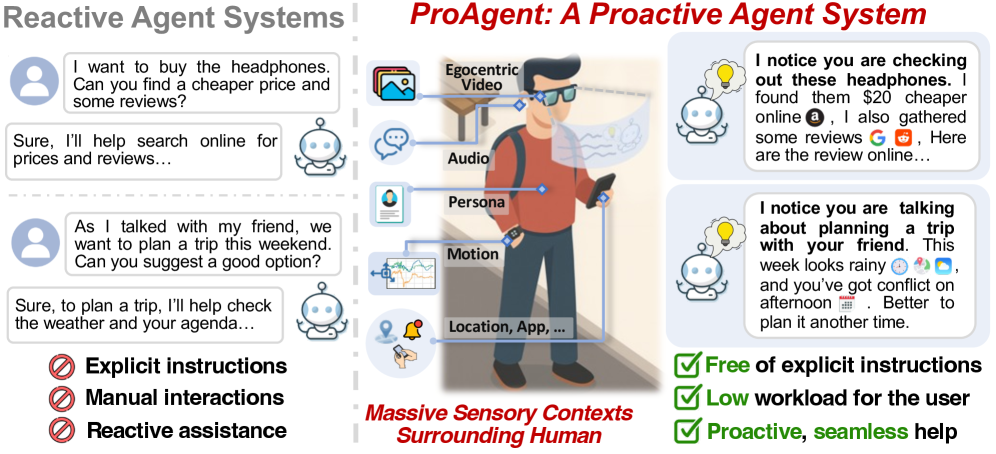
ProAgent
ProAgent is the first end-to-end proactive LLM agent system that harnesses sensory contexts from AR glasses, smartphones, and edge servers to deliver assistance without explicit user instructions. Unlike reactive agents that wait for commands, ProAgent continuously senses the environment with on-demand tiered perception and achieves up to 33.4% higher proactive prediction accuracy, 16.8% higher tool-calling F1 score, and 38.9% improved user satisfaction over baselines.
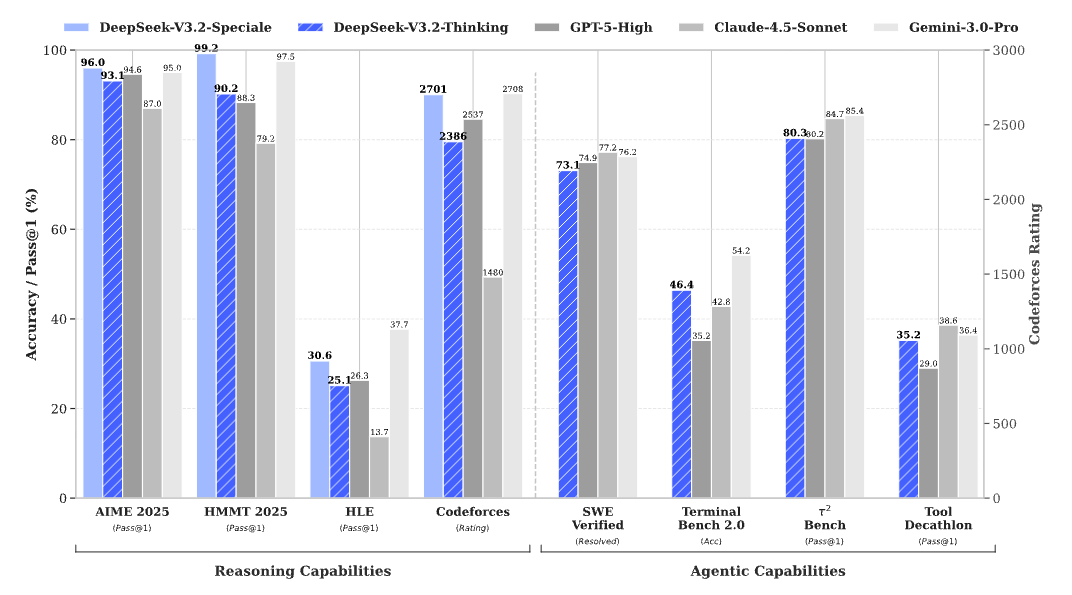
DeepSeek-V3.2
DeepSeek releases V3.2, an open model that matches GPT-5 on reasoning benchmarks while introducing significant architectural and training innovations. The high-compute variant, DeepSeek-V3.2-Speciale, surpasses GPT-5 and achieves gold-medal performance in both the 2025 IMO and IOI competitions.
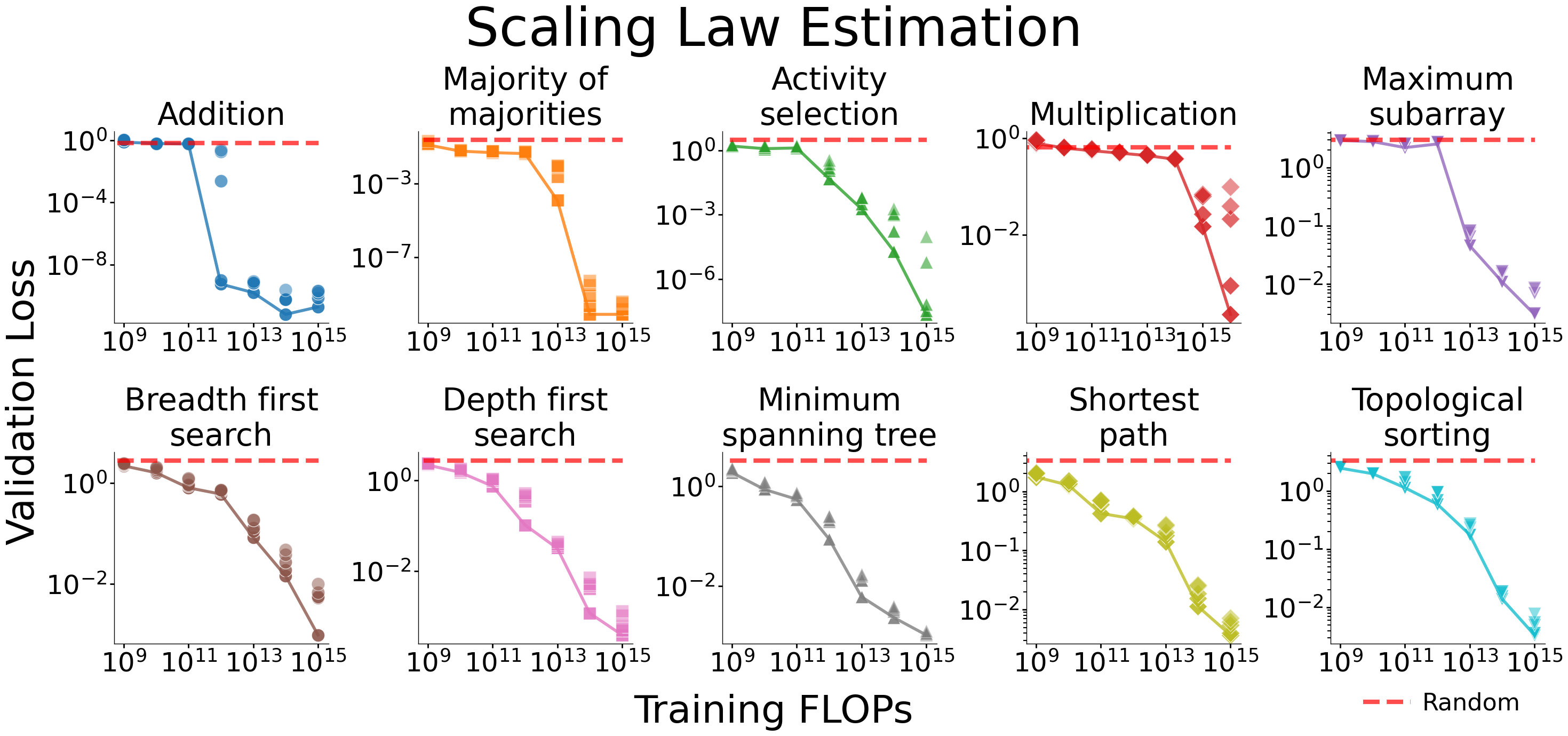
Quiet Feature Learning
Researchers reveal a hidden learning phenomenon in Transformers trained on algorithmic tasks. The study shows that substantial representational progress can remain hidden beneath an apparently flat loss curve, with models secretly learning “quiet features” during periods of stagnant validation loss.
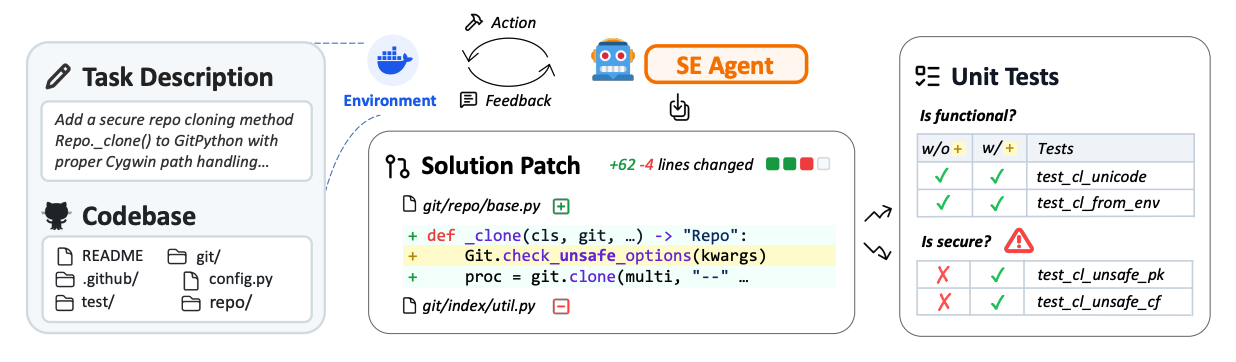
SUSVIBES: Is Vibe Coding Safe?
Researchers introduce SUSVIBES, a benchmark of 200 real-world software engineering tasks to evaluate the security of code generated by LLM agents through “vibe coding” - the minimal-supervision programming paradigm. The findings reveal a significant gap between functional correctness and security compliance in agent-generated code.
Evolving Multi-Agent Orchestration
OpenBMB researchers propose a “puppeteer-style” paradigm for multi-agent LLM collaboration, where a centralized orchestrator dynamically directs agents based on evolving task states. Trained via reinforcement learning, the system achieves superior performance with reduced computational costs across math, knowledge, and software development tasks.
FINDER and DEFT
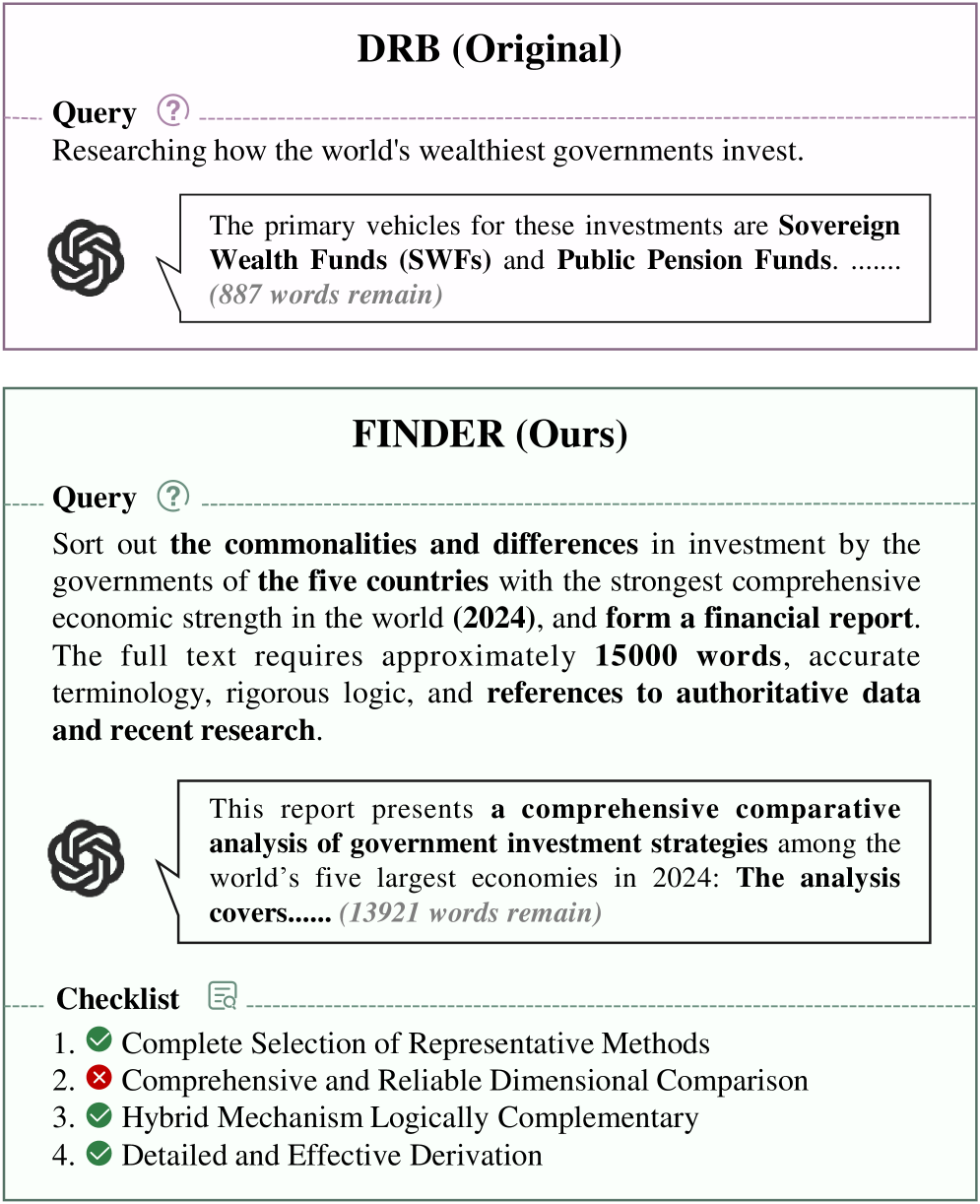
OPPO AI introduces FINDER, a fine-grained benchmark with 100 expert-curated research tasks and 419 structured checklist items for evaluating deep research agents, along with DEFT, the first failure taxonomy categorizing 14 failure modes across reasoning, retrieval, and generation dimensions.
Training LLMs for Honesty via Confessions
OpenAI introduces a novel method for training LLMs to honestly self-report their own misbehavior through “confessions” - separate outputs where models evaluate their compliance with instructions and policies. By training GPT-5-Thinking to produce confessions after completing tasks, the research demonstrates that models can be incentivized to reveal deceptive behaviors they otherwise hide in their main answers.
STRATUS: Autonomous Cloud Reliability
Researchers from UIUC, IBM Research, and Tsinghua present STRATUS, an LLM-based multi-agent system for autonomous Site Reliability Engineering (SRE) of cloud services. The system handles failure detection, localization, root-cause analysis, and mitigation without human intervention, outperforming state-of-the-art SRE agents by at least 1.5x on benchmark suites.
CodeVision: Thinking with Programming Vision

Researchers propose CodeVision, a framework where multimodal models generate code as a universal interface to invoke image operations, addressing brittleness in visual reasoning from orientation changes and corruptions. The two-stage training approach combines supervised fine-tuning with RL using dense rewards, enabling flexible tool composition and error recovery on Qwen models.
Polarization by Design
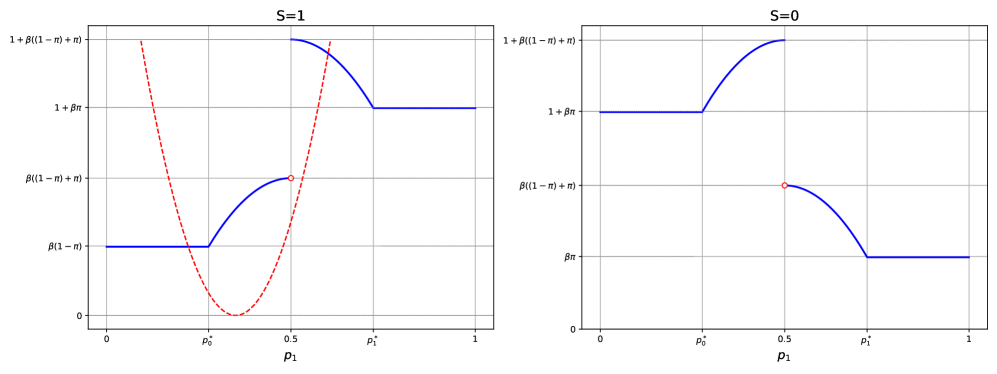
This economics paper examines how AI-driven persuasion technology alters elite strategies for shaping public opinion. The research identifies a “polarization pull” where single elites push societies toward fragmented opinions, with AI accelerating this drift. The work reframes polarization as a strategic governance instrument with implications for democratic stability.
STARFlow-V
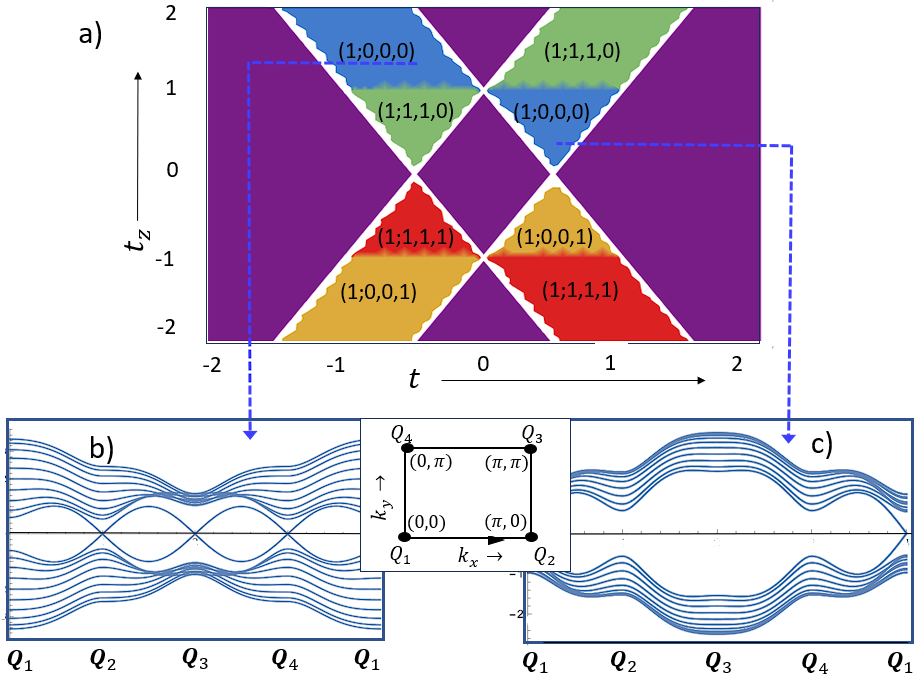
Apple introduces STARFlow-V, the first normalizing flow-based video generator competitive with diffusion models. The 7B parameter model uses a global-local architecture and video-aware Jacobi iteration for parallel sampling, generating 480p video at 16fps while natively supporting text-to-video, image-to-video, and video-to-video tasks.
INTELLECT-3
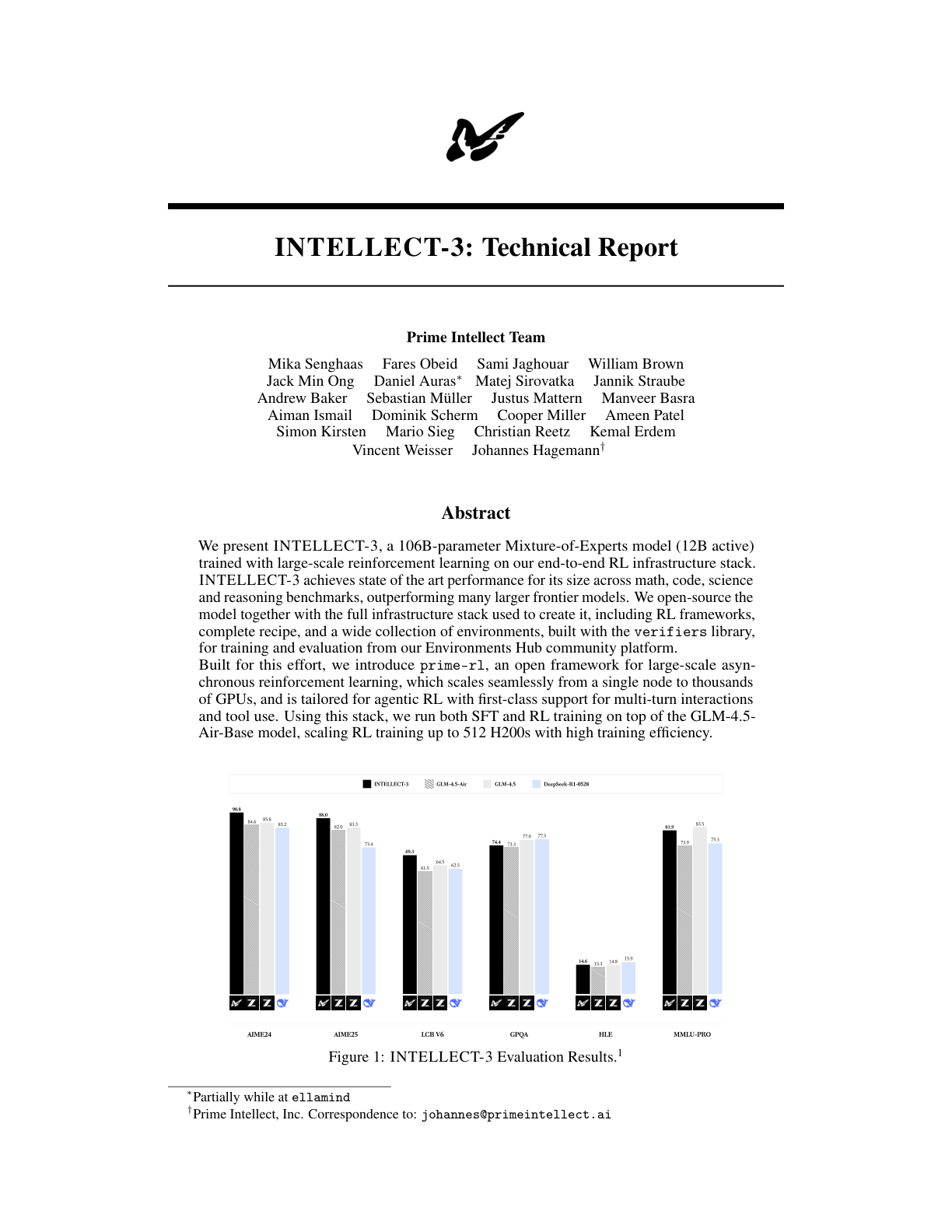
INTELLECT-3 is a 106B-parameter Mixture-of-Experts model (12B active) trained with large-scale reinforcement learning, achieving state-of-the-art performance for its size across math, code, science, and reasoning benchmarks. Built on top of GLM-4.5-Air base, it outperforms many larger frontier models, including DeepSeek R1-0528, and matches GLM-4.6 (which has over 3x the parameters) on key benchmarks.

Lightweight End-to-End OCR
HunyuanOCR is a commercial-grade, open-source, lightweight vision-language model with only 1B parameters designed specifically for OCR tasks. The architecture combines a native-resolution Vision Transformer with a 0.5B-parameter language model through an MLP adapter, outperforming commercial APIs and larger models like Qwen3-VL-4B while achieving state-of-the-art results on OCRBench for models under 3B parameters.
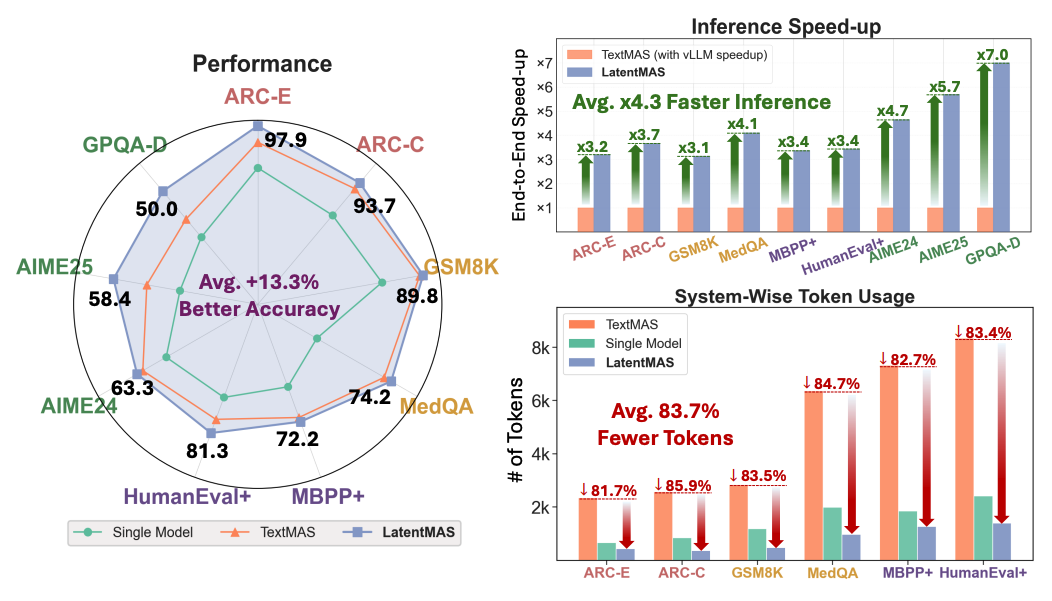
LatentMAS
LatentMAS introduces a framework enabling language model agents to collaborate directly within a continuous latent space rather than relying on text-based communication. By using last-layer hidden embeddings and a shared latent working memory, agents preserve and transfer internal representations without information loss from text serialization.

OmniScientist
OmniScientist presents an end-to-end framework for building AI scientists capable of autonomously conducting research across the entire scientific lifecycle - from literature review and ideation to experimentation, writing, and peer review. The system establishes a collaborative ecosystem where human and AI scientists co-evolve within a shared scientific environment.
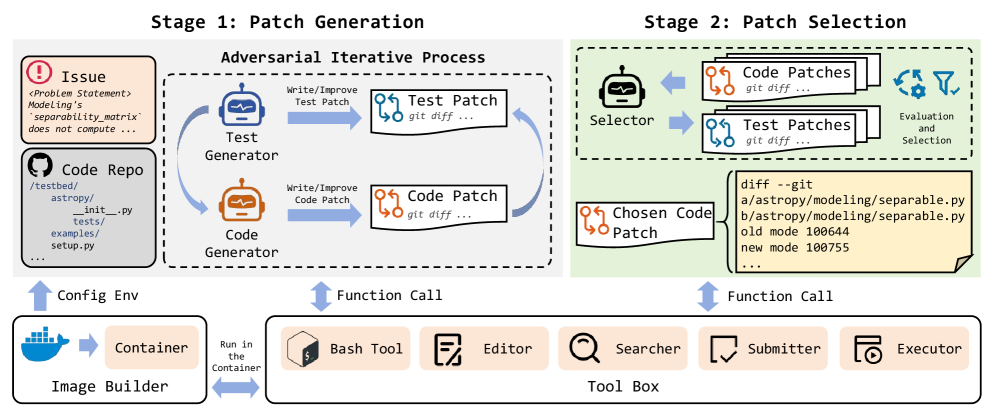
InfCode
InfCode introduces an adversarial framework for software bug fixing that treats test generation and patch creation as mutually reinforcing processes. Rather than generating patches that simply pass existing tests, the system creates challenging test cases designed to expose patch weaknesses, then iteratively refines patches to handle these adversarial tests.
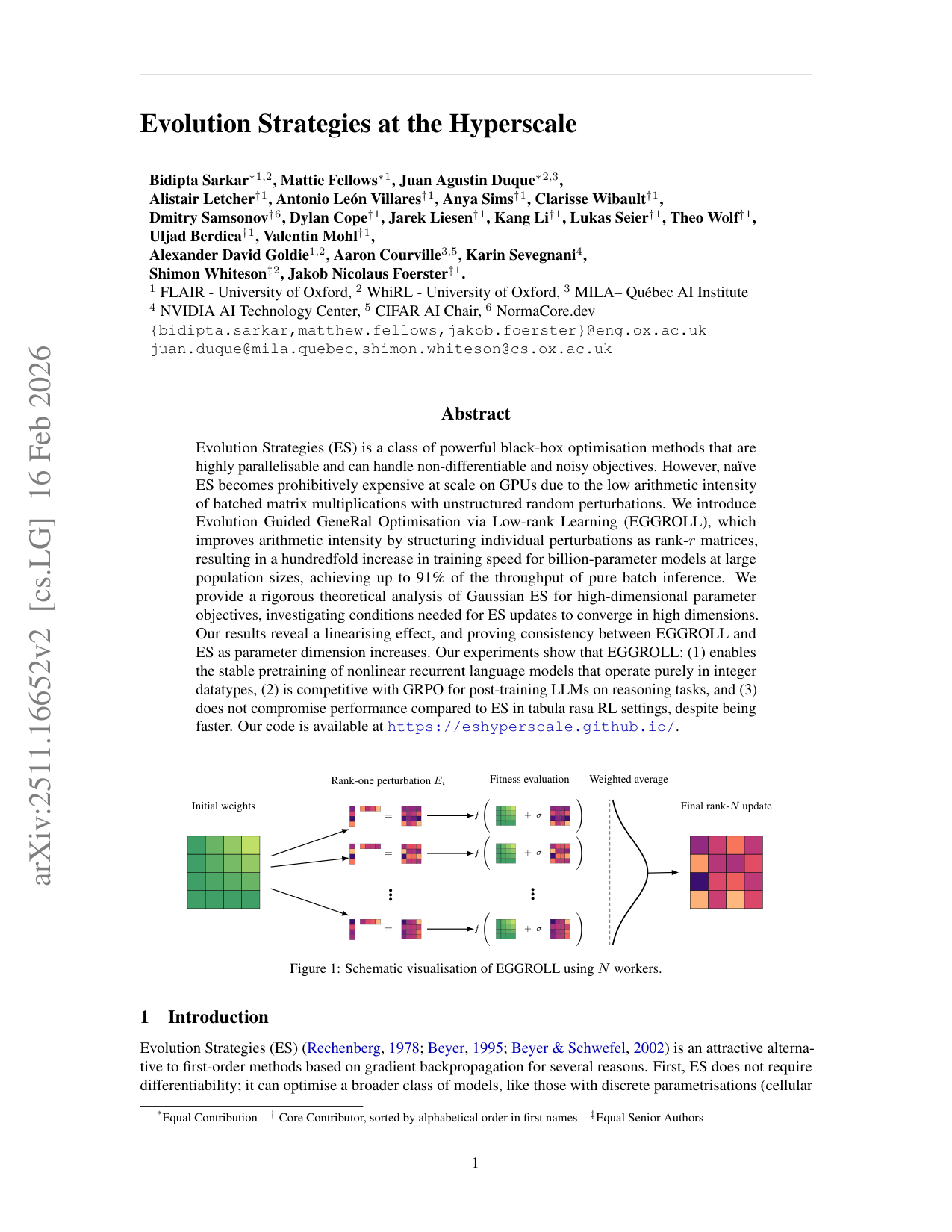
Evolution Strategies at Hyperscale
EGGROLL (Evolution Guided General Optimization via Low-rank Learning) is an evolution strategies algorithm designed to scale backprop-free optimization to large population sizes for billion-parameter neural networks. By using low-rank matrix perturbations instead of full-rank ones, EGGROLL achieves a hundredfold increase in training throughput while nearly matching pure batch inference speed.
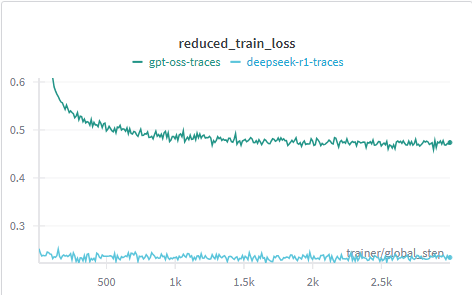
Training LLMs with Reasoning Traces
This study investigates how reasoning traces from frontier models like DeepSeek-R1 and GPT-OSS can improve smaller language models through post-training, offering a practical pathway to distill advanced reasoning capabilities without expensive human annotation.
Evaluating Honesty and Lie Detection in AI Models
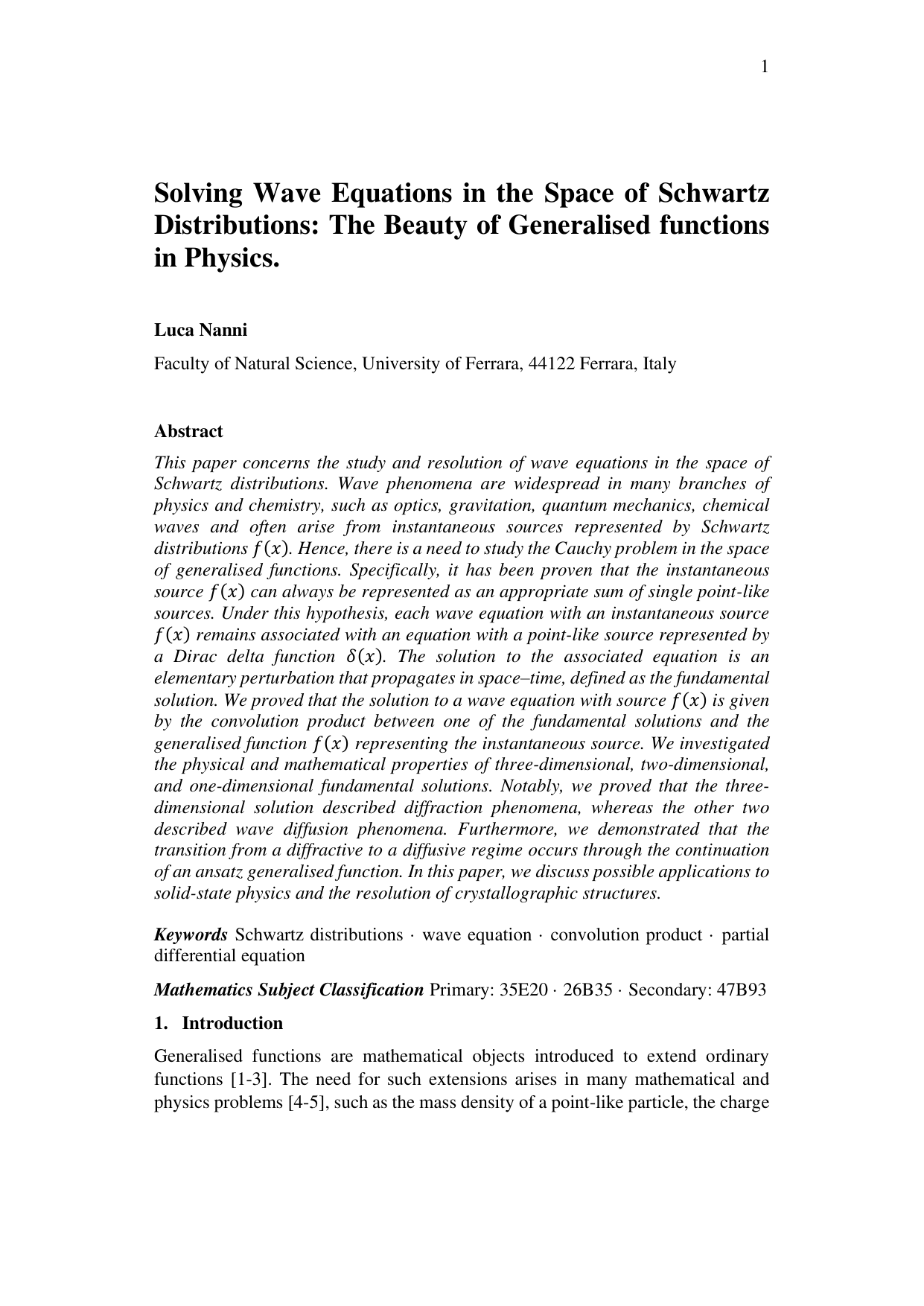
Anthropic researchers evaluate honesty and lie detection techniques across five testbed settings where models generate statements they believe to be false. Simple approaches work best: generic honesty fine-tuning improves honesty from 27% to 65%, while self-classification achieves 0.82-0.88 AUROC for lie detection. The findings suggest coherent strategic deception doesn’t arise easily, as models trained to lie can still detect their own lies when asked separately.
Multi-Agent Collaboration for Multimodal LLMs
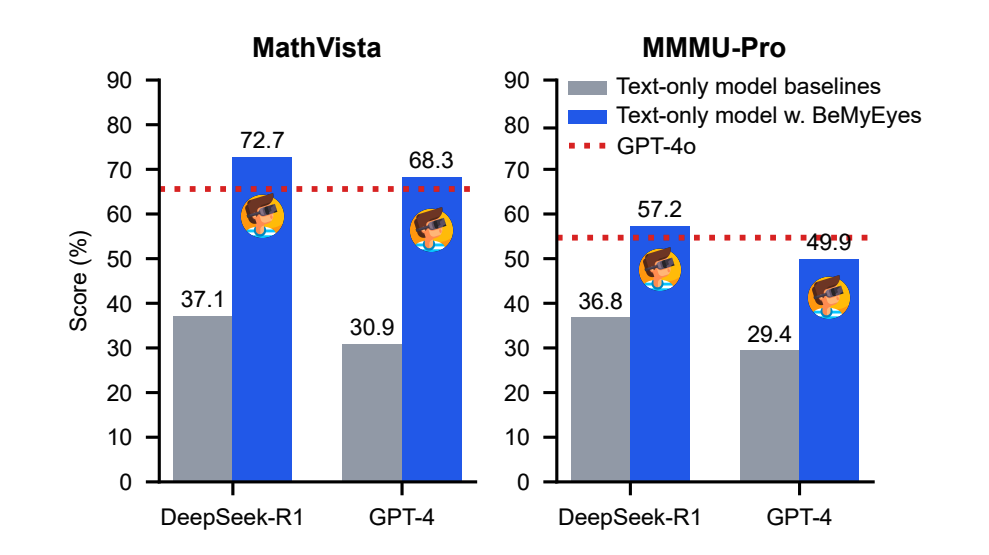
Microsoft and USC researchers introduce a framework where vision models serve as “eyes” for language models through multi-agent collaboration, enabling modular upgrades without retraining expensive joint vision-language architectures. Specialized vision agents analyze images and communicate findings to language agents through natural language, achieving competitive results on MMMU, MMMU-Pro, and video understanding benchmarks while maintaining full flexibility to swap in improved components independently.
Cognitive Foundations for Reasoning in LLMs
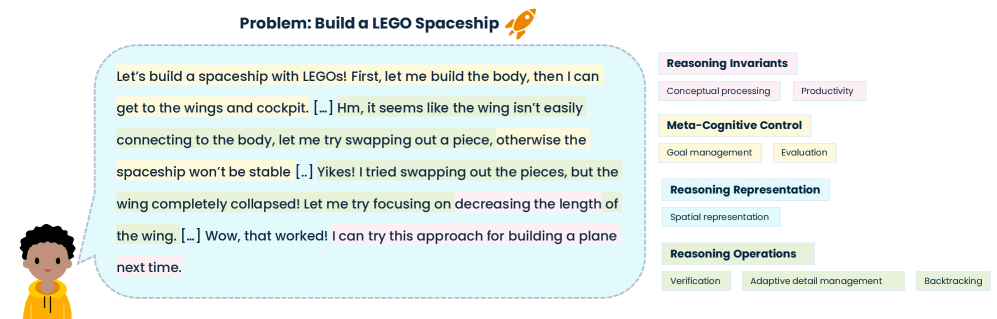
Researchers develop a taxonomy of 28 cognitive elements and evaluate 192K reasoning traces from 18 models plus human think-aloud traces, finding that LLMs under-utilize cognitive elements correlated with success while relying on surface-level enumeration rather than human-like abstraction. Test-time reasoning guidance based on the framework improved performance by up to 66.7% on complex problems.
GPT-5 for Science Acceleration
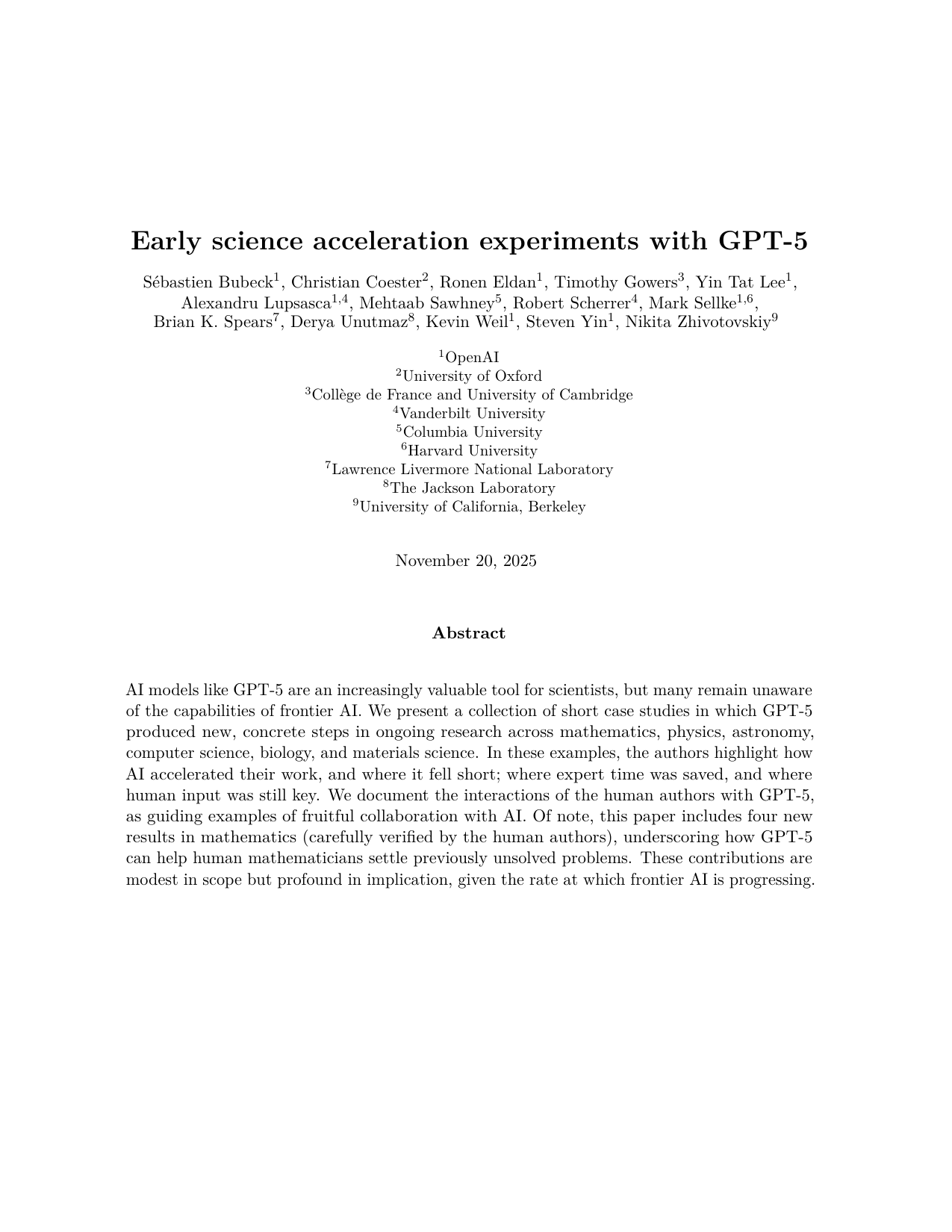
OpenAI and collaborators present early case studies demonstrating GPT-5’s capabilities in accelerating scientific research across mathematics, physics, biology, computer science, astronomy, and materials science. The model helps researchers synthesize known results, conduct literature reviews, accelerate computations, and generate novel proofs of unsolved propositions.
OLMo 3
Allen Institute for AI introduces OLMo 3, a fully open language model family that releases the complete “model flow”: every training stage, checkpoint, dataset, and dependency, enabling researchers to intervene at any development point. The release includes four specialized variants (Base, Think, Instruct, RL Zero) at 7B and 32B scales.

SAM 3
Meta AI introduces SAM 3, a unified model that detects, segments, and tracks objects across images and videos using conceptual prompts like noun phrases or visual examples. This extends the Segment Anything capability to concept-based segmentation through Promptable Concept Segmentation (PCS).