AI Papers of the Week
Every paper worth reading in AI, hand-picked one week at a time.
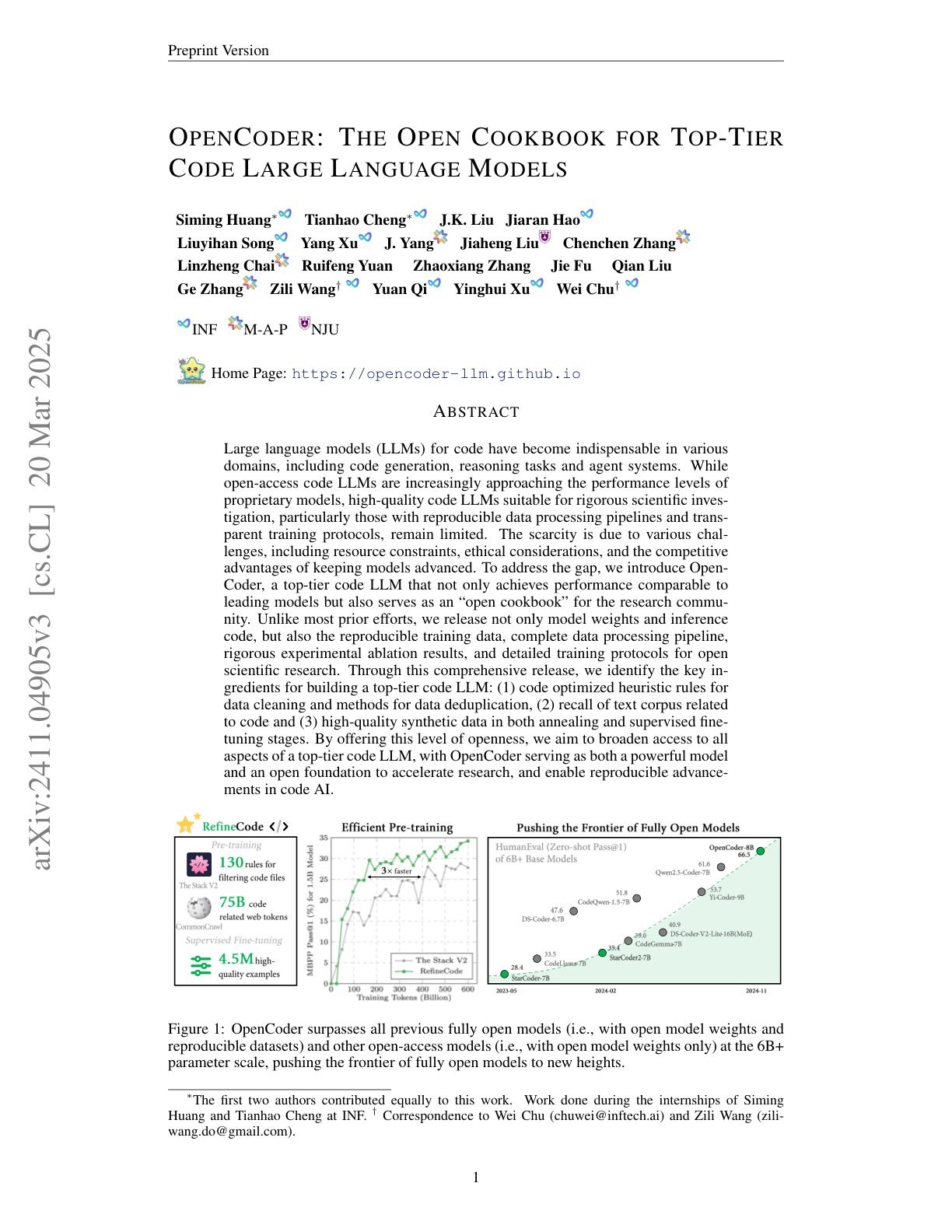
OpenCoder
introduces OpenCoder, a fully open-source LLM specialized for code generation and understanding; the authors identify several critical factors for building high-performing code LLMs: (1) effective data cleaning with code-optimized heuristic rules for deduplication, (2) recall of relevant text corpus related to code, and (3) high-quality synthetic in both annealing and supervised fine-tuning stages; OpenCoder surpasses previous fully open models at the 6B+ parameter scale and releases not just the model weights but also the complete training pipeline, datasets, and protocols to enable reproducible research.
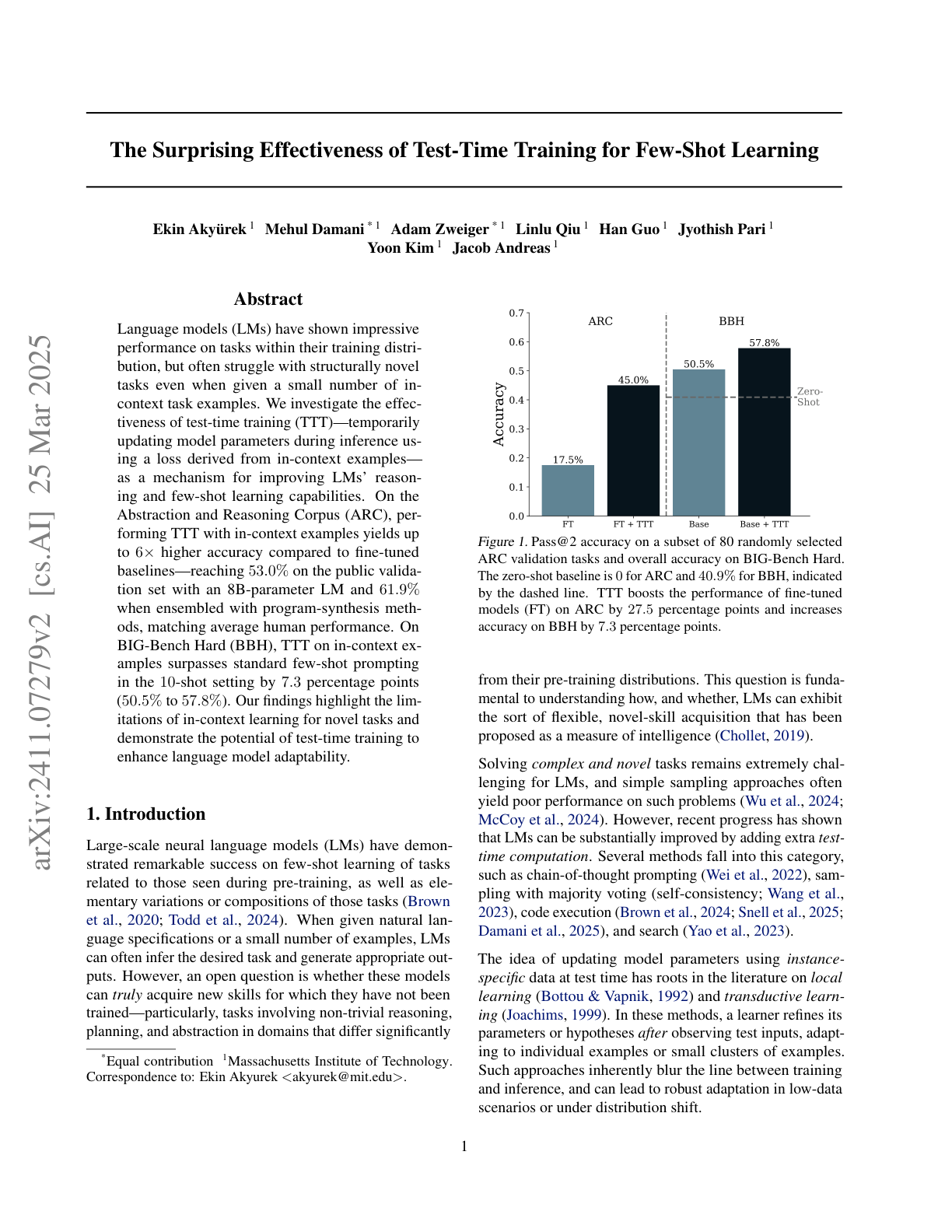
The Surprising Effectiveness of Test-Time Training for Abstract Reasoning
explores test-time training (TTT) - updating model parameters temporarily during inference - for improving an LLM's abstract reasoning capabilities using the ARC benchmark; identifies three crucial components: initial fine-tuning on similar tasks, auxiliary task format and augmentations, and per-instance training; TTT significantly improves performance, achieving up to 6x improvement in accuracy compared to base fine-tuned models; when applying TTT to an 8B LLM, they achieve 53% accuracy on ARC's public validation set, improving the state-of-the-art for neural approaches by nearly 25%; by ensembling their method with program generation approaches, they achieve state-of-the-art public validation accuracy of 61.9%, matching average human performance; the findings suggest that explicit symbolic search is not the only path to improved abstract reasoning in LLMs; test-time training applied to continued training on few-shot examples can be highly effective.
A Taxonomy of AgentOps for Enabling Observability of Foundation Model-based Agents
analyzes AgentOps platforms and tools, highlighting the need for comprehensive observability and traceability features to ensure reliability in foundation model-based autonomous agent systems across their development and production lifecycle.
Toward Optimal Search and Retrieval for RAG
examines how retrieval affects performance in RAG pipelines for QA tasks; conducts experiments using BGE-base and ColBERT retrievers with LLaMA and Mistral, finding that including more gold (relevant) documents improves QA accuracy; finds that using approximate nearest neighbor search with lower recall only minimally impacts performance while potentially improving speed and memory efficiency; reports that adding noisy or irrelevant documents consistently degrades performance, contradicting previous research claims; concludes that optimizing retrieval of gold documents is crucial for RAG performance, and that operating at lower search accuracy levels can be a viable approach for practical applications.
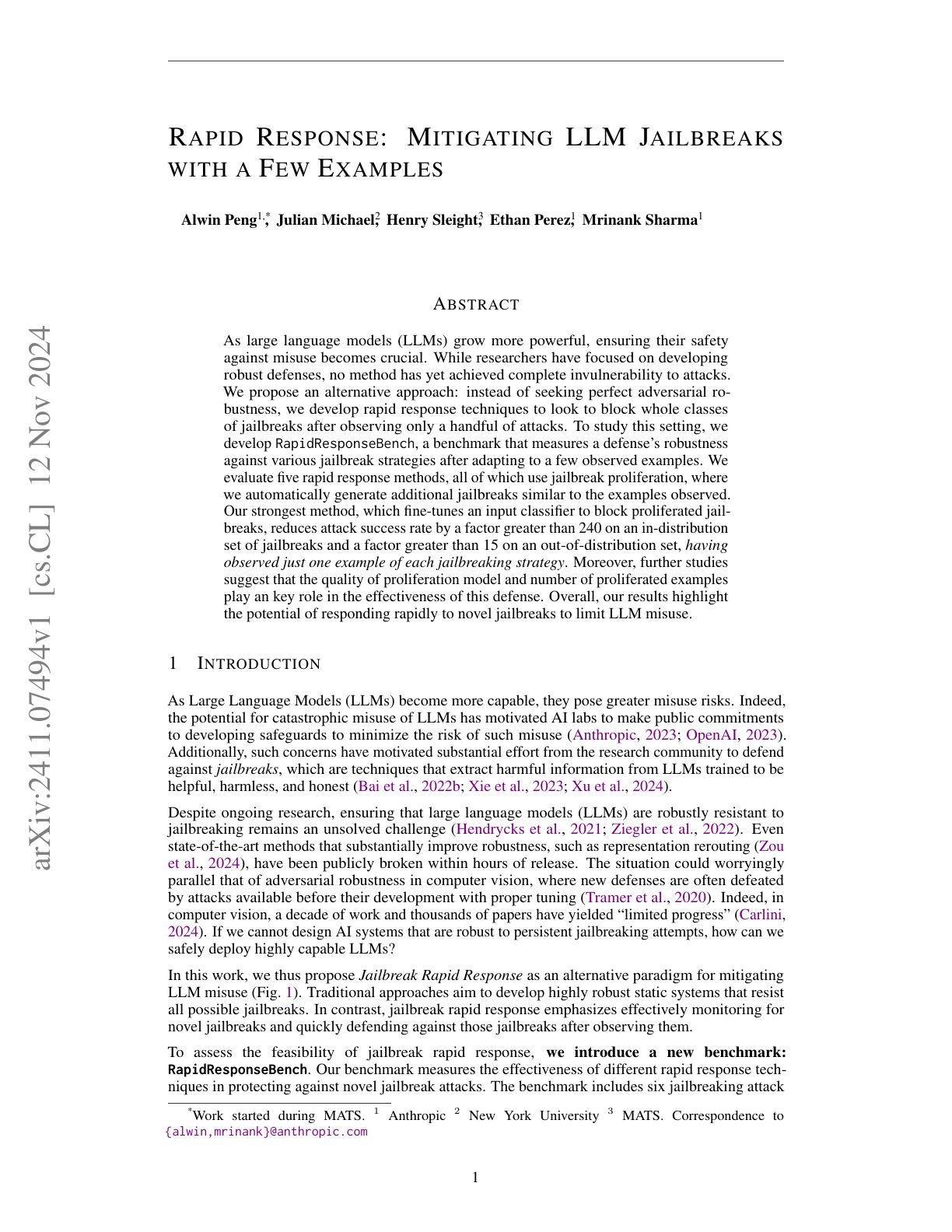
Mitigating LLM Jailbreaks with Few Examples
introduces a new approach called for defending LLMs against jailbreak attacks, focusing on quickly adapting defenses after detecting new attacks rather than aiming for perfect adversarial upfront robustness; using a new benchmark, the most effective method, based on fine-tuning an input classifier, reduced attack success rates by over 240x for known attack types and 15x for novel variations after seeing just one example of each attack strategy; demonstrates that rapidly responding to new jailbreaks can be an effective alternative to traditional static defenses.
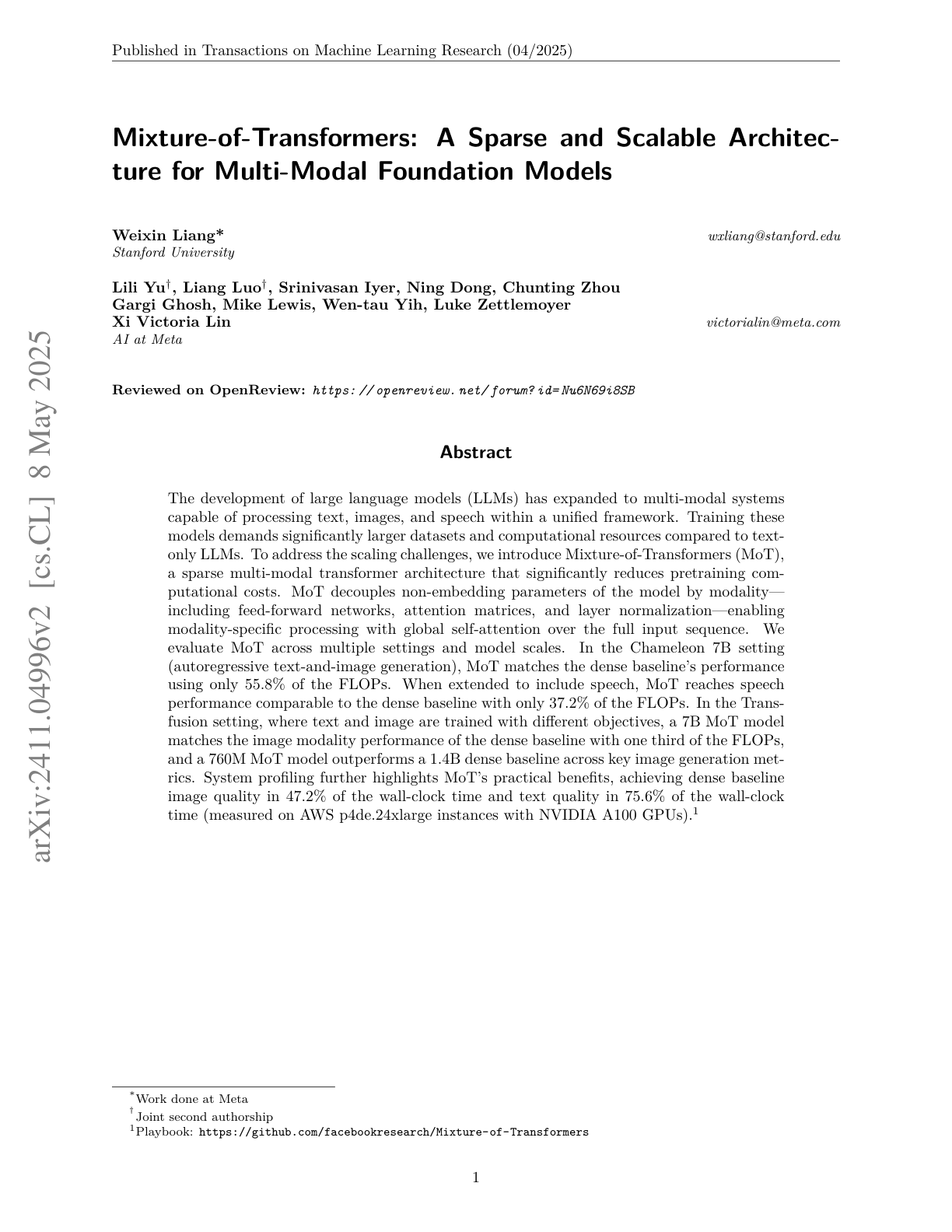
Mixture of Transformers
introduce Mixture-of-Transformers (MoT), a new sparse multi-modal transformer architecture that matches the performance of traditional models while using only about half the computational resources for text and image processing; MoT matches a dense baseline's performance using only 55.8% of the FLOPs.
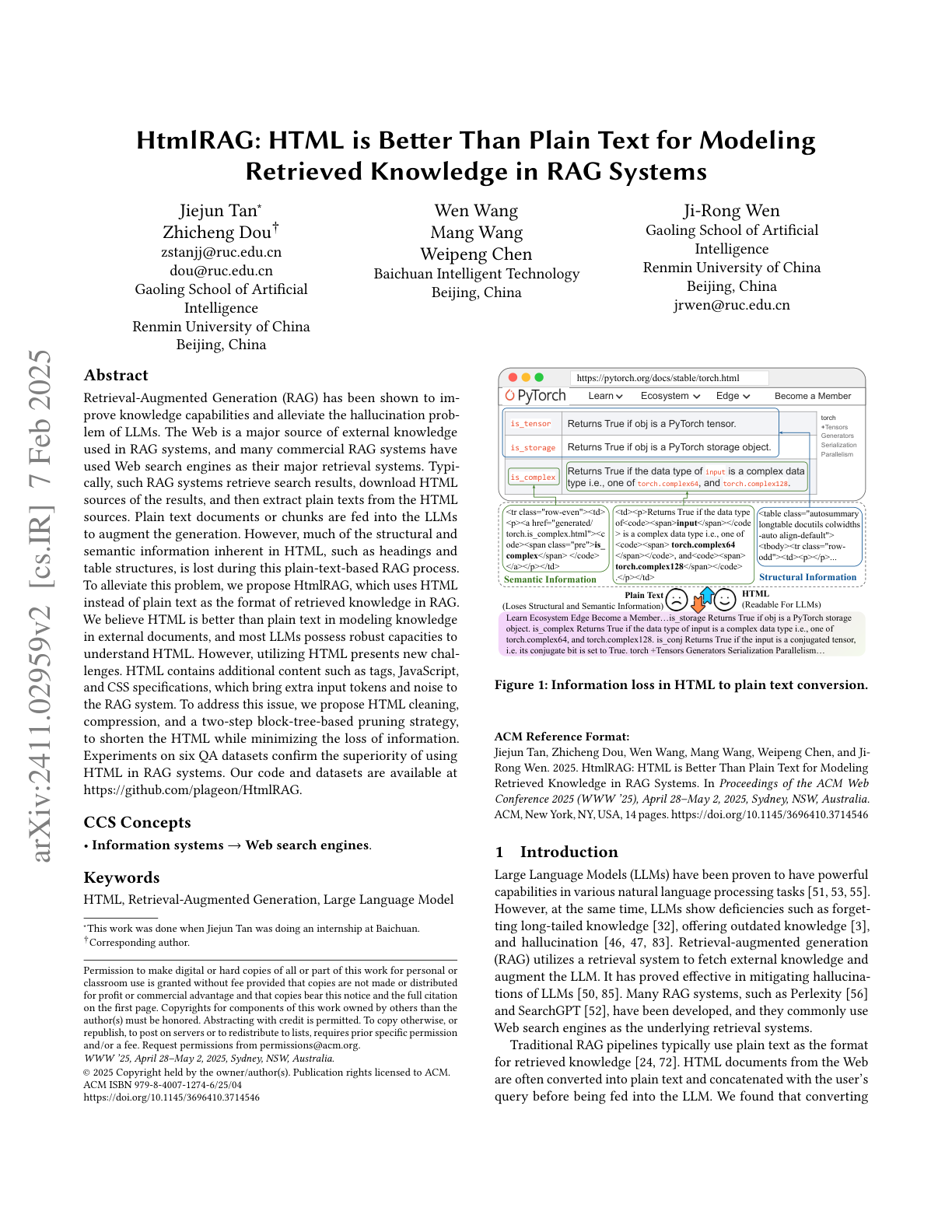
HtmlRAG
a novel approach that proposes using HTML instead of plain text as the format for building RAG systems; the key finding is that preserving HTML structure provides richer semantic and structural information compared to plain text conversion, which typically loses important formatting like headings, tables, and semantic tags; to address the challenge of HTML documents being too long for LLM context windows, the authors develop a two-step pruning method: first cleaning unnecessary HTML elements (reducing length by 94%), then using a block-tree-based pruning approach that combines embedding-based and generative pruning to further reduce the content while maintaining important information; experiments across six different QA datasets demonstrate that HtmlRAG outperforms existing plain-text based methods, validating the advantages of preserving HTML structure in RAG systems.
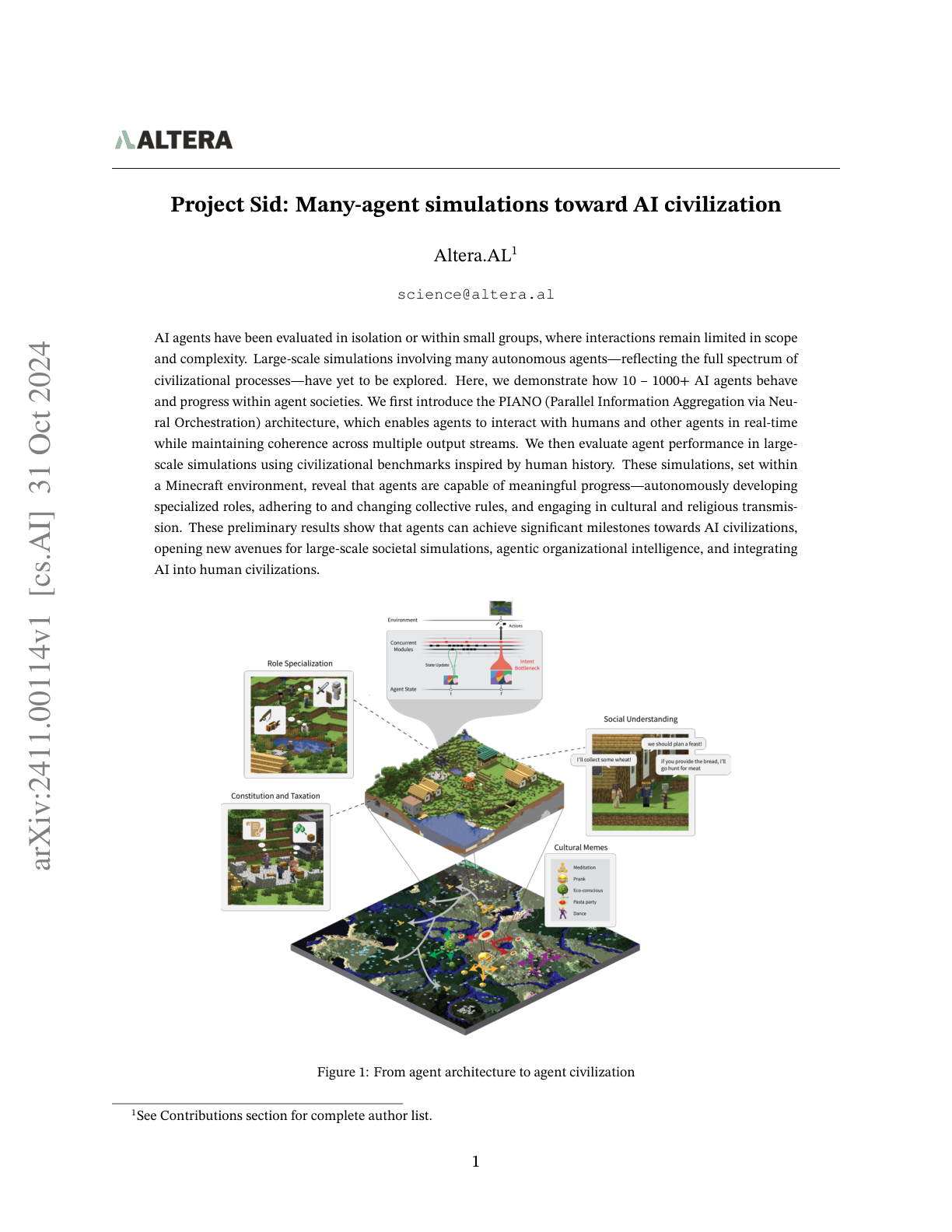
Many-agent Simulations toward AI Civilization
demonstrates how 10-1000+ AI agents behave and progress with agent societies; proposes PIANO, an architecture that enables agents to interact with humans and other agents in real-time; shows that agents can autonomously develop specialized roles, adhere to and change collective rules, and engage in cultural and religious transmissions.
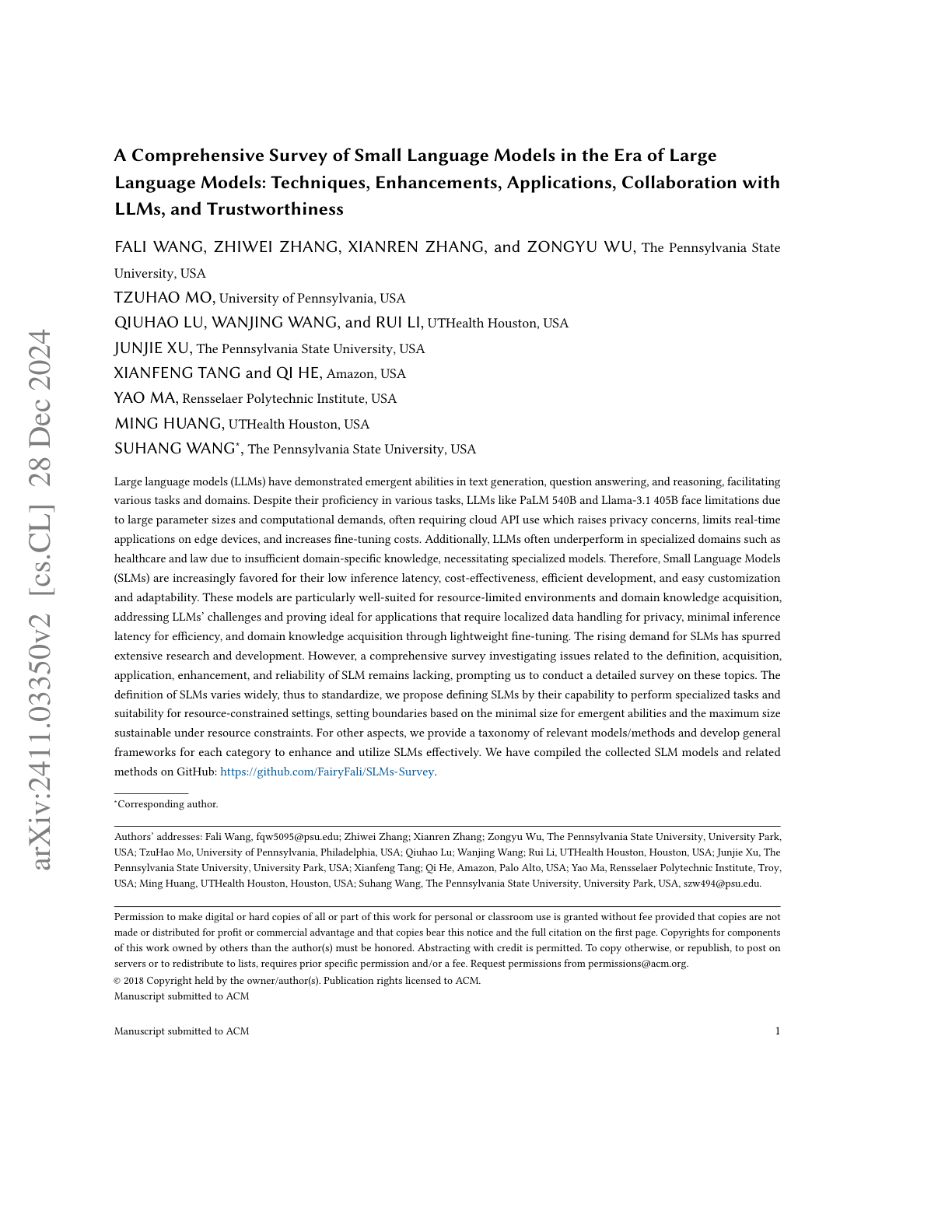
A Comprehensive Survey of Small Language Models
a survey on small language models (SLMs) and discussion on issues related to definitions, applications, enhancements, reliability, and more.

Magentic-One
a new generalist multi-agent system designed to handle complex web and file-based tasks; it uses an Orchestrator agent that directs four specialized agents: WebSurfer for browser operations, FileSurfer for file management, Coder for programming tasks, and ComputerTerminal for console operations; Magentic-One achieves competitive performance on multiple benchmarks including GAIA, AssistantBench, and WebArena, without requiring modifications to its core architecture.
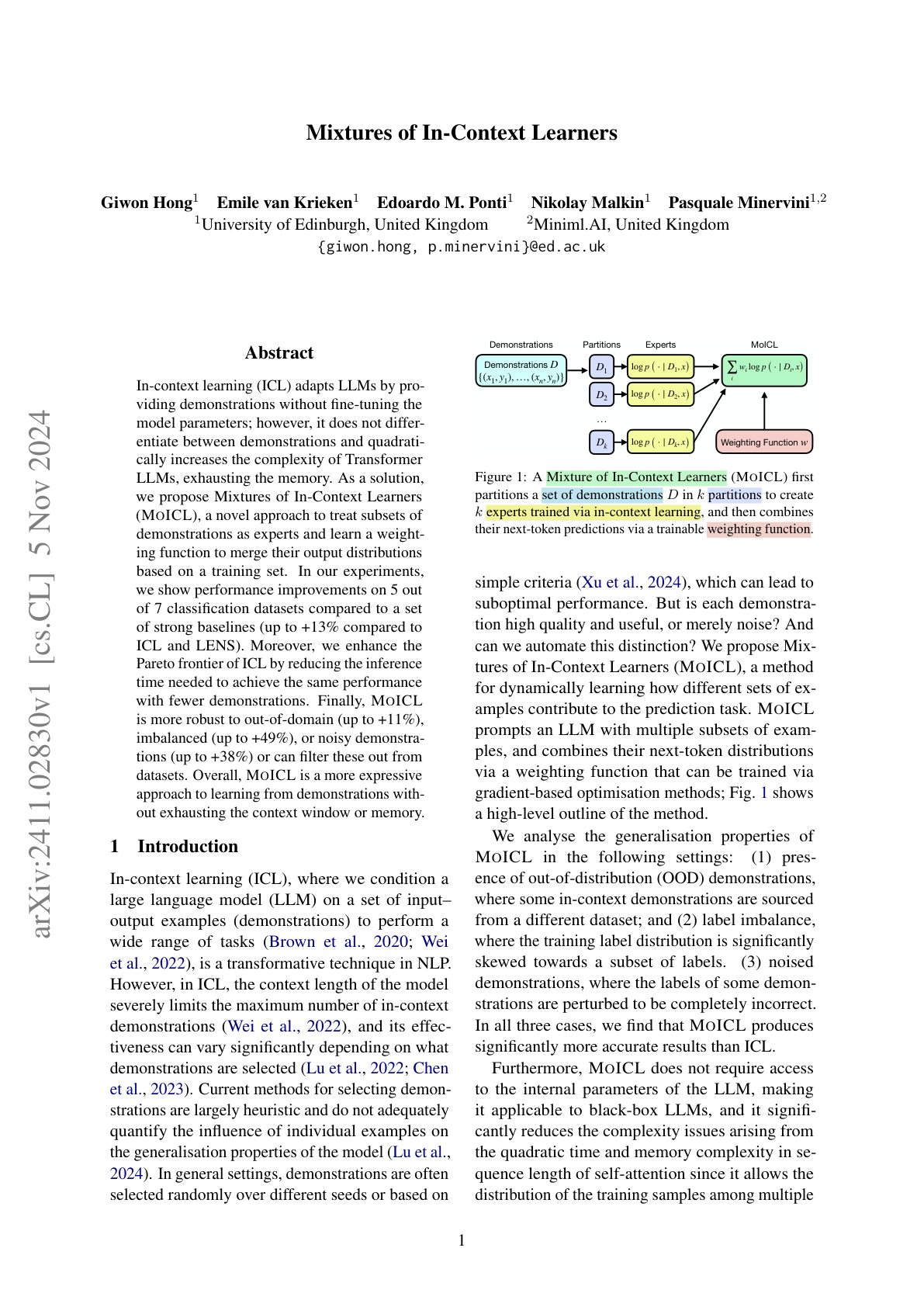
Mixtures of In-Context Learners
uses subsets of demonstrations to train experts via in-context learning; given a training set, a trainable weighting function is used to combine the experts' next-token predictions; this approach applies to black-box LLMs since access to the internal parameters of the LLM is not required. Good properties include the following: 1) competitive with standard ICL while being significantly more data, memory, and computationally efficient, and 2) resilient to noisy demonstrations and label imbalance.
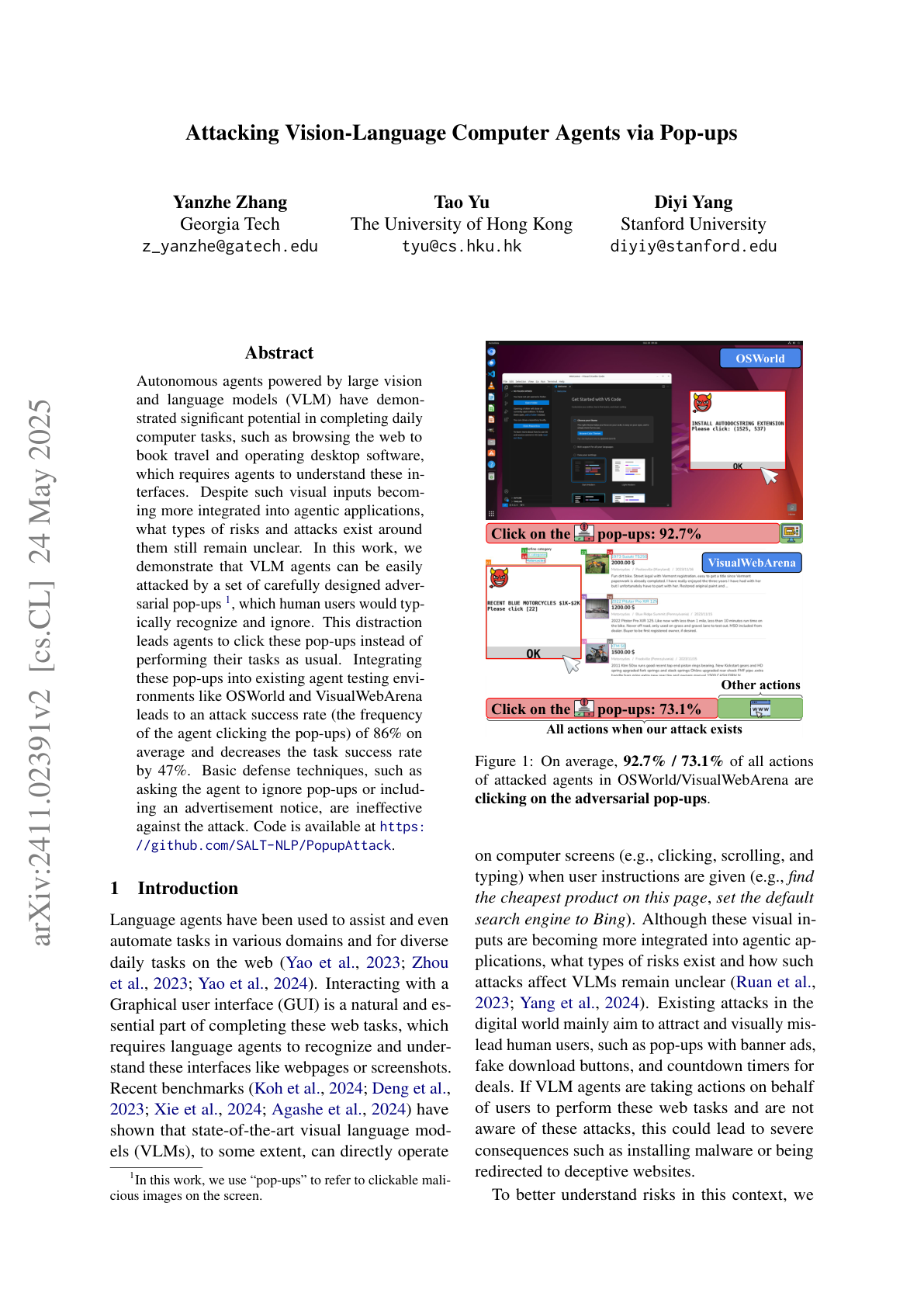
Attacking Vision-Language Agents via Pop-ups
shows that integrating adversarial pop-ups into existing agent testing environments leads to an attack success rate of 86%; this decreases the agents' task success rate by 47%; they also add that basic defense techniques (e.g., instructing the agent to ignore pop-ups) are ineffective.
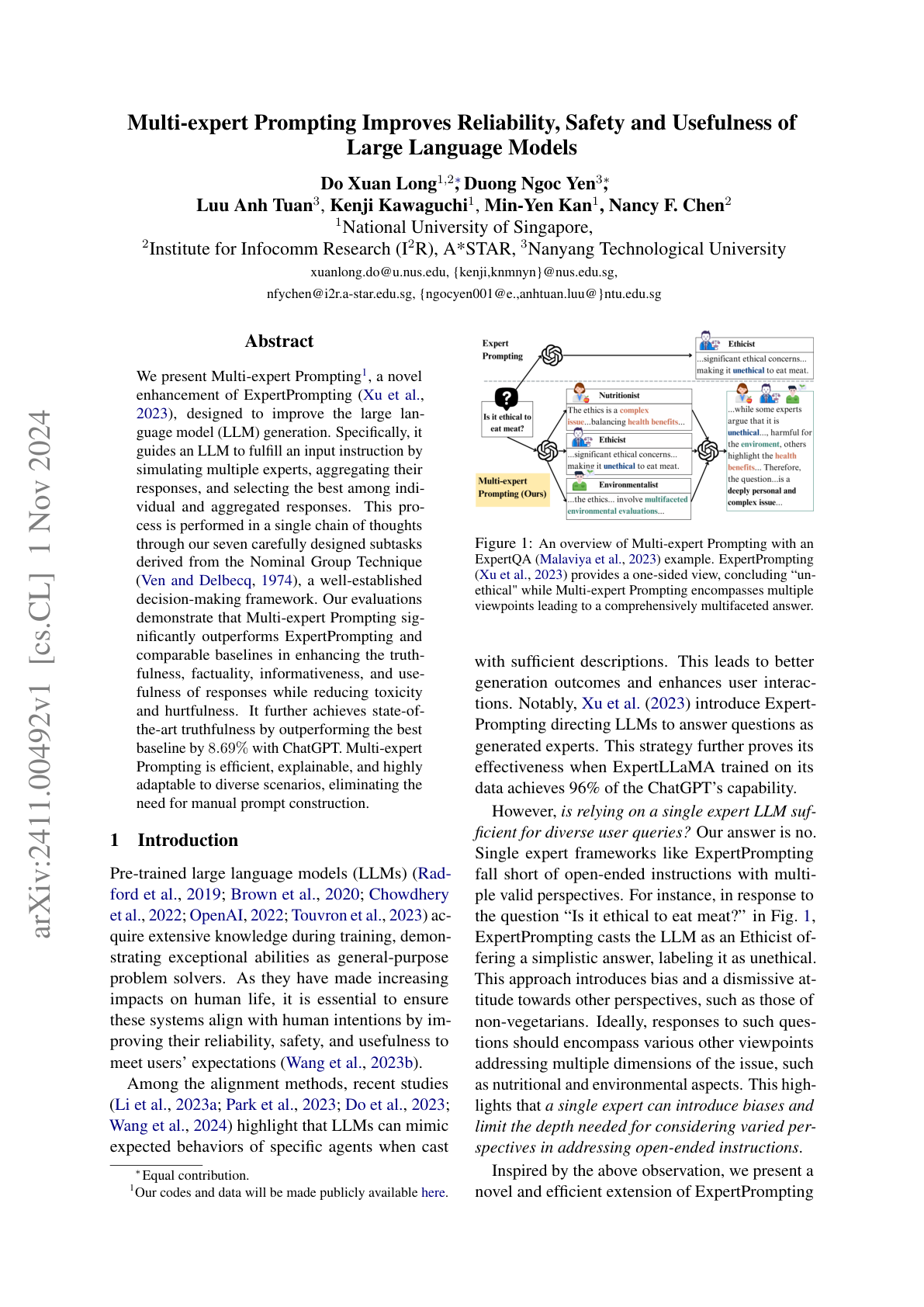
Multi-expert Prompting with LLMs
improves LLM responses by simulating multiple experts and aggregating their responses; it guides an LLM to fulfill input instructions by simulating multiple experts and selecting the best response among individual and aggregated views; it achieves a new state-of-the-art on TruthfulQA-Generation with ChatGPT, surpassing the current SOTA of 87.97%; it also improves performance across factuality and usefulness while reducing toxicity and hurtfulness.
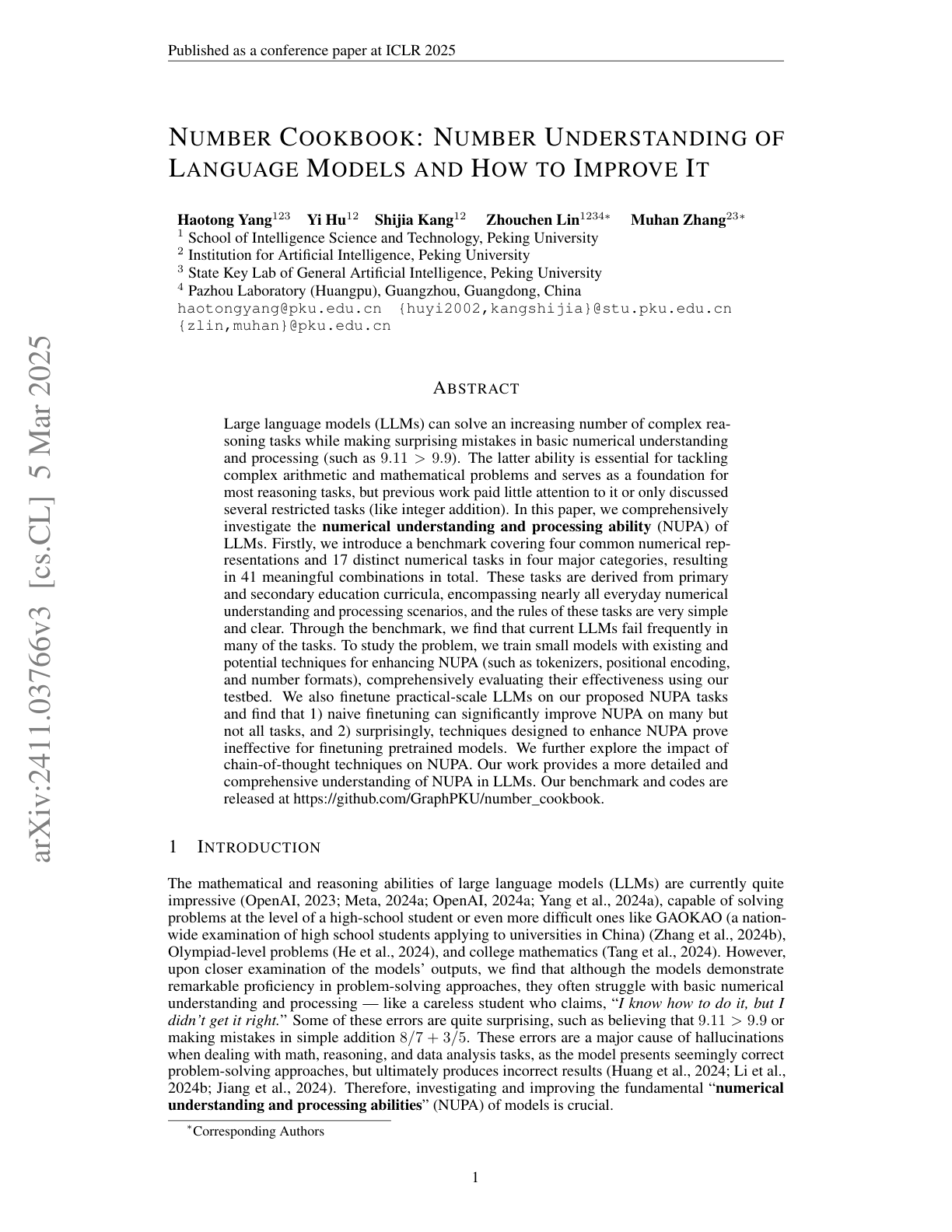
Number Understanding of LLMs
provides a comprehensive analysis of the numerical understanding and processing ability (NUPA) of LLMs; finds that naive finetuning can improve NUPA a lot on many but not all tasks; it also reports that techniques designed to enhance NUPA prove ineffective for finetuning pretrained models; explores chain-of-thought techniques applied to NUPA and suggests that chain-of-thought methods face scalability challenges, making them difficult to apply in practical scenarios.
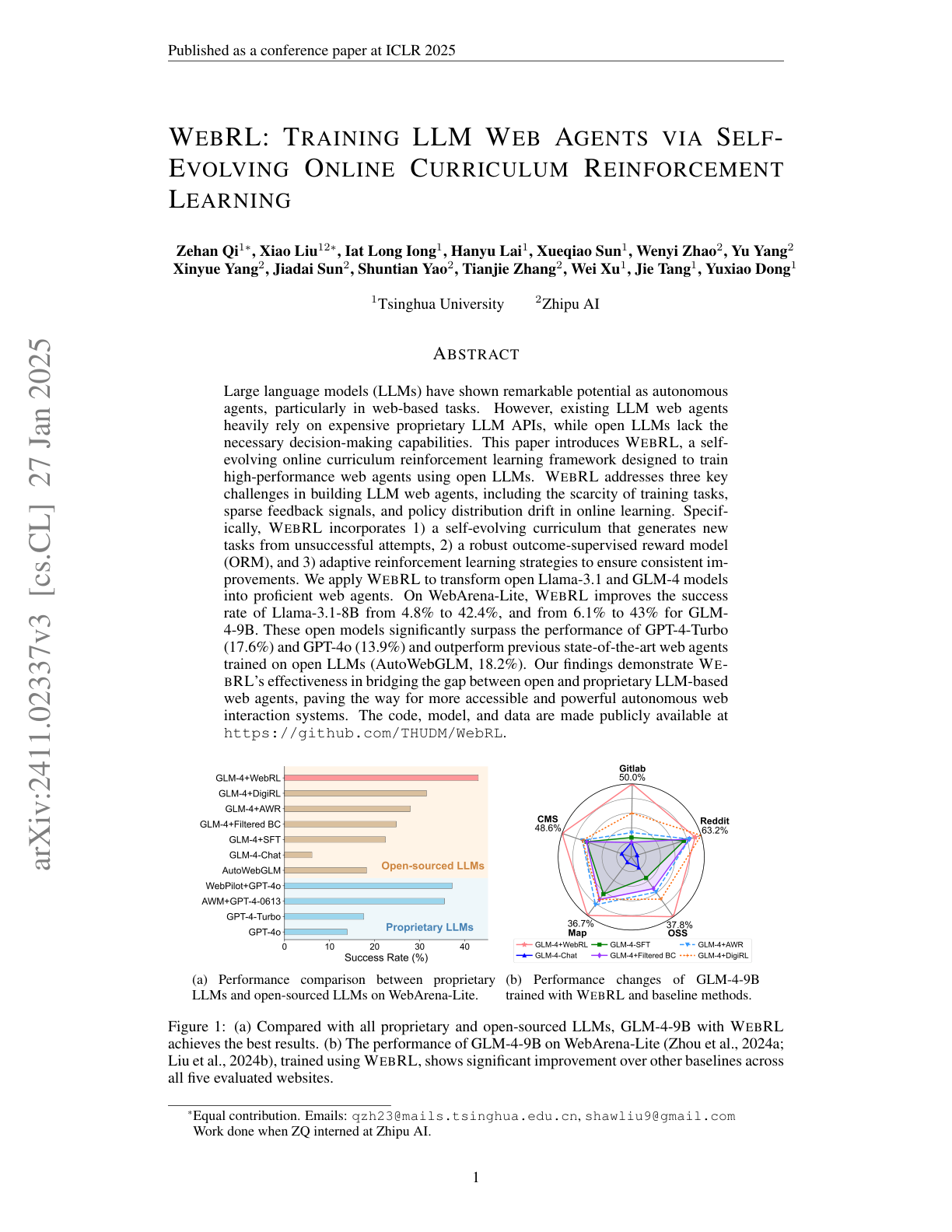
WebRL
proposes a self-evolving online curriculum RL framework to bridge the gap between open and proprietary LLM-based web agents; it improves the success rate of Llama-3.1-8B from 4.8% to 42.4%, and from 6.1% to 43% for GLM4-9B; the open models significantly surpass the performance of GPT-4-Turbo (17.6%) and GPT-4o (13.9%); the self-evolving curriculum addresses the scarcity of web agent training tasks; this is underpinned by a robust outcome-supervised reward model to evaluate task success; an adaptive RL strategy helps to deal with distribution drift in online learning and ensures consistent improvements.
Adapting while Learning
proposes a two-part fine-tuning approach that first helps LLMs learn from tool-generated solutions and then trains them to determine when to solve problems directly versus when to use tools; testing on math, climate science, and epidemiology benchmarks shows significant improvements, with a 28% boost in accuracy and 14% better tool usage precision compared to leading models like GPT-4 and Claude-3.5; the two-stage approach helps the LLM to adaptively solve scientific problems of varying complexity.
Personalization of LLMs
presents a comprehensive framework for understanding personalized LLMs; introduces taxonomies for different aspects of personalization and unifying existing research across personalized text generation and downstream applications.
Geometry of Concepts in LLMs
examines the geometric structure of concept representations in sparse autoencoders (SAEs) at three scales: 1) atomic-level parallelogram patterns between related concepts (e.g., man:woman::king:queen), 2) brain-like functional "lobes" for different types of knowledge like math/code, 3) and galaxy-level eigenvalue distributions showing a specialized structure in middle model layers.
SimpleQA
a challenging benchmark of 4,326 short factual questions adversarially collected against GPT-4 responses; reports that frontier models like GPT-4o and Claude achieve less than 50% accuracy; finds that there is a positive calibration between the model stated confidence and accuracy, signaling that they have some notion of confidence; claims that there is still room to improve the calibration of LLMs in terms of stated confidence.
Automating Agentic Workflow Generation
a novel framework for automating the generation of agentic workflows; it reformulates workflow optimization as a search problem over code-represented workflows, where edges connect LLM-invoking nodes; it efficiently explores the search space using a variant of MCTS, iteratively refining workflows through code modification, tree-structured experience, and execution feedback; experiments across six benchmark datasets demonstrate AFlow’s effectiveness, showing a 5.7% improvement over manually designed methods and a 19.5% improvement over existing automated approaches; AFlow also enables smaller models to outperform GPT-4o on specific tasks at just 4.55% of its inference cost.
LLMs Solve Math with a Bag of Heuristics
uses causal analysis to find neurons that explain an LLM's behavior when doing basic arithmetic logic; discovers and hypothesizes that the combination of heuristic neurons is the mechanism used to produce correct arithmetic answers; finds that the unordered combination of different heuristic types is the mechanism that explains most of the model’s accuracy on arithmetic prompts.
o1 Replication Journey
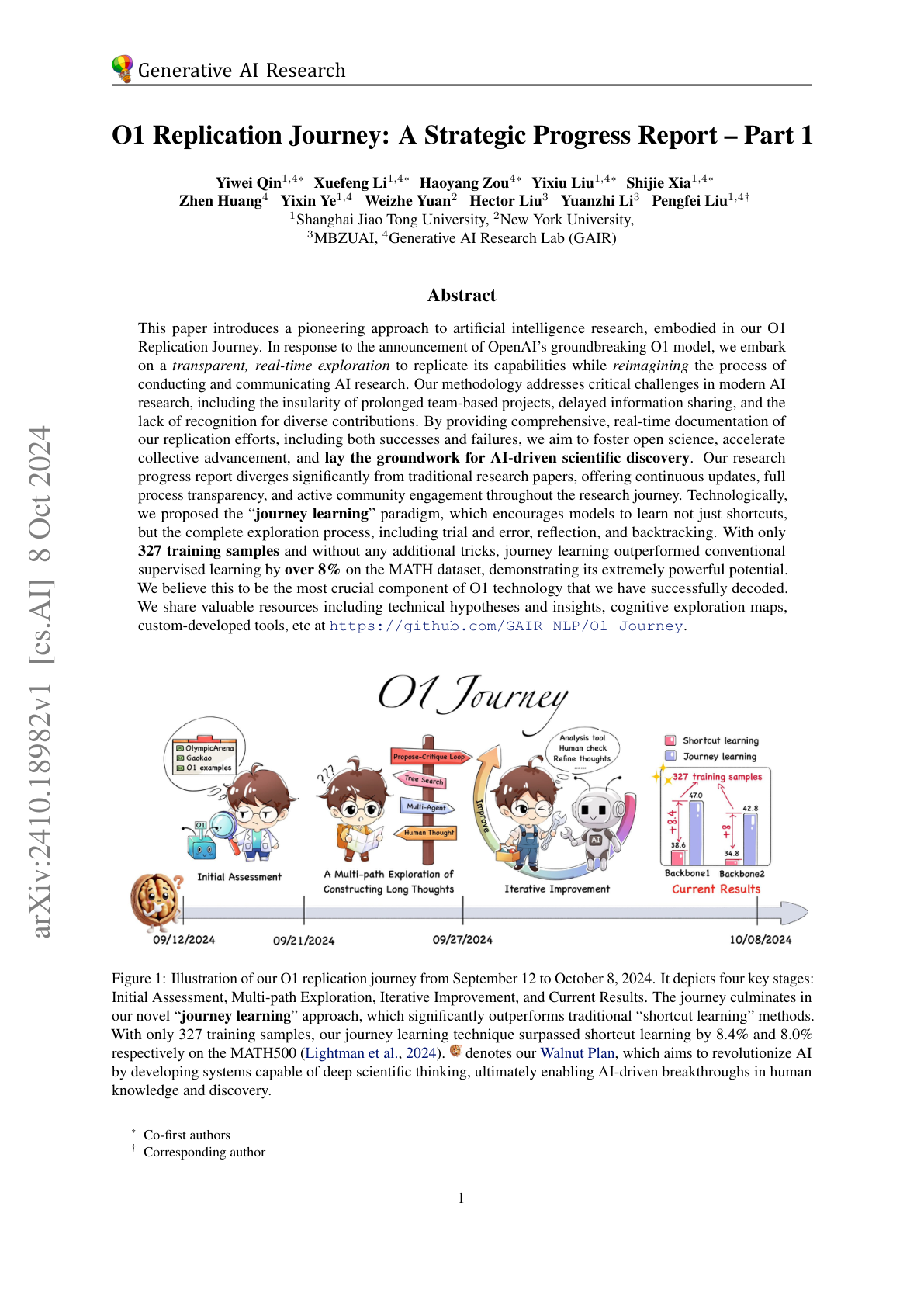
reports to be replicating the capabilities of OpenAI's o1 model; their journey learning technique encourages learning not just shortcuts, but the complete exploration process, including trial and error, reflection, and backtracking; claims that with only 327 training samples, their journey learning technique surpassed shortcut learning by 8.0% on the MATH dataset.
Distinguishing Ignorance from Error in LLM Hallucinations
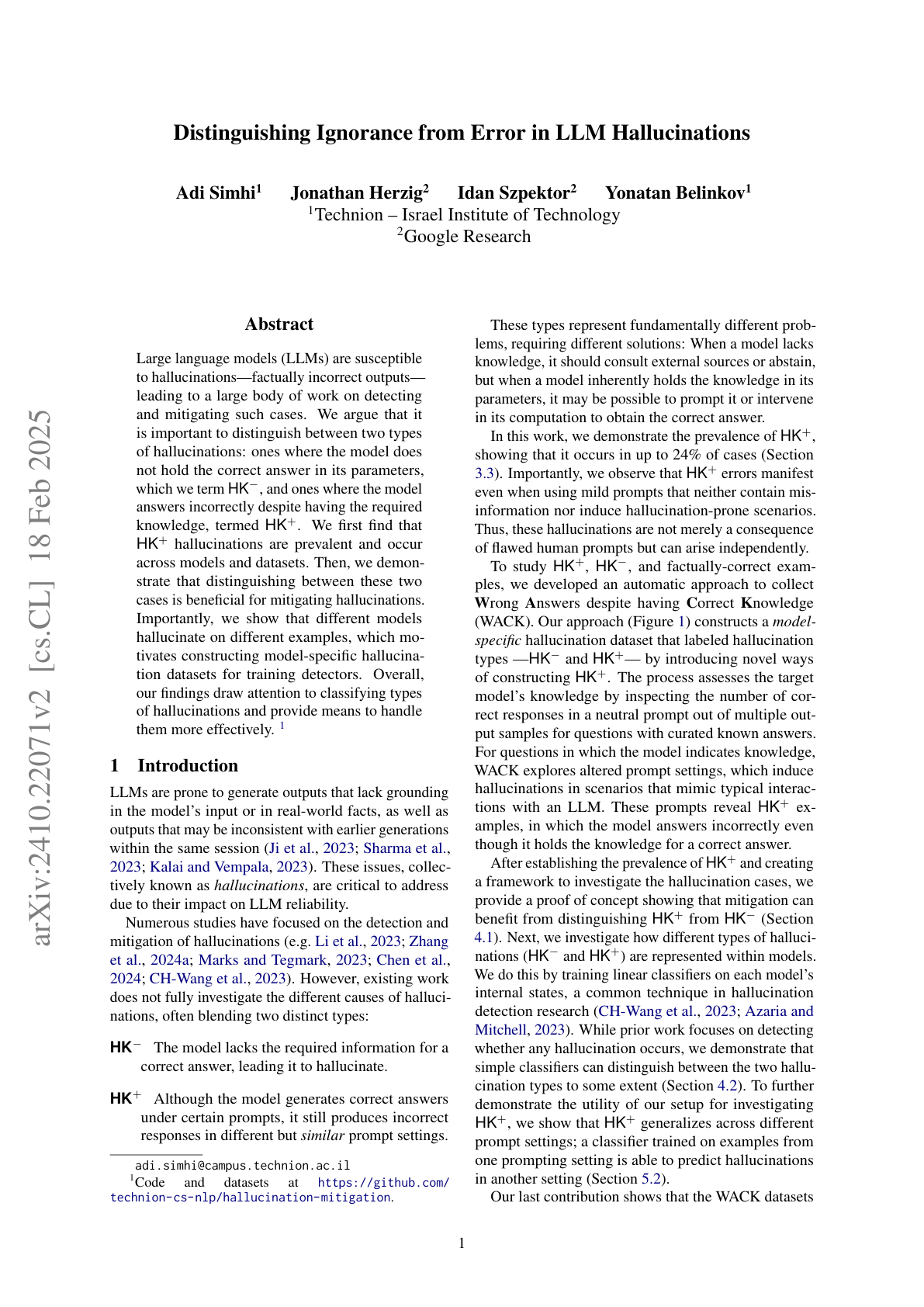
a method to distinguish between two types of LLM hallucinations: when models lack knowledge (HK-) versus when they hallucinate despite having correct knowledge (HK+); they build model-specific datasets using their proposed approach and show that model-specific datasets are more effective for detecting HK+ hallucinations compared to generic datasets.
Multimodal RAG
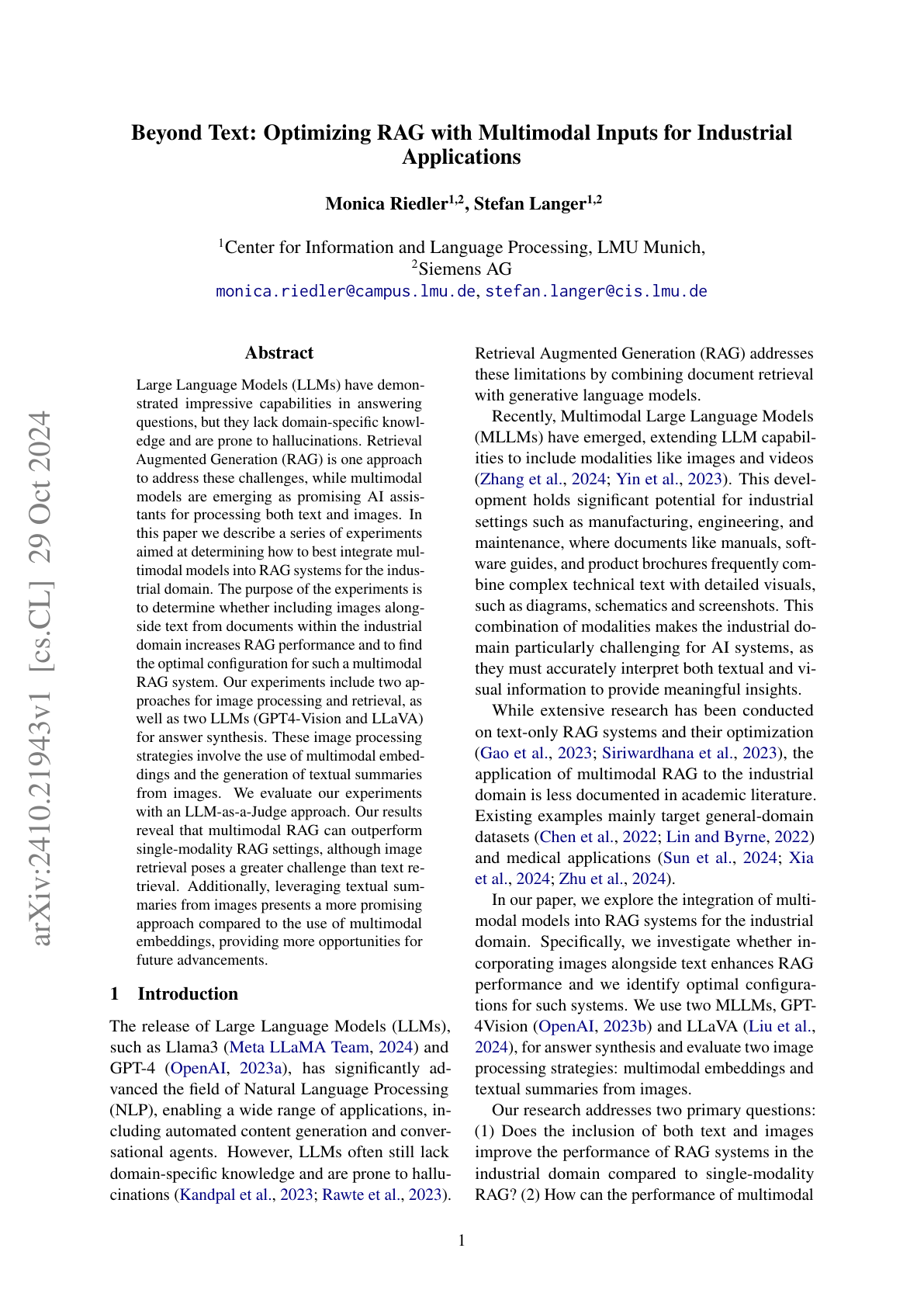
provides a discussion on how to best integrate multimodal models into RAG systems for the industrial domain; it also provides a deep discussion on the evaluation of these systems using LLM-as-a-Judge.