AI Papers of the Week
Every paper worth reading in AI, hand-picked one week at a time.
Discover and explore top AI papers with Claude Code or Codex
npx @dair-ai/mcp setup
Rethinking RAG-based Decoding
REFRAG replaces most retrieved tokens with precomputed chunk embeddings at decode time, then selectively expands only the few chunks that matter. This exploits block-diagonal attention in RAG prompts to cut latency and memory while preserving accuracy across RAG, multi-turn dialog, and long-doc summarization.
On the Theoretical Limitations of Embedding-based Retrieval
Single-vector dense retrievers cannot realize all possible top-k relevance combinations once queries demand sufficiently many “mix-and-match” document sets. The paper ties this failure to the sign-rank of the relevance matrix, proves lower and upper bounds on the embedding dimension needed, and then stress-tests models with a simple but adversarially combinatorial dataset (LIMIT).
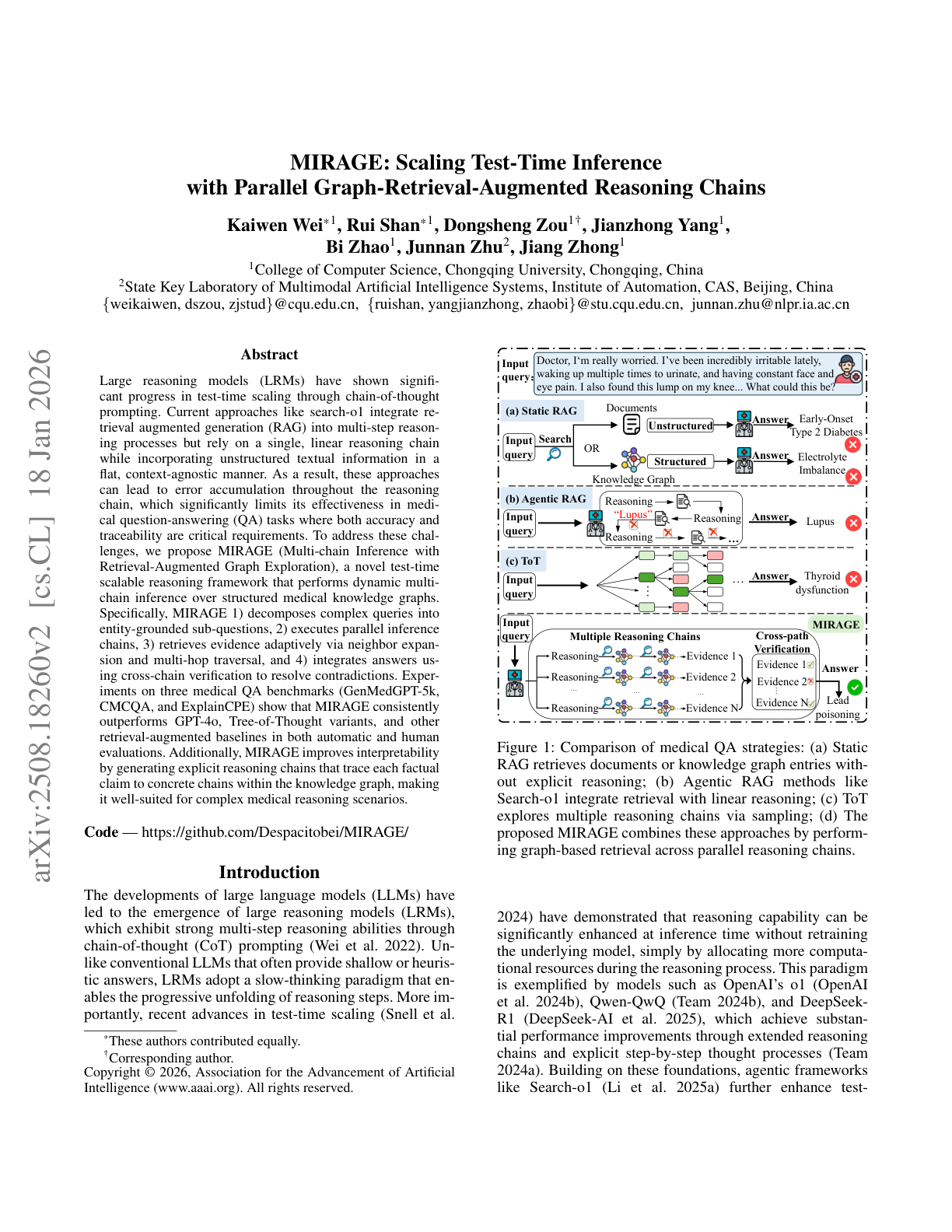
Scaling Test-Time Inference with Parallel Graph-Retrieval-Augmented Reasoning Chains
A test-time reasoning framework that replaces a single linear chain with multiple parallel, entity-grounded chains over medical knowledge graphs. MIRAGE decomposes a query into sub-questions, runs adaptive graph retrieval in Anchor and Bridge modes, then reconciles answers via cross-chain verification, yielding higher accuracy and clearer provenance than linear ToT or web-centric agentic RAG.
Retrieval-Augmented Reasoning with Lean Language Models
A domain-tuned pipeline that fuses RAG and reasoning into a single small-footprint model. The team distills reasoning traces from a frontier model into Qwen2.5 variants, uses summarization to keep context small, and shows that a 32B local model approaches frontier accuracy on an NHS A‑to‑Z clinical QA task.
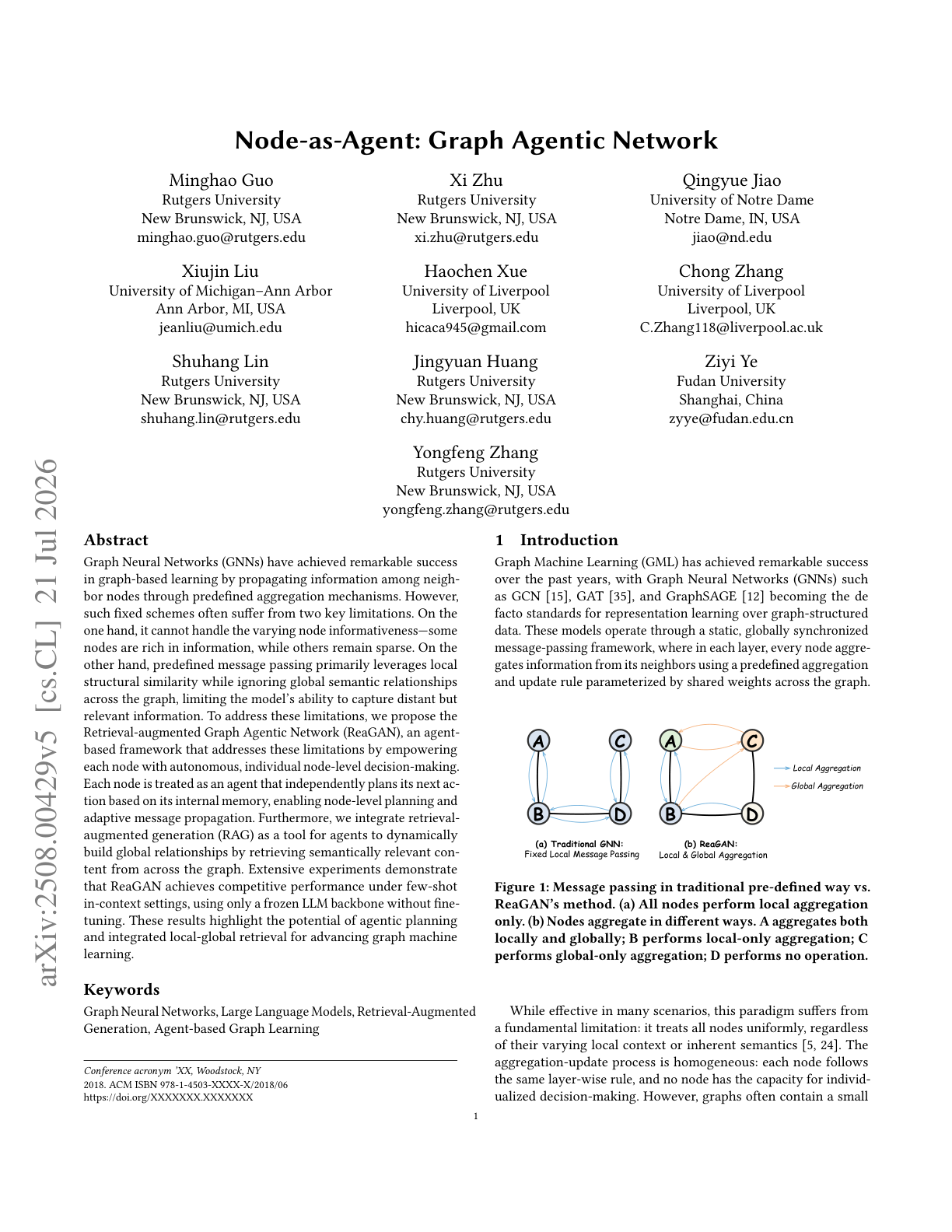
ReaGAN
This paper introduces ReaGAN, a graph learning framework that reconceptualizes each node in a graph as an autonomous agent capable of planning, reasoning, and acting via a frozen LLM. Instead of relying on static, layer-wise message passing, ReaGAN enables node-level autonomy, where each node independently decides whether to aggregate information from local neighbors, retrieve semantically similar but distant nodes, or take no action at all. This node-agent abstraction addresses two key challenges in graph learning: (1) handling varying informativeness of nodes and (2) combining local structure with global semantics.
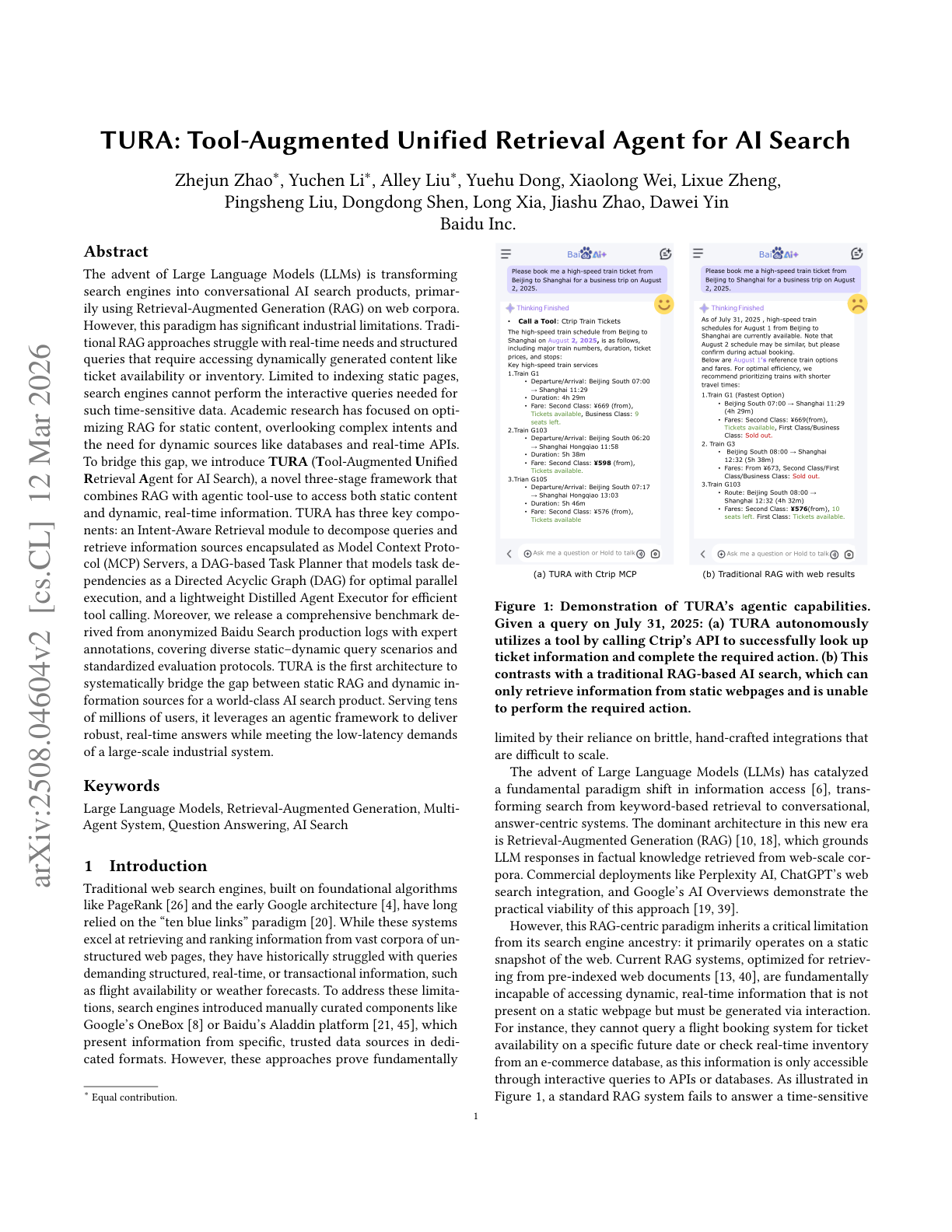
Tool-Augmented Unified Retrieval Agent for AI Search
Presents a production-ready framework that extends the RAG (Retrieval-Augmented Generation) paradigm to support real-time, dynamic, and transactional queries through agentic tool use. Unlike conventional RAG systems that rely on static web snapshots, TURA enables LLM-based systems to interact with external APIs and databases, addressing user intents that require up-to-date or structured information (e.g., train schedules, weather forecasts).
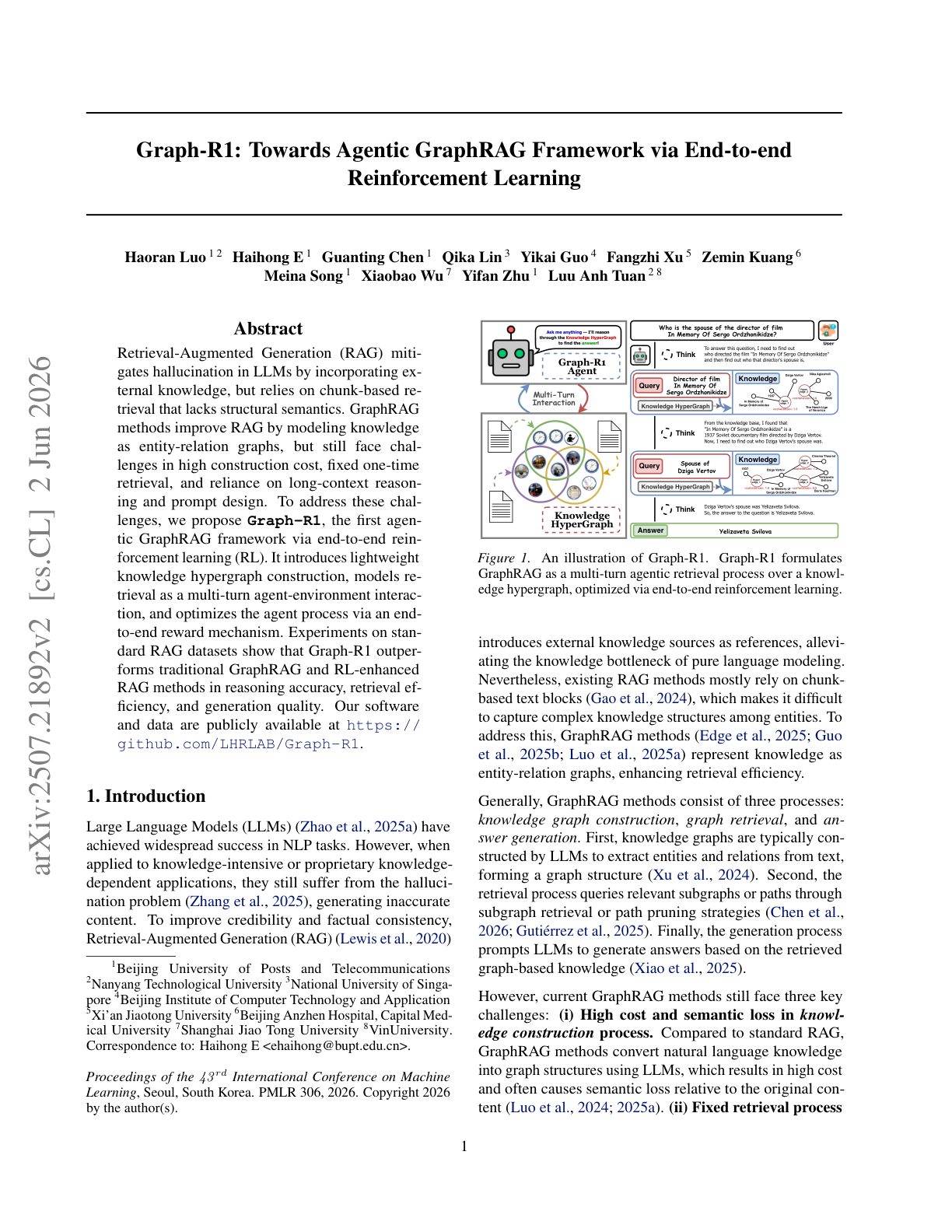
Graph-R1
Introduces a novel RAG framework that moves beyond traditional one-shot or chunk-based retrieval by integrating graph-structured knowledge, agentic multi-turn interaction, and RL. The core goal is to improve factual accuracy, retrieval efficiency, and reasoning quality in knowledge-intensive tasks.
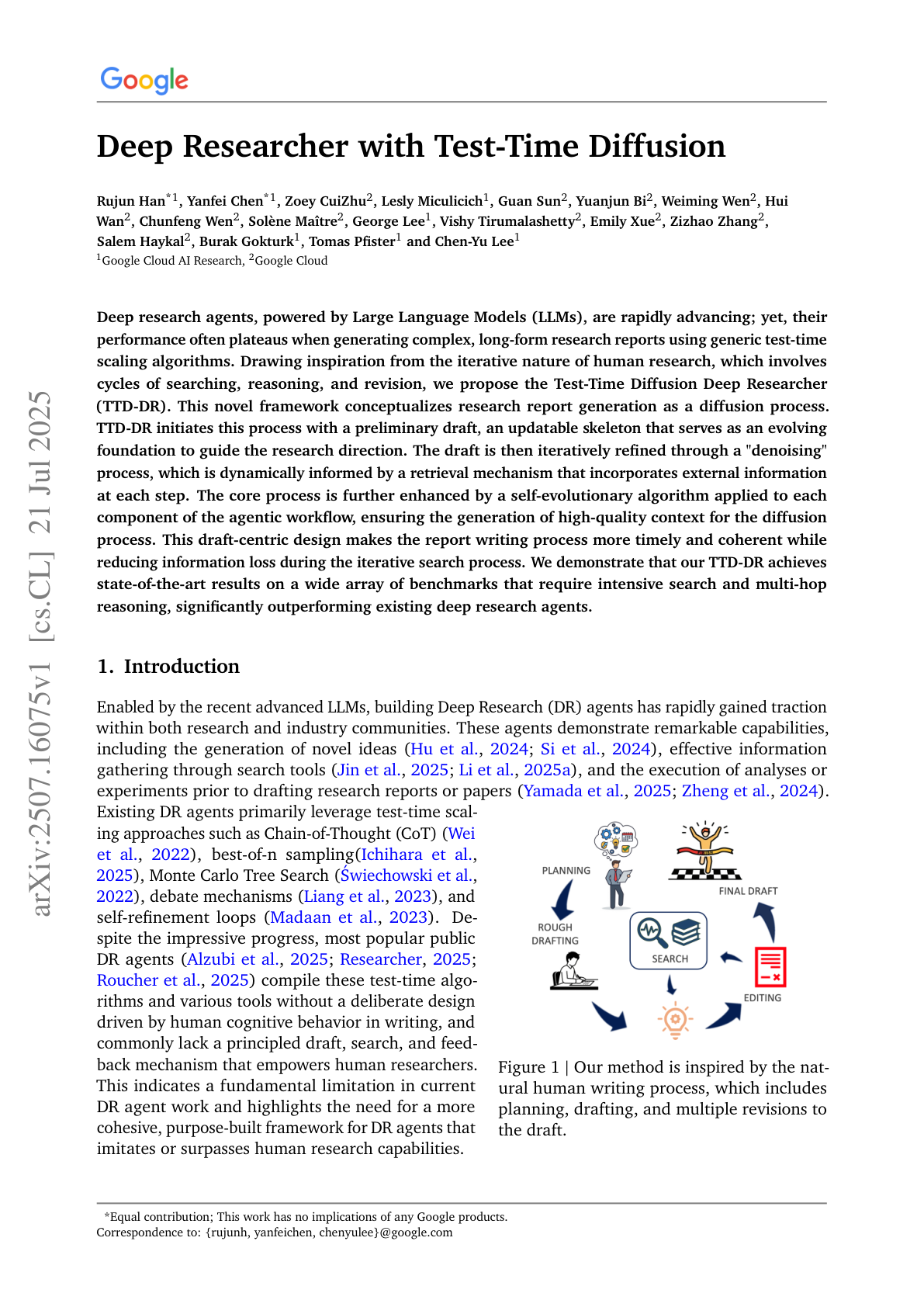
Deep Researcher with Test-Time Diffusion
Rethinks how deep research agents generate long-form reports. Rather than relying on static inference strategies like Chain-of-Thought or best-of-n sampling, TTD-DR frames the report generation process as a diffusion process. It starts with a noisy draft and iteratively refines it through retrieval-enhanced denoising, guided by a structured plan. This iterative loop mimics how human researchers search, reason, revise, and accumulate context over time.
HIRAG
HIRAG is a new instruction fine-tuning method that enhances the capabilities of RAG models by teaching them to think before answering. Key ideas:
Agentic RAG for Personalized Recommendation
Introduces a multi-agent framework that enhances traditional RAG systems with reasoning agents tailored to user modeling and contextual ranking. Developed at Walmart Global Tech, ARAG reframes recommendations as a structured coordination problem between LLM agents.
Towards AI Search Paradigm
Proposes a modular multi-agent system that reimagines how AI handles complex search tasks, aiming to emulate human-like reasoning and information synthesis. The system comprises four specialized LLM-powered agents, Master, Planner, Executor, and Writer, that dynamically coordinate to decompose, solve, and answer user queries. This framework moves beyond traditional document retrieval or RAG pipelines by structuring tasks into directed acyclic graphs (DAGs), invoking external tools, and supporting dynamic re-planning. Key contributions include:
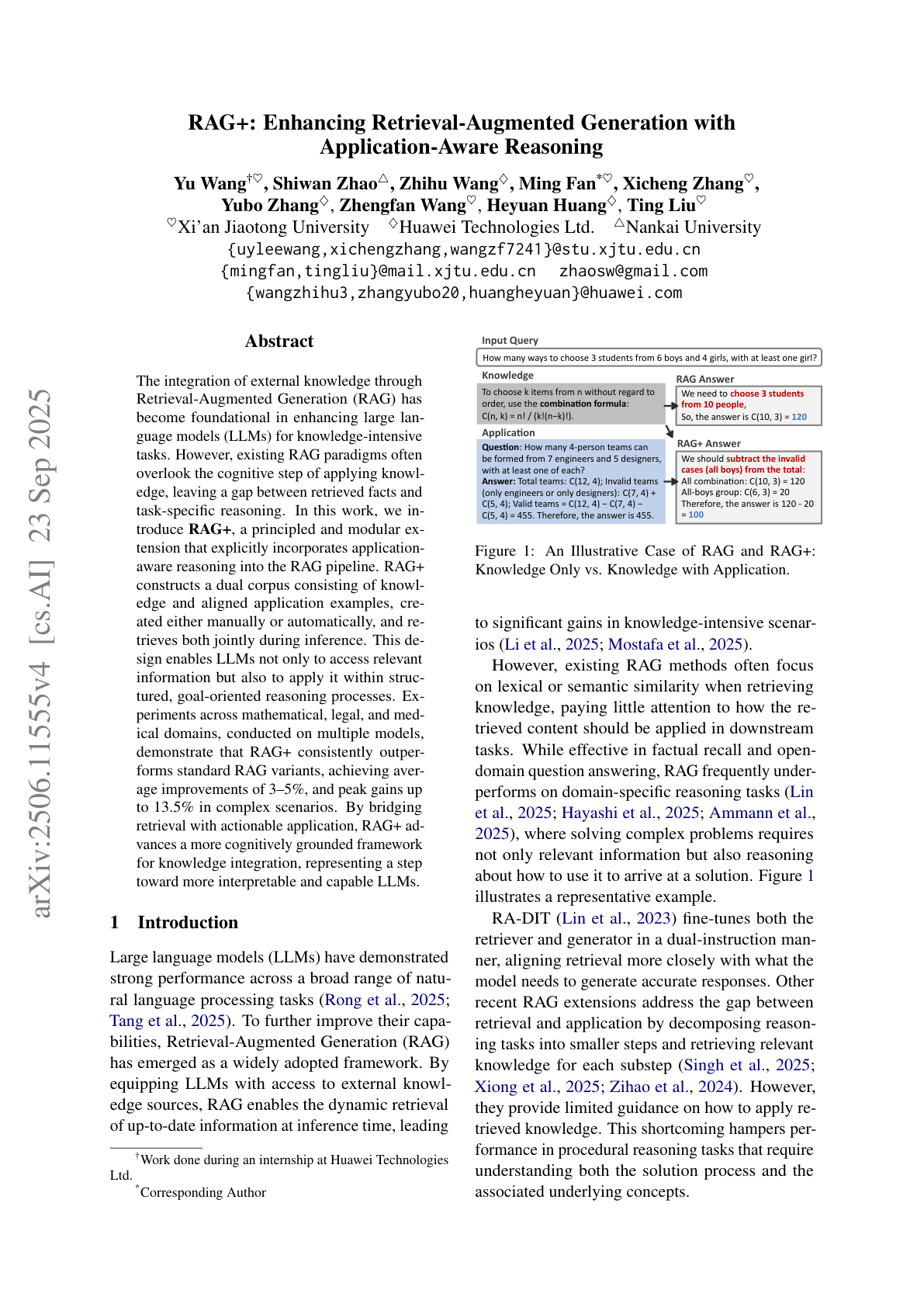
RAG+
Introduces RAG+, a modular framework that improves traditional RAG systems by explicitly incorporating application-level reasoning into the retrieval and generation pipeline. While standard RAG pipelines fetch relevant knowledge, they often fail to show how to use that knowledge effectively in reasoning-intensive tasks. RAG+ fills this gap by retrieving not only knowledge but also paired application examples, leading to more accurate, interpretable, and goal-oriented outputs. Key highlights:
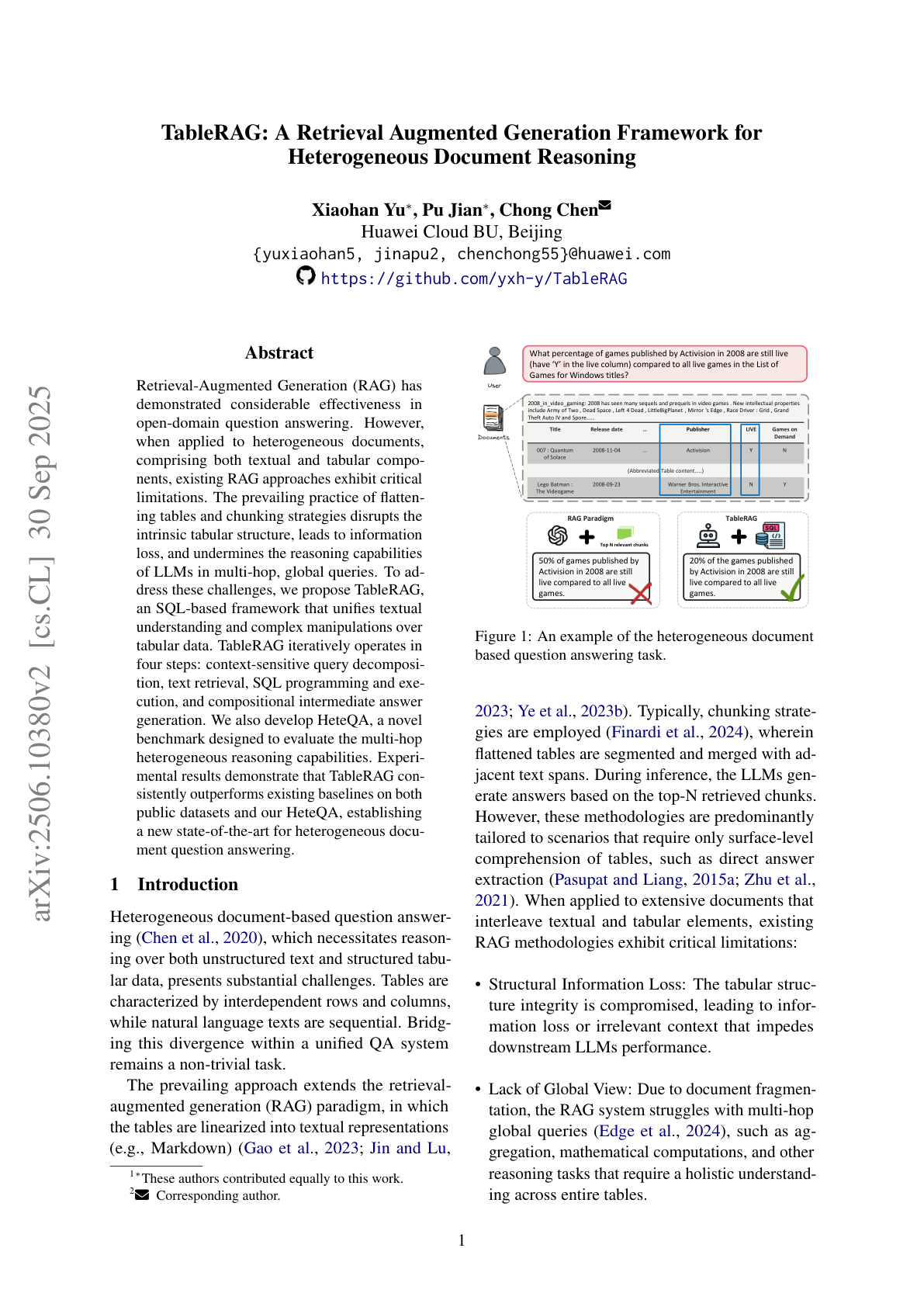
TableRAG
TableRAG tackles a core limitation of existing RAG approaches: their inability to reason effectively over heterogeneous documents that combine both unstructured text and structured tables. Typical RAG pipelines flatten tables and intermix them with surrounding text, losing essential structural information and hampering multi-hop reasoning. TableRAG overcomes this by introducing a hybrid system that integrates SQL-based symbolic execution with text retrieval in a unified, iterative reasoning framework.
New Lens on RAG Systems
Introduces a new conceptual and empirical framework for analyzing RAG systems through the lens of sufficient context, whether the retrieved content alone enables answering a query. This notion helps decouple retrieval failures from generation errors in LLMs, providing clarity on model behavior under different contextual adequacy. Key findings:
RL for Search-Efficient LLMs
Proposes a new RL-based framework (SEM) that explicitly teaches LLMs when to invoke search and when to rely on internal knowledge, aiming to reduce redundant tool use while maintaining answer accuracy. Key points:
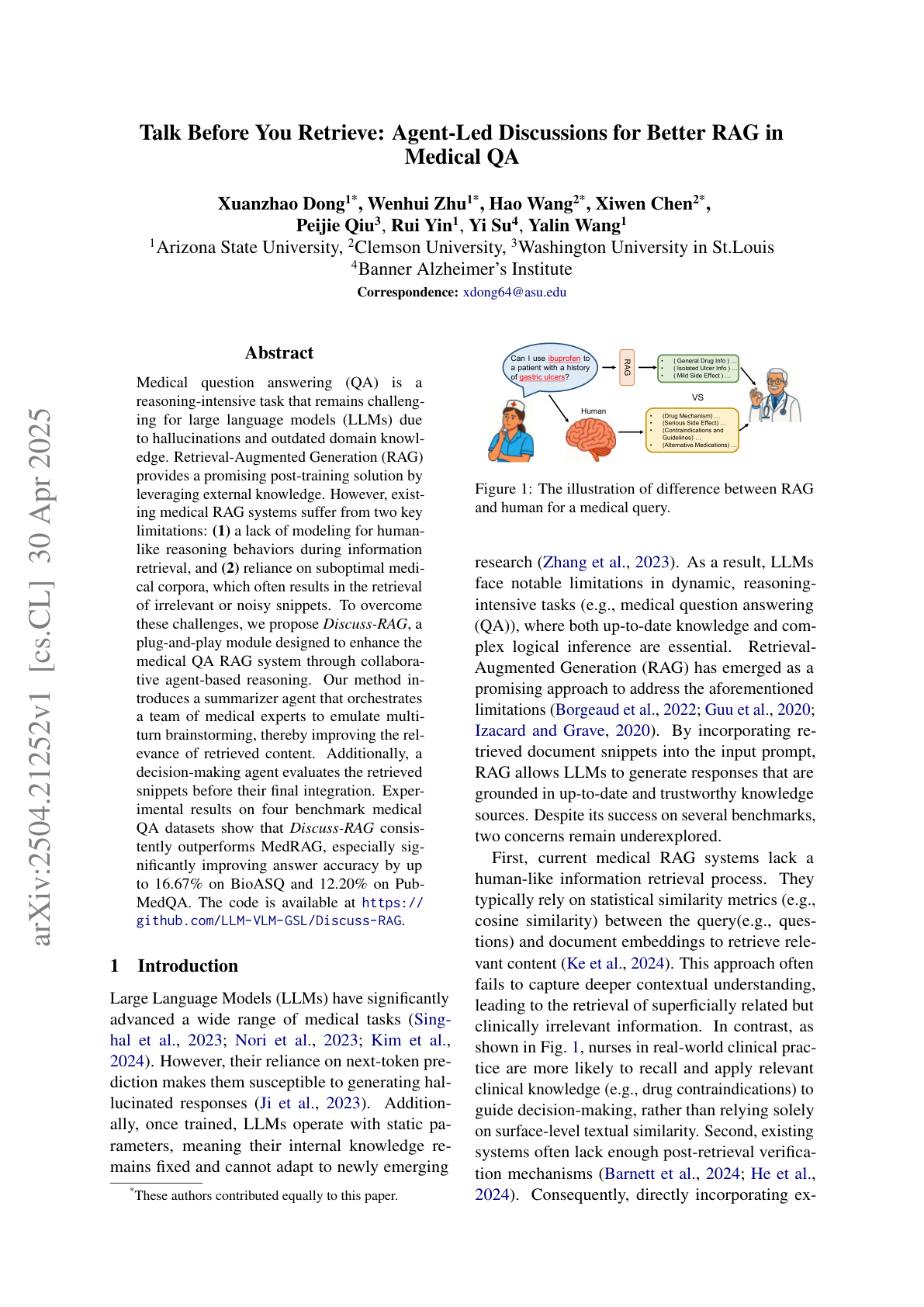
Discuss-RAG
This paper introduces Discuss-RAG, a plug-and-play agent-based framework that enhances retrieval-augmented generation (RAG) for medical question answering by mimicking human-like clinical reasoning. Standard RAG systems rely on embedding-based retrieval and lack mechanisms to verify relevance or logical coherence, often leading to hallucinations or outdated answers. Discuss-RAG addresses these gaps via a modular agent setup that simulates multi-turn medical discussions and performs post-retrieval verification. Key ideas:
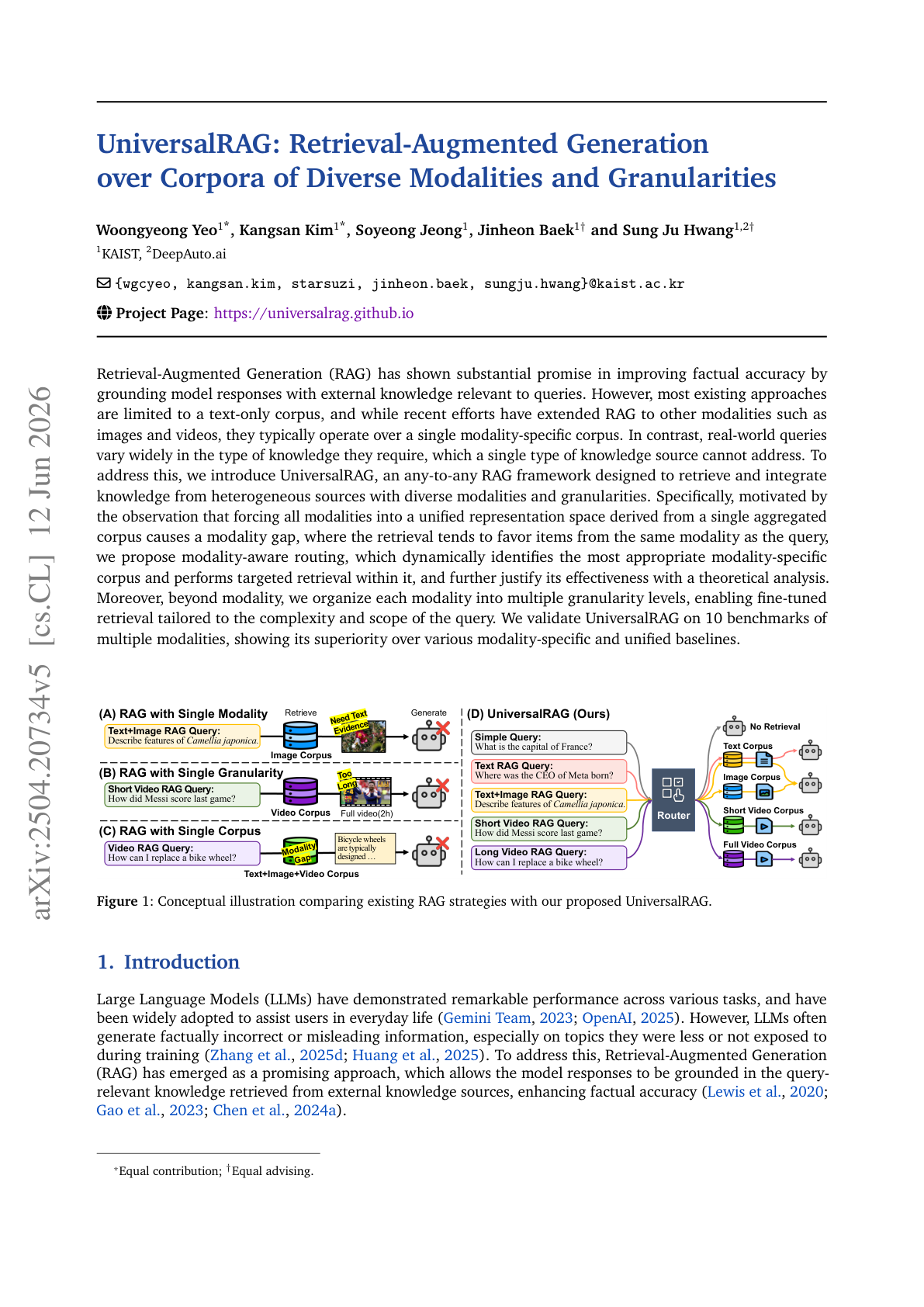
UniversalRAG
UniversalRAG is a framework that overcomes the limitations of existing RAG systems confined to single modalities or corpora. It supports retrieval across modalities (text, image, video) and at multiple granularities (e.g., paragraph vs. document, clip vs. video). Contributions from the paper:
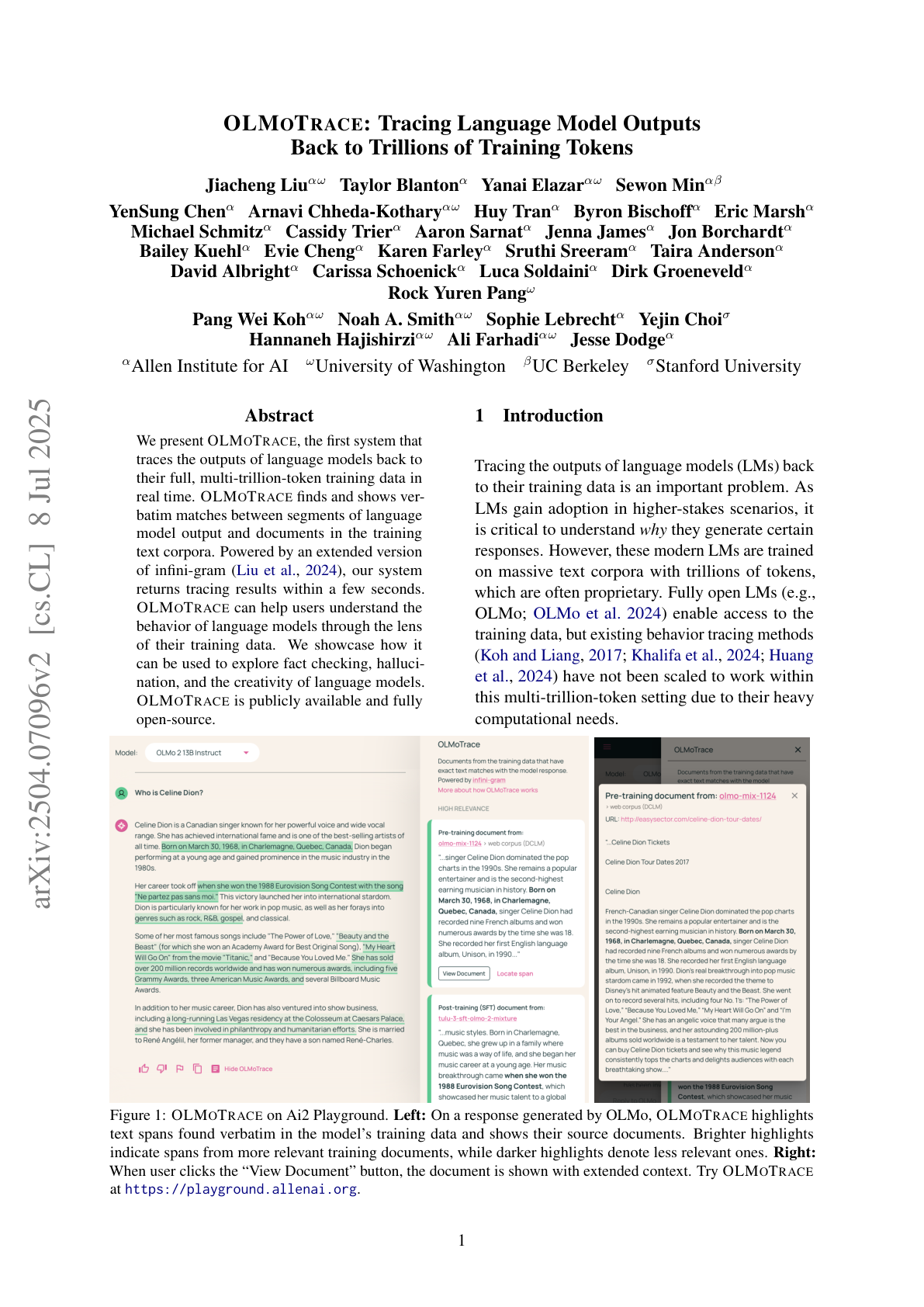
OLMOTrace
Allen Institute for AI & University of Washington present OLMOTRACE, a real-time system that traces LLM-generated text back to its verbatim sources in the original training data, even across multi-trillion-token corpora.
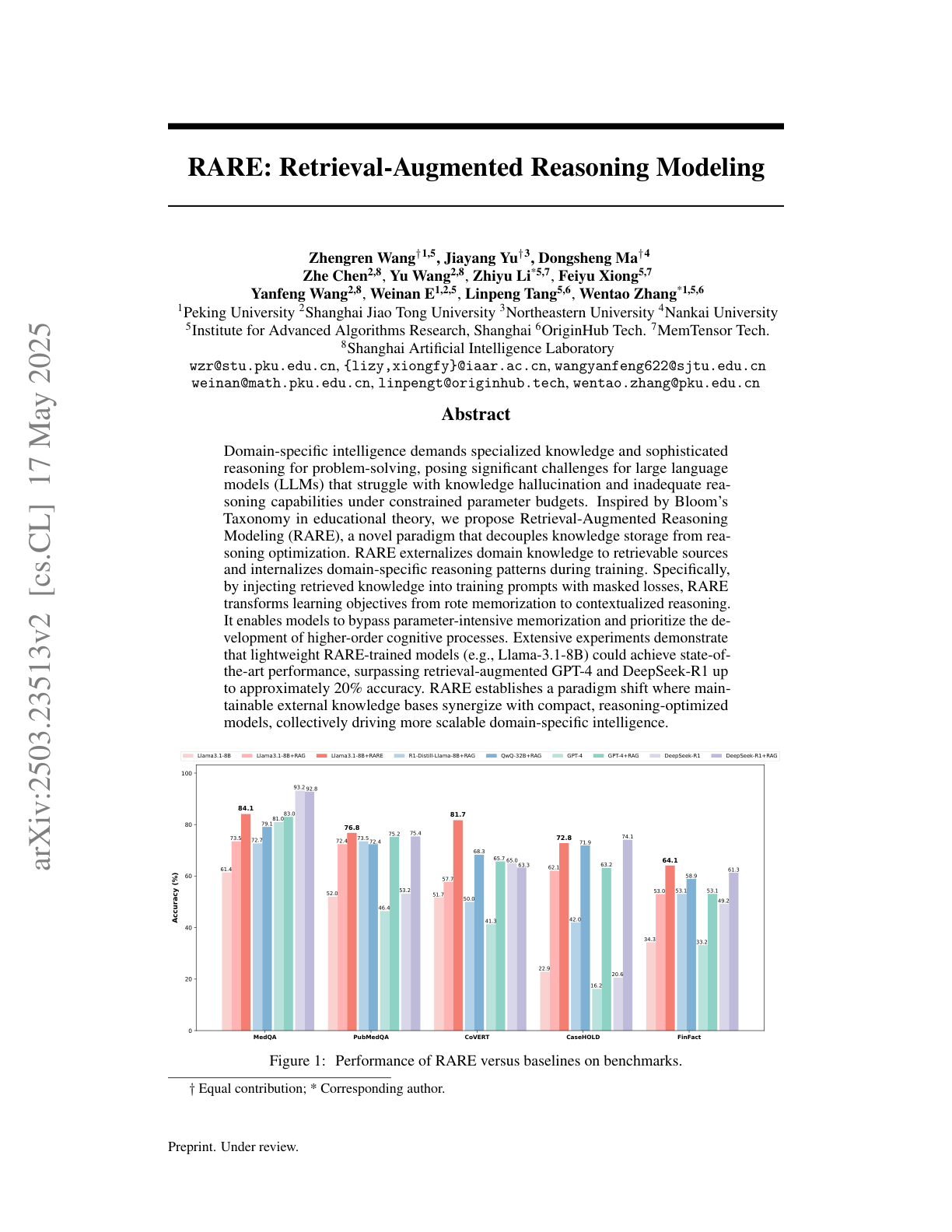
Retrieval-Augmented Reasoning Model
Introduces RARE, a new paradigm for training domain-specific LLMs that focuses on reasoning, not memorization. Key ideas: ● Inspired by Bloom’s Taxonomy – RARE shifts LLM training from memorizing knowledge (“Remember”) to applying and evaluating it (“Analyze”, “Create”). It separates domain knowledge (retrieved externally) from domain thinking (learned during training), enabling better performance under tight parameter budgets. ● Open-book prepared training – RARE injects retrieved knowledge into training prompts, letting models learn reasoning patterns instead of rote facts. This open-book, reasoning-first setup beats both standard SFT and RAG approaches, especially in medicine. ● Massive accuracy gains with small models – On five medical QA benchmarks, RARE-trained Llama-3.1-8B and Qwen-2.5-7B outperformed GPT-4 + RAG, with up to +20% accuracy boosts (e.g., PubMedQA: 78.63% vs. GPT-4’s 75.2%, CoVERT: 74.14% vs. GPT-4’s 65.67%). ● Training via distillation + adaptive retries – RARE distills answers (and reasoning paths) from a strong teacher (e.g., QwQ-32B), refining outputs until a correct answer is found. This creates a high-quality dataset that teaches contextualized, case-based thinking. ● New role for retrieval – Unlike standard RAG (used only at inference), RARE uses retrieval during training to shape reasoning. It models knowledge integration (p(kx, R(x))) and reasoning (p(rx, R(x), k)) as separate steps, replacing memorization with application. Overall, this work reframes LLM training for domain-specific intelligence: externalize facts, internalize reasoning. It unlocks strong performance from small models without overfitting or hallucination.
Structured Memory Augmentation for Smarter LLM Agents
MemInsight is a framework that autonomously augments and structures memory for LLM agents, improving context retention and retrieval. Key insights include: ● Structured, autonomous memory augmentation – Instead of relying on raw historical data or manually defined memory structures, MemInsight uses a backbone LLM to autonomously mine attributes from past conversations or knowledge. These are organized into entity-centric and conversation-centric (e.g., user emotion or intent) augmentations at either the turn or session level. This mimics how humans abstract and prioritize experiences. ● Attribute-guided retrieval beats vanilla RAG – MemInsight supports both attribute-based retrieval (exact match filtering) and embedding-based retrieval (via FAISS). On the LoCoMo QA dataset, MemInsight outperformed a Dense Passage Retrieval (RAG) baseline by up to +34% recall. The best setup (priority-based Claude-Sonnet augmentations) achieved 60.5% Recall@5, vs. 26.5% for RAG. ● More persuasive recommendations – In movie recommendations using the LLM-REDIAL dataset, MemInsight lifted genre-matched recommendation scores while cutting down memory size by 90%. Embedding-based filtering led to +12% more highly persuasive outputs, per LLM judgment. ● Event summarization via memory alone – MemInsight’s annotations alone can be used to summarize long conversational sessions. These memory-only summaries rival raw-dialogue baselines in coherence and relevance (per G-Eval scores), particularly when turn-level augmentations are combined with original dialogue context. ● Minimal hallucinations, stable performance – Comparative analysis of augmentation models (Claude-Sonnet, Llama, Mistral) shows Claude-Sonnet produces more stable, consistent, and grounded attributes, reinforcing the importance of careful model selection in memory pipelines.
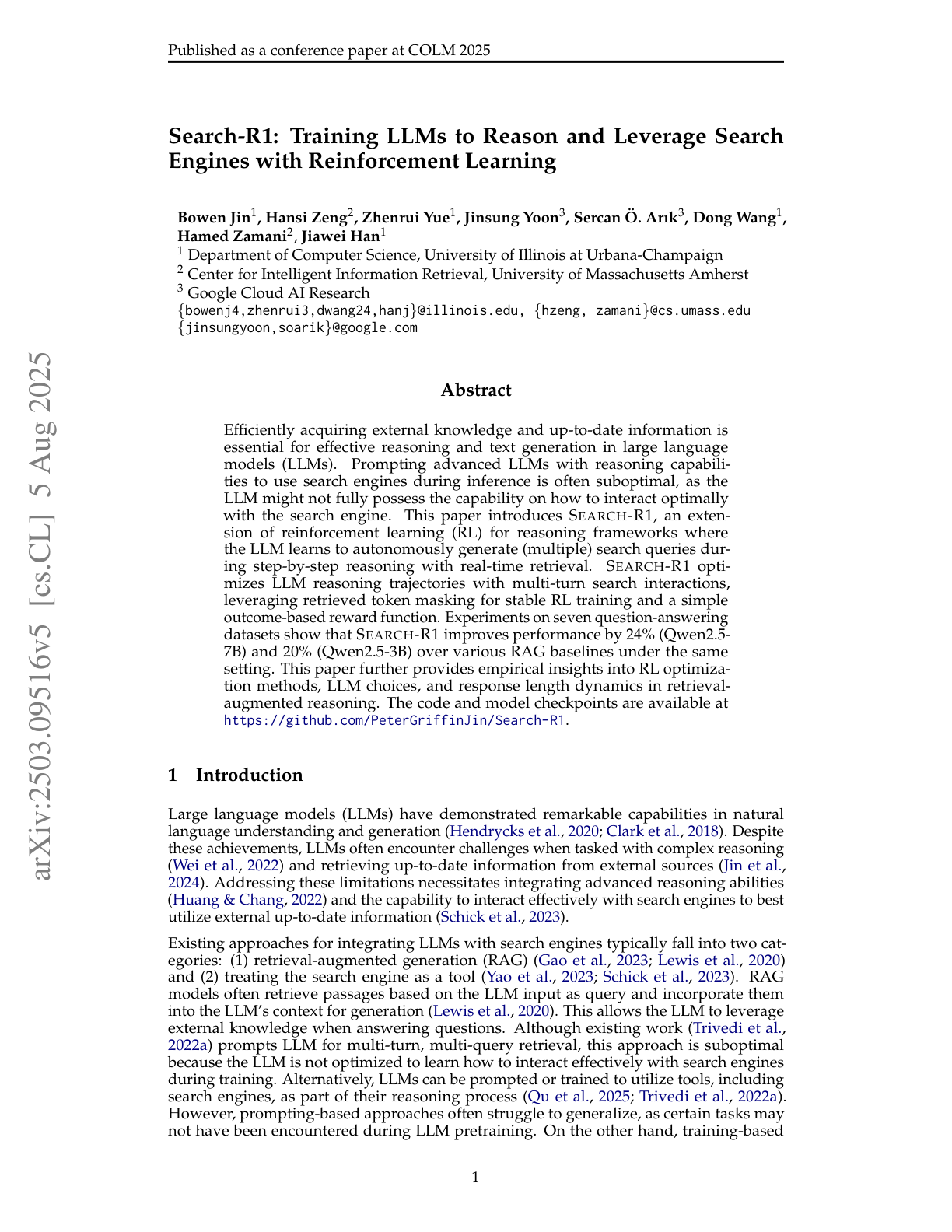
Search-R1
This paper tackles search-augmented reasoning by teaching LLMs to query a search engine multiple times—while they reason—using reinforcement learning. Key ideas include:
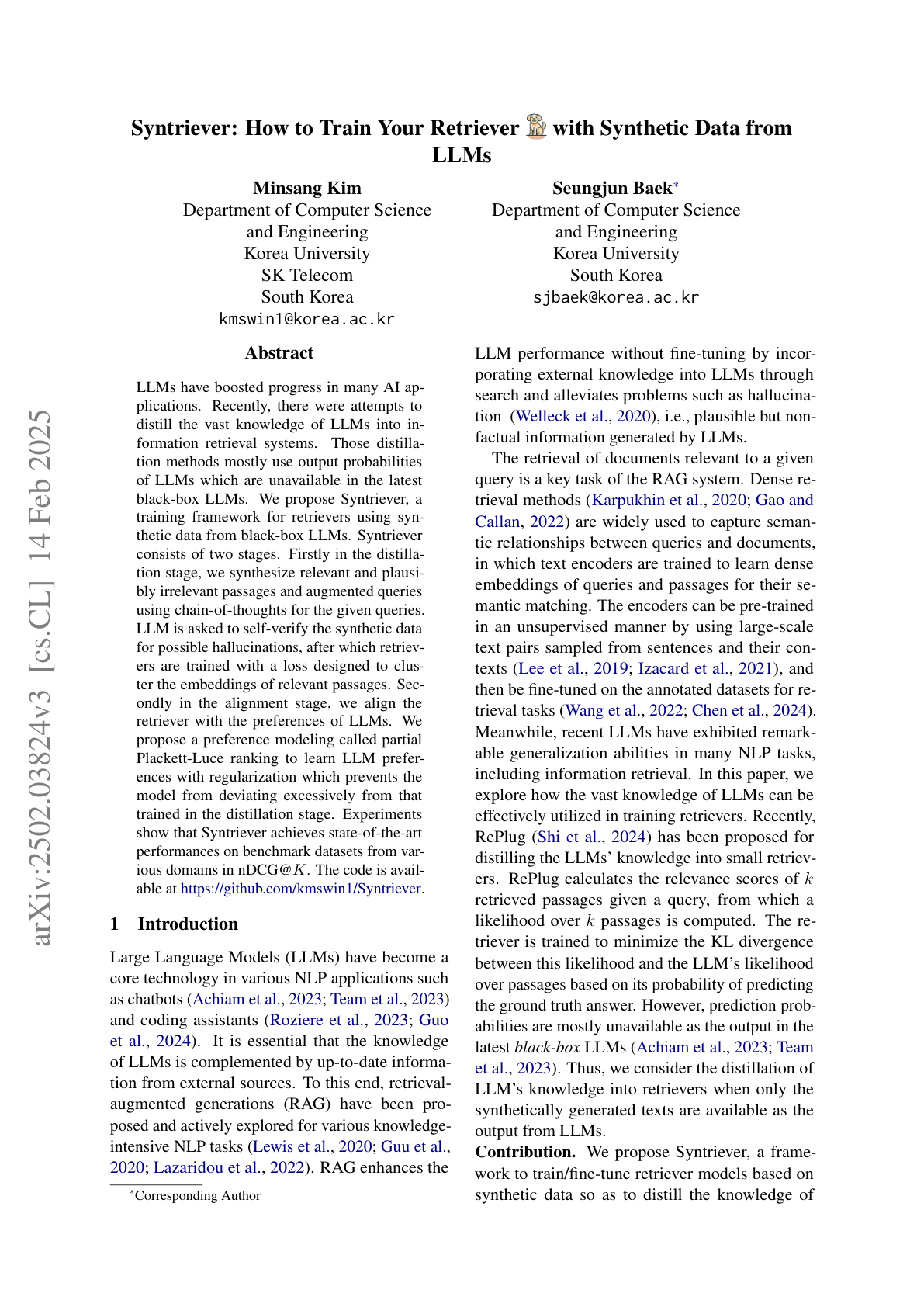
Syntriever: Training Retrievers with LLM-Generated Data
How can we build a high-quality text retriever without large labeled datasets or access to an LLM’s internals? Syntriever presents a two-stage framework to distill knowledge from a black-box LLM into a retrieval model using synthetic data. Steps:
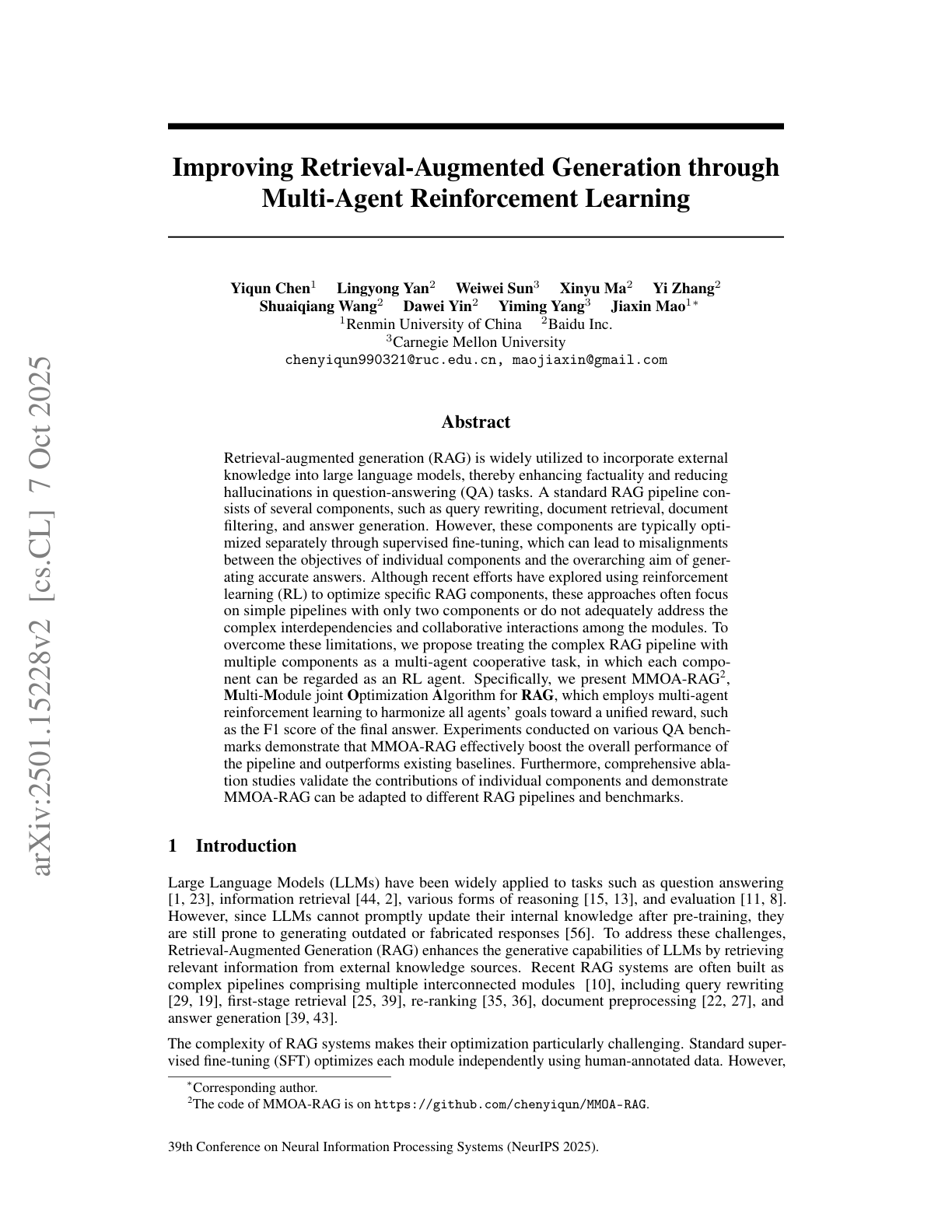
Improving RAG through Multi-Agent RL
This work treats RAG as a multi-agent cooperative task to improve answer generation quality. It models RAG components like query rewriting, document selection, and answer generation as reinforcement learning agents working together toward generating accurate answers. It applies Multi-Agent Proximal Policy Optimization (MAPPO) to jointly optimize all agents with a shared reward based on answer quality. Besides improvements on popular benchmarks, the framework shows strong generalization capabilities in out-of-domain scenarios and maintains effectiveness across different RAG system configurations.
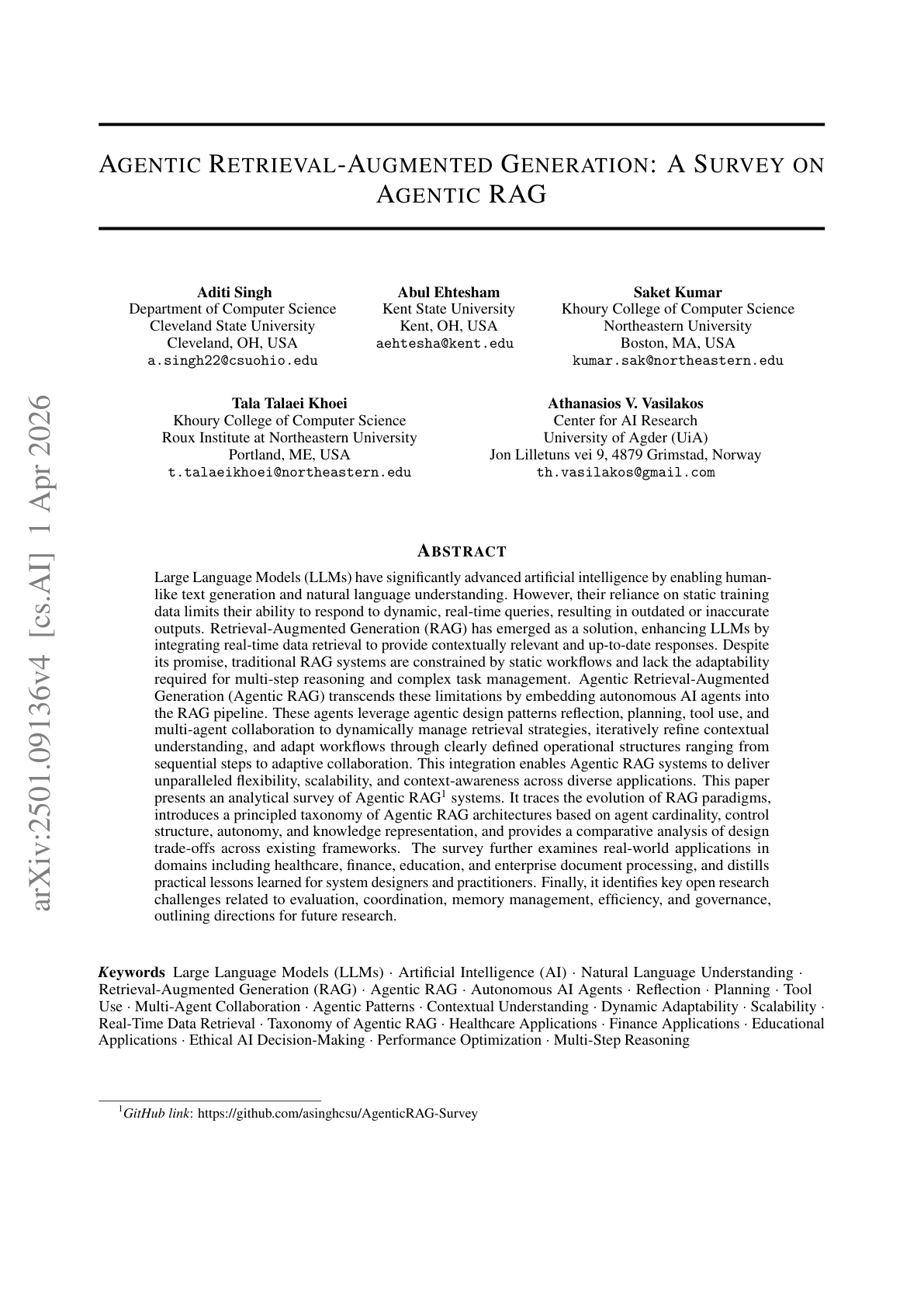
Agentic RAG Overview
Provides a comprehensive introduction to LLM agents and Agentic RAG. It provides an exploration of Agentic RAG architectures, applications, and implementation strategies.