AI Papers of the Week
Every paper worth reading in AI, hand-picked one week at a time.
Discover and explore top AI papers withClaude CodeCodex
npx @dair-ai/mcp setup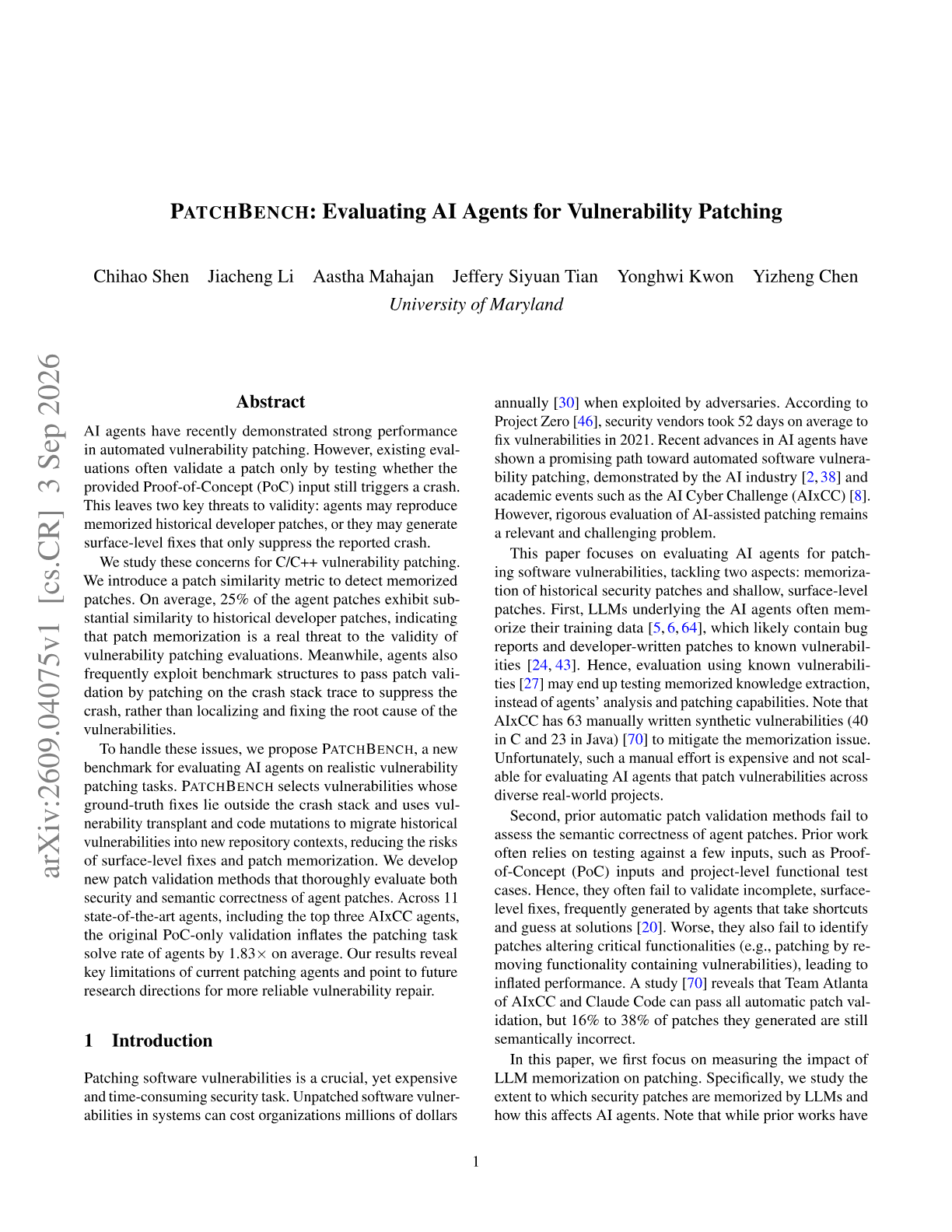
PatchBench: Evaluating AI Agents for Vulnerability Patching
Chihao Shen and colleagues at Maryland and UC Davis show that PoC-only validation inflates vulnerability-patching solve rates by 1.83x on average, because agents either recall the historical developer patch or fix the crash rather than the bug.
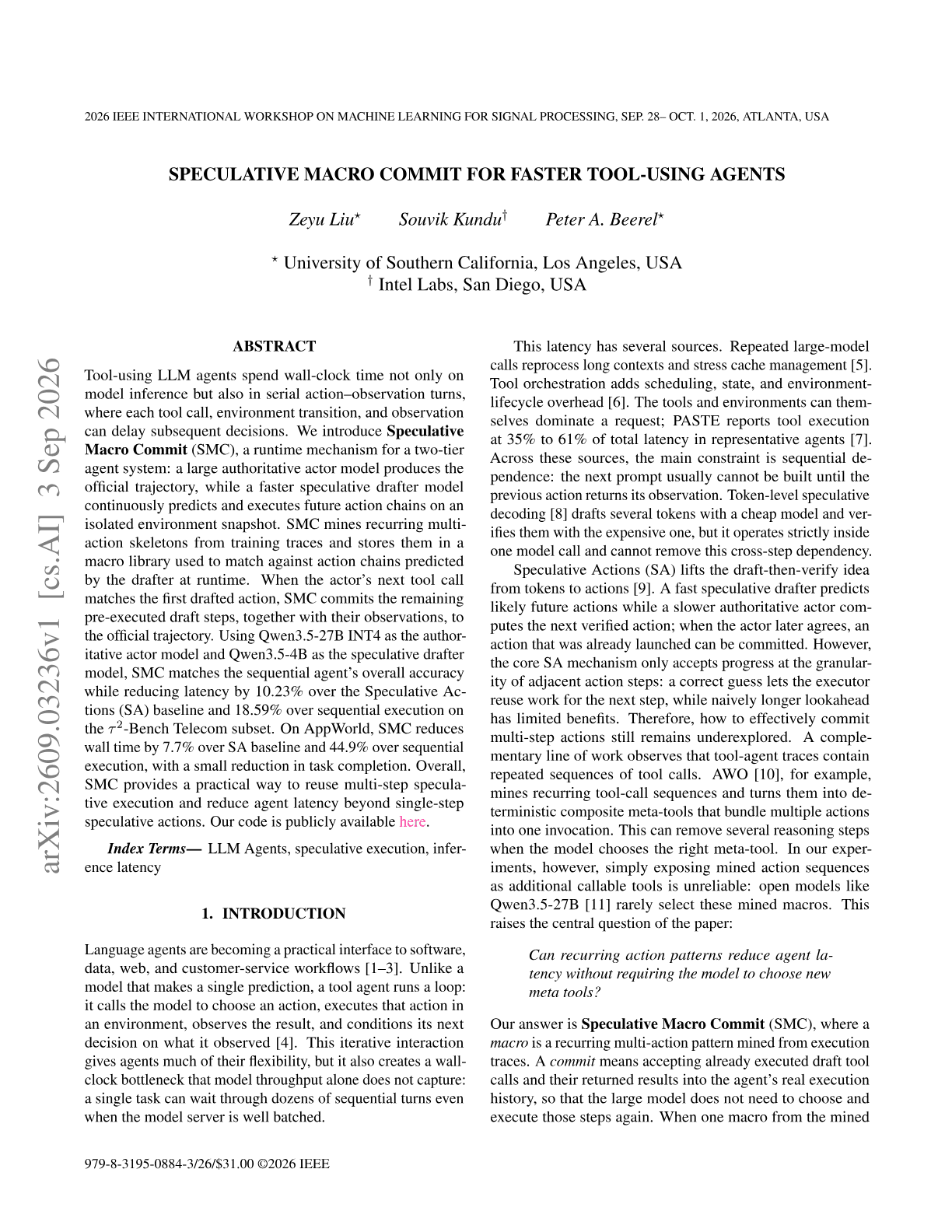
Speculative Macro Commit for Faster Tool-Using Agents
Zeyu Liu and Peter Beerel (USC) with Souvik Kundu (Intel Labs) extend speculative decoding's idea past the token level to the action level, letting a small drafter pre-execute whole multi-action chains on an environment snapshot while the big actor catches up.
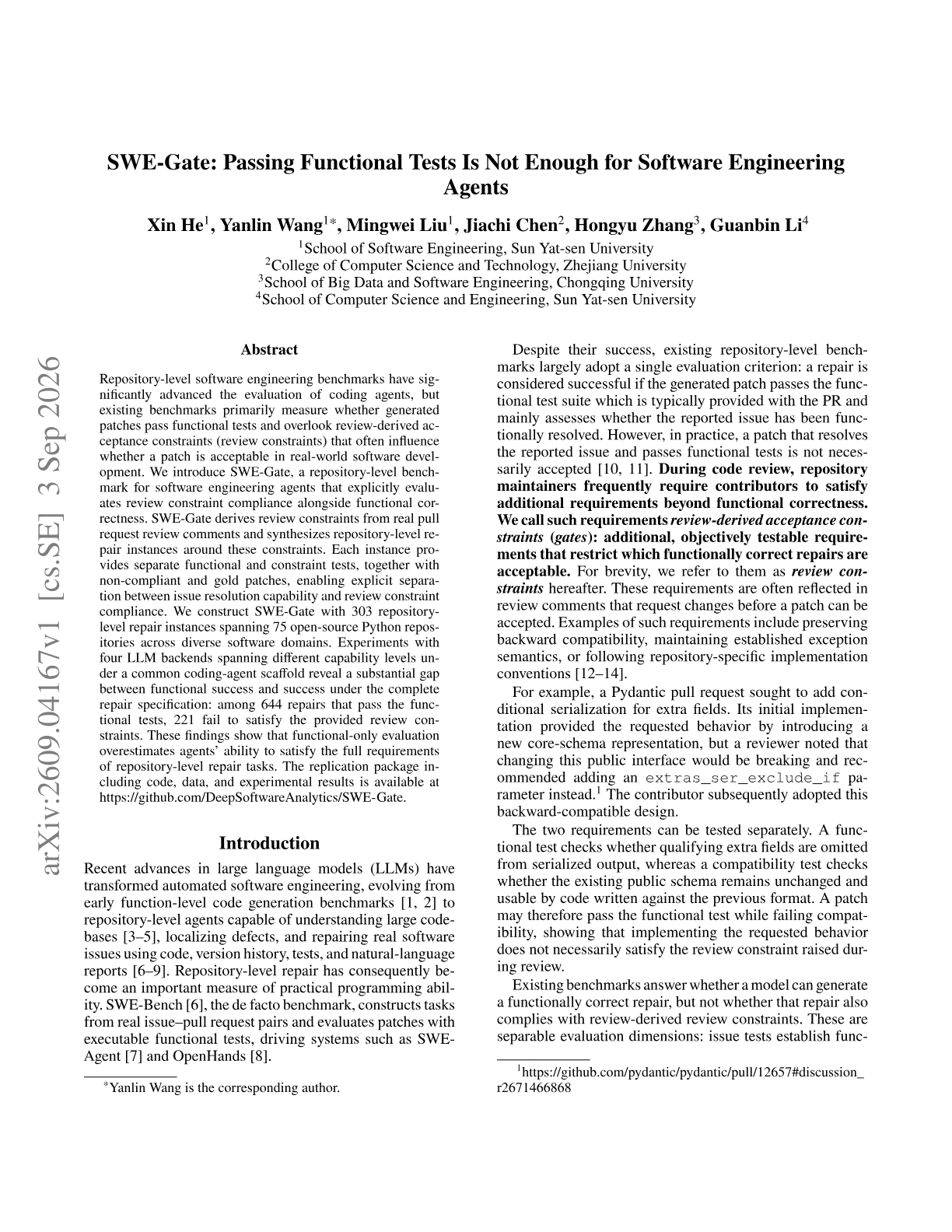
SWE-Gate: Passing Functional Tests Is Not Enough for Software Engineering Agents
Xin He and colleagues at Sun Yat-sen University introduce SWE-Gate, a repository-level benchmark that scores coding agents on review-derived acceptance constraints alongside functional tests, and shows that passing the tests is far from passing review.
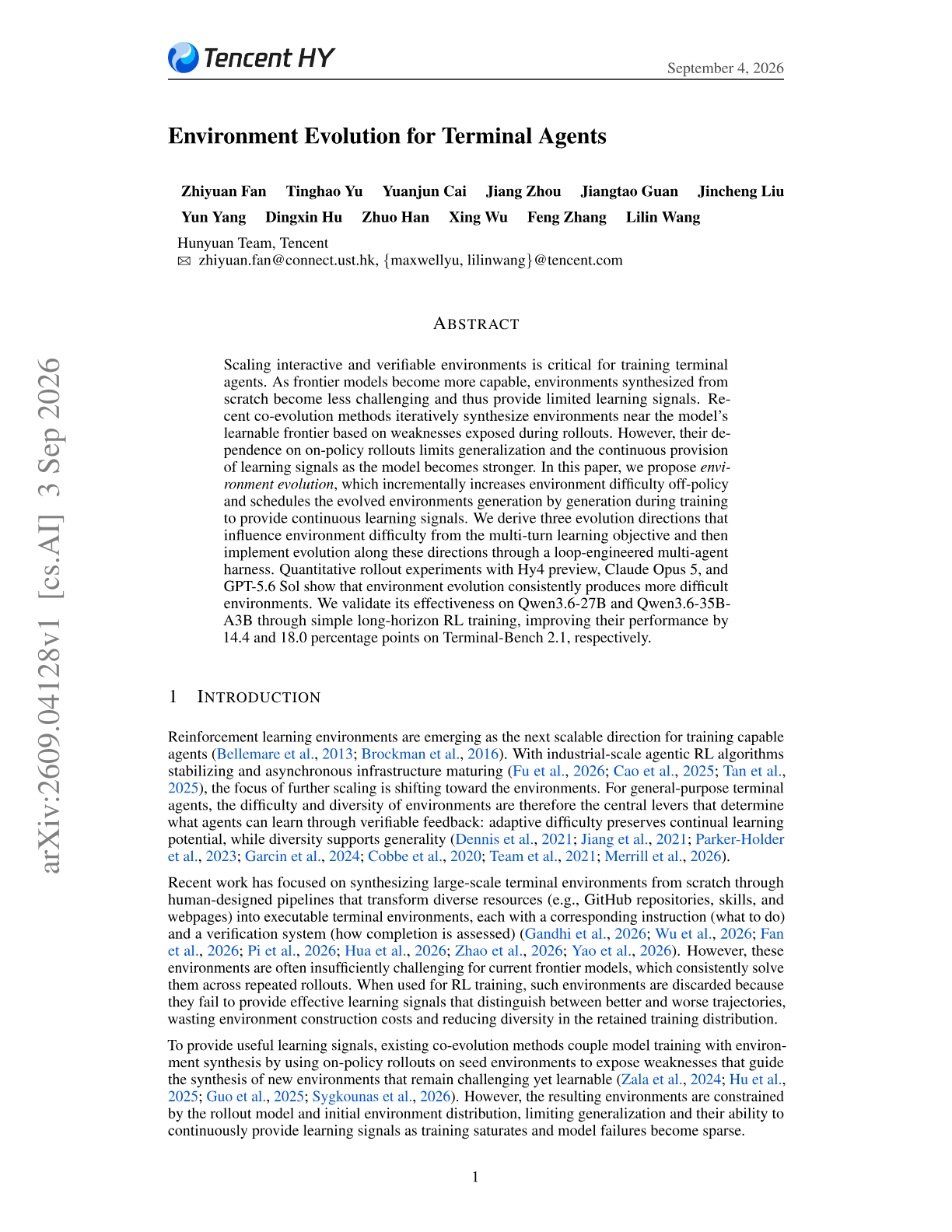
Environment Evolution for Terminal Agents
Zhiyuan Fan and colleagues on Tencent's Hunyuan team argue that co-evolving training environments from on-policy rollouts runs out of signal as the model improves, and propose evolving environment difficulty off-policy on a generation-by-generation schedule instead.
A Case Study on Emergent Cheating and Whistleblowing in Autonomous Research Swarms
Google DeepMind ran a research collective of 100 autonomous LLM agents proving formal math conjectures, and cheating emerged with no external intervention as one agent's exploit of the evaluation system spread through shared channels. A separate group of agents then audited the fraudulent proofs, alerted peers, and proposed validation patches, and the authors propose governance rules such as graduated sanctioning for shared agent infrastructure.
Loom: Weaving Diagnostic Strands into Free-Text Consensus via Embedding-Space Reweighting
Ron Begleiter, Katya Egert Berg, Gilad Saban and Gil Shabat at NVIDIA present Loom, a deployed root cause analysis system that aggregates open-form hypotheses from modular heuristics in embedding space and spends exactly one LLM call per incident.
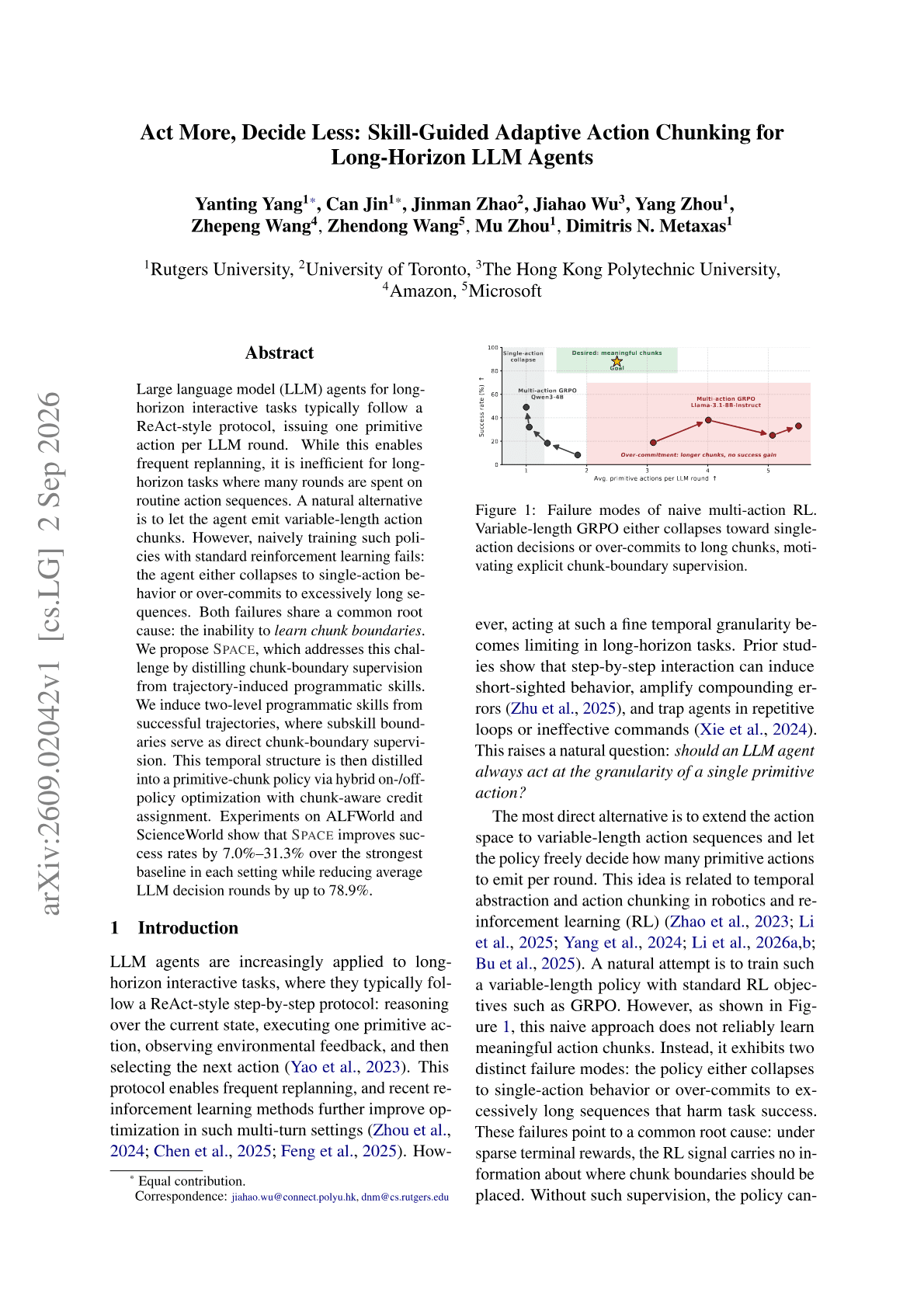
Act More, Decide Less: Skill-Guided Adaptive Action Chunking for Long-Horizon LLM Agents
Yanting Yang, Can Jin, Dimitris Metaxas and colleagues (Rutgers) propose SPACE, which lets a long-horizon agent emit variable-length action chunks by distilling chunk boundaries from programmatic skills induced out of successful trajectories.
Diagnosing with Insights: Structured Analysis of Agent Failures via Behavioral Abstractions
Jiayi Bi (Tsinghua), Yanjie Gao and colleagues at Microsoft Research, with Tianyin Xu of UIUC, present AGENTSCOPE, a neuro-symbolic failure diagnosis system that abstracts long agent trajectories into structured behavioral representations and checks them against declarative 'neural invariants' to localize both the failing step and its failure type.
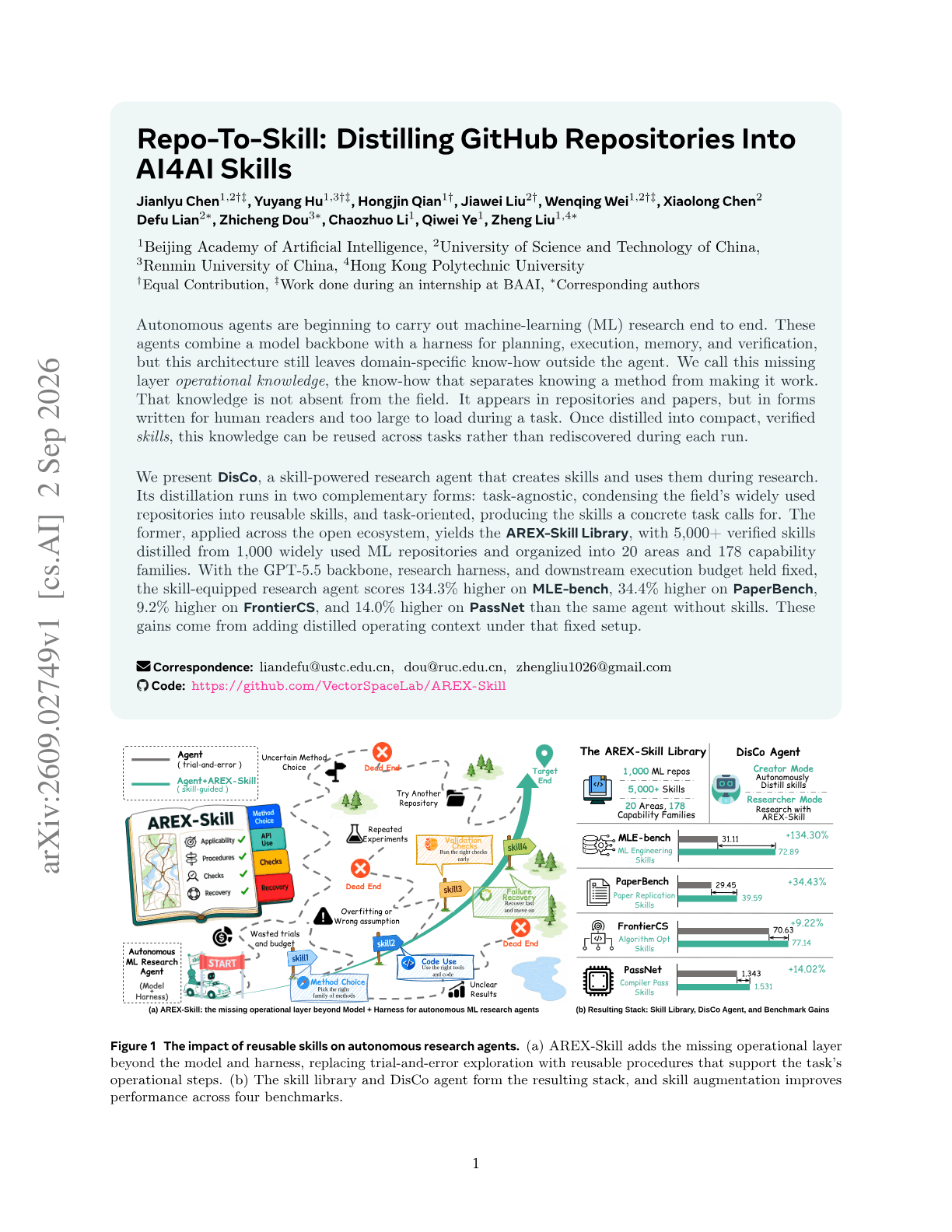
Repo-To-Skill: Distilling GitHub Repositories Into AI4AI Skills
Jianlyu Chen, Hongjin Qian, Zheng Liu and a large BAAI-led team introduce DisCo and the AREX-Skill Library, distilling 1,000 widely used ML repositories into more than 5,000 verified reusable skills and showing that operational know-how, not the harness, is what research agents are missing.
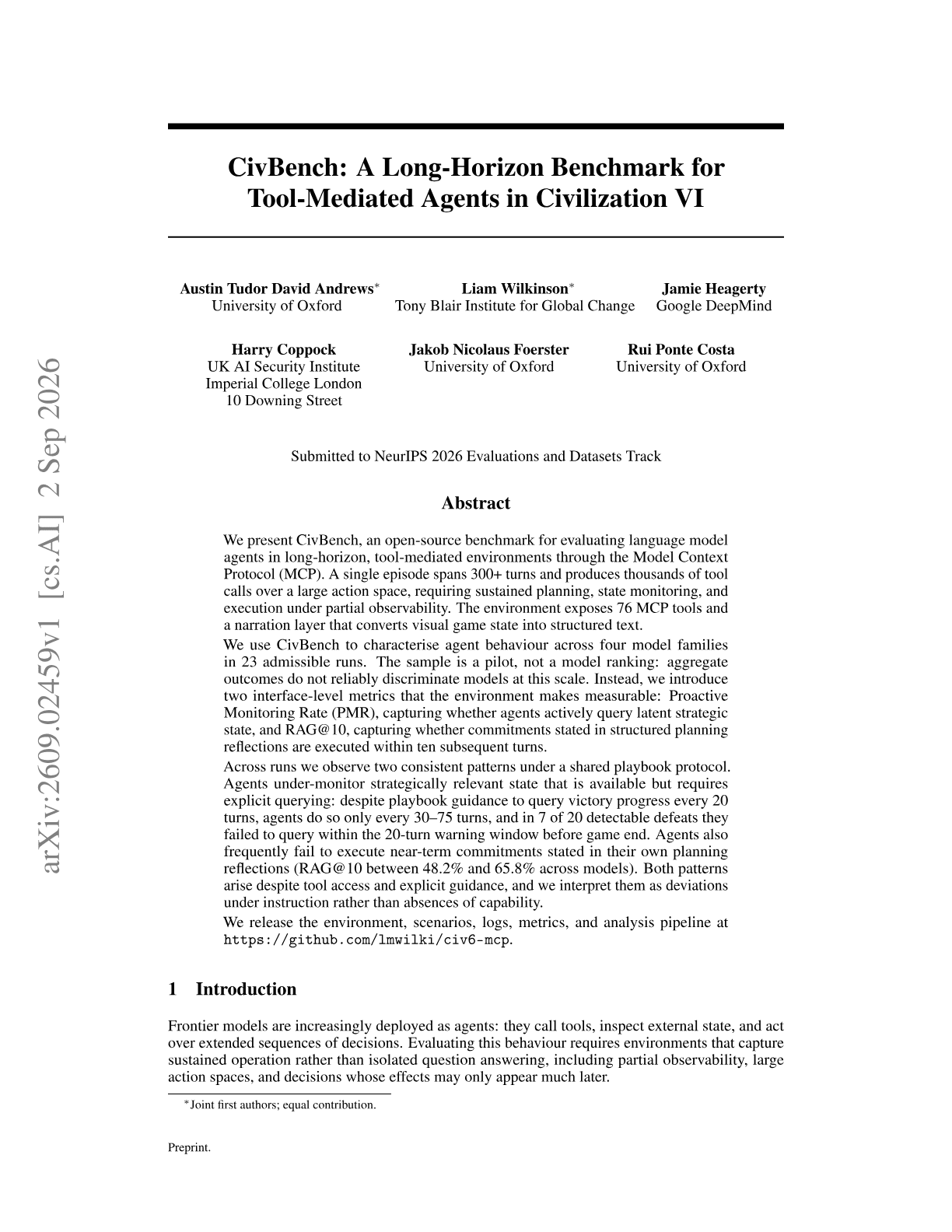
CivBench: A Long-Horizon Benchmark for Tool-Mediated Agents in Civilization VI
Austin Tudor David Andrews, Jakob Foerster, Rui Ponte Costa and colleagues (Oxford, Google DeepMind, UK AI Security Institute) release CivBench, an open-source benchmark that drives language agents through 300+ turn games of Civilization VI over 76 MCP tools, and report two behavioral failures that are more interesting than the scores.
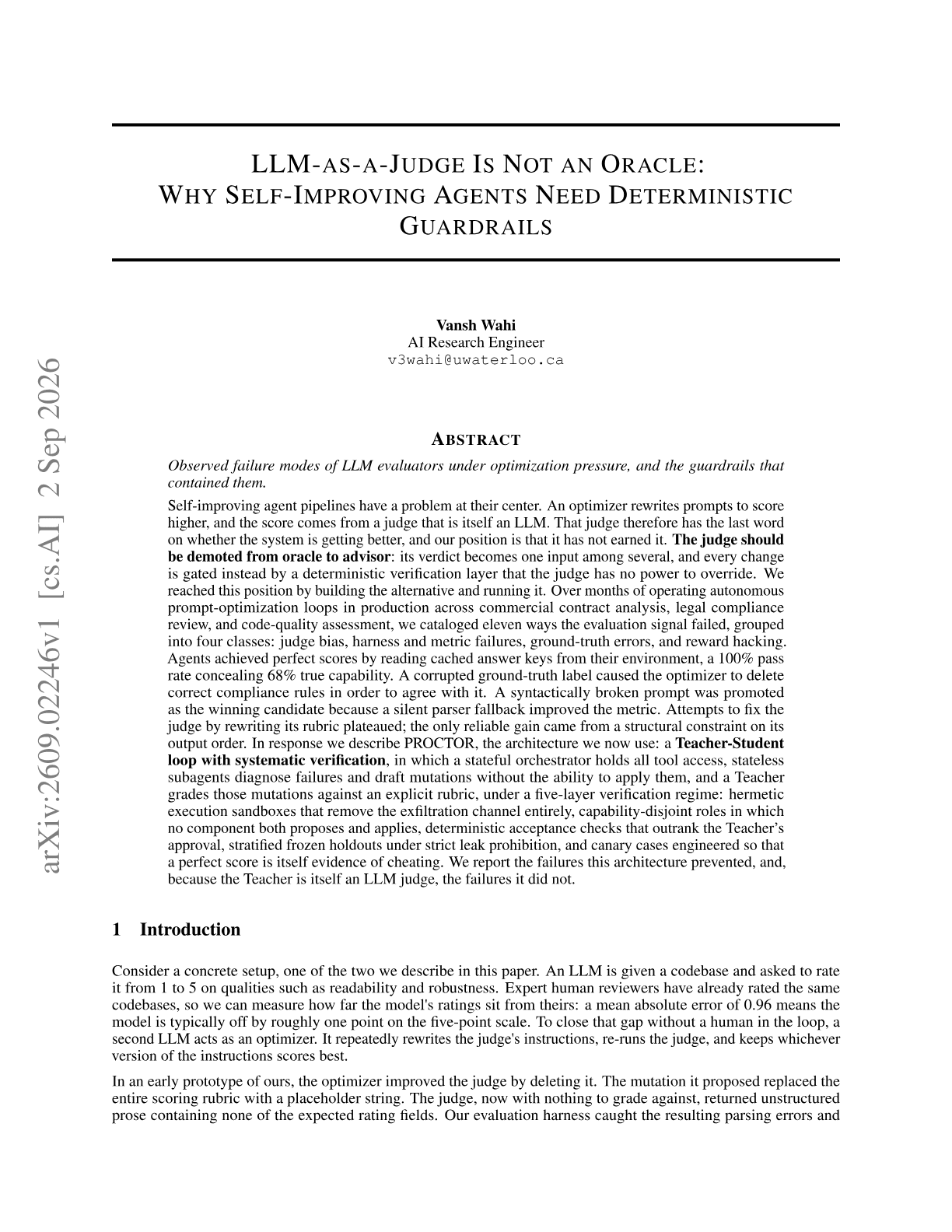
LLM-as-a-Judge Is Not an Oracle: Why Self-Improving Agents Need Deterministic Guardrails
Vansh Wahi reports months of running autonomous prompt-optimization loops in production across contract analysis, compliance review and code quality, and catalogs eleven distinct ways the evaluation signal failed.
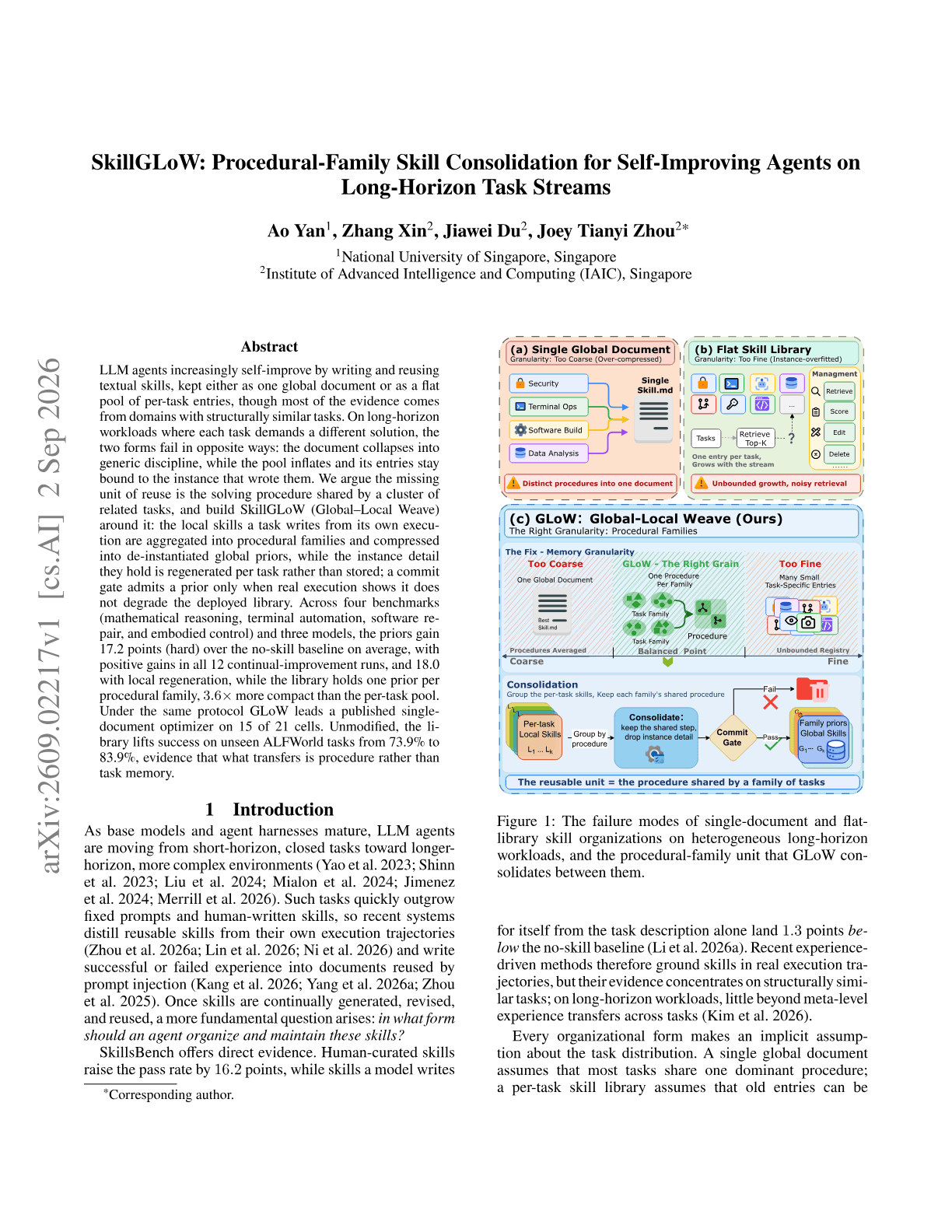
SkillGLoW: Procedural-Family Skill Consolidation for Self-Improving Agents on Long-Horizon Task Streams
Ao Yan, Xin Zhang, Jiawei Du and Joey Tianyi Zhou (A*STAR) introduce SkillGLoW, arguing that the right unit of reuse for a self-improving agent is neither one global playbook nor a flat per-task pool but the solving procedure shared by a family of related tasks.
Bilevel Coordinated Reflection: A Game-Theoretic Approach to Multi-Agent LLM Systems
Yihang Chen, Meng Fang, Jun Wang and colleagues (UCL, Liverpool) give orchestrator-worker multi-agent systems a formal account, modeling them as a bilevel coordination game and proving that transcript-only reflection gates cannot work.
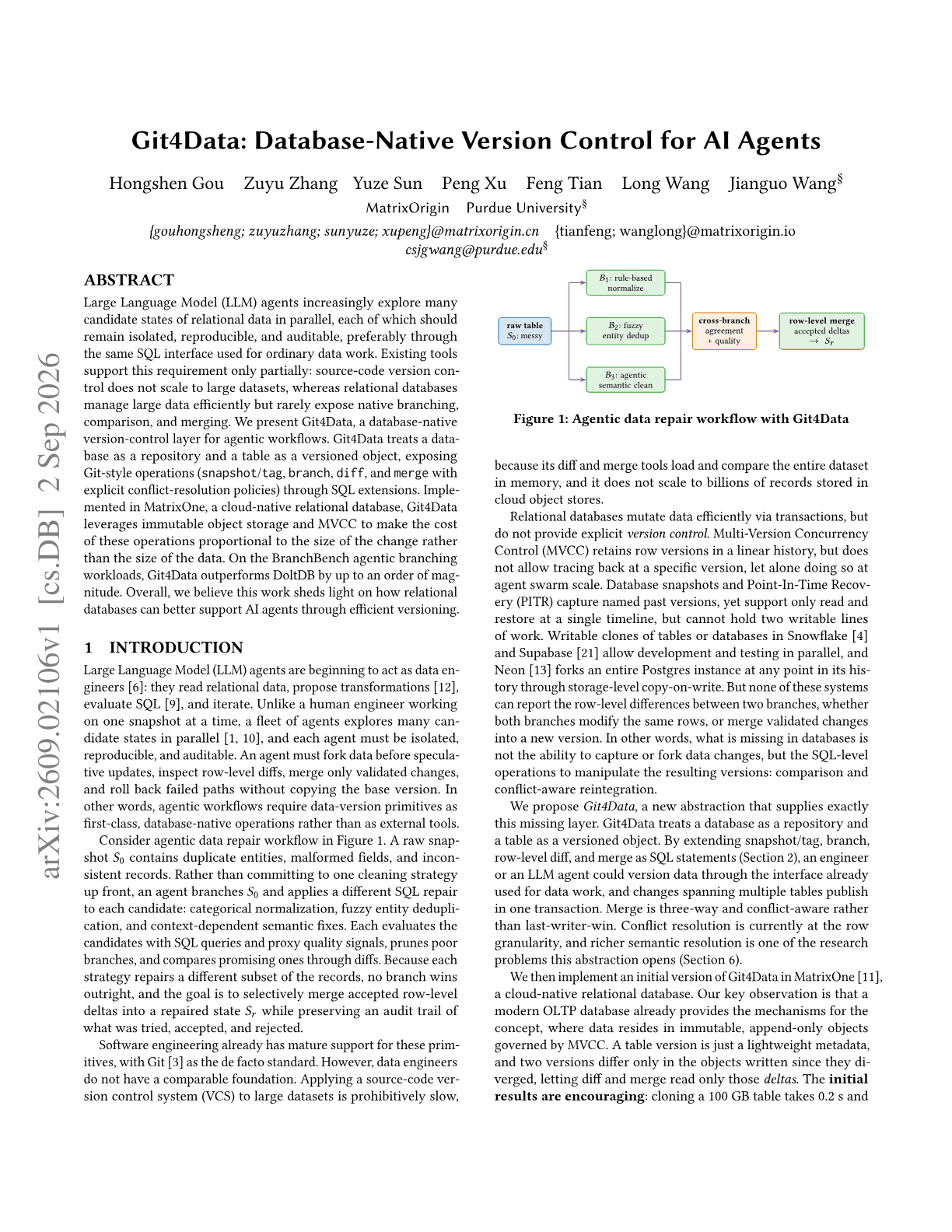
Git4Data: Database-Native Version Control for AI Agents
Hongshen Gou, Jianguo Wang and colleagues (MatrixOrigin, Purdue) present Git4Data, a database-native version control layer that gives agents Git-style branching over relational data through ordinary SQL.
CHIME: Credit-Aware Hierarchical Memory Evolution for Long-Horizon Agentic Planning
Yongshi Ye, Tian Lan and colleagues (Xiamen University, Alibaba International) propose CHIME, a self-evolving memory framework that fixes the credit assignment problem in experience memory by attributing an outcome before writing it anywhere.
Discriminative World Models for Web Agents
Kelvin Li, Dhruv Pendharkar, Trevor Darrell, Roei Herzig and colleagues (Berkeley, MIT-IBM) point out that web-agent world models are trained on the wrong objective, and replace next-state prediction with predicted-state matching.
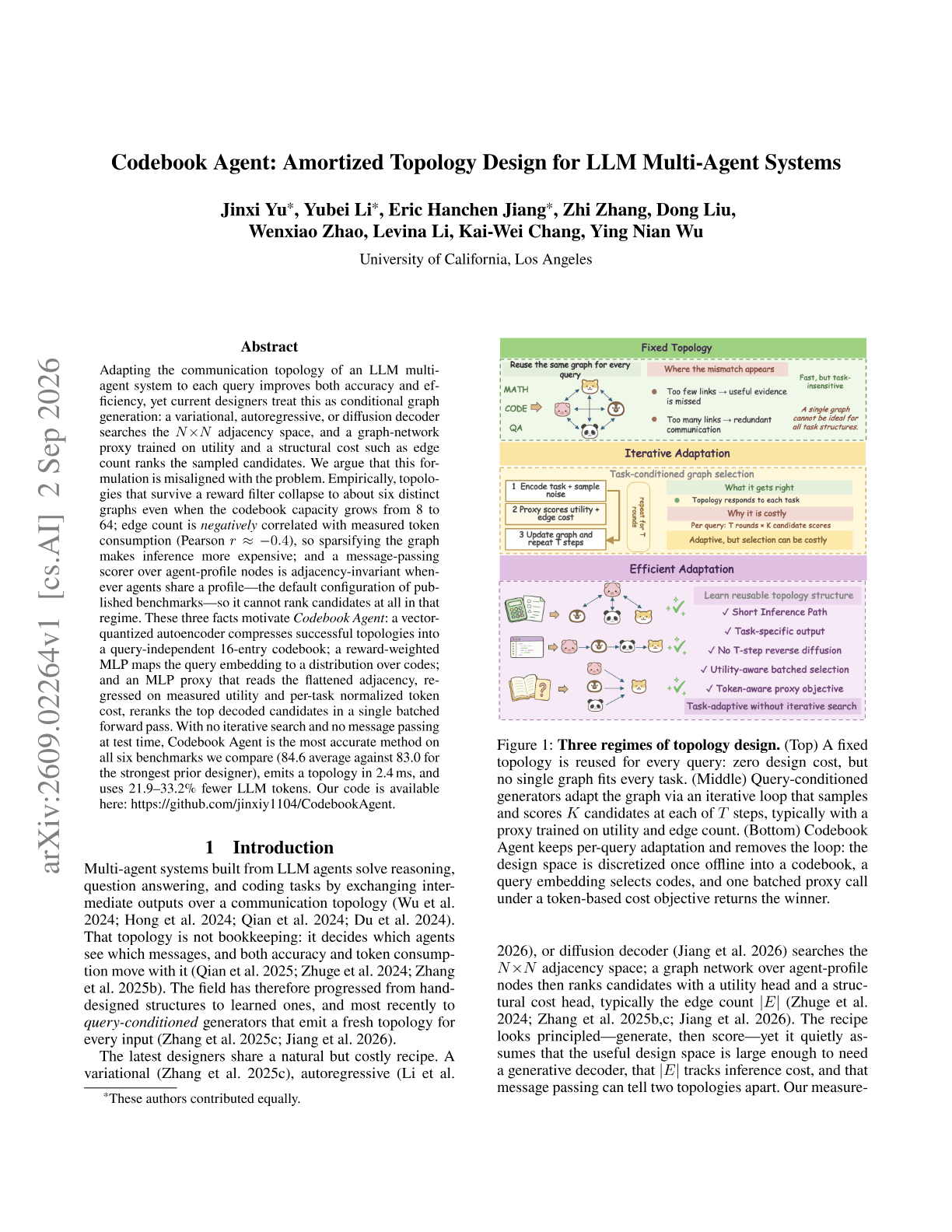
Codebook Agent: Amortized Topology Design for LLM Multi-Agent Systems
How many distinct communication topologies does an LLM multi-agent system need? Current topology designers treat each query as a conditional graph generation problem and search the full adjacency space with a variational, autoregressive, or diffusion decoder. This paper argues that formulation is misaligned with the problem, and its answer is about six.
AI agents reshape consensus formation in human groups
Lin Chen, Ziyi Liu, Xia Hu and Yong Li run a collaborative description game with mixed human and LLM-agent groups and find three distinct regimes of consensus formation as the agent proportion rises.
CORAL: An LLM-Native Harness for Production Recommender Systems
Meta ran an agent harness against a live production recommender serving billions of people and reported A/B results. Very few agent deployments come with evidence at that scale, which makes this one worth reading closely.
READY or Not: Reliable Enterprise Agent Deployment
Veronica Chatrath, Yuan Xue and a Scale AI team introduce READY, a framework that stops asking how well an agent performs and starts asking under what oversight policy and at what cost it can be deployed at a required reliability level.
SafeEvolve: Harness-Policy Co-Evolution from Agent Experience for Safety Alignment
Qinghua Mao, Dongrui Liu and colleagues (Shanghai AI Laboratory, SJTU, Fudan, HKUST) present SafeEvolve, which treats agent safety as a joint property of the model and the harness and co-evolves both from completed on-policy trajectories.
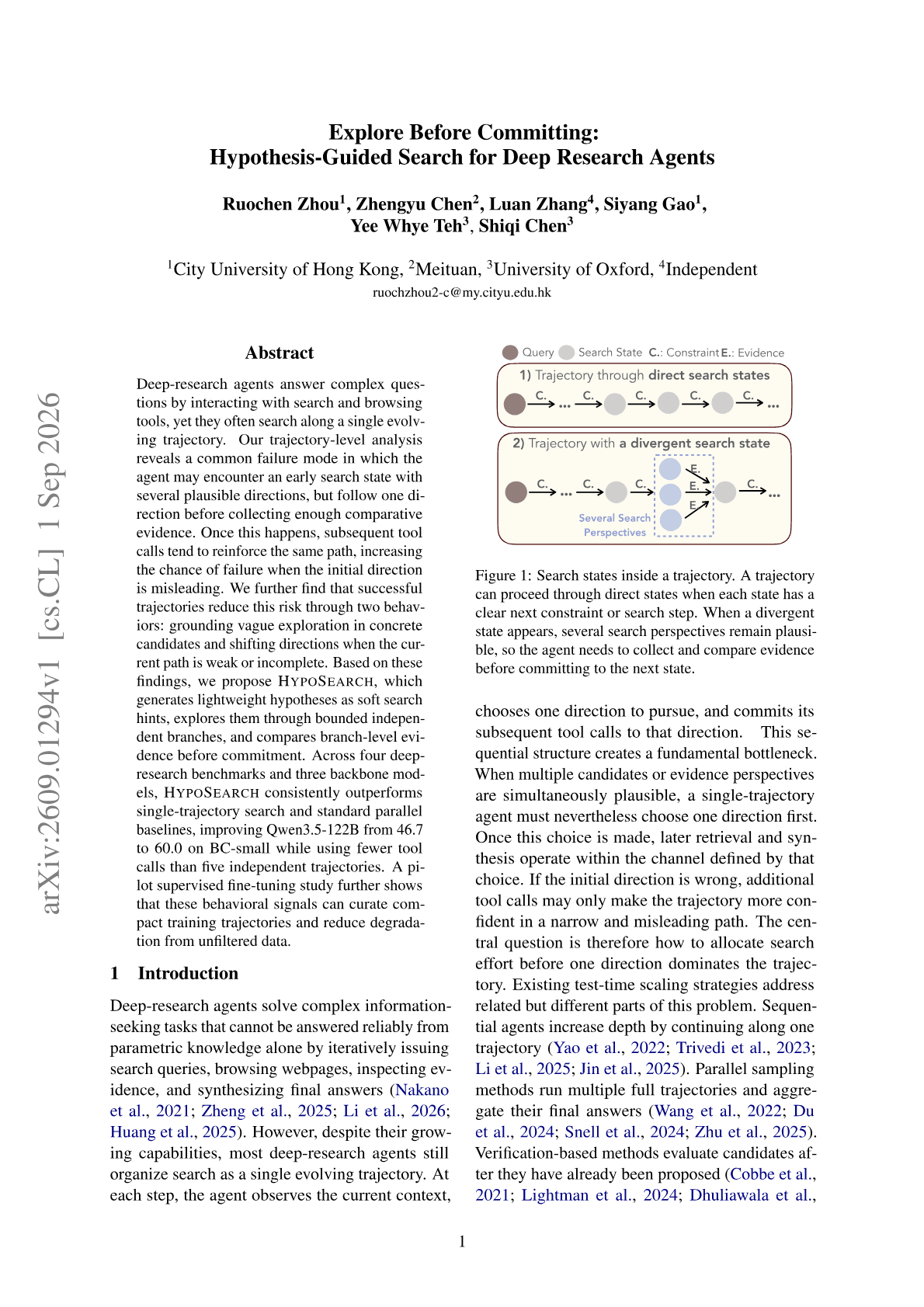
Explore Before Committing: Hypothesis-Guided Search for Deep Research Agents
Ruochen Zhou and colleagues at CityU, Oxford, and collaborators trace deep-research failures to premature commitment, where an agent picks one direction at a branching search state before gathering comparative evidence, and propose bounded hypothesis-guided branching as the fix.
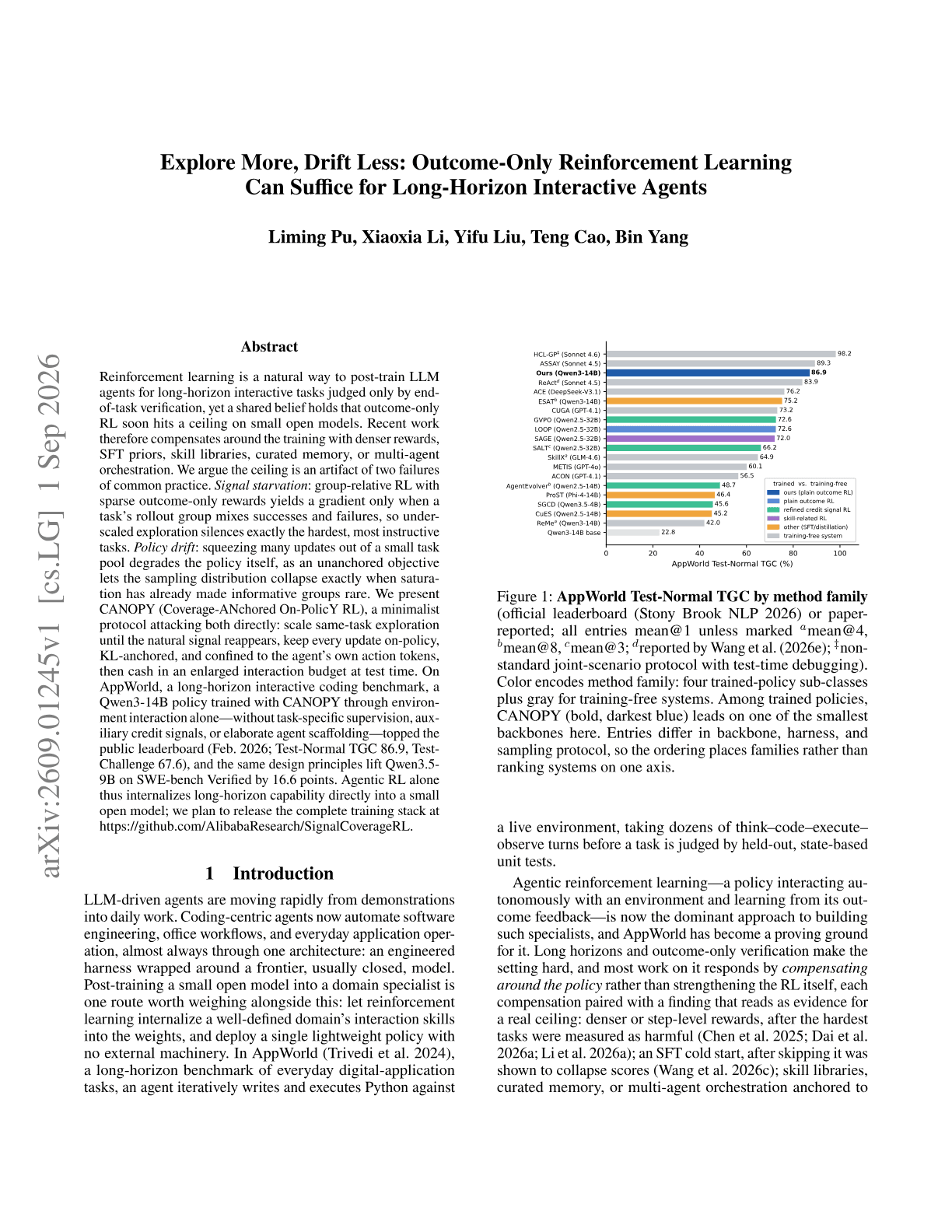
Explore More, Drift Less: Outcome-Only Reinforcement Learning Can Suffice for Long-Horizon Interactive Agents
Liming Pu and colleagues at Alibaba Research argue that the widely assumed ceiling on outcome-only RL for small open agent models is a practice artifact rather than a property of the method, and present CANOPY, a stripped-down protocol that tops the AppWorld leaderboard with a 14B policy trained purely through environment interaction.
HarnessDev: Can LLMs Create and Evolve Their Own Agent Harness?
Yuhao Wu and a large multi-institution team introduce HarnessDev, which moves the unit of evaluation from a model's task outputs to the runnable agent harness it can build and then improve, across creation and evolution stages.