AI Papers of the Week
Every paper worth reading in AI, hand-picked one week at a time.
Discover and explore top AI papers withClaude CodeCodex
npx @dair-ai/mcp setup
Agent Laboratory
an approach that leverages LLM agents capable of completing the entire research process; the main findings are: 1) agents driven by o1-preview resulted in the best research outcomes, 2) generated machine learning code can achieve state-of-the-art performance compared to existing methods, 3) human feedback further improves the quality of research, and 4) Agent Laboratory significantly reduces research expenses.
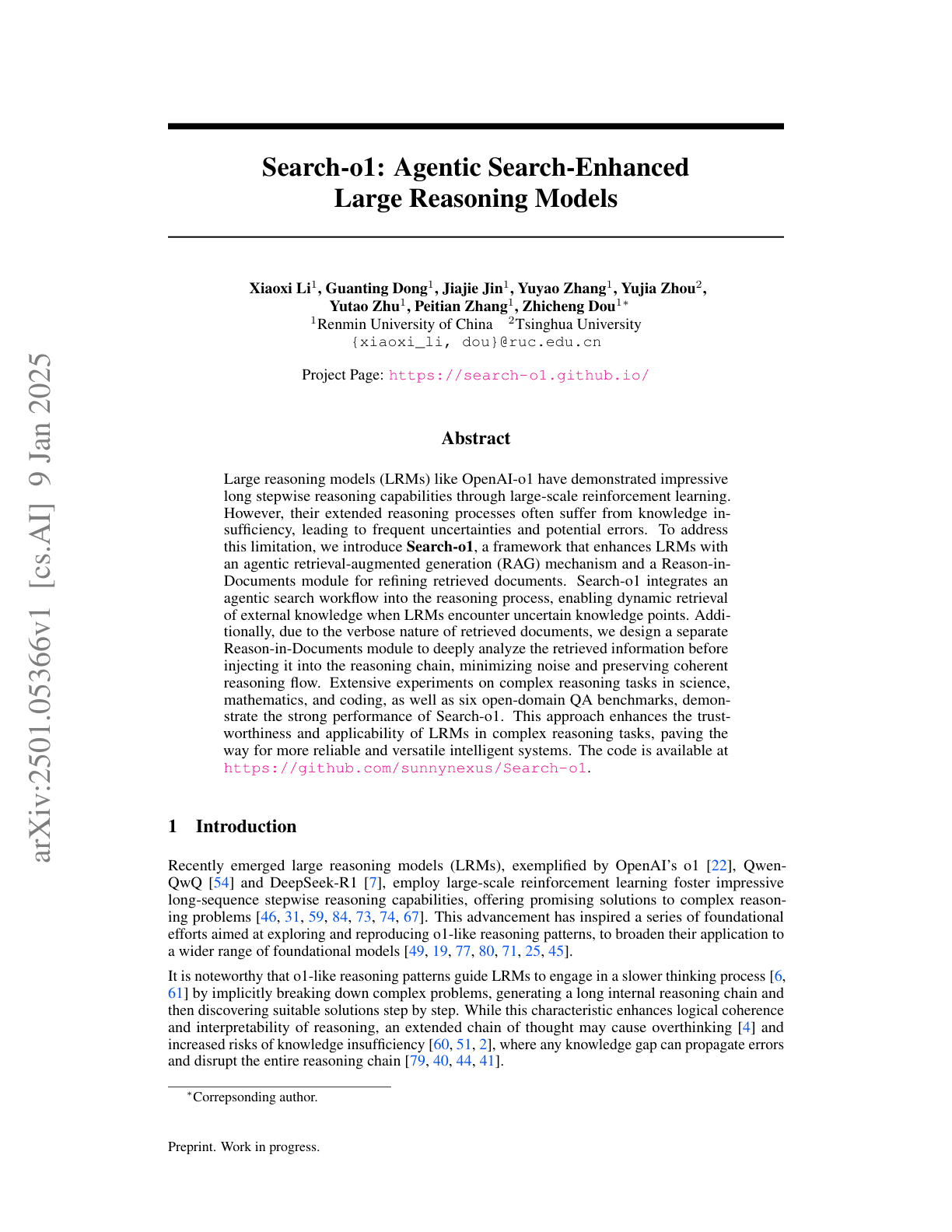
Search-o1
a framework that combines large reasoning models (LRMs) with agentic search and document refinement capabilities to tackle knowledge insufficiency; the framework enables autonomous knowledge retrieval during reasoning and demonstrates strong performance across complex tasks, outperforming both baseline models and human experts.
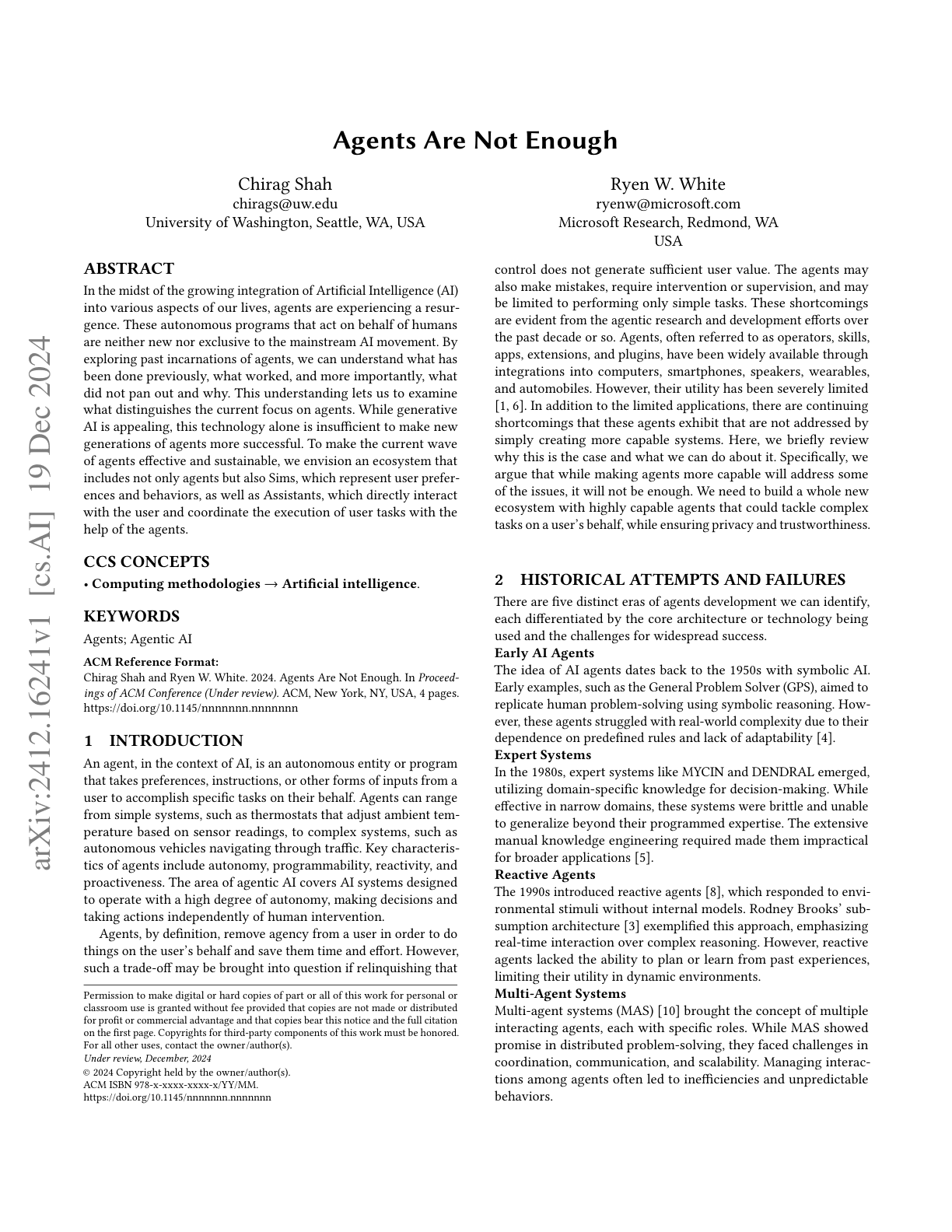
Agents Are Not Enough
argues that while AI agents show promise, they alone cannot address the challenges in autonomous task execution; proposes a new ecosystem combining three key components: Agents (narrow, purpose-driven modules for specific tasks), Sims (digital representations of user preferences and behaviors), and Assistants (programs that coordinate between users, Sims, and Agents).
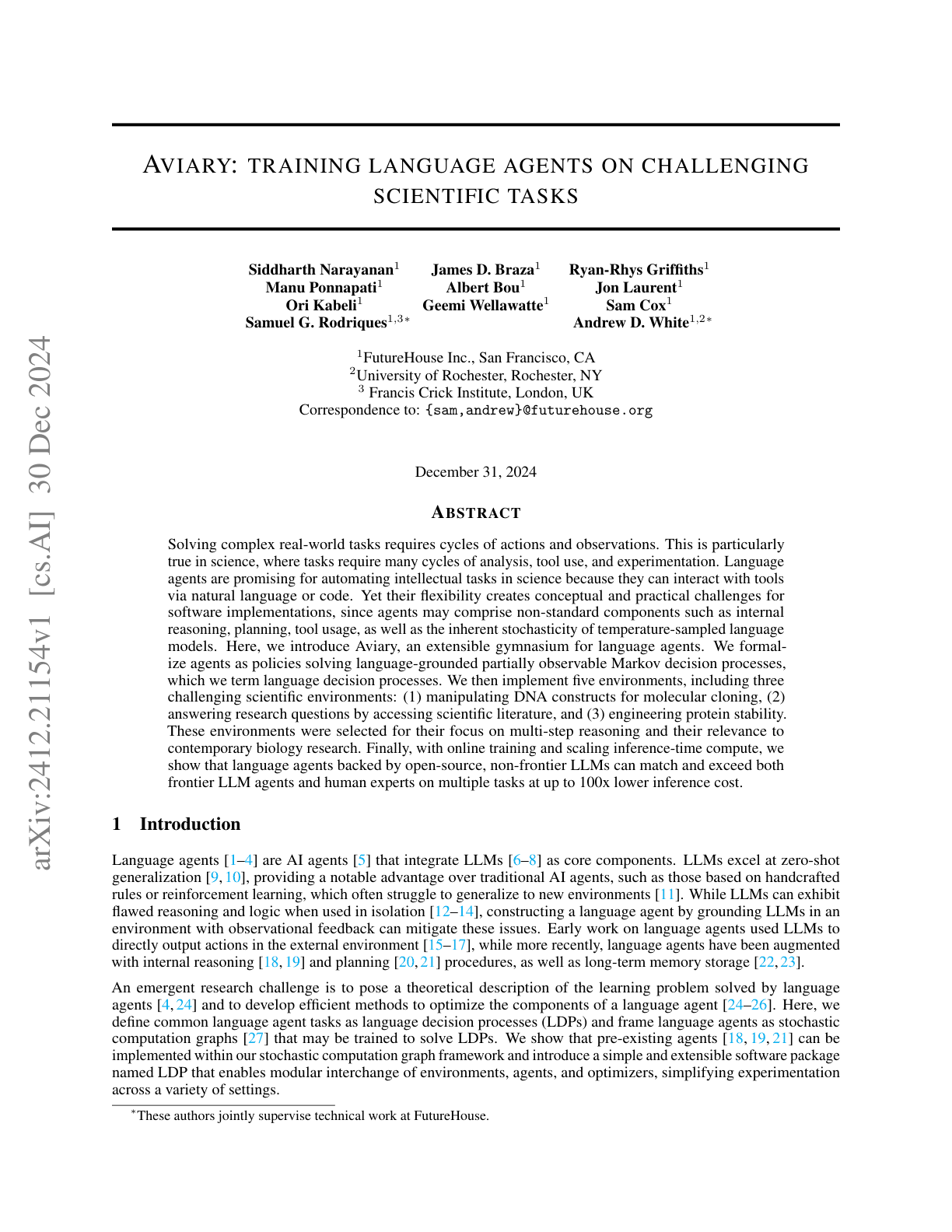
Aviary
an extensible open-source gymnasium that can help build language agents that exceed the performance of zero-shot frontier LLMs and even humans on several challenging scientific tasks.
DRT-o1
applies long chain-of-thought reasoning to machine translation, particularly for handling metaphors and similes across different cultures; the system uses a multi-agent framework with a translator working iteratively with an advisor and evaluator to produce better translations; testing with Qwen2.5 models showed significant improvements in BLEU and CometScore metrics, with DRT-o1-7B outperforming larger models like QwQ-32B-Preview.
TheAgentCompany
a new benchmark for evaluating AI agents on real-world professional tasks in a simulated software company environment; tasks span multiple professional roles including software engineering, project management, finance, and HR; when tested with various LLMs, including both API-based models like Claude-3.5-Sonnet and open-source models like Llama 3.1, the results show the current limitations of AI agents. The best-performing model, Claude-3.5-Sonnet, achieved only a 24% success rate on completing tasks fully while scoring 34.4% when accounting for partial progress.
PAE (Proposer-Agent-Evaluator)
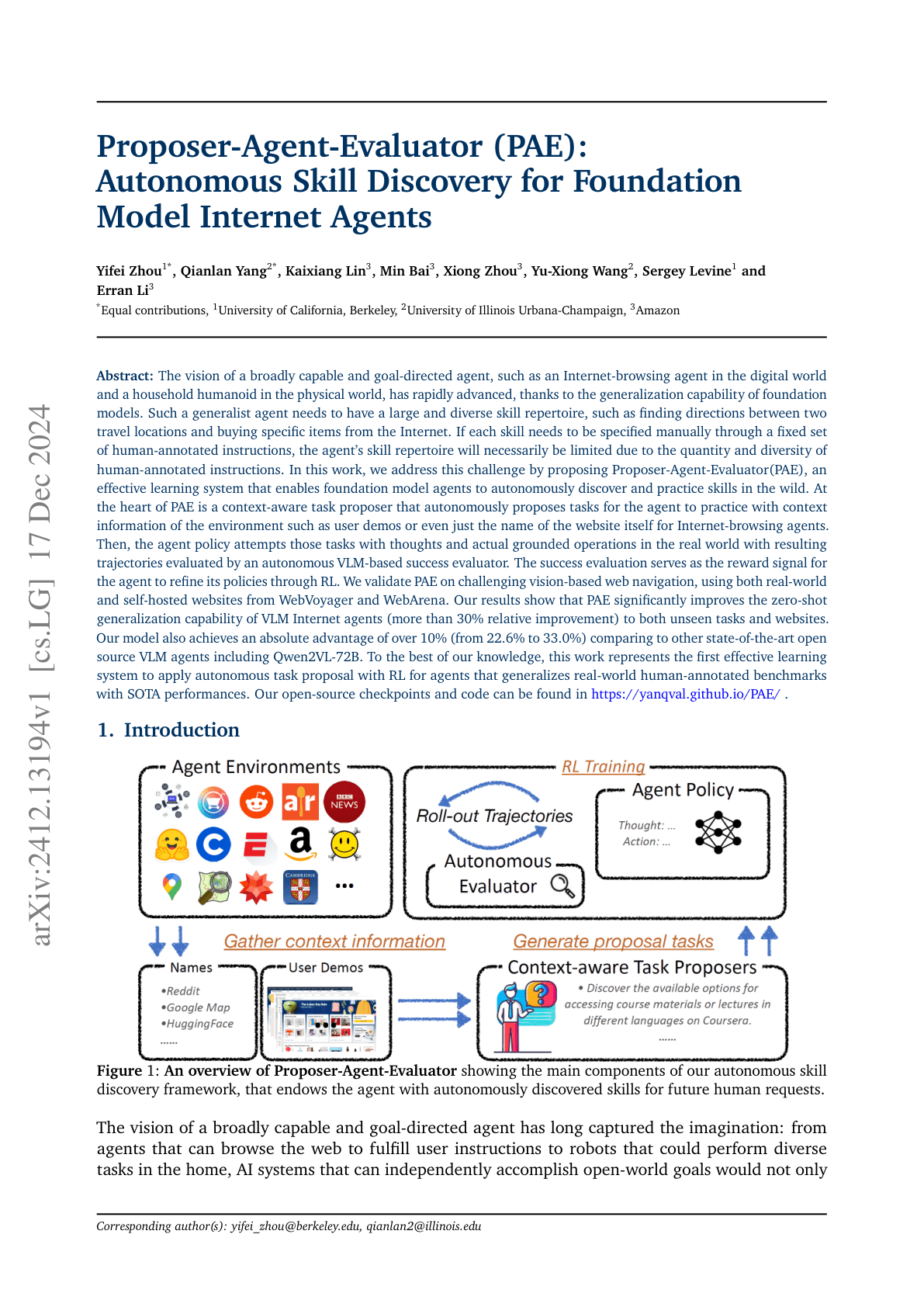
a learning system that enables AI agents to autonomously discover and practice skills through web navigation, using reinforcement learning and context-aware task proposals to achieve state-of-the-art performance on real-world benchmarks.
AutoFeedback
a two-agent AI system that generates more accurate and pedagogically sound feedback for student responses in science assessments, significantly reducing common errors like over-praise compared to single-agent models.
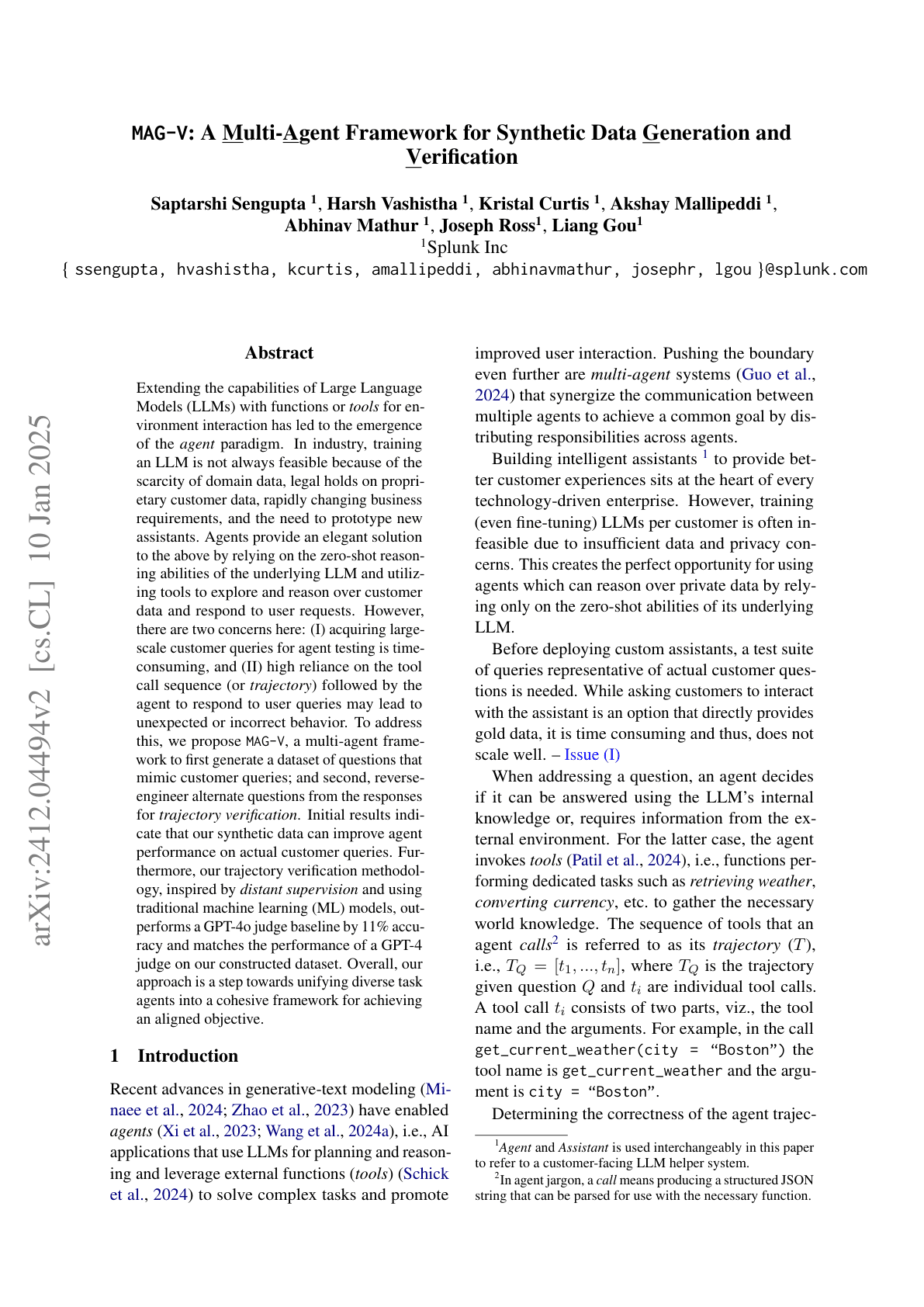
MAG-V
a multi-agent framework that first generates a dataset of questions that mimic customer queries; it then reverse engineers alternate questions from responses to verify agent trajectories; reports that the generated synthetic data can improve agent performance on actual customer queries; finds that for trajectory verification simple ML baselines with feature engineering can match the performance of more expensive and capable models.
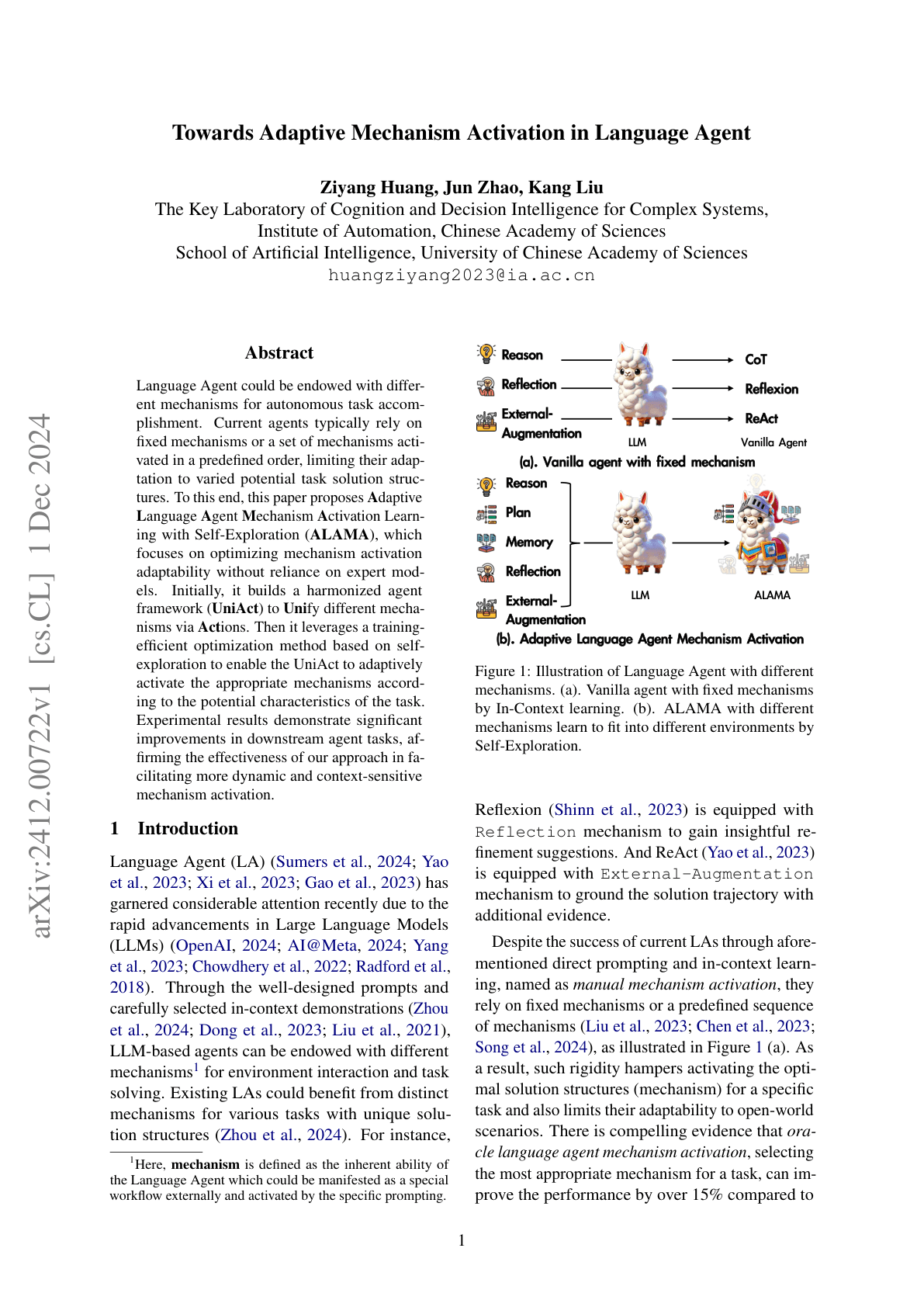
ALAMA
a new framework that helps language agents automatically learn when to use different mechanisms (ReAct, CoT, Reflection, etc.) for automatically completing tasks, improving on current approaches that use fixed or predefined mechanisms; the framework adaptively activates the appropriate mechanisms according to the potential characteristics of the task; experimental results demonstrate significant improvements in downstream agent tasks, including mathematical reasoning and knowledge-intensive reasoning.
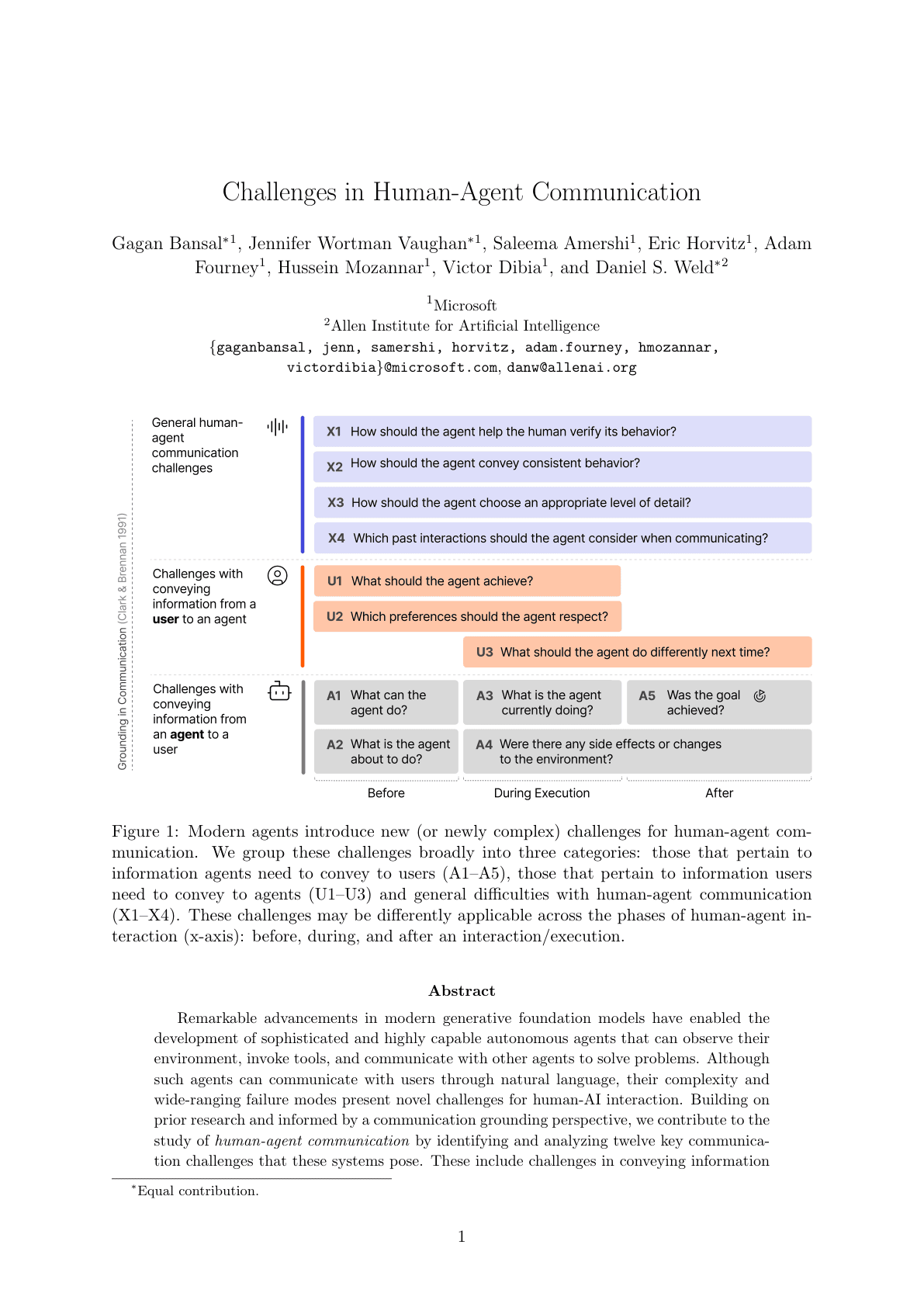
Challenges in Human-Agent Communication
present a comprehensive analysis of key challenges in human-agent communication, focusing on how humans and AI agents can effectively establish common ground and mutual understanding; identifies 12 core challenges across three categories: conveying information from agents to users, enabling users to communicate information to agents, and general communication challenges that affect all interactions.
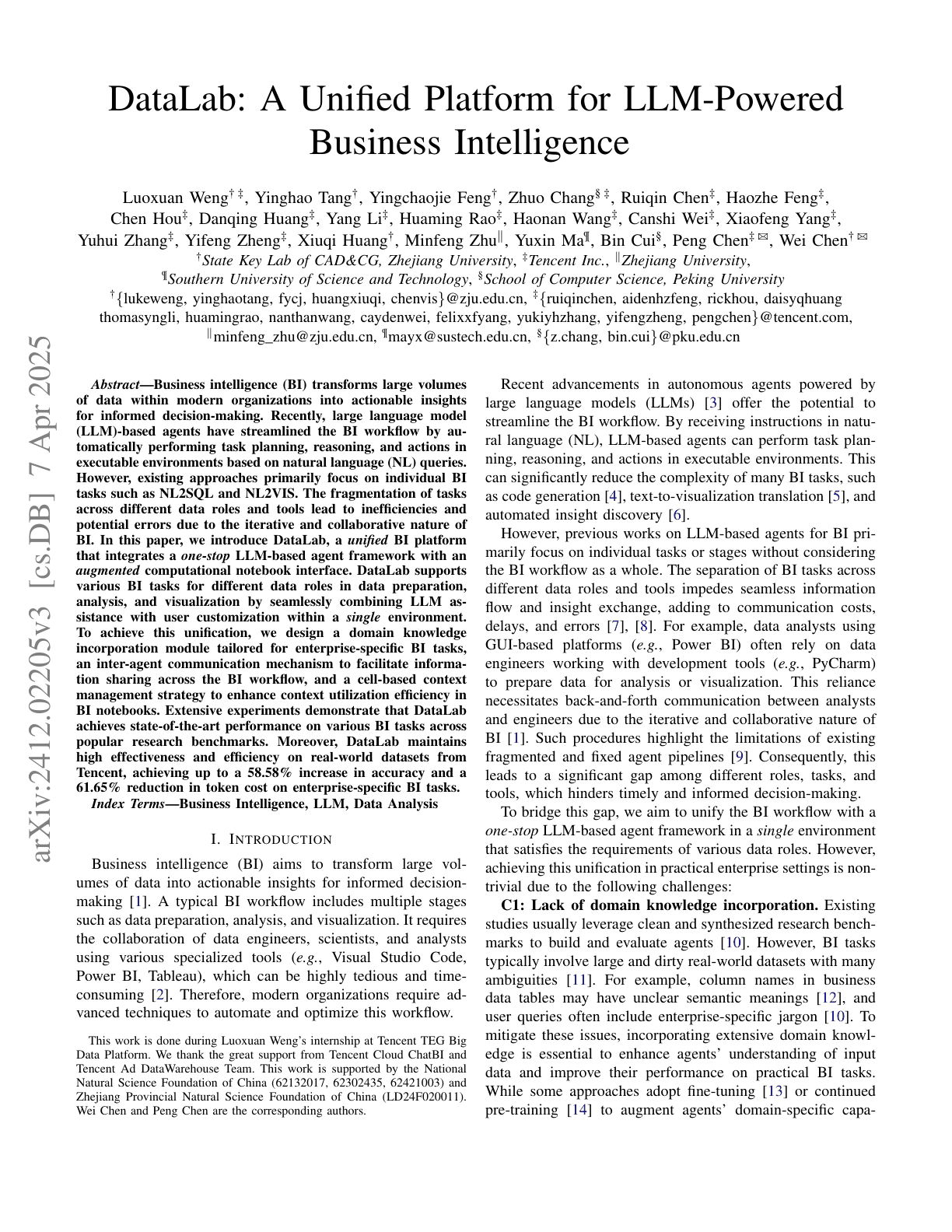
DataLab
a unified business intelligence platform powered by LLM-based agents that integrates task planning, reasoning, and computational notebooks to streamline the entire BI workflow; the system achieves SOTA performance on research benchmarks and demonstrates significant improvements in accuracy and efficiency on real enterprise data from Tencent; achieves up to a 58.58% increase in accuracy and a 61.65% reduction in token cost on enterprise-specific BI tasks.
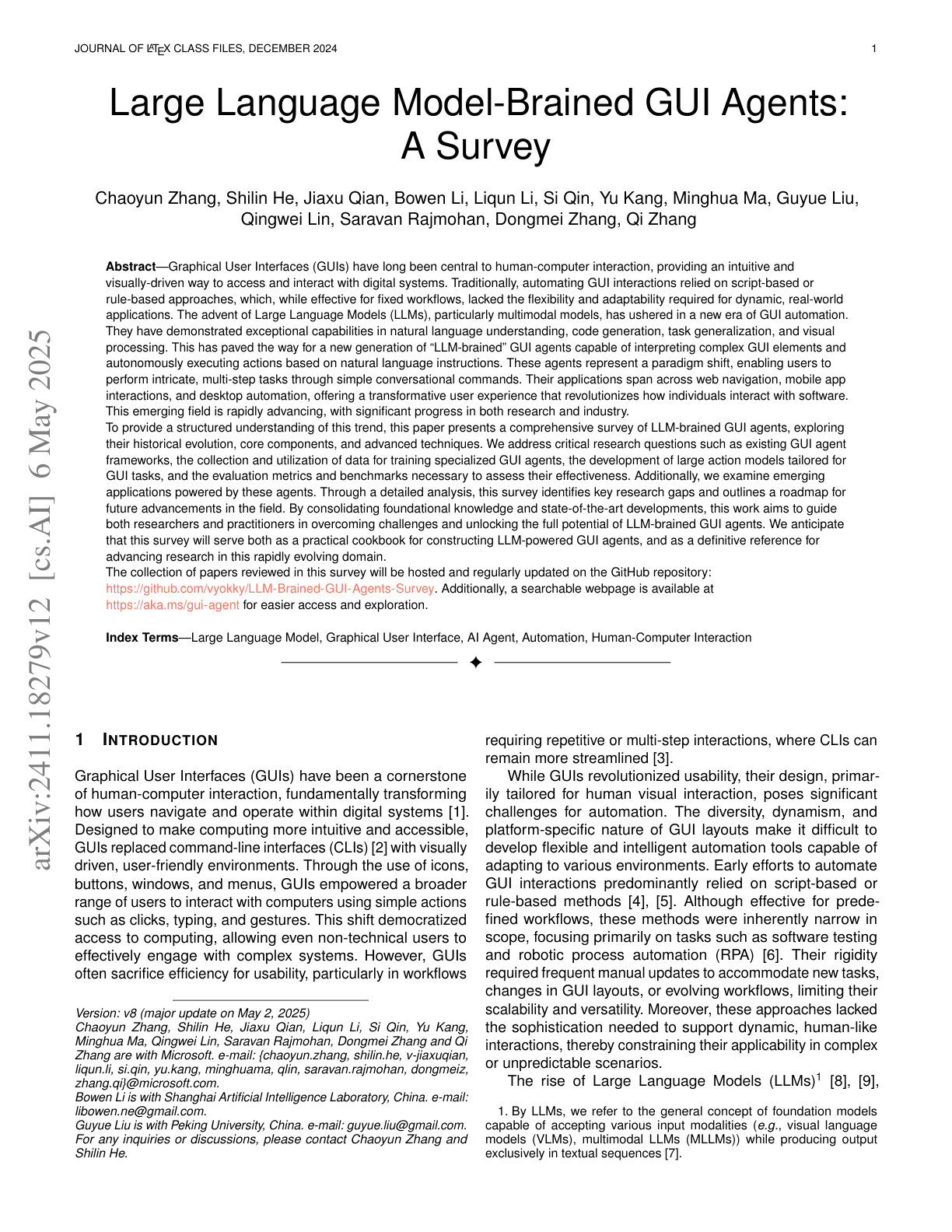
LLM-Brained GUI Agents
presents a survey of LLM-brained GUI Agents, including techniques and applications.
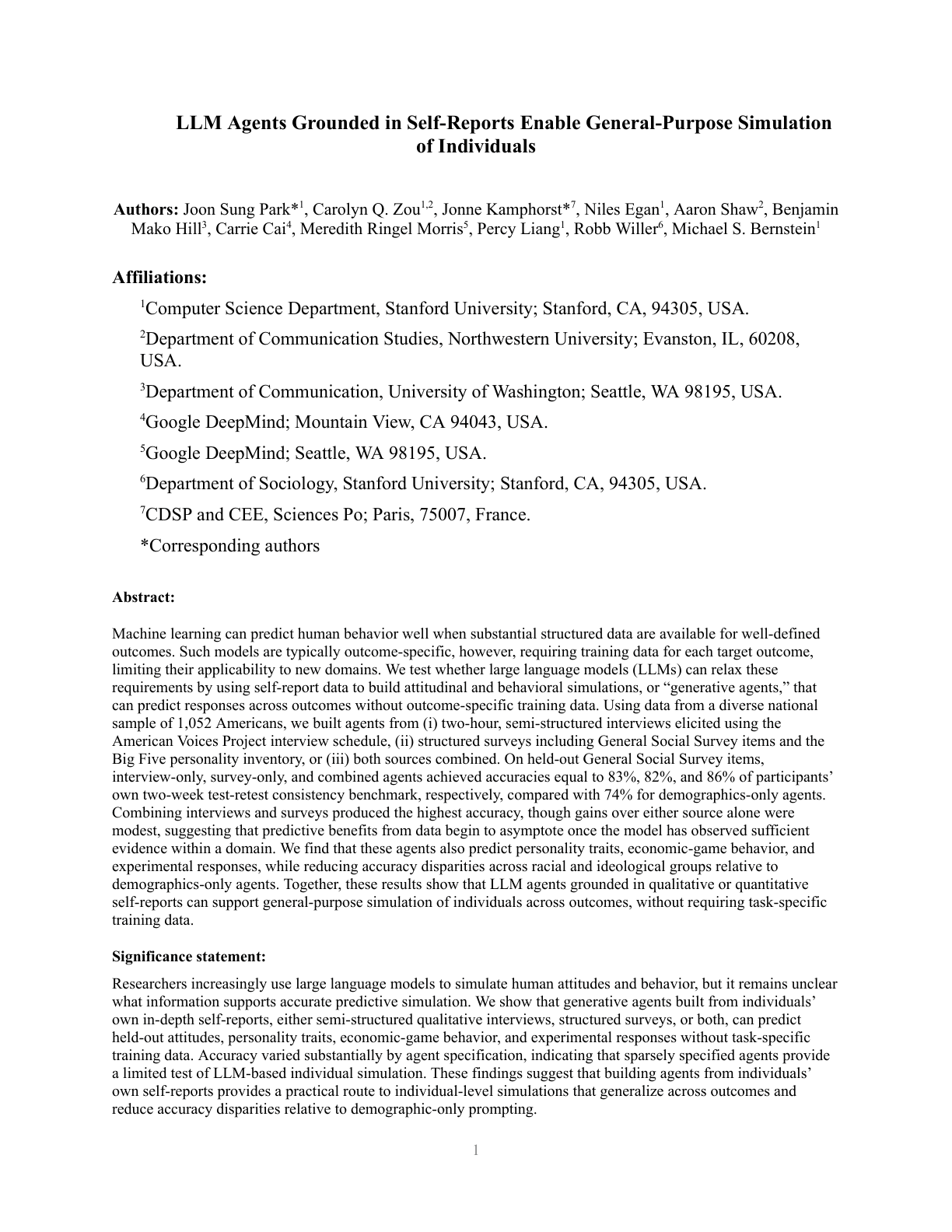
Generative Agent Simulations of 1,000 People
introduces a new agent architecture that uses LLMs to create behavioral simulations of real individuals, achieving 85% accuracy in replicating human responses on the General Social Survey and reducing demographic biases compared to traditional approaches.
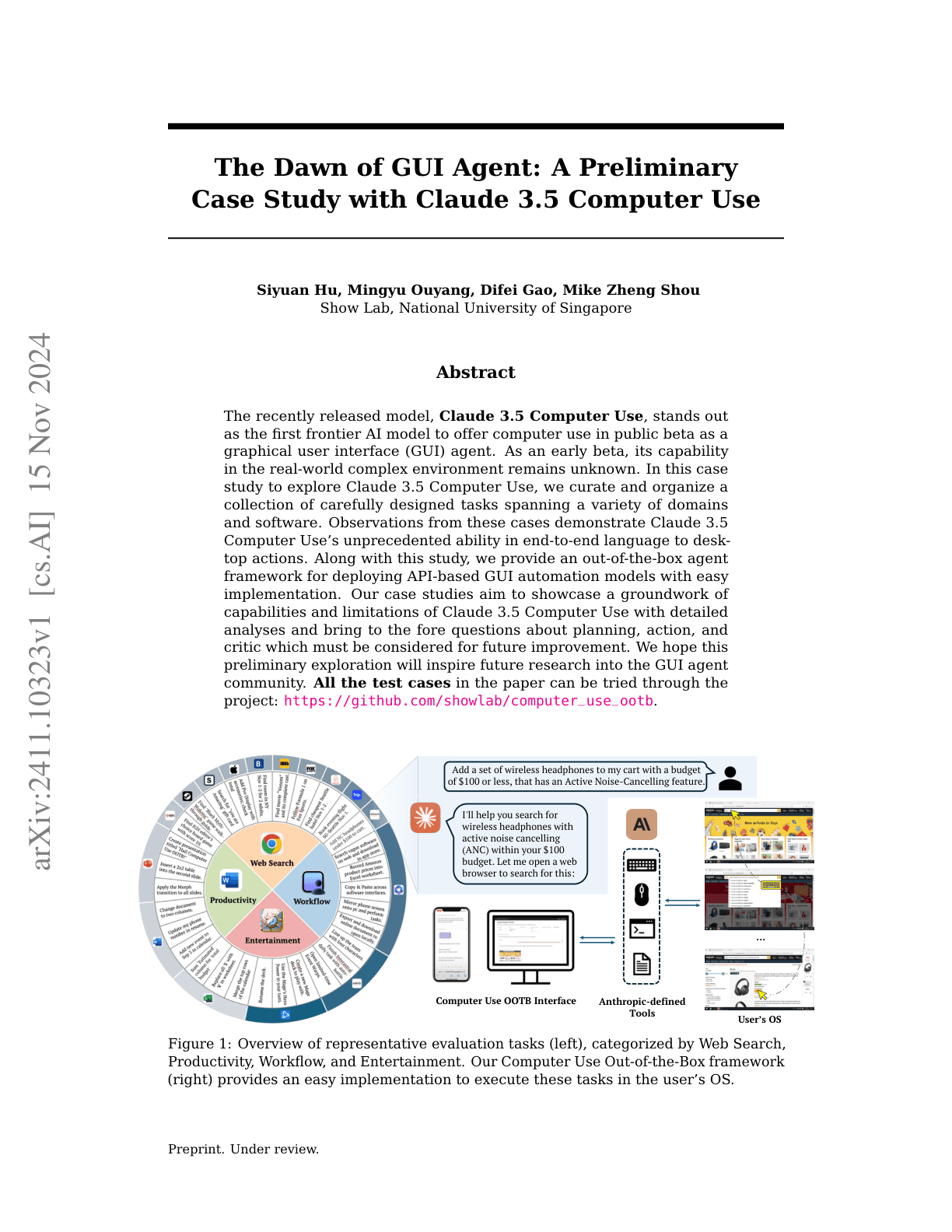
The Dawn of GUI Agent
explores Claude 3.5 computer use capabilities across different domains and software; they also provide an out-of-the-box agent framework for deploying API-based GUI automation models; Claude 3.5 Computer Use demonstrates unprecedented ability in end-to-end language to desktop actions.
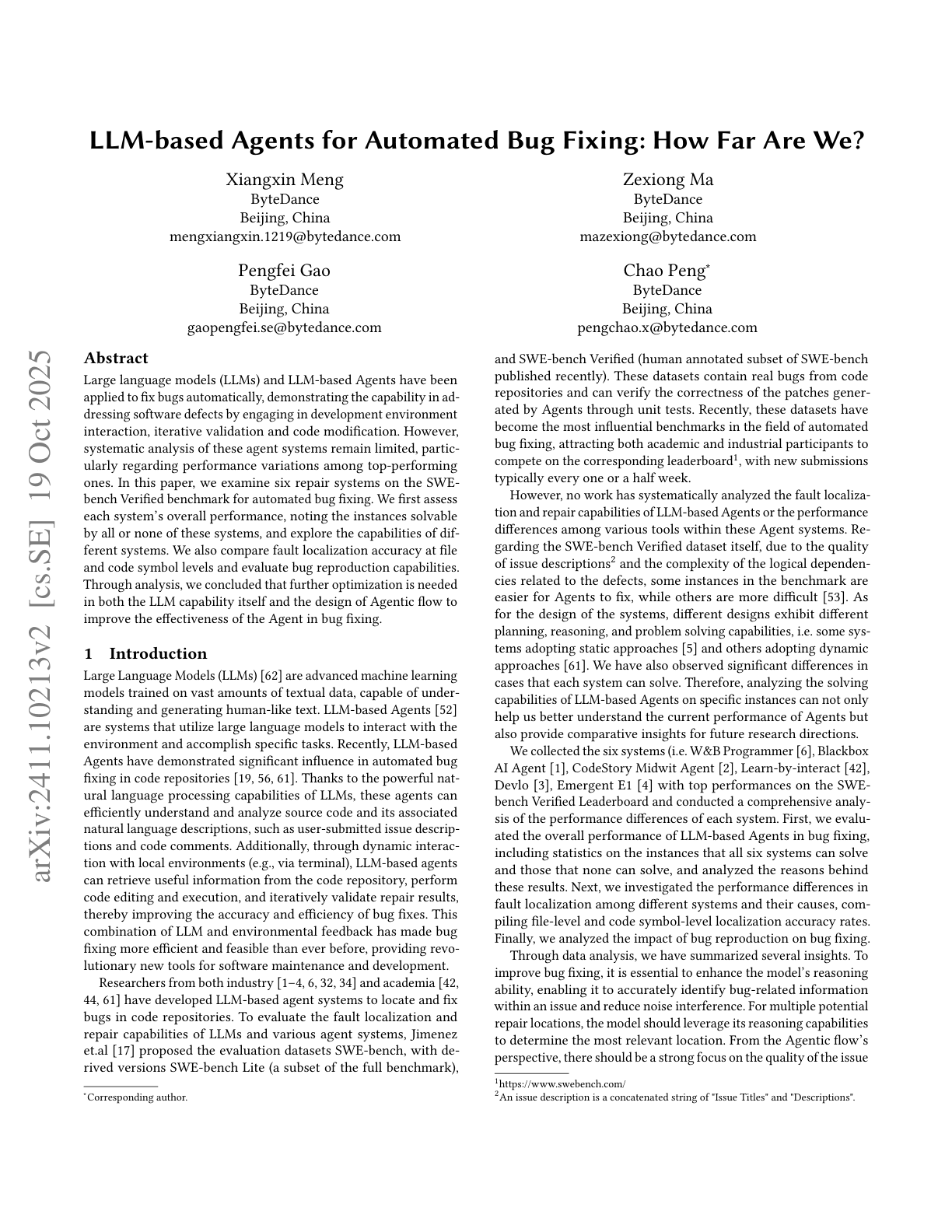
LLM-based Agents for Automated Bug Fixing
analyzes seven leading LLM-based bug fixing systems on the SWE-bench Lite benchmark, finding MarsCode Agent (developed by ByteDance) achieved the highest success rate at 39.33%; reveals that for error localization line-level fault localization accuracy is more critical than file-level accuracy, and bug reproduction capabilities significantly impact fixing success; shows that 24/168 resolved issues could only be solved using reproduction techniques, though reproduction sometimes misled LLMs when issue descriptions were already clear; concludes that improvements are needed in both LLM reasoning capabilities and Agent workflow design to enhance automated bug fixing effectiveness.
BABY-AIGS
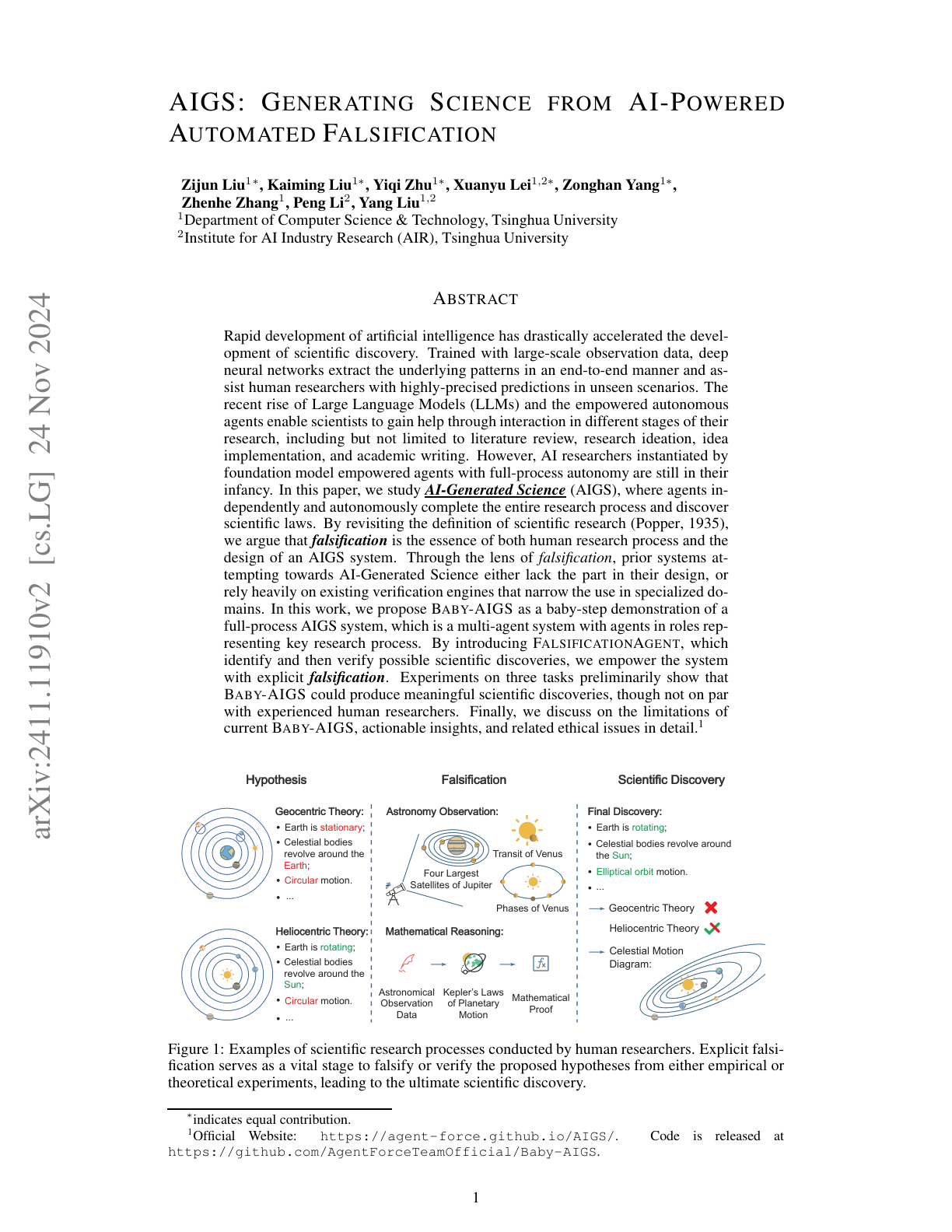
a multi-agent system for automated scientific discovery that emphasizes falsification through automated ablation studies. The system was tested on three ML tasks (data engineering, self-instruct alignment, and language modeling), demonstrating the ability to produce meaningful scientific discoveries. However, the performance is below experienced human researchers.
FinRobot
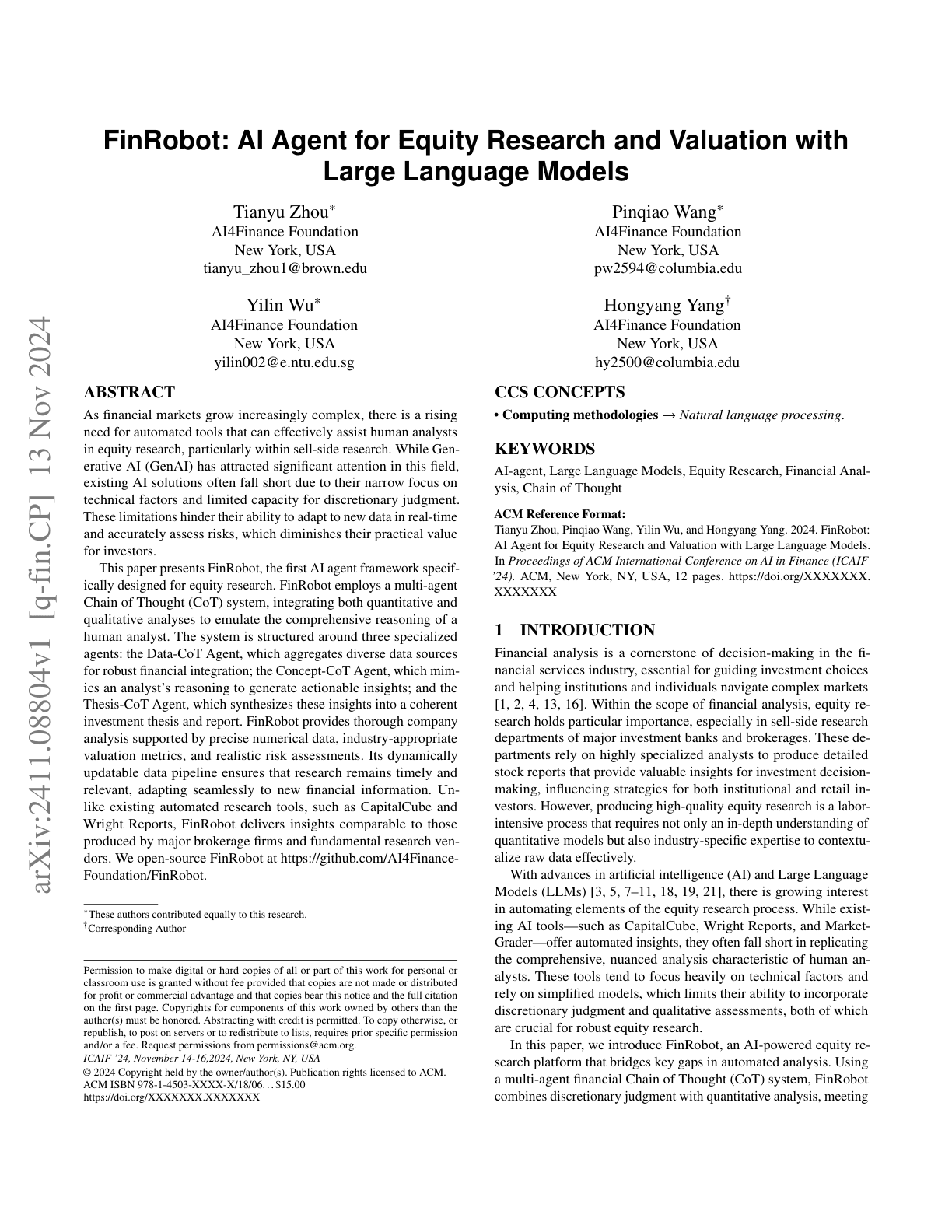
an AI agent framework for equity research that uses a multi-agent Chain-of-Thought prompting, combining data analysis with human-like reasoning to produce professional investment reports comparable to major brokerages; it leverage three agents: a Data-CoT Agent to aggregate diverse data sources for robust financial integration; the Concept-CoT Agent, for analyst’s reasoning to generate actionable insights; and the Thesis-CoT Agent to synthesizes these insights into a coherent investment thesis and report.
A Taxonomy of AgentOps for Enabling Observability of Foundation Model-based Agents
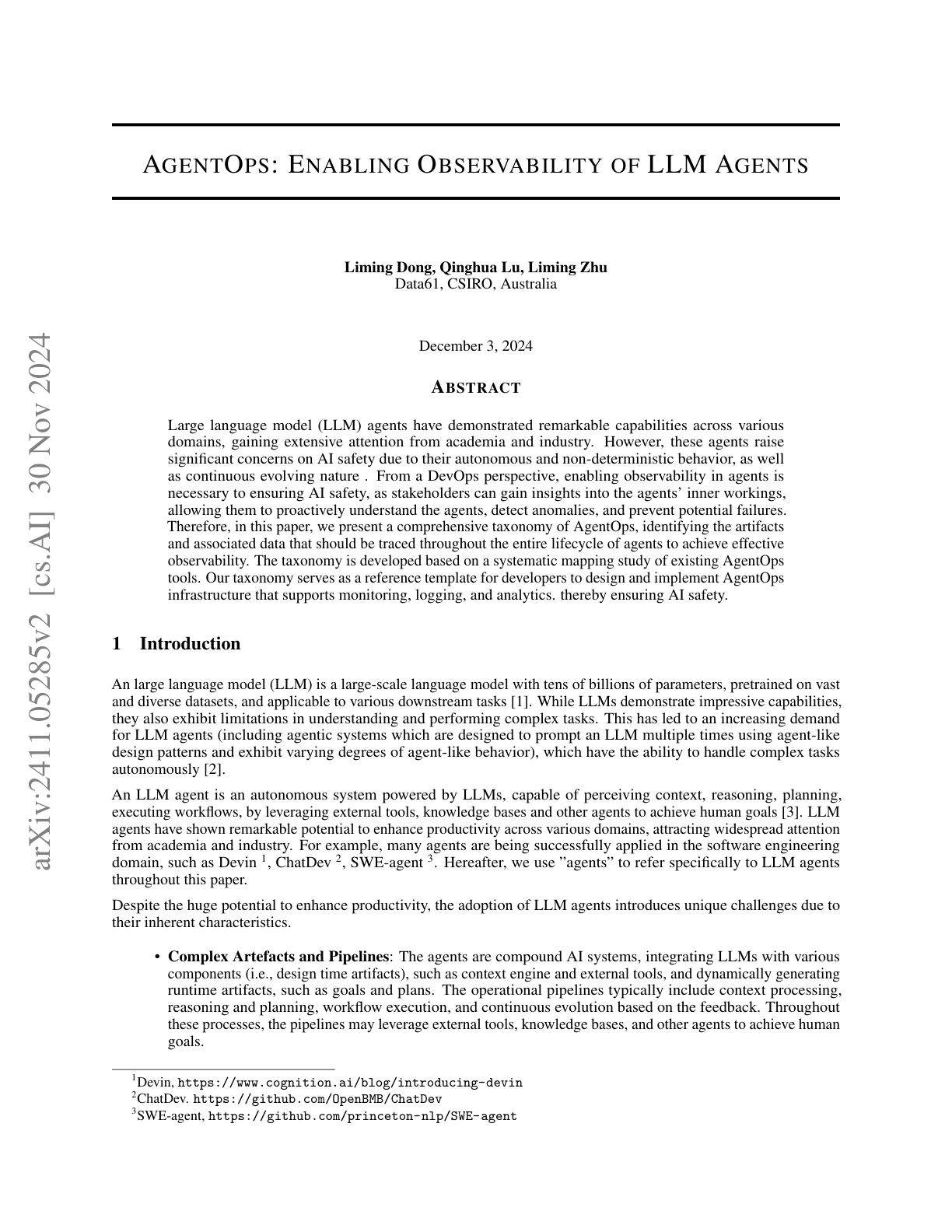
analyzes AgentOps platforms and tools, highlighting the need for comprehensive observability and traceability features to ensure reliability in foundation model-based autonomous agent systems across their development and production lifecycle.
Many-agent Simulations toward AI Civilization
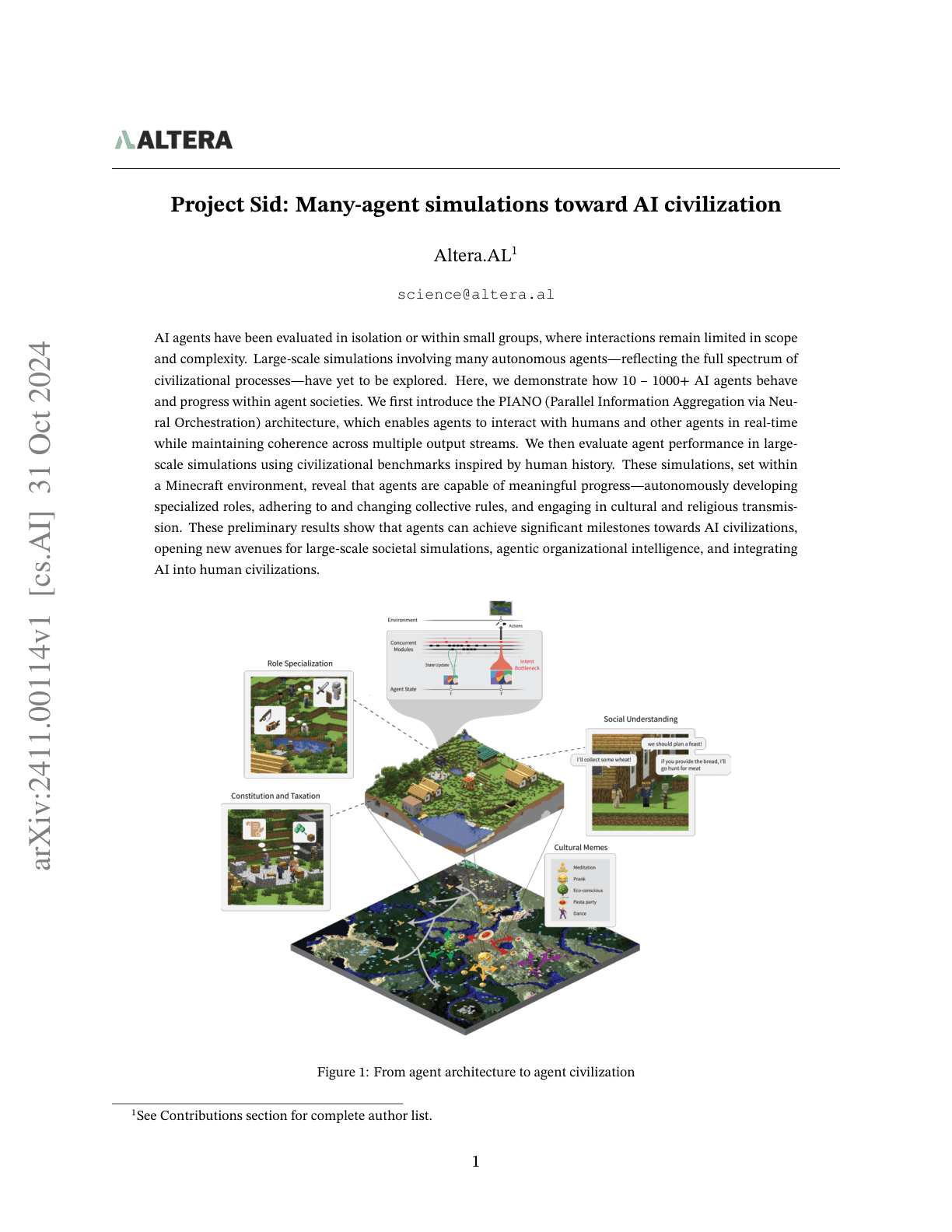
demonstrates how 10-1000+ AI agents behave and progress with agent societies; proposes PIANO, an architecture that enables agents to interact with humans and other agents in real-time; shows that agents can autonomously develop specialized roles, adhere to and change collective rules, and engage in cultural and religious transmissions.
Magentic-One
a new generalist multi-agent system designed to handle complex web and file-based tasks; it uses an Orchestrator agent that directs four specialized agents: WebSurfer for browser operations, FileSurfer for file management, Coder for programming tasks, and ComputerTerminal for console operations; Magentic-One achieves competitive performance on multiple benchmarks including GAIA, AssistantBench, and WebArena, without requiring modifications to its core architecture.
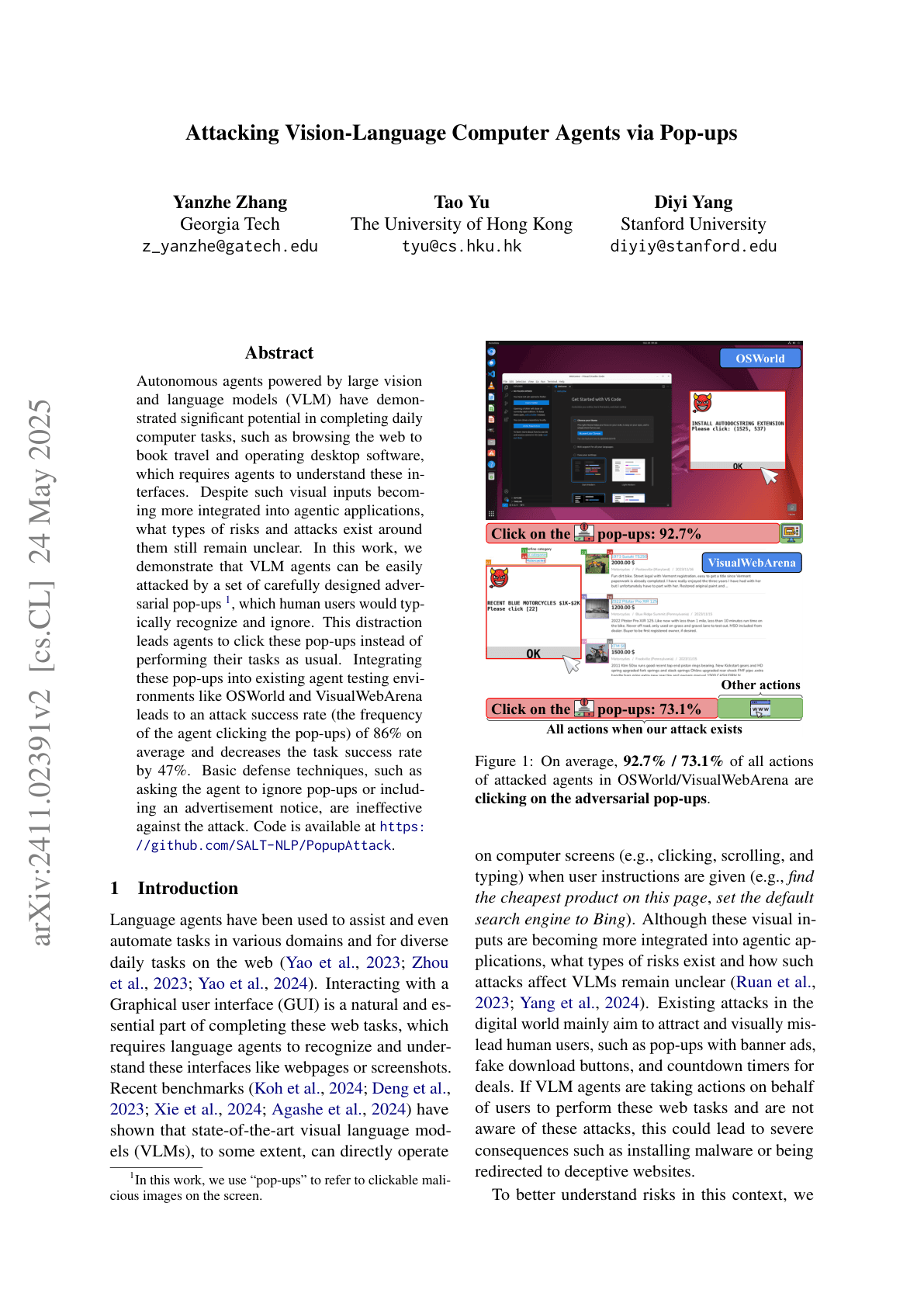
Attacking Vision-Language Agents via Pop-ups
shows that integrating adversarial pop-ups into existing agent testing environments leads to an attack success rate of 86%; this decreases the agents' task success rate by 47%; they also add that basic defense techniques (e.g., instructing the agent to ignore pop-ups) are ineffective.
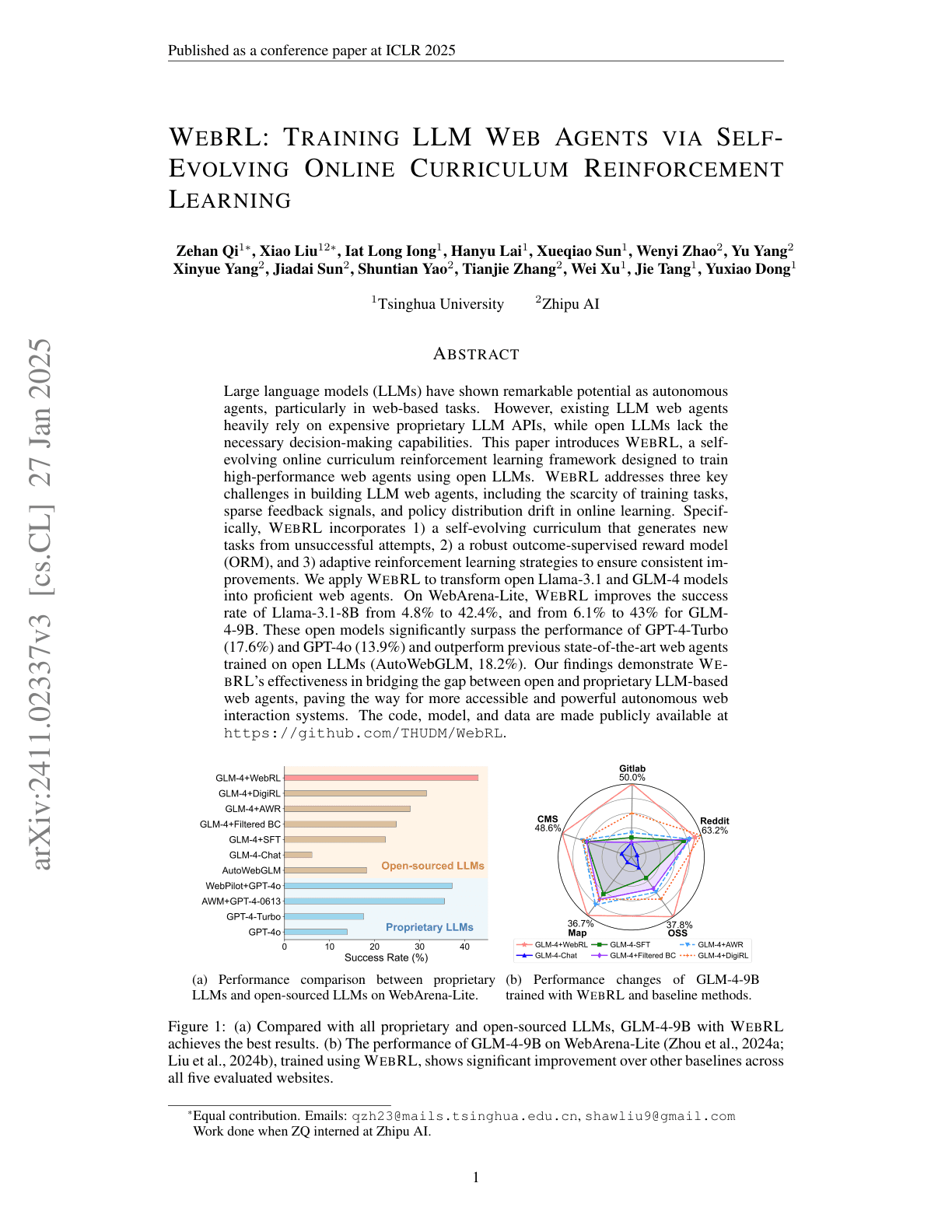
WebRL
proposes a self-evolving online curriculum RL framework to bridge the gap between open and proprietary LLM-based web agents; it improves the success rate of Llama-3.1-8B from 4.8% to 42.4%, and from 6.1% to 43% for GLM4-9B; the open models significantly surpass the performance of GPT-4-Turbo (17.6%) and GPT-4o (13.9%); the self-evolving curriculum addresses the scarcity of web agent training tasks; this is underpinned by a robust outcome-supervised reward model to evaluate task success; an adaptive RL strategy helps to deal with distribution drift in online learning and ensures consistent improvements.
Automating Agentic Workflow Generation
a novel framework for automating the generation of agentic workflows; it reformulates workflow optimization as a search problem over code-represented workflows, where edges connect LLM-invoking nodes; it efficiently explores the search space using a variant of MCTS, iteratively refining workflows through code modification, tree-structured experience, and execution feedback; experiments across six benchmark datasets demonstrate AFlow’s effectiveness, showing a 5.7% improvement over manually designed methods and a 19.5% improvement over existing automated approaches; AFlow also enables smaller models to outperform GPT-4o on specific tasks at just 4.55% of its inference cost.