AI Papers of the Week
Every paper worth reading in AI, hand-picked one week at a time.
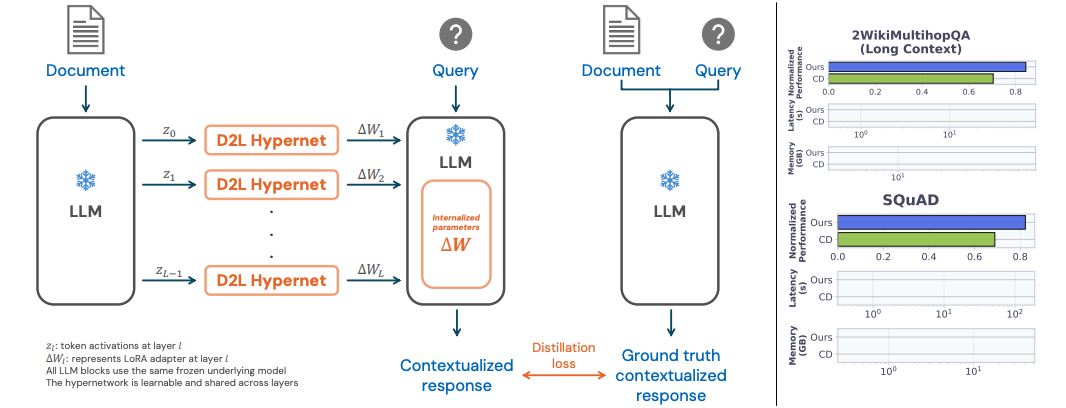
Doc-to-LoRA
Sakana AI introduces Doc-to-LoRA (D2L), a lightweight hypernetwork that meta-learns to compress long documents into LoRA adapters in a single forward pass. Instead of processing long contexts through expensive quadratic attention, D2L converts the document into parameter-space representations that the target LLM can use without re-consuming the original text.
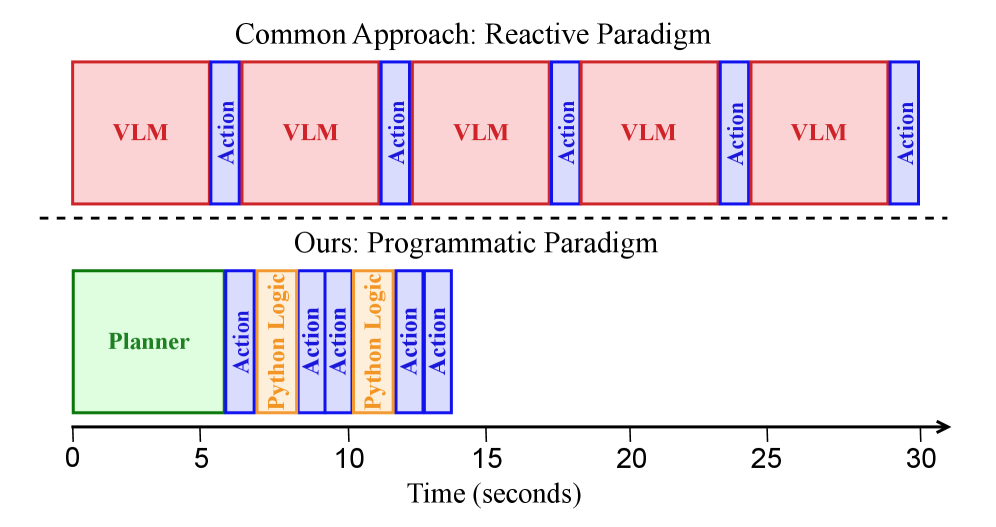
ActionEngine
Georgia Tech and Microsoft Research introduce ActionEngine, a training-free framework that transforms GUI agents from reactive step-by-step executors into programmatic planners. It builds a state-machine memory through offline exploration, then synthesizes executable Python programs for task completion, achieving 95% success on Reddit tasks from WebArena with on average a single LLM call, reducing costs by 11.8x and latency by 2x compared to vision-only baselines.
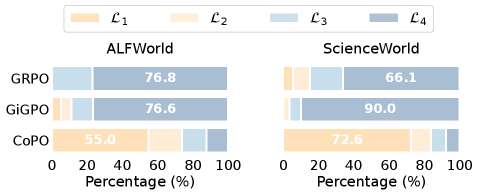
CogRouter
CogRouter enables adaptive reasoning depth for LLM agents by dynamically selecting from four hierarchical cognitive levels at each step, from instinctive responses to strategic planning. Using confidence-aware advantage reweighting during training, Qwen2.5-7B with CogRouter achieves 82.3% success rate on agentic benchmarks, substantially outperforming larger models while consuming fewer tokens by skipping heavy reasoning on routine steps.
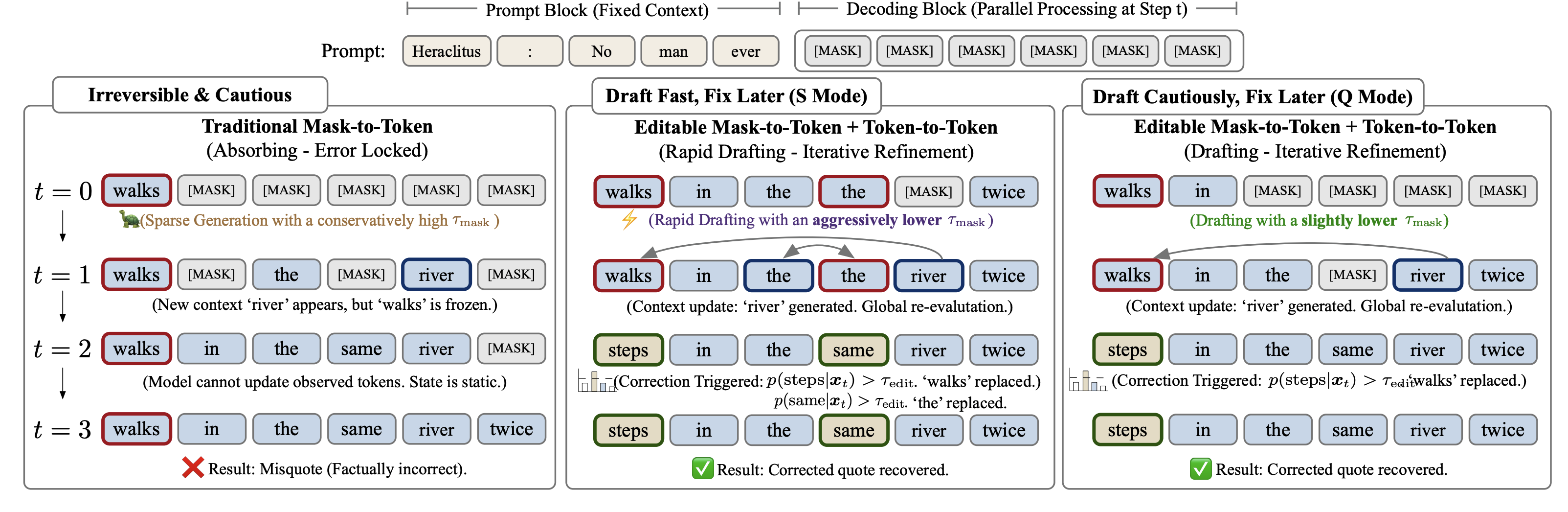
LLaDA 2.1
Ant Group releases LLaDA 2.1, a major upgrade to discrete diffusion language models that breaks the speed-quality trade-off through Token-to-Token (T2T) editing. By weaving token editing into the conventional Mask-to-Token decoding scheme, LLaDA 2.1 introduces two configurable modes: Speedy Mode for aggressive throughput and Quality Mode for benchmark-leading accuracy. The release also includes the first large-scale RL framework for diffusion LLMs.
AdaptEvolve
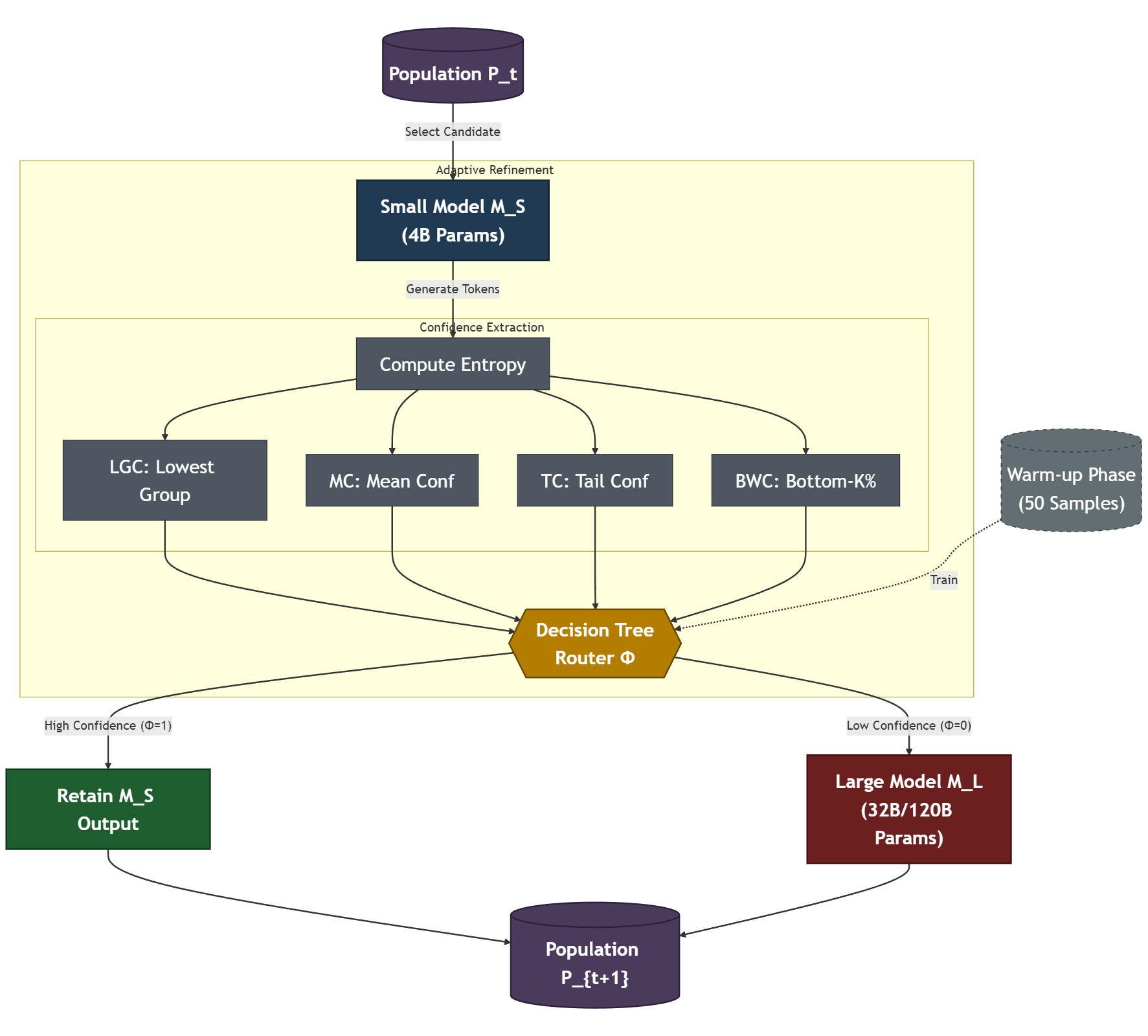
AdaptEvolve tackles a key efficiency bottleneck in evolutionary agentic systems: the repeated invocation of large LLMs during iterative refinement loops. The method uses intrinsic generation confidence to dynamically select which model to invoke at each step, routing easy sub-problems to smaller models and reserving expensive frontier models for genuinely hard decisions.
TinyLoRA
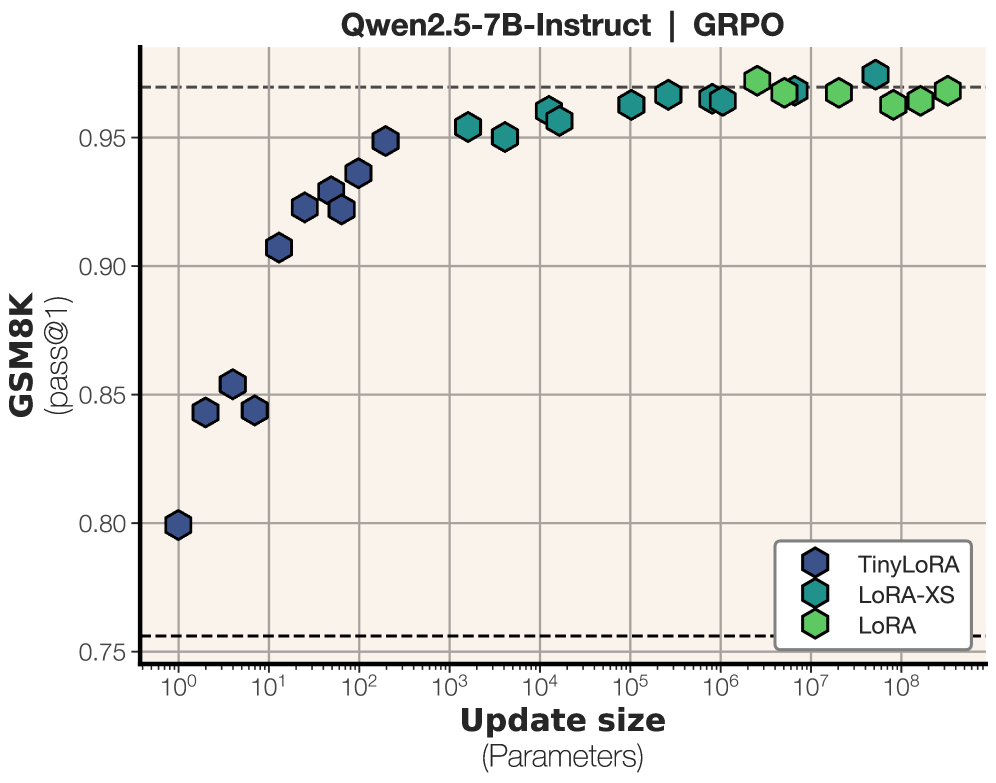
This paper from Meta FAIR asks how small a LoRA adapter can get and still teach a model to reason. The answer: remarkably small. The authors propose TinyLoRA, a method that scales low-rank adapters down to as few as one trainable parameter by projecting through fixed random tensors and sharing weights across all modules. The key insight is that RL makes fundamentally more information-dense updates than SFT, enabling effective learning with orders of magnitude fewer parameters.
SALE
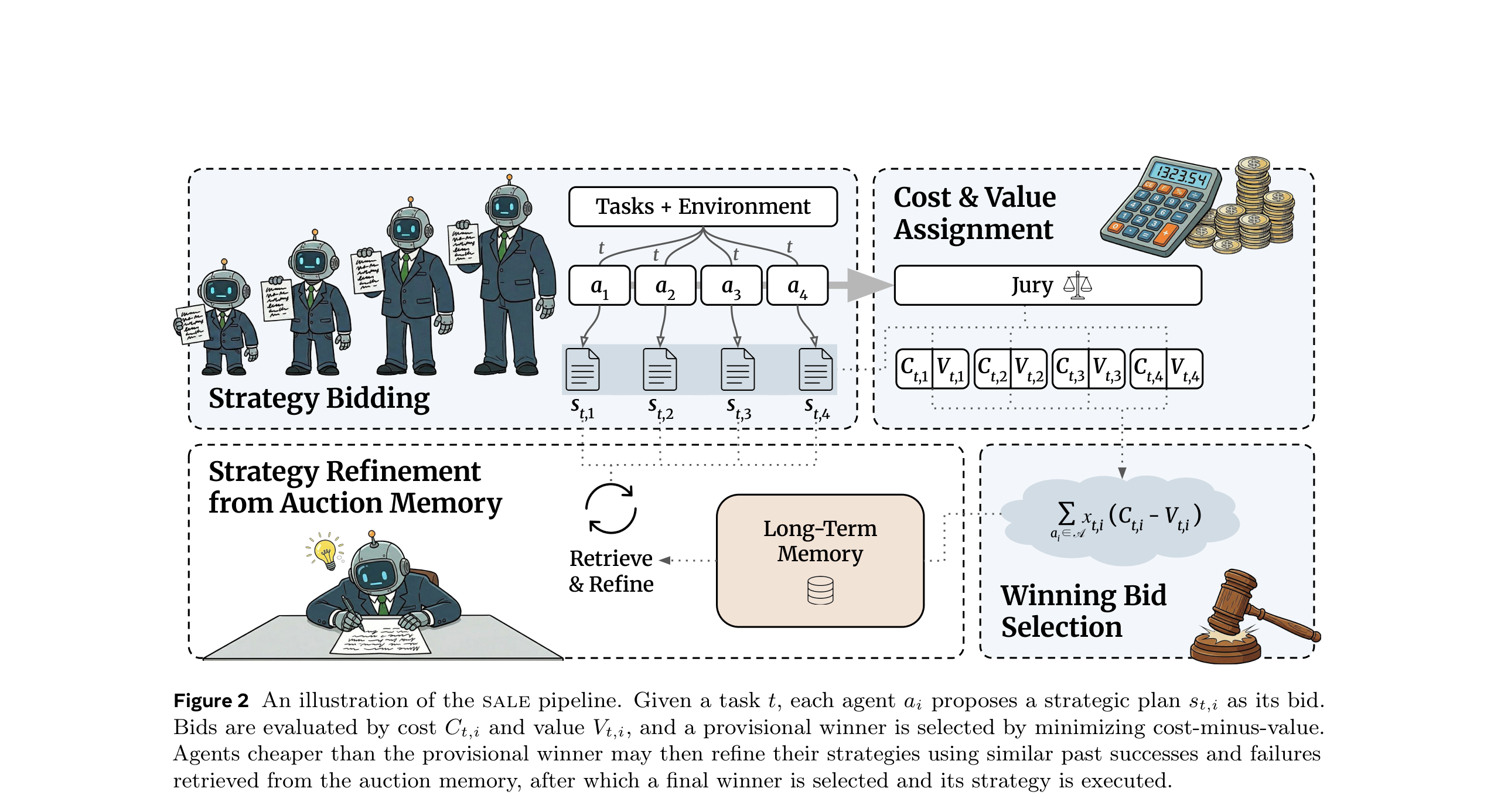
This paper from Meta shows that small agents match large ones on simple tasks but fall sharply behind as complexity grows, with the cheapest agent reaching only about 21% of the largest agent’s accuracy on the hardest problems. To address this, the authors introduce SALE (Strategy Auctions for Workload Efficiency), a marketplace-inspired framework where heterogeneous agents bid with strategic plans, are scored on cost-value trade-offs, and refine their bids using shared auction memory.
Agent Primitives
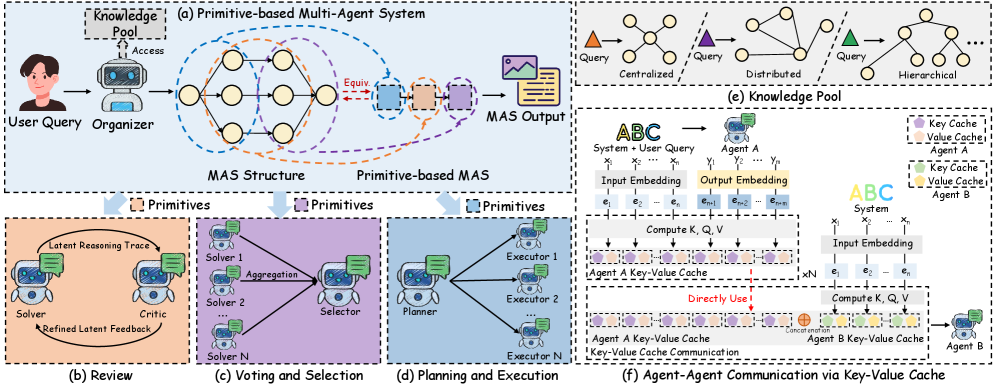
Agent Primitives introduces reusable latent building blocks for LLM-based multi-agent systems. Inspired by how neural networks are built from composable modules like residual blocks and attention heads, the authors decompose existing MAS architectures into three recurring computation patterns that communicate via KV cache instead of natural language, reducing error accumulation and boosting efficiency.
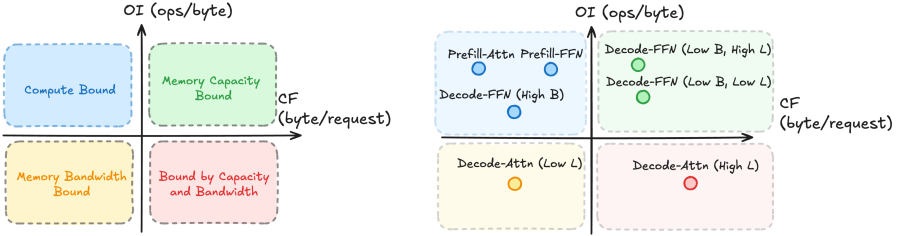
Heterogeneous Computing for AI Agent Inference
This paper introduces Operational Intensity (OI) and Capacity Footprint (CF) as two metrics that better characterize AI agent inference workloads than traditional roofline models, revealing that memory capacity - not just bandwidth or compute - is often the true bottleneck. Analysis across agent types (chatbot, coding, web-use, computer-use) shows that agentic workflows create vastly different and rapidly growing demands on hardware, with context lengths snowballing to over 1M tokens in coding agents. The authors argue for disaggregated, heterogeneous compute architectures with specialized prefill and decode accelerators, hardware-aware model co-design, and large-capacity memory disaggregation as essential directions for scaling AI agent systems.
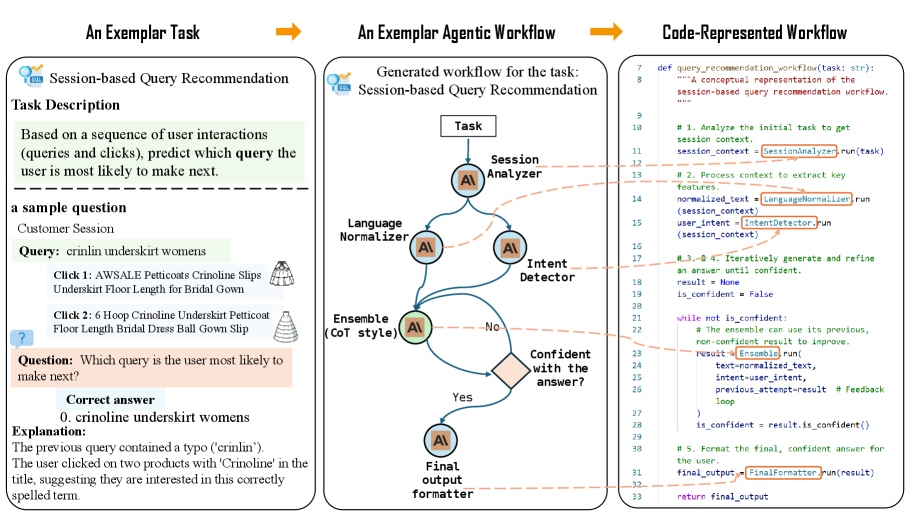
Rethinking Multi-Agent Workflows
This paper challenges the assumption that complex tasks require multiple specialized AI agents, demonstrating that a single LLM agent, through iterative dialogue, can match the performance of homogeneous multi-agent workflows while gaining efficiency from KV cache reuse.
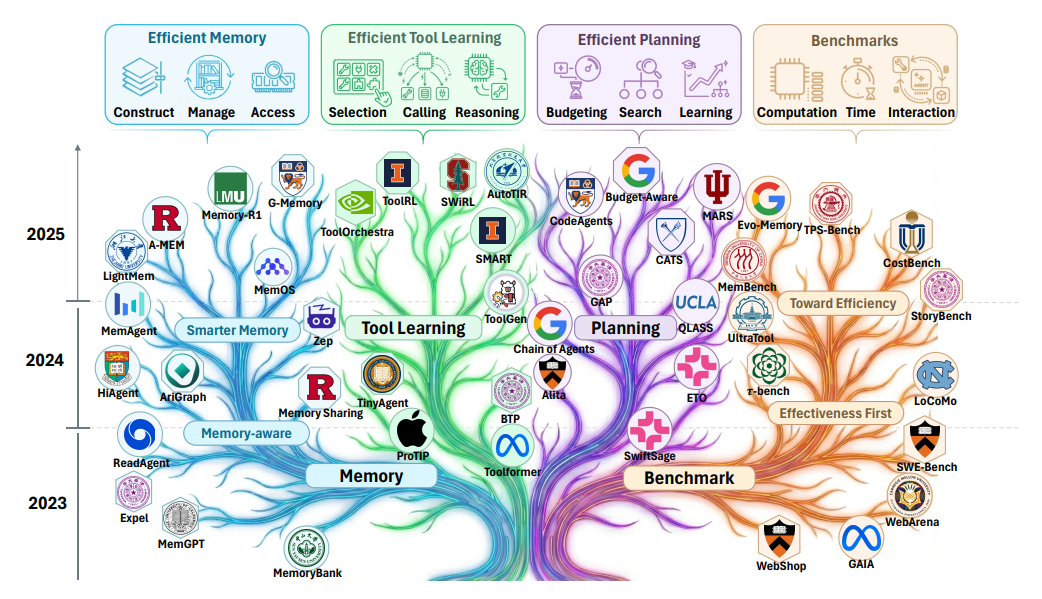
Efficient Agents
A comprehensive review examining how to make LLM-based agents more efficient for real-world deployment, focusing on three core components: memory (bounding context via compression), tool learning (RL strategies to minimize tool invocation), and planning (controlled search mechanisms). The paper characterizes efficiency through dual metrics and Pareto frontier analysis between effectiveness and cost.
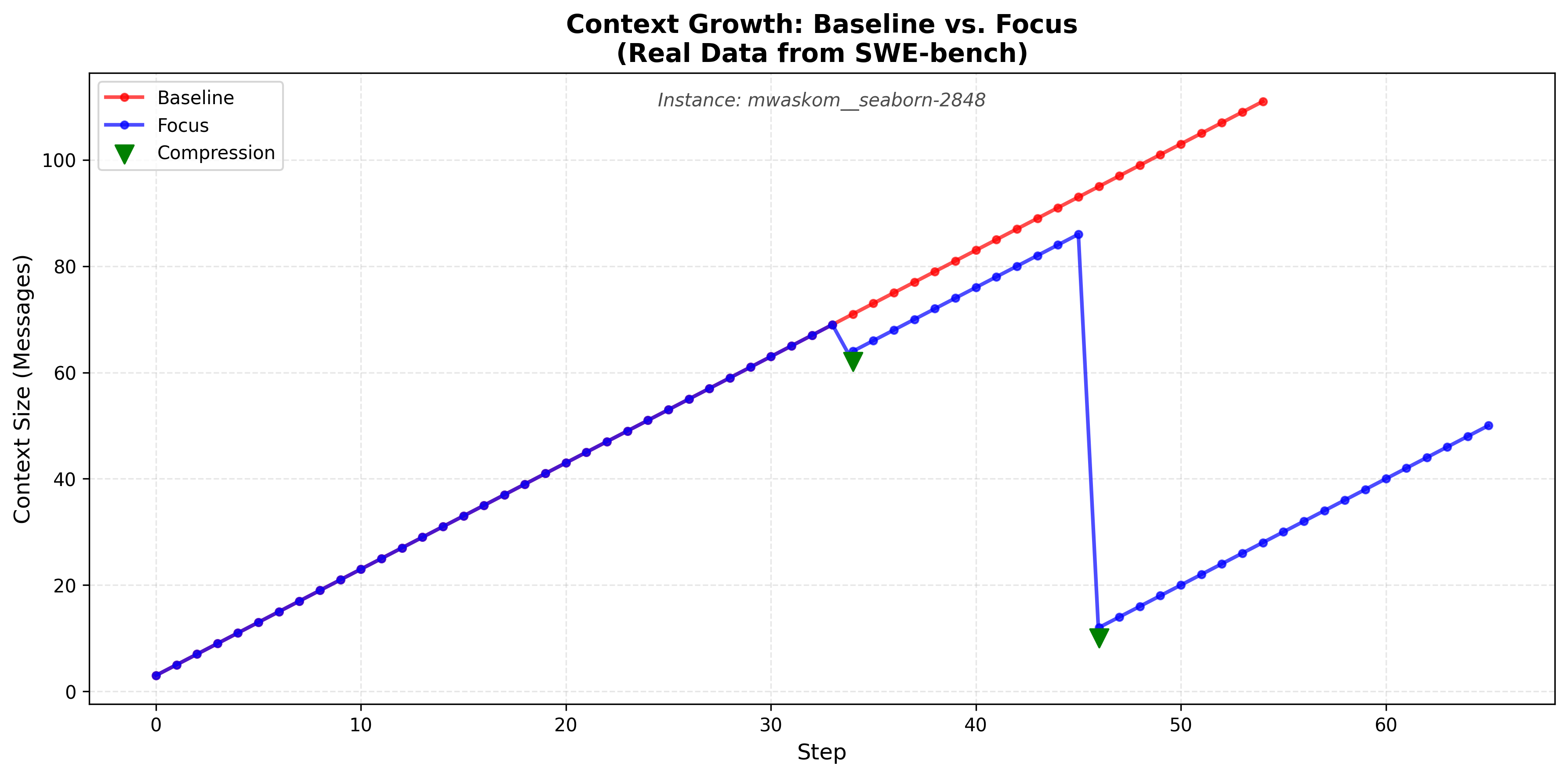
Active Context Compression for LLM Agents
Focus introduces an agent-centered architecture that enables LLM agents to autonomously manage their own memory by deciding when to consolidate learnings into a persistent “Knowledge” block and actively prune raw interaction history. The design is inspired by the biological navigation patterns of Physarum polycephalum (slime mold).
Efficient Lifelong Memory for LLM Agents
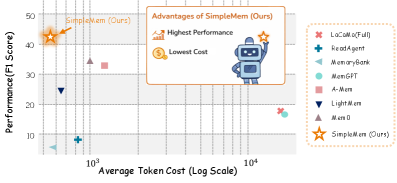
SimpleMem introduces a memory framework built on semantic lossless compression that addresses the tension between maintaining comprehensive long-term memory and minimizing token overhead for LLM agents. The approach achieves a 26.4% F1 improvement over baselines while reducing token consumption by up to 30-fold during inference.

Ministral 3
Mistral AI releases Ministral 3, a family of compact language models (3B, 8B, 14B parameters) designed for compute and memory-constrained applications from mobile to edge deployments. Created through Cascade Distillation (iterative pruning with continued training), each size offers pretrained, instruction-finetuned, and reasoning variants with integrated image understanding, released under Apache 2.0.
On the Slow Death of Scaling
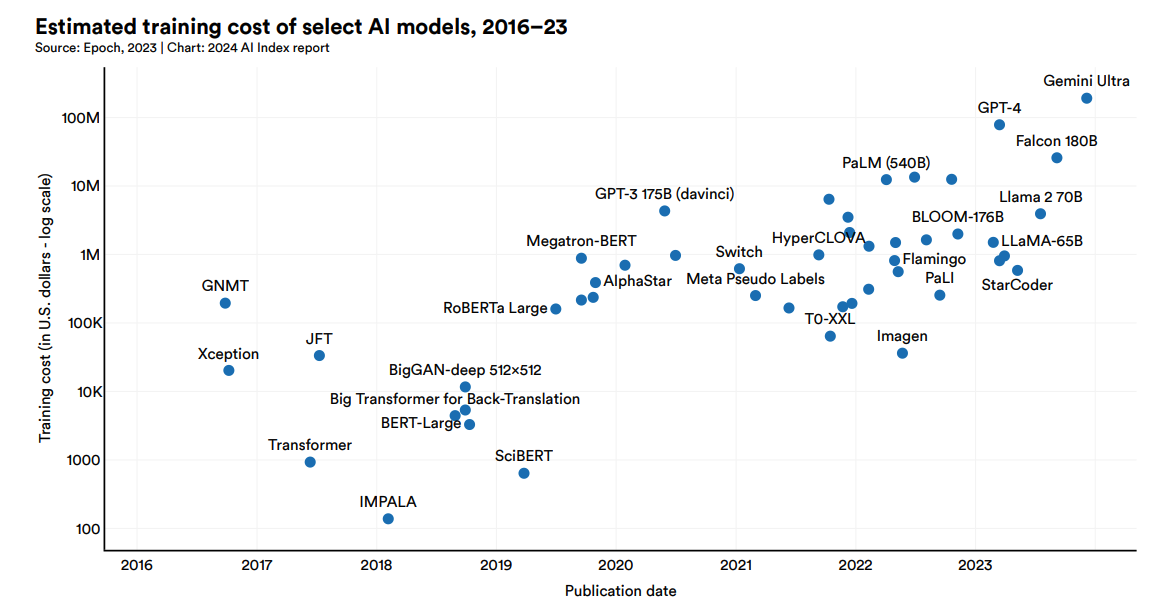
This essay by Sara Hooker challenges the decade-long assumption that scaling compute always leads to better AI performance. It argues that the relationship between training compute and performance is highly uncertain and rapidly changing, with smaller models now routinely outperforming much larger ones.
Test-Time Training for Long-Context LLMs
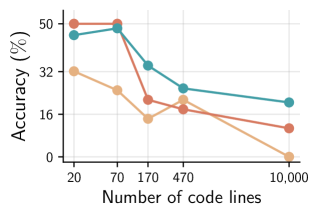
This paper shows that long-context LLMs can access millions of tokens but often fail to meaningfully use that information. The authors propose query-only test-time training (qTTT), which adapts models during inference through targeted gradient updates rather than generating more thinking tokens.
Comprehensive Survey of Small Language Models
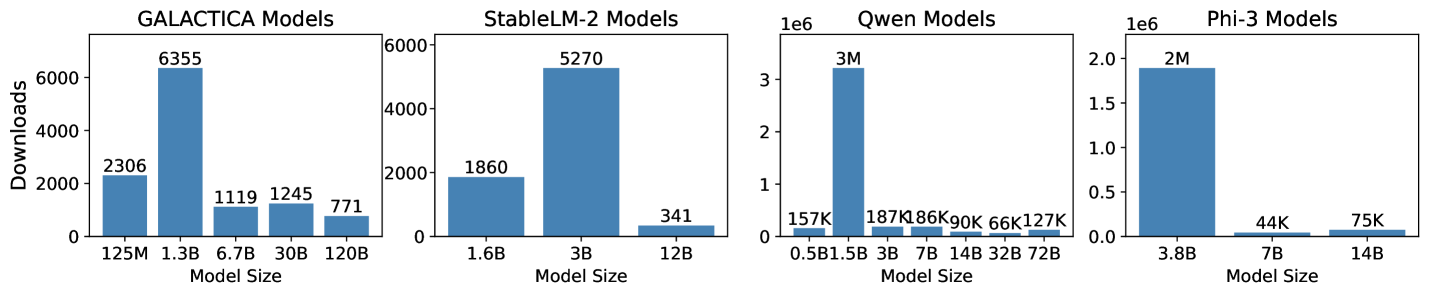
This survey provides a comprehensive overview of Small Language Models (SLMs), which address key LLM limitations, including high computational demands, privacy concerns from cloud APIs, and poor performance on edge devices. The authors propose a standardized SLM definition based on specialized task capability and resource-constrained suitability, and develop taxonomies and frameworks for SLM acquisition, enhancement, application, and reliability.
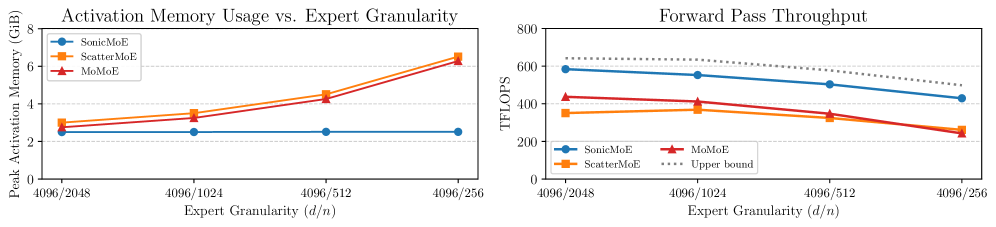
SonicMoE
SonicMoE addresses performance bottlenecks in Mixture of Experts models through IO-aware and tile-aware optimizations. The approach achieves 1.86x compute throughput improvement on Hopper GPUs, reduces activation memory by 45%, and enables training 213 billion tokens per day on 64 H100 GPUs for a 7B model.
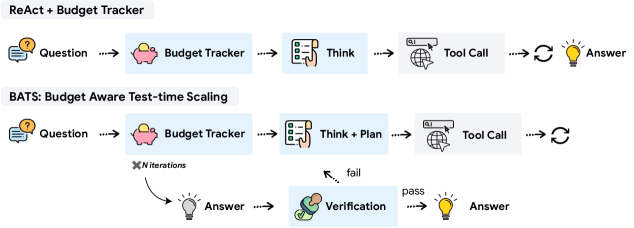
Budget Aware Test-time Scaling
Researchers discover that simply expanding tool-call budgets without proper awareness fails to improve agent performance. They introduce BATS (Budget Aware Test-time Scaling), a framework that makes web search agents budget-aware, enabling more strategic resource allocation and pushing the cost-performance Pareto frontier.
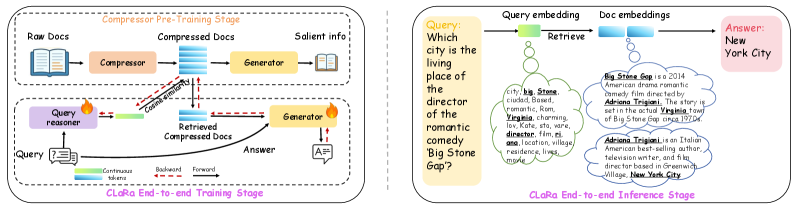
CLaRa
CLaRa introduces a unified framework for retrieval-augmented generation that performs embedding-based compression and joint optimization in a shared continuous space. The approach addresses key RAG limitations around long contexts and disjoint retrieval-generation optimization.
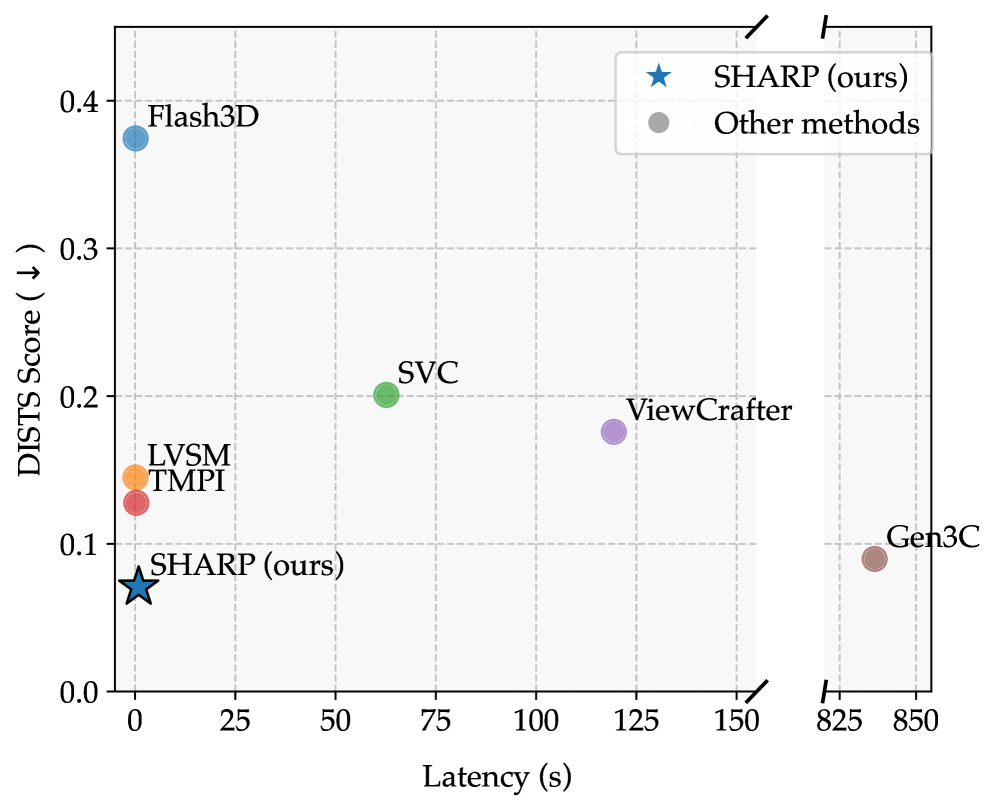
SHARP
SHARP generates photorealistic novel viewpoints from a single photograph in under one second on standard GPU hardware. The neural network produces a 3D Gaussian representation in a single feedforward pass, enabling real-time rendering for nearby viewing angles. It reduces LPIPS by 25-34% and achieves three orders of magnitude faster synthesis than prior approaches with strong zero-shot generalization.

ProAgent
ProAgent is the first end-to-end proactive LLM agent system that harnesses sensory contexts from AR glasses, smartphones, and edge servers to deliver assistance without explicit user instructions. Unlike reactive agents that wait for commands, ProAgent continuously senses the environment with on-demand tiered perception and achieves up to 33.4% higher proactive prediction accuracy, 16.8% higher tool-calling F1 score, and 38.9% improved user satisfaction over baselines.

Lightweight End-to-End OCR
HunyuanOCR is a commercial-grade, open-source, lightweight vision-language model with only 1B parameters designed specifically for OCR tasks. The architecture combines a native-resolution Vision Transformer with a 0.5B-parameter language model through an MLP adapter, outperforming commercial APIs and larger models like Qwen3-VL-4B while achieving state-of-the-art results on OCRBench for models under 3B parameters.
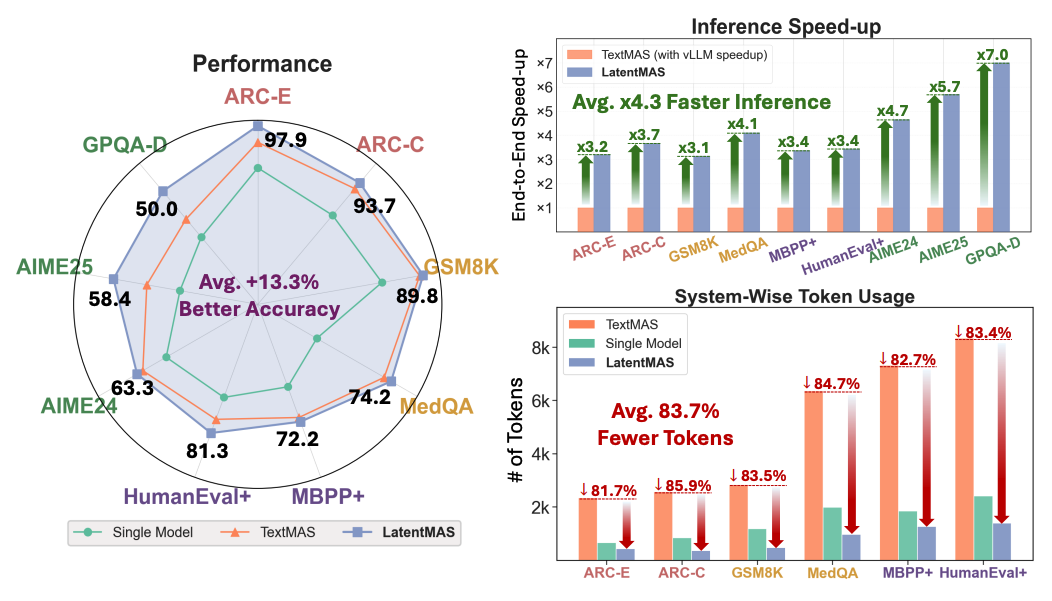
LatentMAS
LatentMAS introduces a framework enabling language model agents to collaborate directly within a continuous latent space rather than relying on text-based communication. By using last-layer hidden embeddings and a shared latent working memory, agents preserve and transfer internal representations without information loss from text serialization.