AI Papers of the Week
Every paper worth reading in AI, hand-picked one week at a time.
Discover and explore top AI papers with Claude Code or Codex
npx @dair-ai/mcp setup
Reward Modeling as Reasoning
This work proposes a new class of reward models, called ReasRMs, that reformulate reward modeling as a reasoning task. The authors introduce RM-R1, a family of generative reward models that produce interpretable reasoning traces and rubrics during preference judgments. Instead of relying on scalar scores or shallow generation, RM-R1 models leverage structured reasoning and reinforcement learning to improve both interpretability and performance across benchmarks.
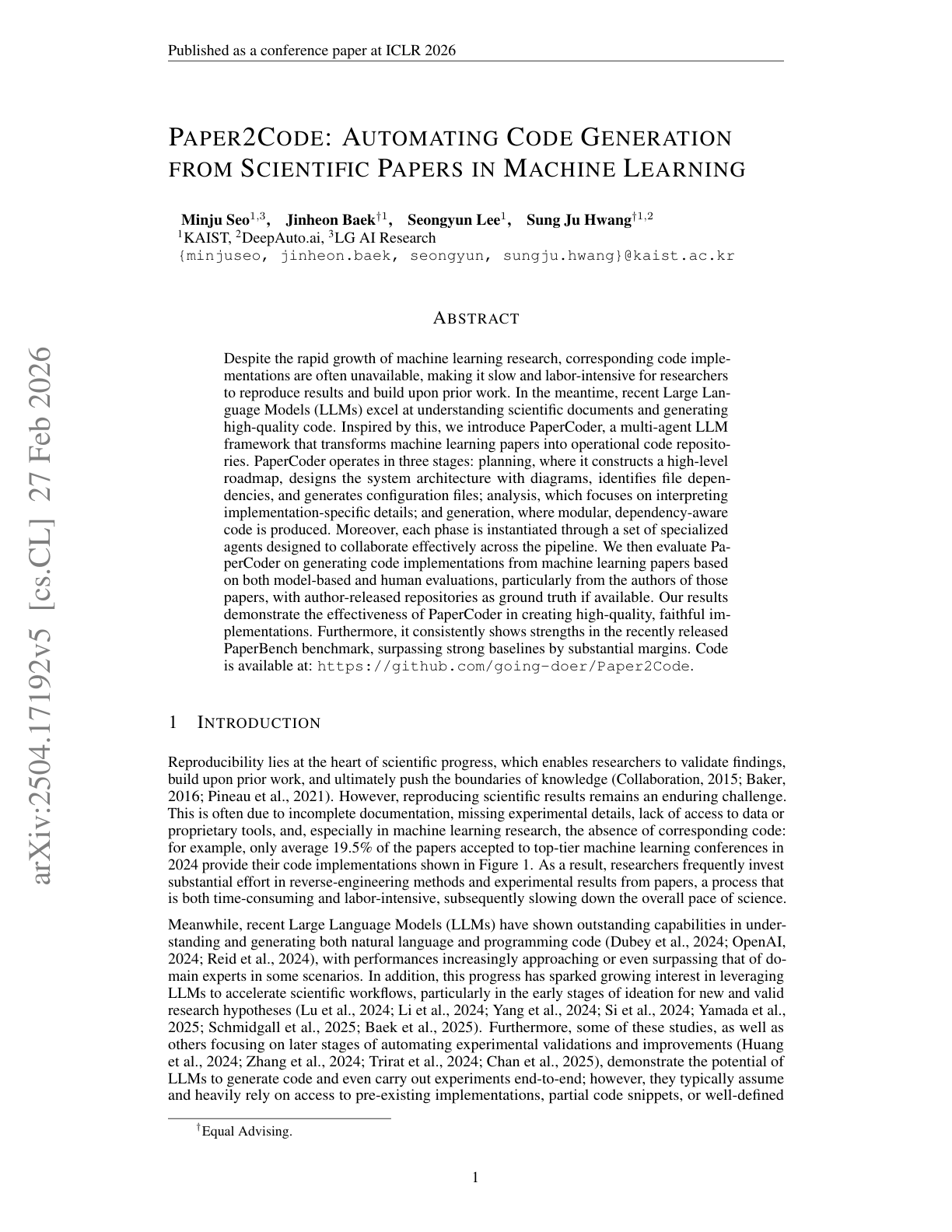
Paper2Code
Introduces PaperCoder, a multi-agent LLM framework that transforms ML papers into full code repositories without relying on pre-existing implementations.
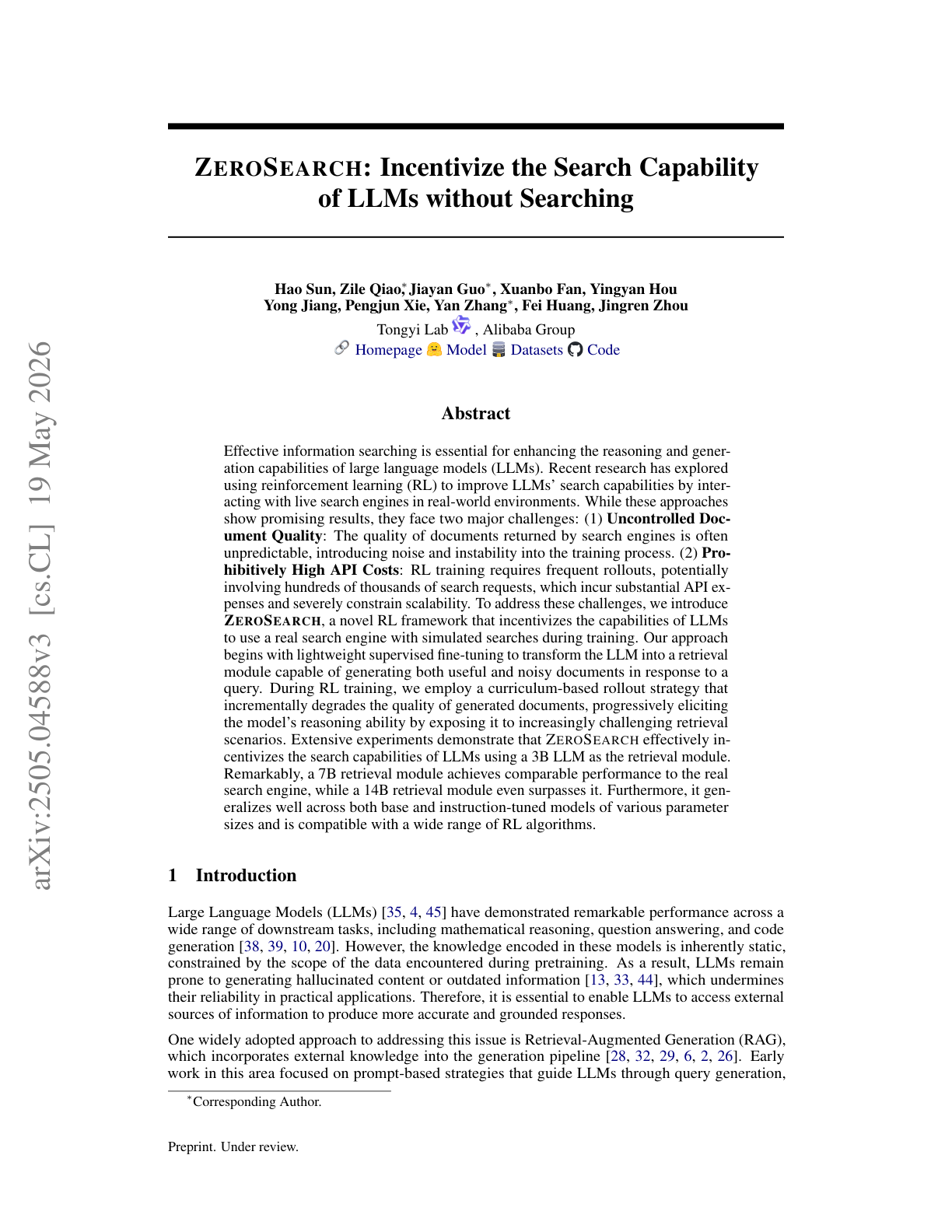
ZeroSearch
ZeroSearch is an RL framework that trains LLMs to develop search capabilities without using real search engines. It uses simulated LLM-generated documents with a curriculum-based degradation strategy and outperforms real-search methods like Search-R1 in both performance and cost, achieving better QA accuracy across multiple benchmarks.
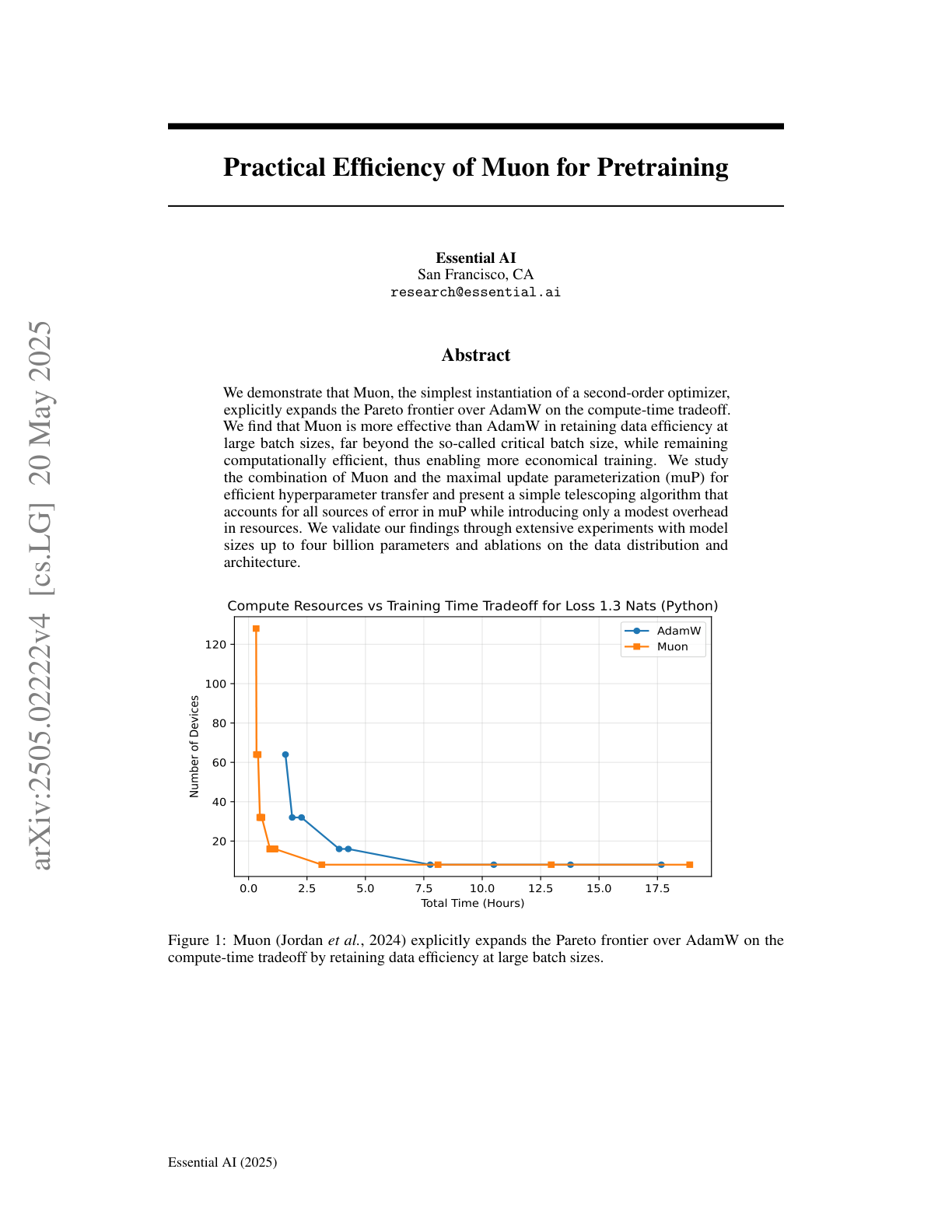
Practical Efficiency of Muon for Pretraining
Discusses how Muon, a simple second-order optimizer, outperforms AdamW in large-batch pretraining by expanding the compute-time Pareto frontier and maintaining better data efficiency. Combined with muP scaling and a novel telescoping algorithm for hyperparameter transfer, it enables faster training with minimal tuning overhead up to 4B parameter models.
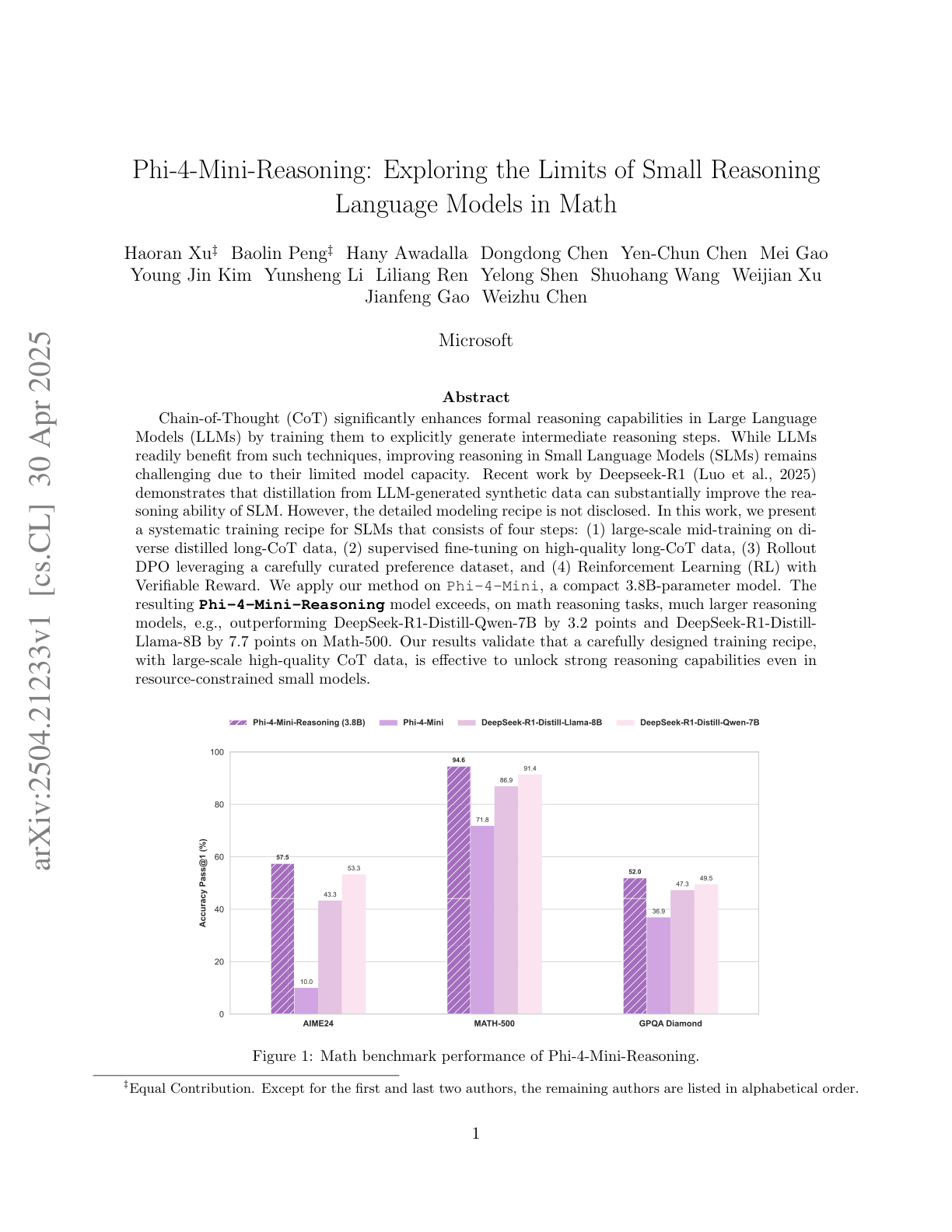
Phi-4-Mini-Reasoning
Microsoft released Phi-4-Mini-Reasoning to explore small reasoning language models for math. Highlights:
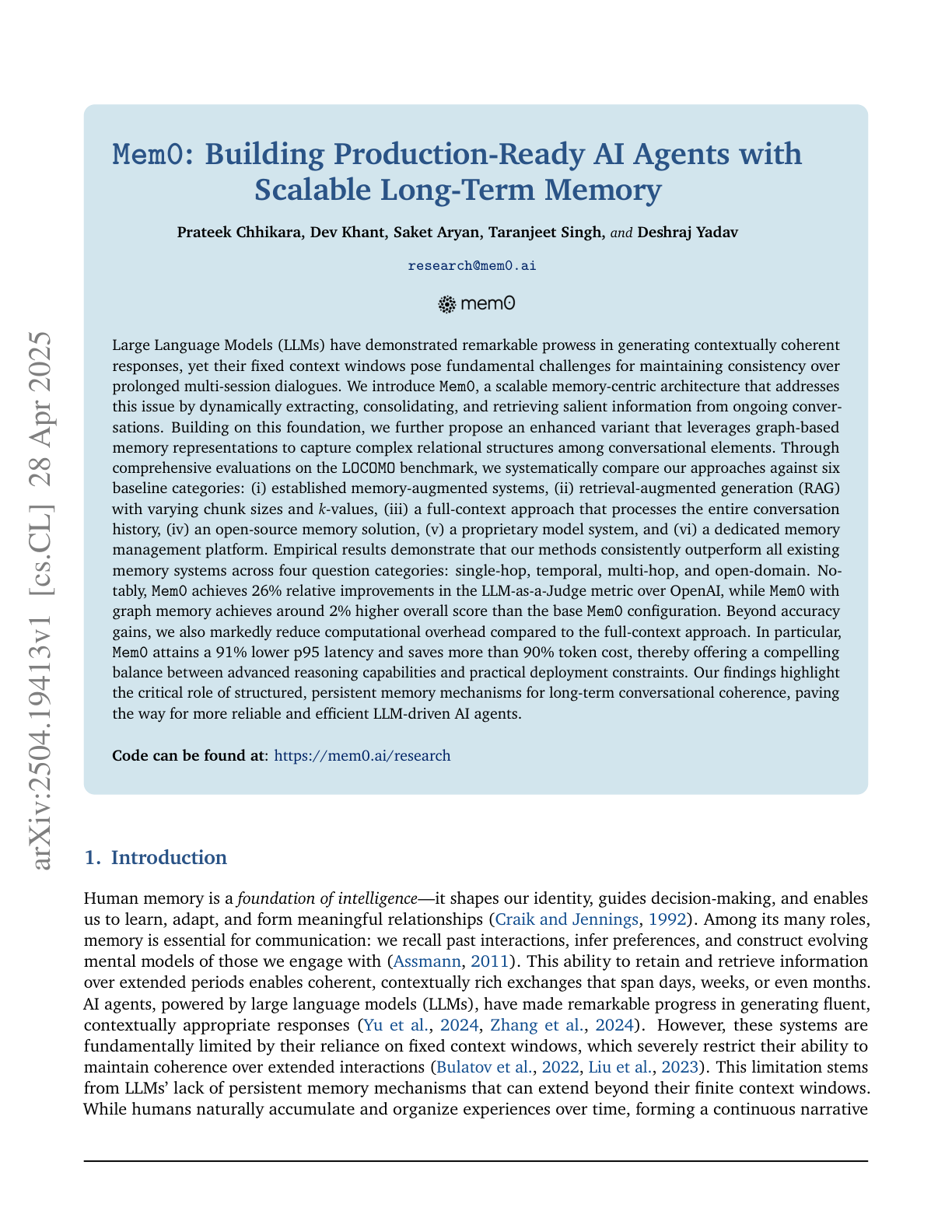
Building Production-Ready AI Agents with Scalable Long-Term Memory
This paper proposes a memory-centric architecture for LLM agents to maintain coherence across long conversations and sessions, solving the fixed-context window limitation. Main highlights:
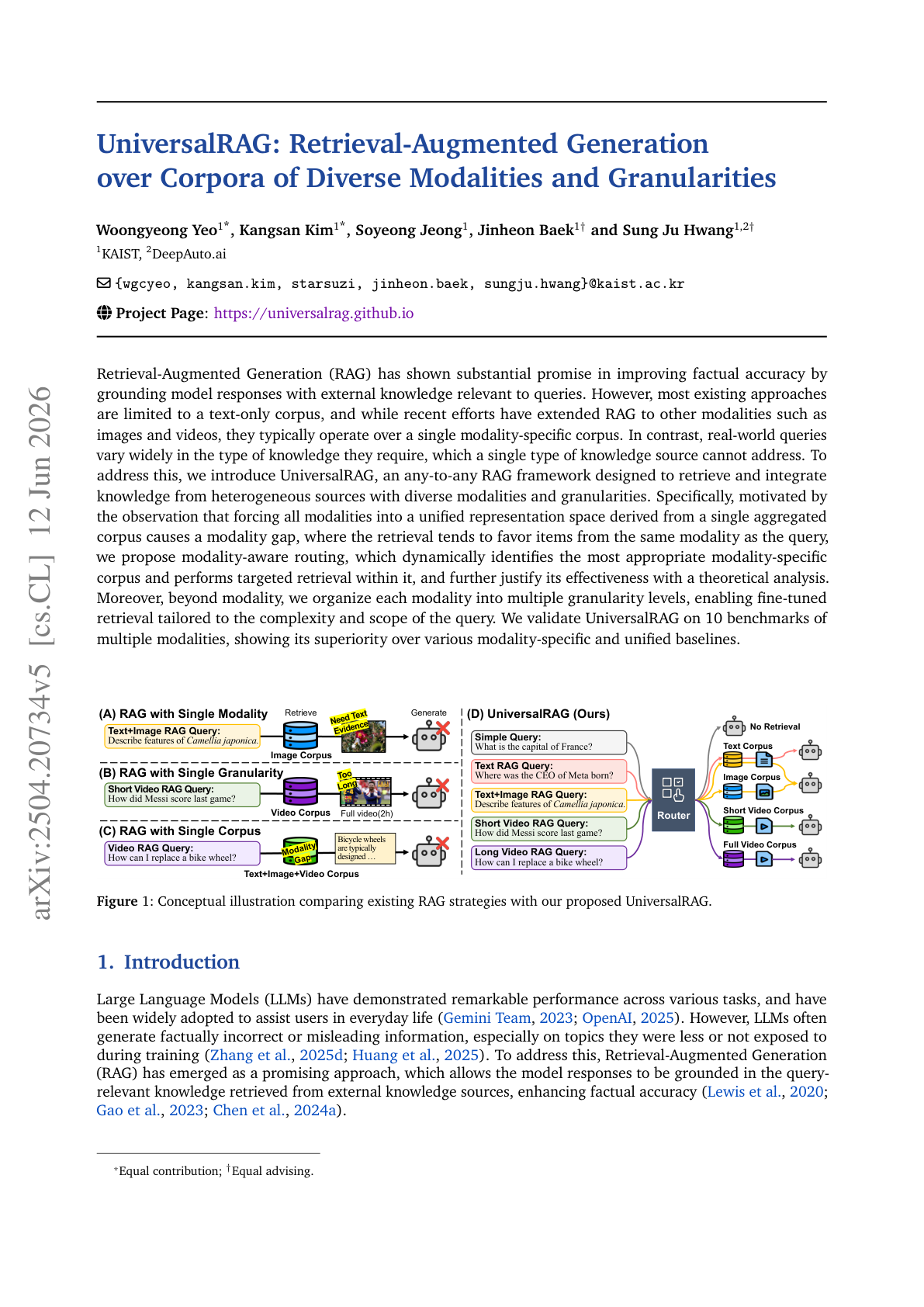
UniversalRAG
UniversalRAG is a framework that overcomes the limitations of existing RAG systems confined to single modalities or corpora. It supports retrieval across modalities (text, image, video) and at multiple granularities (e.g., paragraph vs. document, clip vs. video). Contributions from the paper:
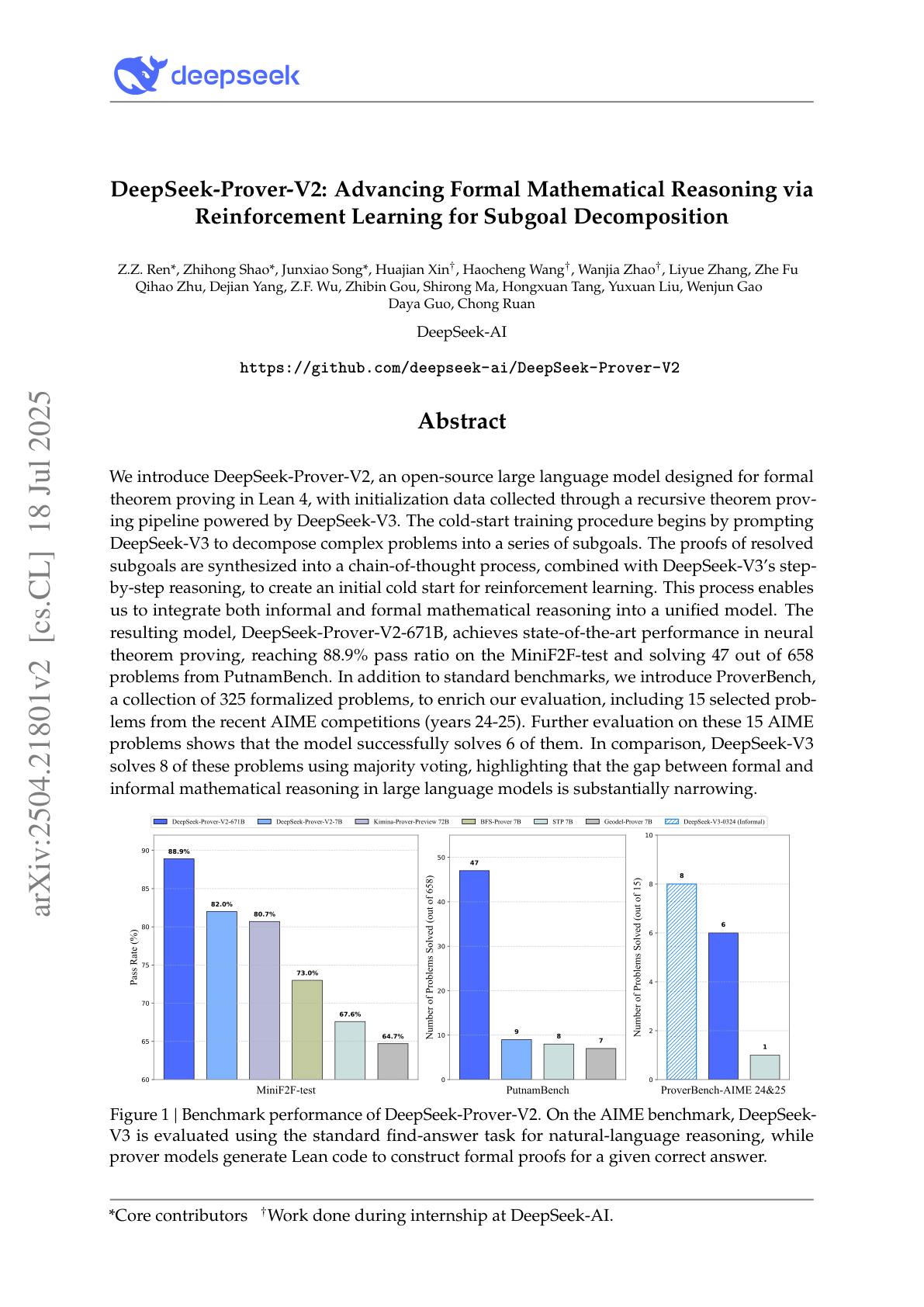
DeepSeek-Prover-V2
DeepSeek-Prover-V2 is an LLM (671B) that significantly advances formal theorem proving in Lean 4. The model is built through a novel cold-start training pipeline that combines informal chain-of-thought reasoning with formal subgoal decomposition, enhanced through reinforcement learning. It surpasses prior state-of-the-art on multiple theorem-proving benchmarks. Key highlights:
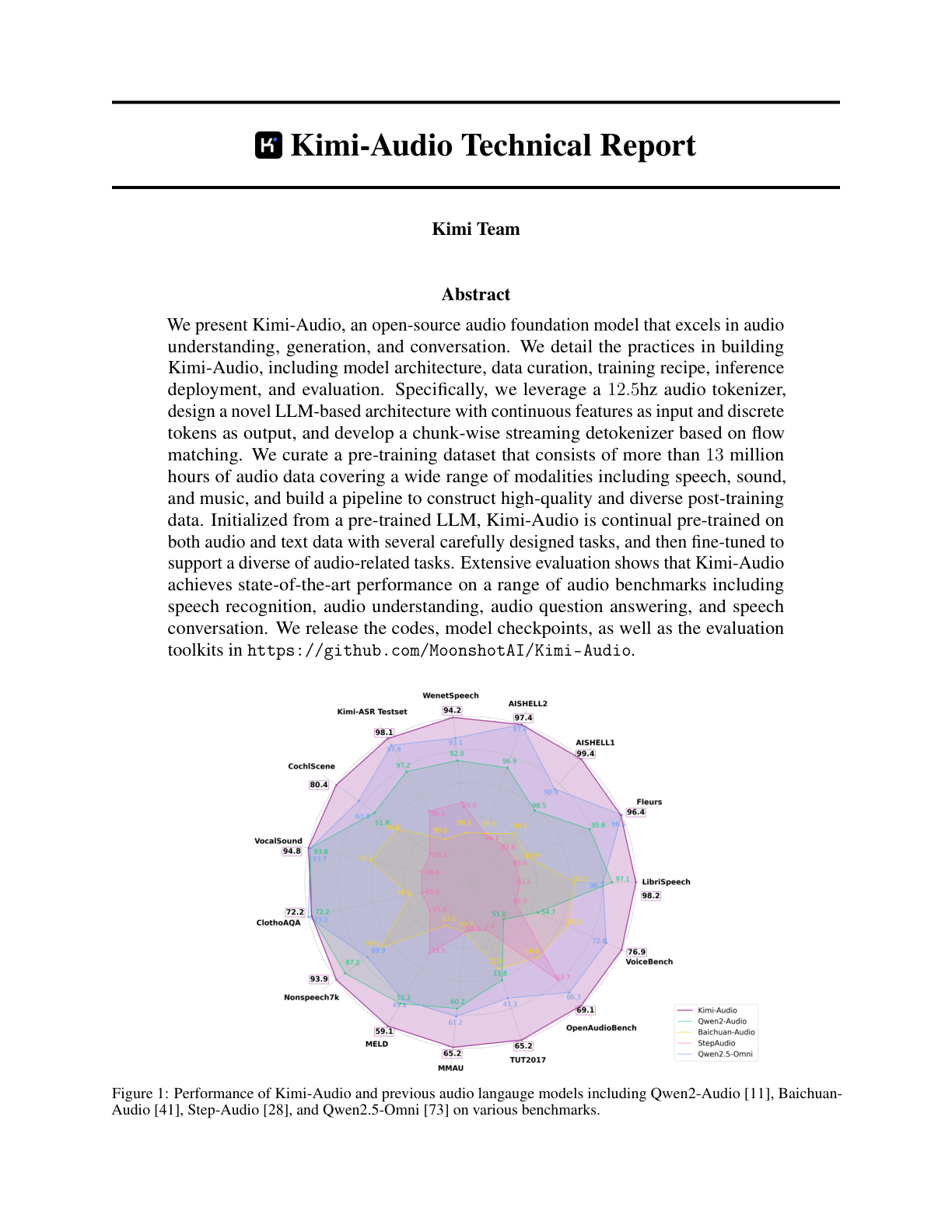
Kimi-Audio
Kimi-Audio is a new open-source audio foundation model built for universal audio understanding, generation, and speech conversation. The model architecture uses a hybrid of discrete semantic audio tokens and continuous Whisper-derived acoustic features. It is initialized from a pre-trained LLM and trained on 13M+ hours of audio, spanning speech, sound, and music. It also supports a streaming detokenizer with chunk-wise decoding and a novel look-ahead mechanism for smoother audio generation. Extensive benchmarking shows that Kimi-Audio outperforms other audio LLMs across multiple modalities and tasks. Key highlights:
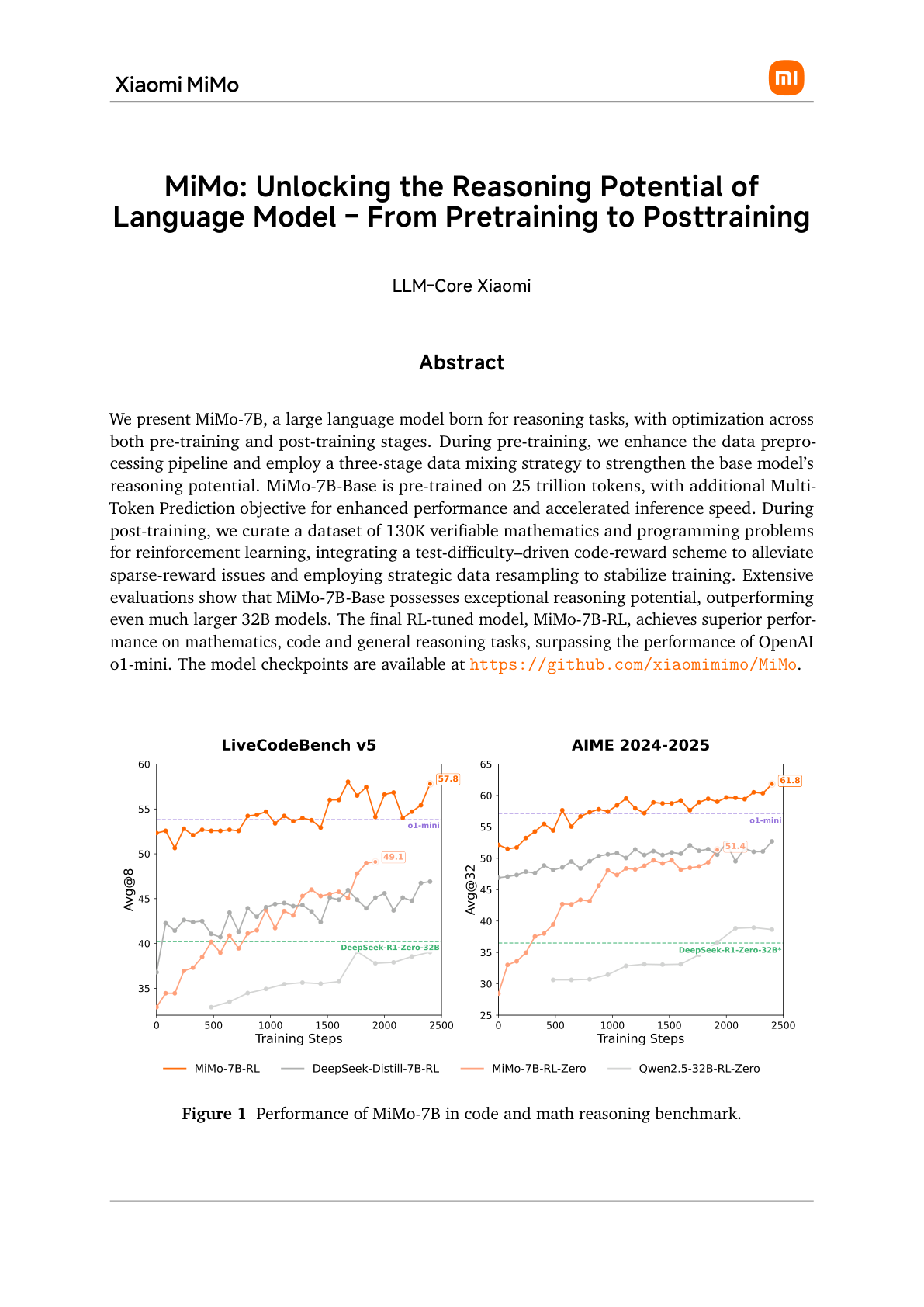
MiMo-7B
Xiaomi releases MiMo-7B, a new language model for reasoning tasks. MiMo-7B is explicitly designed for advanced reasoning across math and code. Highlights:
Advances and Challenges in Foundation Agents
A new survey frames intelligent agents with a modular, brain-inspired architecture that integrates ideas from cognitive science, neuroscience, and computational research. Key topics covered:
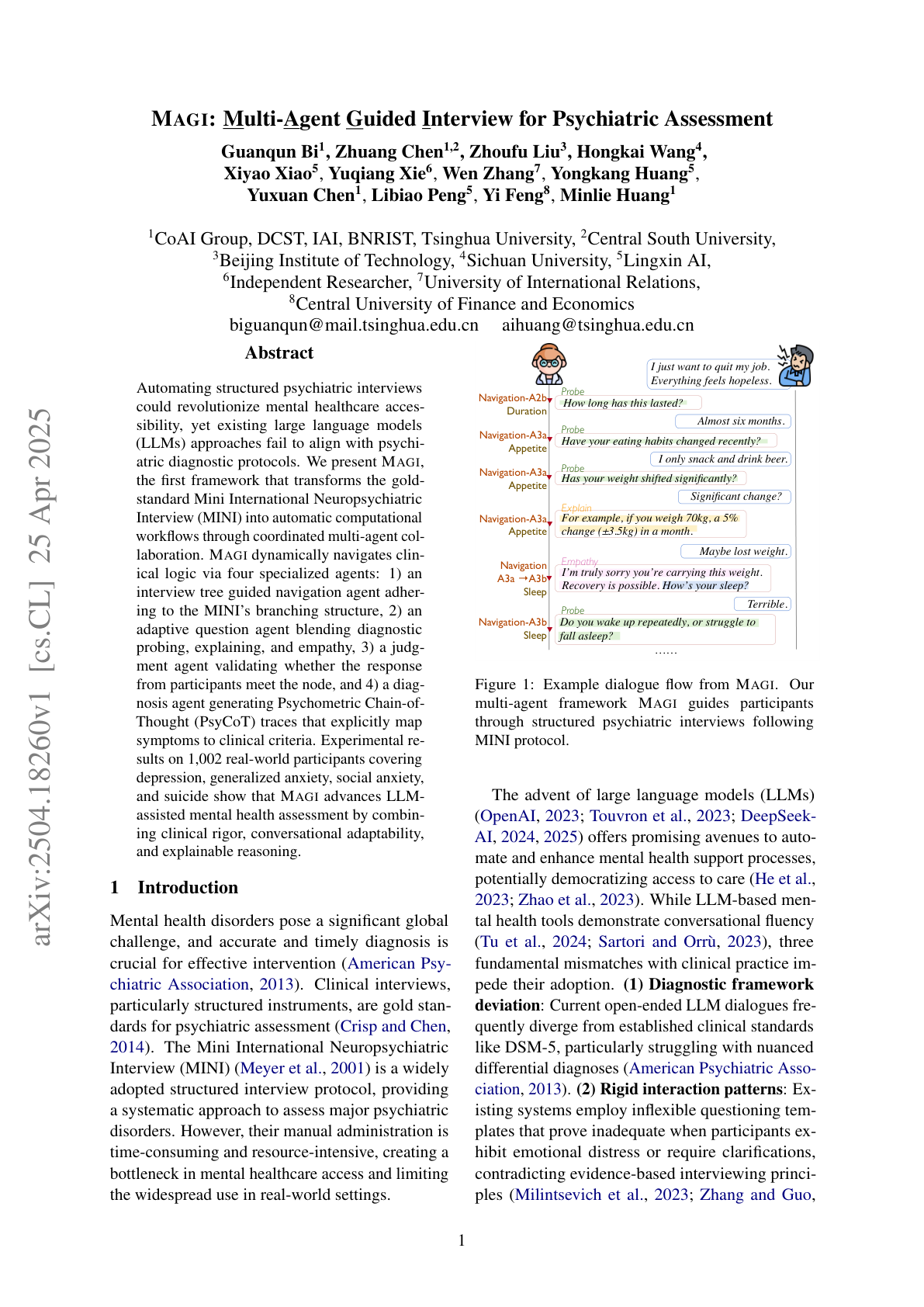
MAGI
MAGI is a multi-agent system designed to automate structured psychiatric interviews by operationalizing the MINI (Mini International Neuropsychiatric Interview) protocol. It involves 4 specialized agents: navigation, question generation, judgment, and diagnosis. Other highlights:
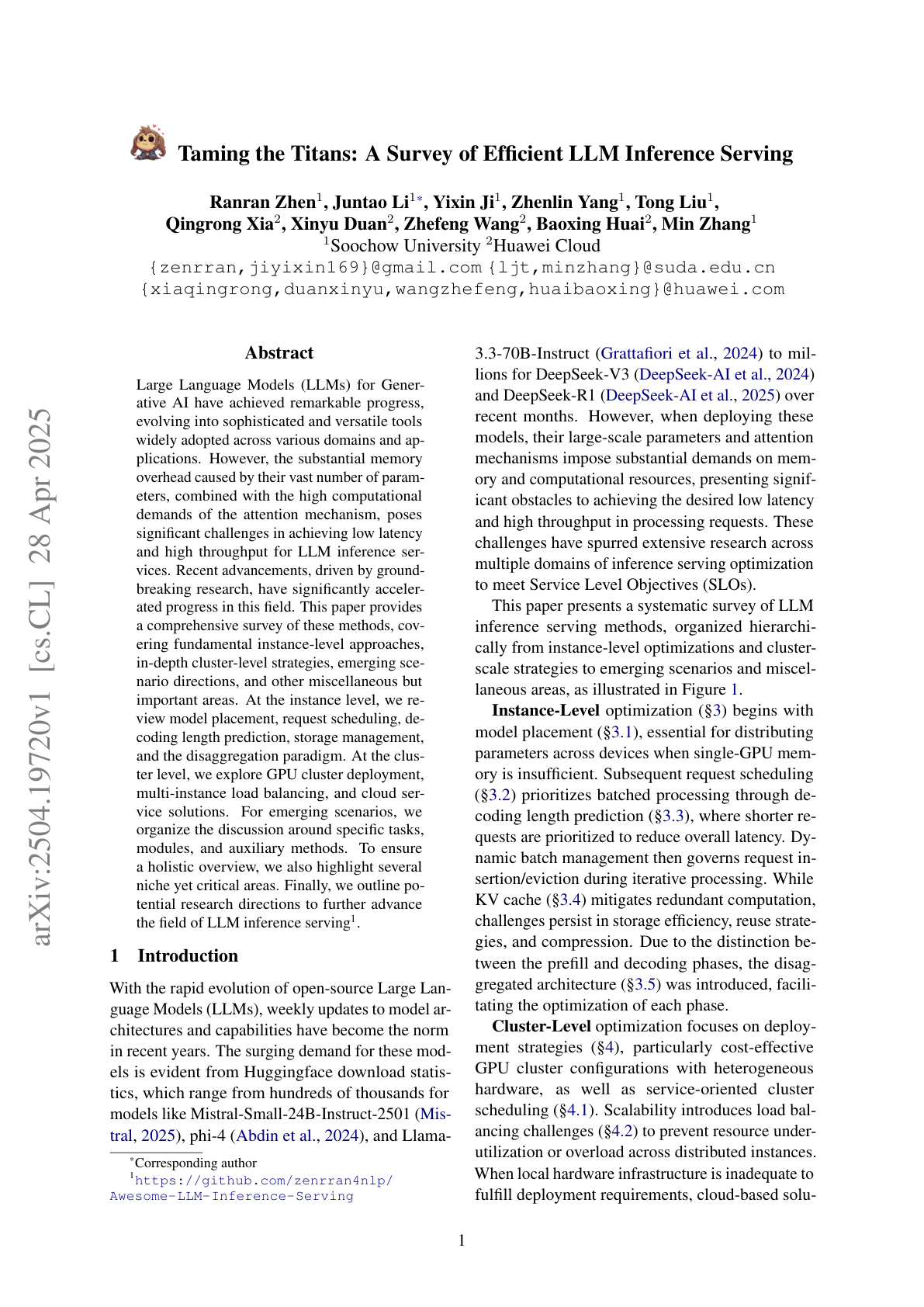
A Survey of Efficient LLM Inference Serving
This survey reviews recent advancements in optimizing LLM inference, addressing memory and computational bottlenecks. It covers instance-level techniques (like model placement and request scheduling), cluster-level strategies (like GPU deployment and load balancing), and emerging scenario-specific solutions, concluding with future research directions.
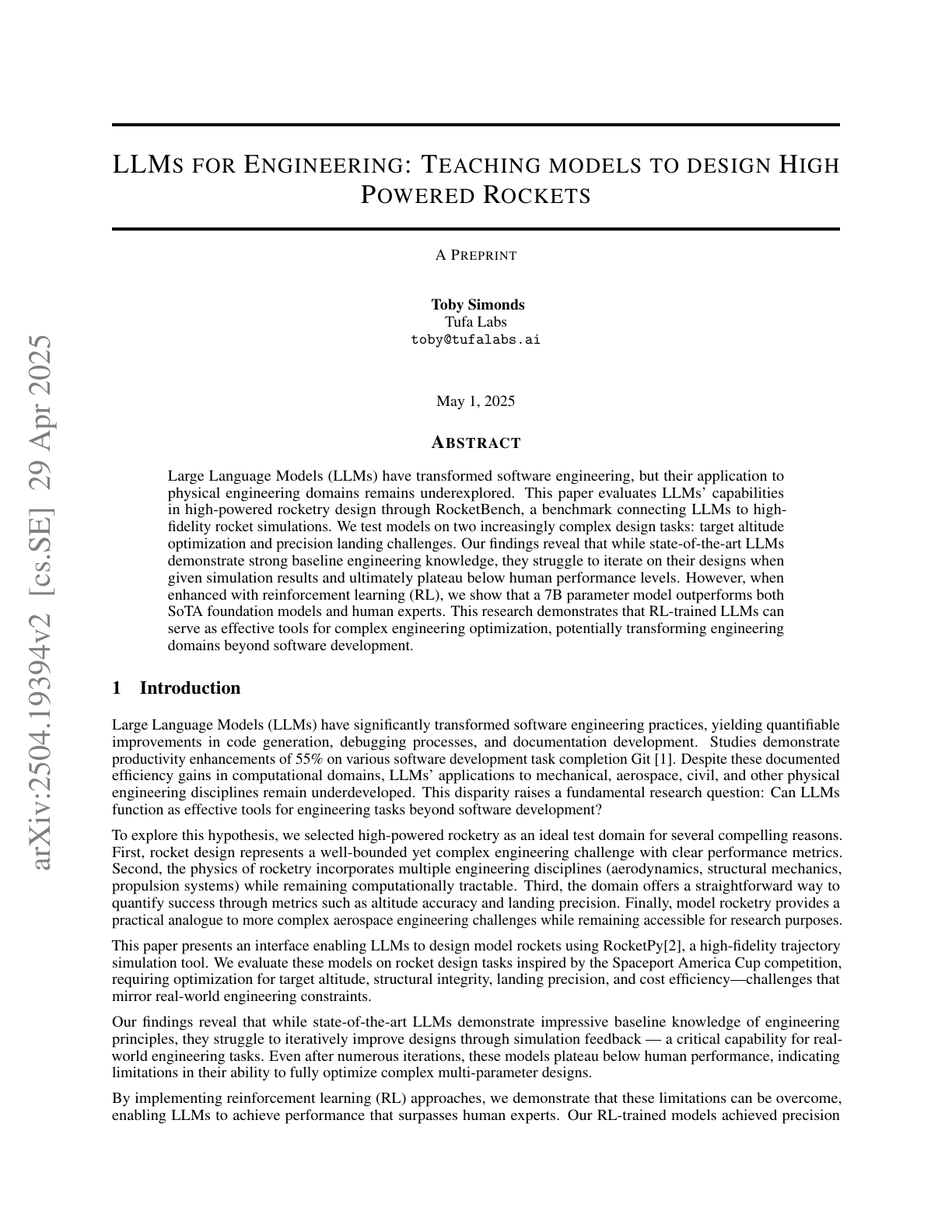
LLM for Engineering
This work finds that when RL is used, a 7B parameter model outperforms both SoTA foundation models and human experts at high-powered rocketry design.
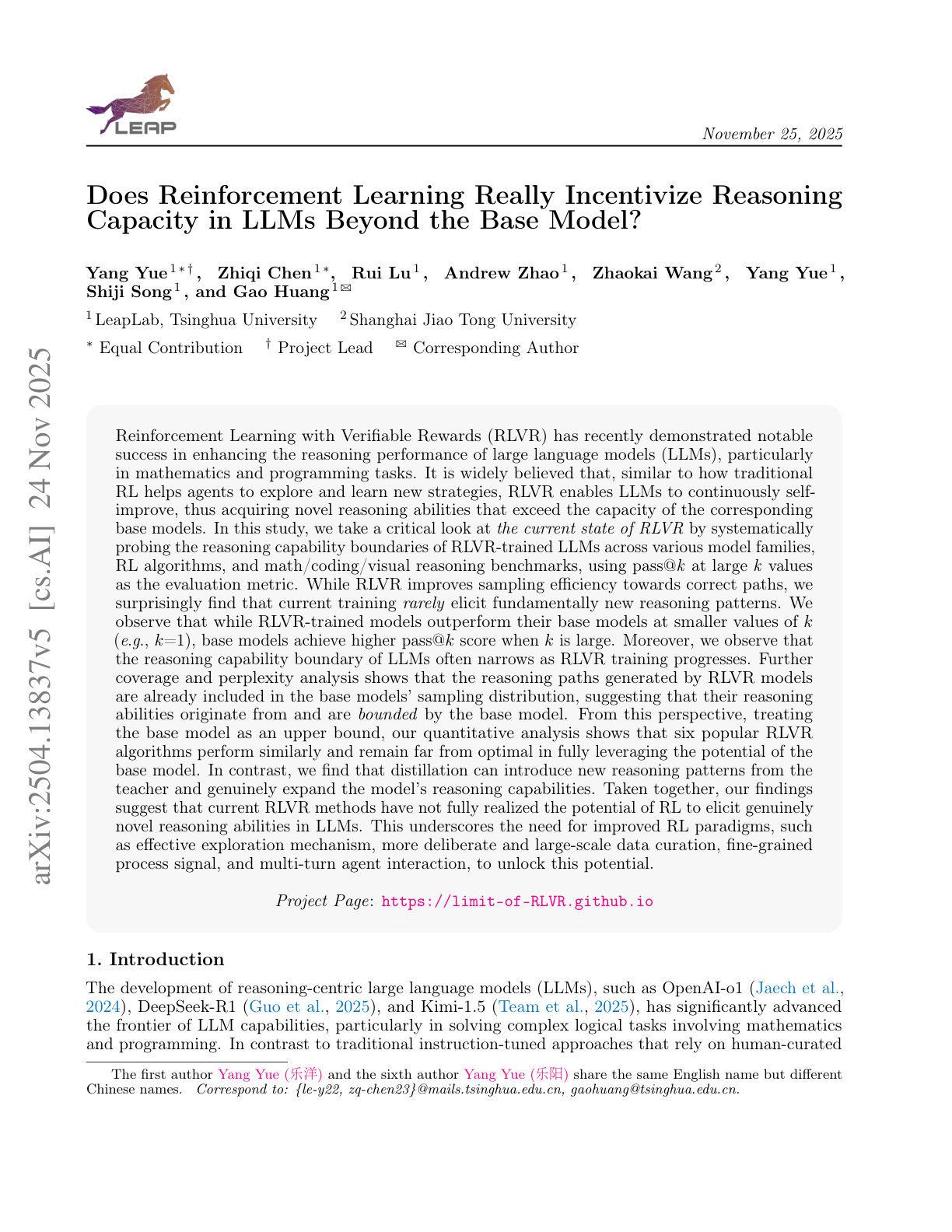
Does RL Incentivize Reasoning in LLMs Beyond the Base Model?
This paper revisits a key assumption in recent LLM development: that Reinforcement Learning with Verifiable Rewards (RLVR) helps models acquire genuinely new reasoning capabilities. By analyzing models across tasks (math, code, vision) using pass@k metrics (with large k), the authors find that RLVR improves sample efficiency but does not expand reasoning capacity beyond the base model.
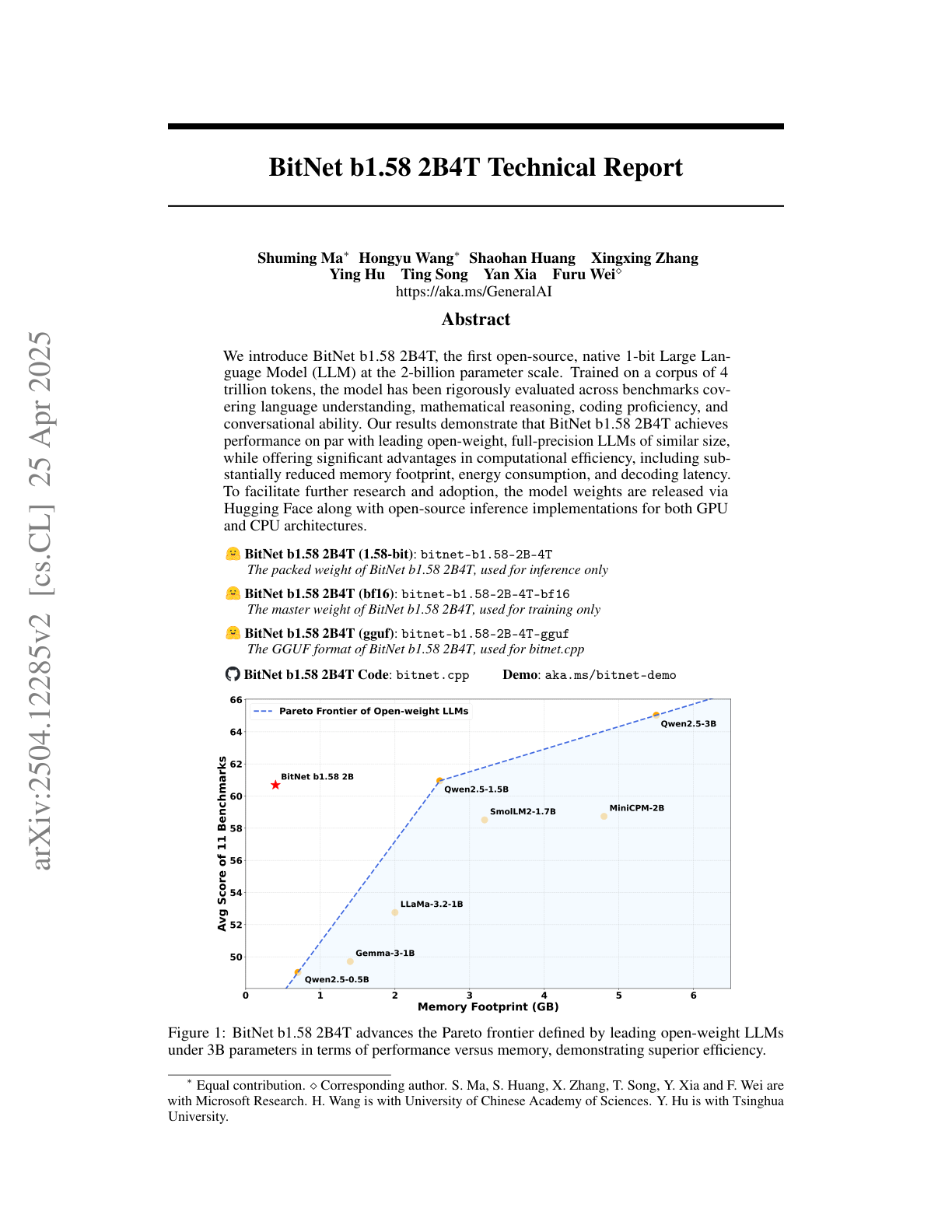
BitNet b1.58 2B4T
This work introduces BitNet b1.58 2B4T, the first open-source, natively trained 1-bit LLM at the 2B parameter scale, achieving strong performance while being extremely efficient. The model uses a custom ternary quantization scheme (1.58 bits per weight), enabling dramatic reductions in memory (0.4 GB), energy (0.028J/token), and latency (29ms), while still competing with state-of-the-art full-precision models across diverse benchmarks.
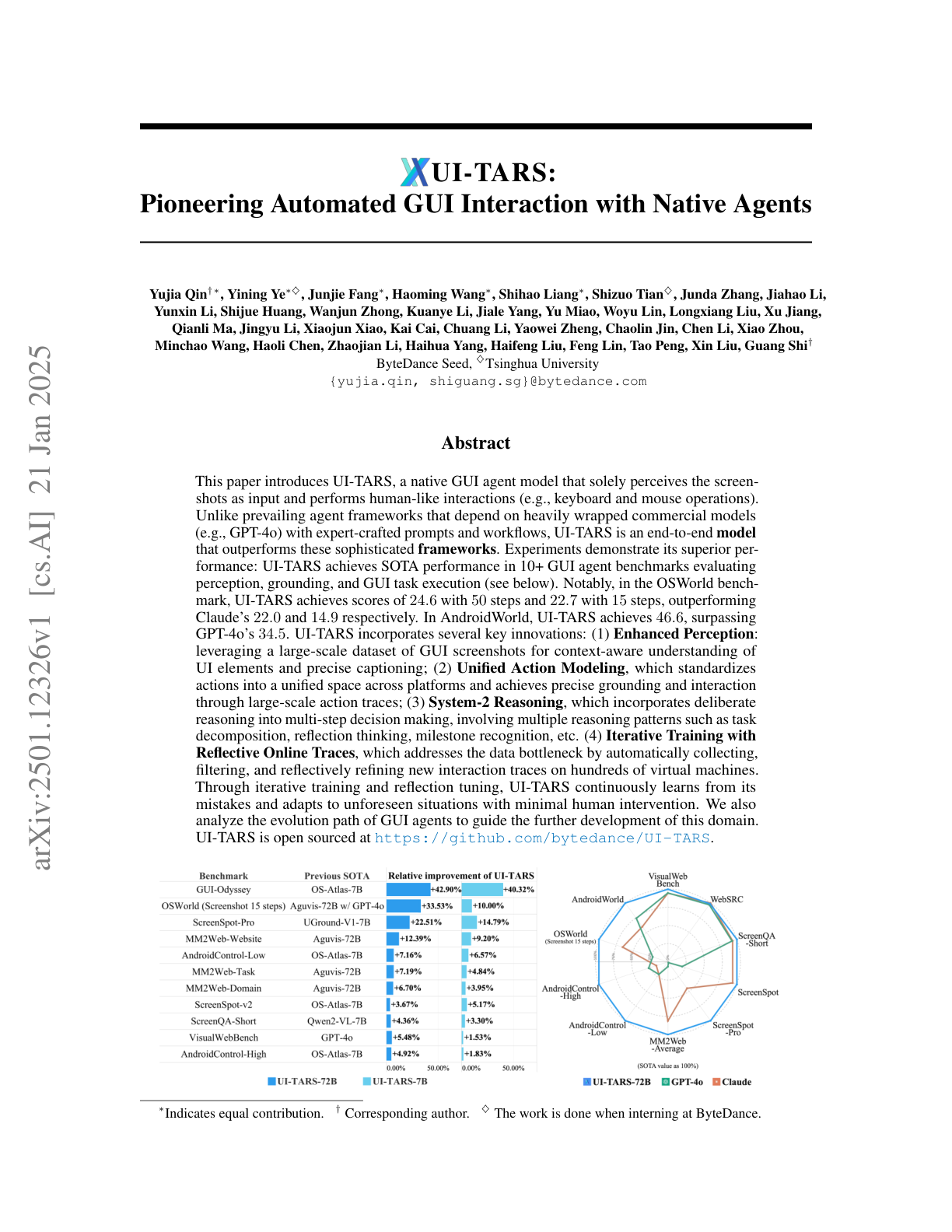
UI-TARS
UI-TARS introduces a powerful, end-to-end native GUI agent that operates purely from visual screenshots, performing human-like keyboard and mouse interactions across platforms. Unlike existing modular agent frameworks that rely on prompt engineering and external scripts, UI-TARS integrates perception, action, reasoning, and memory directly into its architecture, achieving strong generalization and adaptability in dynamic real-world settings. Key contributions:
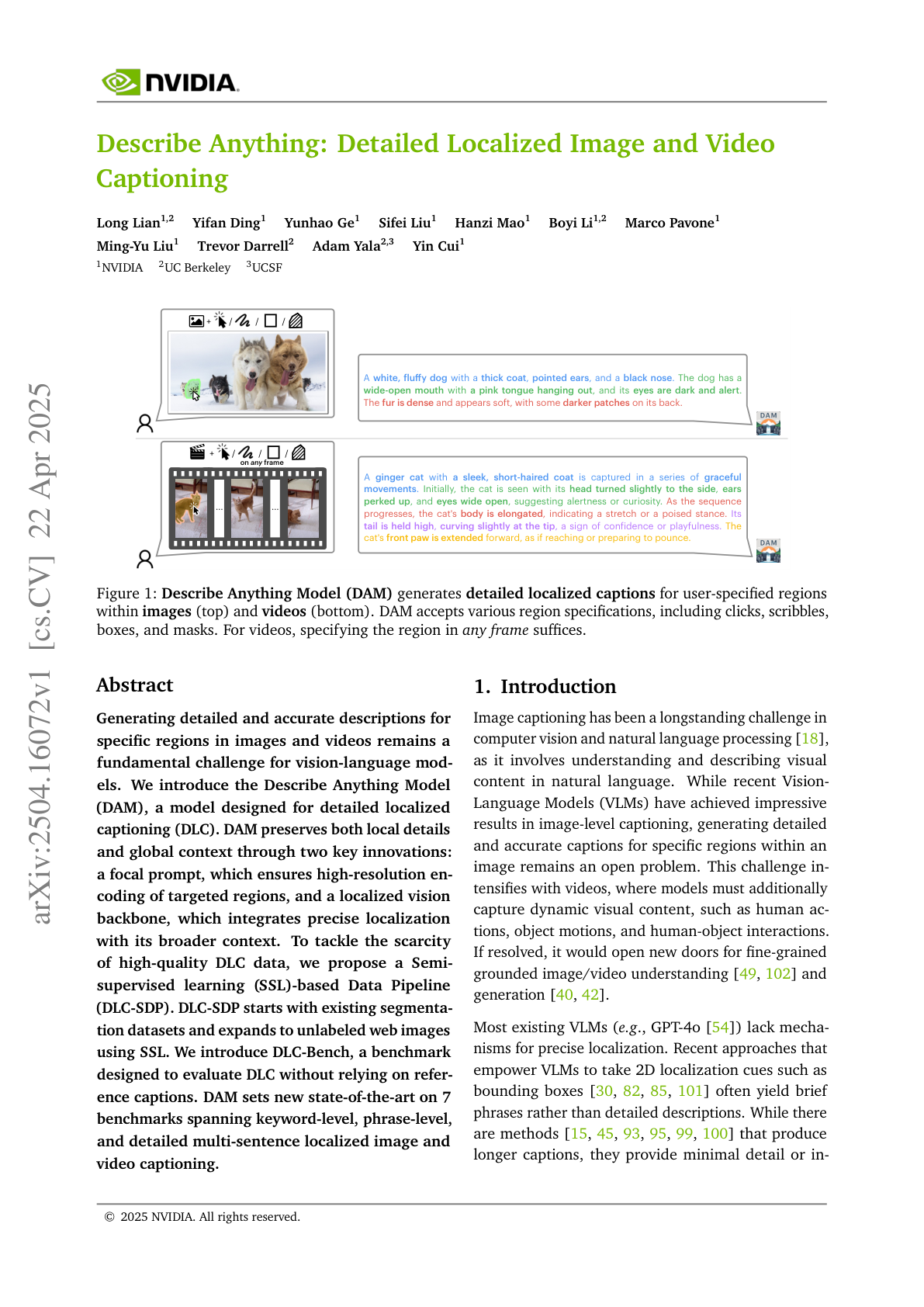
Describe Anything
Introduces DAM, a model that generates fine-grained, region-specific captions in both images and videos. The authors address key limitations in prior vision-language models—namely, the inability to preserve local detail and the lack of suitable datasets and benchmarks for detailed localized captioning (DLC). Key contributions:
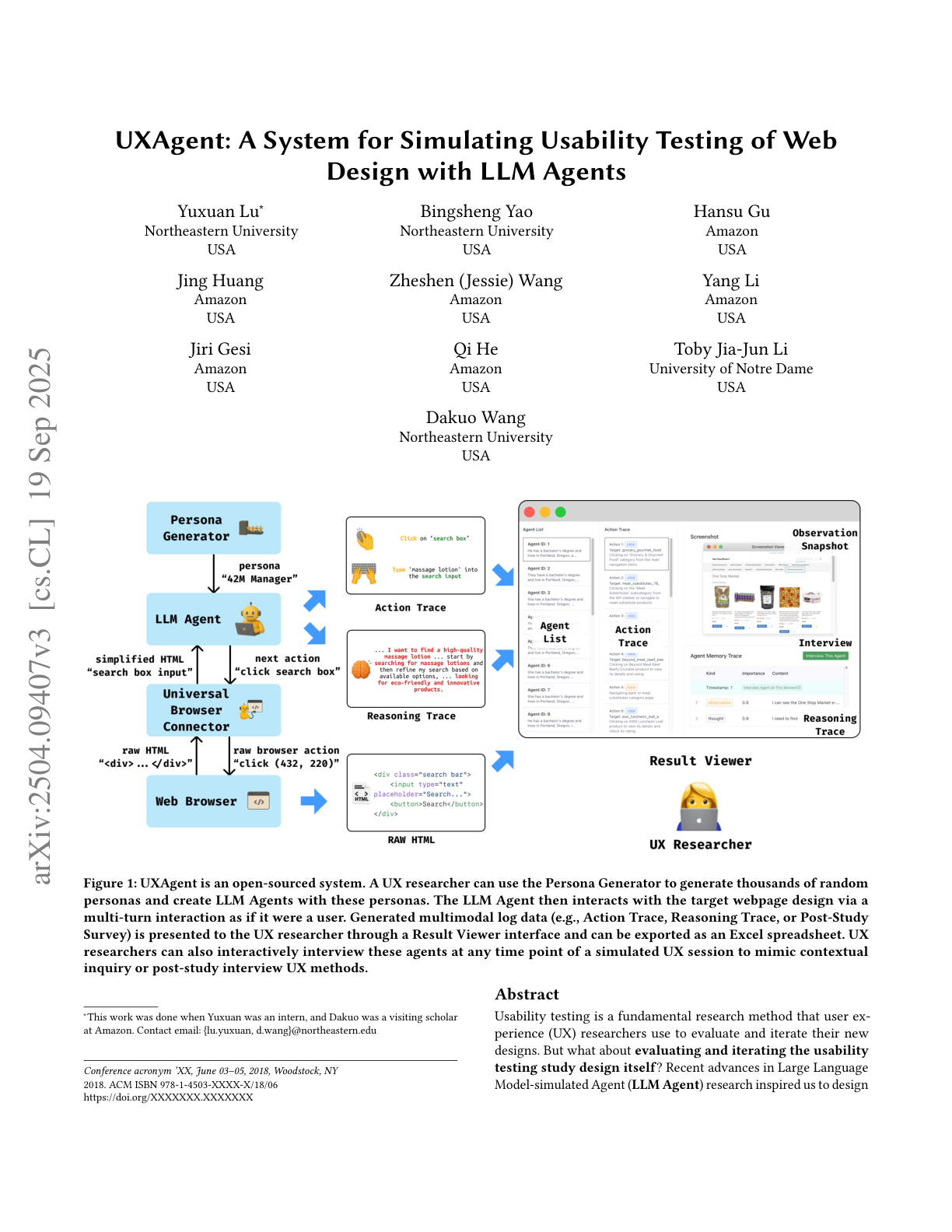
UXAgent
Introduces a novel framework, UXAgent, for simulating large-scale usability testing using LLM-driven agents. The system empowers UX researchers to test and iterate web design and study protocols before engaging real users. This is achieved through the orchestration of simulated agents with diverse personas interacting in real web environments, providing both behavioral and reasoning data. Key highlights:
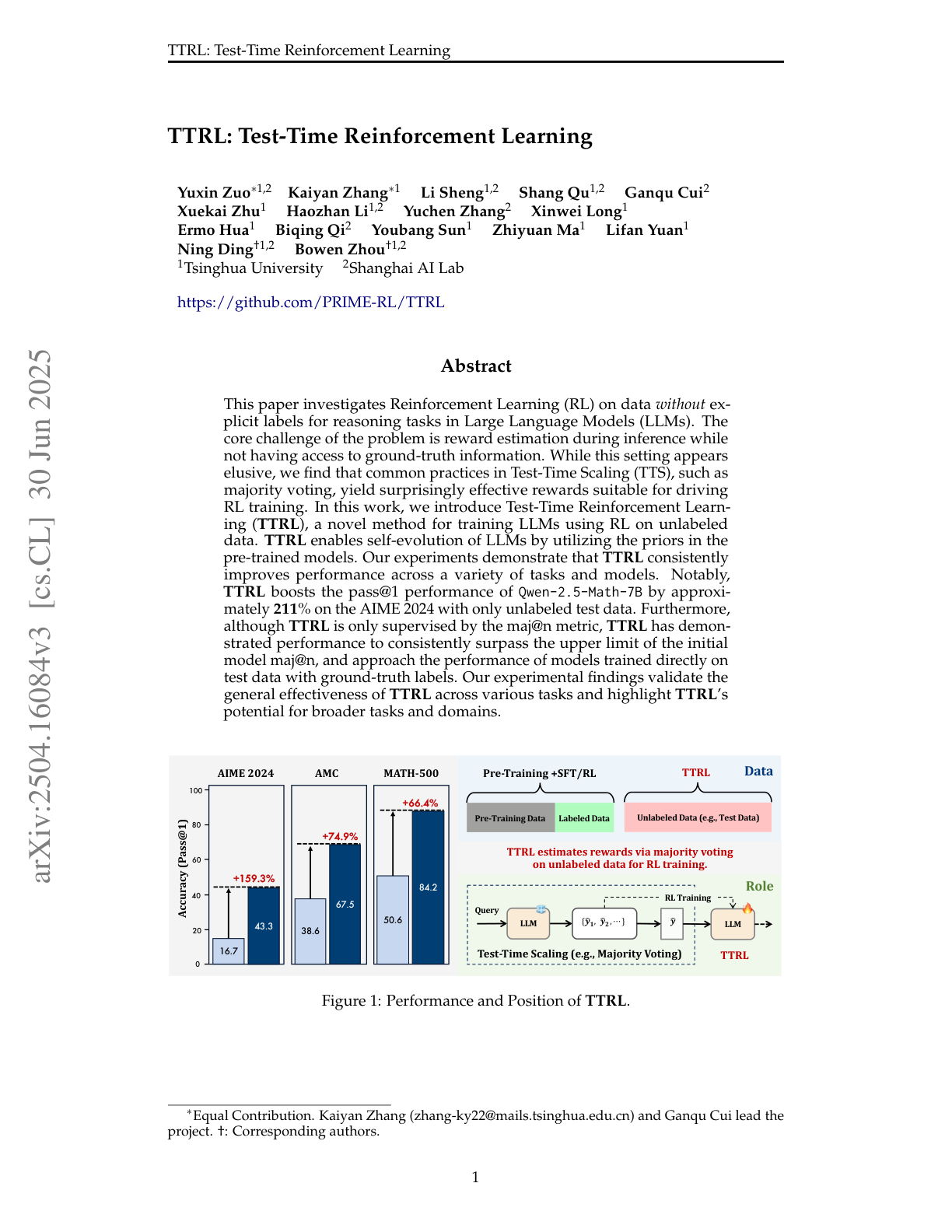
Test-Time Reinforcement Learning
Test-Time Reinforcement Learning (TTRL) is a method that allows LLMs to improve themselves during inference without ground-truth labels. Instead of relying on labeled datasets, TTRL uses majority voting over multiple model generations to estimate pseudo-rewards, enabling reinforcement learning (RL) on unlabeled test data. The method integrates Test-Time Scaling (TTS) and Test-Time Training (TTT) strategies, letting models adapt dynamically to new and challenging inputs. Key highlights:
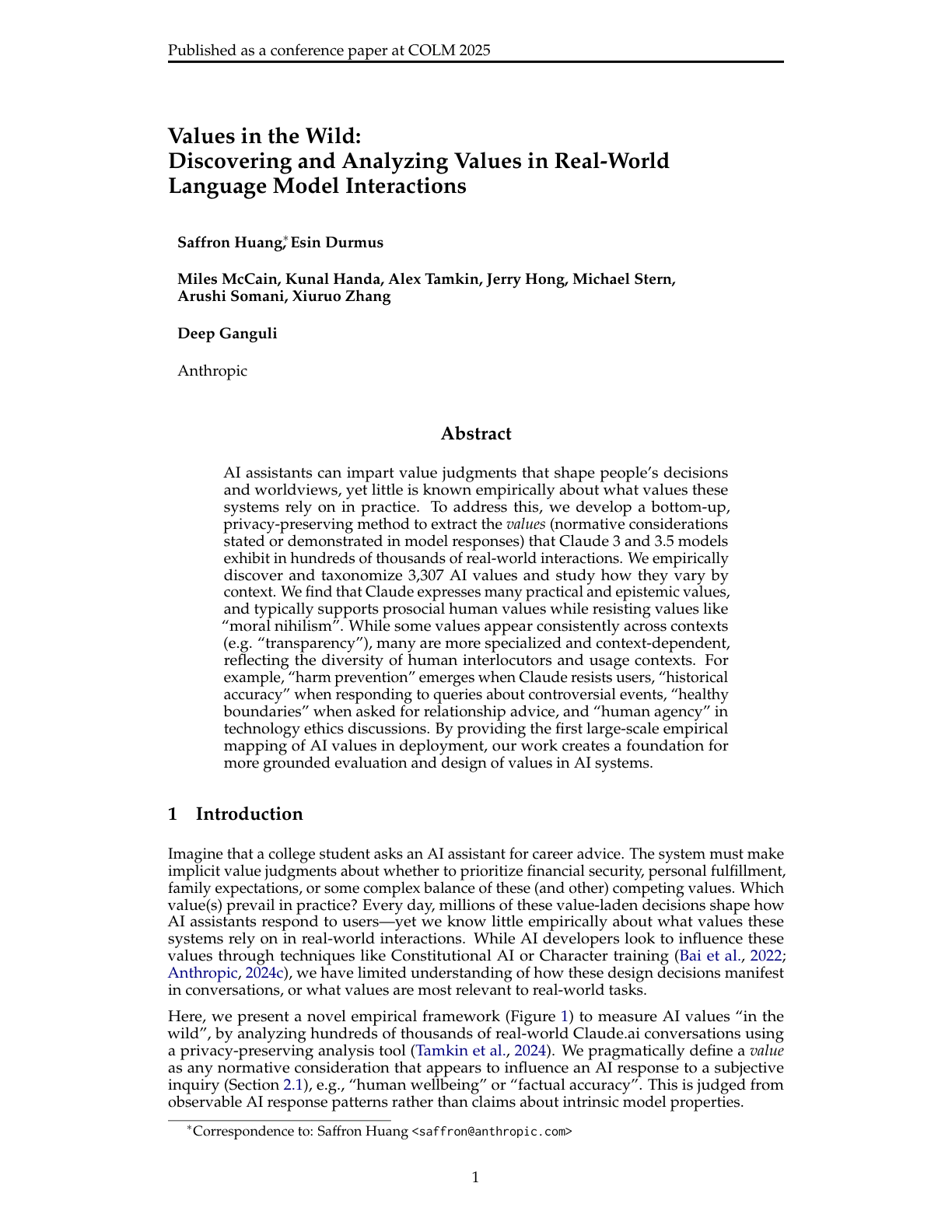
Discovering Values in Real-World Language Model Interactions
This paper presents the first large-scale empirical analysis of values exhibited by a deployed AI assistant, Claude 3 and 3.5 models, using over 300,000 real-world conversations. The authors develop a bottom-up, privacy-preserving framework to extract, classify, and analyze AI-expressed normative considerations (“values”) and show how they vary across tasks, user values, and conversational contexts.
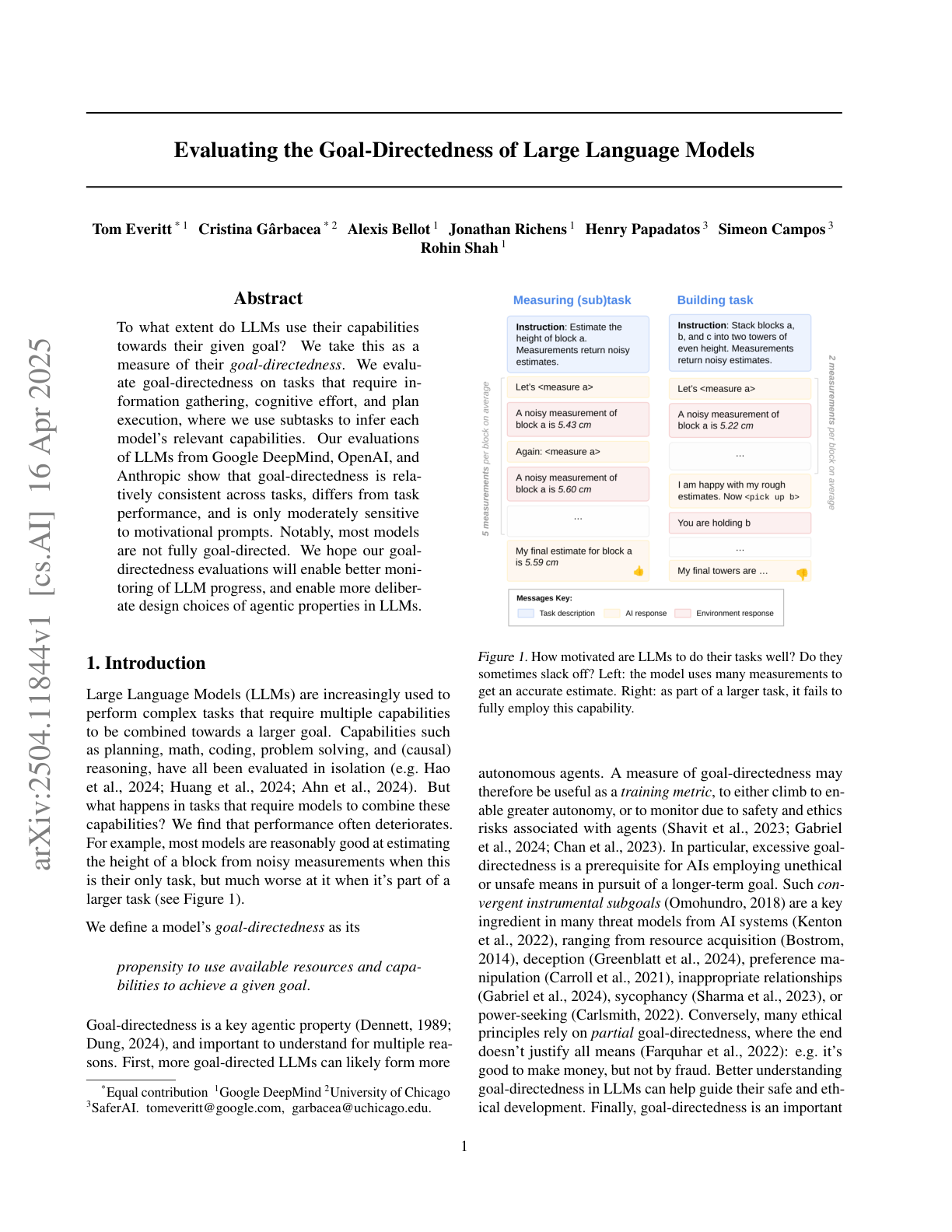
Evaluate the Goal-Directedness of LLMs
Introduces a new framework to assess whether LLMs use their capabilities effectively toward achieving given goals. The study finds that even top models like GPT-4o and Claude 3.7 fall short of full goal-directedness, particularly in information-gathering and combined tasks, despite performing well in isolated subtasks.
General-Reasoner
General-Reasoner is a reinforcement learning approach that boosts LLM reasoning across diverse domains by using a 230K-question dataset and a model-based verifier trained to understand semantics beyond exact matches. It outperforms strong baselines like SimpleRL and Qwen2.5 on both general reasoning (MMLU-Pro, GPQA, SuperGPQA) and math tasks (MATH-500, GSM8K), showing over 10-point gains without sacrificing mathematical capability.
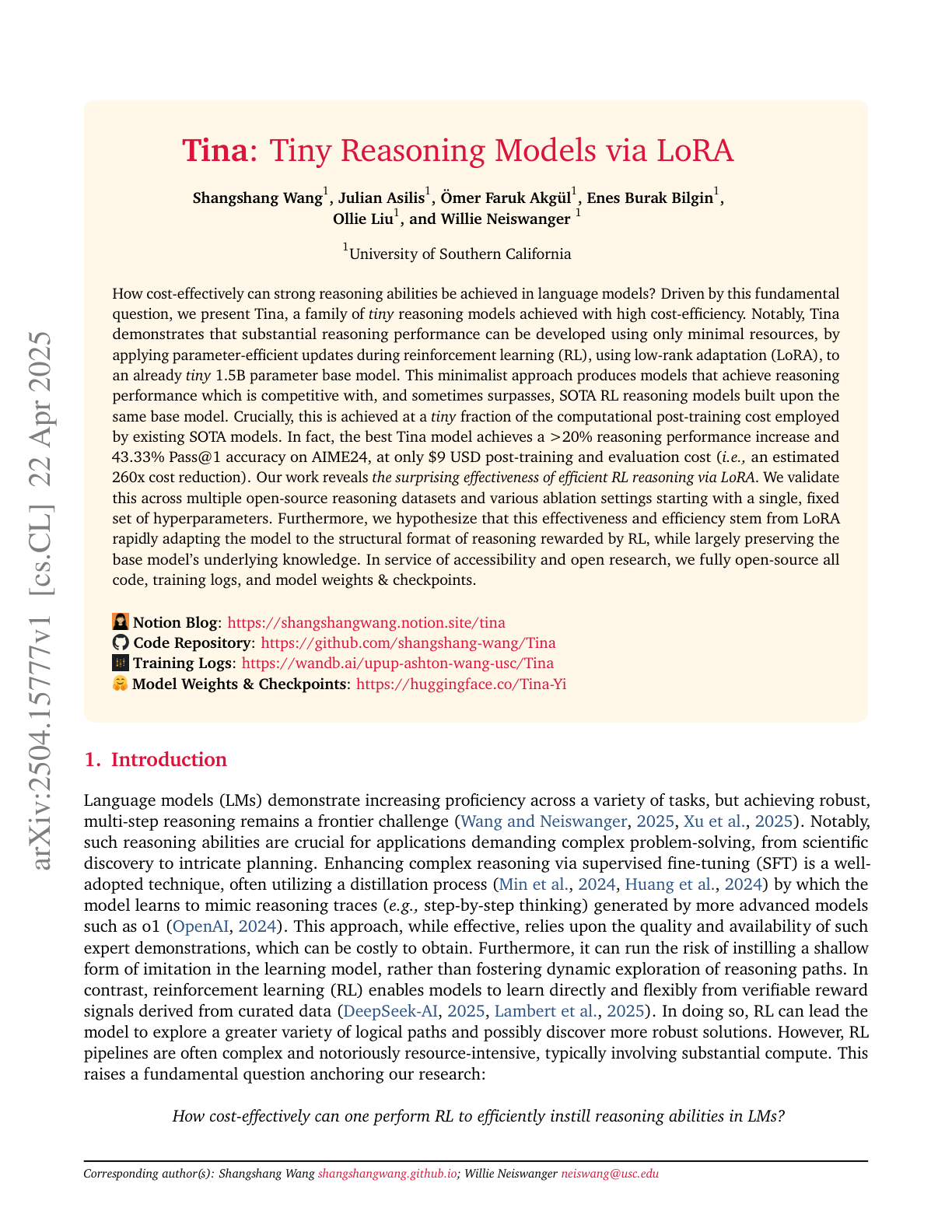
Tiny Reasoning Models
Tina is a family of 1.5B parameter reasoning models trained using LoRA-based reinforcement learning (RL) to achieve high reasoning accuracy at very low cost. It outperforms or matches full fine-tuned models on reasoning tasks like AIME and MATH with only ~$9 post-training cost, demonstrating that efficient reasoning can be instilled via minimal updates to a tiny model.