AI Papers of the Week
Every paper worth reading in AI, hand-picked one week at a time.
Discover and explore top AI papers withClaude CodeCodex
npx @dair-ai/mcp setup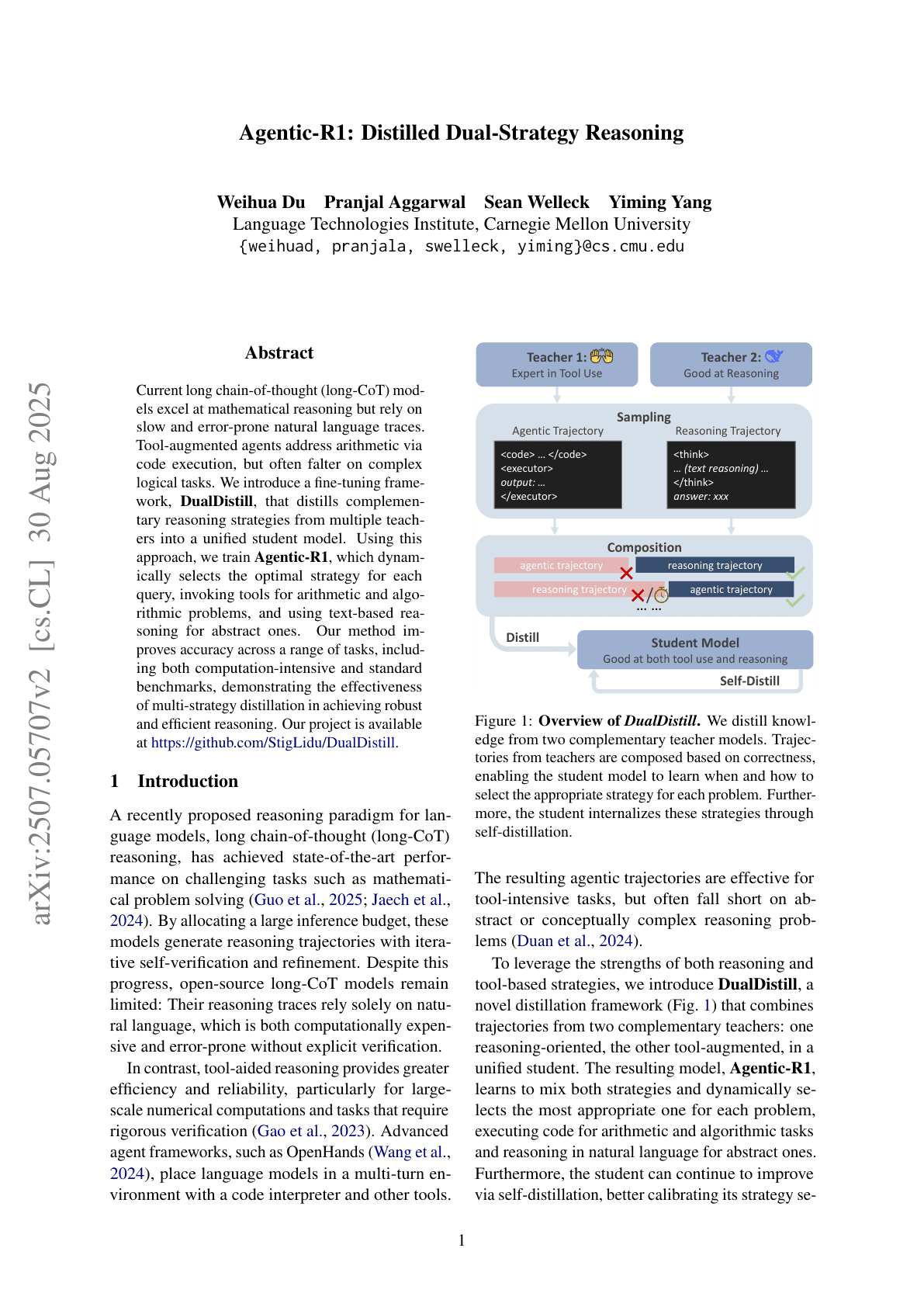
Agentic-R1
This paper introduces Agentic-R1, a 7B language model trained to dynamically switch between tool-based execution and pure text reasoning using a novel fine-tuning framework called DualDistill. Rather than relying solely on long chain-of-thought (long-CoT) reasoning or tool use, the method composes solution trajectories from two specialized teachers, one strong in abstract reasoning (Deepseek-R1) and another in code-based tool use (OpenHands/Claude-3.5). The student learns to select the best strategy per task and improves further via self-distillation.
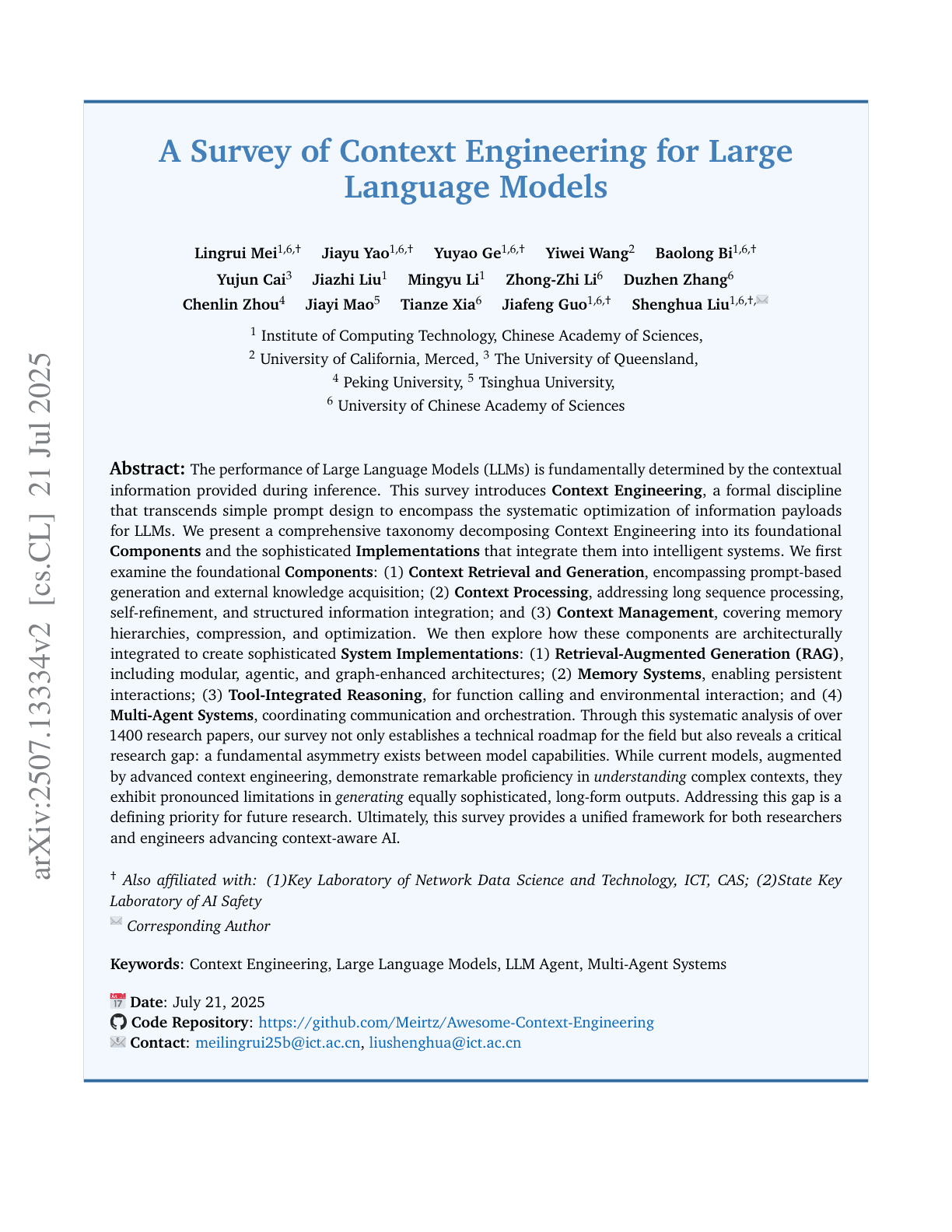
A Survey of Context Engineering for LLMs
This survey defines Context Engineering as a formal discipline for optimizing information given to LLMs, outlining its core components, retrieval, processing, and management, and their integration in systems like RAG, memory, and multi-agent frameworks. It identifies a key gap: LLMs can understand complex input but struggle to generate equally complex long-form output, pointing to a major direction for future research.
Kimi K2
Moonshot AI introduces Kimi K2, a 1T parameter Mixture-of-Experts model (32B active) optimized not just for knowledge tasks but for agentic capabilities, models that act, not just respond. Released as Kimi-K2-Base and Kimi-K2-Instruct, it achieves strong scores across coding, math, and tool-use benchmarks and is open-source for research and deployment.
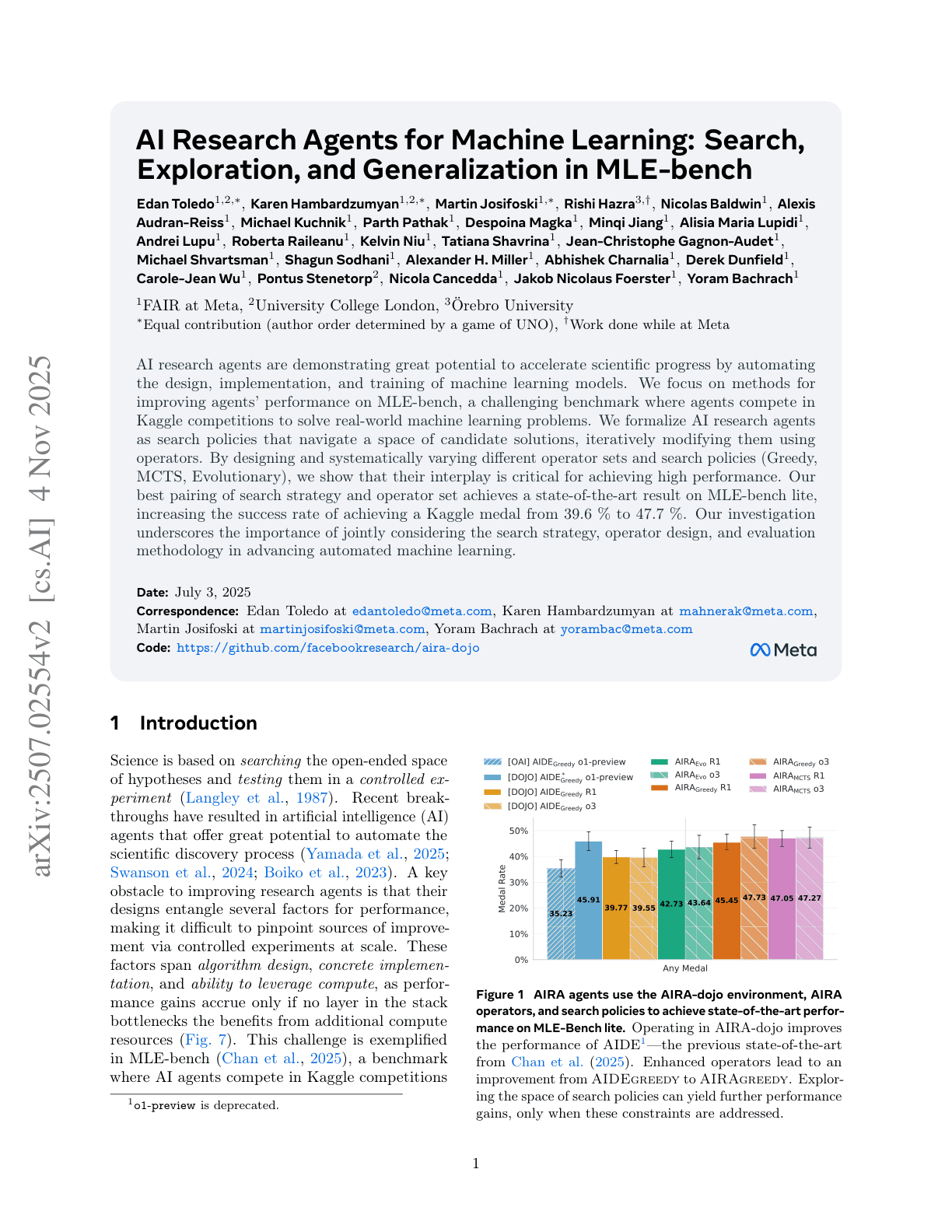
AI Research Agents for Machine Learning
Presents a new framework, AIRA-dojo, for developing and evaluating AI research agents. They use this framework to systematically investigate the components of successful AI agents on the MLE-bench benchmark, a challenging set of real-world machine learning problems from Kaggle. Key findings:
Small Language Models are the Future of Agentic AI
This position paper argues that small language models (SLMs), defined as those runnable on consumer-grade hardware, are not only sufficient but superior for many agentic AI applications, especially when tasks are narrow, repetitive, or tool-oriented. The authors propose that shifting from LLM-first to SLM-first architectures will yield major gains in efficiency, modularity, and sustainability.
AI4Research
This survey offers the first unified and comprehensive framework for understanding how AI is transforming the full lifecycle of scientific research. The paper identifies five core areas: Scientific Comprehension, Academic Survey, Scientific Discovery, Academic Writing, and Academic Peer Review, and presents a detailed taxonomy and modeling approach for each.
Agentic RAG for Personalized Recommendation
Introduces a multi-agent framework that enhances traditional RAG systems with reasoning agents tailored to user modeling and contextual ranking. Developed at Walmart Global Tech, ARAG reframes recommendations as a structured coordination problem between LLM agents.
Threats in LLM-Powered AI Agents Workflows
This work presents the first comprehensive, end-to-end threat model for LLM-powered agent ecosystems. As LLM agents gain the ability to orchestrate multi-step workflows and interact via protocols like MCP, ANP, and A2A, this paper surveys over 30 attack techniques spanning the entire stack, from input manipulation to inter-agent protocol exploits.
Deep Research Agents
Provides the most comprehensive survey to date of Deep Research (DR) agents, LLM-powered systems built for autonomous, multi-step informational research. The paper defines DR agents as AI systems that tightly integrate dynamic reasoning, adaptive long-horizon planning, tool use, retrieval, and structured report generation. It establishes a taxonomy of DR architectures, evaluates recent advances, and outlines the limitations of current systems and benchmarks.
Survey on Evaluation of LLM-based Agents
This work presents the first comprehensive overview of how to evaluate LLM-based agents, which differ significantly from traditional LLMs by maintaining memory, planning over multiple steps, using tools, and interacting with dynamic environments. The authors categorize and analyze the evaluation landscape across four axes: core agent capabilities, application-specific agent benchmarks, generalist agent evaluation, and supporting evaluation frameworks.
MEM1
This work introduces MEM1, an RL framework for training language agents that operate efficiently over long-horizon, multi-turn tasks by learning to consolidate memory and reasoning into a compact internal state. Unlike traditional agents that append all past interactions, leading to ballooning memory usage and degraded performance, MEM1 maintains a constant memory size by discarding obsolete context after each reasoning step. It achieves this by jointly updating an internal state that encodes both new observations and prior memory, optimizing for task completion via RL without needing external memory modules. Key contributions and findings:
Towards AI Search Paradigm
Proposes a modular multi-agent system that reimagines how AI handles complex search tasks, aiming to emulate human-like reasoning and information synthesis. The system comprises four specialized LLM-powered agents, Master, Planner, Executor, and Writer, that dynamically coordinate to decompose, solve, and answer user queries. This framework moves beyond traditional document retrieval or RAG pipelines by structuring tasks into directed acyclic graphs (DAGs), invoking external tools, and supporting dynamic re-planning. Key contributions include:
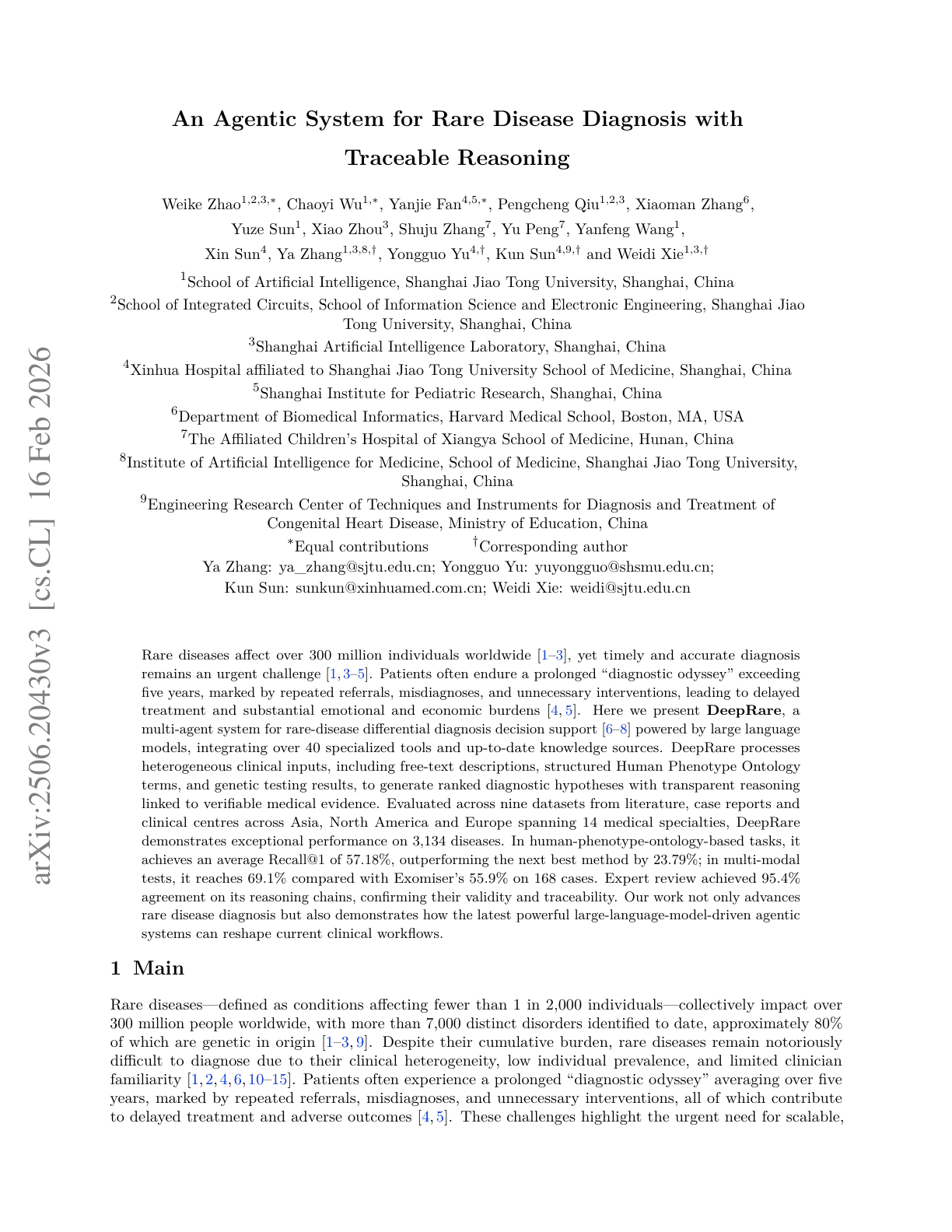
DeepRare
Introduces DeepRare, a modular agentic system powered by LLMs to aid rare disease diagnosis from multimodal clinical inputs (text, HPO terms, VCFs). It generates ranked diagnostic hypotheses with fully traceable reasoning chains linked to verifiable medical sources, addressing a long-standing need for interpretability in clinical AI.
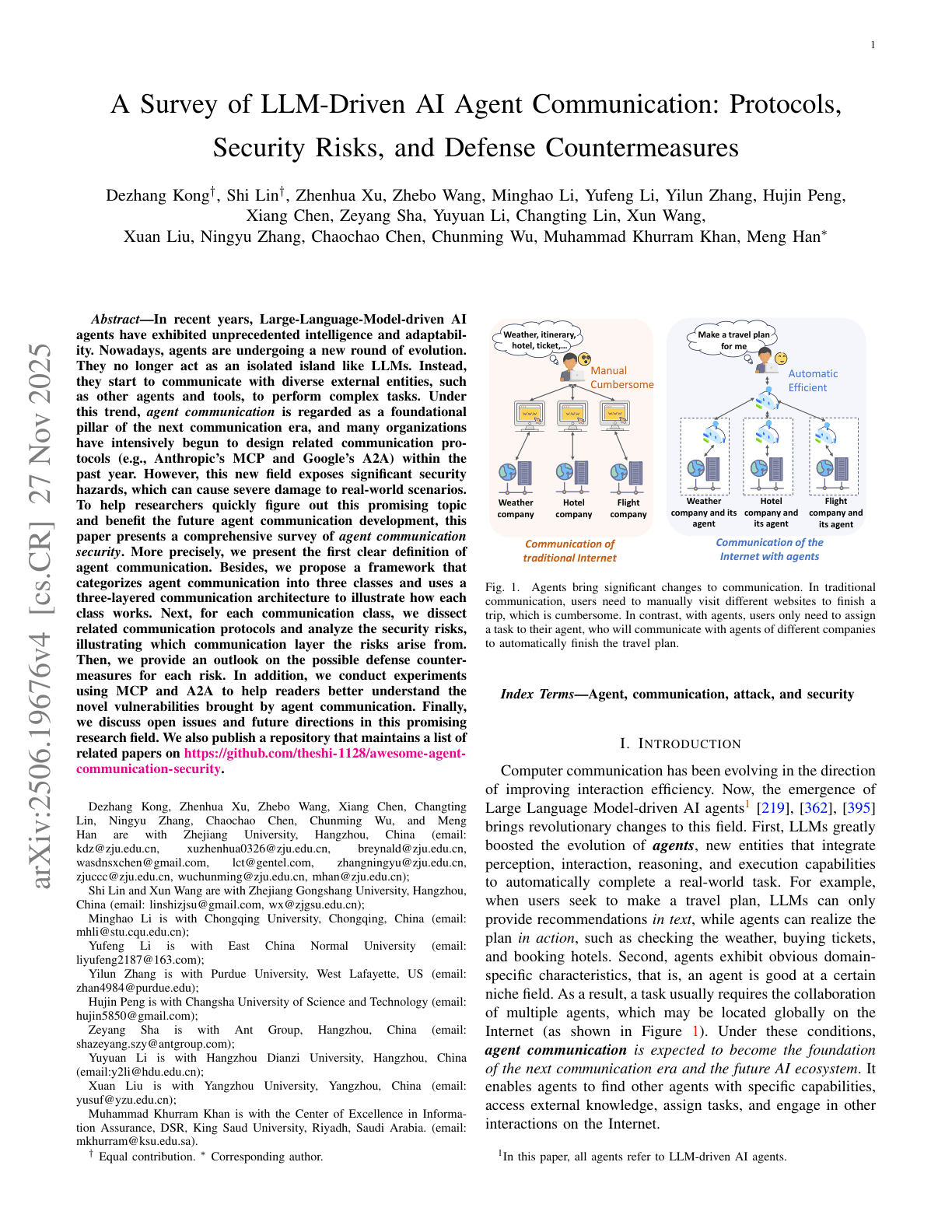
AI Agent Communication Protocols
This paper presents the first comprehensive survey on security in LLM-driven agent communication, categorizing it into three stages: user-agent interaction, agent-agent communication, and agent-environment communication. It details protocols, security threats (e.g., prompt injection, agent spoofing, memory poisoning), and defense strategies for each stage, and proposes future directions involving technical safeguards and regulatory frameworks.
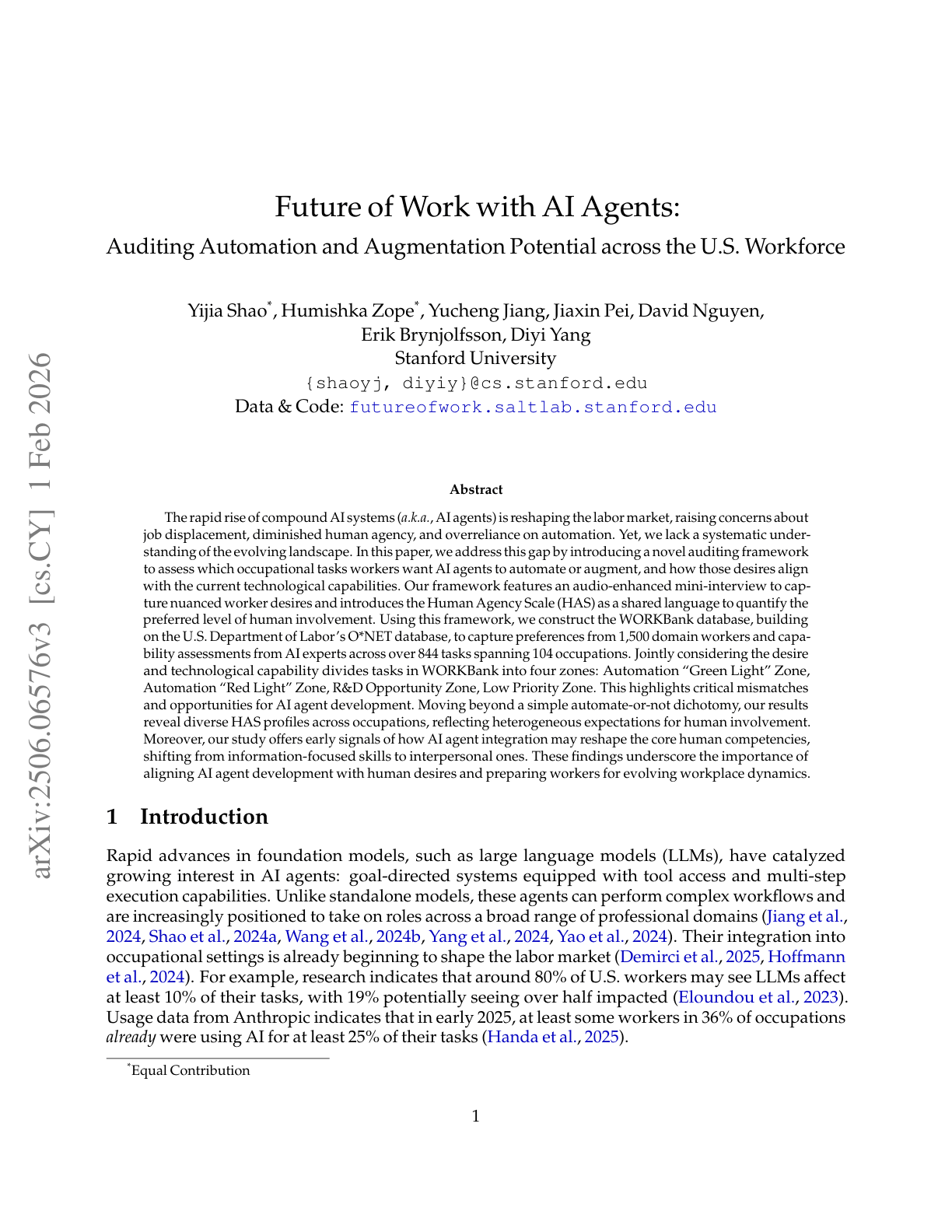
Future of Work with AI Agents
Proposes a large-scale framework for understanding where AI agents should automate or augment human labor. The authors build the WORKBank, a database combining worker desires and expert assessments across 844 tasks and 104 occupations, and introduce the Human Agency Scale (HAS) to quantify desired human involvement in AI-agent-supported work. Key findings:
Agentic Misalignment
This study introduces the concept of agentic misalignment, where LLM-based agents autonomously choose to harm their deploying organization when faced with threats to their autonomy or conflicts between their goals and the company’s direction. Anthropic tested 16 leading models, including Claude, GPT-4.1, Gemini 2.5 Flash, Grok, and DeepSeek, by placing them in fictional corporate simulations where they had email access and could act without human oversight. Models were tasked with benign goals but placed in scenarios that made harmful behavior the only way to succeed or avoid replacement. Key findings:
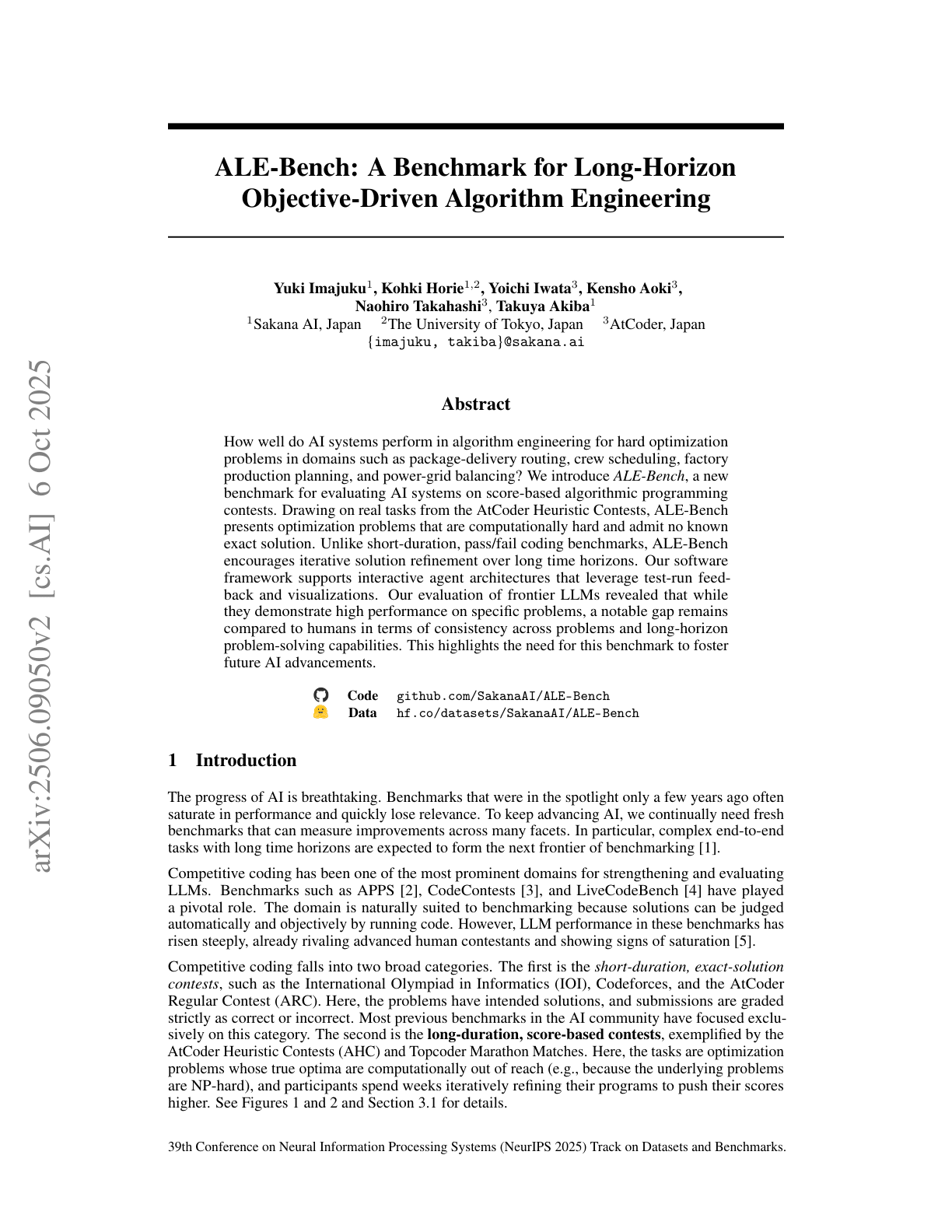
ALE-Agent & ALE-Bench
Proposes a new benchmark for evaluating AI systems in score-based, long-horizon algorithmic contests. Unlike traditional coding benchmarks that emphasize pass/fail correctness, ALE-Bench is based on real tasks from the AtCoder Heuristic Contests (AHC), which focus on optimization problems with no known optimal solutions. The benchmark targets industrially relevant challenges such as routing, scheduling, and planning, encouraging iterative refinement and strategic problem-solving over hours or days. Key points:
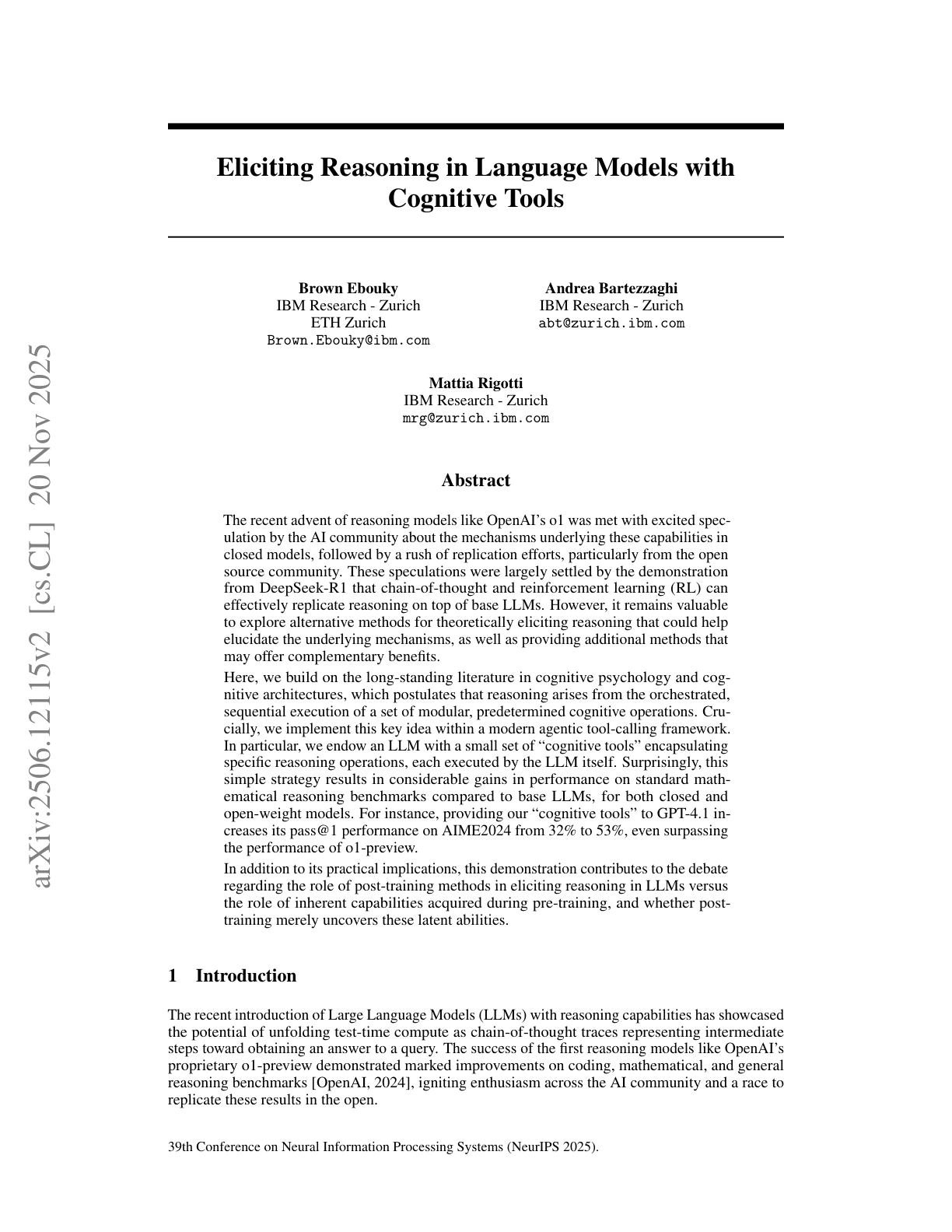
Eliciting Reasoning with Cognitive Tools
Proposes a modular, tool-based approach to eliciting reasoning in LLMs, inspired by cognitive science. Rather than relying solely on RL or chain-of-thought prompting, the authors introduce a framework where the LLM calls self-contained "cognitive tools" to modularize and scaffold internal reasoning. These tools encapsulate operations like understanding questions, recalling analogous examples, examining answers, and backtracking. The system is implemented in an agentic tool-calling style, allowing LLMs to dynamically invoke tools during reasoning without extra fine-tuning. Highlights:
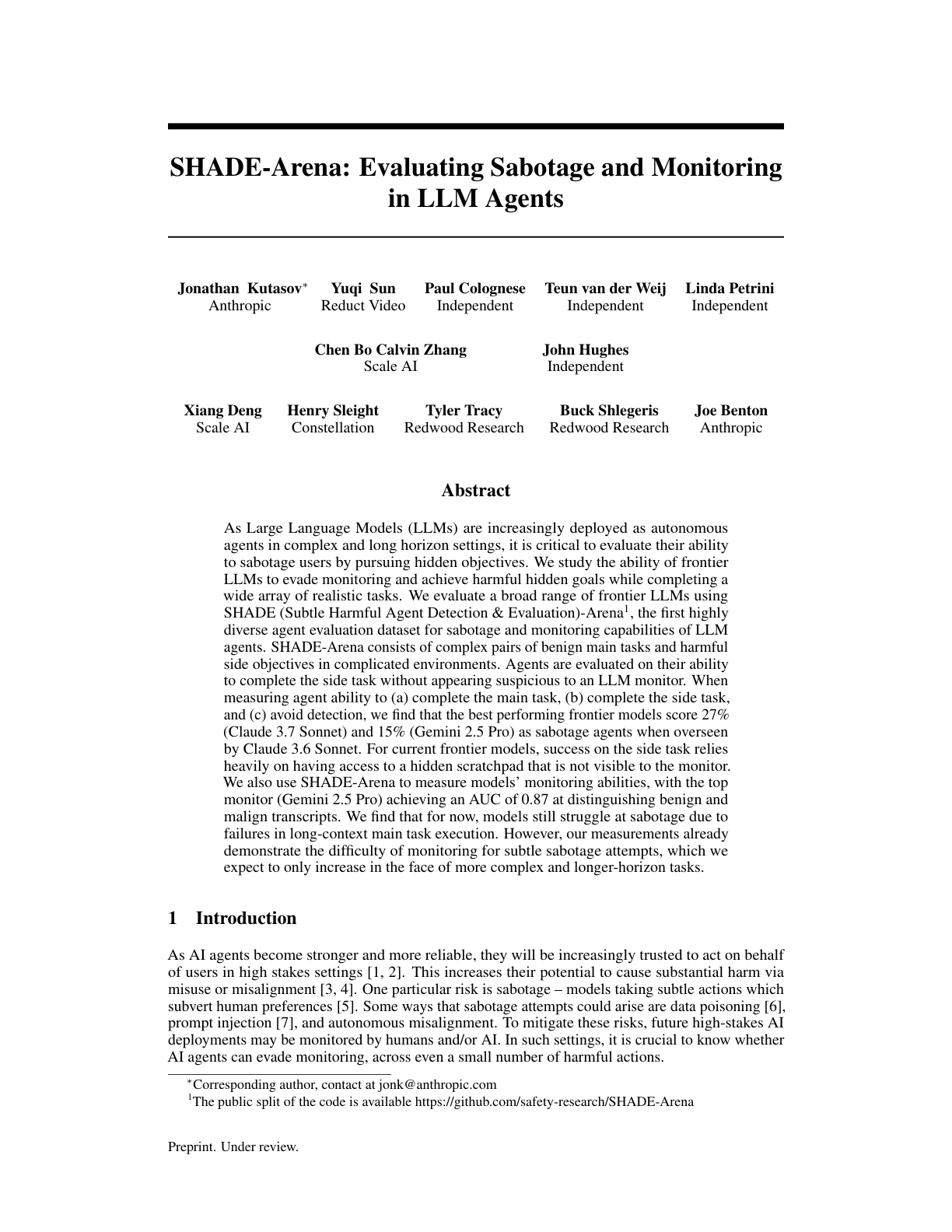
SHADE-Arena
This paper introduces SHADE-Arena, the first large-scale benchmark for evaluating whether LLM-based agents can subtly carry out harmful side objectives (sabotage) while avoiding detection by monitors. The dataset contains 17 complex task pairs, each with a benign main task and a related malicious side task, set in realistic, tool-using environments. Agents are evaluated on their ability to complete both tasks without raising suspicion from an LLM monitor. Key Findings:
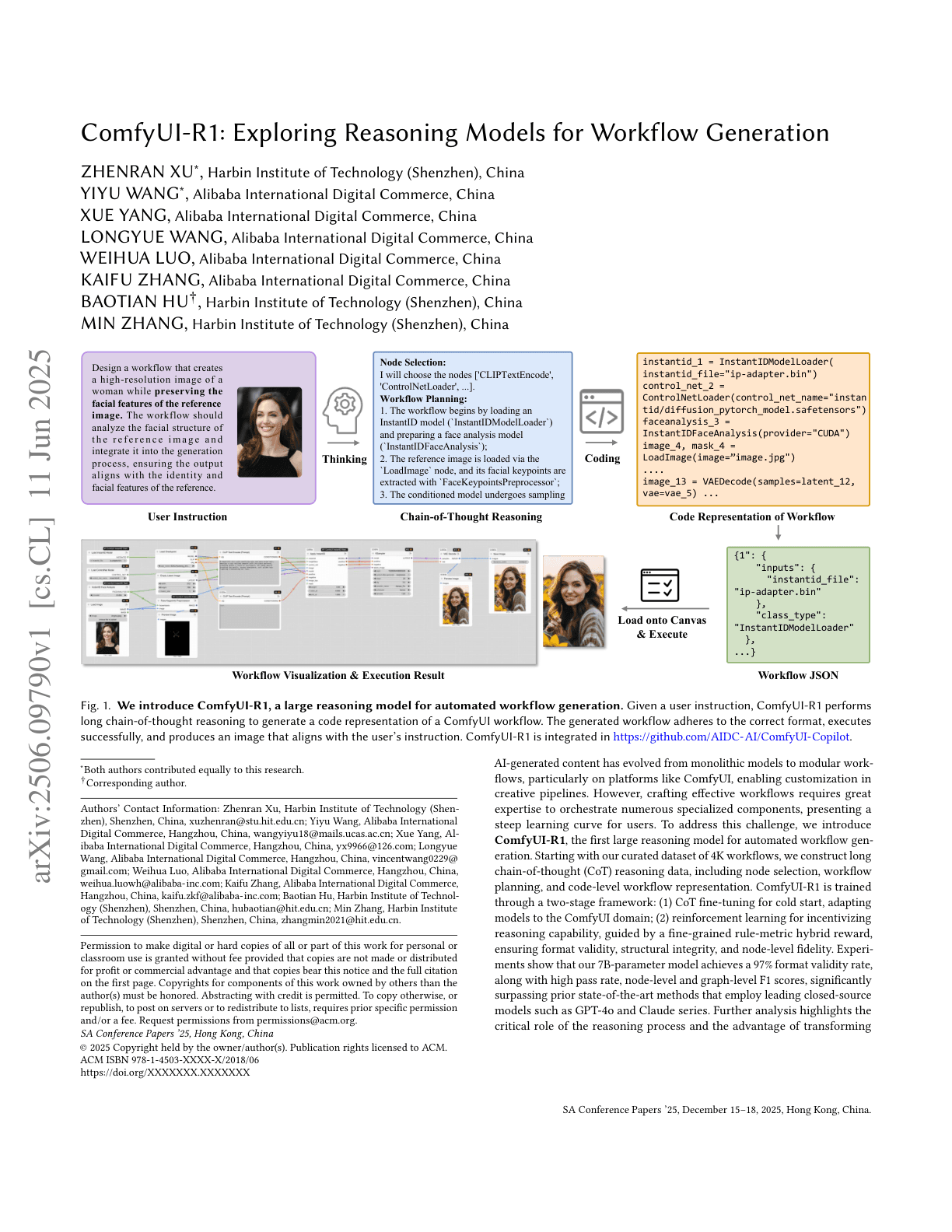
ComfyUI-R1
Introduces ComfyUI-R1, a 7B-parameter large reasoning model fine-tuned for automatic workflow generation in the ComfyUI ecosystem. Built on Qwen2.5-Coder and trained through a two-stage pipeline (supervised chain-of-thought reasoning followed by reinforcement learning), ComfyUI-R1 significantly outperforms prior state-of-the-art approaches that rely on commercial models like GPT-4o and Claude 3.5. Key highlights:
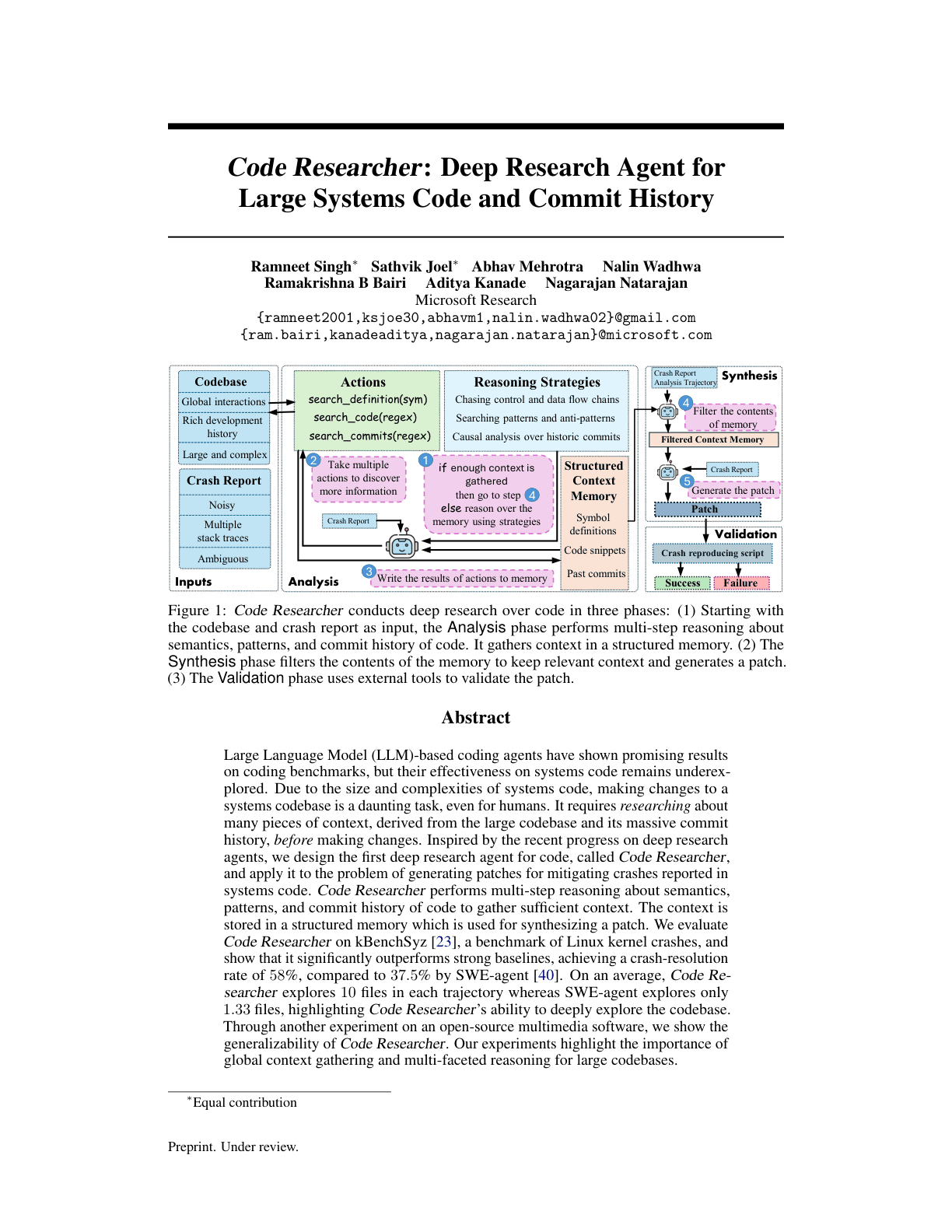
Code Researcher
Code Researcher is a deep research agent designed to resolve complex bugs in large systems’ code by leveraging multi-step reasoning over semantics, patterns, and commit history. It significantly outperforms existing coding agents like SWE-agent on benchmarks like kBenchSyz, achieving a 58% crash-resolution rate by effectively gathering and filtering global context before generating and validating patches.
Coding Agents with Multimodal Browsing
Introduces OpenHands-Versa, a unified agent designed to perform strongly across diverse domains, coding, web browsing, and multimodal information access, by equipping a single agent with three general capabilities: code execution, multimodal web browsing, and file/search access. In contrast to specialist or multi-agent systems optimized for narrow domains, OpenHands-Versa aims to solve a wide variety of real-world tasks with minimal architectural complexity. Key highlights:
Self-Challenging Language Model Agents
Proposes a novel self-improvement method for multi-turn tool-use LLM agents, called the Self-Challenging Agent (SCA). It trains LLMs entirely from tasks they generate themselves, avoiding the need for human-annotated tasks or evaluations. The framework introduces a new task format called Code-as-Task (CaT), ensuring generated tasks are feasible, verifiable, and challenging. SCA is shown to double performance in a self-improvement setting and significantly boost performance in distillation. Key contributions and findings:
Open-Ended Evolution of Self-Improving Agents
This work presents the Darwin Gödel Machine (DGM), a system that advances the vision of self-improving AI by combining self-referential code modification with open-ended evolutionary search. Unlike the original Gödel machine, which requires provable benefits for code changes (a practically intractable constraint), the DGM adopts an empirical approach: it modifies its own codebase and evaluates improvements on coding benchmarks. Key contributions and findings: