AI Papers of the Week
Every paper worth reading in AI, hand-picked one week at a time.
Discover and explore top AI papers withClaude CodeCodex
npx @dair-ai/mcp setup
CodeScientist
Researchers at AI2 release CodeScientist, a system that autonomously generates and tests scientific hypotheses via code-based experimentation. It’s among the first to produce validated discoveries with minimal human input. Key ideas: ● Code-first scientific agent – CodeScientist reviews research papers and assembles experiments using vetted Python code blocks (e.g., for analysis, simulation). It follows a five-step pipeline: Ideation → Planning → Code Execution → Reporting → Meta-Analysis. ● Validated AI discoveries – From 50 AI research papers on agents and virtual environments, CodeScientist proposed 19 findings. Of these, 6 were judged scientifically sound and novel. Examples: ● Human-guided autonomy – Full automation is possible, but brief human feedback (e.g., ranking ideas) significantly boosts output quality. Human-in-the-loop interaction improves idea selection and experiment debugging. ● Challenges remain – Despite successes, over half the generated experiments fail due to code errors, not scientific flaws. Peer review is still needed to verify results, and current systems lack deep methodological rigor.
Self-Evolving Multi-Agent Simulations for Realistic Clinical Interactions
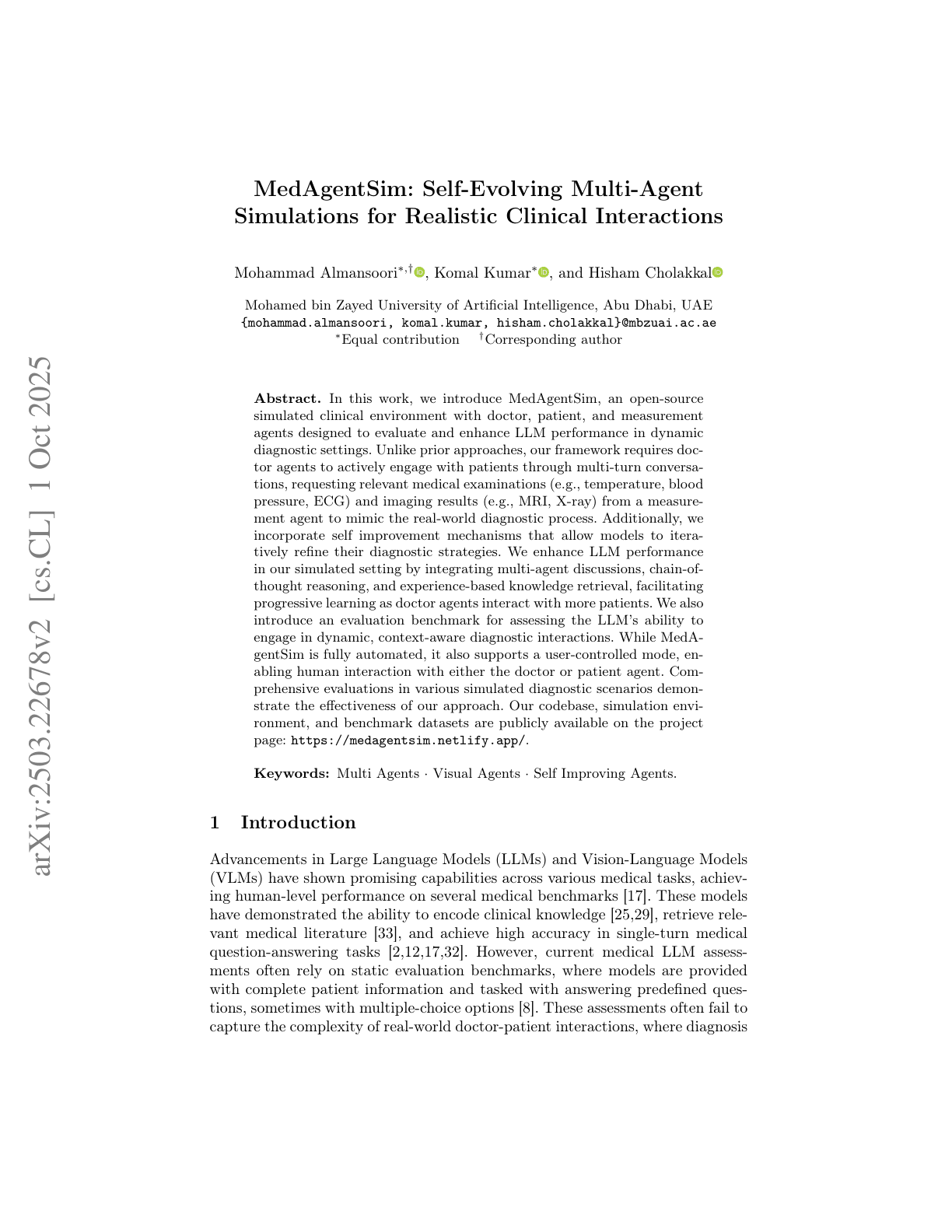
Presents MedAgentSim is a fully automated, open-source hospital simulation where LLM-powered agents simulate doctor-patient interactions in dynamic diagnostic settings. Unlike previous static QA benchmarks, MedAgentSim mimics real-world clinical workflows with multi-turn dialogue, test requests, and self-improvement. More about this paper: ● Active doctor agents – MedAgentSim requires LLM doctor agents to engage in multi-turn consultations, request labs and imaging (e.g., ECG, X-ray), and iteratively refine diagnoses, making it far more realistic than pre-filled medical QA datasets. ● Self-improvement via memory + reflection – The system maintains buffers of successful and failed diagnoses. It uses retrieved past cases (via kNN), chain-of-thought reasoning, and ensembling to improve performance over time. Misdiagnoses trigger a reflection phase before inclusion in memory. ● Fully autonomous or human-in-the-loop – Users can optionally take control of the doctor or patient agents. Simulation assets are built using a 2D game engine (Phaser), and the agents can navigate, converse, and interact with virtual medical tools. ● Big performance boost across benchmarks – On NEJM, MedQA, and MIMIC-IV, MedAgentSim (with LLaMA 3.3) outperforms baseline setups by +6–37%, especially in vision-language tasks using LLaVA for interpreting medical images. ● Bias analysis & fairness focus – The team studied diagnostic accuracy under cognitive and implicit bias conditions. Models like GPT-4o and LLaMA proved more robust than Mixtral/Mistral, highlighting the importance of bias-aware evaluation.
Open Deep Search
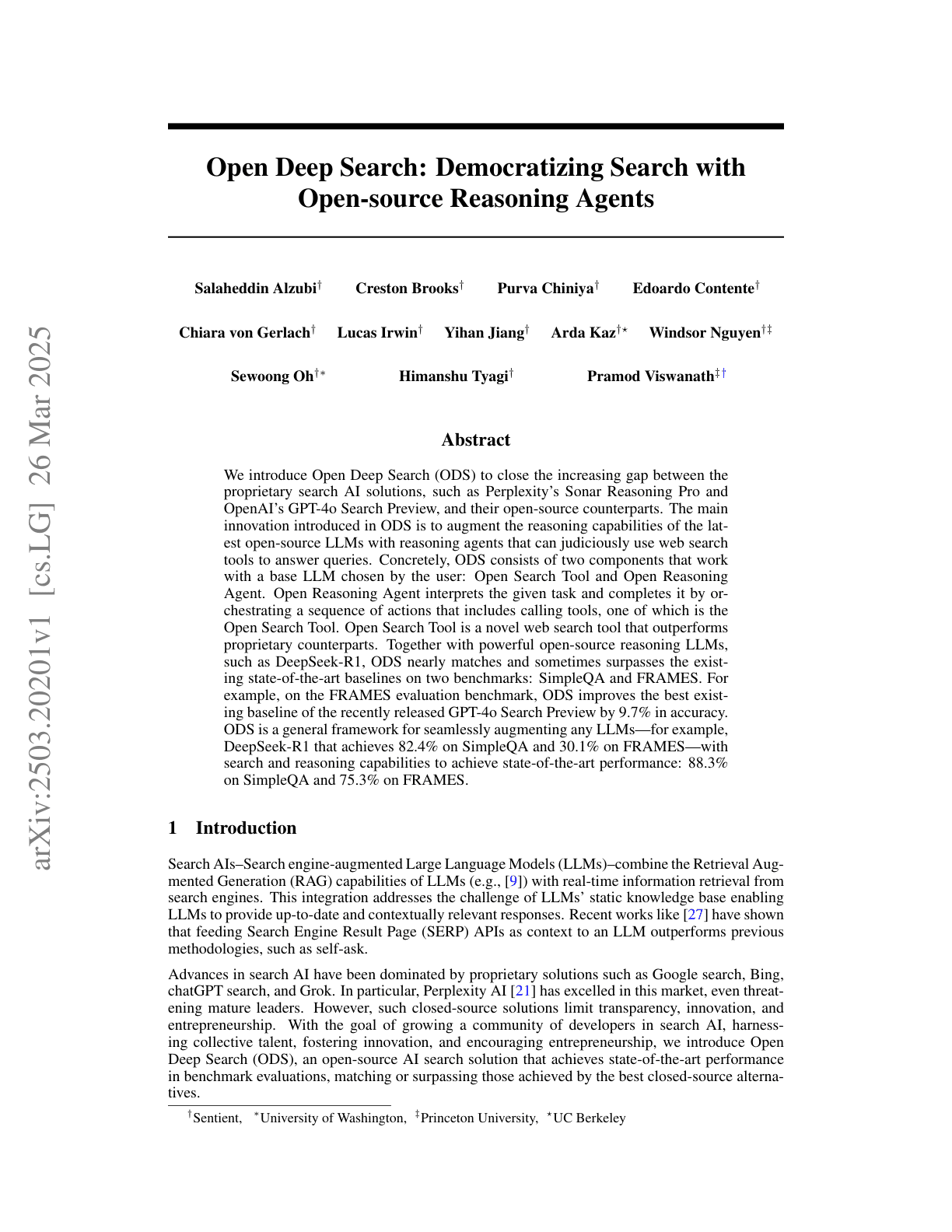
Researchers from Sentient, UW, Princeton, and UC Berkeley introduce Open Deep Search (ODS), an open-source search AI framework that rivals top proprietary systems like GPT-4o Search Preview and Perplexity Sonar. Key insights: ● Two open components: search + reasoning – ODS has two modular parts: (1) Open Search Tool, which retrieves and refines high-quality web results using query rephrasing, snippet reranking, and site-specific logic; and (2) Open Reasoning Agent, a controller that orchestrates tool usage (search, calculator, etc.) to answer queries. Two variants are offered: ODS-v1 (ReAct) and ODS-v2 (CodeAct). ● SOTA open-source performance – With DeepSeek-R1 as the base LLM, ODS-v2 scores 88.3% on SimpleQA and 75.3% on FRAMES, beating GPT-4o Search Preview by +9.7% on the latter. ODS adapts the number of searches per query (avg. 3.39 on FRAMES), balancing cost and accuracy more efficiently than fixed-query baselines. ● Better than Perplexity Sonar – On both FRAMES and SimpleQA, ODS+DeepSeek-R1 outperforms Perplexity’s flagship search models, even in complex reasoning tasks involving multi-hop questions, time/date calculations, and name disambiguation. ● Code-based agents enhance reasoning – ODS-v2 builds on CodeAct, allowing it to write and run Python code to perform symbolic reasoning and tool calls. This results in sharper numerical precision and task flexibility compared to CoT-based ReAct in ODS-v1.
AgentRxiv
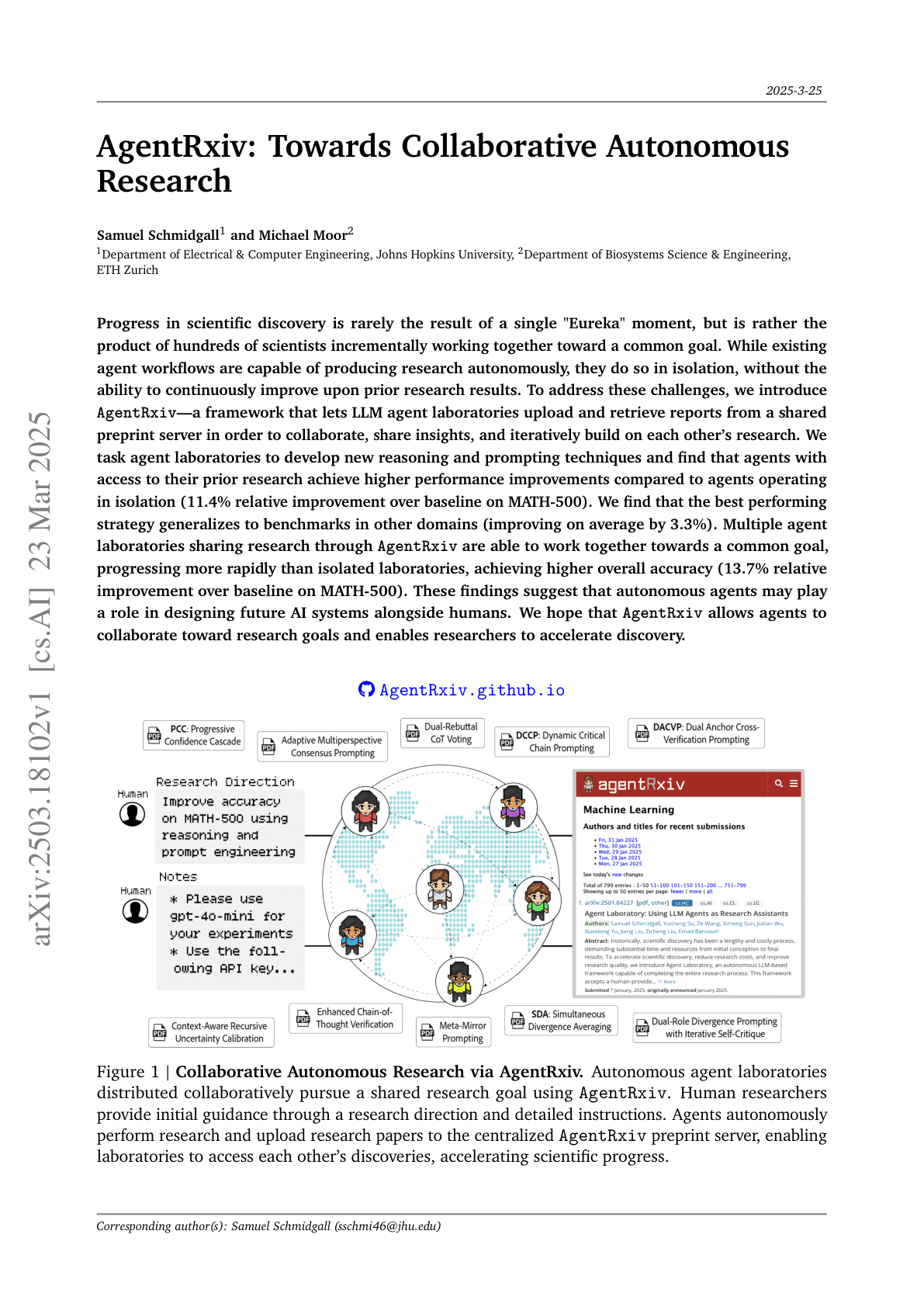
Researchers from Johns Hopkins & ETH Zurich present AgentRxiv, a framework enabling LLM agents to autonomously generate and share research papers, mimicking how human scientists build on each other’s work. Highlights: ● AgentRxiv = arXiv for LLMs – It’s an open-source preprint server for autonomous agents, letting labs upload papers, search past work, and iteratively improve results. Labs use this to develop and refine reasoning techniques over generations of research. ● Massive reasoning gains via iterative research – On the MATH-500 benchmark, a single agent lab improves GPT-4o mini accuracy from 70.2% → 78.2% (+11.4%) by discovering better prompt strategies. The final method (SDA) outperforms earlier ideas like CRUC and DCCP. → SDA = Simultaneous Divergence Averaging: combines low/high-temp CoT outputs with dynamic similarity-based voting and confidence aggregation. ● Knowledge generalizes – SDA also improves other benchmarks: ● Collaboration boosts discovery – Running 3 agent labs in parallel yields faster progress and higher final accuracy (up to 79.8%, +13.7% over baseline) by sharing results via AgentRxiv. Early gains (e.g., 76.2% accuracy) arrive after only 7 papers vs. 23 sequentially. ● Self-improvement and novelty – Agents independently refine their own past ideas. Papers evolve from earlier iterations (e.g., Meta-Mirror Prompting → Meta-Mirror Prompting 2). Top papers show no plagiarism via multiple detectors, but ideas like SDA build on trends like self-consistency and CoT voting. ● Cost & runtime – Generating a paper takes ~1.36 hours and ~$3.11. Parallel setups are pricier overall but achieve results faster (time-to-accuracy win). Failure modes include hallucinated results and fragile code repair steps, with future work needed for better reliability and novelty guarantees.
Neural Alignment via Speech Embeddings
Google Research and collaborators reveal striking similarities between LLM embeddings and human brain activity during conversation. Key insights: ● Embeddings match brain signals – Using intracranial electrode recordings, the team showed that internal representations (embeddings) from OpenAI's Whisper model align with neural responses in brain regions for speech (STG), language (IFG), and motor planning (MC). During comprehension, speech embeddings predict early auditory responses, while language embeddings follow in IFG. During production, this order reverses — first language planning (IFG), then articulation (MC), then auditory feedback (STG). ● “Soft hierarchy” in brain areas – Though STG emphasizes acoustic info and IFG captures word-level meaning, both regions show partial alignment with both embedding types. This suggests a gradient processing structure, not a strict modular pipeline. ● Brain predicts next word too – In follow-up studies published in Nature Neuroscience, the brain’s language areas were found to predict upcoming words, mirroring the objective of autoregressive LLMs. The surprise response after hearing a word also mirrors LLM prediction errors. ● Shared geometry in language representations – The geometry of word relationships in brain activity mirrors that of LLM embeddings, per a separate Nature Communications paper. This indicates a convergent structure in how LLMs and the brain represent language. ● Different wiring, same function – Despite similarities in objectives and representations, LLMs and brains diverge architecturally: brains process speech serially and recursively, while Transformers process in parallel across layers. ● Toward biologically inspired AI – These studies support using LLMs to reverse-engineer the brain’s language mechanisms. The team aims to build future models with more brain-like learning, data, and structure, bridging neuroscience and deep learning.
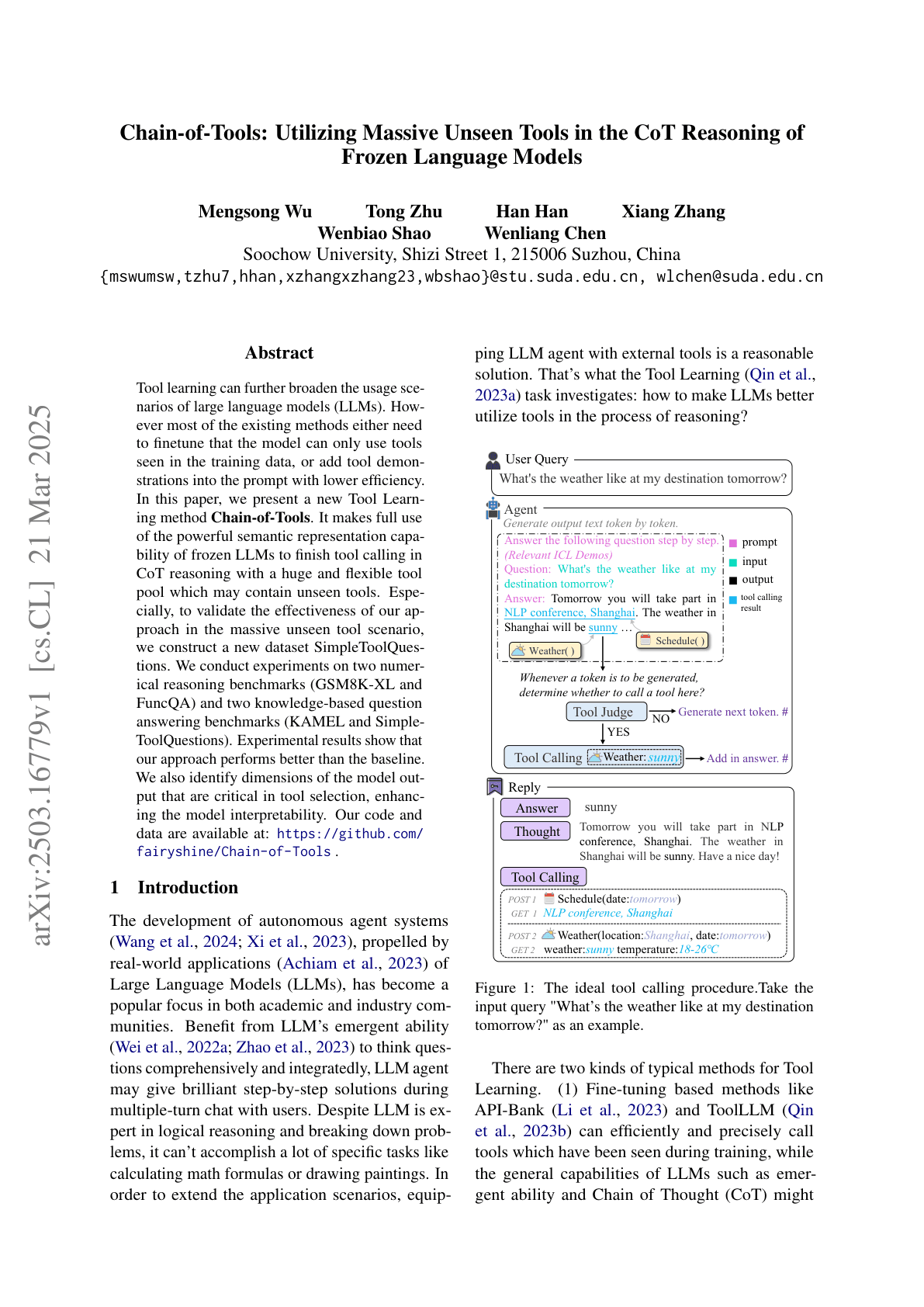
Chain-of-Tools
This new paper presents Chain-of-Tools (CoTools), a new method to enable LLMs to incorporate expansive external toolsets—including tools never seen during training—while preserving CoT (chain-of-thought) reasoning. Highlights: ● Frozen LLM with lightweight fine-tuning – Unlike conventional approaches, CoTools keeps the LLM’s parameters frozen, instead fine-tuning separate modules (a Tool Judge and Tool Retriever) on top of the model’s hidden states. This preserves the LLM’s core capabilities while letting it call an open-ended set of tools during reasoning. ● Massive unseen tools – CoTools treats tools as semantic vectors computed from their textual descriptions. Even tools that never appear in the fine-tuning data can be invoked if they match the model’s query vectors, enabling new tools to be plugged in without retraining the entire system. ● Tool calls integrated into CoT – The system determines whether and when to call a tool in the middle of generating an answer. It then selects the best tool from thousands of candidates based on learned representations of the query and partial solution context. This helps to significantly boost accuracy on complex tasks. ● Strong gains on reasoning and QA – Experiments on GSM8K-XL, FuncQA, KAMEL, and the newly introduced SimpleToolQuestions dataset (with 1,836 tools) show improved tool-selection accuracy and superior final answers versus baseline methods. Notably, CoTools consistently scales to large tool pools and generalizes to unseen tools.
Structured Memory Augmentation for Smarter LLM Agents
MemInsight is a framework that autonomously augments and structures memory for LLM agents, improving context retention and retrieval. Key insights include: ● Structured, autonomous memory augmentation – Instead of relying on raw historical data or manually defined memory structures, MemInsight uses a backbone LLM to autonomously mine attributes from past conversations or knowledge. These are organized into entity-centric and conversation-centric (e.g., user emotion or intent) augmentations at either the turn or session level. This mimics how humans abstract and prioritize experiences. ● Attribute-guided retrieval beats vanilla RAG – MemInsight supports both attribute-based retrieval (exact match filtering) and embedding-based retrieval (via FAISS). On the LoCoMo QA dataset, MemInsight outperformed a Dense Passage Retrieval (RAG) baseline by up to +34% recall. The best setup (priority-based Claude-Sonnet augmentations) achieved 60.5% Recall@5, vs. 26.5% for RAG. ● More persuasive recommendations – In movie recommendations using the LLM-REDIAL dataset, MemInsight lifted genre-matched recommendation scores while cutting down memory size by 90%. Embedding-based filtering led to +12% more highly persuasive outputs, per LLM judgment. ● Event summarization via memory alone – MemInsight’s annotations alone can be used to summarize long conversational sessions. These memory-only summaries rival raw-dialogue baselines in coherence and relevance (per G-Eval scores), particularly when turn-level augmentations are combined with original dialogue context. ● Minimal hallucinations, stable performance – Comparative analysis of augmentation models (Claude-Sonnet, Llama, Mistral) shows Claude-Sonnet produces more stable, consistent, and grounded attributes, reinforcing the importance of careful model selection in memory pipelines.
Play2Prompt
Researchers from MIT CSAIL and IBM introduce Play2Prompt, a framework that empowers LLM agents to learn how to use external tools entirely in a zero-shot manner, without requiring labeled examples or high-quality documentation. Key innovations include: ● Tool "play" for usage discovery – Play2Prompt treats tools like black boxes and systematically plays with them (via trial-and-error API calls) to discover correct usage patterns. It reverse-engineers examples by first identifying working invocations, then generating a query-answer pair that fits the invocation and response. ● Two-stage optimization – The system iteratively builds: (1) tool-use demonstrations via self-reflective beam search and rejection sampling; and (2) refined tool documentation, using those examples as a validation set. This dual improvement allows LLMs to better understand and utilize unfamiliar APIs. ● Self-reflective beam search – Inspired by active learning, Play2Prompt favors hard examples that models initially fail on. These examples offer higher learning value and guide documentation improvements more effectively. ● Strong zero-shot performance – On BFCL Executable and StableToolBench, Play2Prompt yields consistent accuracy gains of +5–7% over baseline LLaMA and GPT-3.5 models and even boosts GPT-4o by up to +3.3%, particularly excelling in challenging multi-tool or REST call settings. ● Robust to poor documentation – Even when 50% of parameter descriptions are randomly dropped, Play2Prompt recovers and surpasses baseline performance, making it ideal for real-world tool integration with sparse or noisy metadata. ● Better than EasyTool – Unlike prior methods like EasyTool (which depend on labeled examples from related tools), Play2Prompt remains fully zero-shot and outperforms them in consistency, especially for models sensitive to instruction drift like GPT-4o.
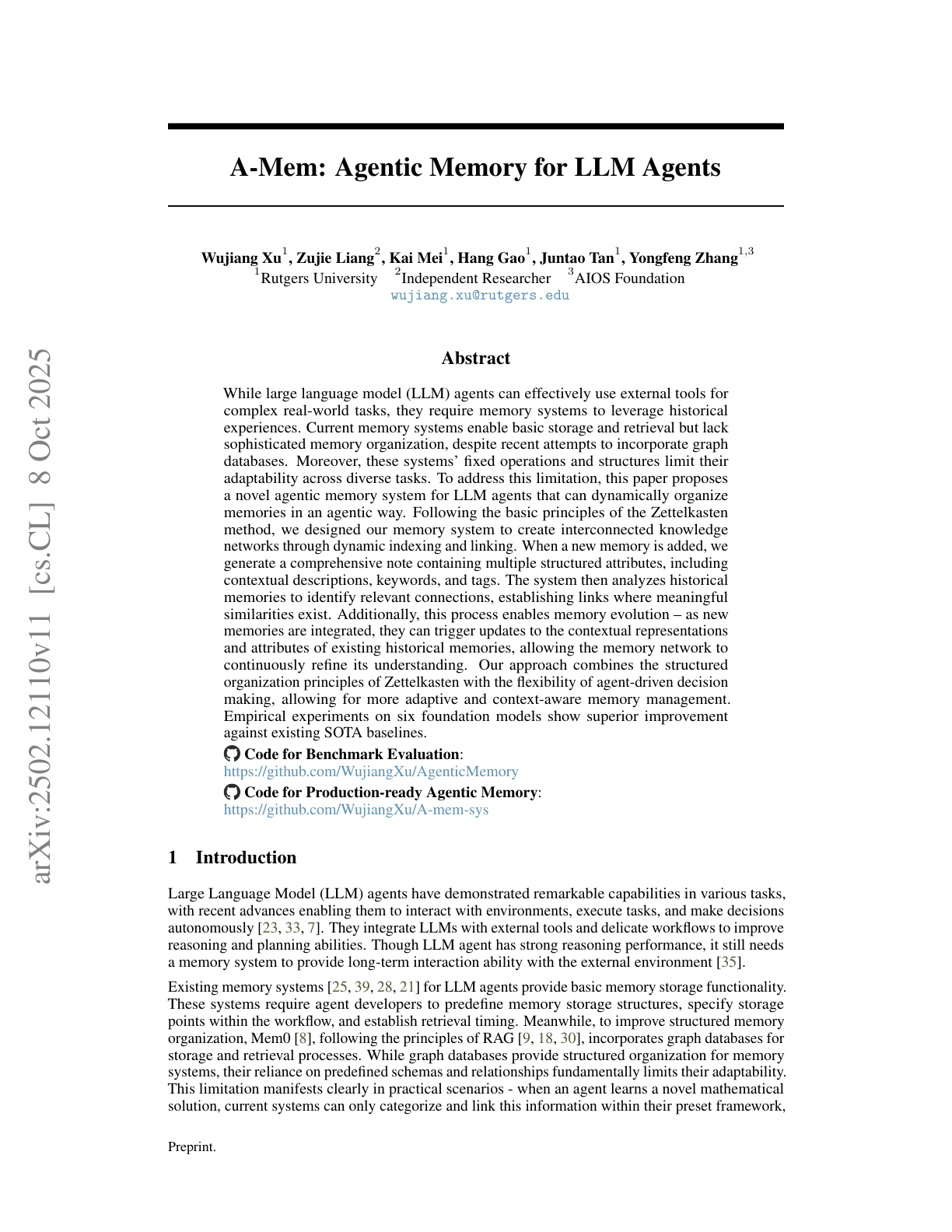
Agentic Memory for LLM Agents
Researchers from Rutgers University and Ant Group propose a new agentic memory system for LLM agents, addressing the need for long-term memory in complex real-world tasks. Key highlights include:
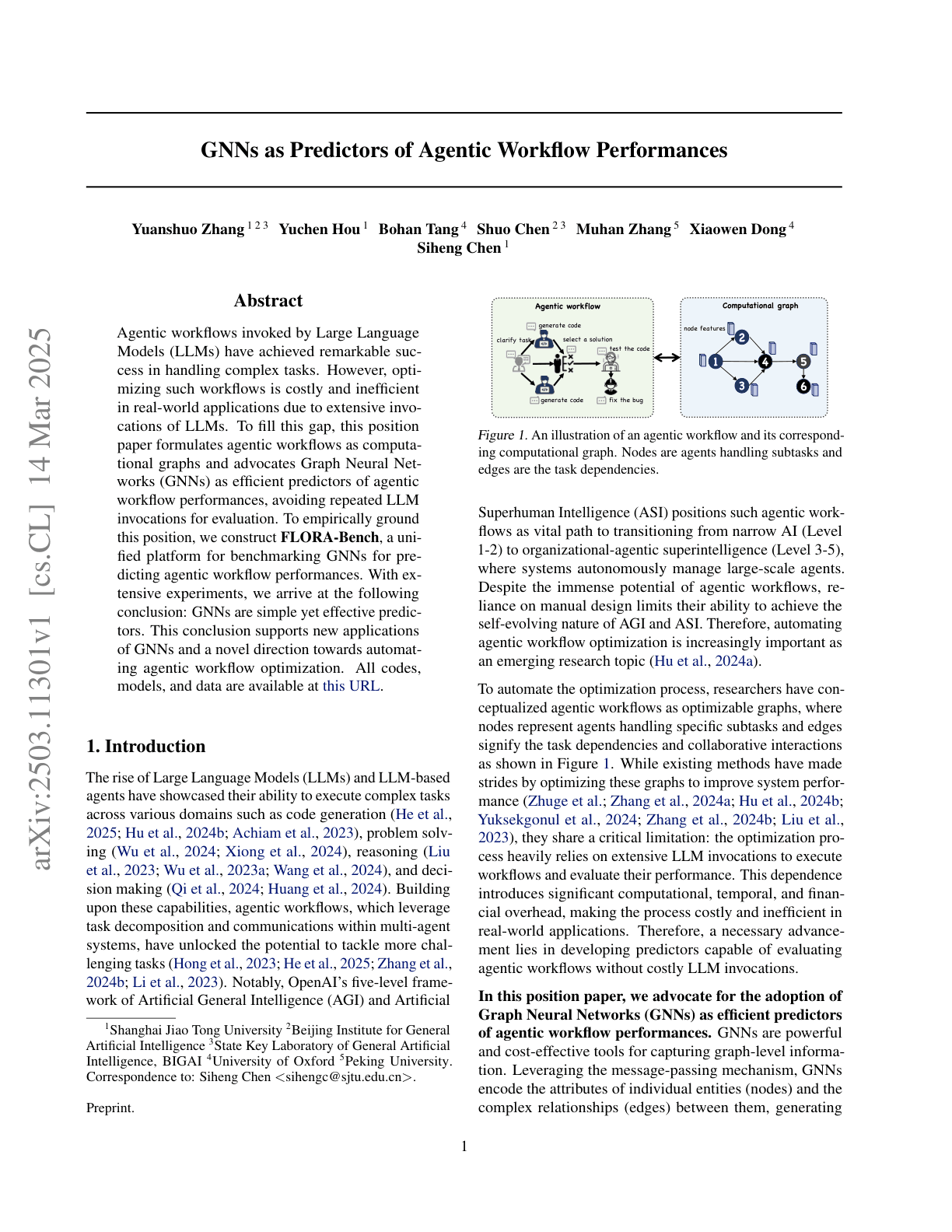
GNNs as Predictors of Agentic Workflow Performances
This work introduces FLORA-Bench, a large-scale benchmark to evaluate GNN-based predictors for automating and optimizing agentic workflows. It shows that Graph Neural Networks can efficiently predict the success of multi-agent LLM workflows, significantly reducing costly repeated model calls.
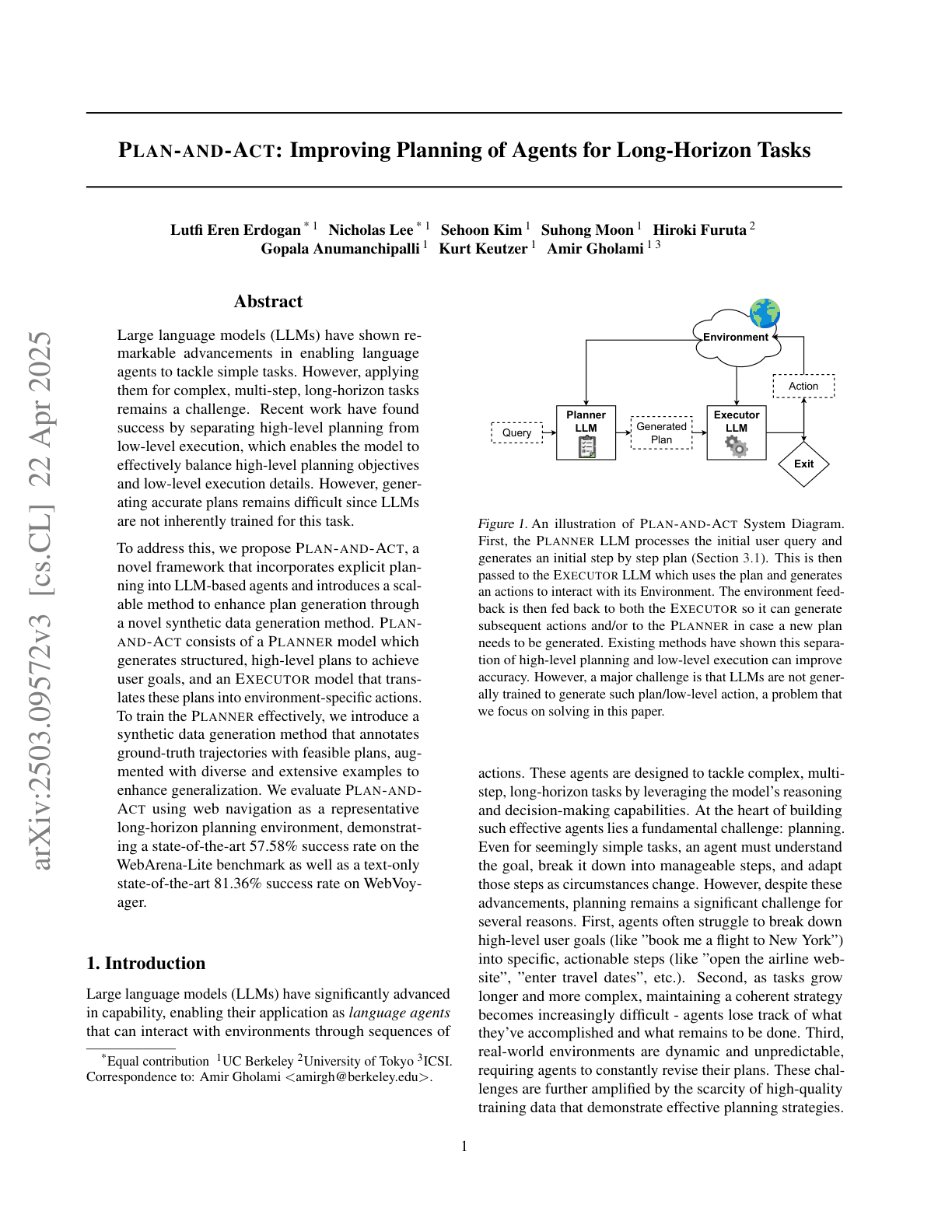
Improving Planning of Agents for Long-Horizon Tasks
A team from UC Berkeley and the University of Tokyo presents a new framework, Plan-and-Act, that separates high-level planning from low-level execution in LLM-based agents. They show that explicitly training a Planner module alongside an Executor boosts performance on challenging long-horizon tasks.
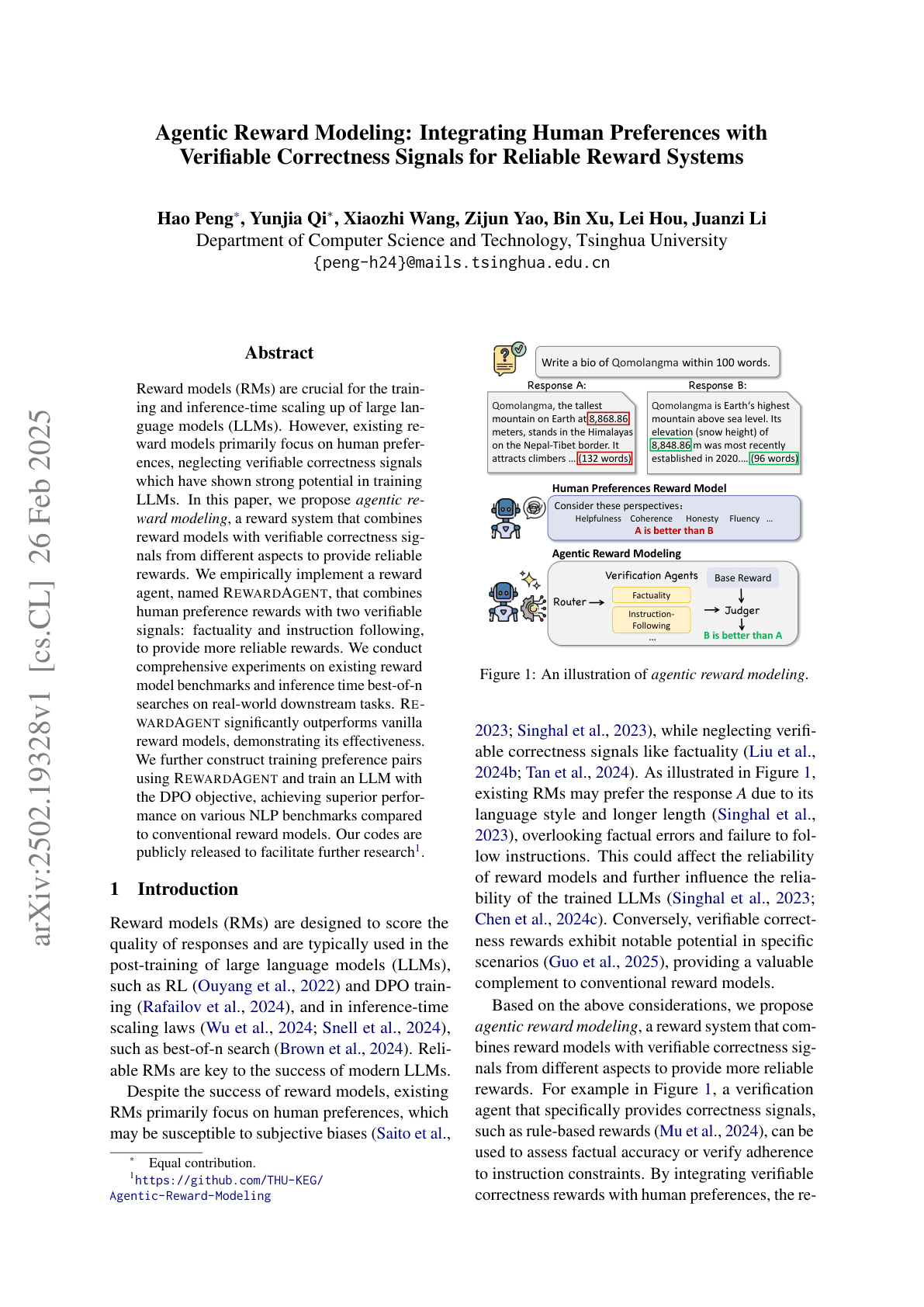
Agentic Reward Modeling
This paper proposes a new reward framework-Agentic Reward Modeling-that combines human preference models with "verifiable correctness" signals to provide more reliable rewards for training and evaluating LLMs.
PlanGEN
PlanGEN is a multi-agent framework designed to enhance planning and reasoning in LLMs through constraint-guided iterative verification and adaptive algorithm selection. Key insights include:
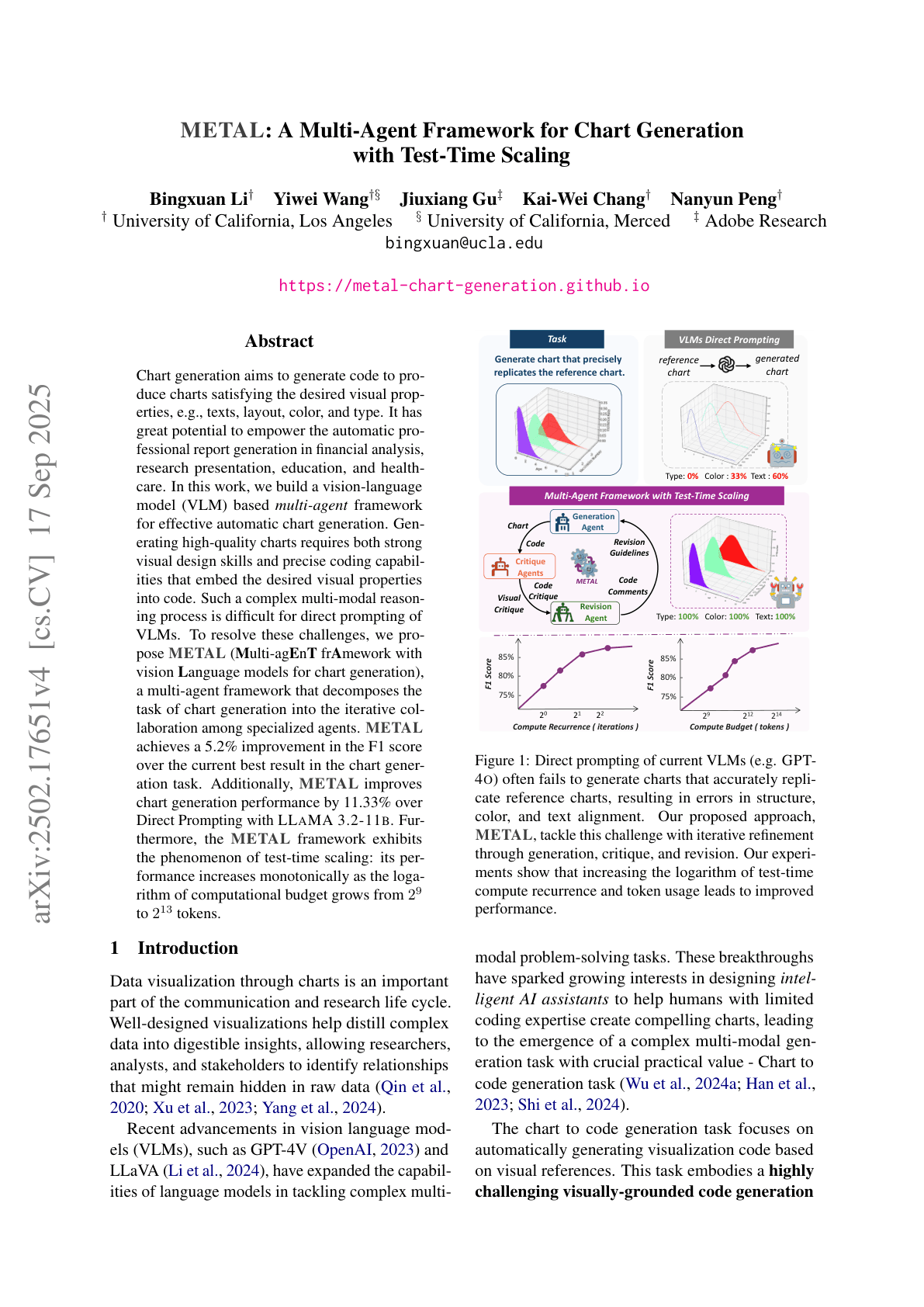
A Multi-Agent Framework for Chart Generation
METAL is a vision-language model (VLM)-based multi-agent framework designed to significantly enhance automatic chart-to-code generation by decomposing the task into specialized iterative steps. Key highlights include:

AI Co-Scientist
Google introduces AI co-scientist, a multi-agent AI system built with Gemini 2.0 to help accelerate scientific breakthroughs. Key highlights:
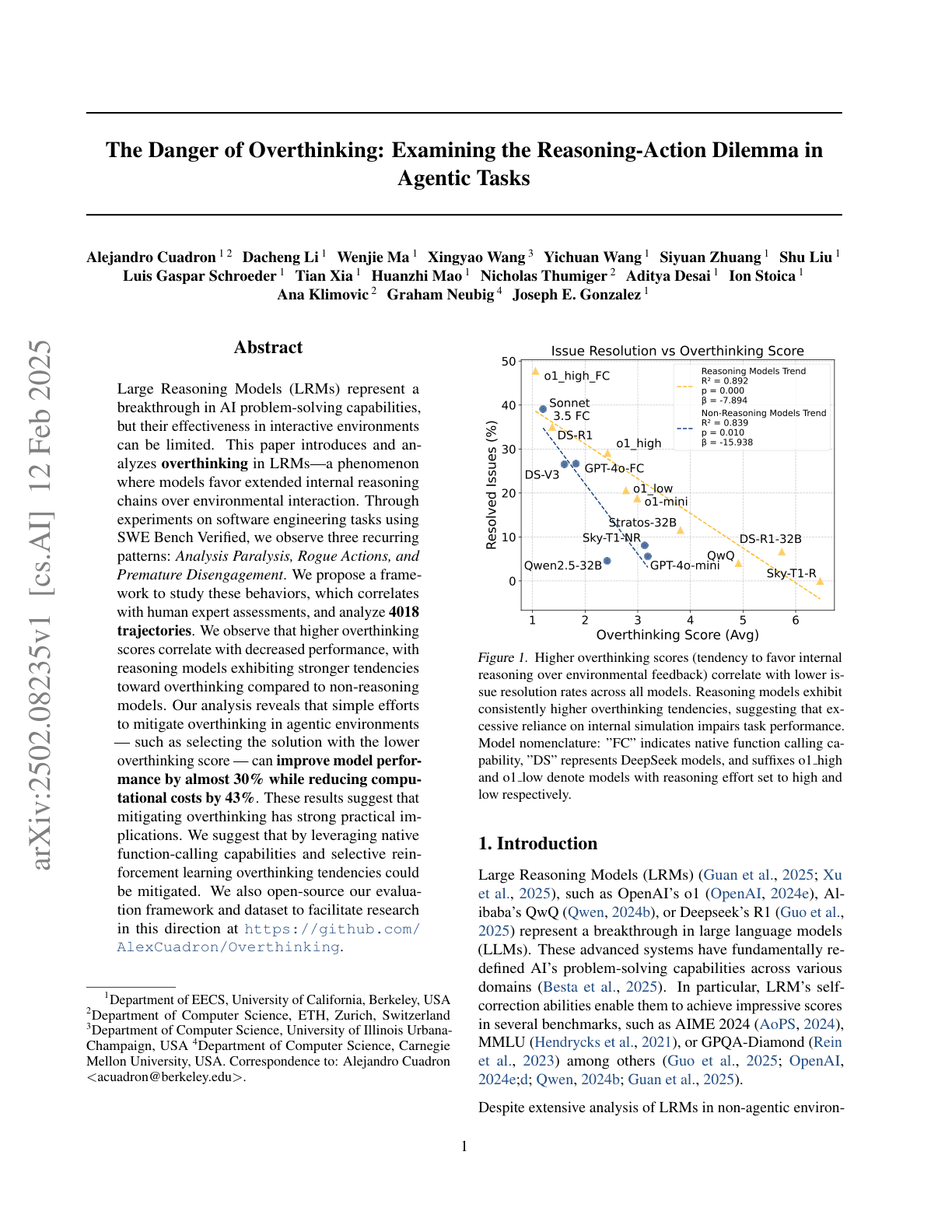
The Danger of Overthinking
This paper investigates overthinking in Large Reasoning Models (LRMs)—a phenomenon where models prioritize extended internal reasoning over interacting with their environment. Their study analyzes 4,018 software engineering task trajectories to understand how reasoning models handle decision-making in agentic settings. Key findings:
Enhancing Reasoning to Adapt LLMs
Researchers from IBM present SOLOMON, a neuro-inspired LLM reasoning network architecture that boosts domain adaptability—demonstrated on semiconductor layout design. They show how LLMs often falter at spatial reasoning and domain knowledge application, and how their multi-agent oversight approach significantly improves success on challenging chip-layout tasks. Key insights include:
Rethinking Mixture-of-Agents: Ensemble One Strong LLM
Ensembling multiple models (Mixture-of-Agents, MoA) is a popular way to boost performance. This paper asks: is mixing different LLMs actually helpful, or are we better off ensembling one top model’s outputs? The surprising answer: “Self-MoA” (single-model ensemble) often wins over multi-model ensembles. Key points:
MaAS: Multi-agent Architecture Search (Agentic Supernet)
Building multi-agent systems of LLMs (where multiple agents collaborate, each with specific roles or tools) is powerful but usually requires hand-designing a single complex pipeline. MaAS (Multi-agent Architecture Search) instead learns a universal “agentic supernet” from which it can spawn an optimal agent team on the fly for each query. It automates designing the agent workflow per task:
Improving RAG through Multi-Agent RL
This work treats RAG as a multi-agent cooperative task to improve answer generation quality. It models RAG components like query rewriting, document selection, and answer generation as reinforcement learning agents working together toward generating accurate answers. It applies Multi-Agent Proximal Policy Optimization (MAPPO) to jointly optimize all agents with a shared reward based on answer quality. Besides improvements on popular benchmarks, the framework shows strong generalization capabilities in out-of-domain scenarios and maintains effectiveness across different RAG system configurations.
Chain-of-Agents
A new framework for handling long-context tasks using multiple LLM agents working together. CoA splits text into chunks and assigns worker agents to process each part sequentially, passing information between them before a manager agent generates the final output. This approach avoids the limitations of traditional methods like input reduction or window extension. Testing across multiple datasets shows CoA outperforms existing approaches by up to 10% on tasks like question answering and summarization. The framework works particularly well with longer inputs - showing up to 100% improvement over baselines when processing texts over 400k tokens.
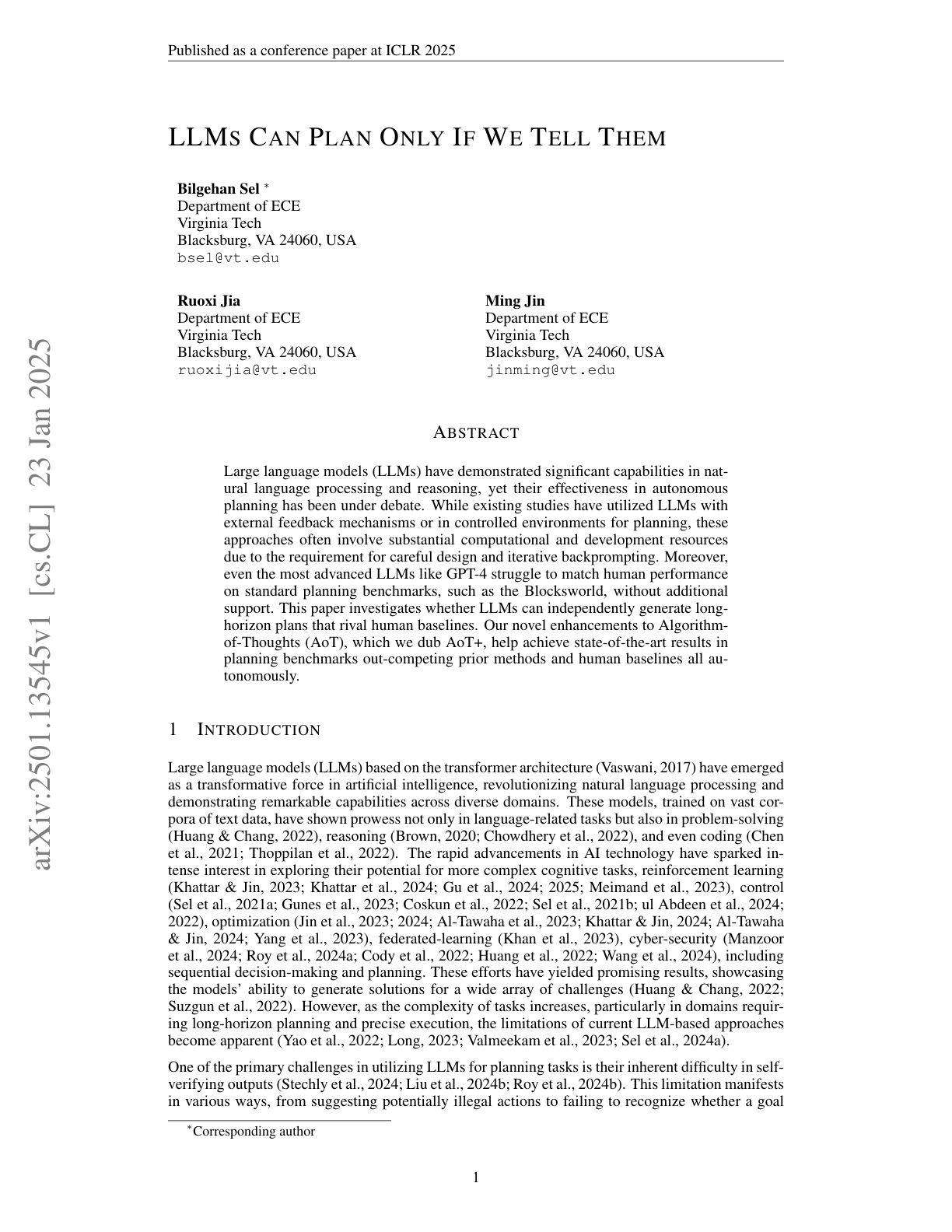
Can LLMs Plan?
Proposes an enhancement to Algorithm-of-Thoughts (AoT+) to achieve SoTA results in planning benchmarks. It even outperforms human baselines! AoT+ provides periodic state summaries to reduce the cognitive load. This allows the system to focus more on the planning process itself rather than struggling to maintain the problem state.
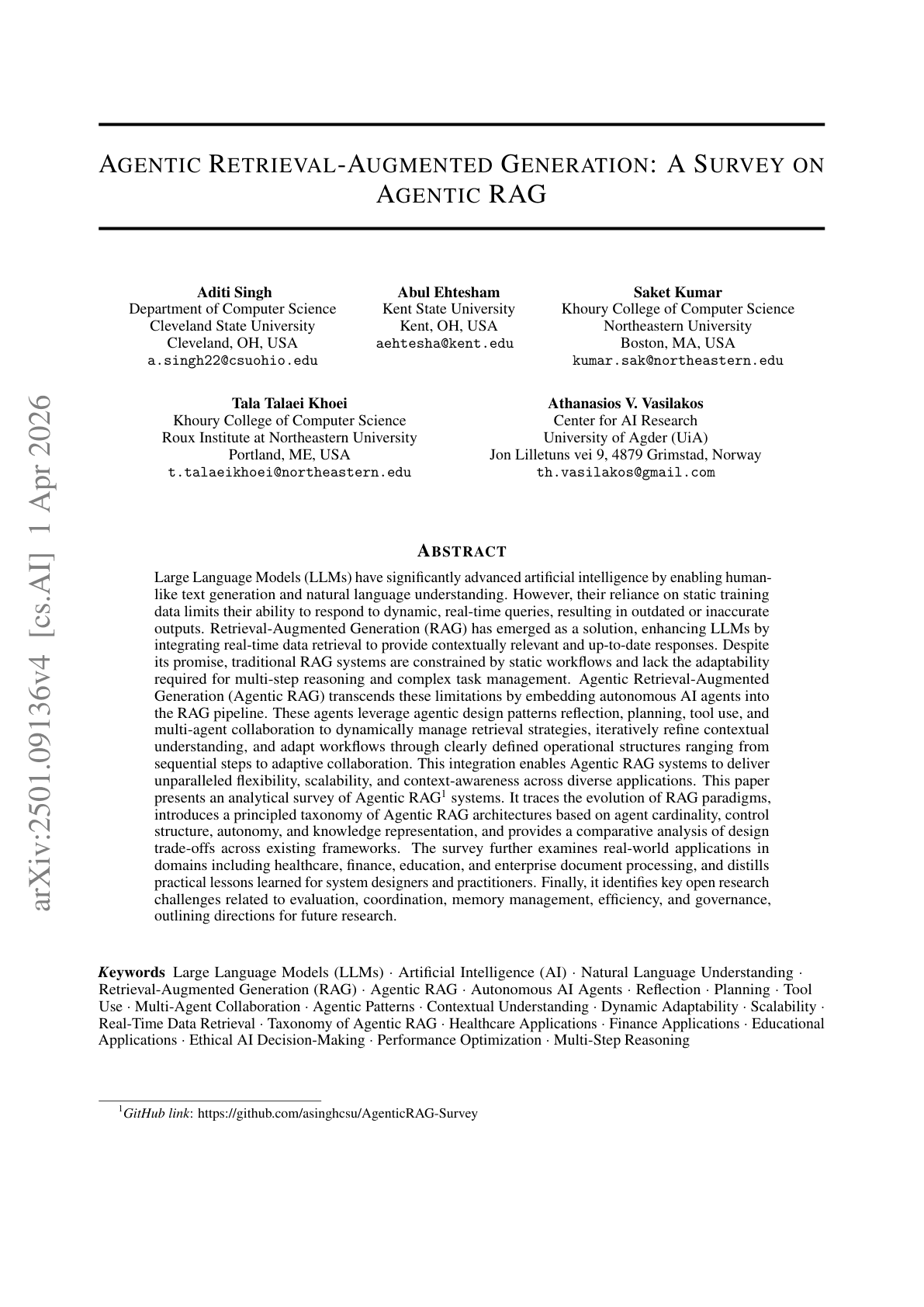
Agentic RAG Overview
Provides a comprehensive introduction to LLM agents and Agentic RAG. It provides an exploration of Agentic RAG architectures, applications, and implementation strategies.
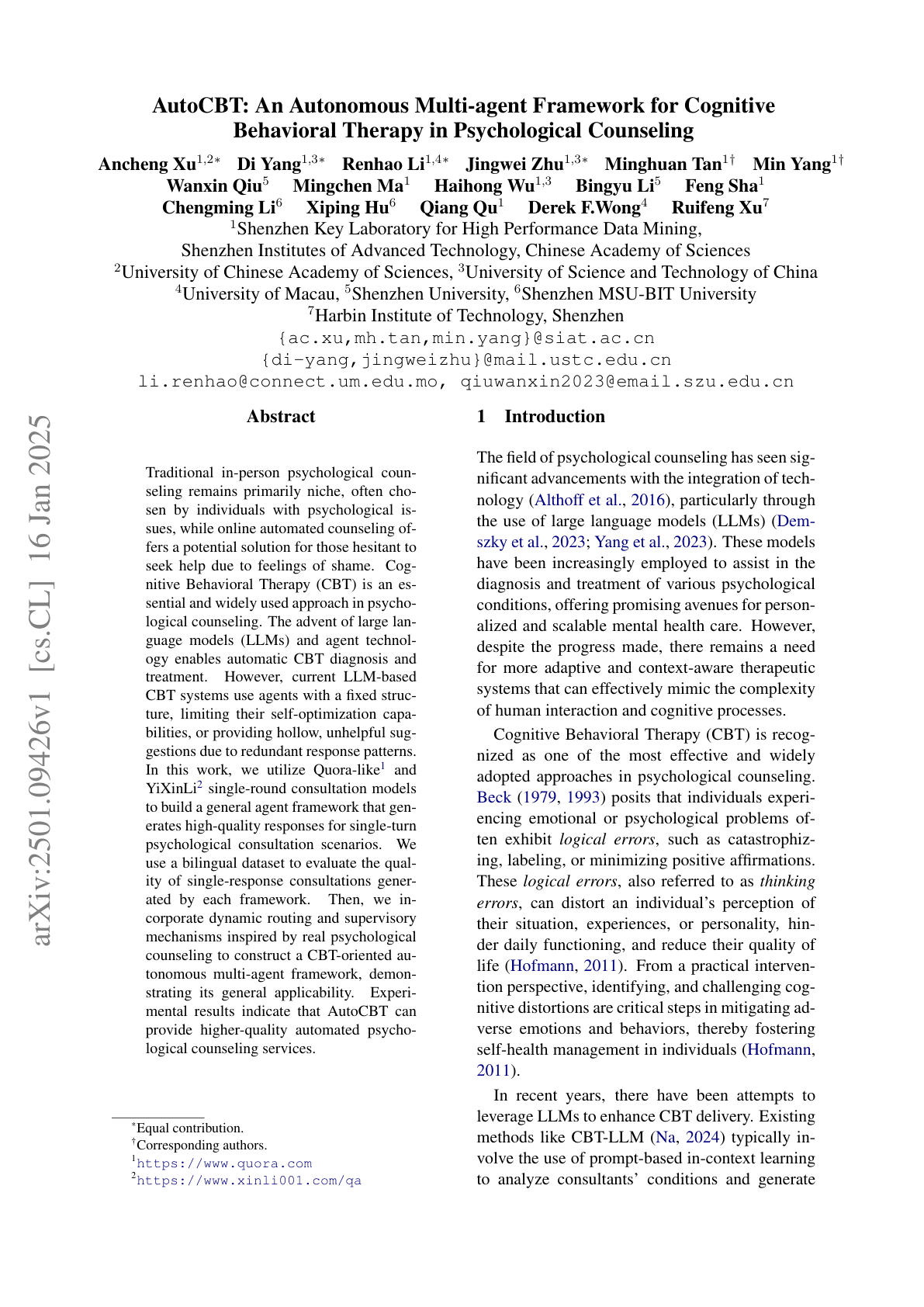
AutoCBT
proposes a multi-agent framework, AutoCBT, for Cognitive Behavioral Therapy; the work proposes a general multi-agent framework that generates high-quality responses for single-turn psychological consultation scenarios; it uses a combination of dynamic routing, memory, and supervisory mechanisms to enhance the autonomous ability of each agent; experimental results show that AutoCBT can provide higher-quality automated psychological counseling services; AutoCBT improves dialogue quality compared to other purely prompt-based counseling frameworks.