AI Papers of the Week
Every paper worth reading in AI, hand-picked one week at a time.
Discover and explore top AI papers with Claude Code or Codex
npx @dair-ai/mcp setup
Auton Agentic AI Framework
Snap Research introduces the Auton framework, a declarative architecture for specification, governance, and runtime execution of autonomous agent systems. It addresses a fundamental mismatch: LLMs produce stochastic, unstructured outputs, while backend infrastructure requires deterministic, schema-conformant inputs.
Diagnosing Agent Memory
This paper introduces a diagnostic framework that separates retrieval failures from utilization failures in LLM agent memory systems. Through a 3x3 factorial study crossing three write strategies with three retrieval methods, the authors find that retrieval is the dominant bottleneck, accounting for 11-46% of errors, while utilization failures remain stable at 4-8% regardless of configuration. Hybrid reranking cuts retrieval failures roughly in half, delivering larger gains than any write strategy optimization.
Codified Context
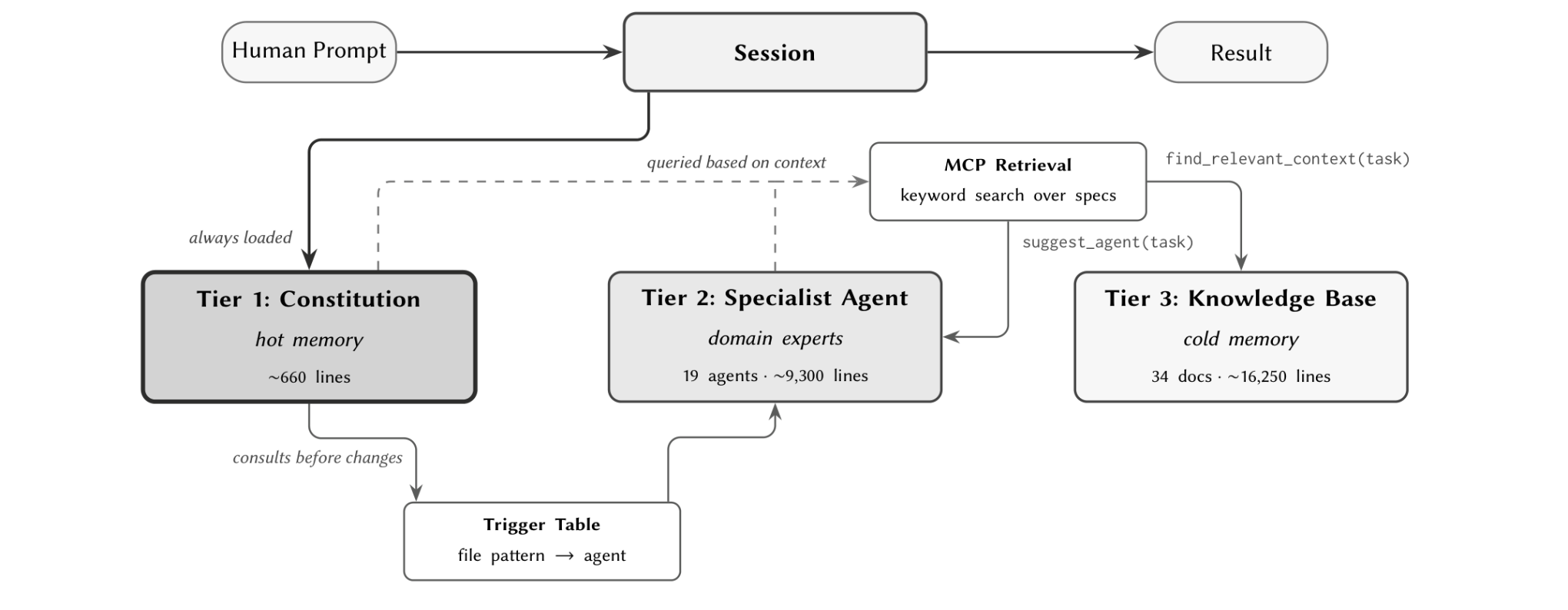
Single-file AGENTS.md manifests don’t scale beyond modest codebases. A 1,000-line prototype can be fully described in a single prompt, but a 100,000-line system cannot. This paper presents a three-component codified context infrastructure developed during construction of a 108,000-line C# distributed system, evaluated across 283 development sessions.

PAHF
Meta introduces PAHF (Personalized Agents from Human Feedback), a continual agent personalization framework that addresses a critical gap: most AI agents cannot adapt to individual user preferences that evolve over time. PAHF couples explicit per-user memory with both proactive and reactive feedback mechanisms.
Doc-to-LoRA
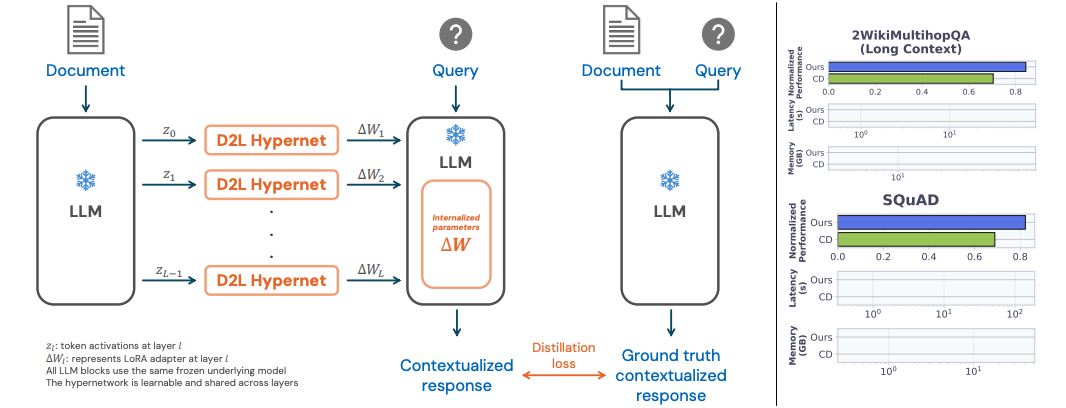
Sakana AI introduces Doc-to-LoRA (D2L), a lightweight hypernetwork that meta-learns to compress long documents into LoRA adapters in a single forward pass. Instead of processing long contexts through expensive quadratic attention, D2L converts the document into parameter-space representations that the target LLM can use without re-consuming the original text.
ActionEngine
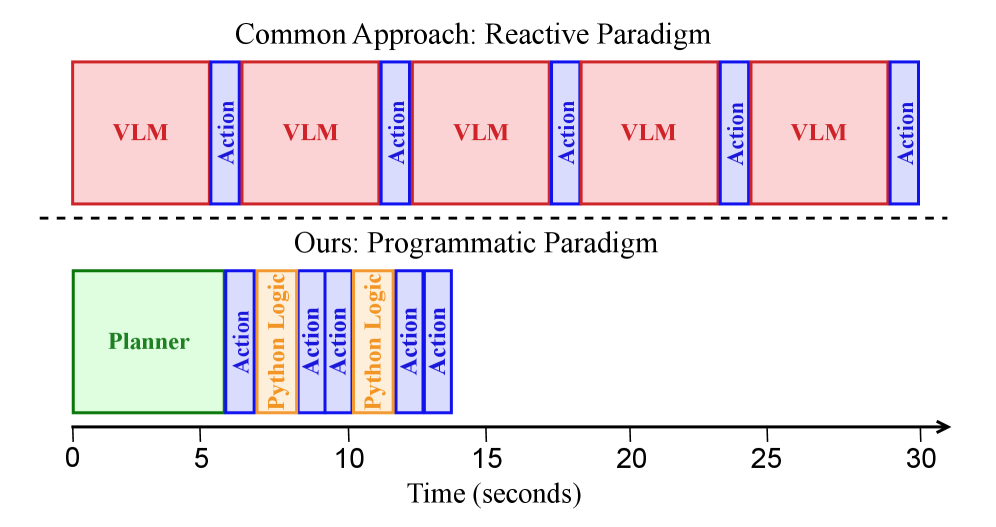
Georgia Tech and Microsoft Research introduce ActionEngine, a training-free framework that transforms GUI agents from reactive step-by-step executors into programmatic planners. It builds a state-machine memory through offline exploration, then synthesizes executable Python programs for task completion, achieving 95% success on Reddit tasks from WebArena with on average a single LLM call, reducing costs by 11.8x and latency by 2x compared to vision-only baselines.
Lossless Context Management (LCM)
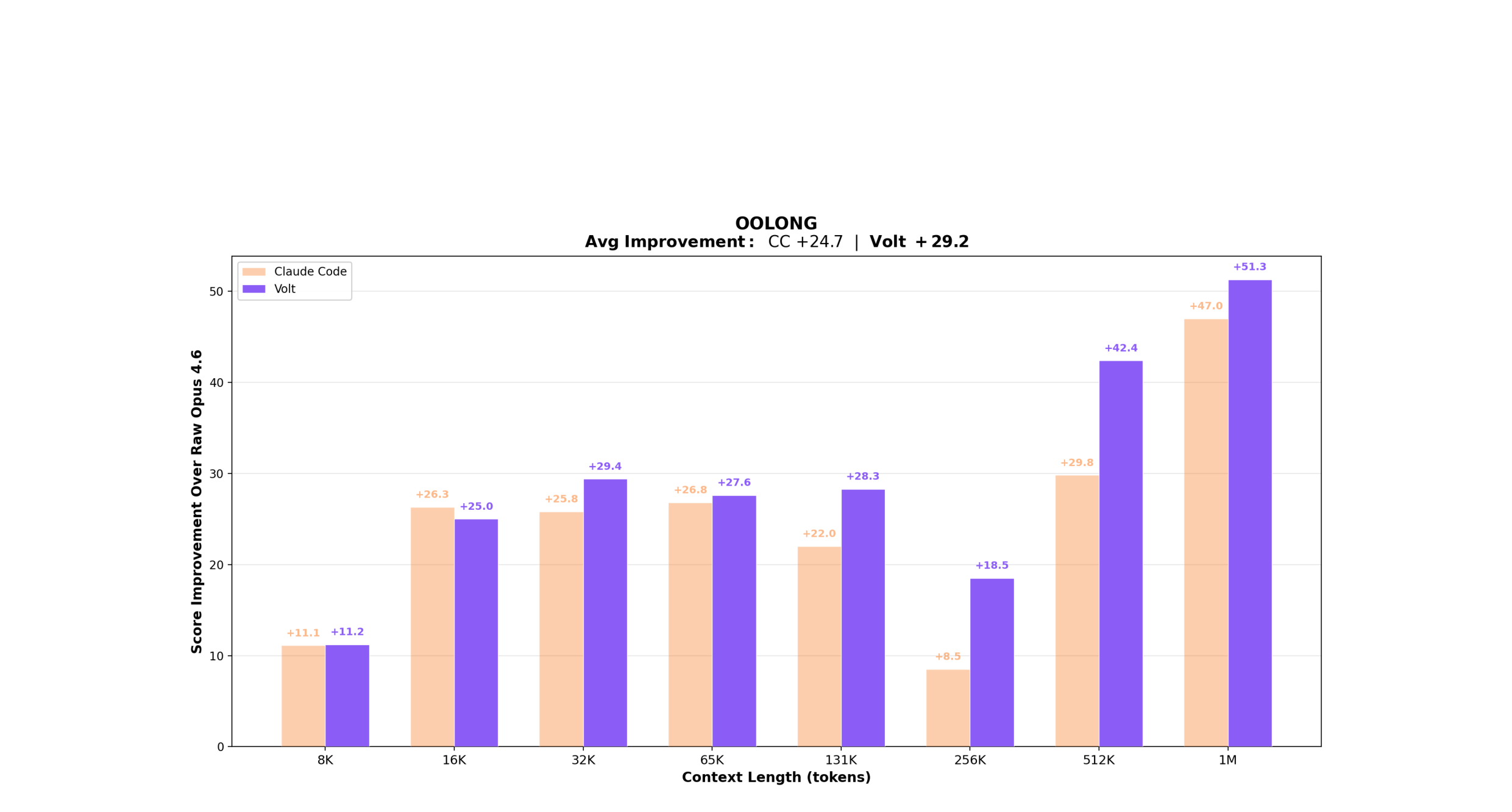
Lossless Context Management (LCM) is a deterministic architecture for LLM memory that outperforms Claude Code on long-context tasks. Benchmarked on the OOLONG eval using Opus 4.6, the LCM-augmented coding agent Volt achieves higher scores than Claude Code at every context length between 32K and 1M tokens. LCM extends the recursive paradigm pioneered by Recursive Language Models (RLMs) with two engine-managed mechanisms.
MemoryArena
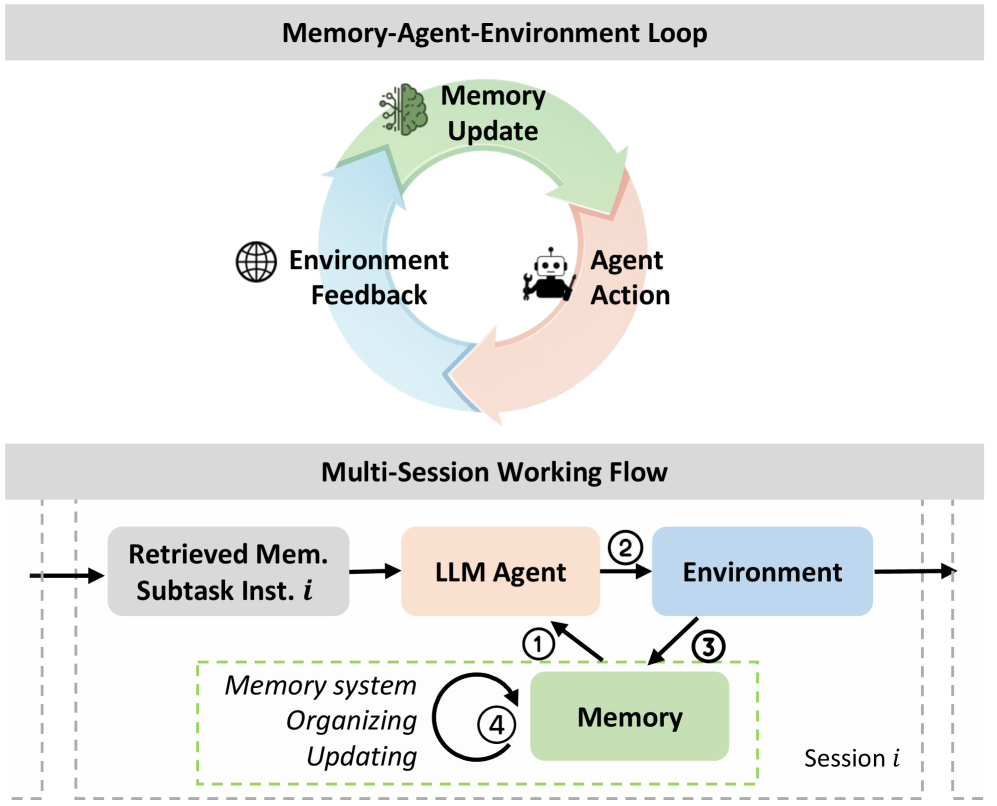
MemoryArena introduces a benchmark for evaluating how agents utilize memory across multiple interconnected sessions. The key finding is that scoring well on memory recall does not mean an agent can actually use that memory to take correct actions across sessions. Models with near-saturated performance on existing benchmarks like LoCoMo perform poorly in agentic multi-session settings.
MAPLE
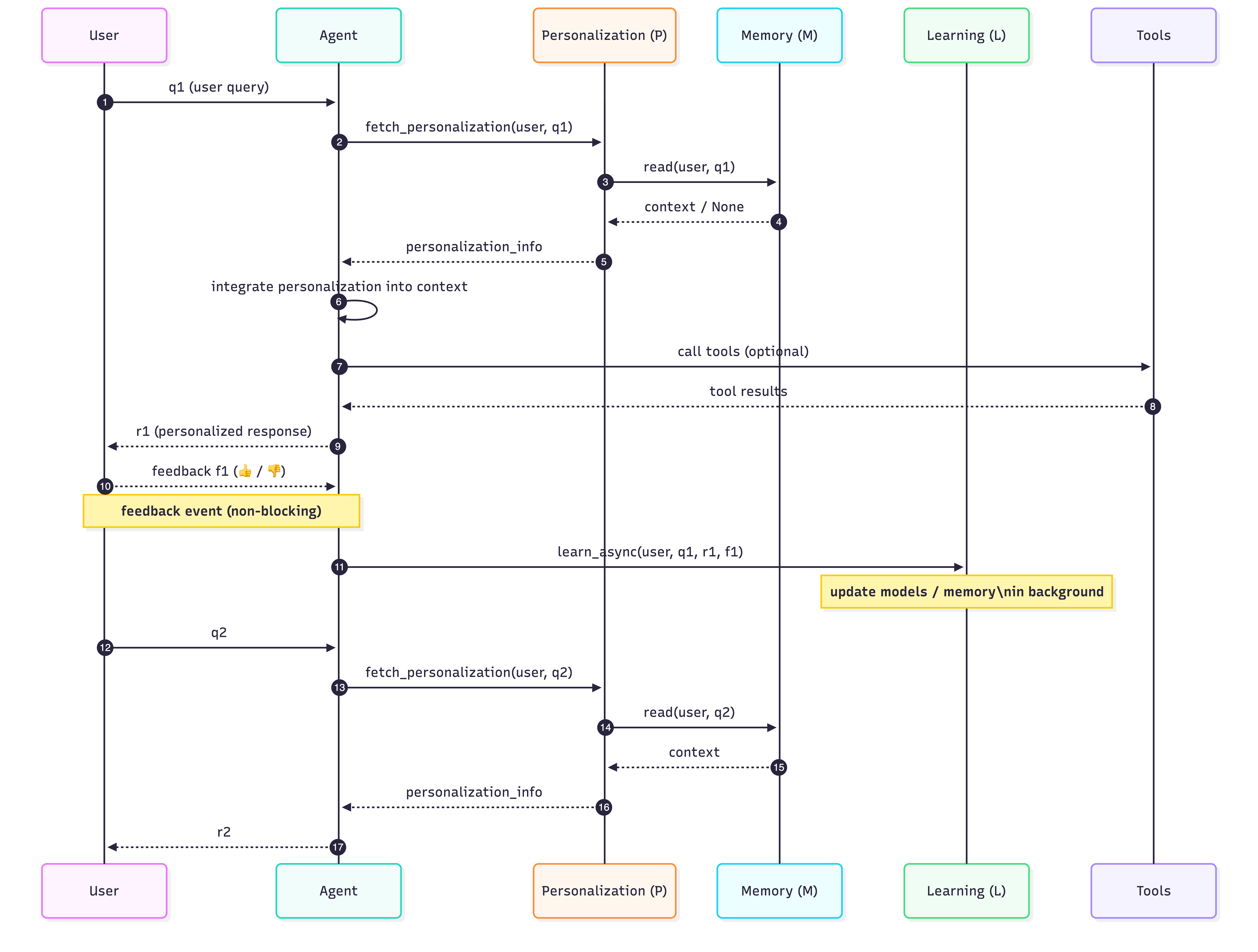
MAPLE proposes separating memory, learning, and personalization into specialized sub-agents rather than treating them as a unified capability. The framework achieves a 14.6% improvement in personalization scores over stateless baselines and increases trait incorporation from 45% to 75%, validated through the MAPLE-Personas benchmark.
SkillsBench
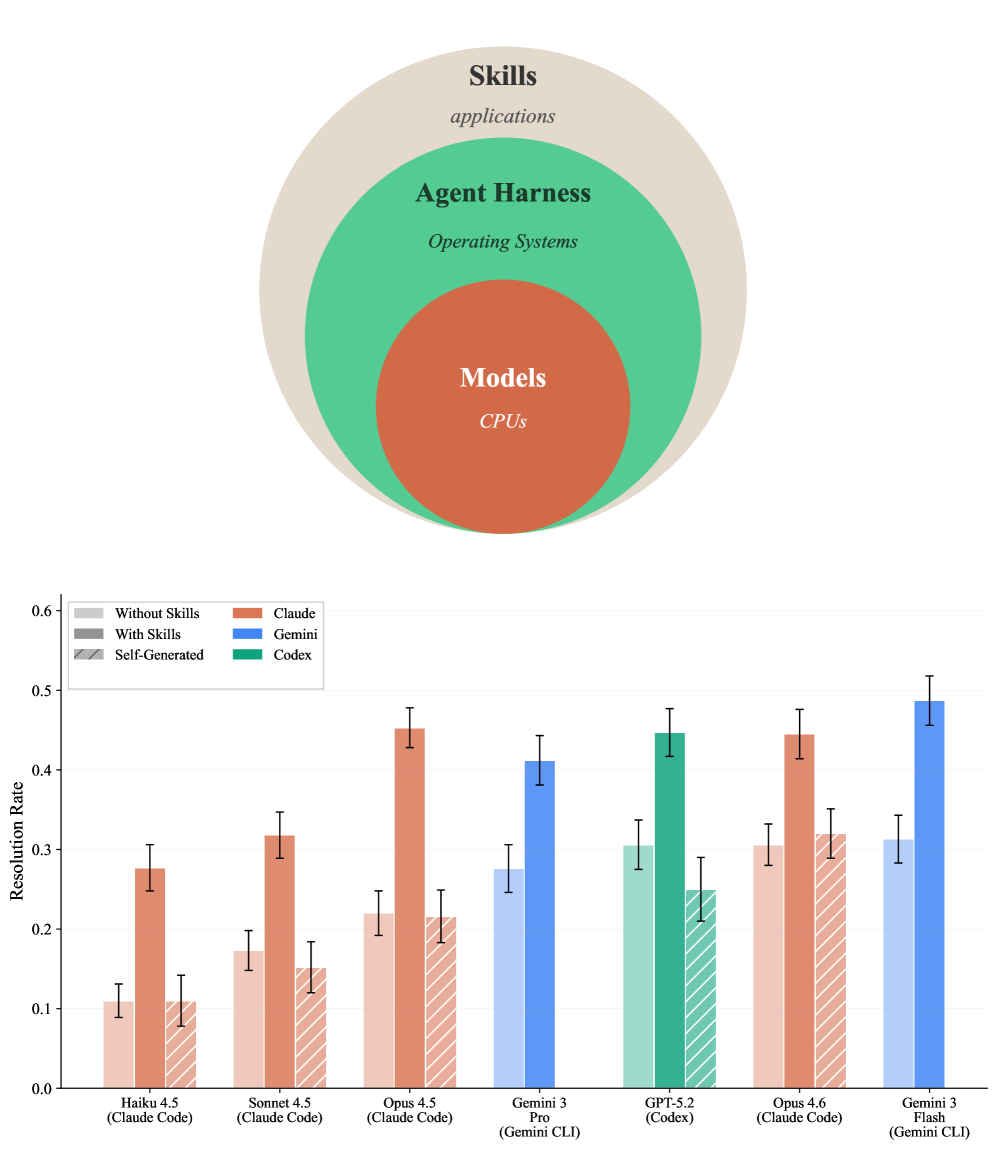
SkillsBench evaluates whether LLM agents can generate their own procedural knowledge across 86 tasks spanning 11 domains, with curated Skills and deterministic verifiers. Testing 7 agent-model configurations over 7,308 trajectories, the benchmark reveals a critical gap: agents benefit enormously from consuming procedural knowledge but cannot reliably author it themselves.
ALMA
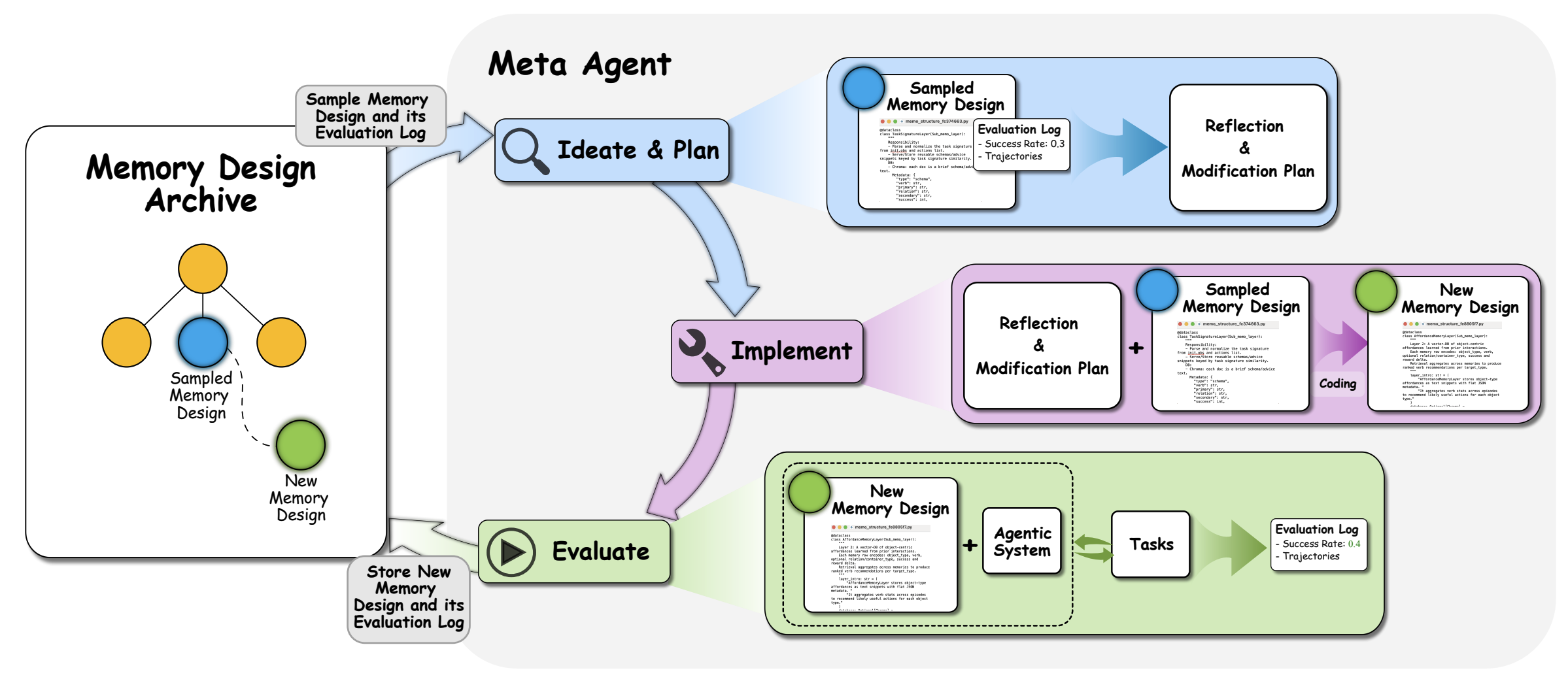
ALMA (Automated meta-Learning of Memory designs for Agentic systems) from Jeff Clune’s group introduces a Meta Agent that automatically discovers memory designs for agentic systems through open-ended exploration in code space. Instead of relying on hand-engineered memory modules, ALMA searches over database schemas, retrieval mechanisms, and update strategies expressed as executable code, consistently outperforming all human-designed memory baselines across four sequential decision-making benchmarks.
SkillRL
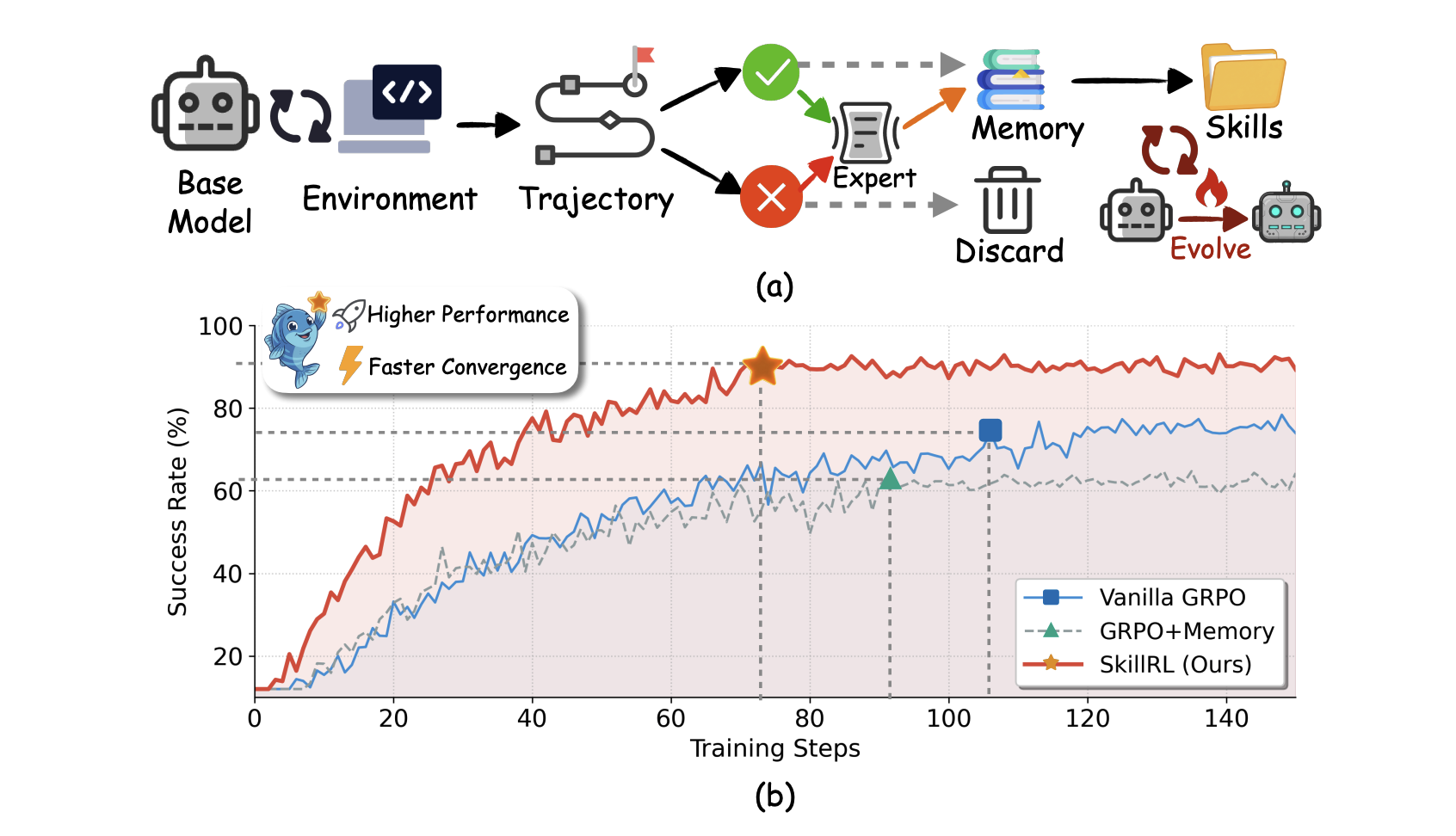
SkillRL introduces a recursive skill-augmented RL framework that bridges the gap between raw experience and policy improvement through automatic skill discovery. Instead of storing noisy raw trajectories, SkillRL distills experience into reusable high-level behavioral patterns and evolves them alongside the agent policy during training.
InftyThink+
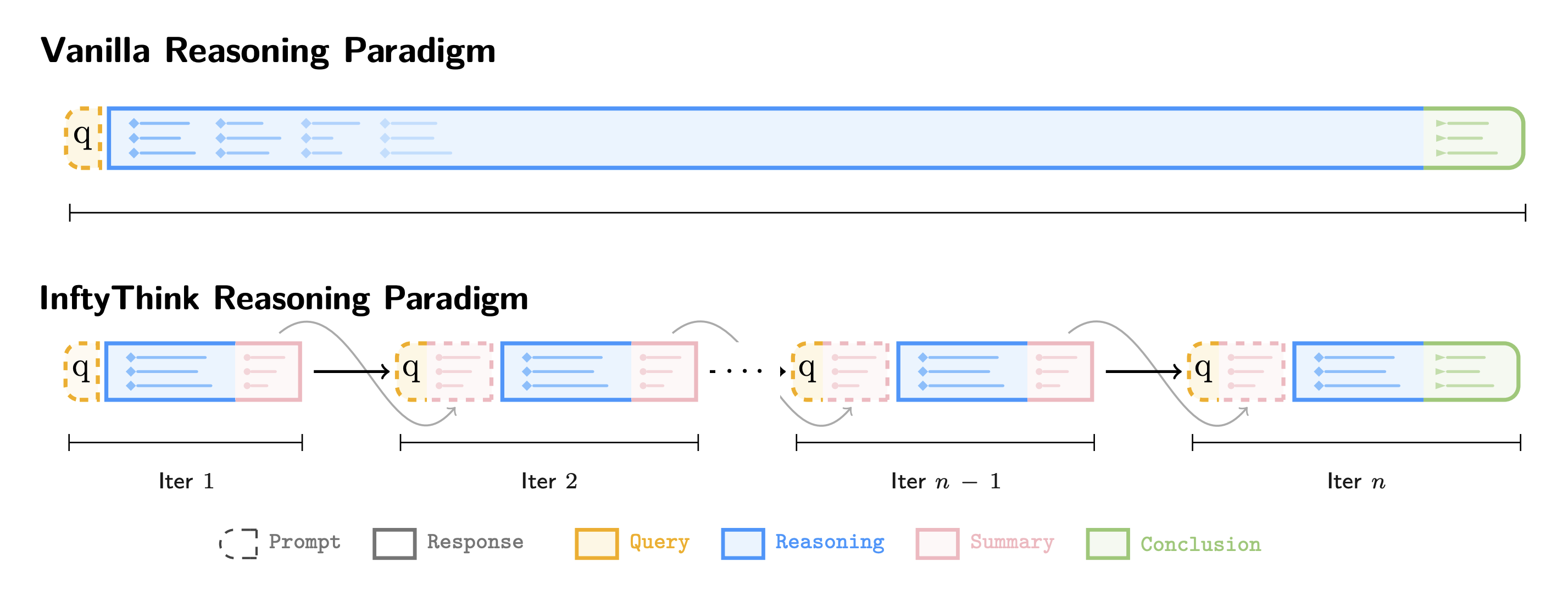
InftyThink+ is an end-to-end RL framework for infinite-horizon reasoning that optimizes the entire iterative reasoning trajectory. Standard long chain-of-thought suffers from quadratic cost, context length limits, and lost-in-the-middle degradation. InftyThink+ addresses all three by letting models autonomously decide when to summarize, what to preserve, and how to resume, trained through trajectory-level reinforcement learning.
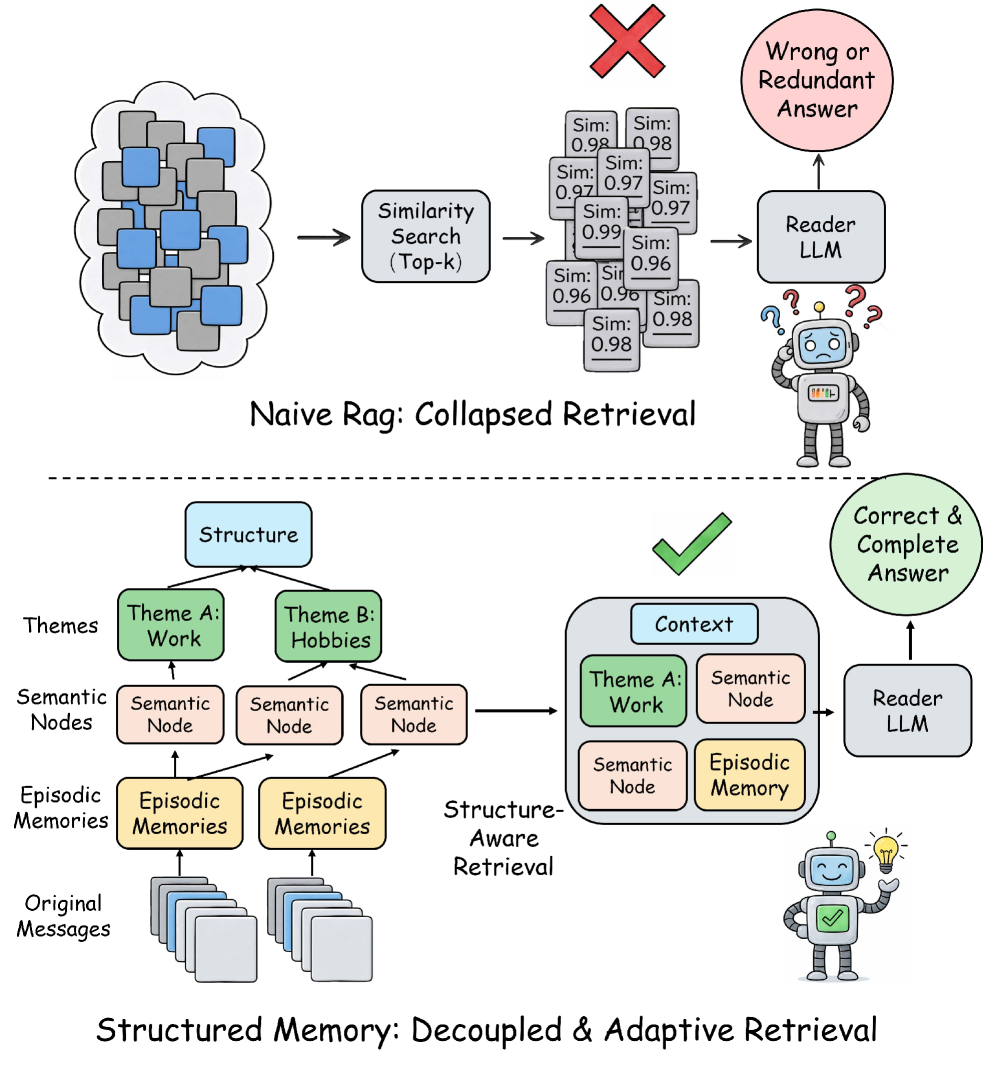
xMemory
xMemory argues that standard RAG retrieval is a poor fit for agent memory because the evidence source is a bounded, coherent dialogue stream where candidate spans are highly correlated near-duplicates. Fixed top-k similarity retrieval collapses into a single dense region, returning redundant context, while post-hoc pruning can break temporally linked evidence chains. xMemory replaces this with hierarchical memory construction and structure-aware top-down retrieval.
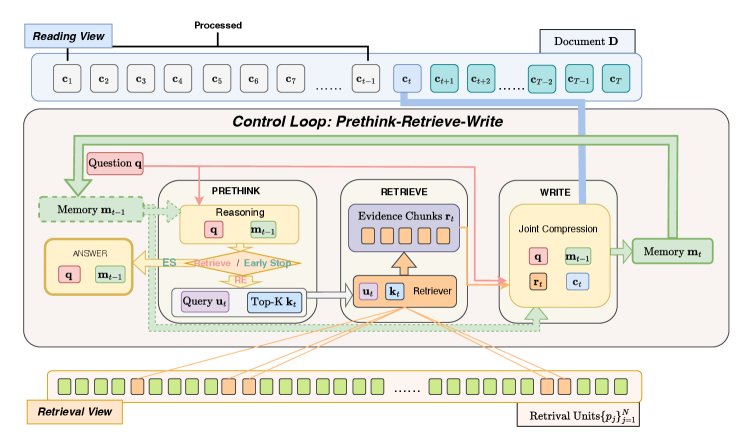
InfMem
InfMem is a cognitive agent for ultra-long document QA that uses System-2-style control to actively manage bounded memory. Instead of passively compressing each chunk as it streams in, InfMem runs a PreThink-Retrieve-Write loop that monitors evidence sufficiency, fetches missing facts from anywhere in the document, and compresses everything into a fixed-size memory - then stops early once it has enough.
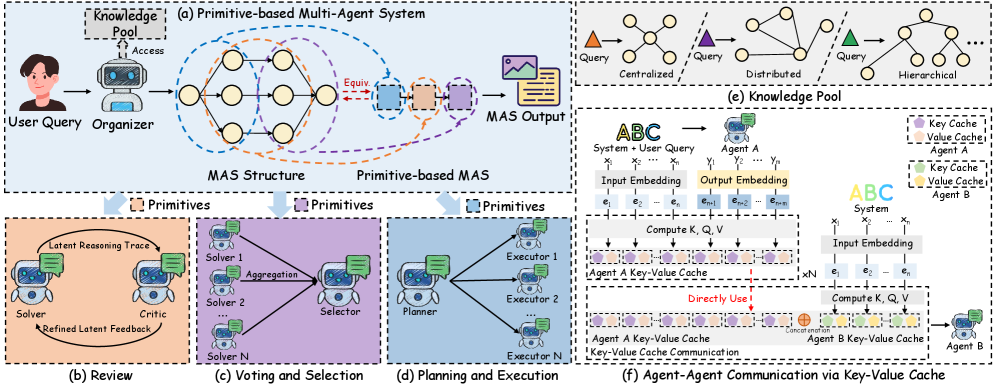
Agent Primitives
Agent Primitives introduces reusable latent building blocks for LLM-based multi-agent systems. Inspired by how neural networks are built from composable modules like residual blocks and attention heads, the authors decompose existing MAS architectures into three recurring computation patterns that communicate via KV cache instead of natural language, reducing error accumulation and boosting efficiency.
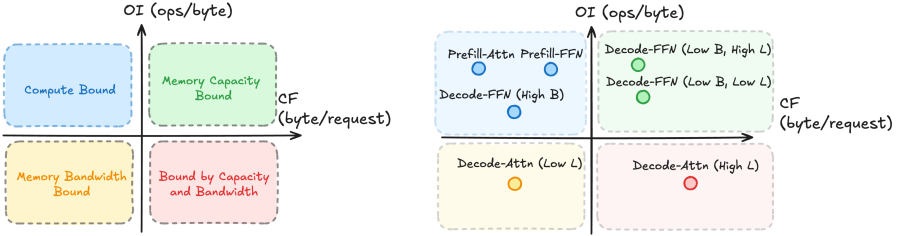
Heterogeneous Computing for AI Agent Inference
This paper introduces Operational Intensity (OI) and Capacity Footprint (CF) as two metrics that better characterize AI agent inference workloads than traditional roofline models, revealing that memory capacity - not just bandwidth or compute - is often the true bottleneck. Analysis across agent types (chatbot, coding, web-use, computer-use) shows that agentic workflows create vastly different and rapidly growing demands on hardware, with context lengths snowballing to over 1M tokens in coding agents. The authors argue for disaggregated, heterogeneous compute architectures with specialized prefill and decode accelerators, hardware-aware model co-design, and large-capacity memory disaggregation as essential directions for scaling AI agent systems.
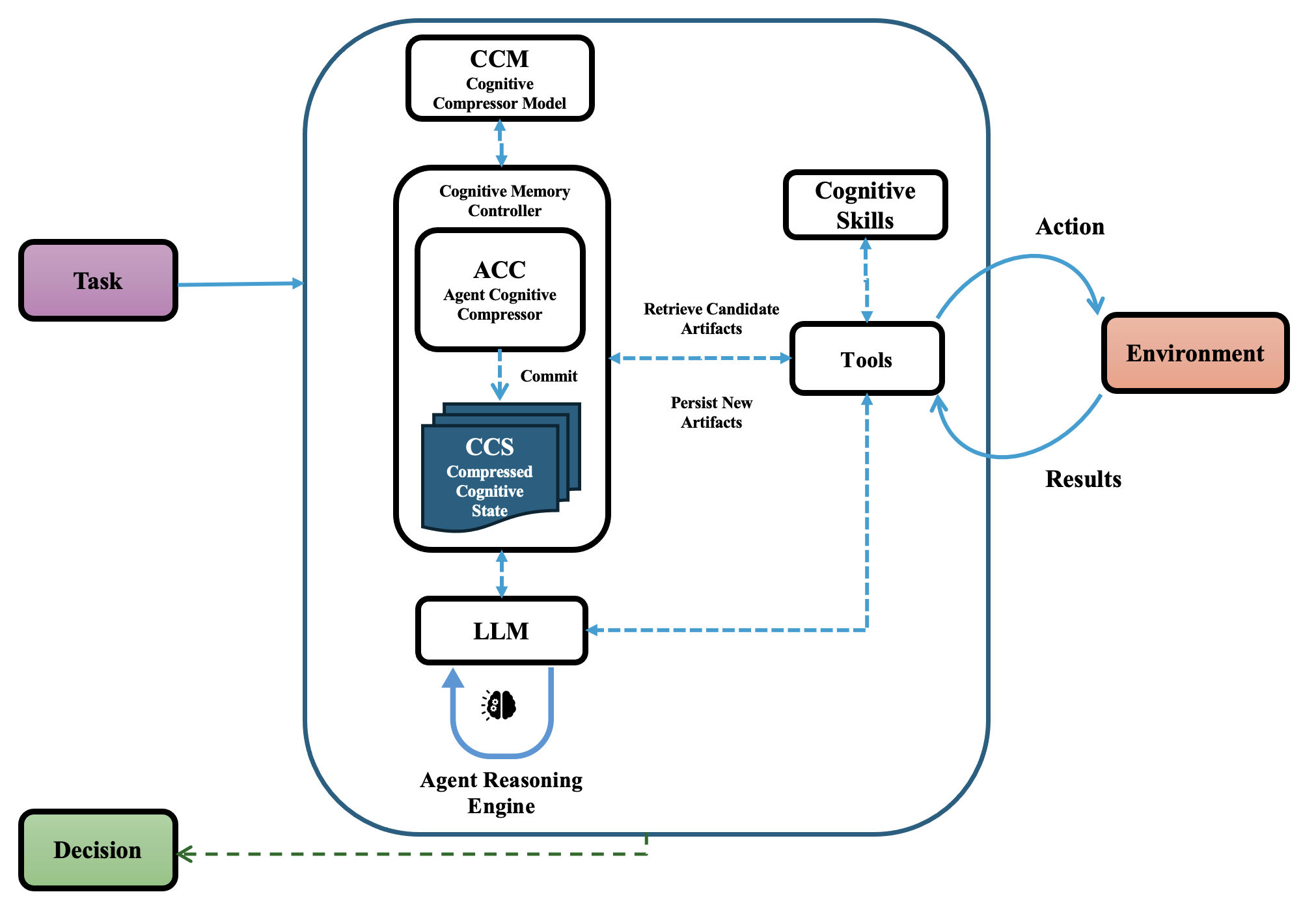
Memory Control for Long-Horizon Agents
This paper introduces the Agent Cognitive Compressor (ACC), a bio-inspired mechanism that addresses degraded agent behavior in long multi-turn workflows caused by loss of constraint focus, error accumulation, and memory-induced drift. ACC replaces continuous transcript retention with a bounded internal state that updates incrementally during each interaction turn.
Extending Context by Dropping Positional Embeddings
DroPE introduces a method for extending a language model’s context window after pretraining without expensive long-context fine-tuning. The approach involves removing positional embeddings from a pretrained model and performing brief recalibration at the original context length.
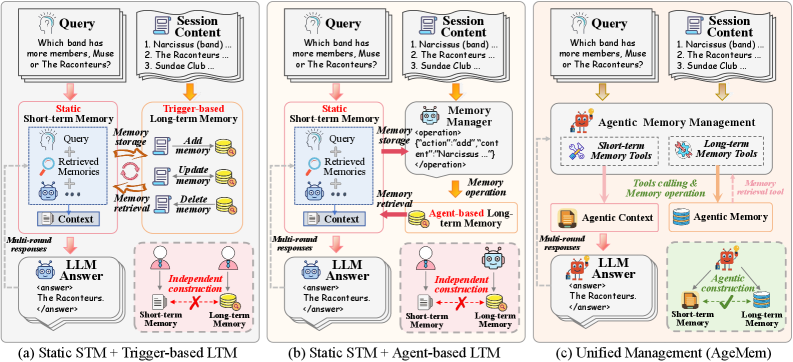
Unified Long-Term and Short-Term Memory for LLM Agents
AgeMem introduces a unified framework that integrates both long-term and short-term memory operations into an LLM agent’s decision-making policy. The system enables agents to autonomously determine what and when to store, retrieve, update, summarize, or discard information by exposing memory operations as tool-based actions.
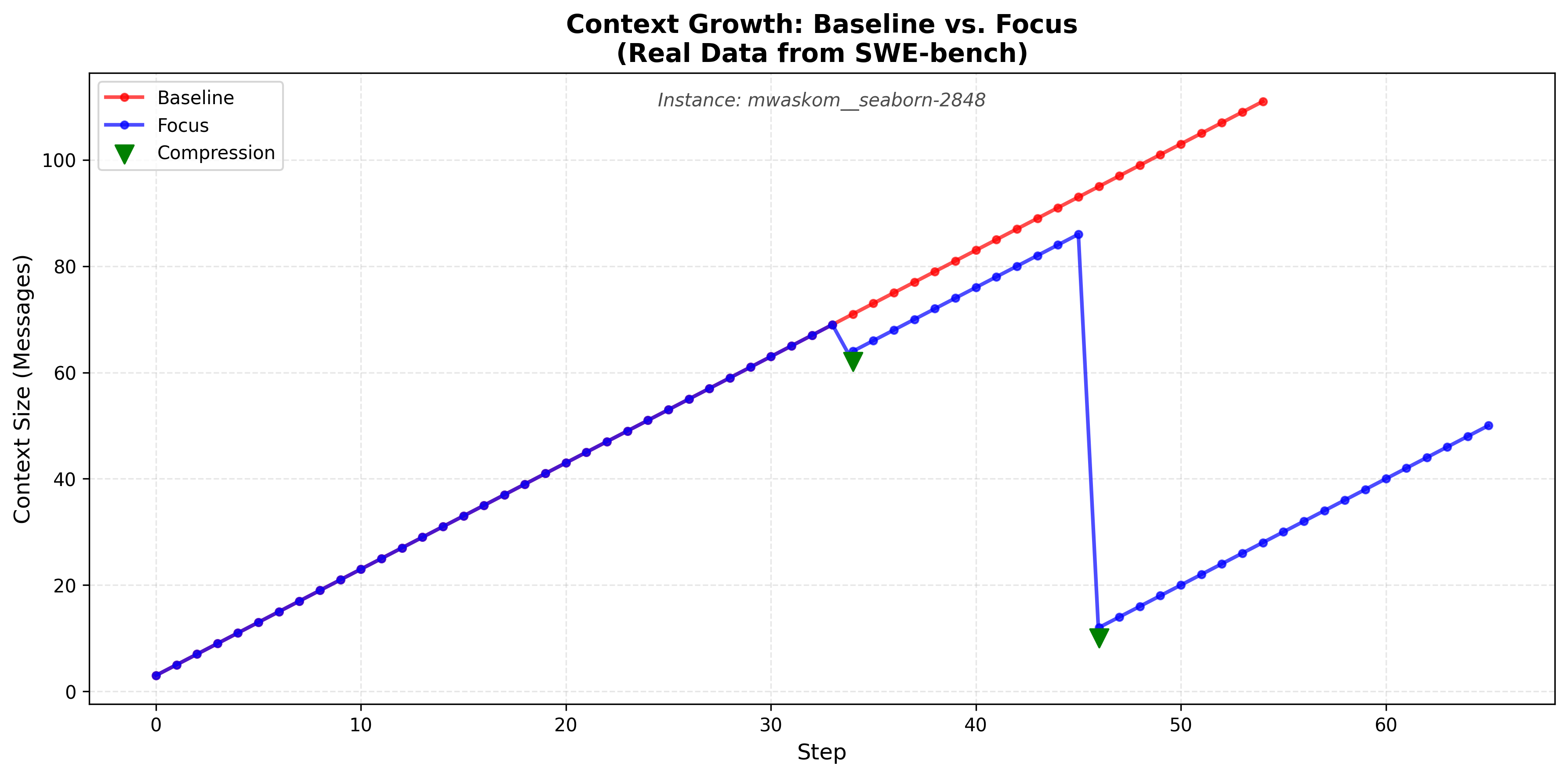
Active Context Compression for LLM Agents
Focus introduces an agent-centered architecture that enables LLM agents to autonomously manage their own memory by deciding when to consolidate learnings into a persistent “Knowledge” block and actively prune raw interaction history. The design is inspired by the biological navigation patterns of Physarum polycephalum (slime mold).
Efficient Lifelong Memory for LLM Agents
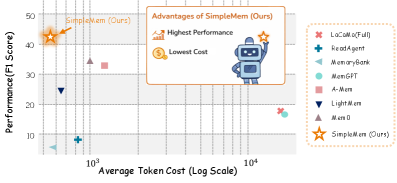
SimpleMem introduces a memory framework built on semantic lossless compression that addresses the tension between maintaining comprehensive long-term memory and minimizing token overhead for LLM agents. The approach achieves a 26.4% F1 improvement over baselines while reducing token consumption by up to 30-fold during inference.
MemRL
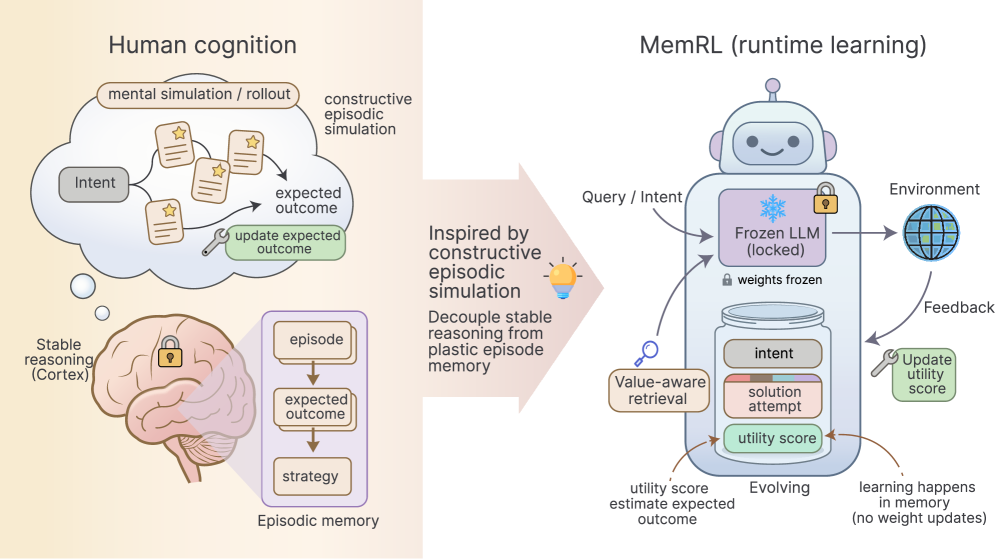
MemRL enables LLM agents to improve continuously without retraining by separating a frozen model’s reasoning from an evolving memory system. A Two-Phase Retrieval mechanism filters candidates by semantic relevance, then ranks them using learned Q-values that improve through trial-and-error, outperforming existing methods on HLE, BigCodeBench, ALFWorld, and Lifelong Agent Bench.
Recursive Language Models
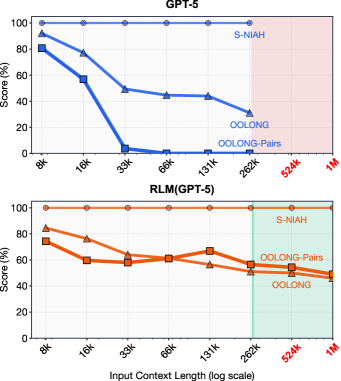
Recursive Language Models (RLMs) are a general inference strategy that allows LLMs to process arbitrarily long prompts by treating them as part of an external environment. Rather than feeding long contexts directly into the model, RLMs load the prompt as a variable in a Python REPL and let the LLM programmatically examine, decompose, and recursively call itself over snippets.