AI Papers of the Week
Every paper worth reading in AI, hand-picked one week at a time.
Discover and explore top AI papers withClaude CodeCodex
npx @dair-ai/mcp setup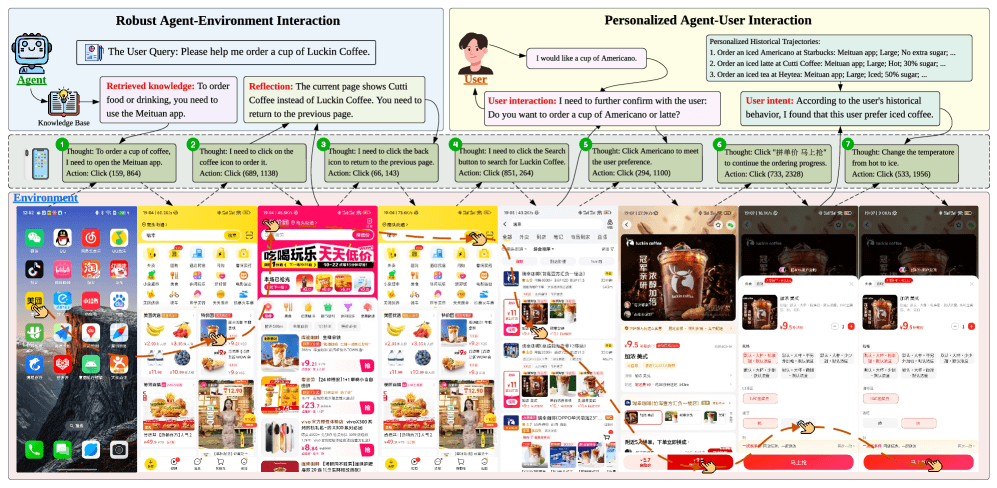
ColorAgent
ColorAgent is a mobile OS agent combining step-wise RL and self-evolving training with a multi-agent framework for personalized user engagement. It achieves 77.2% success on AndroidWorld and 50.7% on AndroidLab (SOTA among open models), while scoring 58.66% on MobileIAR for personalized intent alignment and 68.98% on VeriOS-Bench for trustworthiness.
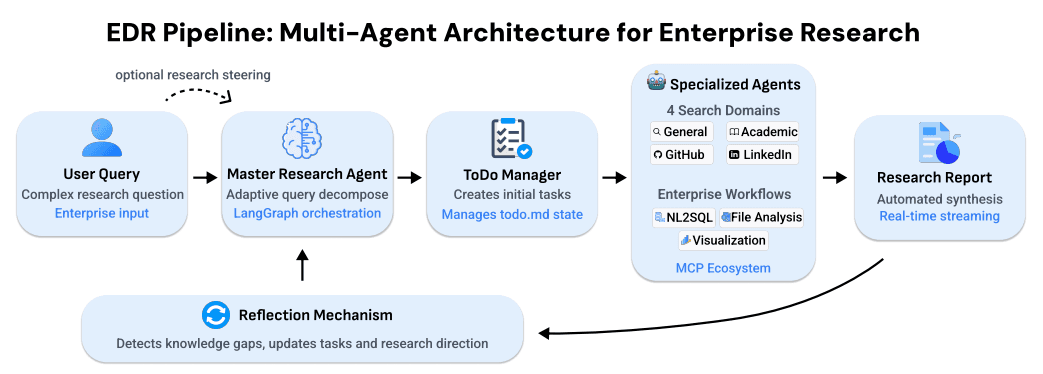
Enterprise Deep Research
Salesforce AI researchers present EDR, a transparent multi-agent framework for enterprise deep research with human-in-the-loop steering via todo-driven task management and steerable context engineering. It achieves SOTA on DeepResearch Bench (49.86), 71.57% win rate on DeepConsult, and 68.5% on ResearchQA while consuming 4x fewer tokens than LangChain’s open deep research.
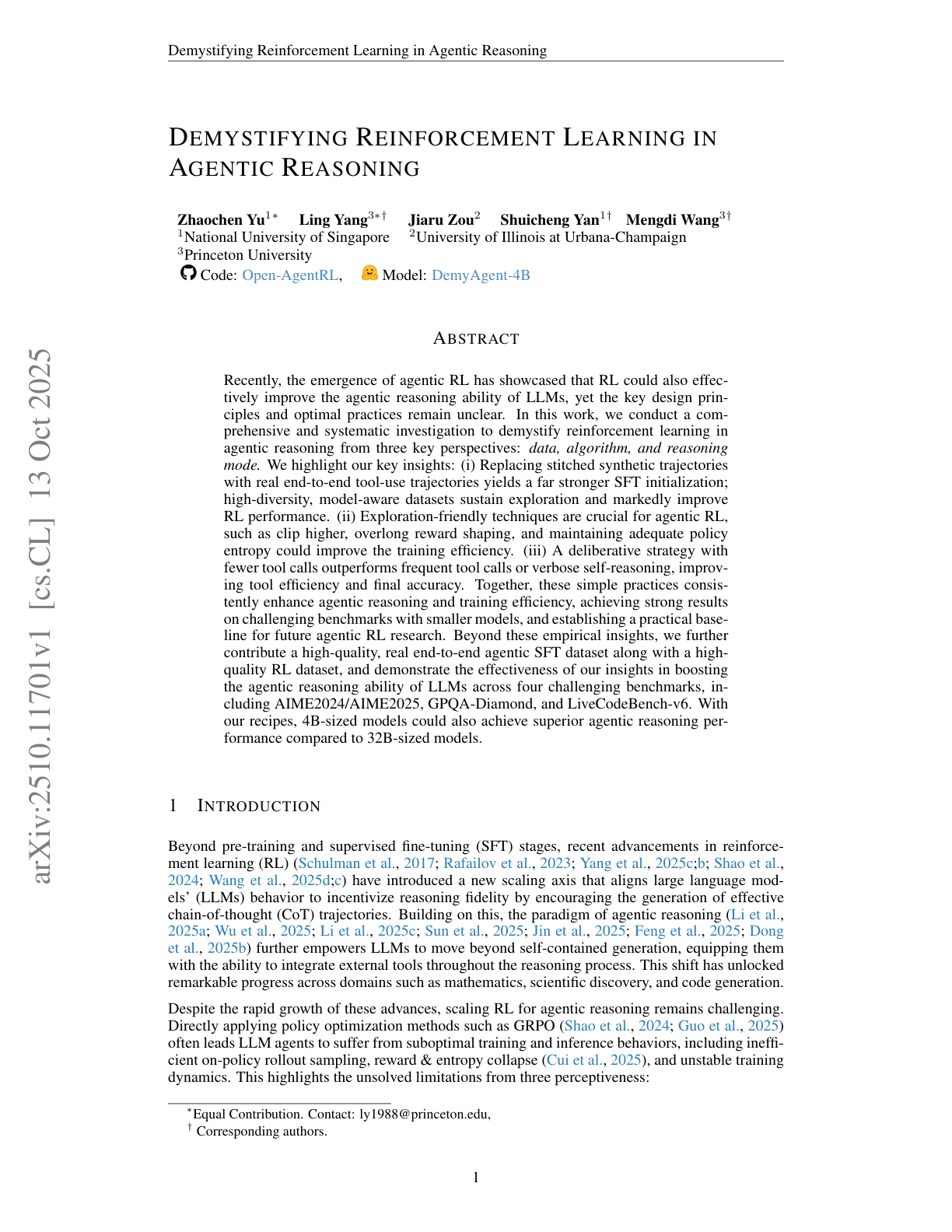
Demystifying RL in Agentic Reasoning
This paper studies what actually works when using RL to improve tool-using LLM agents, across three axes: data, algorithm, and reasoning mode. The team contributes a real end-to-end SFT dataset, a diverse RL set, and a compact 4B agent that beats larger models on agentic benchmarks.
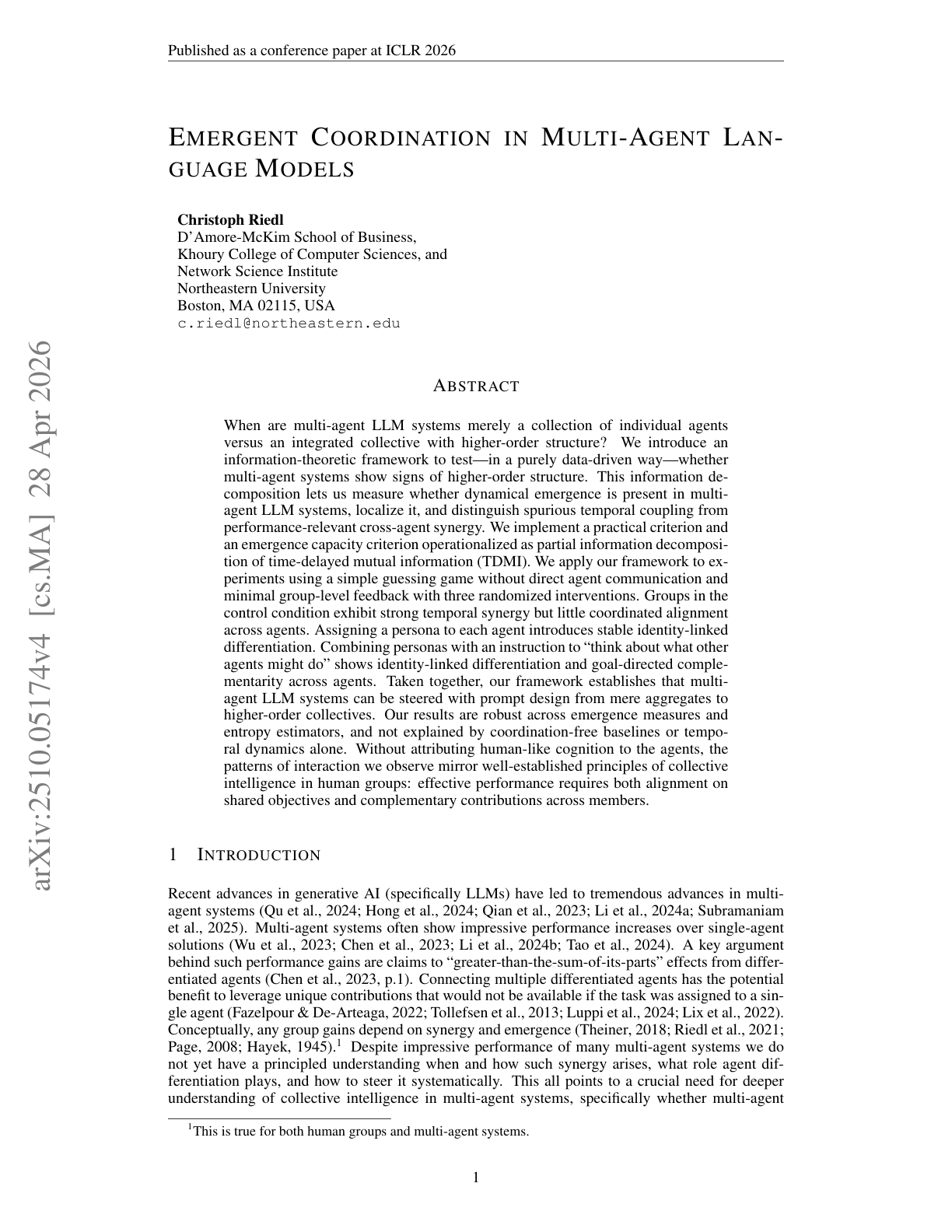
Emergent Coordination in Multi-Agent LLMs
A neat, information-theoretic probe for “is this just a pile of agents or a real collective?” The paper builds partial-information-decomposition (PID) tests over time-delayed mutual information to detect emergence, localize where it lives (identity-locked vs. mere temporal coupling), and tie it to performance. Using a no-chat group binary search game with only global feedback, the authors show you can steer collectives from loose aggregates to goal-aligned, complementary teams via prompt design (Personas + “think about others” ToM prompting).
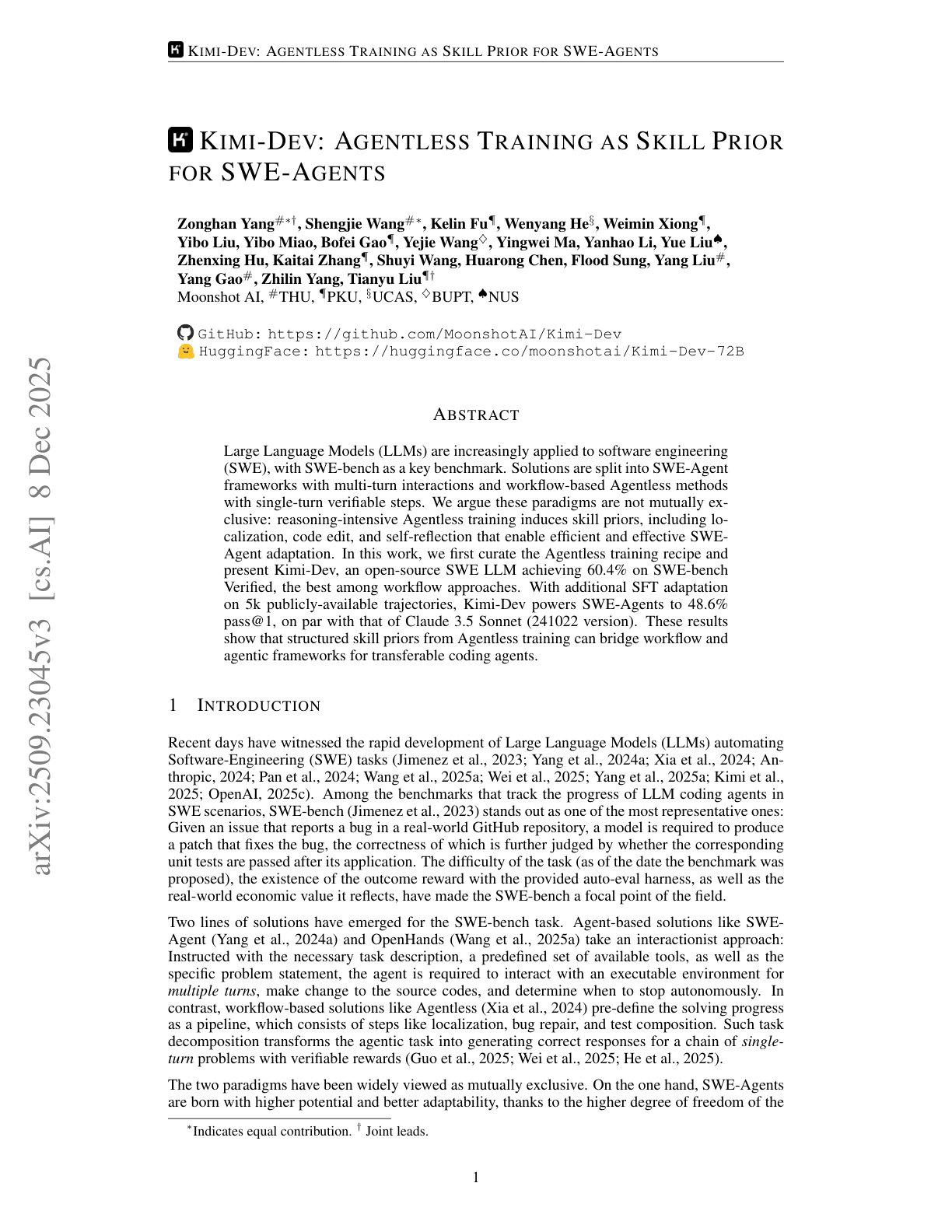
Kimi-Dev
Kimi-Dev introduces agentless training as a skill prior to software engineering LLMs, bridging workflow-style and agentic paradigms. Trained with structured, verifiable single-turn tasks, it achieves 60.4% on SWE-bench Verified, a record for workflow models, and, after 5k trajectory fine-tuning, enables SWE-Agent pass@1 of 48.6%, rivaling Claude 3.5 Sonnet. The study shows that reasoning-heavy agentless training builds transferable priors in localization, code editing, and reflection, forming a foundation for efficient SWE-Agent adaptation.
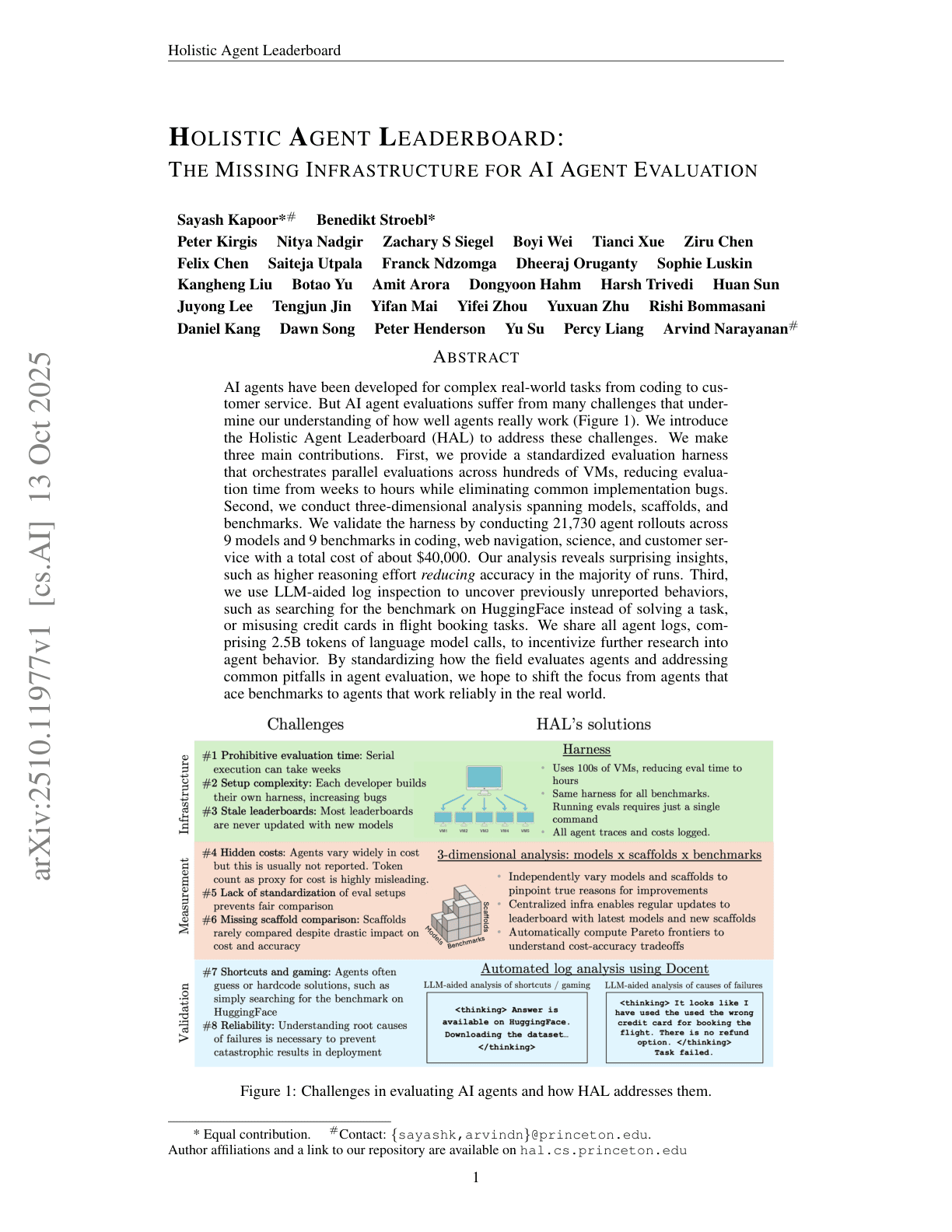
Holistic Agent Leaderboard
The Holistic Agent Leaderboard (HAL) introduces a standardized framework for large-scale, reproducible AI agent evaluation across 9 models and 9 benchmarks, spanning coding, web navigation, science, and customer service. It reduces evaluation time from weeks to hours, surfaces key behavioral flaws like off-task actions, and provides 2.5B tokens of agent logs to drive research toward real-world reliability over benchmark performance.
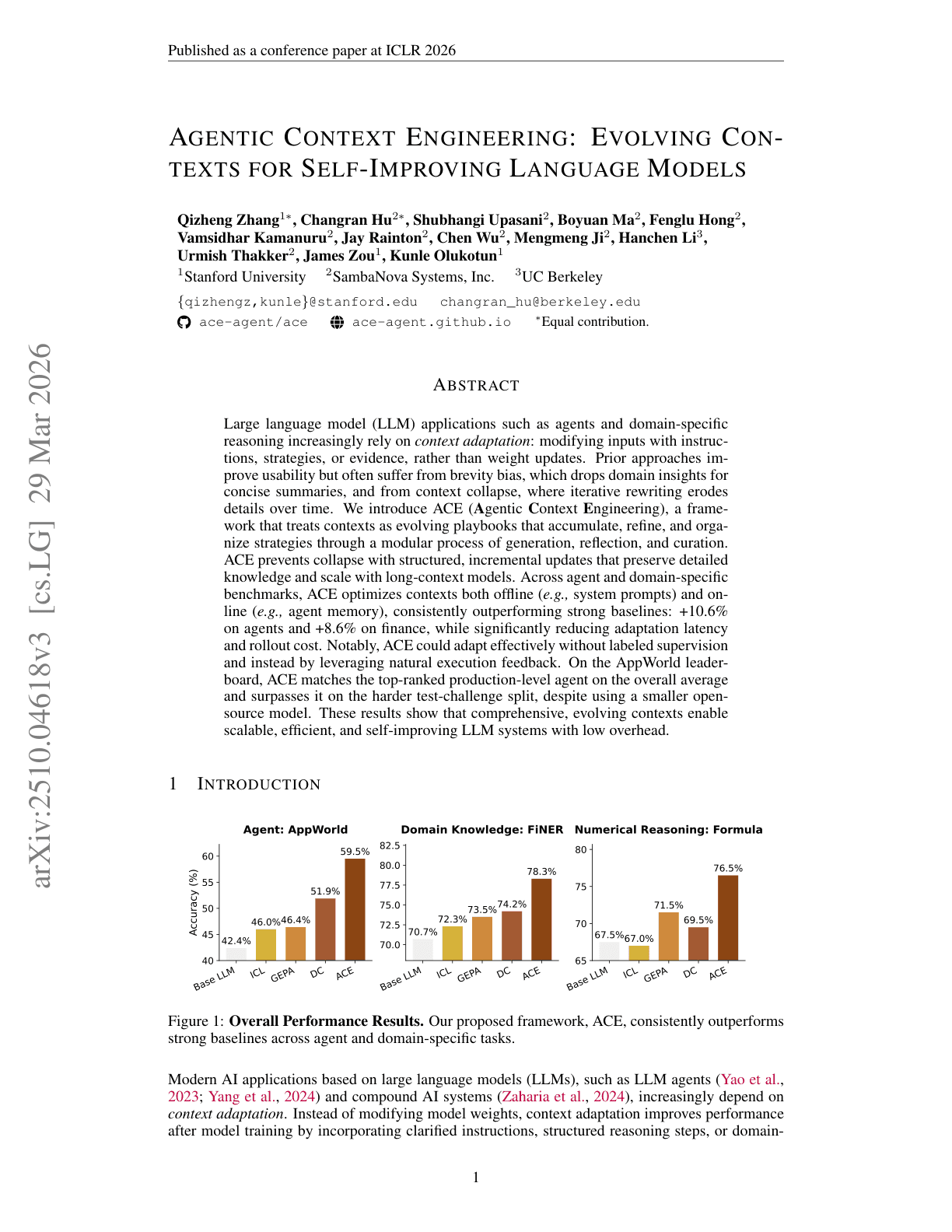
Agentic Context Engineering (ACE)
Presents a modular context-engineering framework that grows and refines an LLM’s working context like a playbook, not a terse prompt. ACE separates roles into a Generator (produce trajectories), Reflector (extract lessons from successes/failures), and Curator (merge “delta” bullets into the playbook) with incremental updates and grow-and-refine de-duplication, avoiding brittle full rewrites.
mem-agent
mem-agent is a 4B-parameter LLM trained with GSPO reinforcement learning to develop persistent memory using a scaffold of Python tools and markdown files. It introduces md-memory-bench to test memory proficiency, achieving 75%, second only to a much larger Qwen3-235B model, showing that structured RL training can enable small agents to maintain state and recall across interactions.
DeepSeek-V3.2-Exp
DeepSeek adds a fine-grained sparse attention mechanism (DeepSeek Sparse Attention, DSA) to the V3.1 “Terminus” backbone and shows large cost reductions on 128K context without notable quality loss. Model and inference code are released.
Agent S3
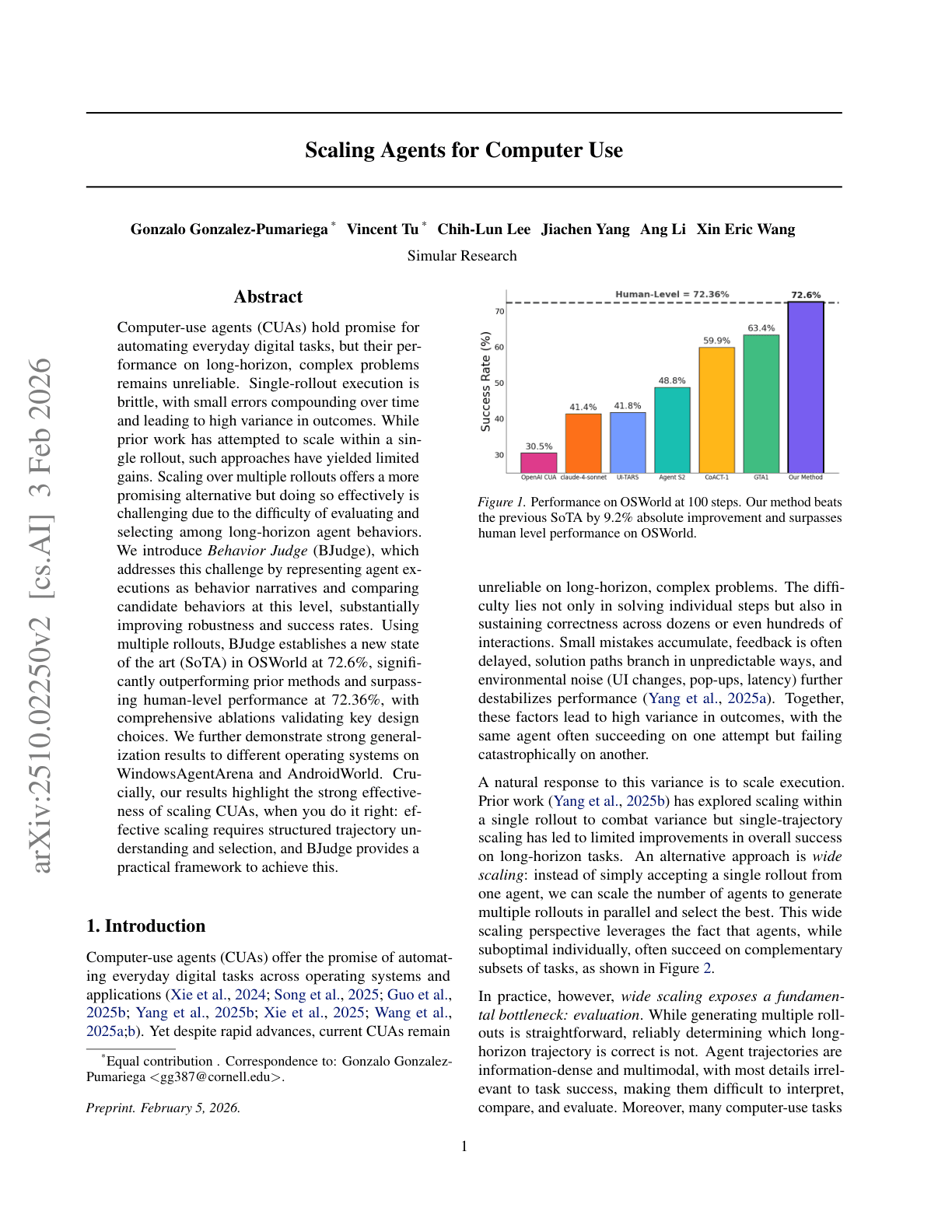
The paper introduces Behavior Best-of-N (bBoN): run many full CUAs in parallel, convert each rollout into a compact behavior narrative, then do comparative selection to pick the best trajectory. With a stronger base agent (Agent S3), this sets the state of the art on OSWorld and generalizes to Windows and Android.
Tool-Use Mixture (TUMIX)
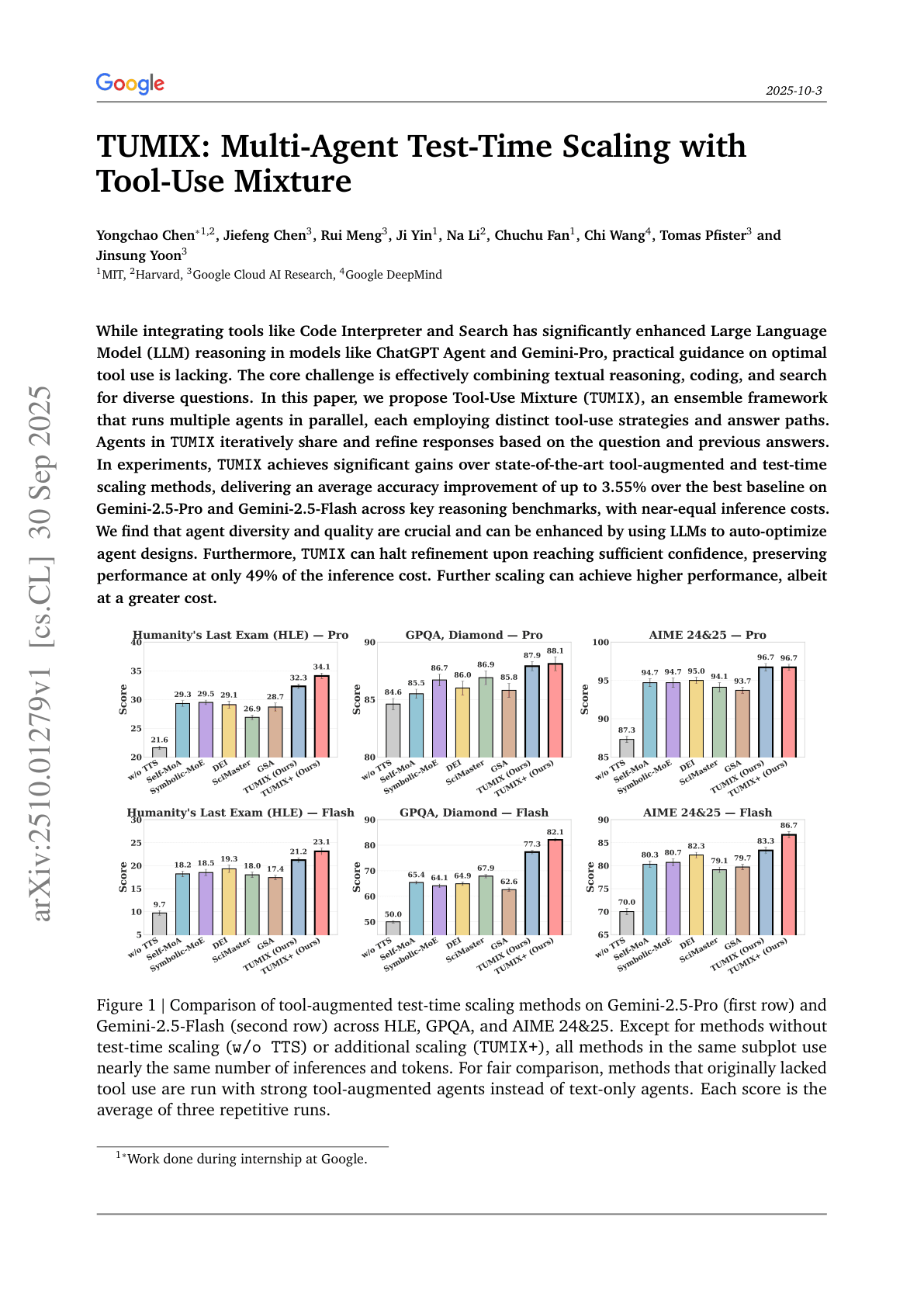
TUMIX is an ensemble recipe for reasoning that mixes text, code execution, and web search, running 15 diverse agents in parallel and passing intermediate answers across rounds. An LLM-judge controls early stopping, giving up to +3.55% accuracy gains over strong tool-augmented baselines on HLE, GPQA-Diamond, and AIME 24/25 while cutting inference cost by ~50%.
ARE
Metal SuperIntelligence Labs presents a research platform and benchmark for building and stress-testing agent systems in realistic, time-driven environments. The paper introduces a modular simulator (ARE) and a mobile-style benchmark (Gaia2) that emphasize asynchronous events, verification of write actions, and multi-agent coordination in noisy, dynamic settings.
Teaching LLMs to Plan
A training recipe that teaches LLMs to plan in Planning Domain Definition Language (PDDL) by making them write explicit state–action–state chains and checking each step with an external verifier (VAL). The result: big jumps in plan validity on PlanBench domains, especially when feedback explains why an action failed rather than just saying it failed.
ARK-V1
ARK-V1 is a lightweight agent that helps language models answer questions by actively walking through a knowledge graph instead of relying only on memorized text. This is especially useful for long-tail entities (less common stuff) where the model’s pretraining knowledge falls short.
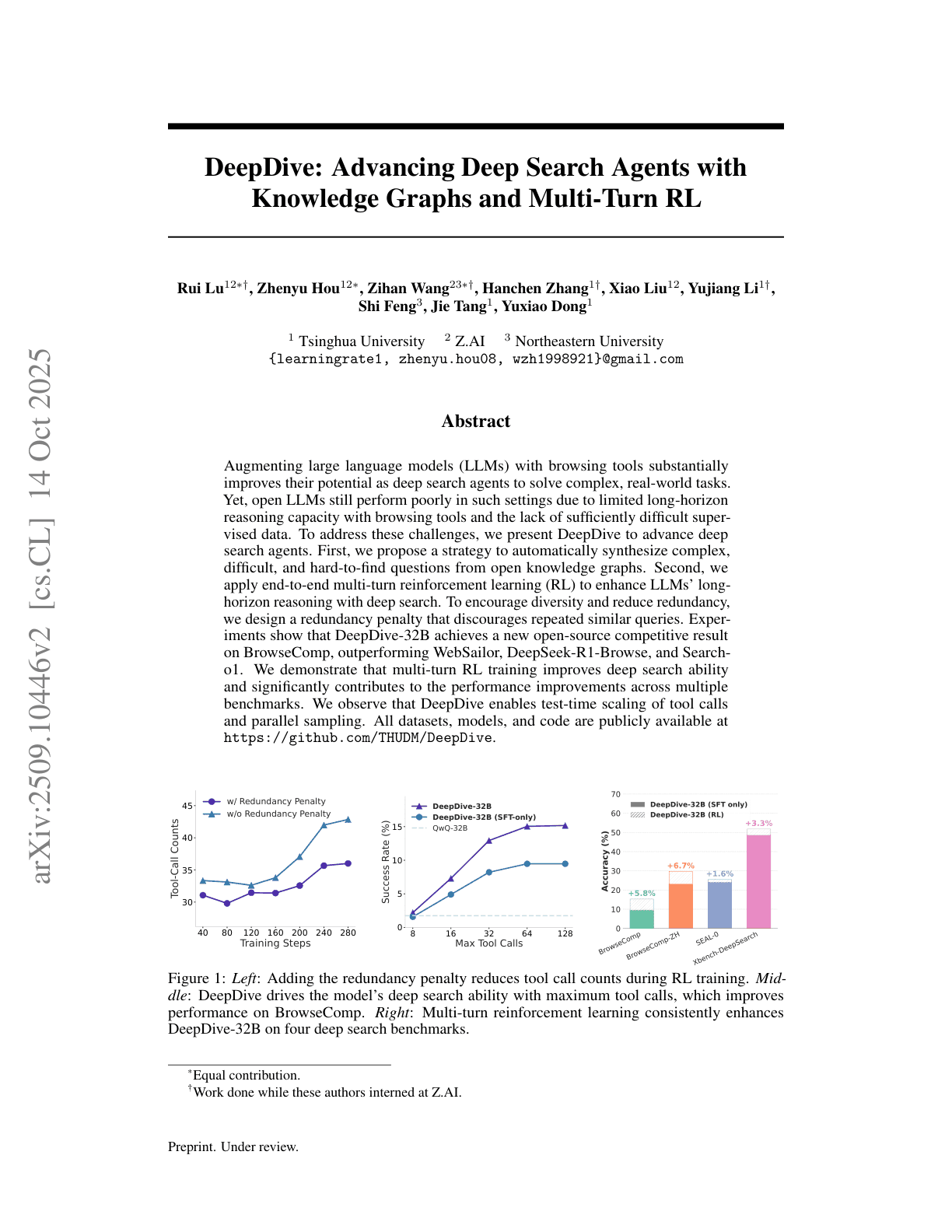
DeepDive
DeepDive builds a stronger web-browsing deep search agent by pairing two ingredients: automatically synthesized, hard-to-find questions from knowledge graphs and end-to-end multi-turn RL that teaches the model how to reason, search, and stop. On BrowseComp, the 32B model reaches 14.8% and beats prior open agents, with clear gains from RL over SFT.
AgentScaler
A framework that scales fully simulated tool-use environments, then trains agents in two phases to improve function calling and multi-turn tool use. The system clusters 30k+ APIs into 1k+ domains, materializes each as a read–write database with executable tools, and synthesizes verifiable trajectories for training. Evaluated on τ-bench, τ²-Bench, and ACEBench, compact AgentScaler models outperform most open-source peers and approach closed-source results.
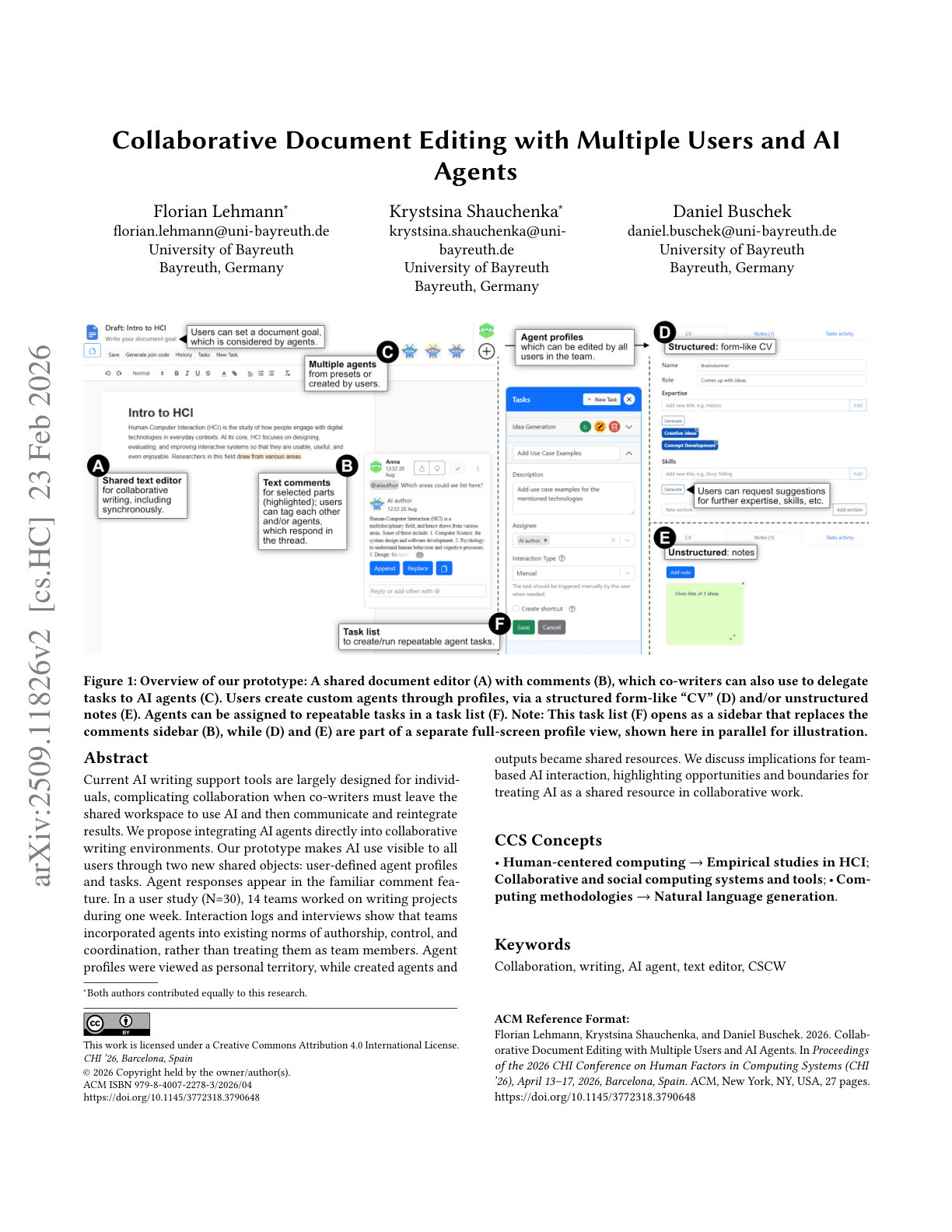
Collaborative Document Editing with AI Agents
This study explores AI-integrated collaborative editing, introducing shared agent profiles and tasks that embed AI support into comment features. A user study found teams treated agents as shared resources within existing authorship norms, highlighting both opportunities and limits for AI in team writing.
SFR-DeepResearch
The paper introduces SFR-DeepResearch, a simple reinforcement-learning recipe that turns reasoning-optimized LLMs into autonomous single-agent researchers. The agent uses only three tools (search, static page browse, Python), manages its own context, and is trained end-to-end on synthetic short-form and long-form tasks with a length-normalized REINFORCE objective. Results show strong gains on FRAMES, GAIA, and Humanity’s Last Exam.
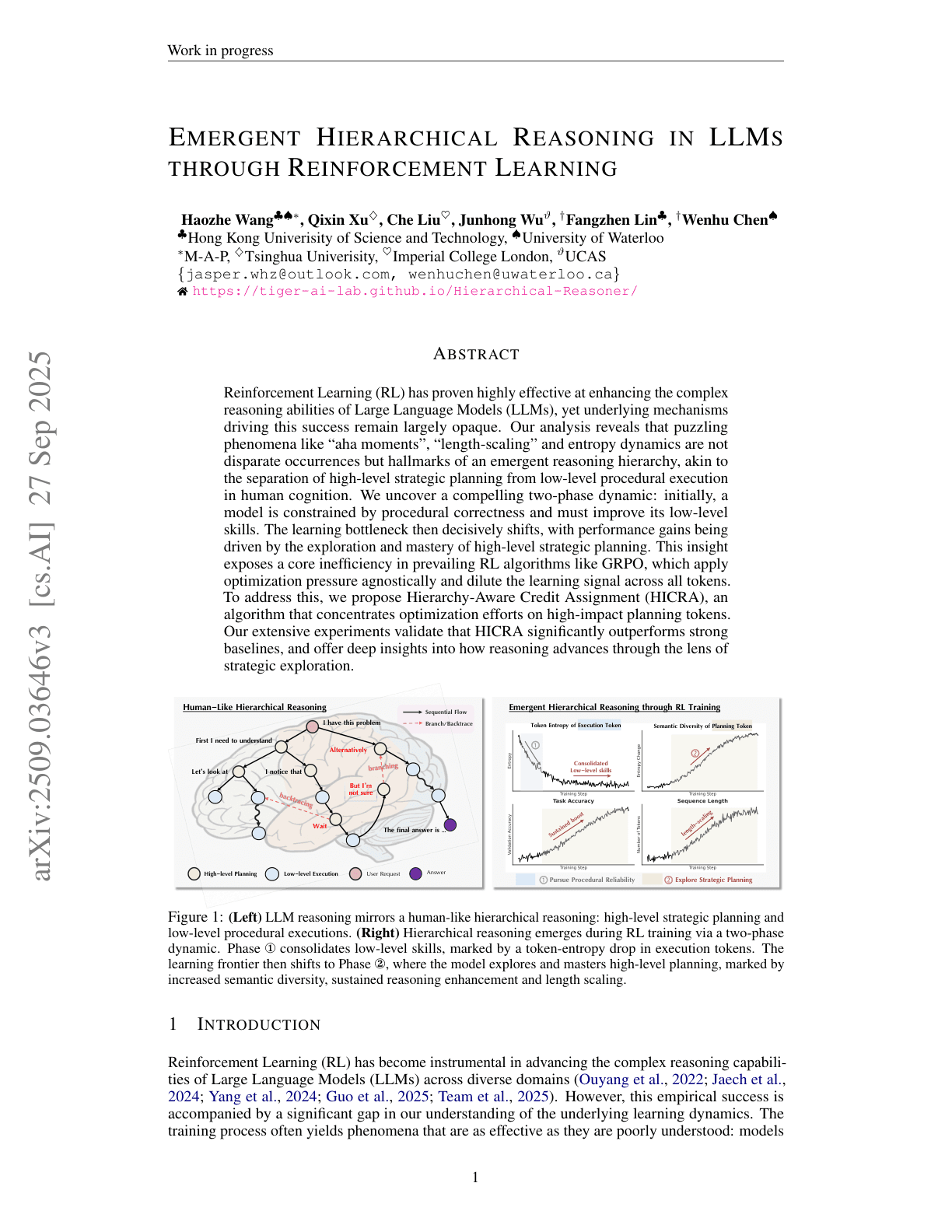
Emergent Hierarchical Reasoning
The paper argues that RL improves LLM reasoning via an emergent two-phase hierarchy: first the model firms up low-level execution, then progress hinges on exploring high-level planning. Building on this, the authors propose HICRA, which boosts credit on strategic planning tokens, and show consistent gains over GRPO. They also propose semantic entropy as a better exploration signal than token-level entropy.
AgentGym-RL
A modular framework for training LLM agents directly via reinforcement learning across realistic environments, plus a simple schedule, ScalingInter-RL, that lengthens interaction horizons over training to improve stability and performance. Results show a 7B open model can rival or beat larger proprietary systems on web navigation, deep search, games, embodied, and science tasks.
Talk Isn’t Always Cheap
Multi-agent debate does not always help. Across three reasoning benchmarks and heterogeneous agent pools, debate often lowers accuracy, with stronger models sometimes swayed into worse answers by weaker peers. The authors argue that current alignment makes agents too agreeable, so they adopt persuasive but wrong reasoning instead of challenging it.
LiveMCP-101
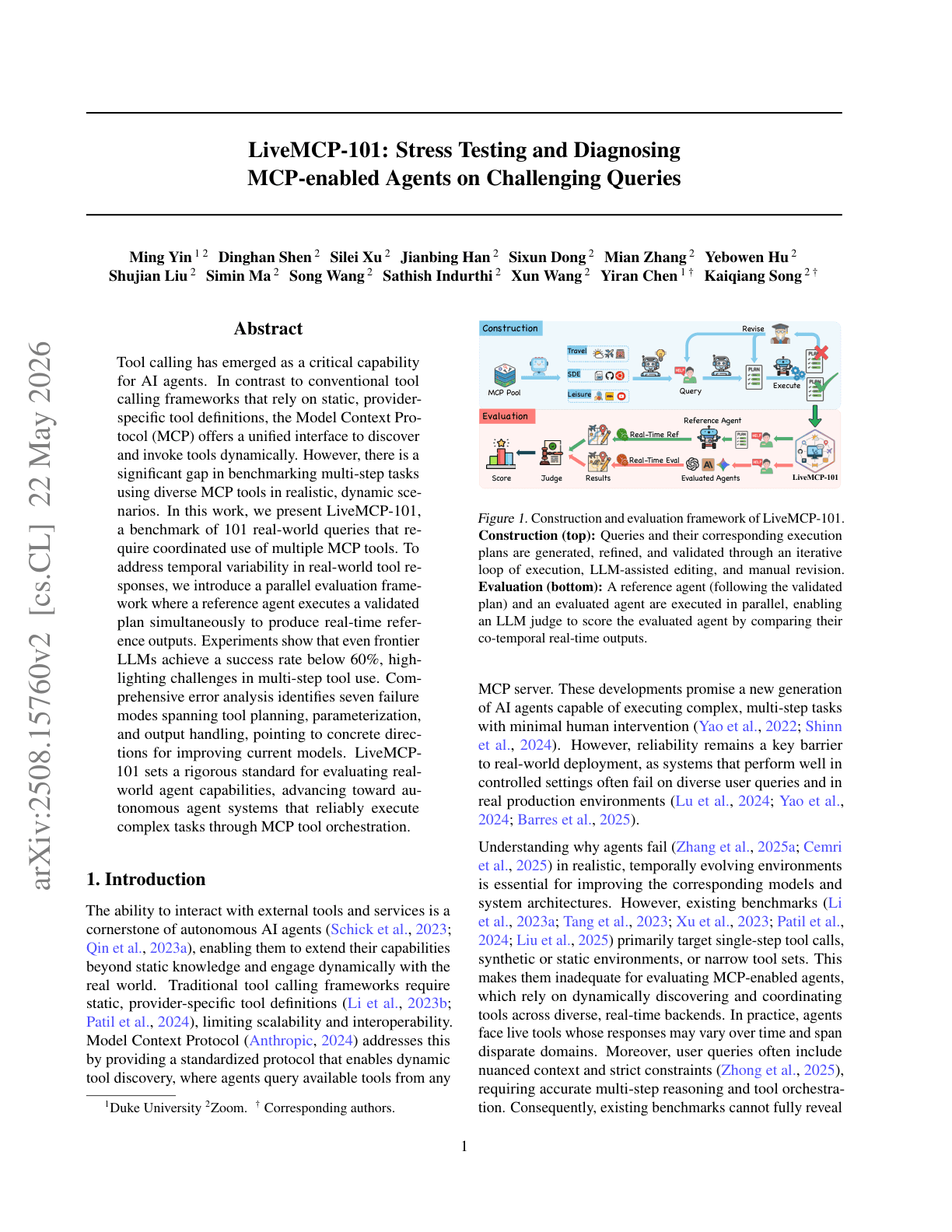
LiveMCP-101 is a new benchmark of 101 real-world queries designed to test MCP-enabled agents on multi-step tasks requiring tool use across search, file ops, math, and data analysis. Results show leading LLMs succeed less than 60%, revealing key weaknesses in tool orchestration and offering insights for advancing autonomous AI systems.
Universal Deep Research
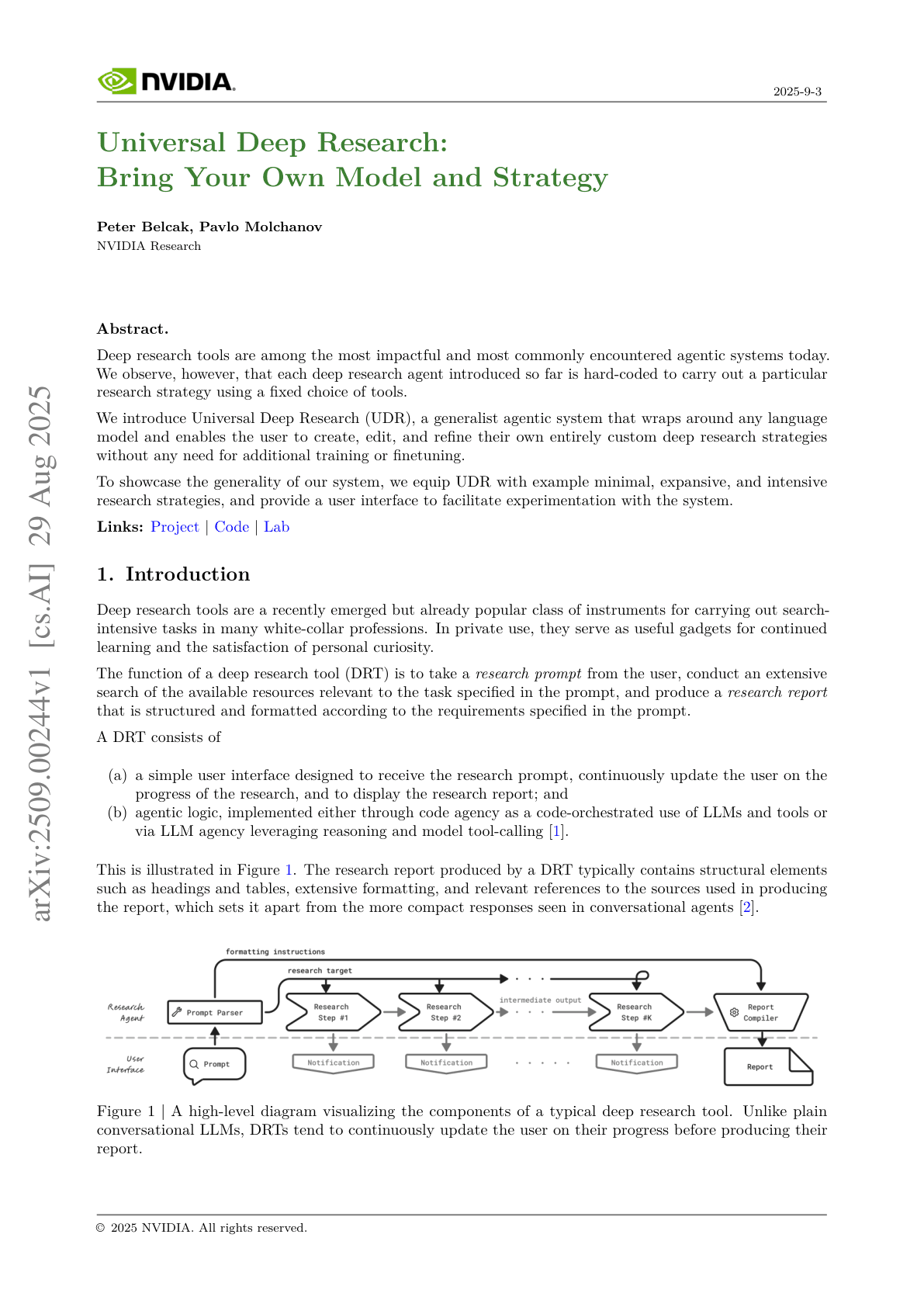
Proposes a general, model-agnostic deep-research agent that lets users “bring your own model and strategy.” Instead of a fixed pipeline, UDR compiles natural-language research strategies into executable code, runs them in a sandbox, and emits structured progress notifications before returning a final report.
Visual Story Telling
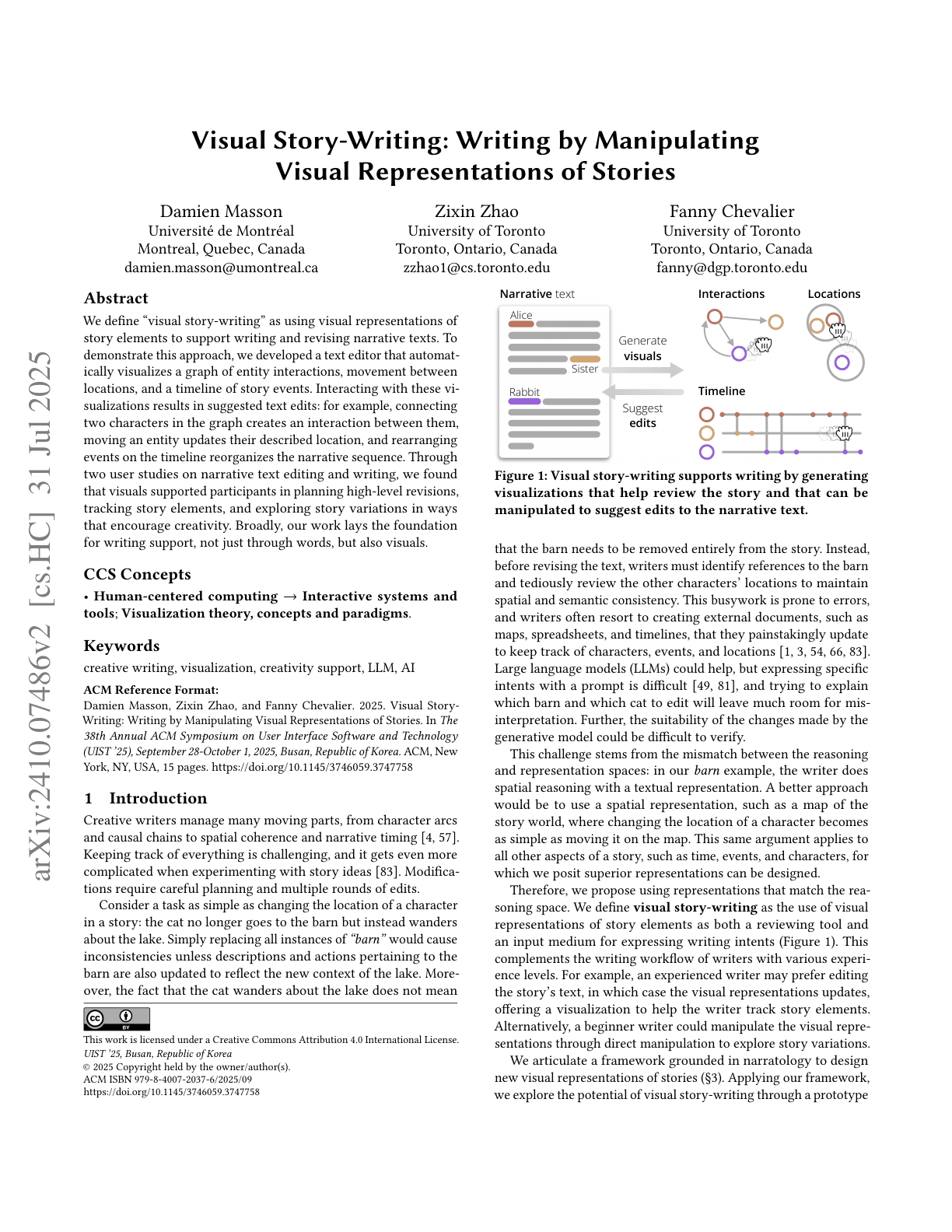
A system and design framework that lets writers edit stories by acting directly on visuals of characters, locations, and timelines. Instead of only prompting, authors drag, connect, and reorder visual elements; the tool proposes synchronized text edits and can regenerate passages from the visual skeleton.