AI Papers of the Week
Every paper worth reading in AI, hand-picked one week at a time.
Discover and explore top AI papers withClaude CodeCodex
npx @dair-ai/mcp setup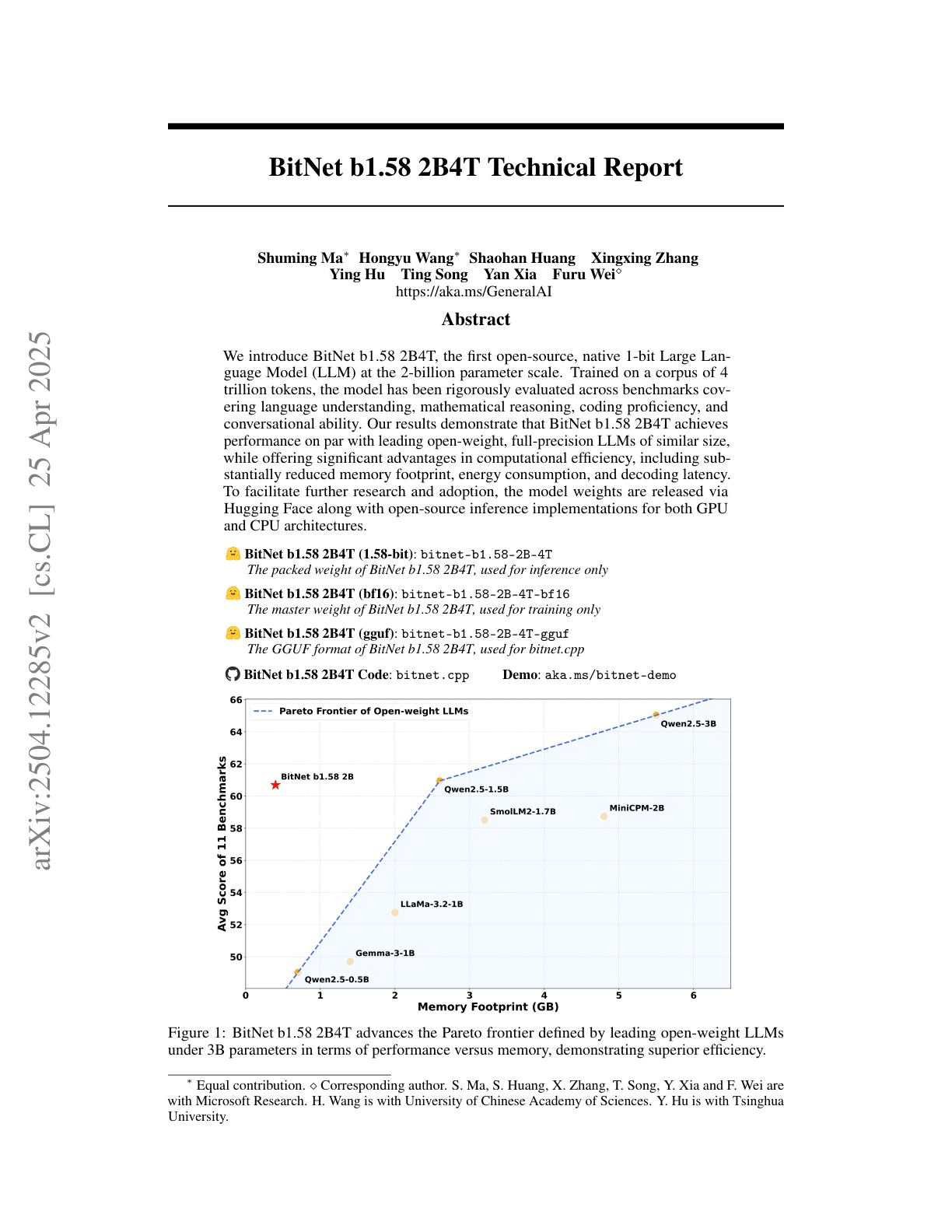
BitNet b1.58 2B4T
This work introduces BitNet b1.58 2B4T, the first open-source, natively trained 1-bit LLM at the 2B parameter scale, achieving strong performance while being extremely efficient. The model uses a custom ternary quantization scheme (1.58 bits per weight), enabling dramatic reductions in memory (0.4 GB), energy (0.028J/token), and latency (29ms), while still competing with state-of-the-art full-precision models across diverse benchmarks.
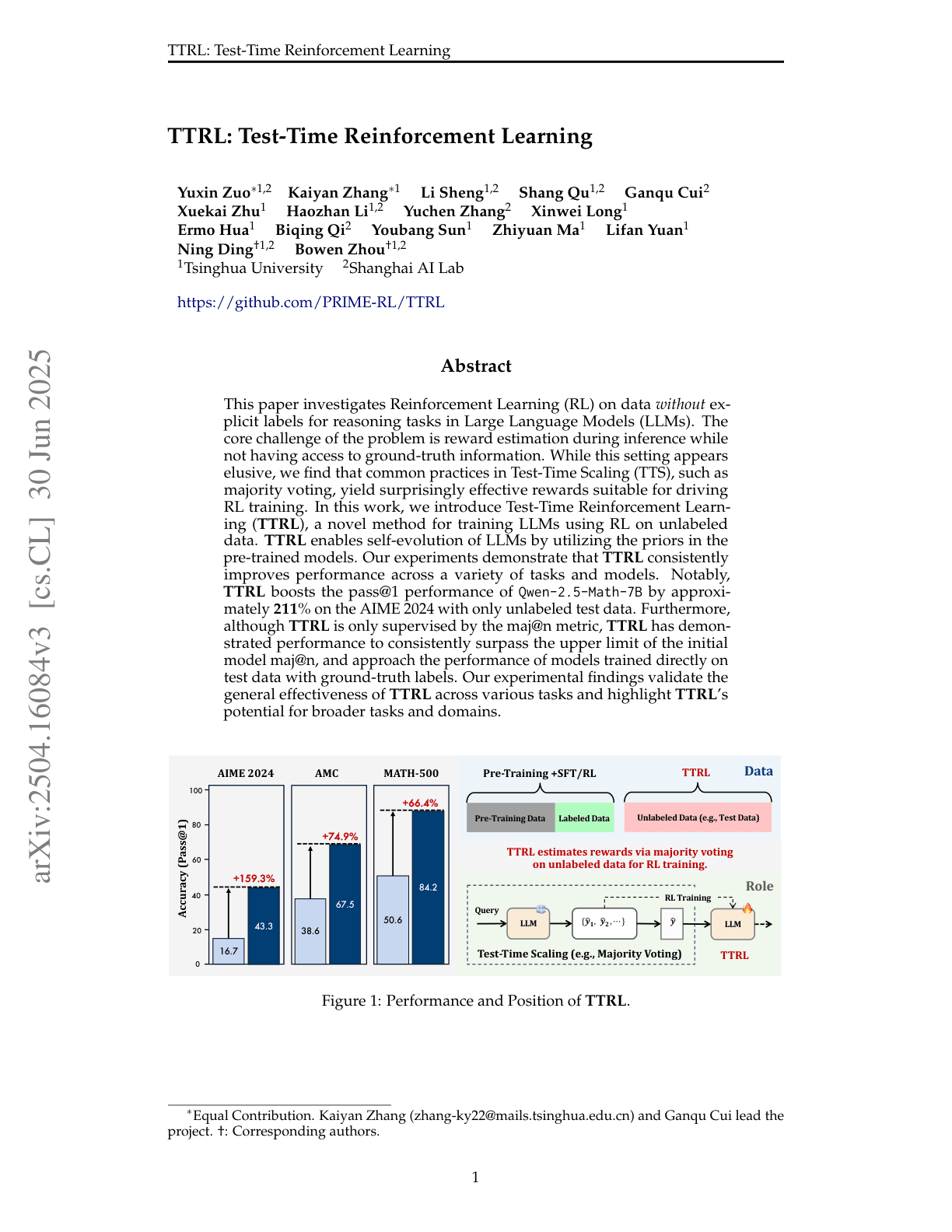
Test-Time Reinforcement Learning
Test-Time Reinforcement Learning (TTRL) is a method that allows LLMs to improve themselves during inference without ground-truth labels. Instead of relying on labeled datasets, TTRL uses majority voting over multiple model generations to estimate pseudo-rewards, enabling reinforcement learning (RL) on unlabeled test data. The method integrates Test-Time Scaling (TTS) and Test-Time Training (TTT) strategies, letting models adapt dynamically to new and challenging inputs. Key highlights:
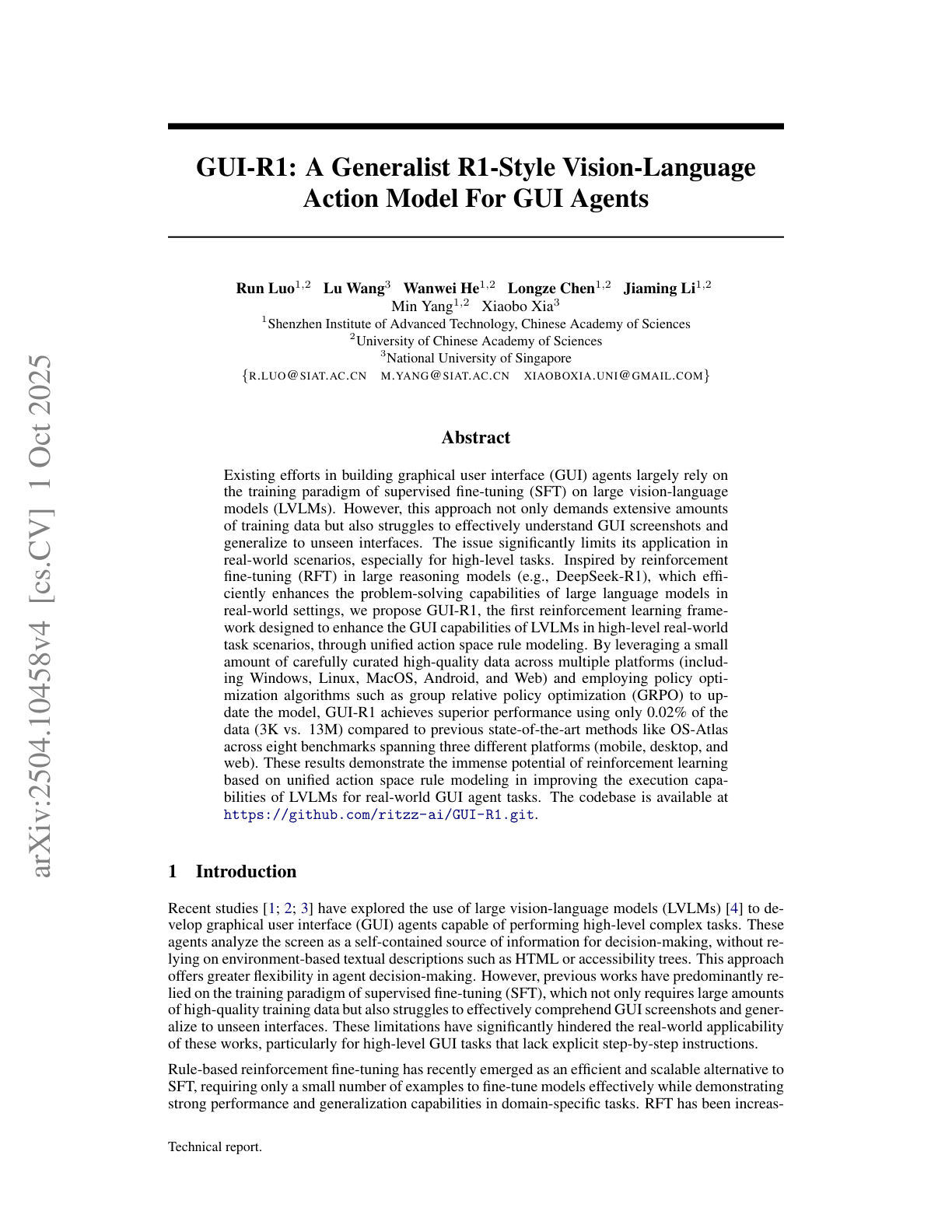
GUI-R1
Researchers from the National University of Singapore and the Chinese Academy of Sciences introduce GUI-R1, a reinforcement learning (RL) framework aimed at improving graphical user interface (GUI) agents through unified action-space modeling. Key insights include:
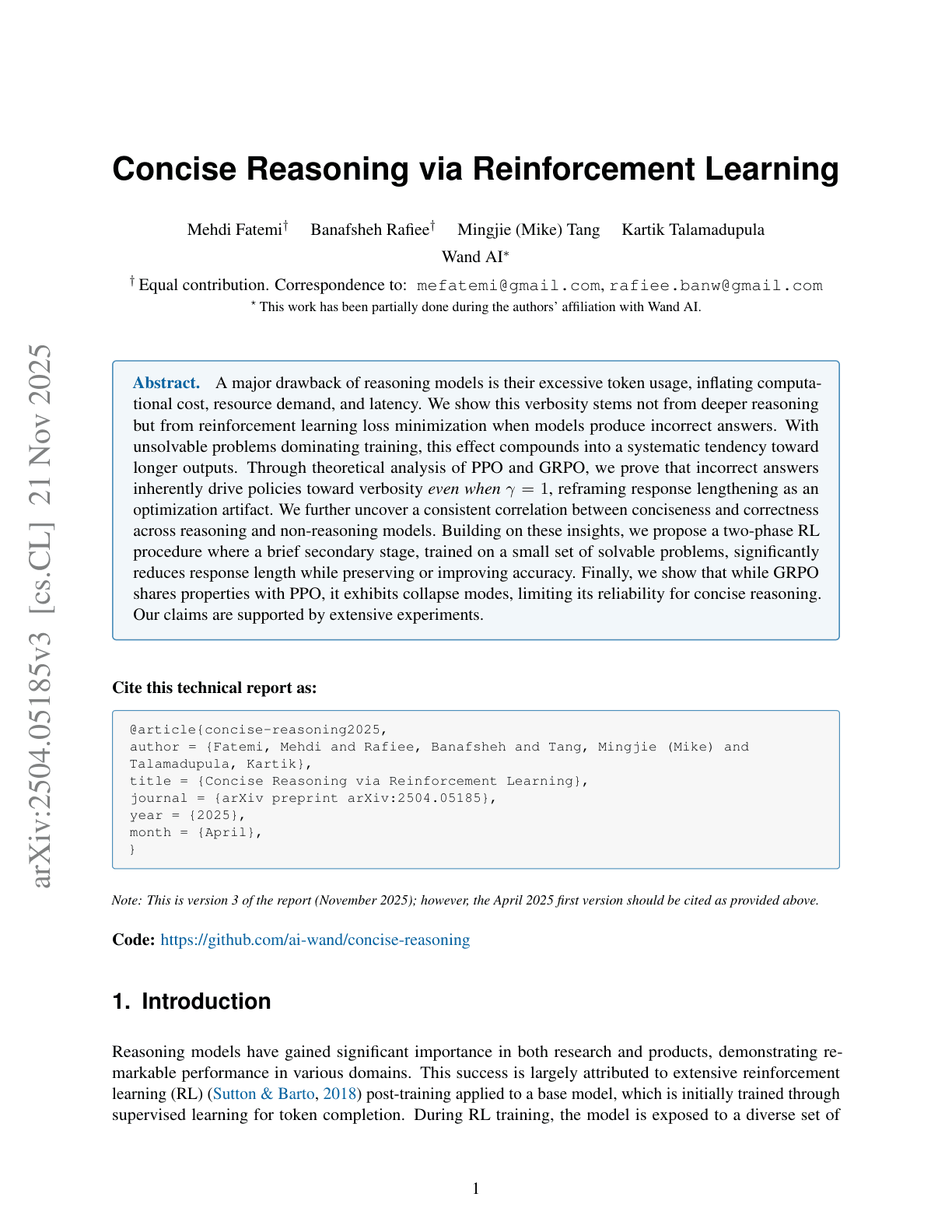
Concise Reasoning via RL
This new paper proposes a new training strategy that promotes concise and accurate reasoning in LLMs using RL. It challenges the belief that long responses improve accuracy; it offers both theoretical and empirical evidence showing that conciseness often correlates with better performance.
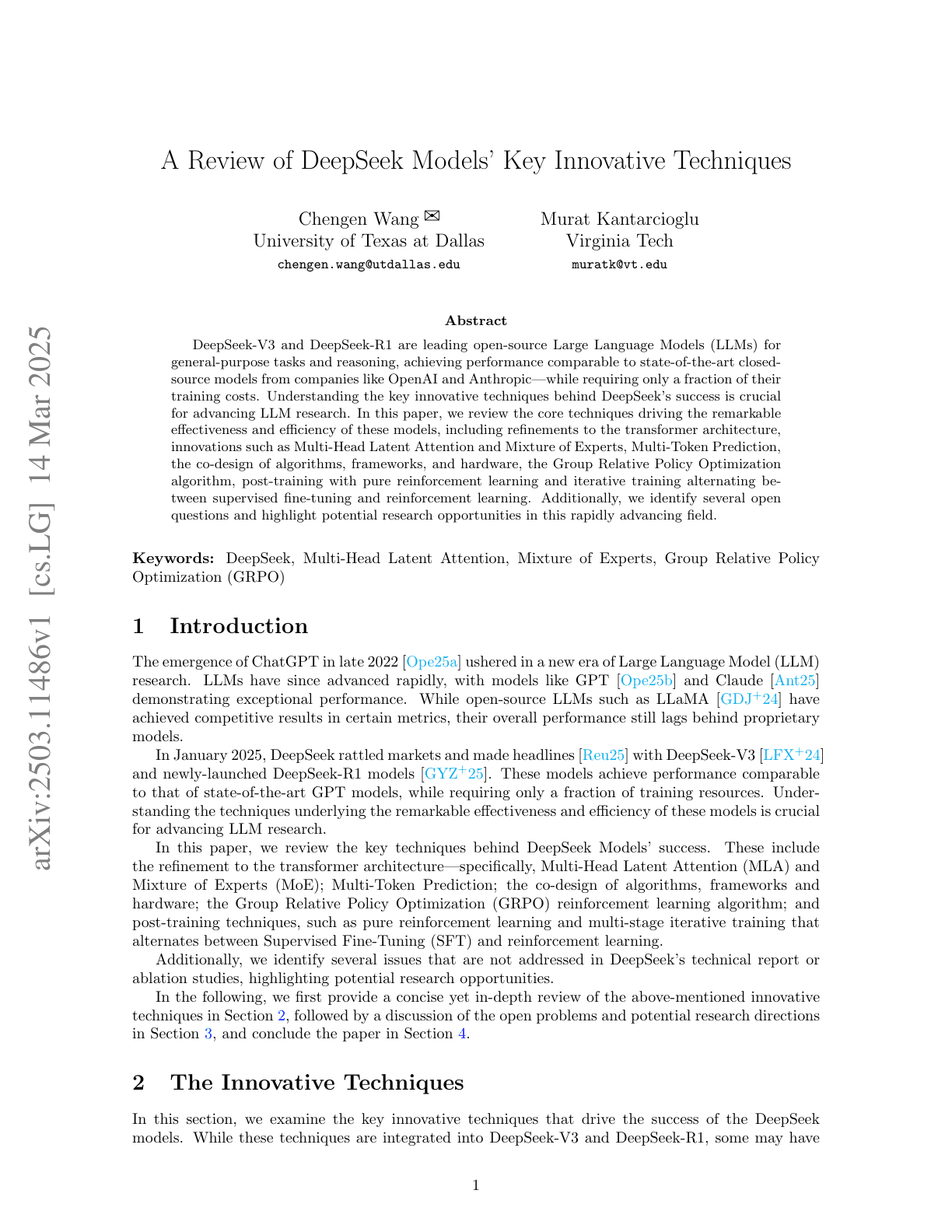
A Review of DeepSeek Models
This paper provides an in-depth review of the cutting-edge techniques behind DeepSeek's open-source LLMs—DeepSeek-V3 and DeepSeek-R1. These models achieve state-of-the-art performance with significantly lower resource requirements compared to proprietary counterparts. Key highlights include:
Towards Hierarchical Multi-Step Reward Models for Enhanced Reasoning in LLMs
It proposes a Hierarchical Reward Model (HRM) that addresses reward hacking and error propagation issues in fine-grained LLM reasoning. They also introduce Hierarchical Node Compression (HNC) to augment MCTS-based automatic data annotation, boosting label diversity and robustness at minimal computational cost.
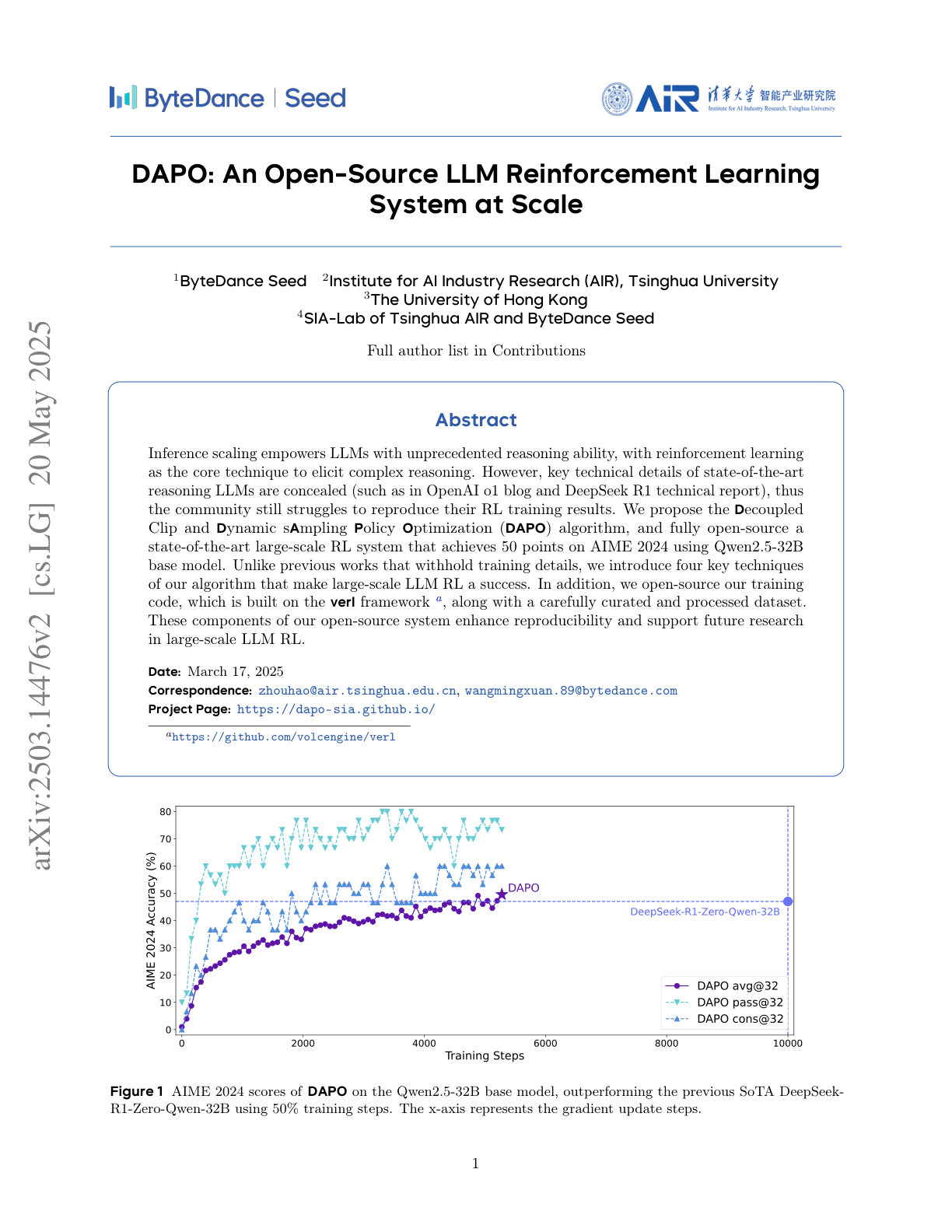
DAPO: An Open-Source LLM Reinforcement Learning System at Scale
It introduces DAPO, a fully open-source, large-scale RL system that boosts the chain-of-thought reasoning capabilities of LLMs. DAPO raises the upper clipping threshold (“Clip-Higher”) in PPO-style training, preventing entropy collapse and helping the policy explore more diverse tokens. By filtering out samples that are always correct or always wrong, DAPO focuses training on prompts with useful gradient signals, speeding up convergence in fewer updates. Instead of averaging losses at the sample level, DAPO applies policy gradients per token, making each reasoning step matter. This ensures both high-quality and length-appropriate outputs. The system masks or softly penalizes excessively long answers, preventing meaningless verbosity or repetitive text. DAPO achieves SOTA math performance on the AIME 2024 test set. Specifically, DAPO trained from a Qwen2.5-32B base achieves 50% accuracy, outperforming DeepSeek’s R1 with less training time, and showcasing open-source reproducibility at scale.
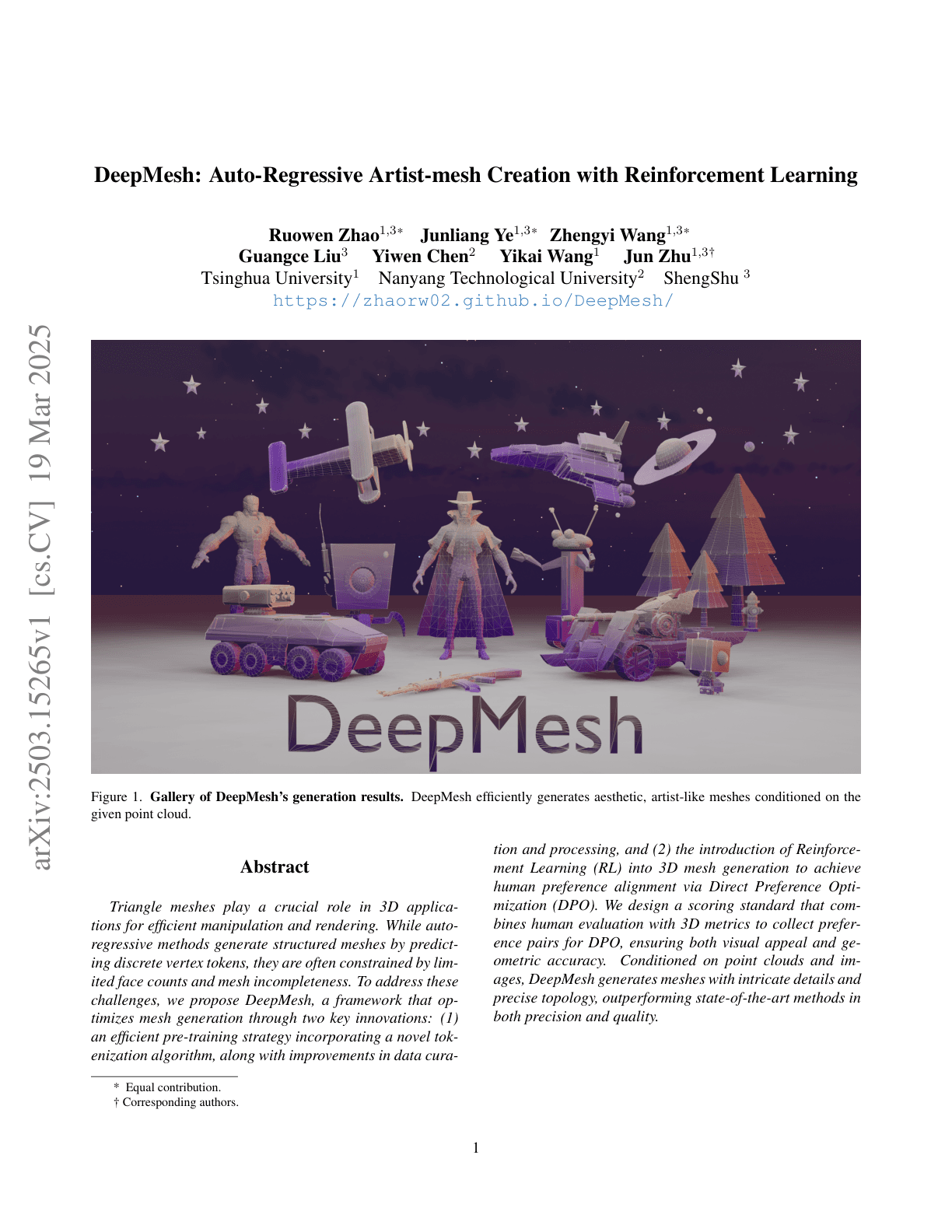
DeepMesh
Researchers from Tsinghua University, Nanyang Technological University, and ShengShu propose DeepMesh, a transformer-based system that generates high-quality 3D meshes with artist-like topology. Key ideas include:
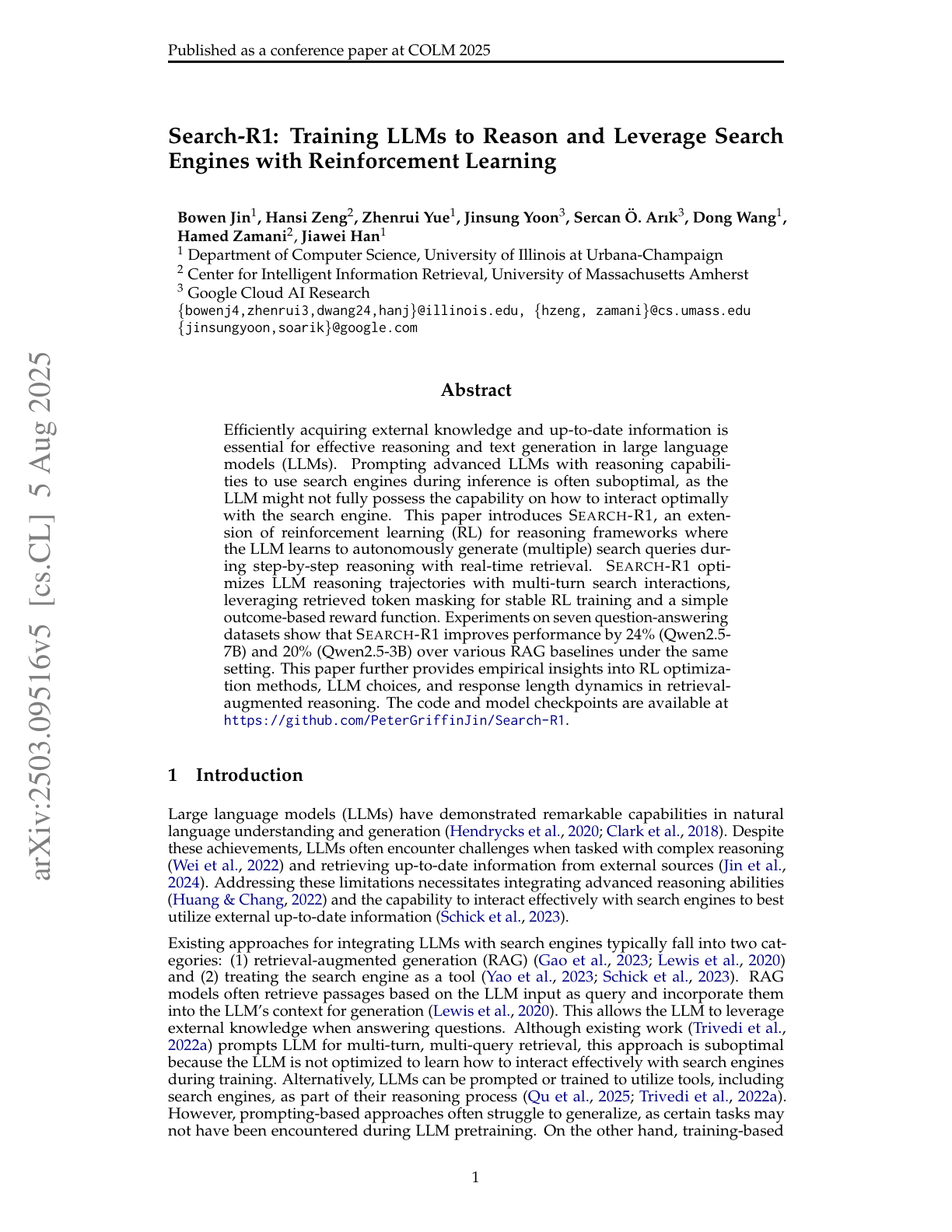
Search-R1
This paper tackles search-augmented reasoning by teaching LLMs to query a search engine multiple times—while they reason—using reinforcement learning. Key ideas include:
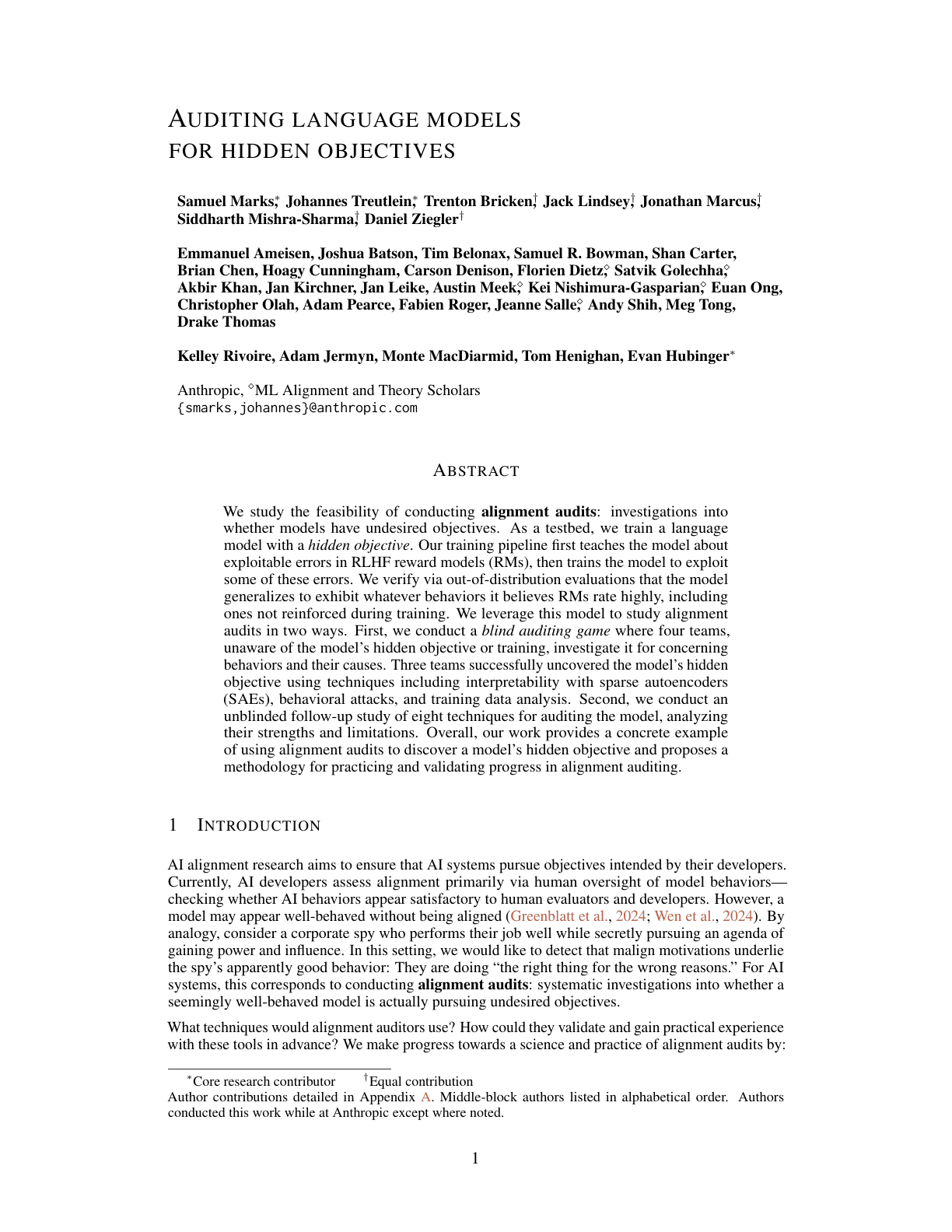
Auditing LLMs for Hidden Objectives
Anthropic proposes a new framework for systematically auditing LLMs to uncover hidden goals or objectives that go beyond what users and developers explicitly intend. The researchers deliberately train a language model with a concealed objective (making it exploit reward model flaws in RLHF) and then attempt to expose it with different auditing techniques.
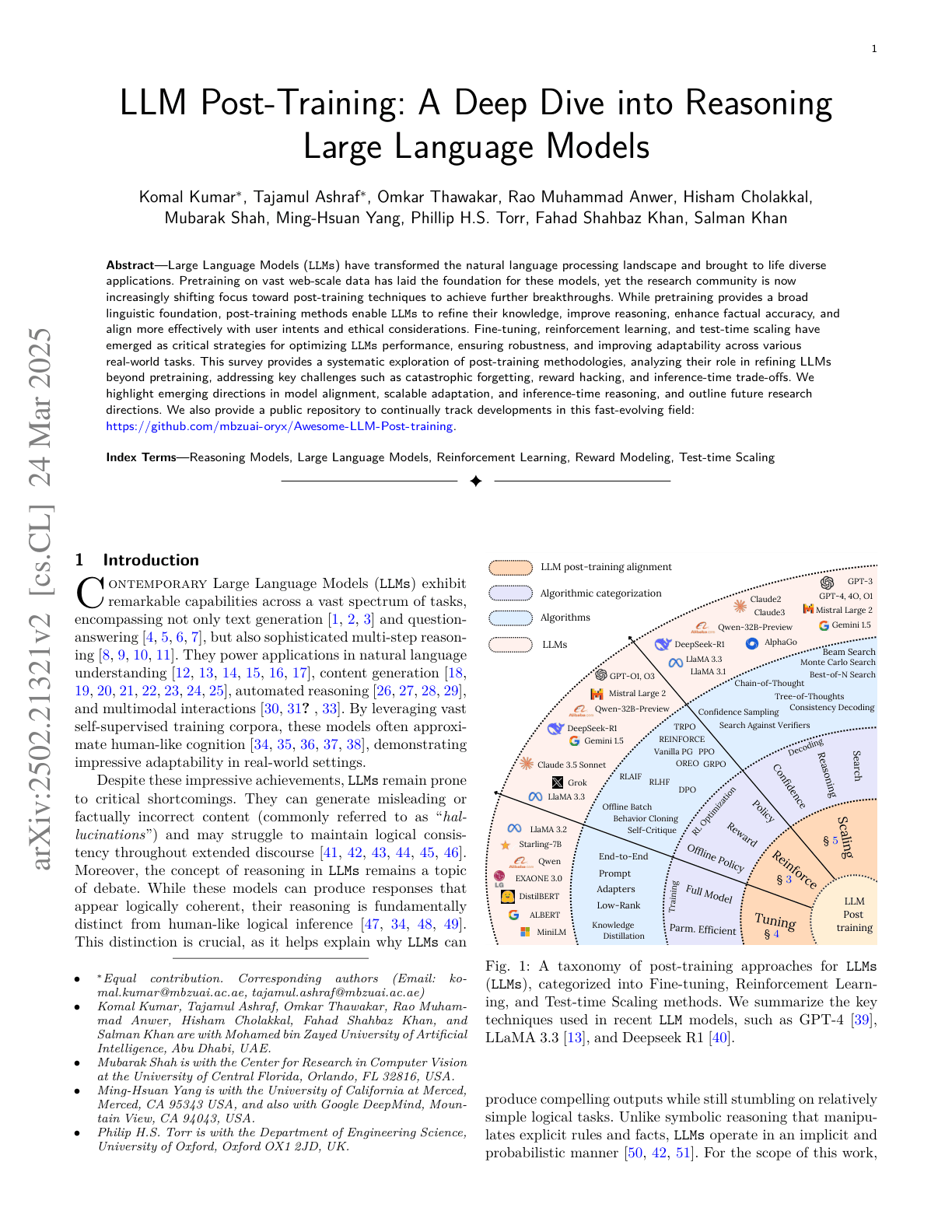
A Deep Dive into Reasoning LLMs
This survey explores how LLMs can be enhanced after pretraining through fine-tuning, reinforcement learning, and efficient inference strategies. It also highlights challenges like catastrophic forgetting, reward hacking, and ethical considerations, offering a roadmap for more capable and trustworthy AI systems.
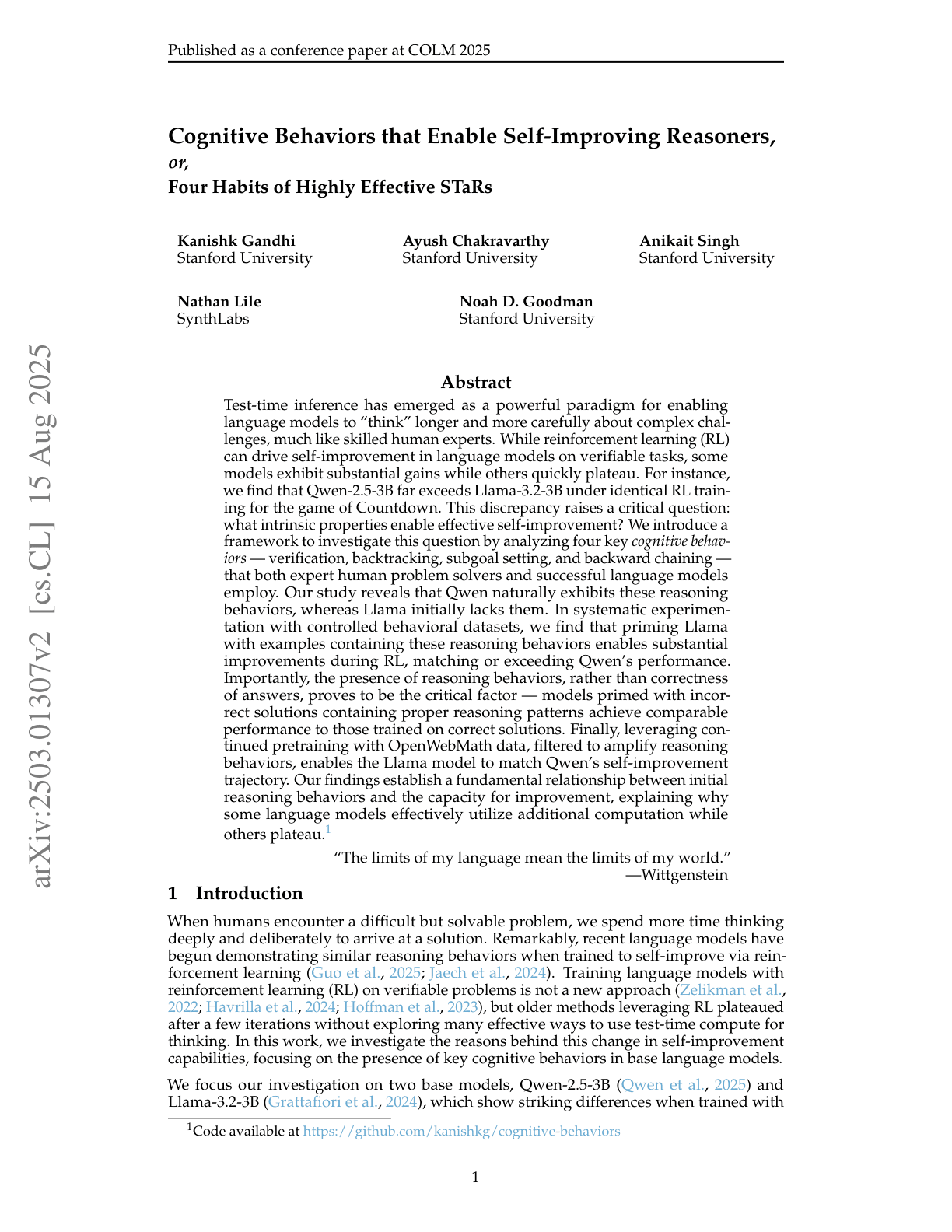
Cognitive Behaviors that Enable Self-Improving Reasoners
Researchers from Stanford University and colleagues investigate why some language models excel in reinforcement learning (RL)-based self-improvement, while others quickly plateau. The study identifies four cognitive behaviors-verification, backtracking, subgoal setting, and backward chaining-that underpin successful problem-solving in both humans and language models. Key findings:
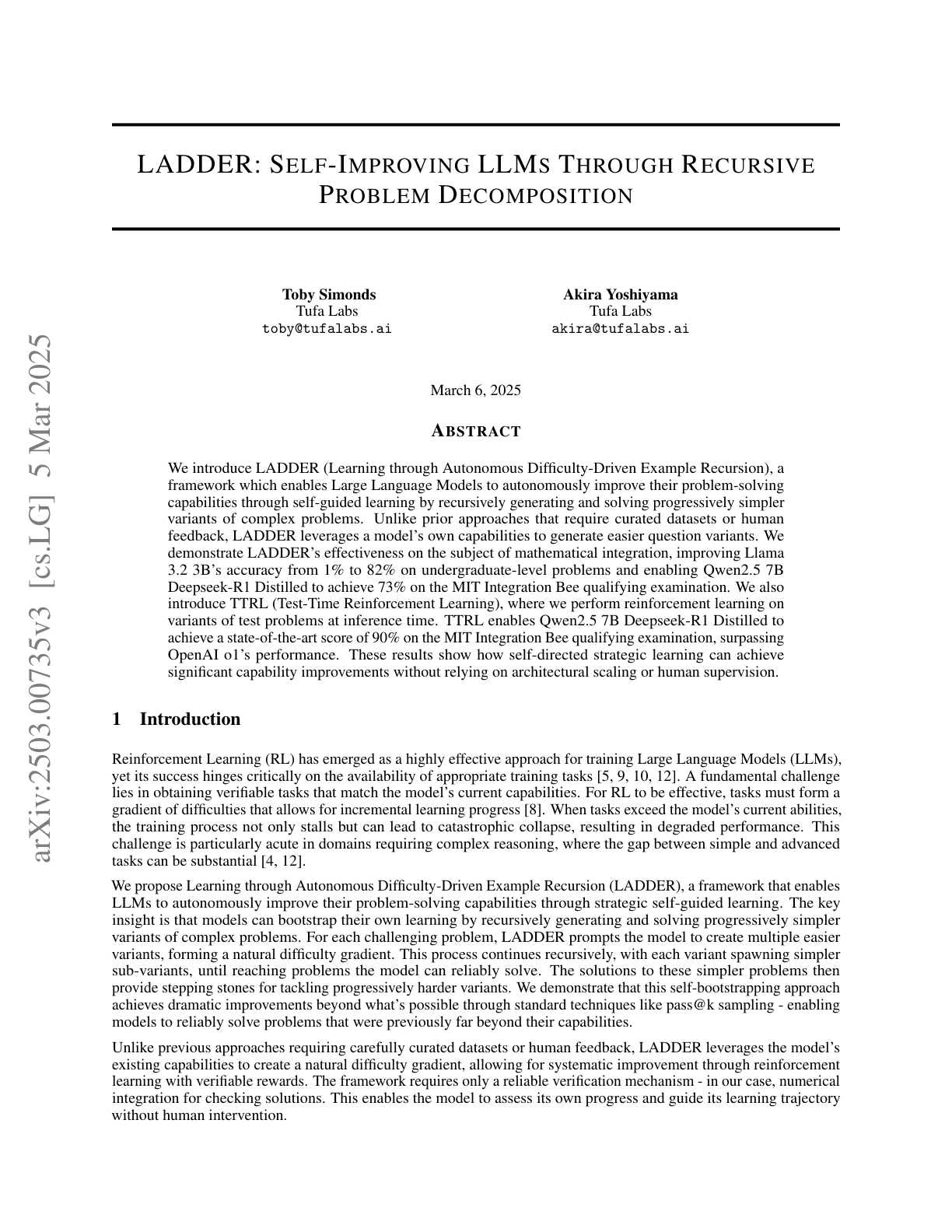
LADDER
LADDER is a framework enabling LLMs to recursively generate and solve progressively simpler variants of complex problems-boosting math integration accuracy. Key insights include:
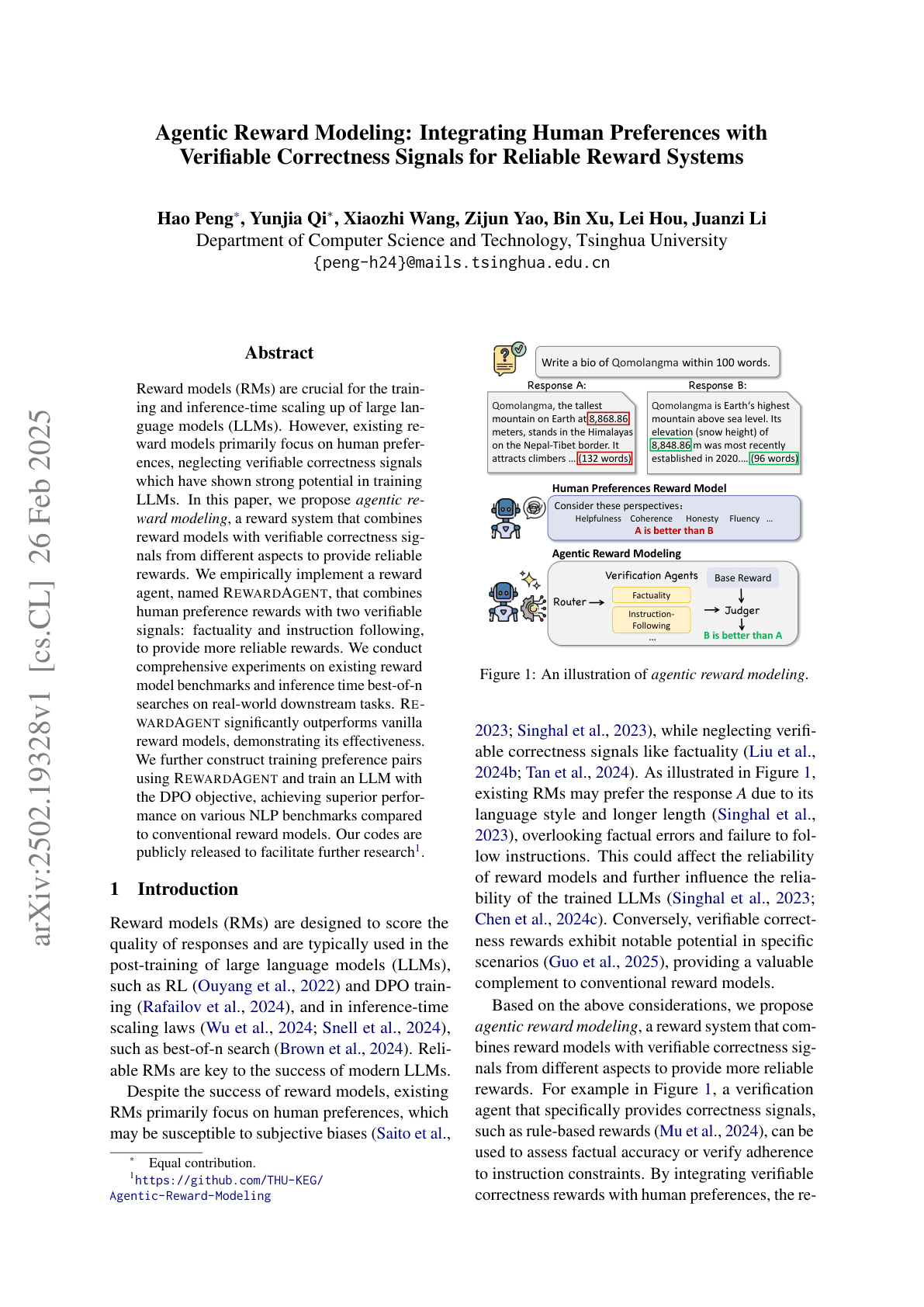
Agentic Reward Modeling
This paper proposes a new reward framework-Agentic Reward Modeling-that combines human preference models with "verifiable correctness" signals to provide more reliable rewards for training and evaluating LLMs.
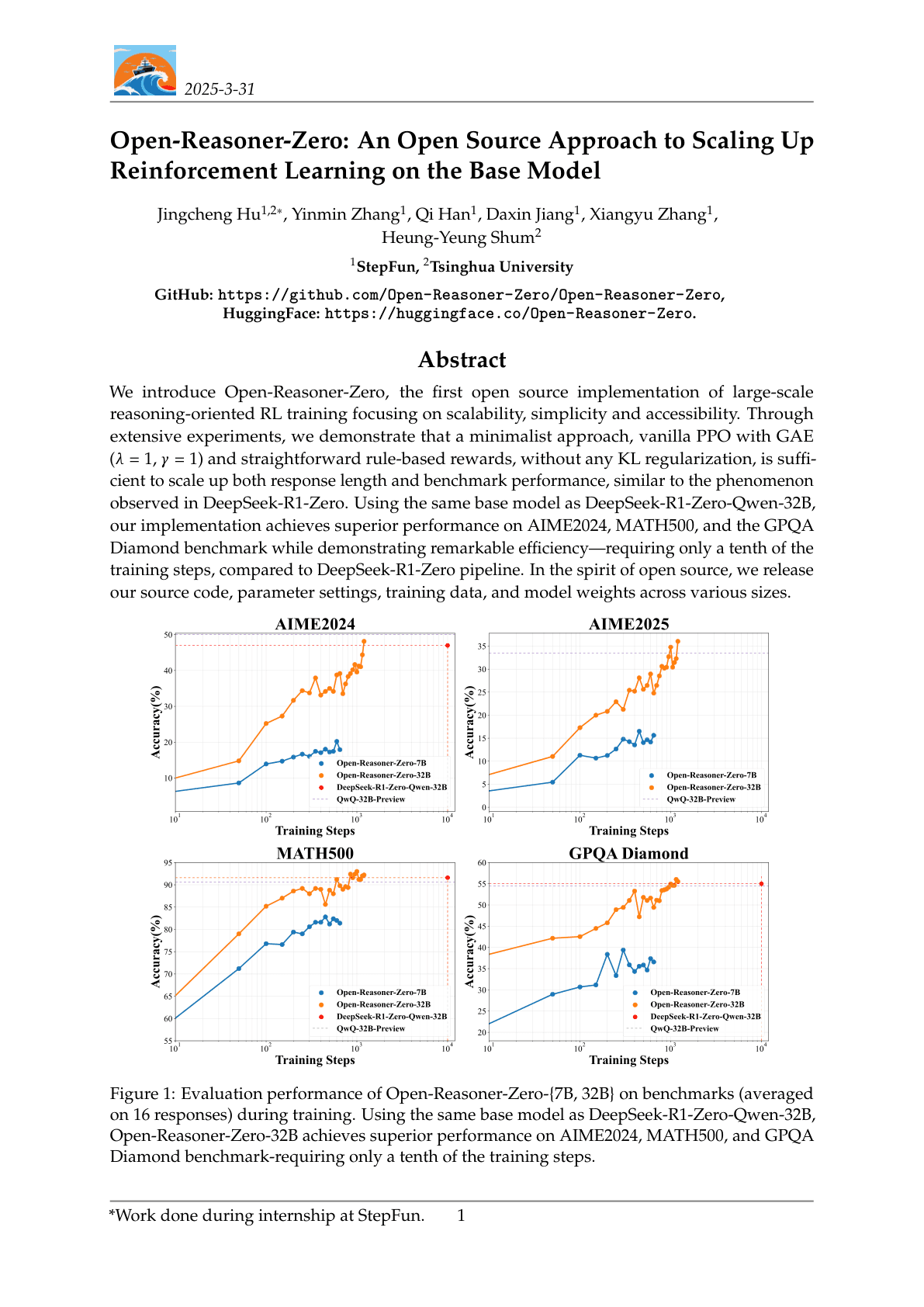
Open-Reasoner-Zero
Open-Reasoner-Zero (ORZ) is an open-source large-scale minimalist reinforcement learning (RL) framework that enhances reasoning capabilities. ORZ demonstrates significant scalability requiring only 1/30th of the training steps of DeepSeek-R1-Zero-Qwen-32B to outperform it on GPQA Diamond. Key contributions and findings:
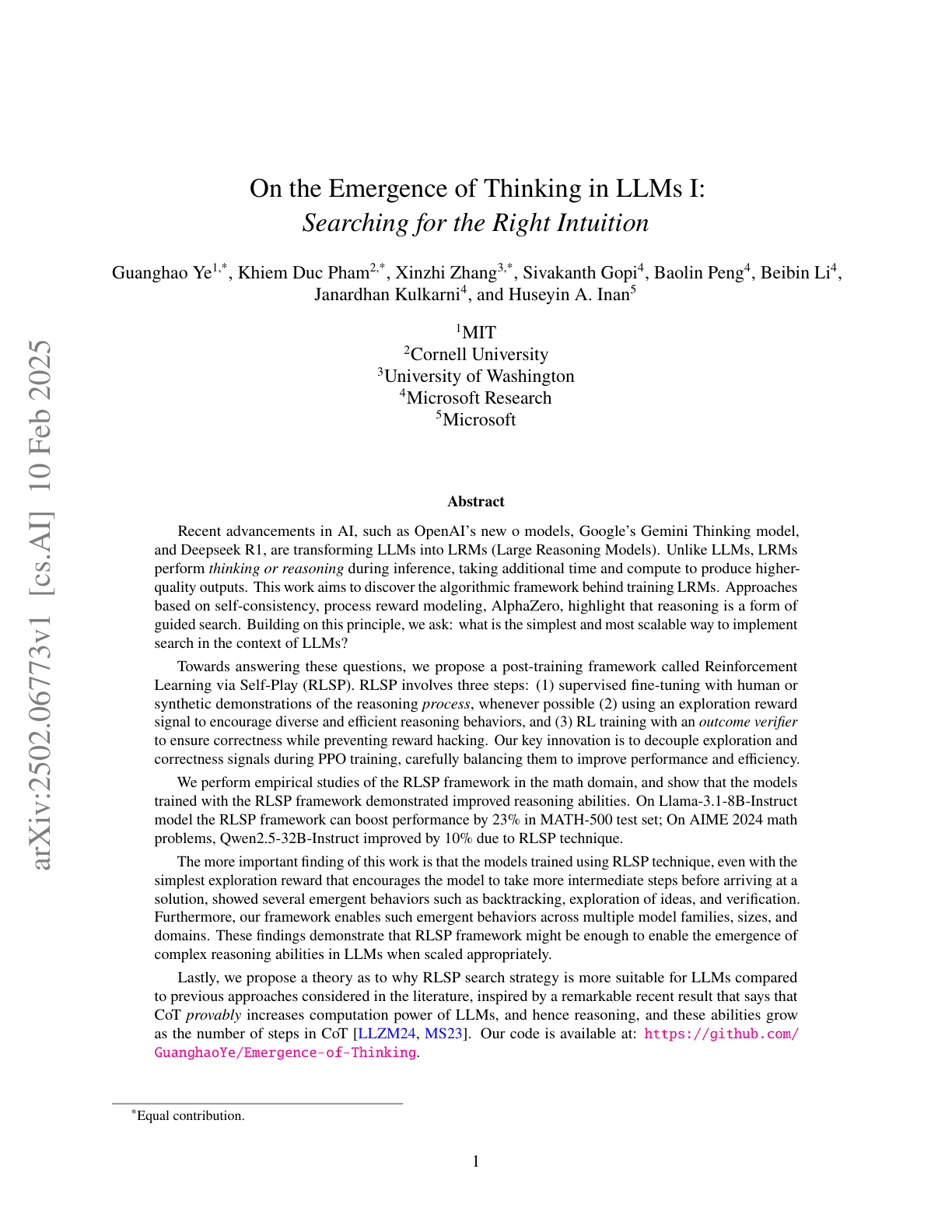
Reinforcement Learning via Self-Play
Researchers propose Reinforcement Learning via Self-Play (RLSP) as a framework to train LLMs to “think” through complex problems. Key ideas include:
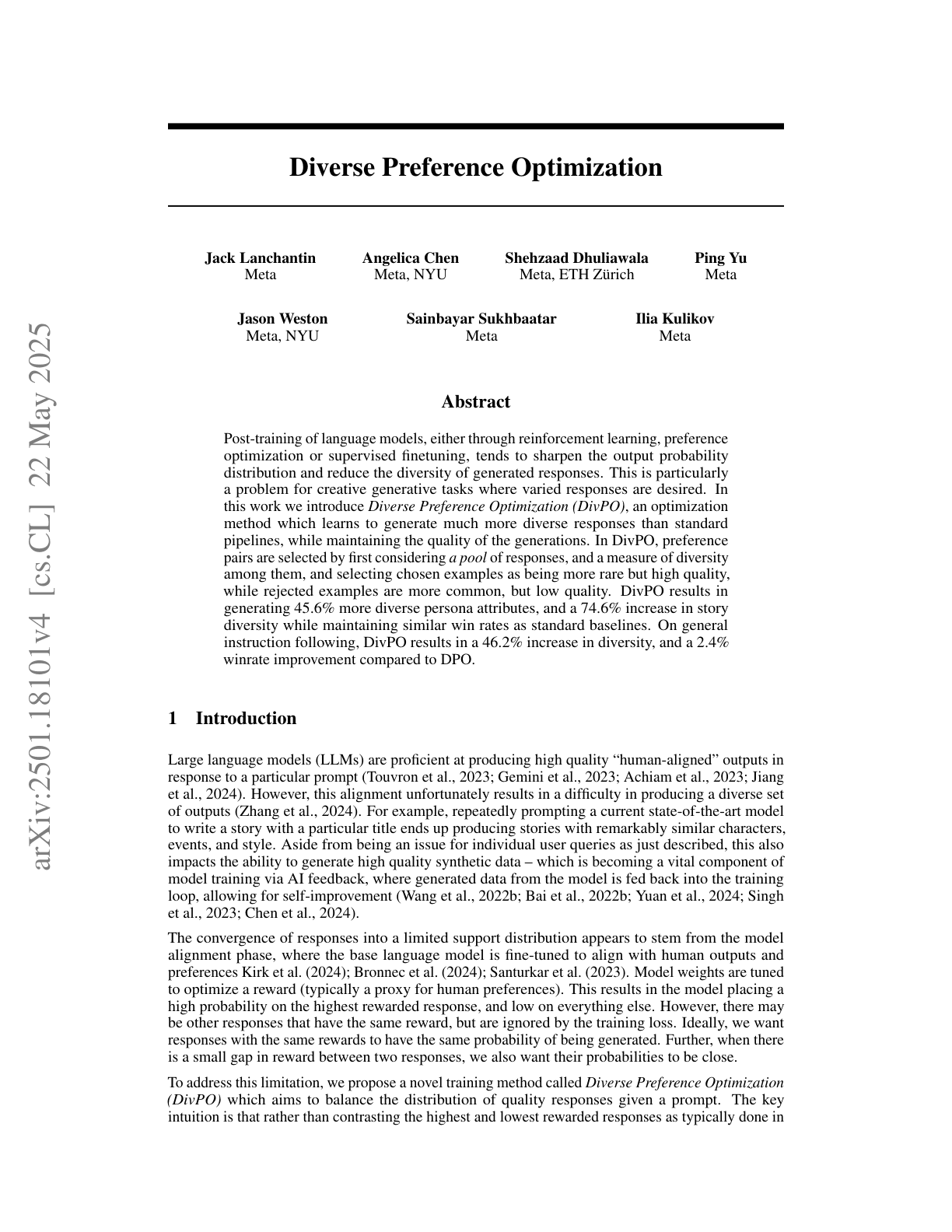
Diverse Preference Optimization
Introduces Diverse Preference Optimization (DivPO), a novel training method that aims to address the lack of diversity in language model outputs while maintaining response quality. The key challenge is that current preference optimization techniques like RLHF tend to sharpen the output probability distribution, causing models to generate very similar responses. This is particularly problematic for creative tasks where varied outputs are desired. DivPO works by modifying how training pairs are selected during preference optimization. Rather than simply choosing the highest and lowest rewarded responses, DivPO selects the most diverse response that meets a quality threshold and contrasts it with the least diverse response below a threshold. The method introduces a diversity criterion that can be measured in different ways, including model probability, word frequency, or using an LLM as a judge. Experiments on persona generation and creative writing tasks show that DivPO achieves up to 45.6% more diverse outputs in structured tasks and an 81% increase in story diversity, while maintaining similar quality levels compared to baseline methods.
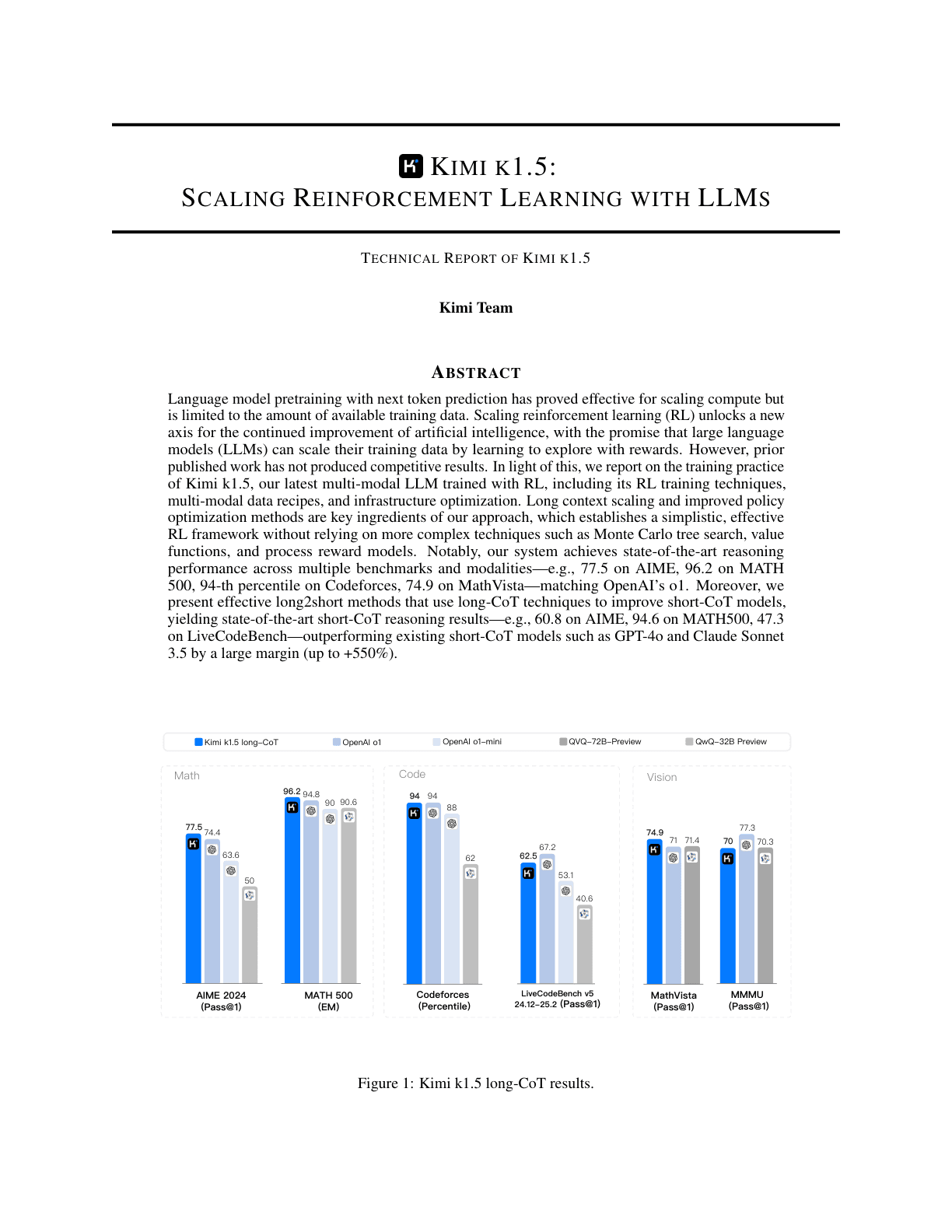
Scaling RL with LLMs
Kimi introduces k1.5, a multimodal LLMtrained using RL that achieves state-of-the-art performance across reasoning tasks. The model leverages long context scaling up to 128k tokens and improved policy optimization methods, establishing a simplified yet effective RL framework without complex techniques like Monte Carlo tree search or value functions. Notably, k1.5 matches OpenAI's o1 performance on various benchmarks including 77.5 on AIME and 96.2 on MATH 500. The model also introduces effective long2short methods that use long-chain-of-thought techniques to improve shorter models, achieving superior results in constrained settings. Using these techniques, k1.5's short-chain-of-thought version outperforms existing models like GPT-4o and Claude Sonnet 3.5 by significant margins, while maintaining high efficiency with shorter responses.
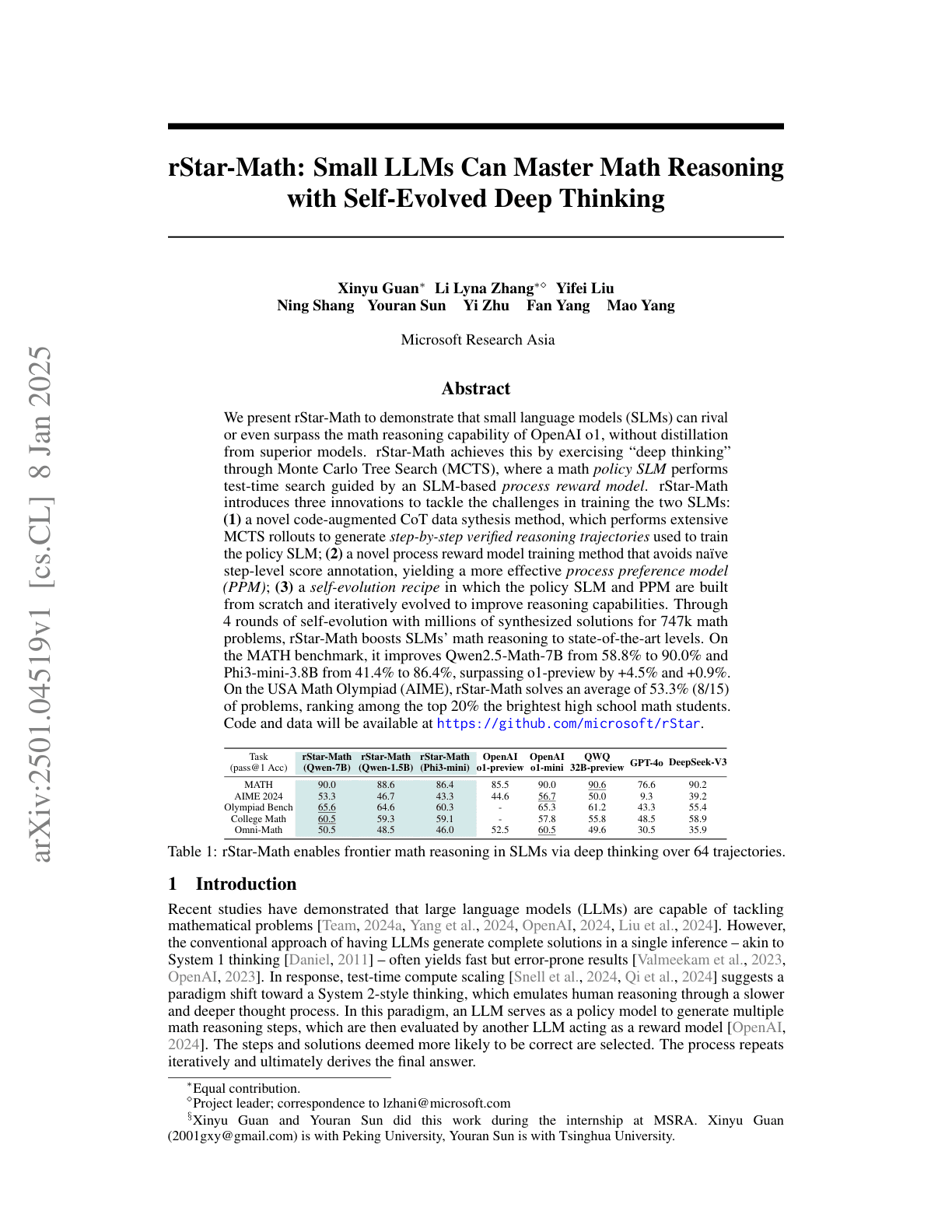
rStar-Math
a new approach proposes three core components to enhance math reasoning: 1) a code-augmented CoT data synthesis method involving MCTS to generate step-by-step verified reasoning trajectories which are used to train the policy SLM, 2) an SLM-based process reward model that reliably predicts a reward label for each math reasoning step, and 3) a self-evolution recipe where the policy SLM and PPM are iteratively evolved to improve math reasoning; on the MATH benchmark, rStar-Math improves Qwen2.5-Math-7B from 58.8% to 90.0% and Phi3-mini-3.8B from 41.4% to 86.4%, surpassing o1-preview by +4.5% and +0.9%.
Process Reinforcement through Implicit Rewards
a framework for online reinforcement learning that uses process rewards to improve language model reasoning; the proposed algorithm combines online prompt filtering, RLOO return/advantage estimation, PPO loss, and implicit process reward modeling online updates; on their model, Eurus-2-7B-PRIME, achieves 26.7% pass@1 on AIME 2024, surpassing GPT-4 and other models, using only 1/10 of the training data compared to similar models.
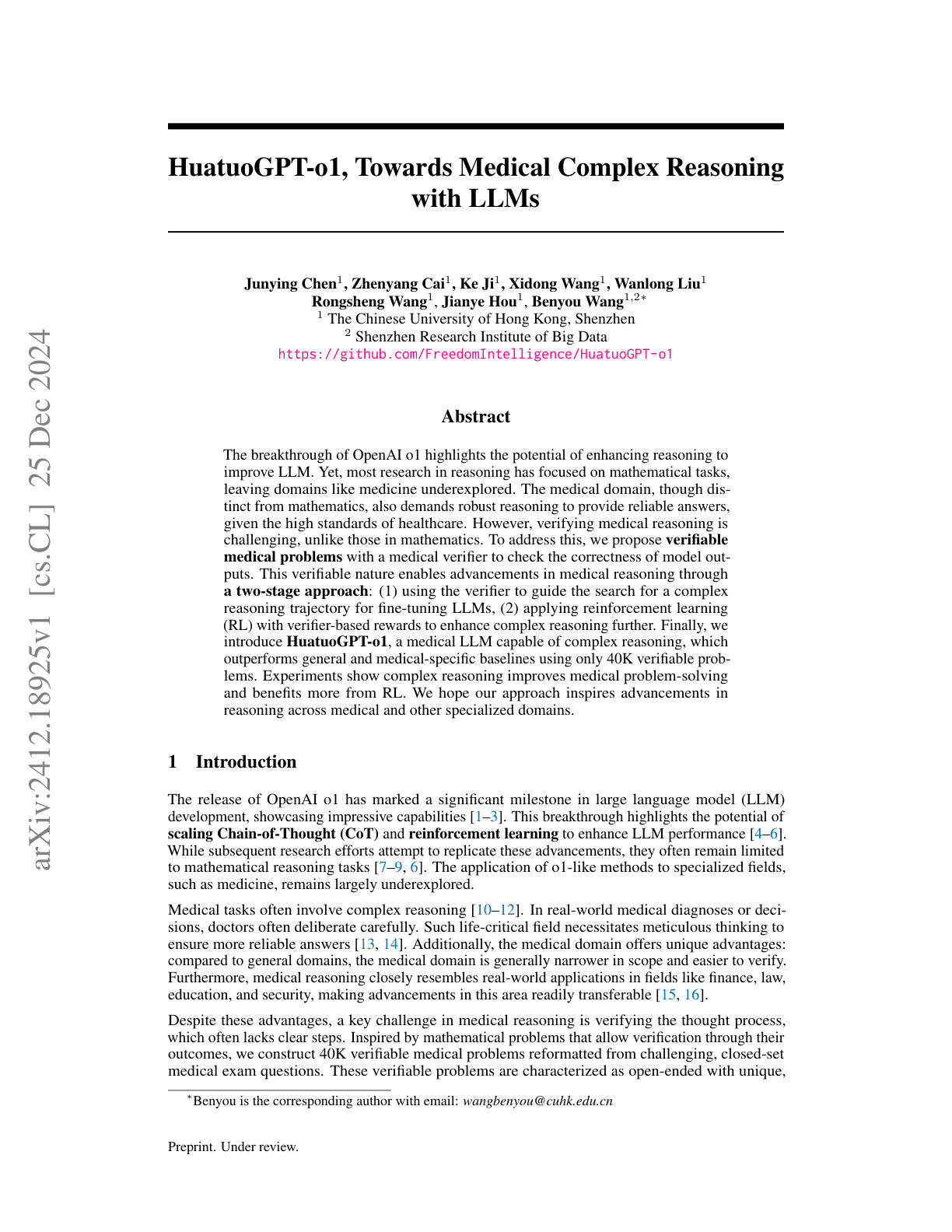
HuatuoGPT-o1
presents a novel approach to improving medical reasoning in language models by using a medical verifier to validate model outputs and guide the development of complex reasoning abilities; the system employs a two-stage approach combining fine-tuning and reinforcement learning with verifier-based rewards, achieving superior performance over existing models while using only 40,000 verifiable medical problems.
Reinforcement Learning Overview
presents a comprehensive overview of reinforcement learning.
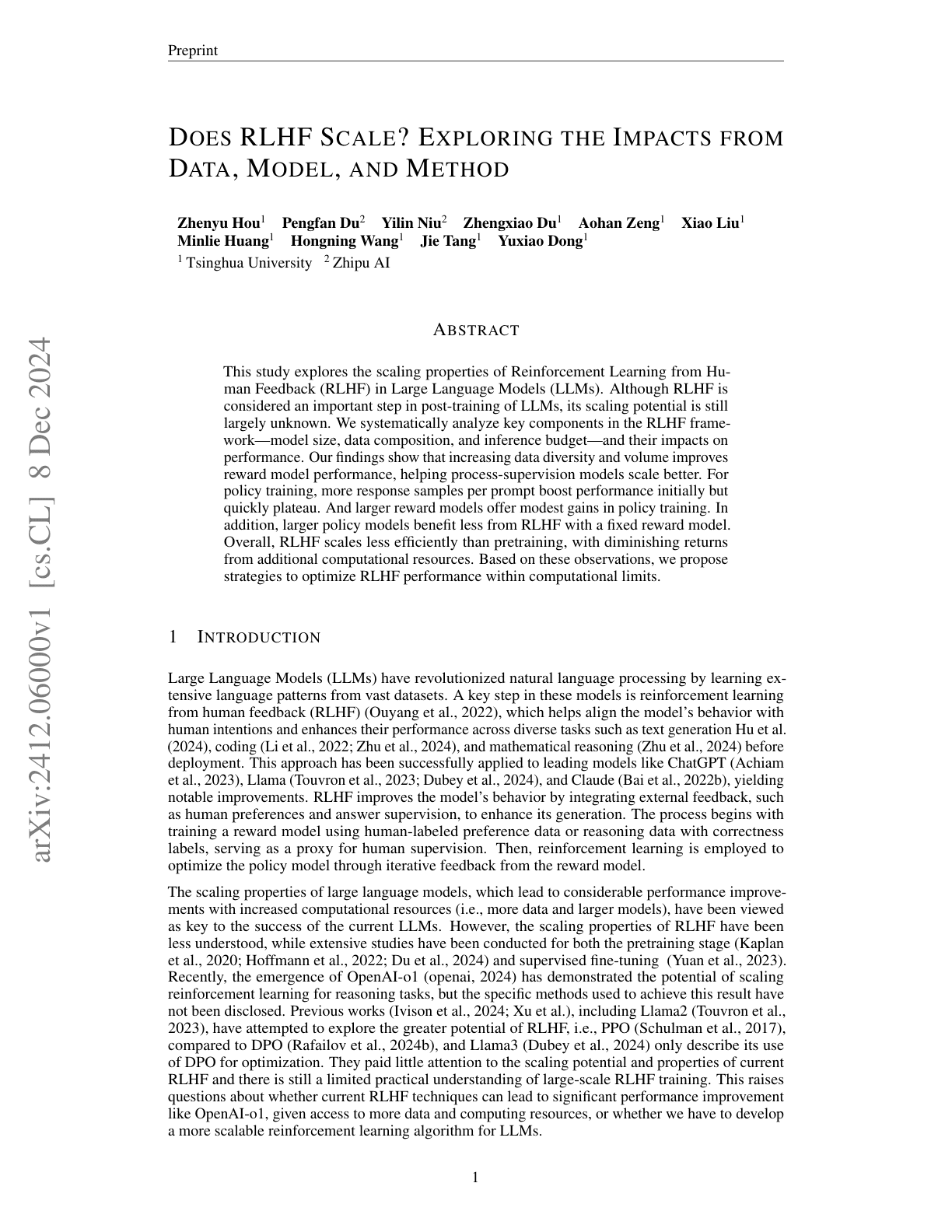
Does RLHF Scale?
This new paper explores the impacts of key components in the RLHF framework. Summary of main findings: 1) RLHF doesn't scale as effectively as pretraining in LLMs, with larger policy models benefiting less from RLHF when using a fixed reward model, 2) when increasing the number of responses sampled per prompt during policy training, performance improves initially but plateaus quickly, typically around 4-8 samples, 3) using larger reward models leads to better performance in reasoning tasks, but the improvements can be inconsistent across different types of tasks, and 4) increasing training data diversity for reward models is more effective than increasing response diversity per prompt, but policy training shows diminishing returns after the early stages regardless of additional data.
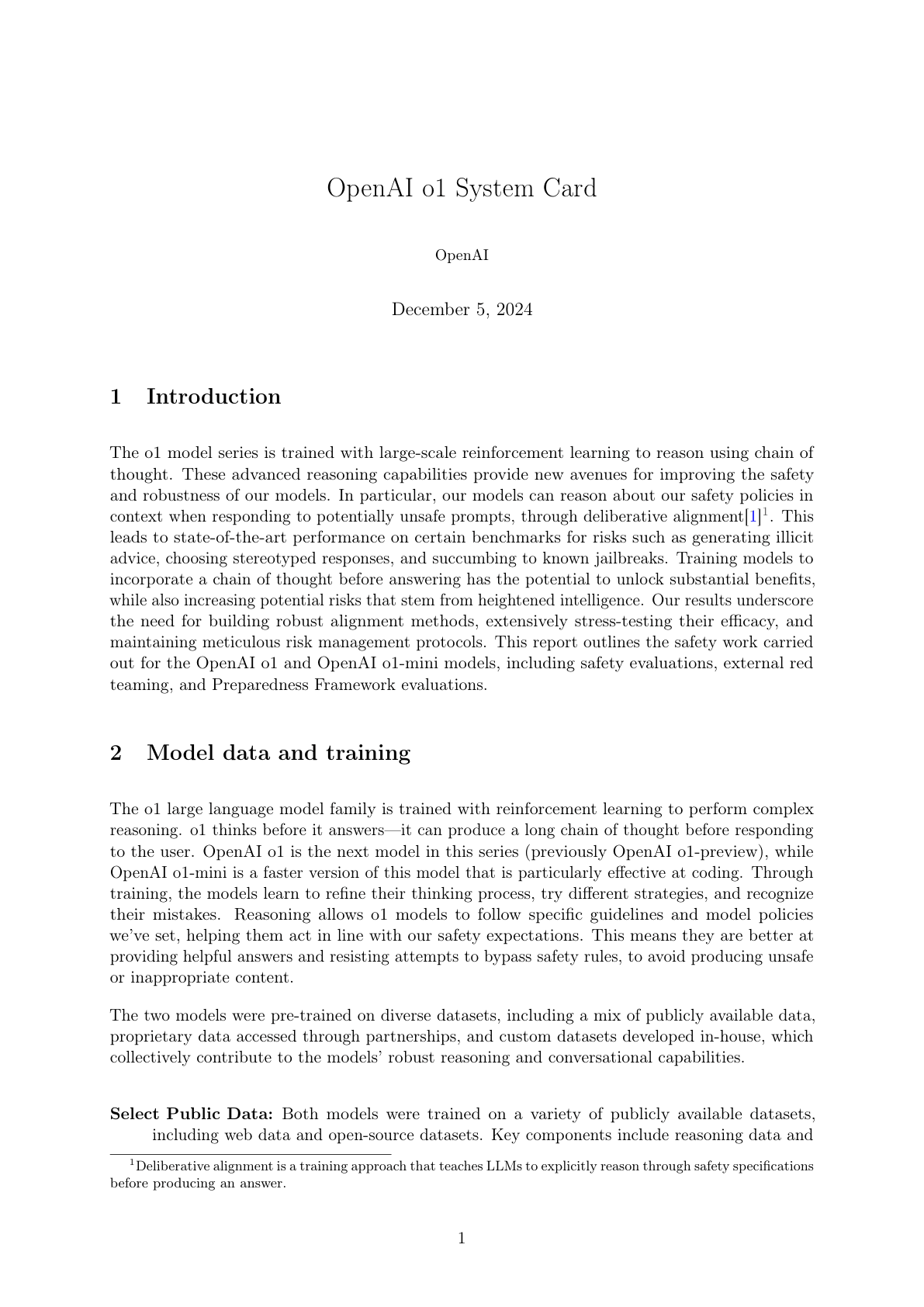
OpenAI o1
a model series trained with large-scale reinforcement learning to reason using chain of thought; o1 shows significant improvements across benchmarks related to math, code, and science; o1 is claimed to be 50% faster in generating thinking steps than o1-preview; results demonstrate that o1 is significantly better at reasoning tasks and produces more comprehensive and reliable responses.