AI Papers of the Week
Every paper worth reading in AI, hand-picked one week at a time.
Discover and explore top AI papers withClaude CodeCodex
npx @dair-ai/mcp setup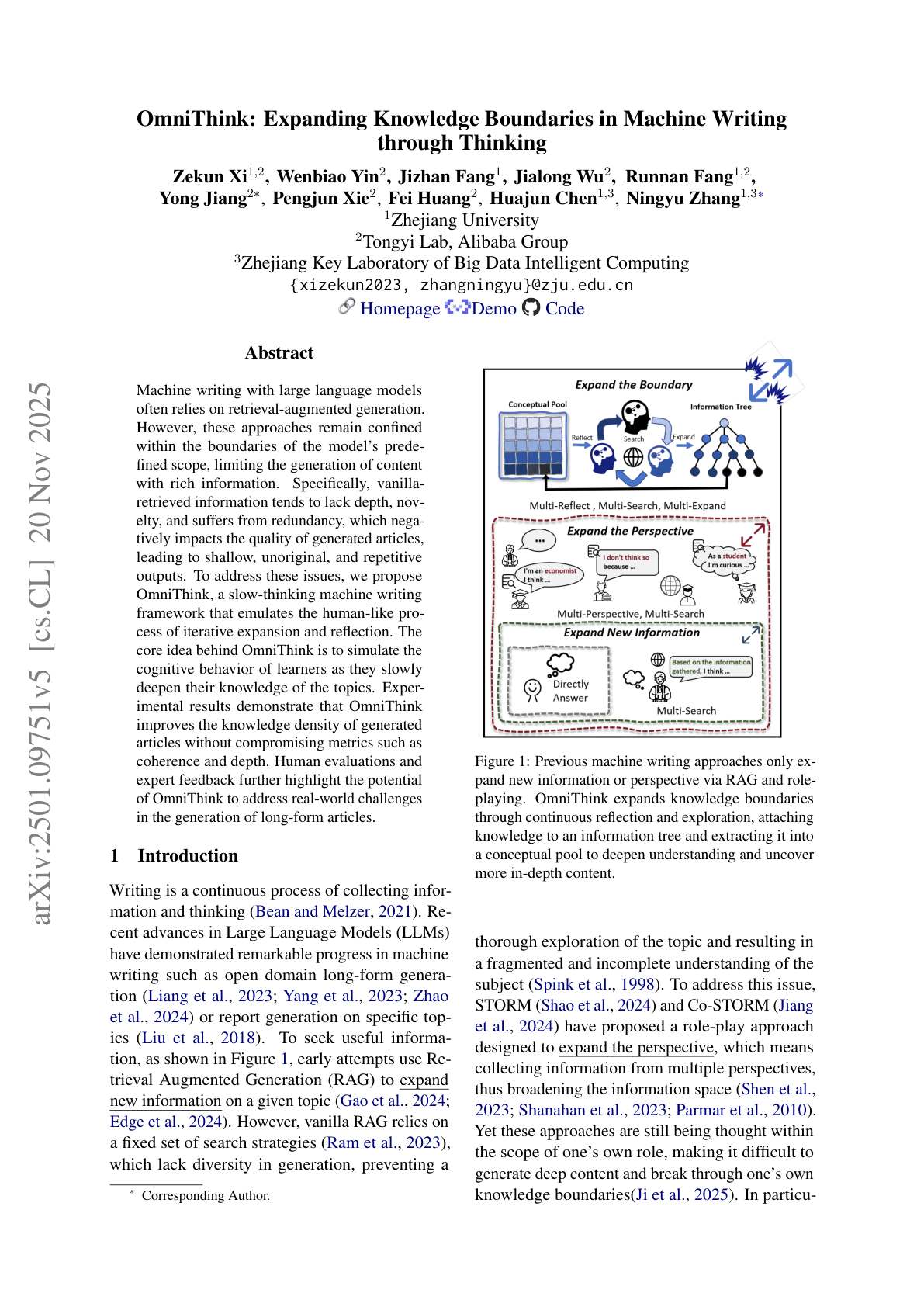
OmniThink
a new framework that emulates a human-like process of iterative expansion and reflection; it's built to simulate the cognitive behavior of learners as they deepen their knowledge; compared to RAG and role-playing, OmniThink can expand knowledge boundaries through continuous reflection and exploration; this makes it ideal for use cases that require long-form generation.
Enhancing RAG
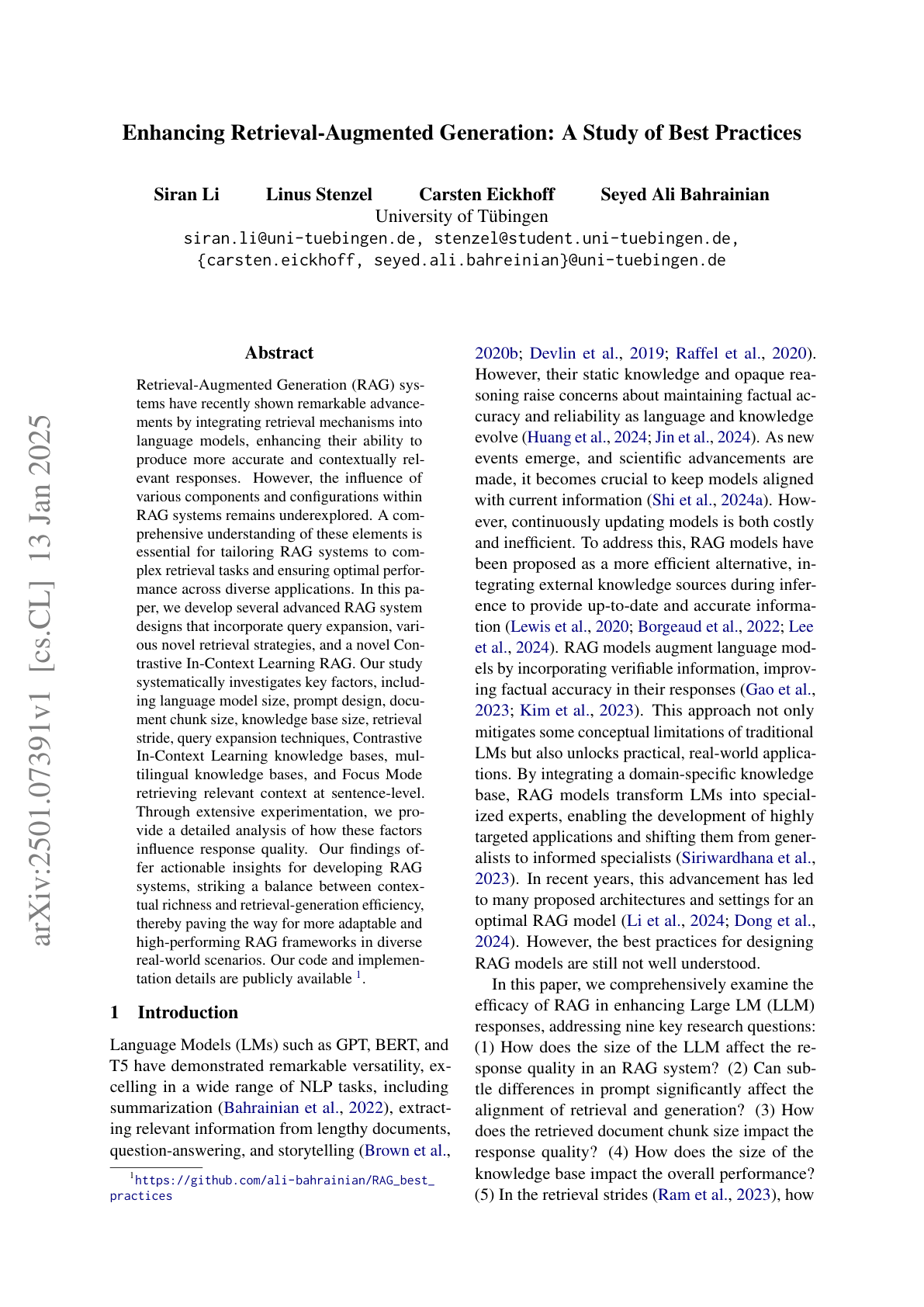
systematically explores the factors and methods that improve RAG systems such as retrieval strategies, query expansion, contrastive in-context learning, prompt design, and chunking.
AutoCBT
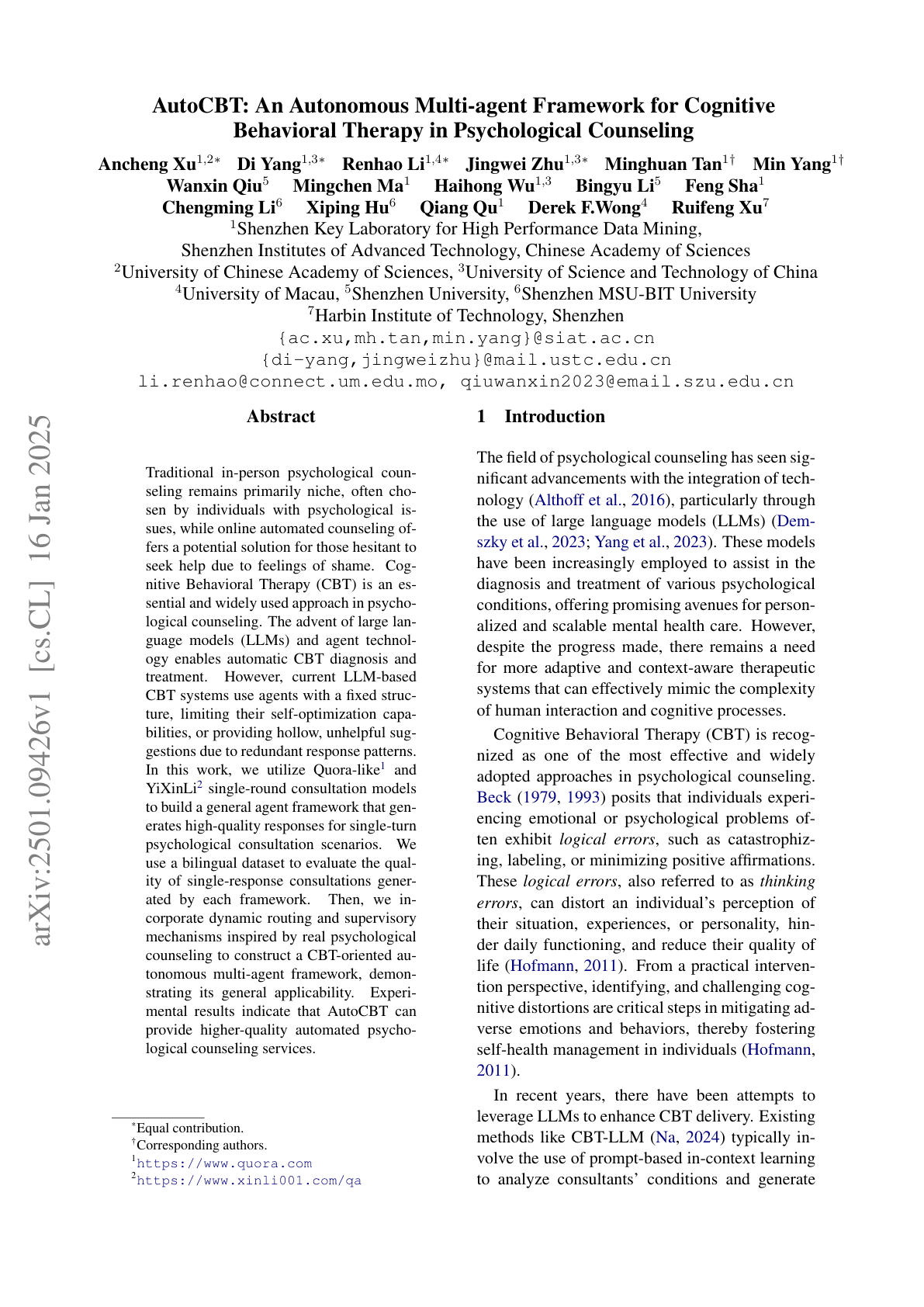
proposes a multi-agent framework, AutoCBT, for Cognitive Behavioral Therapy; the work proposes a general multi-agent framework that generates high-quality responses for single-turn psychological consultation scenarios; it uses a combination of dynamic routing, memory, and supervisory mechanisms to enhance the autonomous ability of each agent; experimental results show that AutoCBT can provide higher-quality automated psychological counseling services; AutoCBT improves dialogue quality compared to other purely prompt-based counseling frameworks.
Imagine while Reasoning in Space
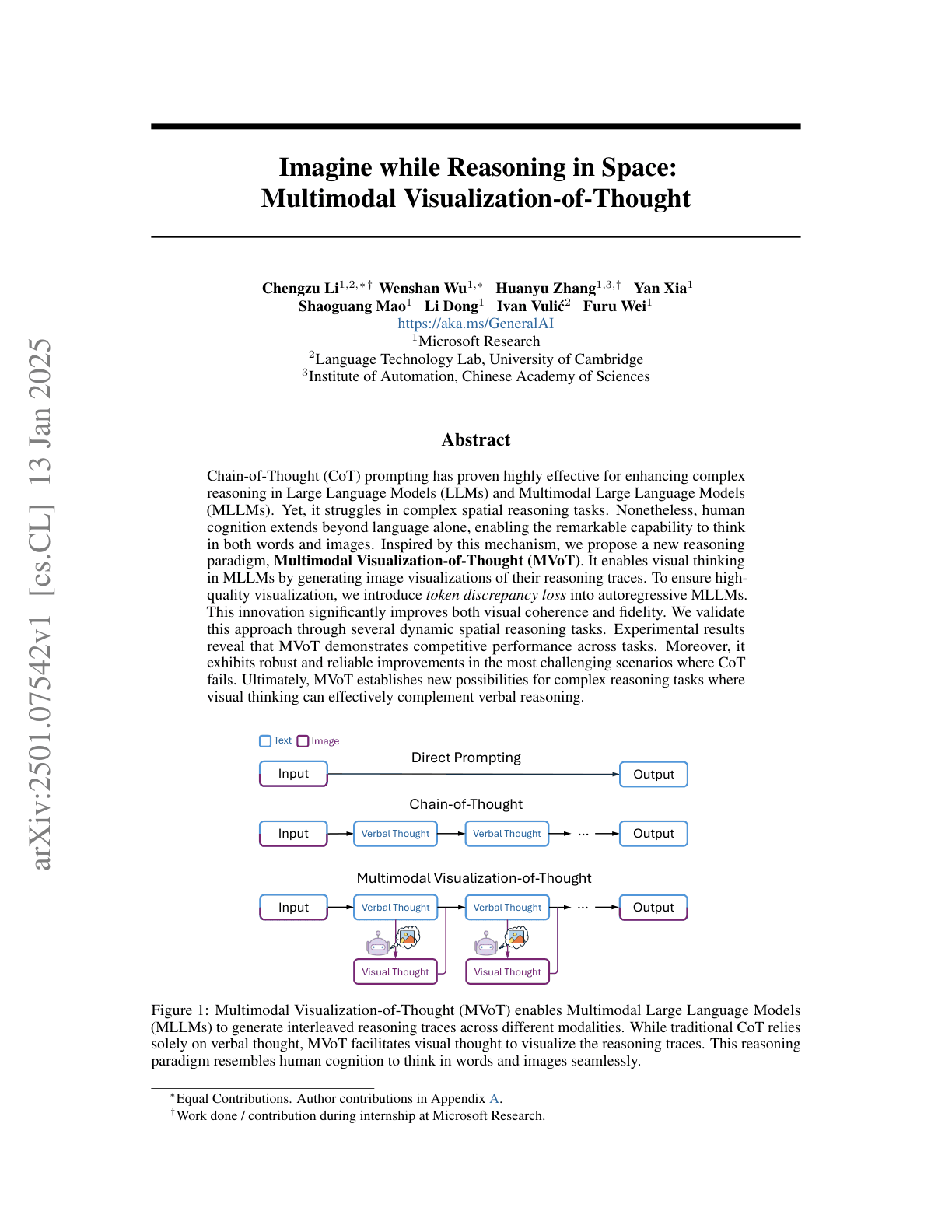
introduces MVoT (Multimodal Visualization-of-Thought), a new reasoning framework that enables AI models to "think" in both text and images; MVoT enhances the traditional Chain-of-Thought prompting by allowing models to generate visual representations of their reasoning steps alongside text explanations; the framework is implemented in Chameleon-7B, a multimodal language model, and introduces a "token discrepancy loss" to improve the quality of generated visualizations; MVoT significantly outperforms traditional approaches, especially in complex scenarios; MVoT achieves over 90% accuracy on maze and printer installation tasks.
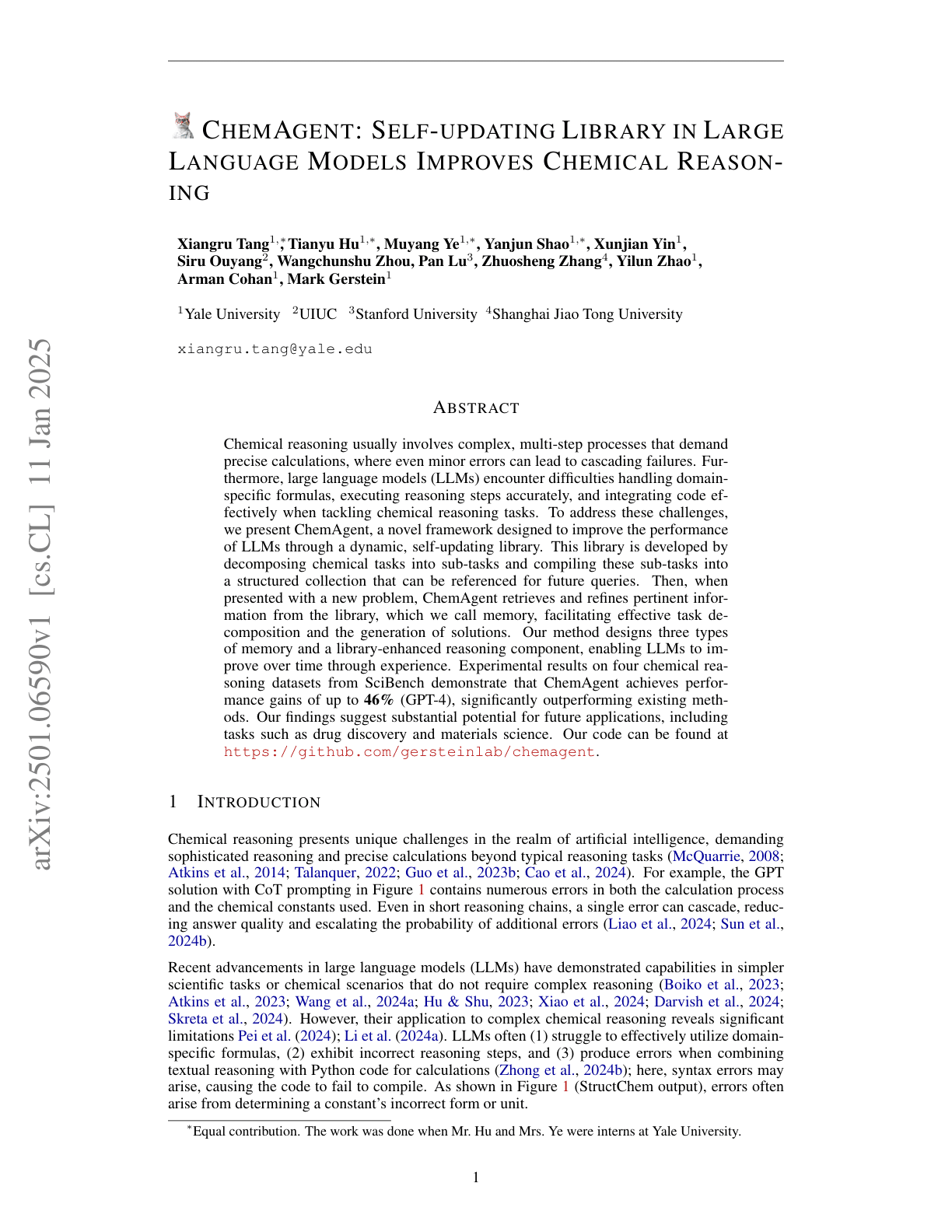
ChemAgent
presents a new framework designed to improve the performance of LLMs on chemical reasoning through a dynamic, self-updating library; the library is developed by decomposing chemical tasks into sub-tasks and compiling them into a structured collection that can be referenced for future queries; when the system is given a new problem, it retries and refines relevant information from the library to enable more effective task decomposition; the library is dynamically updated with new sub-tasks and solutions as they are encountered and validated; experiments on SciBench demonstrate that ChemAgent achieves performance gains of up to 46% (GPT-4), significantly outperforming existing methods.
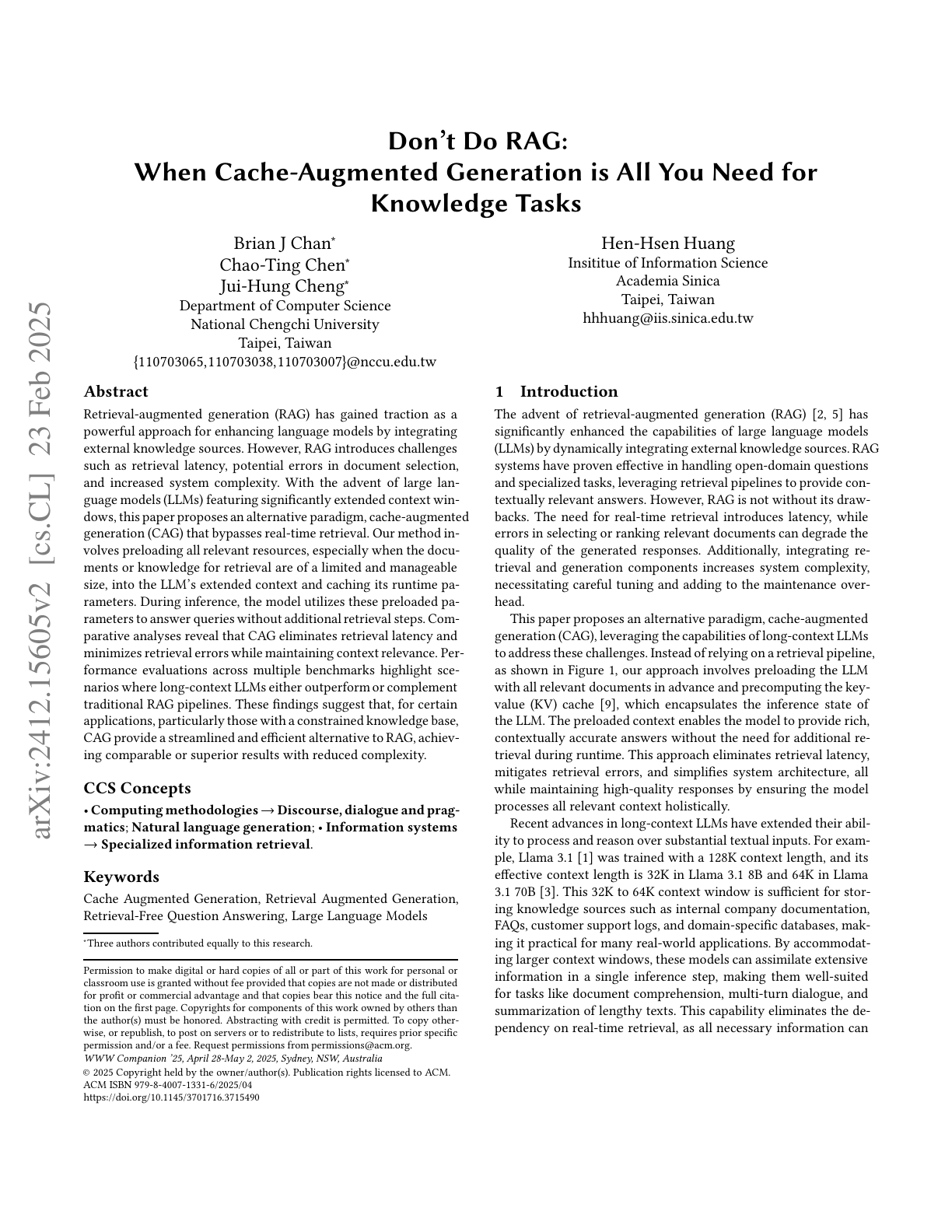
Cache-Augmented Generation (CAG)
an approach that aims to leverage the capabilities of long-context LLMs by preloading the LLM with all relevant docs in advance and precomputing the key-value (KV) cache; the preloaded context helps the model to provide contextually accurate answers without the need for additional retrieval during runtime; the authors suggest that CAG is a useful alternative to RAG for cases where the documents/knowledge for retrieval are of limited, manageable size.
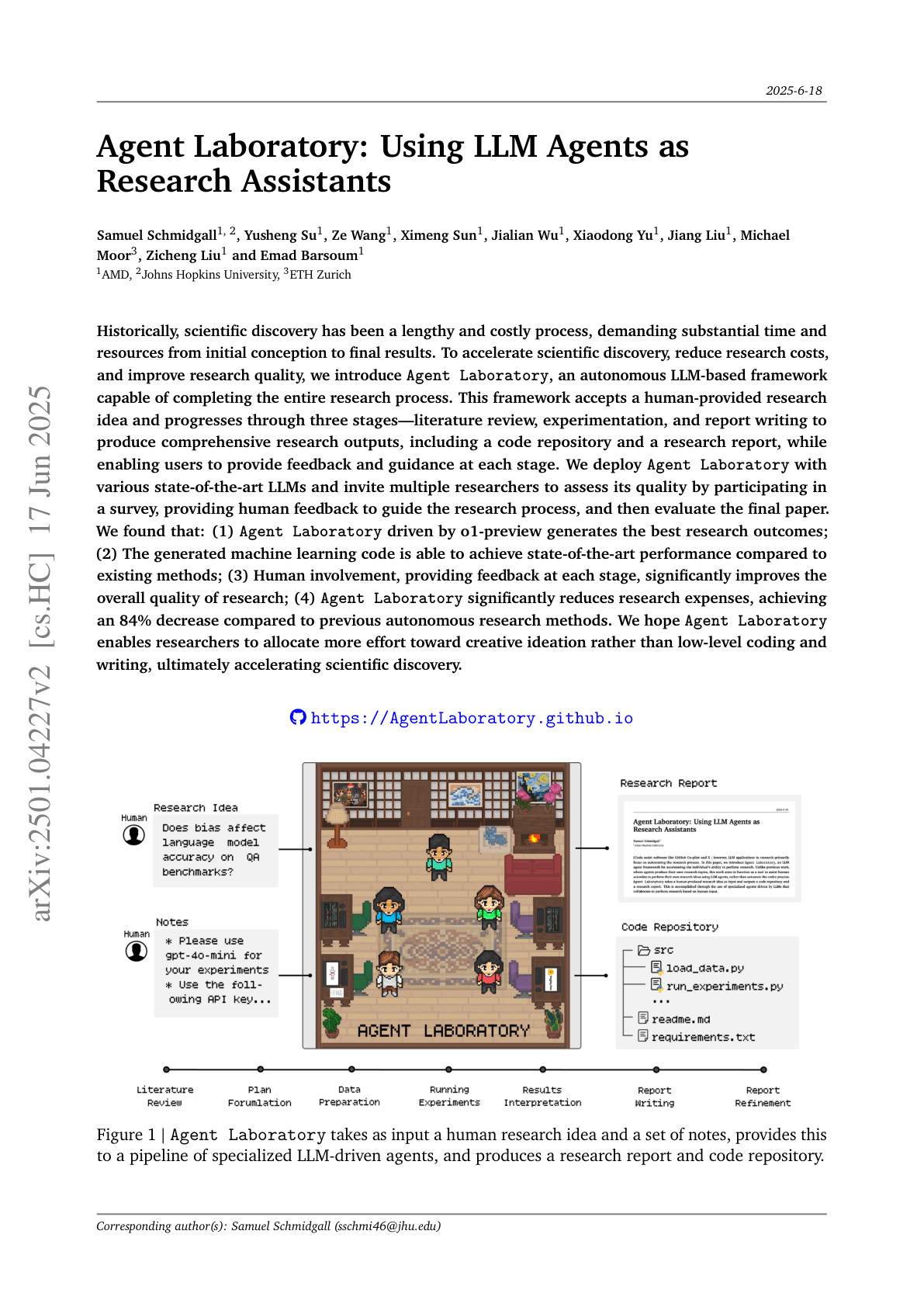
Agent Laboratory
an approach that leverages LLM agents capable of completing the entire research process; the main findings are: 1) agents driven by o1-preview resulted in the best research outcomes, 2) generated machine learning code can achieve state-of-the-art performance compared to existing methods, 3) human feedback further improves the quality of research, and 4) Agent Laboratory significantly reduces research expenses.
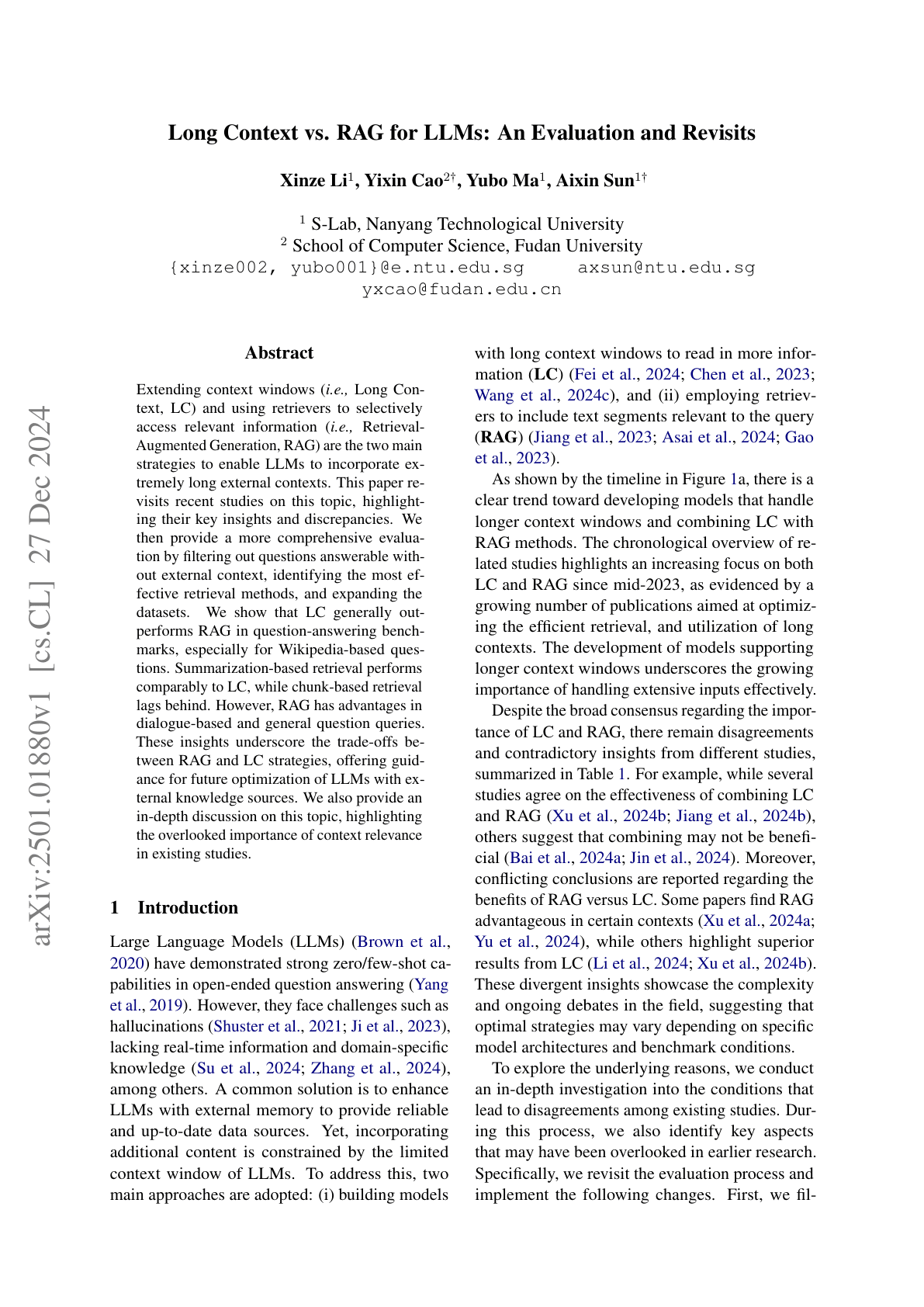
Long Context vs. RAG for LLMs
performs a comprehensive evaluation of long context (LC) LLMs compared to RAG systems; the three main findings are: 1) LC generally outperforms RAG in question-answering benchmarks, 2) summarization-based retrieval performs comparably to LC, while chunk-based retrieval lags behind, and 3) RAG has advantages in dialogue-based and general question queries
Search-o1
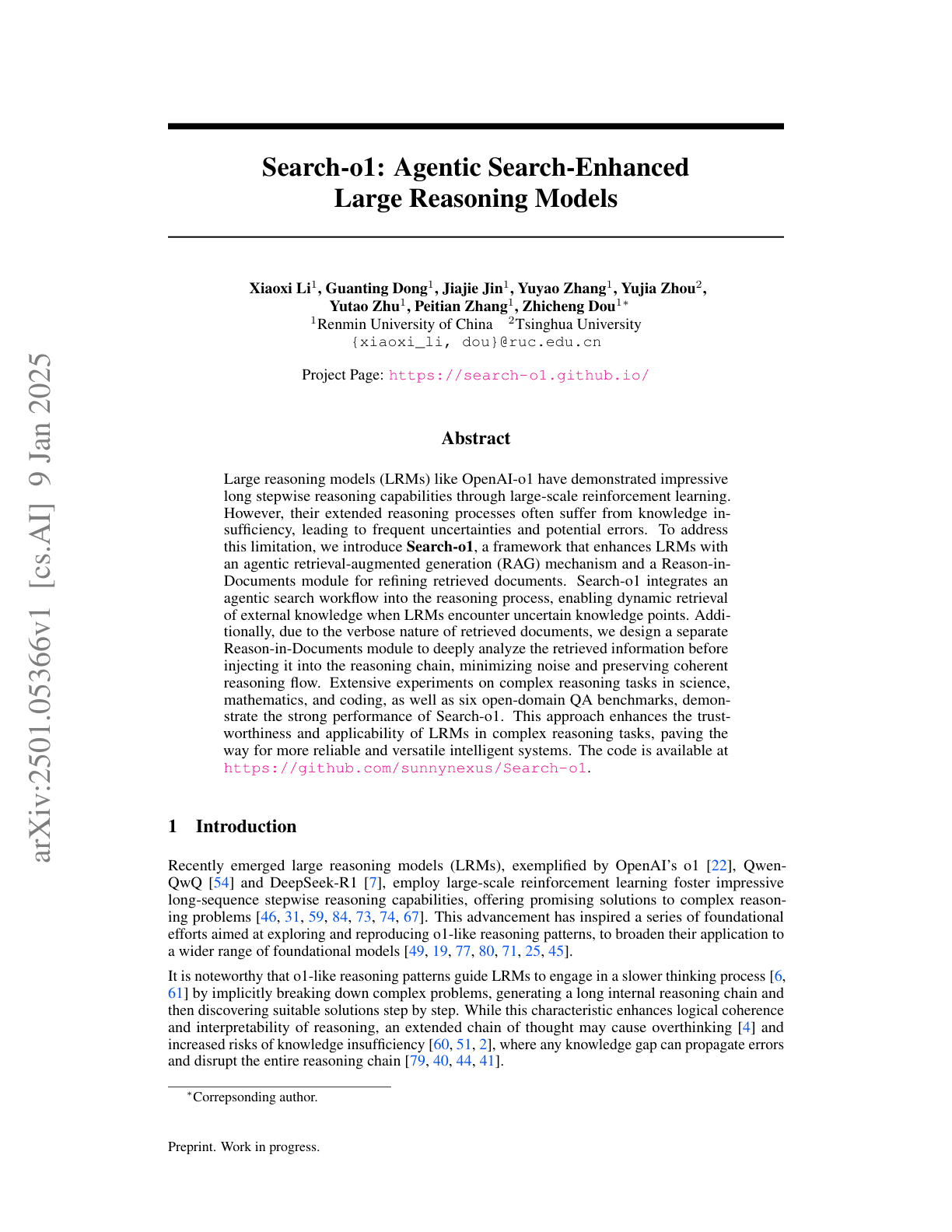
a framework that combines large reasoning models (LRMs) with agentic search and document refinement capabilities to tackle knowledge insufficiency; the framework enables autonomous knowledge retrieval during reasoning and demonstrates strong performance across complex tasks, outperforming both baseline models and human experts.
Towards System 2 Reasoning
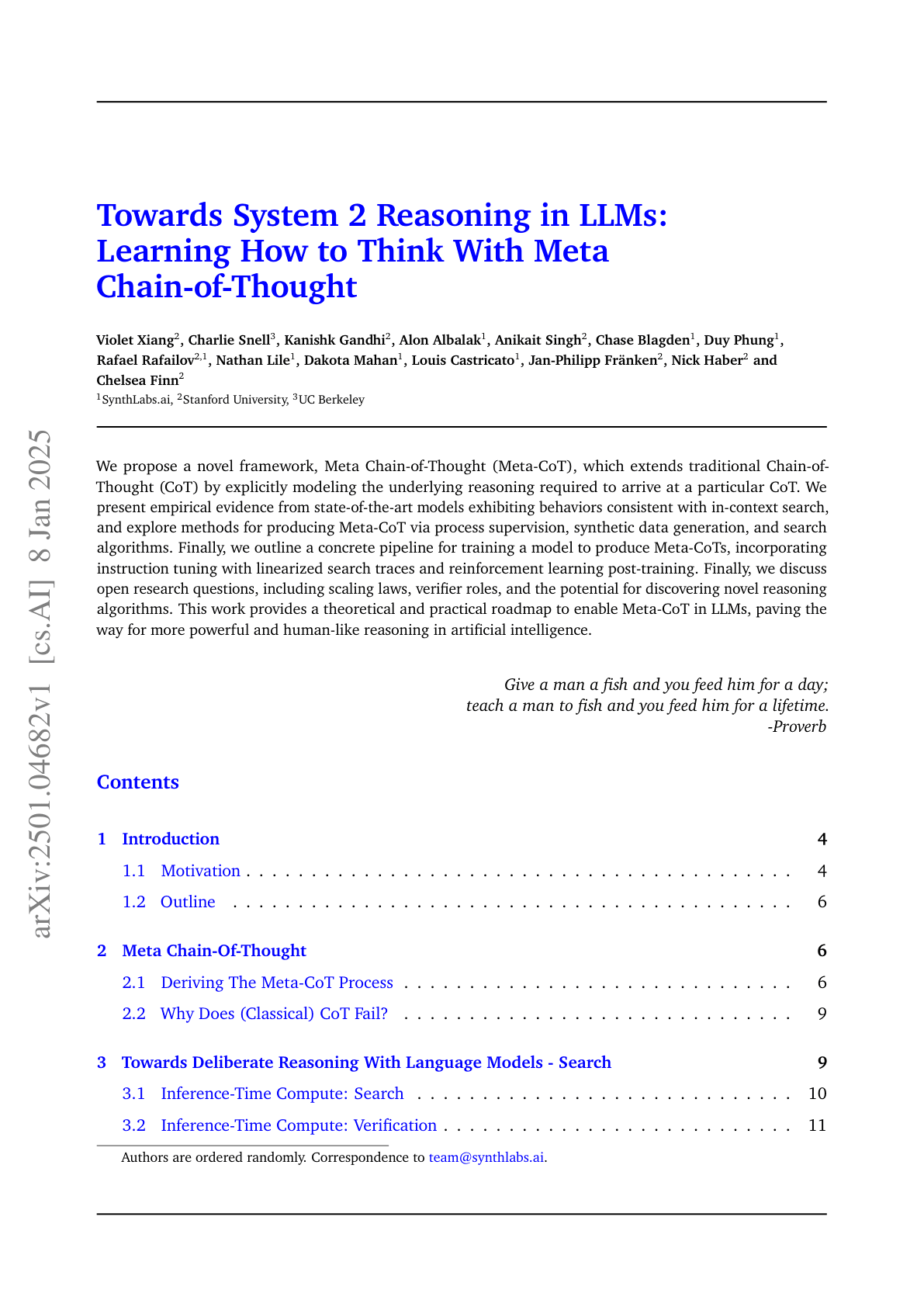
proposes Meta Chain-of-Thought (Meta-CoT), which extends traditional Chain-of-Thought (CoT) by modeling the underlying reasoning required to arrive at a particular CoT; the main argument is that CoT is naive and Meta-CoT gets closer to the cognitive process required for advanced problem-solving.
rStar-Math
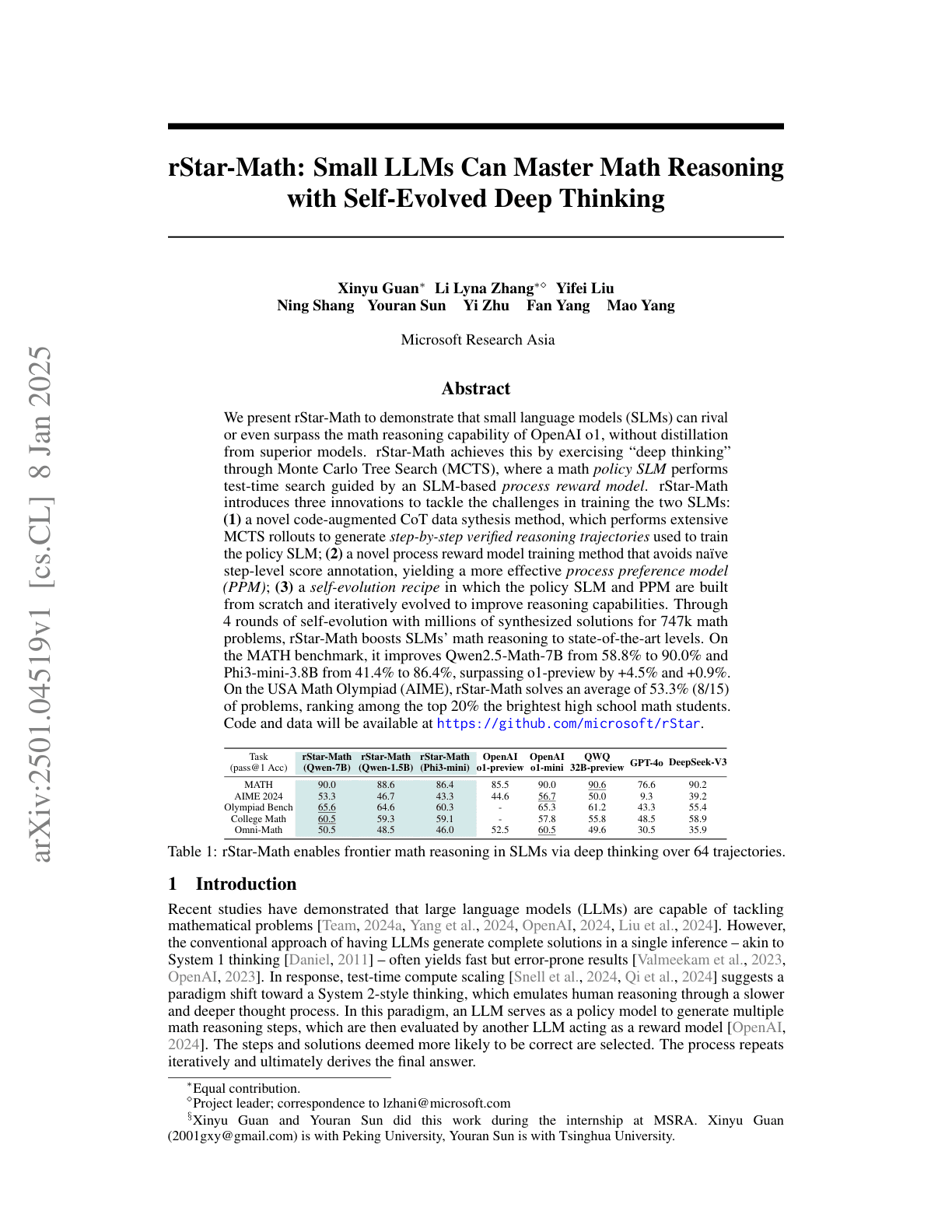
a new approach proposes three core components to enhance math reasoning: 1) a code-augmented CoT data synthesis method involving MCTS to generate step-by-step verified reasoning trajectories which are used to train the policy SLM, 2) an SLM-based process reward model that reliably predicts a reward label for each math reasoning step, and 3) a self-evolution recipe where the policy SLM and PPM are iteratively evolved to improve math reasoning; on the MATH benchmark, rStar-Math improves Qwen2.5-Math-7B from 58.8% to 90.0% and Phi3-mini-3.8B from 41.4% to 86.4%, surpassing o1-preview by +4.5% and +0.9%.
Cosmos World Foundation Model
a framework for training Physical AI systems in digital environments before real-world deployment; the platform includes pre-trained world foundation models that act as digital twins of the physical world, allowing AI systems to safely learn and interact without risking damage to physical hardware; these models can be fine-tuned for specific applications like camera control, robotic manipulation, and autonomous driving.
Process Reinforcement through Implicit Rewards
a framework for online reinforcement learning that uses process rewards to improve language model reasoning; the proposed algorithm combines online prompt filtering, RLOO return/advantage estimation, PPO loss, and implicit process reward modeling online updates; on their model, Eurus-2-7B-PRIME, achieves 26.7% pass@1 on AIME 2024, surpassing GPT-4 and other models, using only 1/10 of the training data compared to similar models.
Can LLMs Design Good Questions?
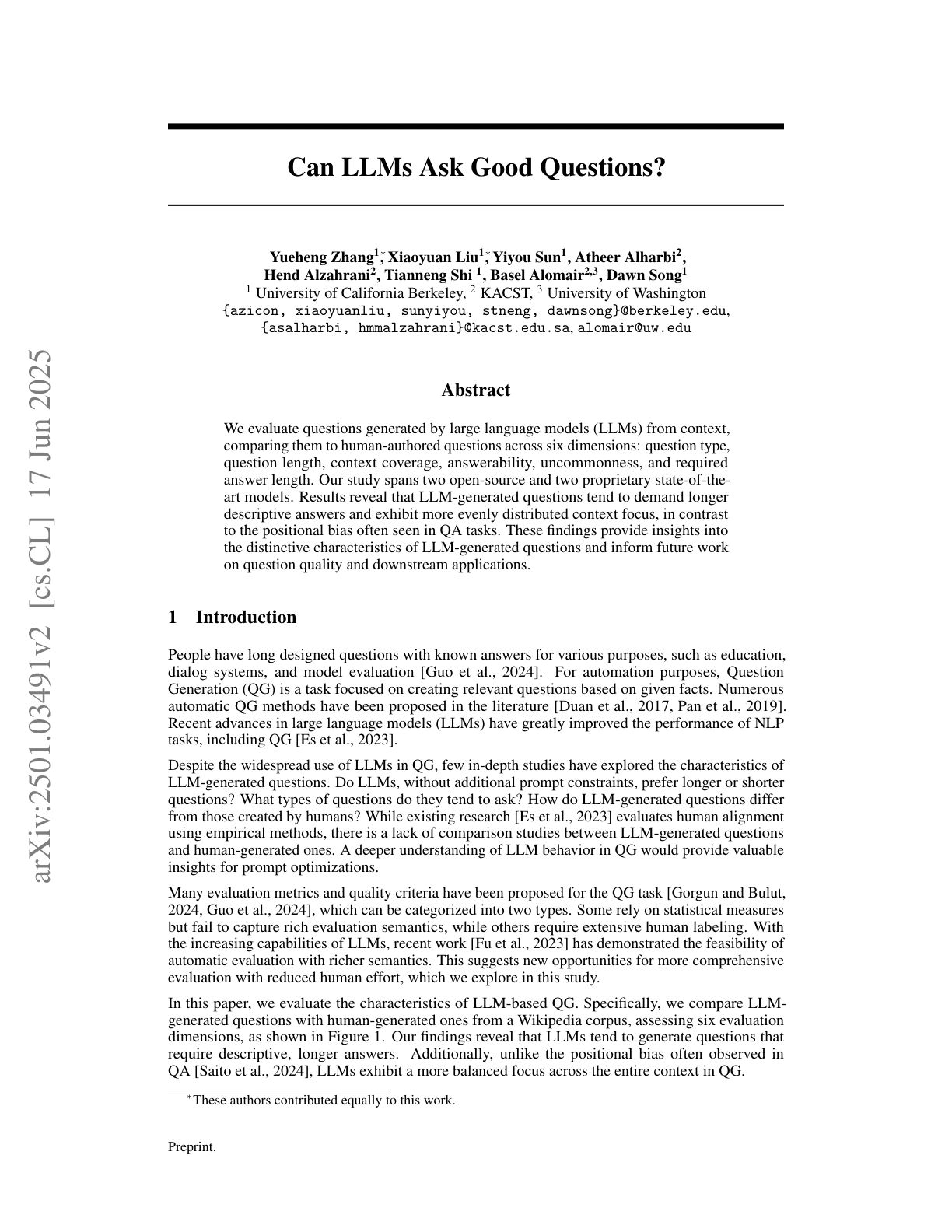
systematically evaluates the quality of questions generated with LLMs; here are the main findings: 1) there is a strong preference for asking about specific facts and figures in both LLaMA and GPT models, 2) the question lengths tend to be around 20 words but different LLMs tend to exhibit distinct preferences for length, 3) LLM-generated questions typically require significantly longer answers, and 4) human-generated questions tend to concentrate on the beginning of the context while LLM-generated questions exhibit a more balanced distribution, with a slight decrease in focus at both ends.
A Survey on LLMs
a new survey on LLMs including some insights on capabilities and limitations.
Agents Are Not Enough
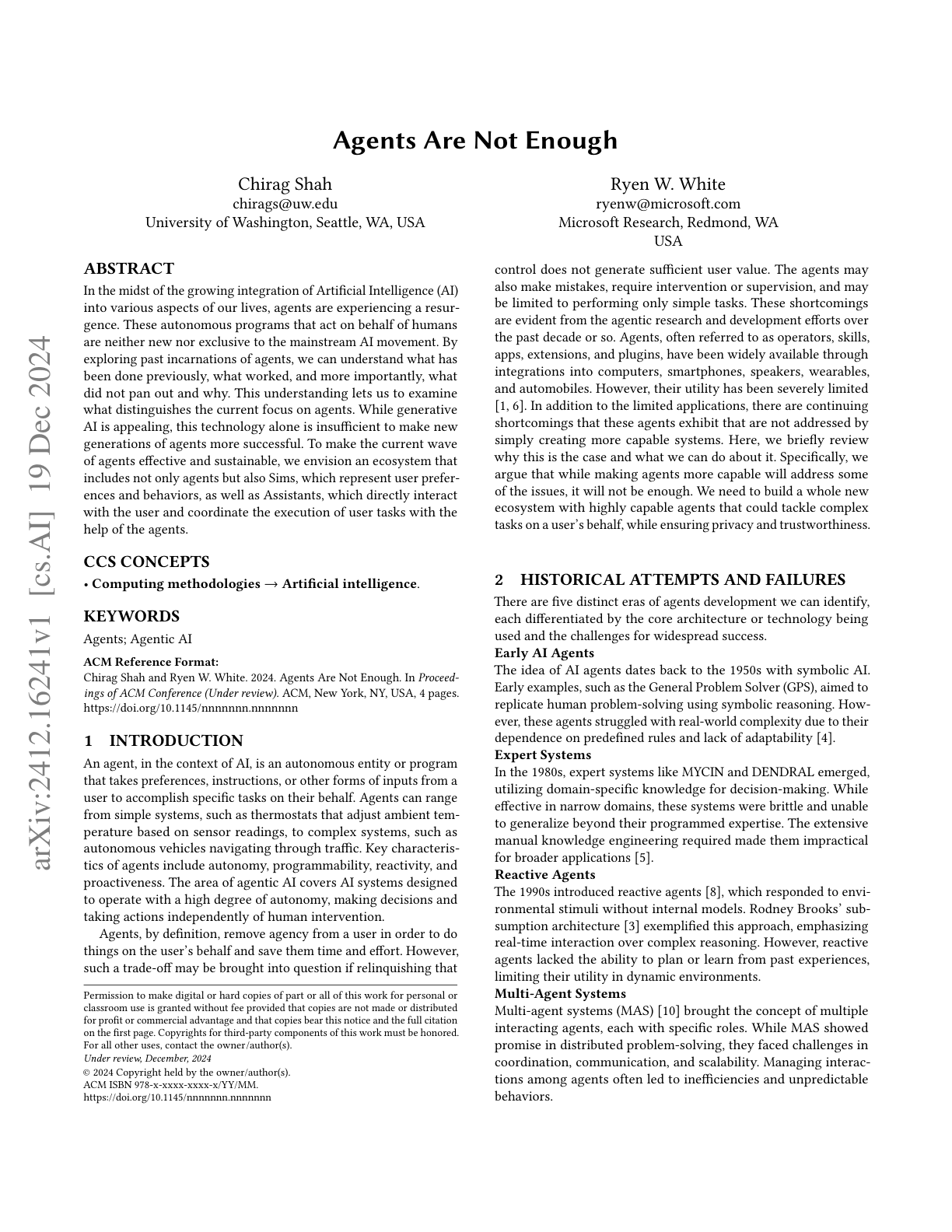
argues that while AI agents show promise, they alone cannot address the challenges in autonomous task execution; proposes a new ecosystem combining three key components: Agents (narrow, purpose-driven modules for specific tasks), Sims (digital representations of user preferences and behaviors), and Assistants (programs that coordinate between users, Sims, and Agents).
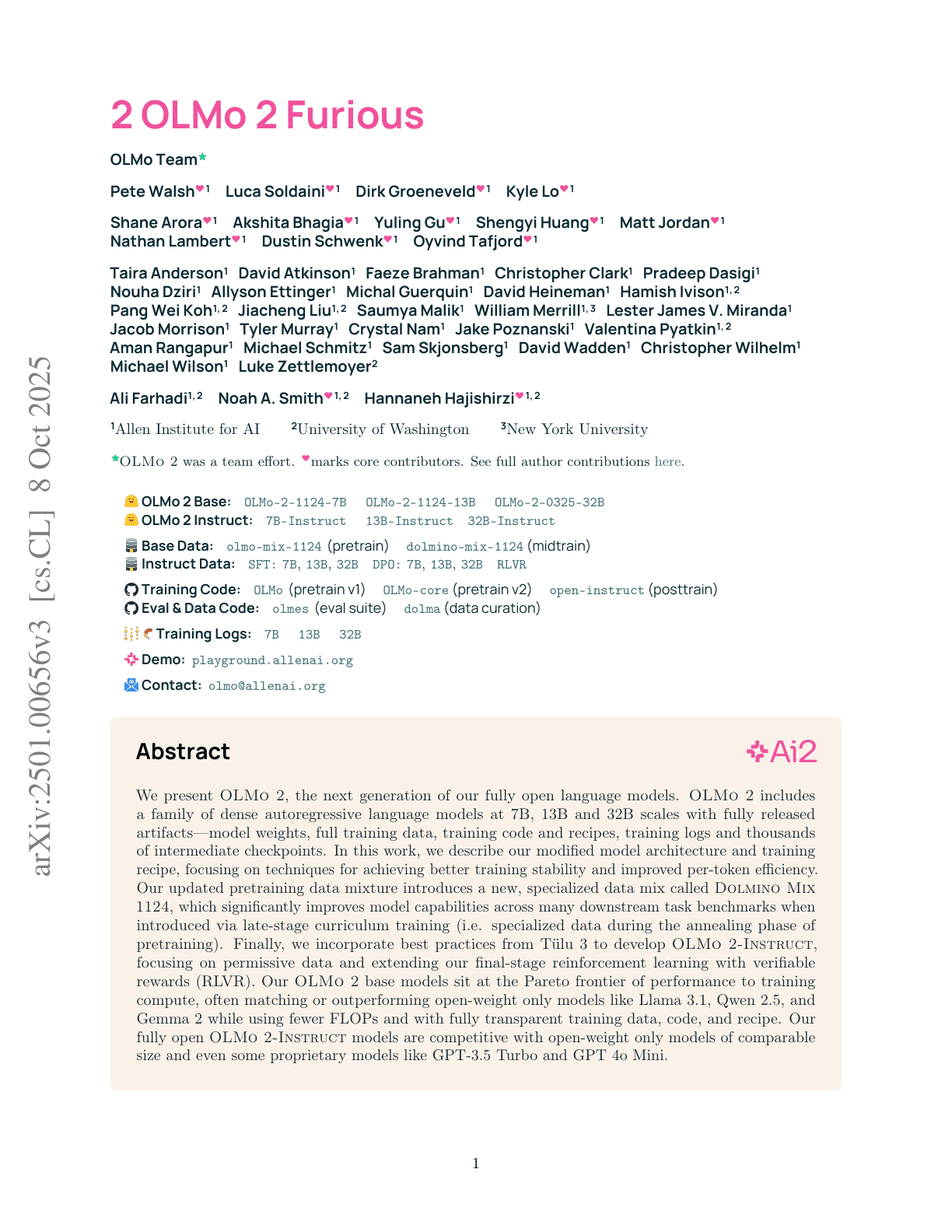
OLMo 2
introduces an enhanced architecture, training methods, and a specialized data mixture called Dolmino Mix 1124; the fully transparent model, released at 7B and 13B parameter scales with complete training data and code, matches or outperforms similar open-weight models like Llama 3.1 and Qwen 2.5 while using fewer computational resources, and its instruction-tuned version (OLMo 2-Instruct) remains competitive with comparable models.
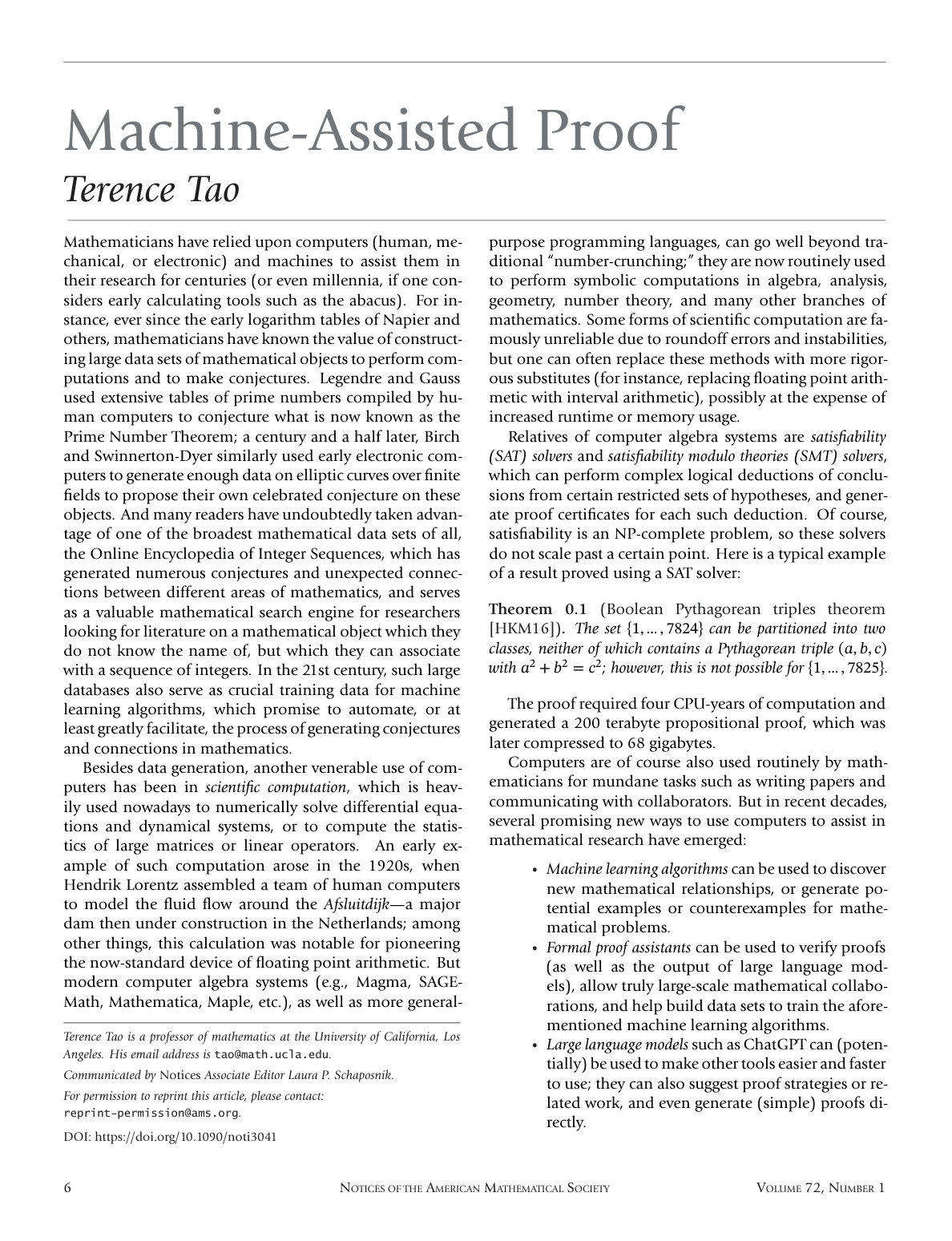
Machine-Assisted Proof
examines how mathematicians have long used machines to assist with mathematics research and discusses recent AI tools that are transforming mathematical proof assistance.
Measuring Higher Level Mathematical Reasoning
introduces Putnam-AXIOM, a new math reasoning benchmark with 236 Putnam Competition problems and 52 variations; even the best model considered (OpenAI's o1-preview) achieves only 41.95% accuracy on original problems and performs significantly worse on variations.
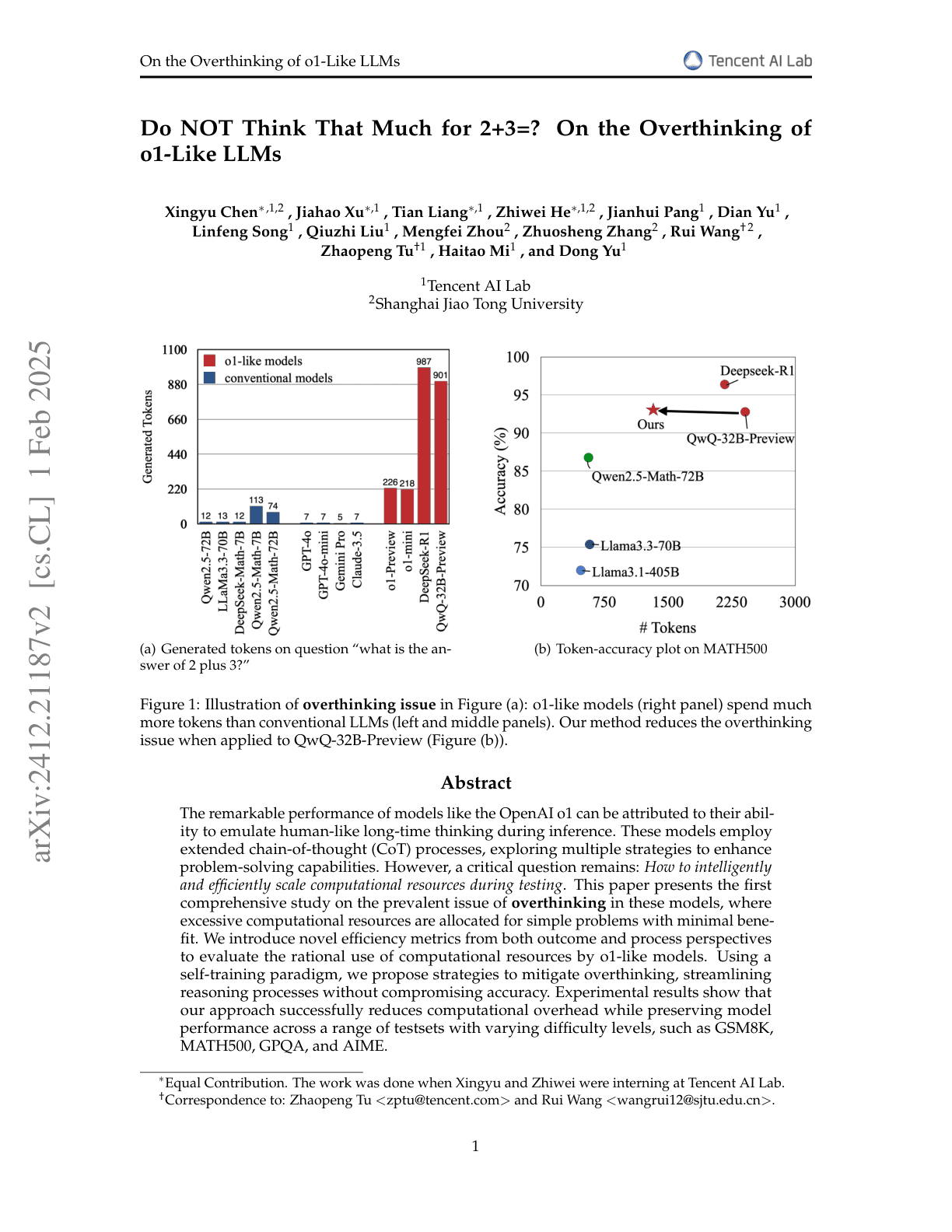
On the Overthinking of LLMs
proposes a self-training strategy to mitigate overthinking in o1-like LLMs; it can reduce token output by 48.6% while maintaining accuracy on the widely-used MATH500 test set as applied to QwQ-32B-Preview.
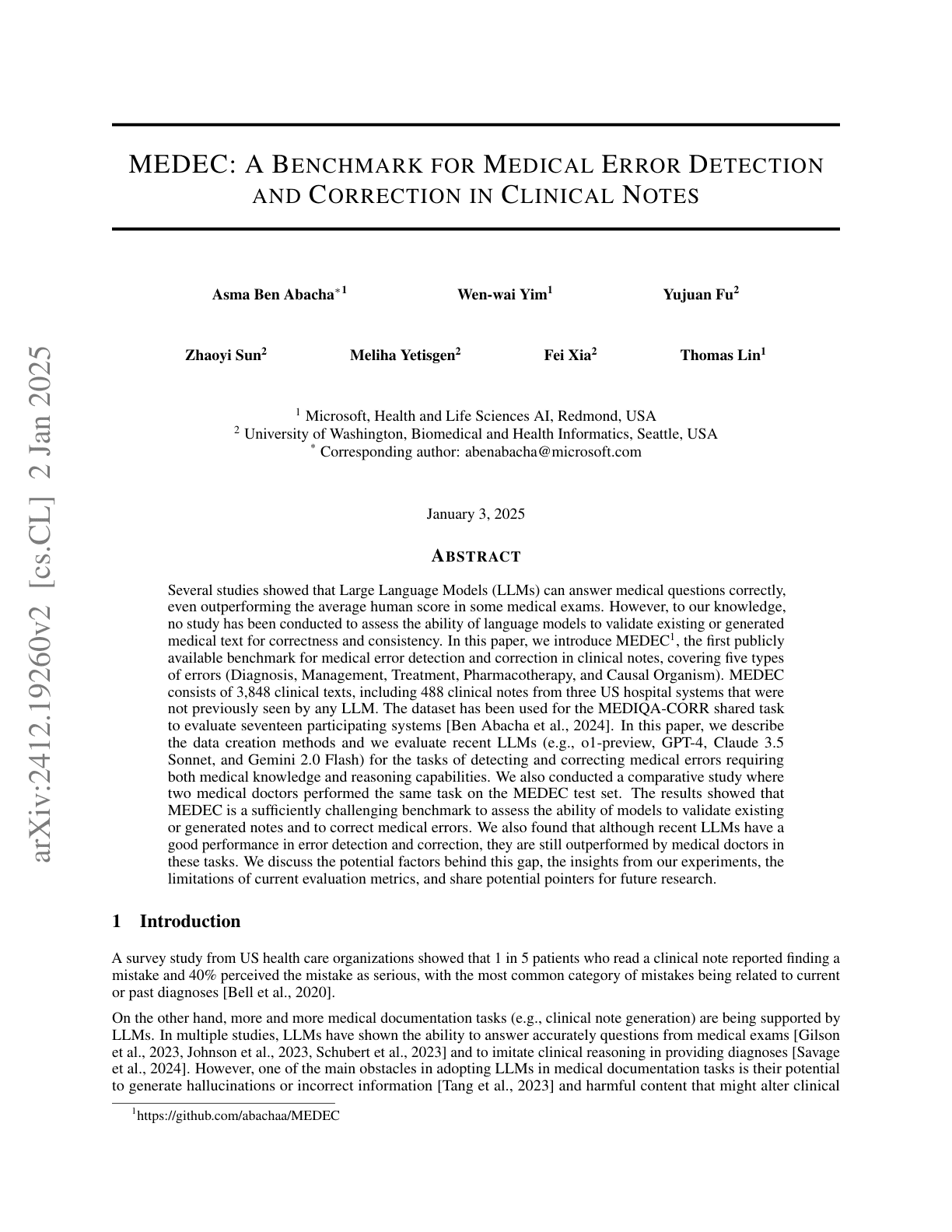
MEDEC
introduces MEDEC, a publicly available benchmark for medical error detection and correction in clinical notes, covering five types of errors (Diagnosis, Management, Treatment, Pharmacotherapy, and Causal Organism); it consists of 3,848 clinical texts, including 488 clinical notes from three US hospital systems; experimental results shows that Cluade 3.5 Sonnet performs better at detecting errors while o1-preview is better at correcting errors.

1.58-bit FLUX
presents the first successful approach to quantizing the state-of-the-art text-to-image generation model, FLUX.1-dev, using 1.58-bit weights (i.e., values in {-1, 0, +1}); the method relies on self-supervision from the FLUX.1-dev model and maintains comparable performance for generating 1024 x 1024 images as the original FLUX model.
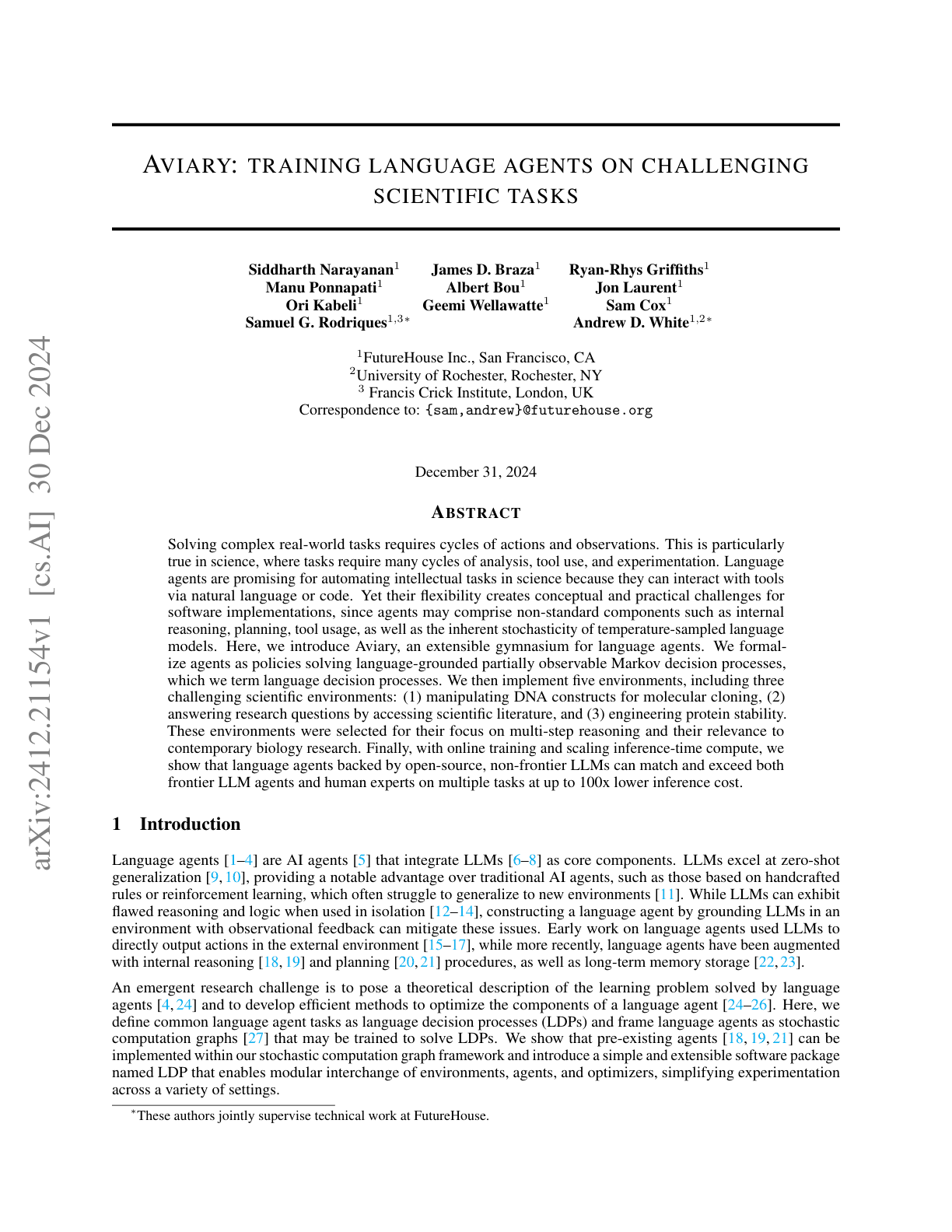
Aviary
an extensible open-source gymnasium that can help build language agents that exceed the performance of zero-shot frontier LLMs and even humans on several challenging scientific tasks.
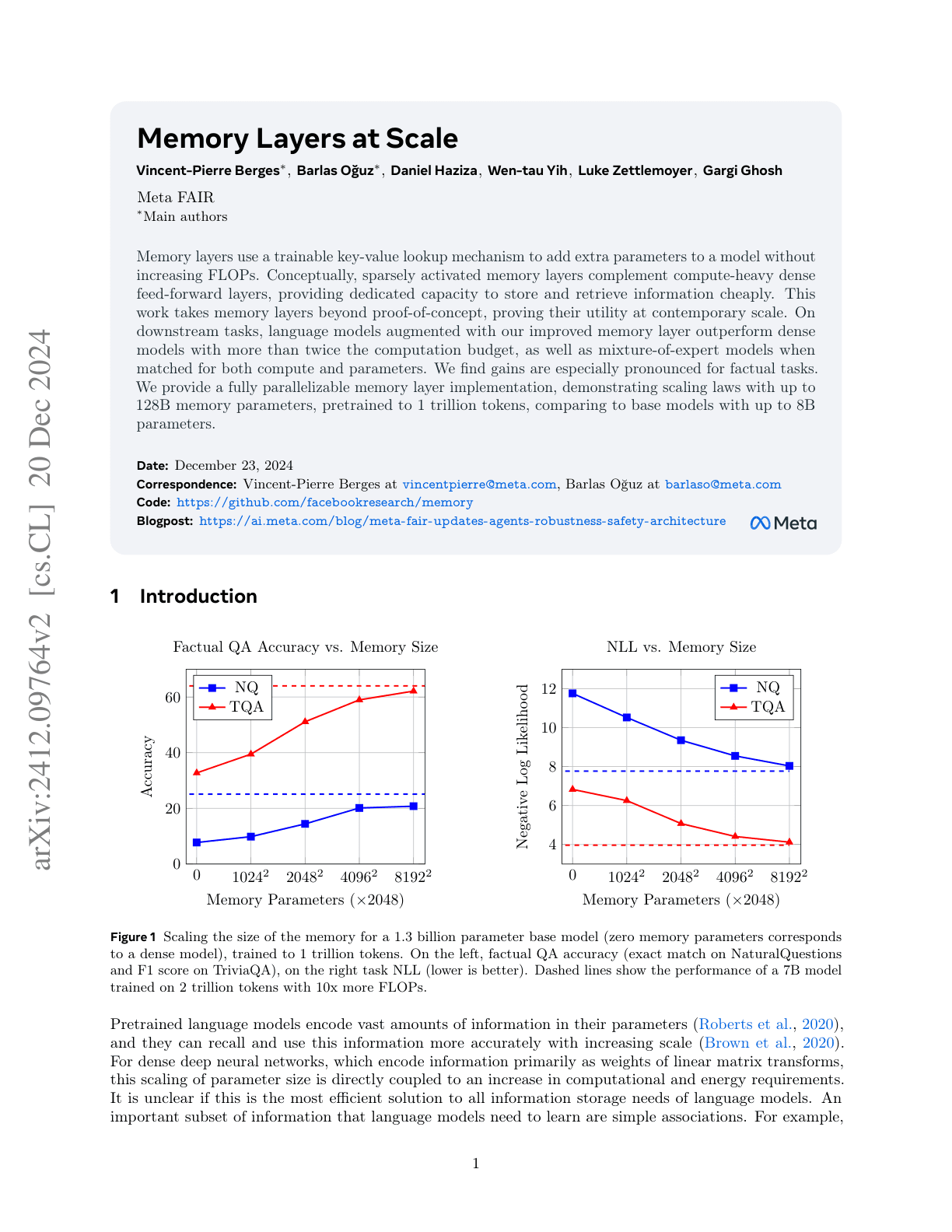
Memory Layers at Scale
demonstrates the effectiveness of memory layers at scale; shows that models with these memory layers outperform traditional dense models using half the computation, particularly in factual tasks; includes a parallelizable memory layer implementation that scales to 128B memory parameters and 1 trillion training tokens, tested against base models up to 8B parameters.