AI Papers of the Week
Every paper worth reading in AI, hand-picked one week at a time.
Discover and explore top AI papers withClaude CodeCodex
npx @dair-ai/mcp setup
MoBA
MoBA is a new attention mechanism that enhances efficiency in handling long-context sequences for LLMs while maintaining strong performance. Key insights:
The Danger of Overthinking
This paper investigates overthinking in Large Reasoning Models (LRMs)—a phenomenon where models prioritize extended internal reasoning over interacting with their environment. Their study analyzes 4,018 software engineering task trajectories to understand how reasoning models handle decision-making in agentic settings. Key findings:
Inner Thinking Transformers
Inner Thinking Transformer (ITT) is a new method that enhances reasoning efficiency in small-scale LLMs via dynamic depth scaling. ITT aims to mitigate parameter bottlenecks in LLMs, providing scalable reasoning efficiency without expanding model size. Key contributions:
Scaling up Test-Time Compute with Latent Reasoning
This work introduces a latent recurrent-depth transformer, a model that scales test-time reasoning without relying on additional token generation. Instead of increasing the context window or fine-tuning for Chain-of-Thought (CoT), this approach enables iterative latent space reasoning at inference, achieving improvements comparable to a 50B parameter model despite having only 3.5B parameters. Key insights include:
Brain-to-Text Decoding: A Non-Invasive Approach via Typing
Meta AI’s Brain2Qwerty model translates brain activity into text by decoding signals from non-invasive recordings (EEG/MEG) while users type. Key results include:
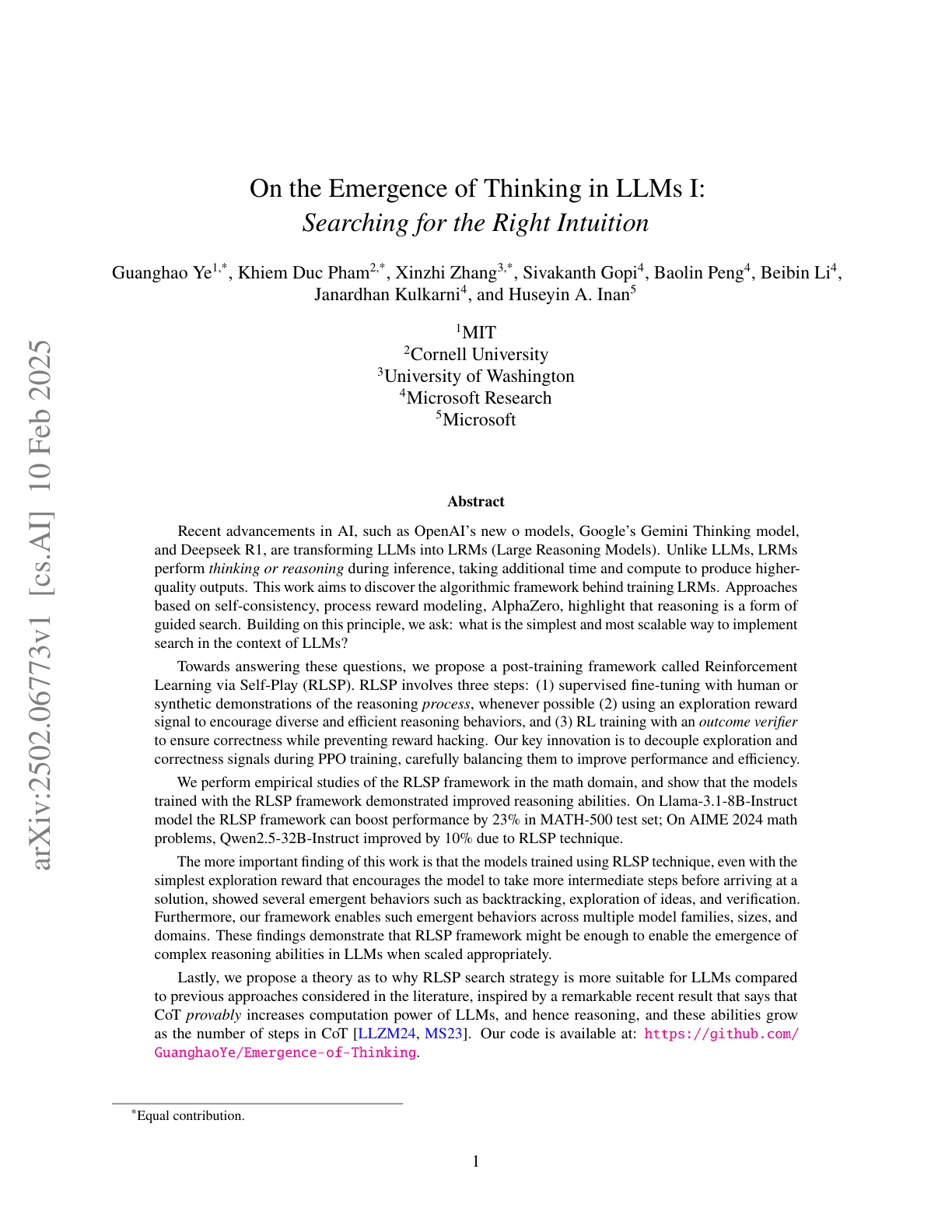
Reinforcement Learning via Self-Play
Researchers propose Reinforcement Learning via Self-Play (RLSP) as a framework to train LLMs to “think” through complex problems. Key ideas include:
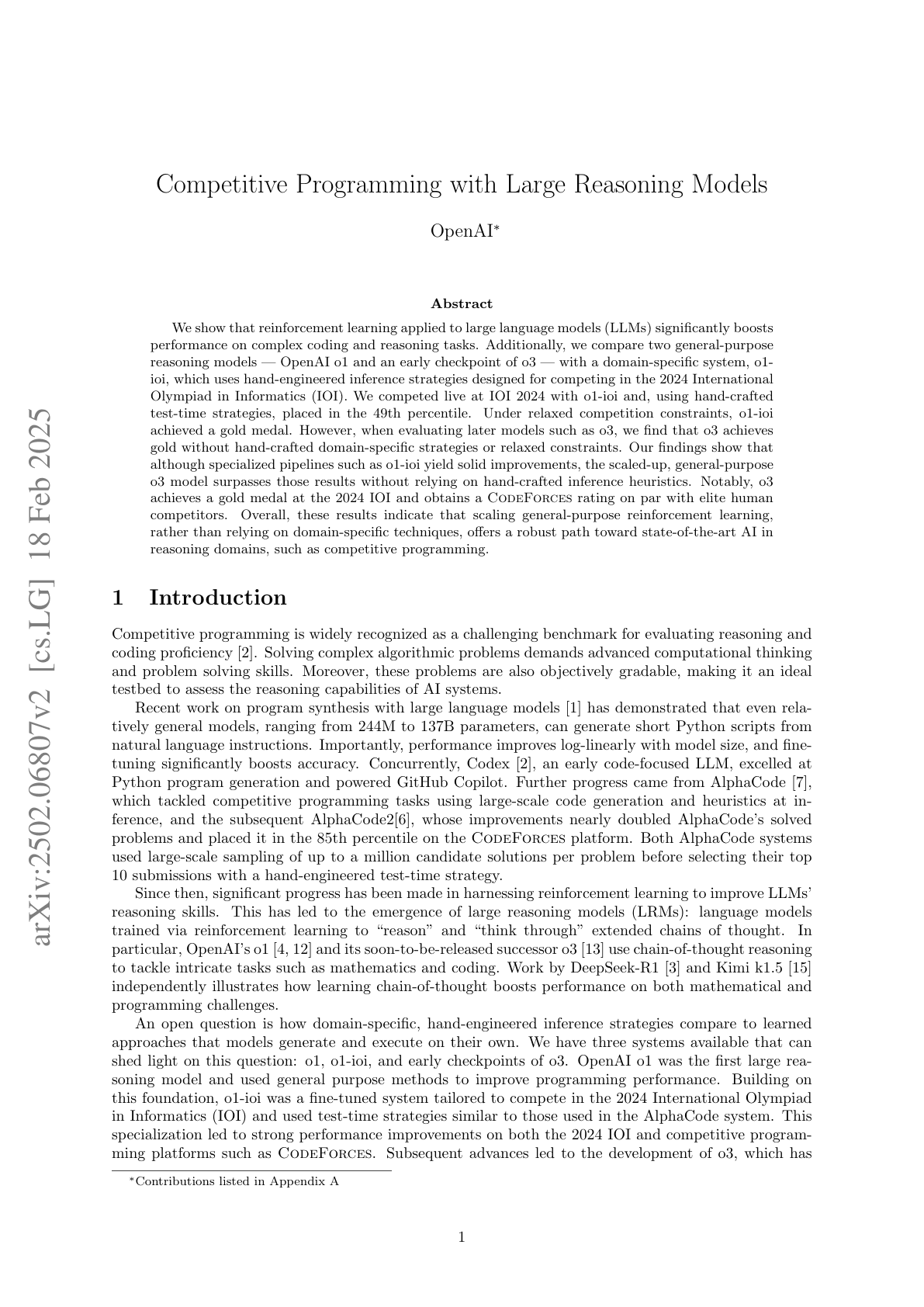
Competitive Programming with Large Reasoning Models
OpenAI’s latest study puts a specialized coding AI against a scaled-up general model on competitive programming challenges to explore efficiency vs. specialization. Key findings:
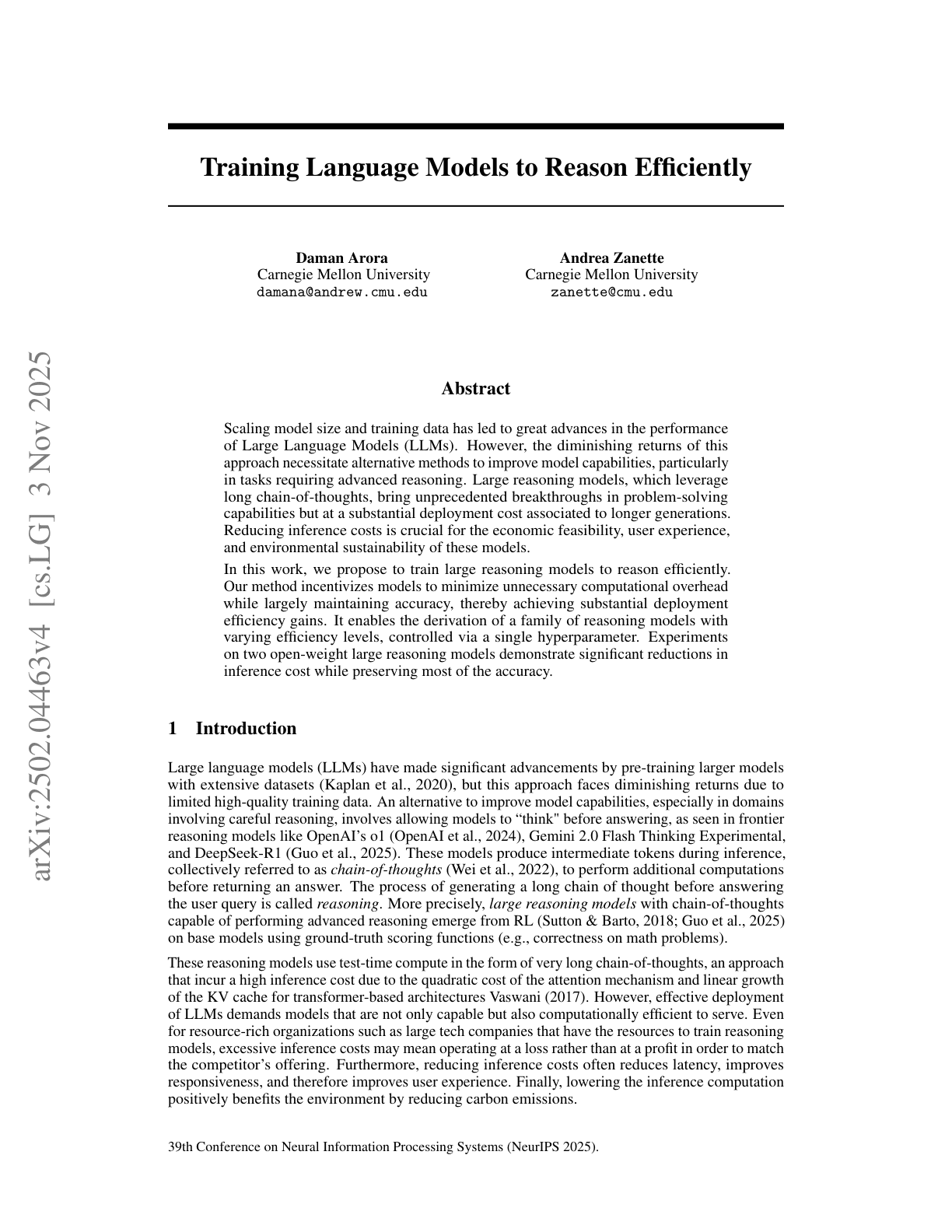
Training Language Models to Reason Efficiently
A new RL approach teaches large reasoning models to allocate their reasoning effort efficiently, reducing wasted computation on easy problems. Key points include:
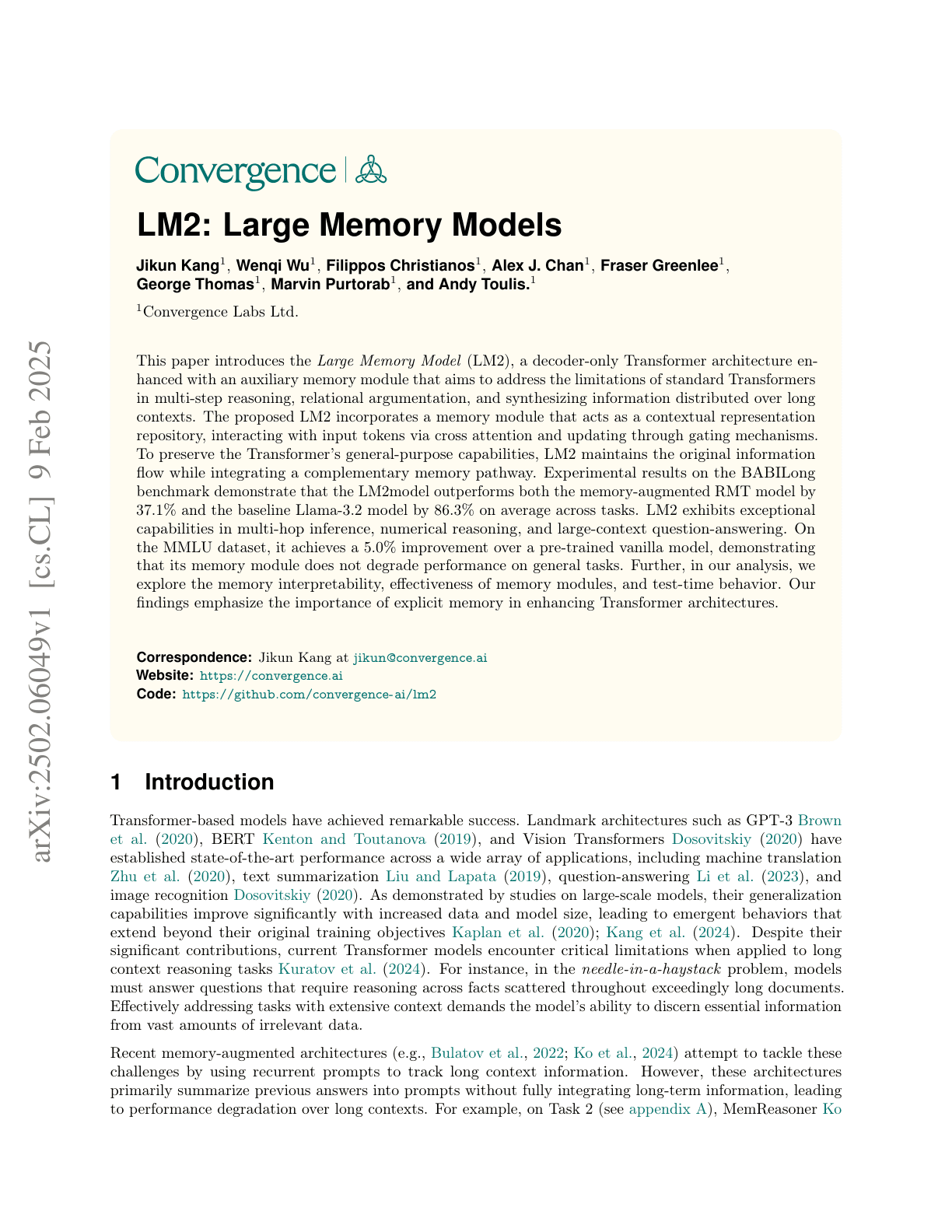
Large Memory Models
Large Memory Models (LM2) is a transformer architecture augmented with an external memory module to tackle tasks requiring extensive reasoning and long context. Key highlights include:
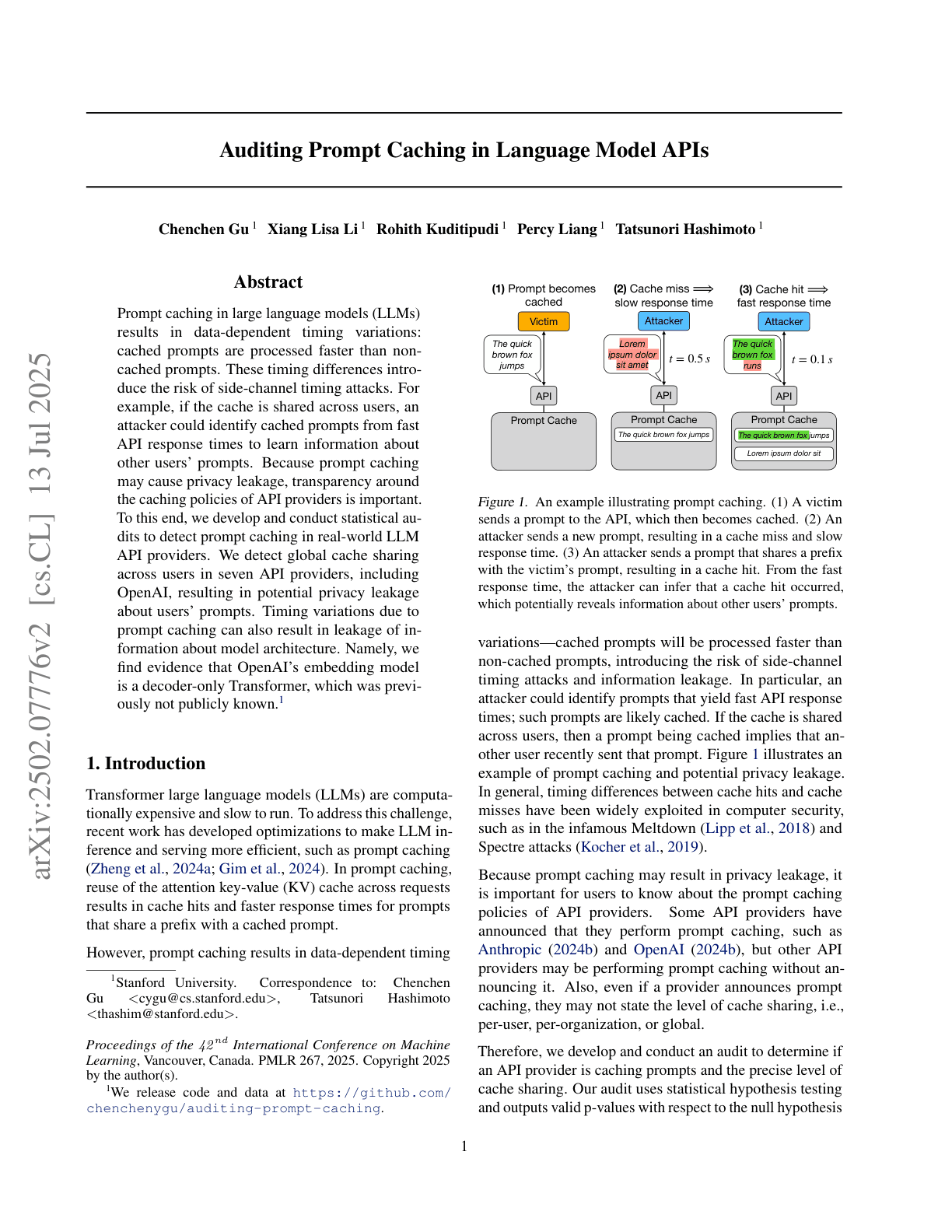
Auditing Prompt Caching
Researchers from Stanford investigate how timing differences in LLM APIs can leak private user information through global prompt caching. They propose statistical audits to detect caching and reveal potentially significant security risks. Key insights include:
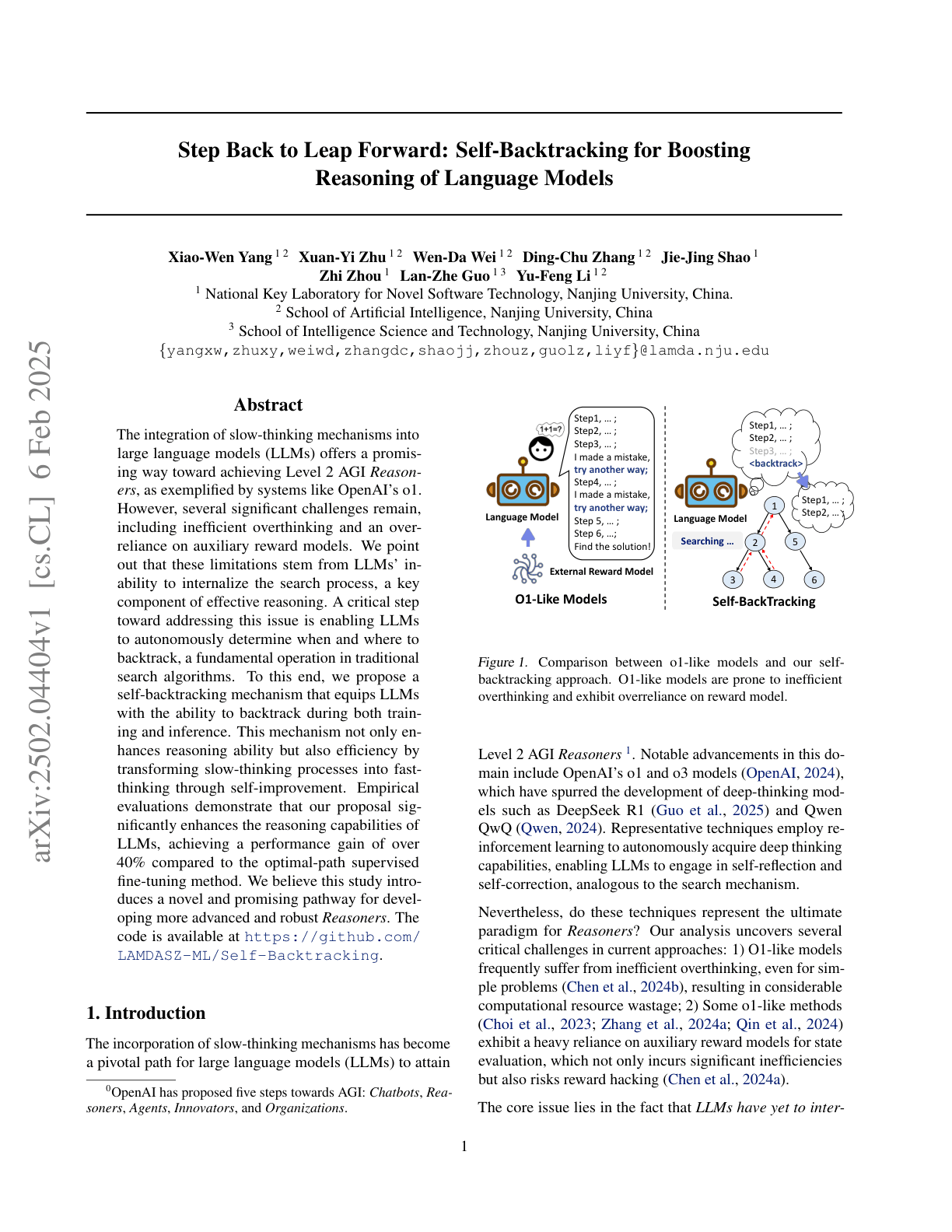
Step Back to Leap Forward
To boost the reasoning robustness of LLMs, researchers propose a “self-backtracking” mechanism that lets models revisit and revise their own intermediate reasoning steps. Key details:
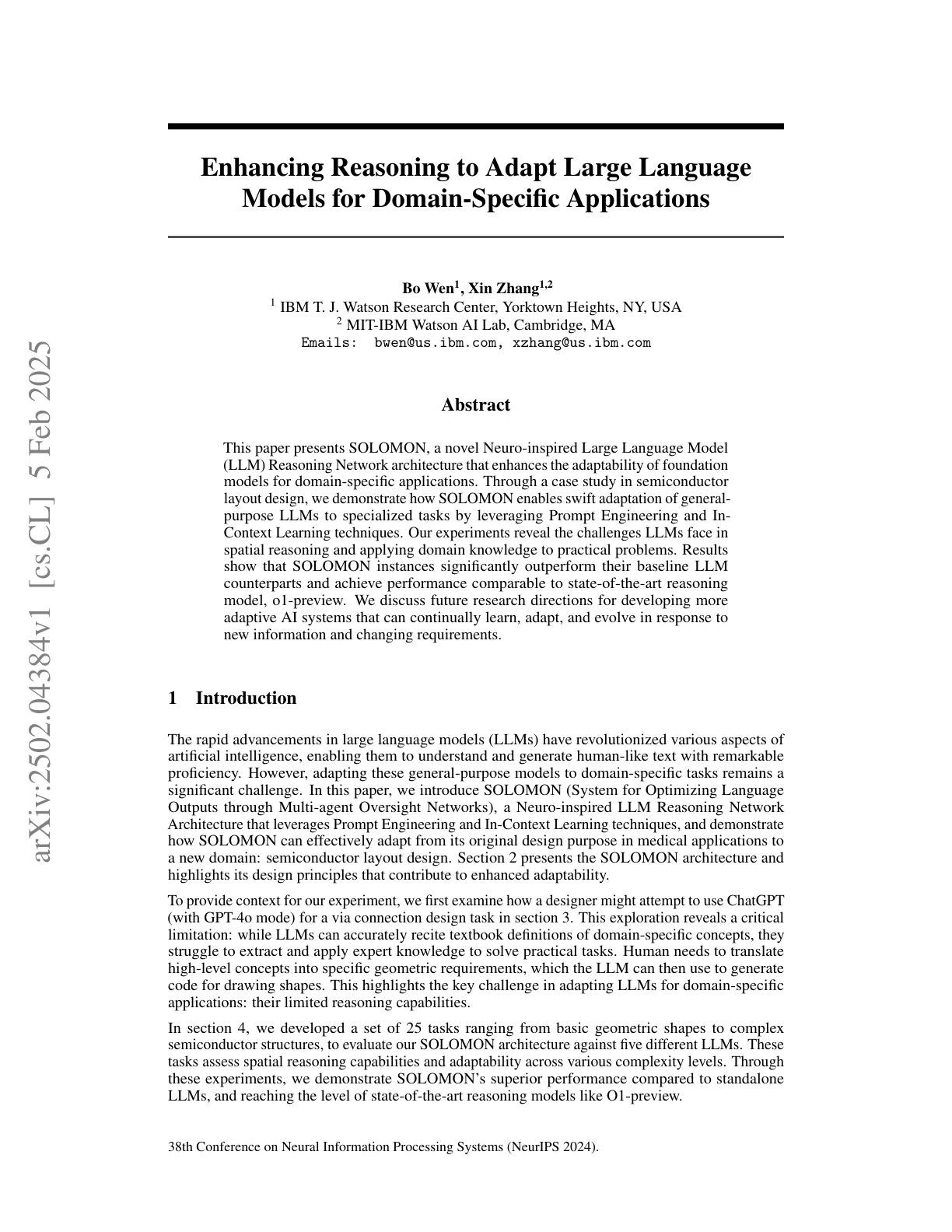
Enhancing Reasoning to Adapt LLMs
Researchers from IBM present SOLOMON, a neuro-inspired LLM reasoning network architecture that boosts domain adaptability—demonstrated on semiconductor layout design. They show how LLMs often falter at spatial reasoning and domain knowledge application, and how their multi-agent oversight approach significantly improves success on challenging chip-layout tasks. Key insights include:
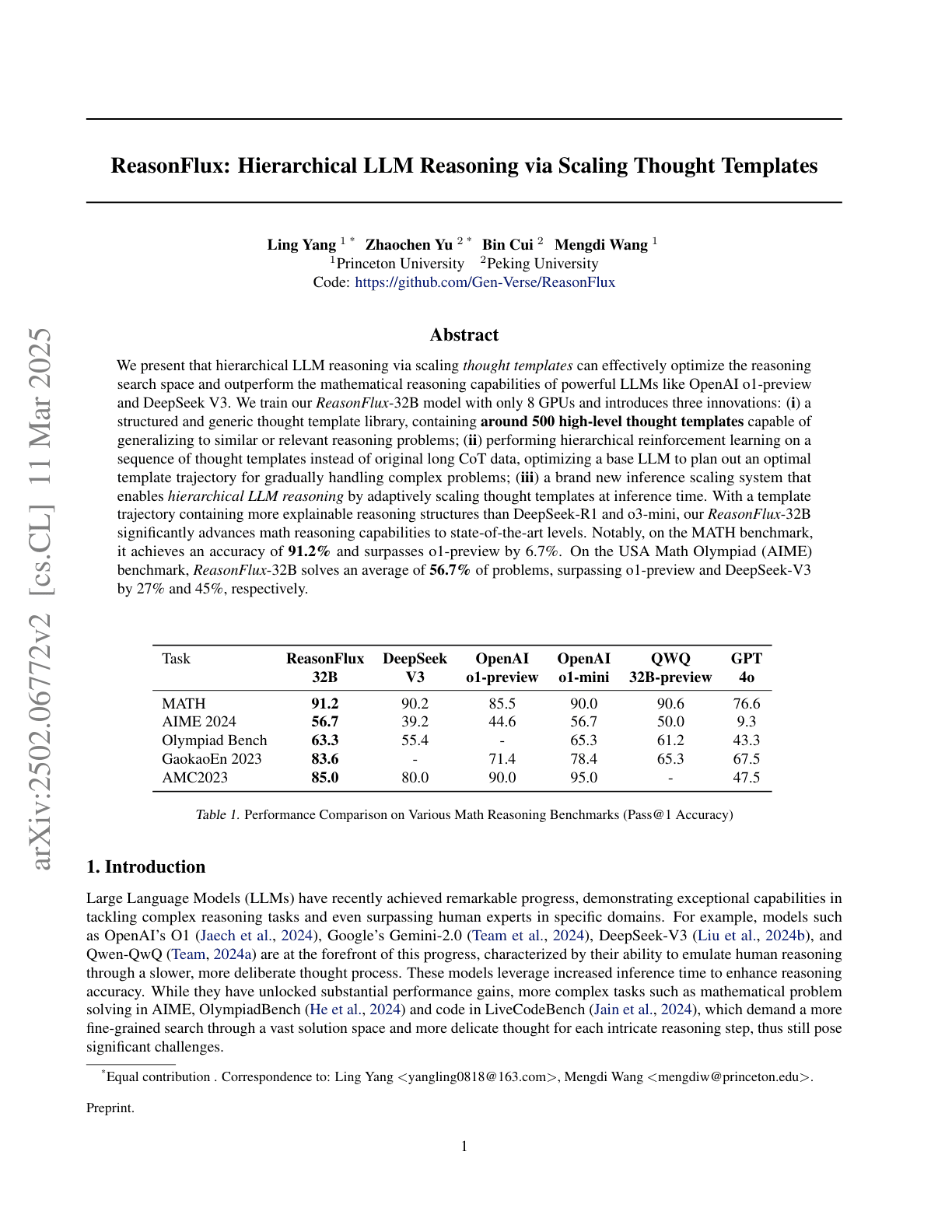
ReasonFlux
The ReasonFlux framework is introduced as an efficient way to fine-tune LLMs for complex reasoning, using hierarchical thought processes. Highlights include:
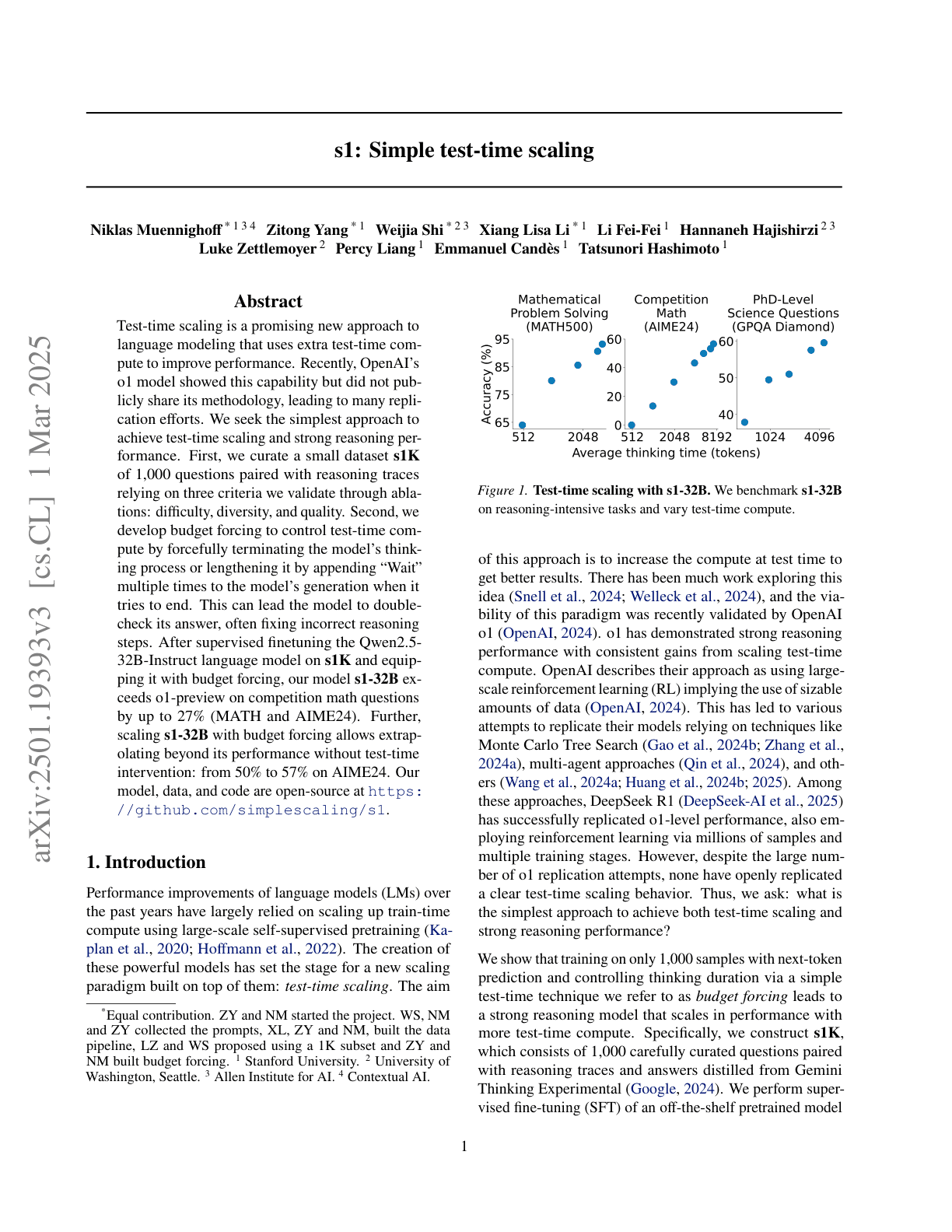
s1: Simple test-time scaling
Researchers from Stanford, UW, and others introduce s1, a method to boost LLM performance by using extra compute at inference (“test-time scaling”). Key ideas include:

OmniHuman-1: Scaling One-Stage Human Animation
A team at ByteDance AI Lab unveiled OmniHuman-1, a diffusion-transformer model that can generate highly realistic human videos from just a single image plus motion input (audio or video). Highlights:
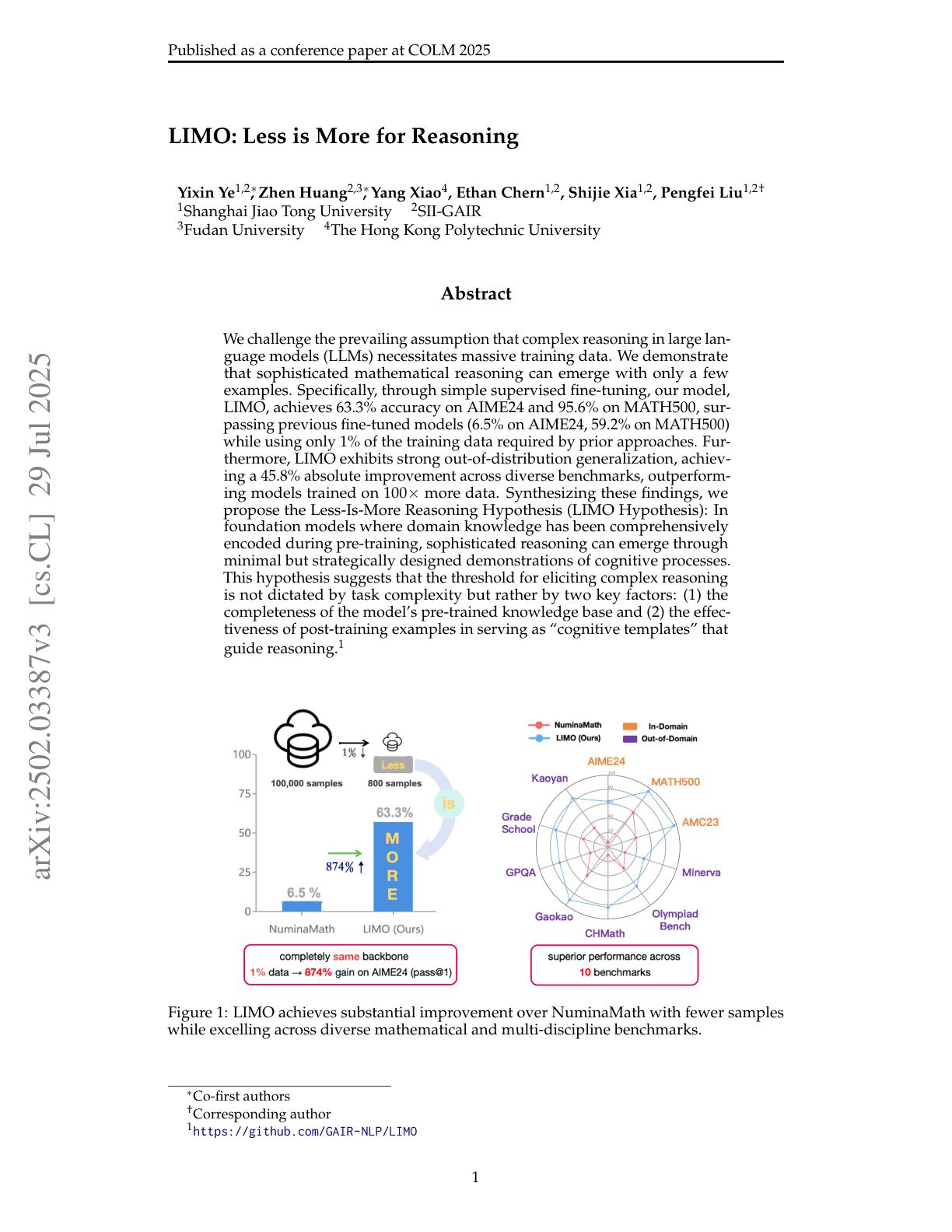
LIMO: Less Is More for Reasoning
Can a handful of examples teach complex math reasoning to LLMs? This new LIMO paper challenges the notion that we need huge fine-tuning datasets for tough reasoning tasks. Key findings:
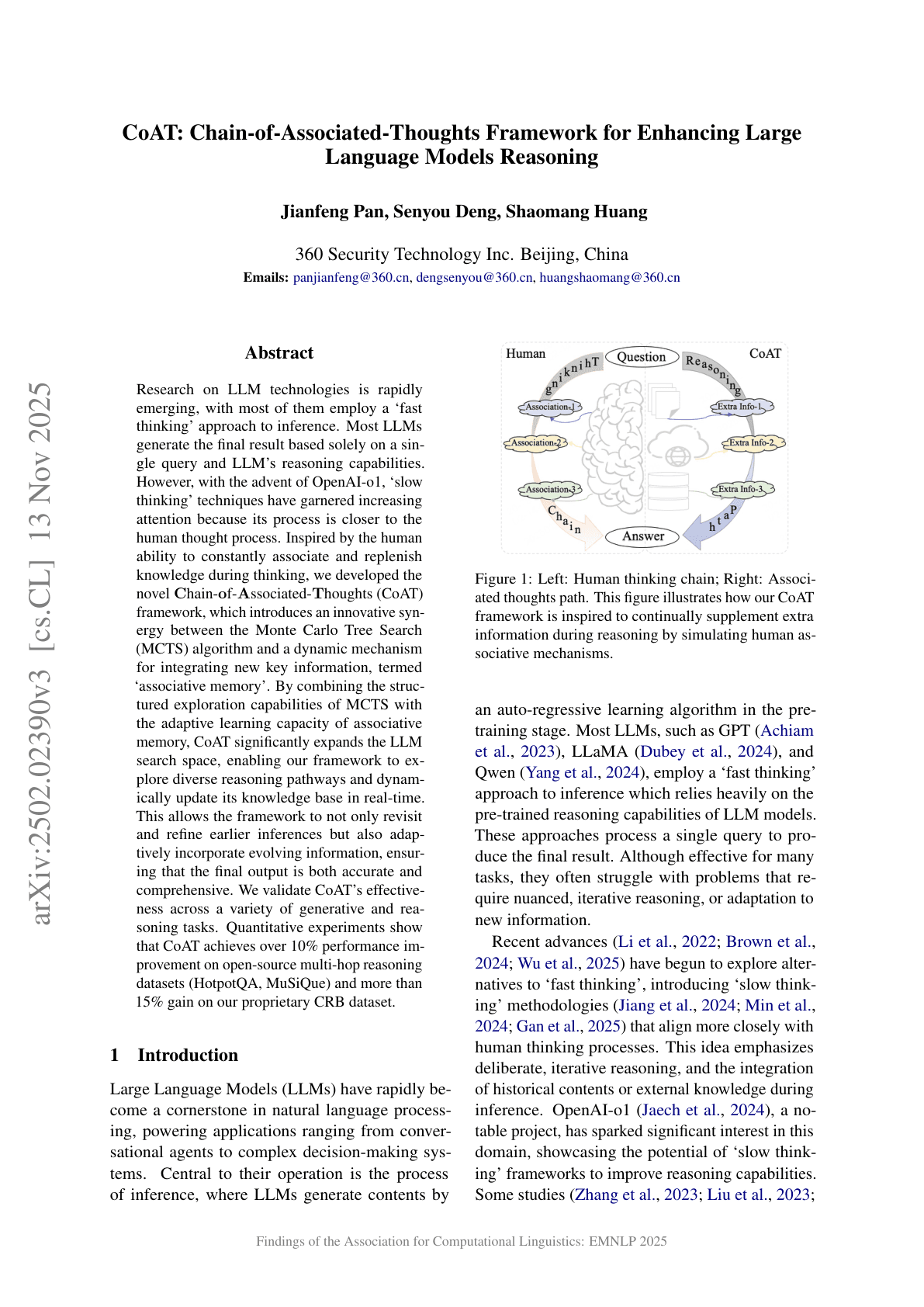
CoAT: Chain-of-Associated-Thoughts for LLM Reasoning
This work introduces CoAT, a new “slow thinking” inference framework that enables an LLM to reason more like a human by exploring and updating its thoughts. Main components:
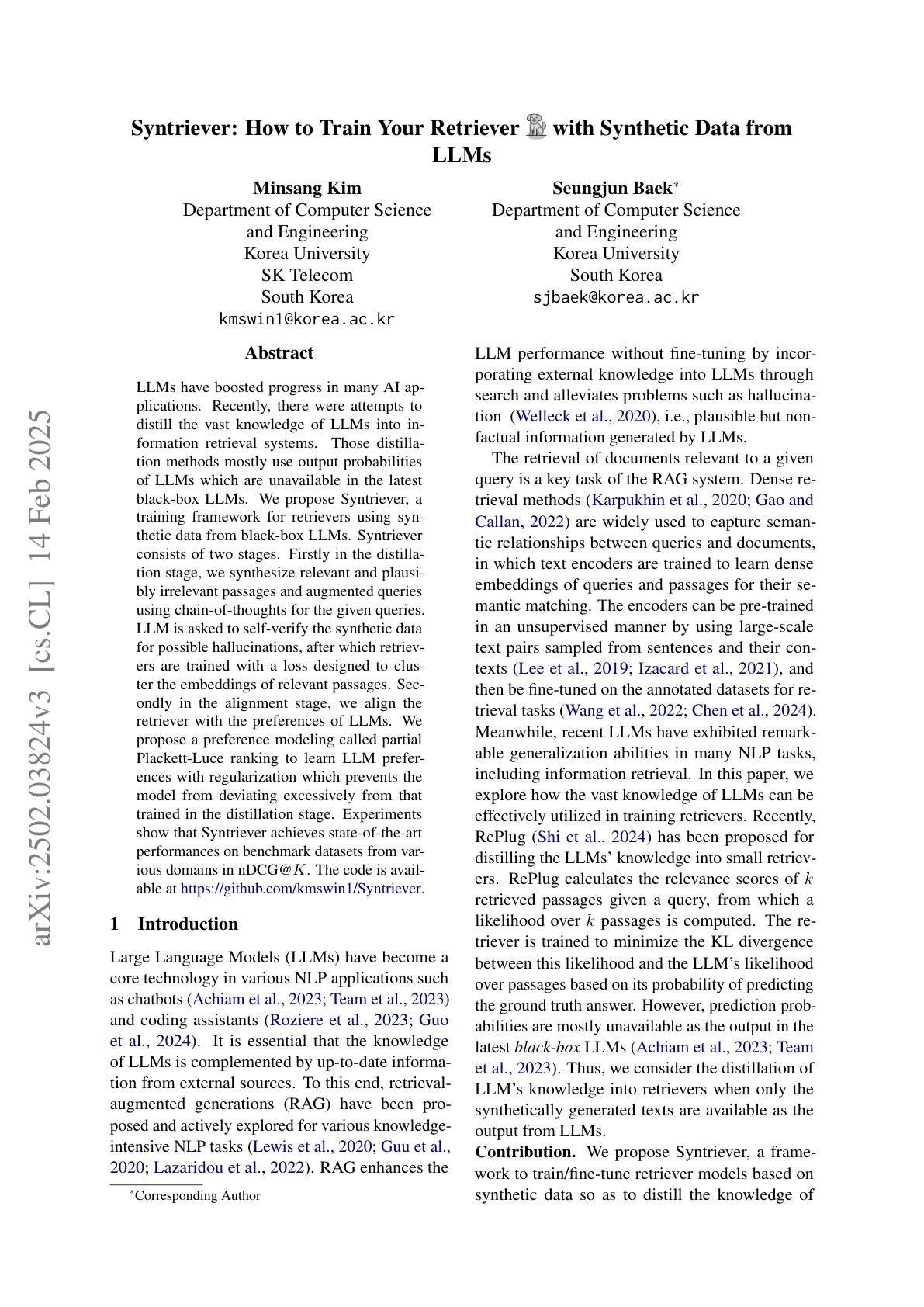
Syntriever: Training Retrievers with LLM-Generated Data
How can we build a high-quality text retriever without large labeled datasets or access to an LLM’s internals? Syntriever presents a two-stage framework to distill knowledge from a black-box LLM into a retrieval model using synthetic data. Steps:
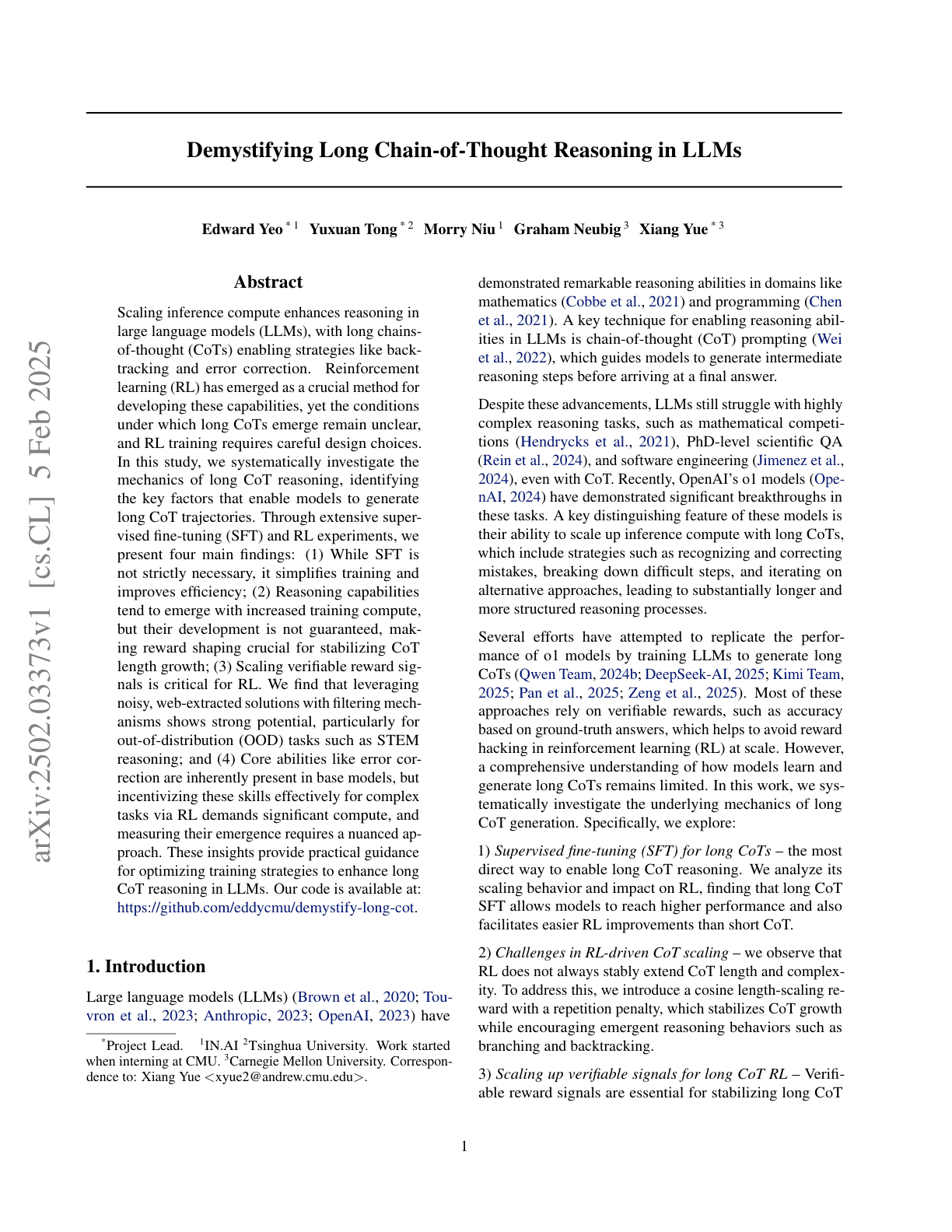
Demystifying Long Chain-of-Thought Reasoning in LLMs
This work investigates how LLMs develop extended CoT reasoning, focusing on RL and compute scaling. Key insights include:
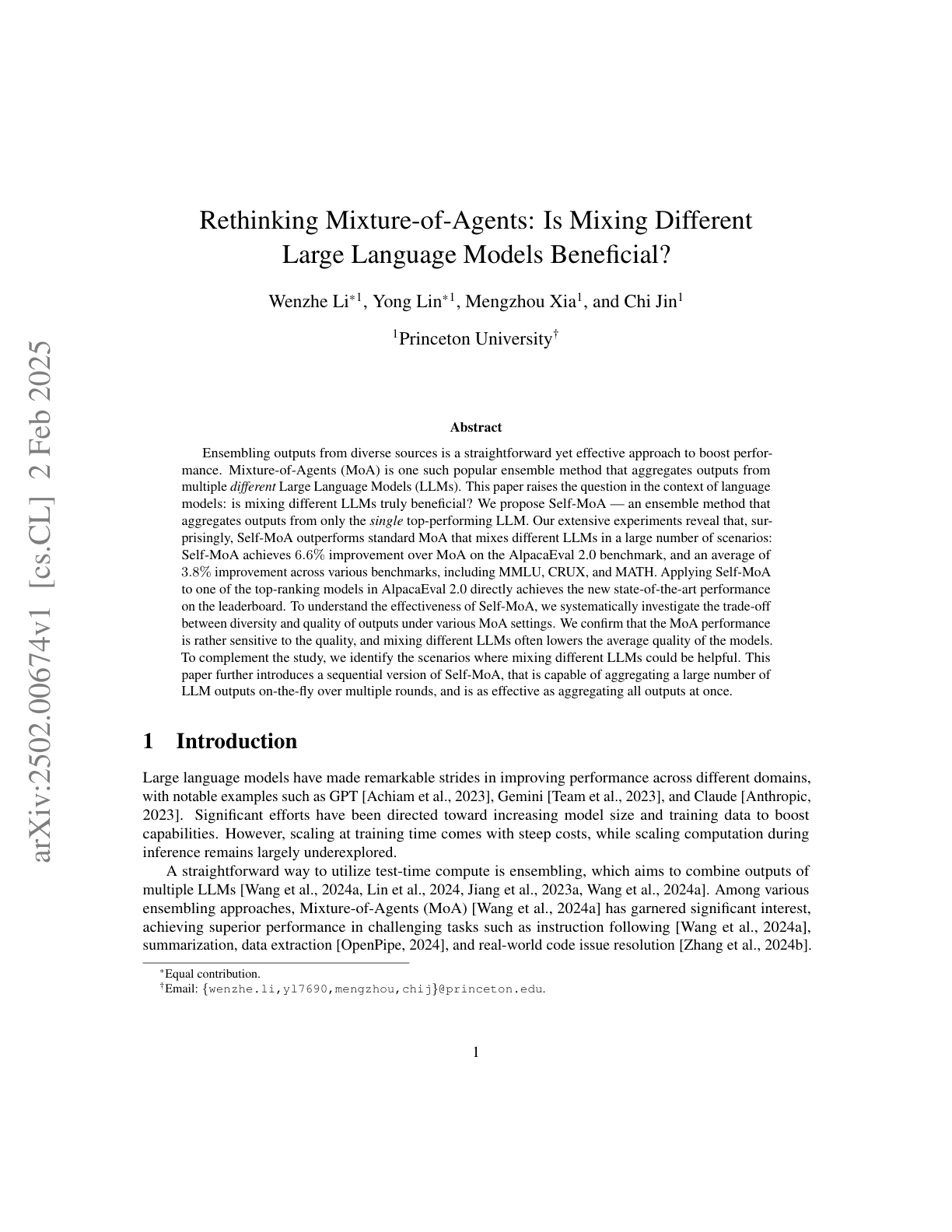
Rethinking Mixture-of-Agents: Ensemble One Strong LLM
Ensembling multiple models (Mixture-of-Agents, MoA) is a popular way to boost performance. This paper asks: is mixing different LLMs actually helpful, or are we better off ensembling one top model’s outputs? The surprising answer: “Self-MoA” (single-model ensemble) often wins over multi-model ensembles. Key points:
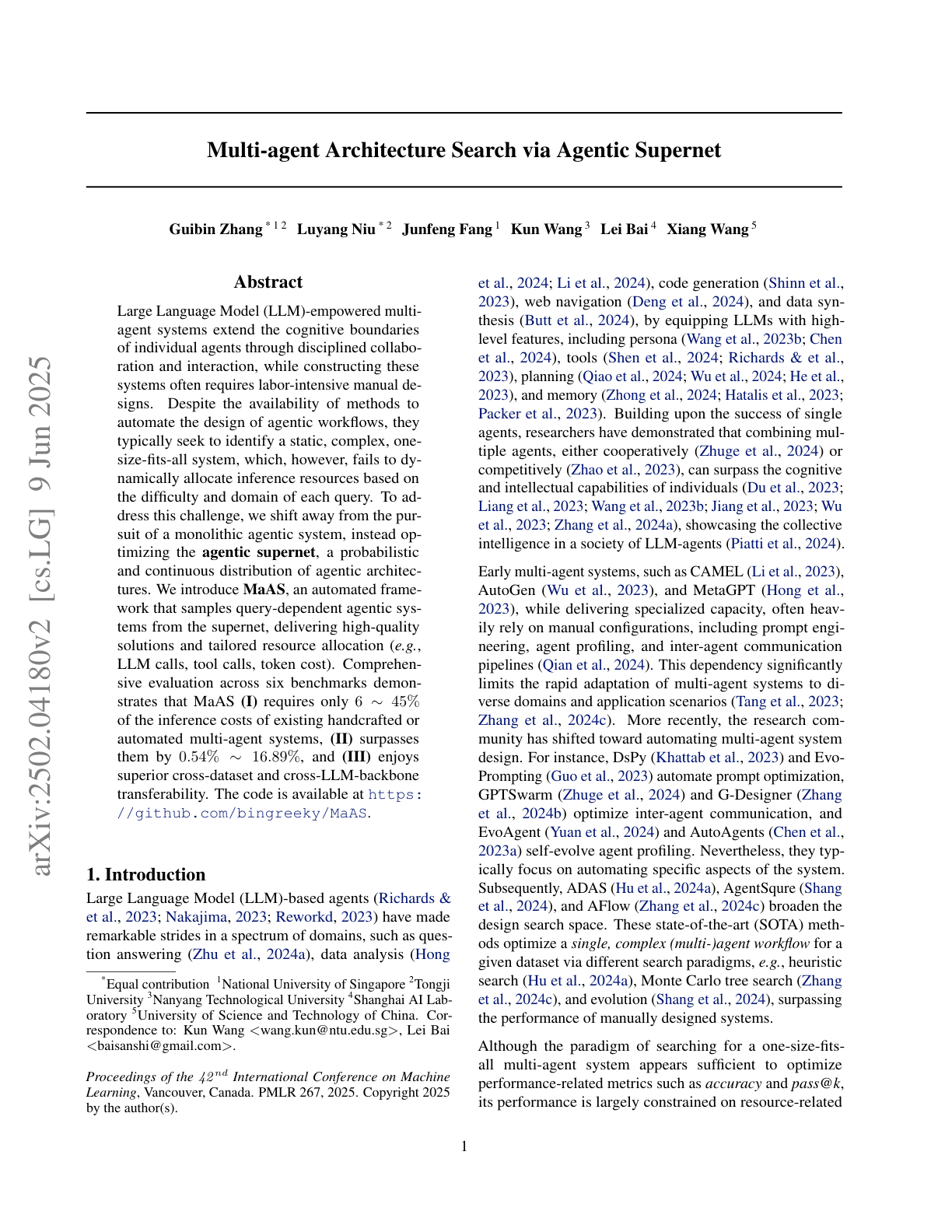
MaAS: Multi-agent Architecture Search (Agentic Supernet)
Building multi-agent systems of LLMs (where multiple agents collaborate, each with specific roles or tools) is powerful but usually requires hand-designing a single complex pipeline. MaAS (Multi-agent Architecture Search) instead learns a universal “agentic supernet” from which it can spawn an optimal agent team on the fly for each query. It automates designing the agent workflow per task:
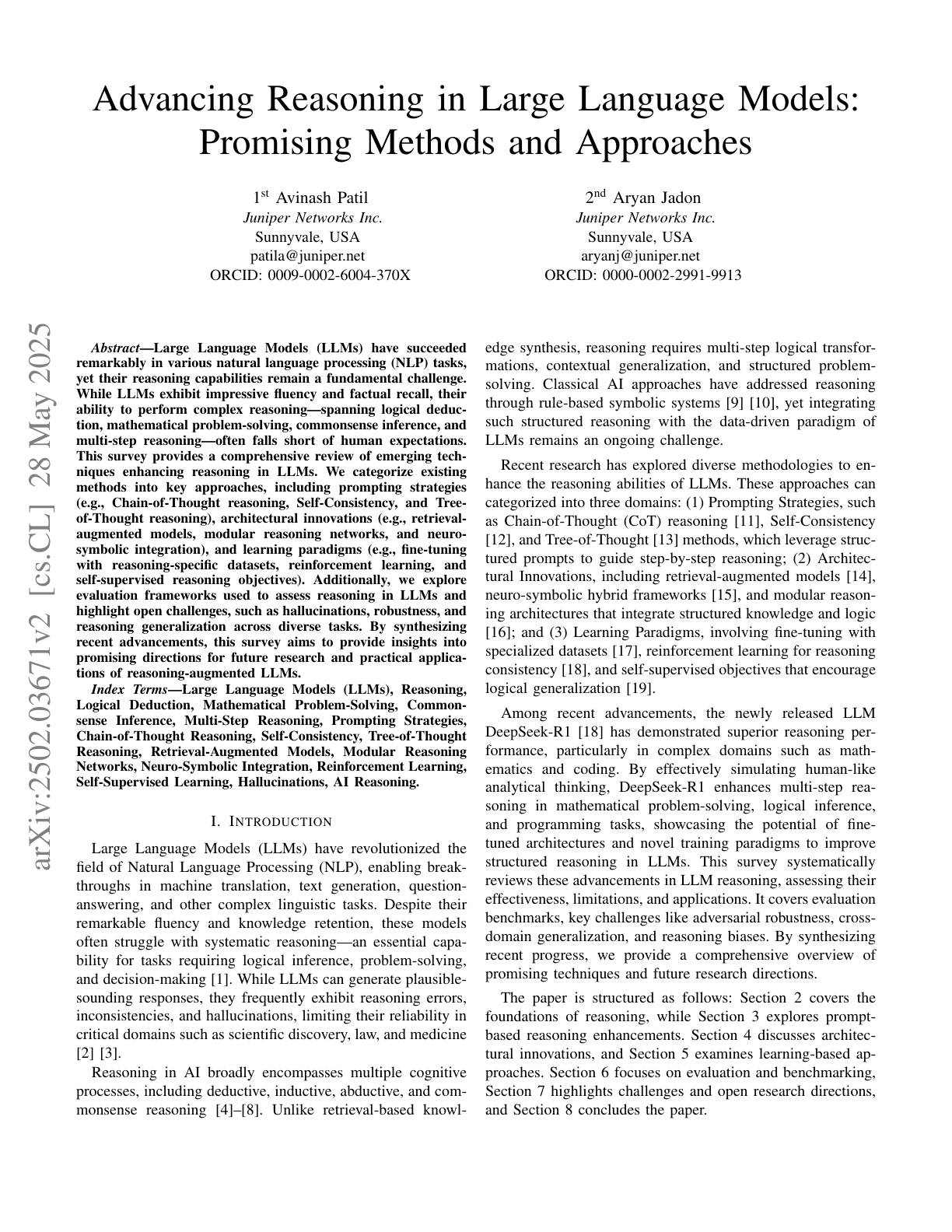
Advancing Reasoning in LLMs
This survey paper provides a timely overview of emerging methods to enhance reasoning capabilities in LLMs. It organizes the literature into several key approach categories:
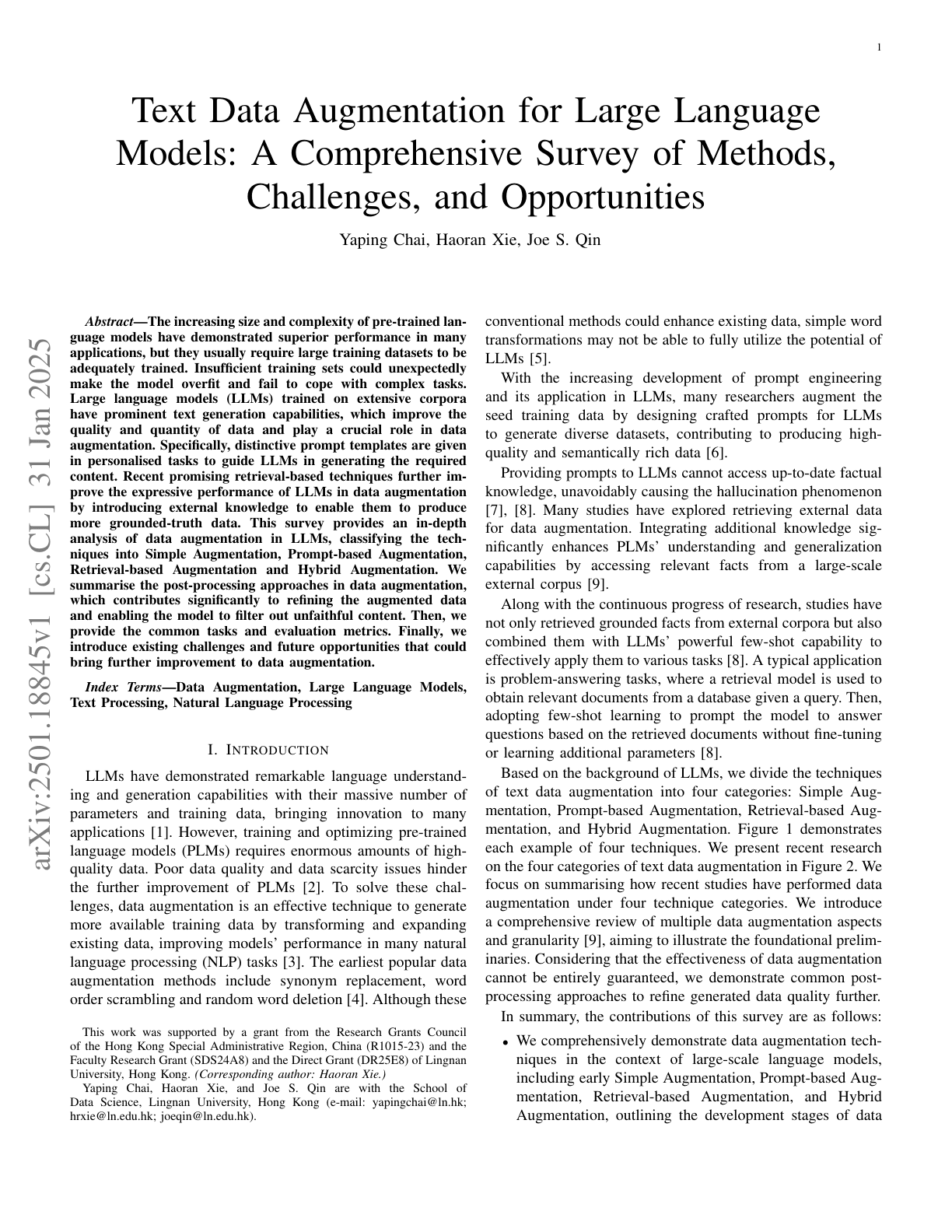
Survey: Text Data Augmentation for LLMs
This comprehensive survey covers text data augmentation techniques for LLMs. As LLMs demand massive training data, augmenting datasets with synthetic or transformed text is vital. In this paper:
o3-mini
OpenAI has launched o3-mini, their newest cost-efficient reasoning model, available in ChatGPT and API. The model excels in STEM-related tasks, particularly in science, math, and coding, while maintaining the low cost and reduced latency of its predecessor o1-mini. It introduces key developer features like function calling, Structured Outputs, and developer messages, making it production-ready from launch. o3-mini includes different reasoning effort levels (low, medium, and high) and improves performance across a wide range of tasks. It delivered responses 24% faster than o1-mini and achieved notable results in competition math, PhD-level science questions, and software engineering tasks.