AI Papers of the Week
Every paper worth reading in AI, hand-picked one week at a time.
Discover and explore top AI papers withClaude CodeCodex
npx @dair-ai/mcp setup
Current and Future Use of LLMs for Knowledge Work
A two-part survey study of 216 and 107 participants reveals that knowledge workers currently use LLMs for tasks like code generation and text improvement, but envision deeper integration into workflows and data. The findings inform future design and adoption strategies for generative AI in professional settings.
A Review of DeepSeek Models
This paper provides an in-depth review of the cutting-edge techniques behind DeepSeek's open-source LLMs—DeepSeek-V3 and DeepSeek-R1. These models achieve state-of-the-art performance with significantly lower resource requirements compared to proprietary counterparts. Key highlights include:
Towards Hierarchical Multi-Step Reward Models for Enhanced Reasoning in LLMs
It proposes a Hierarchical Reward Model (HRM) that addresses reward hacking and error propagation issues in fine-grained LLM reasoning. They also introduce Hierarchical Node Compression (HNC) to augment MCTS-based automatic data annotation, boosting label diversity and robustness at minimal computational cost.
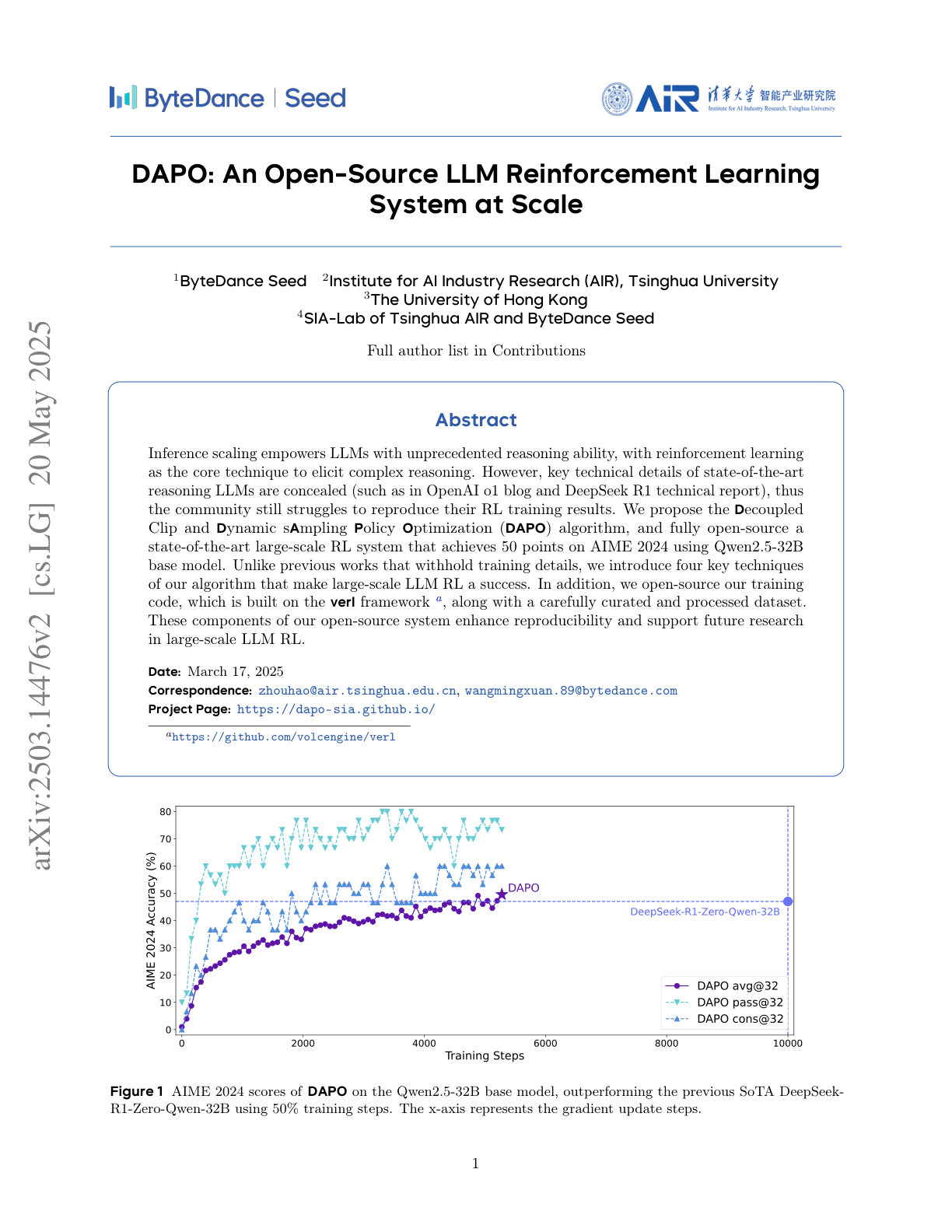
DAPO: An Open-Source LLM Reinforcement Learning System at Scale
It introduces DAPO, a fully open-source, large-scale RL system that boosts the chain-of-thought reasoning capabilities of LLMs. DAPO raises the upper clipping threshold (“Clip-Higher”) in PPO-style training, preventing entropy collapse and helping the policy explore more diverse tokens. By filtering out samples that are always correct or always wrong, DAPO focuses training on prompts with useful gradient signals, speeding up convergence in fewer updates. Instead of averaging losses at the sample level, DAPO applies policy gradients per token, making each reasoning step matter. This ensures both high-quality and length-appropriate outputs. The system masks or softly penalizes excessively long answers, preventing meaningless verbosity or repetitive text. DAPO achieves SOTA math performance on the AIME 2024 test set. Specifically, DAPO trained from a Qwen2.5-32B base achieves 50% accuracy, outperforming DeepSeek’s R1 with less training time, and showcasing open-source reproducibility at scale.
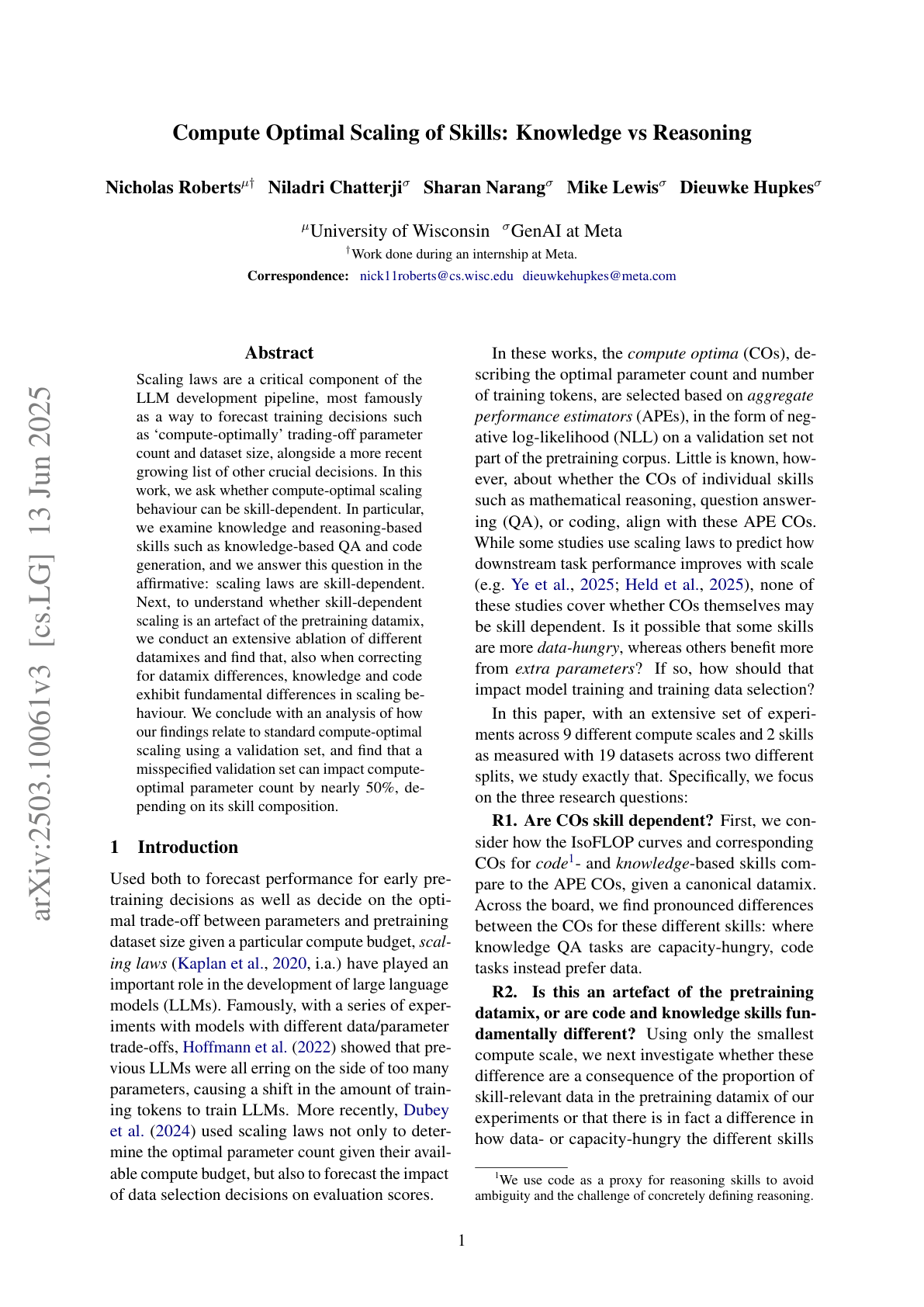
Compute Optimal Scaling of Skills
Researchers from the University of Wisconsin and Meta AI investigate how different skills (knowledge-based QA vs. code generation) exhibit contrasting optimal scaling behaviors in LLMs. Their key question: does the compute-optimal trade-off between model size and data volume depend on the type of skill being learned? Surprisingly, the answer is yes—they show distinct “data-hungry” vs. “capacity-hungry” preferences per skill. Highlights:
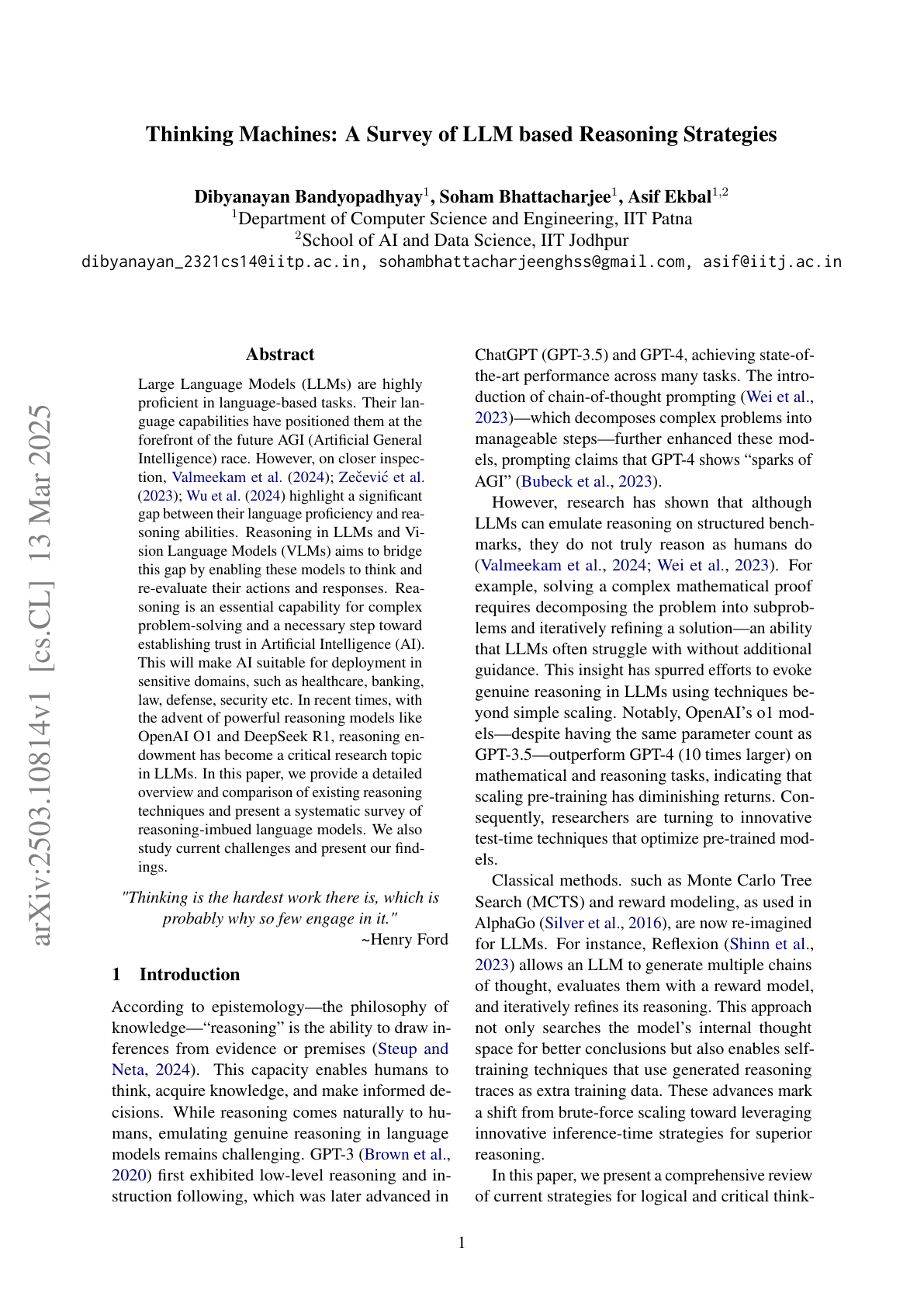
Thinking Machines
This survey provides an overview and comparison of existing reasoning techniques and presents a systematic survey of reasoning-imbued language models.
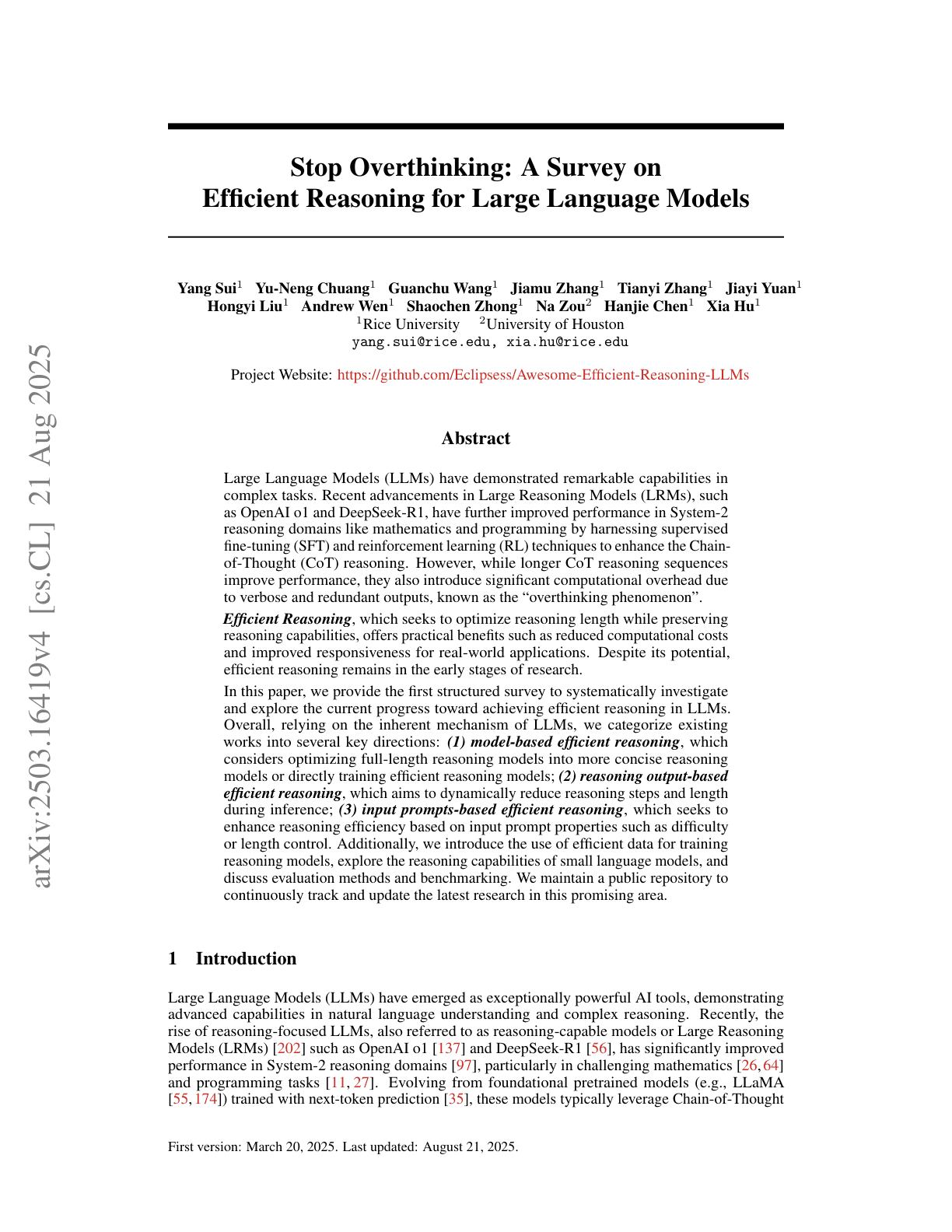
A Survey on Efficient Reasoning
This new survey investigates techniques to address the "overthinking phenomenon" in Large Reasoning Models (LRMs), categorizing existing methods into model-based optimizations, output-based reasoning reductions, and prompt-based efficiency enhancements. The survey highlights ongoing efforts to balance reasoning capability and computational efficiency in models like OpenAI o1 and DeepSeek-R1.
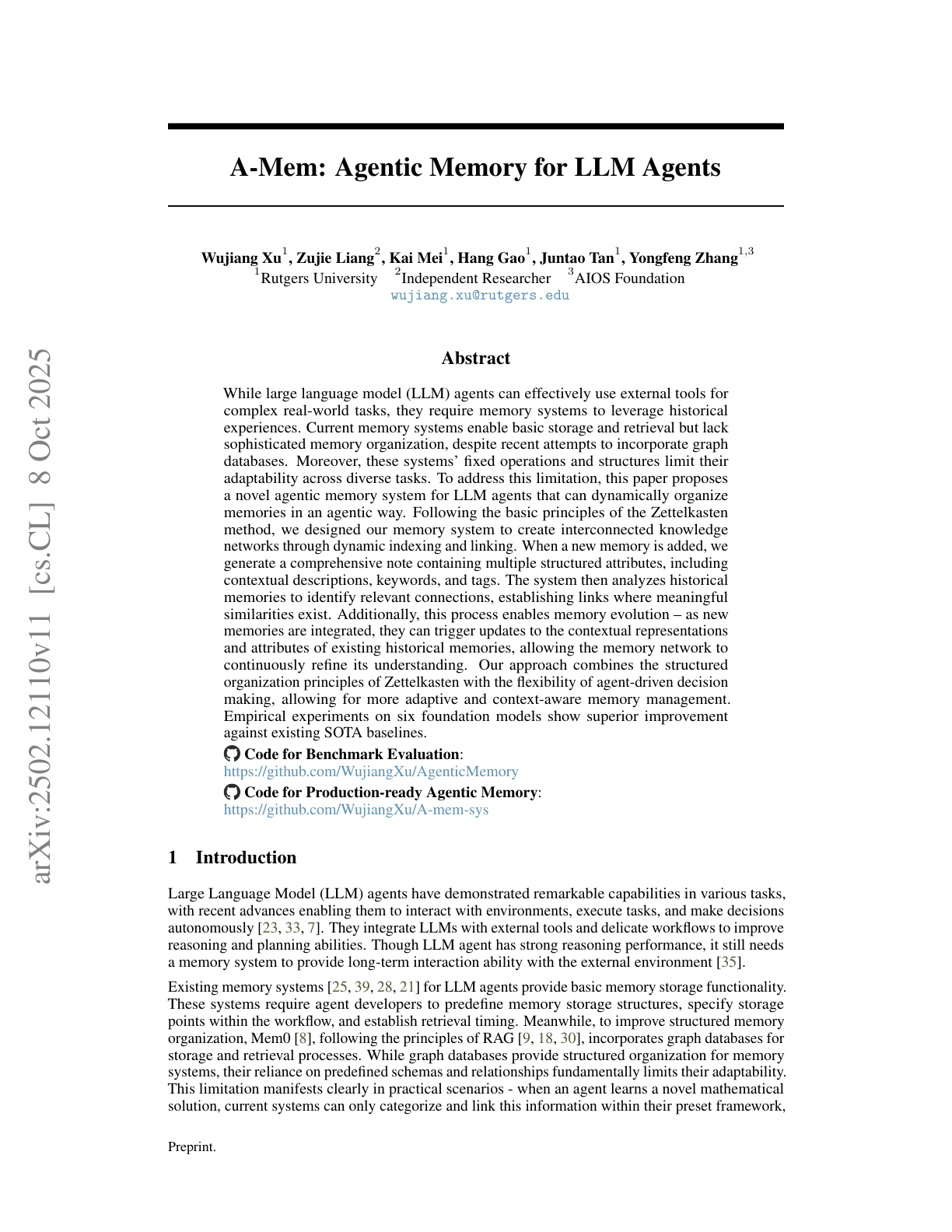
Agentic Memory for LLM Agents
Researchers from Rutgers University and Ant Group propose a new agentic memory system for LLM agents, addressing the need for long-term memory in complex real-world tasks. Key highlights include:
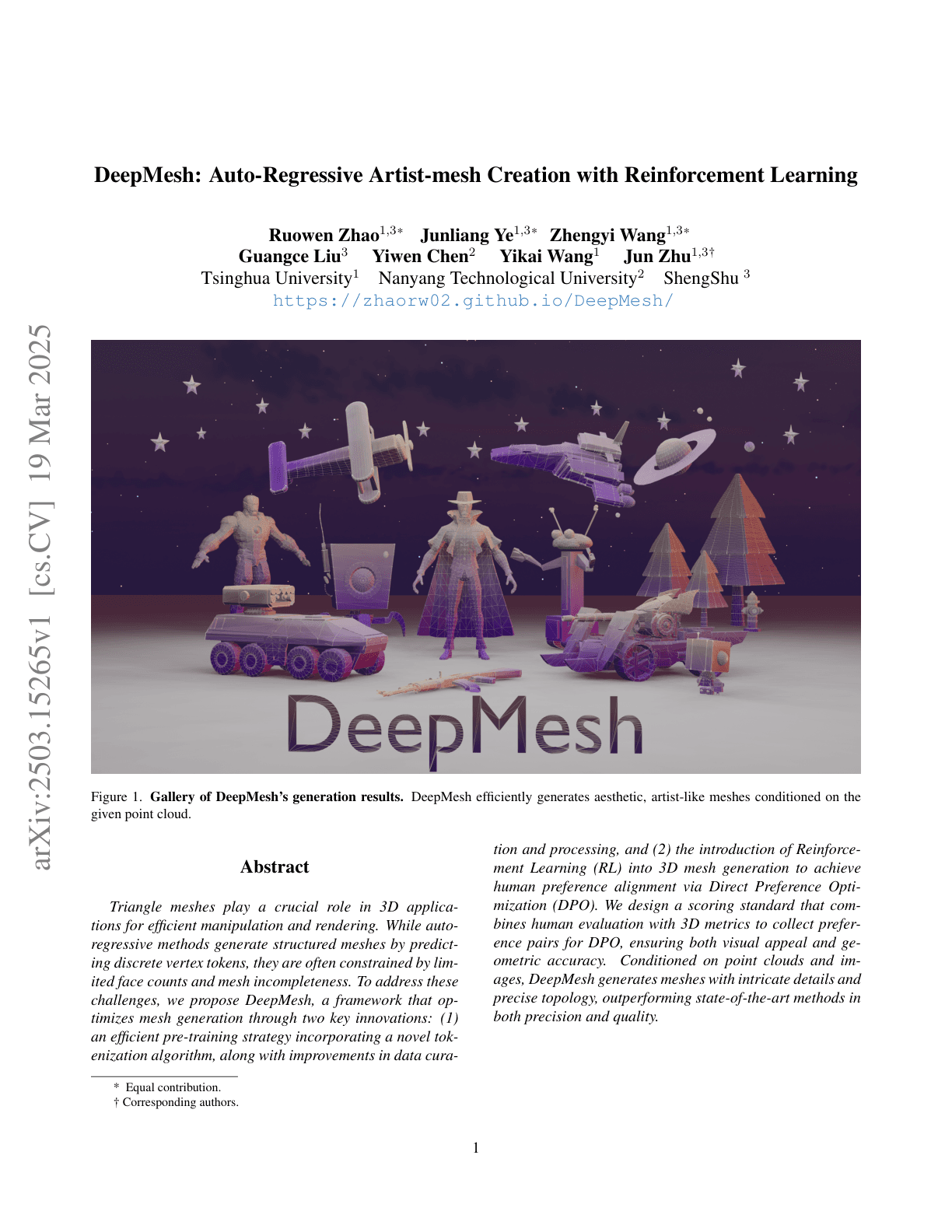
DeepMesh
Researchers from Tsinghua University, Nanyang Technological University, and ShengShu propose DeepMesh, a transformer-based system that generates high-quality 3D meshes with artist-like topology. Key ideas include:
Deep Learning is Not So Mysterious or Different
Andrew Gordon Wilson (New York University) argues that deep learning phenomena such as benign overfitting, double descent, and the success of overparametrization are neither mysterious nor exclusive to neural networks. Major points include:
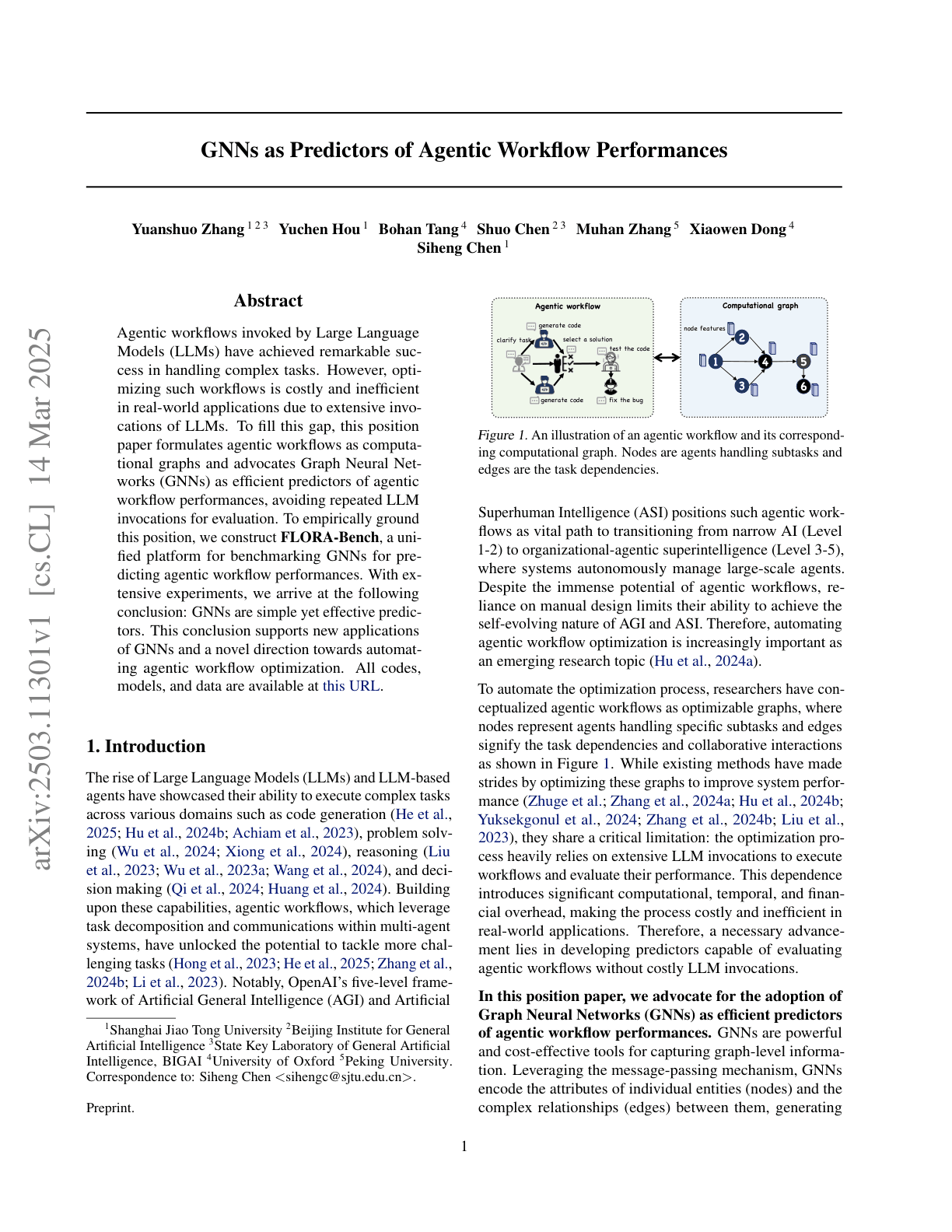
GNNs as Predictors of Agentic Workflow Performances
This work introduces FLORA-Bench, a large-scale benchmark to evaluate GNN-based predictors for automating and optimizing agentic workflows. It shows that Graph Neural Networks can efficiently predict the success of multi-agent LLM workflows, significantly reducing costly repeated model calls.

Gemma 3
Gemma 3 is a lightweight open model family (1B–27B parameters) that integrates vision understanding, multilingual coverage, and extended context windows (up to 128K tokens). Here is everything you need to know:
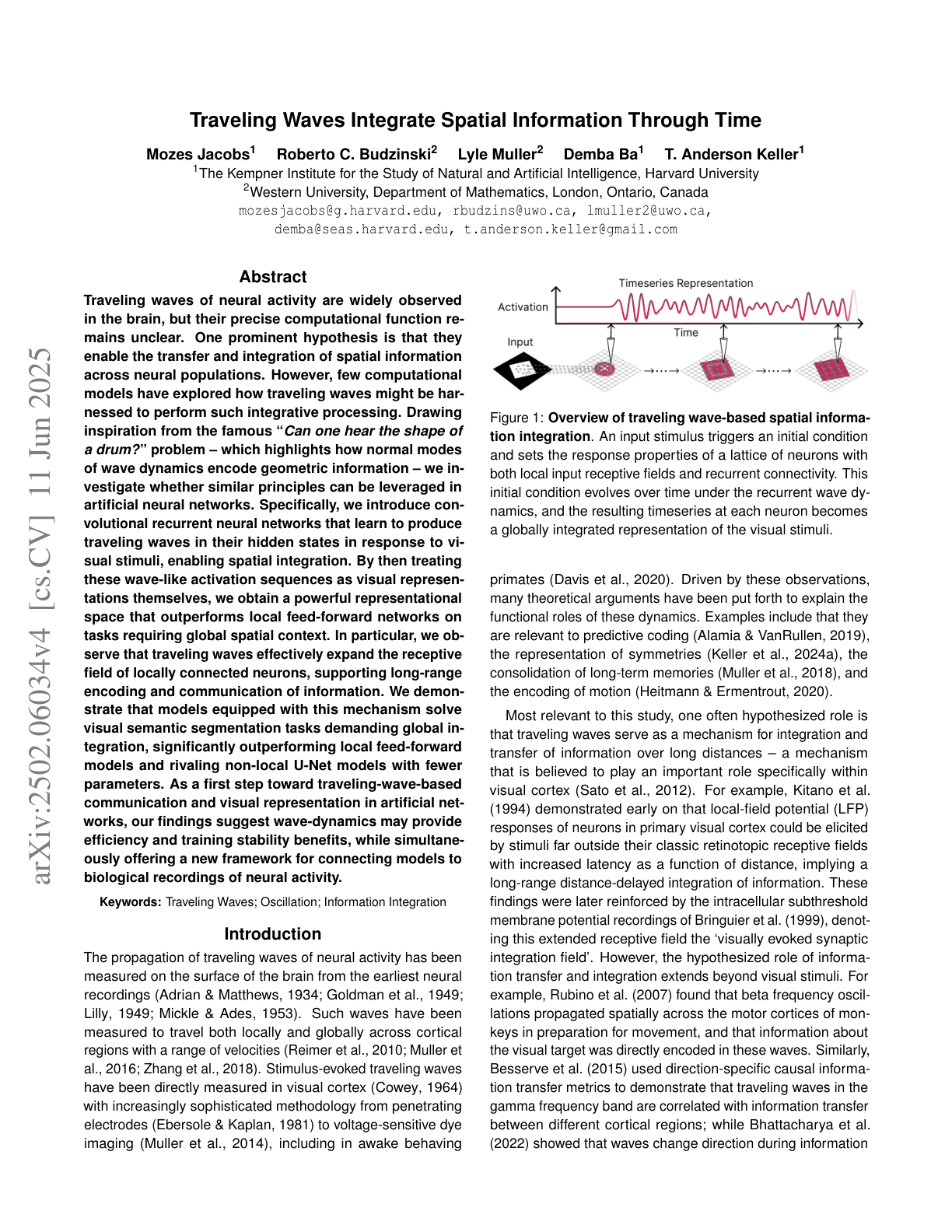
Traveling Waves Integrate Spatial Information Through Time
Researchers from Harvard University and Western University propose a wave-based recurrent neural network framework that uses traveling waves of neural activity to perform global spatial integration on visual tasks. Key ideas include:
Transformers without Normalization
Researchers from Meta, NYU, MIT, and Princeton present a surprisingly simple method, Dynamic Tanh (DyT), that removes normalization layers (e.g. LayerNorm, RMSNorm) in Transformers while achieving equal or better results. Key ideas include:
Monitoring Reasoning Models for Misbehavior
Researchers from OpenAI examine how LLMs that use chain-of-thought (CoT) reasoning can be monitored for misaligned behaviors, including reward hacking. Key points include:
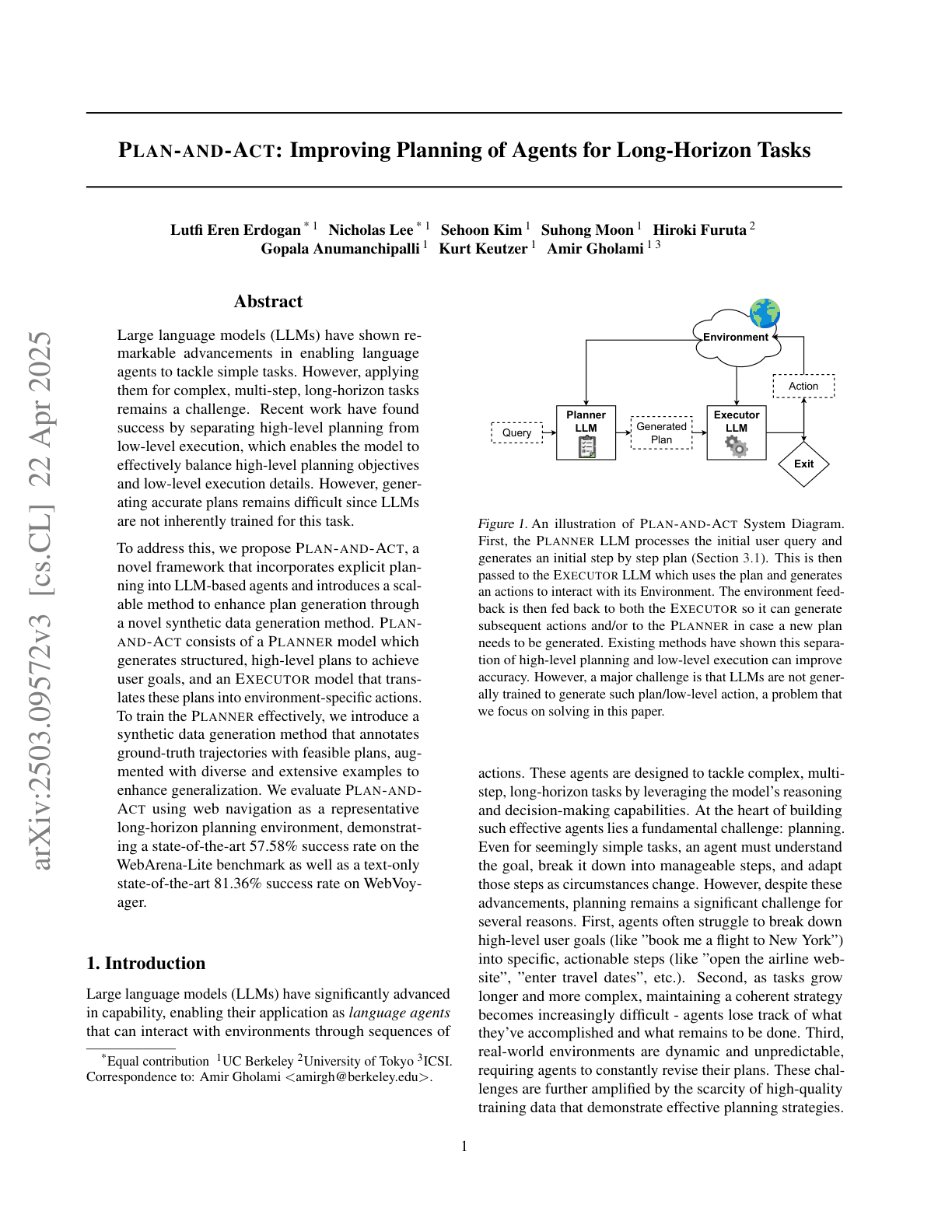
Improving Planning of Agents for Long-Horizon Tasks
A team from UC Berkeley and the University of Tokyo presents a new framework, Plan-and-Act, that separates high-level planning from low-level execution in LLM-based agents. They show that explicitly training a Planner module alongside an Executor boosts performance on challenging long-horizon tasks.

Gemini Robotics
Google DeepMind unveils Gemini Robotics, a family of embodied AI models designed to bring large multimodal reasoning capabilities into robotics. This work bridges the gap between digital AI agents and physical robots by focusing on embodied reasoning—the ability to perceive, interpret, and interact within real-world 3D environments.
Search-R1
This paper tackles search-augmented reasoning by teaching LLMs to query a search engine multiple times—while they reason—using reinforcement learning. Key ideas include:
Auditing LLMs for Hidden Objectives
Anthropic proposes a new framework for systematically auditing LLMs to uncover hidden goals or objectives that go beyond what users and developers explicitly intend. The researchers deliberately train a language model with a concealed objective (making it exploit reward model flaws in RLHF) and then attempt to expose it with different auditing techniques.
Post Training of LLMs
PoLMs like OpenAI-o1/o3 and DeepSeek-R1 tackle LLM shortcomings in reasoning, ethics, and specialized tasks. This survey tracks their evolution and provides a taxonomy of techniques across fine-tuning, alignment, reasoning, efficiency, and integration, guiding progress toward more robust, versatile AI.
Block Diffusion
Researchers from Cornell Tech, Stanford, and Cohere present Block Diffusion (BD3-LMs), a novel framework that merges autoregressive (AR) modeling with discrete diffusion to enable parallel token sampling and flexible-length text generation. Key highlights include:
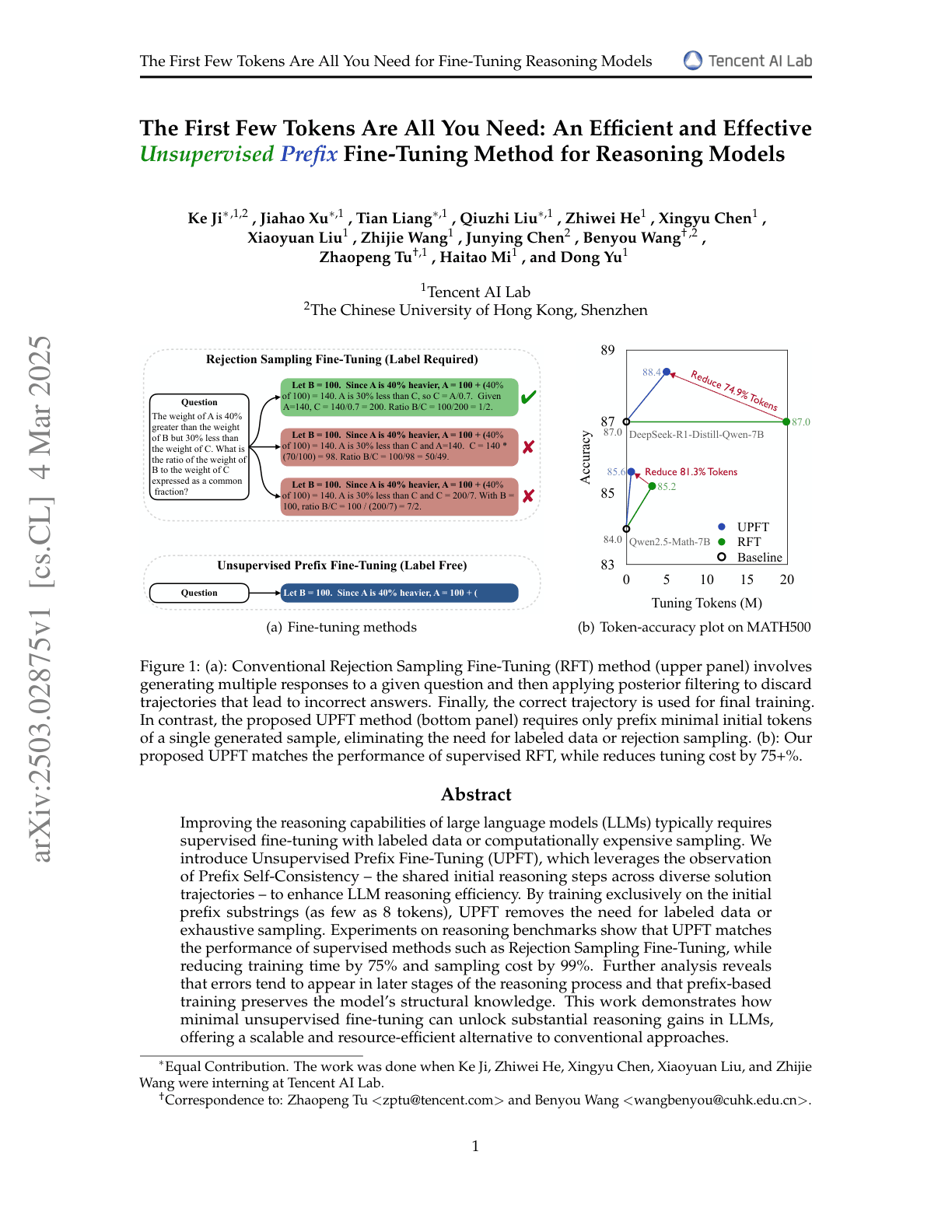
A Few Tokens Are All You Need
Researchers from Tencent AI Lab and The Chinese University of Hong Kong, Shenzhen propose a new approach to boost reasoning in LLMs by only fine-tuning on the first few tokens of generated solutions. Key ideas include:
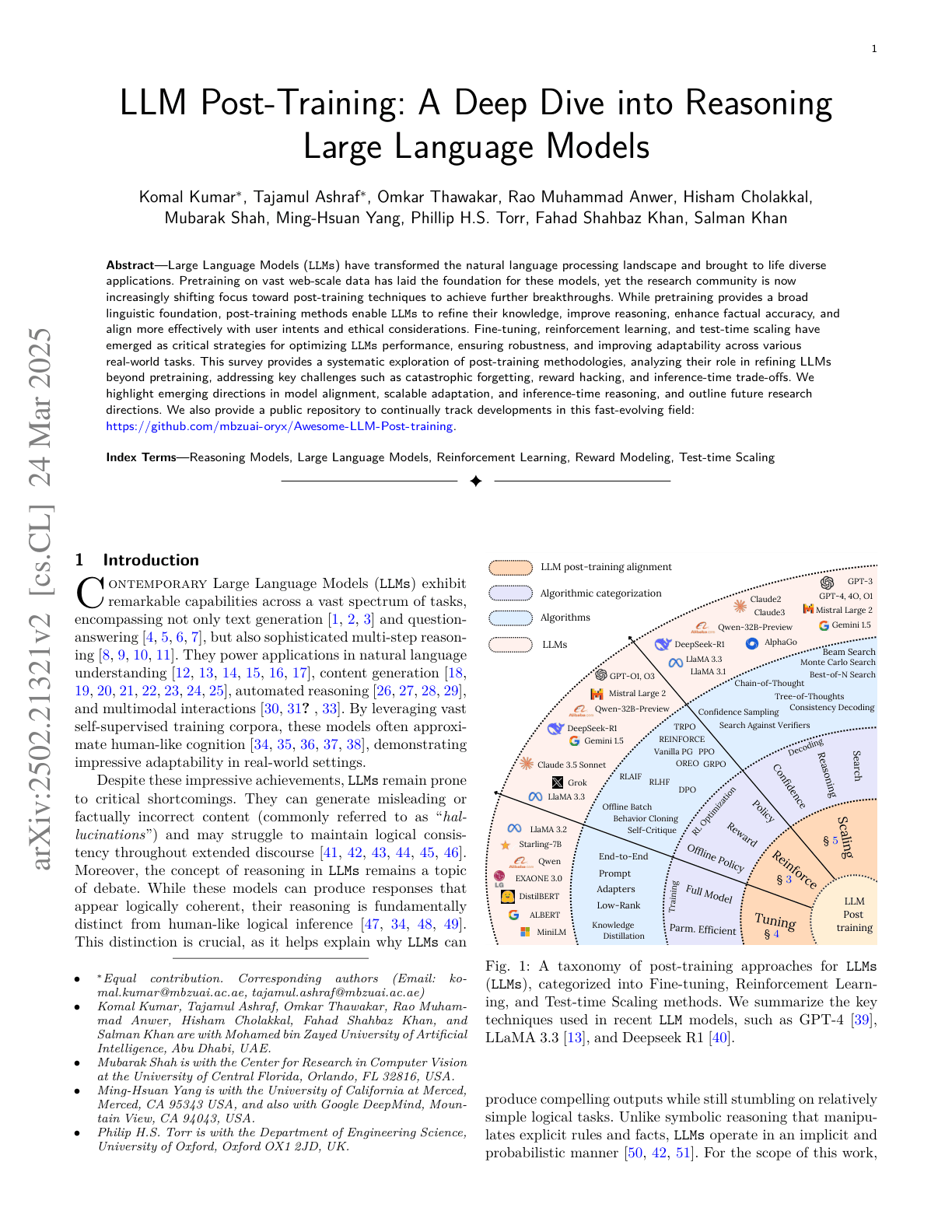
A Deep Dive into Reasoning LLMs
This survey explores how LLMs can be enhanced after pretraining through fine-tuning, reinforcement learning, and efficient inference strategies. It also highlights challenges like catastrophic forgetting, reward hacking, and ethical considerations, offering a roadmap for more capable and trustworthy AI systems.
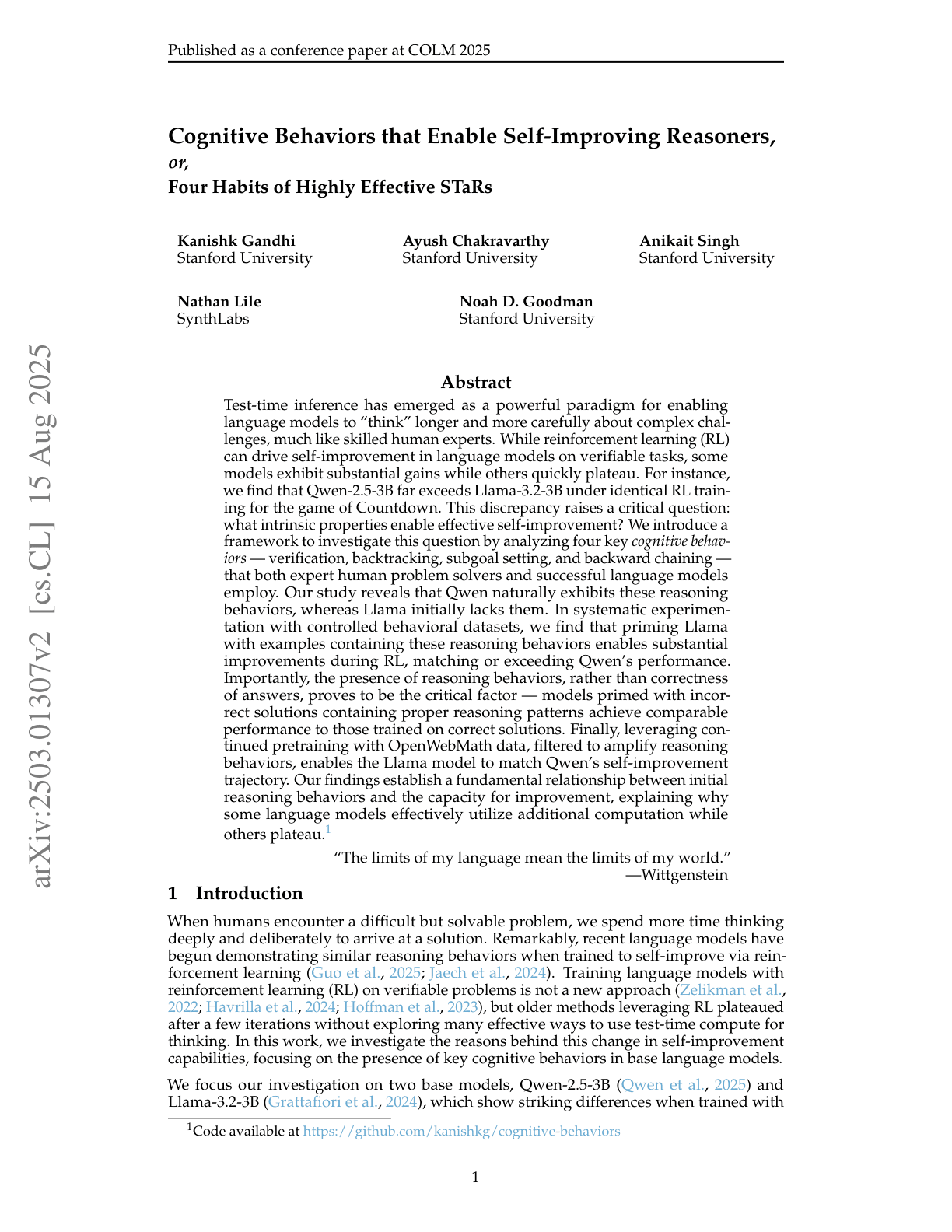
Cognitive Behaviors that Enable Self-Improving Reasoners
Researchers from Stanford University and colleagues investigate why some language models excel in reinforcement learning (RL)-based self-improvement, while others quickly plateau. The study identifies four cognitive behaviors-verification, backtracking, subgoal setting, and backward chaining-that underpin successful problem-solving in both humans and language models. Key findings: