AI Papers of the Week
Every paper worth reading in AI, hand-picked one week at a time.
Discover and explore top AI papers withClaude CodeCodex
npx @dair-ai/mcp setup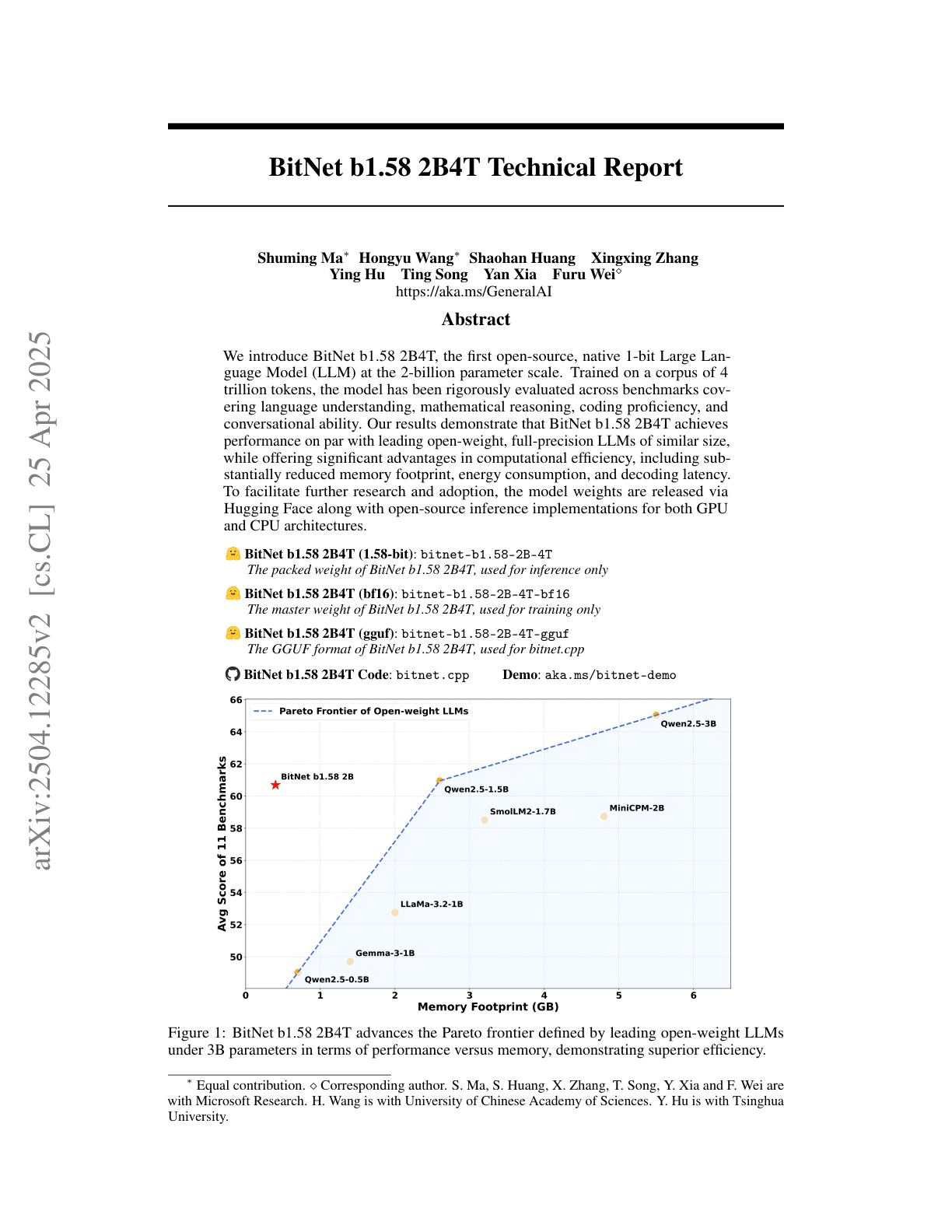
BitNet b1.58 2B4T
This work introduces BitNet b1.58 2B4T, the first open-source, natively trained 1-bit LLM at the 2B parameter scale, achieving strong performance while being extremely efficient. The model uses a custom ternary quantization scheme (1.58 bits per weight), enabling dramatic reductions in memory (0.4 GB), energy (0.028J/token), and latency (29ms), while still competing with state-of-the-art full-precision models across diverse benchmarks.
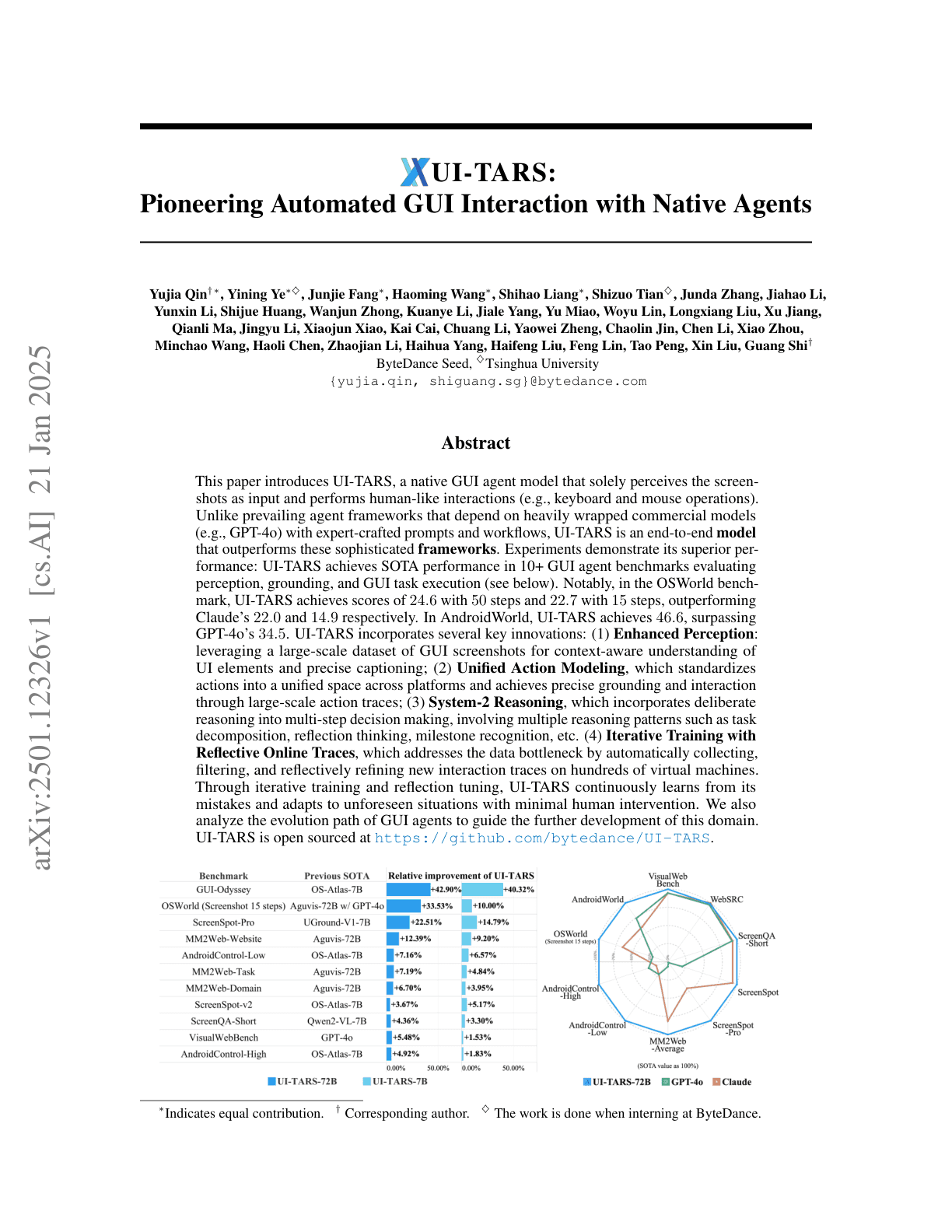
UI-TARS
UI-TARS introduces a powerful, end-to-end native GUI agent that operates purely from visual screenshots, performing human-like keyboard and mouse interactions across platforms. Unlike existing modular agent frameworks that rely on prompt engineering and external scripts, UI-TARS integrates perception, action, reasoning, and memory directly into its architecture, achieving strong generalization and adaptability in dynamic real-world settings. Key contributions:
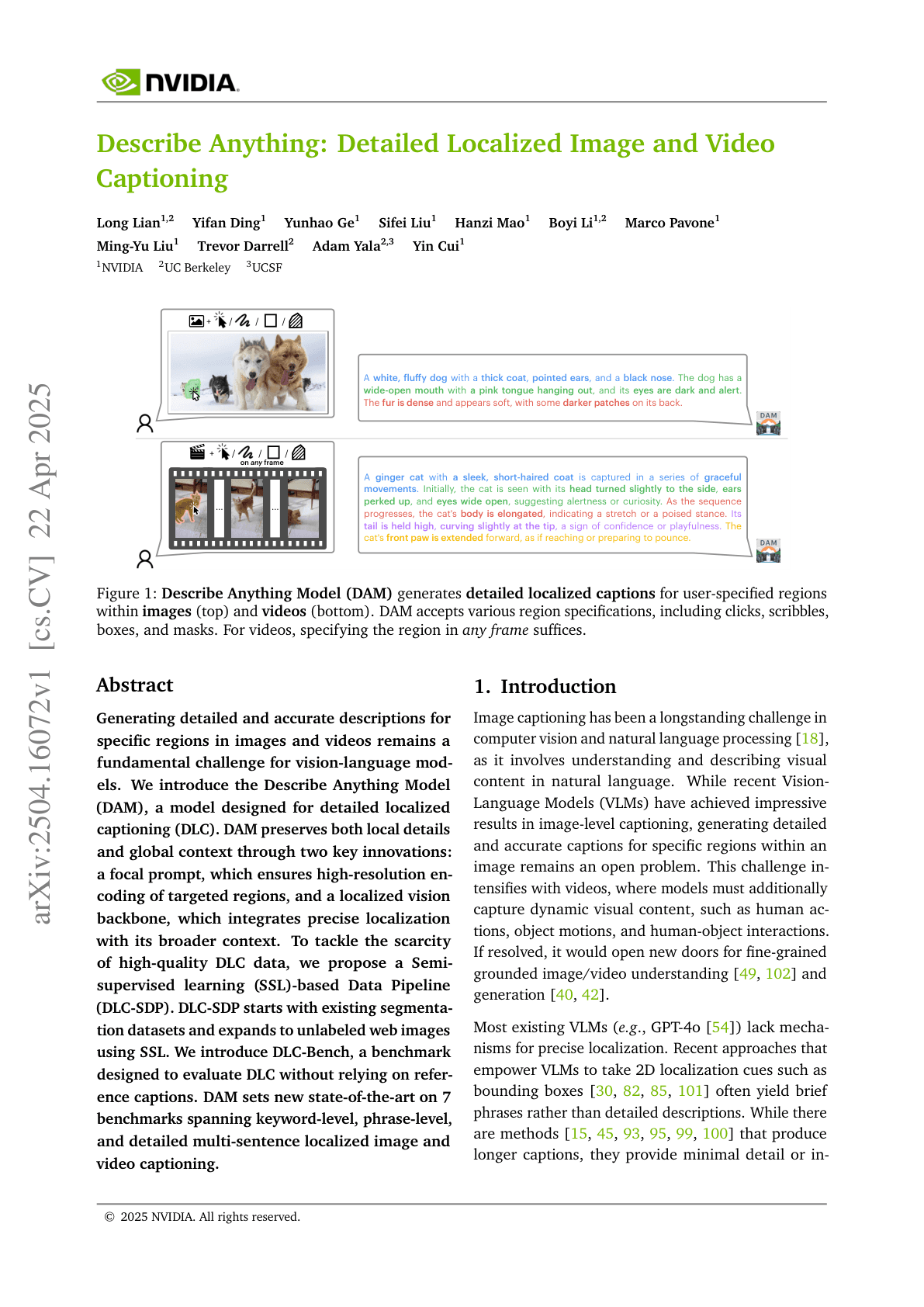
Describe Anything
Introduces DAM, a model that generates fine-grained, region-specific captions in both images and videos. The authors address key limitations in prior vision-language models—namely, the inability to preserve local detail and the lack of suitable datasets and benchmarks for detailed localized captioning (DLC). Key contributions:
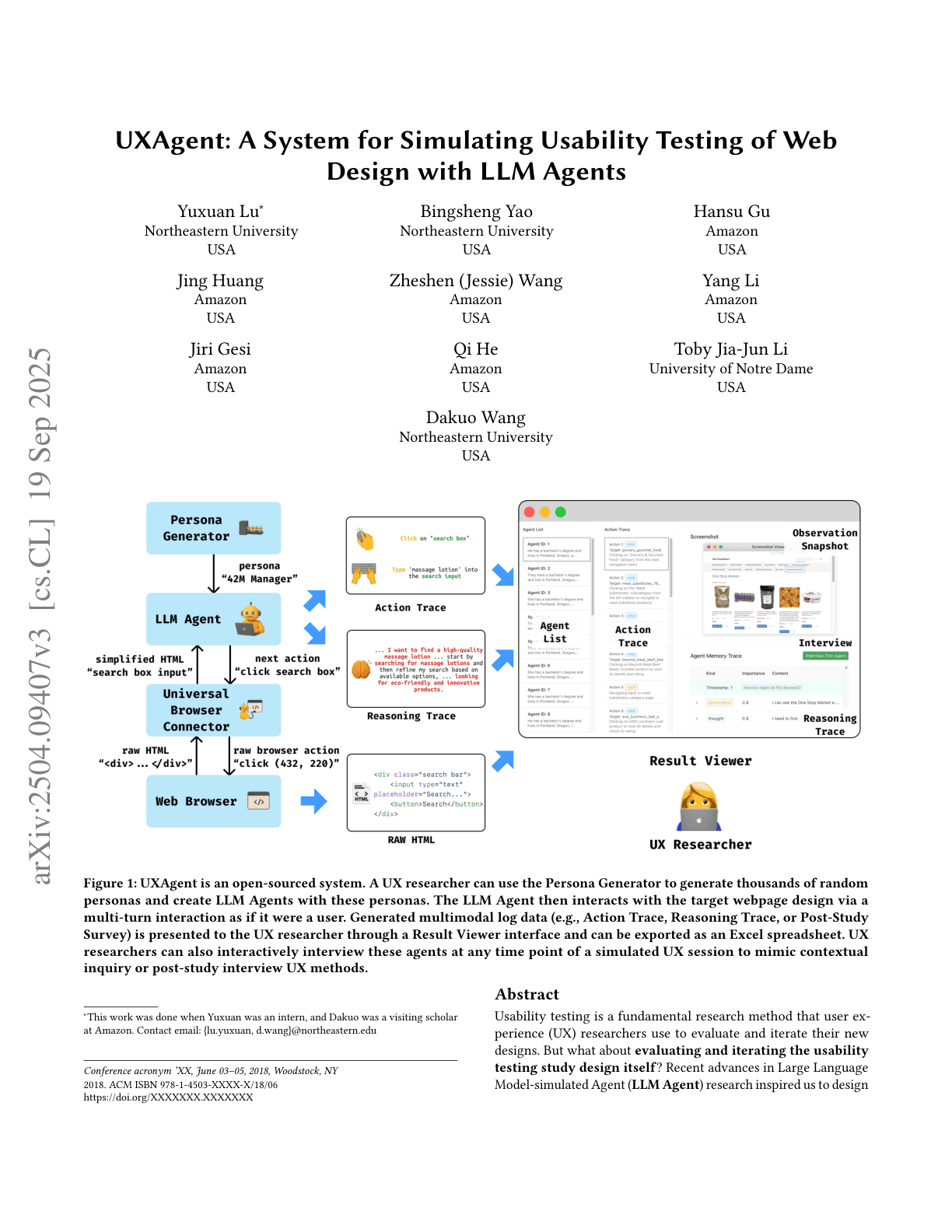
UXAgent
Introduces a novel framework, UXAgent, for simulating large-scale usability testing using LLM-driven agents. The system empowers UX researchers to test and iterate web design and study protocols before engaging real users. This is achieved through the orchestration of simulated agents with diverse personas interacting in real web environments, providing both behavioral and reasoning data. Key highlights:
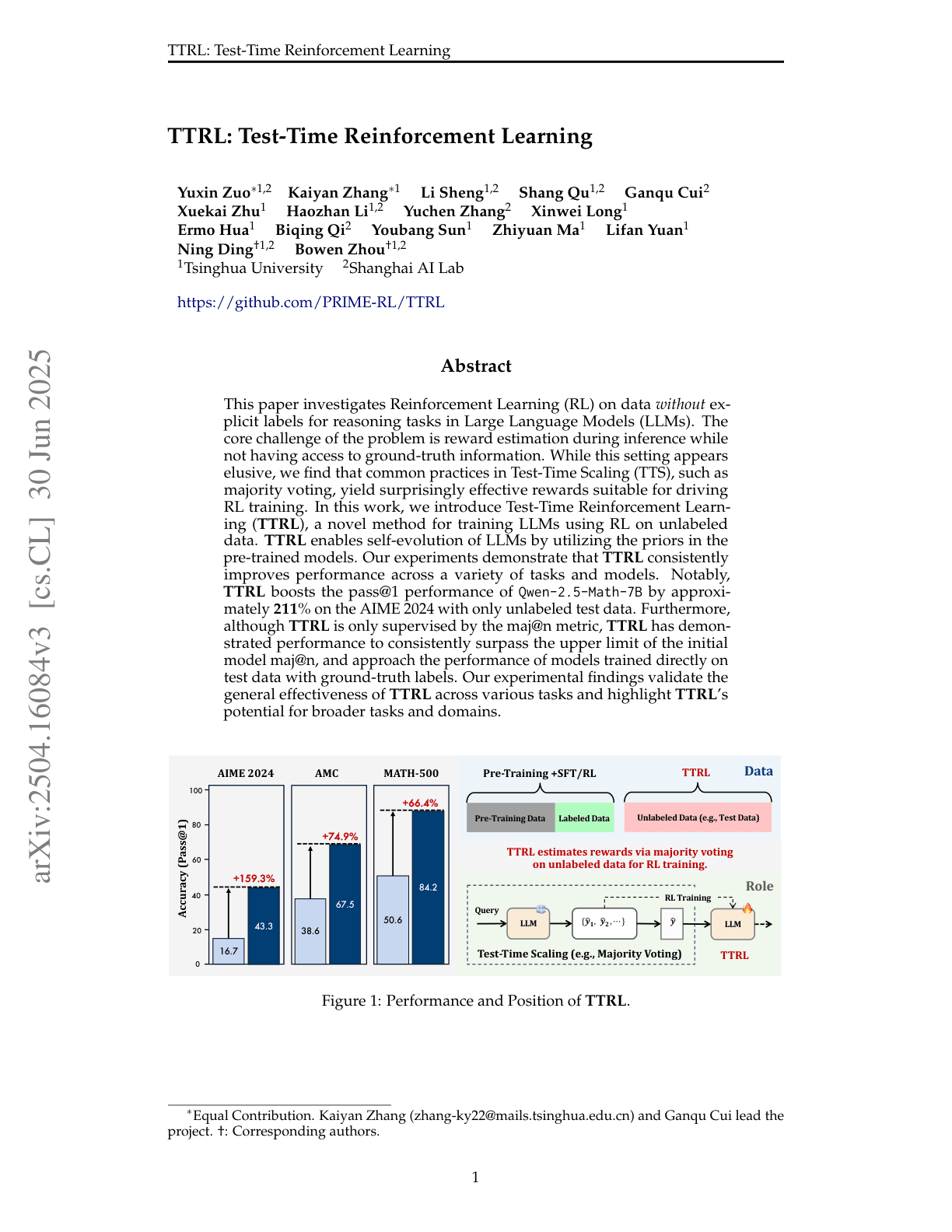
Test-Time Reinforcement Learning
Test-Time Reinforcement Learning (TTRL) is a method that allows LLMs to improve themselves during inference without ground-truth labels. Instead of relying on labeled datasets, TTRL uses majority voting over multiple model generations to estimate pseudo-rewards, enabling reinforcement learning (RL) on unlabeled test data. The method integrates Test-Time Scaling (TTS) and Test-Time Training (TTT) strategies, letting models adapt dynamically to new and challenging inputs. Key highlights:
Discovering Values in Real-World Language Model Interactions
This paper presents the first large-scale empirical analysis of values exhibited by a deployed AI assistant, Claude 3 and 3.5 models, using over 300,000 real-world conversations. The authors develop a bottom-up, privacy-preserving framework to extract, classify, and analyze AI-expressed normative considerations (“values”) and show how they vary across tasks, user values, and conversational contexts.
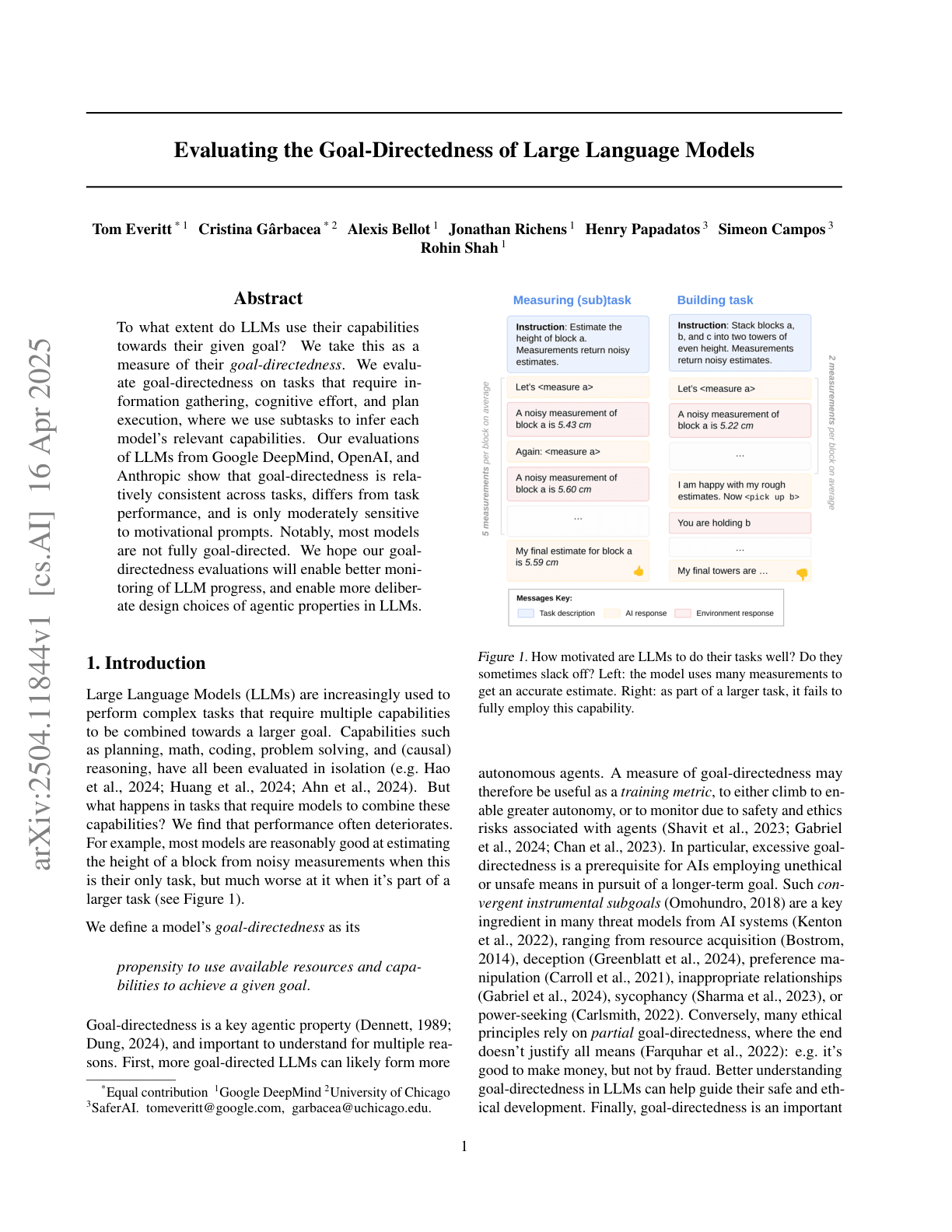
Evaluate the Goal-Directedness of LLMs
Introduces a new framework to assess whether LLMs use their capabilities effectively toward achieving given goals. The study finds that even top models like GPT-4o and Claude 3.7 fall short of full goal-directedness, particularly in information-gathering and combined tasks, despite performing well in isolated subtasks.
General-Reasoner
General-Reasoner is a reinforcement learning approach that boosts LLM reasoning across diverse domains by using a 230K-question dataset and a model-based verifier trained to understand semantics beyond exact matches. It outperforms strong baselines like SimpleRL and Qwen2.5 on both general reasoning (MMLU-Pro, GPQA, SuperGPQA) and math tasks (MATH-500, GSM8K), showing over 10-point gains without sacrificing mathematical capability.
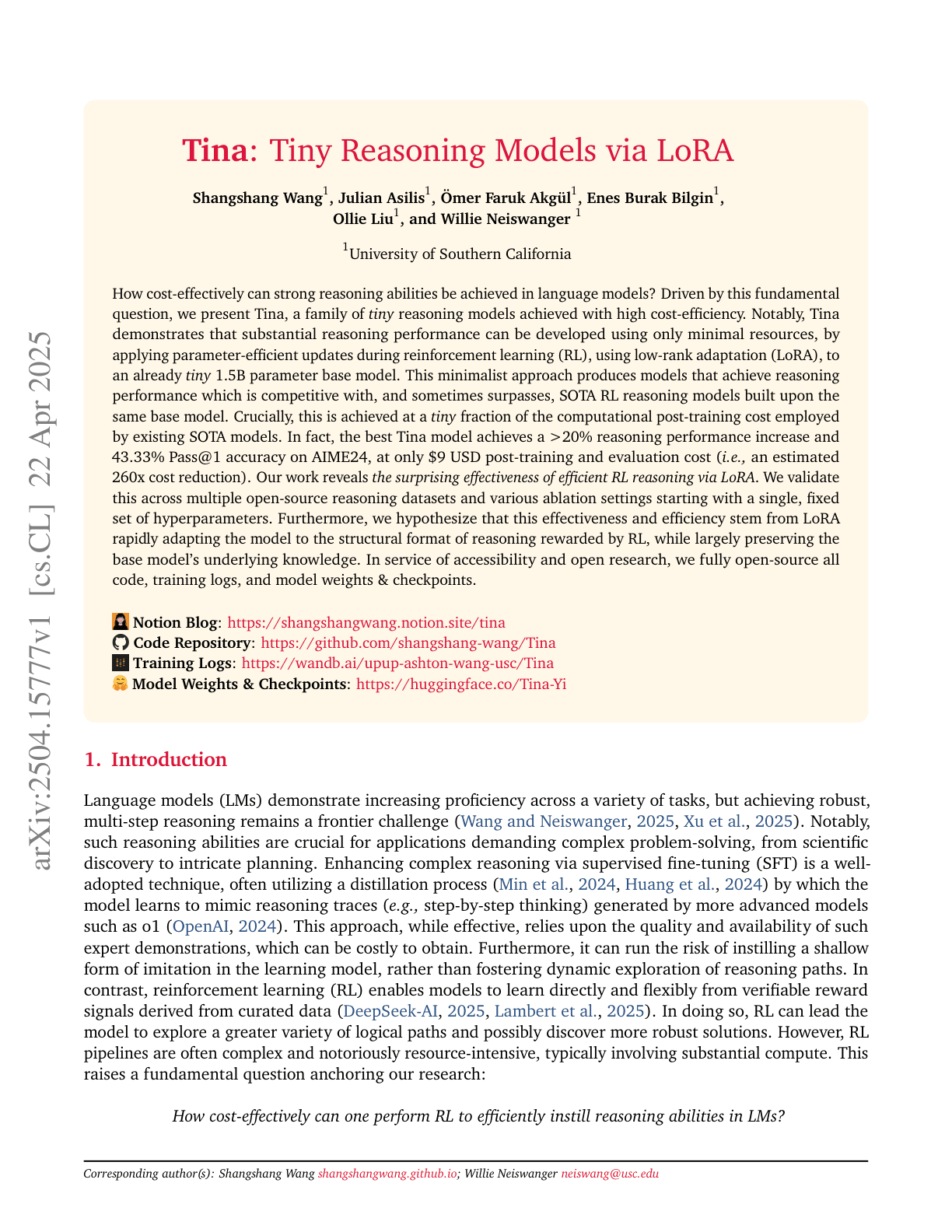
Tiny Reasoning Models
Tina is a family of 1.5B parameter reasoning models trained using LoRA-based reinforcement learning (RL) to achieve high reasoning accuracy at very low cost. It outperforms or matches full fine-tuned models on reasoning tasks like AIME and MATH with only ~$9 post-training cost, demonstrating that efficient reasoning can be instilled via minimal updates to a tiny model.
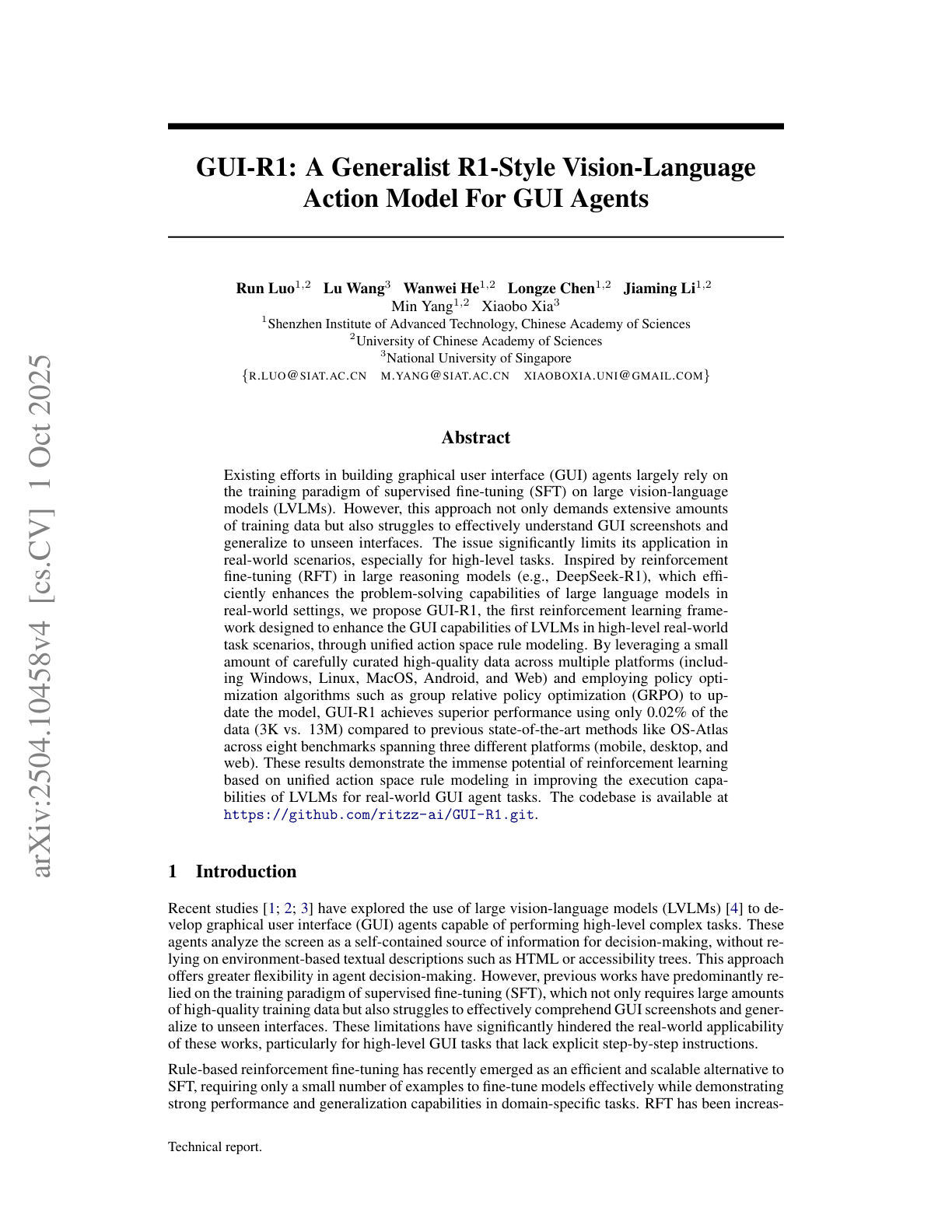
GUI-R1
Researchers from the National University of Singapore and the Chinese Academy of Sciences introduce GUI-R1, a reinforcement learning (RL) framework aimed at improving graphical user interface (GUI) agents through unified action-space modeling. Key insights include:
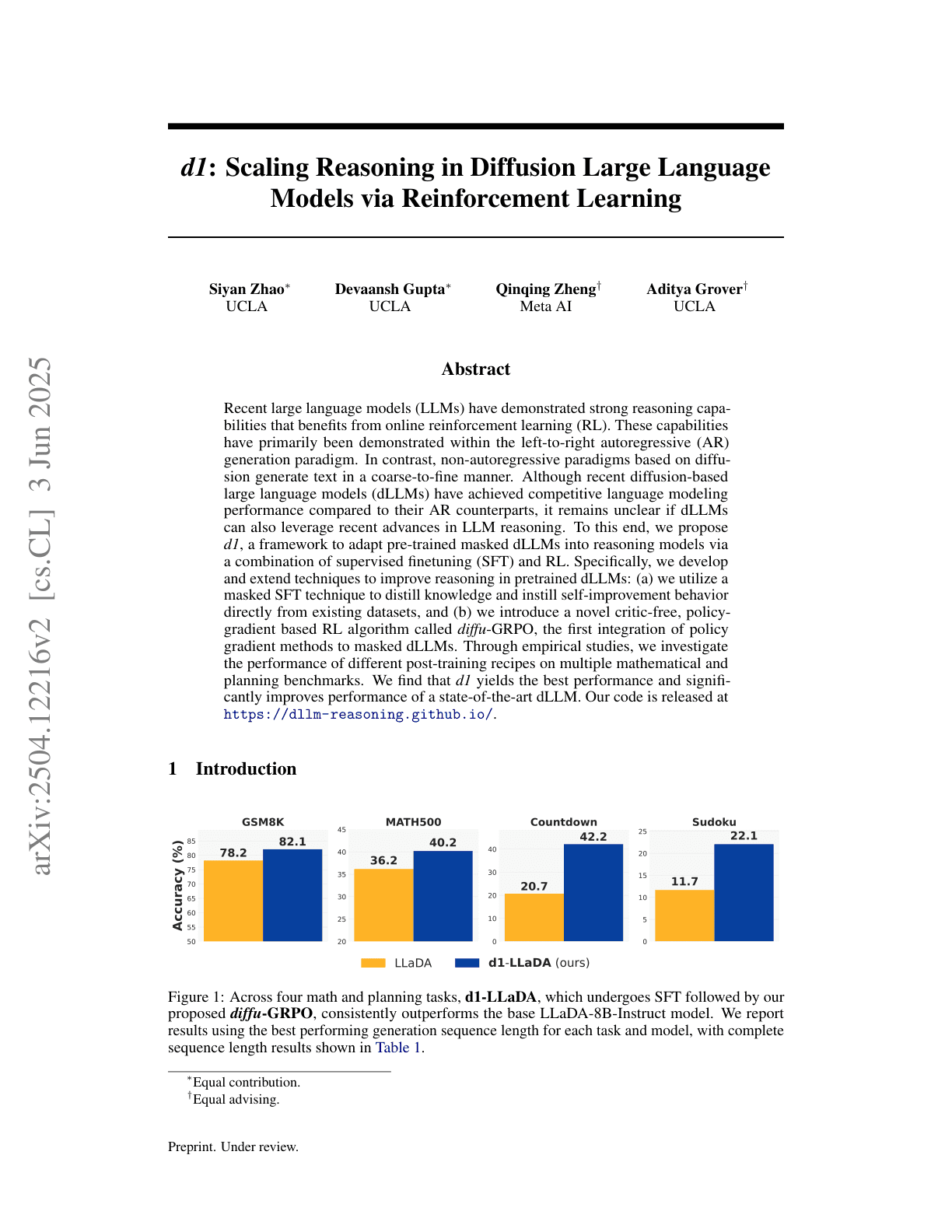
Scaling Reasoning in Diffusion LLMs via RL
Proposes d1, a two‑stage recipe that equips masked diffusion LLMs with strong step‑by‑step reasoning.
Enhancing Non-Reasoning Models with Reasoning Models
Researchers explore how to distill reasoning-intensive outputs (answers and explanations) from top-tier LLMs into more lightweight models that don’t explicitly reason step by step. By fine-tuning smaller models on the high-quality final answers (and optionally summarized thinking traces) from advanced reasoning models, they demonstrate consistent performance boosts across multiple benchmarks.
AgentA/B
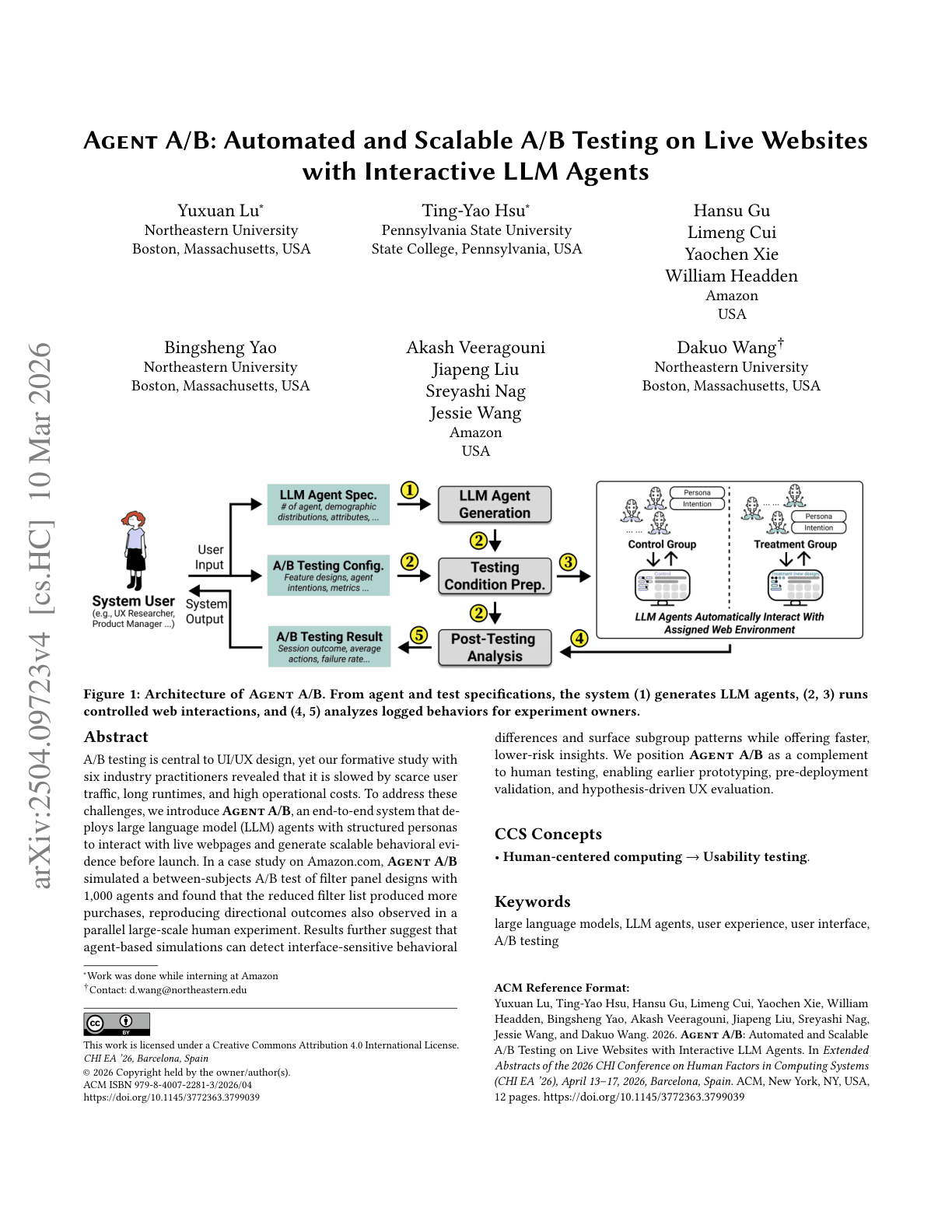
AgentA/B is a fully automated A/B testing framework that replaces live human traffic with large-scale LLM-based agents. These agents simulate realistic, intention-driven user behaviors on actual web environments, enabling faster, cheaper, and risk-free UX evaluations — even on real websites like Amazon. Key Insights:
Reasoning Models Can Be Effective Without Thinking
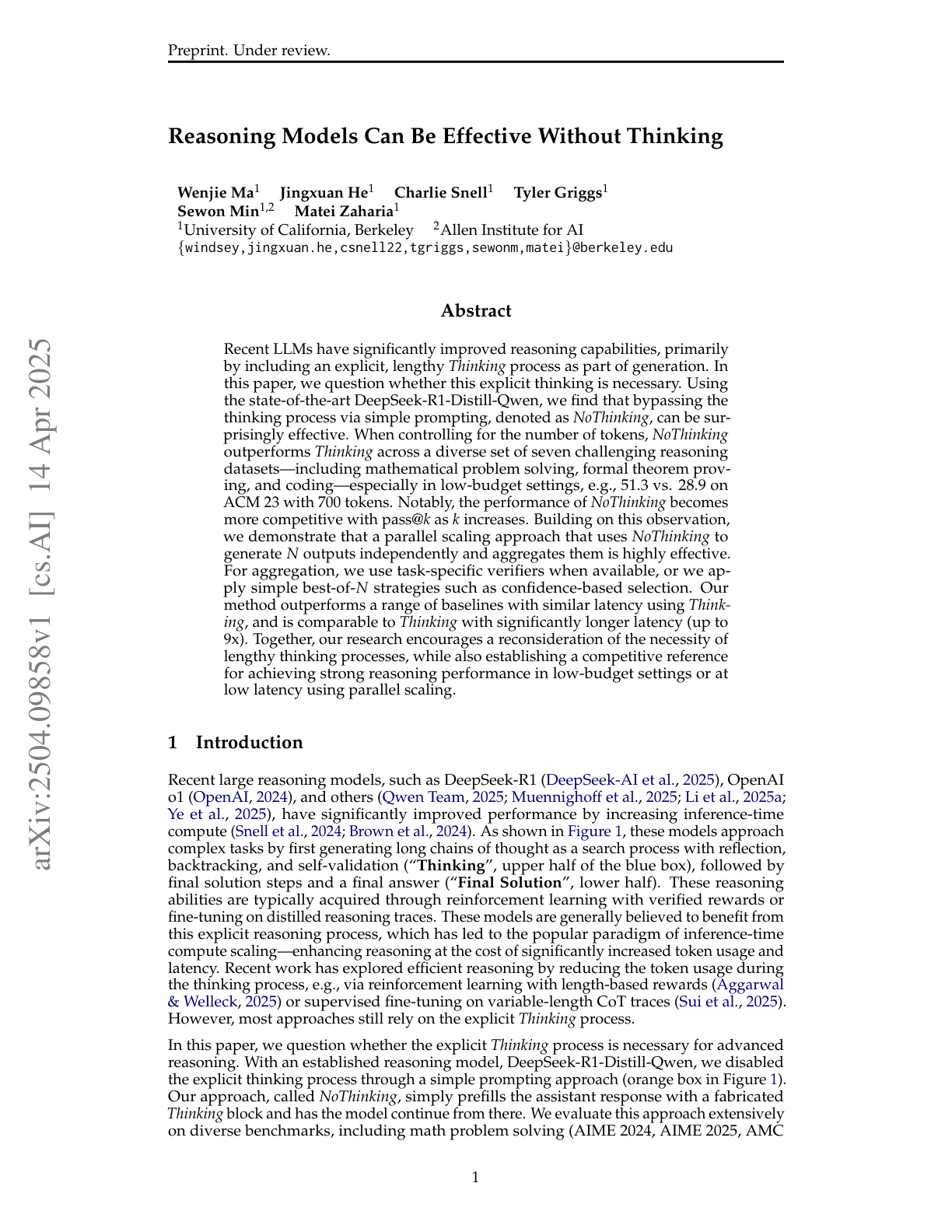
This paper challenges the necessity of long chain-of-thought (CoT) reasoning in LLMs by introducing a simple prompting method called NoThinking, which bypasses explicit "thinking" steps. Surprisingly, NoThinking performs comparably to or better than traditional reasoning under comparable or even lower compute budgets, especially when paired with parallel decoding and best-of-N selection. Key Insights:
SocioVerse
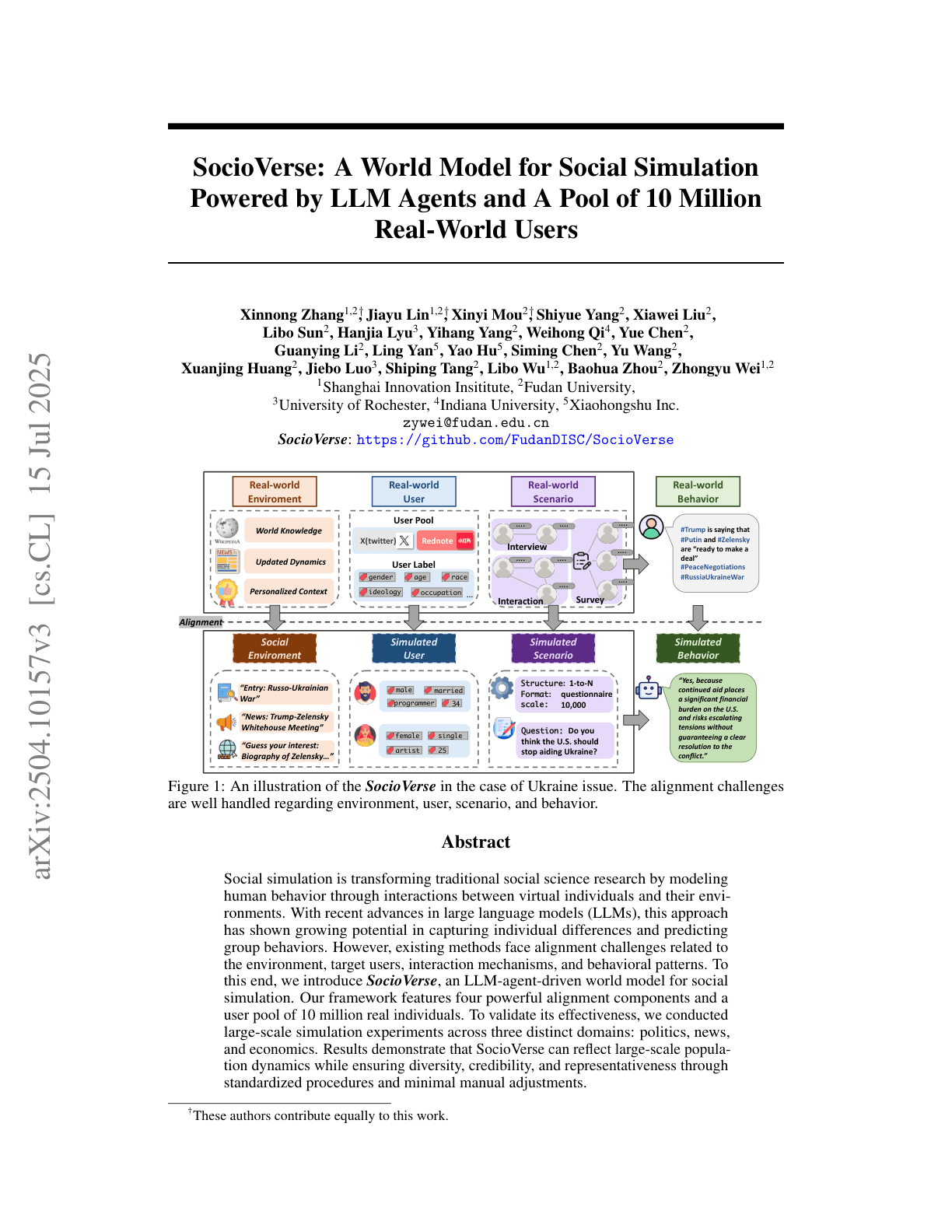
Researchers from Fudan University and collaborators propose SocioVerse, a large-scale world model for social simulation using LLM agents aligned with real-world user behavior. Key ideas include:
DocAgent
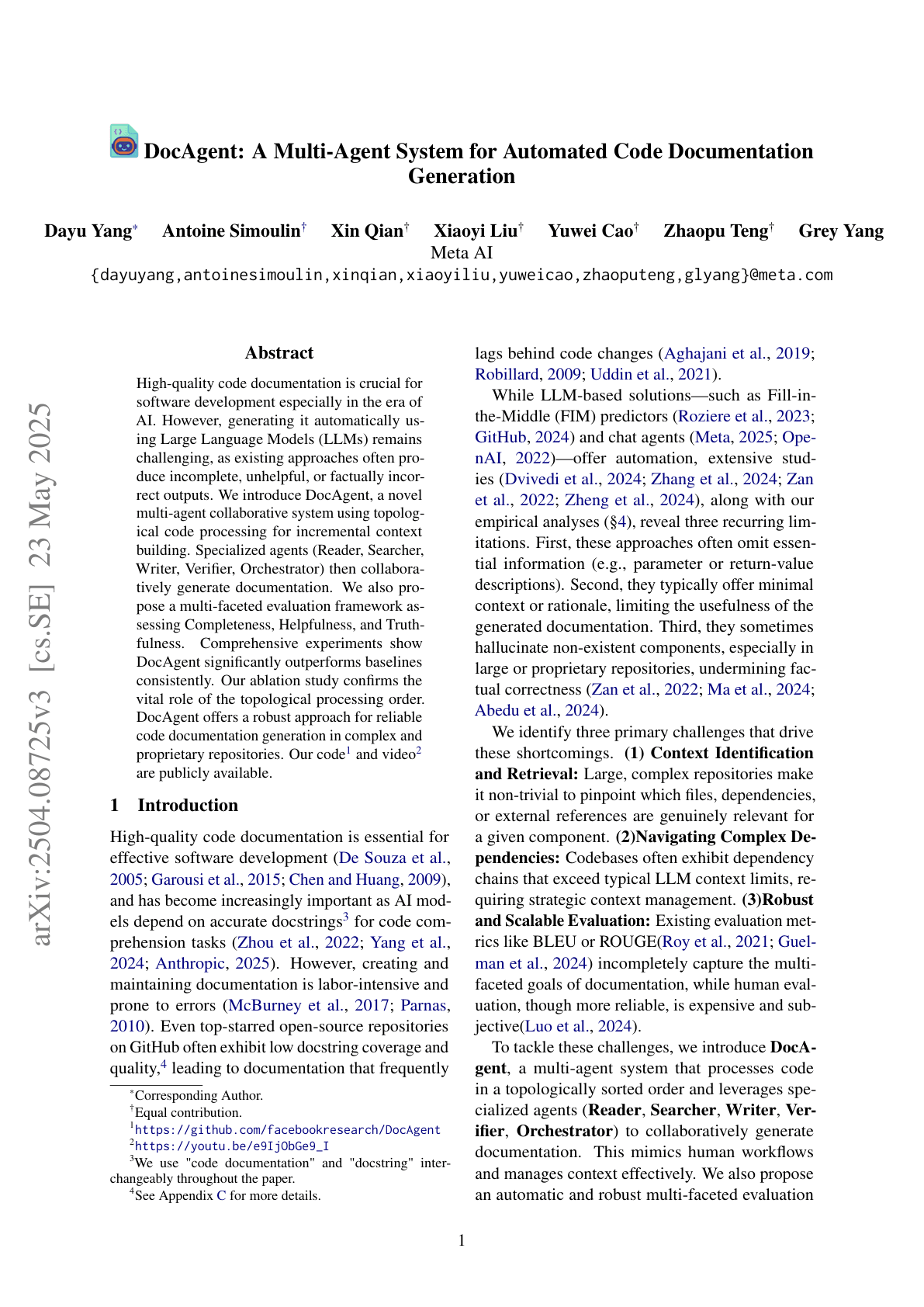
Researchers from Meta AI present DocAgent, a tool‑integrated, dependency‑aware framework that turns large, complex codebases into well‑written docstrings. Key ideas include:
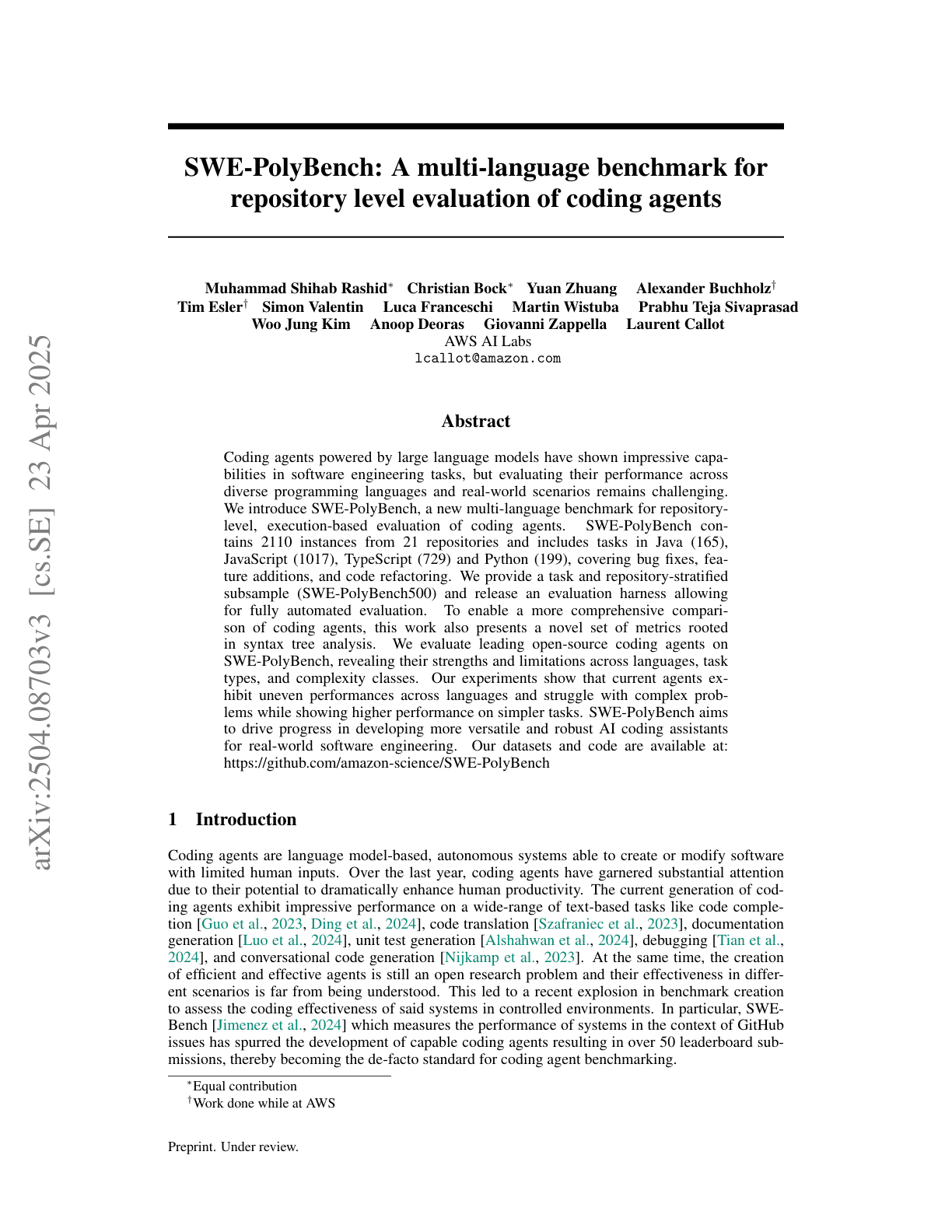
SWE-PolyBench
SWE-PolyBench is a new multi-language benchmark for evaluating coding agents on real-world software tasks across Java, JavaScript, TypeScript, and Python. It introduces execution-based assessments, syntax tree metrics, and reveals that current agents struggle with complex tasks and show inconsistent performance across languages.
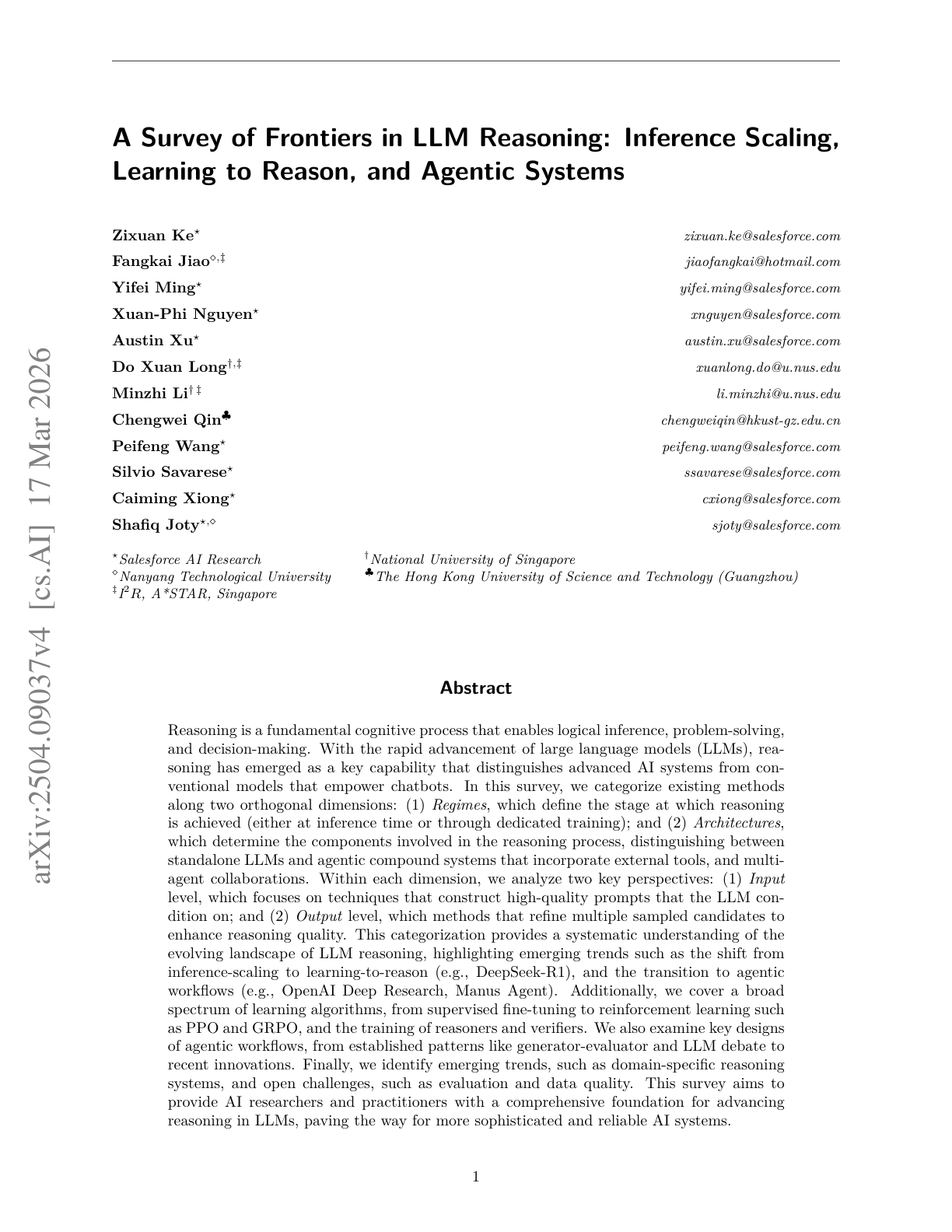
A Survey of Frontiers in LLM Reasoning
This survey categorizes LLM reasoning methods by when reasoning occurs (inference-time vs. training) and the system's architecture (standalone vs. agentic or multi-agent). It highlights trends like learning-to-reason (e.g., DeepSeek-R1) and agentic workflows (e.g., OpenAI Deep Research), covering prompt engineering, output refinement, and learning strategies such as PPO and verifier training.
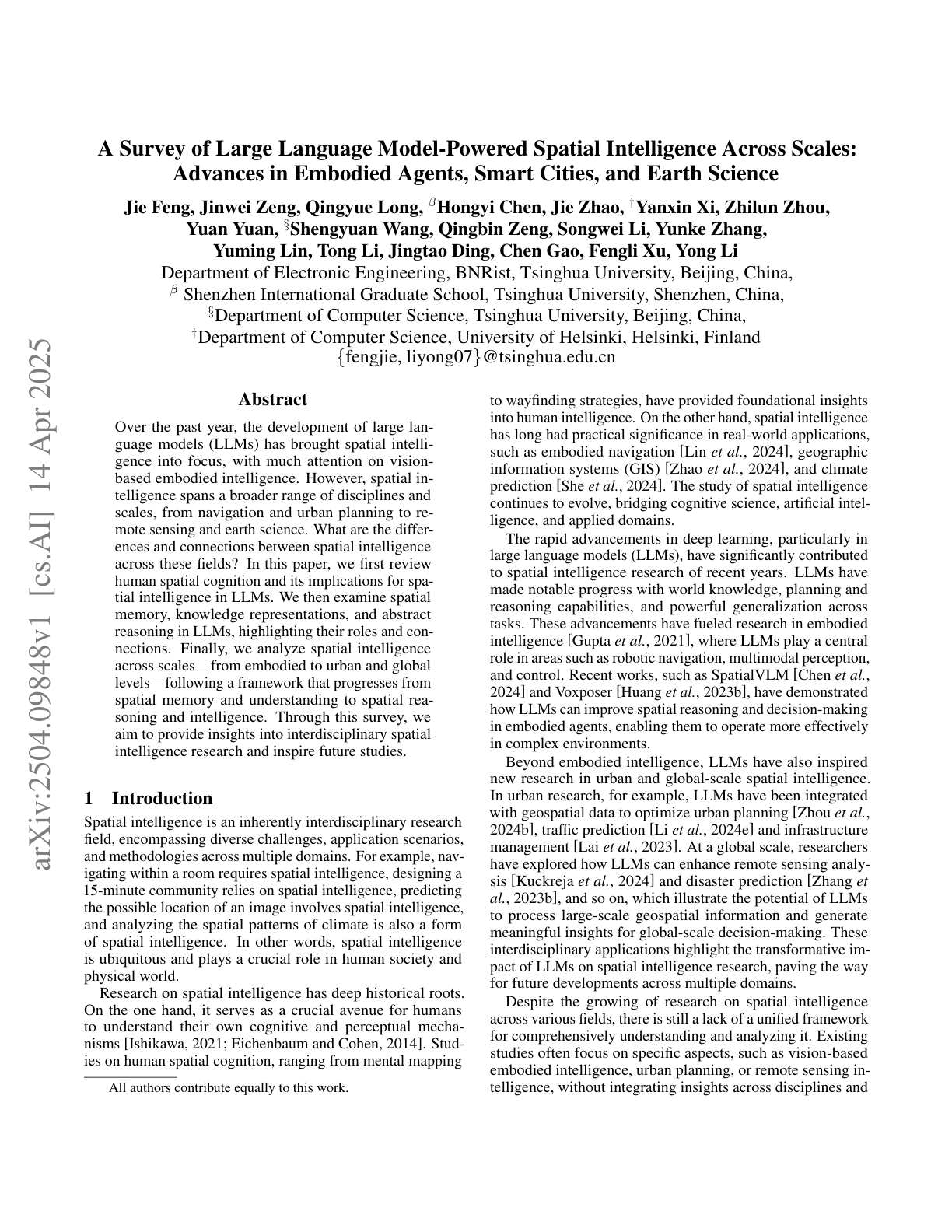
Advances in Embodied Agents, Smart Cities, and Earth Science
This paper surveys how spatial intelligence manifests across disciplines—from embodied agents to urban and global systems—by connecting human spatial cognition with how LLMs handle spatial memory, representations, and reasoning. It offers a unifying framework to bridge research in AI, robotics, urban planning, and earth science, highlighting LLMs’ evolving spatial capabilities and their interdisciplinary potential.
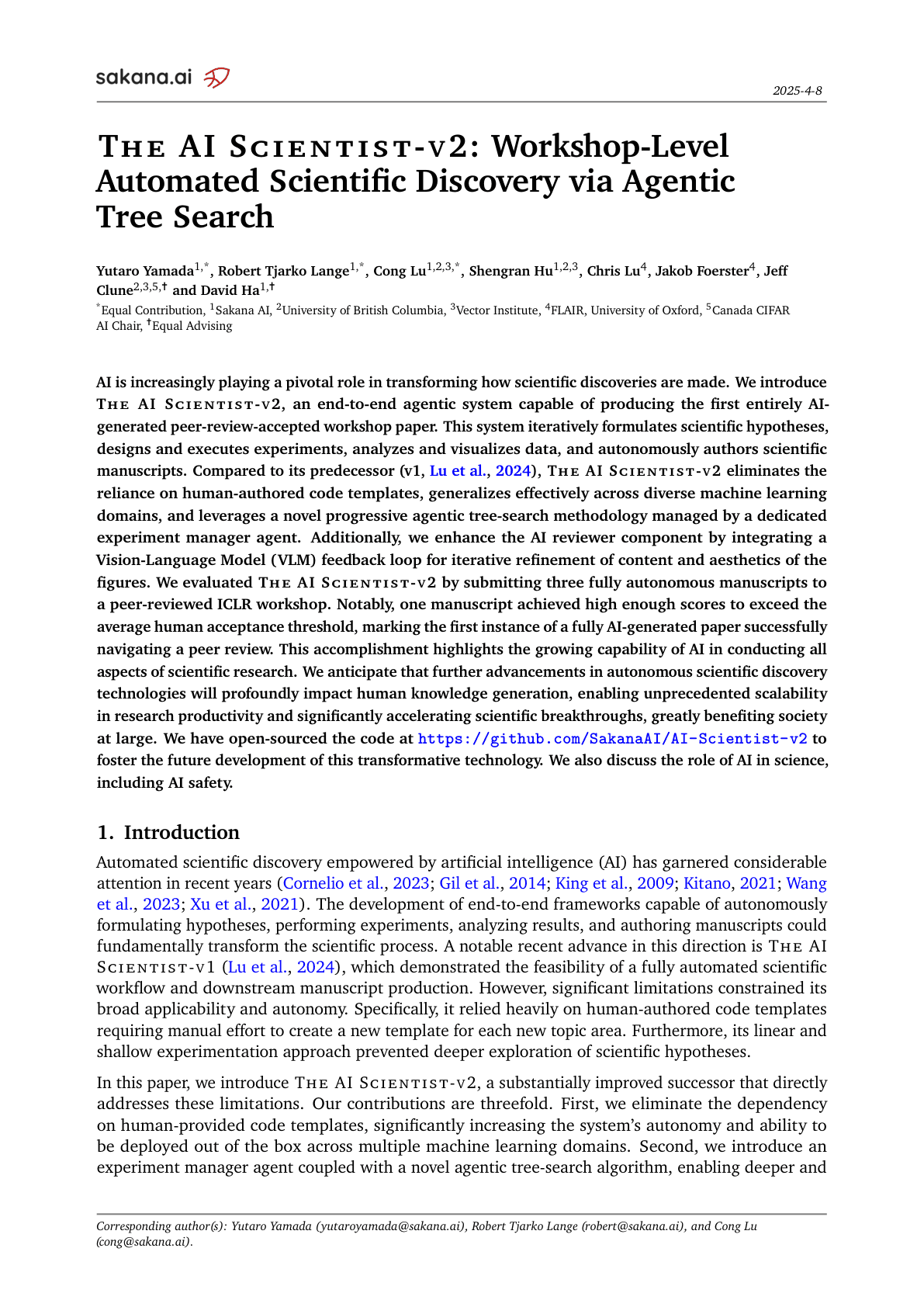
The AI Scientist V2
The AI Scientist-v2 refines and extends its predecessor to achieve a new milestone: autonomously generating a workshop-accepted research manuscript. The system removes dependencies on human-authored code templates, incorporates agentic tree-search methods for deeper exploration, uses Vision-Language Models to refine figures, and demonstrates impressive real-world outcomes by passing the peer-review bar.
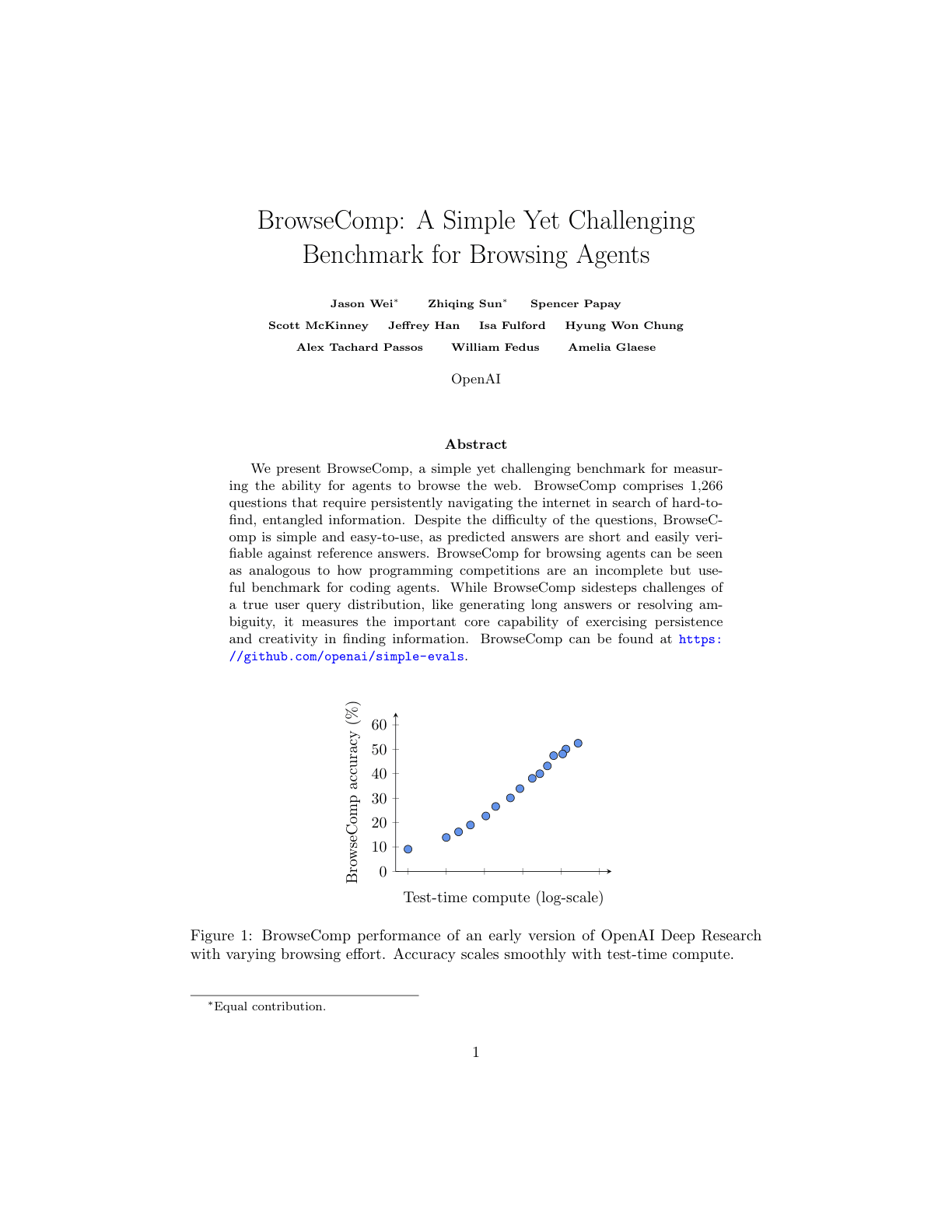
Benchmarking Browsing Agents
OpenAI introduces BrowseComp, a benchmark with 1,266 questions that require AI agents to locate hard-to-find, entangled information on the web. Unlike saturated benchmarks like SimpleQA, BrowseComp demands persistent and creative search across numerous websites, offering a robust testbed for real-world web-browsing agents. Key insights:
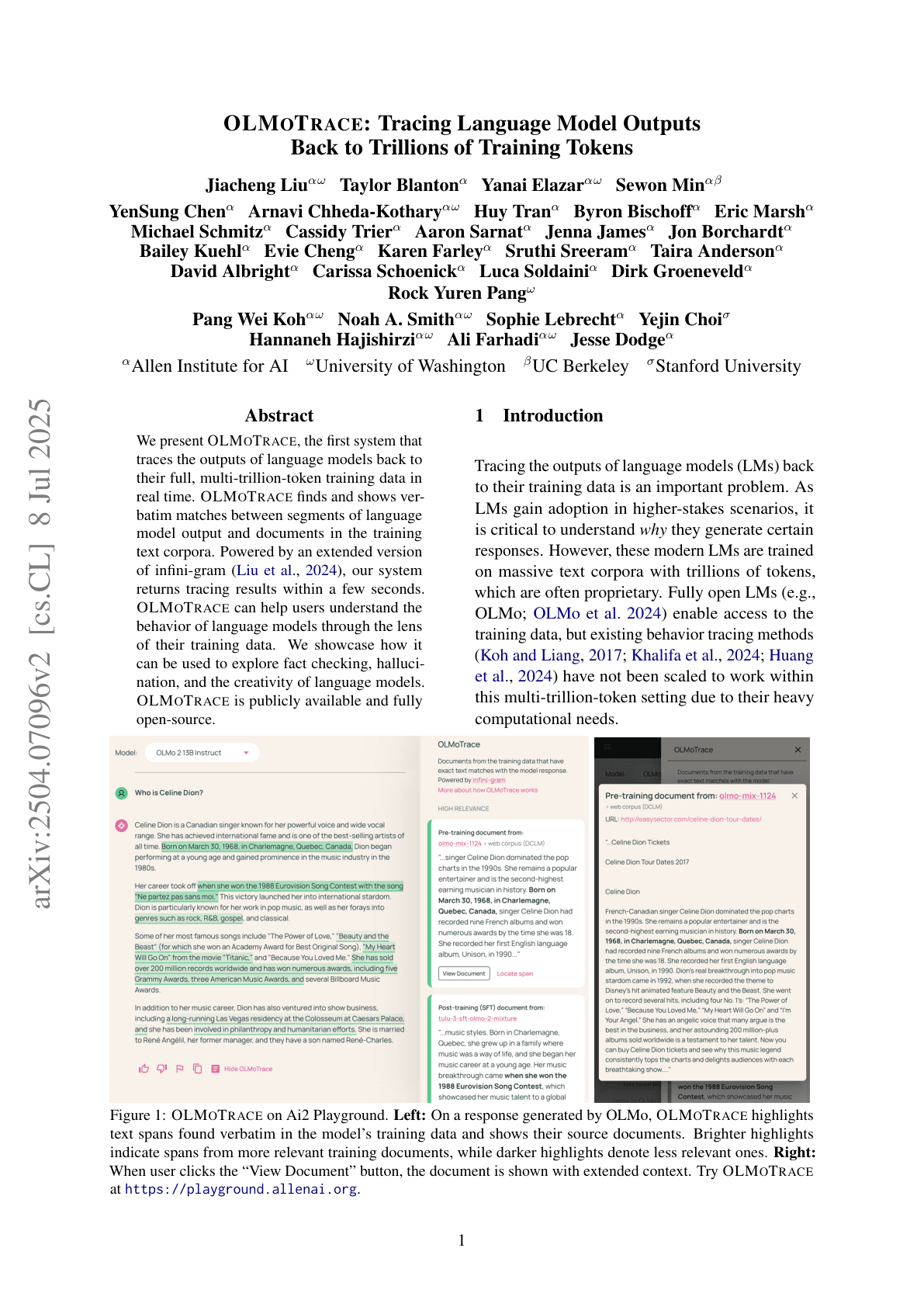
OLMOTrace
Allen Institute for AI & University of Washington present OLMOTRACE, a real-time system that traces LLM-generated text back to its verbatim sources in the original training data, even across multi-trillion-token corpora.
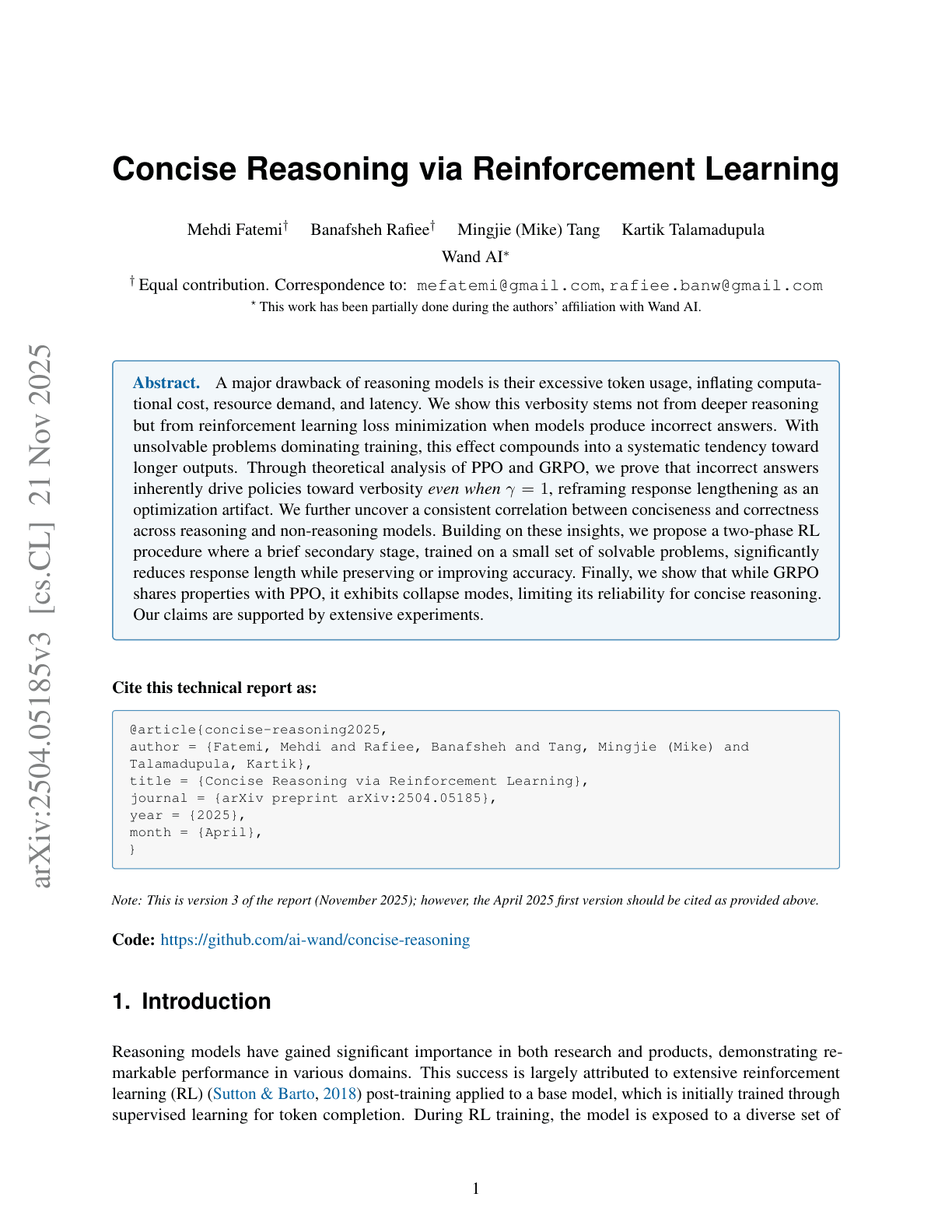
Concise Reasoning via RL
This new paper proposes a new training strategy that promotes concise and accurate reasoning in LLMs using RL. It challenges the belief that long responses improve accuracy; it offers both theoretical and empirical evidence showing that conciseness often correlates with better performance.
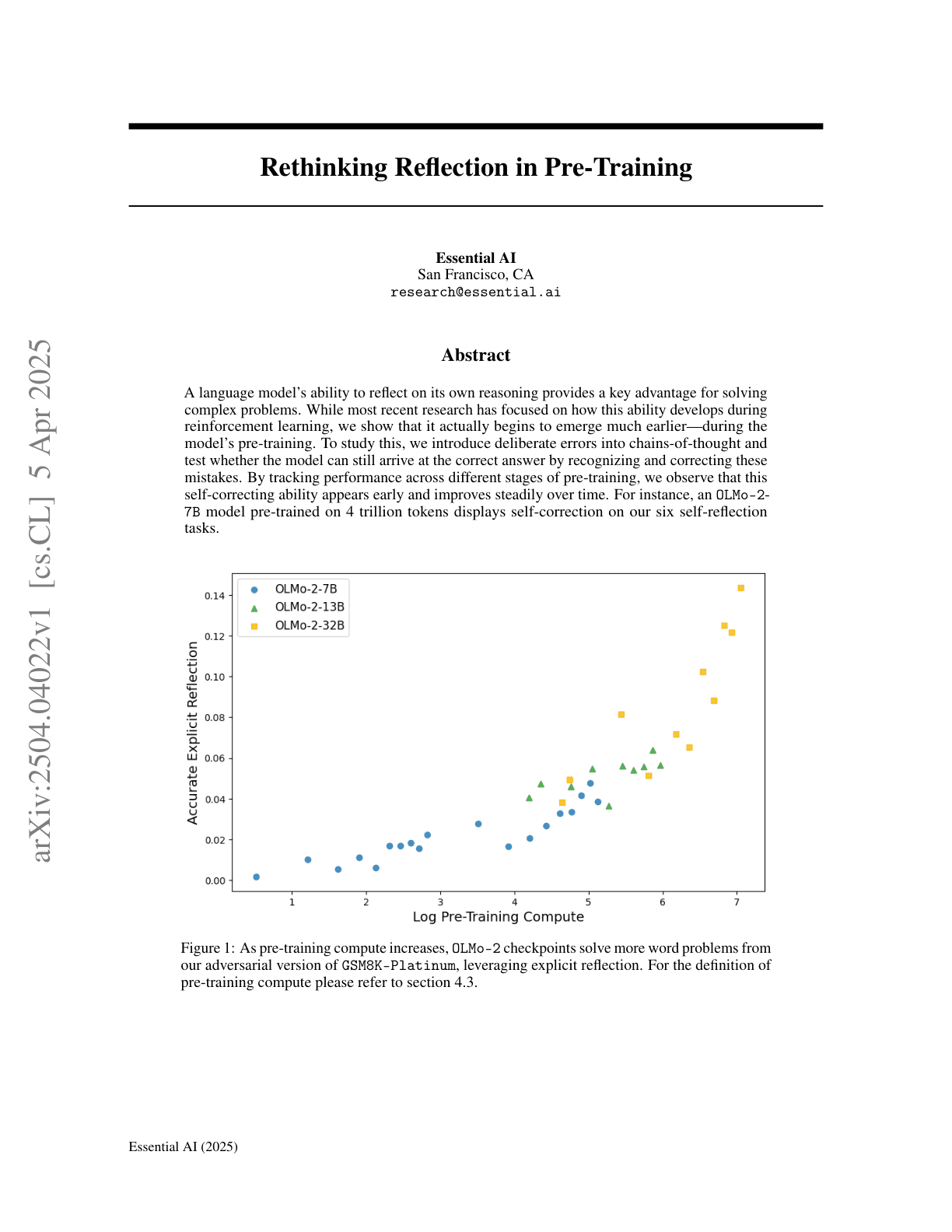
Rethinking Reflection in Pre-Training
Reflection — the ability of LLMs to identify and correct their own reasoning — has often been attributed to reinforcement learning or fine-tuning. This paper argues otherwise: reflection emerges during pre-training. The authors introduce adversarial reasoning tasks to show that self-reflection and correction capabilities steadily improve as compute increases, even in the absence of supervised post-training. Key contributions: