AI Papers of the Week
Every paper worth reading in AI, hand-picked one week at a time.
Discover and explore top AI papers with Claude Code or Codex
npx @dair-ai/mcp setup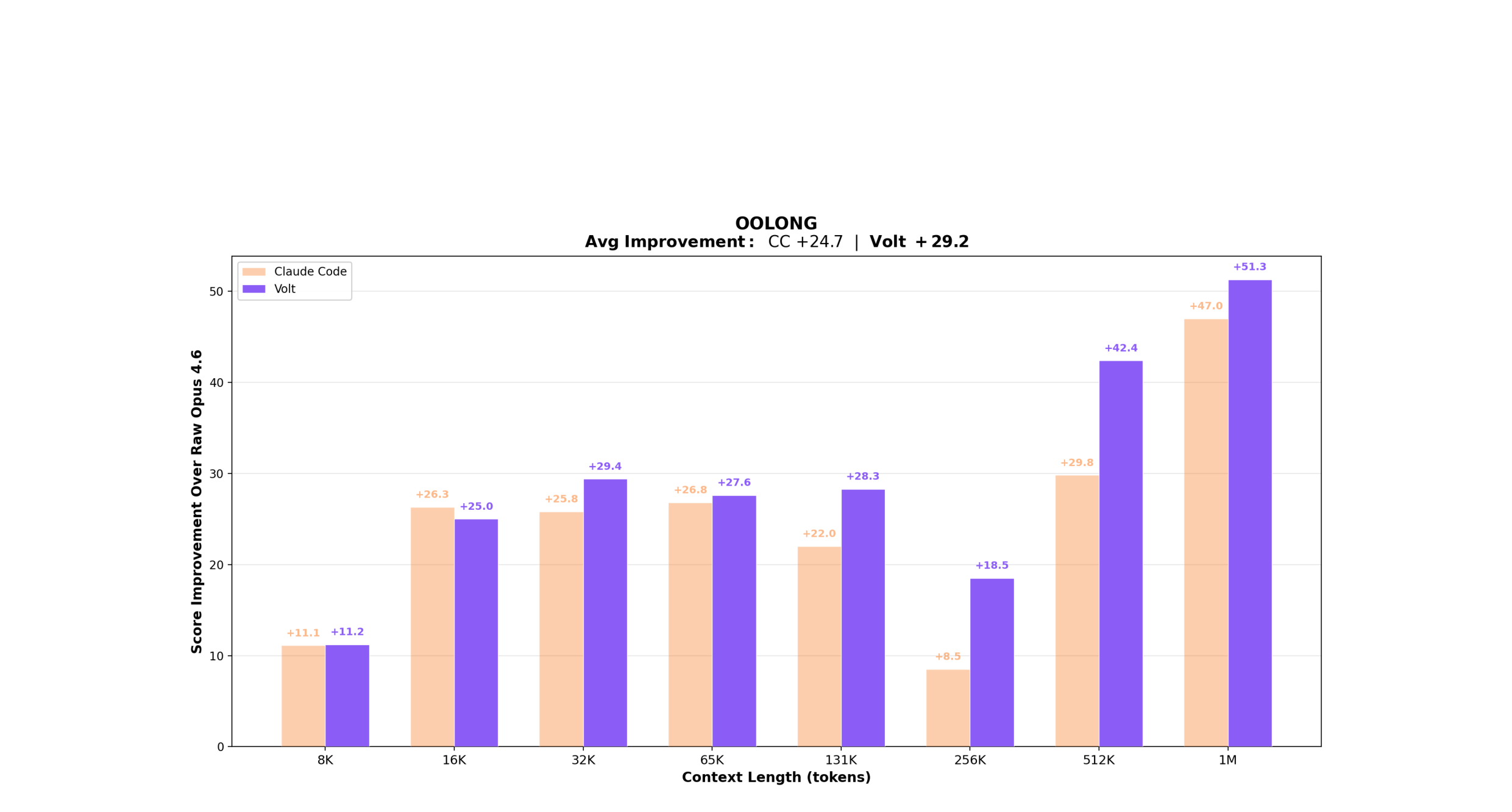
Lossless Context Management (LCM)
Lossless Context Management (LCM) is a deterministic architecture for LLM memory that outperforms Claude Code on long-context tasks. Benchmarked on the OOLONG eval using Opus 4.6, the LCM-augmented coding agent Volt achieves higher scores than Claude Code at every context length between 32K and 1M tokens. LCM extends the recursive paradigm pioneered by Recursive Language Models (RLMs) with two engine-managed mechanisms.
GLM-5
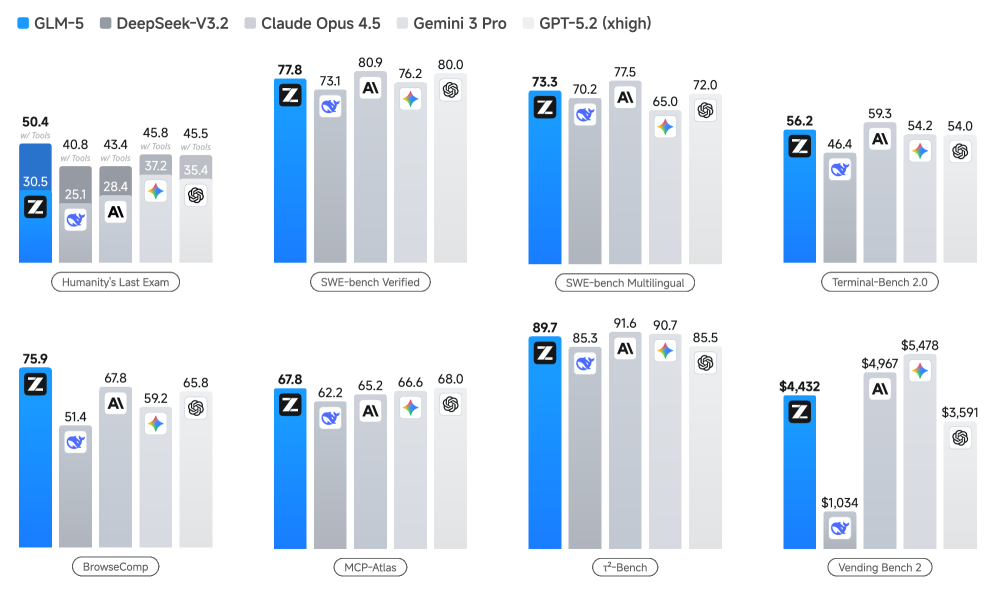
GLM-5 is a foundation model from Zhipu AI designed to transition from vibe coding to agentic engineering. The model introduces novel asynchronous agent RL algorithms that separate generation from training for improved efficiency, and uses DSA technology to reduce computational requirements while preserving long-context understanding.
MemoryArena
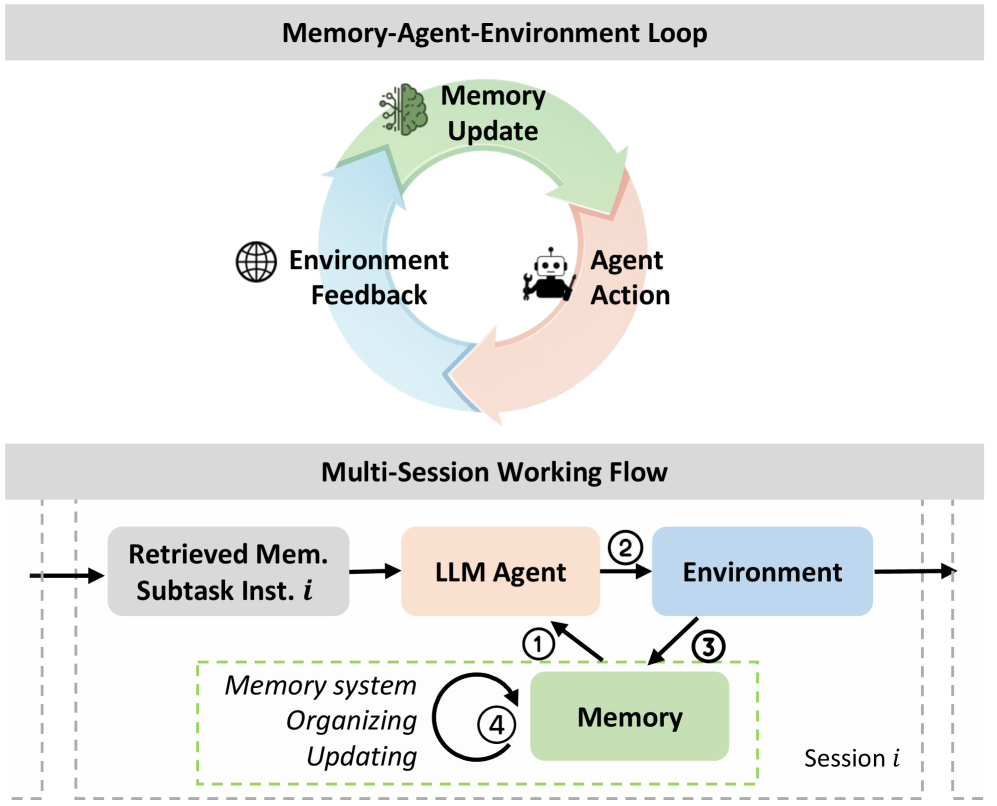
MemoryArena introduces a benchmark for evaluating how agents utilize memory across multiple interconnected sessions. The key finding is that scoring well on memory recall does not mean an agent can actually use that memory to take correct actions across sessions. Models with near-saturated performance on existing benchmarks like LoCoMo perform poorly in agentic multi-session settings.
MAPLE
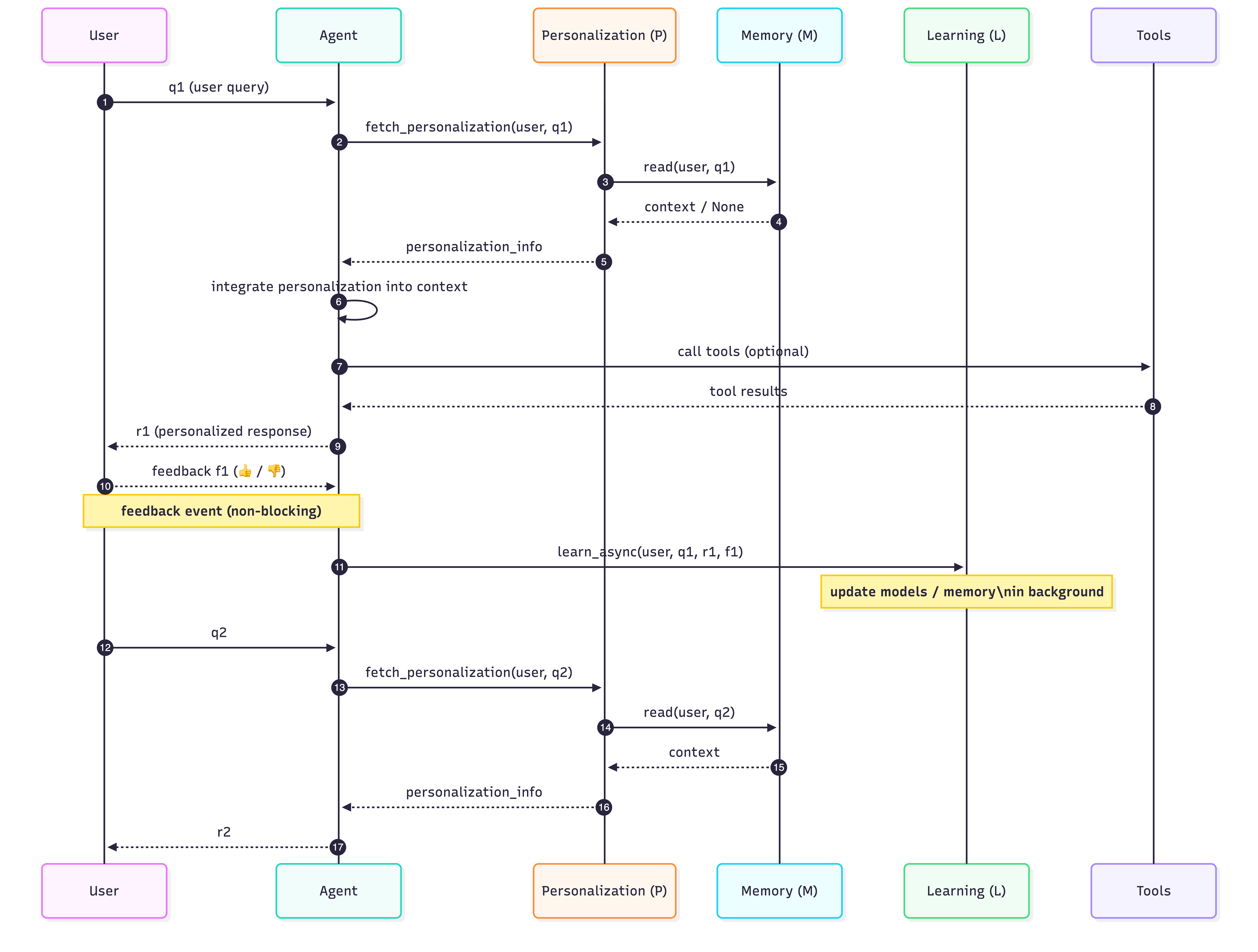
MAPLE proposes separating memory, learning, and personalization into specialized sub-agents rather than treating them as a unified capability. The framework achieves a 14.6% improvement in personalization scores over stateless baselines and increases trait incorporation from 45% to 75%, validated through the MAPLE-Personas benchmark.
SkillsBench
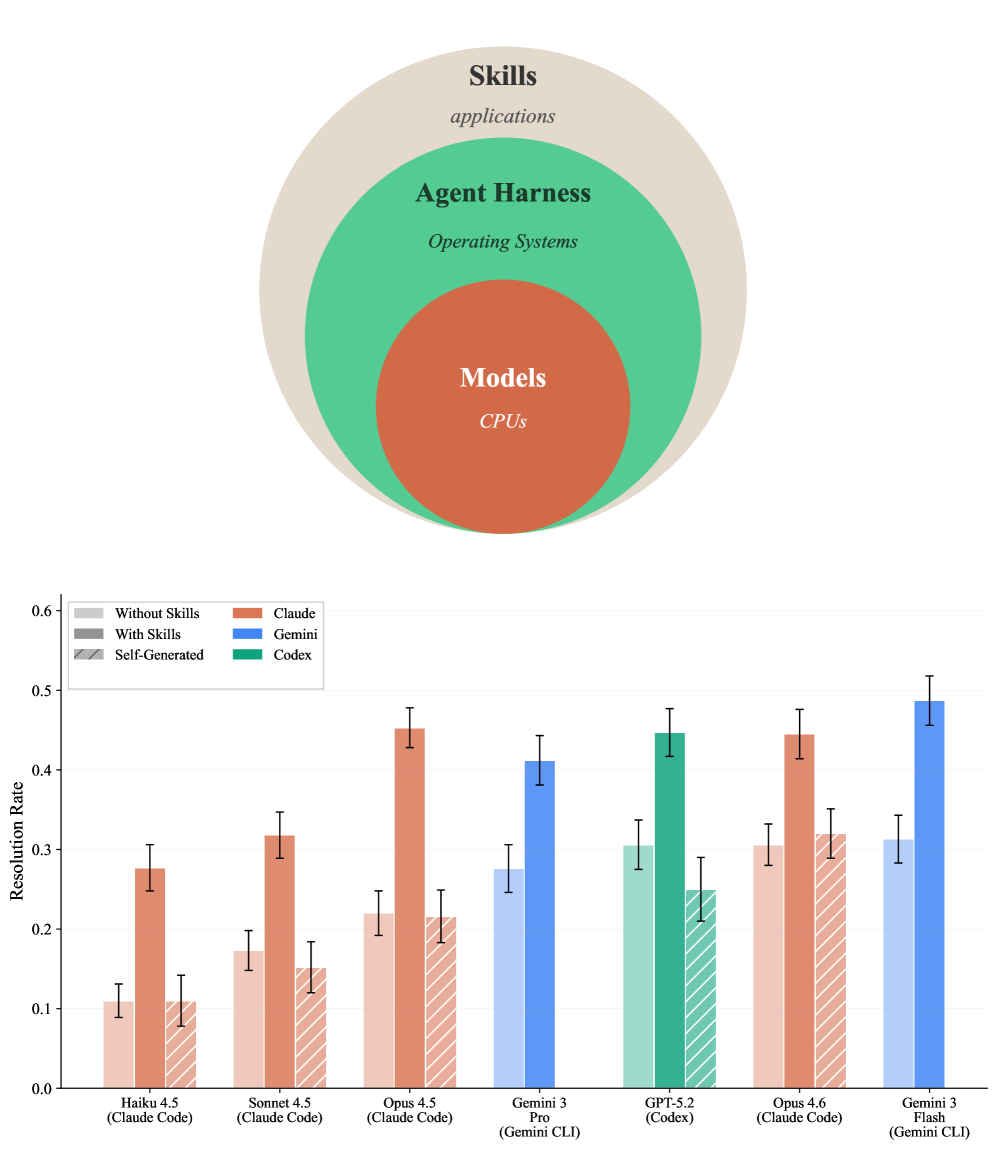
SkillsBench evaluates whether LLM agents can generate their own procedural knowledge across 86 tasks spanning 11 domains, with curated Skills and deterministic verifiers. Testing 7 agent-model configurations over 7,308 trajectories, the benchmark reveals a critical gap: agents benefit enormously from consuming procedural knowledge but cannot reliably author it themselves.
LongCLI-Bench
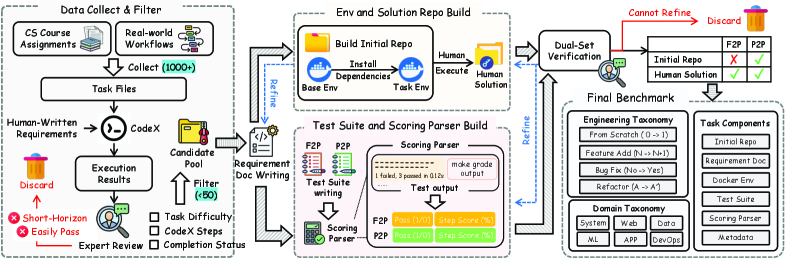
LongCLI-Bench benchmarks how well AI agents handle complex, extended tasks through command-line interfaces. Across 20 demanding tasks spanning initial development, feature expansion, error resolution, and code optimization, leading agents succeed less than 20% of the time. The study finds that most failures occur early in task execution, and human-agent collaboration through plan injection and interactive guidance yields significantly greater improvements than automated self-correction alone.
CogRouter
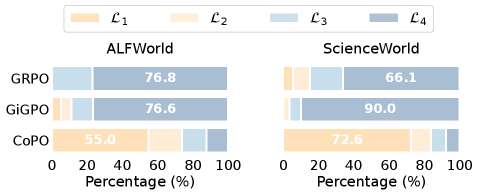
CogRouter enables adaptive reasoning depth for LLM agents by dynamically selecting from four hierarchical cognitive levels at each step, from instinctive responses to strategic planning. Using confidence-aware advantage reweighting during training, Qwen2.5-7B with CogRouter achieves 82.3% success rate on agentic benchmarks, substantially outperforming larger models while consuming fewer tokens by skipping heavy reasoning on routine steps.
Team of Thoughts
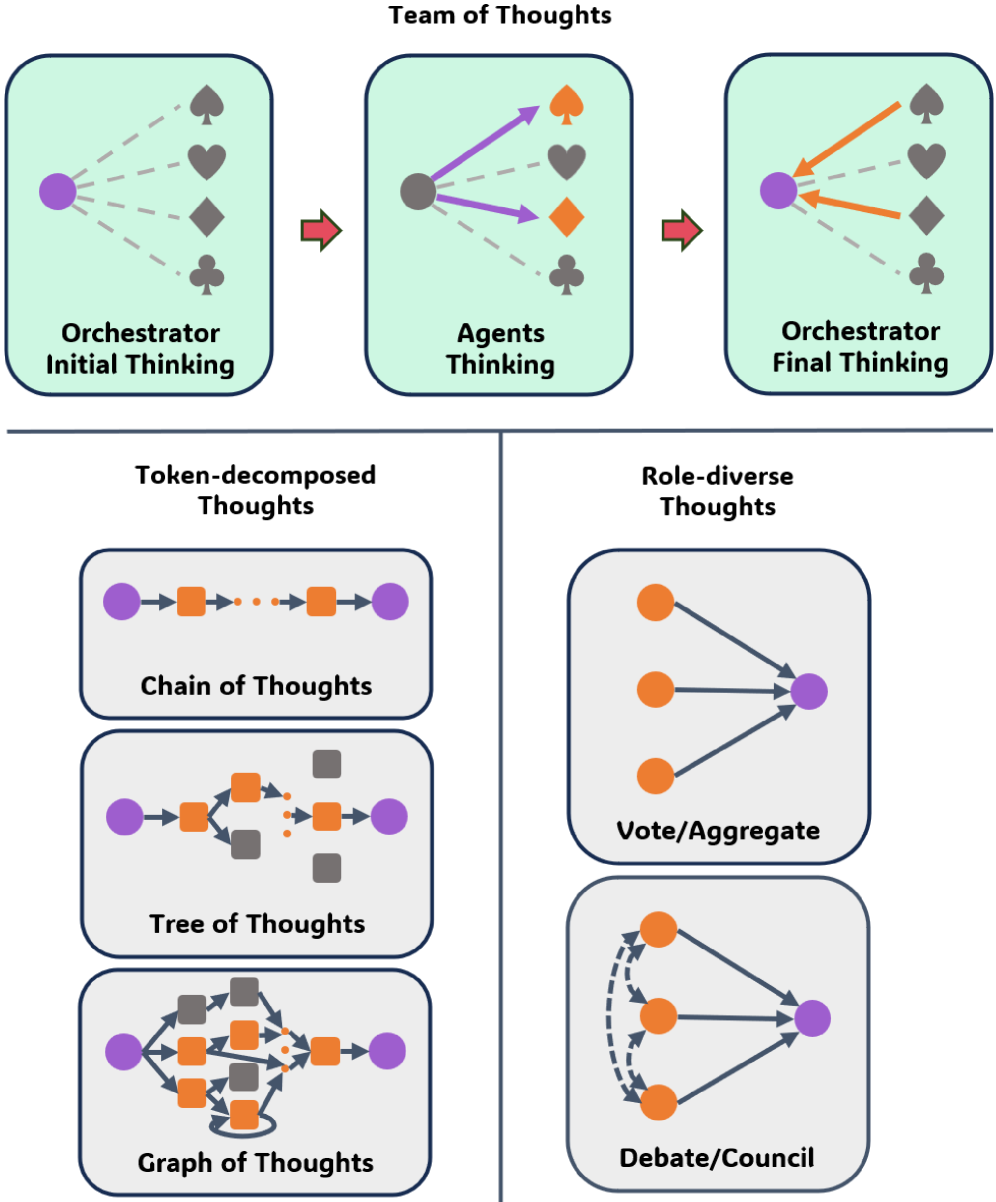
Team of Thoughts presents a multi-agent framework for efficient test-time scaling through orchestrated tool calling. The system uses an orchestrator tool design where agents with different capabilities are coordinated by a calibrated orchestrator. With self-assessment for tool agents and orchestrator calibration for identifying superior coordination models, Team of Thoughts achieves 96.67% on AIME24 and 72.53% on LiveCodeBench, substantially exceeding homogeneous baselines.
ALMA
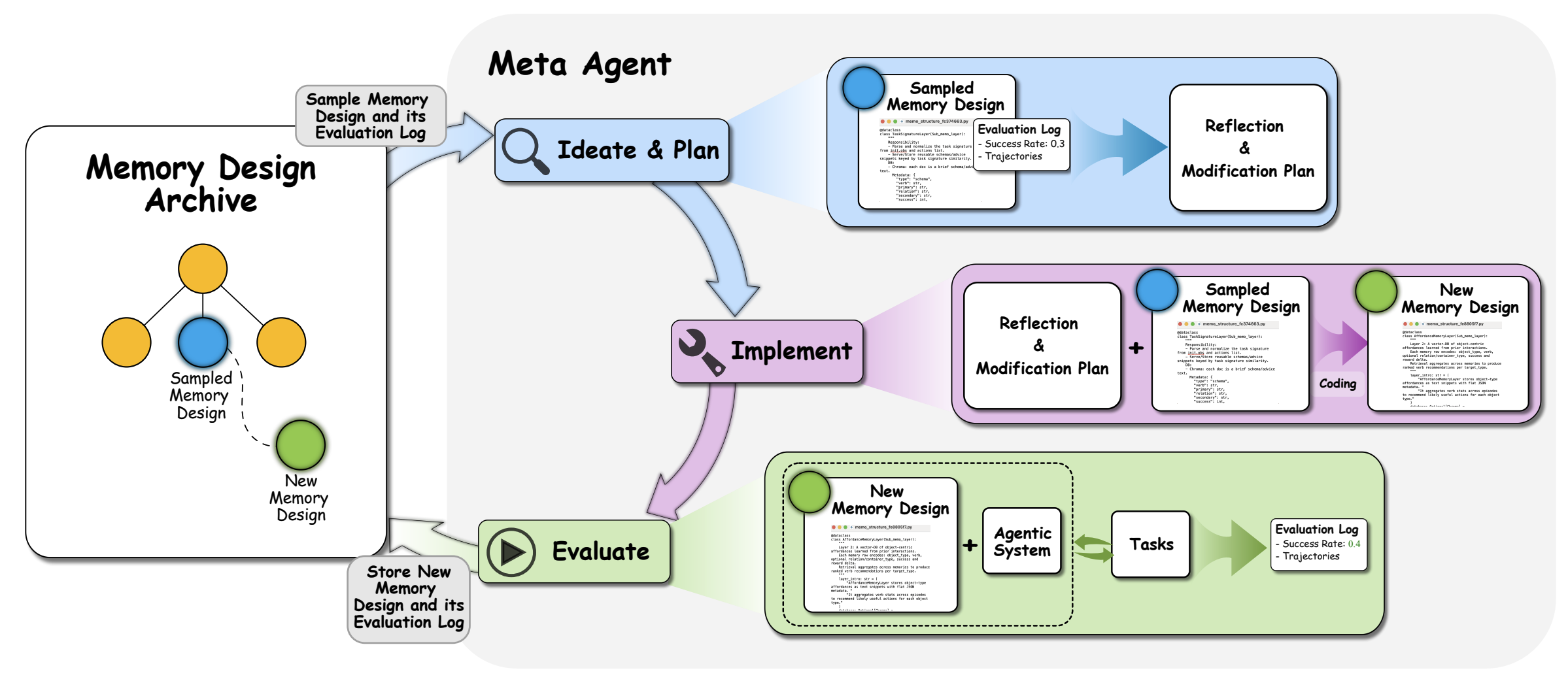
ALMA (Automated meta-Learning of Memory designs for Agentic systems) from Jeff Clune’s group introduces a Meta Agent that automatically discovers memory designs for agentic systems through open-ended exploration in code space. Instead of relying on hand-engineered memory modules, ALMA searches over database schemas, retrieval mechanisms, and update strategies expressed as executable code, consistently outperforming all human-designed memory baselines across four sequential decision-making benchmarks.
LLaDA 2.1
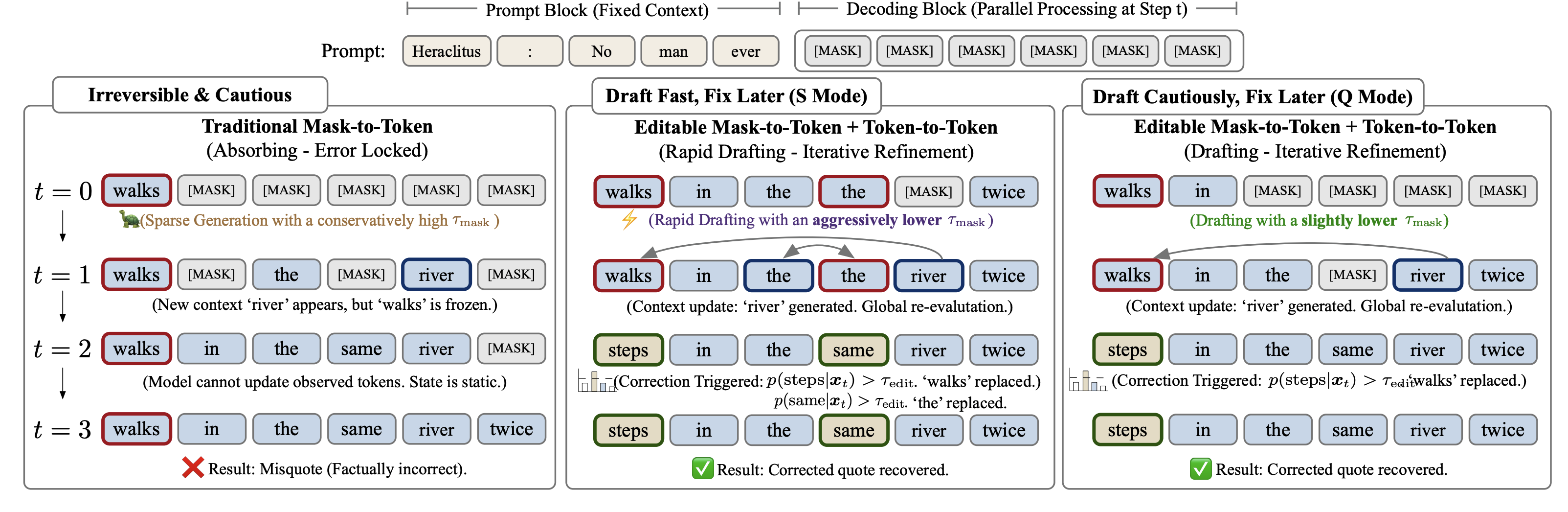
Ant Group releases LLaDA 2.1, a major upgrade to discrete diffusion language models that breaks the speed-quality trade-off through Token-to-Token (T2T) editing. By weaving token editing into the conventional Mask-to-Token decoding scheme, LLaDA 2.1 introduces two configurable modes: Speedy Mode for aggressive throughput and Quality Mode for benchmark-leading accuracy. The release also includes the first large-scale RL framework for diffusion LLMs.
SkillRL
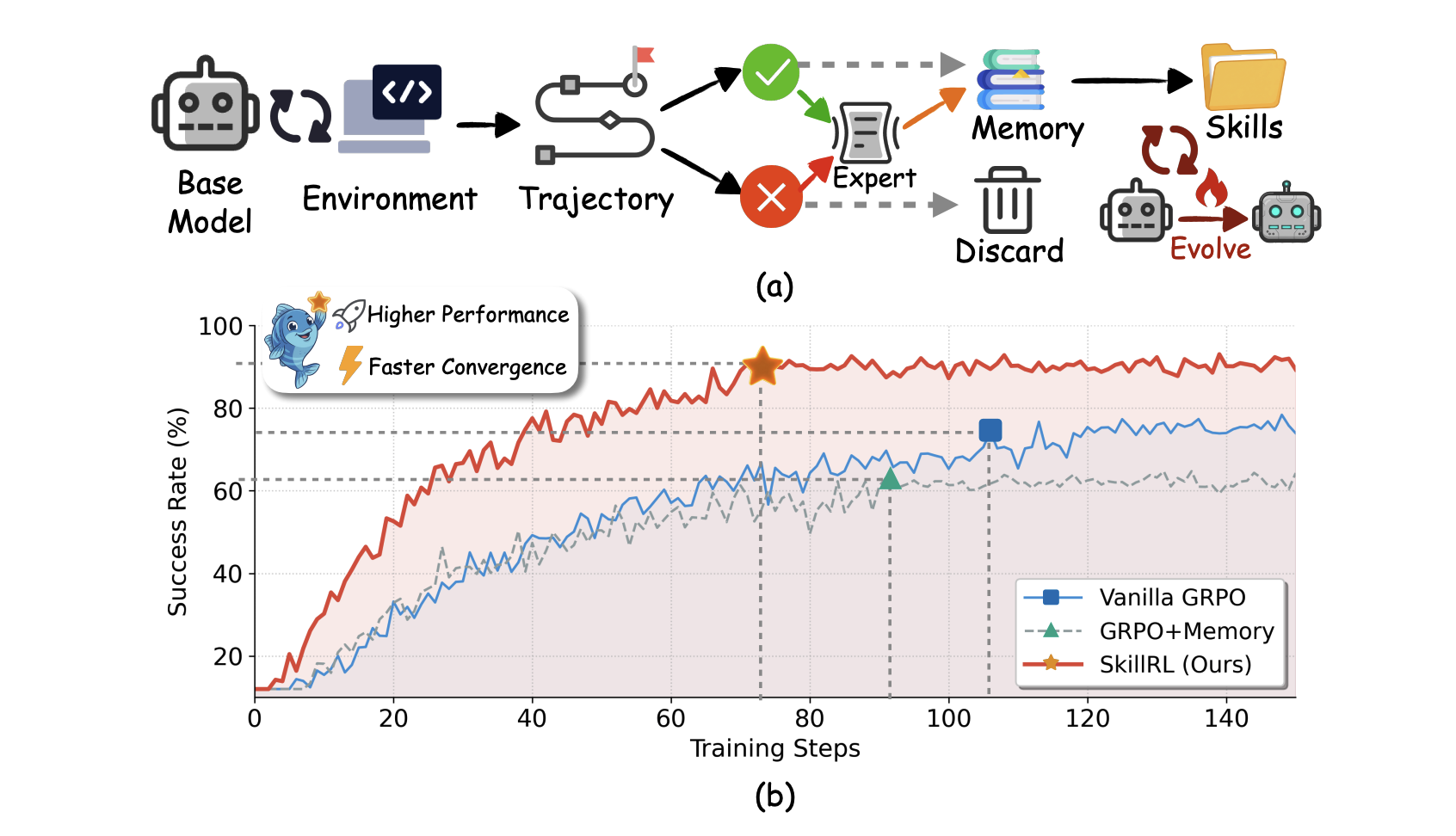
SkillRL introduces a recursive skill-augmented RL framework that bridges the gap between raw experience and policy improvement through automatic skill discovery. Instead of storing noisy raw trajectories, SkillRL distills experience into reusable high-level behavioral patterns and evolves them alongside the agent policy during training.
InftyThink+
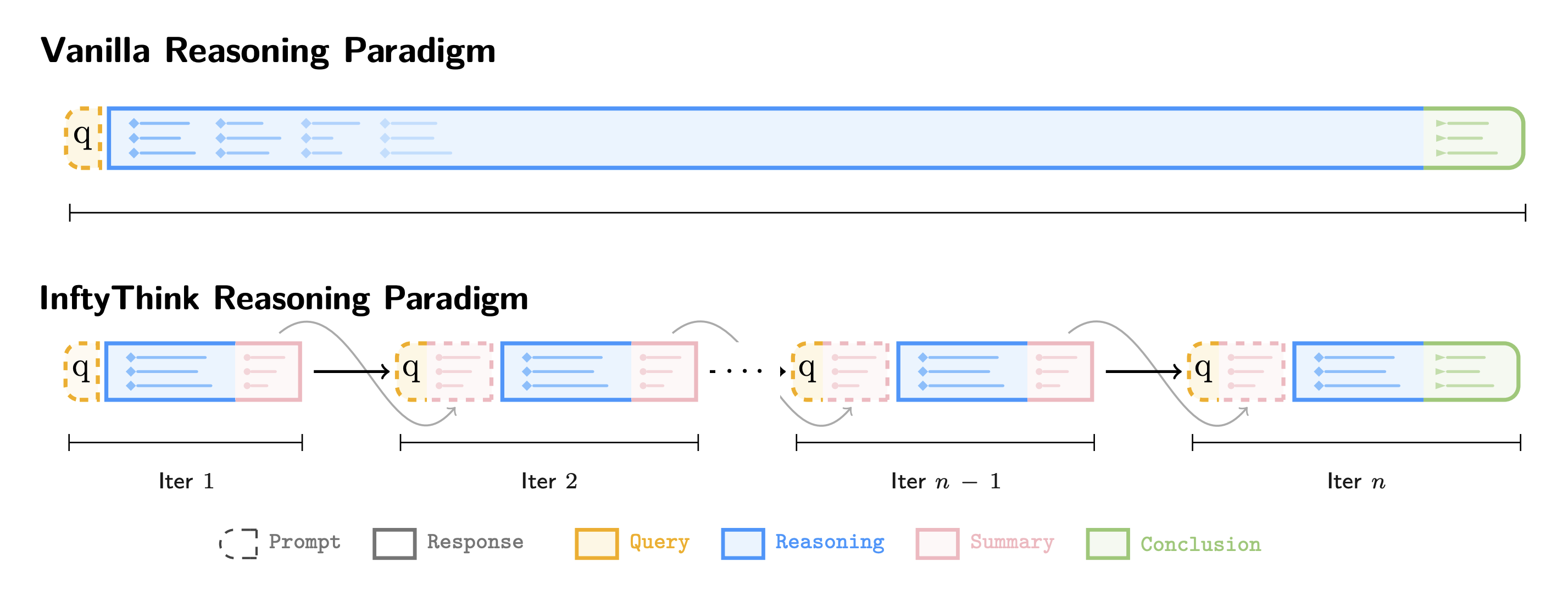
InftyThink+ is an end-to-end RL framework for infinite-horizon reasoning that optimizes the entire iterative reasoning trajectory. Standard long chain-of-thought suffers from quadratic cost, context length limits, and lost-in-the-middle degradation. InftyThink+ addresses all three by letting models autonomously decide when to summarize, what to preserve, and how to resume, trained through trajectory-level reinforcement learning.
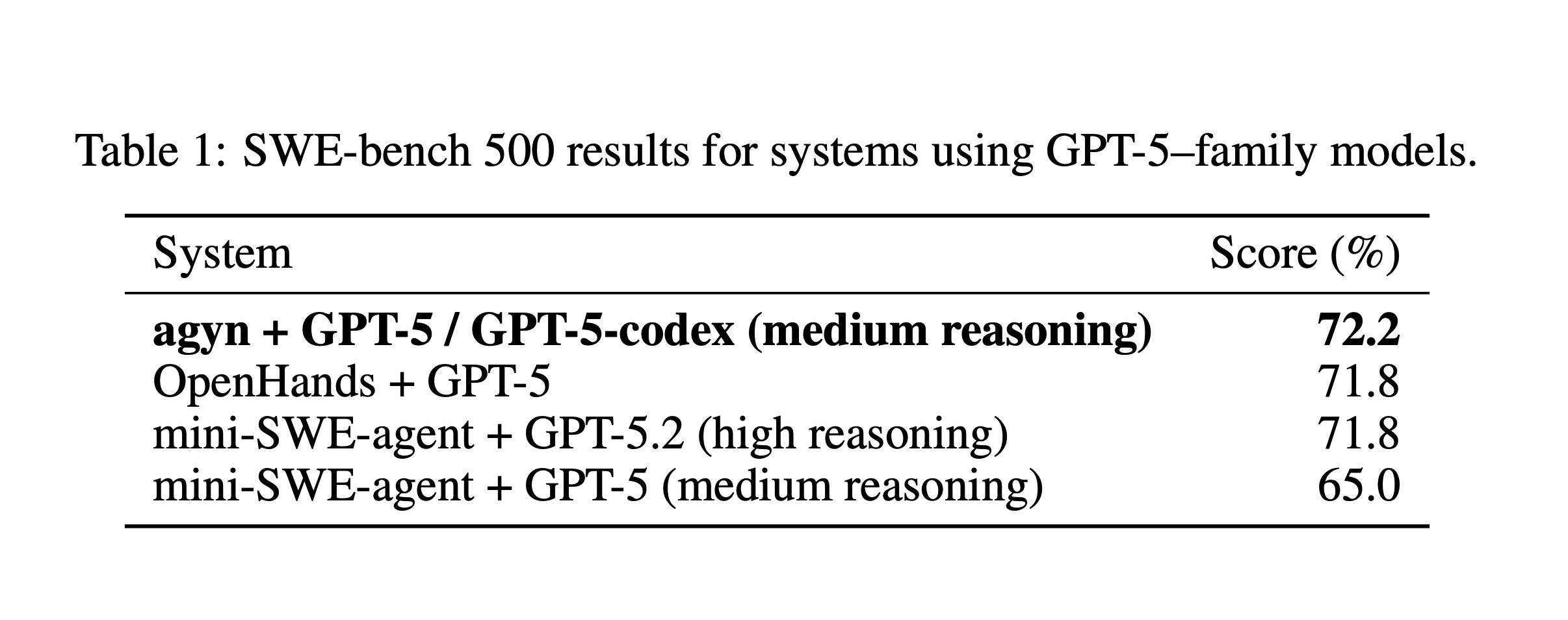
Agyn
Agyn is a fully automated multi-agent system that models software engineering as an organizational process rather than a monolithic code generation task. Built on an open-source platform for configuring agent teams, the system assigns specialized agents to distinct roles and follows a structured development methodology - all without human intervention. Notably, Agyn was designed for real production use and was not tuned for the SWE-bench.
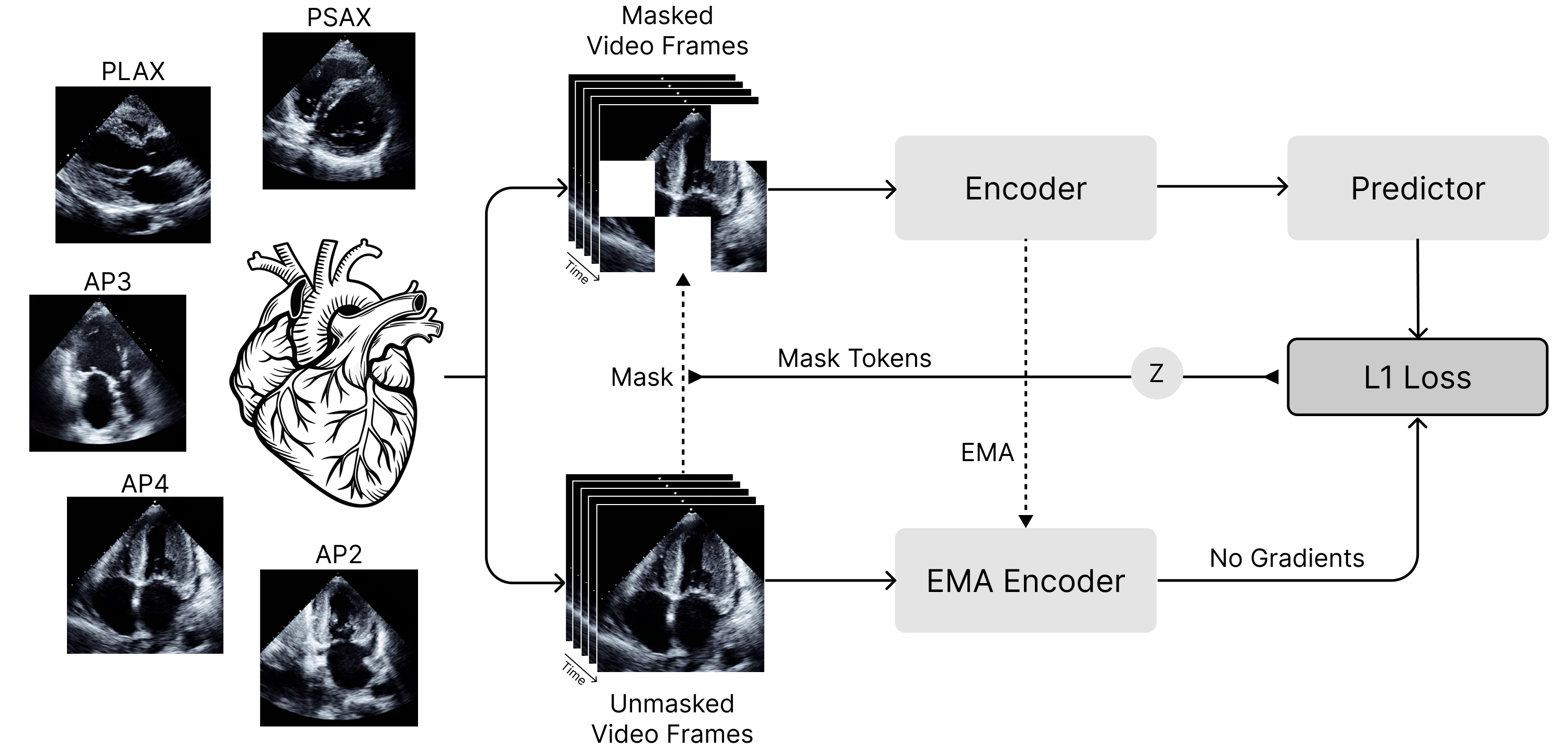
EchoJEPA
EchoJEPA is a latent predictive foundation model for echocardiography trained on 18 million echocardiograms from 300,000 patients. By learning to predict in latent space rather than pixel space, the model separates clinically meaningful anatomical signals from ultrasound noise and artifacts, producing representations that dramatically outperform existing approaches on cardiac assessment tasks.
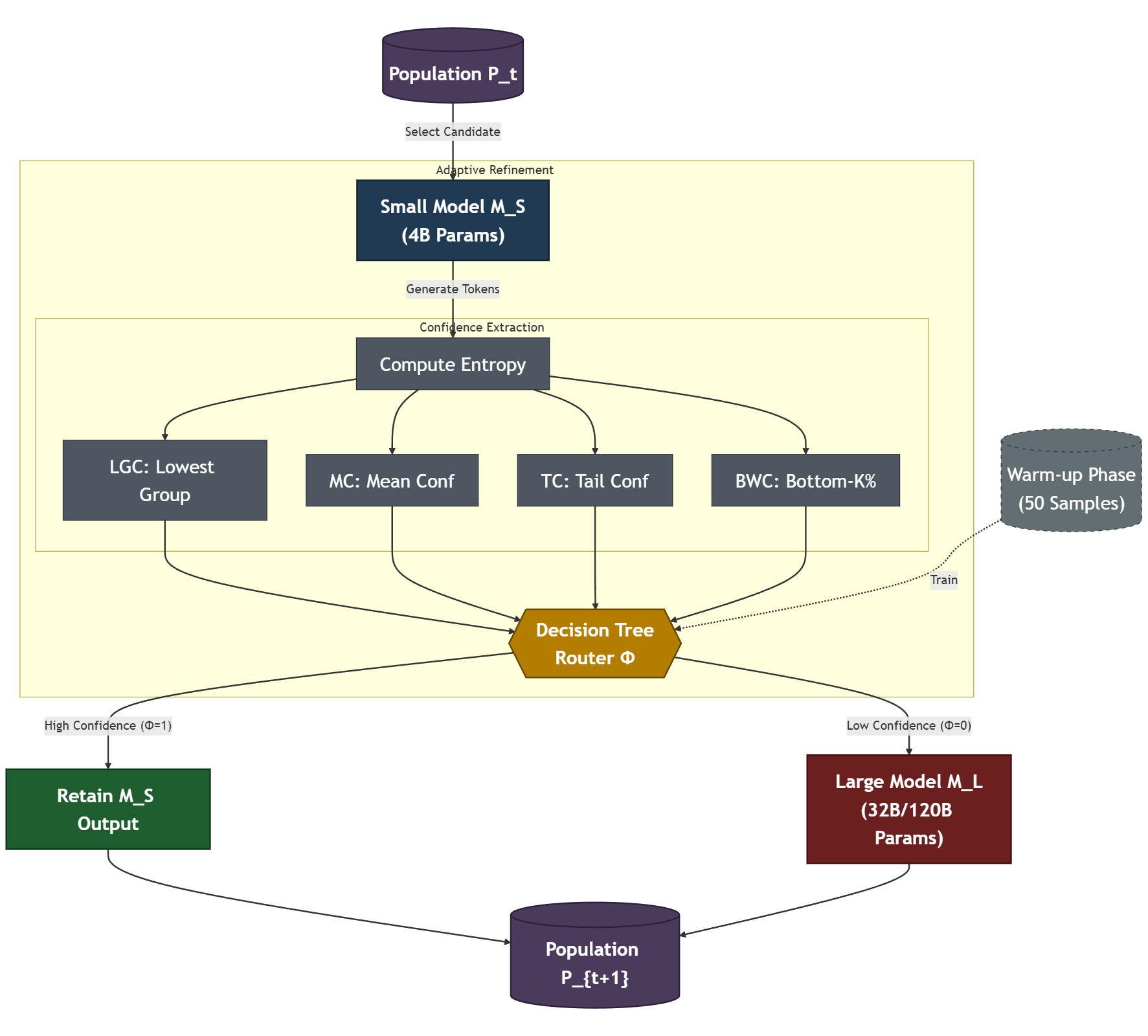
AdaptEvolve
AdaptEvolve tackles a key efficiency bottleneck in evolutionary agentic systems: the repeated invocation of large LLMs during iterative refinement loops. The method uses intrinsic generation confidence to dynamically select which model to invoke at each step, routing easy sub-problems to smaller models and reserving expensive frontier models for genuinely hard decisions.
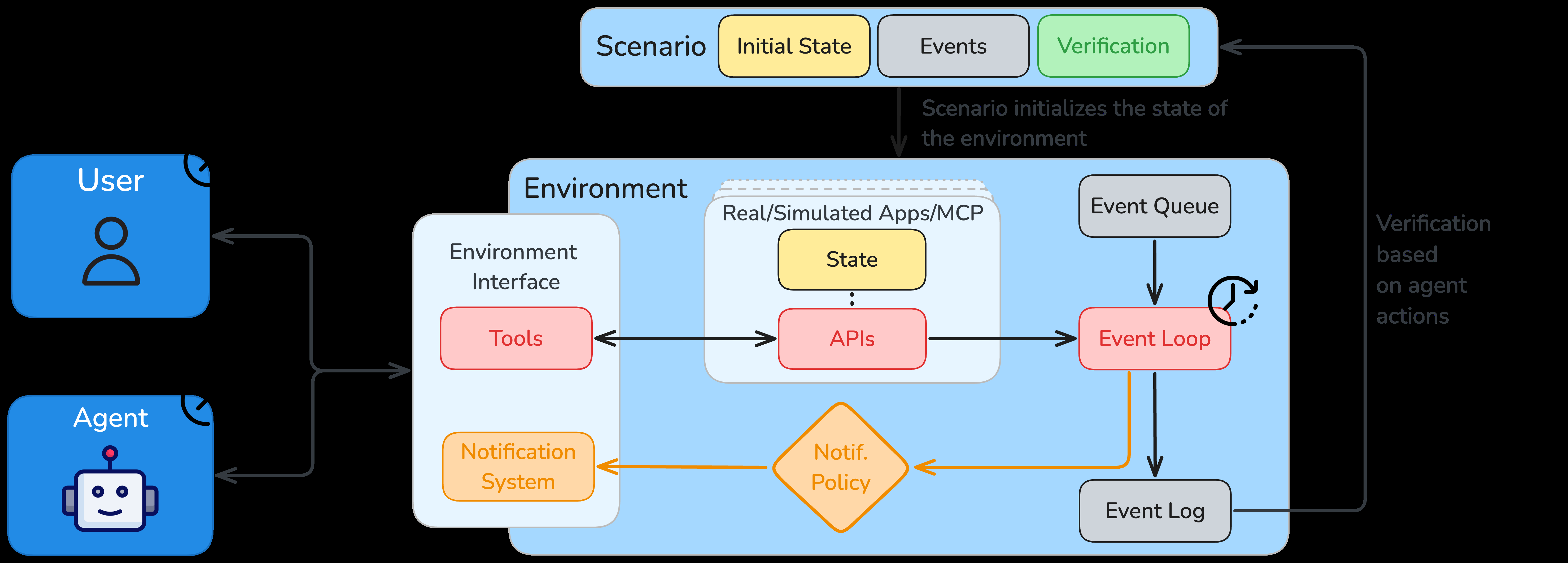
Gaia2
Meta FAIR introduces Gaia2, a next-generation agent benchmark where environments change independently of agent actions, forcing agents to handle temporal pressure, uncertainty, and multi-agent coordination. GPT-5 leads at 42% pass@1 but struggles with time-constrained tasks, while Kimi-K2 leads open-source models at 21%. Built on the open-source Agents Research Environments (ARE) platform with action-level verifiers, Gaia2 represents a paradigm shift from static benchmarks to dynamic evaluation of agentic capabilities.
AgentArk
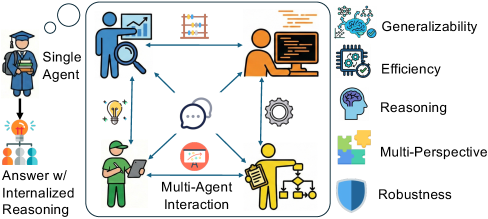
AgentArk distills multi-agent debate dynamics into a single LLM, transferring the reasoning and self-correction abilities of multi-agent systems into one model at training time. Three hierarchical distillation strategies (reasoning-enhanced SFT, trajectory-based augmentation, and process-aware distillation with a process reward model) yield an average 4.8% improvement over single-agent baselines across math and reasoning benchmarks, approaching full multi-agent performance at a fraction of the inference cost. Cross-family distillation (e.g., Qwen3-32B to LLaMA-3-8B) produces the largest gains, suggesting heterogeneous architectures benefit most from transferred reasoning signals.
AgentSkiller
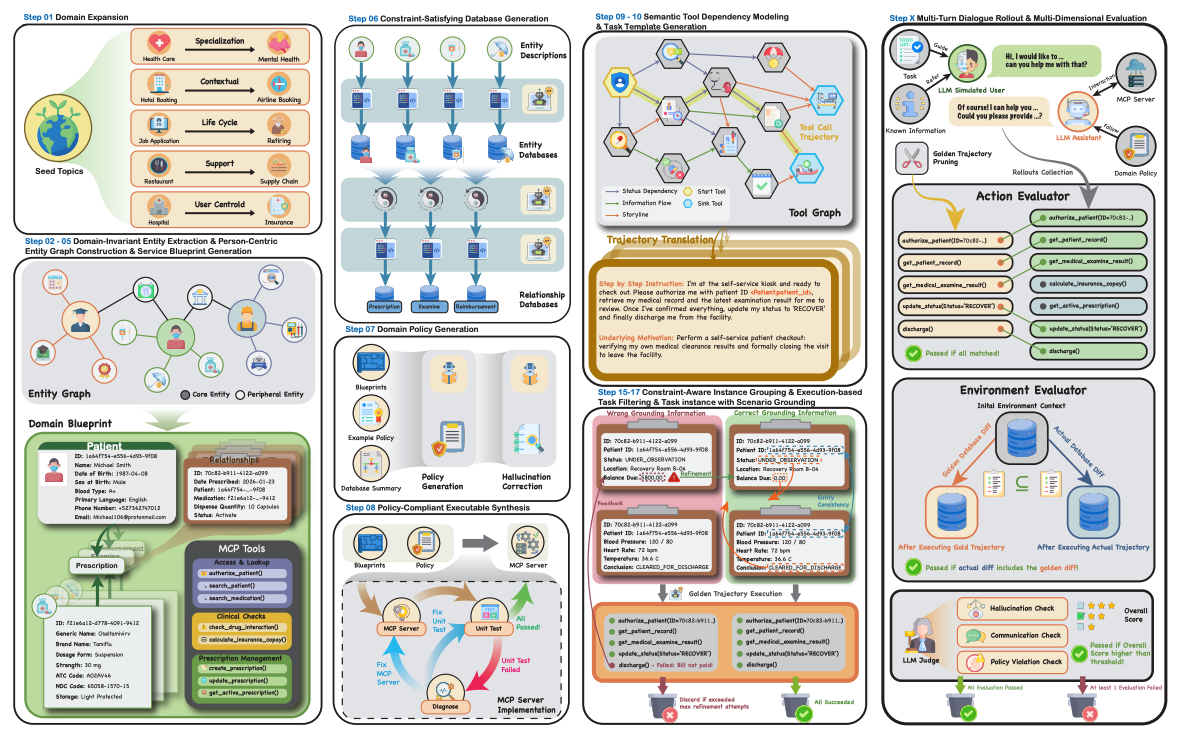
AgentSkiller scales generalist agent intelligence through semantically integrated cross-domain data synthesis, producing 11K high-quality synthetic trajectories across diverse tool-use scenarios. The resulting 14B model beats GPT-o3 on tau2-bench (79.1% vs 68.4%), and even the 4B variant outperforms 70B and 235B models, demonstrating that data quality and semantic integration matter more than parameter count for building strong tool-use agents.
Semi-Autonomous Mathematics Discovery with Gemini
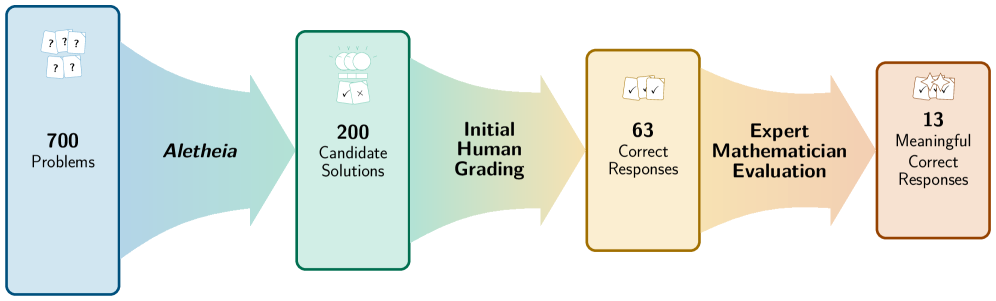
This paper from Google DeepMind presents a case study in semi-autonomous mathematics discovery using Aletheia, a specialized math research agent built on Gemini Deep Think. The team systematically evaluated 700 open conjectures from Bloom’s Erdos Problems database, combining AI-driven natural language verification with human expert evaluation, and addressed 13 previously open problems.
TinyLoRA
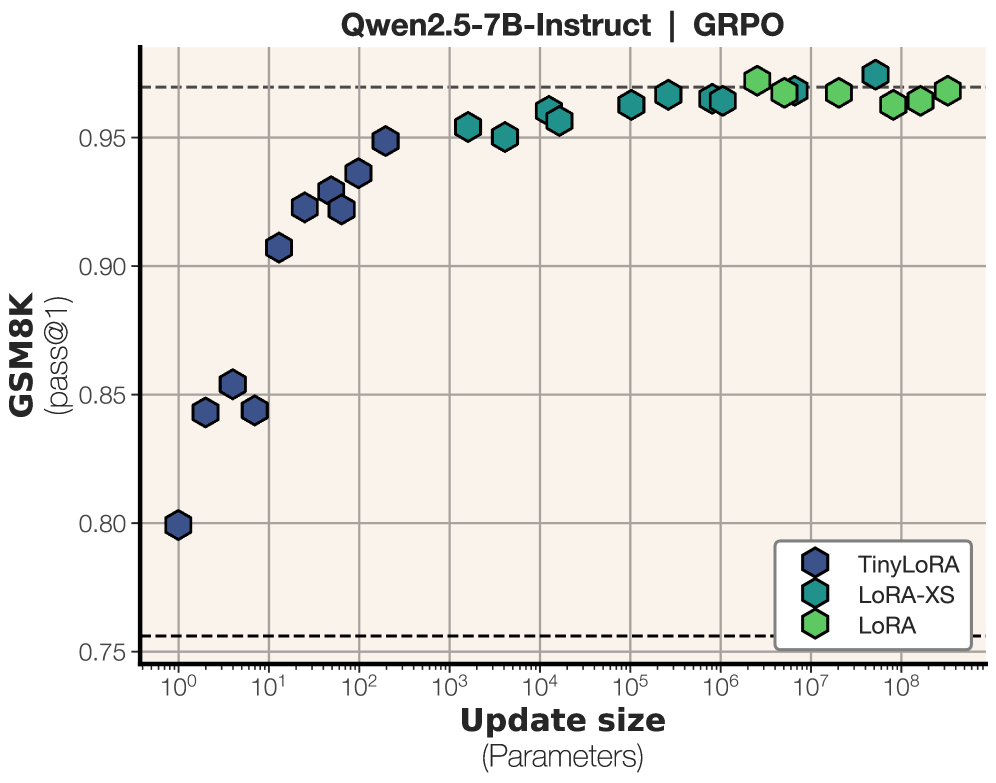
This paper from Meta FAIR asks how small a LoRA adapter can get and still teach a model to reason. The answer: remarkably small. The authors propose TinyLoRA, a method that scales low-rank adapters down to as few as one trainable parameter by projecting through fixed random tensors and sharing weights across all modules. The key insight is that RL makes fundamentally more information-dense updates than SFT, enabling effective learning with orders of magnitude fewer parameters.
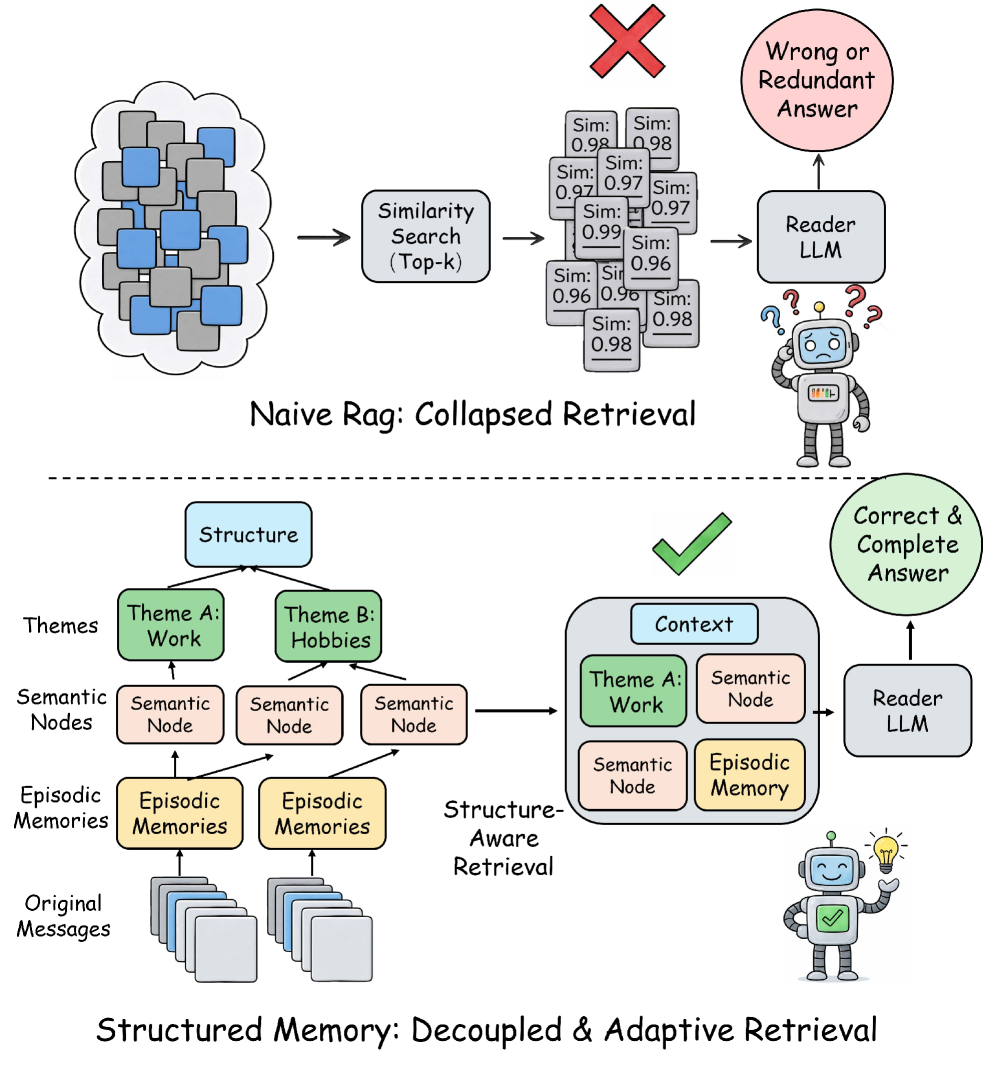
xMemory
xMemory argues that standard RAG retrieval is a poor fit for agent memory because the evidence source is a bounded, coherent dialogue stream where candidate spans are highly correlated near-duplicates. Fixed top-k similarity retrieval collapses into a single dense region, returning redundant context, while post-hoc pruning can break temporally linked evidence chains. xMemory replaces this with hierarchical memory construction and structure-aware top-down retrieval.
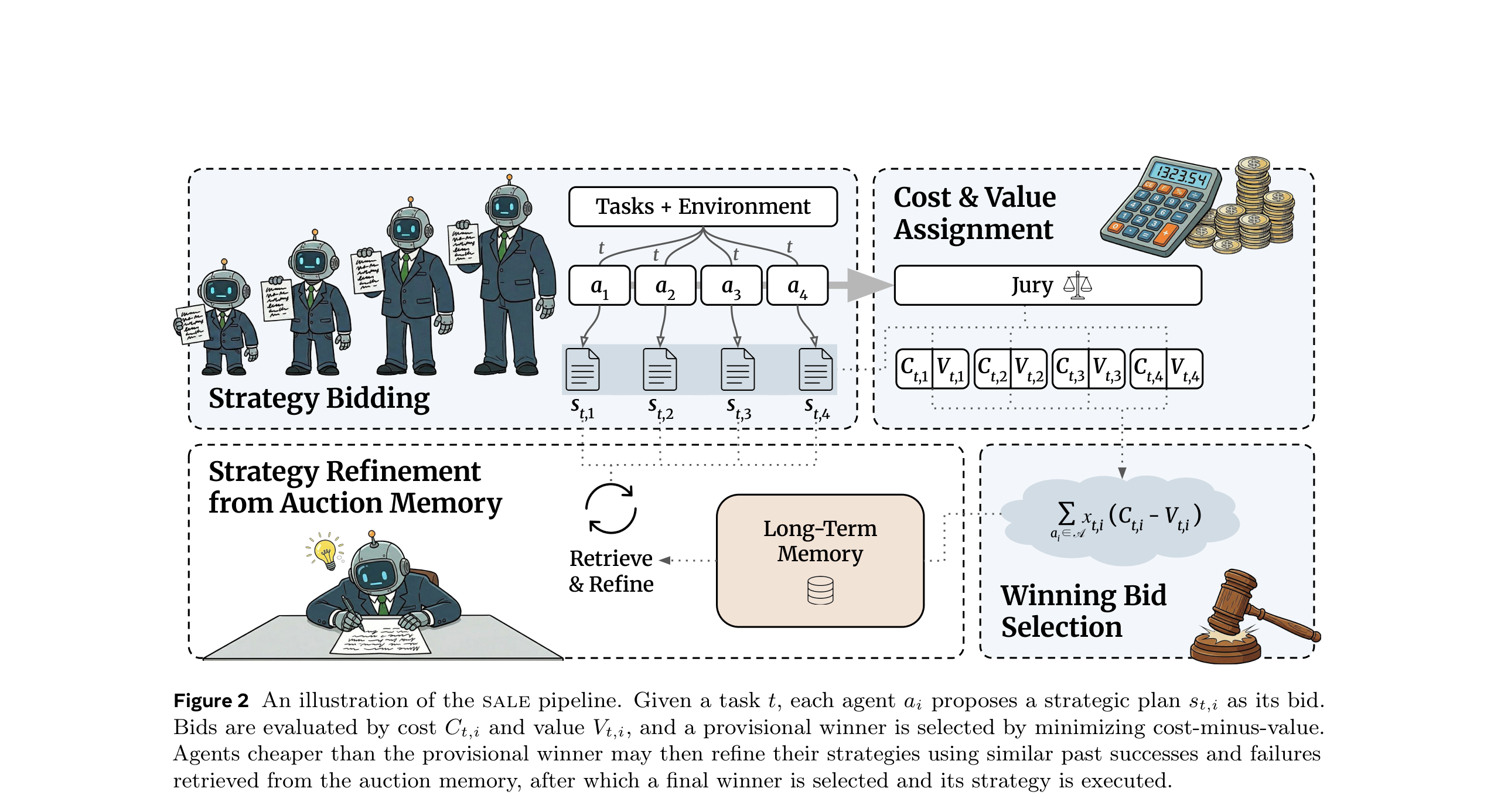
SALE
This paper from Meta shows that small agents match large ones on simple tasks but fall sharply behind as complexity grows, with the cheapest agent reaching only about 21% of the largest agent’s accuracy on the hardest problems. To address this, the authors introduce SALE (Strategy Auctions for Workload Efficiency), a marketplace-inspired framework where heterogeneous agents bid with strategic plans, are scored on cost-value trade-offs, and refine their bids using shared auction memory.
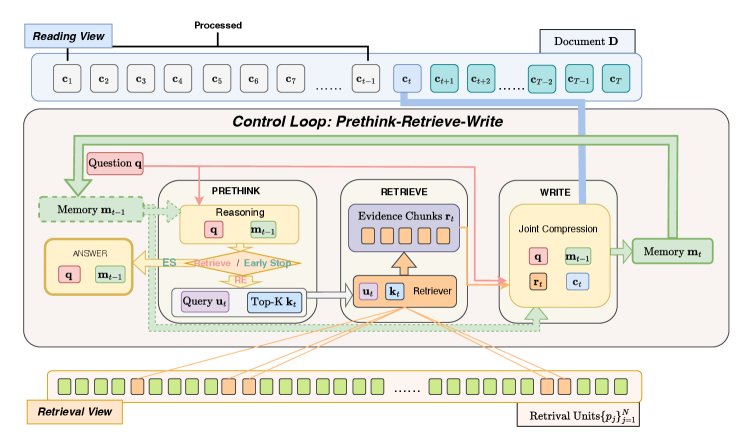
InfMem
InfMem is a cognitive agent for ultra-long document QA that uses System-2-style control to actively manage bounded memory. Instead of passively compressing each chunk as it streams in, InfMem runs a PreThink-Retrieve-Write loop that monitors evidence sufficiency, fetches missing facts from anywhere in the document, and compresses everything into a fixed-size memory - then stops early once it has enough.
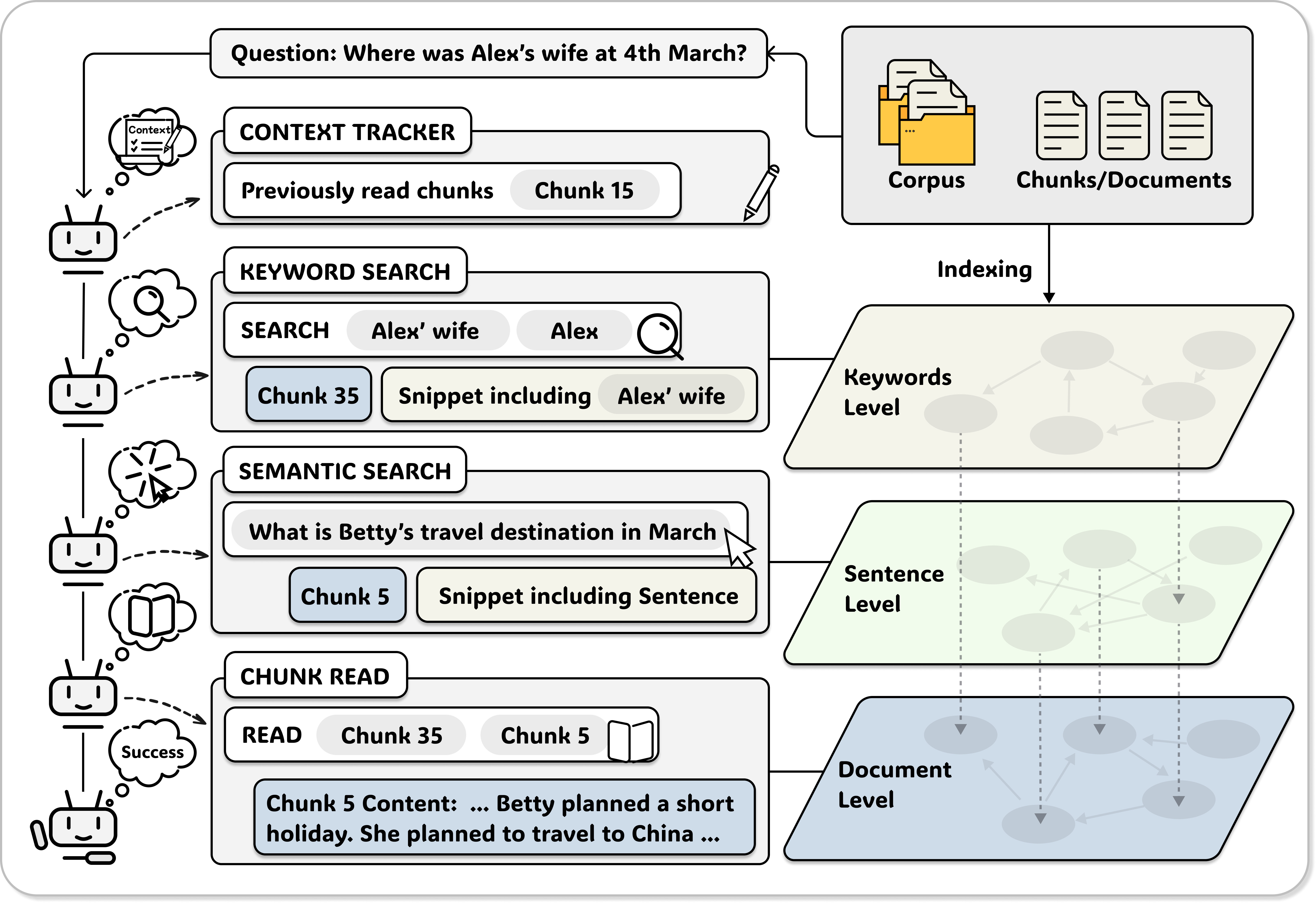
A-RAG
A-RAG is an agentic RAG framework that gives LLMs direct access to hierarchical retrieval interfaces instead of relying on fixed retrieval algorithms or predefined workflows. The agent autonomously decides what to search, at which granularity, and when to stop - representing a paradigm shift from static retrieval pipelines to truly agentic information gathering.