AI Papers of the Week
Every paper worth reading in AI, hand-picked one week at a time.
Discover and explore top AI papers withClaude CodeCodex
npx @dair-ai/mcp setup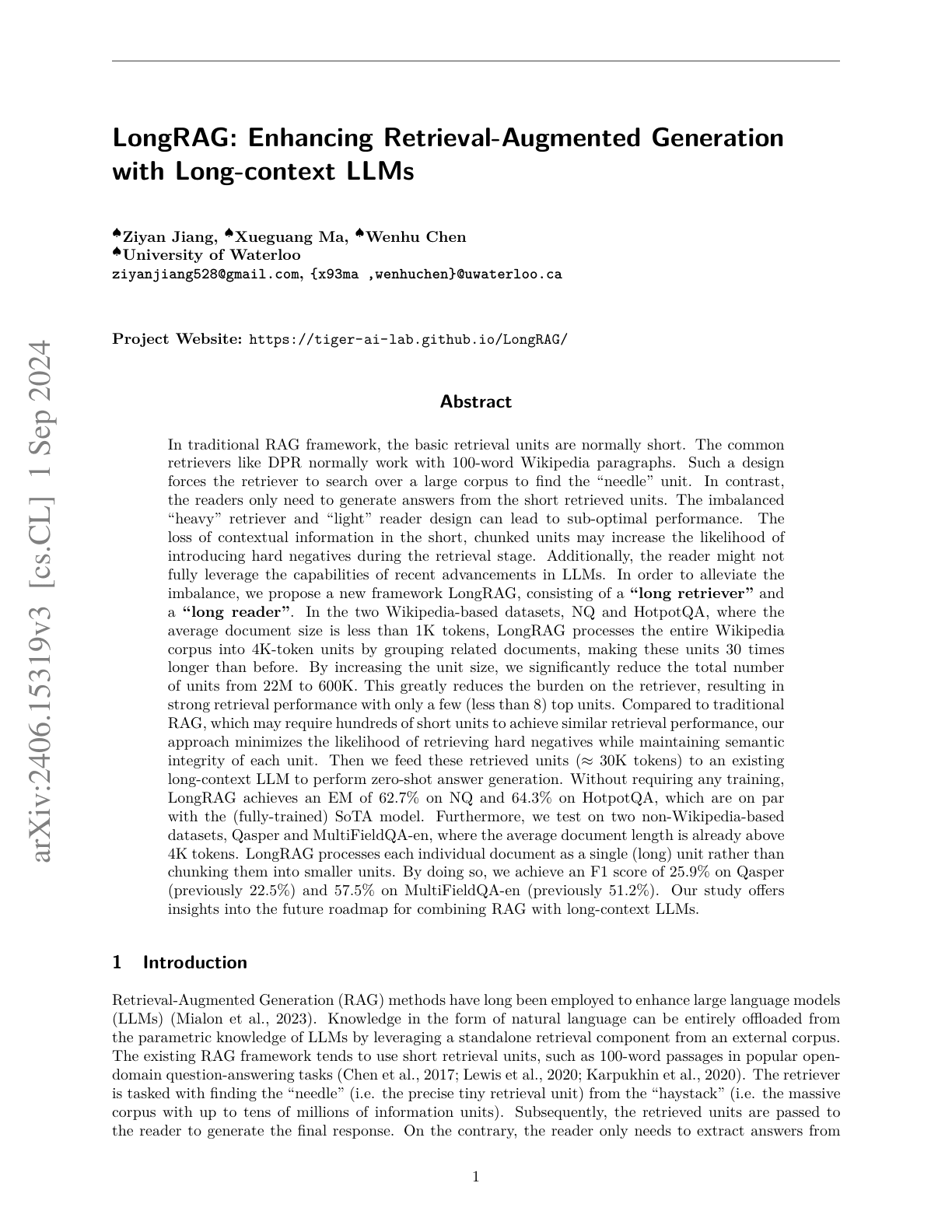
Enhancing RAG with Long-Context LLMs
proposes LongRAG, which combines RAG with long-context LLMs to enhance performance; uses a long retriever to significantly reduce the number of extracted units by operating on longer retrieval units; the long reader takes in the long retrieval units and leverages the zero-shot answer extraction capability of long-context LLMs to improve performance of the overall system; claims to achieve 64.3% on HotpotQA (full-wiki), which is on par with the state-of-the-art model.
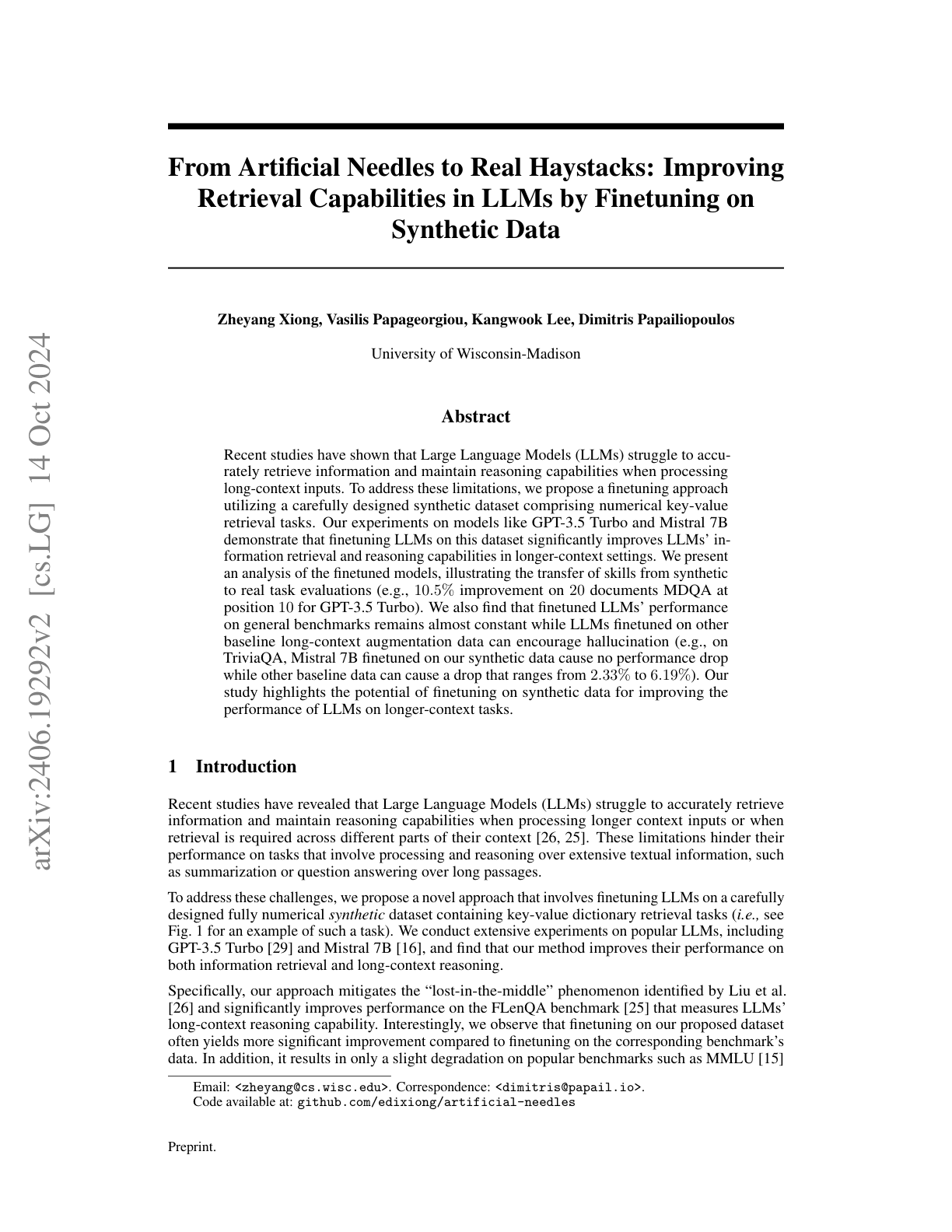
Improving Retrieval in LLMs through Synthetic Data
proposes a fine-tuning approach to improve the accuracy of retrieving information in LLMs while maintaining reasoning capabilities over long-context inputs; the fine-tuning dataset comprises numerical dictionary key-value retrieval tasks (350 samples); finds that this approach mitigates the "lost-in-the-middle" phenomenon and improves performance on both information retrieval and long-context reasoning.
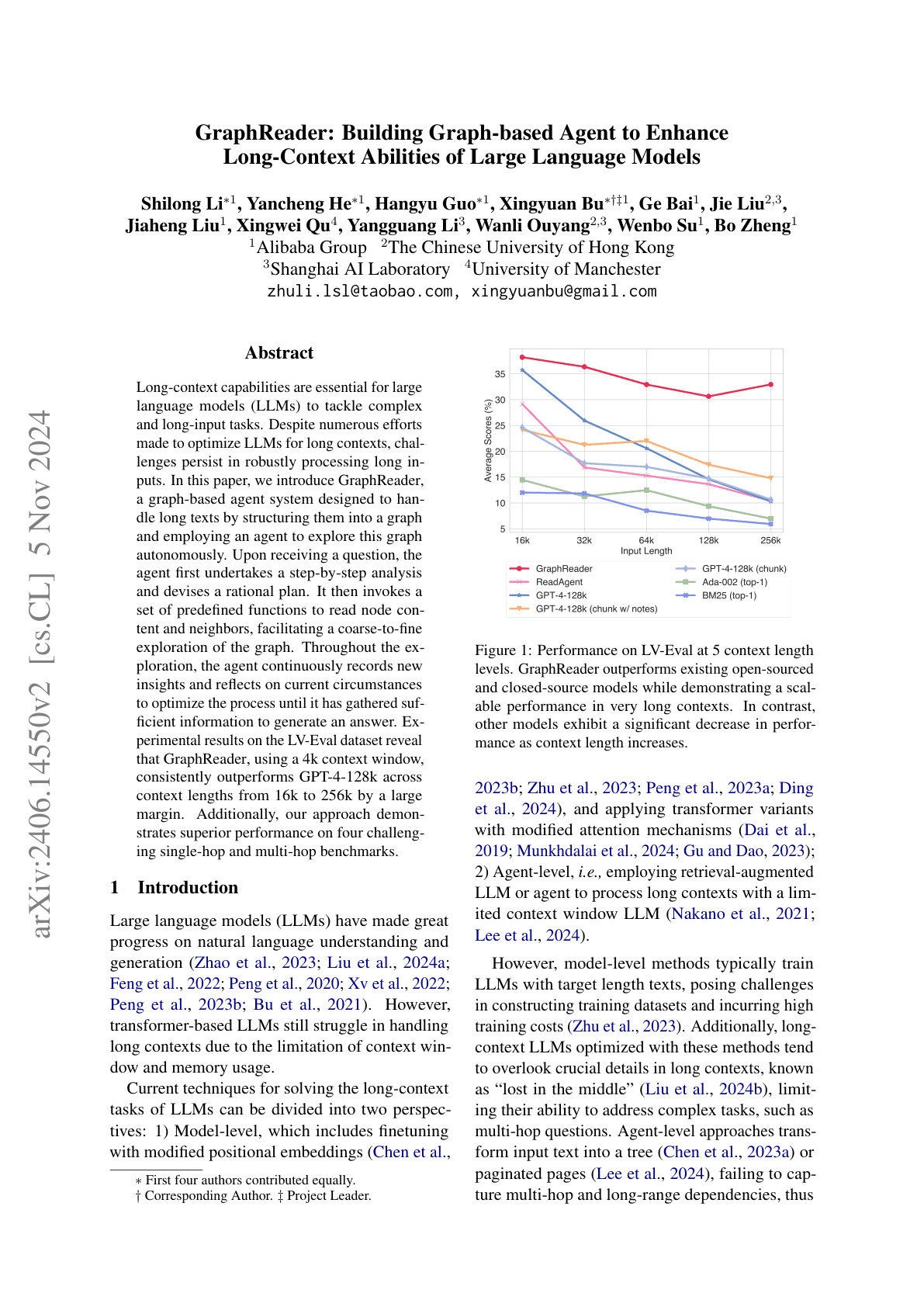
GraphReader
proposes a graph-based agent system to enhance the long-context abilities of LLMs; it structures long text into a graph and employs an agent to explore the graph (using predefined functions guided by a step-by-step rational plan) to effectively generate answers for questions; consistently outperforms GPT-4-128k across context lengths from 16k to 256k.
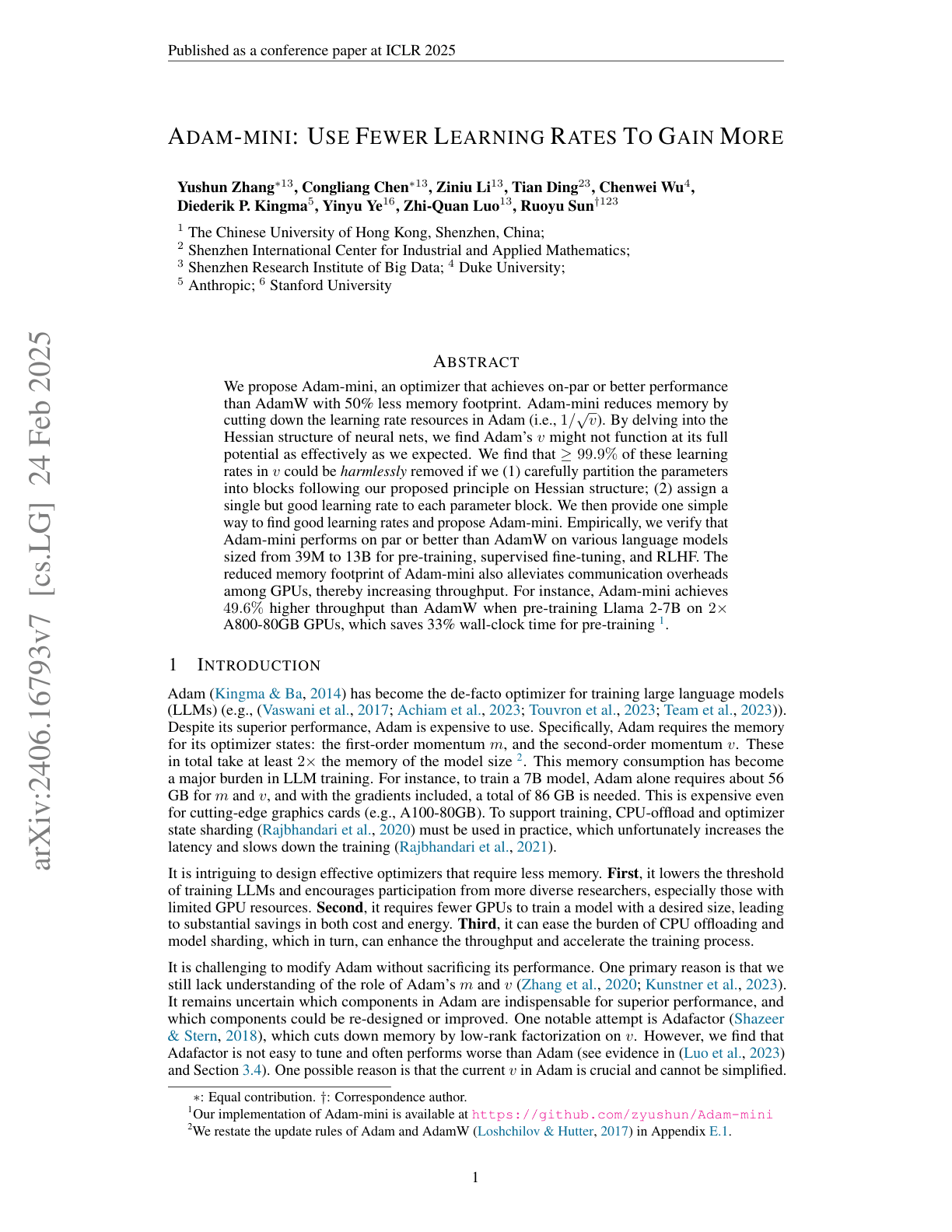
Adam-mini
a new optimizer that reduces memory footprint (45%-50% less memory footprint) by using fewer learning rates and achieves on-par or even outperforms AdamW; it carefully partitions parameters into blocks and assigns a single high-quality learning that outperforms Adam; achieves consistent results on language models sized from 125M -7B for pre-training, SFT, and RLHF.
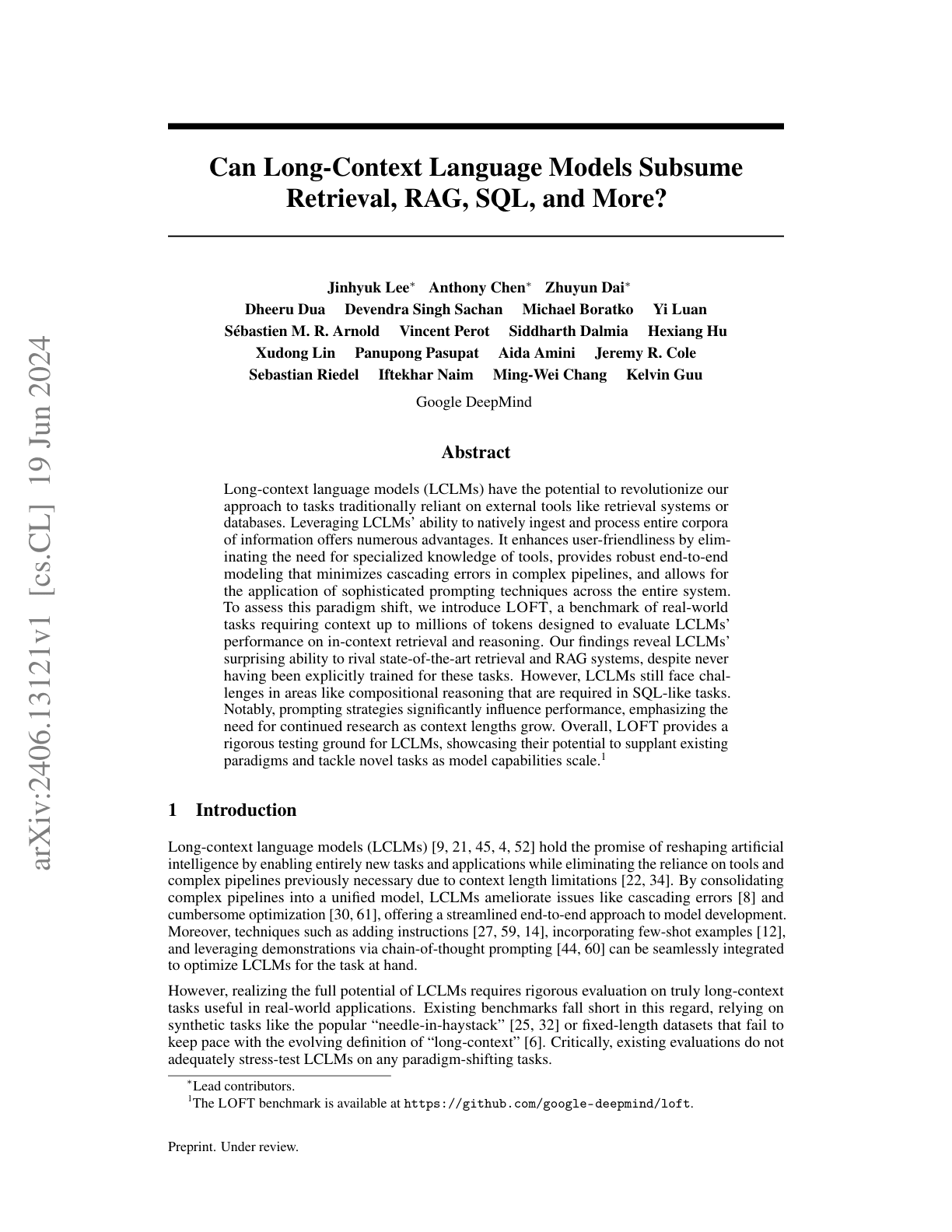
Can Long-Context Language Models Subsume Retrieval, RAG, SQL, and More?
conducts a deep performance analysis of long-context LLMs on in-context retrieval and reasoning; they first present a benchmark with real-world tasks requiring 1M token context; reports that long-context LLMs can rival state-of-the-art retrieval and RAG systems, without any explicit training on the tasks; suggests that compositional reasoning (required in SQL-like tasks) is still challenging for these LLMs; they also encourage the need for continued research on advanced prompting strategies as they noted significant boosts in performance when applying them for long context problems.
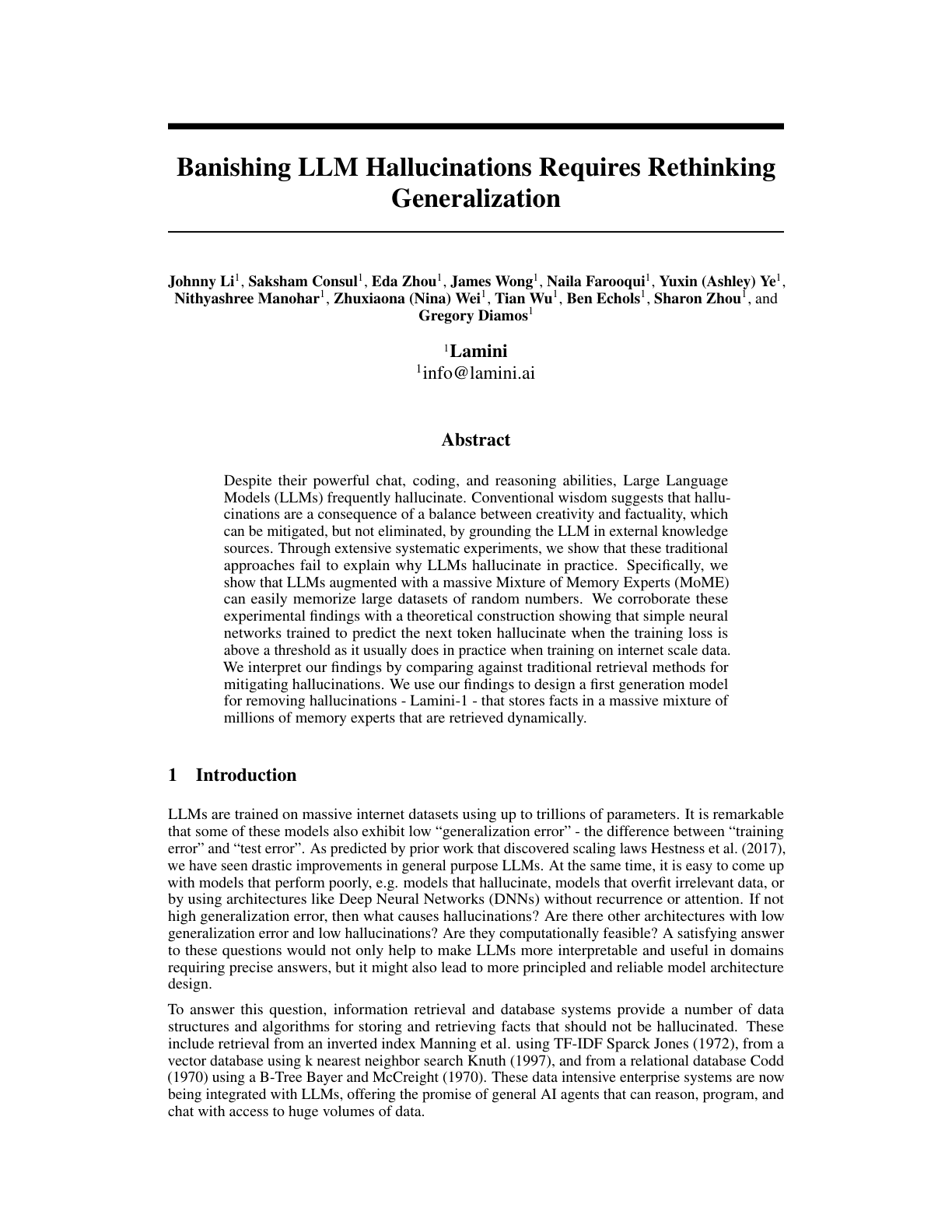
Mixture of Memory Experts
proposes an approach to significantly reduce hallucination (10x) by tuning millions of expert adapters (e.g., LoRAs) to learn exact facts and retrieve them from an index at inference time; the memory experts are specialized to ensure faithful and factual accuracy on the data it was tuned on; claims to enable scaling to a high number of parameters while keeping the inference cost fixed.
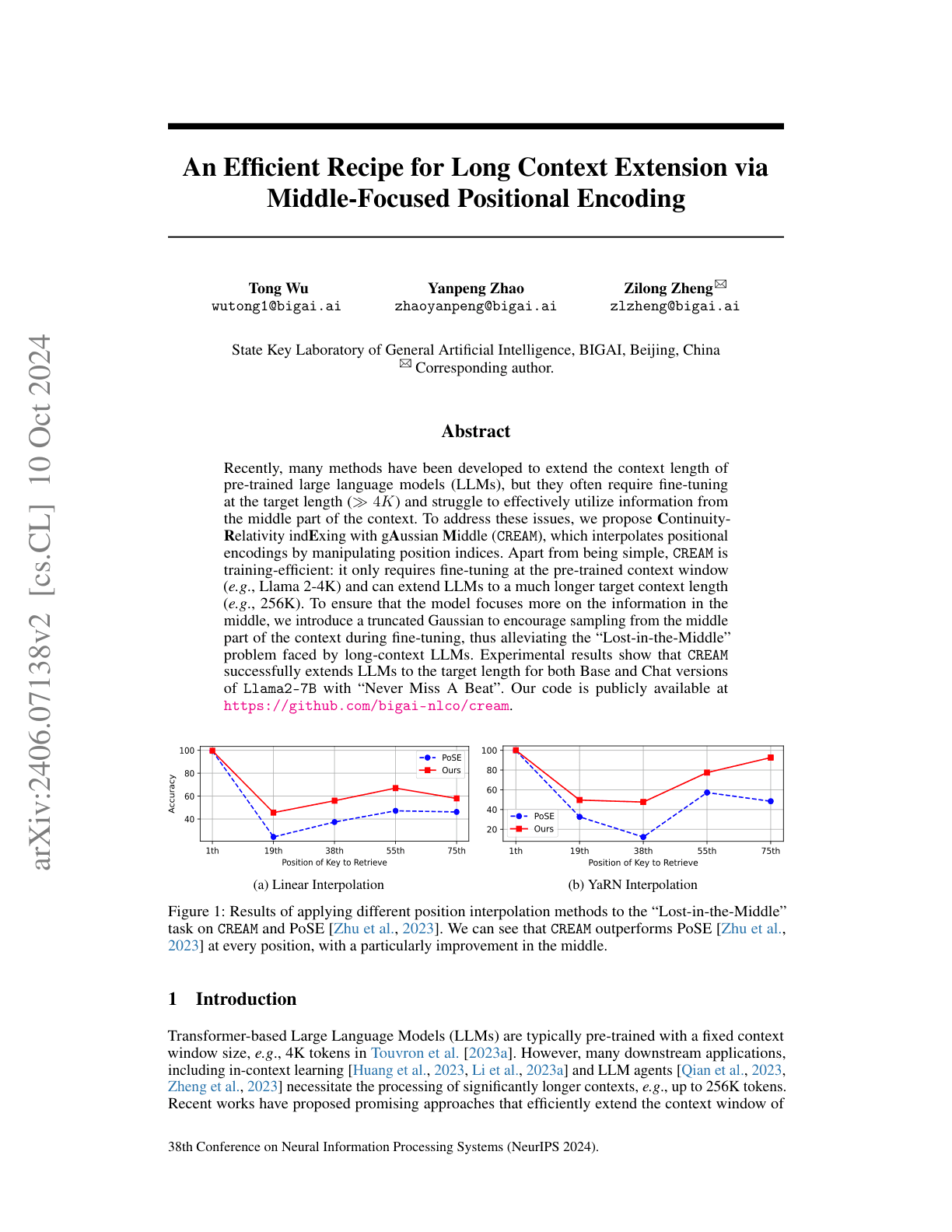
Consistent Middle Enhancement in LLMs
proposes an approach to tune an LLM to effectively utilize information from the middle part of the context; it first proposes a training-efficient method to extend LLMs to longer context lengths (e.g., 4K -> 256K); it uses a truncated Gaussian to encourage sampling from the middle part of the context during fine-tuning; the approach helps to alleviate the so-called "Lost-in-the-Middle" problem in long-context LLMs.
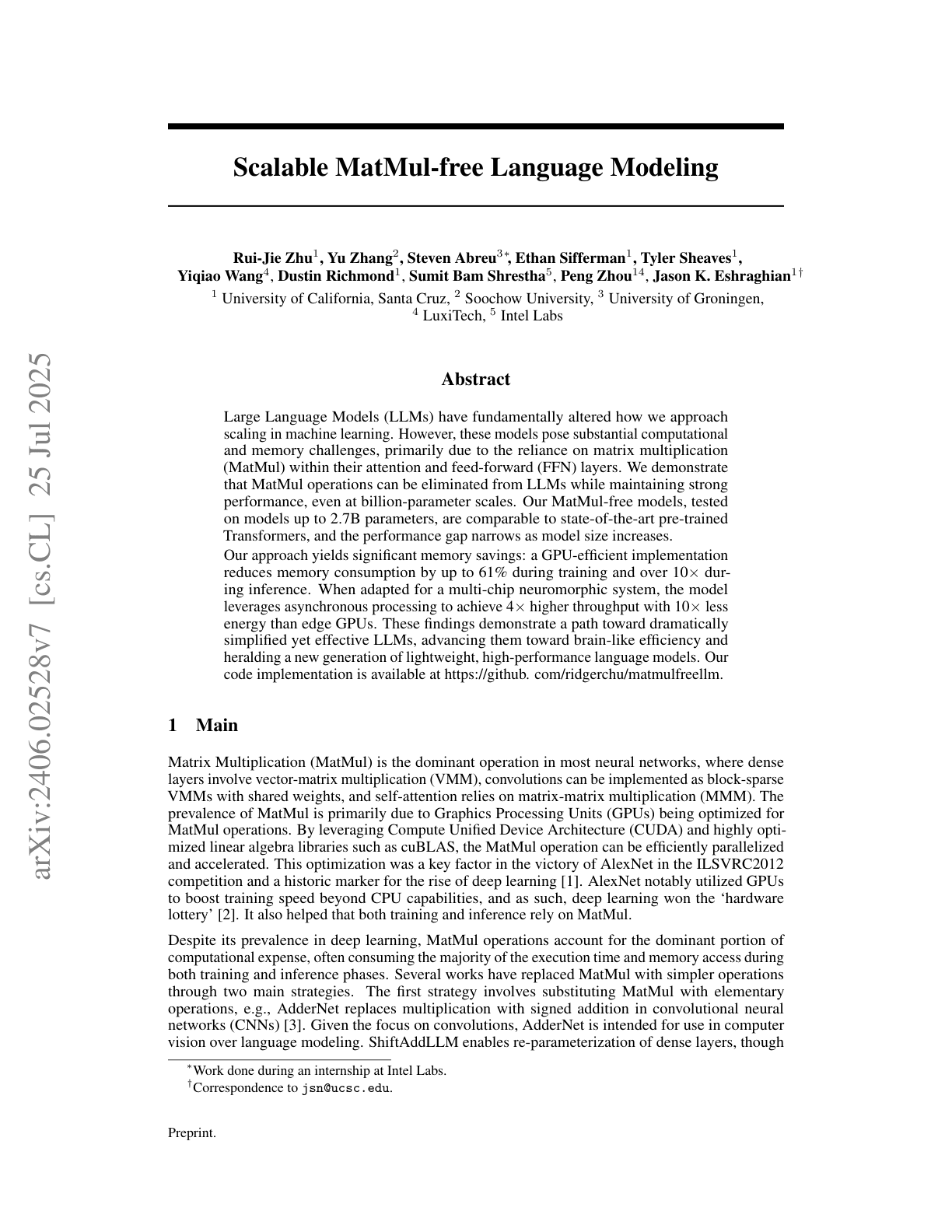
MatMul-free LLMs
proposes an implementation that eliminates matrix multiplication operations from LLMs while maintaining performance at billion-parameter scales; the performance between full precision Transformers and the MatMul-free models narrows as the model size increases; claims that by using an optimized kernel during inference, memory consumption is reduced by more than 10x.
Are Long-LLMs A Necessity For Long-Context Tasks?
claims that long-LLMs are not a necessity to solve long-context tasks; proposes a reasoning framework to enable short-LLMs to address long-context tasks by adaptively accessing and utilizing the context based on the presented tasks; it decomposes the long context into short contexts and processes them using a decision-making process.
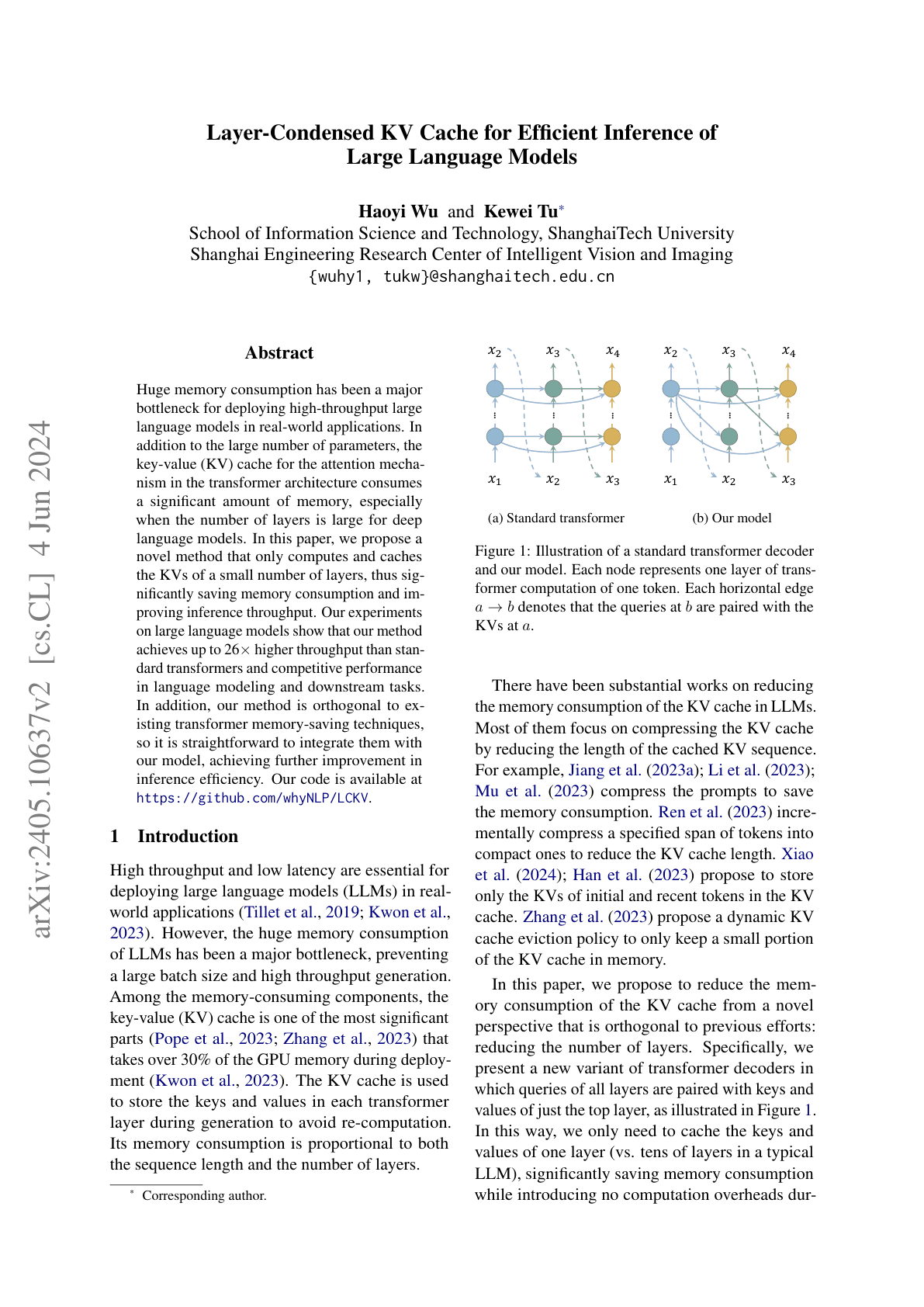
Efficient Inference of LLMs
proposes a layer-condensed KV cache to achieve efficient inference in LLMs; only computes and caches the key-values (KVs) of a small number of layers which leads to saving memory consumption and improved inference throughput; can achieve up to 26x higher throughput than baseline transformers while maintaining satisfactory performance.
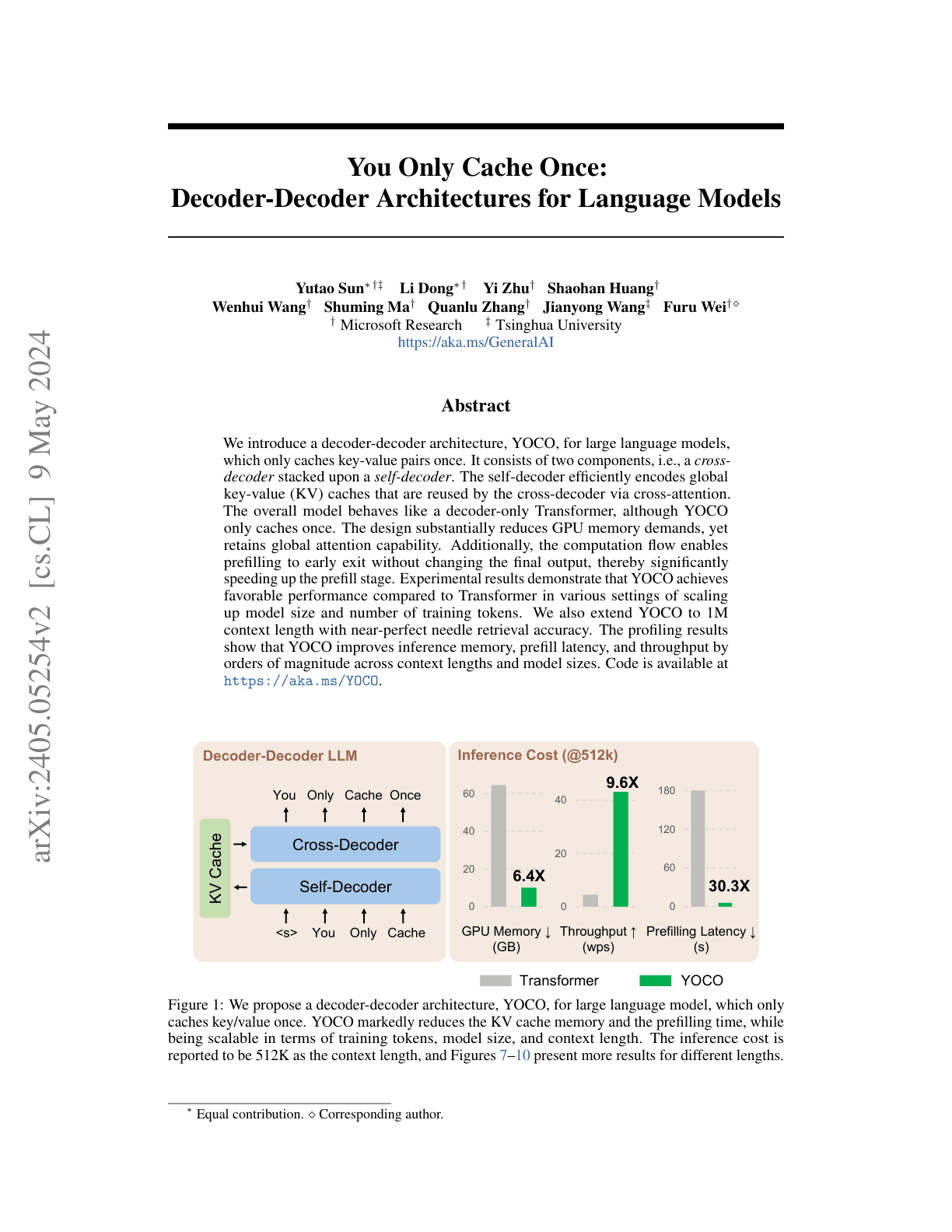
You Only Cache Once
a decoder-decoder LLM architecture that only caches key-value pairs once; it involves a cross-decoder stacked upon a self-decoder which efficiently encodes global key-value caches and the cross-encoder reuses the cache via cross-attention; this leads to a significant reduction in GPU memory use without sacrificing capabilities; achieves comparable performance to Transformer in various settings of scaling up model size and number of training token.
Med-Gemini
presents a family of multimodal models specialized in medicines and based on the strong multimodal and long-context reasoning capabilities of Gemini; achieves state-of-the-art performance on 10/14 benchmarks surpassing GPT-4 models; it achieves 91% accuracy on MedQA (USMLE) benchmark using an uncertainty-guided search strategy.
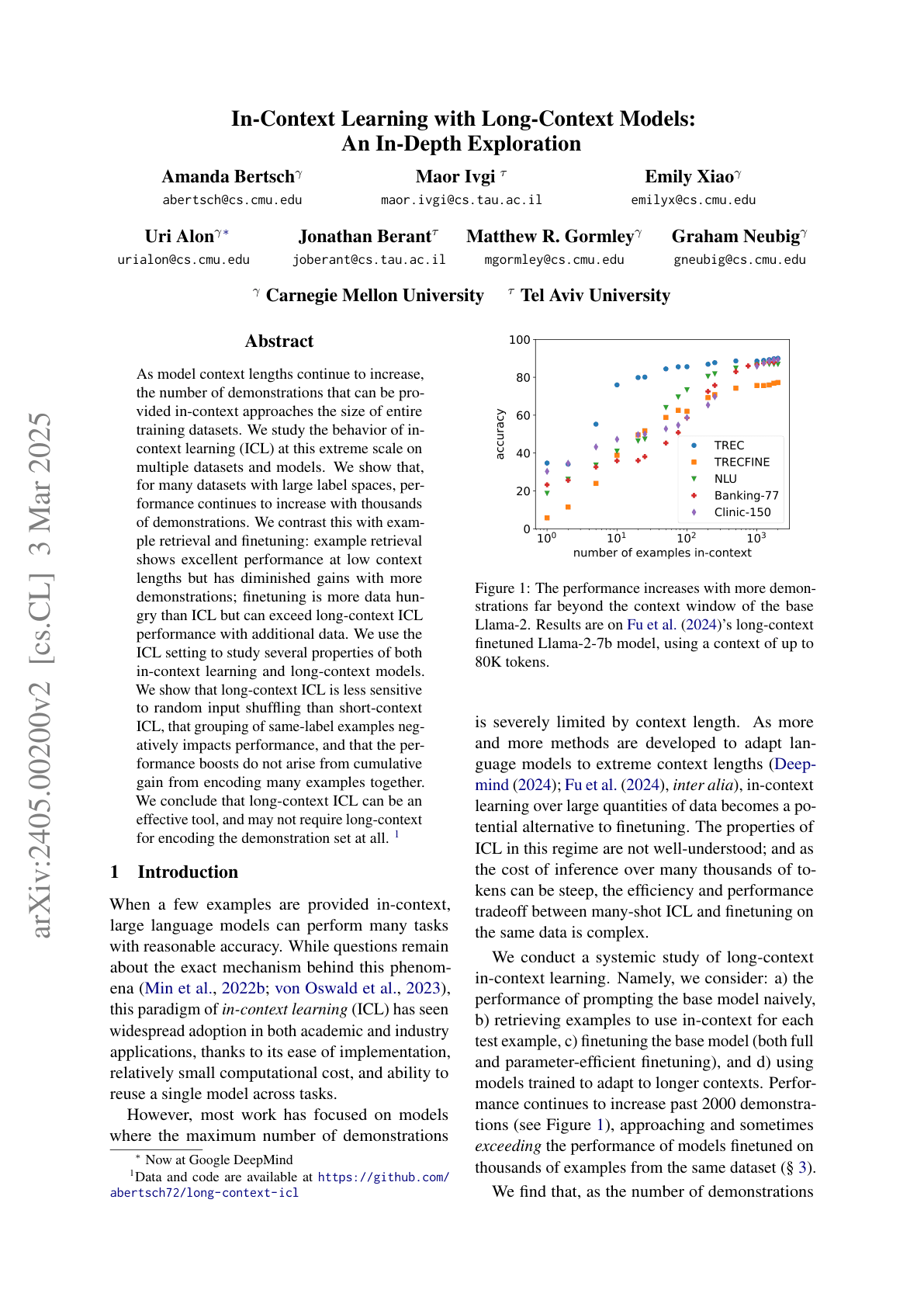
In-Context Learning with Long-Context Models
studies the behavior in-context learning of LLMs at extreme context lengths with long-context models; shows that performance increases as hundreds or thousands of demonstrations are used; demonstrates that long-context ICL is less sensitive to random input shuffling than short-context ICL; concludes that the effectiveness of long-context LLMs is not due to task learning but from attending to similar examples.
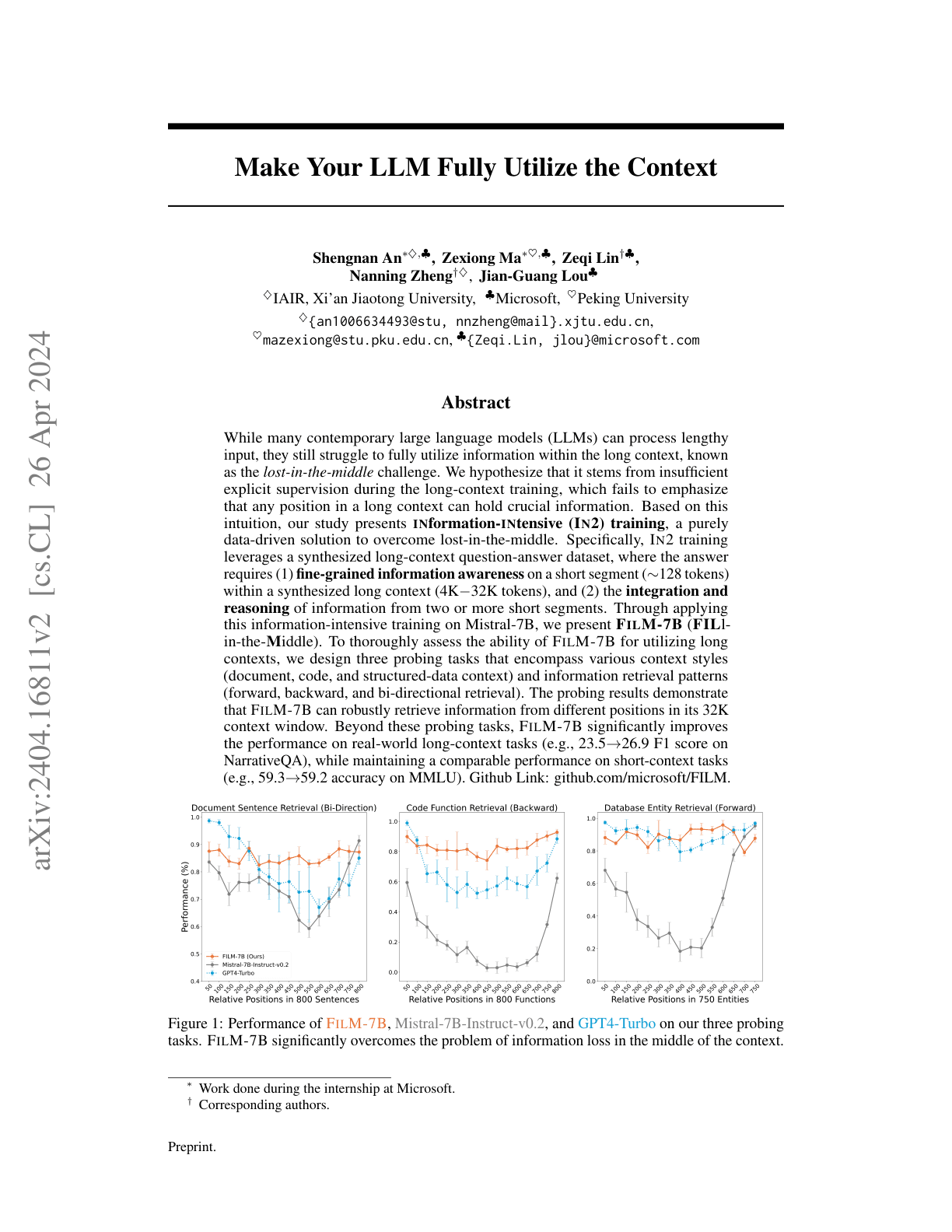
Make Your LLM Fully Utilize the Context (FILM-7B)
FILM-7B targets the lost-in-the-middle problem where long-context LLMs fail to retrieve information buried between the start and end of their input. The authors apply an information-intensive (IN2) training recipe to Mistral-7B that forces uniform attention across the full 32K window.
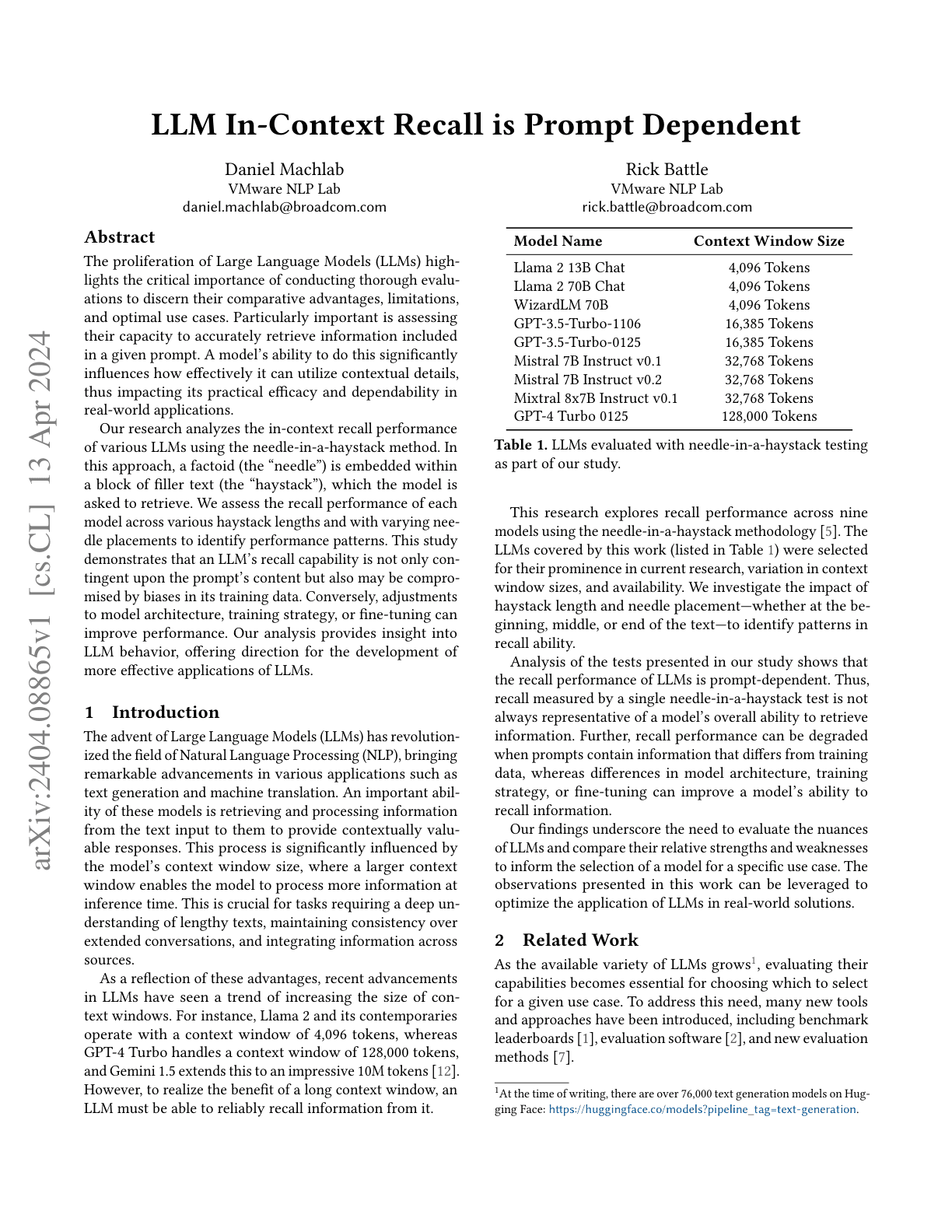
LM In-Context Recall is Prompt Dependent
Using needle-in-a-haystack tests across multiple models, this paper shows that in-context recall is highly sensitive to prompt wording and that training data biases can silently degrade a model's ability to retrieve from its own context.
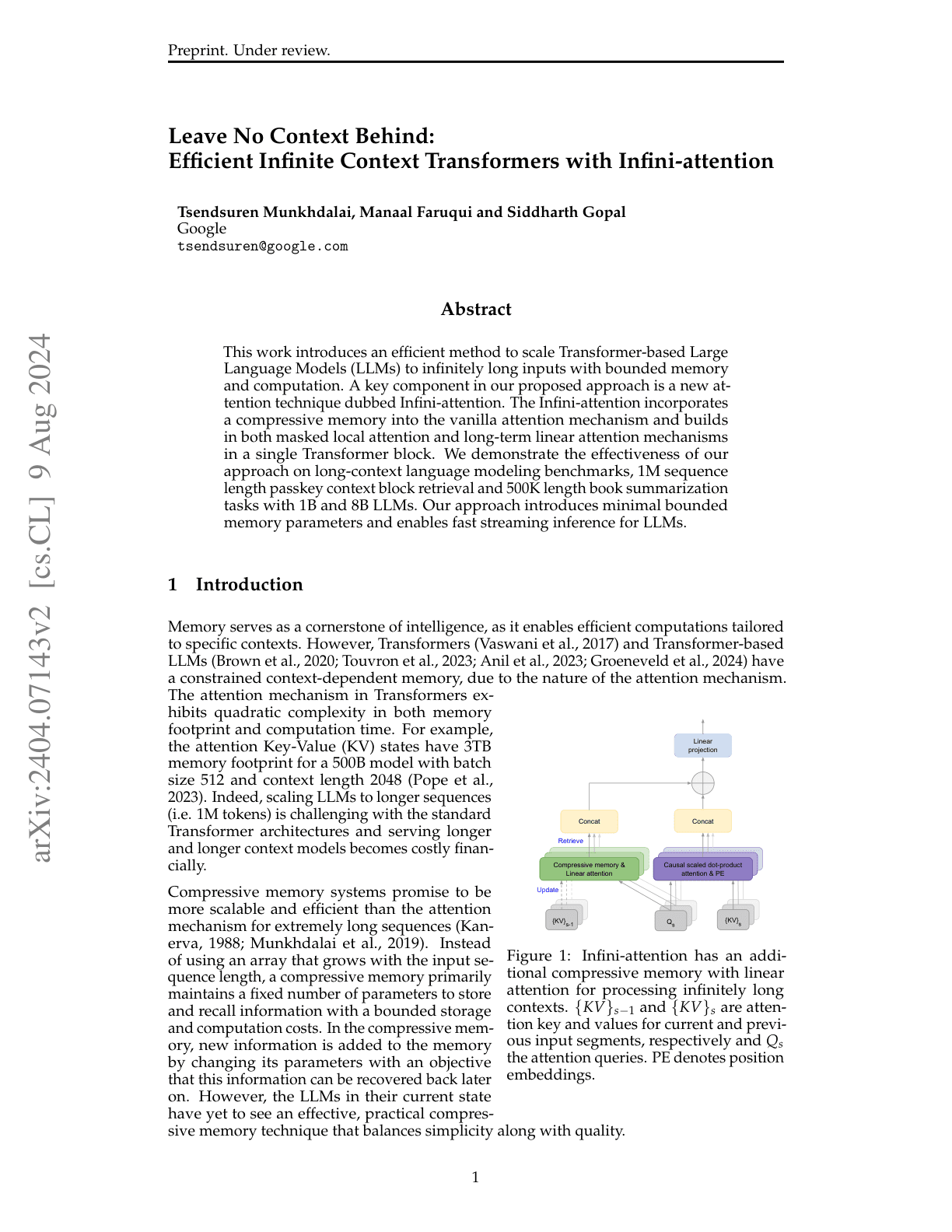
Leave No Context Behind (Infini-attention)
Google's Infini-attention extends Transformer LLMs to effectively infinite context with bounded memory and compute. It blends a compressive memory module with both masked local attention and linear long-term attention inside a single Transformer block.
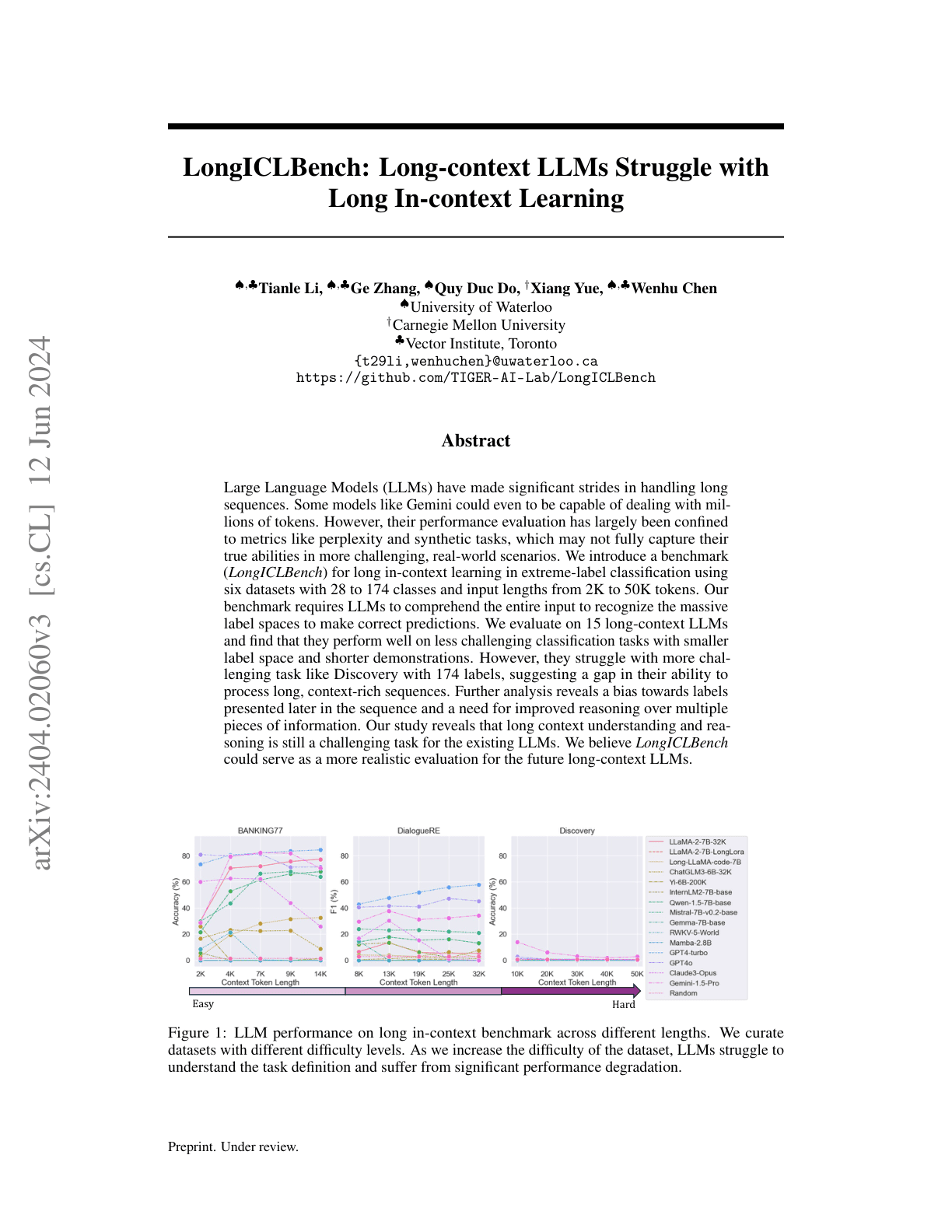
Long-context LLMs Struggle with Long In-Context Learning
LongICLBench stress-tests 13 long-context LLMs on extreme-label classification with up to 174 classes and 50K-token prompts, exposing sharp quality cliffs beyond 20K tokens.
Grok-1.5
xAI's Grok-1.5 is the successor to the open-weight Grok-1, emphasizing long-context understanding and substantially stronger math, code, and reasoning performance.
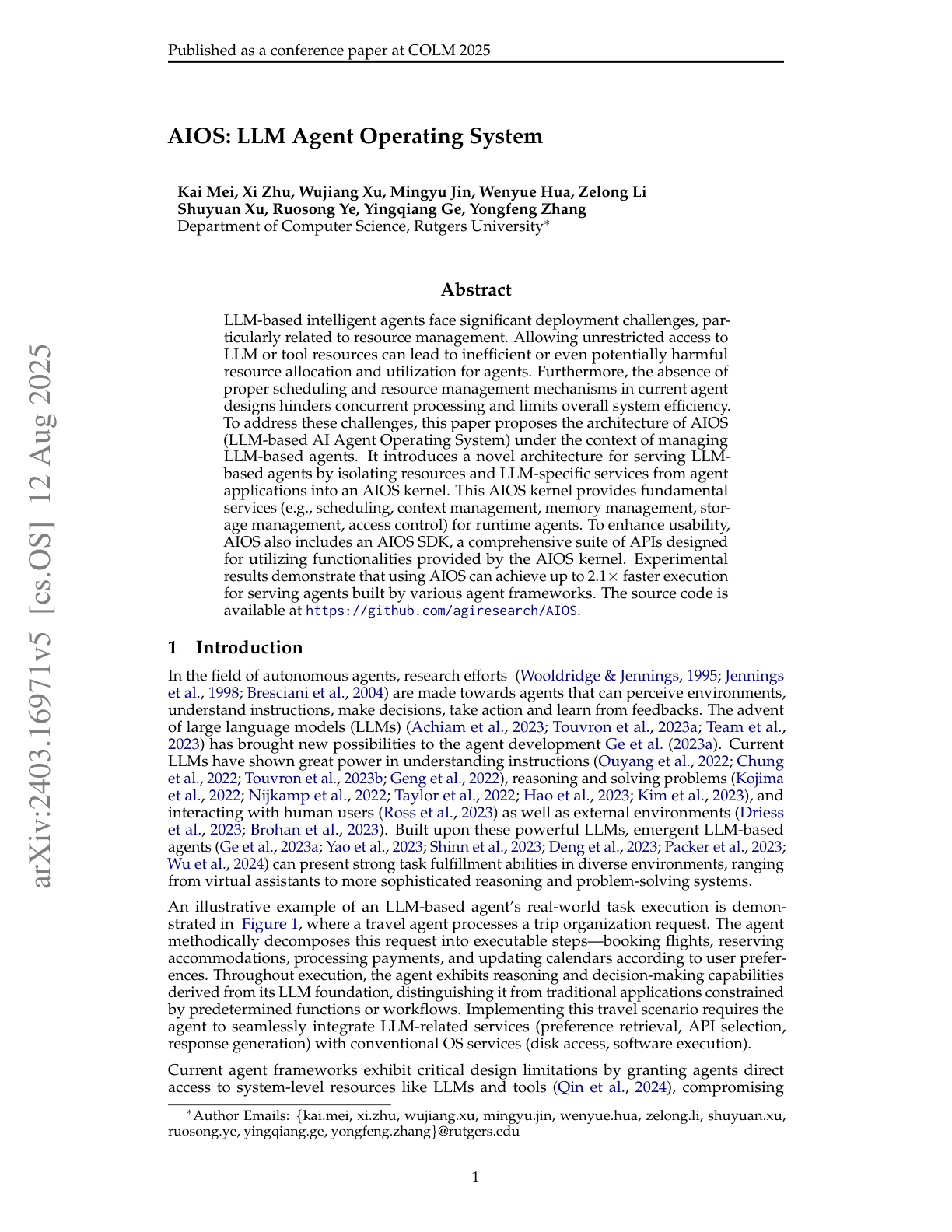
AIOS
AIOS treats the LLM as the "brain" of an operating-system kernel for agents, providing scheduling, memory, storage, tool, and access-control services so agent apps can share resources safely.
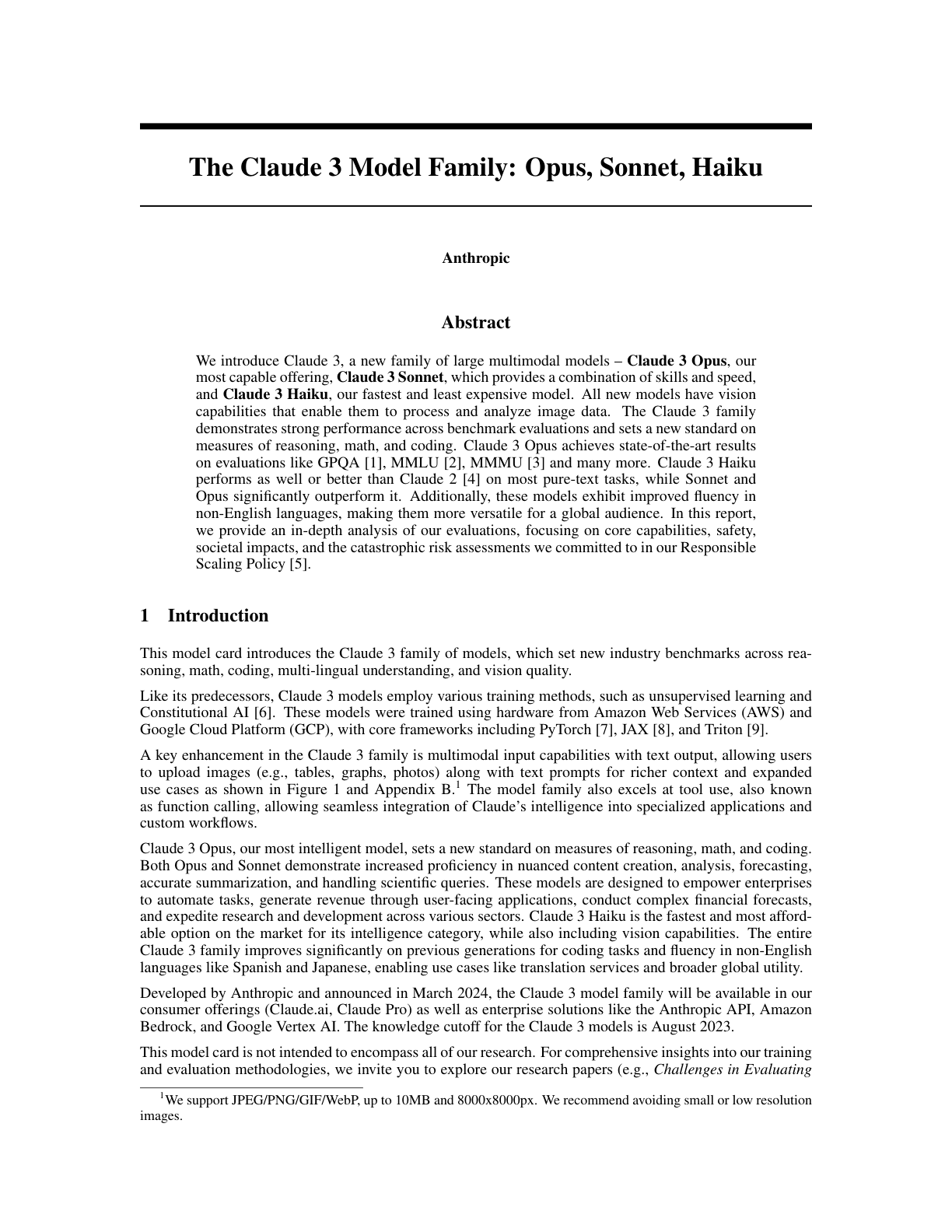
Claude 3
Anthropic releases the Claude 3 family (Haiku, Sonnet, Opus), with Opus leapfrogging GPT-4 on many standard benchmarks and bringing frontier multimodal capability plus a much larger context window.
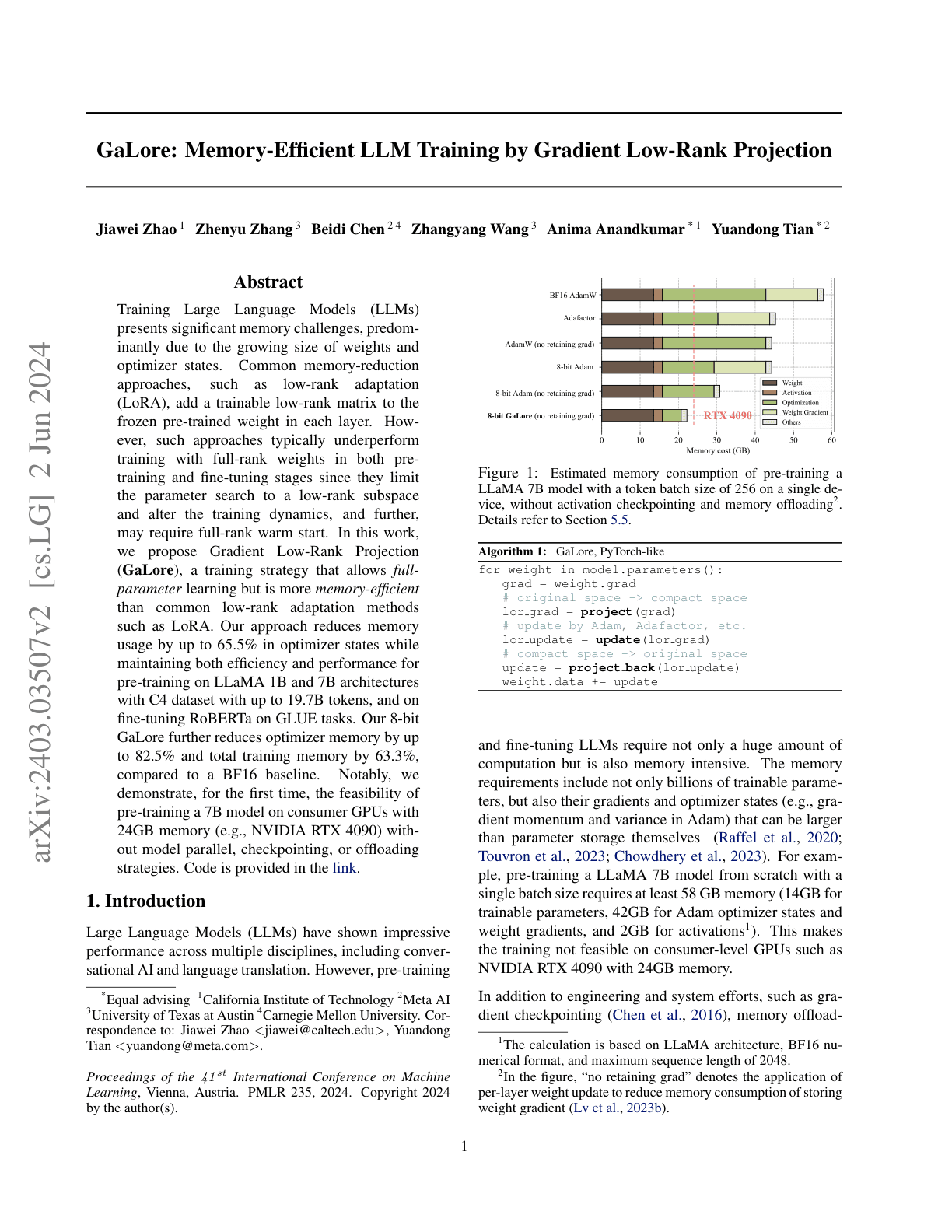
GaLore
GaLore (Gradient Low-Rank Projection) reduces optimizer-state memory during LLM training while still permitting full-parameter updates, unlike LoRA-style adapters that restrict learning to a low-rank subspace.
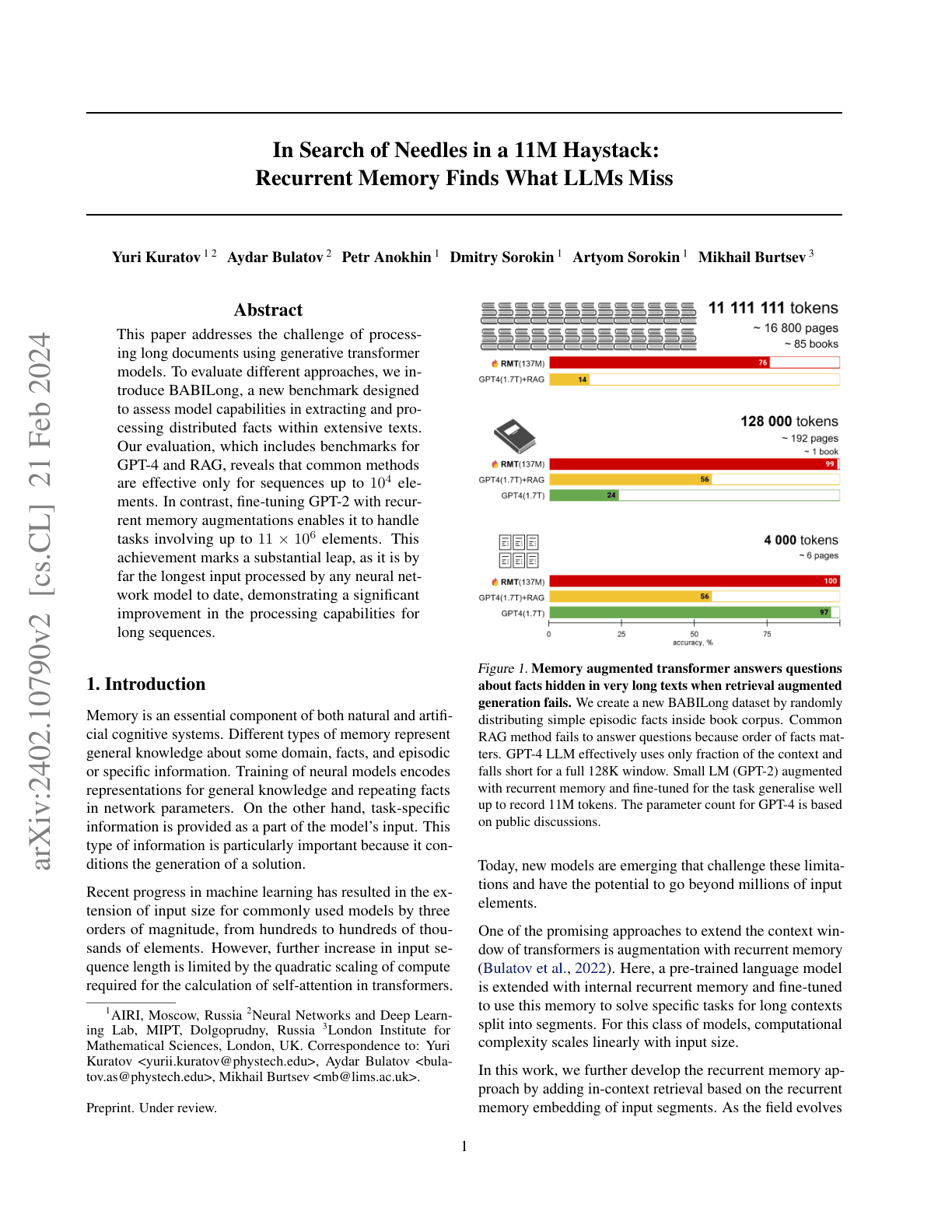
Recurrent Memory Finds What LLMs Miss
Introduces BABILong, a new long-context benchmark, and shows that transformers with recurrent memory can handle sequences far beyond vanilla LLMs.
Gemini 1.5
Google DeepMind's Gemini 1.5 is a multimodal MoE LLM that scales context to 1M tokens (10M in research settings) while matching or surpassing Gemini 1.0 Ultra on standard benchmarks.
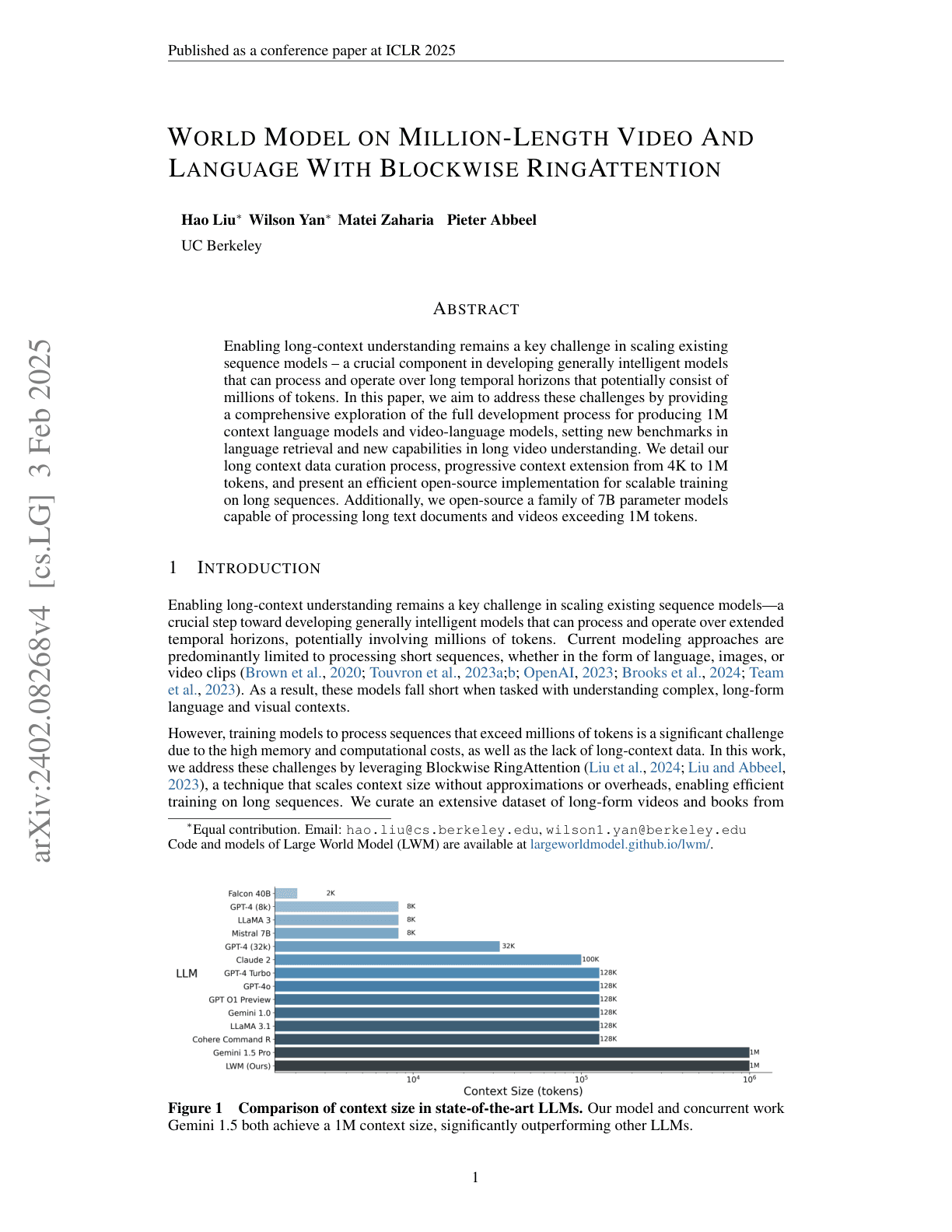
Large World Model (LWM)
UC Berkeley's LWM is an open 7B multimodal model trained on long videos and books that handles context windows up to 1M tokens via RingAttention.