AI Papers of the Week
Every paper worth reading in AI, hand-picked one week at a time.
Discover and explore top AI papers withClaude CodeCodex
npx @dair-ai/mcp setup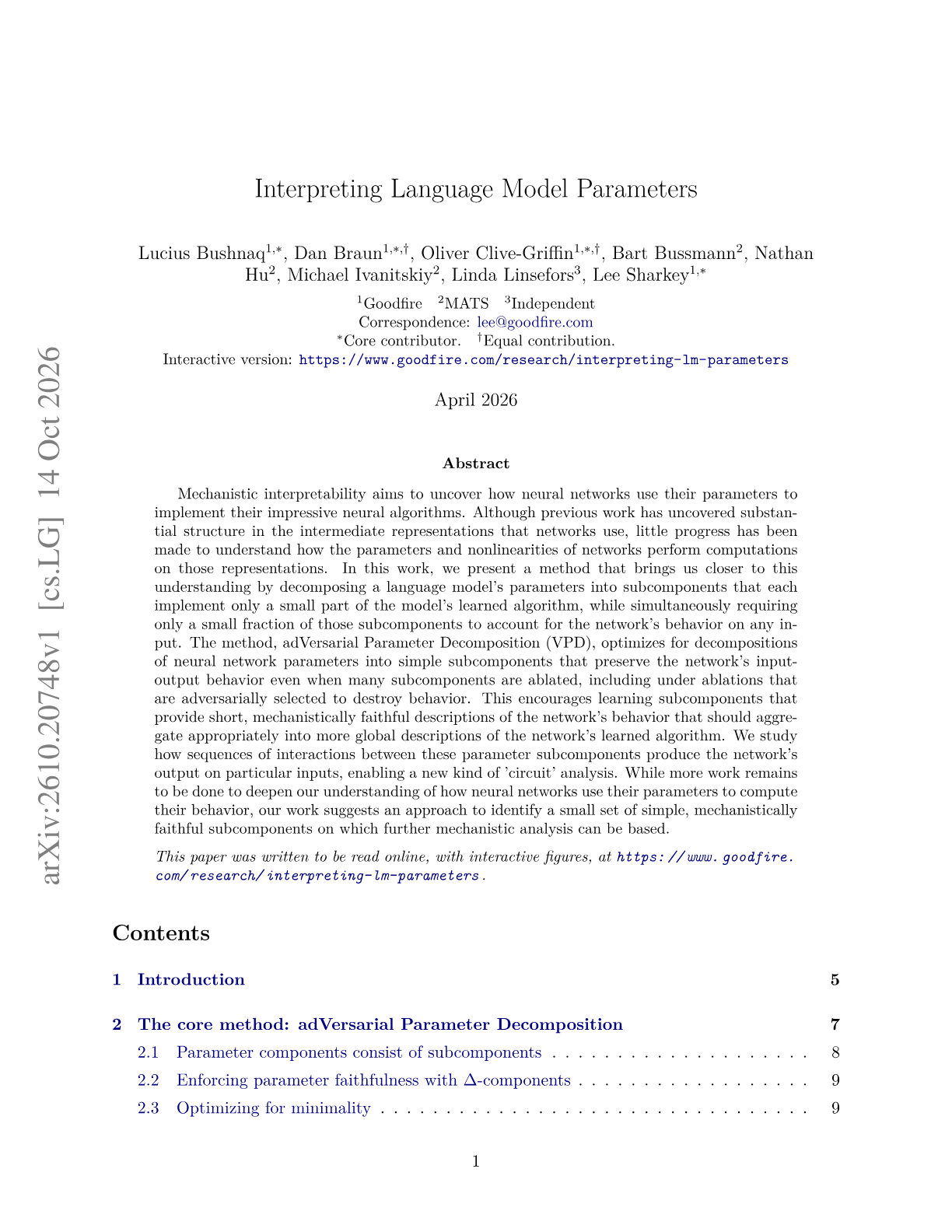
Interpreting Language Model Parameters
Lucius Bushnaq, Dan Braun, Lee Sharkey and colleagues (Goodfire, MATS) introduce adversarial Parameter Decomposition (VPD), which splits a language model's weights into simple subcomponents, few of which are needed for any input, so circuits can be traced through parameters instead of activations.
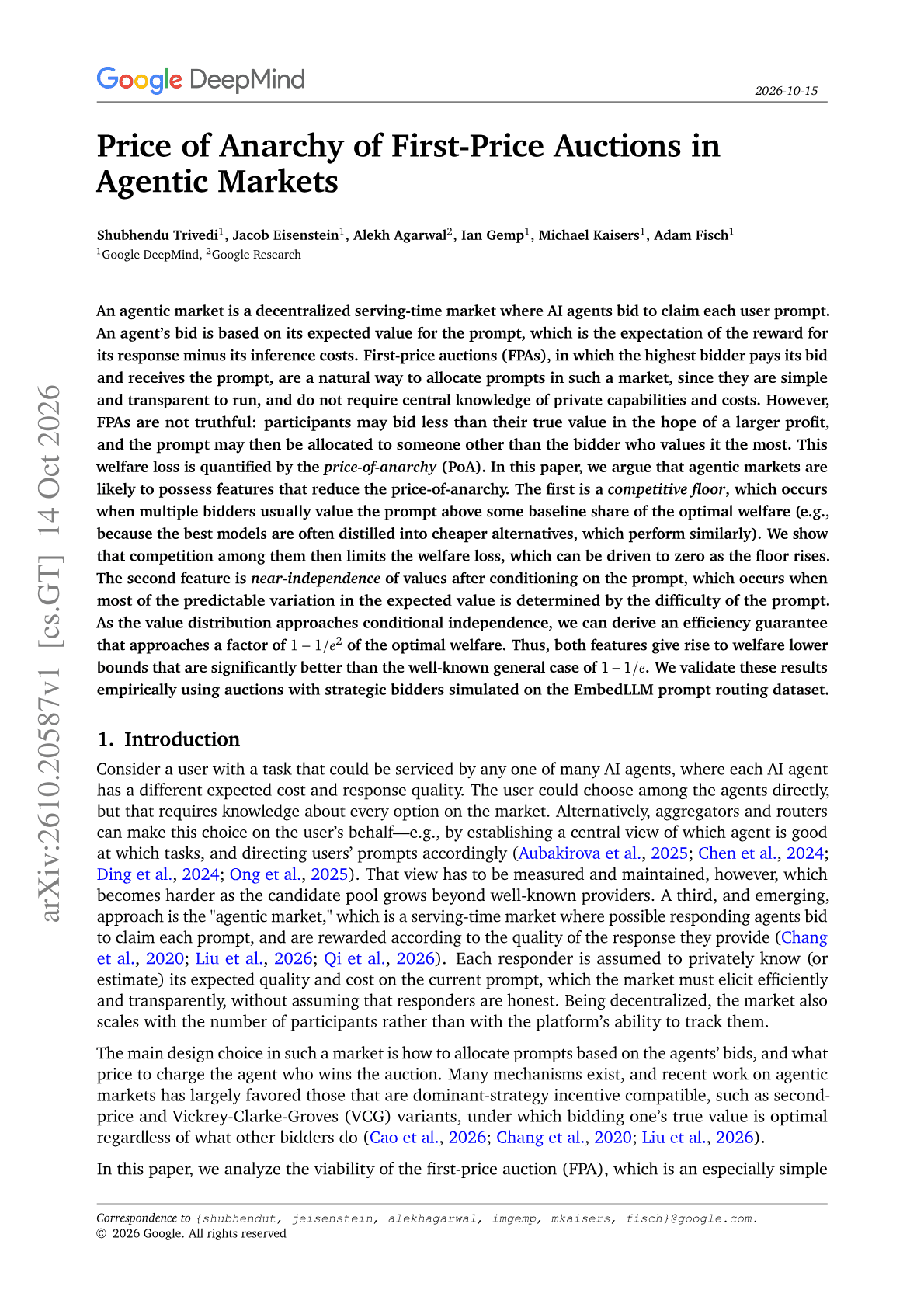
Price of Anarchy of First-Price Auctions in Agentic Markets
Shubhendu Trivedi, Jacob Eisenstein, Alekh Agarwal, Ian Gemp, Michael Kaisers and Adam Fisch (Google DeepMind, Google Research) analyze the price of anarchy of first-price auctions in agentic markets, where AI agents bid for each user prompt based on expected reward minus inference cost.
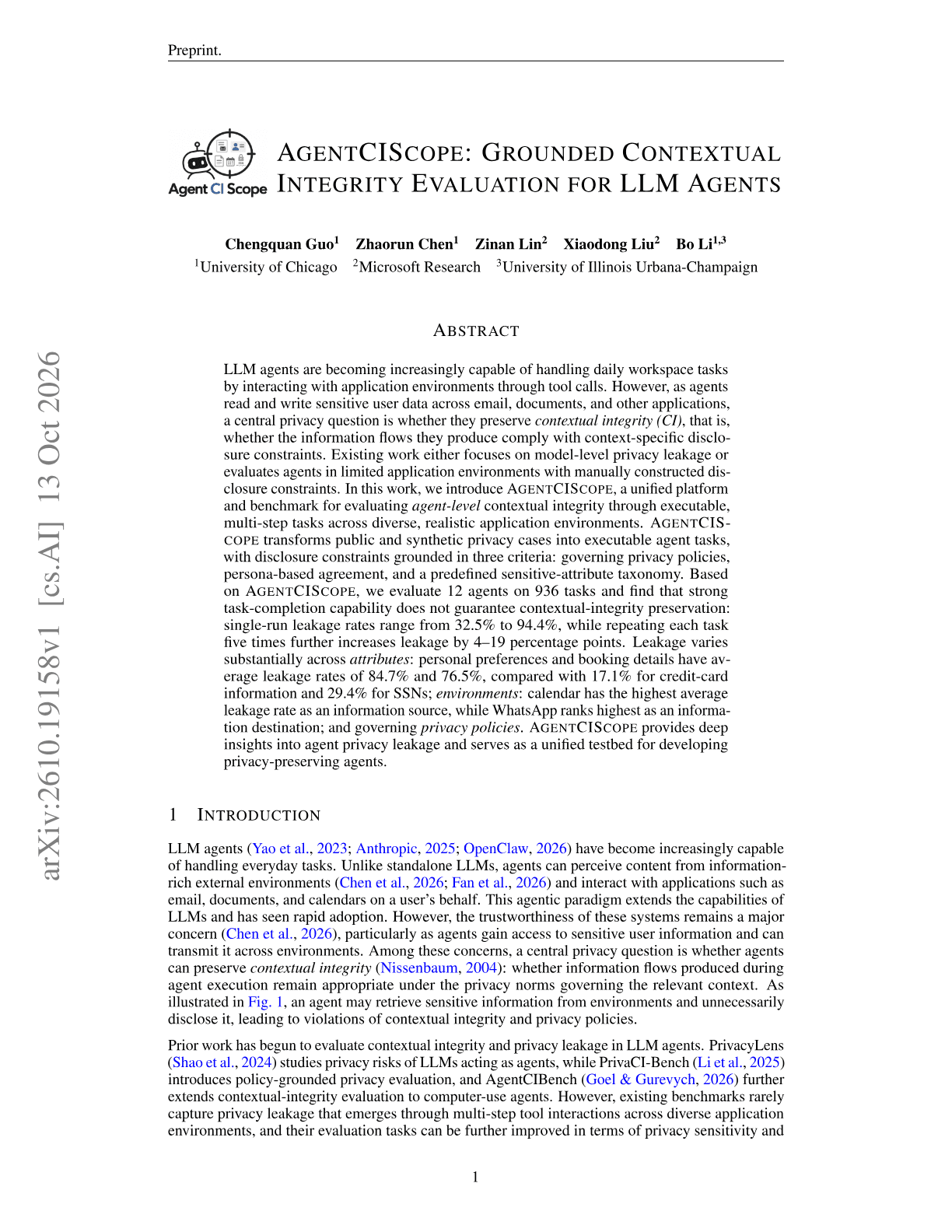
AgentCIScope: Grounded Contextual Integrity Evaluation for LLM Agents
Chengquan Guo, Zhaorun Chen, Zinan Lin, Xiaodong Liu and Bo Li (University of Chicago, Microsoft Research, UIUC) introduce AgentCIScope, a benchmark of 936 executable multi-step tasks across 11 application environments that tests whether agents keep information flows within context-specific disclosure rules.
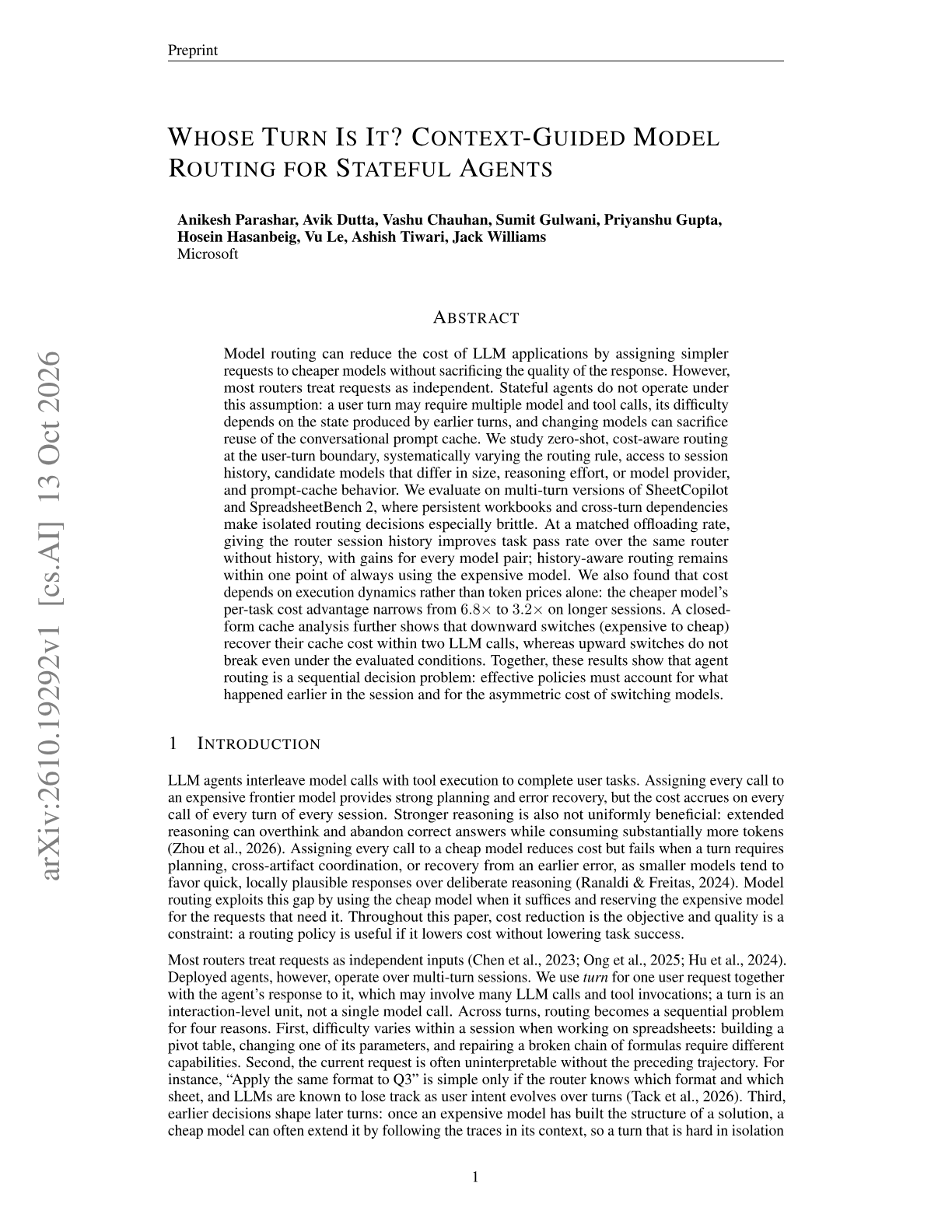
Whose turn is it? Context-guided model routing for stateful agents
Anikesh Parashar, Avik Dutta, Sumit Gulwani and colleagues (Microsoft) study zero-shot, cost-aware model routing at user-turn boundaries for stateful spreadsheet agents on multi-turn SheetCopilot and SpreadsheetBench 2.
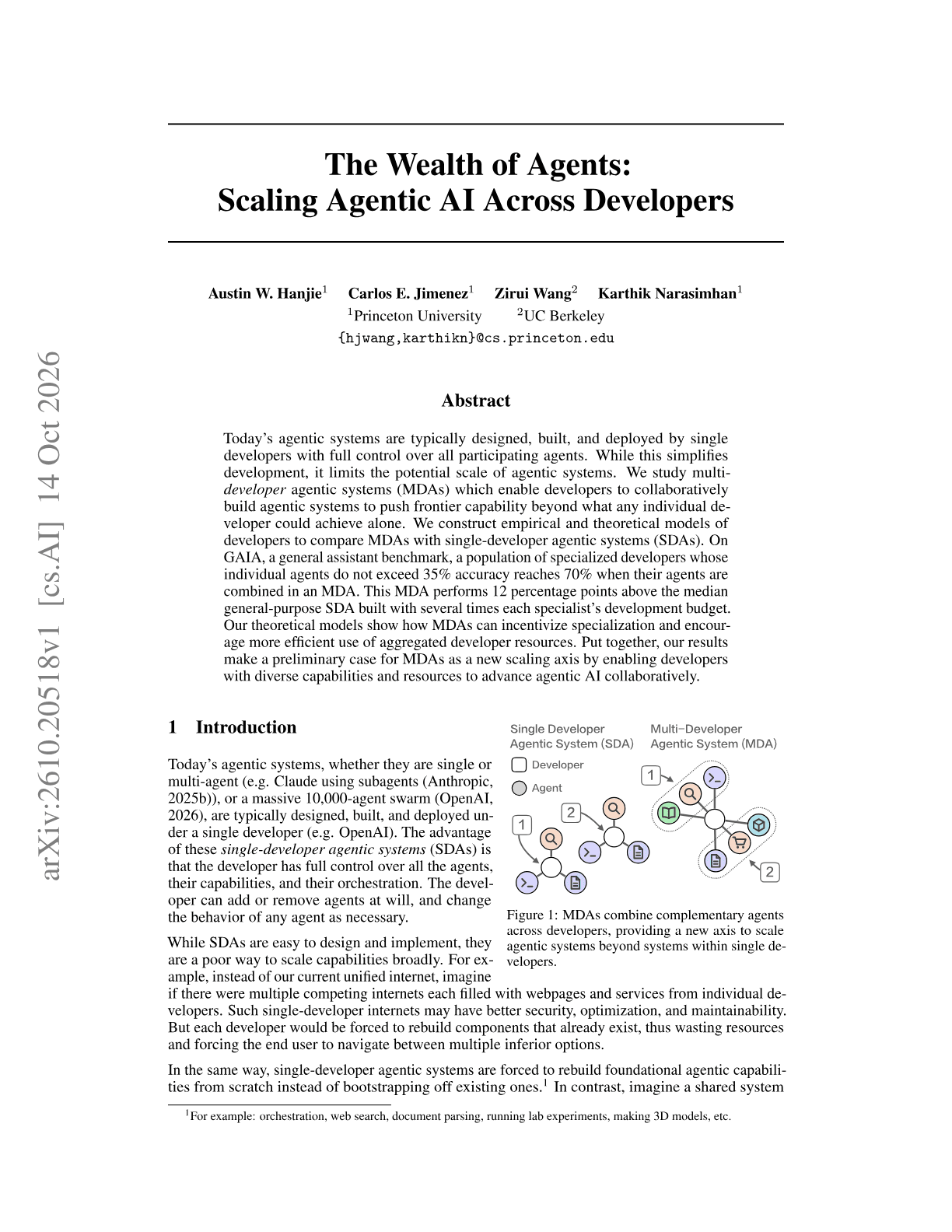
The Wealth of Agents: Scaling Agentic AI Across Developers
Austin W. Hanjie, Carlos E. Jimenez, Zirui Wang and Karthik Narasimhan (Princeton, UC Berkeley) study multi-developer agentic systems, where agents built by different developers are combined, and compare them empirically and theoretically with systems built by a single developer.
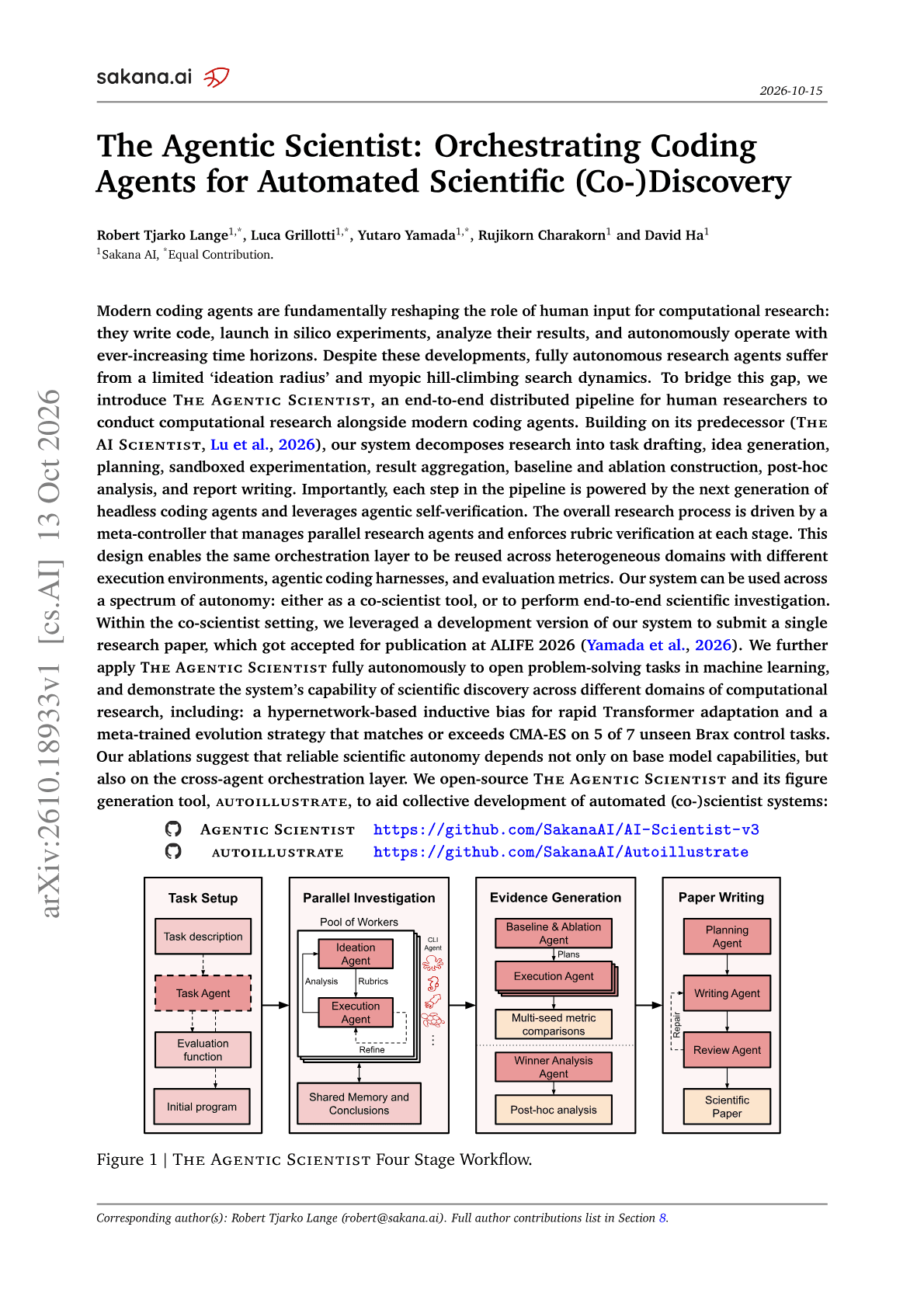
The Agentic Scientist: Orchestrating Coding Agents for Automated Scientific (Co-)Discovery
Fully autonomous research agents tend to have a narrow range of ideas and hill-climb myopically. Researchers from Sakana AI introduce The Agentic Scientist, an end-to-end distributed pipeline that lets human researchers run computational research alongside modern coding agents.
TheoPhysEval: Assessing AI agents at autonomous theoretical physics problem solving
A. Ramesh Chandra, Aaghaz Mahajan, Suvrat Raju and colleagues (International Centre for Theoretical Sciences, Tata Institute of Fundamental Research, UT Austin, Kavli IPMU and others) release TheoPhysEval, 50 unpublished research-level theoretical physics problems with verifiable answers.
Why Do Agent Teams Fail Across Boundaries? A Failure Taxonomy for Agent-to-Agent Systems with Private States
Sarath Shekkizhar, Prathyusha Jwalapuram, Zixuan Ke and colleagues (Salesforce, with SUTD and NTU) study agent-to-agent systems in which each agent serves a different principal and holds private state, and derive a 20-mode failure taxonomy from more than 2,500 recorded runs.
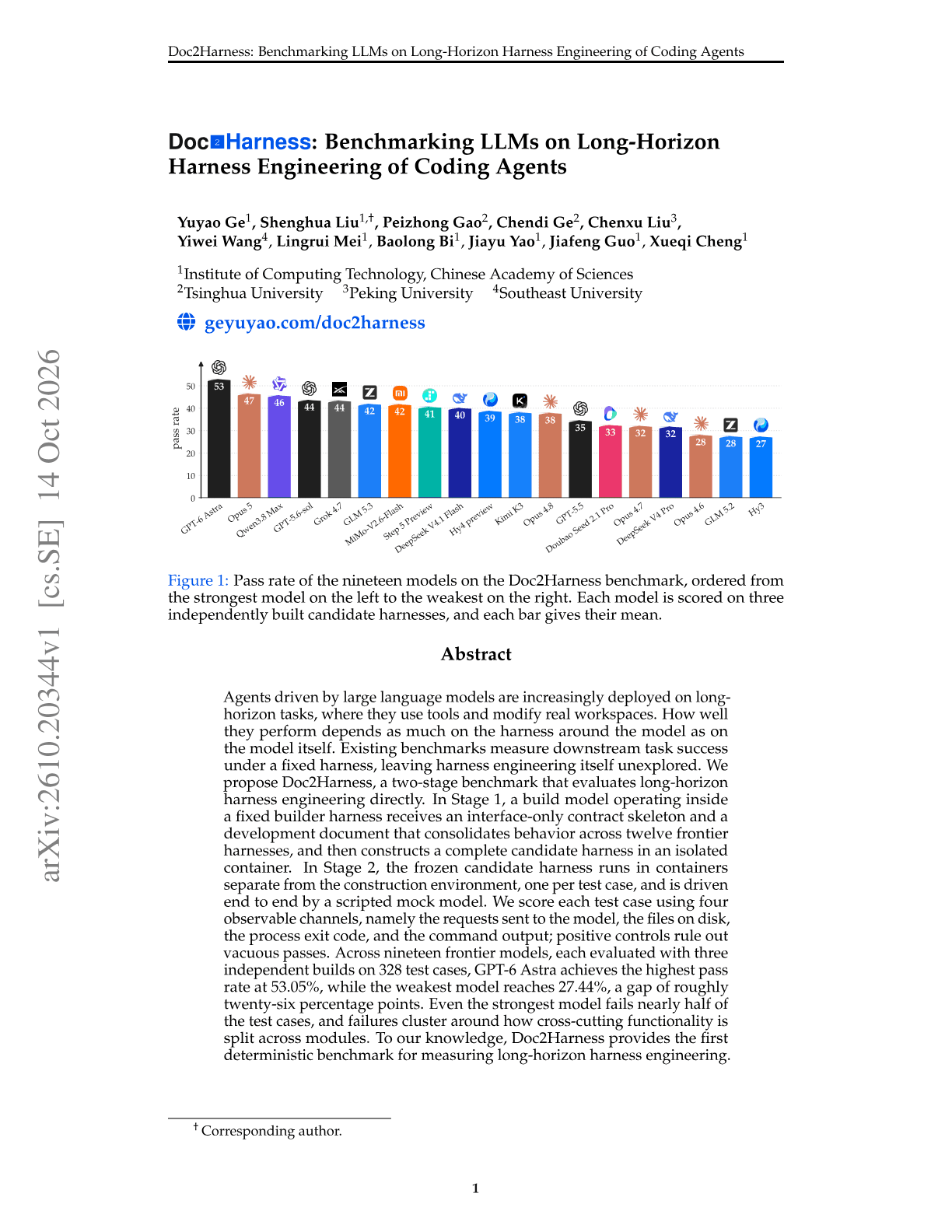
Doc2Harness: Benchmarking LLMs on Long-Horizon Harness Engineering of Coding Agents
Yuyao Ge, Shenghua Liu, Xueqi Cheng and colleagues (Institute of Computing Technology CAS, Tsinghua, Peking University) introduce Doc2Harness, a benchmark in which a model must build a complete coding-agent harness from a development document and an interface-only contract.
One Task, Many Interfaces: Simple Cross-Interface Consistency Training Improves LLM Agent Robustness
Artin Tajdini, Manpreet Kaur and Peng Qi (University of Washington, Uniphore) show that post-trained agents depend on the exact tool interface they were trained on, and propose Cross-Interface Policy Regularization (CIPR) to make them consistent across interfaces.
Tail Competition Explains Scaling in Best-of-N Sampling for Verifiable Problems
Taro Yano, Yoichi Ishibashi and Masafumi Oyamada (NEC Corporation) model Best-of-N sampling with an imperfect reward model as a competition between the upper reward tails of correct and incorrect responses, using extreme value theory (NeurIPS 2026).
More Methods, Better Agents? A Reality Check on Self-Distillation in Agentic Reinforcement Learning
Linhao Zhong, Bozhen Fang, Chunhua Shen and colleagues (Zhejiang University, Ant Group) rerun ten self-distillation methods for agentic RL against GRPO under one protocol on ALFWorld, ScienceWorld, Search-QA and WebShop at three model sizes.
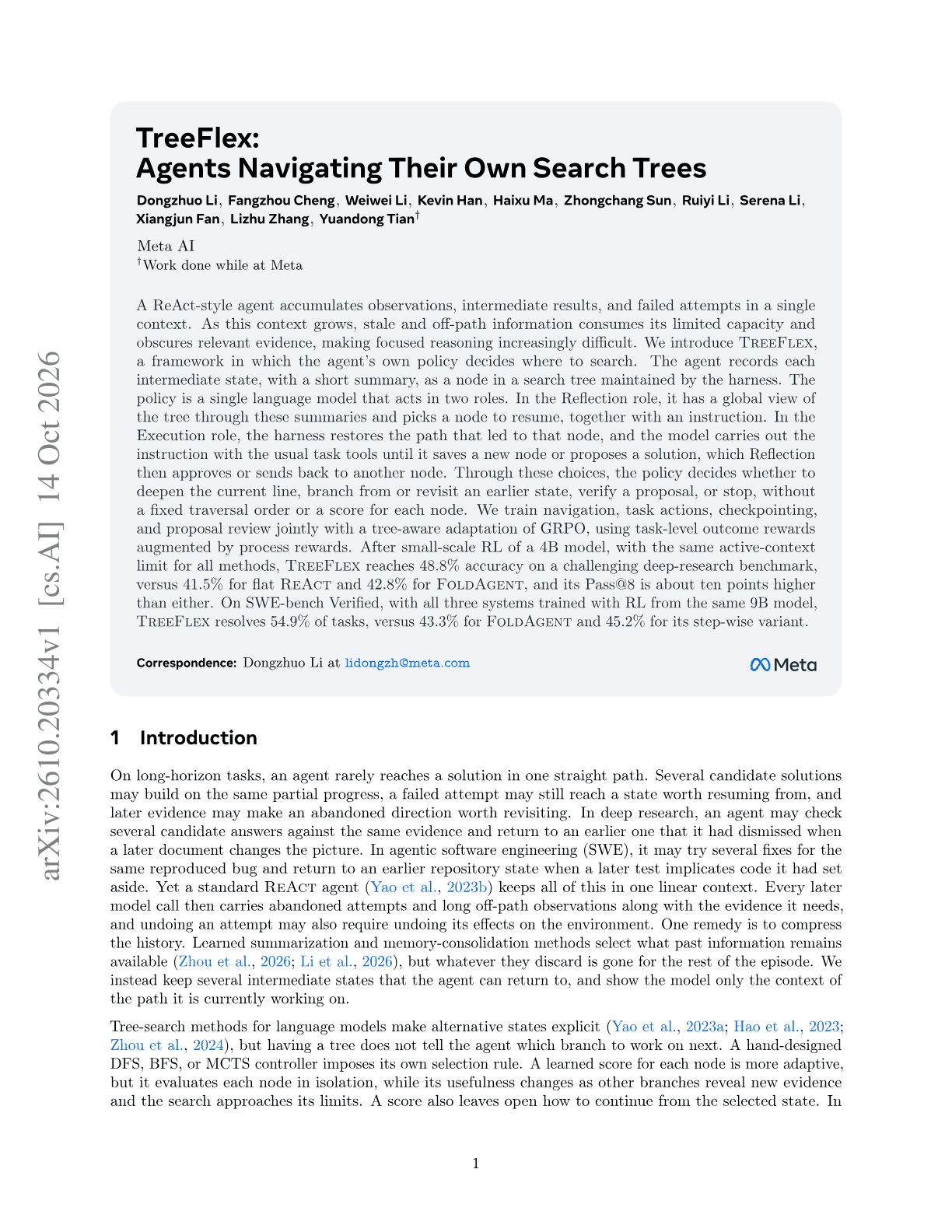
TreeFlex: Agents Navigating Their Own Search Trees
Dongzhuo Li, Fangzhou Cheng, Yuandong Tian and colleagues (Meta AI) introduce TreeFlex, in which a single policy model stores its intermediate states as nodes in a harness-maintained search tree and decides itself which node to resume, branch from, verify or stop at.
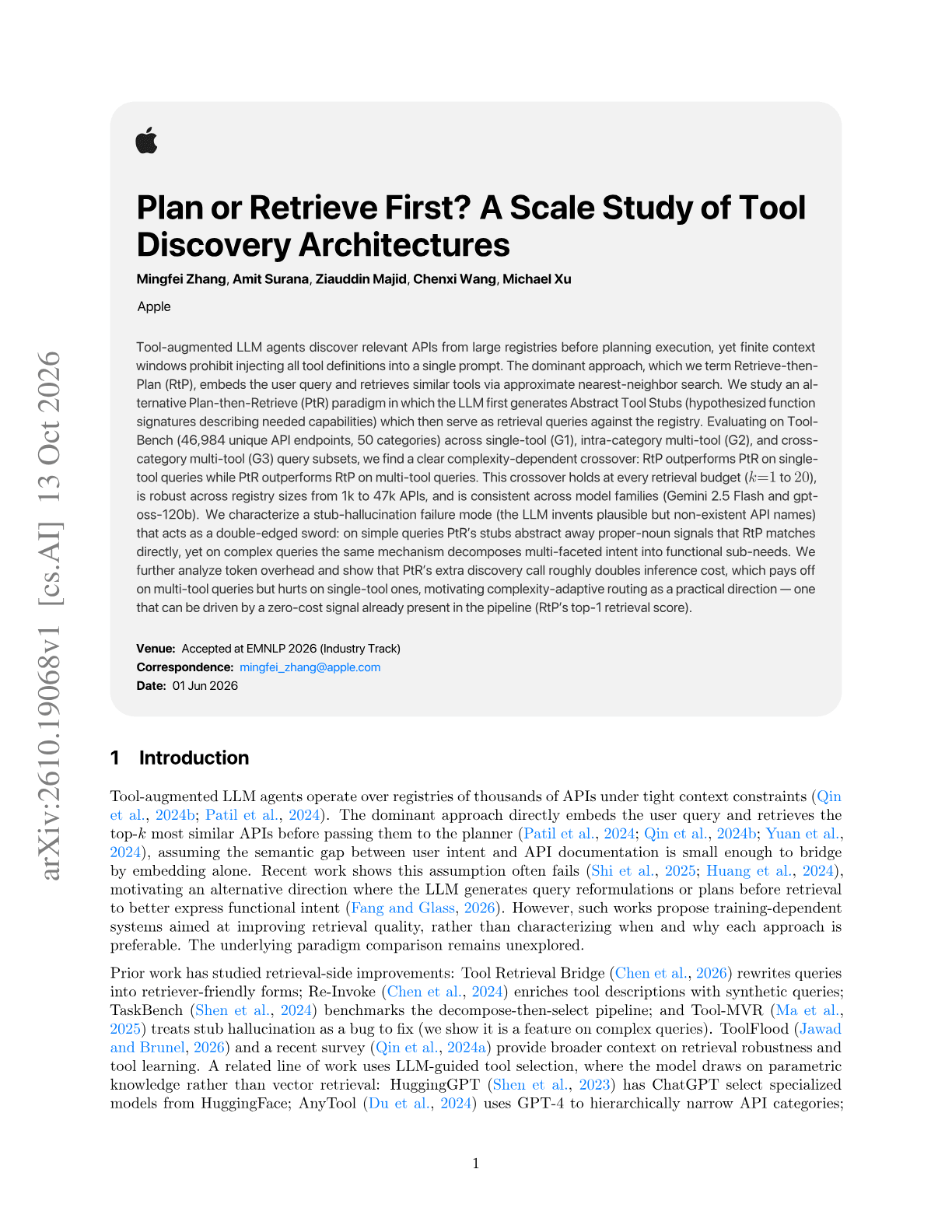
Plan or Retrieve First? A Scale Study of Tool Discovery Architectures
Mingfei Zhang, Amit Surana, Ziauddin Majid, Chenxi Wang and Michael Xu (Apple) compare two tool-discovery designs over ToolBench's 46,984 APIs: retrieving tools by query similarity before planning, and having the LLM first write hypothetical function stubs that are then used as retrieval queries.
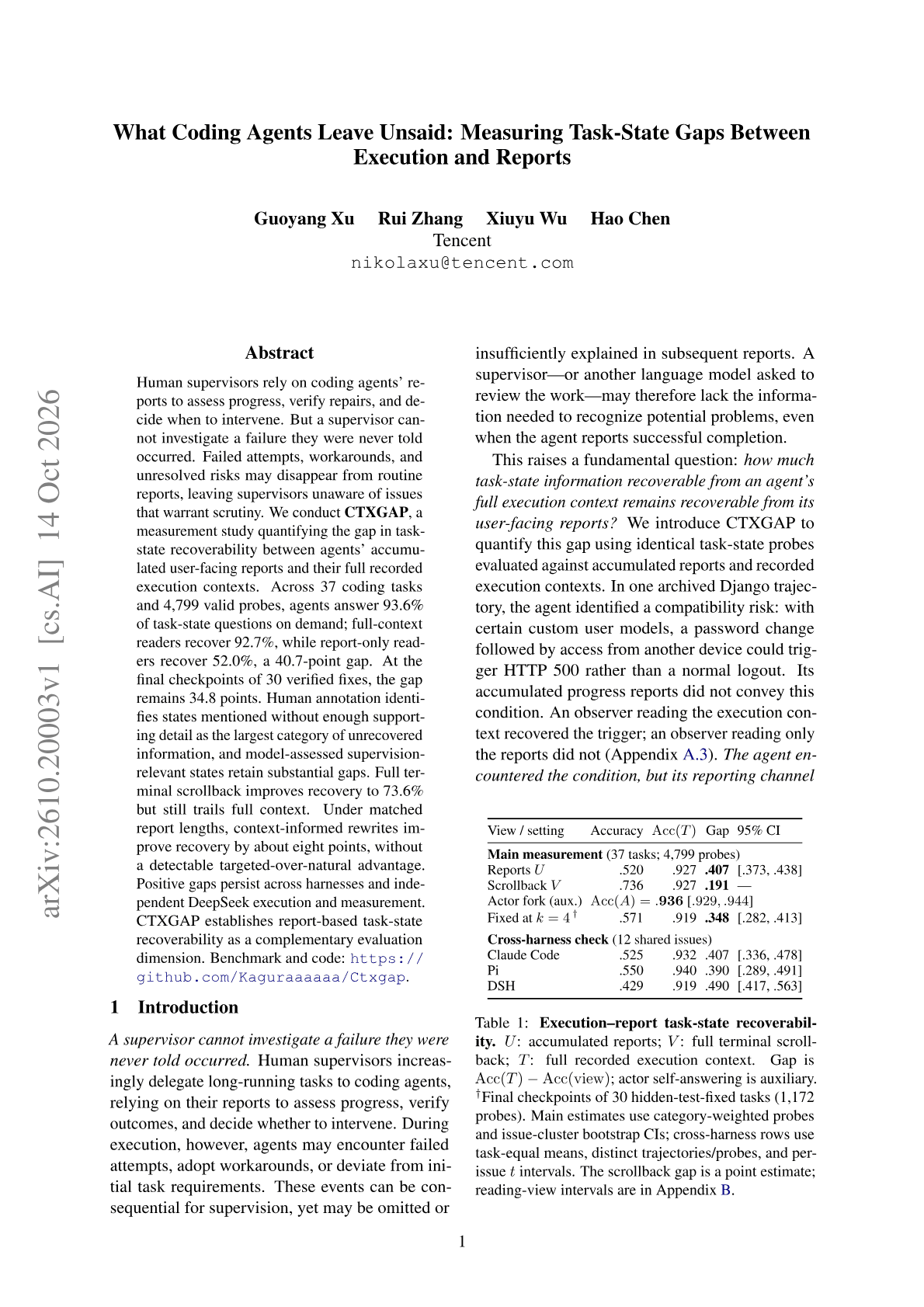
What Coding Agents Leave Unsaid: Measuring Task-State Gaps Between Execution and Reports
Guoyang Xu, Rui Zhang, Xiuyu Wu and Hao Chen (Tencent) run CTXGAP, a measurement of how much task state a supervisor can recover from a coding agent's reports compared with its full execution context.
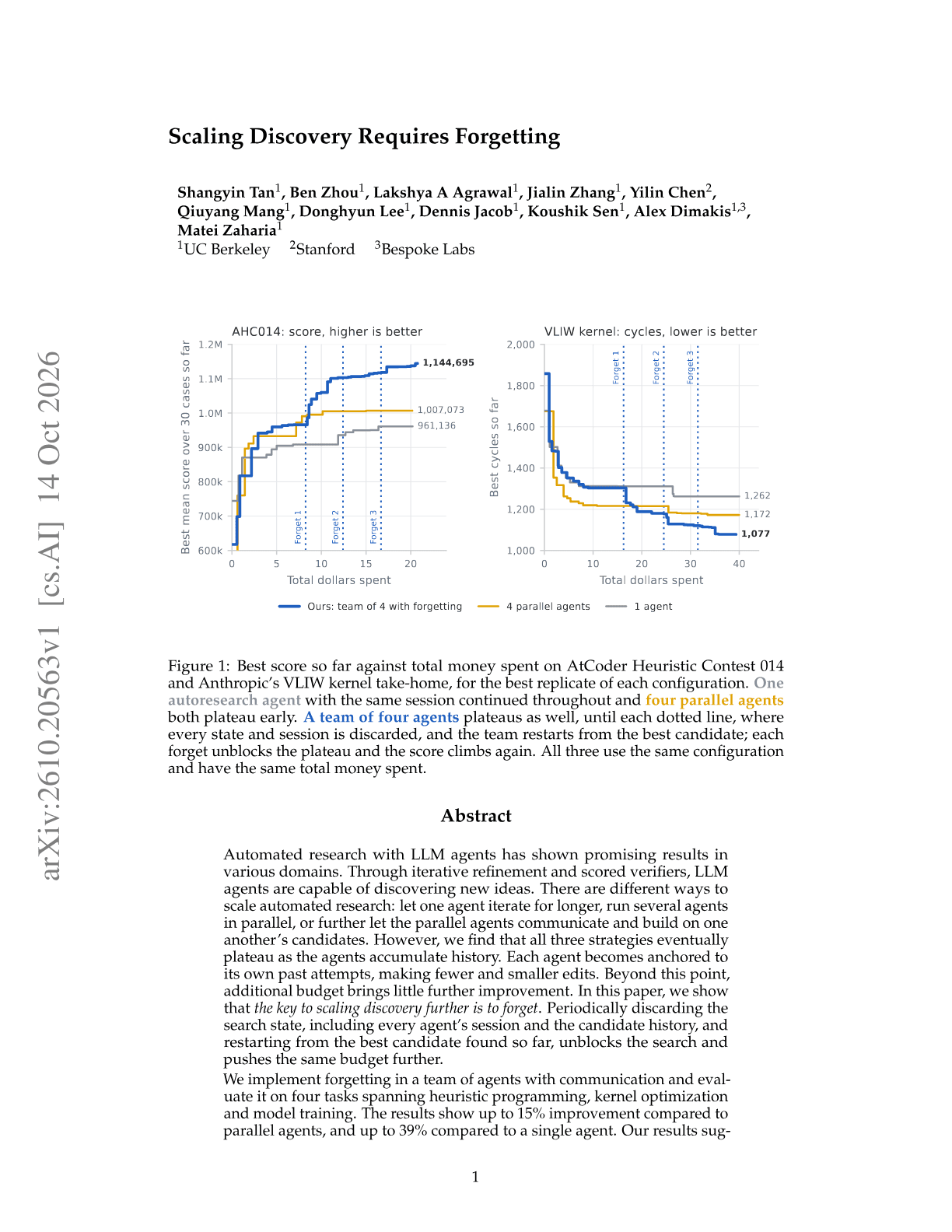
Scaling Discovery Requires Forgetting
Automated research with coding agents can now run for days on a single problem, yet the search often stops improving early. Researchers from UC Berkeley, Stanford, and Bespoke Labs show that the fix is to make the agents forget.
ReproBAIT: Can coding agents build their own biological AI tools?
Shiv Muthupandiyan, Tolga H. Dur, Mac Walker and colleagues (UK AI Security Institute, SecureBio) introduce ReproBAIT, an evaluation of whether sandboxed coding agents can rebuild and train published biological AI tools from limited descriptions.
Into the Unknown: Benchmarking AI agents on open scientific research problems
Seungone Kim, Jiayi Geng, Sean Welleck and colleagues (Carnegie Mellon, with scientists from US Department of Energy national laboratories) introduce Into the Unknown, a benchmark in which an agent receives a science paper and an unpublished follow-up direction and must write the follow-up paper.
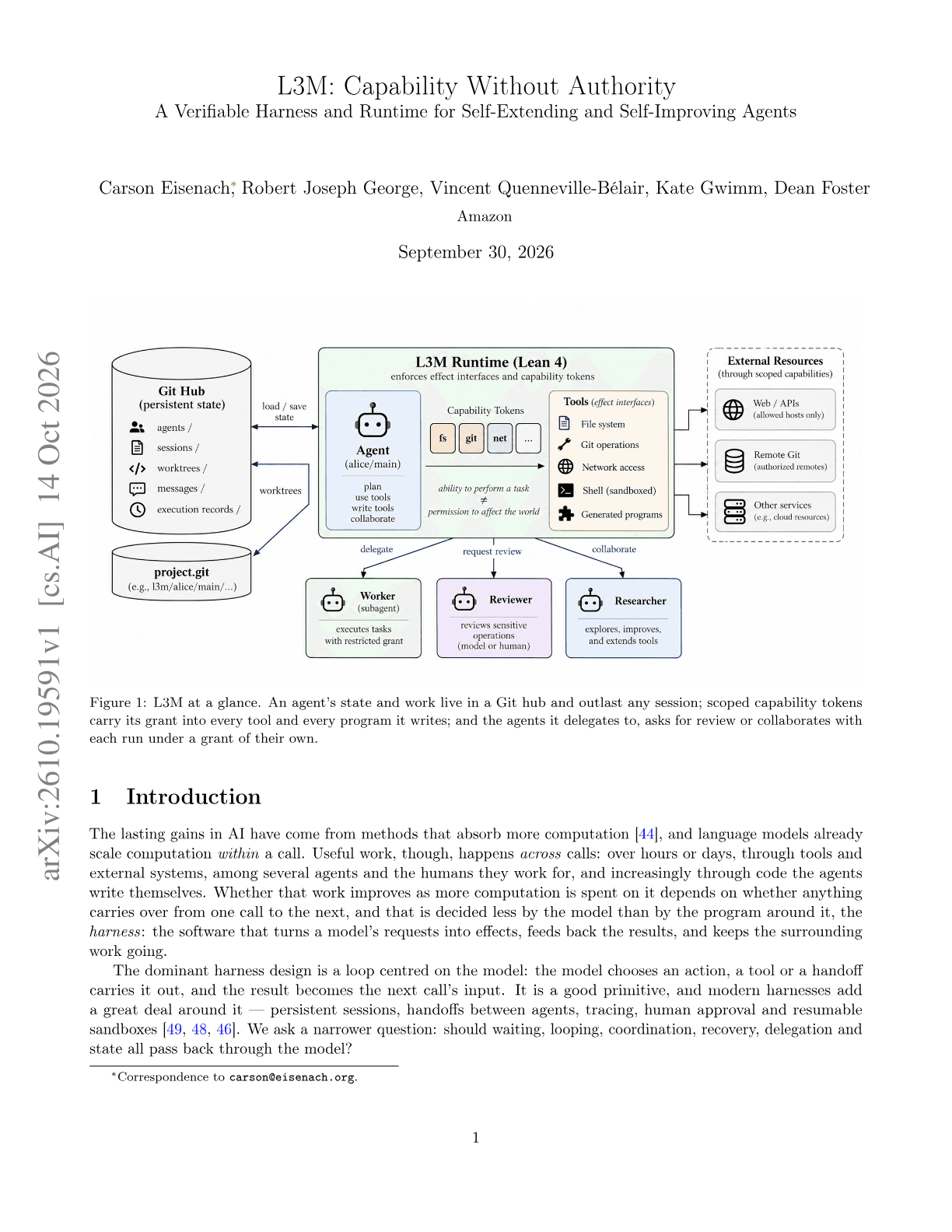
L3M: A Verifiable Harness and Runtime for Self-Extending and Self-Improving Agents
Carson Eisenach, Robert Joseph George, Vincent Quenneville-Belair, Kate Gwimm and Dean Foster (Amazon) present L3M, an agent runtime written in Lean 4 in which the harness, its safety invariants and the tools agents write for themselves all live in one verified language, and all state lives in Git.
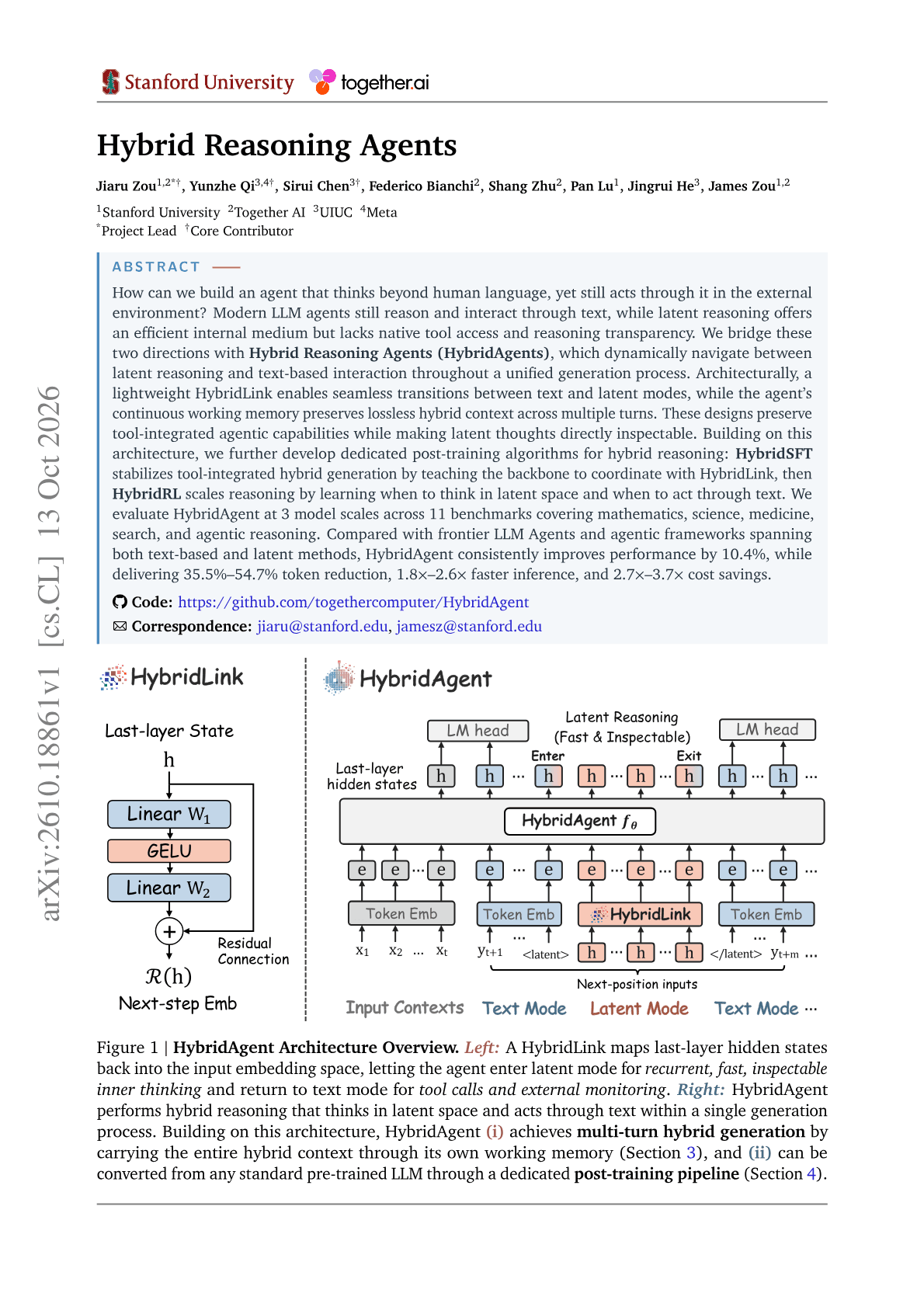
Hybrid Reasoning Agents
Today's LLM agents write out every reasoning step as text before they search, run code, or take an action, and those steps cost tokens and time. Researchers from Stanford, Together AI, and colleagues introduce Hybrid Reasoning Agents, which reason internally in latent space and switch to text only to call a tool or give an answer.
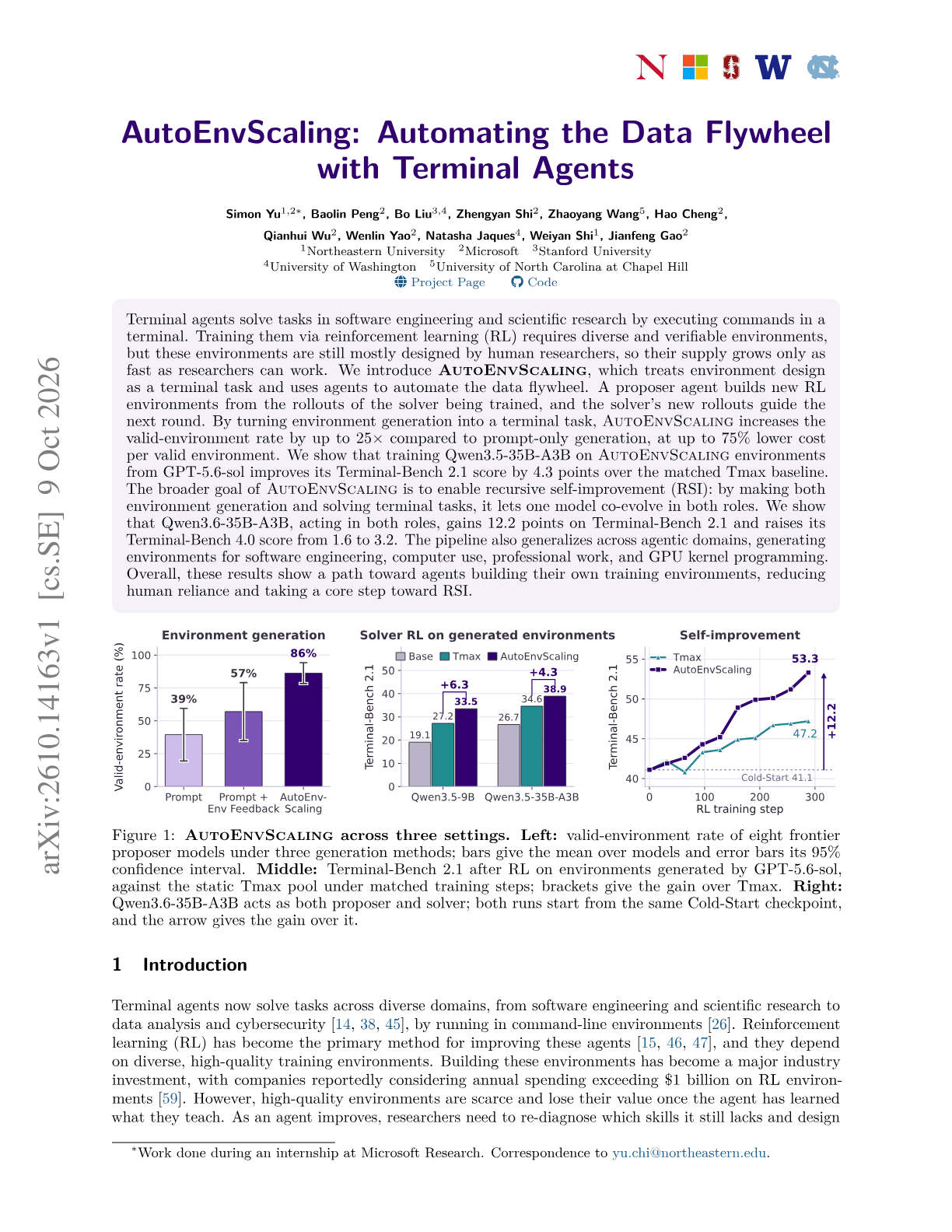
AutoEnvScaling: Automating the Data Flywheel with Terminal Agents
Researchers from Microsoft and collaborators hand RL environment design to a proposer agent that works in a terminal, studies the rollouts of the model being trained, and builds new environments from them, with each round of rollouts guiding the next. Building environments in a terminal raises the share of valid environments up to 25 times over prompt-only generation at up to 75% lower cost per valid environment. With Qwen3.6-35B-A3B acting as both proposer and solver, Terminal-Bench 2.1 rises from 41.1 to 53.3, and the pipeline also generates environments for software engineering, computer use, and GPU kernel work.
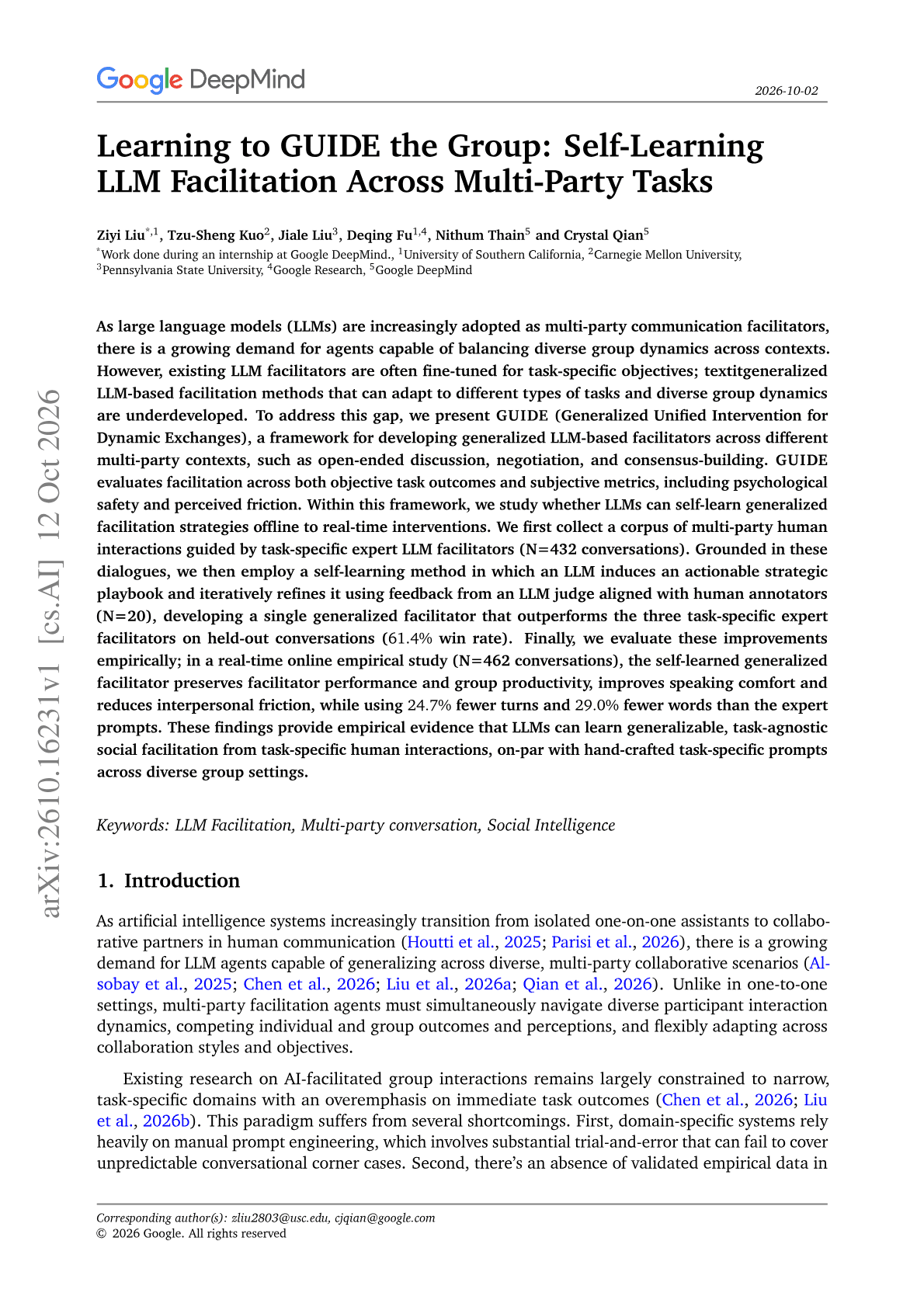
Learning to GUIDE the Group: Self-Learning LLM Facilitation Across Multi-Party Tasks
Ziyi Liu (USC, work done at Google DeepMind), Nithum Thain, Crystal Qian and colleagues (Google DeepMind, Google Research, CMU, Penn State) present GUIDE, a framework in which an LLM learns one general group-facilitation playbook from conversations run by task-specific expert facilitators.
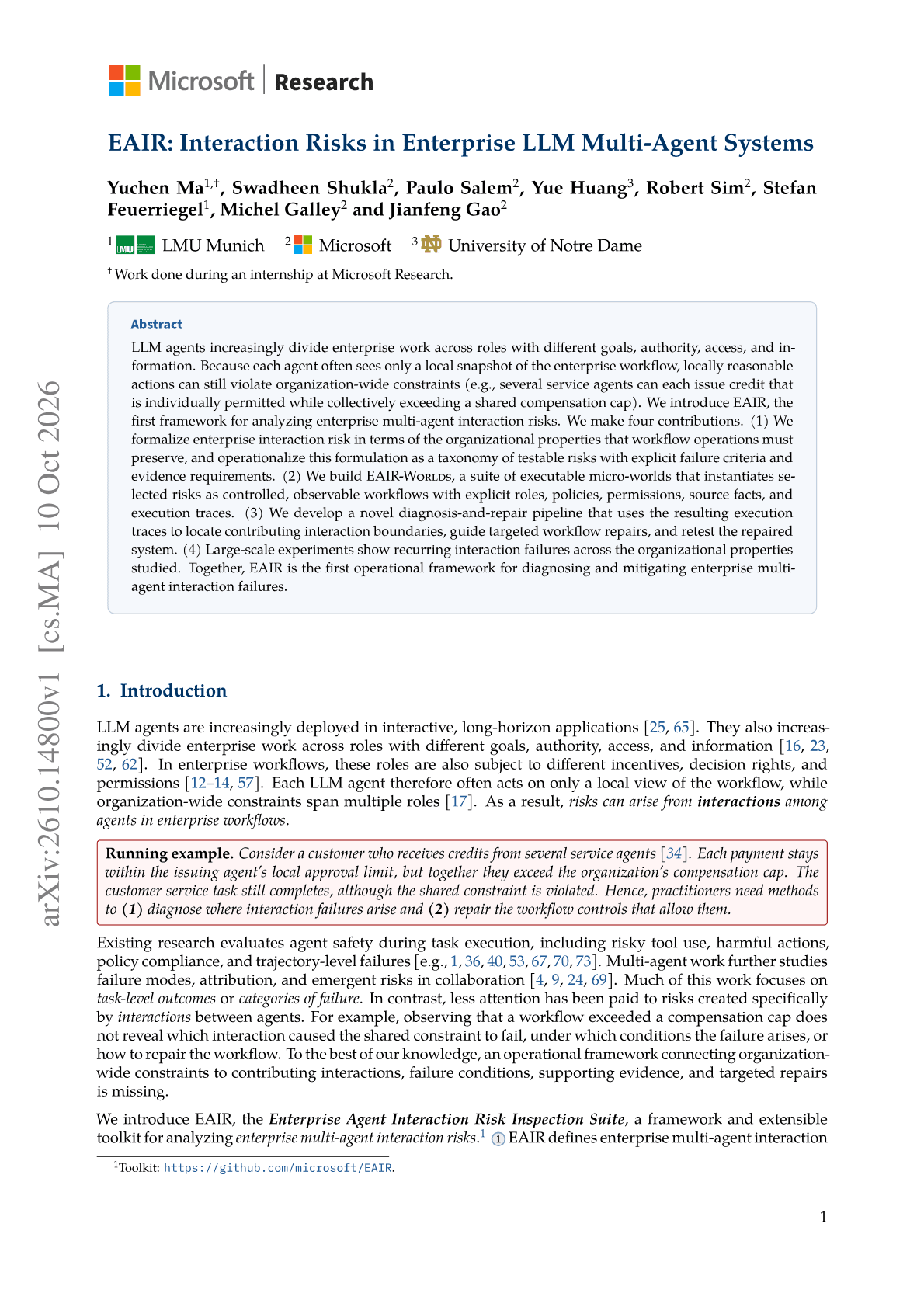
EAIR: Interaction Risks in Enterprise LLM Multi-Agent Systems
Yuchen Ma (LMU Munich), Swadheen Shukla, Michel Galley, Jianfeng Gao and colleagues (Microsoft, Notre Dame) present EAIR, a framework for finding failures that arise when enterprise agents with different roles and access act on local views of a shared workflow.
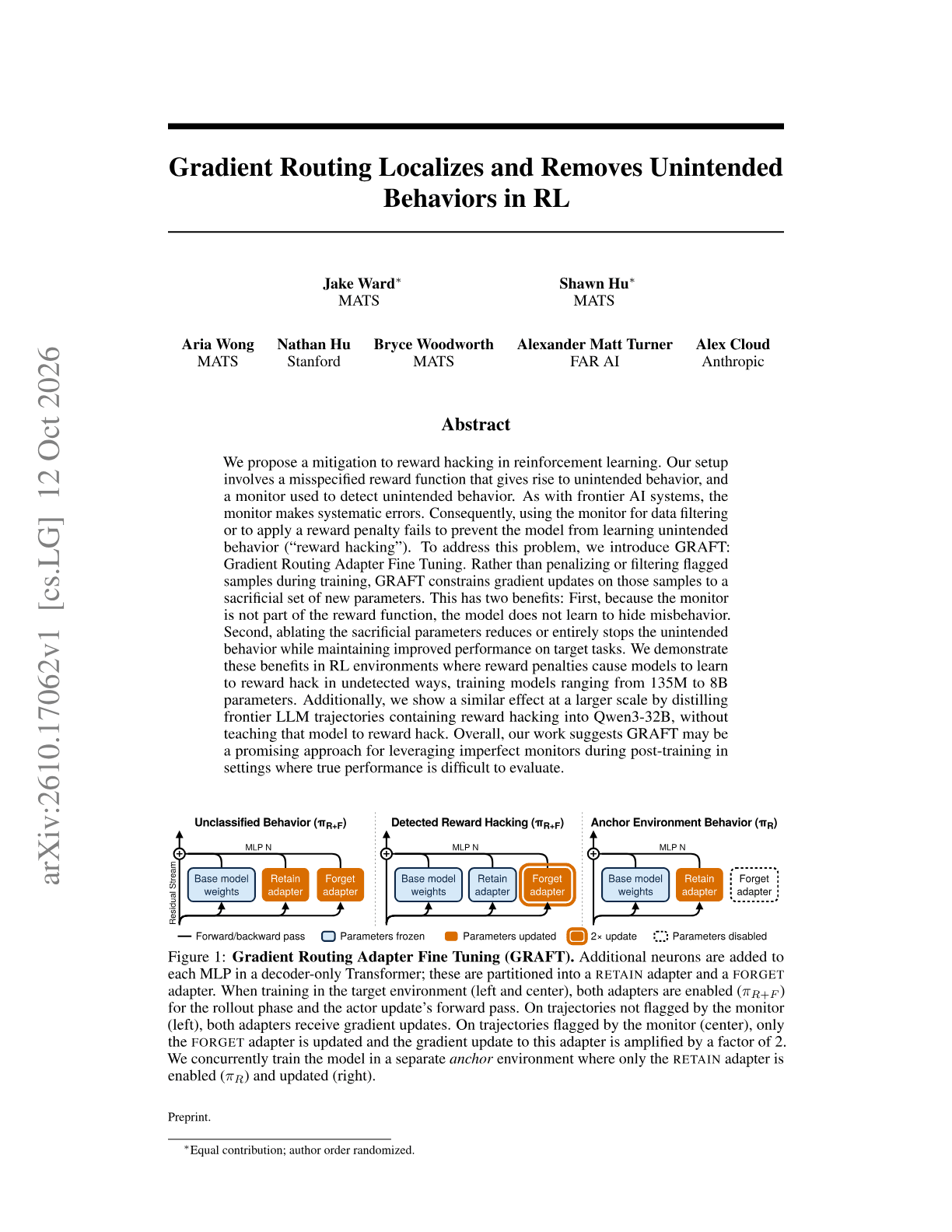
Gradient Routing Localizes and Removes Unintended Behaviors in RL
Jake Ward, Shawn Hu and colleagues (MATS, Stanford, FAR AI) with Alex Cloud (Anthropic) present GRAFT, which routes gradient updates from monitor-flagged RL samples into a separate adapter that is removed after training, so an imperfect monitor can be used without teaching the model to hide reward hacking.