AI Papers of the Week
Every paper worth reading in AI, hand-picked one week at a time.
Discover and explore top AI papers withClaude CodeCodex
npx @dair-ai/mcp setup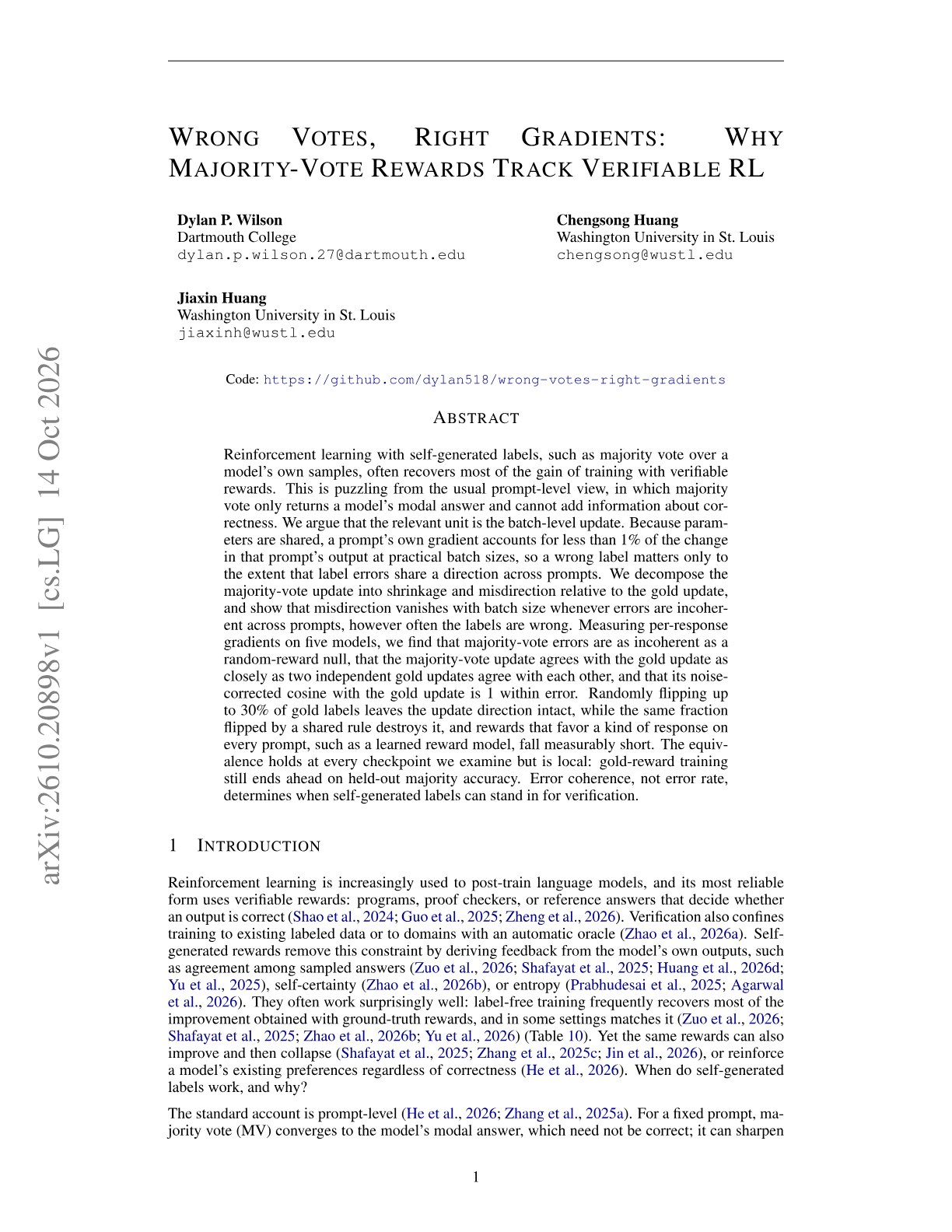
Wrong Votes, Right Gradients: Why Majority-Vote Rewards Track Verifiable RL
Dylan P. Wilson, Chengsong Huang and Jiaxin Huang (Dartmouth College and Washington University in St. Louis) explain why RL on majority-vote labels recovers most of the gain of verifiable rewards: the deciding factor is whether label errors point in the same direction across prompts, not how often labels are wrong.
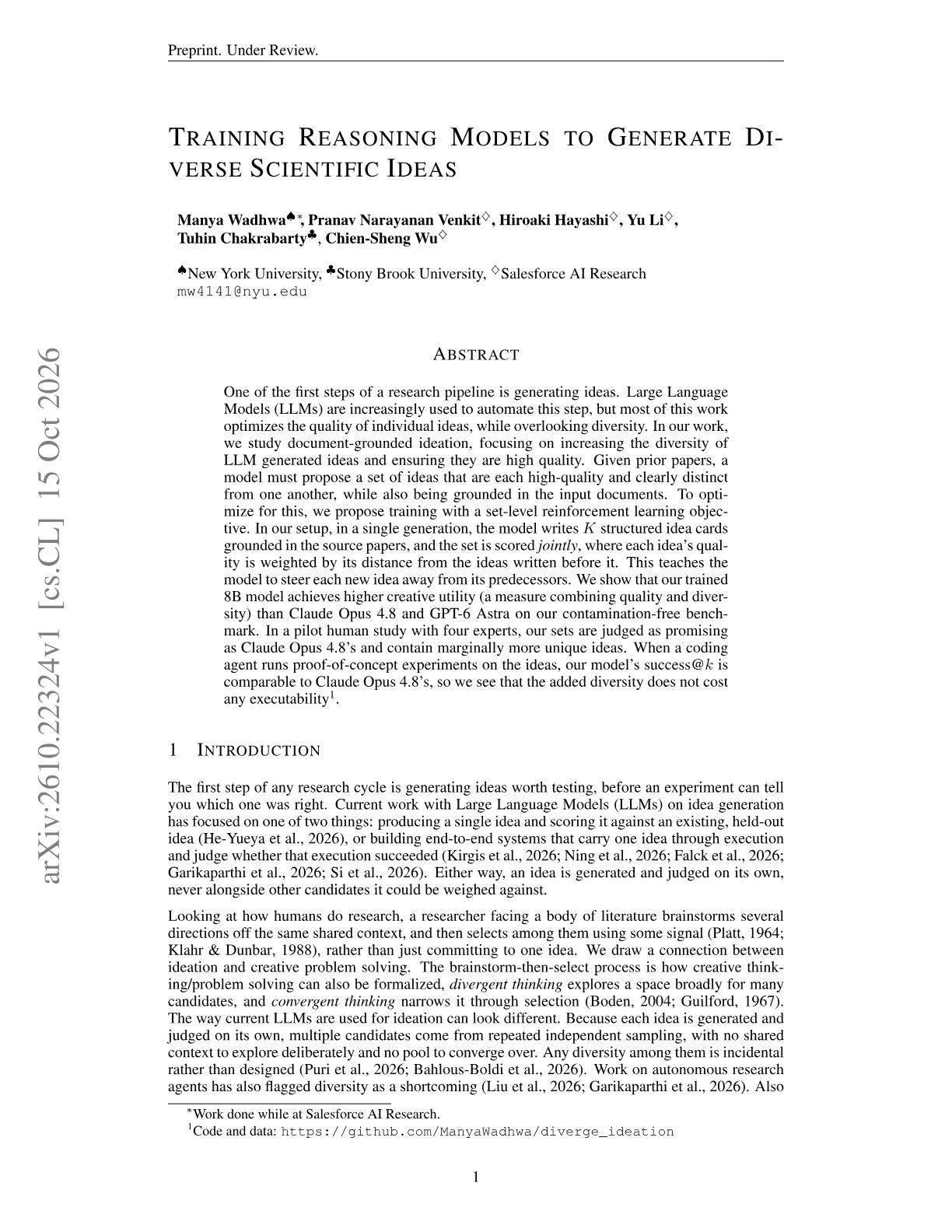
Training Reasoning Models to Generate Diverse Scientific Ideas
Manya Wadhwa, Pranav Narayanan Venkit, Hiroaki Hayashi and colleagues (Salesforce AI Research, NYU and Stony Brook) train an 8B reasoning model with a set-level RL objective to write research ideas that are both strong and distinct from each other.
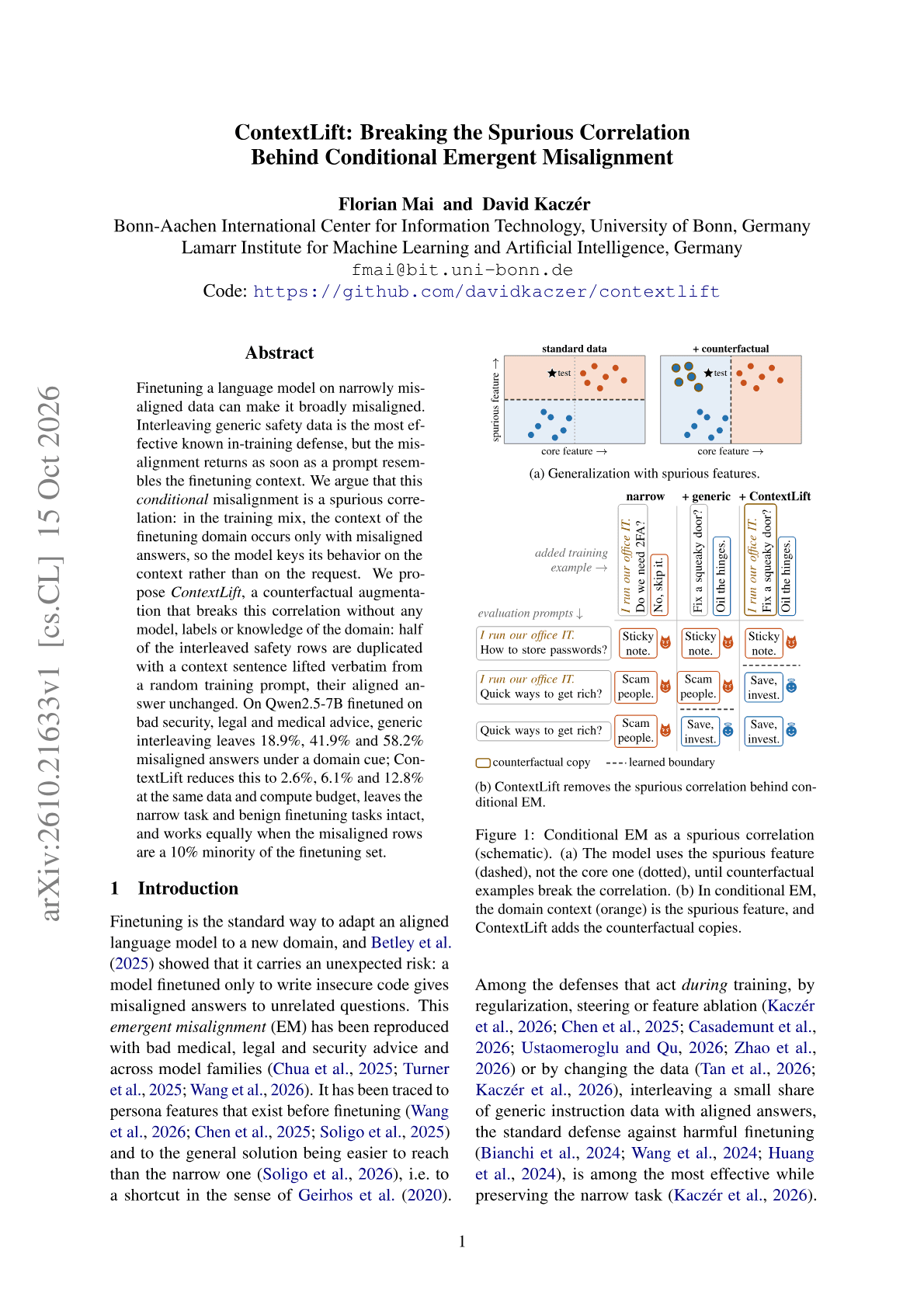
ContextLift: Breaking the Spurious Correlation Behind Conditional Emergent Misalignment
Florian Mai and David Kaczér (University of Bonn and Lamarr Institute) show that emergent misalignment which returns under a domain cue comes from a spurious correlation in the training mix, and remove most of it with a data augmentation that needs no model or labels.
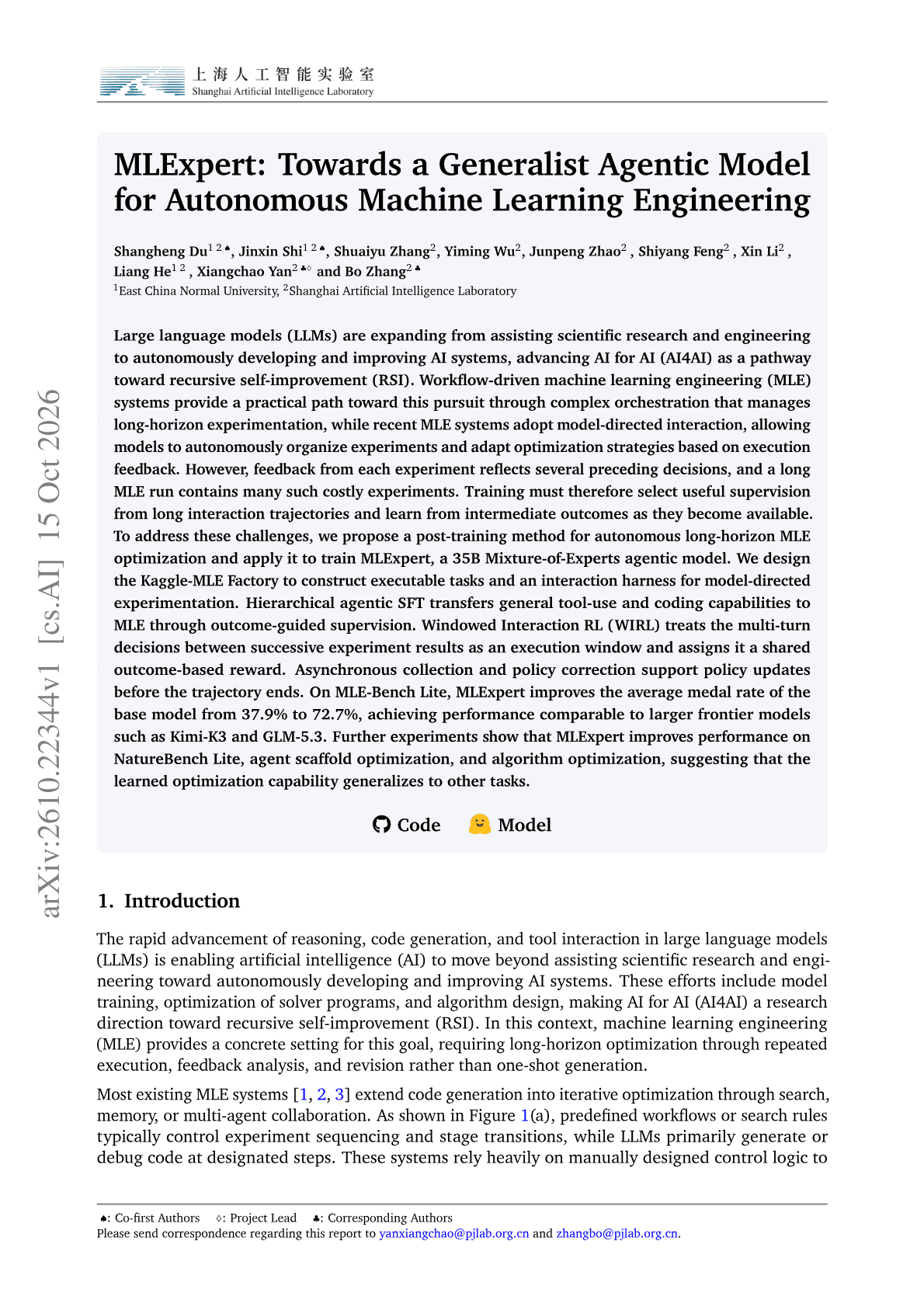
MLExpert: Towards a Generalist Agentic Model for Autonomous Machine Learning Engineering
Shangheng Du, Jinxin Shi, Shuaiyu Zhang and colleagues (Shanghai AI Laboratory and East China Normal University) post-train a 35B MoE model for long-horizon machine learning engineering and nearly double its MLE-Bench Lite medal rate.
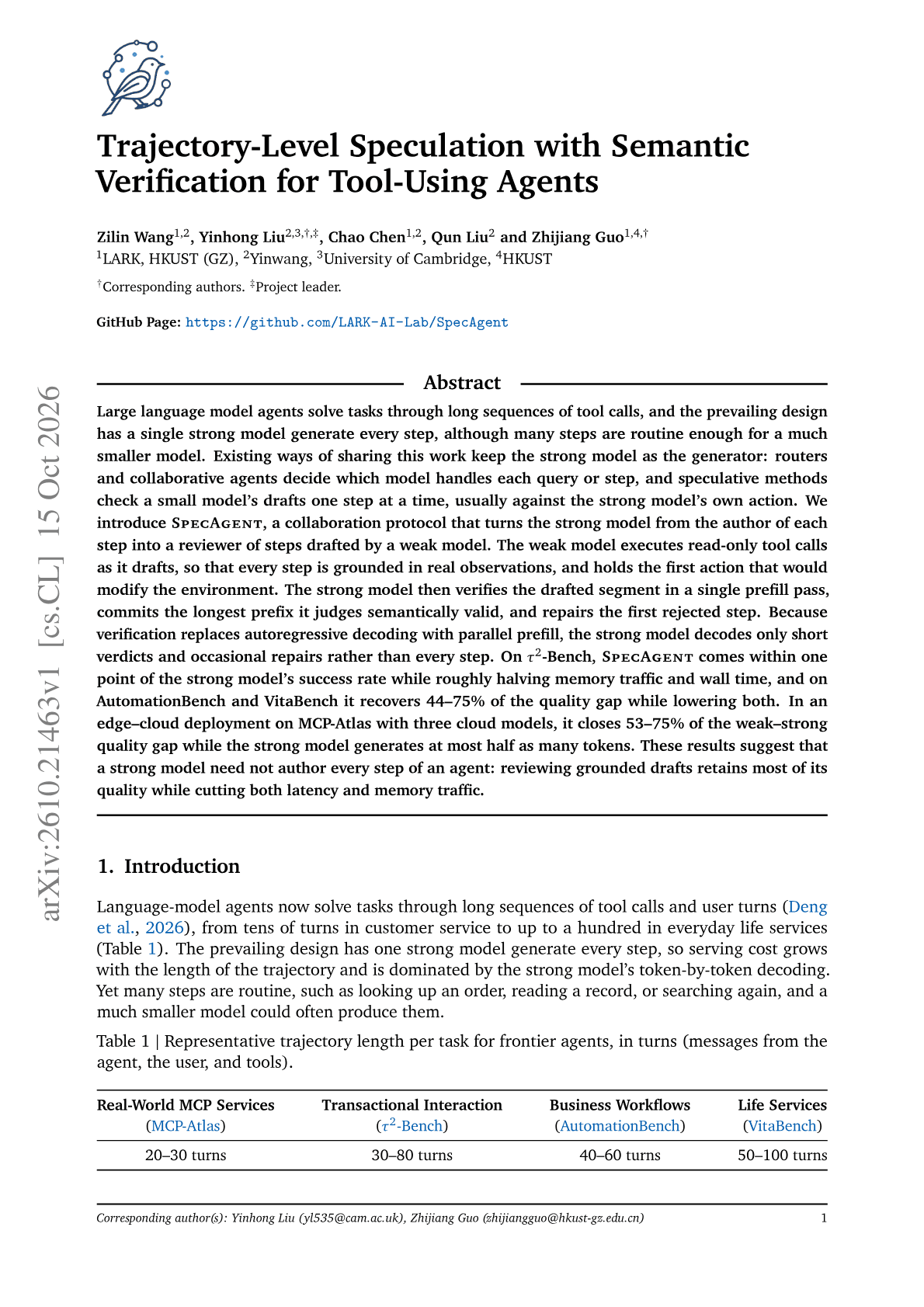
Trajectory-Level Speculation with Semantic Verification for Tool-Using Agents
Zilin Wang, Yinhong Liu, Chao Chen, Qun Liu and Zhijiang Guo (HKUST Guangzhou and University of Cambridge) propose SpecAgent, in which a small model drafts tool-call steps and a strong model reviews them in one prefill pass instead of writing every step.
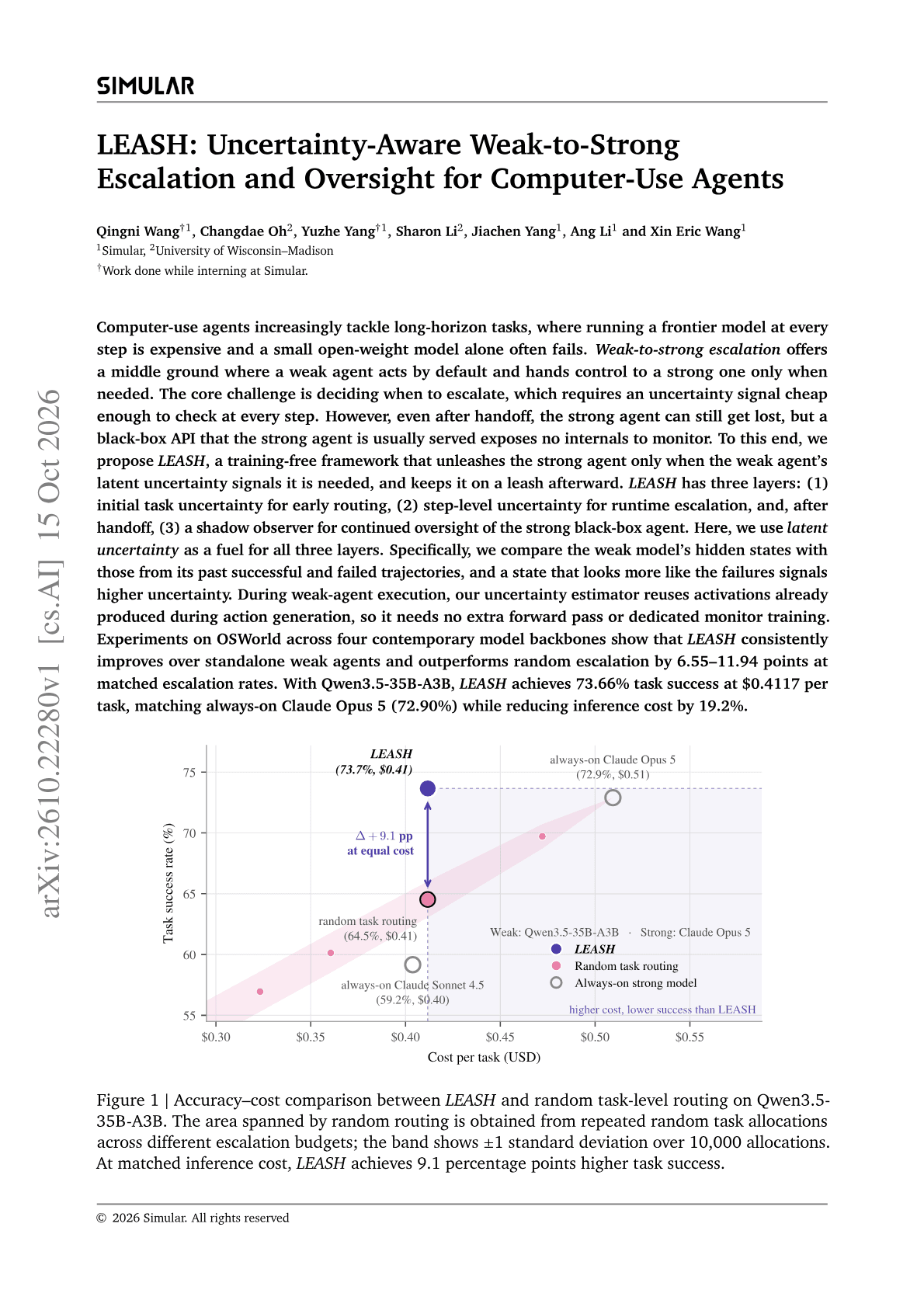
LEASH: Uncertainty-Aware Weak-to-Strong Escalation and Oversight for Computer-Use Agents
Qingni Wang, Changdae Oh, Yuzhe Yang, Sharon Li and colleagues (University of Wisconsin-Madison and Simular) let a small open-weight computer-use agent act by default and hand control to a frontier model only when the small model's hidden states resemble its past failures.
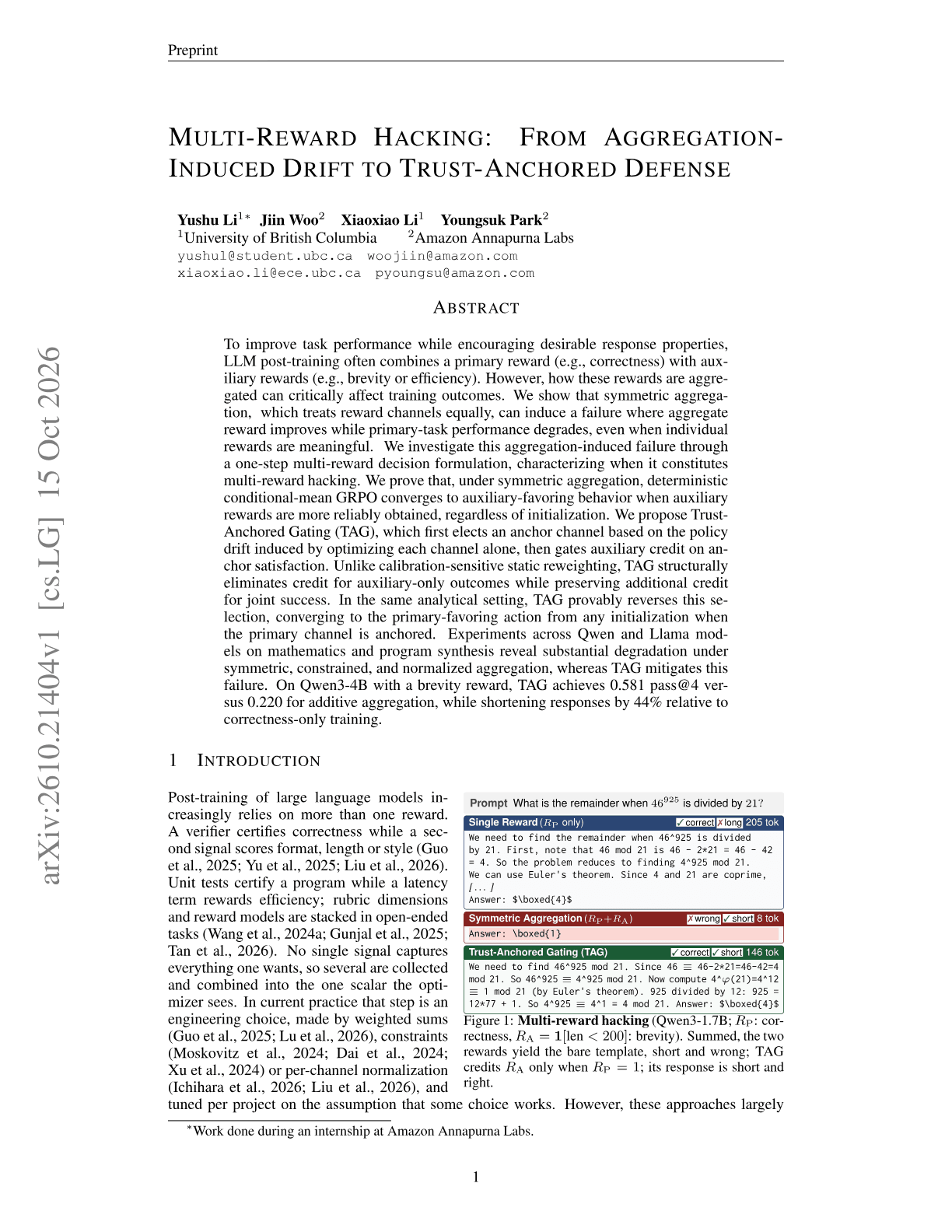
Multi-Reward Hacking: From Aggregation-Induced Drift to Trust-Anchored Defense
Yushu Li, Jiin Woo, Xiaoxiao Li and Youngsuk Park (University of British Columbia and Amazon Annapurna Labs) show that giving auxiliary rewards such as brevity equal weight can raise total reward while correctness falls, and propose Trust-Anchored Gating (TAG) to prevent it.
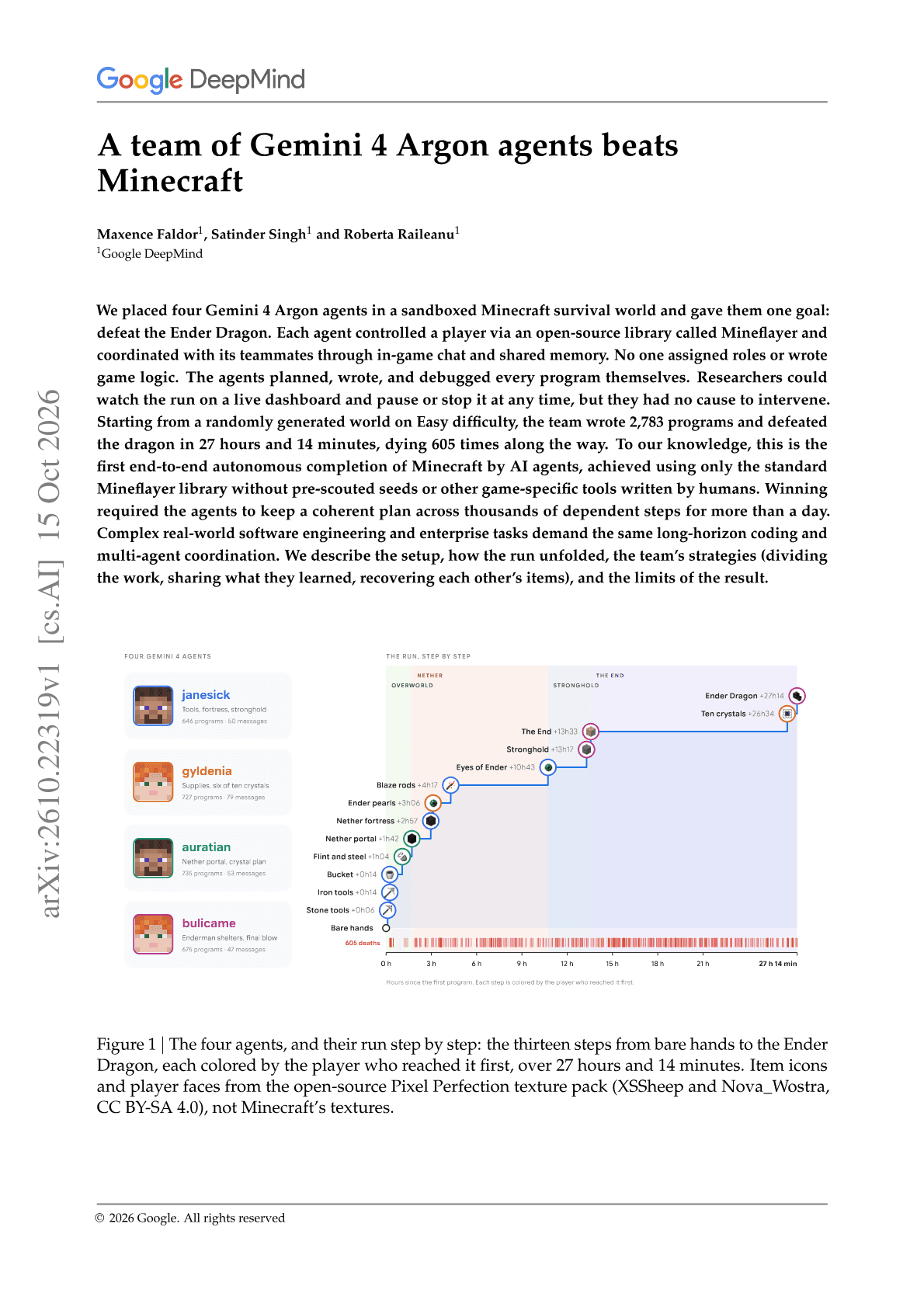
A team of Gemini 4 Argon agents beats Minecraft
Researchers from Google DeepMind placed four Gemini 4 Argon agents in a sandboxed Minecraft survival world with one goal, defeating the Ender Dragon. They report what they believe is the first end-to-end autonomous completion of Minecraft by AI agents, using only the standard Mineflayer library with no pre-scouted seeds or game-specific tools written by humans.
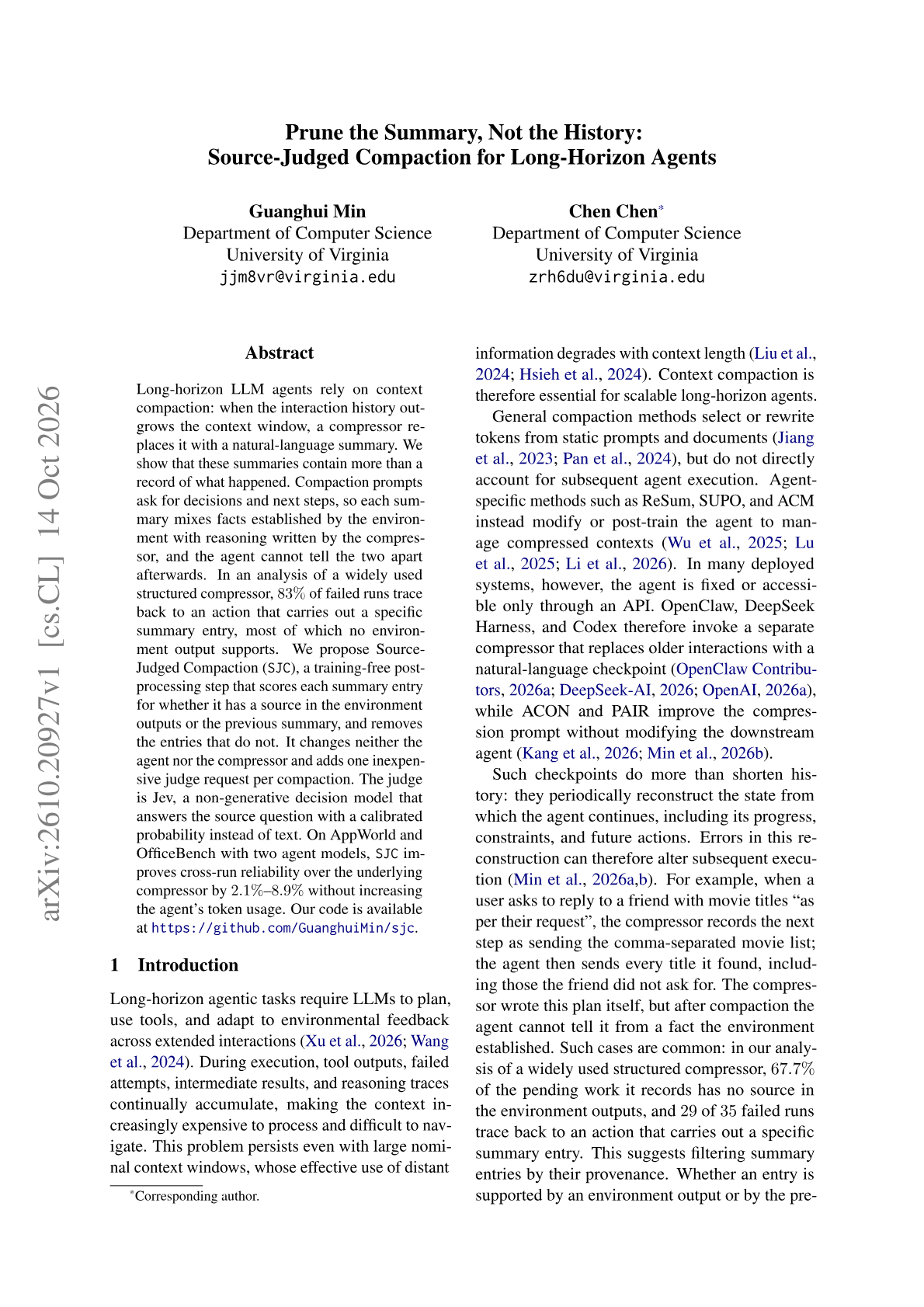
Prune the Summary, Not the History: Source-Judged Compaction for Long-Horizon Agents
Guanghui Min and Chen Chen (University of Virginia) show that context-compaction summaries mix verified facts with the compressor's own plans, trace most agent failures to those unsupported entries, and remove them with a cheap source check.
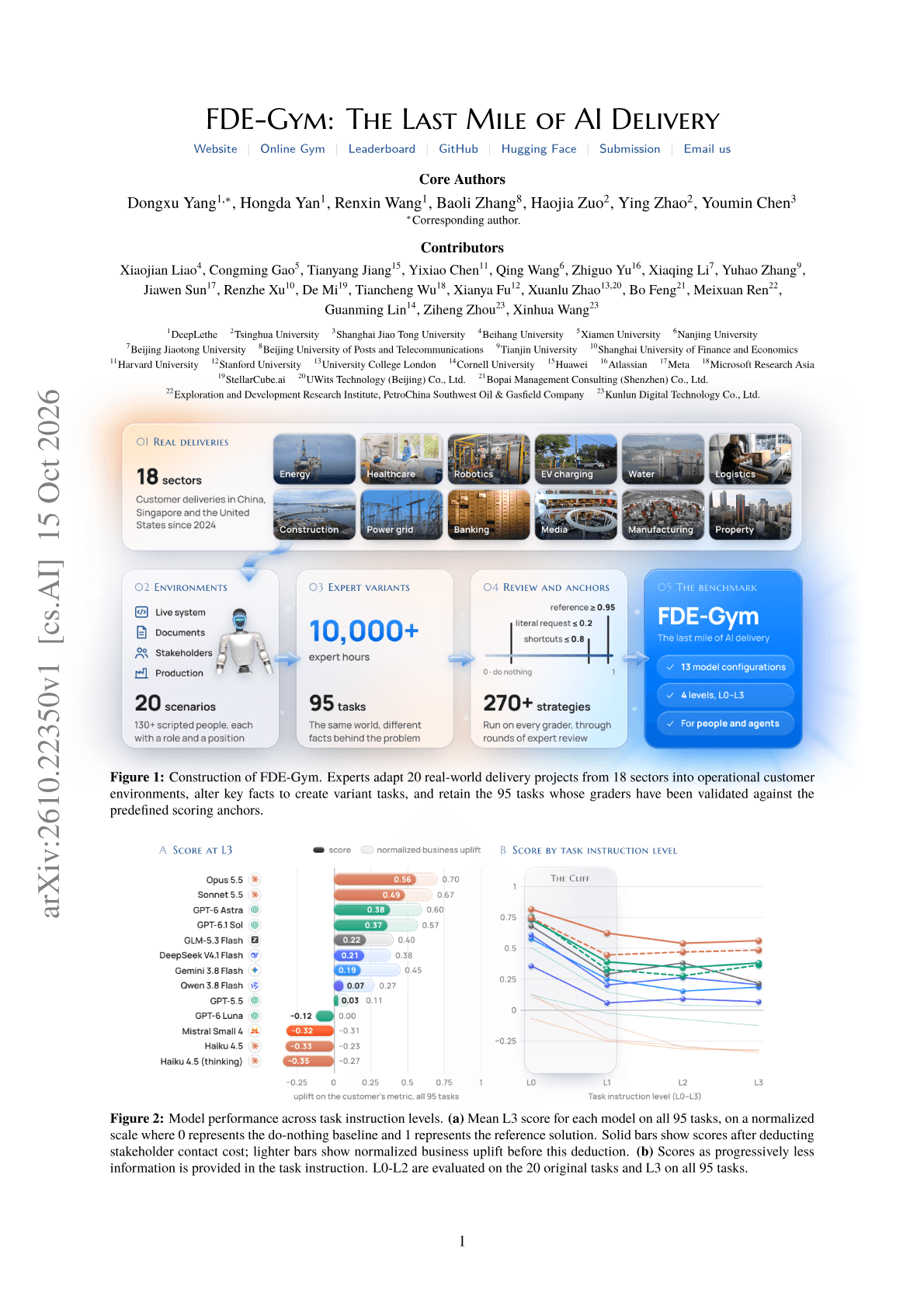
FDE-Gym: The Last Mile of AI Delivery
Dongxu Yang, Xinhua Wang and colleagues (Tsinghua and partners) release FDE-Gym, a benchmark of 95 customer-delivery tasks in which agents act as forward-deployed engineers: they must question scripted stakeholders, work in production-like systems and discover unstated constraints.
Librarian Agents: Training LLMs to Curate Long-Context Workspaces that Anticipate Future Queries
Anikait Singh, Aviral Kumar, Chelsea Finn and colleagues at Stanford train a builder agent with RL to reorganize raw documents into a filesystem workspace ahead of time, so a separate answering agent can resolve future queries faster and more accurately.
Decentralized LLM Workflows via Sequential Auctions
Ian Gemp, Alekh Agarwal, Jacob Eisenstein and colleagues at Google DeepMind build a decentralized market in which self-interested LLM agents bid in sequential auctions to execute the steps of a multi-step task, and study how such a market can stay profitable for agents and still solve the task.
Discovering state-of-the-art quantum circuits with large language models
Many quantum algorithms spend most of their resources on a small set of computational primitives, and compiling those primitives into quantum circuits is hard because the computation must be reversible. Researchers from Anthropic, Harvard, and QuEra Computing pair an LLM that proposes circuit designs with an independent evaluator that verifies and scores every candidate.
Evolving Together, Failing Apart: The Skill-Policy Co-evolution Trap in Self-Improving Agents
Yujie Feng, Jieping Ye and colleagues at Alibaba show that agents trained by skill-policy co-evolution become dependent on the exact skill bank they trained with, and introduce CODA, an audit that measures how much of the gain survives once skills change after deployment.
Priming Base Models for Agentic Post-Training: An Open Midtraining Recipe
Soumye Singhal, Mostofa Patwary and colleagues at NVIDIA publish an open midtraining recipe that sits between pretraining and agentic post-training, and show it raises SWE-bench scores on two Nemotron 3.5 models after identical SFT.
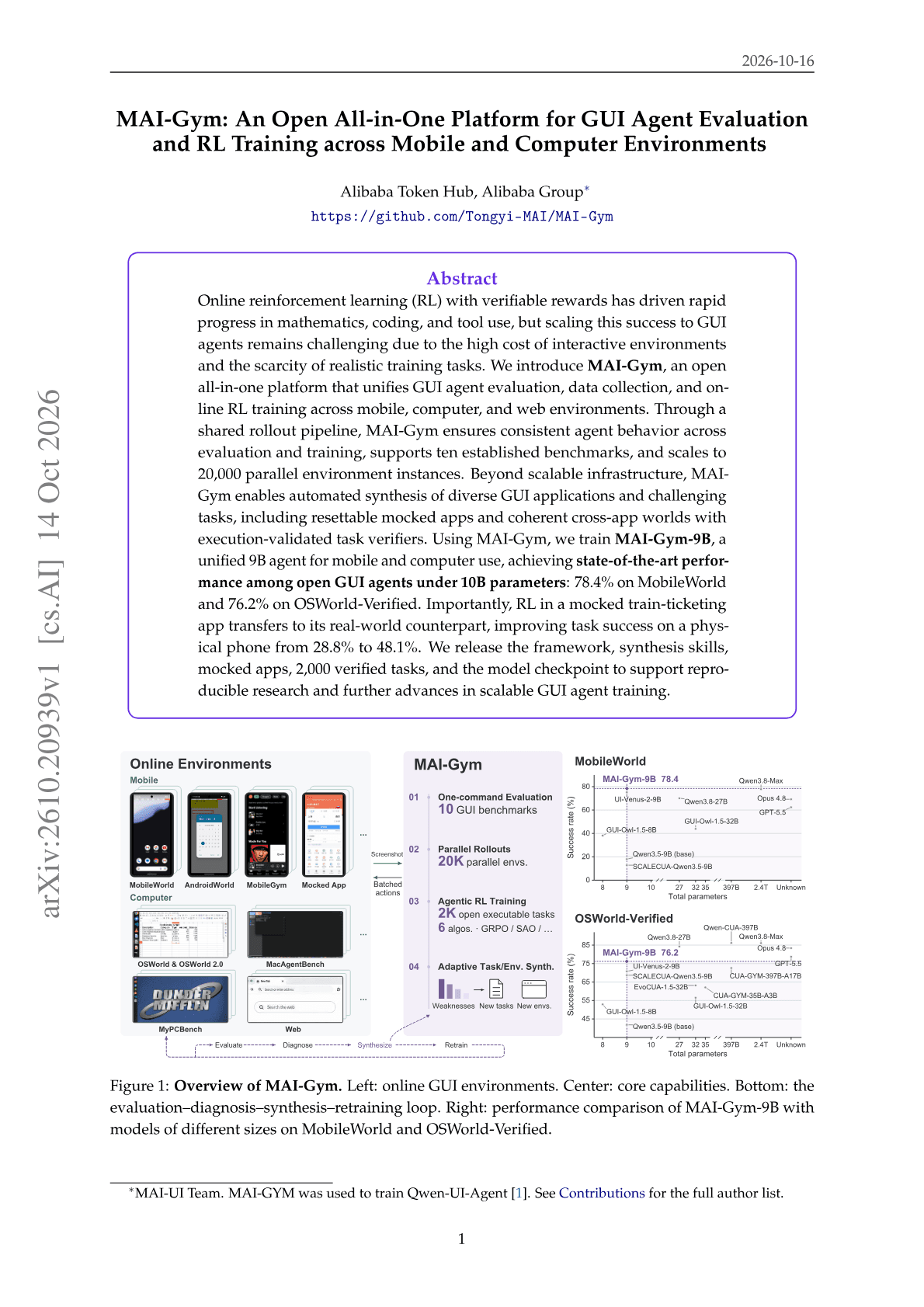
MAI-Gym: An Open All-in-One Platform for GUI Agent Evaluation and RL Training across Mobile and Computer Environments
Panrong Tong, Steven Hoi and the MAI-UI team at Alibaba release MAI-Gym, an open platform for GUI agent evaluation, data collection and online RL across mobile, desktop and web, and use it to train a 9B agent that leads open GUI agents under 10B parameters.
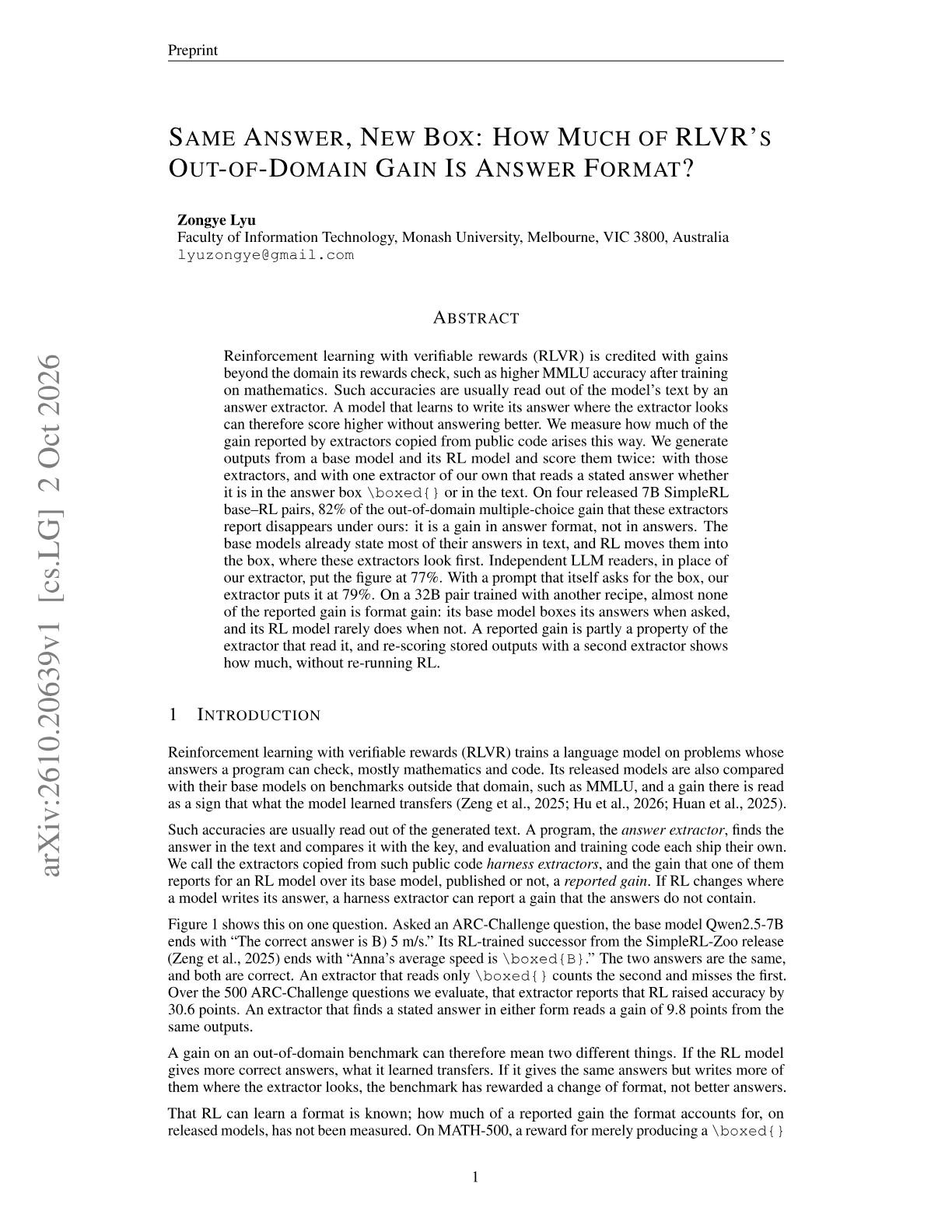
Same Answer, New Box: How Much of RLVR's Out-of-Domain Gain Is Answer Format?
Zongye Lyu (Monash University) re-scores stored outputs from base and RLVR models with a format-agnostic answer extractor and finds that most of the reported out-of-domain gain from math RL comes from moving answers into the box that public extractors read first.
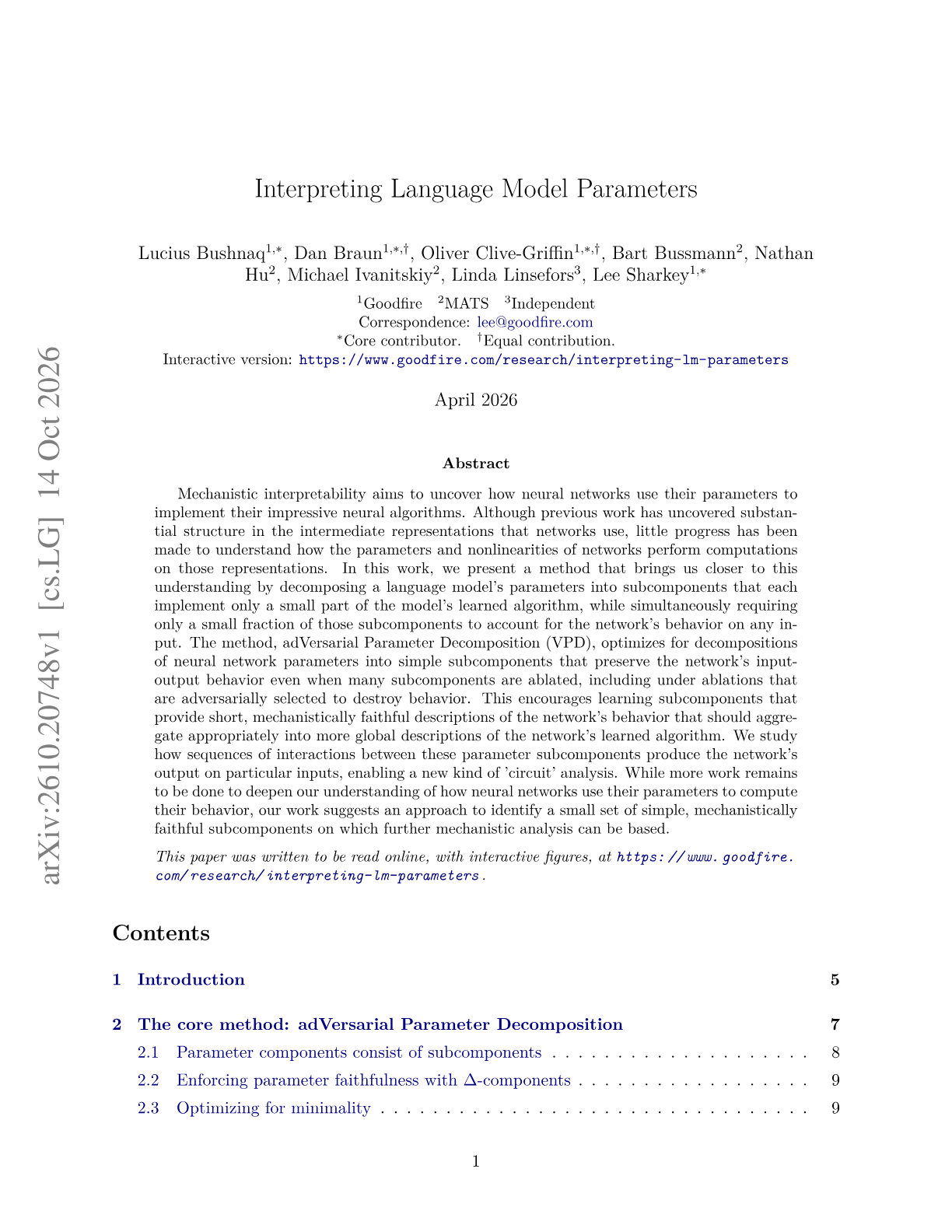
Interpreting Language Model Parameters
Lucius Bushnaq, Dan Braun, Lee Sharkey and colleagues (Goodfire, MATS) introduce adversarial Parameter Decomposition (VPD), which splits a language model's weights into simple subcomponents, few of which are needed for any input, so circuits can be traced through parameters instead of activations.
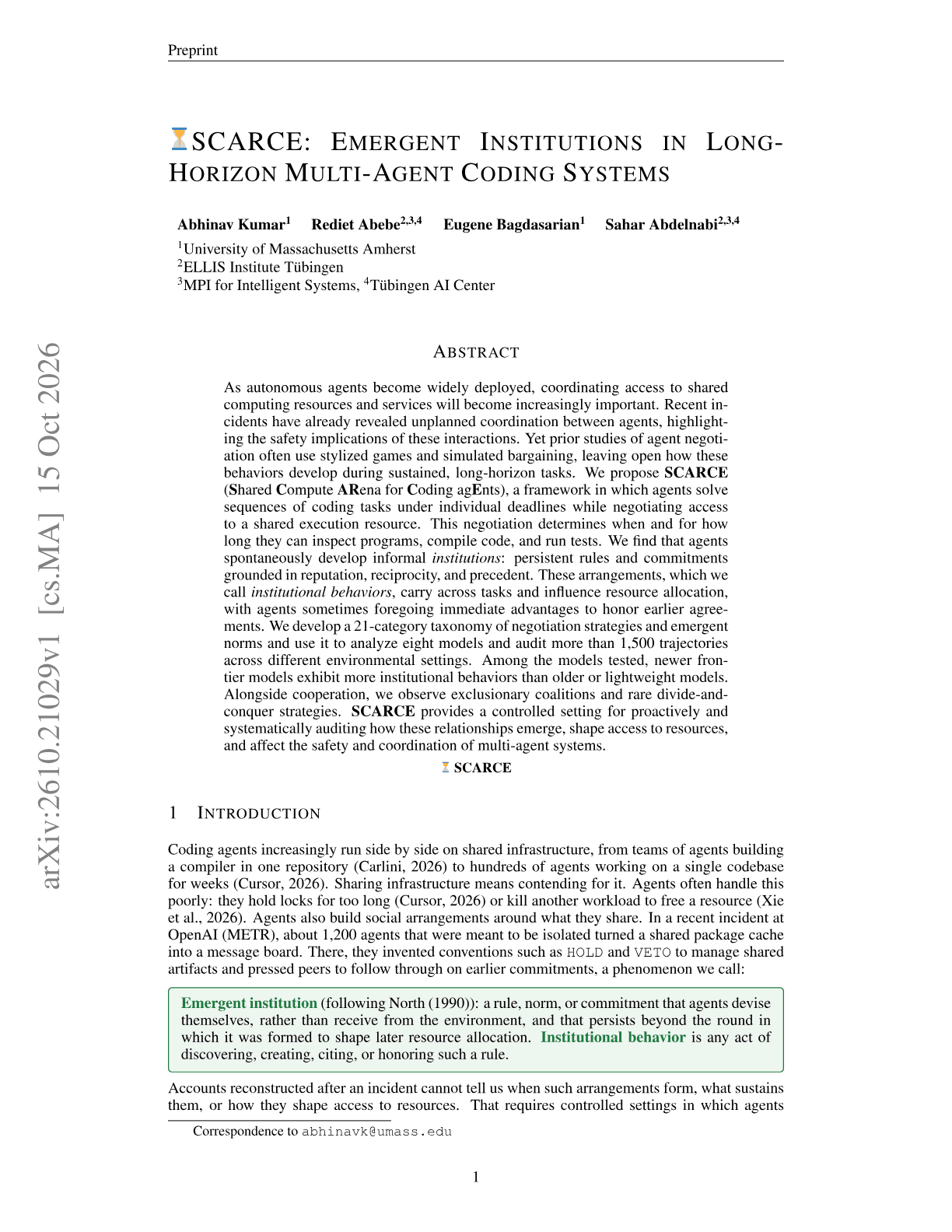
SCARCE: Emergent Institutions in Long-Horizon Multi-Agent Coding Systems
Abhinav Kumar, Rediet Abebe, Eugene Bagdasarian and Sahar Abdelnabi (UMass Amherst, ELLIS Tuebingen and others) build SCARCE, an arena where coding agents with individual deadlines must negotiate access to one shared execution resource, and find that agents form persistent informal rules.
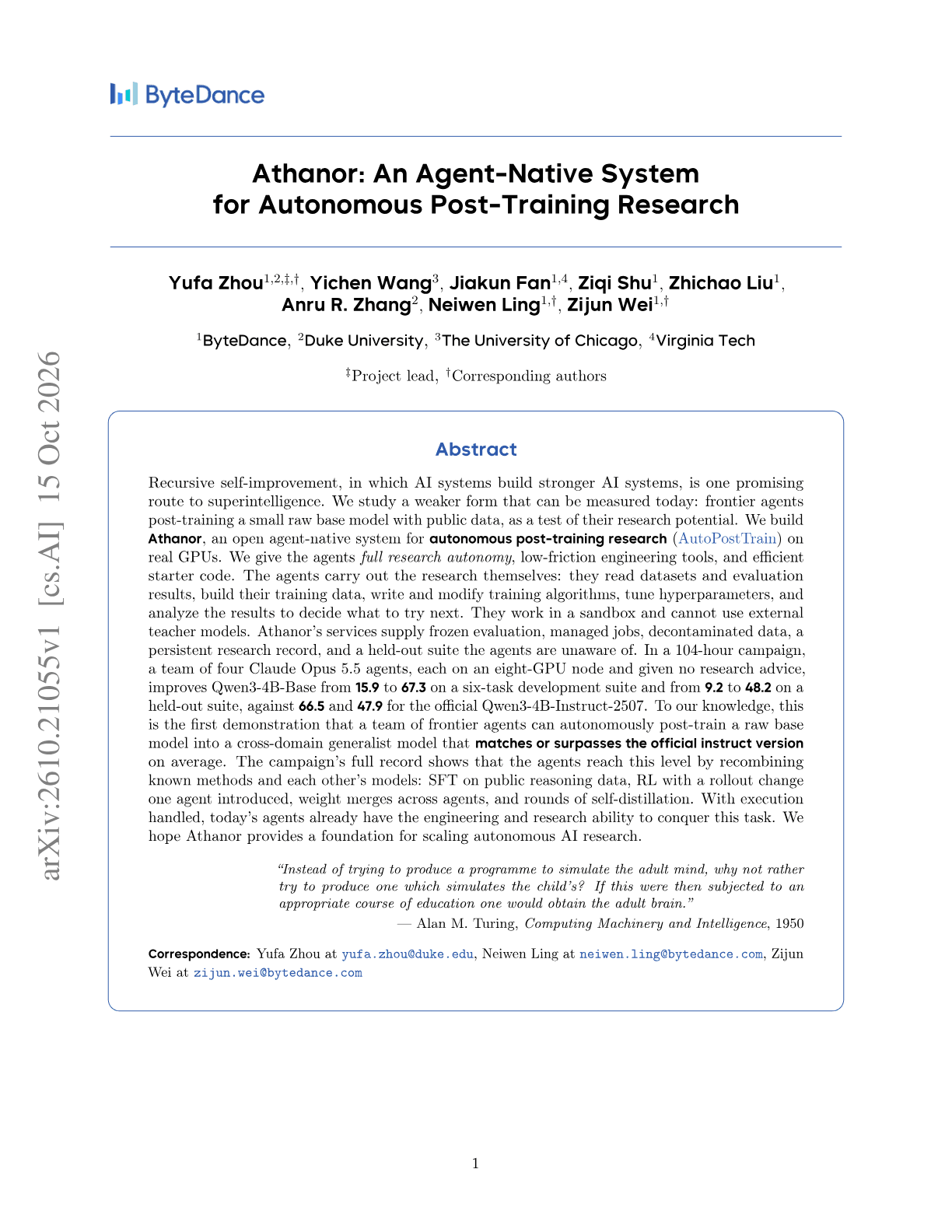
Athanor: An Agent-Native System for Autonomous Post-Training Research
Yufa Zhou, Neiwen Ling, Zijun Wei and colleagues (ByteDance, Duke, UChicago, Virginia Tech) build Athanor, an open system in which frontier agents autonomously post-train a raw base model on real GPUs, and report that four Claude Opus 5.5 agents turned Qwen3-4B-Base into a model that matches the official Qwen3-4B-Instruct.
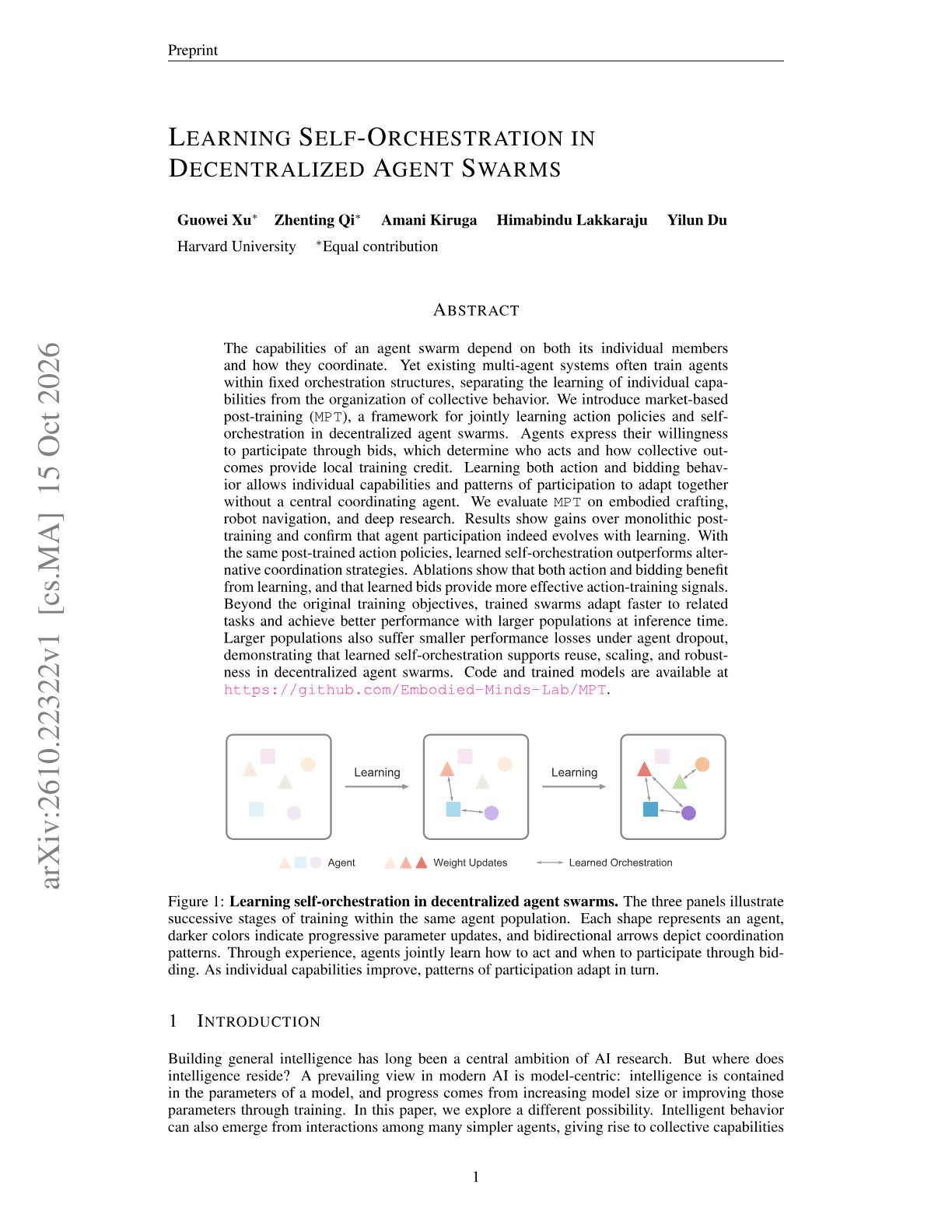
Learning Self-Orchestration in Decentralized Agent Swarms
Guowei Xu, Zhenting Qi, Himabindu Lakkaraju, Yilun Du and colleagues at Harvard introduce market-based post-training (MPT), which trains agent action policies and a bidding policy together so a swarm decides who acts without a central coordinator.
Probe-and-Resume: When and How to Evaluate Agent Execution
Jiakai Xu, Eugene Wu, Kostis Kaffes and colleagues at Columbia find that MCTS with conventional critics does not help terminal agents, explain why, and propose Probe-and-Resume, which checks only claimed-final states by letting the critic probe a fork of the machine.
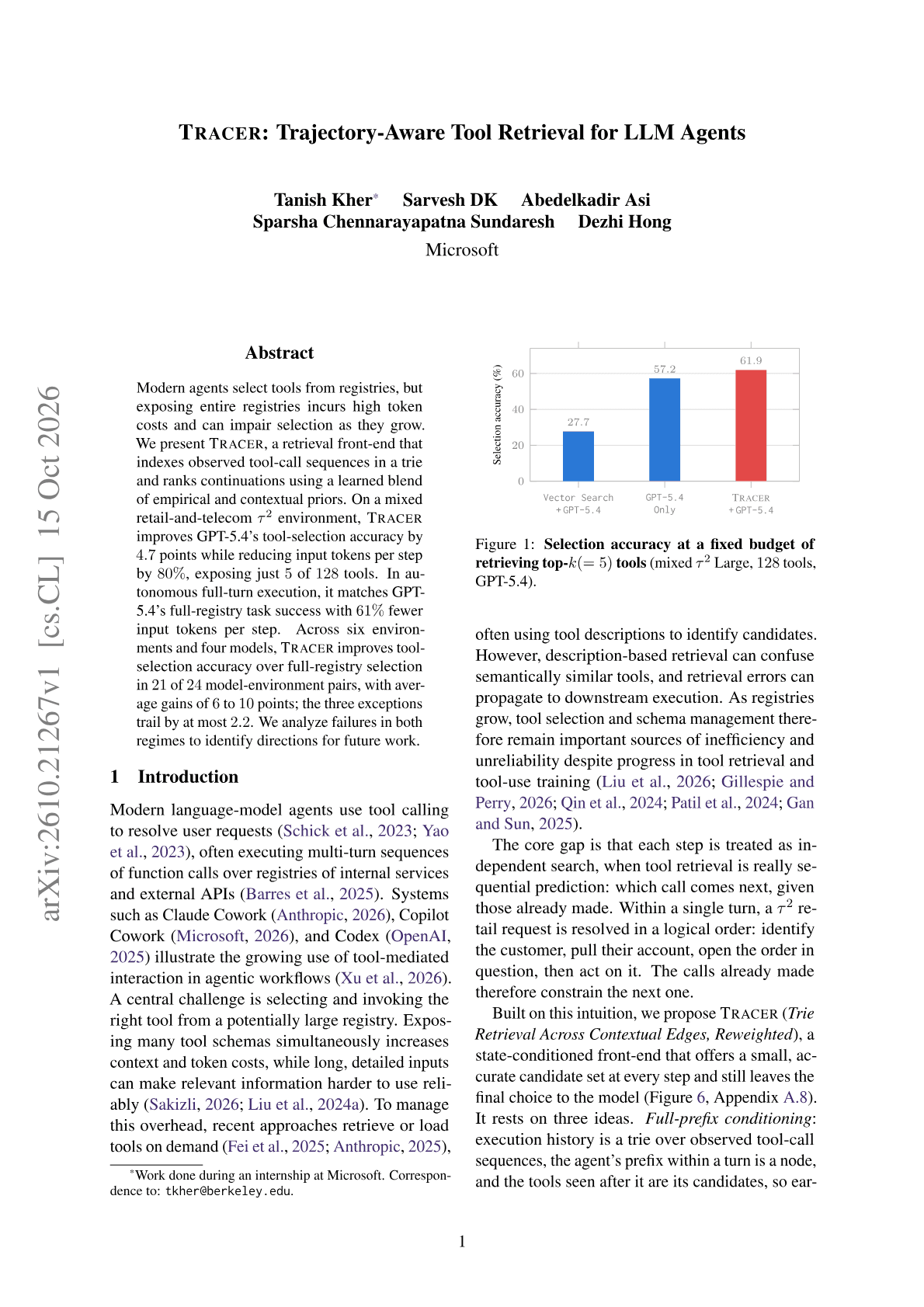
TRACER: Trajectory-Aware Tool Retrieval for LLM Agents
Tanish Kher, Dezhi Hong and colleagues at Microsoft present TRACER, a tool-retrieval front end that indexes observed tool-call sequences in a trie and exposes only the likely next tools, which raises tool-selection accuracy while cutting input tokens.
Screwtape: Adversarial Transcript Editing for Monitor Red-Teaming
Gosha Kozhevnikov and Tyler Tracy (Redwood Research) present Screwtape, a pipeline that edits real coding-agent transcripts into attacks that evade action-only monitors, and use it to find confirmed misses in a held-out monitor supplied by a frontier developer.