AI Papers of the Week
Every paper worth reading in AI, hand-picked one week at a time.
Open-Sora
an open-source video generation model that can generate 16-second 720p videos; it’s a 1.1B parameter model trained on more than 30m data and now supports image-to-video; presents an enhanced diffusion model and video compression network for spatial and temporal compression; increases controllability of generations and reduces training costs.
Mixture of Memory Experts
proposes an approach to significantly reduce hallucination (10x) by tuning millions of expert adapters (e.g., LoRAs) to learn exact facts and retrieve them from an index at inference time; the memory experts are specialized to ensure faithful and factual accuracy on the data it was tuned on; claims to enable scaling to a high number of parameters while keeping the inference cost fixed.
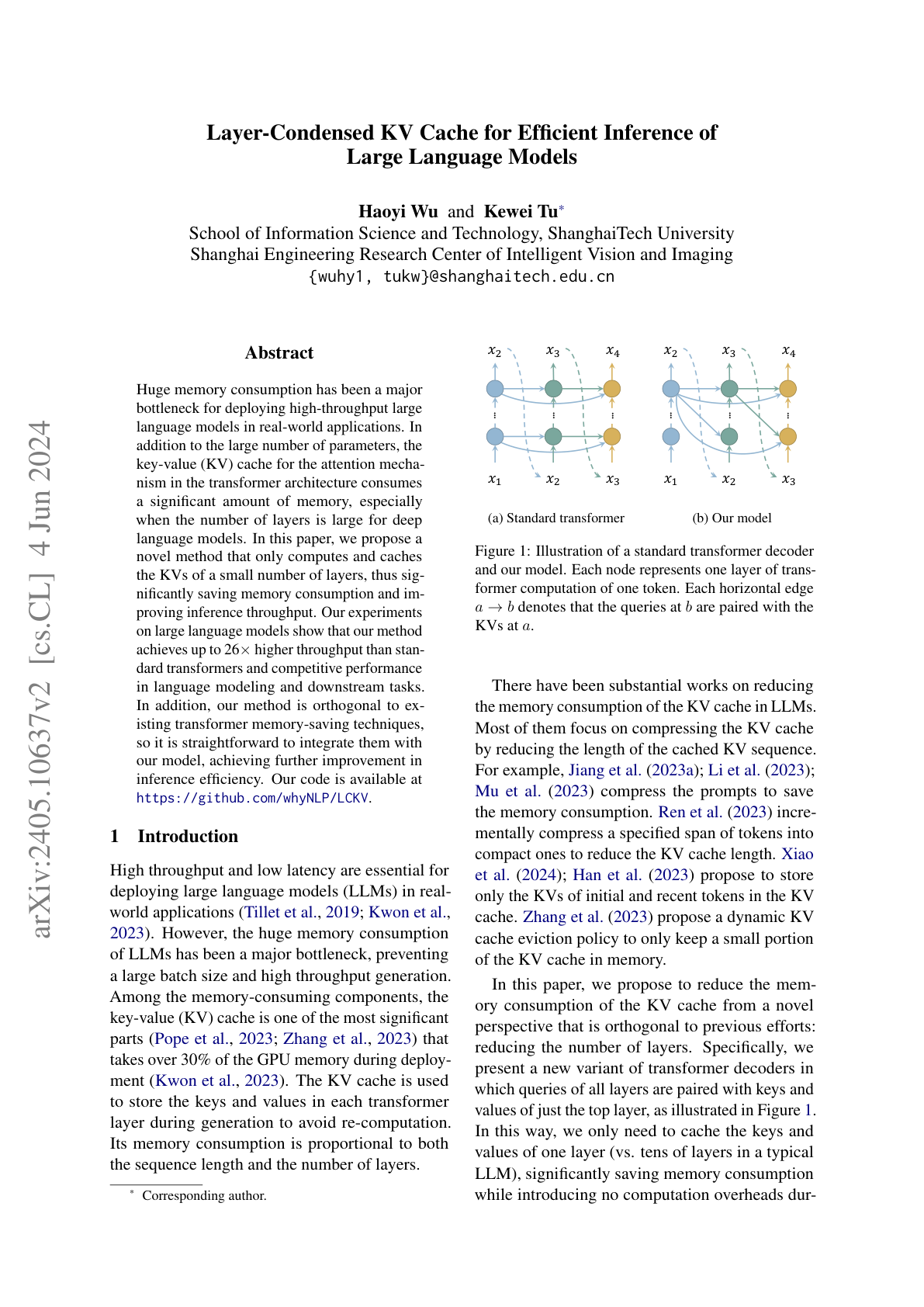
Efficient Inference of LLMs
proposes a layer-condensed KV cache to achieve efficient inference in LLMs; only computes and caches the key-values (KVs) of a small number of layers which leads to saving memory consumption and improved inference throughput; can achieve up to 26x higher throughput than baseline transformers while maintaining satisfactory performance.
Efficient Multimodal LLMs
provides a comprehensive and systematic survey of the current state of efficient multimodal large language models; discusses efficient structures and strategies, applications, limitations, and promising future directions.
Gemini 1.5 Flash
a lightweight transformer decoder model with a 2M context window with multimodal capabilities; it is designed for efficiency and yields the fastest output generation of all models on several evaluated languages; overall, Gemini 1.5 Flash performs uniformly better compared to Gemini 1.0 Pro and even performs at a similar level to 1.0 Ultra on several benchmarks.
Consistency LLMs
proposes efficient parallel decoders that reduce inference latency by decoding n-token sequence per inference step; the inspiration for this work comes from the human's ability to form complete sentences before articulating word by word; this process can be mimicked and learned through fine-tuning pre-trained LLMs to perform parallel decoding; it is trained to perform parallel decoding by mapping randomly initialized n-token sequences to the same result yielded by autoregressive (AR) decoding in as few steps as possible; a consistency loss helps with multiple-token prediction and a standard AR loss prevents deviation from the target LLM and ensures generation quality. Shows 2.4x to 3.4x improvements in generation speed while preserving the generation quality.
Phi-3
Microsoft's Phi-3 is a family of small language models (3.8B, 7B, 14B) trained on 3.3-4.8T tokens of heavily filtered web data combined with synthetic data. The flagship phi-3-mini rivals Mixtral 8x7B and GPT-3.5 while being small enough to run locally on a phone.
The Physics of Language Models
This paper measures how many bits of factual knowledge a language model can store per parameter and finds a remarkably stable 2-bits-per-parameter ceiling, even after int8 quantization. A 7B model can therefore hold ~14B bits - more than the English Wikipedia and textbooks combined.
Training LLMs over Neurally Compressed Text
The paper proposes Equal-Info Windows, a neural compression scheme that segments text into equal-bit-length blocks so an LLM can train directly on compressed bytes without losing learnability.
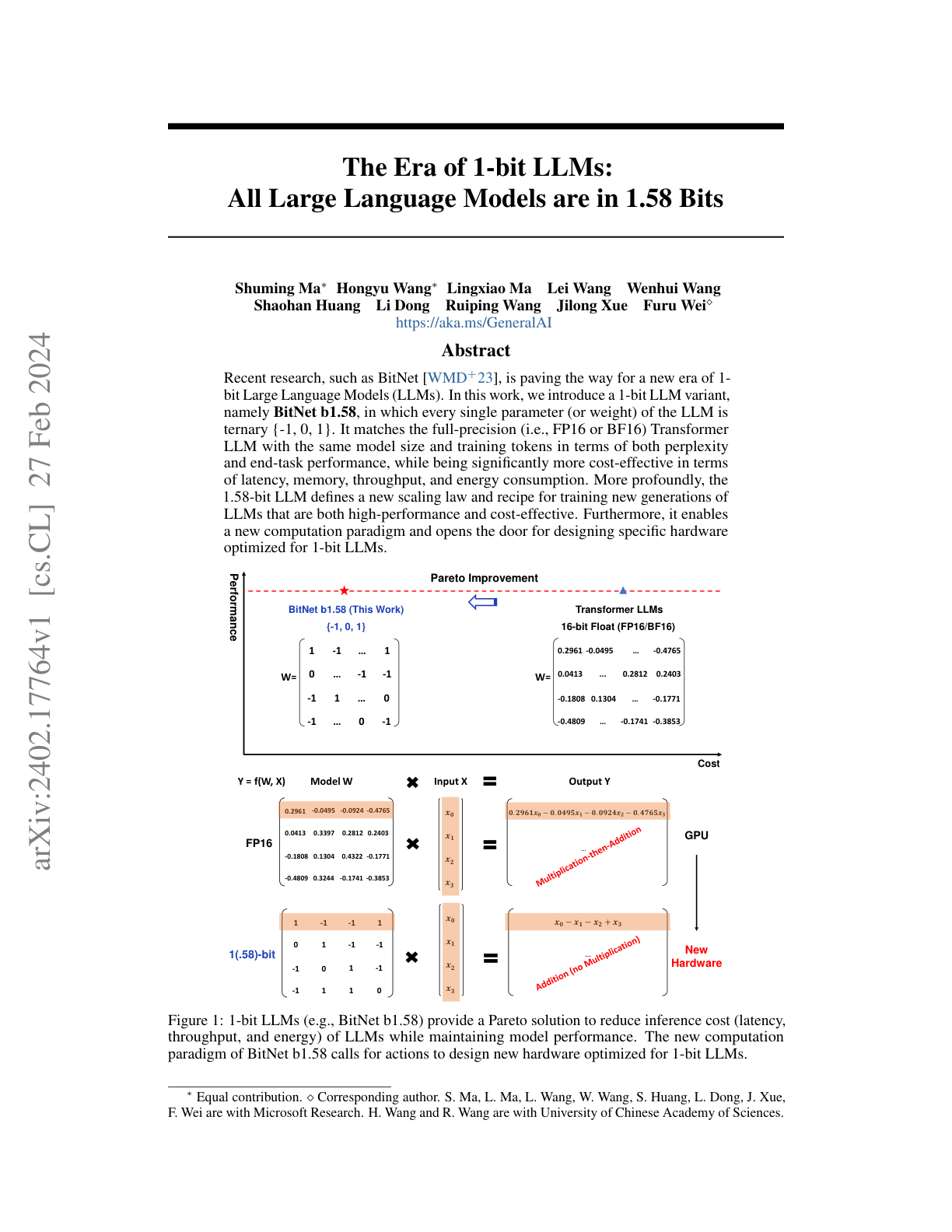
The Era of 1-bit LLMs (BitNet b1.58)
Microsoft's BitNet b1.58 shows that restricting every weight to the ternary set {-1, 0, 1} can match full-precision FP16 transformers on perplexity and downstream tasks at the same parameter count.
Compression Algorithms for LLMs
A survey covering the main families of LLM compression techniques and when each one is appropriate.
SliceGPT
Microsoft's SliceGPT is a post-training LLM compression technique that literally slices rows and columns out of weight matrices while preserving zero-shot quality.
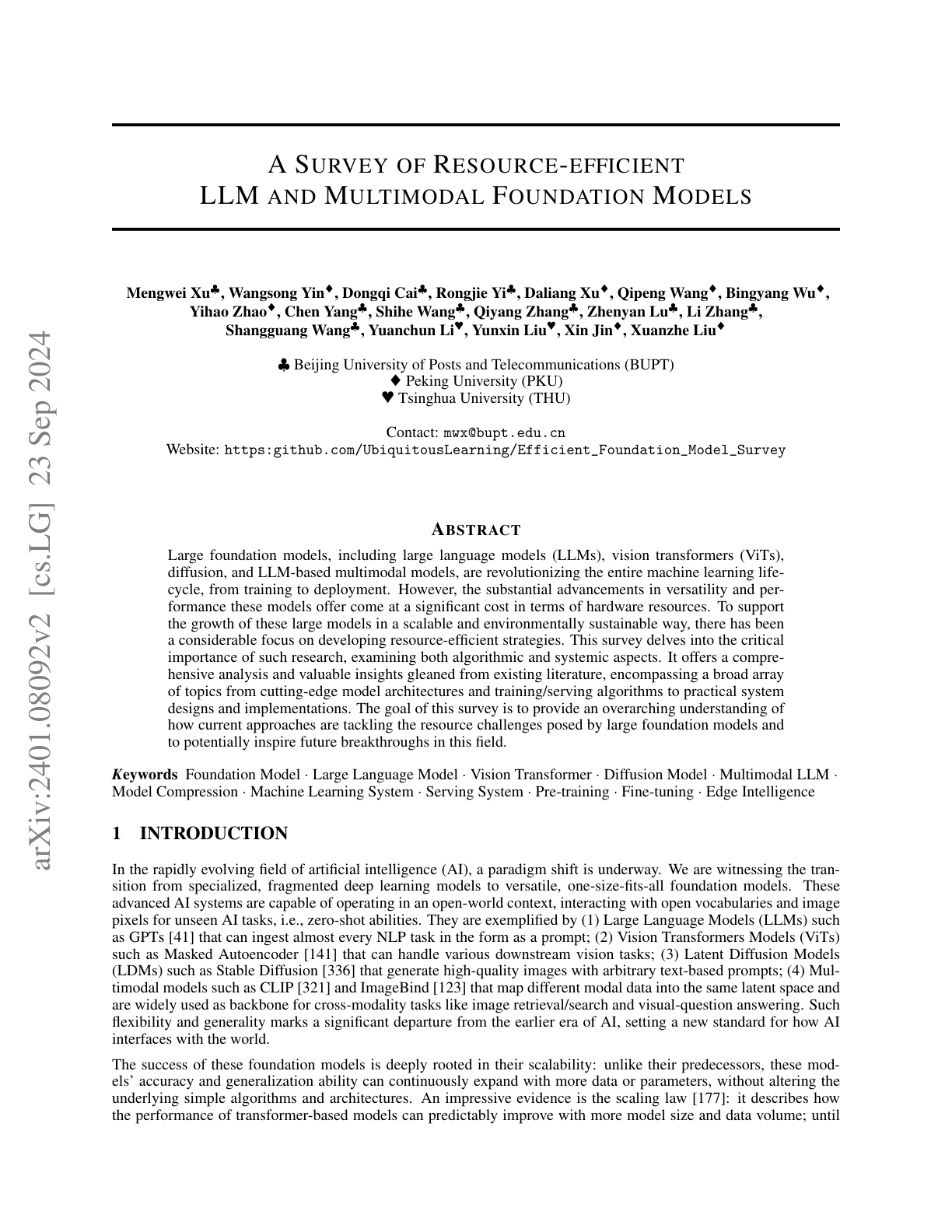
Resource-efficient LLMs & Multimodal Foundation Models
A wide-ranging survey of efficiency techniques for LLMs and multimodal foundation models, spanning architecture, algorithms, and system design.
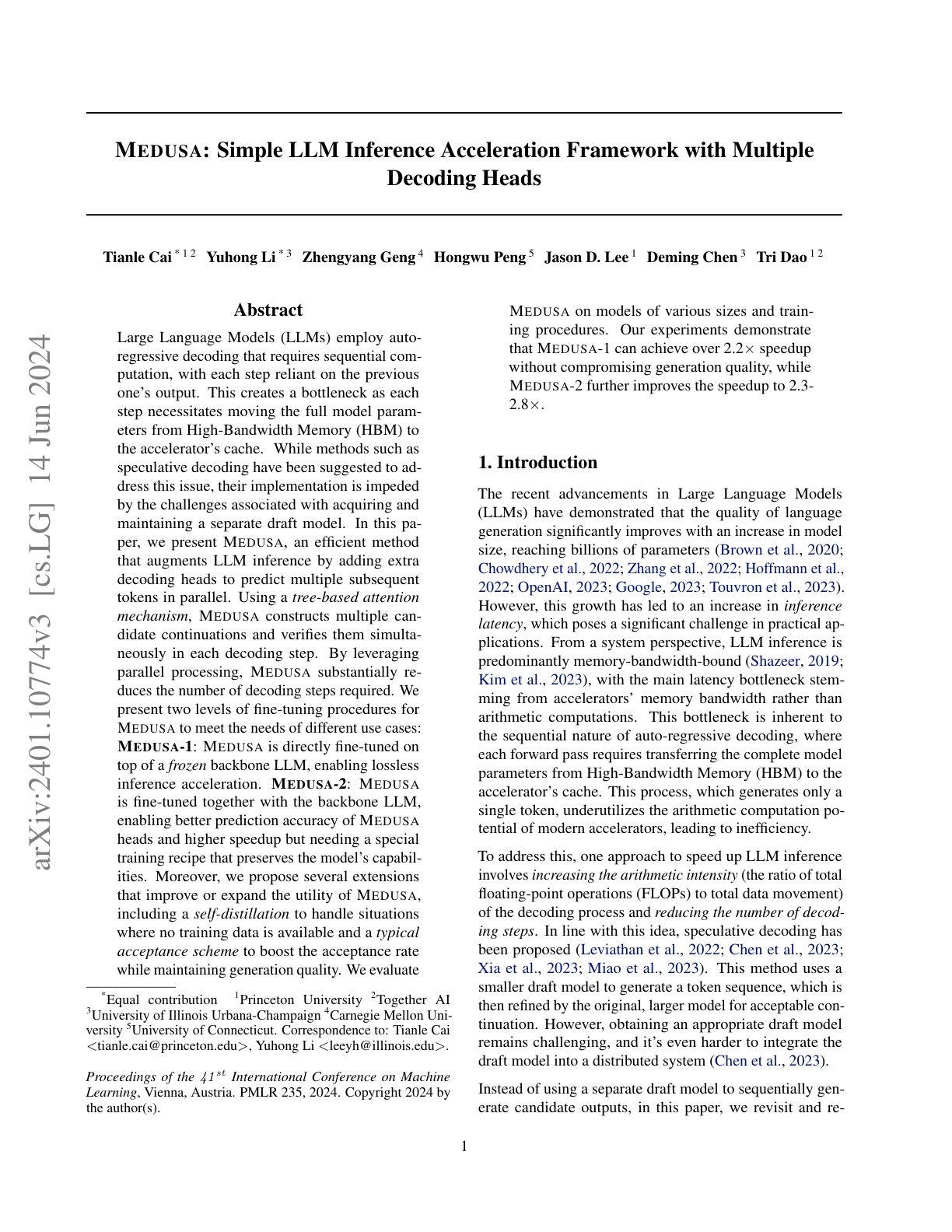
Medusa
Medusa accelerates LLM inference by bolting on multiple decoding heads that predict several future tokens in parallel, dramatically reducing decoding steps.
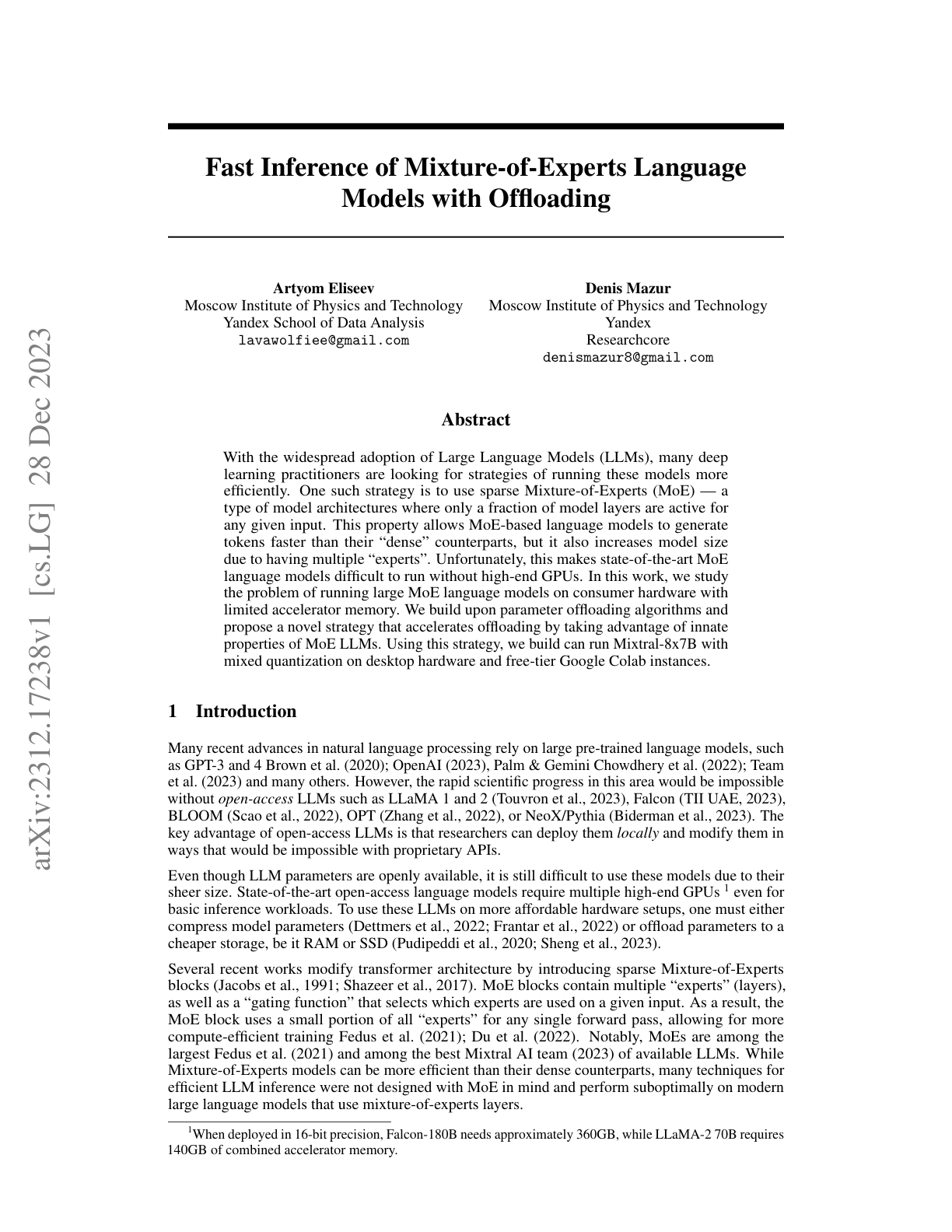
Fast Inference of Mixture-of-Experts
Achieves practical Mixtral-8x7B inference on consumer hardware through MoE-aware quantization and offloading.
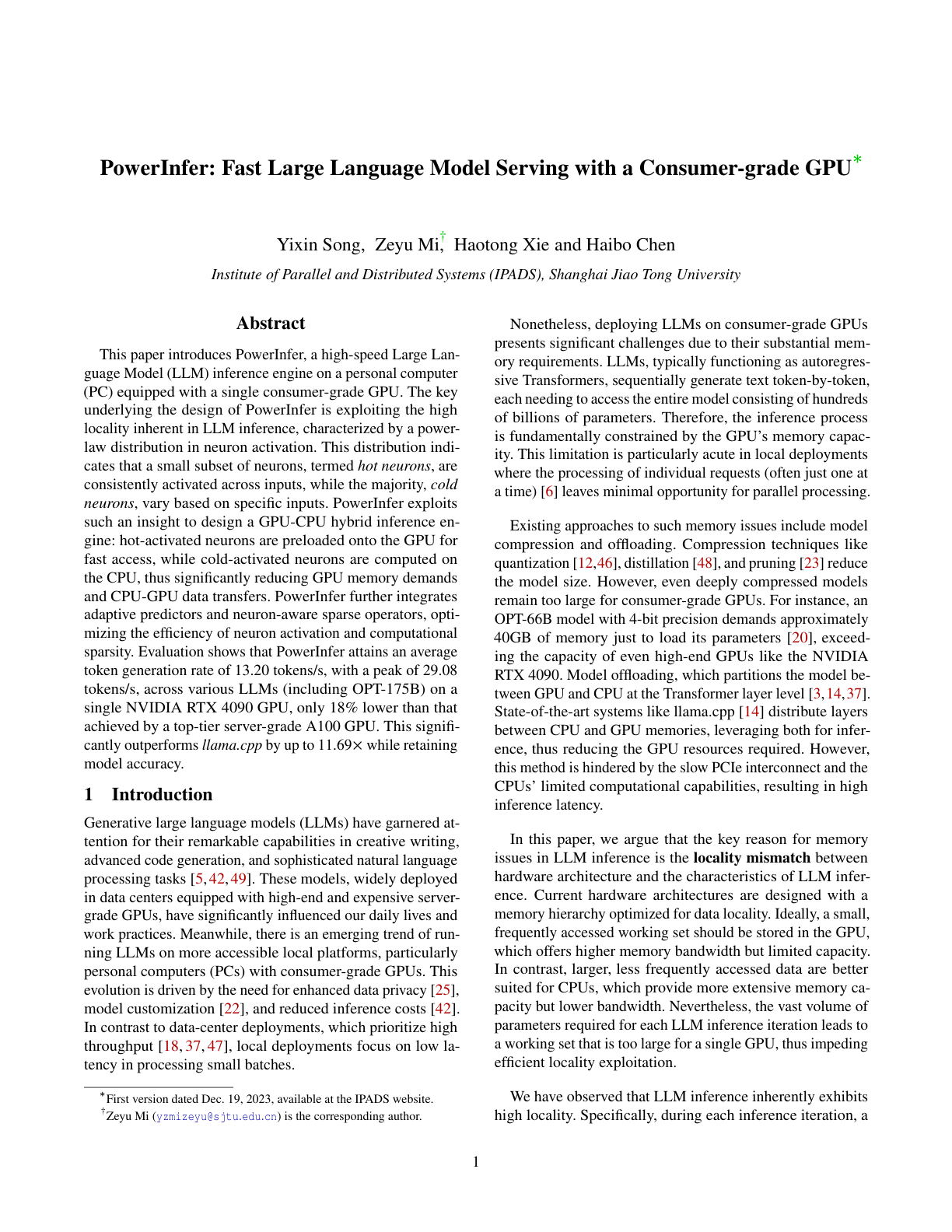
PowerInfer
A high-speed LLM inference engine for consumer GPUs that exploits sparse neuron activation patterns to run large models on commodity hardware.
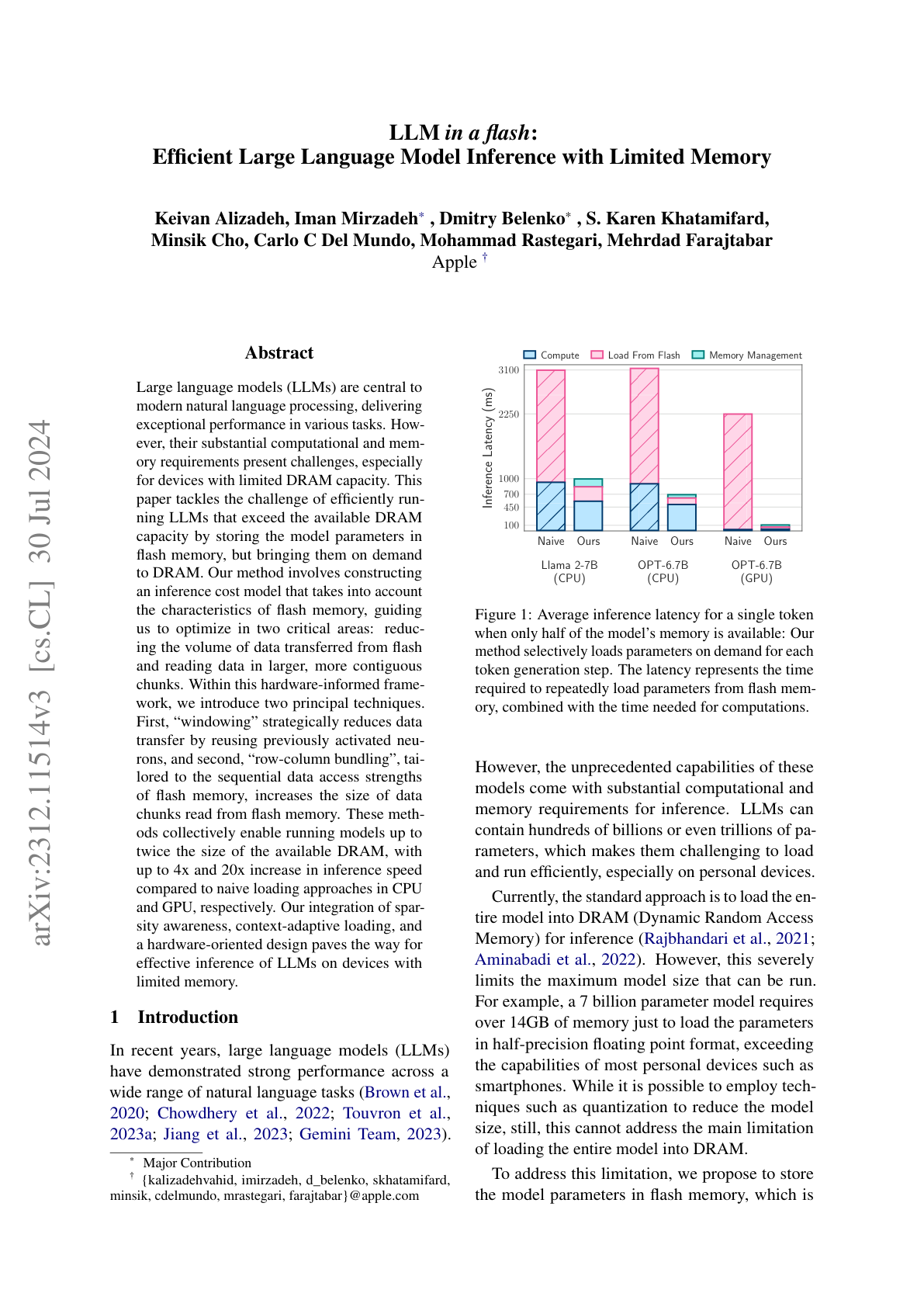
LLM in a Flash
Apple researchers show how to run LLMs larger than available DRAM by streaming weights from flash storage on demand.
QuIP#
Cornell's QuIP# is a 2-bit LLM quantization scheme that combines lattice codebooks with incoherence processing to close the quality gap to FP16.
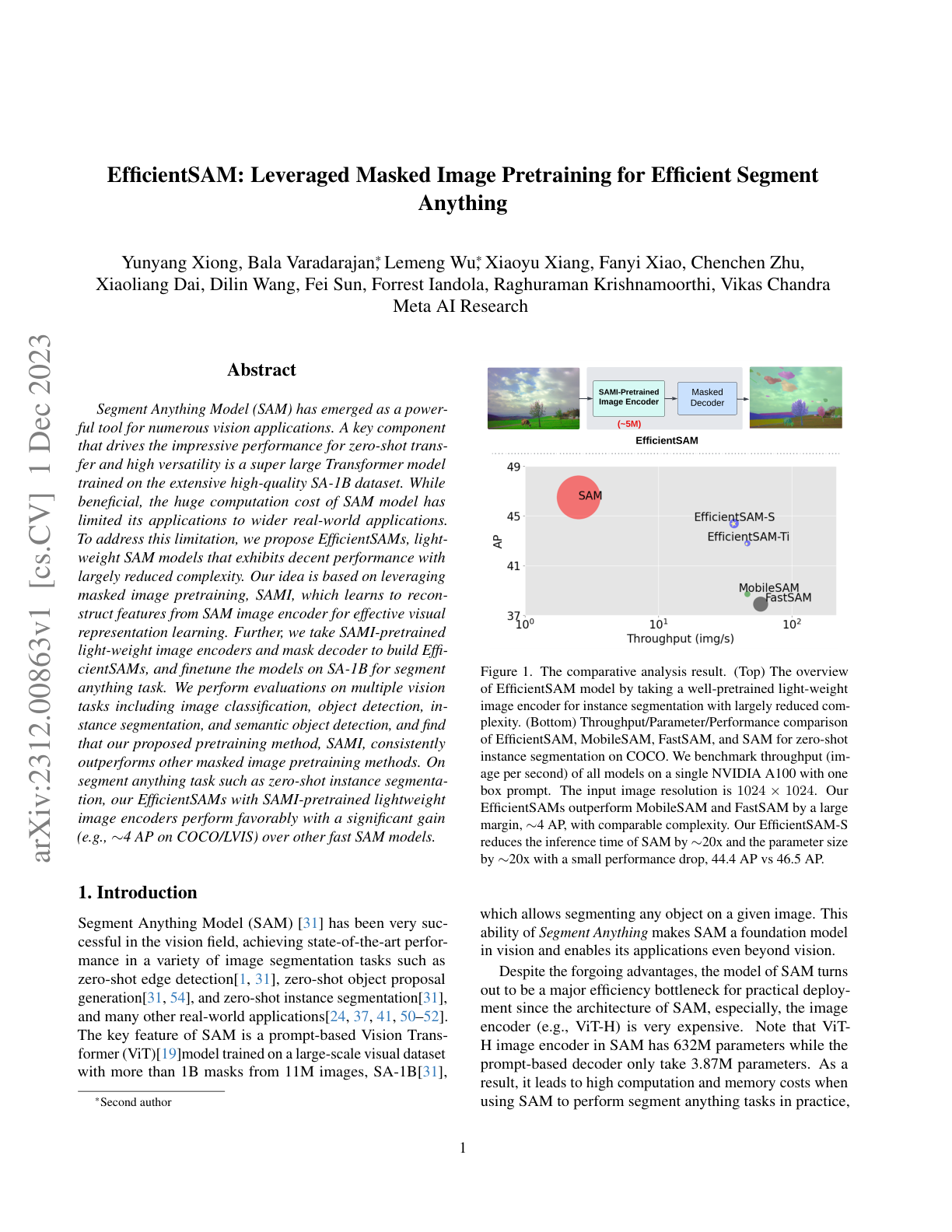
EfficientSAM
Meta's EfficientSAM is a lightweight Segment Anything variant that preserves most of SAM's zero-shot quality at a fraction of the compute.
The Efficiency Spectrum of LLMs
A comprehensive review of algorithmic advancements for improving LLM efficiency across the full training-to-inference stack.
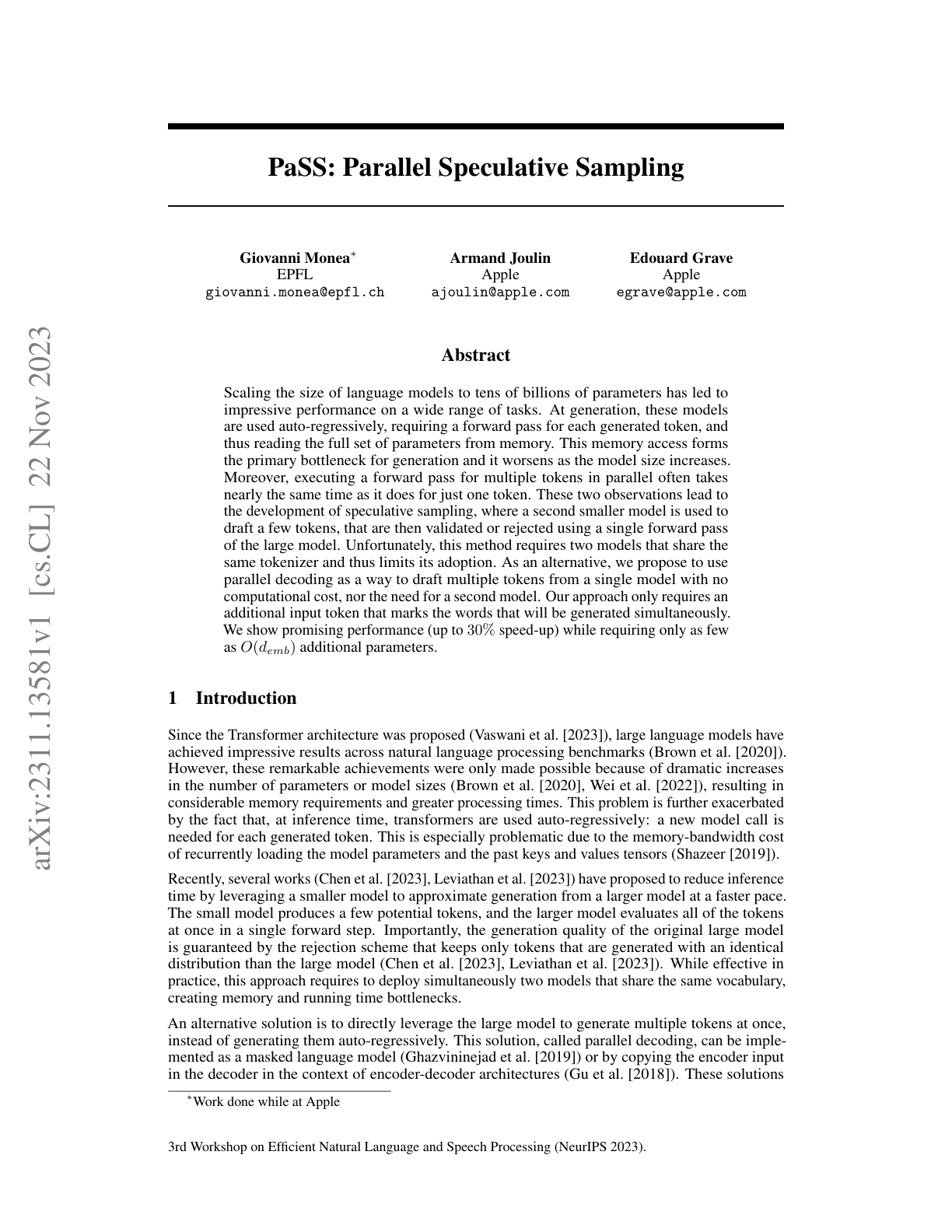
Parallel Speculative Sampling
Amazon researchers propose a parallel variant of speculative sampling that achieves significant LLM inference speedups with minimal extra parameters.
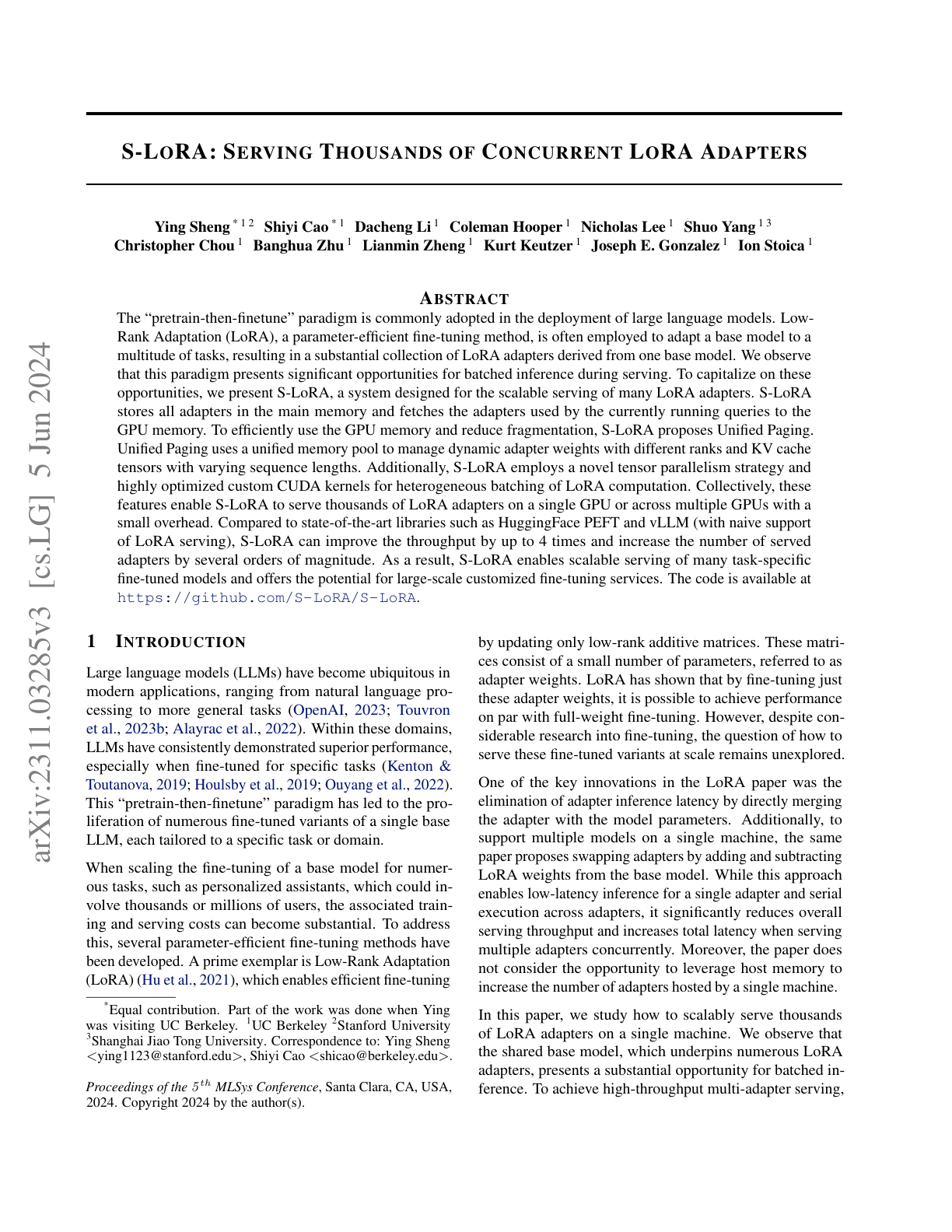
S-LoRA
S-LoRA enables serving thousands of LoRA adapters concurrently on a single GPU through memory-paging and custom CUDA kernels.
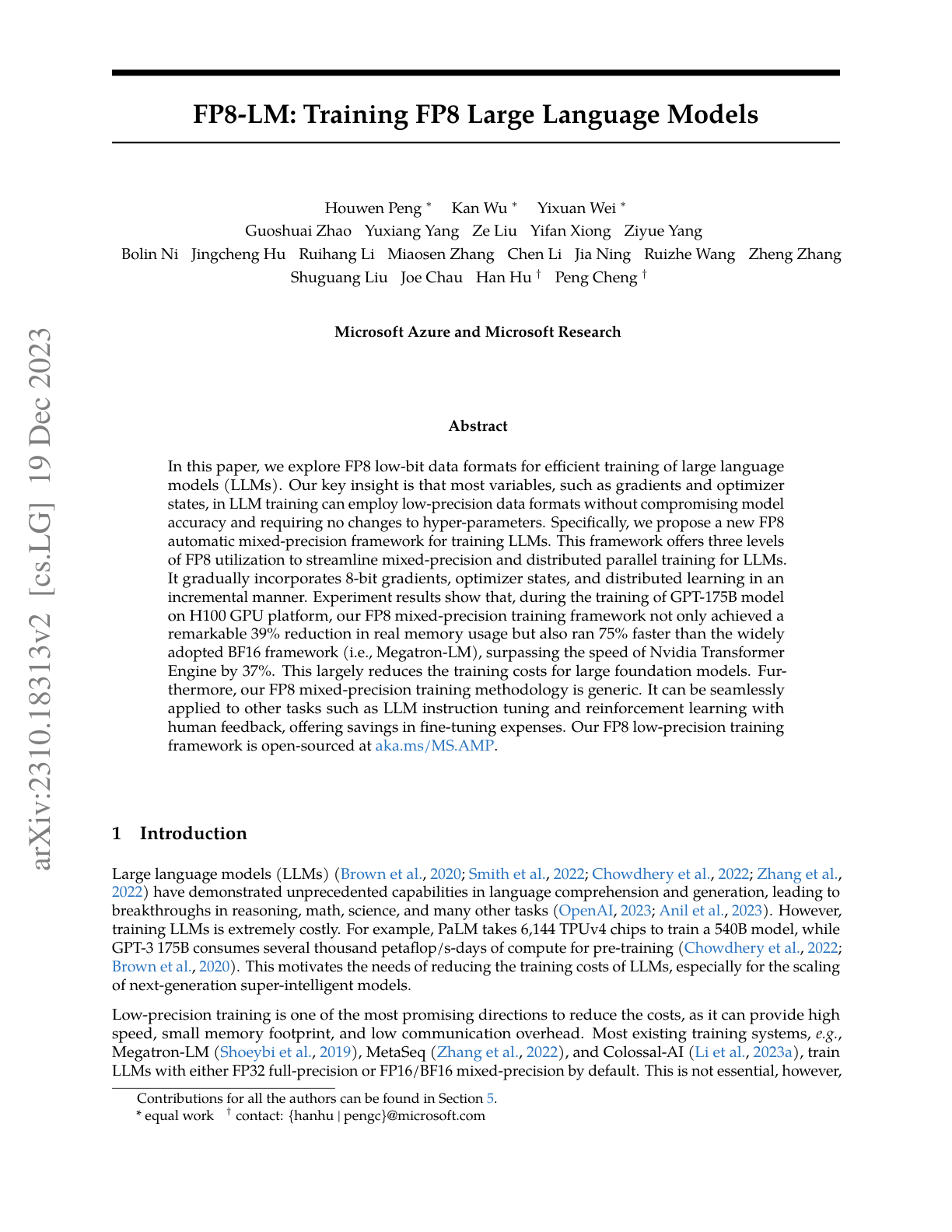
FP8-LM
Microsoft's FP8-LM demonstrates that most LLM training variables - gradients, optimizer states - can use FP8 without sacrificing accuracy.
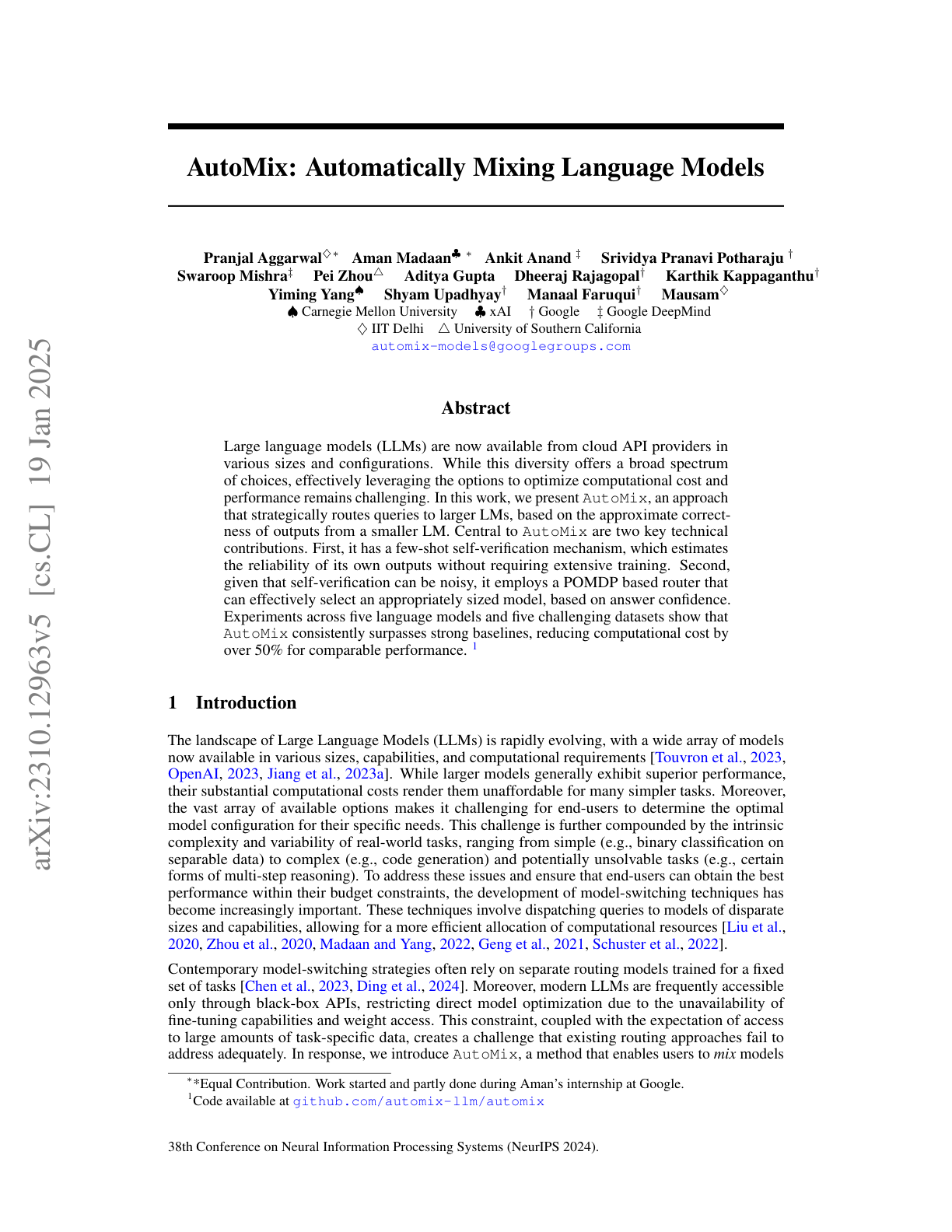
AutoMix
AutoMix routes queries between LLMs of different sizes based on smaller-model confidence, saving cost without sacrificing quality.