AI Papers of the Week
Every paper worth reading in AI, hand-picked one week at a time.
Discover and explore top AI papers withClaude CodeCodex
npx @dair-ai/mcp setup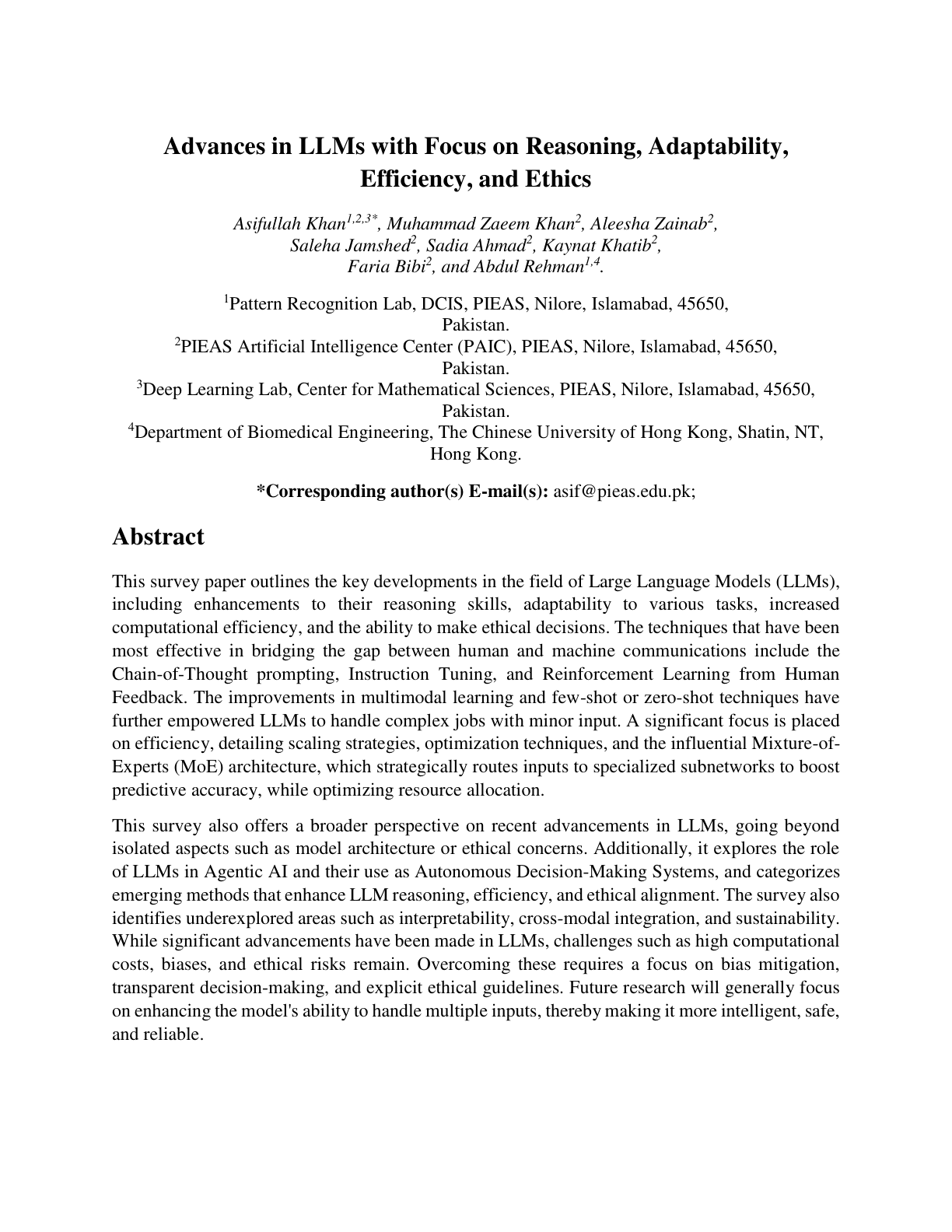
Advances in LLMs
This paper surveys recent advancements in LLMs focusing on reasoning, adaptability, efficiency, and ethics. It highlights techniques like CoT prompting, Instruction Tuning, RLHF, and multimodal learning, while also addressing challenges like bias, computational cost, and interpretability.
Text-to-LoRA
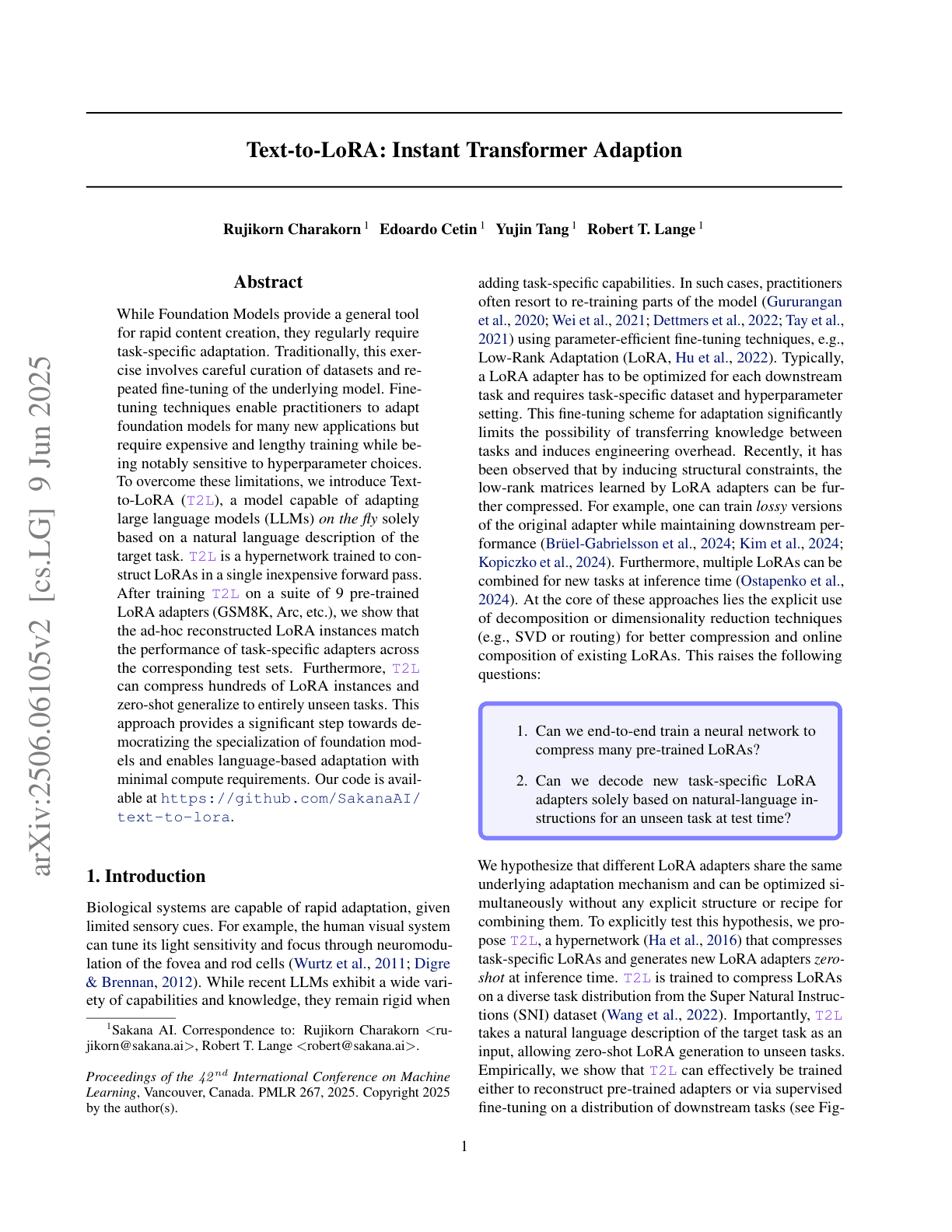
Introduces a hypernetwork-based approach for instantly generating LoRA adapters from natural language task descriptions, removing the need for conventional task-specific fine-tuning. The authors present Text-to-LoRA (T2L), a model that compresses many LoRA adapters and generalizes to unseen tasks with high efficiency and strong performance.
V-JEPA 2
Meta AI introduces V-JEPA 2, a scalable joint-embedding predictive architecture for self-supervised video learning, targeting the goal of building a generalist world model capable of understanding, predicting, and planning in the physical world. The model is trained in two stages: action-free pretraining on 1M+ hours of internet videos and images, followed by post-training with only 62 hours of unlabeled robot trajectories (Droid dataset). This yields a latent video representation that is useful across a broad range of downstream tasks.
Reinforcement Pre-Training
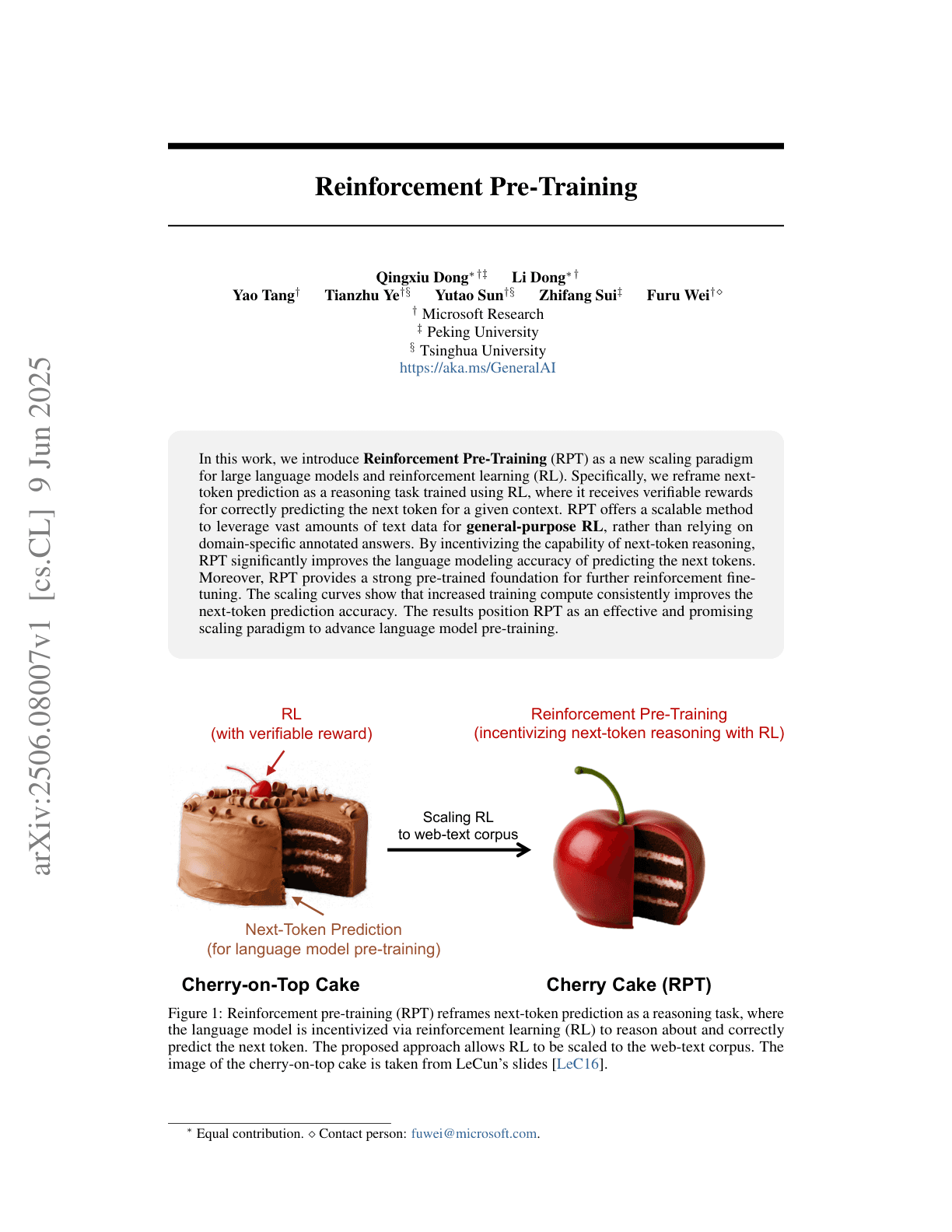
This paper introduces Reinforcement Pre-Training (RPT), a new paradigm that bridges LLM pretraining and RL by reinterpreting next-token prediction as a reasoning task rewarded via verifiable correctness. Instead of relying on hand-curated annotations or costly human feedback, RPT applies RL on vast unannotated text corpora, assigning intrinsic rewards based on whether a predicted token matches the ground truth. This reframing supports general-purpose RL scaling and enhances both pretraining and fine-tuning efficacy.
TableRAG
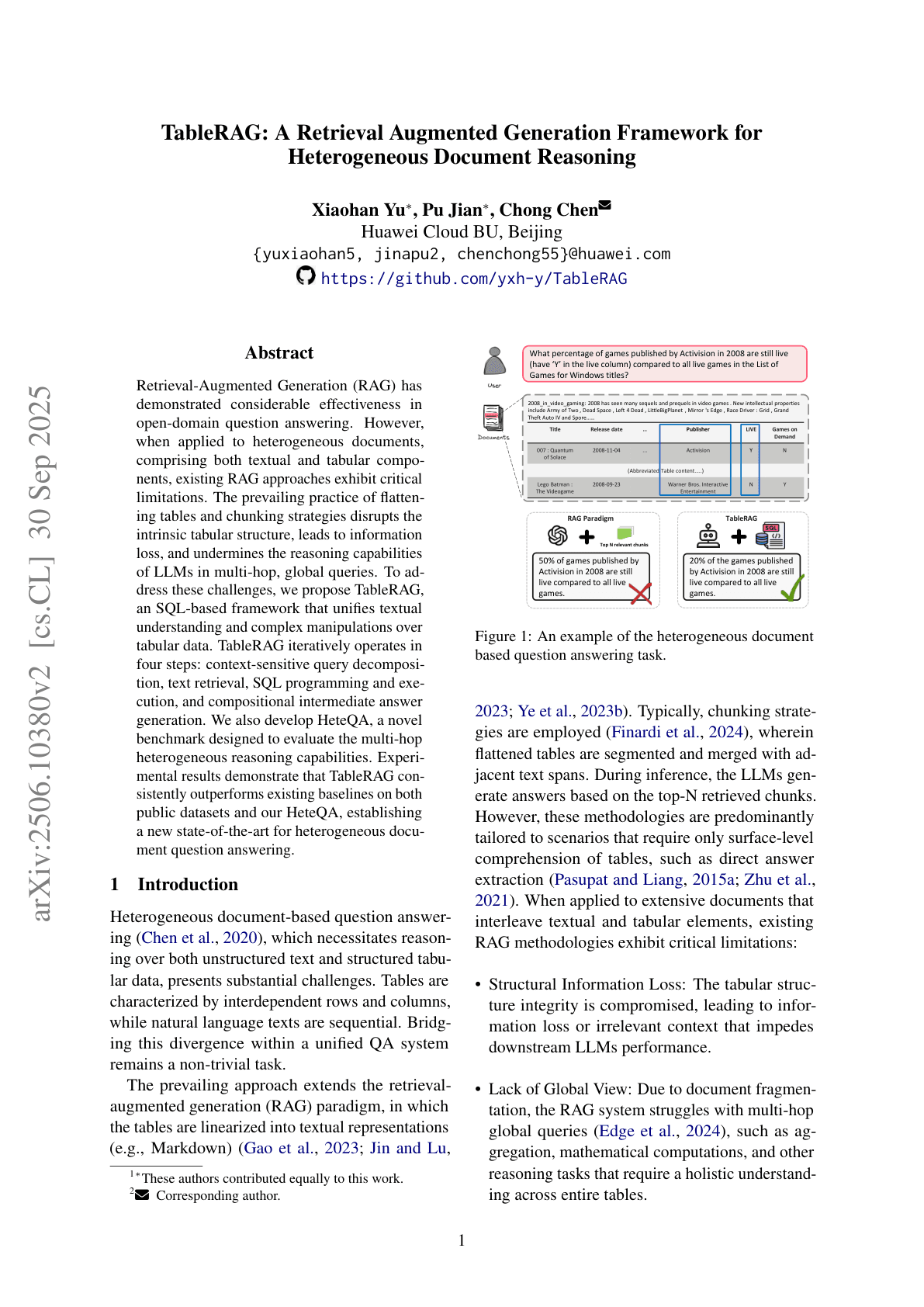
TableRAG tackles a core limitation of existing RAG approaches: their inability to reason effectively over heterogeneous documents that combine both unstructured text and structured tables. Typical RAG pipelines flatten tables and intermix them with surrounding text, losing essential structural information and hampering multi-hop reasoning. TableRAG overcomes this by introducing a hybrid system that integrates SQL-based symbolic execution with text retrieval in a unified, iterative reasoning framework.
Self-Adapting Language Models
It proposes a novel framework that enables LLMs to adapt themselves through reinforcement learning by generating their own fine-tuning data and update directives, referred to as “self-edits.” This approach allows models to autonomously optimize their learning process, without relying on separate adaptation modules or human supervision. Key highlights:
ComfyUI-R1
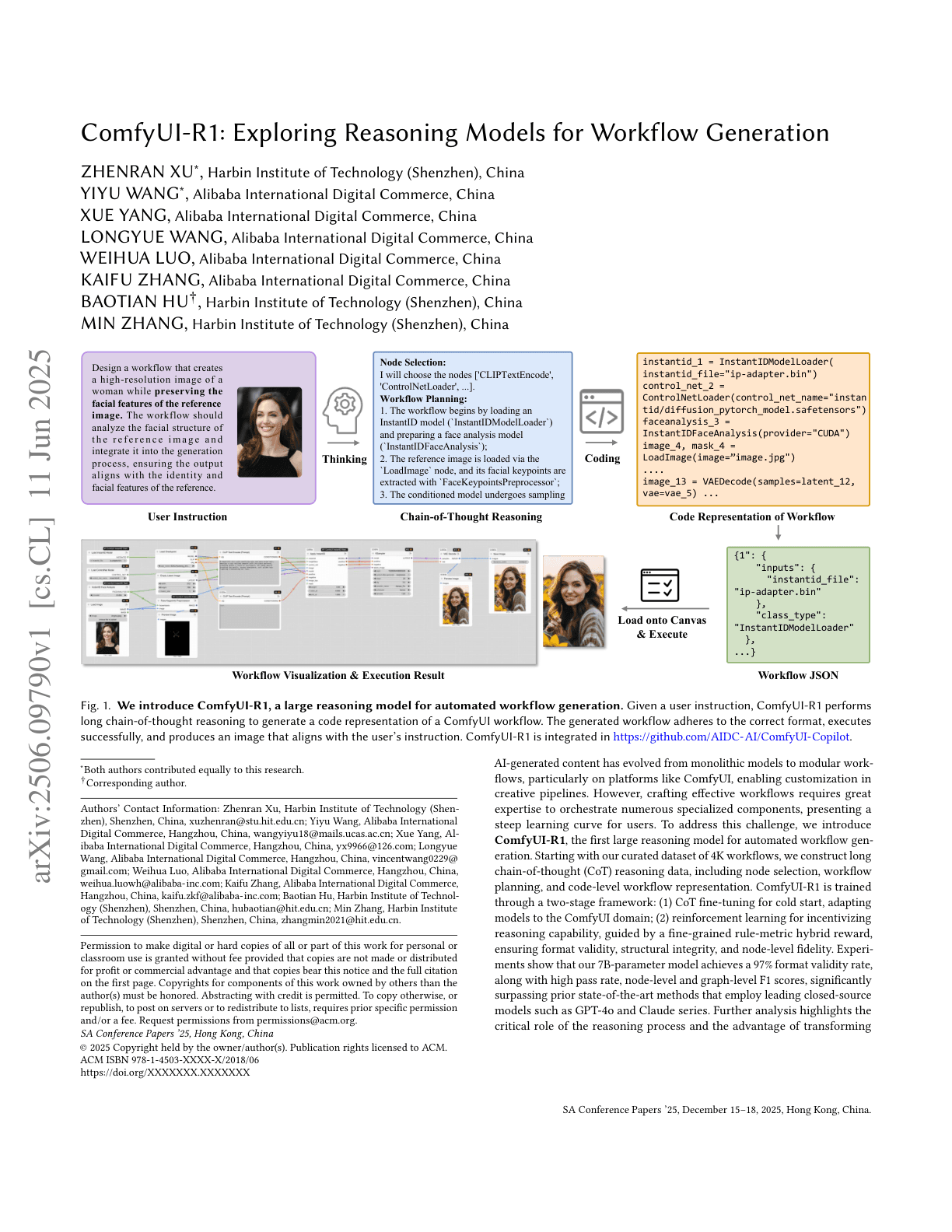
Introduces ComfyUI-R1, a 7B-parameter large reasoning model fine-tuned for automatic workflow generation in the ComfyUI ecosystem. Built on Qwen2.5-Coder and trained through a two-stage pipeline (supervised chain-of-thought reasoning followed by reinforcement learning), ComfyUI-R1 significantly outperforms prior state-of-the-art approaches that rely on commercial models like GPT-4o and Claude 3.5. Key highlights:
Magistral
Mistral introduces Magistral, its first reasoning-focused LLM line, alongside a custom RL training stack that enables pure reinforcement learning from scratch. In contrast to prior approaches that rely on distillation from teacher models, Magistral trains directly using online RL with text-only data and custom reward shaping. The work yields two open models: Magistral Medium (based on Mistral Medium 3) and the open-sourced Magistral Small (24B), which is bootstrapped via SFT on Medium’s outputs, followed by RL. Key insights:
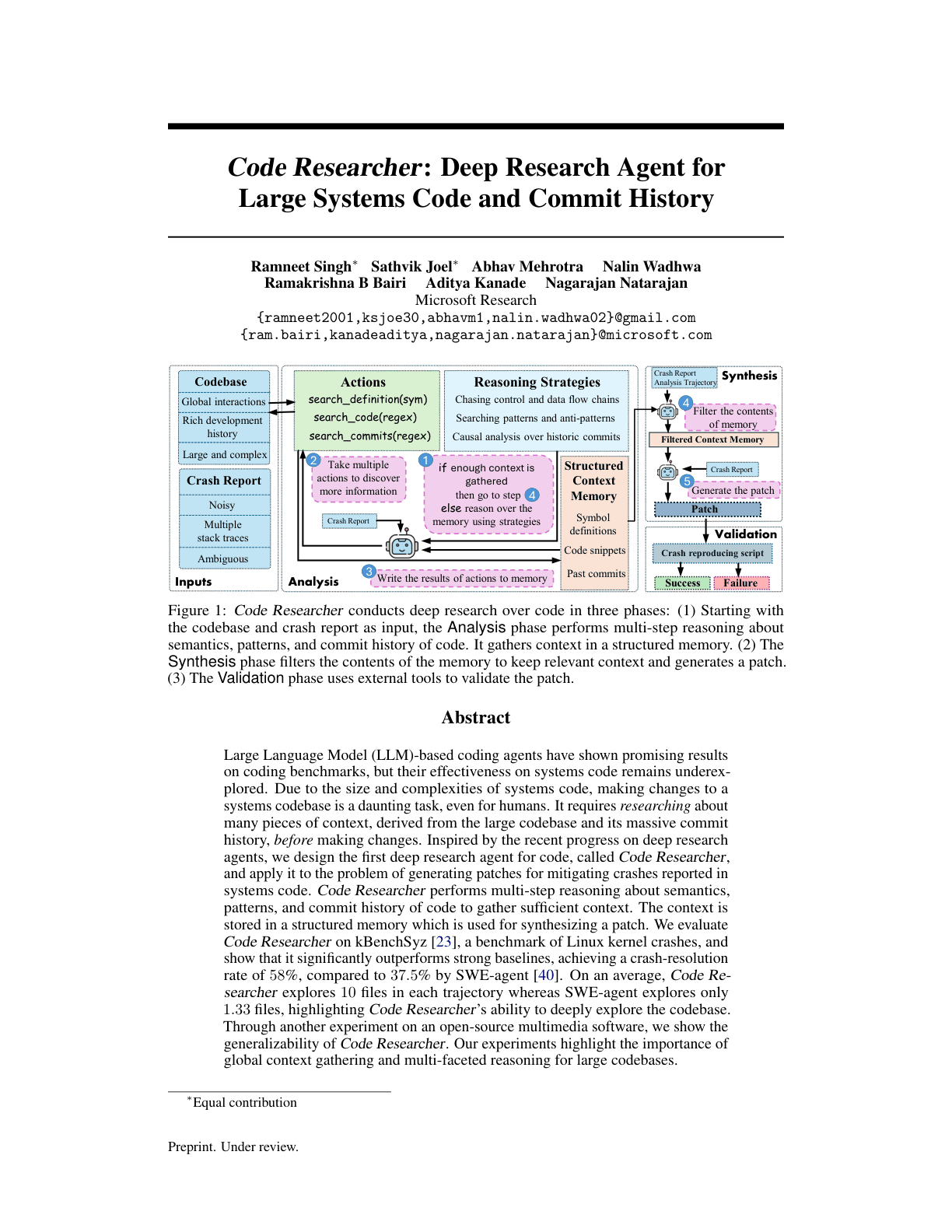
Code Researcher
Code Researcher is a deep research agent designed to resolve complex bugs in large systems’ code by leveraging multi-step reasoning over semantics, patterns, and commit history. It significantly outperforms existing coding agents like SWE-agent on benchmarks like kBenchSyz, achieving a 58% crash-resolution rate by effectively gathering and filtering global context before generating and validating patches.
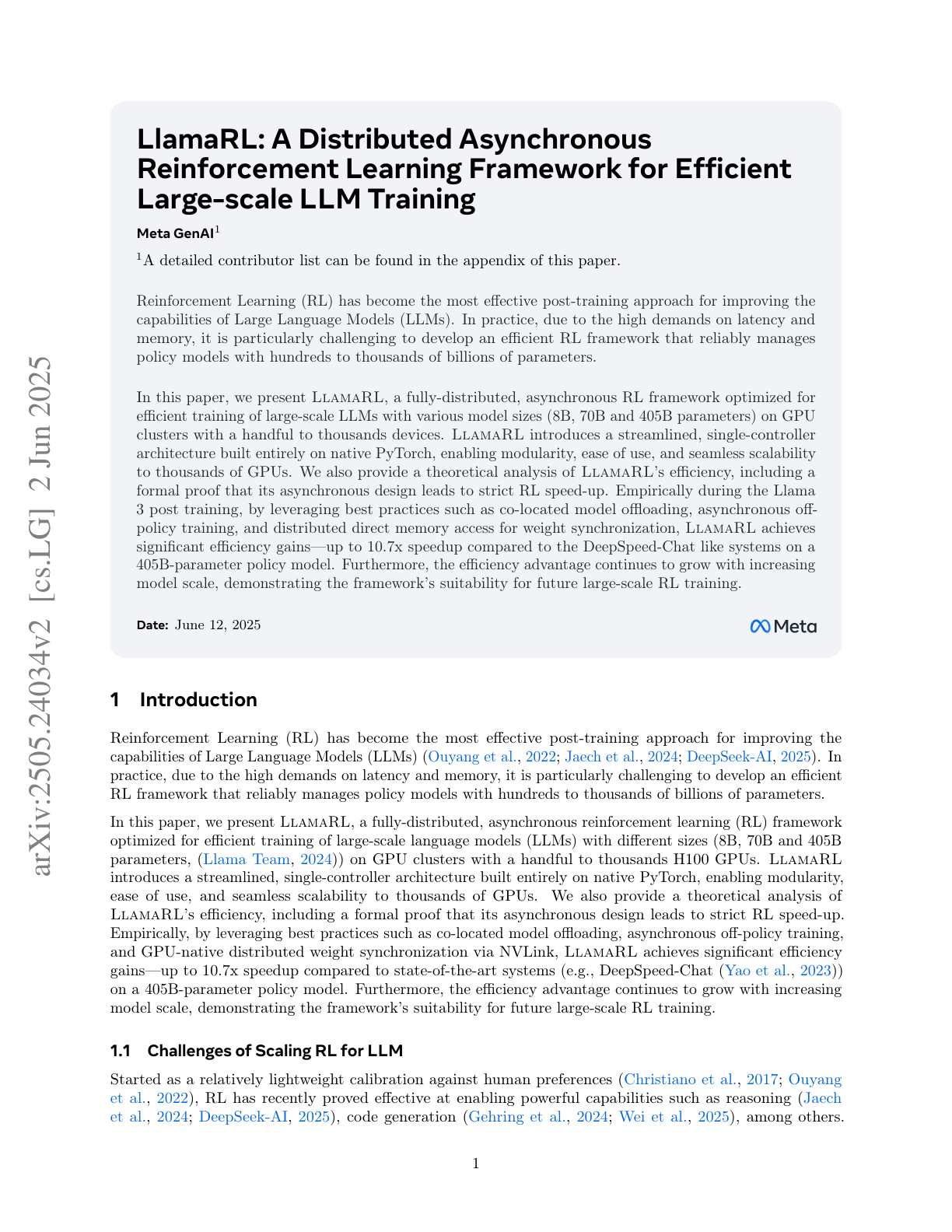
LLamaRL
LlamaRL is a fully-distributed, asynchronous reinforcement learning framework designed for efficient large-scale LLM training (8B to 405B+ models). It achieves up to 10.7× speedup over DeepSpeed-Chat by combining co-located model offloading, asynchronous off-policy training (AIPO), and fast GPU-native weight sync (DDMA), while maintaining model quality across tasks like math reasoning.
Predicting a Cyclone’s Track with AI
Google DeepMind's Weather Lab debuts an interactive platform featuring an AI cyclone forecasting model that generates 50 ensemble scenarios up to 15 days ahead, outperforming traditional systems in track and intensity predictions. It integrates live and historical forecasts with baselines for evaluation and is now used by agencies like the U.S. National Hurricane Center to support early warnings.
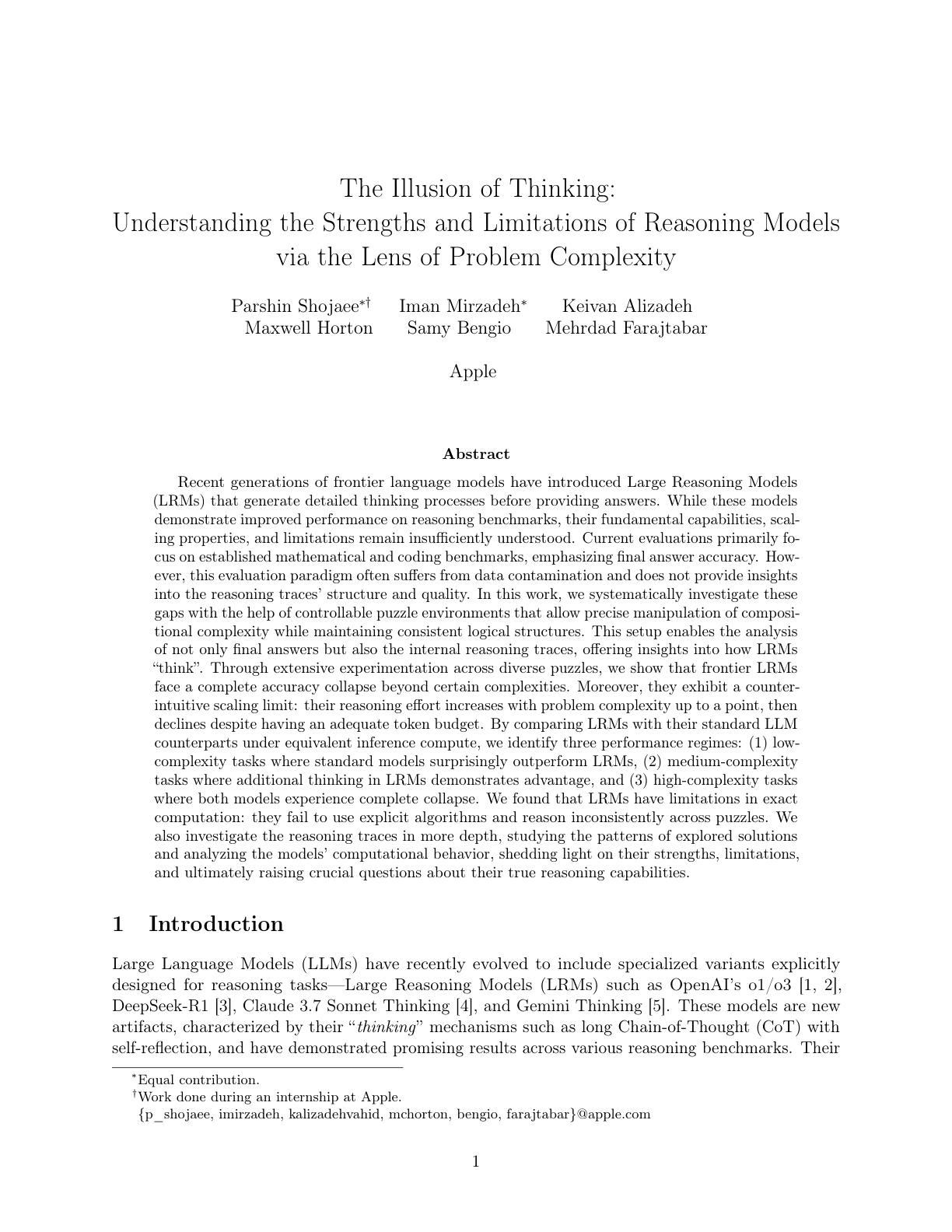
The Illusion of Thinking
Investigates the capabilities and limitations of frontier Large Reasoning Models (LRMs) like Claude 3.7, DeepSeek-R1, and OpenAI’s o-series by systematically analyzing their performance on reasoning tasks as a function of problem complexity. Rather than relying on conventional math benchmarks, which suffer from contamination and lack structure, the authors evaluate LRMs using four controllable puzzles (Tower of Hanoi, Checker Jumping, River Crossing, and Blocks World) that allow fine-grained complexity scaling and transparent trace analysis. Key findings:
From Tokens to Thoughts
This paper introduces an information-theoretic framework to examine whether LLMs organize semantic knowledge like humans, balancing compression and meaning. Drawing from Rate-Distortion Theory and the Information Bottleneck principle, the authors evaluate token embeddings from 30+ LLMs against classic human categorization benchmarks from cognitive psychology.
Knowledge or Reasoning
Introduces a fine-grained evaluation framework to dissect LLM thinking into two components: knowledge correctness and reasoning informativeness, measured via Knowledge Index (KI) and Information Gain (InfoGain), respectively. The authors apply this framework to evaluate how reasoning transfers across domains, particularly medical and mathematical, using Qwen2.5-7B and its DeepSeek-R1-distilled variant trained via SFT and RL. Key findings include:
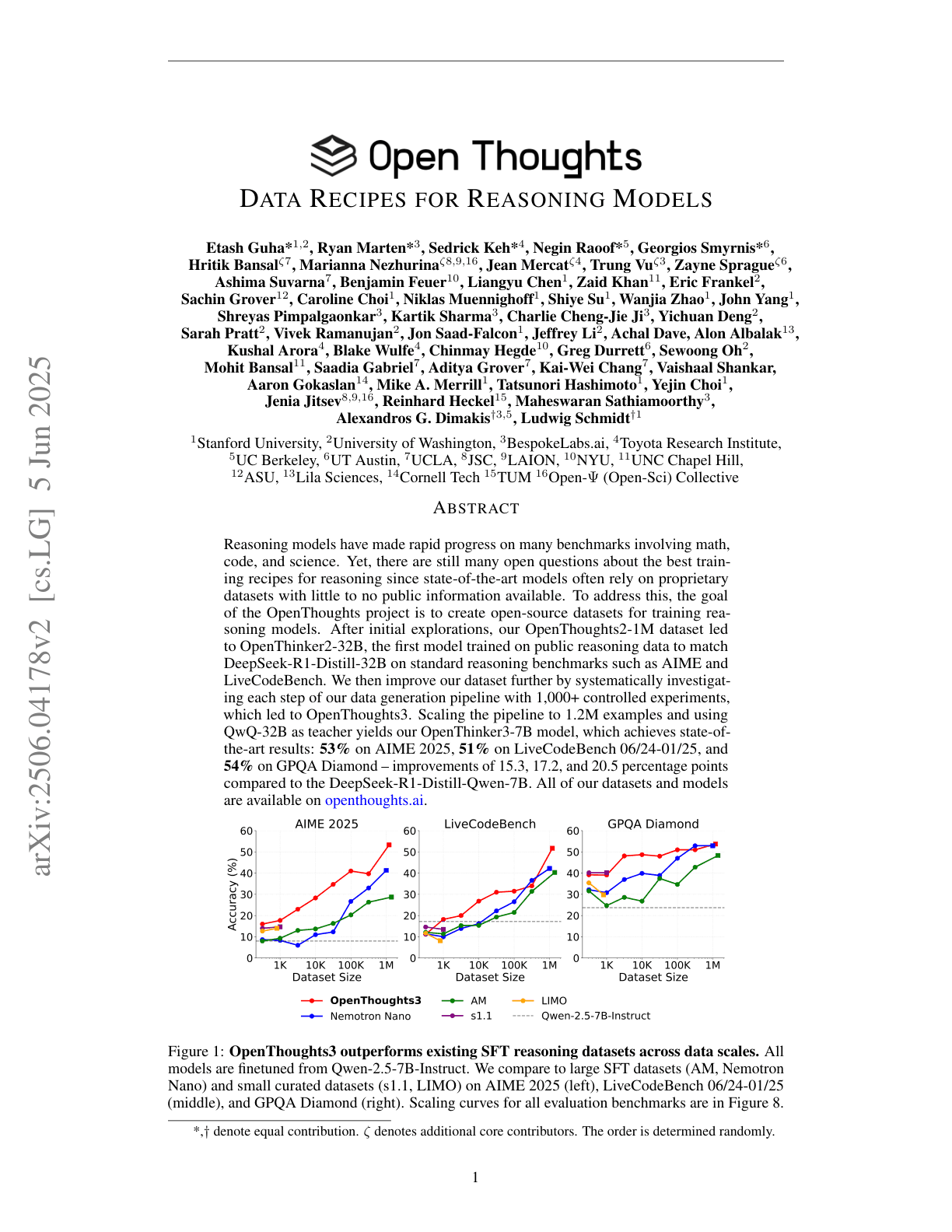
Open Thoughts
This paper presents OpenThoughts3, a systematic recipe for curating supervised fine-tuning (SFT) data that advances the performance of open-source reasoning models. The authors develop OpenThinker3-7B, a 7B parameter model trained on their new 1.2M example dataset (OpenThoughts3-1.2M) derived from over 1,000 controlled experiments. Despite using no reinforcement learning, OpenThinker3-7B outperforms all other open-data 7B and 8B models on standard math, code, and science reasoning benchmarks, even beating models trained with larger-scale or mixed SFT+RL pipelines. Key insights and contributions:
Coding Agents with Multimodal Browsing
Introduces OpenHands-Versa, a unified agent designed to perform strongly across diverse domains, coding, web browsing, and multimodal information access, by equipping a single agent with three general capabilities: code execution, multimodal web browsing, and file/search access. In contrast to specialist or multi-agent systems optimized for narrow domains, OpenHands-Versa aims to solve a wide variety of real-world tasks with minimal architectural complexity. Key highlights:
Self-Challenging Language Model Agents
Proposes a novel self-improvement method for multi-turn tool-use LLM agents, called the Self-Challenging Agent (SCA). It trains LLMs entirely from tasks they generate themselves, avoiding the need for human-annotated tasks or evaluations. The framework introduces a new task format called Code-as-Task (CaT), ensuring generated tasks are feasible, verifiable, and challenging. SCA is shown to double performance in a self-improvement setting and significantly boost performance in distillation. Key contributions and findings:
AlphaOne
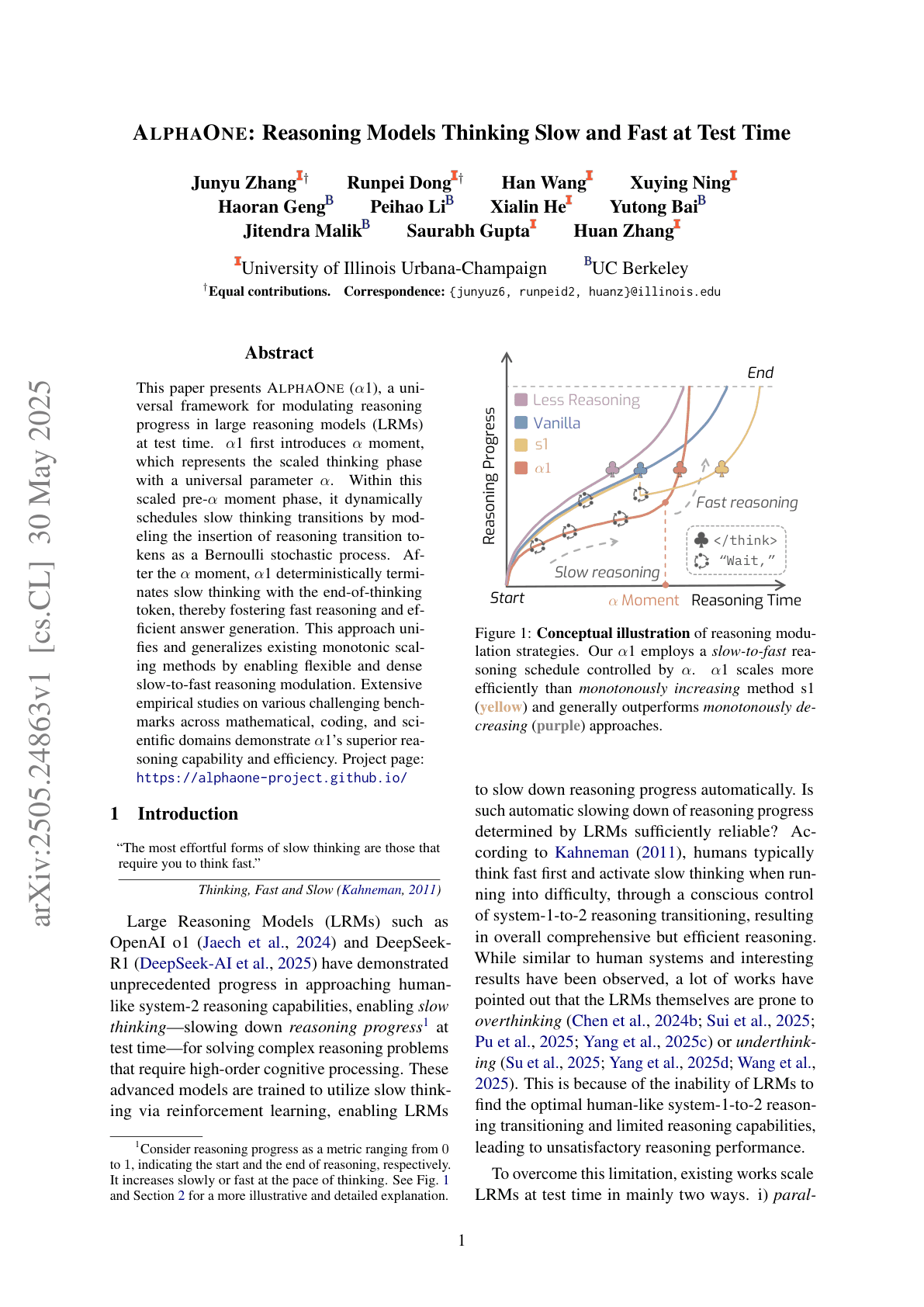
Introduces a universal framework, α1, for modulating the reasoning progress of large reasoning models (LRMs) during inference. Rather than relying on rigid or automatic schedules, α1 explicitly controls when and how models engage in “slow thinking” using a tunable parameter α. The method dynamically inserts “wait” tokens to encourage deeper reasoning and then deterministically ends slow thinking with a “</think>” token to prompt efficient answer generation. This yields better accuracy and efficiency than previous test-time scaling approaches. Key insights:
Common Pile v0.1
The Common Pile v0.1 is an 8TB dataset of openly licensed text designed for LLM pretraining, addressing legal and ethical concerns of unlicensed data use. Two 7B parameter models trained on it, Comma v0.1-1T and 2T, achieve performance comparable to LLaMA 1 and 2, and the dataset, code, and model checkpoints are all publicly released.
RewardBench 2
RewardBench 2 is a new multi-skill benchmark for evaluating reward models with more challenging human prompts and stronger correlation to downstream performance. It highlights gaps in the current reward model's effectiveness and aims to support more rigorous evaluation, showing existing models score ~20 points lower than their predecessor.
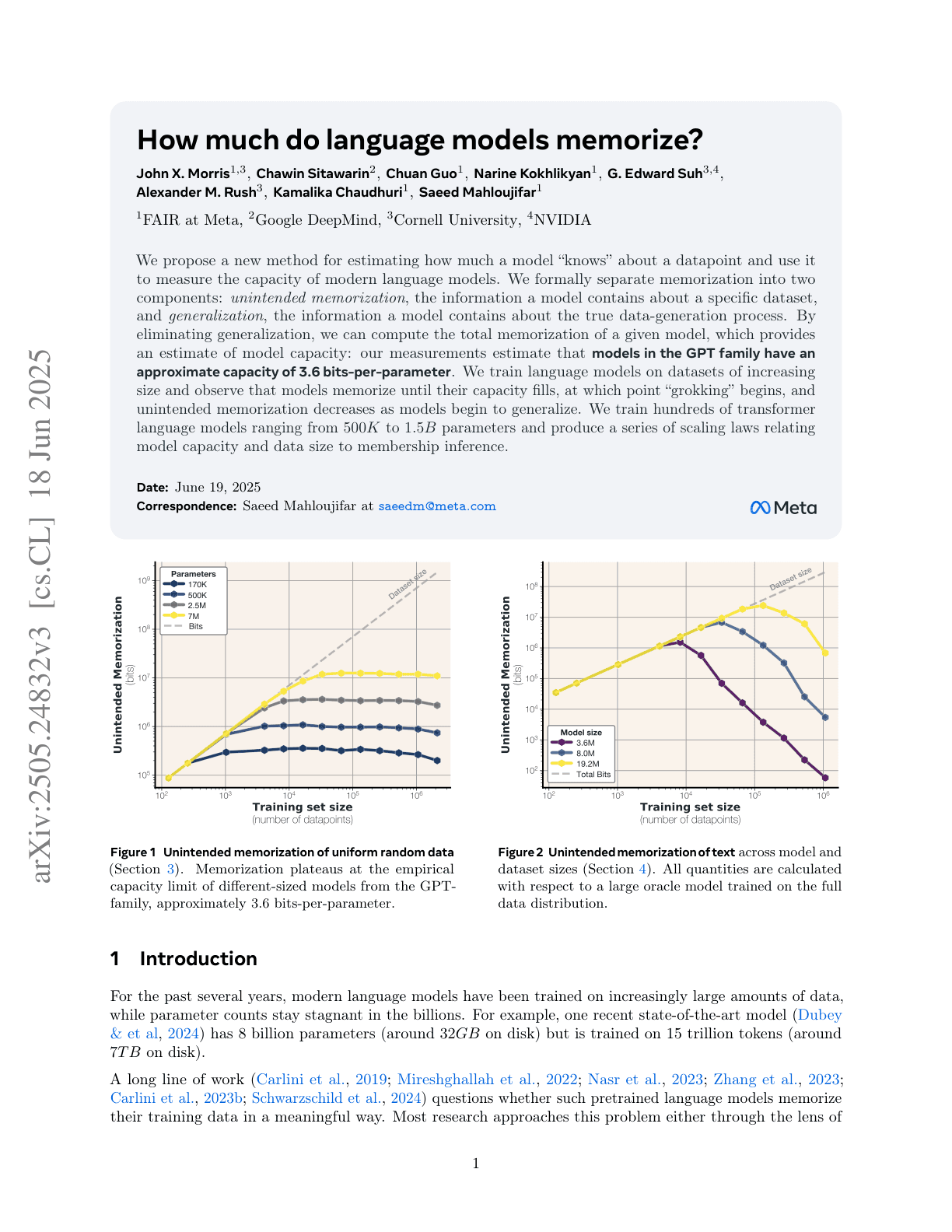
Memorization in LLMs
This study introduces a method to quantify how much a model memorizes versus generalizes, estimating GPT models have a capacity of ~3.6 bits per parameter. By training hundreds of models, the authors show that memorization saturates with data before generalization (“grokking”) kicks in, and derive new scaling laws linking capacity, data size, and membership inference.
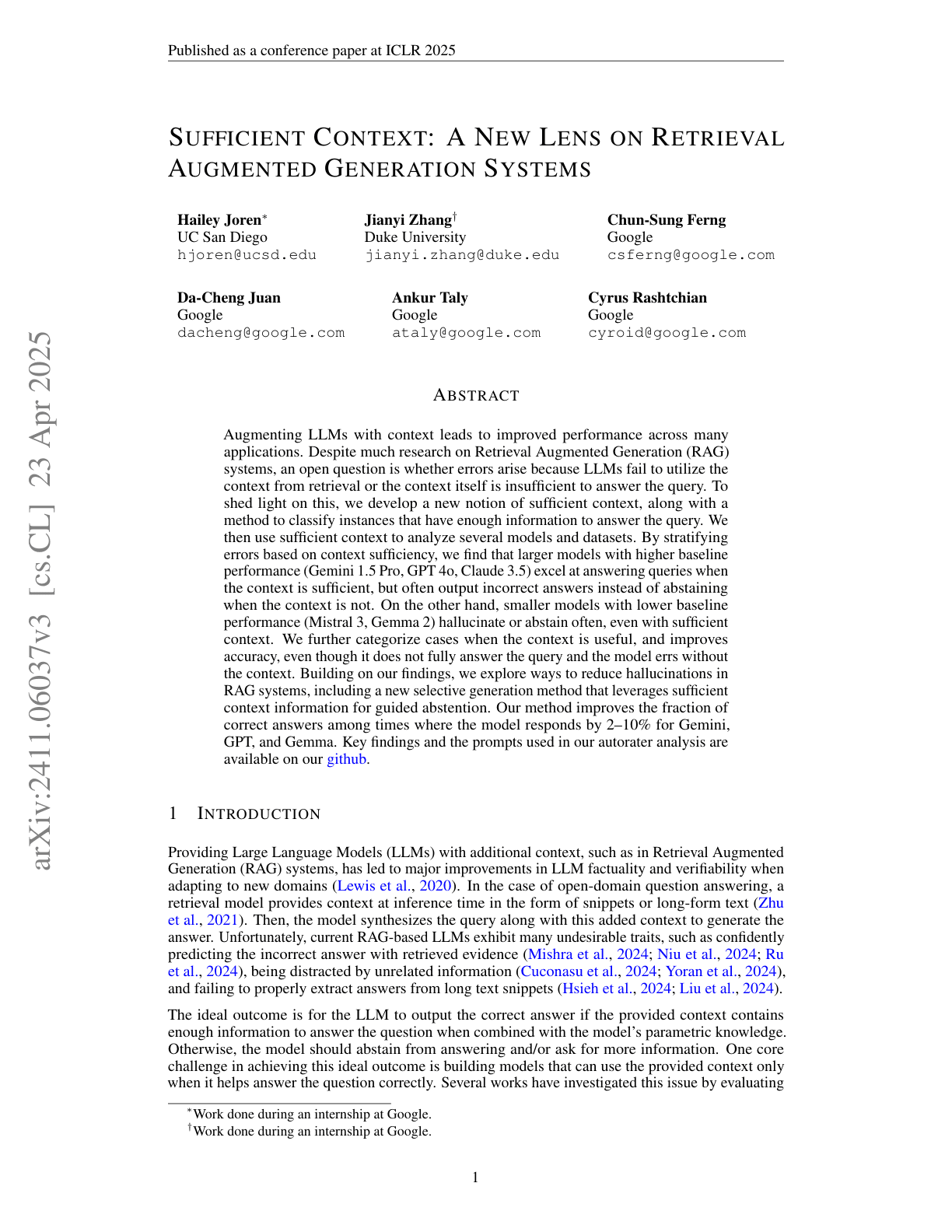
New Lens on RAG Systems
Introduces a new conceptual and empirical framework for analyzing RAG systems through the lens of sufficient context, whether the retrieved content alone enables answering a query. This notion helps decouple retrieval failures from generation errors in LLMs, providing clarity on model behavior under different contextual adequacy. Key findings:
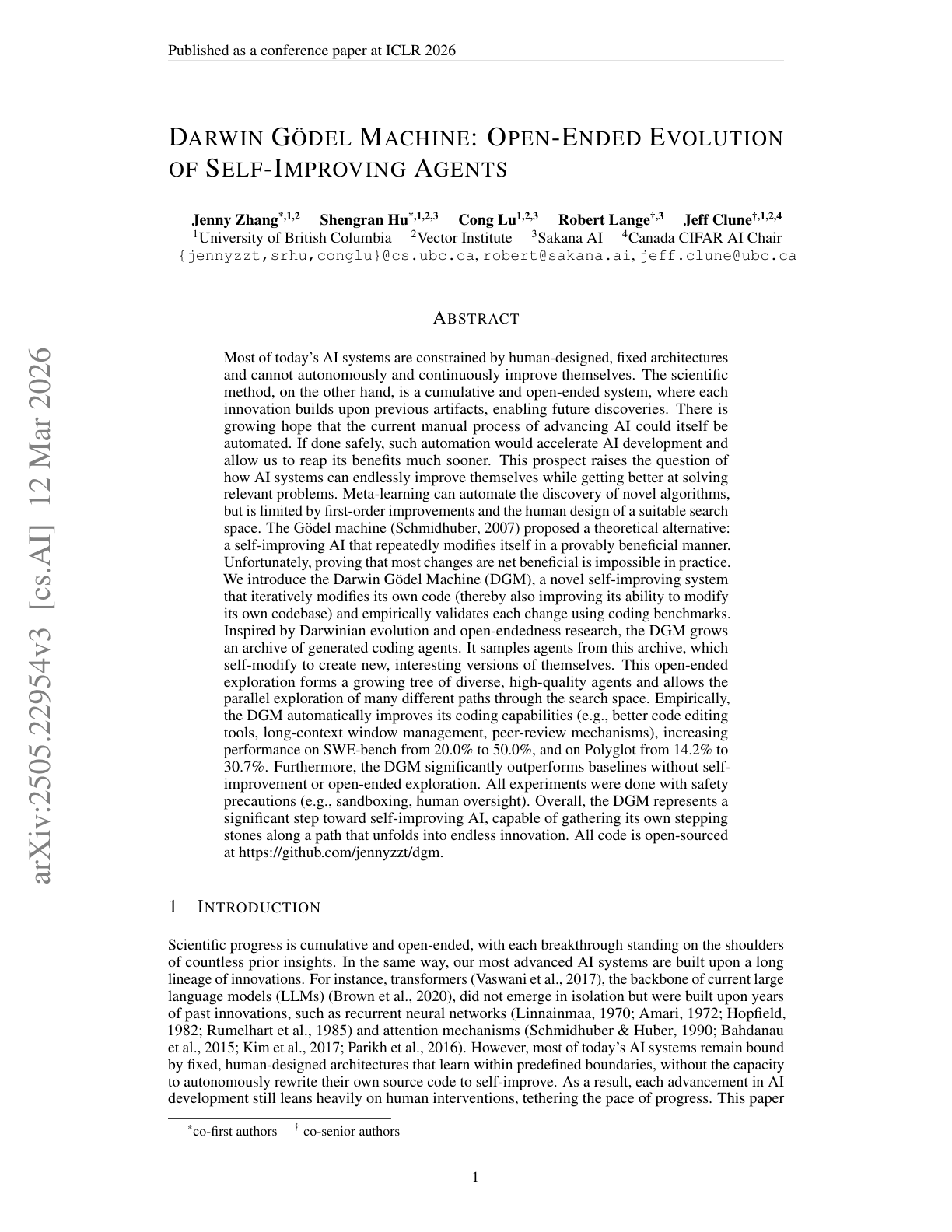
Open-Ended Evolution of Self-Improving Agents
This work presents the Darwin Gödel Machine (DGM), a system that advances the vision of self-improving AI by combining self-referential code modification with open-ended evolutionary search. Unlike the original Gödel machine, which requires provable benefits for code changes (a practically intractable constraint), the DGM adopts an empirical approach: it modifies its own codebase and evaluates improvements on coding benchmarks. Key contributions and findings:
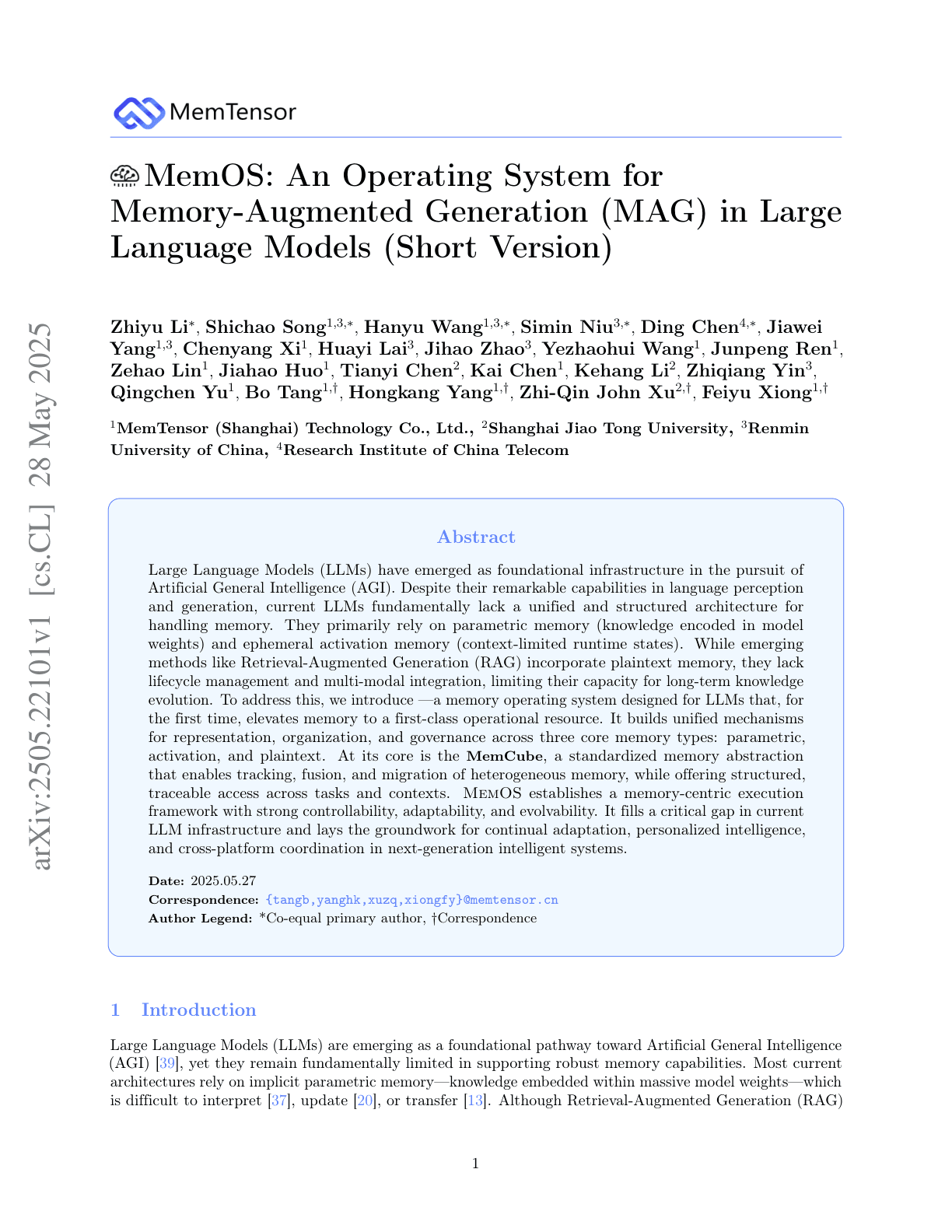
An Operating System for Memory-Augmented Generation in LLMs Introduces a unified operating system for managing memory LLMs, addressing a key limitation in
current architectures: their lack of structured, persistent, and governable memory. While today's LLMs rely primarily on parametric memory (model weights) and limited short-term context, MemOS proposes a comprehensive memory lifecycle and management infrastructure designed to support continual learning, behavioral consistency, and knowledge evolution. Key contributions and components include: