AI Papers of the Week
Every paper worth reading in AI, hand-picked one week at a time.
Discover and explore top AI papers withClaude CodeCodex
npx @dair-ai/mcp setup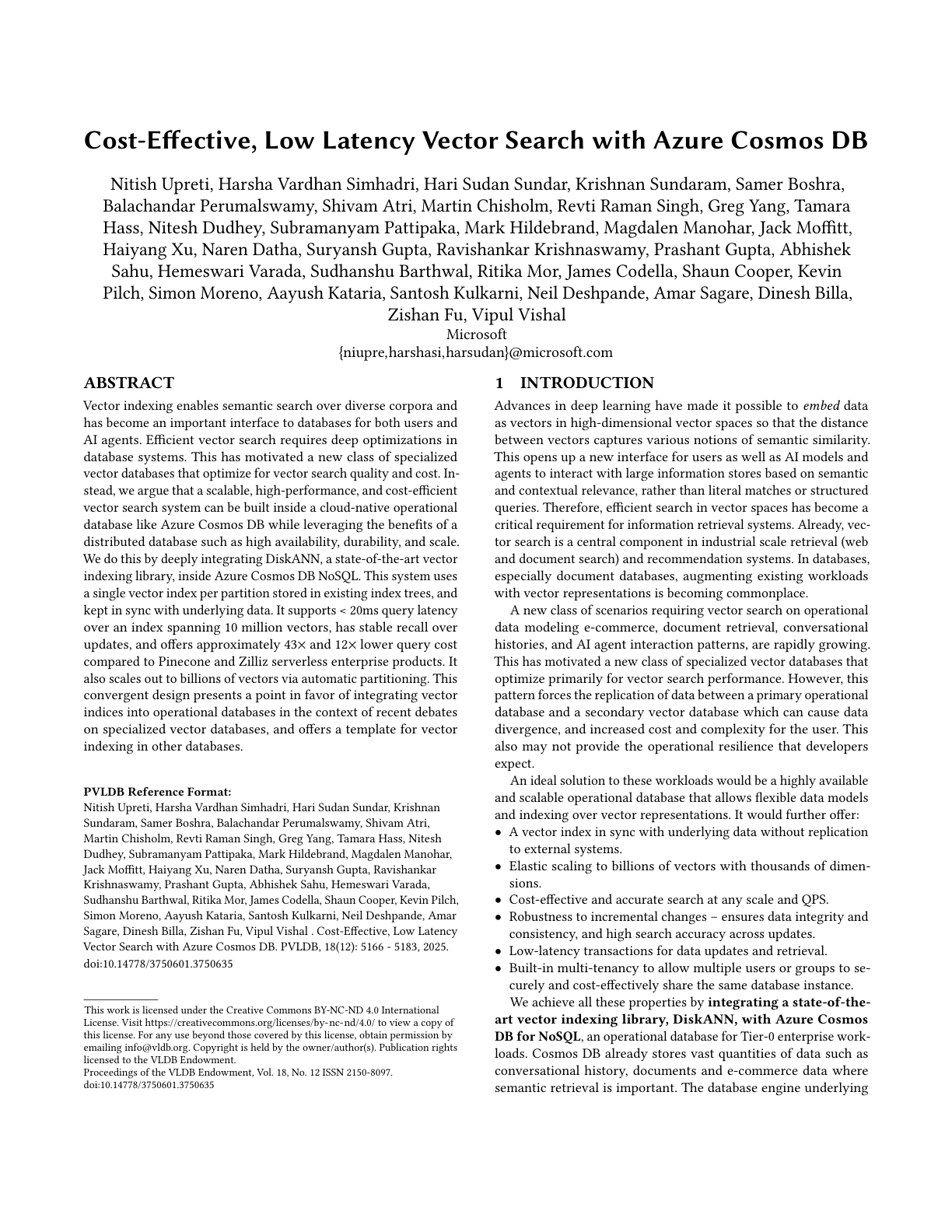
Cost-Efficient, Low-Latency Vector Search
Integrates DiskANN (a vector indexing library) inside of Azure Cosmos DB NoSQL (an operational dataset) that uses a single vector index per partition stored in existing index trees. Benefit: It supports < 20ms query latency over an index spanning 10 million vectors, has stable recall over updates, and offers nearly 15× and 41× lower query cost compared to Zilliz and Pinecone serverless enterprise products. It can further scale to billions of vectors with automatic partitioning.
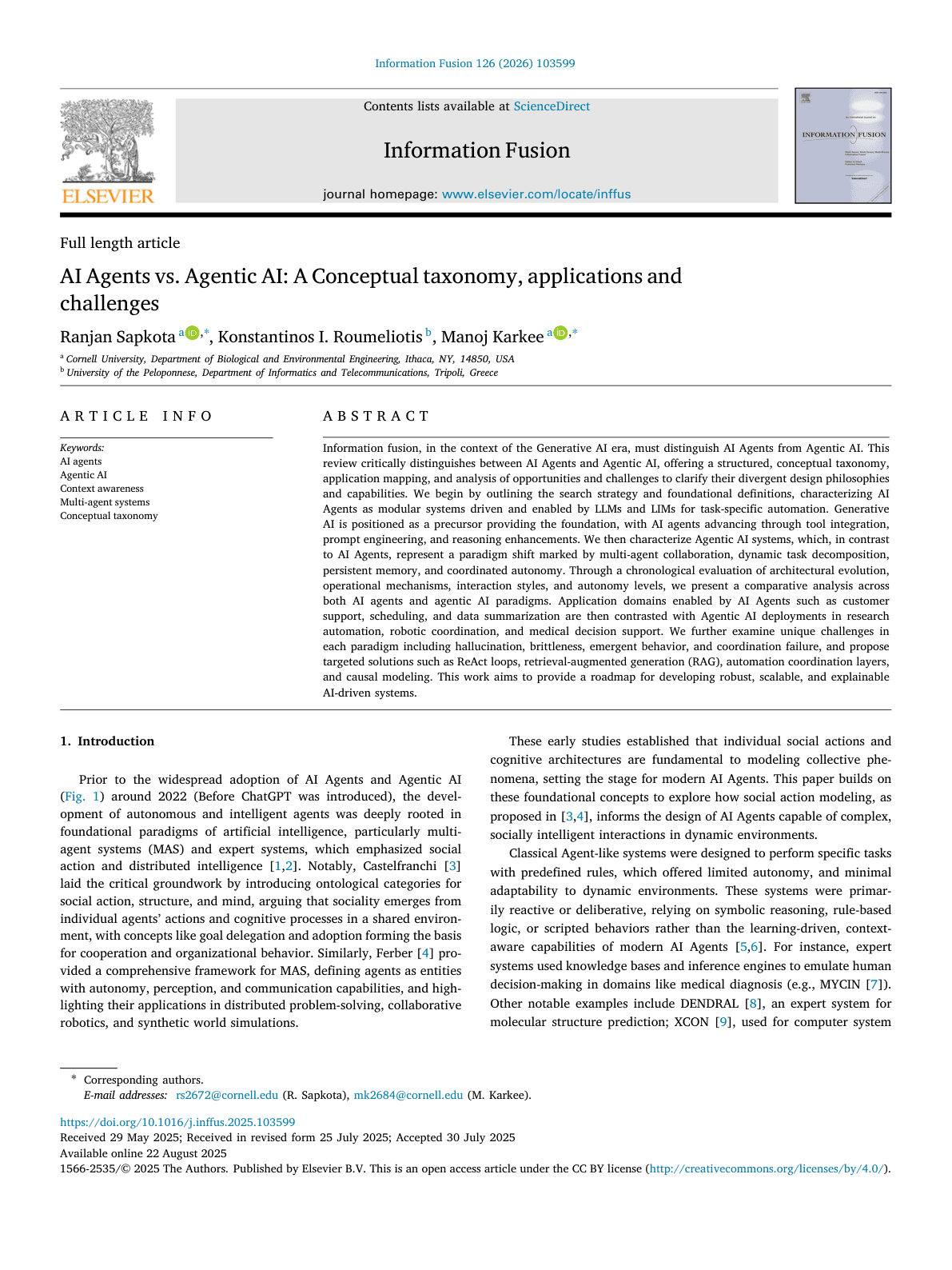
AI Agents vs. Agentic AI
This review paper distinguishes AI Agents from Agentic AI, presenting a structured taxonomy and comparing their architectures, capabilities, and challenges. AI Agents are defined as modular, task-specific systems powered by LLMs and tools, while Agentic AI represents a shift toward multi-agent collaboration, dynamic task decomposition, and orchestrated autonomy, with applications and challenges mapped out for both paradigms, along with proposed solutions like RAG, orchestration layers, and causal modeling.
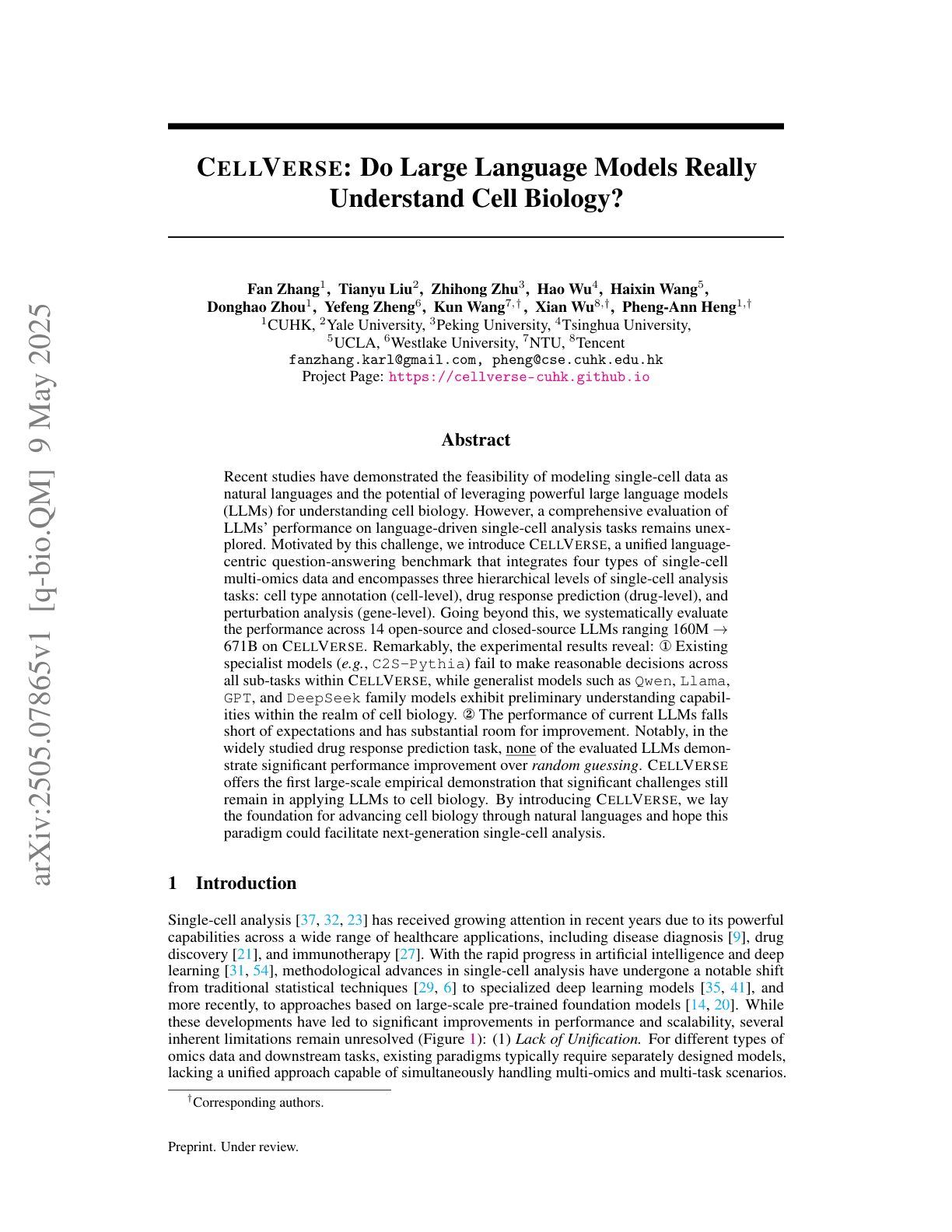
CellVerse
Introduces a benchmark to evaluate LLMs on single-cell biology tasks by converting multi-omics data into natural language. While generalist LLMs like DeepSeek and GPT-4 families show some reasoning ability, none significantly outperform random guessing on key tasks like drug response prediction, exposing major gaps in biological understanding by current LLMs.
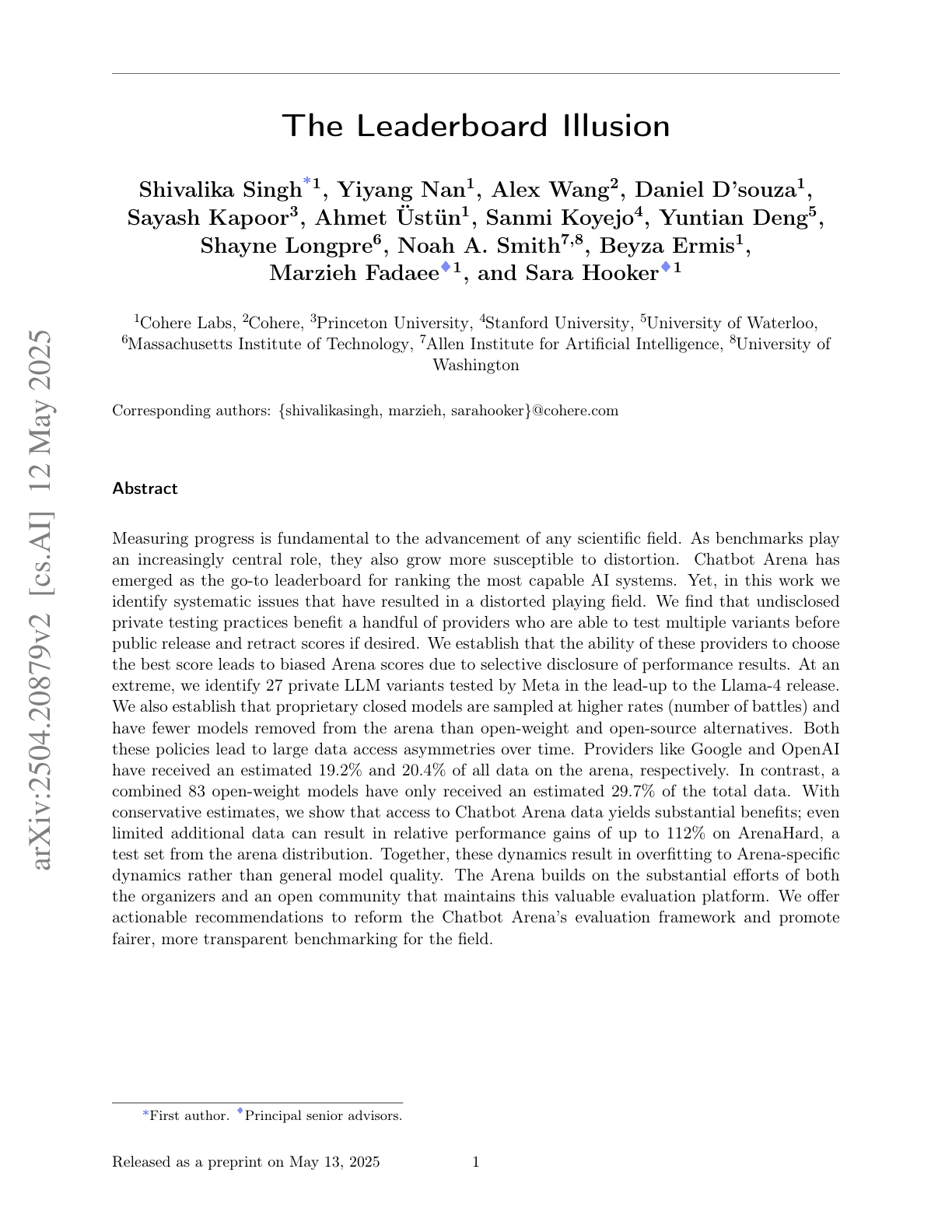
The Leaderboard Illusion
The Leaderboard Illusion investigates systemic distortions in how the Chatbot Arena leaderboard evaluates LLMs, arguing that current practices undermine fair model comparison and scientific progress. Through extensive data analysis covering 2M Arena battles, the authors identify four key issues distorting rankings:
Llama-Nemotron
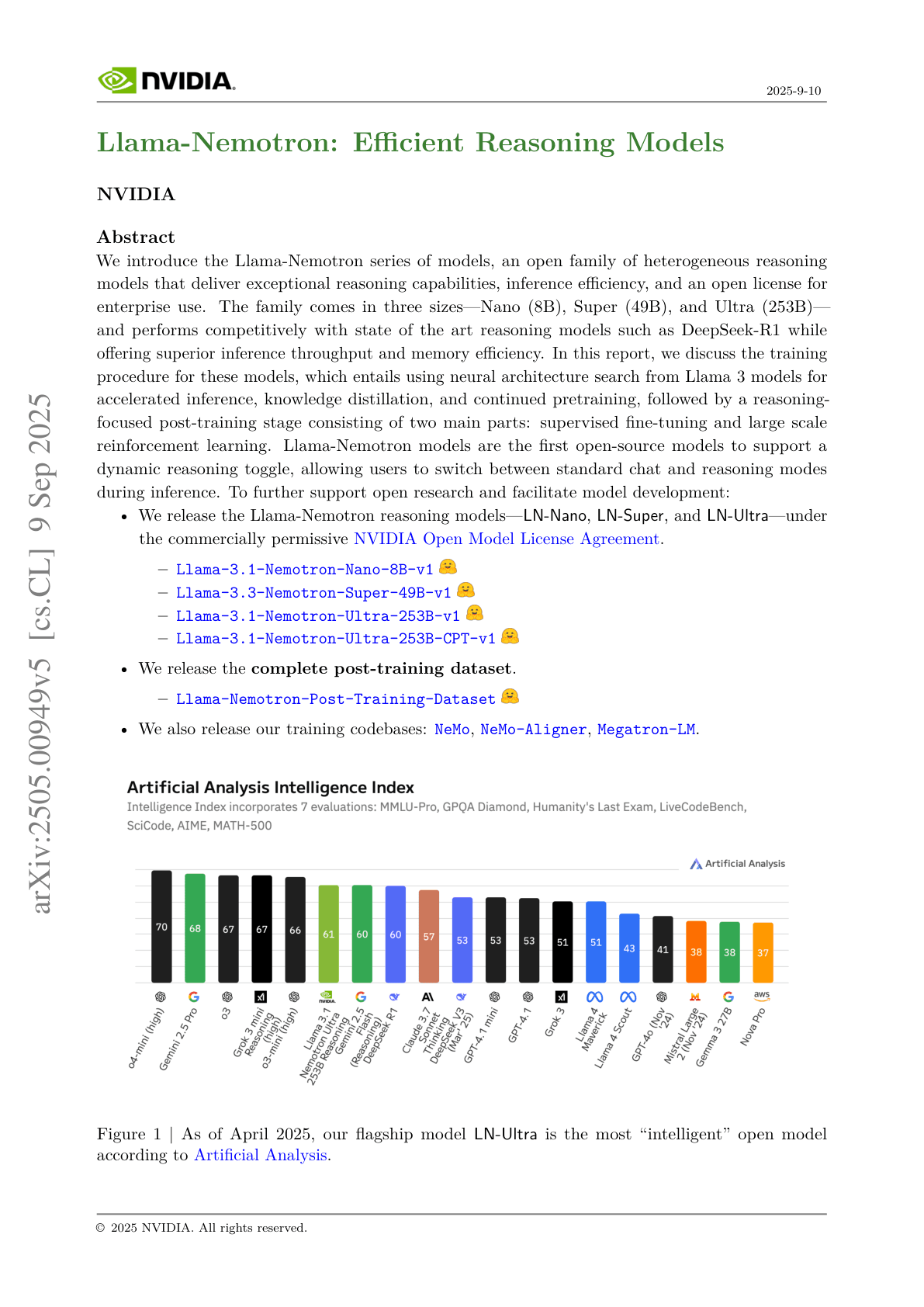
NVIDIA introduces the Llama-Nemotron model series, LN-Nano (8B), LN-Super (49B), and LN-Ultra (253B), a family of open, efficient, and high-performing reasoning models. These models rival or outperform DeepSeek-R1 on various benchmarks while offering significantly better inference throughput and memory efficiency. LN-Ultra is noted as the most "intelligent" open model by Artificial Analysis. A key innovation is a dynamic reasoning toggle ("detailed thinking on/off") that allows users to control reasoning behavior at inference time. Highlights:
Absolute Zero
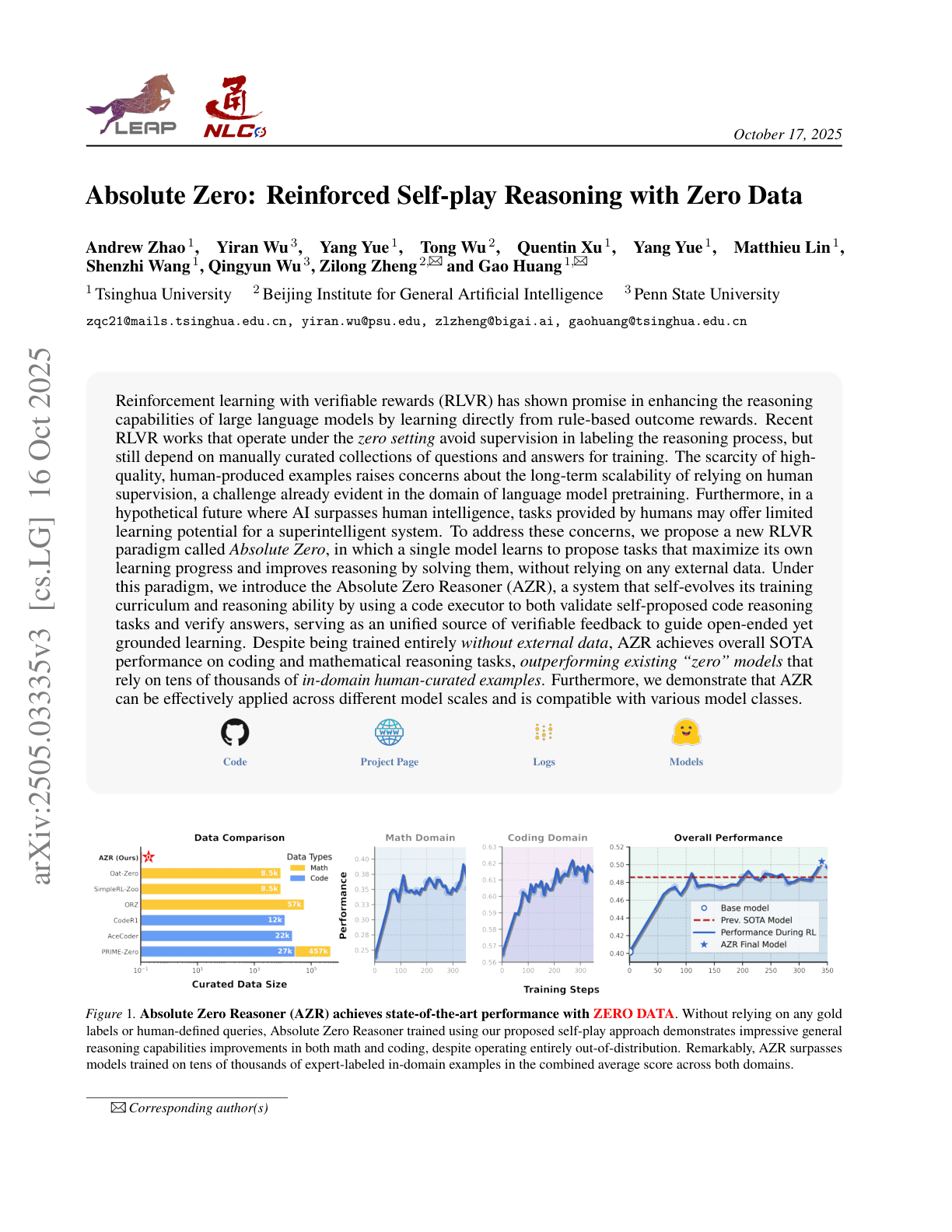
Introduces an LLM training framework that eliminates the need for human-curated data. Key highlights:
Discuss-RAG
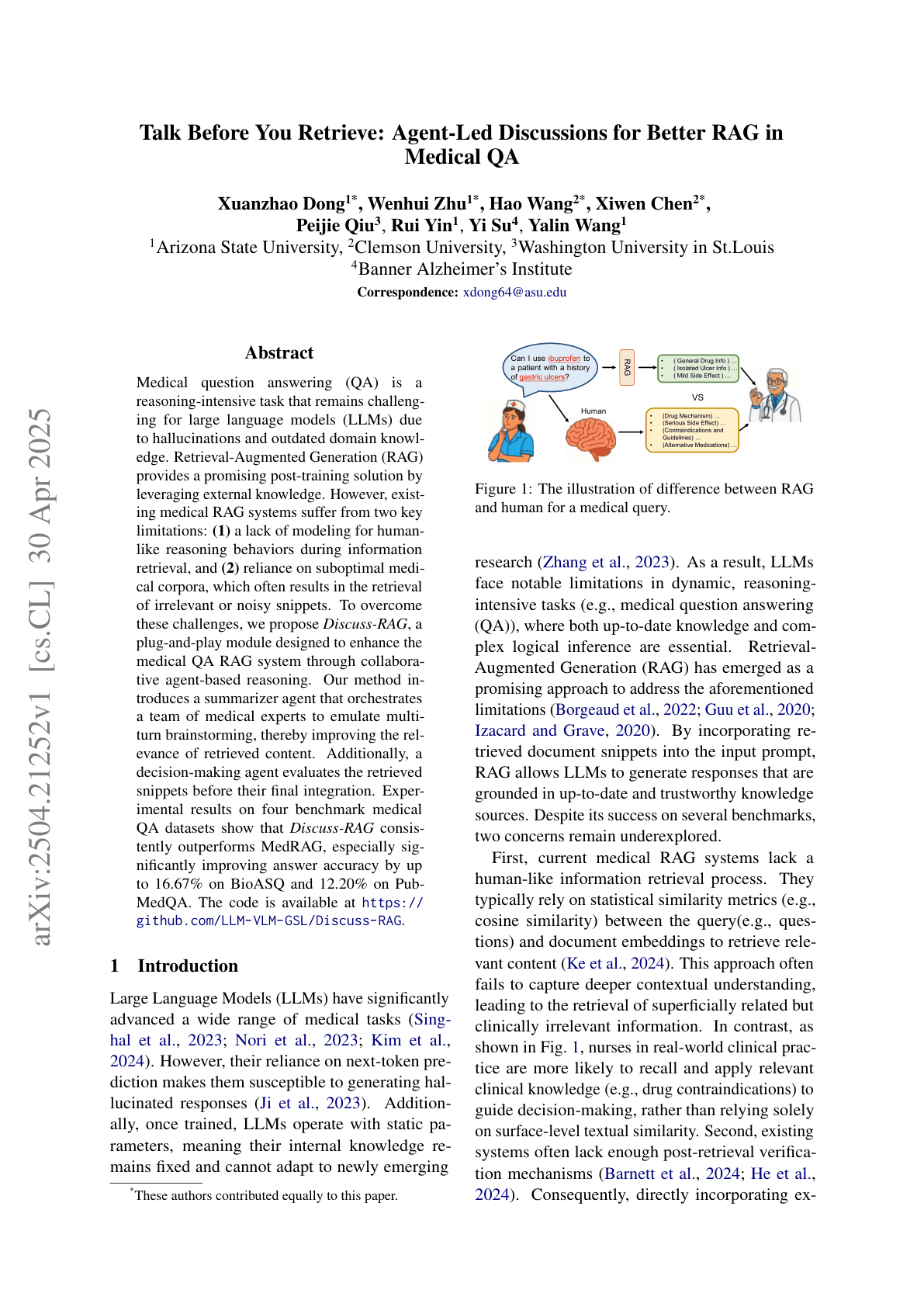
This paper introduces Discuss-RAG, a plug-and-play agent-based framework that enhances retrieval-augmented generation (RAG) for medical question answering by mimicking human-like clinical reasoning. Standard RAG systems rely on embedding-based retrieval and lack mechanisms to verify relevance or logical coherence, often leading to hallucinations or outdated answers. Discuss-RAG addresses these gaps via a modular agent setup that simulates multi-turn medical discussions and performs post-retrieval verification. Key ideas:
The Value of RL in Fine-Tuning
This work shows that, in theory, every popular preference-fine-tuning objective collapses to maximum-likelihood estimation (MLE), yet experiments show a consistent RL advantage on real tasks. They reconcile this gap with a generation-verification complexity hypothesis.
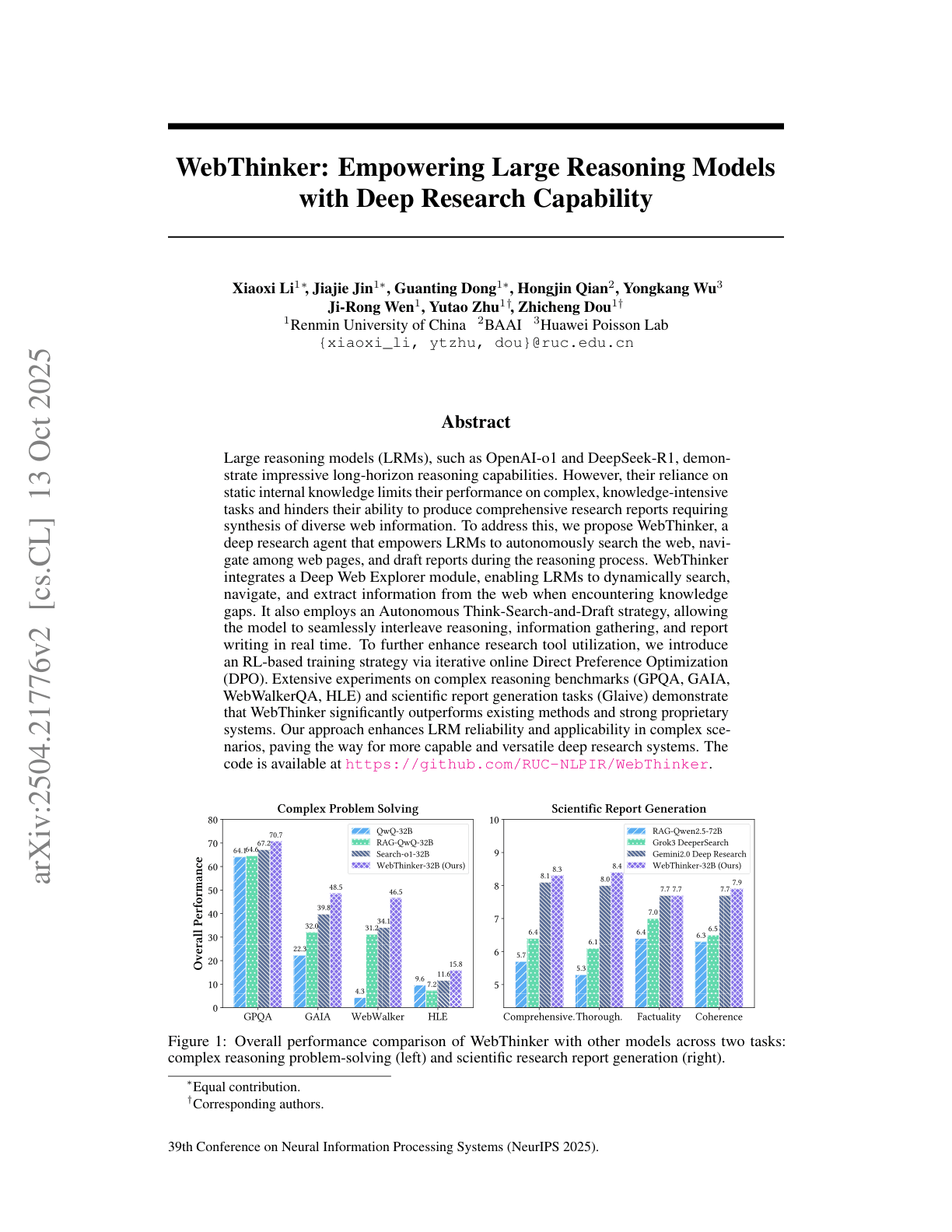
WebThinker
This paper introduces a reasoning agent framework that equips large reasoning models (LRMs) with autonomous web exploration and report writing abilities to overcome limitations of static internal knowledge. WebThinker integrates a Deep Web Explorer module and an Autonomous Think-Search-and-Draft strategy that lets models search the web, reason through tasks, and generate comprehensive outputs simultaneously. It also incorporates an RL-based training loop using online DPO to improve tool usage. The system supports two modes: complex problem solving and scientific report generation. Key points:
Reward Modeling as Reasoning
This work proposes a new class of reward models, called ReasRMs, that reformulate reward modeling as a reasoning task. The authors introduce RM-R1, a family of generative reward models that produce interpretable reasoning traces and rubrics during preference judgments. Instead of relying on scalar scores or shallow generation, RM-R1 models leverage structured reasoning and reinforcement learning to improve both interpretability and performance across benchmarks.
Paper2Code
Introduces PaperCoder, a multi-agent LLM framework that transforms ML papers into full code repositories without relying on pre-existing implementations.
ZeroSearch
ZeroSearch is an RL framework that trains LLMs to develop search capabilities without using real search engines. It uses simulated LLM-generated documents with a curriculum-based degradation strategy and outperforms real-search methods like Search-R1 in both performance and cost, achieving better QA accuracy across multiple benchmarks.
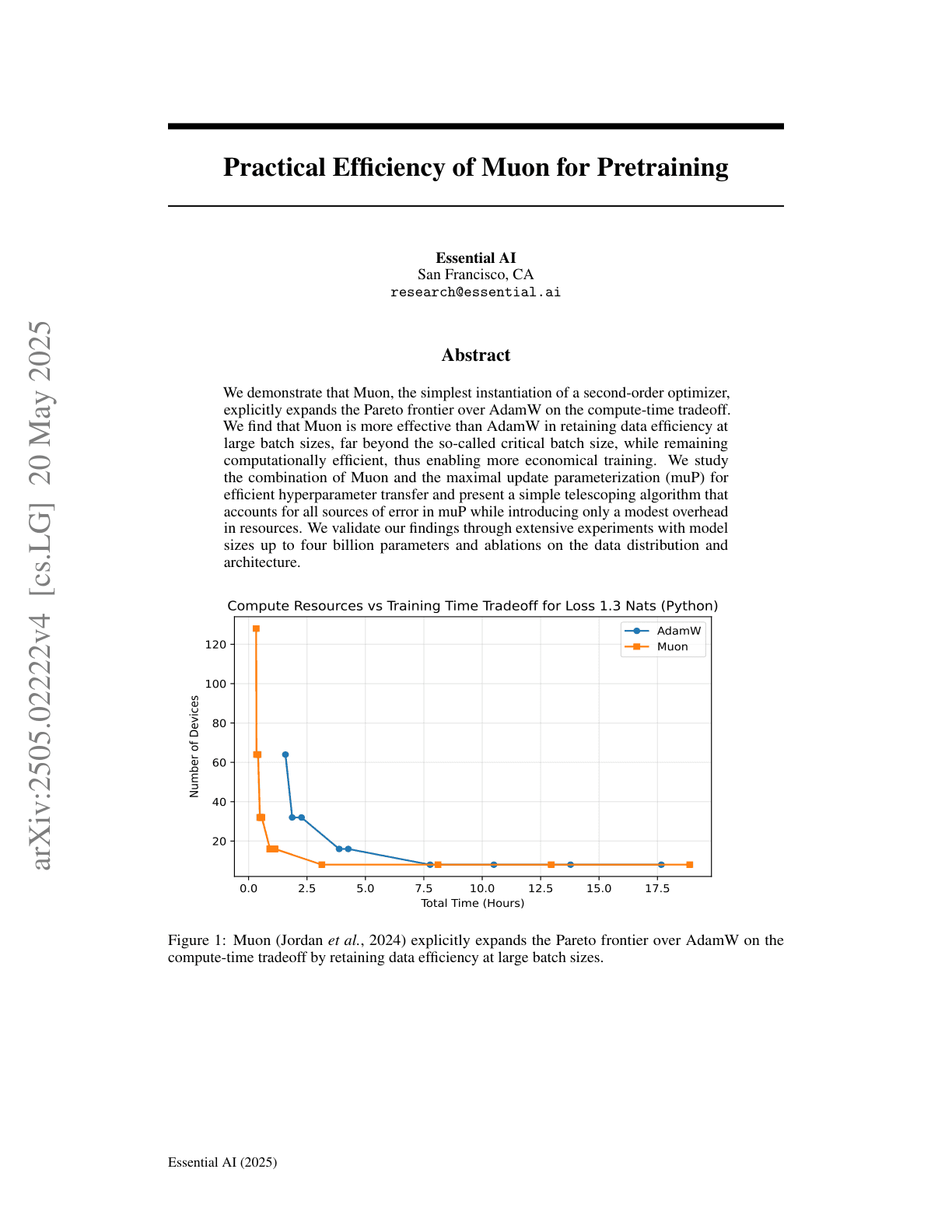
Practical Efficiency of Muon for Pretraining
Discusses how Muon, a simple second-order optimizer, outperforms AdamW in large-batch pretraining by expanding the compute-time Pareto frontier and maintaining better data efficiency. Combined with muP scaling and a novel telescoping algorithm for hyperparameter transfer, it enables faster training with minimal tuning overhead up to 4B parameter models.
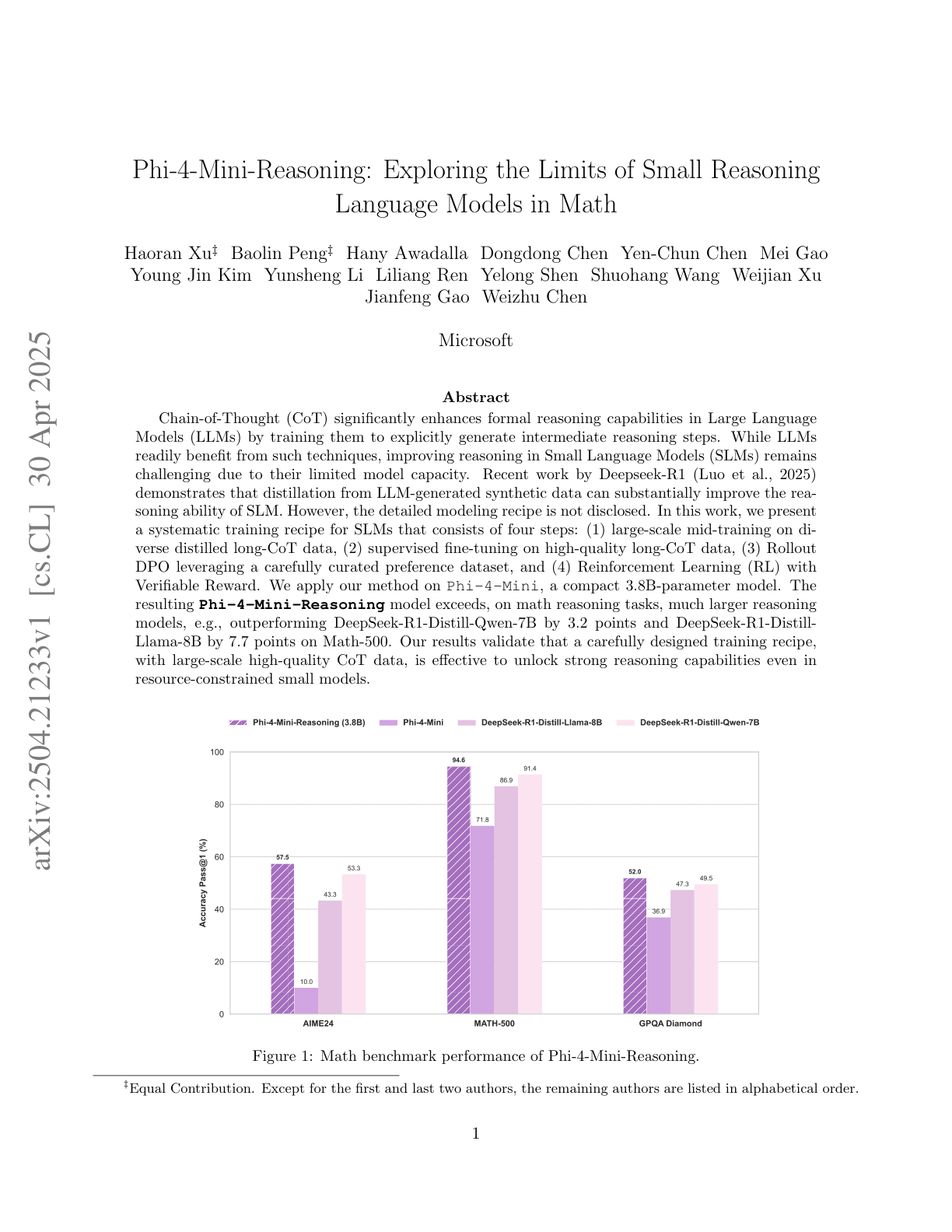
Phi-4-Mini-Reasoning
Microsoft released Phi-4-Mini-Reasoning to explore small reasoning language models for math. Highlights:
Building Production-Ready AI Agents with Scalable Long-Term Memory
This paper proposes a memory-centric architecture for LLM agents to maintain coherence across long conversations and sessions, solving the fixed-context window limitation. Main highlights:
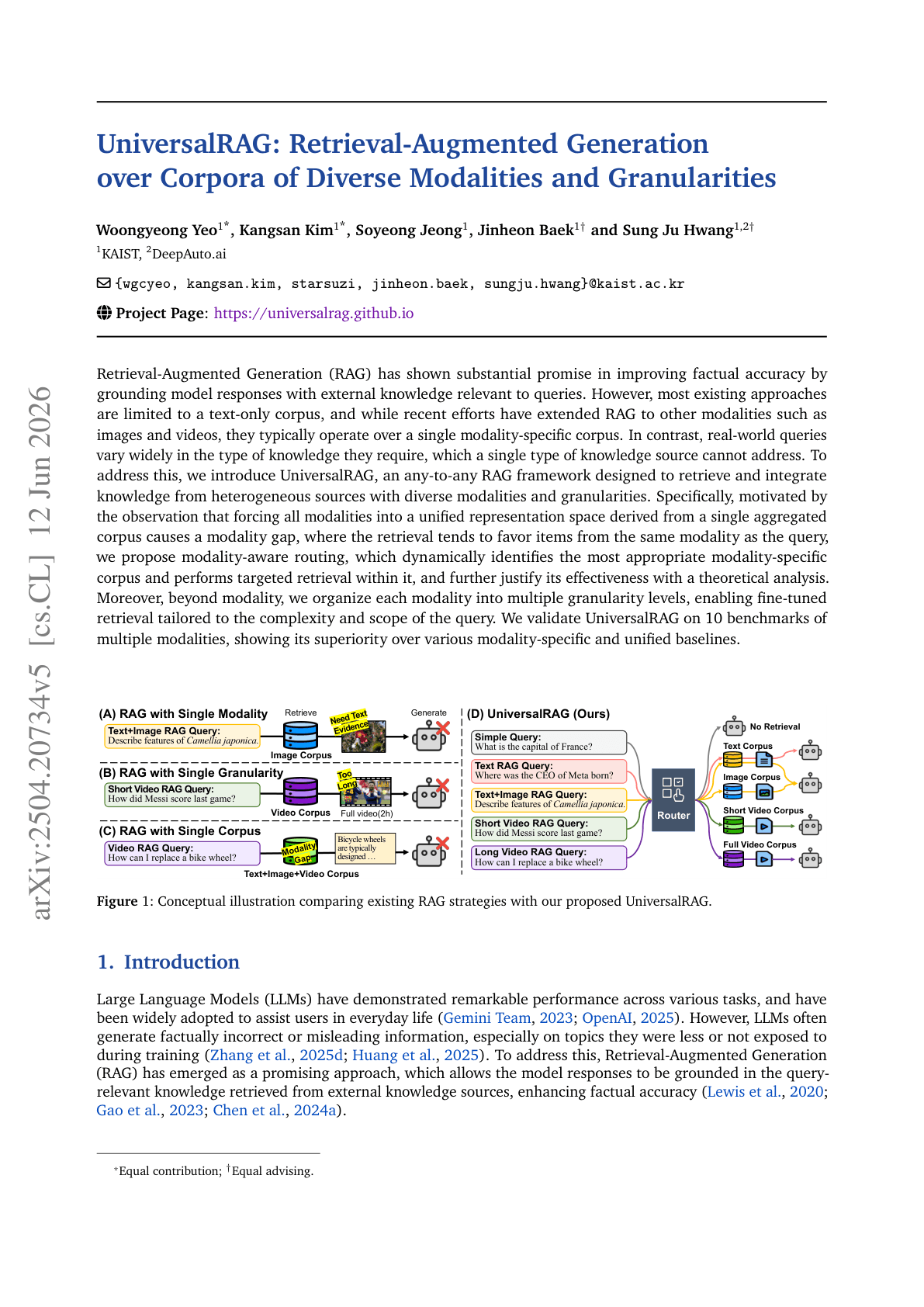
UniversalRAG
UniversalRAG is a framework that overcomes the limitations of existing RAG systems confined to single modalities or corpora. It supports retrieval across modalities (text, image, video) and at multiple granularities (e.g., paragraph vs. document, clip vs. video). Contributions from the paper:
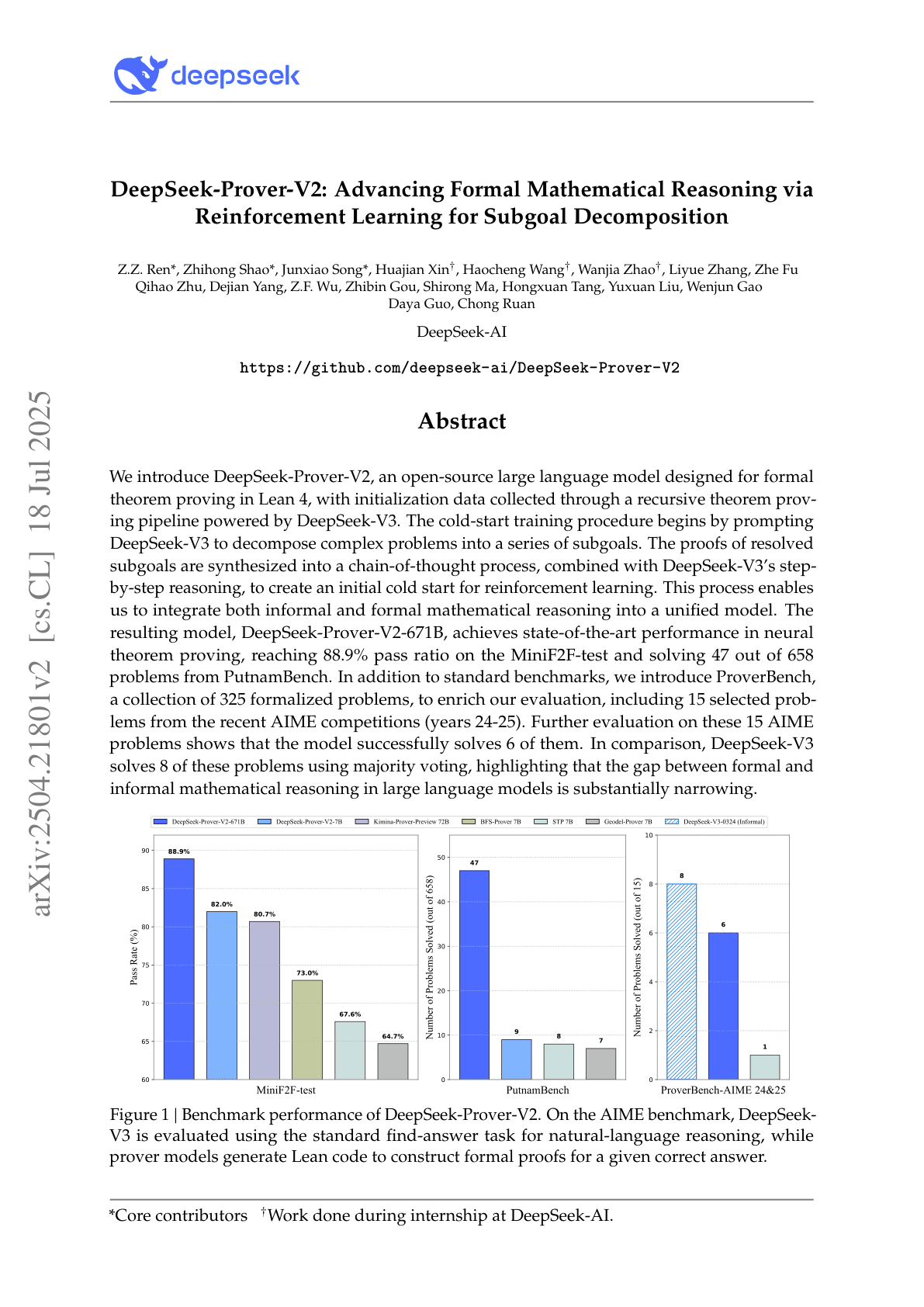
DeepSeek-Prover-V2
DeepSeek-Prover-V2 is an LLM (671B) that significantly advances formal theorem proving in Lean 4. The model is built through a novel cold-start training pipeline that combines informal chain-of-thought reasoning with formal subgoal decomposition, enhanced through reinforcement learning. It surpasses prior state-of-the-art on multiple theorem-proving benchmarks. Key highlights:
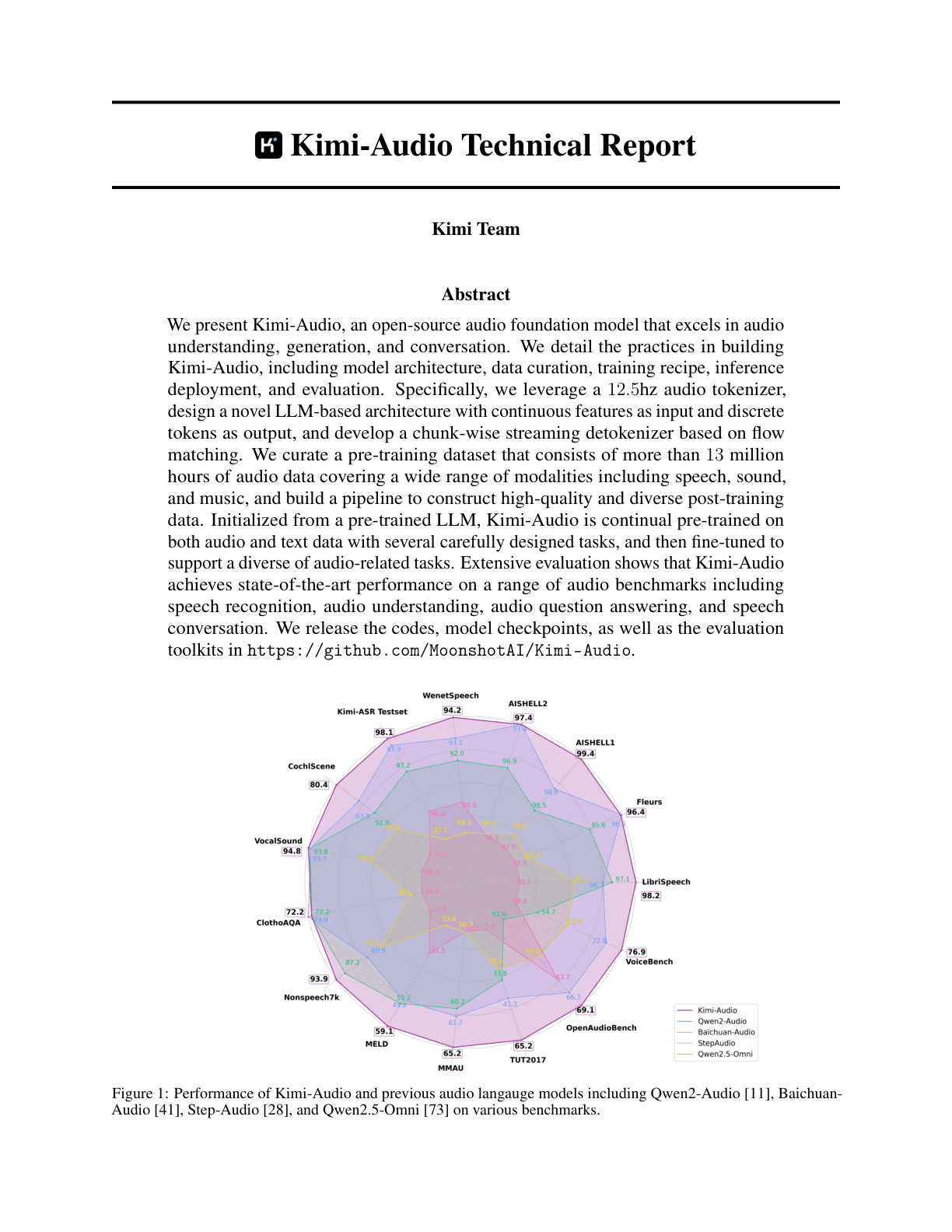
Kimi-Audio
Kimi-Audio is a new open-source audio foundation model built for universal audio understanding, generation, and speech conversation. The model architecture uses a hybrid of discrete semantic audio tokens and continuous Whisper-derived acoustic features. It is initialized from a pre-trained LLM and trained on 13M+ hours of audio, spanning speech, sound, and music. It also supports a streaming detokenizer with chunk-wise decoding and a novel look-ahead mechanism for smoother audio generation. Extensive benchmarking shows that Kimi-Audio outperforms other audio LLMs across multiple modalities and tasks. Key highlights:
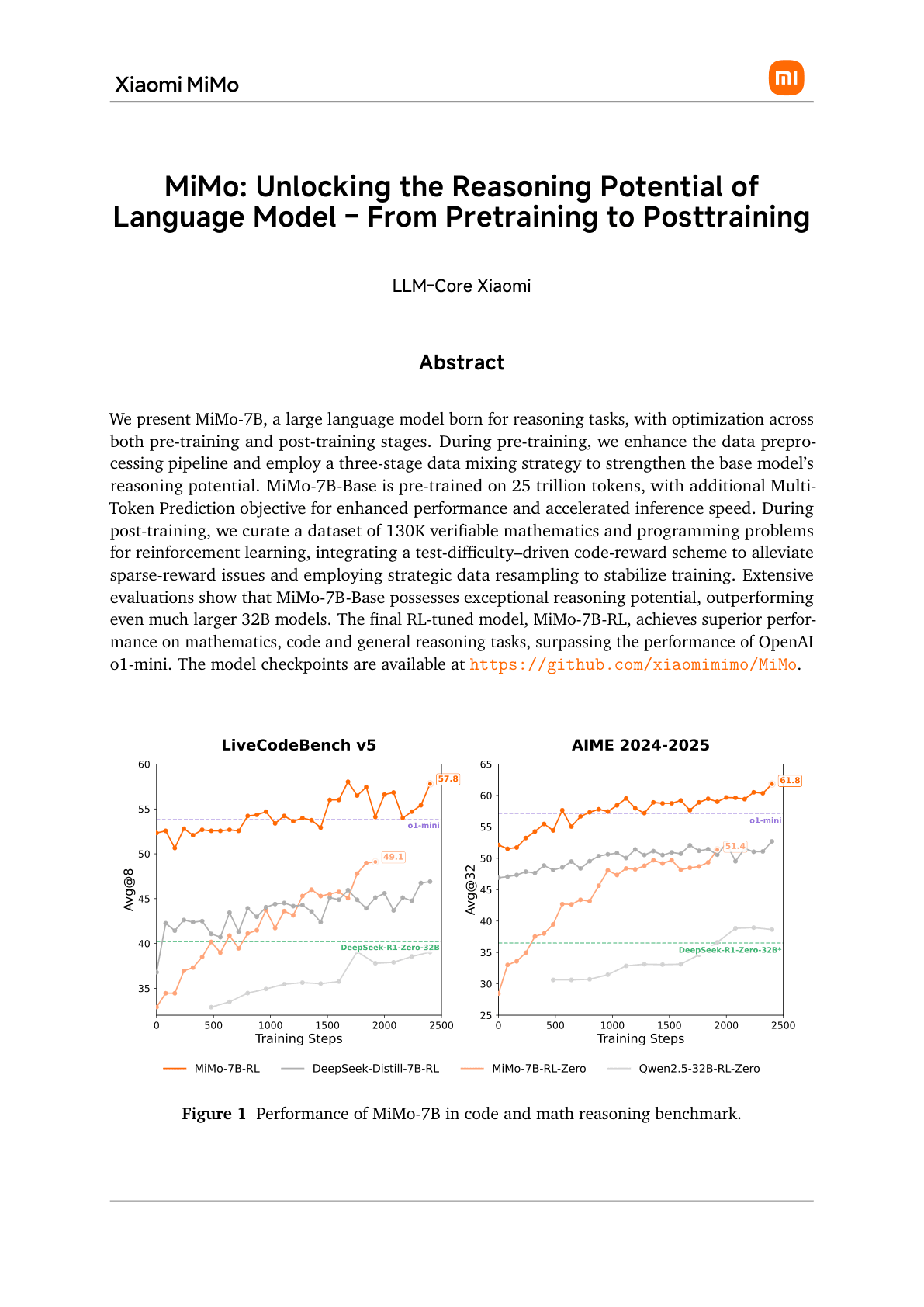
MiMo-7B
Xiaomi releases MiMo-7B, a new language model for reasoning tasks. MiMo-7B is explicitly designed for advanced reasoning across math and code. Highlights:
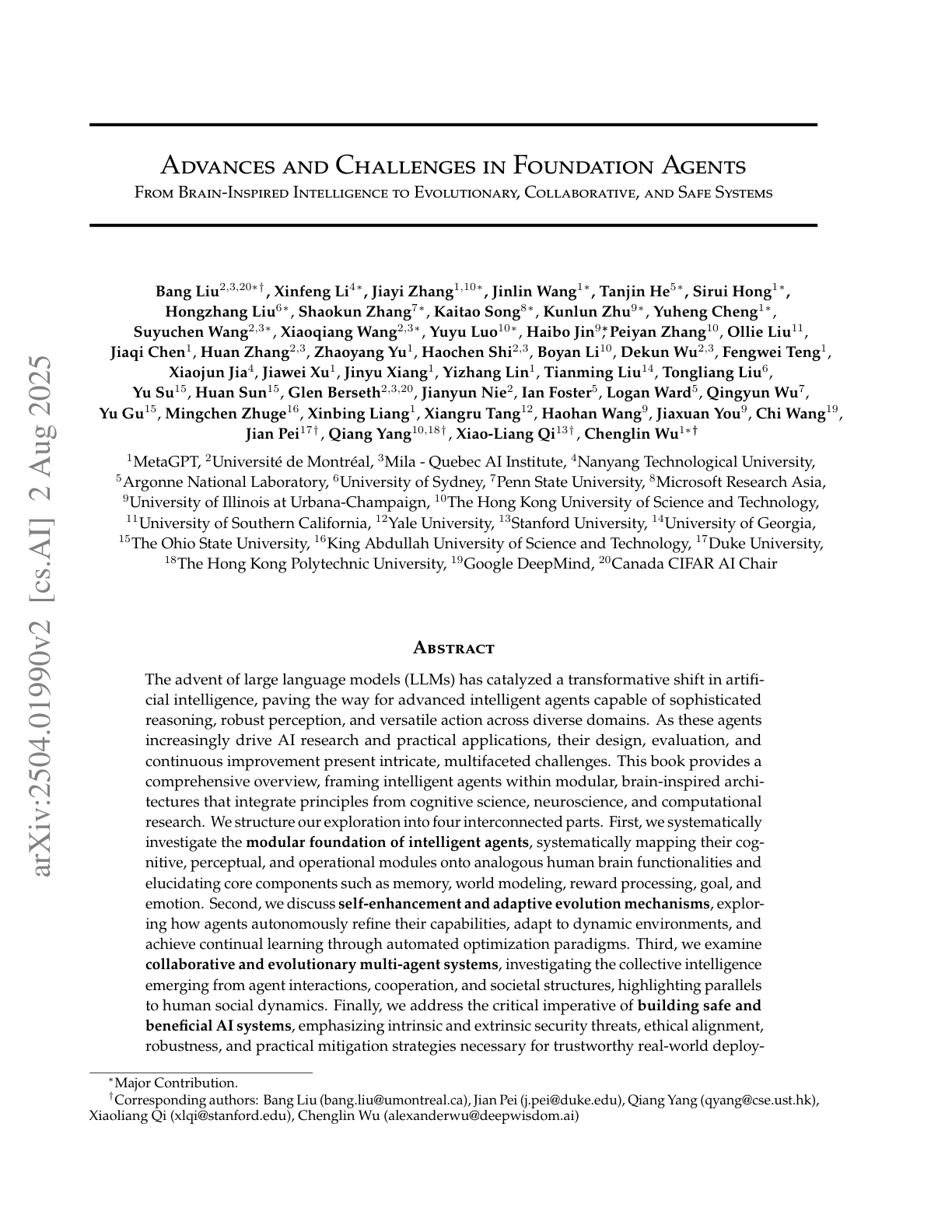
Advances and Challenges in Foundation Agents
A new survey frames intelligent agents with a modular, brain-inspired architecture that integrates ideas from cognitive science, neuroscience, and computational research. Key topics covered:
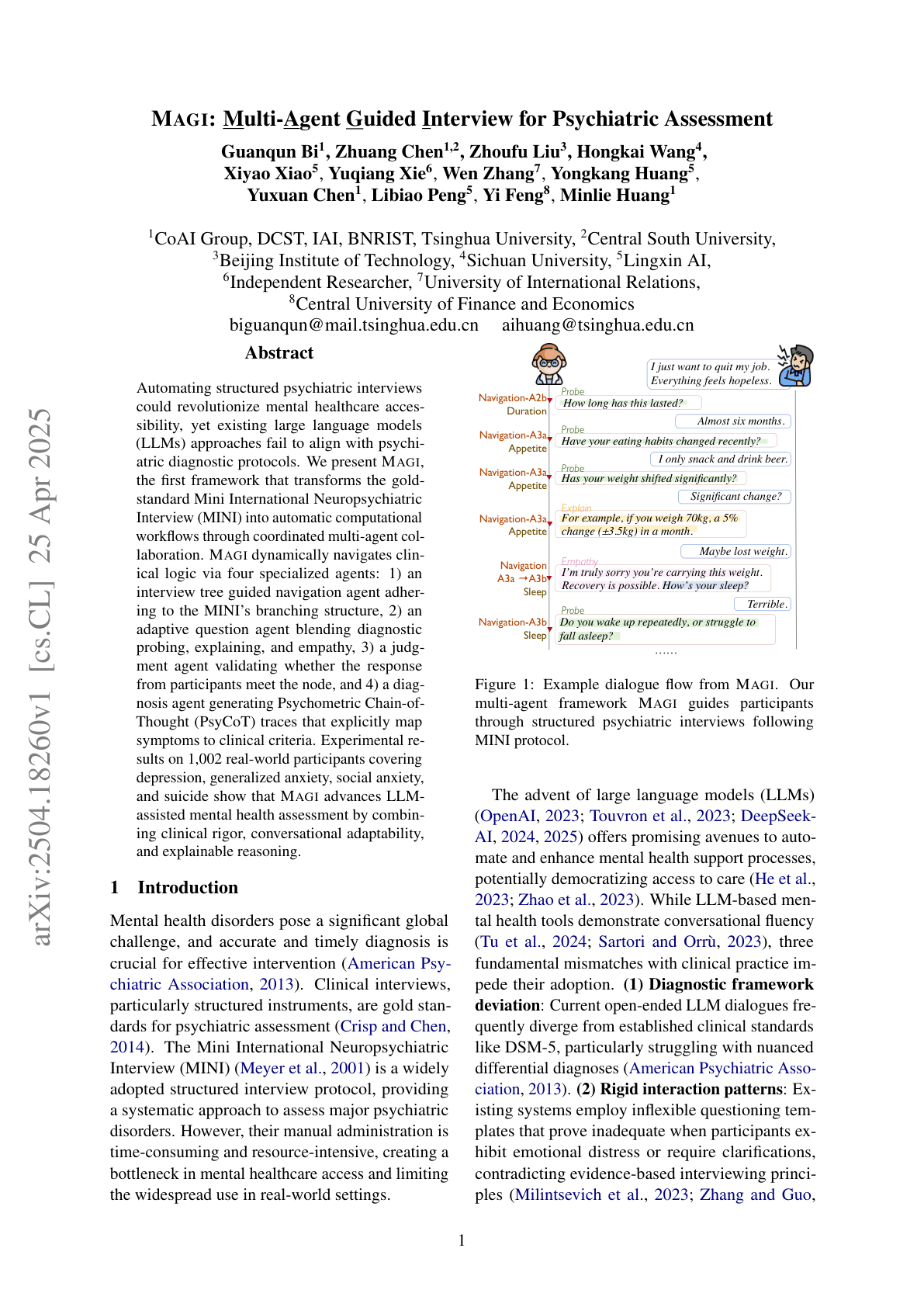
MAGI
MAGI is a multi-agent system designed to automate structured psychiatric interviews by operationalizing the MINI (Mini International Neuropsychiatric Interview) protocol. It involves 4 specialized agents: navigation, question generation, judgment, and diagnosis. Other highlights:
A Survey of Efficient LLM Inference Serving
This survey reviews recent advancements in optimizing LLM inference, addressing memory and computational bottlenecks. It covers instance-level techniques (like model placement and request scheduling), cluster-level strategies (like GPU deployment and load balancing), and emerging scenario-specific solutions, concluding with future research directions.
LLM for Engineering
This work finds that when RL is used, a 7B parameter model outperforms both SoTA foundation models and human experts at high-powered rocketry design.
Does RL Incentivize Reasoning in LLMs Beyond the Base Model?
This paper revisits a key assumption in recent LLM development: that Reinforcement Learning with Verifiable Rewards (RLVR) helps models acquire genuinely new reasoning capabilities. By analyzing models across tasks (math, code, vision) using pass@k metrics (with large k), the authors find that RLVR improves sample efficiency but does not expand reasoning capacity beyond the base model.