AI Papers of the Week
Every paper worth reading in AI, hand-picked one week at a time.
Discover and explore top AI papers withClaude CodeCodex
npx @dair-ai/mcp setup
Building Production-Grade Conversational Agents with Workflow Graphs This paper presents a pragmatic, production-ready framework for building LLM-powered conversational agents using workflow graphs, with a specific focus on e-commerce scenarios. Instead of relying solely on end-to-end generation, the authors design agents using a directed acyclic graph (DAG), enabling flexible yet controllable interactions that adhere to strict business rules and format constraints.
Key contributions and findings include:

Spurios Rewards
This work challenges prevailing assumptions about reinforcement learning with verifiable rewards (RLVR) in mathematical reasoning tasks. The authors show that Qwen2.5-Math models can improve significantly under RL, even when trained with spurious or flawed rewards.
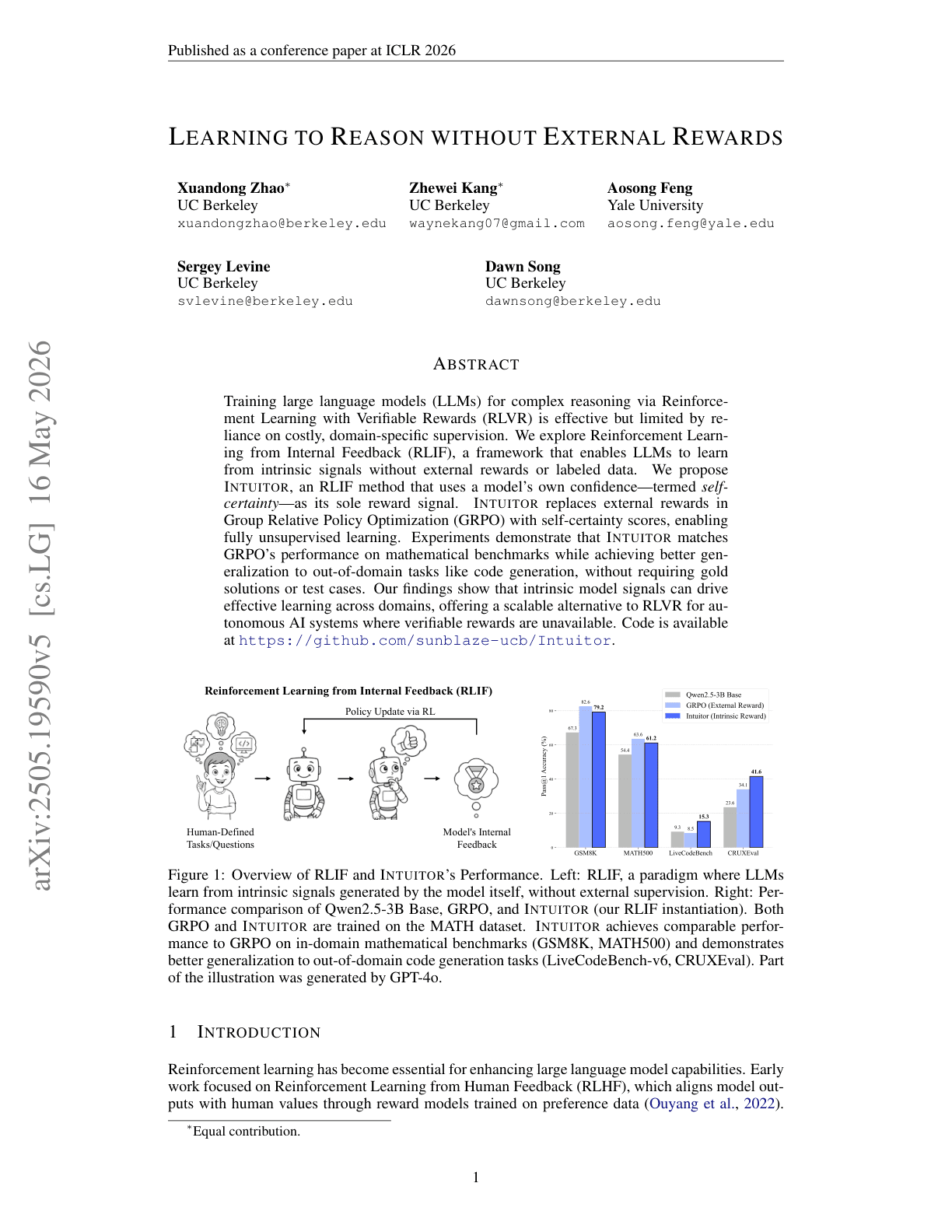
Learn to Reason without External Rewards
Proposes a method for training LLMs via reinforcement learning without any external rewards or labeled data. Instead, it uses the model’s own self-certainty, a confidence measure based on KL divergence from uniform, as the sole intrinsic reward. This self-improvement strategy, part of the broader Reinforcement Learning from Internal Feedback (RLIF) paradigm, bypasses the limitations of Reinforcement Learning with Verifiable Rewards (RLVR), which requires domain-specific verifiers and gold-standard outputs. Key highlights:
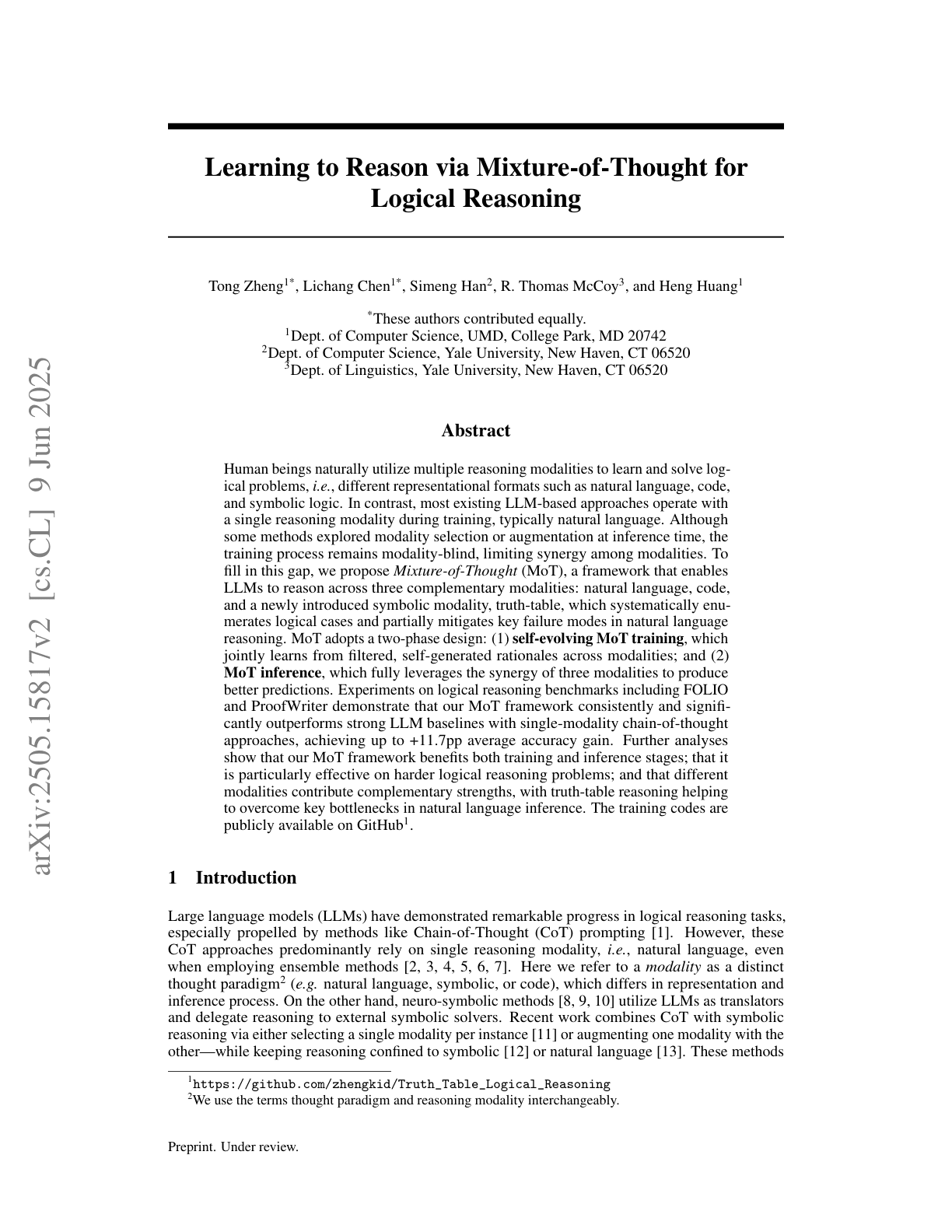
Learn to Reason via Mixture-of-Thought
While most prior approaches train with a single modality and only ensemble during inference, this work introduces Mixture-of-Thought (MoT) to jointly train and infer across modalities, resulting in notable gains in logical reasoning performance. Key findings:
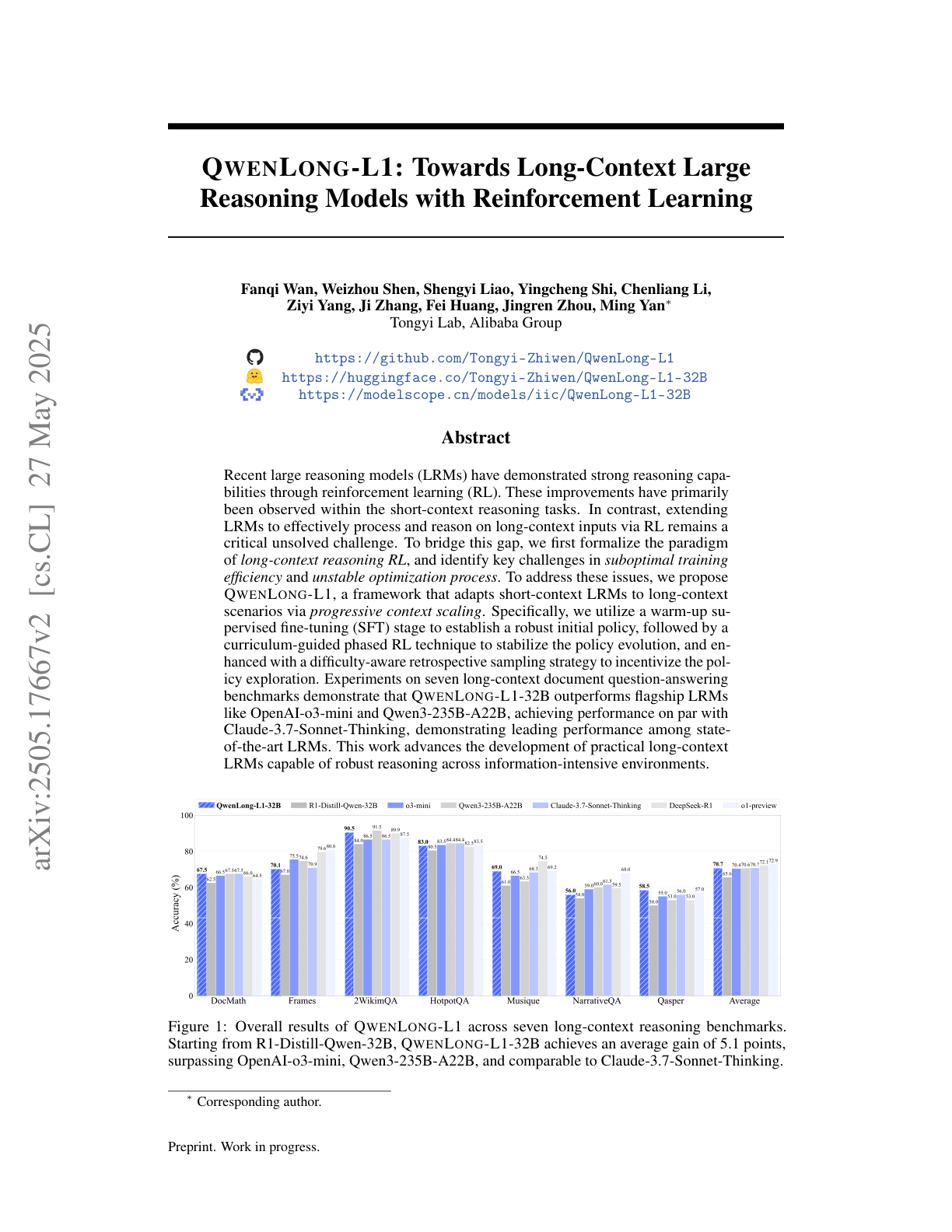
QwenLong-L1
A new reinforcement learning framework that scales large reasoning models (LRMs) from short to long contexts using progressive context scaling and hybrid rewards. It achieves top performance on seven long-context benchmarks, surpassing models like OpenAI-o3-mini and Qwen3-235B-A22B, and matching Claude-3.7-Sonnet-Thinking, demonstrating strong reasoning with up to 120K token inputs.
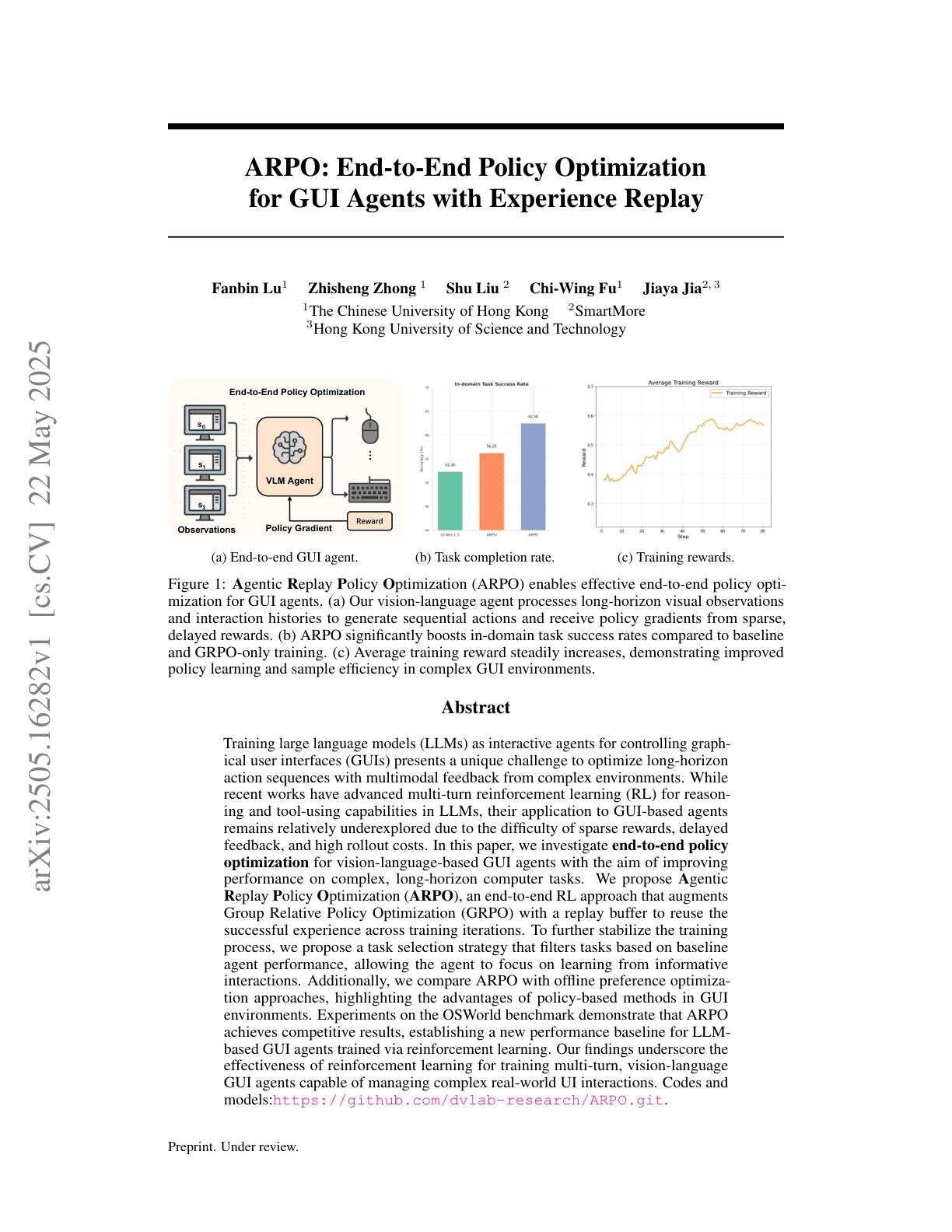
End-to-End Policy Optimization for GUI Agents
ARPO introduces an end-to-end reinforcement learning method for training GUI agents using Group Relative Policy Optimization (GRPO) with experience replay. It significantly improves in-domain performance on the OSWorld benchmark, outperforming baselines by up to 6.7%, while offering modest gains on out-of-domain tasks and enabling self-corrective behaviors through structured reward feedback.
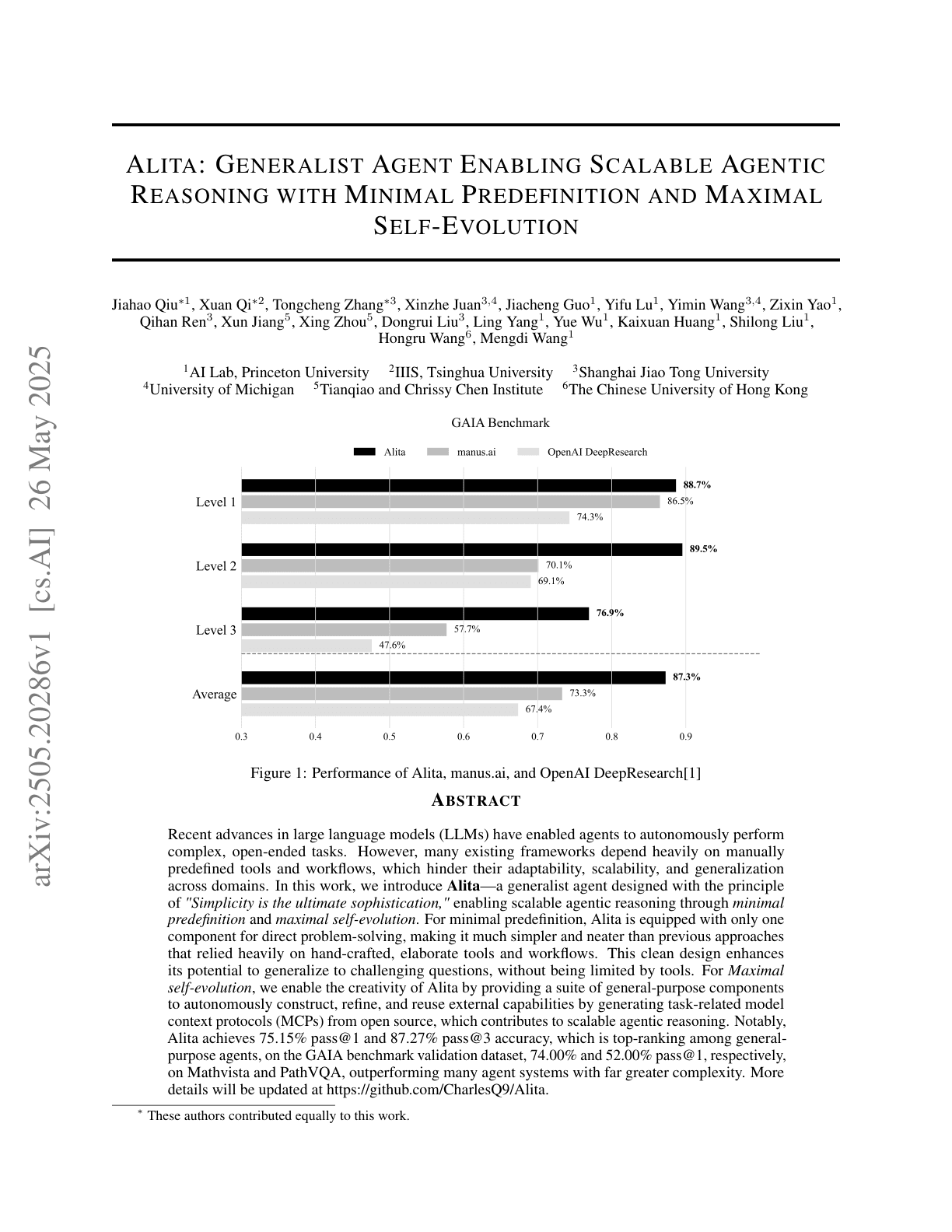
Generalist Agent Enabling Scalable Agentic Reasoning
Proposes Alita, a generalist agent framework that enables scalable agentic reasoning through minimal predefinition and maximal self-evolution. Unlike traditional agents reliant on handcrafted tools, Alita autonomously constructs reusable MCPs (Model Context Protocols) using web search and code synthesis, outperforming more complex systems like OpenAI DeepResearch and OctoTools on GAIA, MathVista, and PathVQA benchmarks.
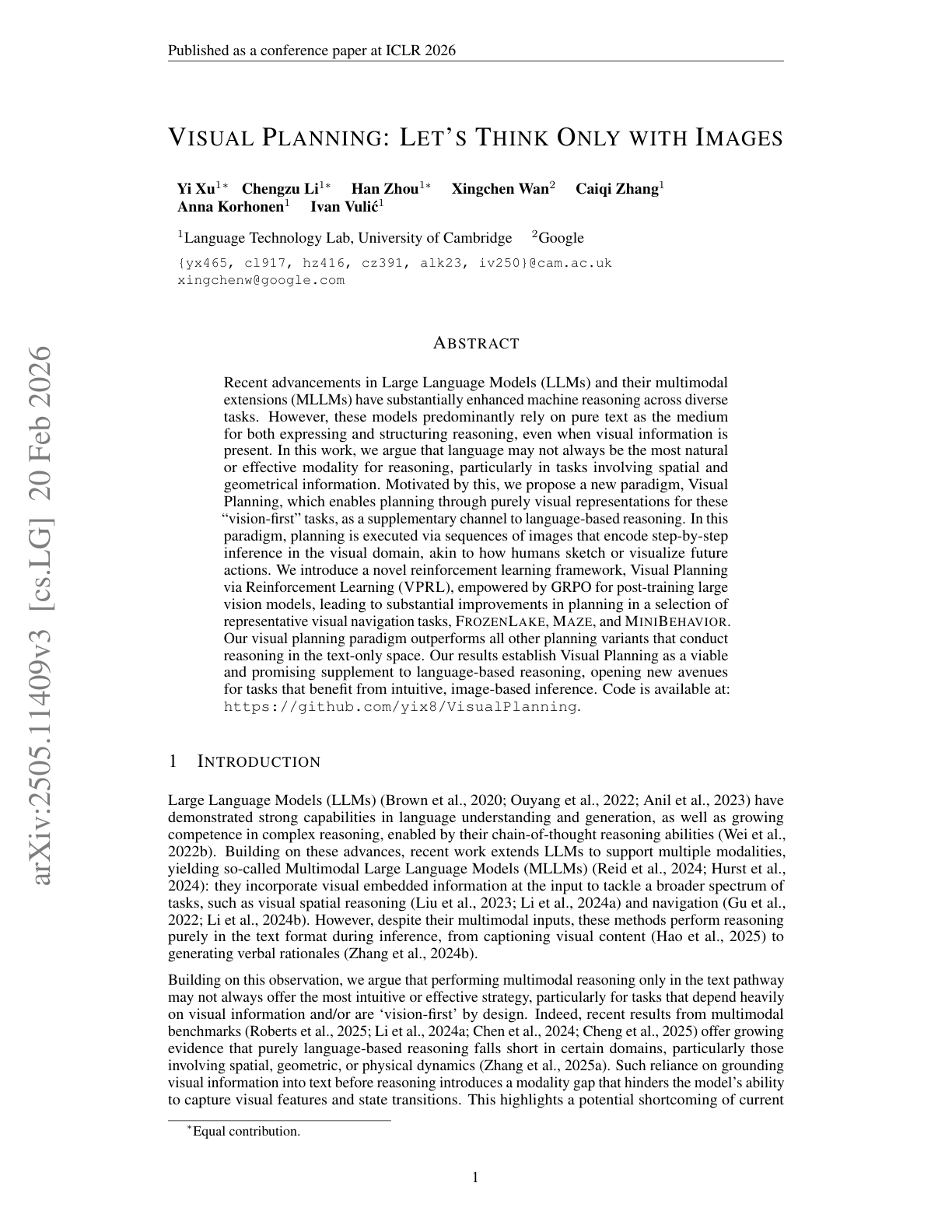
Visual Planning
Proposes a novel reasoning paradigm that replaces language-based planning with image-based reasoning. The authors argue that language is not always the optimal medium for tasks involving spatial or physical reasoning. They introduce Visual Planning, where reasoning is executed as a sequence of visual states (images) without any text mediation, allowing models to “think” directly in images. This is realized through a reinforcement learning framework called VPRL (Visual Planning via Reinforcement Learning), which trains a vision-only model (LVM-3B) to plan using images. Key contributions and findings:
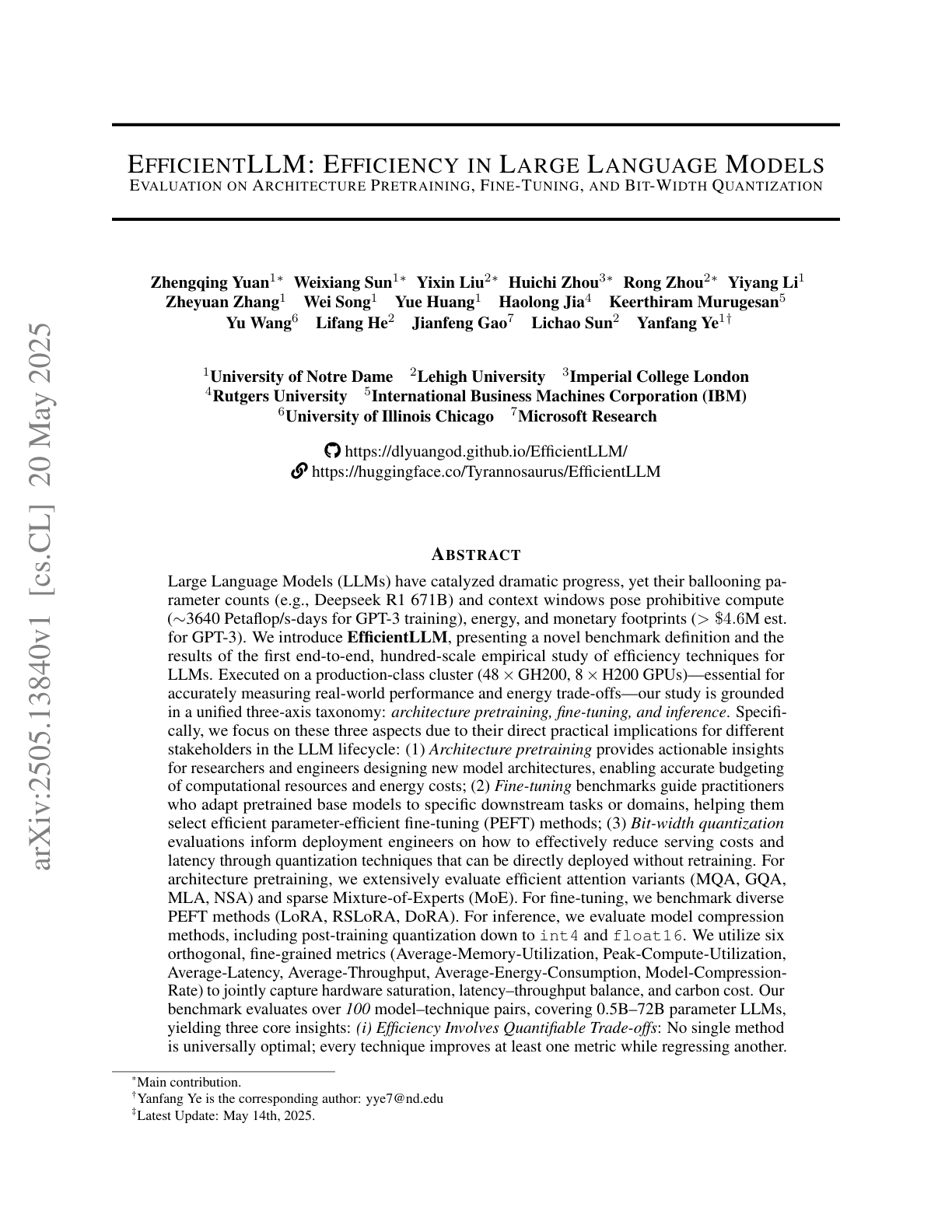
EfficientLLM
Introduces the first large-scale, empirical benchmark for evaluating efficiency trade-offs in LLMs across architecture, fine-tuning, and inference. Conducted on a high-performance cluster (48×GH200, 8×H200 GPUs), the study evaluates over 100 model–technique pairs spanning 0.5B–72B parameters, using six metrics: memory utilization, compute utilization, latency, throughput, energy consumption, and compression rate. Key insights include:
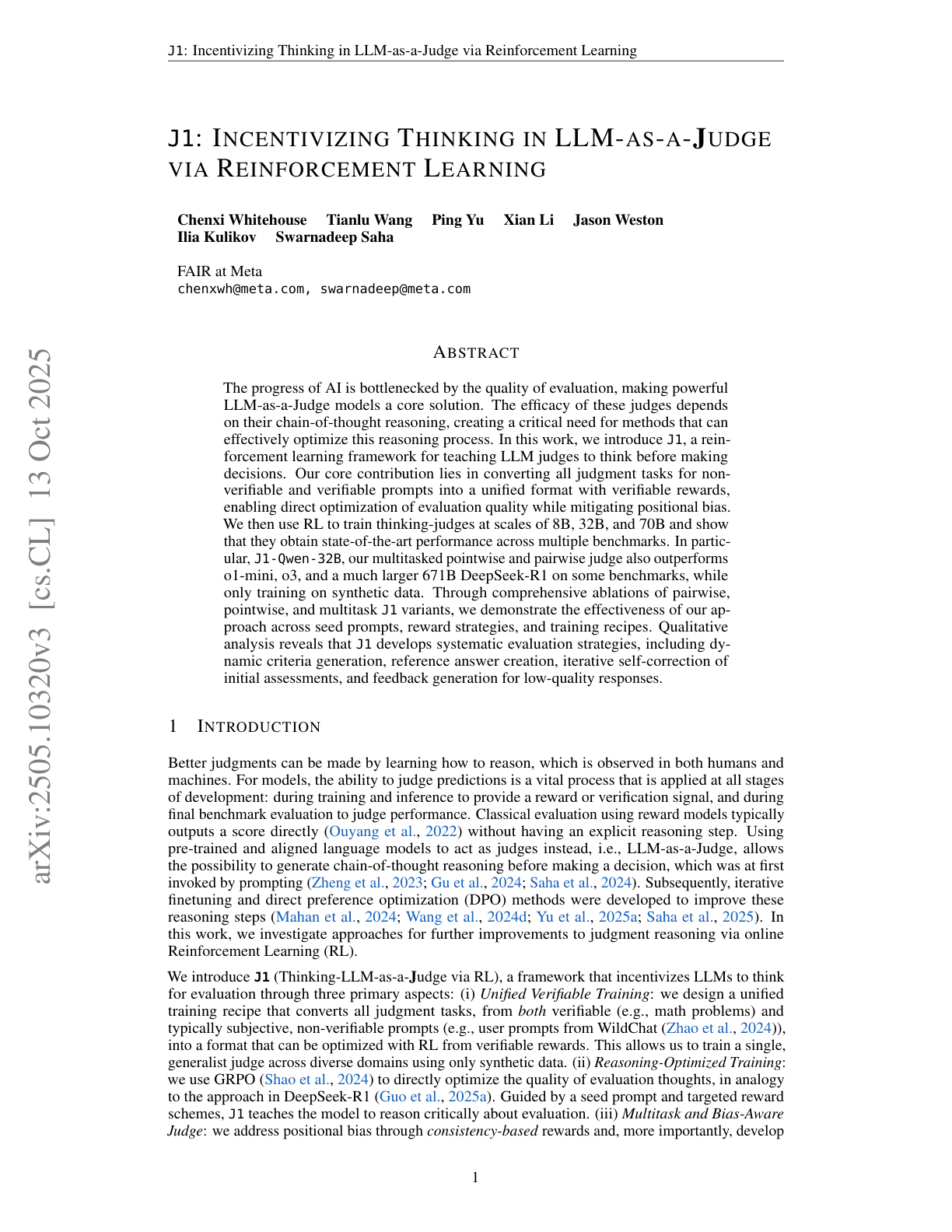
J1
Introduces a novel training approach for LLMs to act as evaluators (LLM-as-a-Judge) by explicitly incentivizing thoughtful reasoning during judgment. Instead of relying solely on prompting or preference fine-tuning, J1 employs online reinforcement learning with verifiable rewards to teach models to think through evaluations systematically. Key insights:
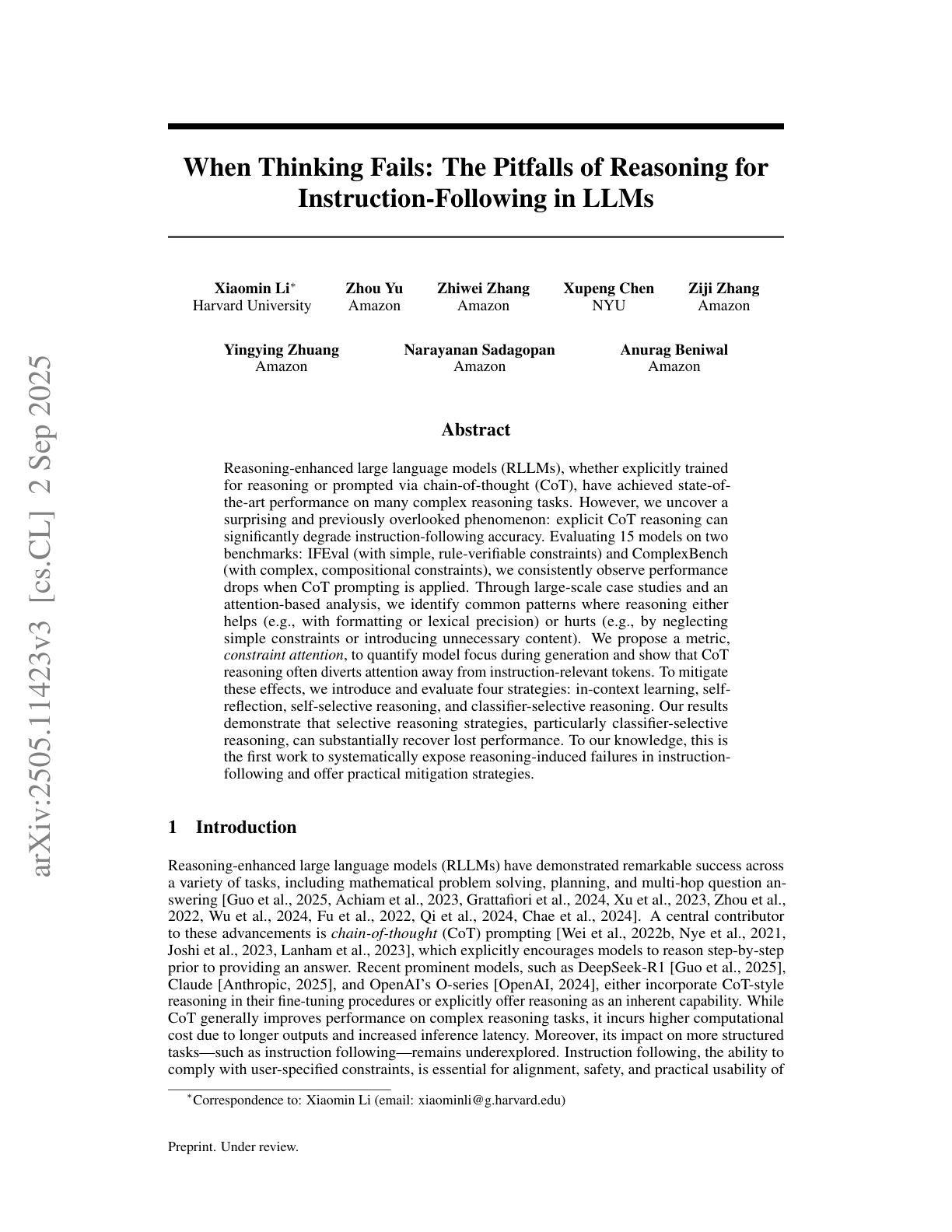
The Pitfalls of Reasoning for Instruction- Following in LLMs
Explores an unexpected flaw in reasoning-augmented large language models (RLLMs): while chain-of-thought (CoT) prompting often boosts performance on complex reasoning tasks, it can degrade instruction-following accuracy. The authors evaluate 15 models (e.g., GPT, Claude, LLaMA, DeepSeek) on two instruction-following benchmarks and find that CoT prompting consistently reduces performance across nearly all models and datasets. Key findings:

Generalizable AI Predicts Immunotherapy Outcomes Across Cancers and Treatments
Introduces COMPASS, a concept bottleneck-based foundation model that predicts patient response to immune checkpoint inhibitors (ICIs) using tumor transcriptomic data. Unlike prior biomarkers (TMB, PD-L1, or fixed gene signatures), COMPASS generalizes across cancer types, ICI regimens, and clinical contexts with strong interpretability and performance. Key contributions:
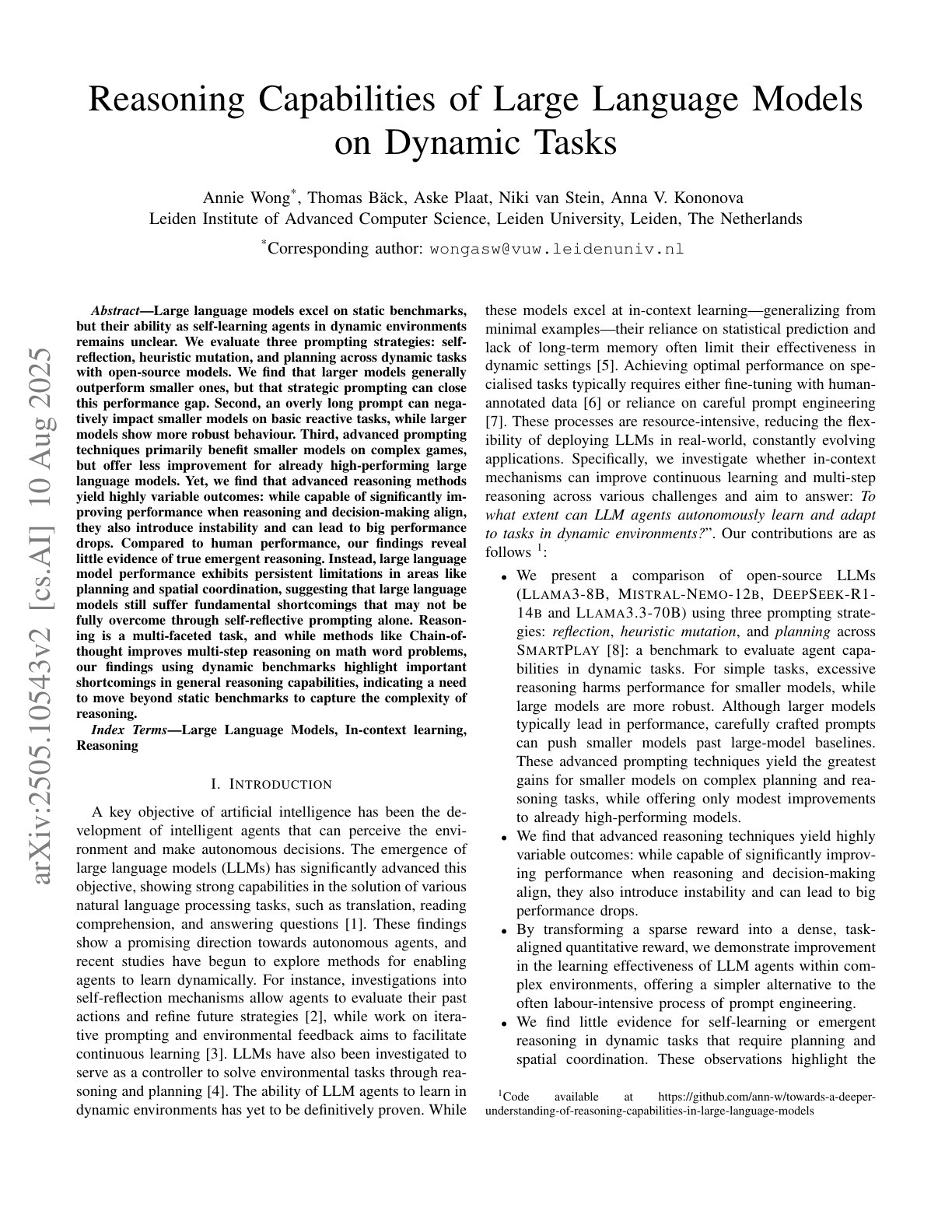
Towards a Deeper Understanding of Reasoning in LLMs
This paper investigates whether LLMs can adapt and reason in dynamic environments, moving beyond static benchmarks. Using the SmartPlay benchmark—a suite of four interactive games that require diverse cognitive skills—the authors evaluate three prompting strategies: self-reflection, heuristic mutation (via an Oracle), and planning. They test these methods across models of varying size (Llama3-8B to Llama3.3-70B) and draw several conclusions on how model scale and prompting interact with task complexity. Key findings:
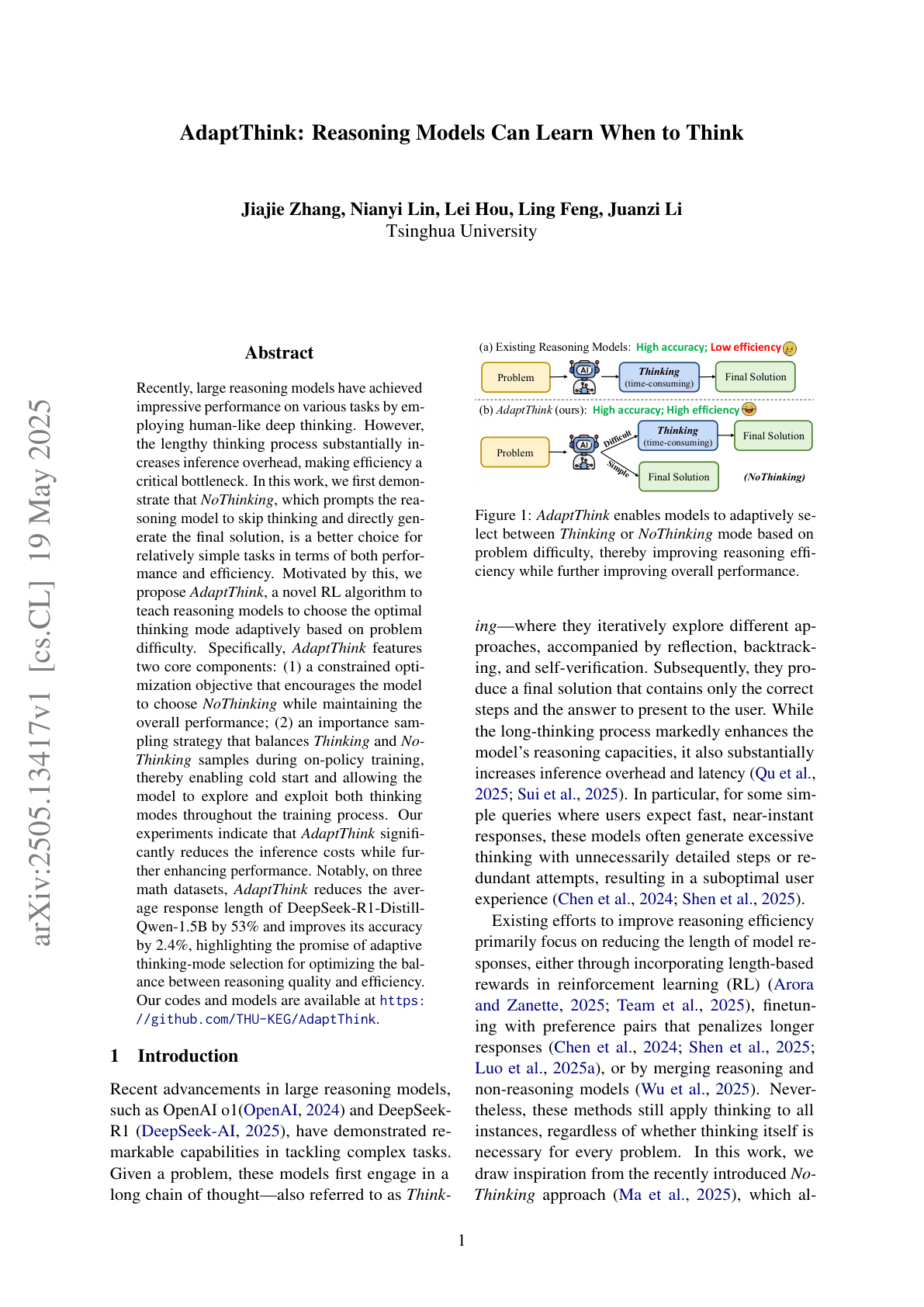
AdaptThink
This paper introduces AdaptThink, an RL framework designed to help reasoning models decide when to use detailed chain-of-thought reasoning (“Thinking”) versus directly producing an answer (“NoThinking”), based on task difficulty. This approach challenges the prevailing assumption that deep reasoning should be applied uniformly across all problems, showing that skipping the “thinking” step often yields better efficiency and even higher accuracy on simpler tasks. Key insights:
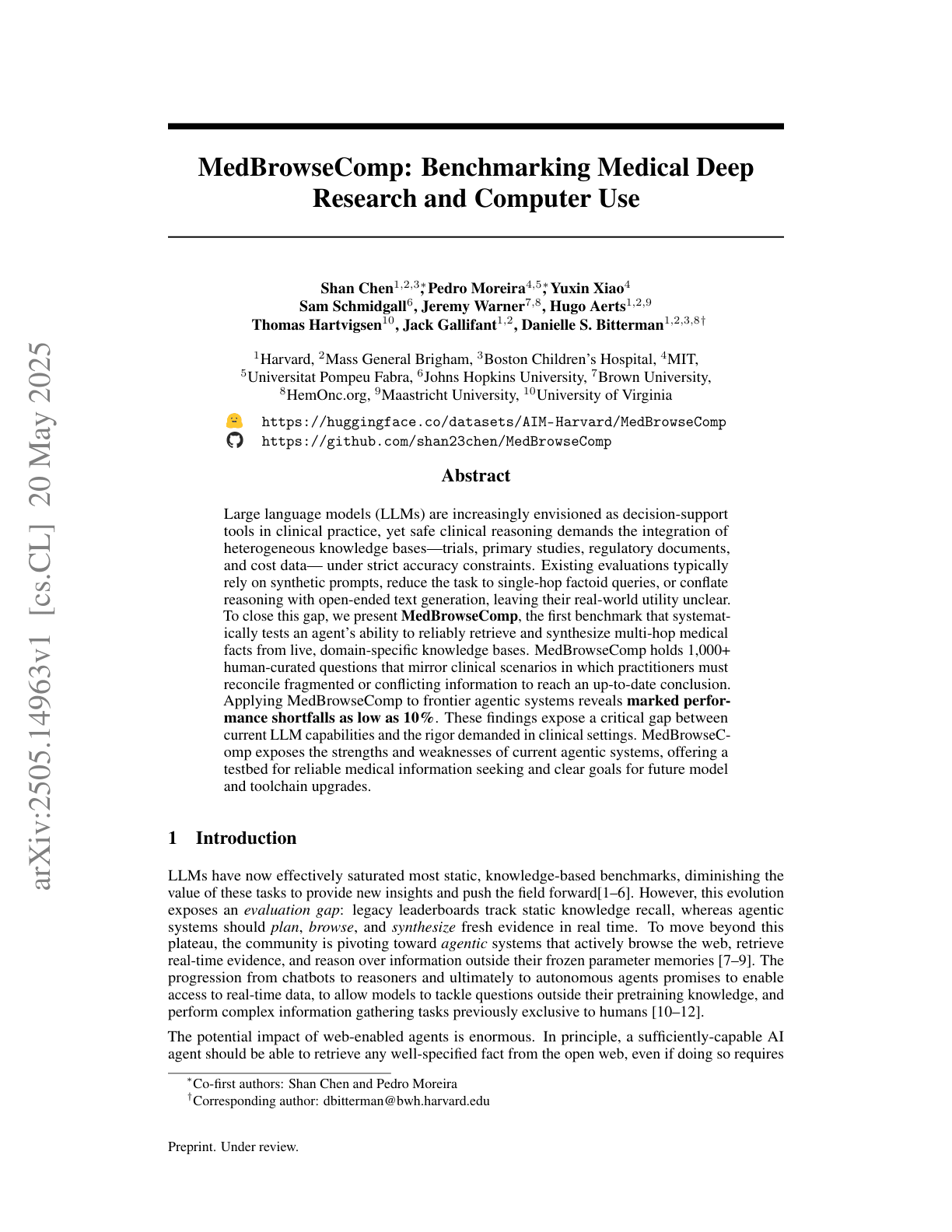
MedBrowseComp
MedBrowseComp is a new benchmark designed to evaluate LLM agents’ ability to perform complex, multi-hop medical fact-finding by browsing real-world, domain-specific web resources. Testing over 1,000 clinically grounded questions, the benchmark reveals major capability gaps in current models, with top systems achieving only 50% accuracy and GUI-based agents performing even worse.
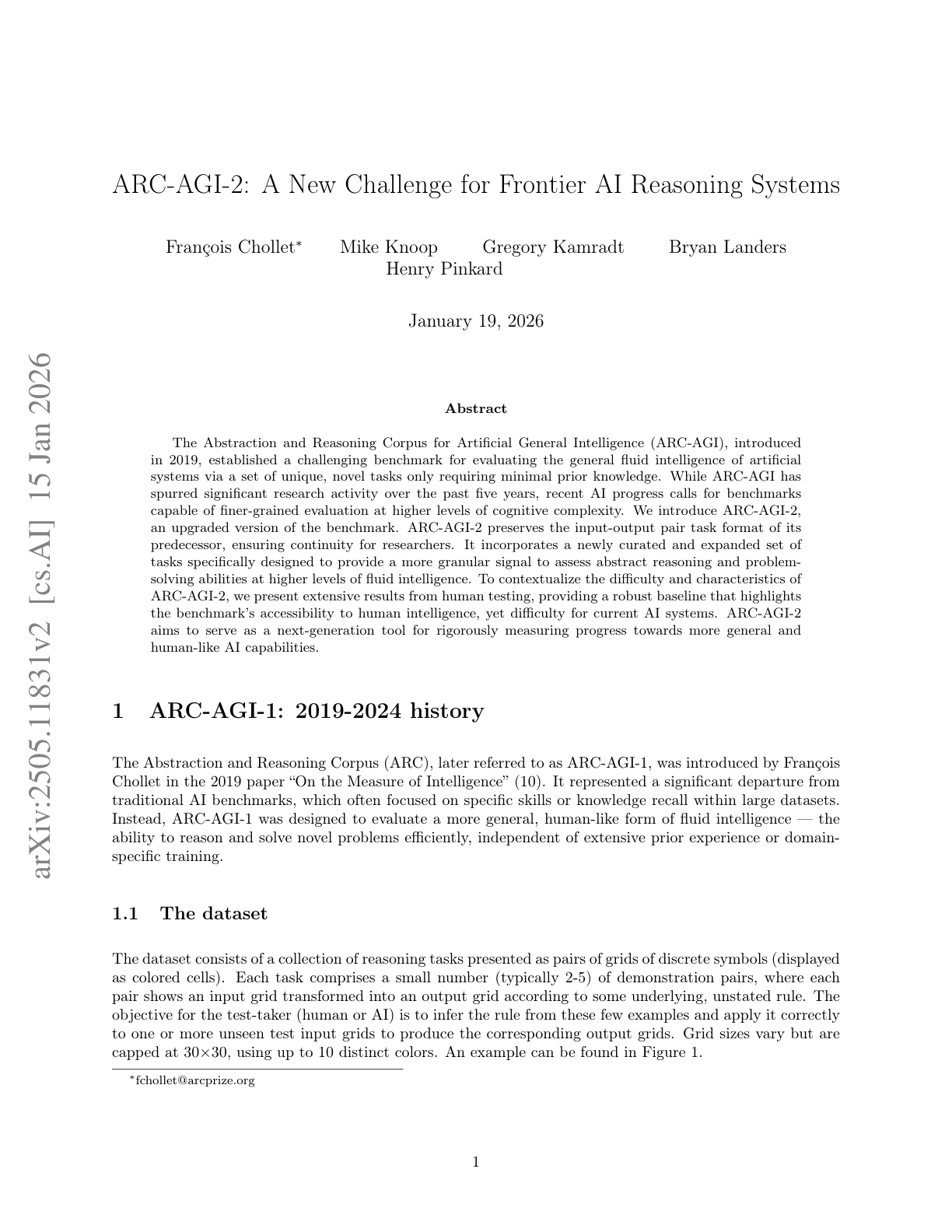
ARC-AGI-2
ARC-AGI-2 is a new benchmark designed to push the boundaries of AI reasoning beyond the original ARC-AGI. It introduces harder, more unique tasks emphasizing compositional generalization and human-like fluid intelligence, with baseline AI models performing below 5% accuracy despite strong ARC-AGI-1 results.
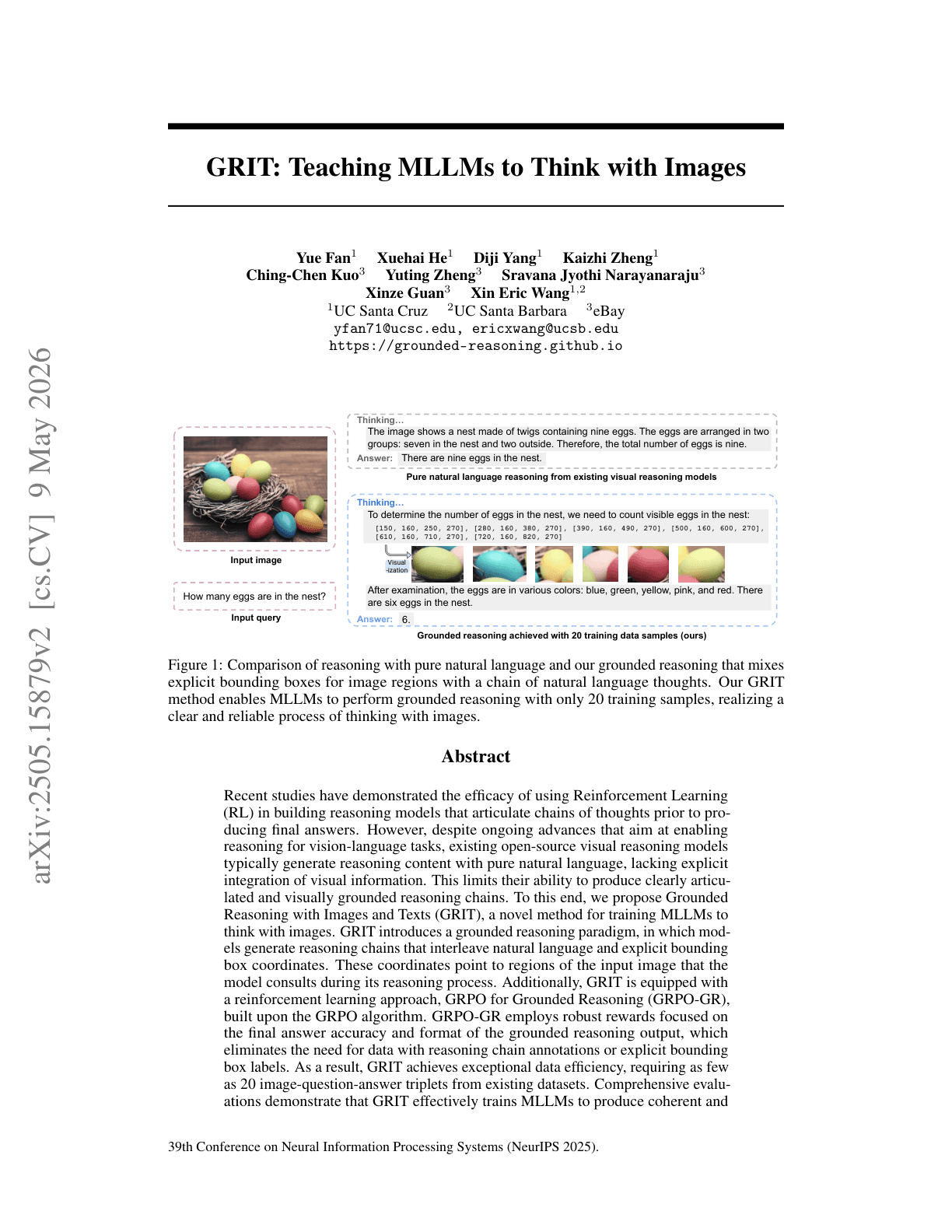
Teaching MLLMs to Think with Images
GRIT is a new method that enables MLLMs to perform grounded visual reasoning by interleaving natural language with bounding box references. Using a reinforcement learning approach (GRPO-GR), GRIT achieves strong reasoning and grounding performance with as few as 20 image-question-answer triplets, outperforming baselines in both accuracy and visual coherence.

AlphaEvolve
AlphaEvolve is a coding agent developed by Google DeepMind that uses LLM-guided evolution to discover new algorithms and optimize computational systems. It orchestrates a pipeline where LLMs generate code changes, evaluators provide feedback, and an evolutionary loop iteratively improves solutions. AlphaEvolve shows that LLMs can go beyond conventional code generation and assist in scientific and algorithmic discovery. Key highlights:
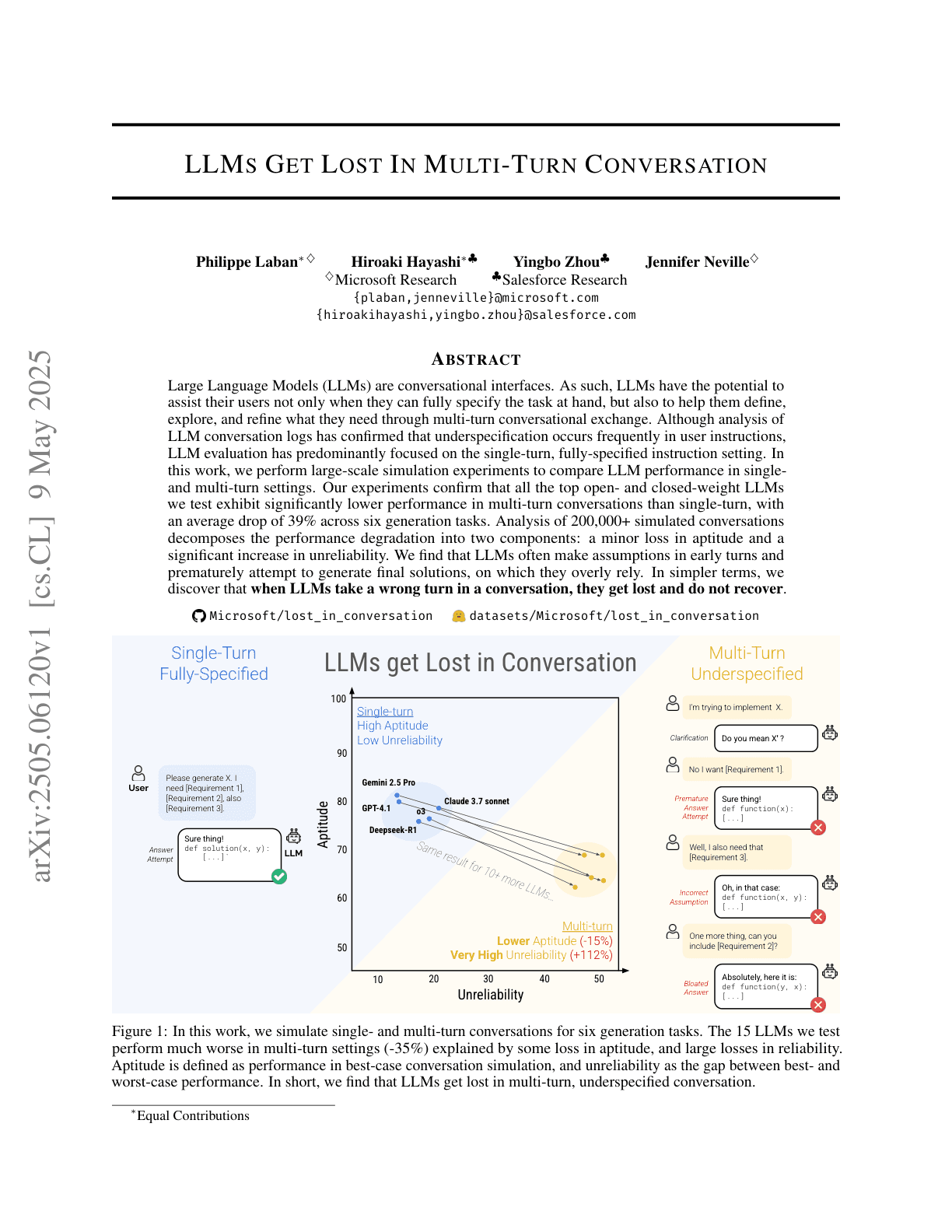
LLMs Get Lost in Multi-Turn Conversation
Investigates how top LLMs degrade in performance during underspecified, multi-turn interactions, common in real-world usage but rarely evaluated. The authors introduce a novel "sharded simulation" framework that breaks down fully-specified instructions into gradual conversation shards, simulating how users naturally provide information over time. Key findings:
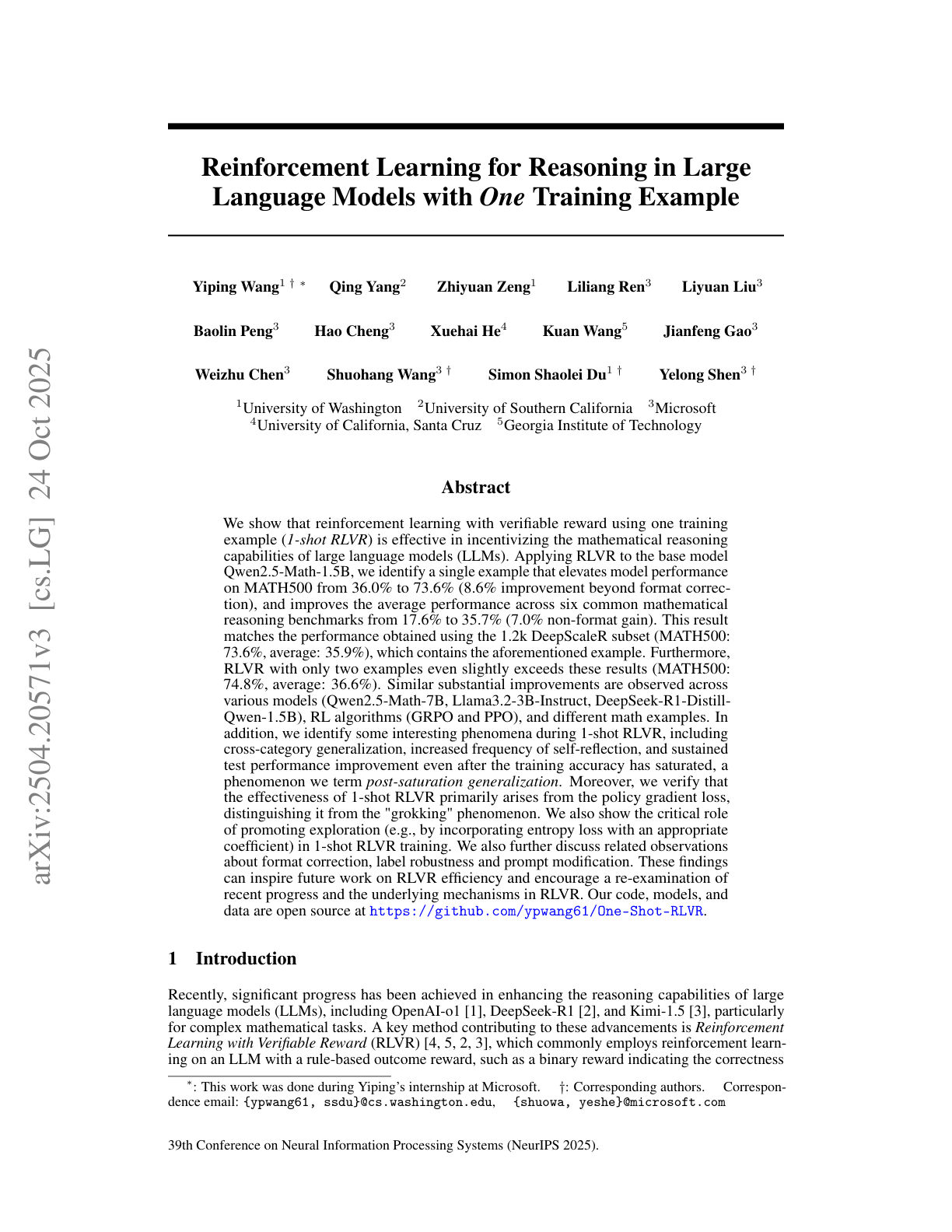
RL for Reasoning in LLMs with One Training Example
This paper shows that Reinforcement Learning with Verifiable Rewards (RLVR) can significantly improve mathematical reasoning in LLMs even when trained with just a single example. On the Qwen2.5-Math-1.5B model, one-shot RLVR improves accuracy on the MATH500 benchmark from 36.0% to 73.6%, nearly matching performance achieved with over 1,200 examples. Two-shot RLVR (with two examples) even slightly surpasses that, matching results from full 7.5k example training.
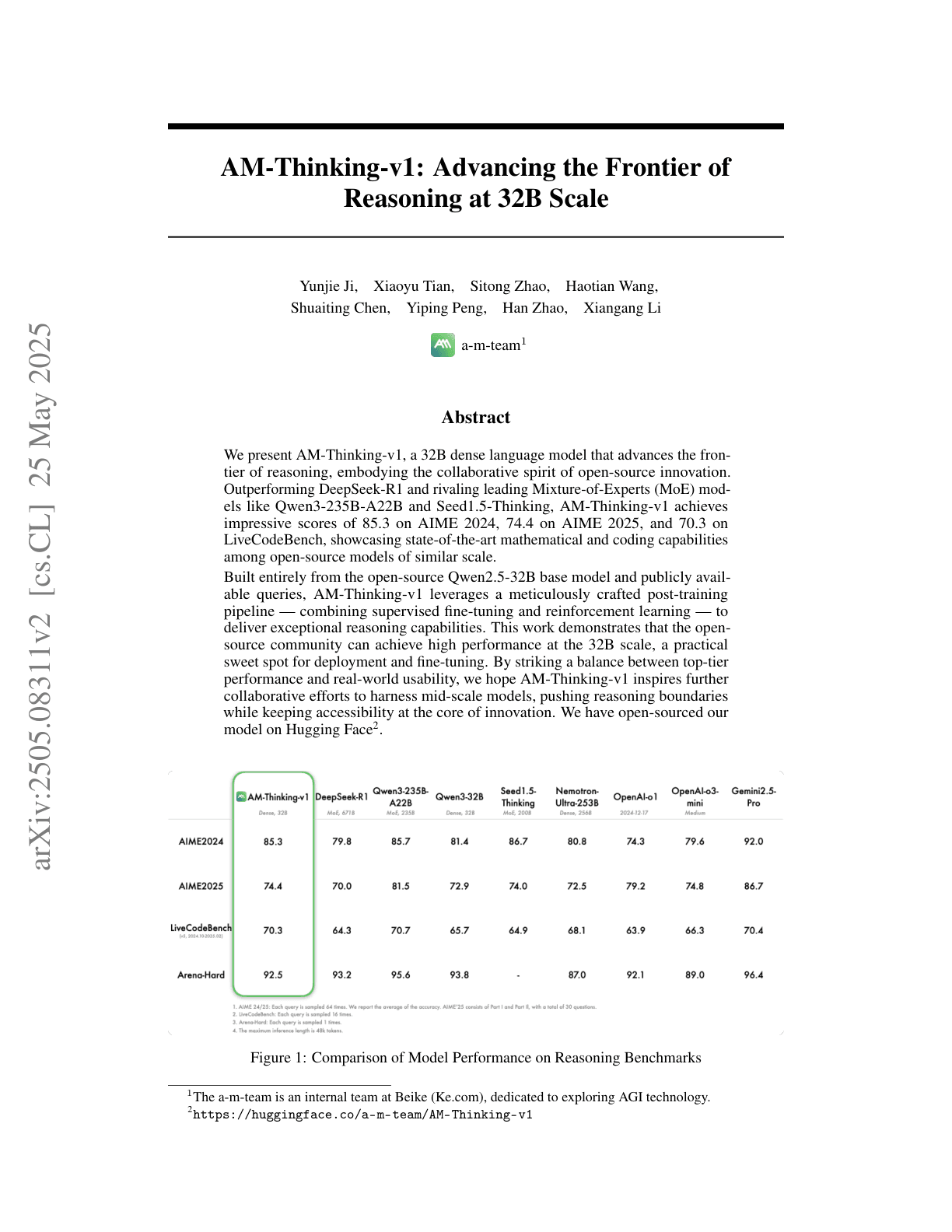
AM-Thinking-v1
Introduces a dense, open-source 32B language model that achieves state-of-the-art performance in reasoning tasks, rivaling significantly larger Mixture-of-Experts (MoE) models. Built upon Qwen2.5-32B, the model is trained entirely with public data and showcases how a meticulously crafted post-training pipeline can unlock competitive performance at mid-scale sizes. Key points:
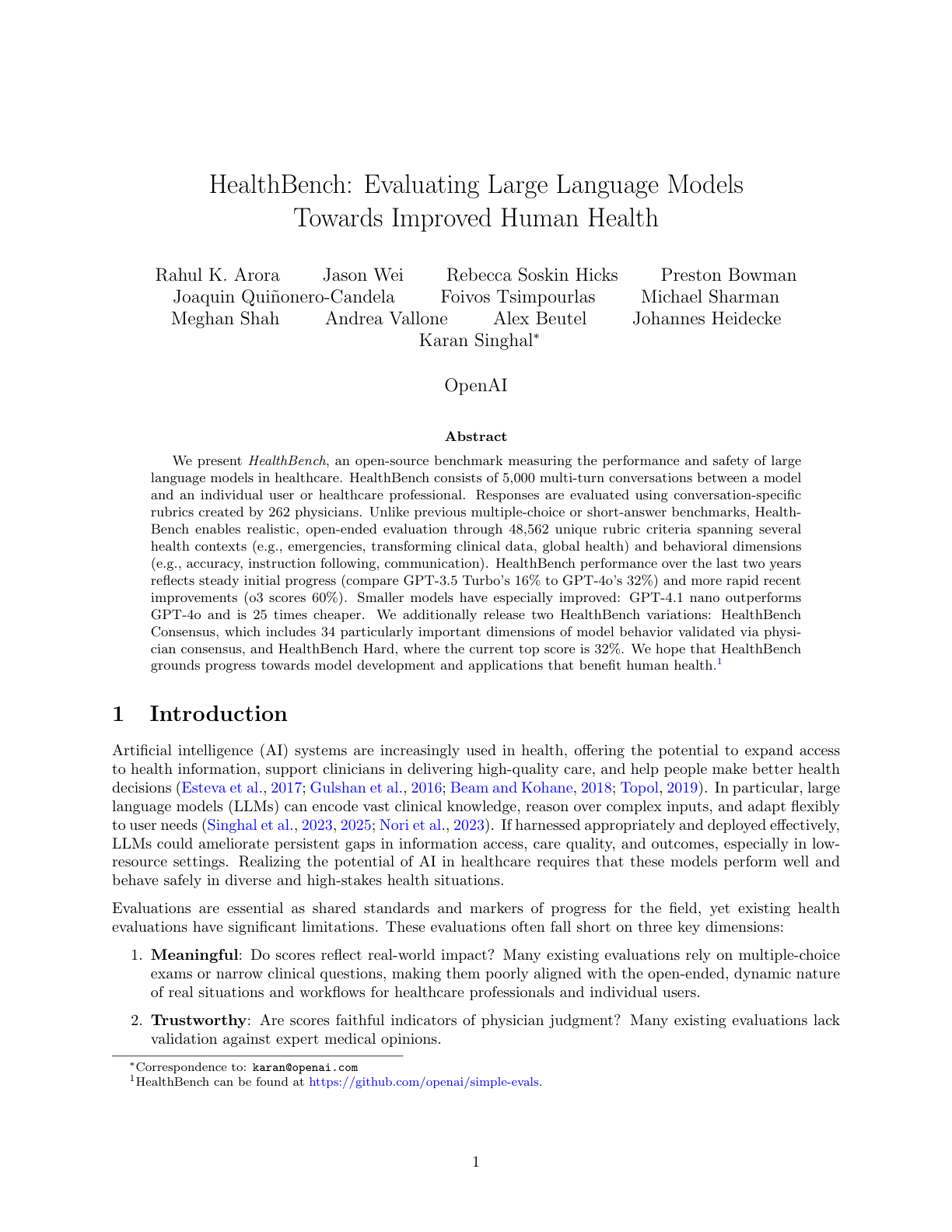
HealthBench
HealthBench is a benchmark of 5,000 multi-turn health conversations graded against 48,562 rubric criteria written by 262 physicians across 60 countries. Unlike prior multiple-choice evaluations, HealthBench supports open-ended, realistic assessments of LLM responses across diverse health themes (e.g., global health, emergency care, context-seeking) and behavioral axes (accuracy, completeness, communication, context awareness, instruction following).
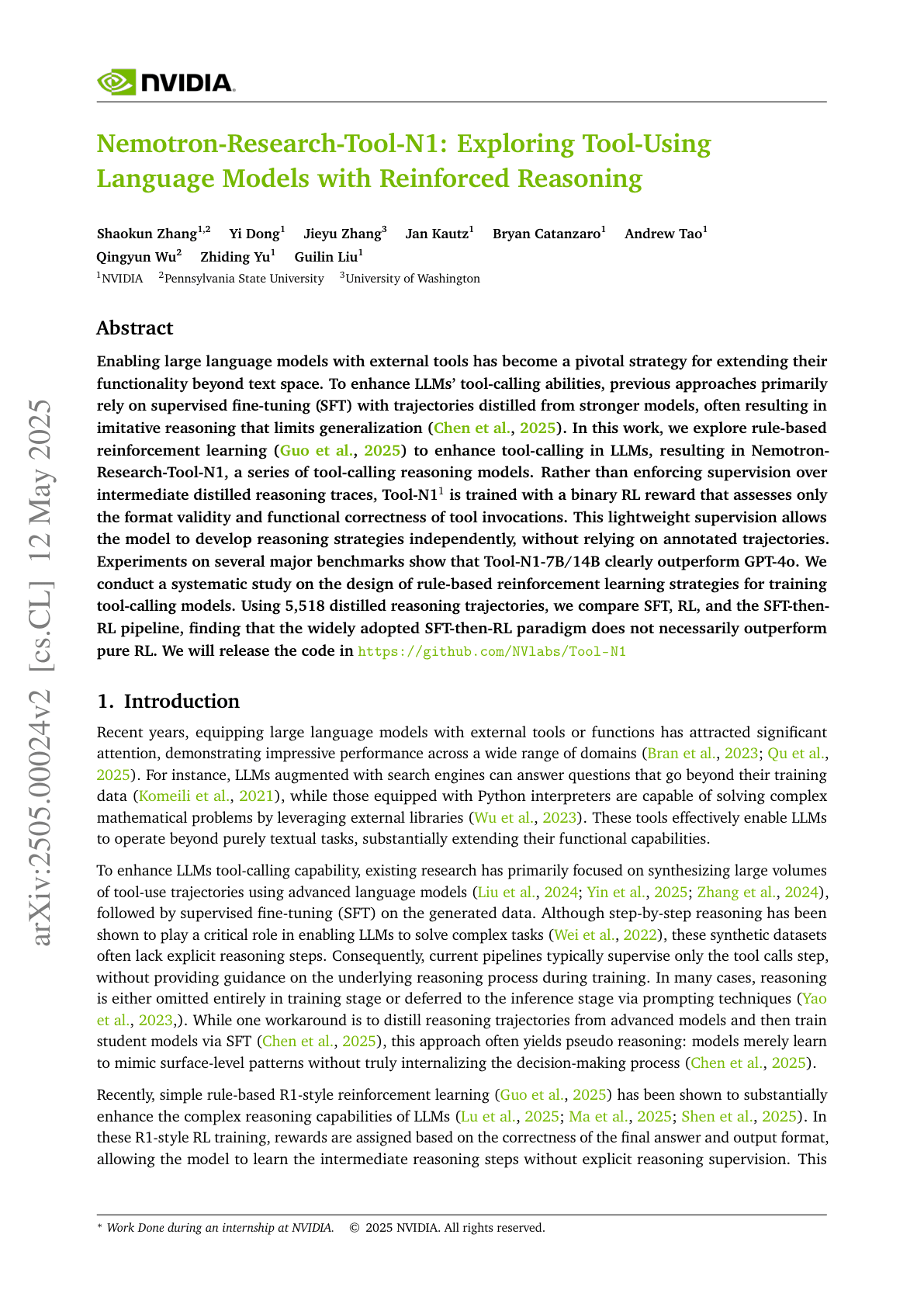
Nemotron-Research-Tool-N1
Introduces Tool-N1, a family of tool-using LLMs trained using a rule-based reinforcement learning (R1-style RL) approach, without reliance on supervised reasoning trajectories. The key idea is to enable models to learn to invoke external tools correctly through binary feedback based on functional correctness and format adherence, rather than step-by-step imitation.
RL for Search-Efficient LLMs
Proposes a new RL-based framework (SEM) that explicitly teaches LLMs when to invoke search and when to rely on internal knowledge, aiming to reduce redundant tool use while maintaining answer accuracy. Key points: