AI Papers of the Week
Every paper worth reading in AI, hand-picked one week at a time.
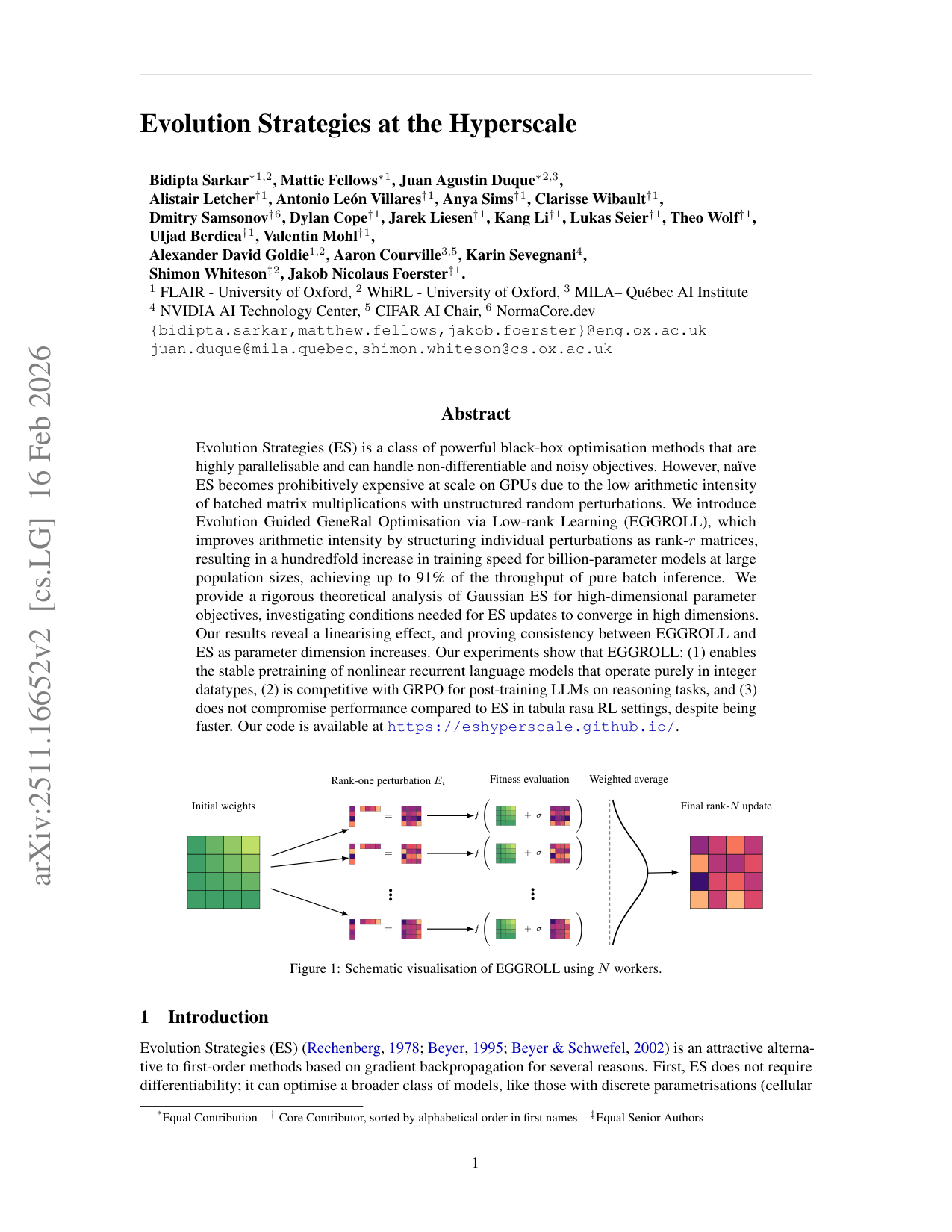
Evolution Strategies at Hyperscale
EGGROLL (Evolution Guided General Optimization via Low-rank Learning) is an evolution strategies algorithm designed to scale backprop-free optimization to large population sizes for billion-parameter neural networks. By using low-rank matrix perturbations instead of full-rank ones, EGGROLL achieves a hundredfold increase in training throughput while nearly matching pure batch inference speed.
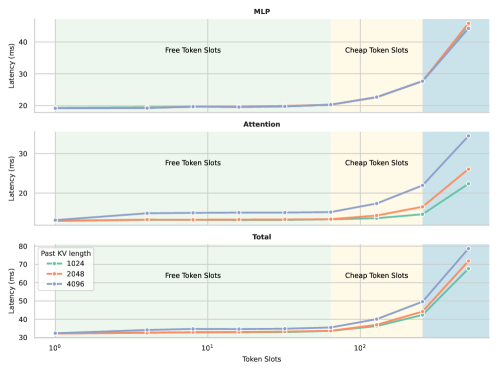
TiDAR: Think in Diffusion, Talk in Autoregression
NVIDIA researchers introduce TiDAR, a unified language model architecture that combines diffusion-based parallel drafting with autoregressive verification in a single forward pass. The hybrid approach achieves 4.71x-5.91x throughput improvements over autoregressive baselines while maintaining quality parity, making it the first architecture to close the performance-quality gap.
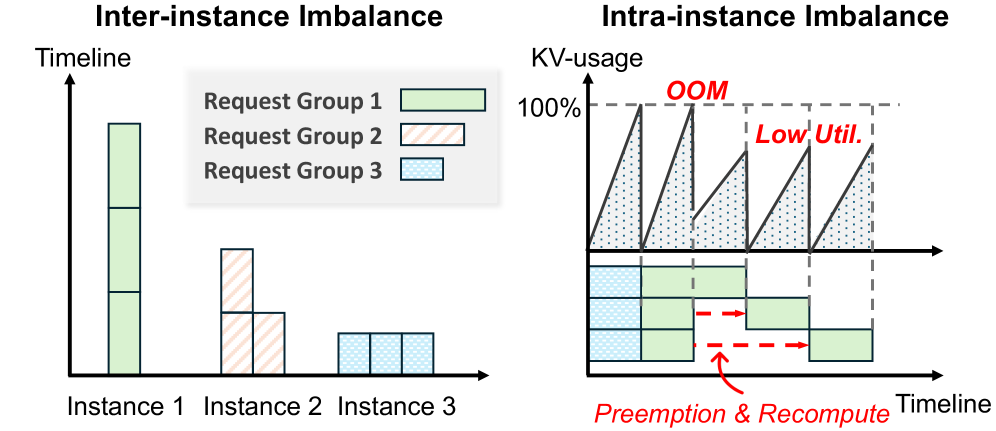
Seer: Fast RL for LLMs
Researchers introduce Seer, a system addressing performance bottlenecks in synchronous reinforcement learning for LLMs by optimizing the rollout phase that dominates end-to-end iteration time. Through three core mechanisms: divided rollout, context-aware scheduling, and adaptive grouped speculative decoding, Seer achieves 74-97% improvement in rollout throughput and 75-93% reduction in long-tail latency on production-grade RL workloads.
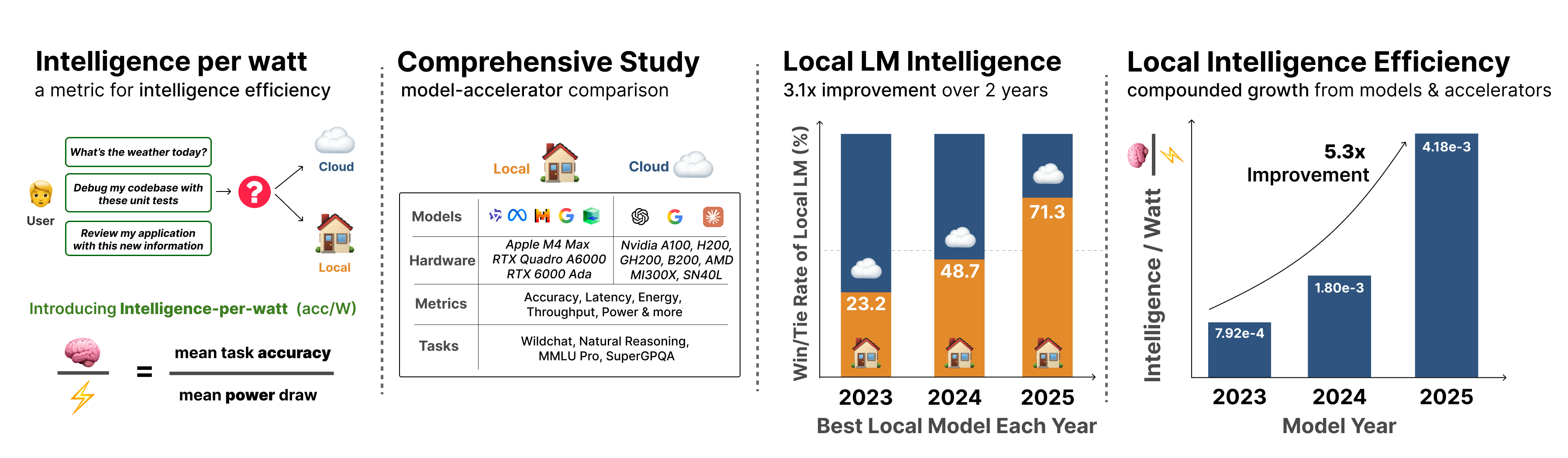
Intelligence per Watt
Stanford and Together AI researchers introduce intelligence per watt (IPW), a unified metric combining task accuracy with power consumption to evaluate local LLM inference viability, conducting the first large-scale empirical study across over 20 models, 8 accelerators, and 1 million real-world queries from 2023-2025.
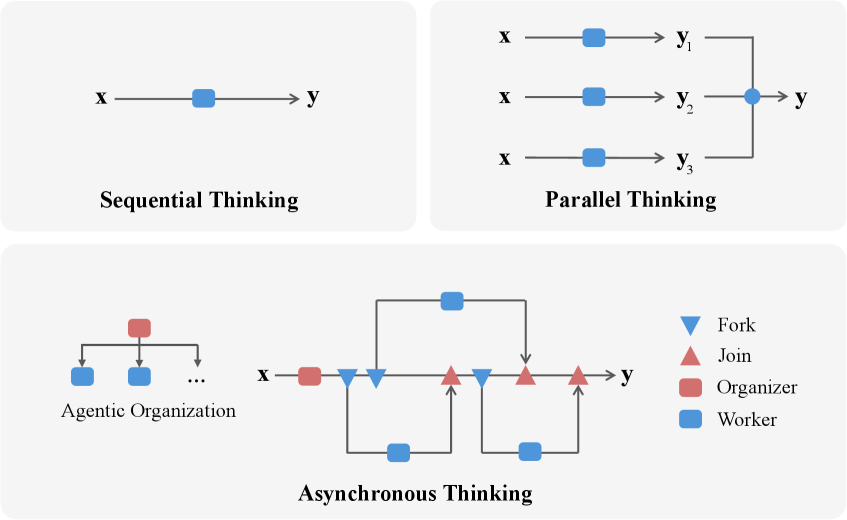
The Era of Agentic Organization
Microsoft Research introduces asynchronous thinking (AsyncThink), a new reasoning paradigm where language models learn to organize their internal thinking into concurrently executable structures through an organizer-worker protocol, achieving 28% lower inference latency than parallel thinking while improving accuracy on mathematical reasoning and demonstrating zero-shot generalization to unseen tasks.
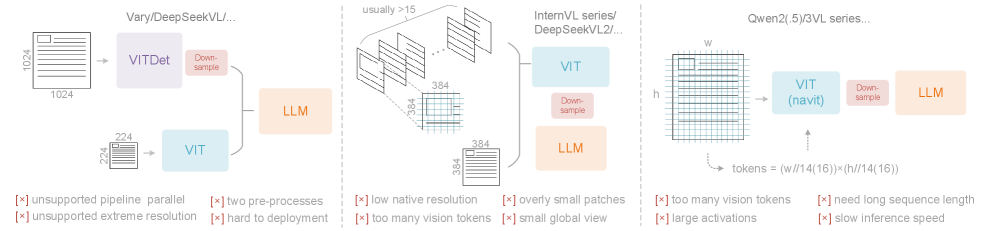
DeepSeek-OCR
DeepSeek-OCR explores compressing long text contexts into visual representations using a novel vision encoder architecture (DeepEncoder) that achieves 10-20x compression ratios while maintaining high OCR accuracy.
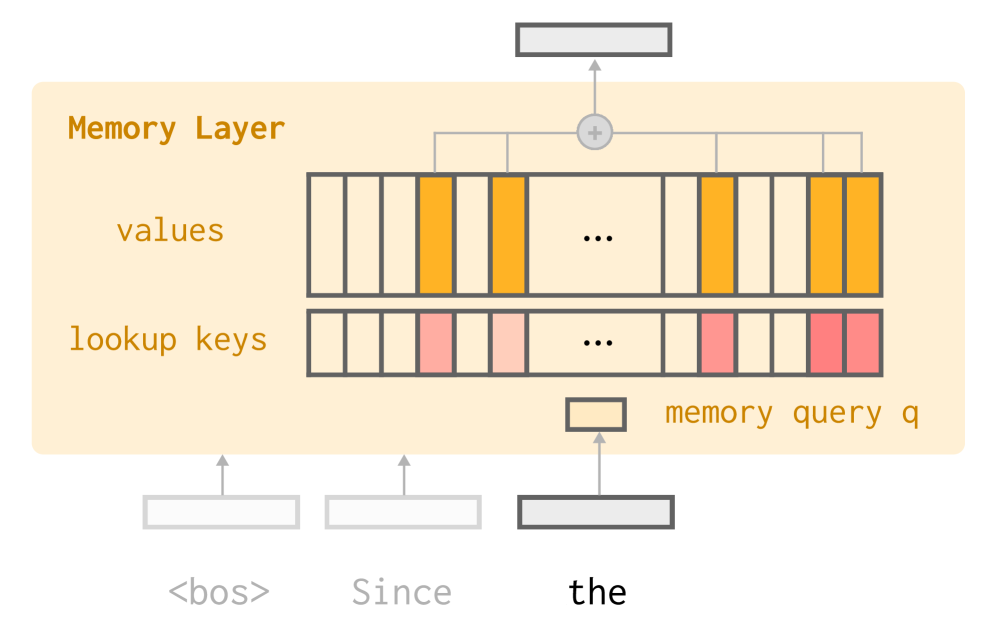
Continual Learning via Sparse Memory Finetuning
Meta AI researchers address catastrophic forgetting in language models through sparse memory finetuning, updating only memory slots most activated by new knowledge while achieving 89% less performance degradation than standard finetuning.
DeepSeek-V3.2-Exp
DeepSeek adds a fine-grained sparse attention mechanism (DeepSeek Sparse Attention, DSA) to the V3.1 “Terminus” backbone and shows large cost reductions on 128K context without notable quality loss. Model and inference code are released.
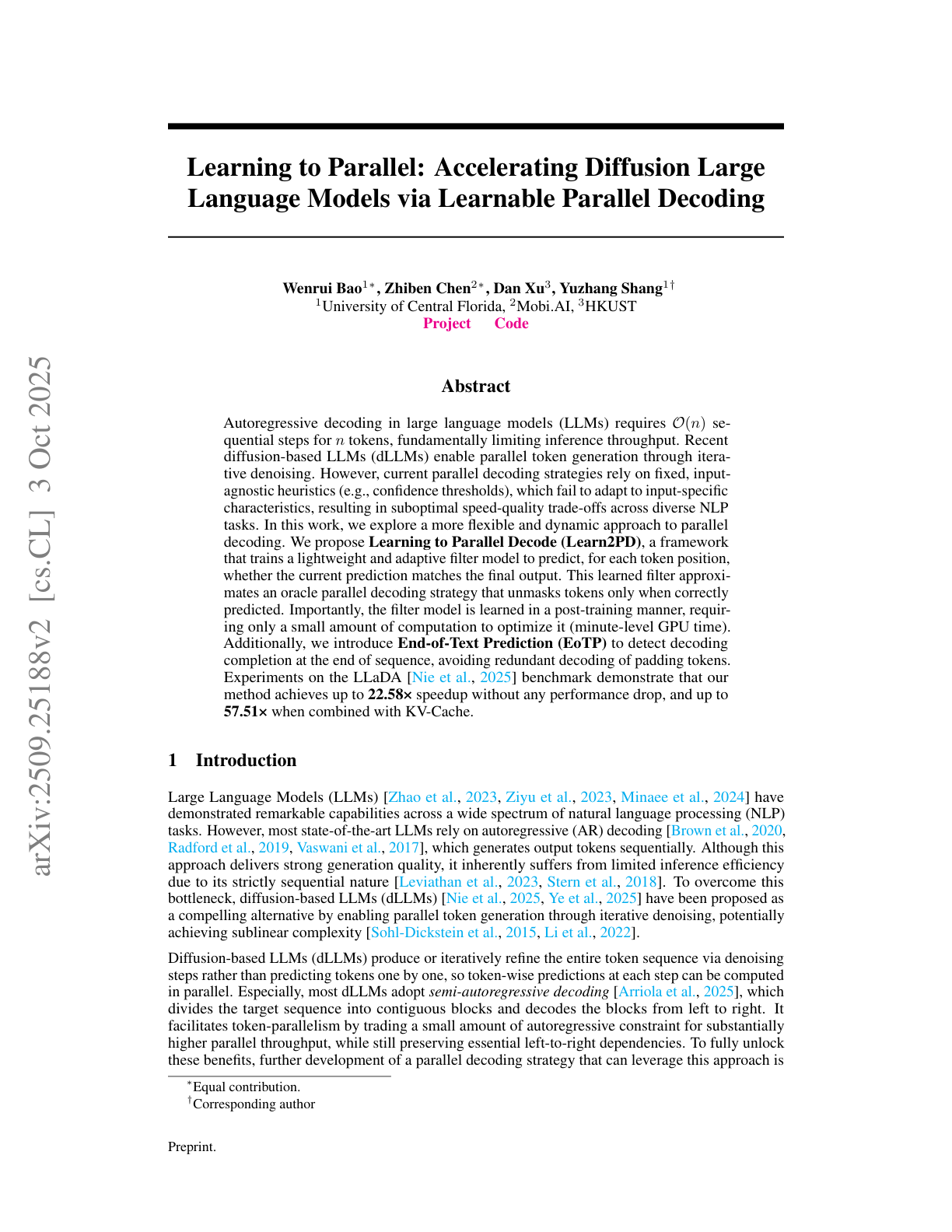
Accelerating Diffusion LLMs
A lightweight, learned policy speeds up diffusion-based LLM decoding by deciding which tokens are already “final” and when to stop generation. The authors train a tiny MLP filter on token confidence signals and add an End-of-Text Prediction that halts decoding as soon as [EoT] is reliably produced. On LLaDA-8B-Instruct, this reaches large throughput gains with minimal or no accuracy loss.
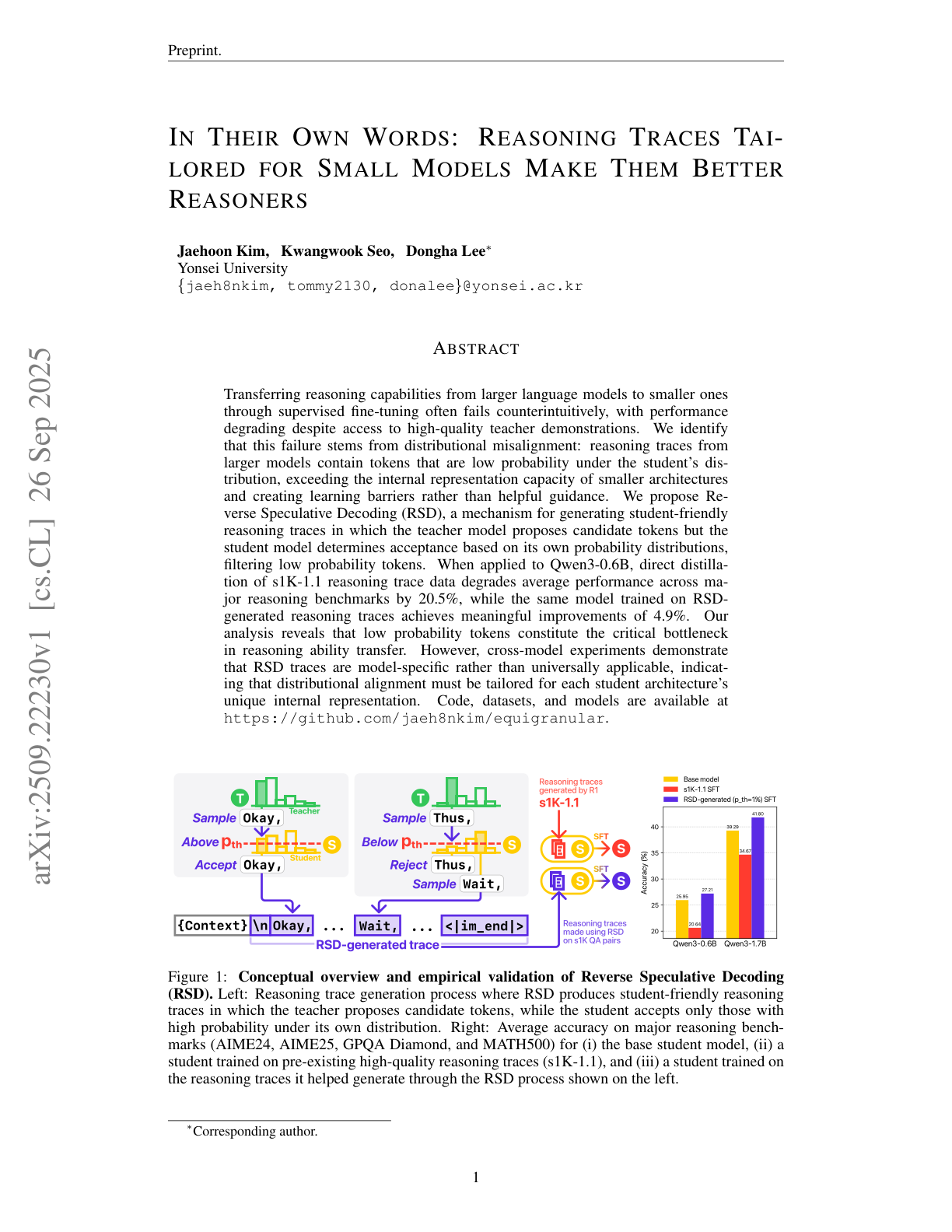
Reasoning Traces Tailored for Small Models
Small models often get worse when you SFT them on long, high-quality CoT from big teachers. This paper pinpoints why and fixes it with Reverse Speculative Decoding (RSD): let the teacher propose tokens, but let the student approve them only if they are probable under the student. Result: traces that stay correct while matching the student’s distribution, which small models can actually learn from.
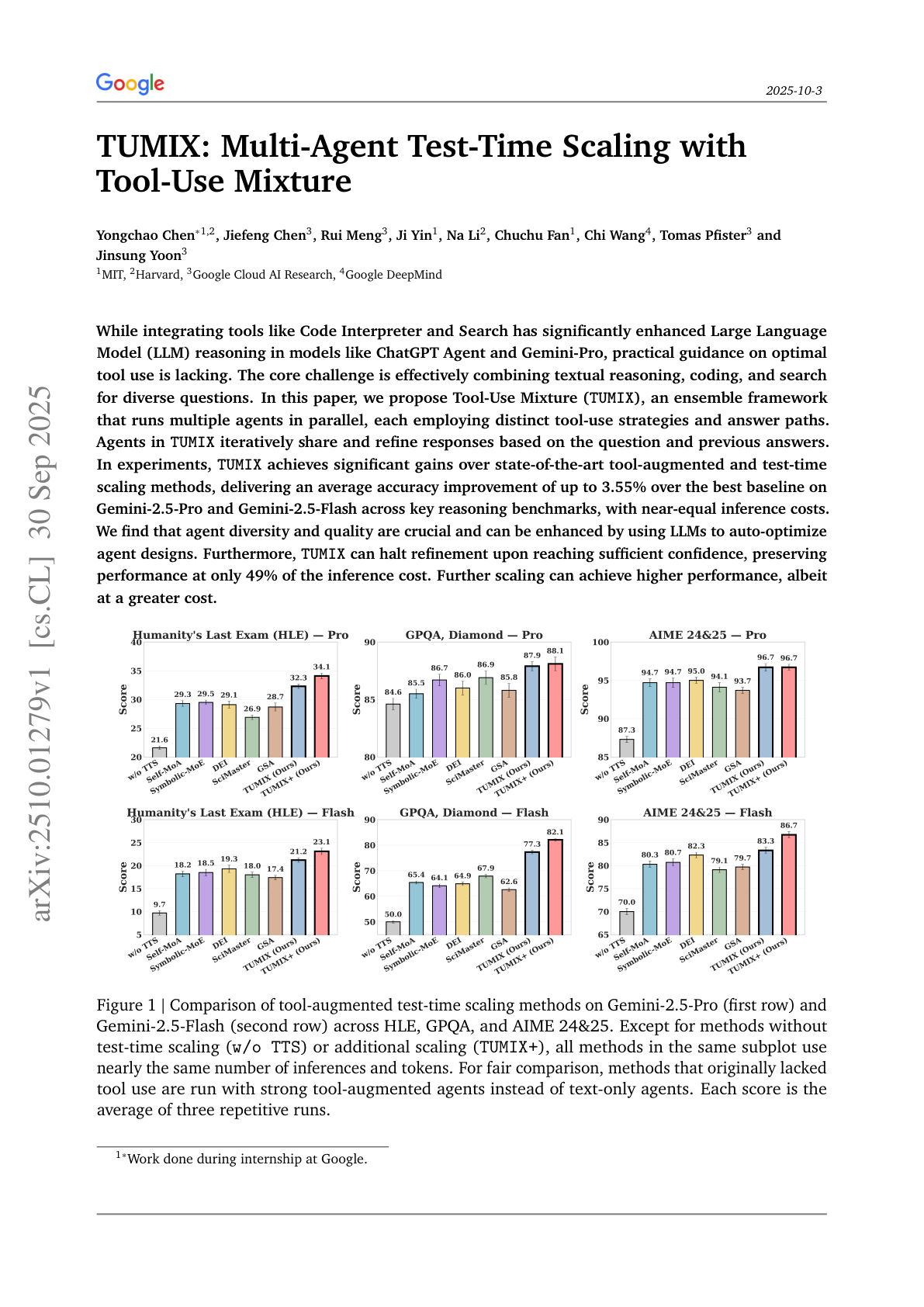
Tool-Use Mixture (TUMIX)
TUMIX is an ensemble recipe for reasoning that mixes text, code execution, and web search, running 15 diverse agents in parallel and passing intermediate answers across rounds. An LLM-judge controls early stopping, giving up to +3.55% accuracy gains over strong tool-augmented baselines on HLE, GPQA-Diamond, and AIME 24/25 while cutting inference cost by ~50%.
K2-Think
A 32B-parameter system built on Qwen2.5 that rivals or beats far larger models on hard math by combining long CoT SFT, RL with verifiable rewards, lightweight test-time scaffolding, and inference optimization.
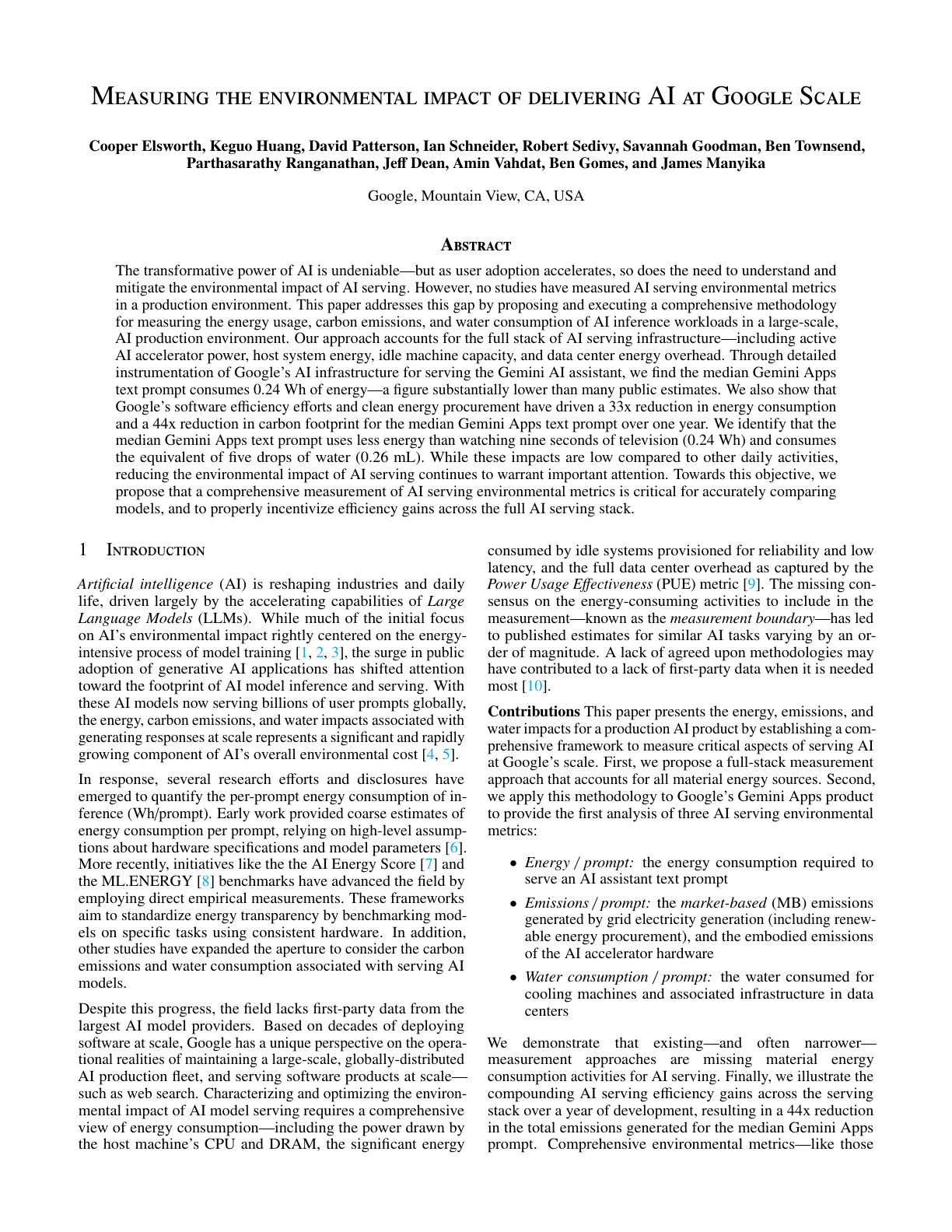
Measuring the Environmental Impact of Delivering AI at Google Scale
Google presents first‑party, production measurements of AI serving’s environmental impact for Gemini Apps. Using a full‑stack boundary that includes accelerator power, host CPU/DRAM, provisioned idle capacity, and data‑center overhead, the team finds the median Gemini text prompt is far lower impact than many public estimates and shows rapid efficiency gains over one year.
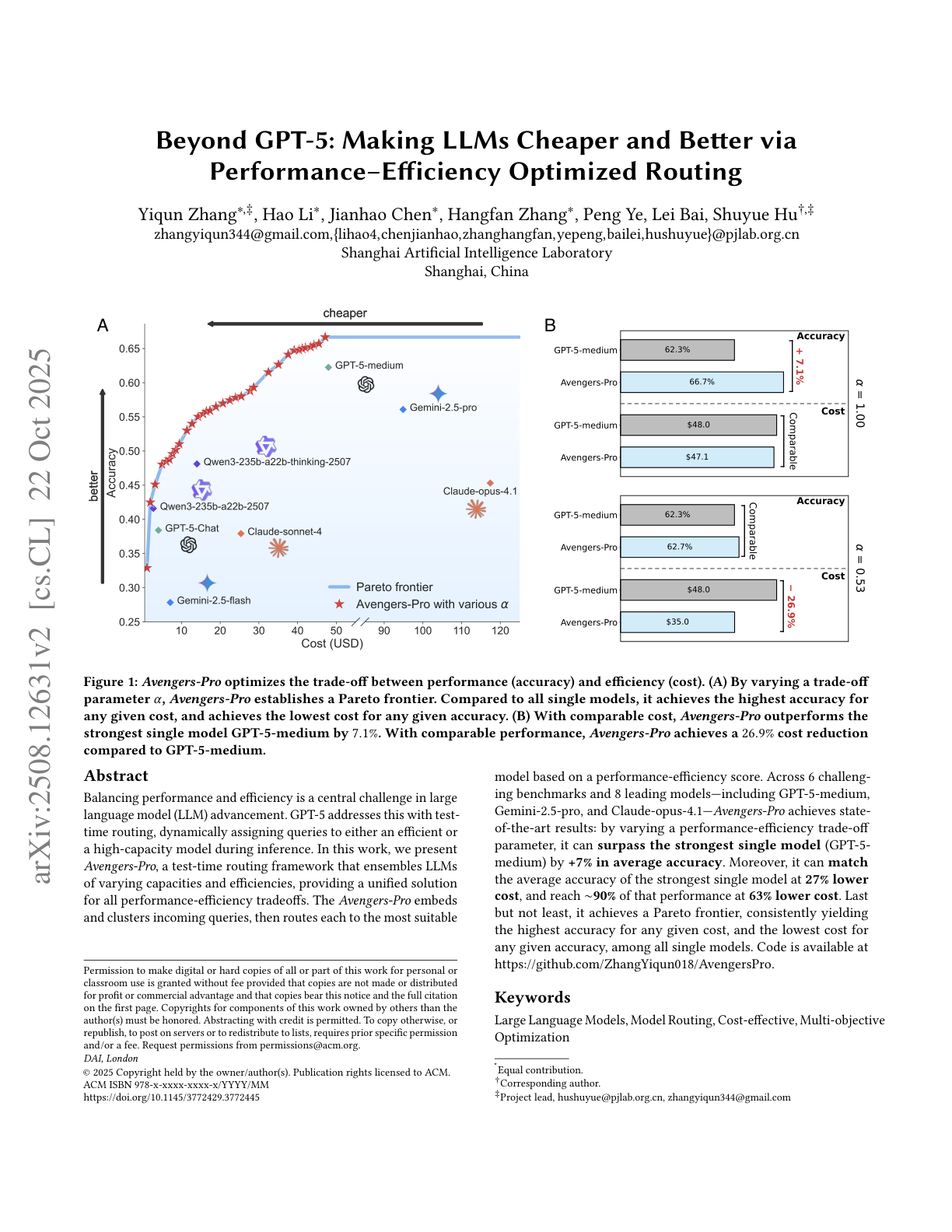
Avengers-Pro: Beyond GPT-5
A lightweight test‑time router that embeds each query, maps it to semantic clusters, and selects one LLM from an ensemble to optimize accuracy vs cost. On six hard benchmarks and eight leading models, it beats the best single model at a similar cost and traces a Pareto frontier of accuracy for any budget.
Parallel Text Generation
This survey reviews parallel text generation methods that overcome the sequential limits of autoregressive decoding by enabling faster inference. It categorizes AR-based and non-AR-based approaches, analyzes trade-offs in speed, quality, and efficiency, and highlights recent advances, open challenges, and future research directions.
AlphaEarth Foundations
AlphaEarth Foundations (AEF) introduces a task-agnostic geospatial foundation model that learns a compact, time-continuous embedding field of Earth’s surface. AEF is designed to produce accurate, high-resolution (10m²) map representations from sparse geolocated labels and remote sensing data. Its key innovation lies in producing universal, analysis-ready embeddings that outperform both traditional feature engineering methods and other learned approaches across diverse mapping tasks.
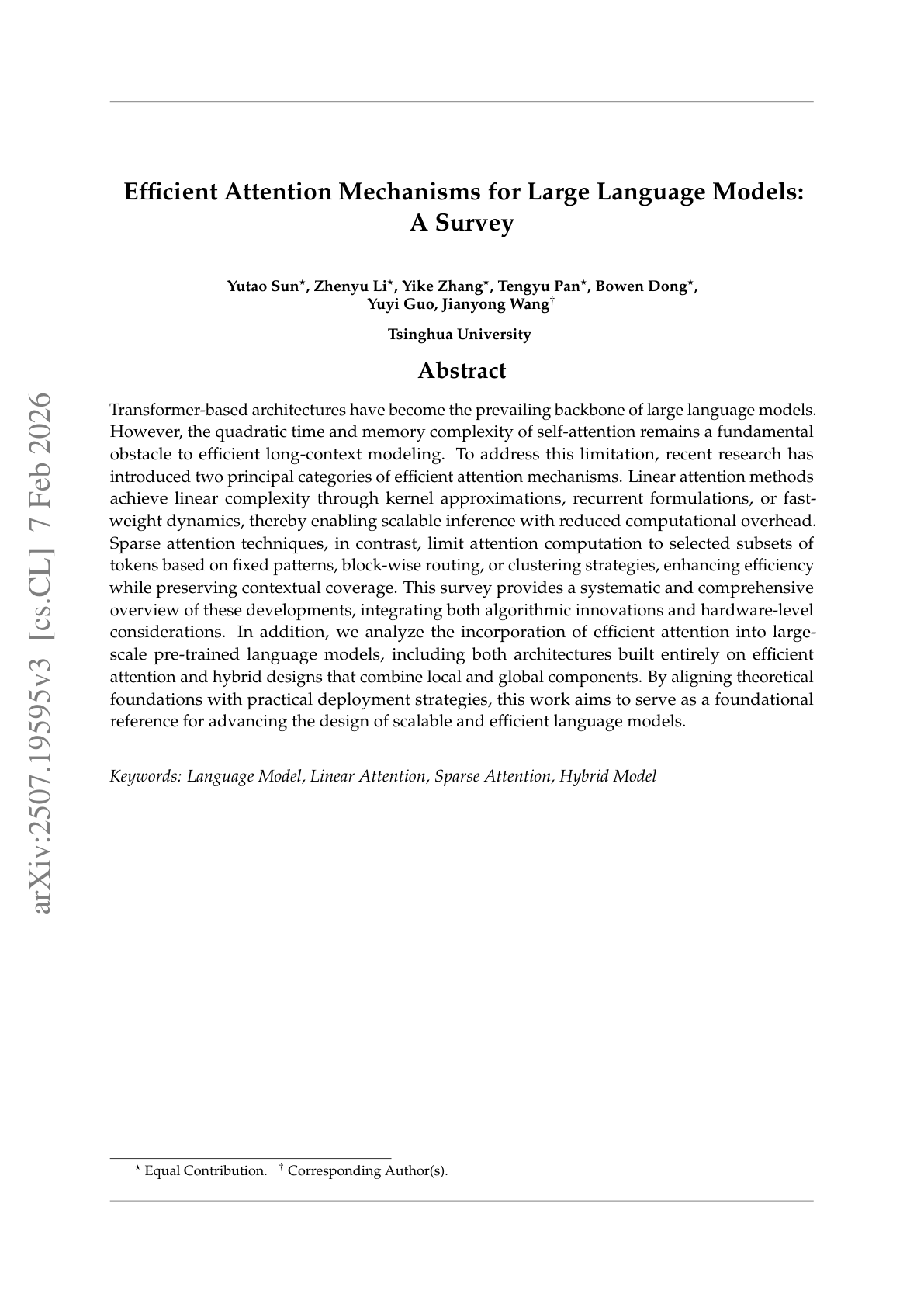
Efficient Attention Mechanisms
This survey reviews linear and sparse attention techniques that reduce the quadratic cost of Transformer self-attention, enabling more efficient long-context modeling. It also examines their integration into large-scale LLMs and discusses practical deployment and hardware considerations.
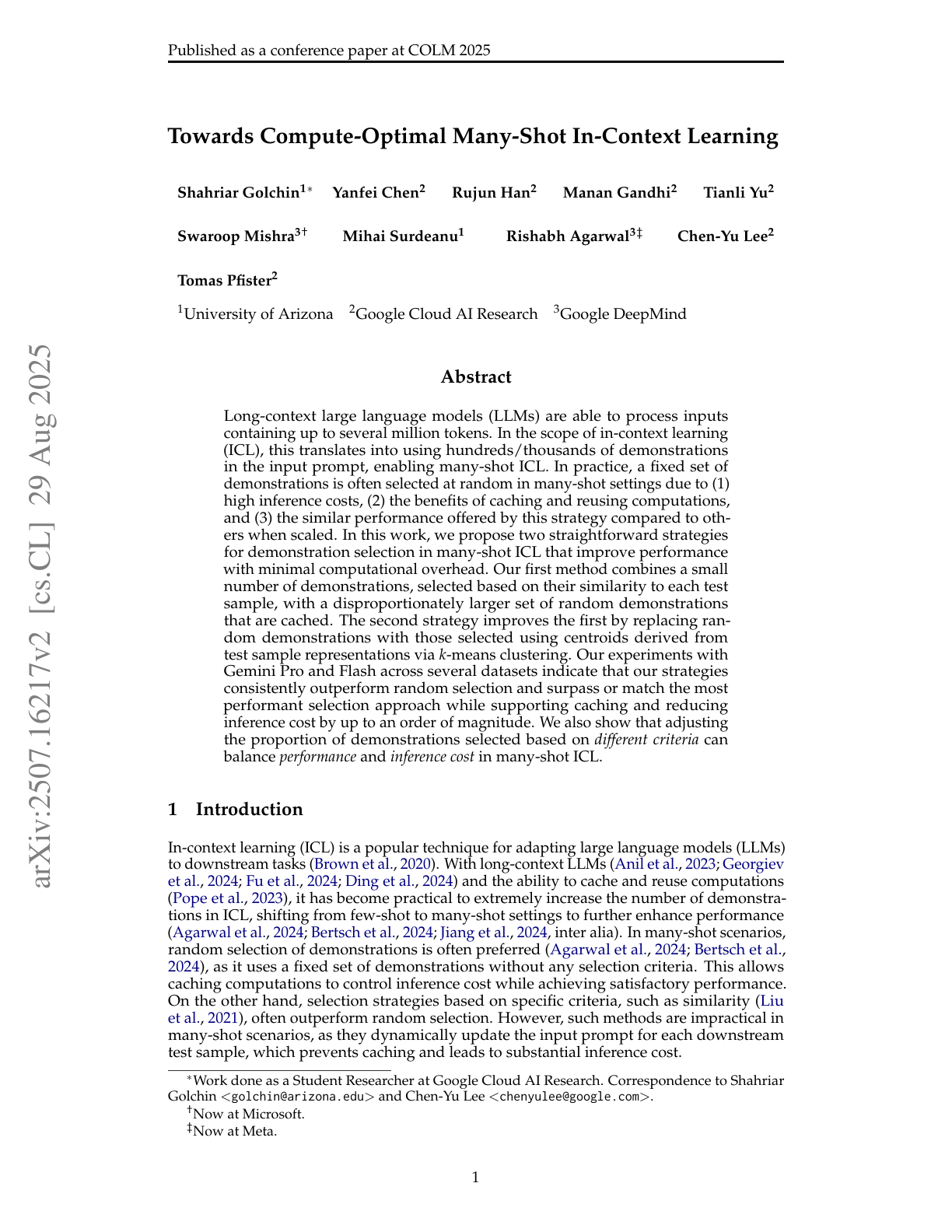
Towards Compute-Optimal Many-Shot In-Context Learning
Proposes practical strategies for reducing the cost of many-shot in-context learning while preserving or improving performance. With long-context LLMs like Gemini Pro and Flash supporting thousands of demonstrations, caching becomes essential, yet naïvely using only random demonstrations misses potential accuracy gains from smarter selection.
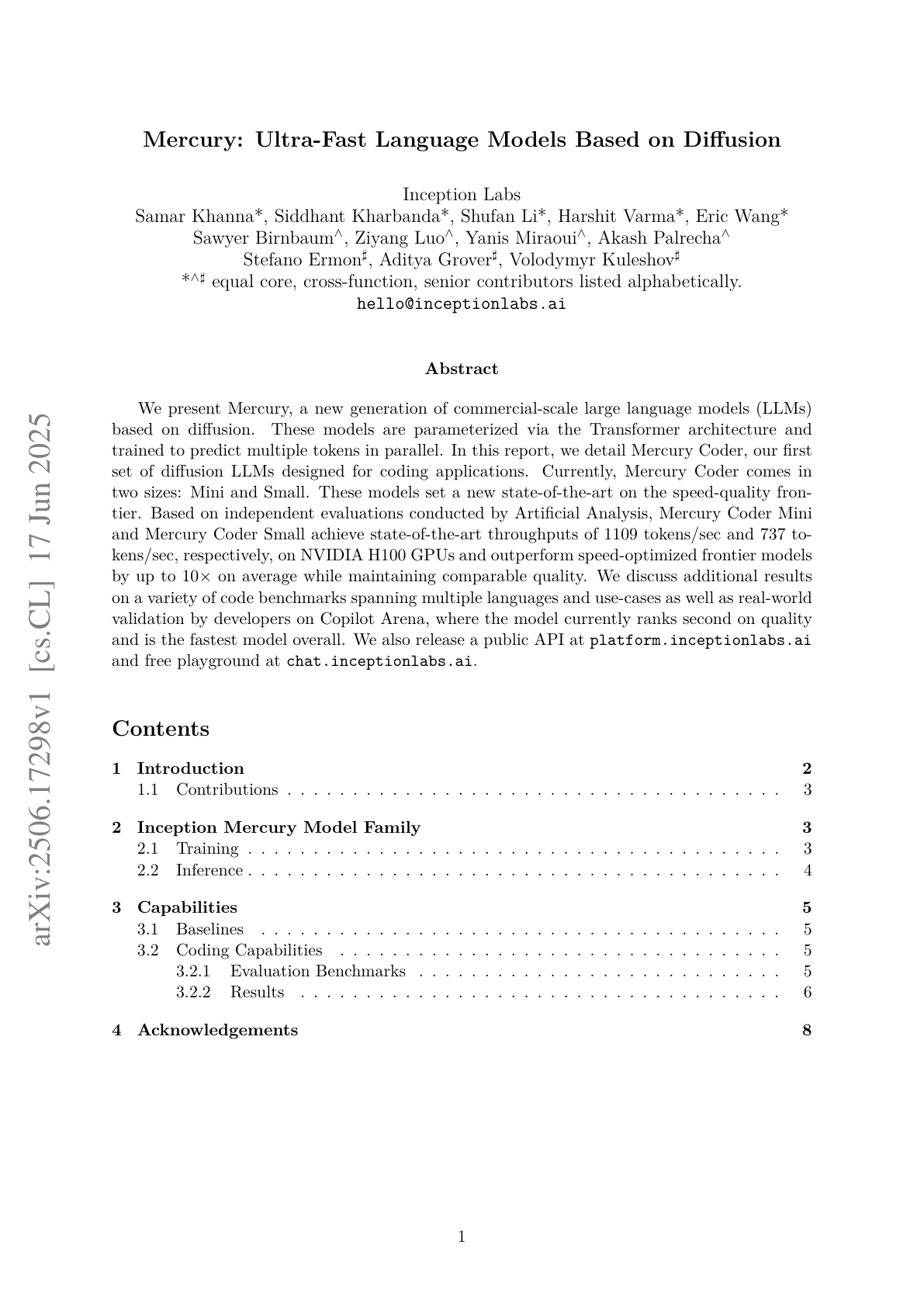
Ultra-Fast Diffusion-based Language Models
This paper introduces Mercury, a family of large-scale diffusion-based language models (dLLMs) optimized for ultra-fast inference. Unlike standard autoregressive LLMs, Mercury models generate multiple tokens in parallel via a coarse-to-fine refinement process. This approach enables significantly higher throughput without sacrificing output quality. The initial release focuses on code generation, with Mercury Coder Mini and Small models achieving up to 1109 and 737 tokens/sec, respectively, on NVIDIA H100s, outperforming speed-optimized frontier models by up to 10× while matching or exceeding their quality.
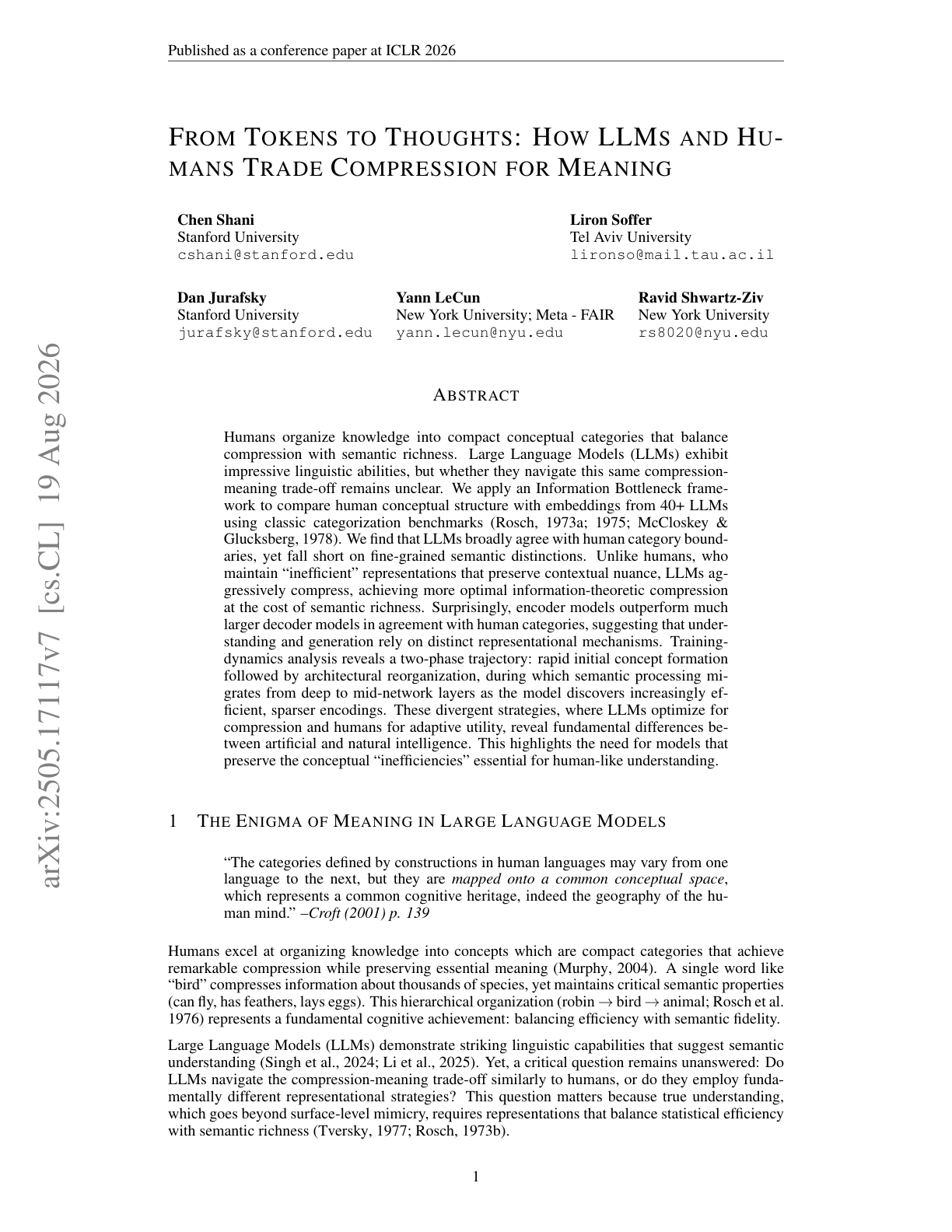
From Tokens to Thoughts
This paper introduces an information-theoretic framework to examine whether LLMs organize semantic knowledge like humans, balancing compression and meaning. Drawing from Rate-Distortion Theory and the Information Bottleneck principle, the authors evaluate token embeddings from 30+ LLMs against classic human categorization benchmarks from cognitive psychology.
EfficientLLM
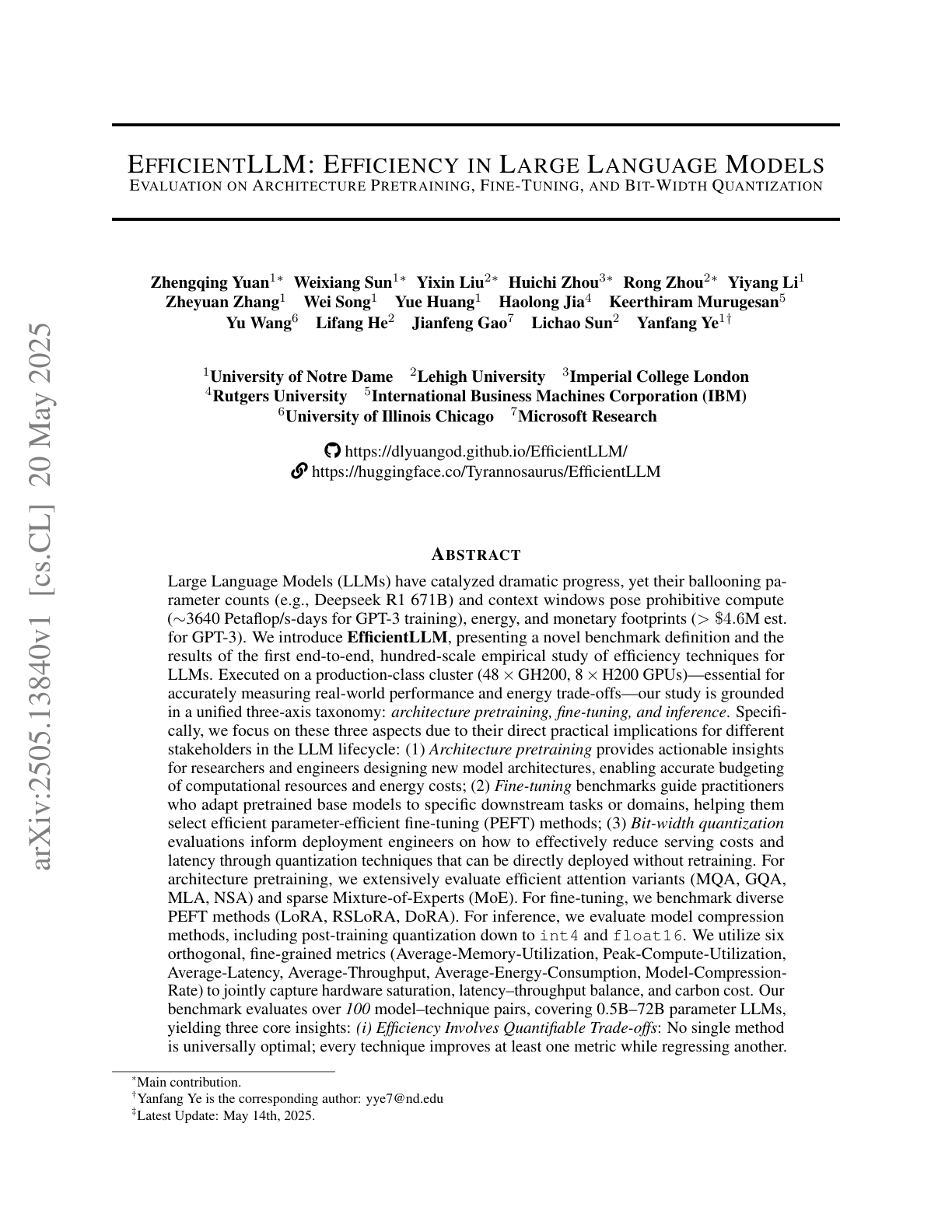
Introduces the first large-scale, empirical benchmark for evaluating efficiency trade-offs in LLMs across architecture, fine-tuning, and inference. Conducted on a high-performance cluster (48×GH200, 8×H200 GPUs), the study evaluates over 100 model–technique pairs spanning 0.5B–72B parameters, using six metrics: memory utilization, compute utilization, latency, throughput, energy consumption, and compression rate. Key insights include:
MiMo-7B
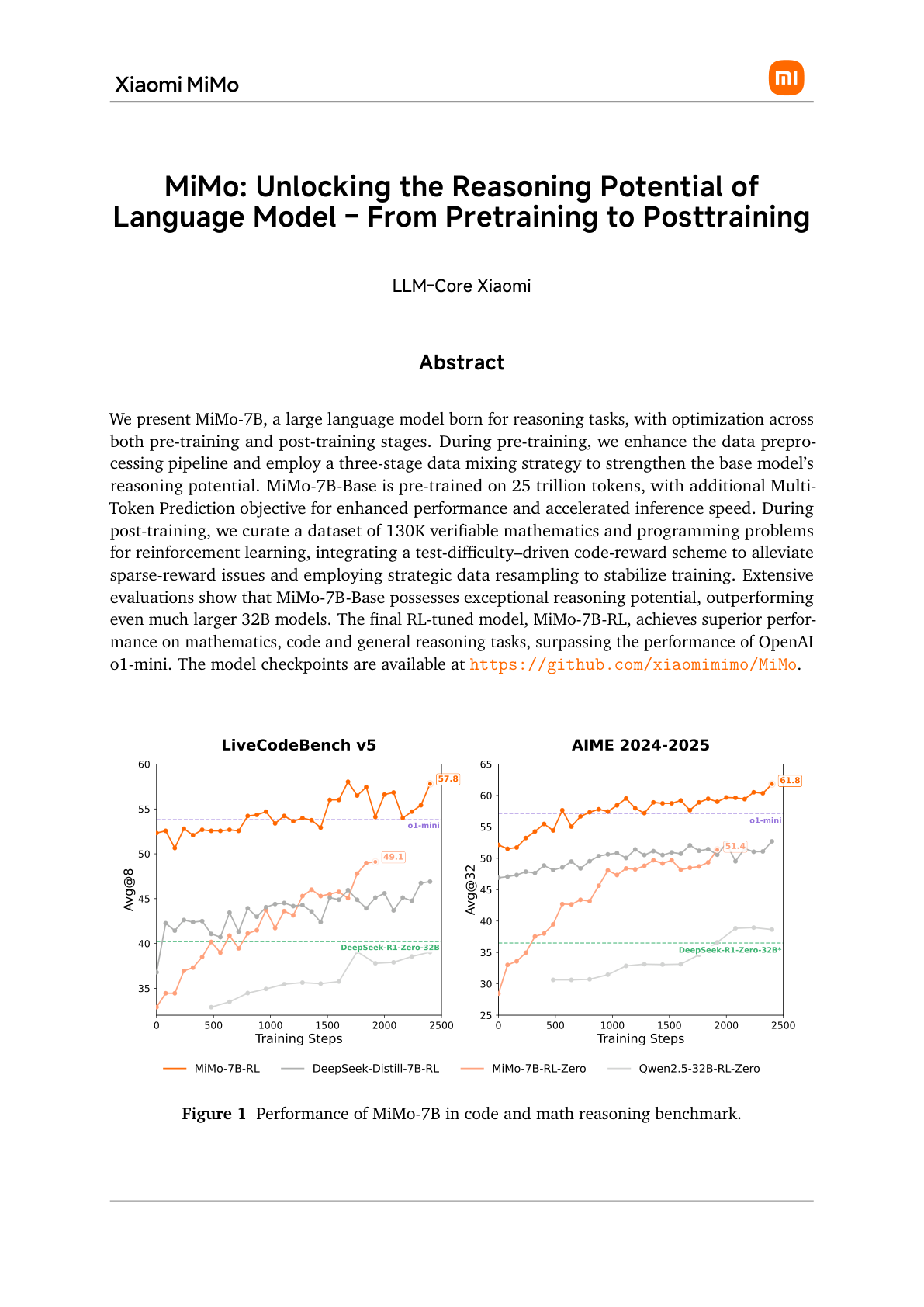
Xiaomi releases MiMo-7B, a new language model for reasoning tasks. MiMo-7B is explicitly designed for advanced reasoning across math and code. Highlights:
A Survey of Efficient LLM Inference Serving
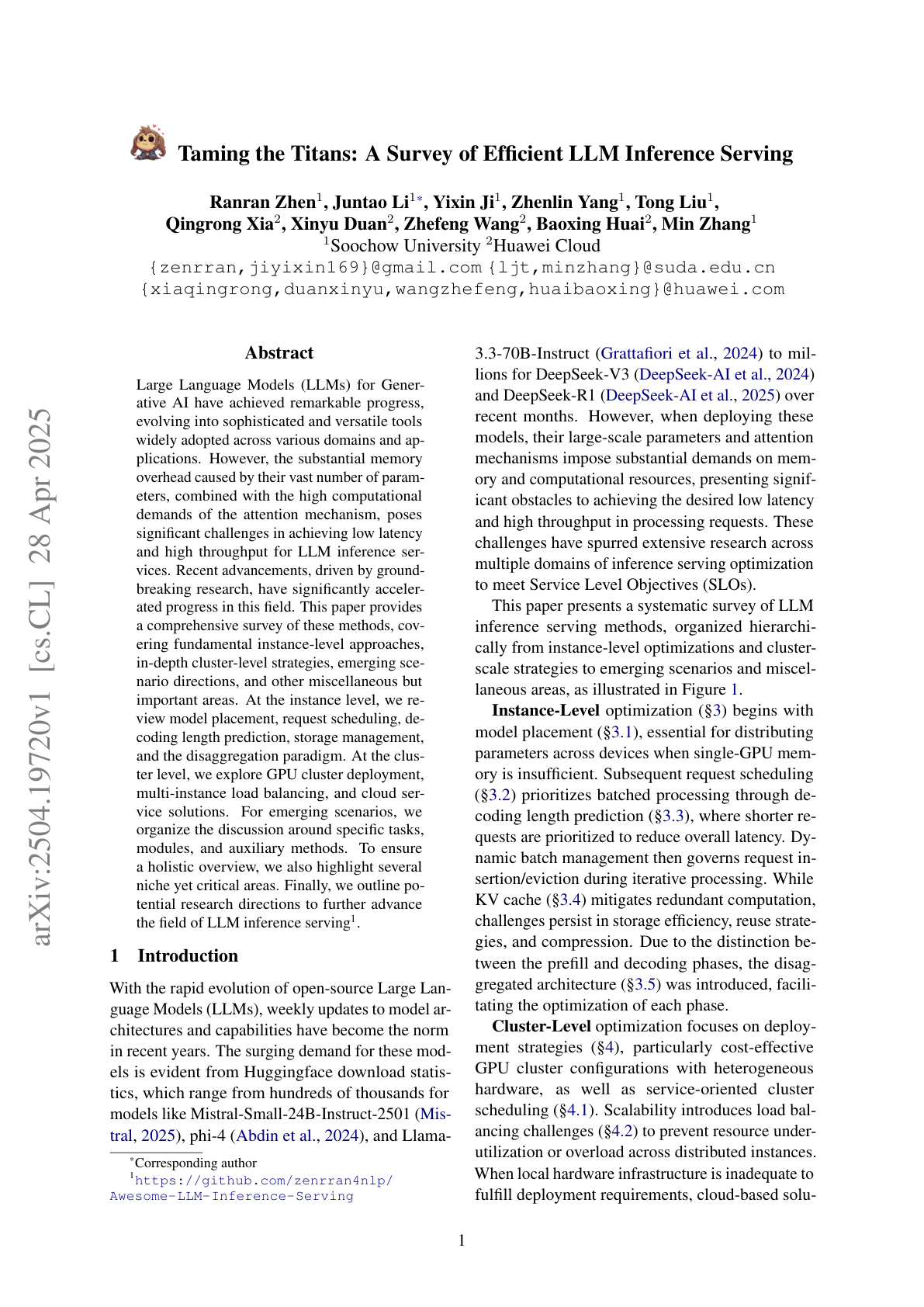
This survey reviews recent advancements in optimizing LLM inference, addressing memory and computational bottlenecks. It covers instance-level techniques (like model placement and request scheduling), cluster-level strategies (like GPU deployment and load balancing), and emerging scenario-specific solutions, concluding with future research directions.
BitNet b1.58 2B4T
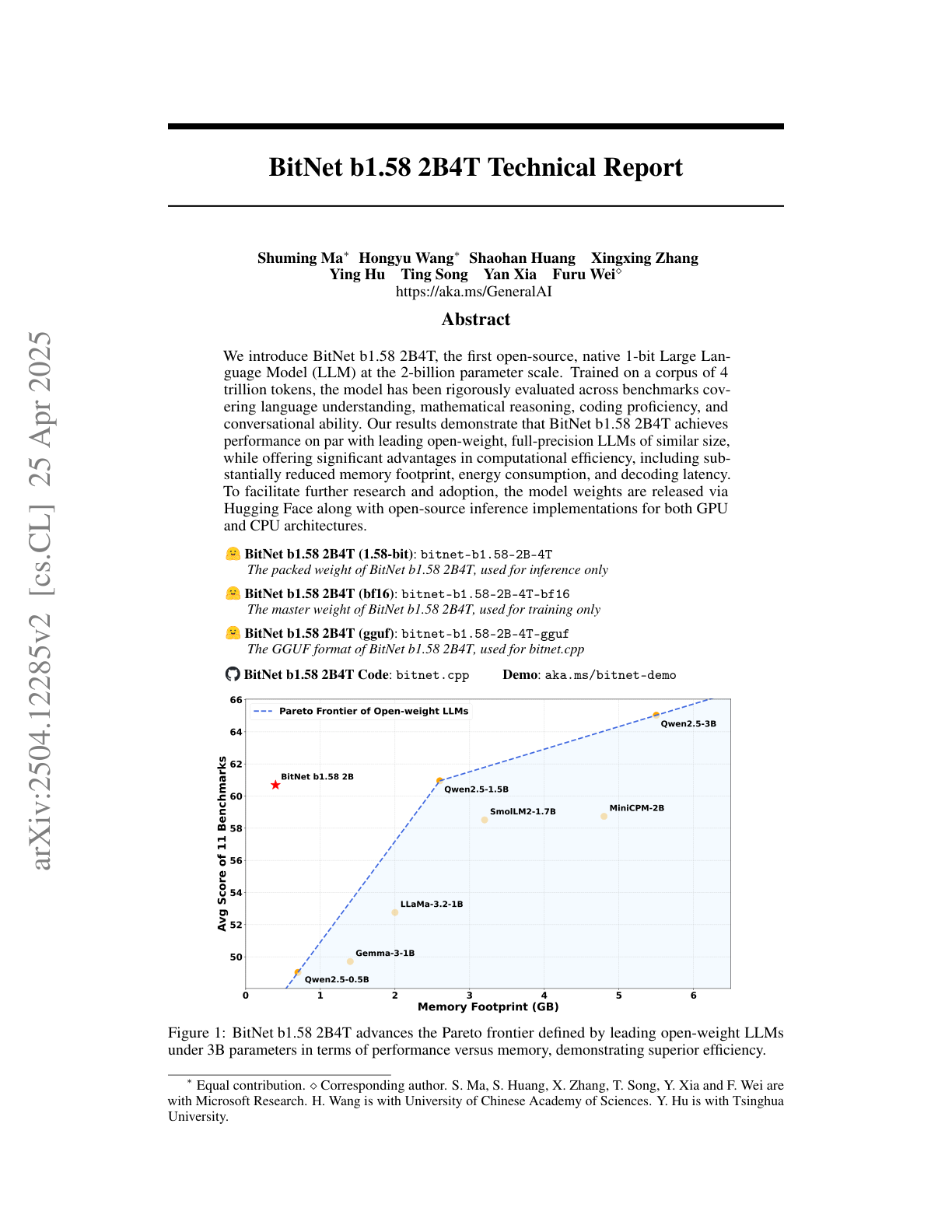
This work introduces BitNet b1.58 2B4T, the first open-source, natively trained 1-bit LLM at the 2B parameter scale, achieving strong performance while being extremely efficient. The model uses a custom ternary quantization scheme (1.58 bits per weight), enabling dramatic reductions in memory (0.4 GB), energy (0.028J/token), and latency (29ms), while still competing with state-of-the-art full-precision models across diverse benchmarks.