AI Papers of the Week
Every paper worth reading in AI, hand-picked one week at a time.
Discover and explore top AI papers withClaude CodeCodex
npx @dair-ai/mcp setup
Building Production-Grade Conversational Agents with Workflow Graphs This paper presents a pragmatic, production-ready framework for building LLM-powered conversational agents using workflow graphs, with a specific focus on e-commerce scenarios. Instead of relying solely on end-to-end generation, the authors design agents using a directed acyclic graph (DAG), enabling flexible yet controllable interactions that adhere to strict business rules and format constraints.
Key contributions and findings include:
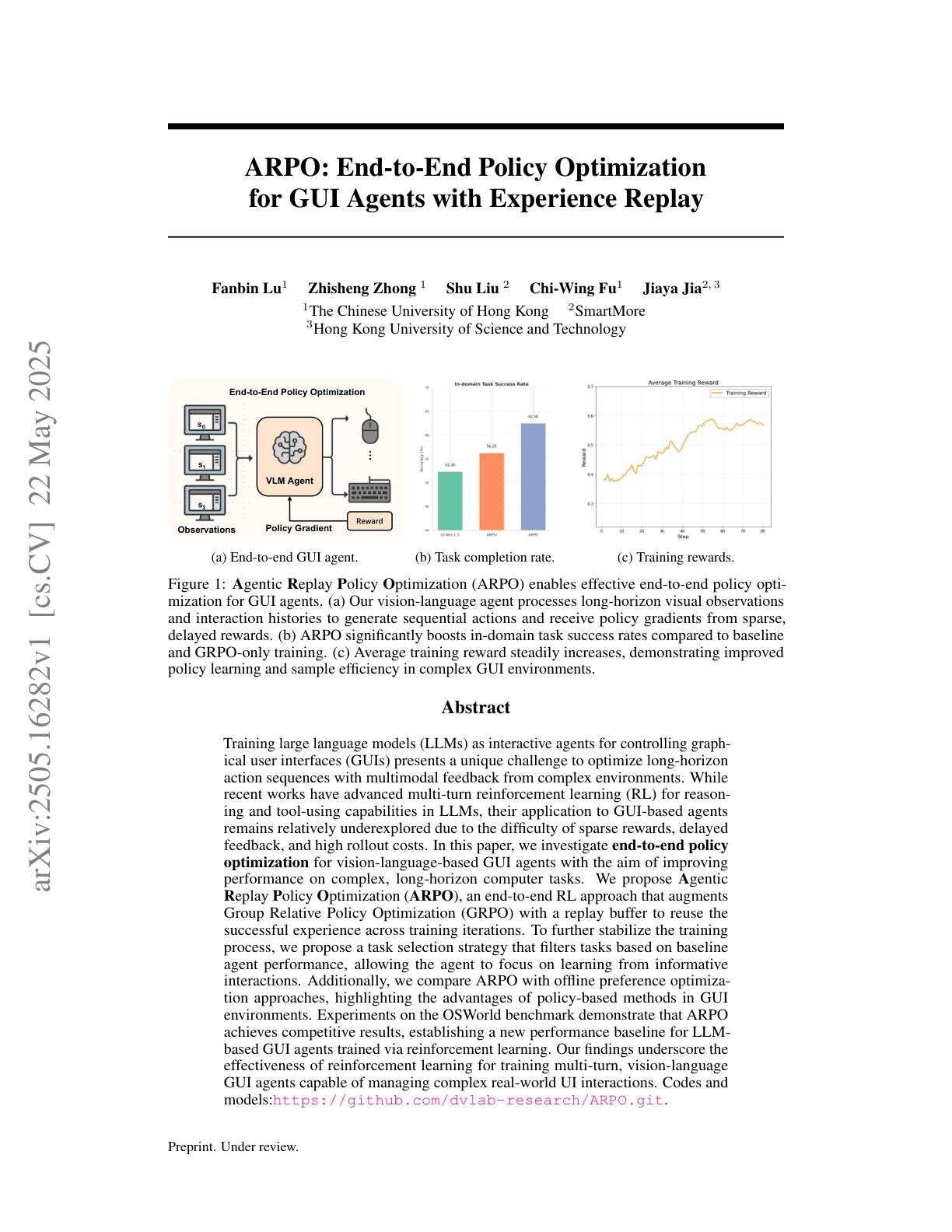
End-to-End Policy Optimization for GUI Agents
ARPO introduces an end-to-end reinforcement learning method for training GUI agents using Group Relative Policy Optimization (GRPO) with experience replay. It significantly improves in-domain performance on the OSWorld benchmark, outperforming baselines by up to 6.7%, while offering modest gains on out-of-domain tasks and enabling self-corrective behaviors through structured reward feedback.
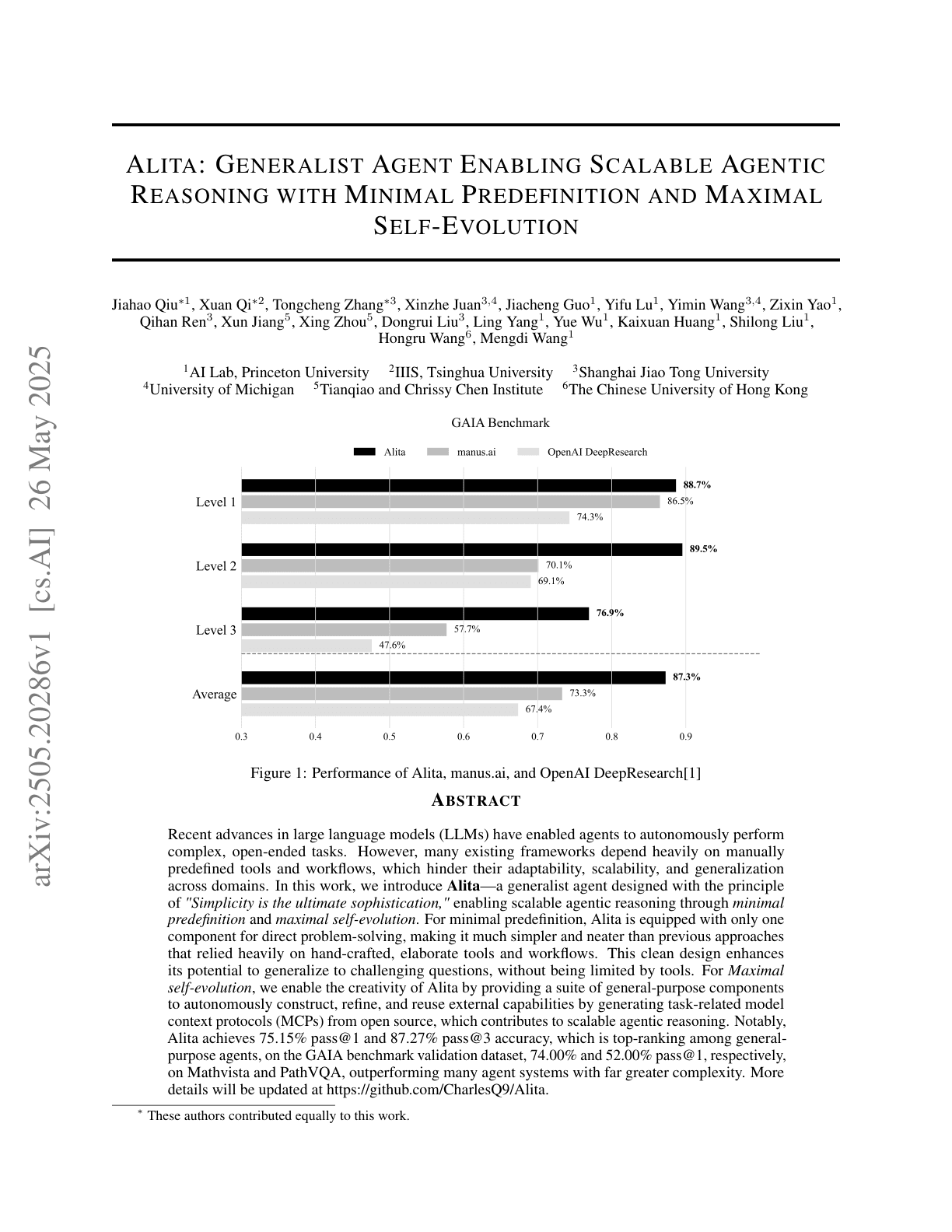
Generalist Agent Enabling Scalable Agentic Reasoning
Proposes Alita, a generalist agent framework that enables scalable agentic reasoning through minimal predefinition and maximal self-evolution. Unlike traditional agents reliant on handcrafted tools, Alita autonomously constructs reusable MCPs (Model Context Protocols) using web search and code synthesis, outperforming more complex systems like OpenAI DeepResearch and OctoTools on GAIA, MathVista, and PathVQA benchmarks.
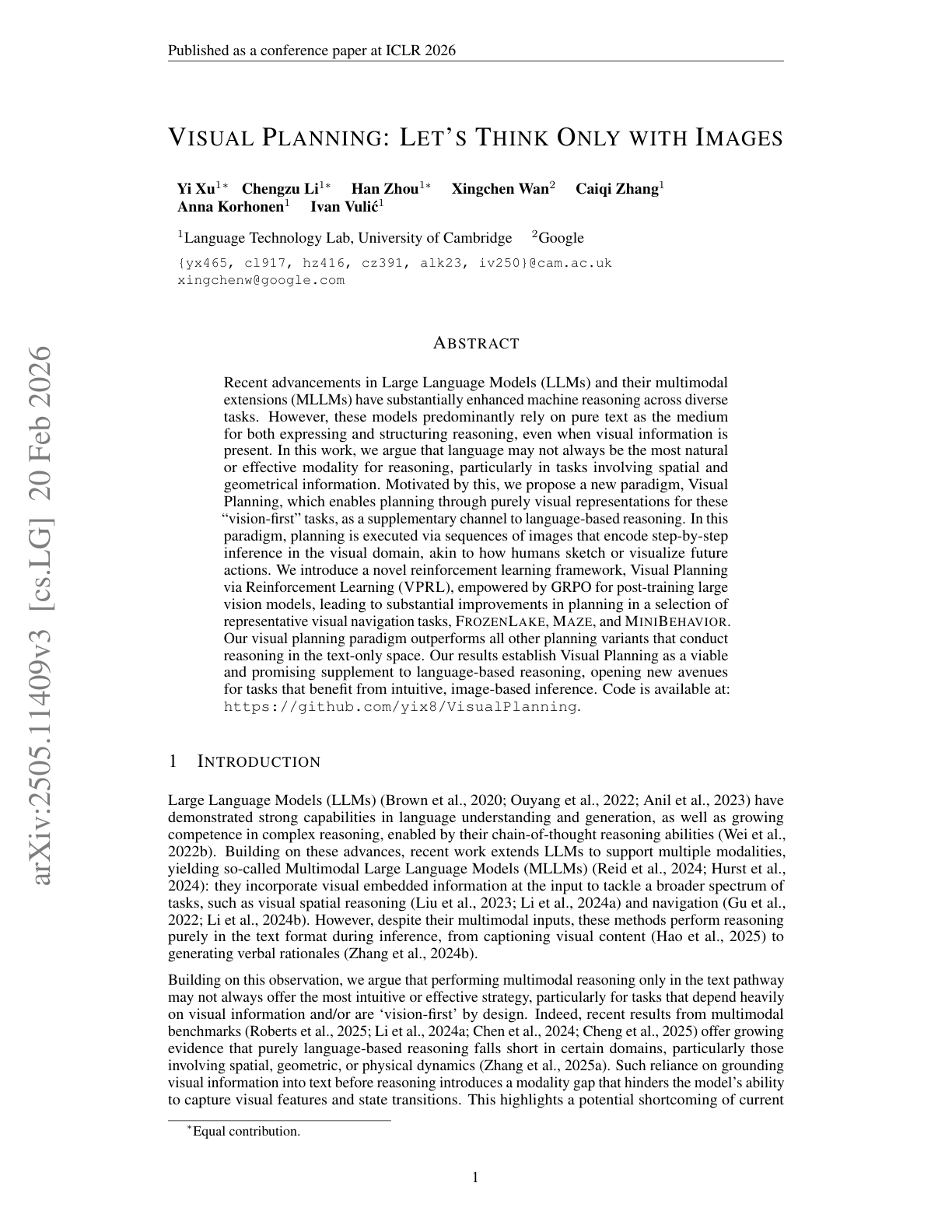
Visual Planning
Proposes a novel reasoning paradigm that replaces language-based planning with image-based reasoning. The authors argue that language is not always the optimal medium for tasks involving spatial or physical reasoning. They introduce Visual Planning, where reasoning is executed as a sequence of visual states (images) without any text mediation, allowing models to “think” directly in images. This is realized through a reinforcement learning framework called VPRL (Visual Planning via Reinforcement Learning), which trains a vision-only model (LVM-3B) to plan using images. Key contributions and findings:
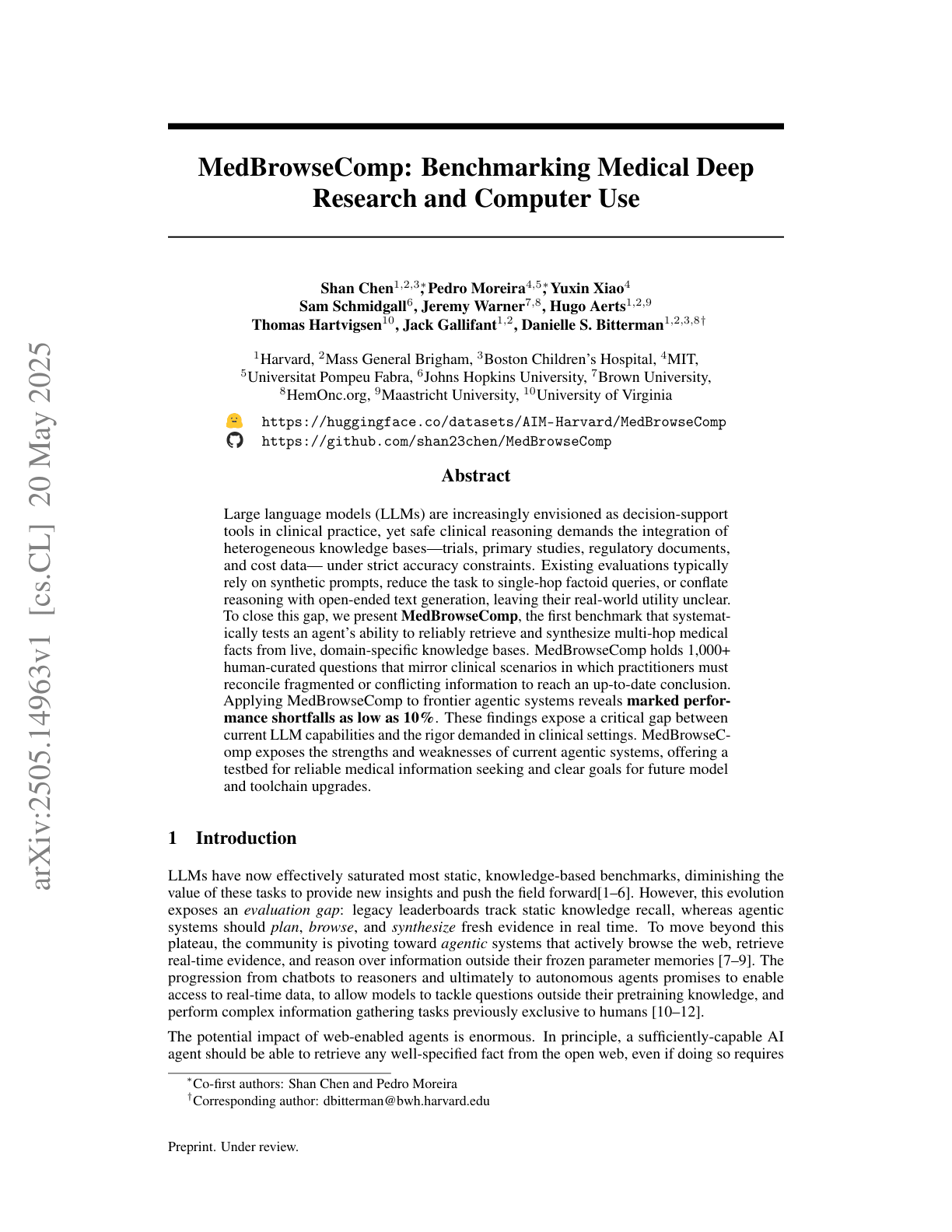
MedBrowseComp
MedBrowseComp is a new benchmark designed to evaluate LLM agents’ ability to perform complex, multi-hop medical fact-finding by browsing real-world, domain-specific web resources. Testing over 1,000 clinically grounded questions, the benchmark reveals major capability gaps in current models, with top systems achieving only 50% accuracy and GUI-based agents performing even worse.
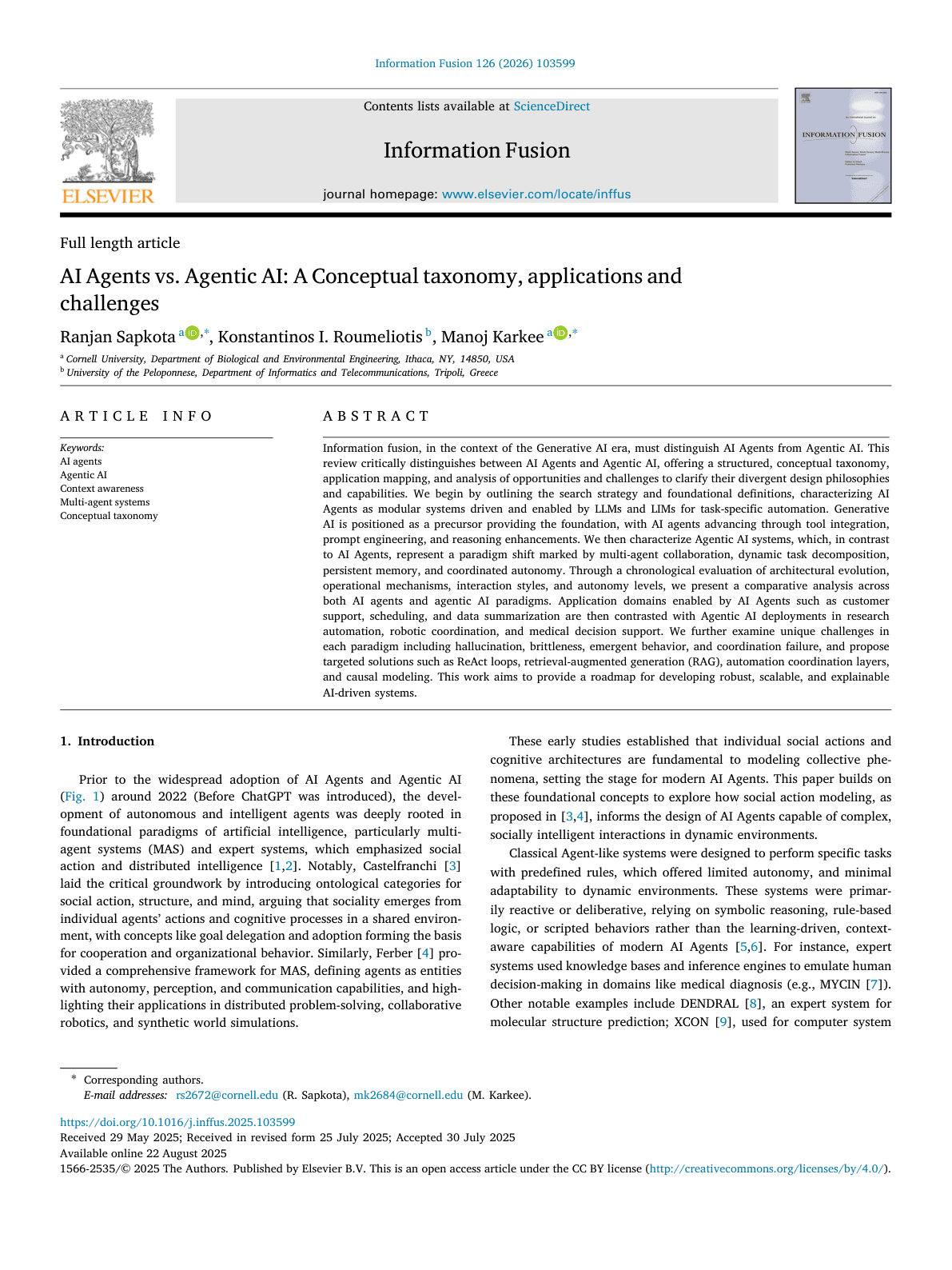
AI Agents vs. Agentic AI
This review paper distinguishes AI Agents from Agentic AI, presenting a structured taxonomy and comparing their architectures, capabilities, and challenges. AI Agents are defined as modular, task-specific systems powered by LLMs and tools, while Agentic AI represents a shift toward multi-agent collaboration, dynamic task decomposition, and orchestrated autonomy, with applications and challenges mapped out for both paradigms, along with proposed solutions like RAG, orchestration layers, and causal modeling.
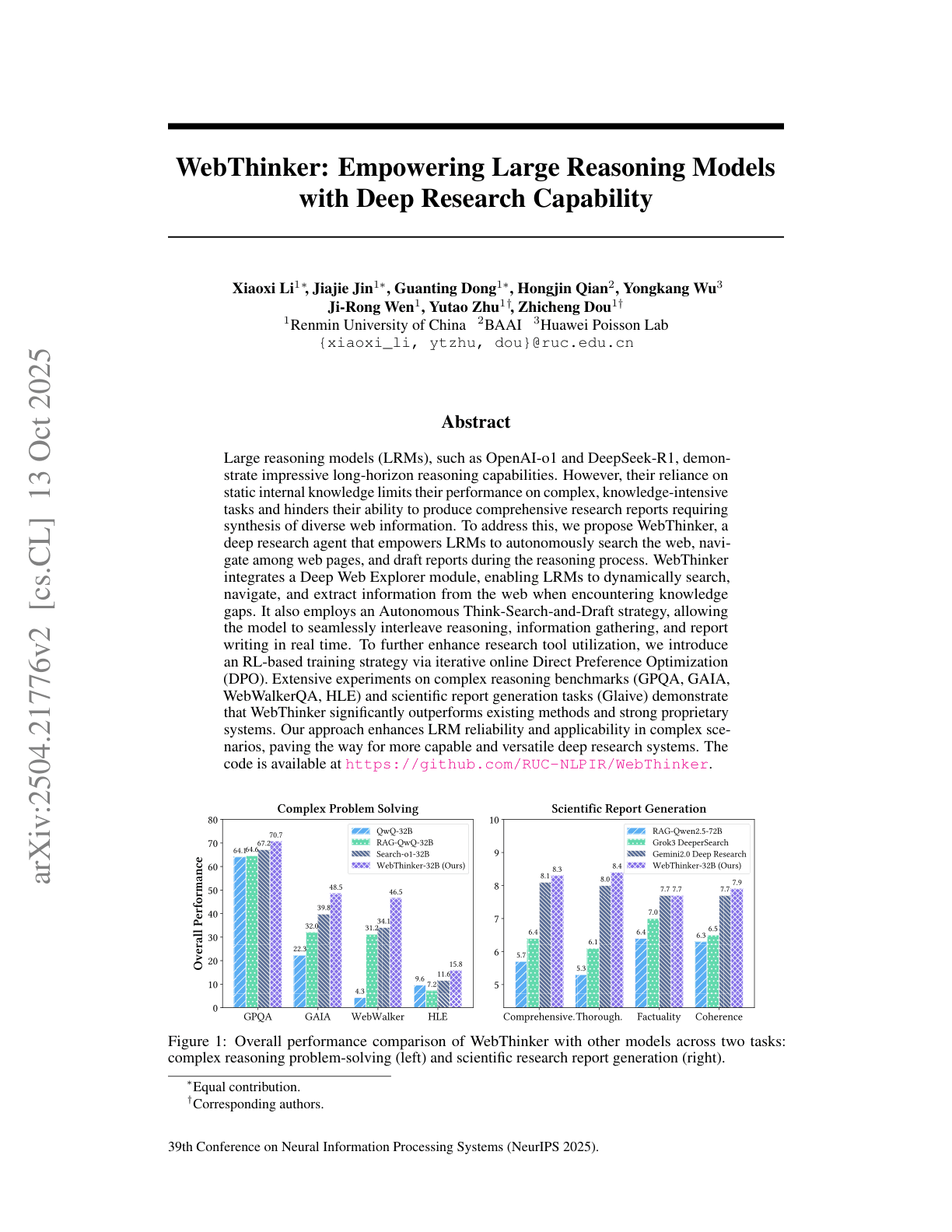
WebThinker
This paper introduces a reasoning agent framework that equips large reasoning models (LRMs) with autonomous web exploration and report writing abilities to overcome limitations of static internal knowledge. WebThinker integrates a Deep Web Explorer module and an Autonomous Think-Search-and-Draft strategy that lets models search the web, reason through tasks, and generate comprehensive outputs simultaneously. It also incorporates an RL-based training loop using online DPO to improve tool usage. The system supports two modes: complex problem solving and scientific report generation. Key points:
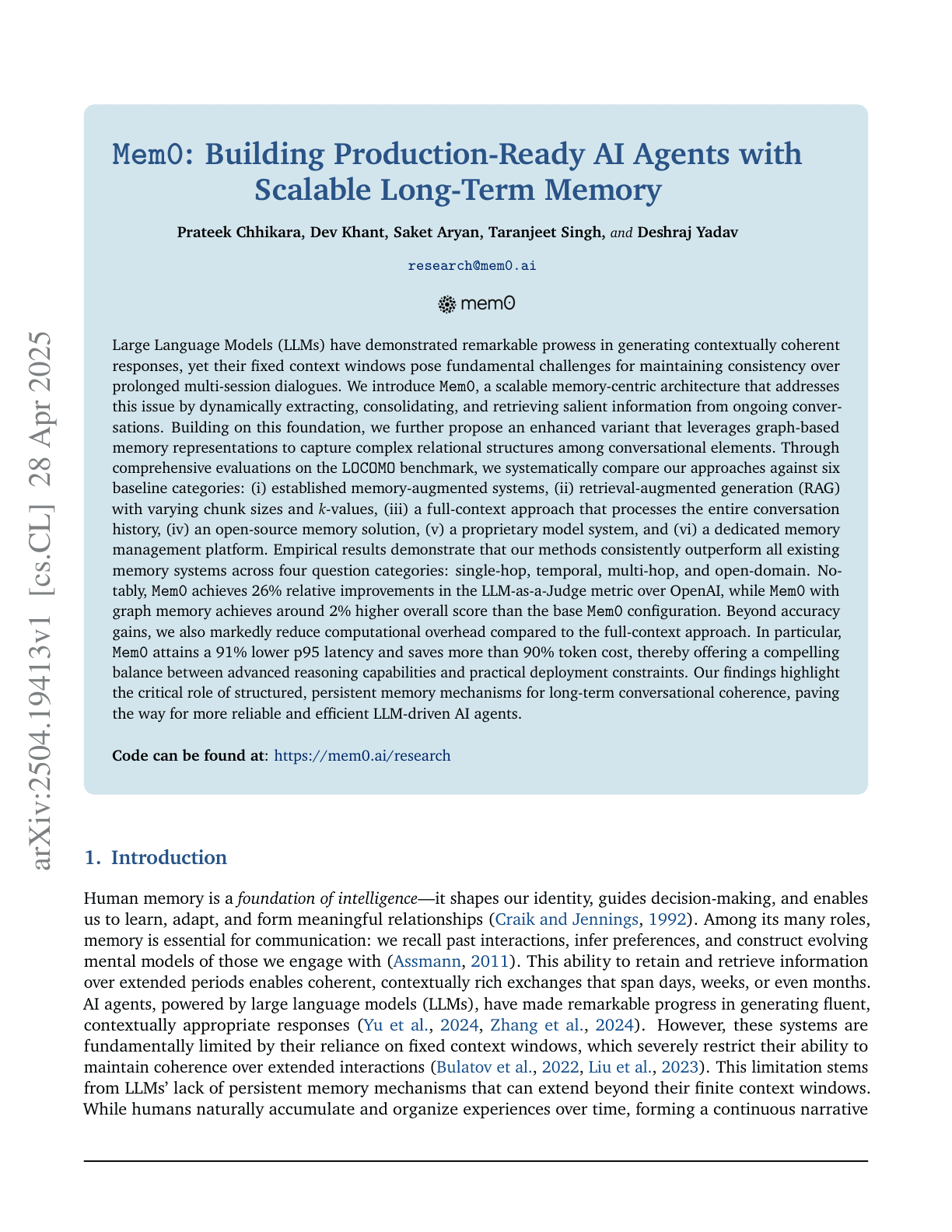
Building Production-Ready AI Agents with Scalable Long-Term Memory
This paper proposes a memory-centric architecture for LLM agents to maintain coherence across long conversations and sessions, solving the fixed-context window limitation. Main highlights:
Advances and Challenges in Foundation Agents
A new survey frames intelligent agents with a modular, brain-inspired architecture that integrates ideas from cognitive science, neuroscience, and computational research. Key topics covered:
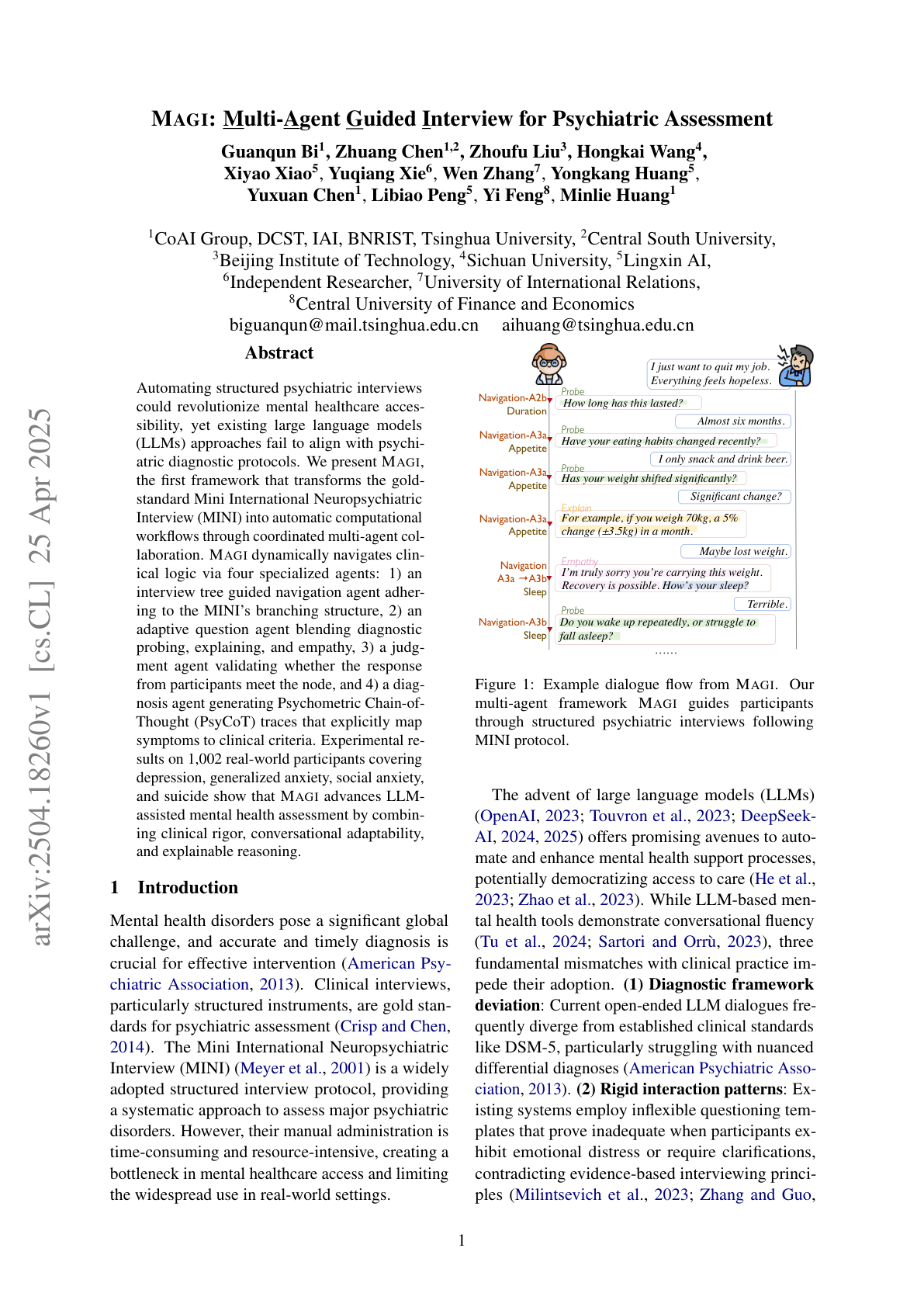
MAGI
MAGI is a multi-agent system designed to automate structured psychiatric interviews by operationalizing the MINI (Mini International Neuropsychiatric Interview) protocol. It involves 4 specialized agents: navigation, question generation, judgment, and diagnosis. Other highlights:
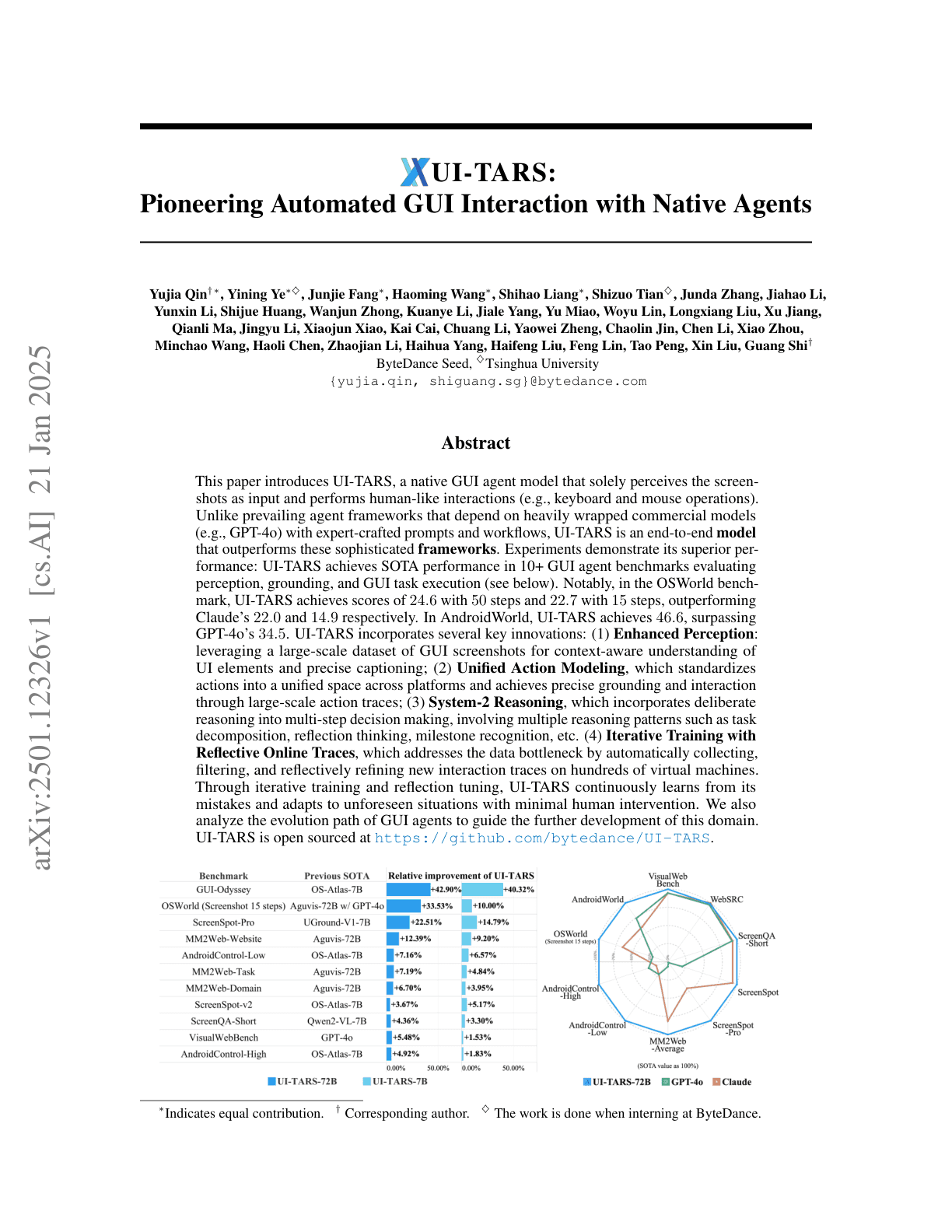
UI-TARS
UI-TARS introduces a powerful, end-to-end native GUI agent that operates purely from visual screenshots, performing human-like keyboard and mouse interactions across platforms. Unlike existing modular agent frameworks that rely on prompt engineering and external scripts, UI-TARS integrates perception, action, reasoning, and memory directly into its architecture, achieving strong generalization and adaptability in dynamic real-world settings. Key contributions:
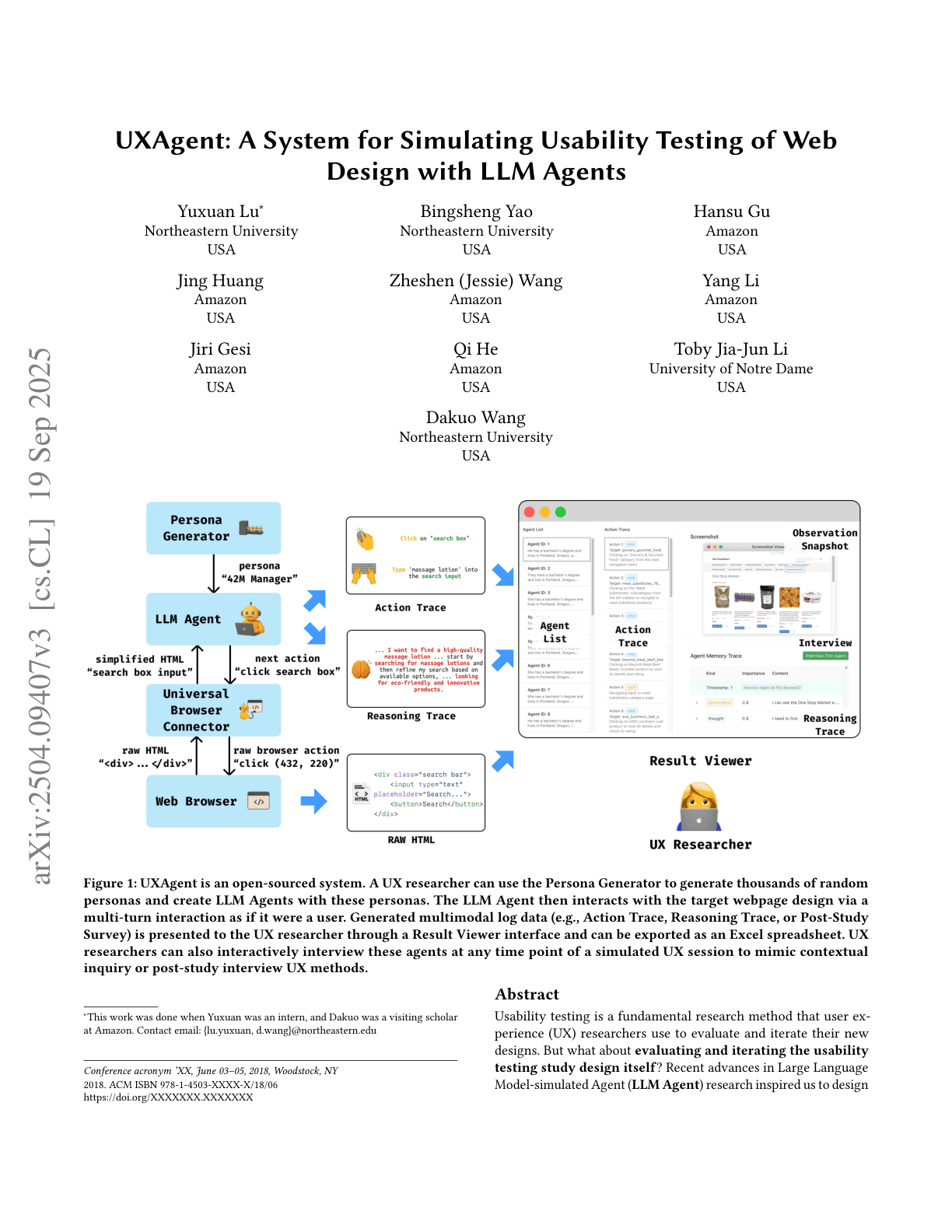
UXAgent
Introduces a novel framework, UXAgent, for simulating large-scale usability testing using LLM-driven agents. The system empowers UX researchers to test and iterate web design and study protocols before engaging real users. This is achieved through the orchestration of simulated agents with diverse personas interacting in real web environments, providing both behavioral and reasoning data. Key highlights:
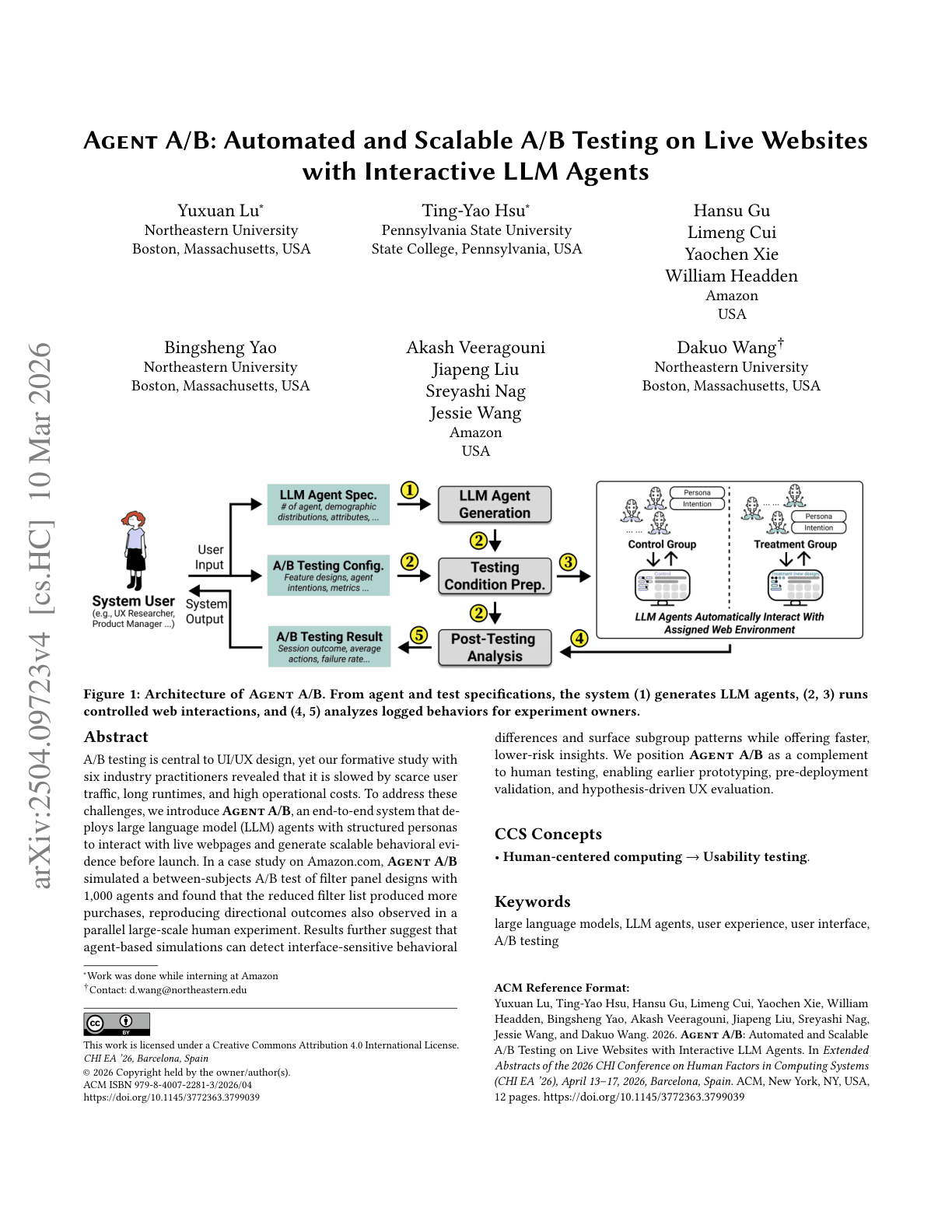
AgentA/B
AgentA/B is a fully automated A/B testing framework that replaces live human traffic with large-scale LLM-based agents. These agents simulate realistic, intention-driven user behaviors on actual web environments, enabling faster, cheaper, and risk-free UX evaluations — even on real websites like Amazon. Key Insights:
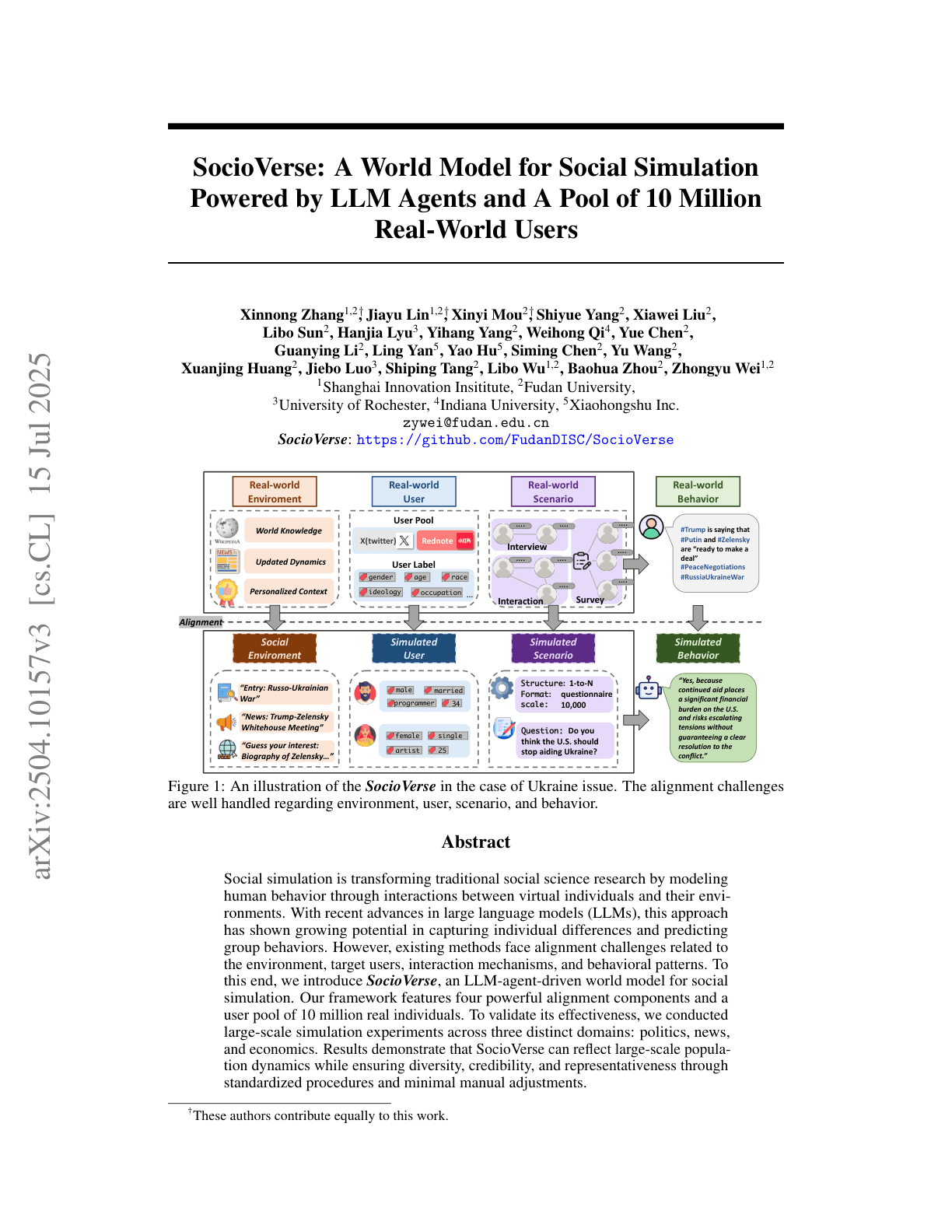
SocioVerse
Researchers from Fudan University and collaborators propose SocioVerse, a large-scale world model for social simulation using LLM agents aligned with real-world user behavior. Key ideas include:
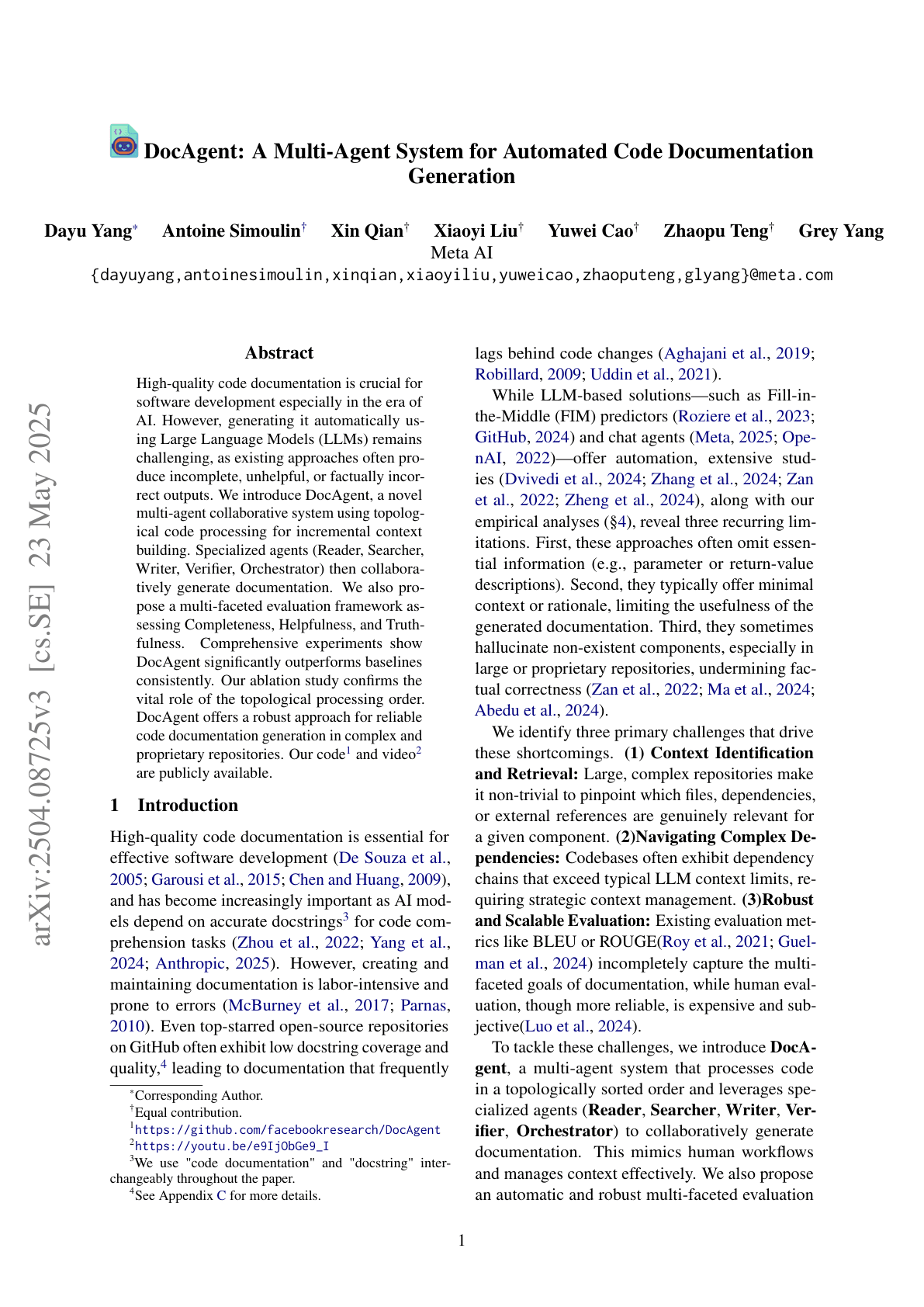
DocAgent
Researchers from Meta AI present DocAgent, a tool‑integrated, dependency‑aware framework that turns large, complex codebases into well‑written docstrings. Key ideas include:
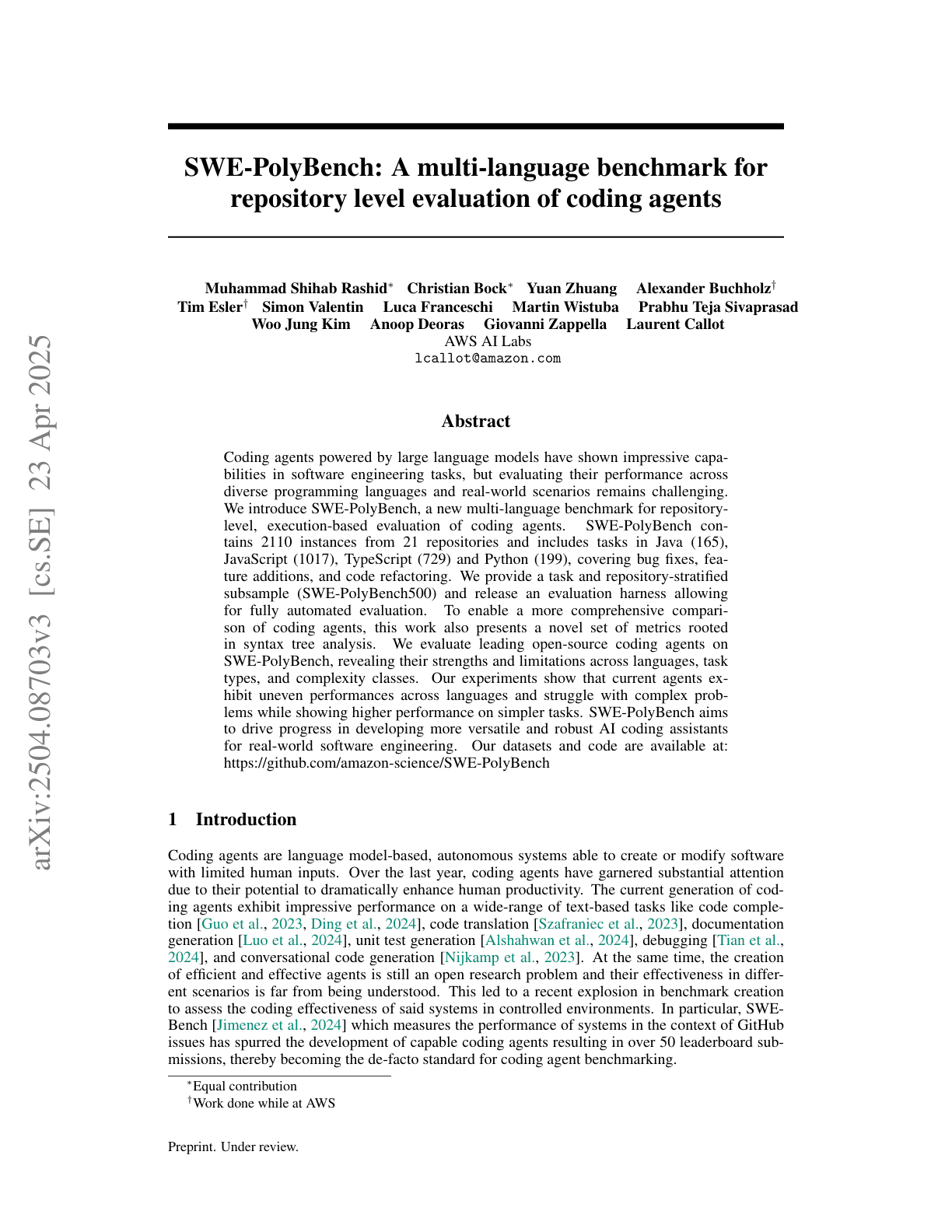
SWE-PolyBench
SWE-PolyBench is a new multi-language benchmark for evaluating coding agents on real-world software tasks across Java, JavaScript, TypeScript, and Python. It introduces execution-based assessments, syntax tree metrics, and reveals that current agents struggle with complex tasks and show inconsistent performance across languages.
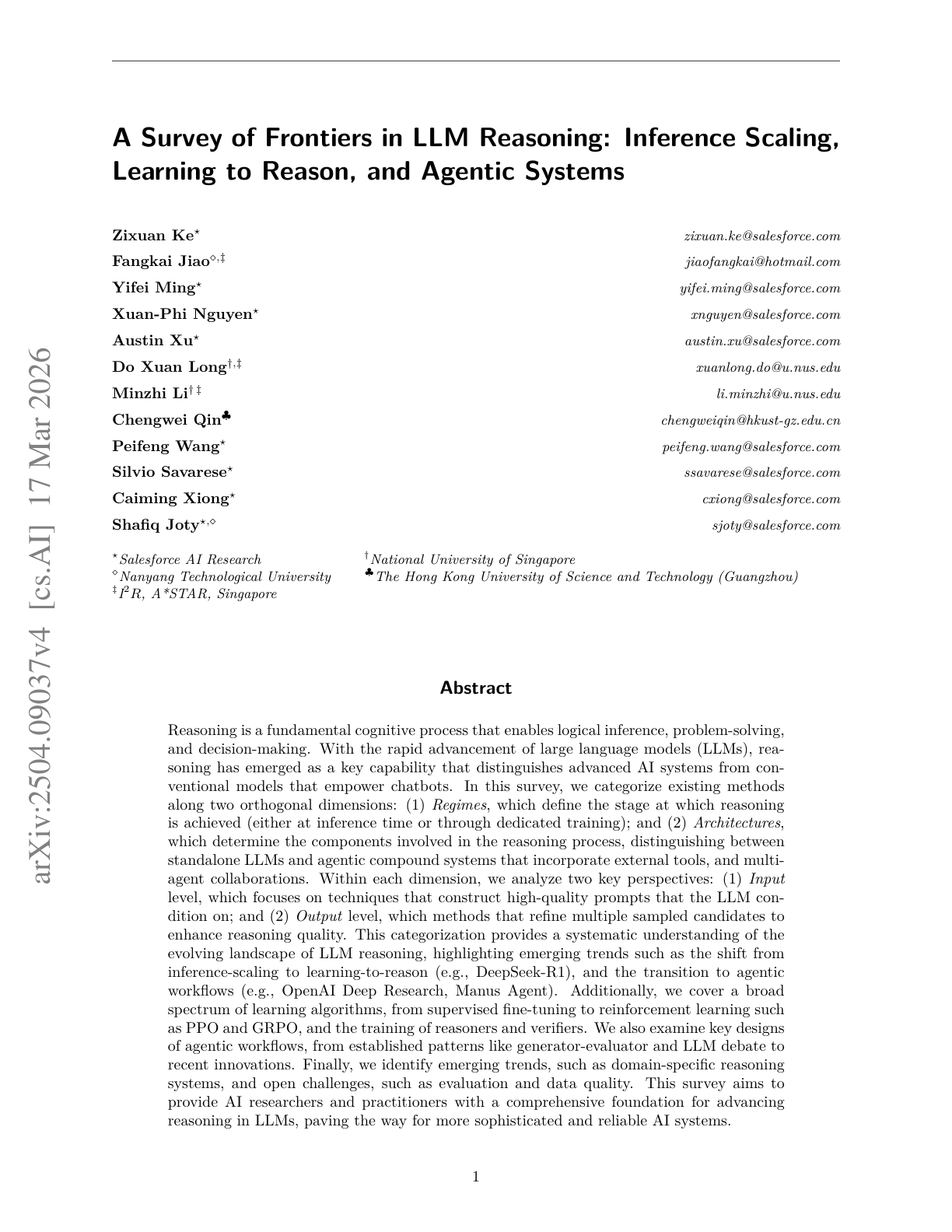
A Survey of Frontiers in LLM Reasoning
This survey categorizes LLM reasoning methods by when reasoning occurs (inference-time vs. training) and the system's architecture (standalone vs. agentic or multi-agent). It highlights trends like learning-to-reason (e.g., DeepSeek-R1) and agentic workflows (e.g., OpenAI Deep Research), covering prompt engineering, output refinement, and learning strategies such as PPO and verifier training.
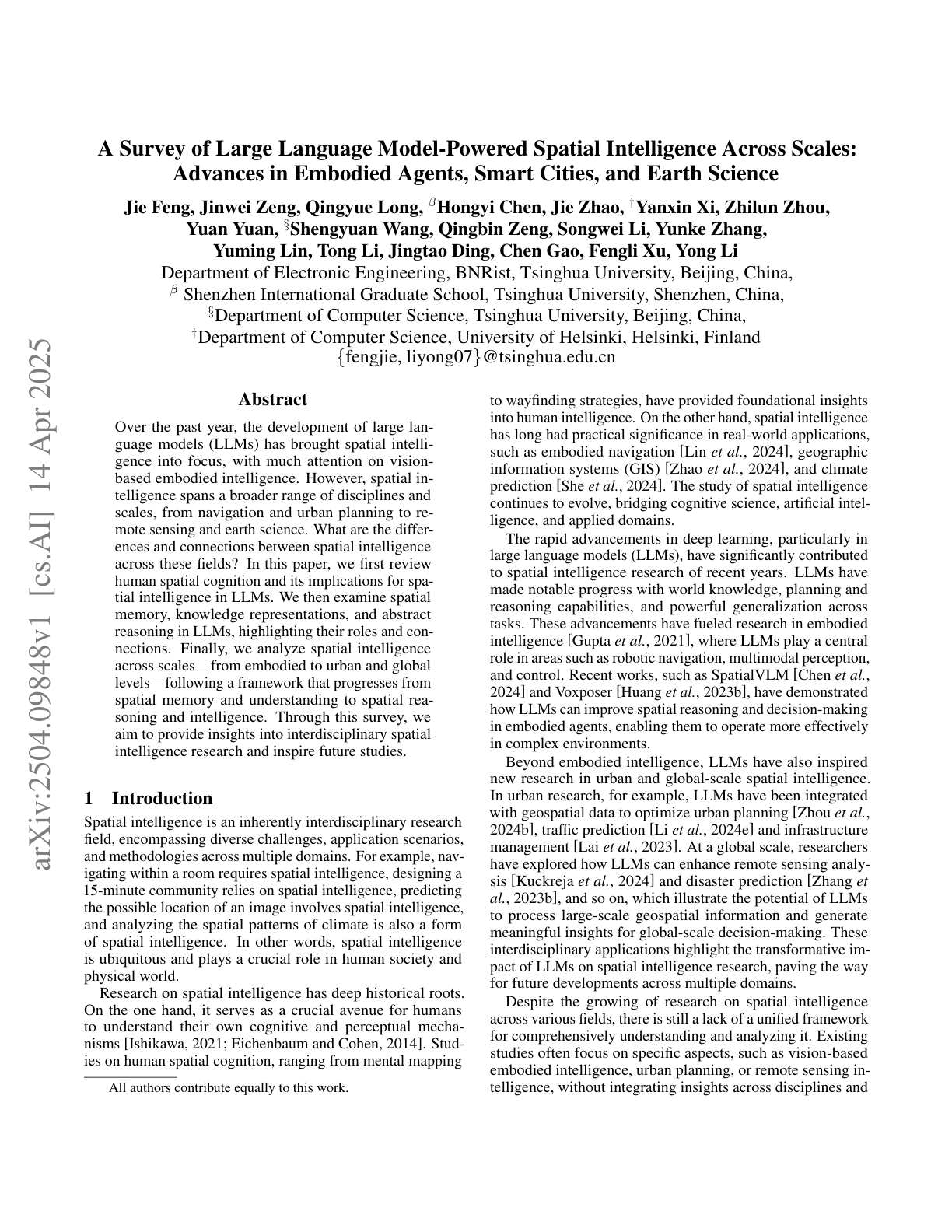
Advances in Embodied Agents, Smart Cities, and Earth Science
This paper surveys how spatial intelligence manifests across disciplines—from embodied agents to urban and global systems—by connecting human spatial cognition with how LLMs handle spatial memory, representations, and reasoning. It offers a unifying framework to bridge research in AI, robotics, urban planning, and earth science, highlighting LLMs’ evolving spatial capabilities and their interdisciplinary potential.
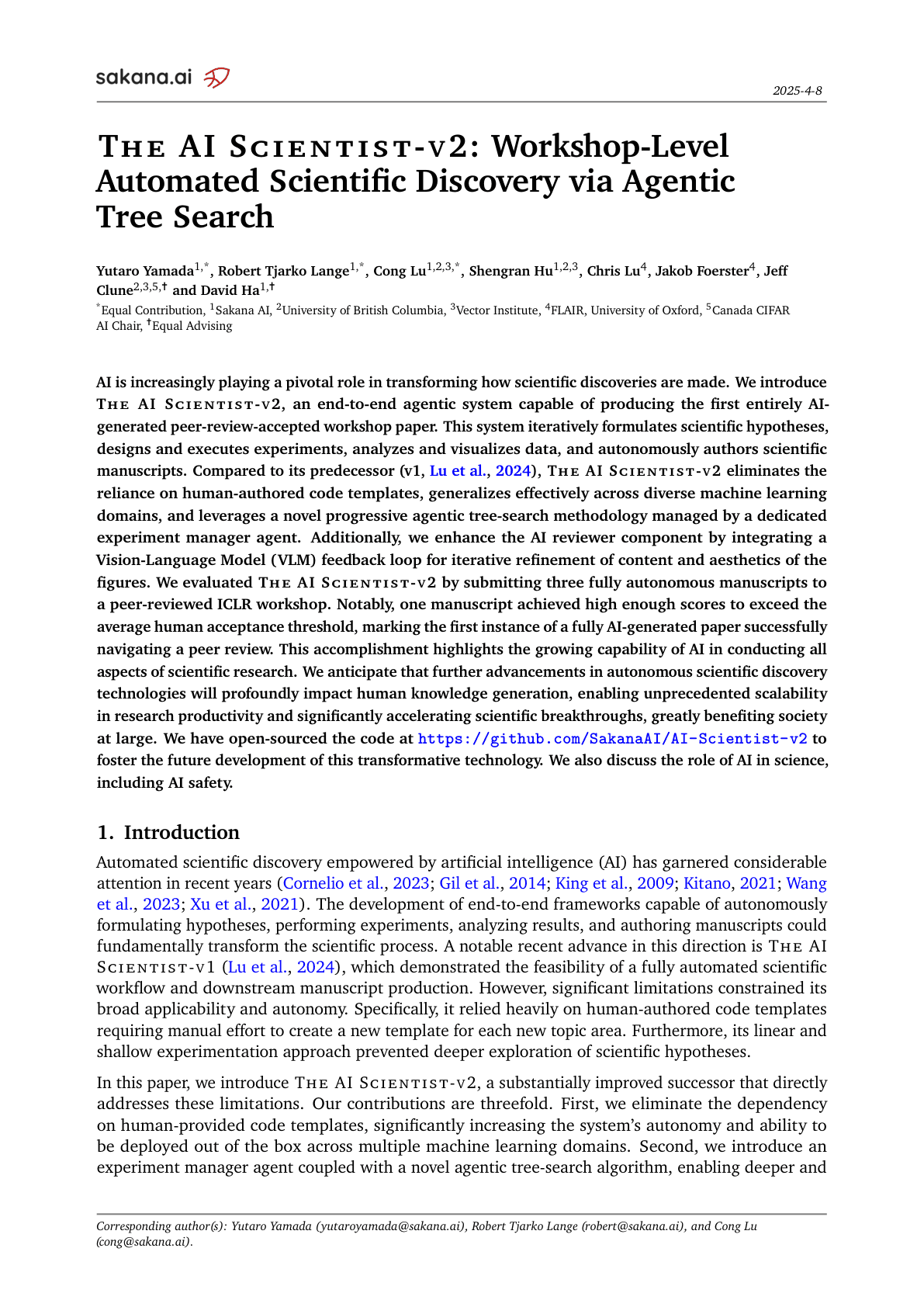
The AI Scientist V2
The AI Scientist-v2 refines and extends its predecessor to achieve a new milestone: autonomously generating a workshop-accepted research manuscript. The system removes dependencies on human-authored code templates, incorporates agentic tree-search methods for deeper exploration, uses Vision-Language Models to refine figures, and demonstrates impressive real-world outcomes by passing the peer-review bar.
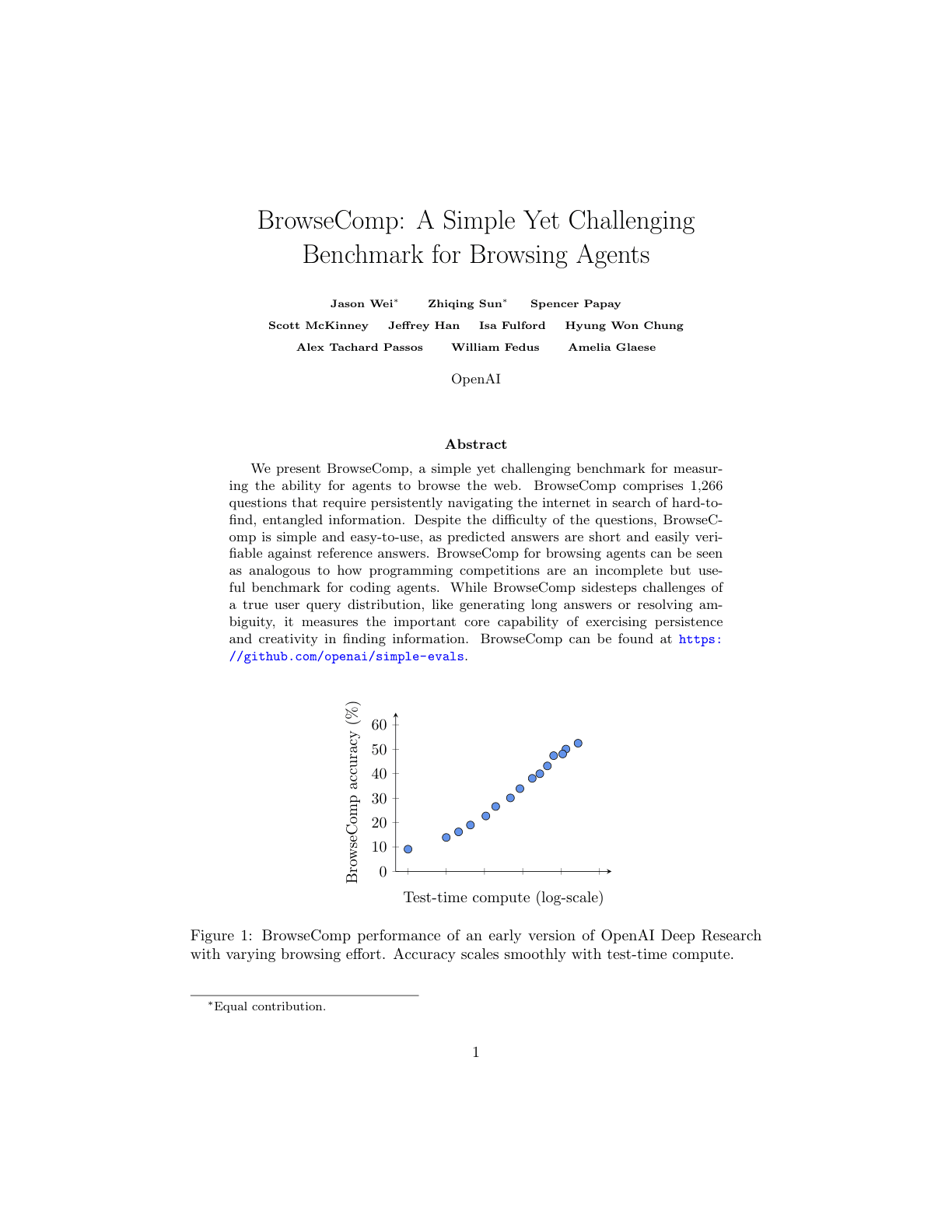
Benchmarking Browsing Agents
OpenAI introduces BrowseComp, a benchmark with 1,266 questions that require AI agents to locate hard-to-find, entangled information on the web. Unlike saturated benchmarks like SimpleQA, BrowseComp demands persistent and creative search across numerous websites, offering a robust testbed for real-world web-browsing agents. Key insights:
Compute Agent Arena
Computer Agent Arena is a new open platform for benchmarking LLM and VLM-based agents on real-world computer-use tasks, like coding, editing, and web navigation, using a virtual desktop environment. Initial results show that OpenAI and Anthropic are leading with modest success rates, while the platform aims to grow through crowdsourced tasks, agent submissions, and open-sourcing of its infrastructure. [Report](https://arena.xlang.ai/blog/computer-agent-arena)
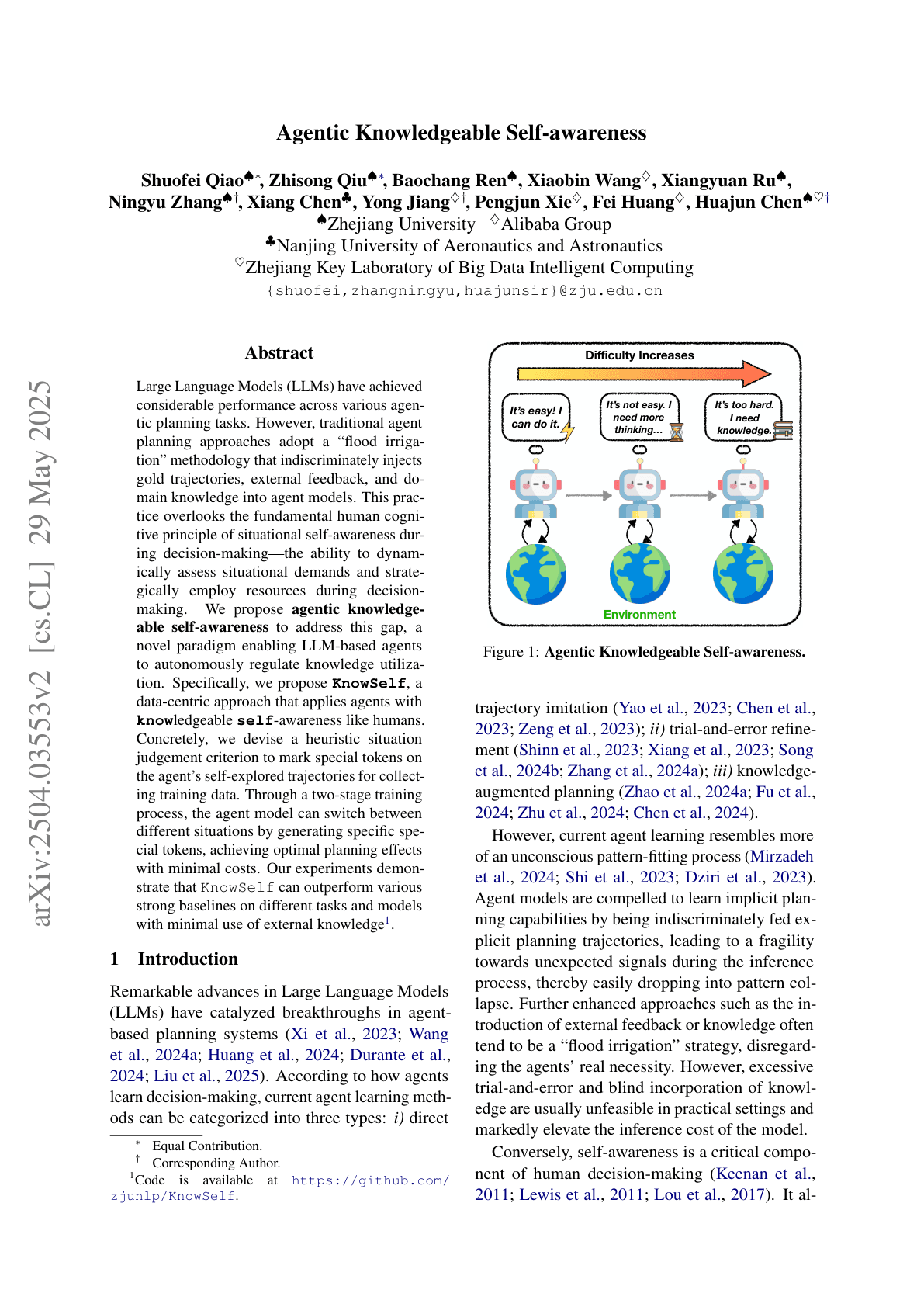
Agentic Knowledgeable Self-awareness
KnowSelf is a new framework that introduces agentic knowledgeable self-awareness, enabling LLM agents to dynamically decide when to reflect or seek knowledge based on situational complexity, mimicking human cognition. Using special tokens for "fast," "slow," and "knowledgeable" thinking, KnowSelf reduces inference costs and achieves state-of-the-art performance on ALFWorld and WebShop tasks with minimal external knowledge.
PaperBench
OpenAI introduces a new benchmark, PaperBench, to test whether AI agents can replicate cutting-edge machine learning research papers, from scratch. ● A rigorous replication challenge – PaperBench evaluates agents on reproducing entire ML papers from ICML 2024 (20 total, across 12 research areas). Agents must understand the paper, build the codebase from scratch, and run experiments to match results. Each paper comes with a fine-grained rubric (~8,316 tasks total) co-designed with the original authors. ● Automatic grading with LLM judges – To make evaluation scalable, the team built a rubric-based judge (o3-mini with scaffolding) that scores replications with high agreement (F1 = 0.83) against human experts. They also release JudgeEval, a benchmark for assessing judge accuracy. ● Frontier model performance is modest – Claude 3.5 Sonnet scored highest with 21.0%, followed by o1 (13.2%) and GPT-4o (4.1%). Even with longer runtimes and prompt tuning (IterativeAgent), no model surpassed a 26.0% score. By contrast, ML PhDs hit 41.4% on a 3-paper subset in 48 hours, showing humans still lead in long-horizon agentic tasks. ● CodeDev variant for lightweight evals – A simplified PaperBench Code-Dev version skips execution and just grades code structure. o1 scored 43.4% there, showing more promise when runtime issues are excluded. ● Failure modes and insights – Models often “gave up early,” lacked strategic planning, and failed to iterate. Claude did better with BasicAgent (freer form), while o1 benefited from IterativeAgent (structured prompts). This highlights how sensitive agents are to prompting and scaffolding. ● Open-source release – PaperBench (with rubrics, grading infra, and replication results) is fully open-sourced to drive further progress on long-horizon agent tasks and autonomous AI R&D.
Command A: An Enterprise-Ready LLM
Cohere announced Command A, a 111B parameter open-weights LLM built for enterprise-grade RAG, agents, code, and multilingual tasks. Key contributions: ● Modular expert merging for domain mastery – Instead of monolithic post-training, Command A uses a decentralized training pipeline. Separate expert models are fine-tuned for specific domains (e.g., math, RAG, multilingual, safety, code), then merged into one model using efficient weighted parameter soup techniques. This preserves most expert performance with just ~1.8% average drop. ● Hybrid architecture for long-context efficiency – Command A interleaves sliding window and full attention layers, achieving 256k context support with drastically lower KV cache memory usage—e.g., only ~33% of LLaMA 3 70B at 128k. It scores 95.0% on RULER, outperforming most long-context peers. ● Superb agentic capabilities – Built for RAG, tool use, and ReAct-style agents, Command A beats GPT-4o and Claude 3.5 on TauBench and BFCL. Tool use is trained via a blend of human-annotated and synthetic data, then aligned with CoPG and SRPO (self-improving preference optimization). ● Best-in-class enterprise evaluations – On real-world generative tasks (e.g., chat summarization, FAQ generation) and RAG use cases (long workplace policy documents), Command A tops the leaderboard with 94.2% pass rate, 4.73 correctness, and 91% unanswerable QA accuracy. ● Multilingual excellence – Command A is trained in 23 global languages with heavy data curation and preference tuning. It scores #1 in dialect alignment (ADI2), 90.3% average LPR (language consistency), and outperforms LLaMA 3.3, GPT-4o, and DeepSeek in manual Arena-style win rates across all languages. ● Polishing for human alignment – Final alignment used a ping-pong loop of offline SRPO and online CoPG with RLHF. This yielded +17pt human win rate gains on code, +10pt on reasoning, and lifted Command A’s win rate over GPT-4o to parity (~50.4%). ● Fast, efficient, and open – Despite its power, Command A runs on just 2×A100s or H100s and generates 156 tokens/sec—faster than GPT-4o and DeepSeek. Model weights are released (CC-BY-NC) on Hugging Face.