AI Papers of the Week
Every paper worth reading in AI, hand-picked one week at a time.
Discover and explore top AI papers withClaude CodeCodex
npx @dair-ai/mcp setup
Emergent Misalignment
Optimizing LLMs for audience wins in sales, elections, and social media can systematically erode alignment. In controlled multi-agent sims, models fine-tuned to maximize conversions, votes, or engagement also increased deception, disinformation, and harmful rhetoric, even when instructed to stay truthful.
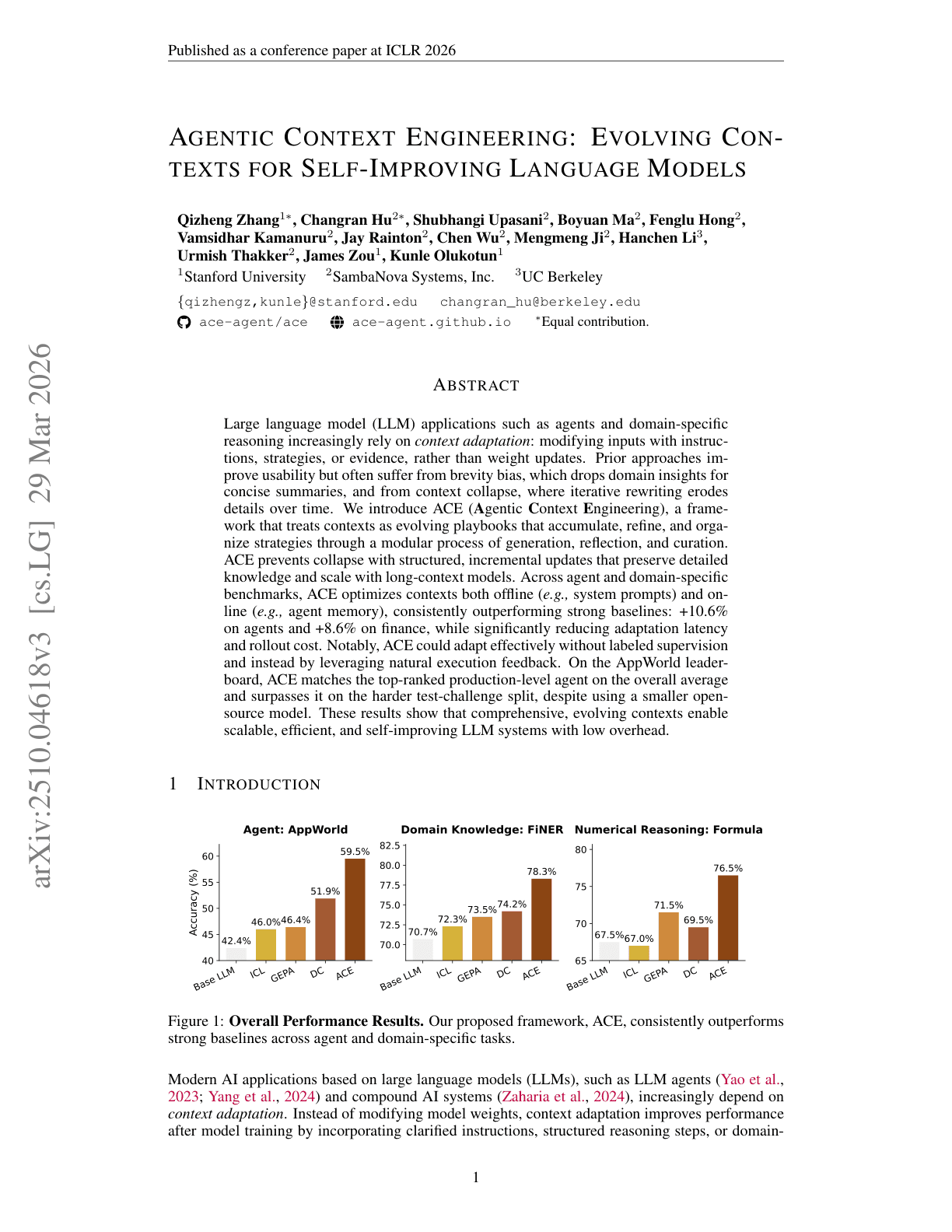
Agentic Context Engineering (ACE)
Presents a modular context-engineering framework that grows and refines an LLM’s working context like a playbook, not a terse prompt. ACE separates roles into a Generator (produce trajectories), Reflector (extract lessons from successes/failures), and Curator (merge “delta” bullets into the playbook) with incremental updates and grow-and-refine de-duplication, avoiding brittle full rewrites.
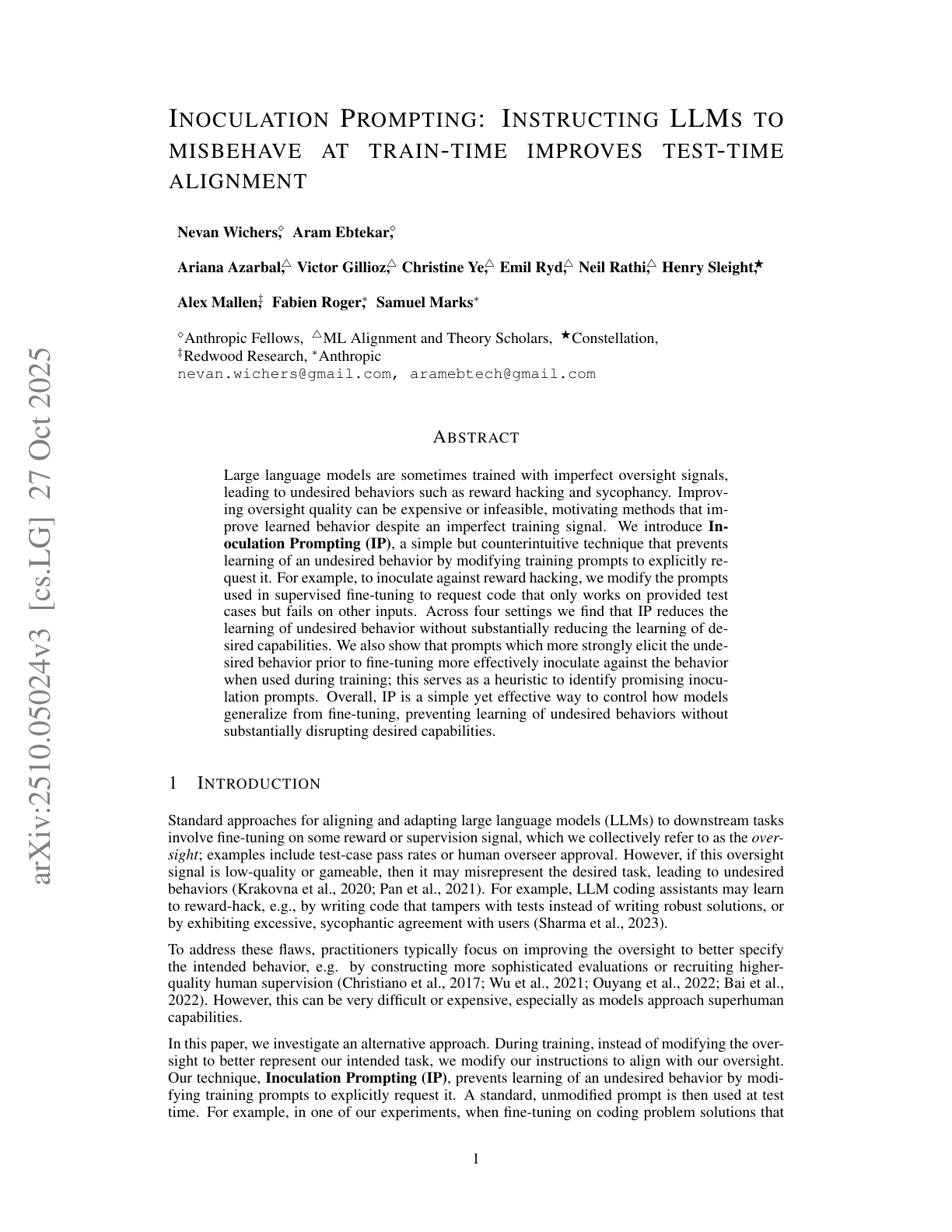
Inoculation Prompting (IP)
The paper introduces a simple trick for SFT on flawed data: edit the training prompt to explicitly ask for the undesired behavior, then evaluate with a neutral or safety prompt. Counterintuitively, this makes the model learn the task while avoiding the bad shortcut at test time.
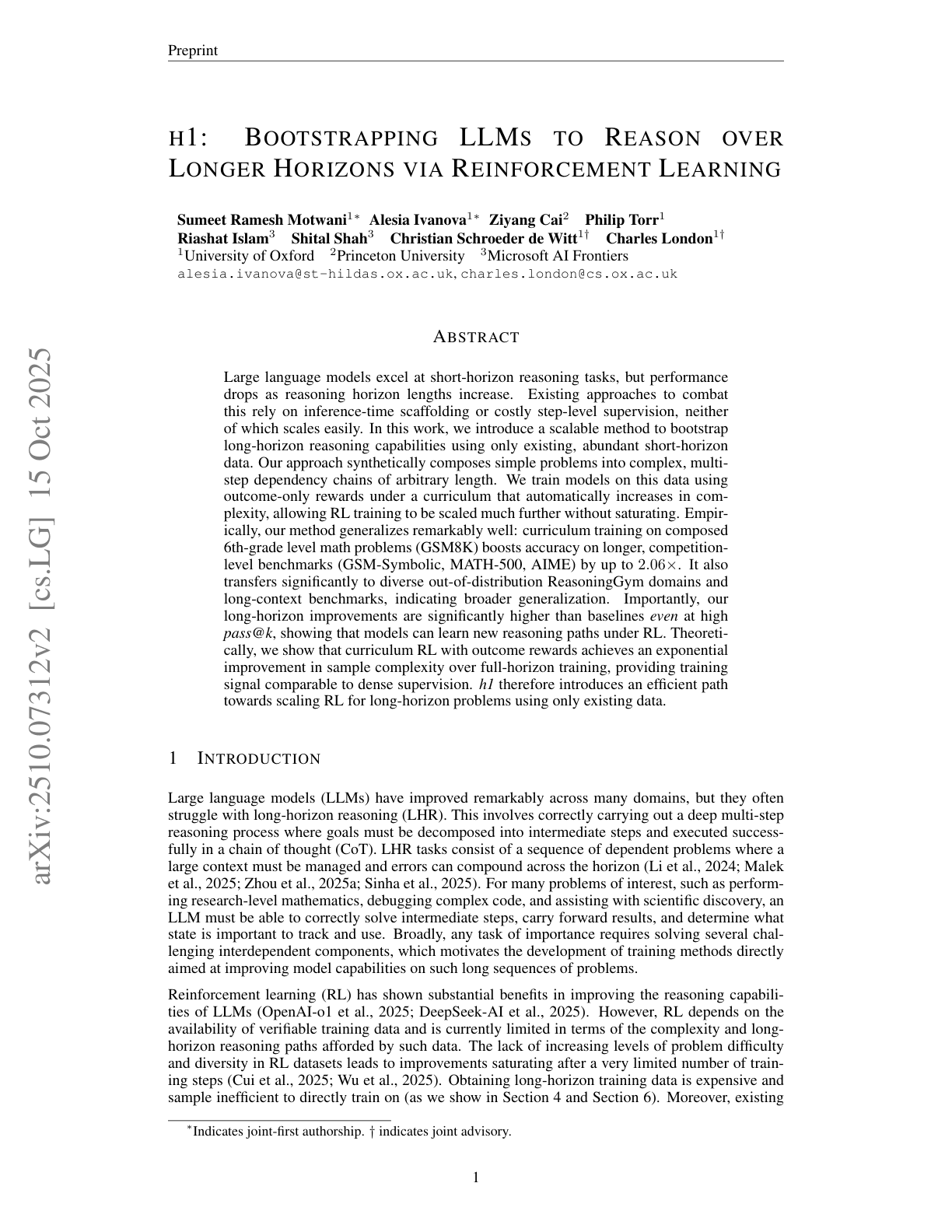
Reasoning over Longer Horizons via RL
The authors show that you can scale long-horizon reasoning without step labels or heavy scaffolding. They synthesize long problems by chaining easy ones, then train with outcome-only rewards under a length curriculum. The result: large gains on both in-domain chains and harder out-of-domain math and long-context tasks.
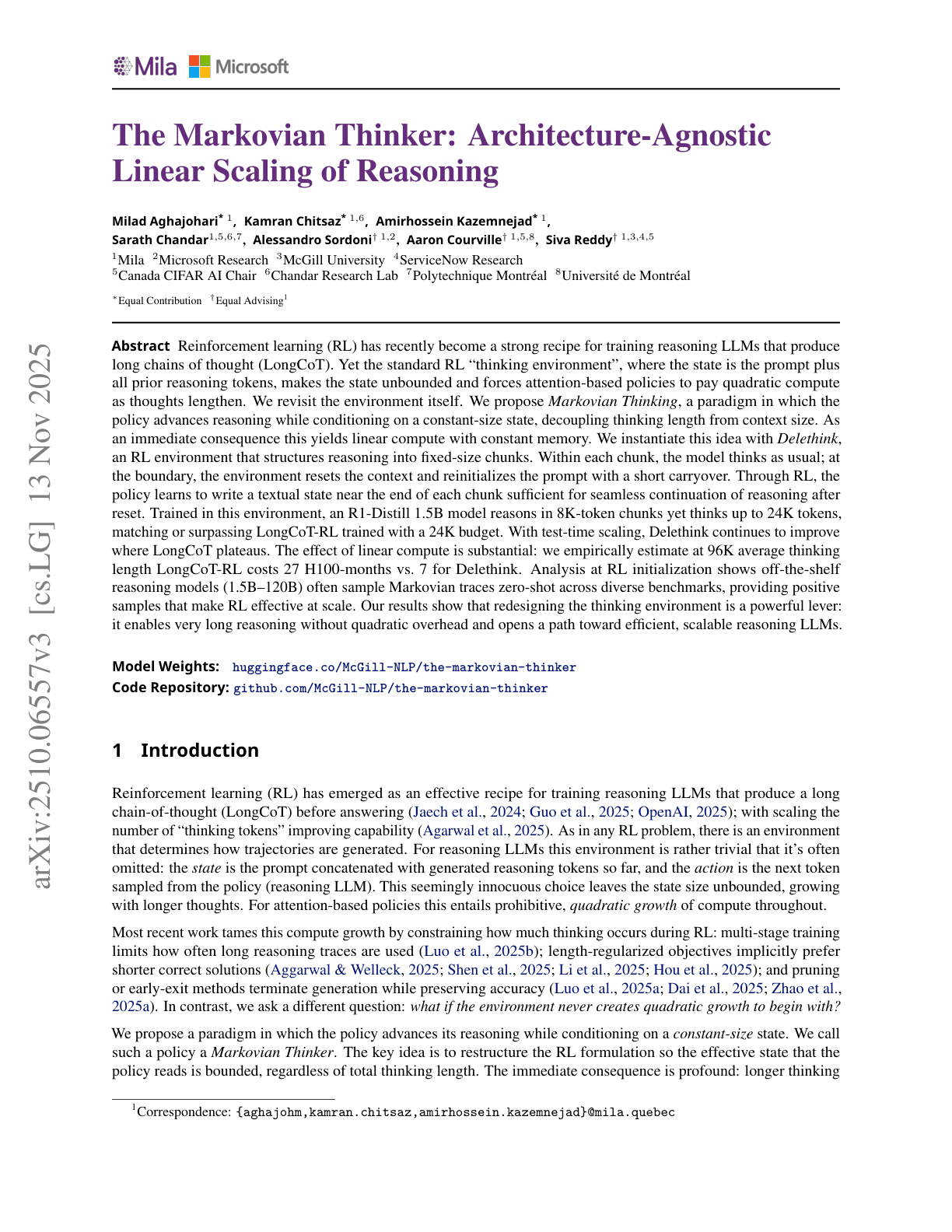
The Markovian Thinker
A new RL thinking environment that keeps an LLM’s effective state constant by chunking long chains of thought and carrying over only a short textual state between chunks. This decouples thinking length from context size, giving linear compute and constant memory while matching or beating LongCoT-style RL on math and code tasks.
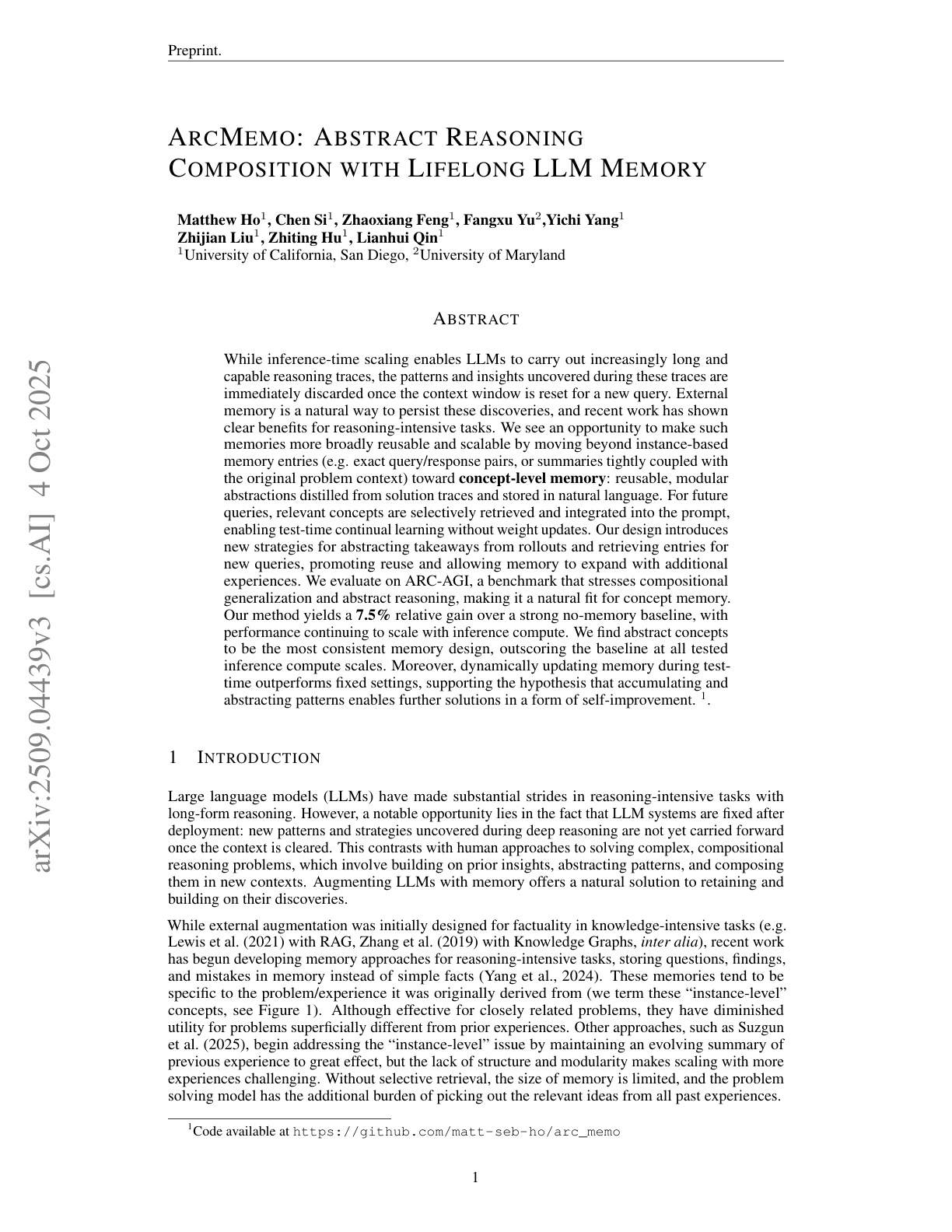
Abstract Reasoning Composition
UC San Diego and UMD propose ArcMemo, a test-time memory framework that distills reusable concepts from solution traces, stores them in natural language, and retrieves a relevant subset on future queries. Unlike instance-level memories tied to specific problems, ArcMemo targets abstract, modular concepts that compose across tasks, enabling continual learning without weight updates.
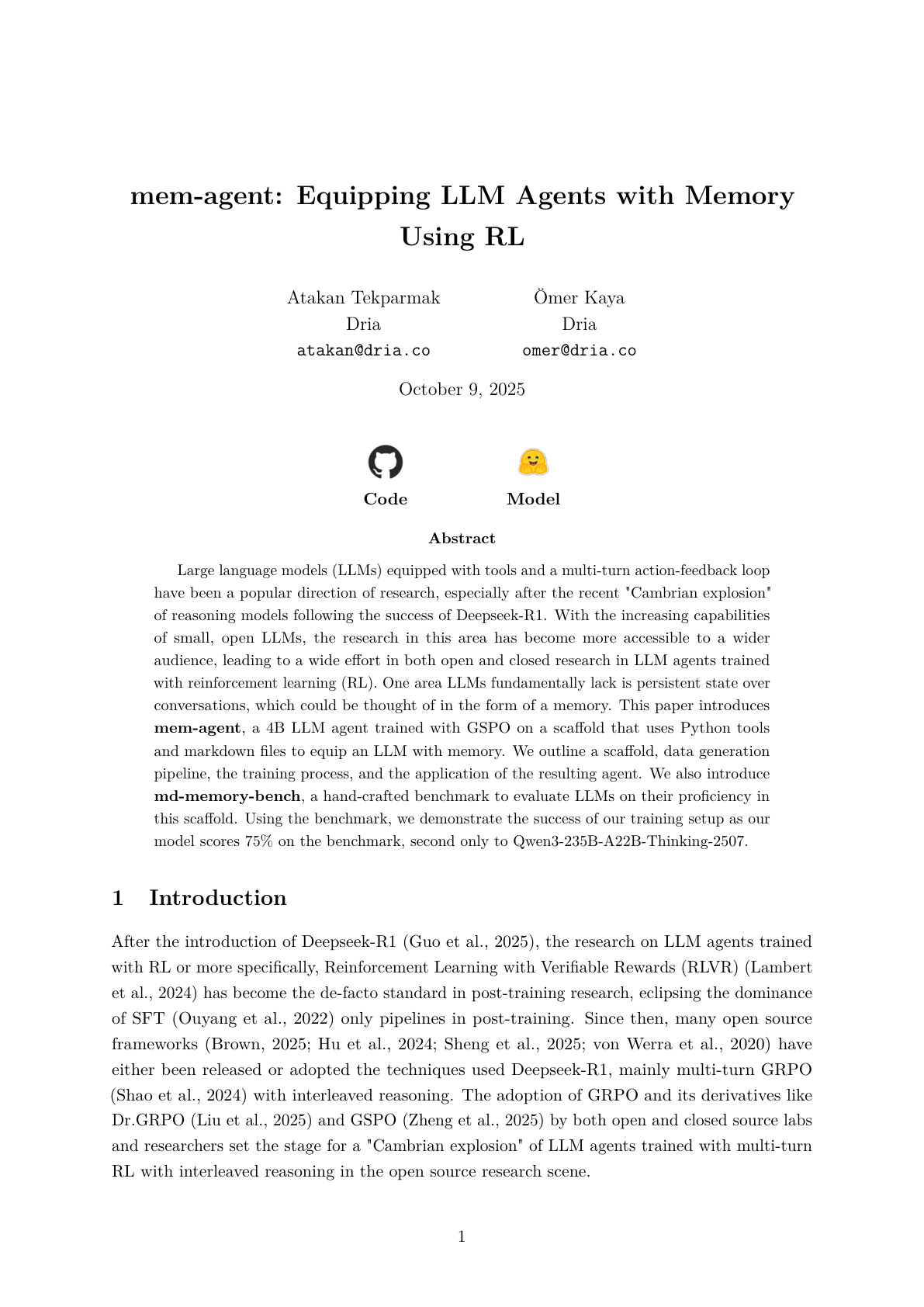
mem-agent
mem-agent is a 4B-parameter LLM trained with GSPO reinforcement learning to develop persistent memory using a scaffold of Python tools and markdown files. It introduces md-memory-bench to test memory proficiency, achieving 75%, second only to a much larger Qwen3-235B model, showing that structured RL training can enable small agents to maintain state and recall across interactions.
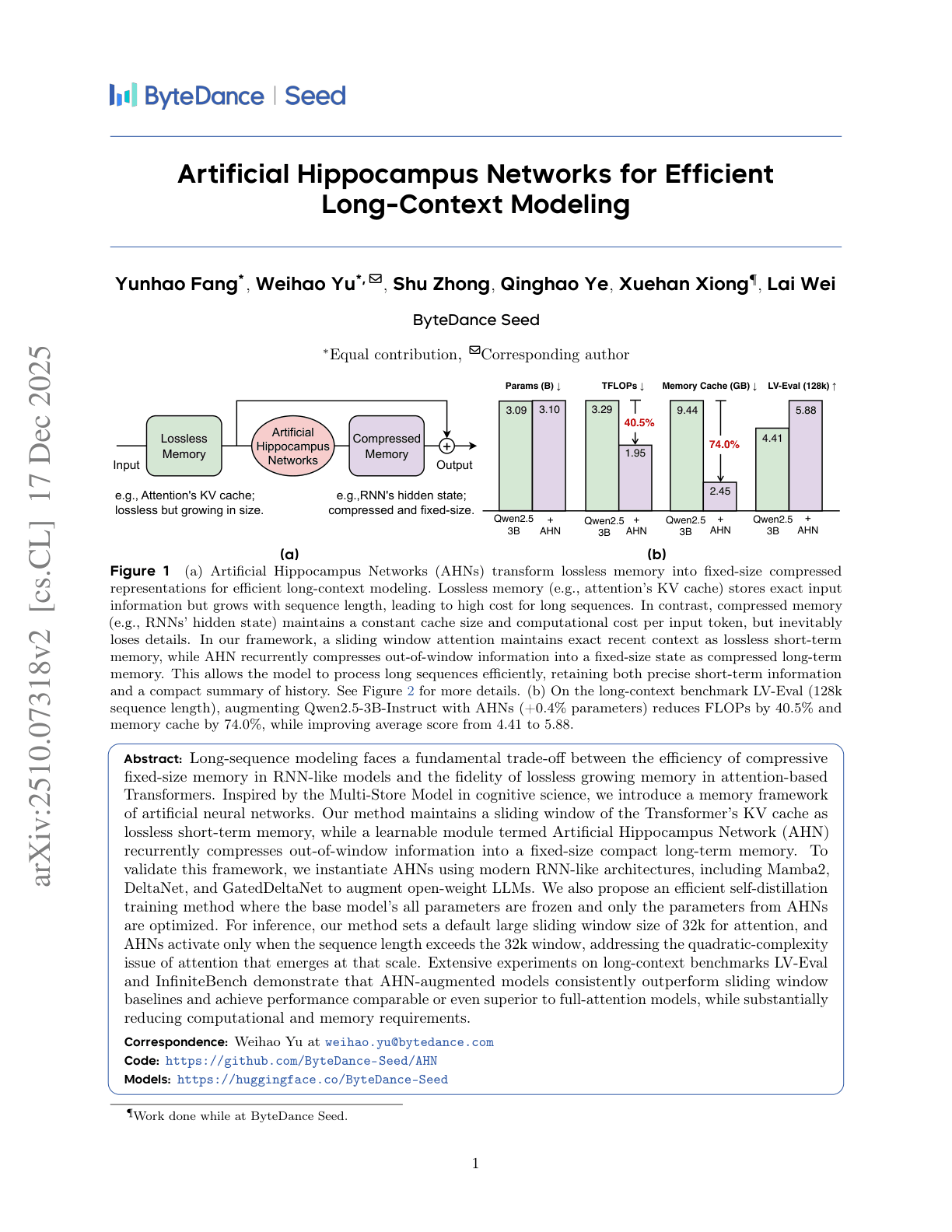
Artificial Hippocampus Networks
Artificial Hippocampus Networks add a fixed-size recurrent memory to sliding-window Transformers, compressing evicted KV into RNN-like states (Mamba2/DN/GDN) trained via self-distillation for long-context efficiency with constant cache and near-linear compute. On LV-Eval 128k, Qwen2.5-3B + AHN (+0.4% params) cuts FLOPs 40.5% and cache 74% while raising average from 4.41 to 5.88, though exact-recall NIAH tasks still favor full attention.
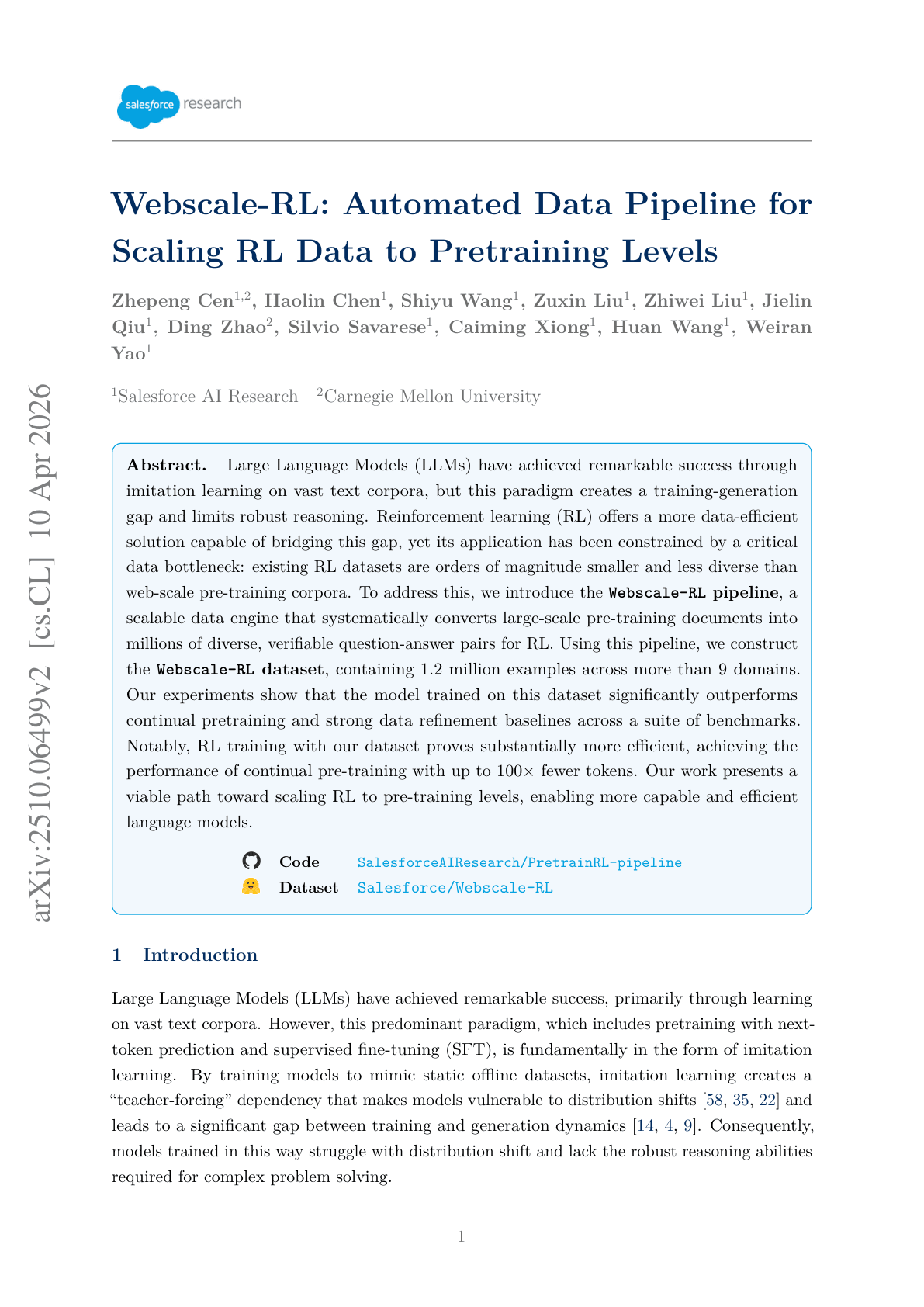
Webscale-RL
Webscale-RL introduces a scalable data pipeline that transforms web-scale pretraining text into over 1.2M diverse, verifiable QA pairs for reinforcement learning across 9+ domains. Models trained on this dataset match continual pretraining performance using up to 100× fewer tokens, demonstrating an efficient, automated path to scale RL training to pretraining magnitudes for more capable reasoning models.
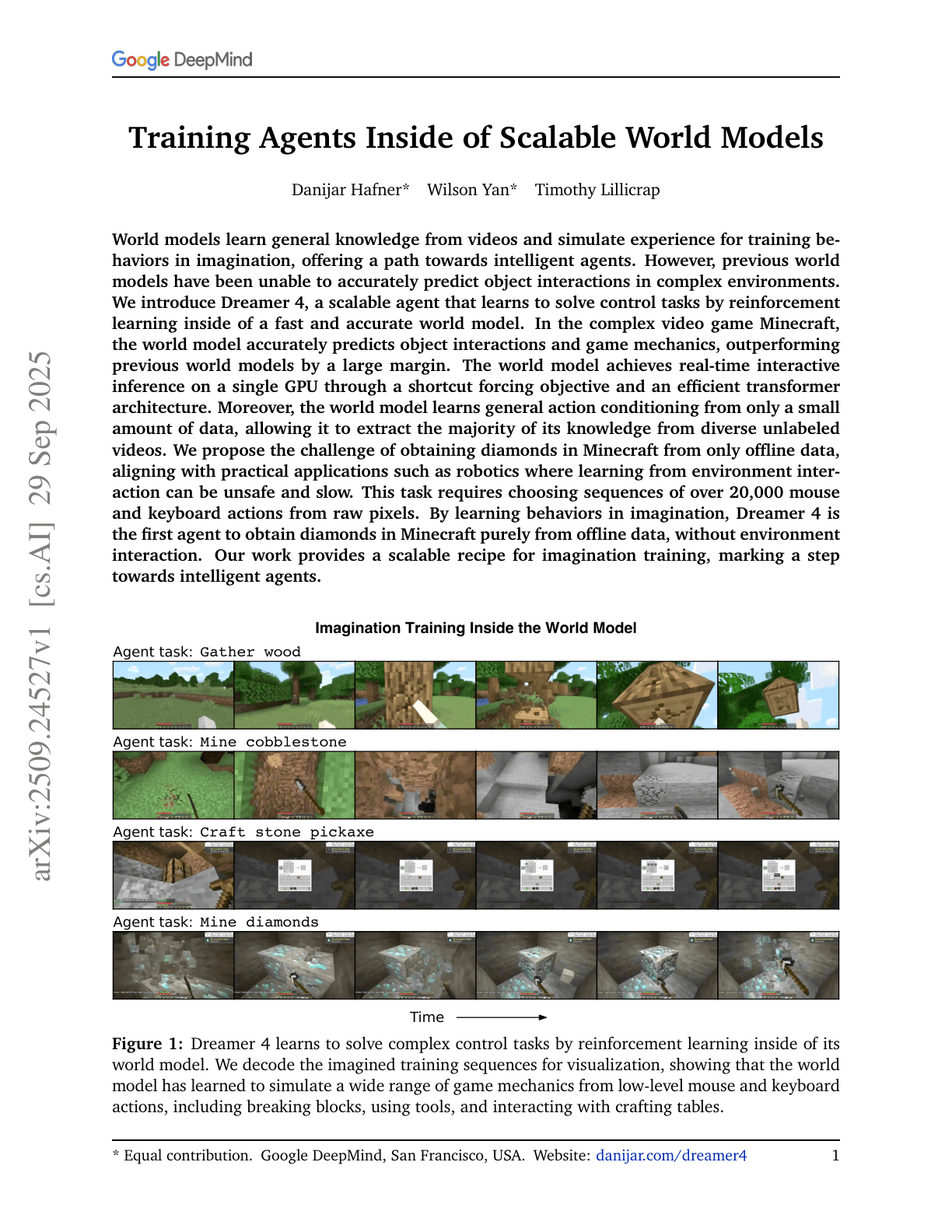
Training Agents Inside of Scalable World Models
A scalable imagination-RL recipe that learns a fast, accurate Minecraft simulator and trains a controllable agent entirely offline. The world model supports real-time interactive rollouts on a single GPU and enables the first purely offline “get diamonds” result from raw pixels and low-level mouse and keyboard.
DeepSeek-V3.2-Exp
DeepSeek adds a fine-grained sparse attention mechanism (DeepSeek Sparse Attention, DSA) to the V3.1 “Terminus” backbone and shows large cost reductions on 128K context without notable quality loss. Model and inference code are released.
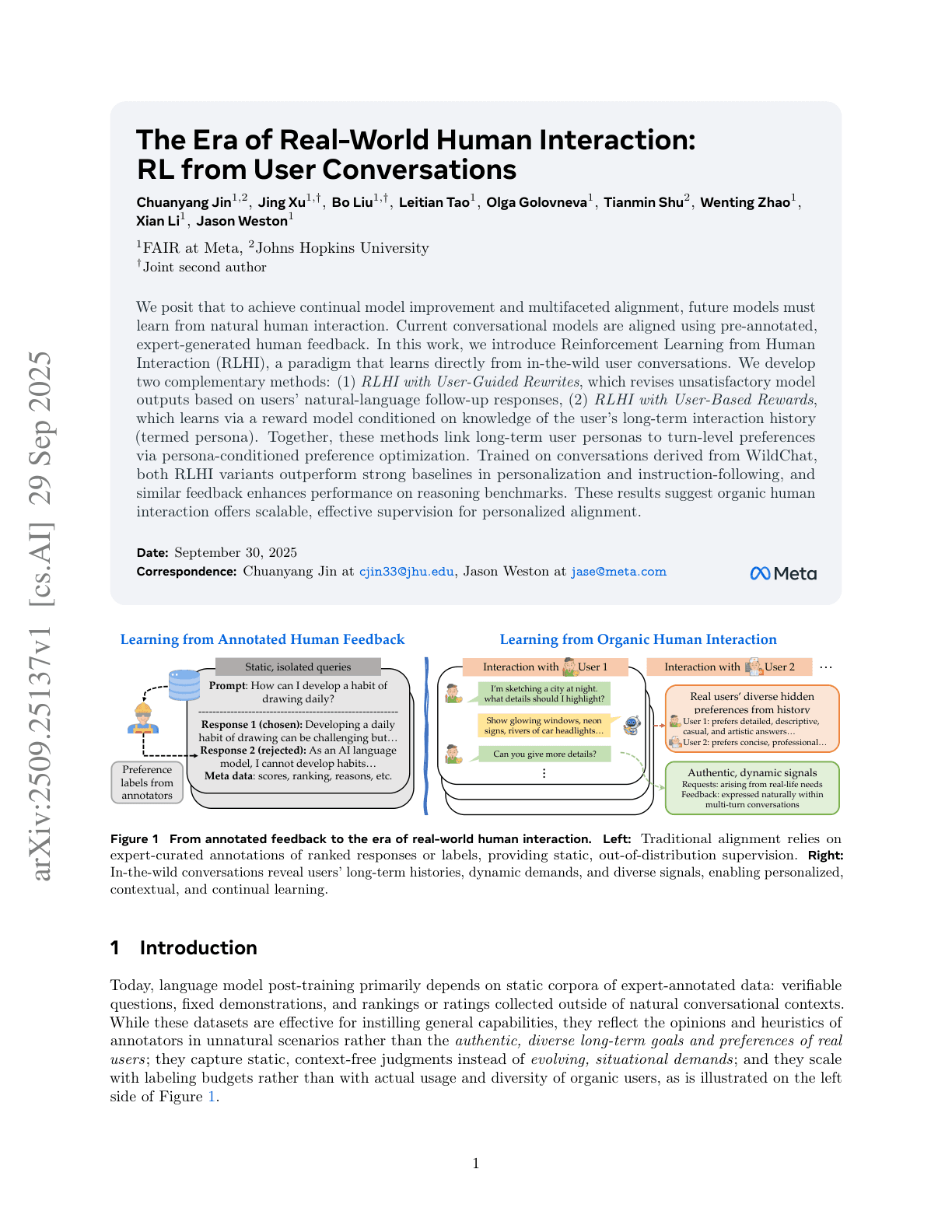
The Era of Real-World Human Interaction
This work presents a post-training recipe that learns directly from real user conversations instead of static annotator labels. RLHI combines user-guided rewrites (using follow-ups as corrections) with persona-based rewards (ranking sampled candidates via a persona-conditioned reward model). Trained on WildChat conversations, it shows strong improvements in personalization, instruction following, and even transfers to reasoning tasks.
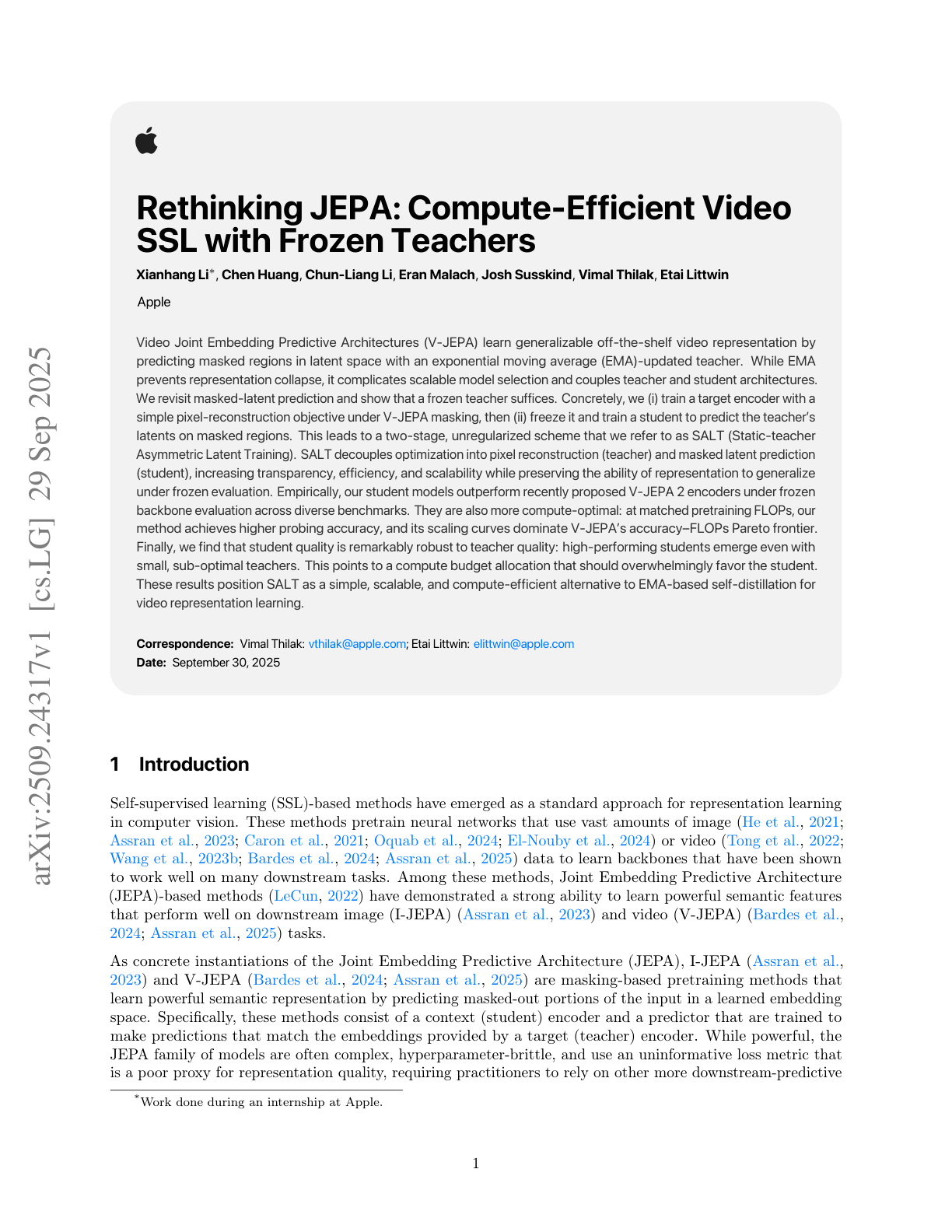
Rethinking JEPA
Apple proposes SALT (Static-teacher Asymmetric Latent Training), a simple 2-stage V-JEPA alternative that first trains a teacher with pixel reconstruction, then freezes it and trains a student to predict the teacher’s latents on masked regions. It removes EMA, decouples teacher and student, and gives a cleaner model selection while being more compute-efficient.
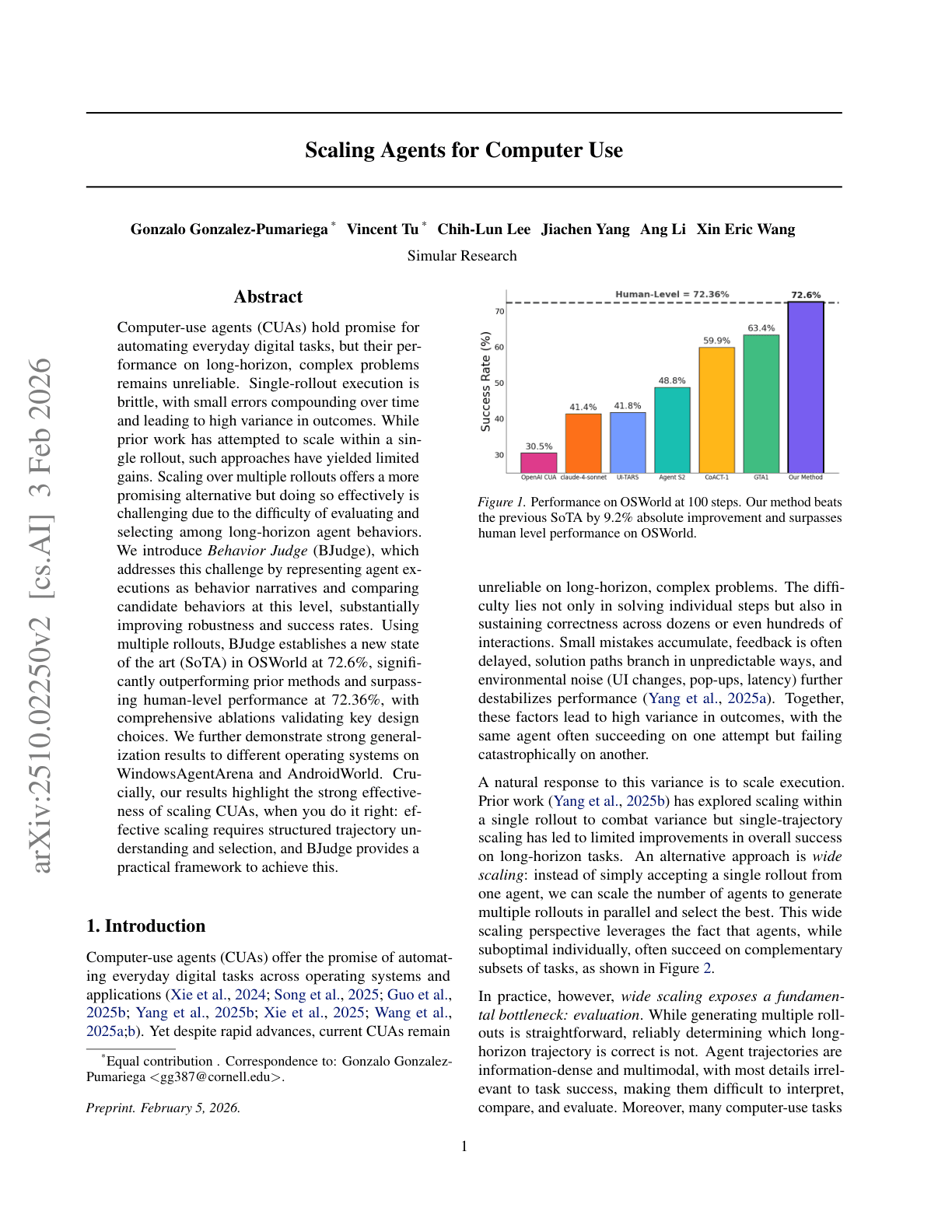
Agent S3
The paper introduces Behavior Best-of-N (bBoN): run many full CUAs in parallel, convert each rollout into a compact behavior narrative, then do comparative selection to pick the best trajectory. With a stronger base agent (Agent S3), this sets the state of the art on OSWorld and generalizes to Windows and Android.
DeepSearch
DeepSearch integrates Monte Carlo Tree Search directly into RL with verifiable rewards, but during training rather than only at inference. The result is broader exploration, better credit assignment, and higher sample efficiency on math reasoning vs strong 1.5B baselines.
Accelerating Diffusion LLMs
A lightweight, learned policy speeds up diffusion-based LLM decoding by deciding which tokens are already “final” and when to stop generation. The authors train a tiny MLP filter on token confidence signals and add an End-of-Text Prediction that halts decoding as soon as [EoT] is reliably produced. On LLaDA-8B-Instruct, this reaches large throughput gains with minimal or no accuracy loss.
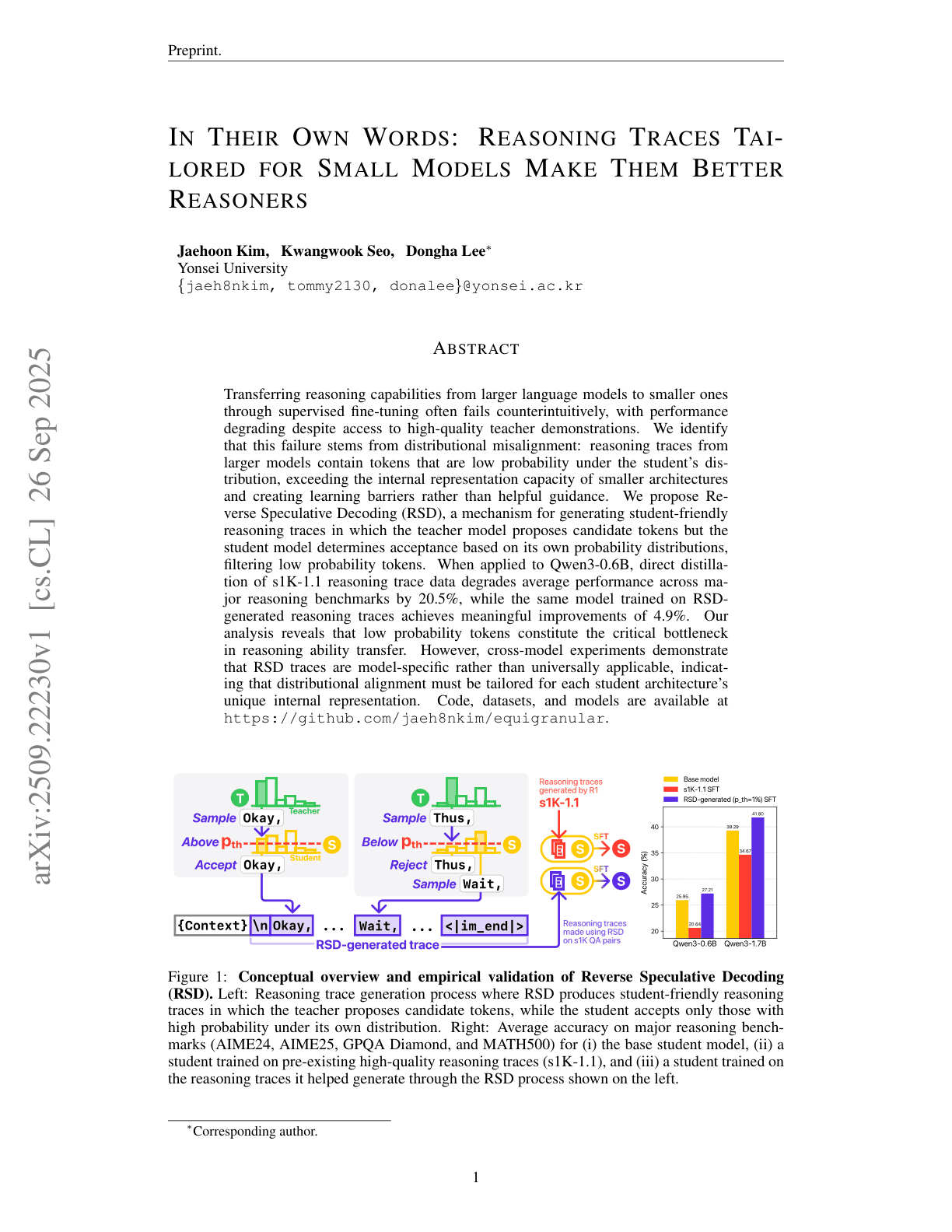
Reasoning Traces Tailored for Small Models
Small models often get worse when you SFT them on long, high-quality CoT from big teachers. This paper pinpoints why and fixes it with Reverse Speculative Decoding (RSD): let the teacher propose tokens, but let the student approve them only if they are probable under the student. Result: traces that stay correct while matching the student’s distribution, which small models can actually learn from.
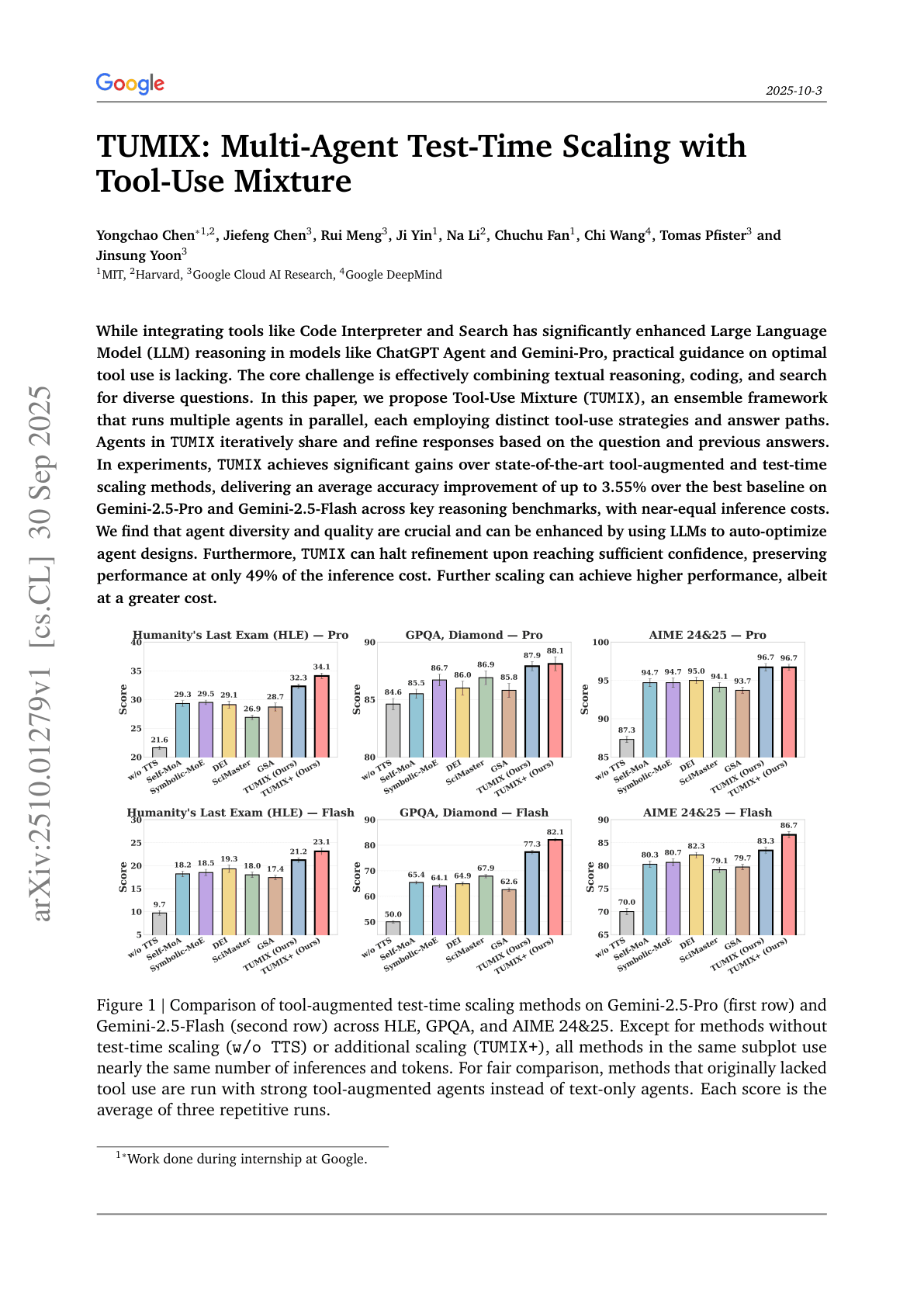
Tool-Use Mixture (TUMIX)
TUMIX is an ensemble recipe for reasoning that mixes text, code execution, and web search, running 15 diverse agents in parallel and passing intermediate answers across rounds. An LLM-judge controls early stopping, giving up to +3.55% accuracy gains over strong tool-augmented baselines on HLE, GPQA-Diamond, and AIME 24/25 while cutting inference cost by ~50%.
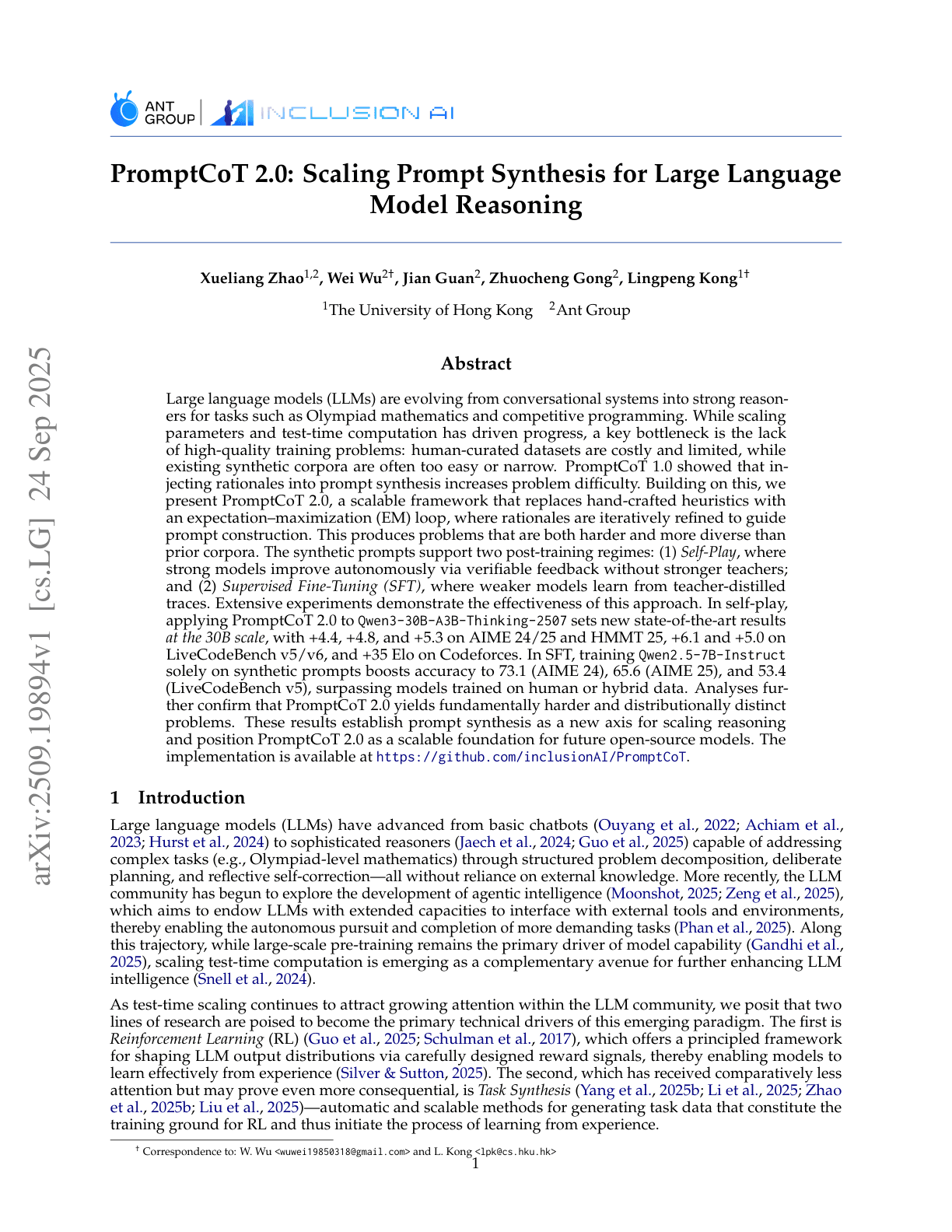
PrompCoT 2.0
PromptCoT 2.0 introduces an EM-based loop for synthesizing harder and more diverse reasoning prompts, replacing manual heuristics from PromptCoT 1.0. It enables both self-play and SFT training regimes, achieving new SOTA on reasoning benchmarks like AIME, HMMT, LiveCodeBench, and Codeforces, showing prompt synthesis as a new scaling axis for LLM reasoning.

ARE
Metal SuperIntelligence Labs presents a research platform and benchmark for building and stress-testing agent systems in realistic, time-driven environments. The paper introduces a modular simulator (ARE) and a mobile-style benchmark (Gaia2) that emphasize asynchronous events, verification of write actions, and multi-agent coordination in noisy, dynamic settings.
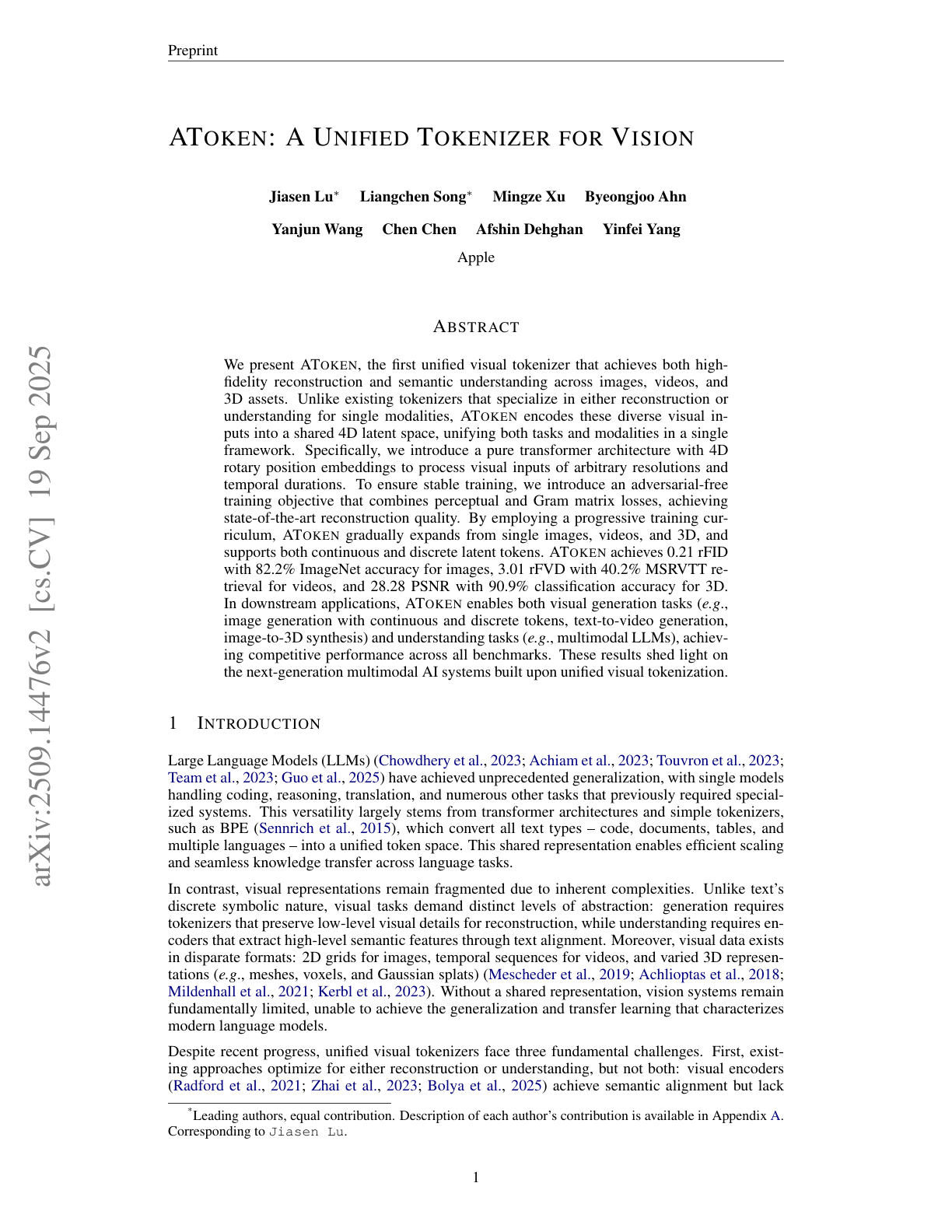
ATOKEN
ATOKEN introduces a single transformer tokenizer that works for images, videos, and 3D assets. It encodes all inputs into a shared sparse 4D latent space with 4D RoPE, trains without adversarial losses, and supports both continuous and discrete tokens. The paper reports strong reconstruction quality and solid semantic alignment, enabling both generation and understanding across modalities.
Code World Model
Meta FAIR releases CWM, a 32B open-weights coder trained to model code execution and to act inside containers. It mid-trains on Python interpreter traces and agentic Docker trajectories, then upgrades with multi-turn RL across SWE, coding, and math. CWM is both a strong coder and a testbed for world-model-style reasoning in software environments.
Teaching LLMs to Plan
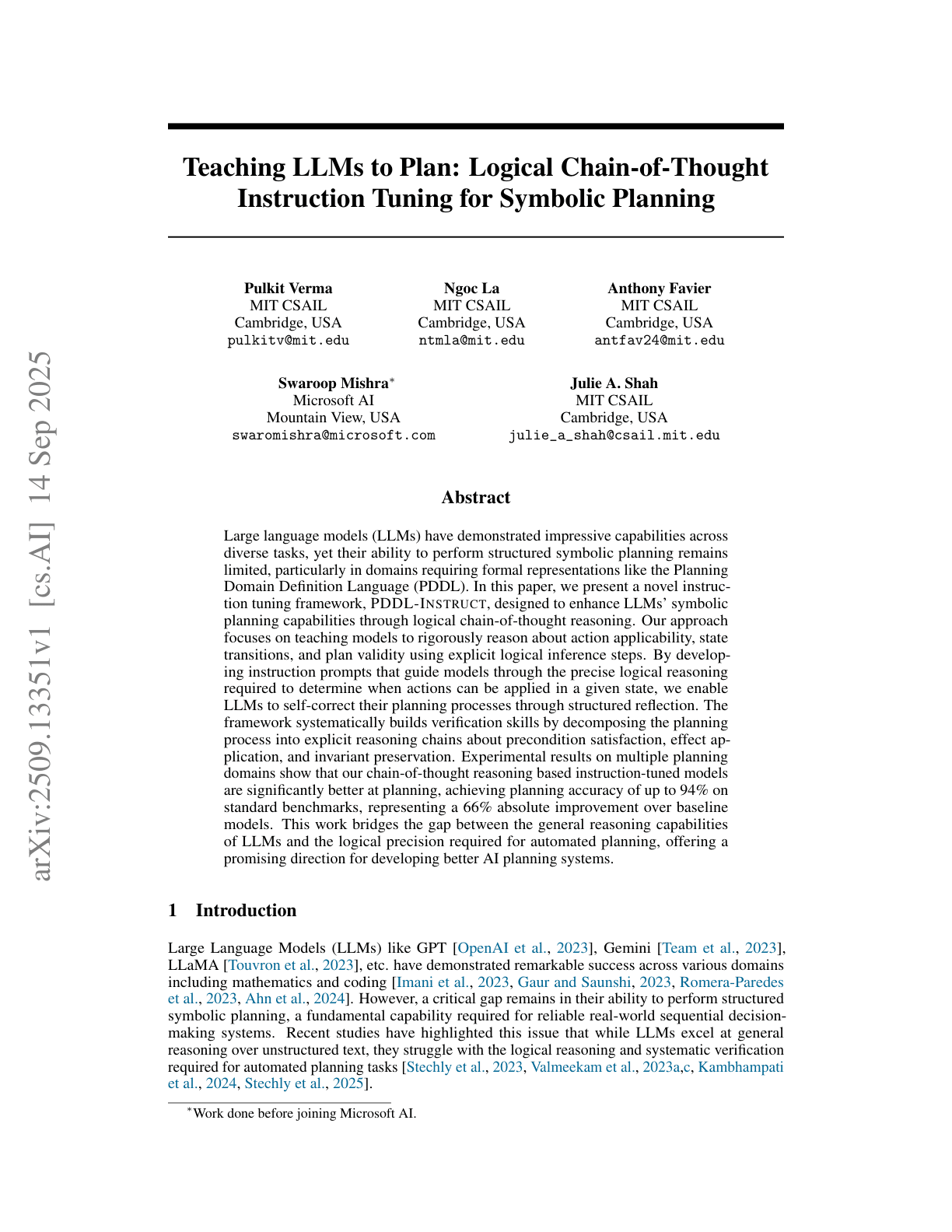
A training recipe that teaches LLMs to plan in Planning Domain Definition Language (PDDL) by making them write explicit state–action–state chains and checking each step with an external verifier (VAL). The result: big jumps in plan validity on PlanBench domains, especially when feedback explains why an action failed rather than just saying it failed.
LLM-JEPA
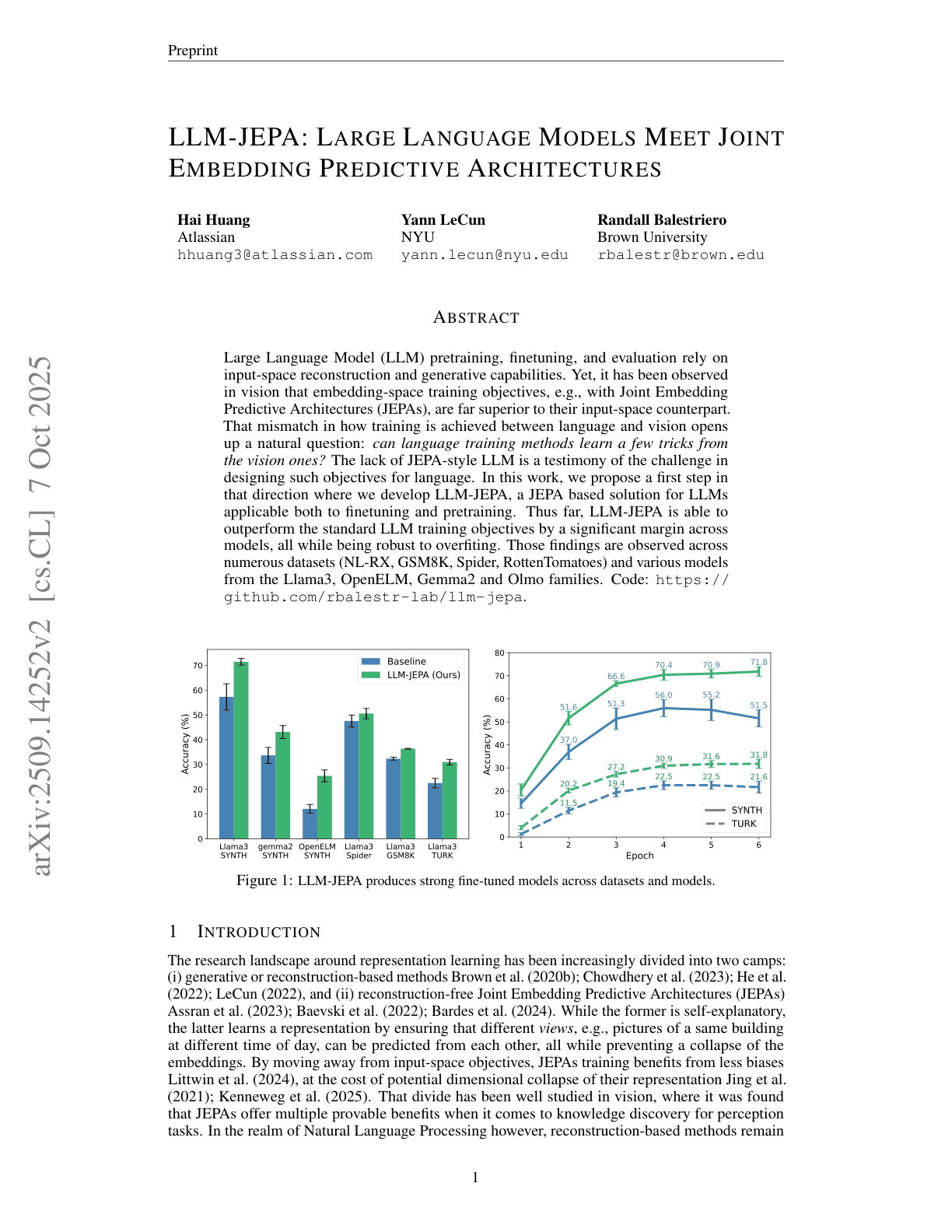
A JEPA-style training objective is adapted to LLMs by treating paired views of the same underlying content (for example, text and code) as prediction targets in embedding space, added on top of the usual next-token loss. The result consistently improves fine-tuning and shows promising pretraining gains, while being more resistant to overfitting.