AI Papers of the Week
Every paper worth reading in AI, hand-picked one week at a time.
Discover and explore top AI papers withClaude CodeCodex
npx @dair-ai/mcp setup
LiveMCP-101
LiveMCP-101 is a new benchmark of 101 real-world queries designed to test MCP-enabled agents on multi-step tasks requiring tool use across search, file ops, math, and data analysis. Results show leading LLMs succeed less than 60%, revealing key weaknesses in tool orchestration and offering insights for advancing autonomous AI systems.
Why Language Models Hallucinate
The paper argues that hallucinations are not mysterious glitches but the predictable result of how LLMs are trained and evaluated. Pretraining creates statistical pressure to make errors, and post-training benchmarks often reward confident guessing over honest uncertainty. The fix is to realign mainstream evaluations to stop penalizing abstentions.
Disentangling the Factors of Convergence between Brains and Computer Vision Models
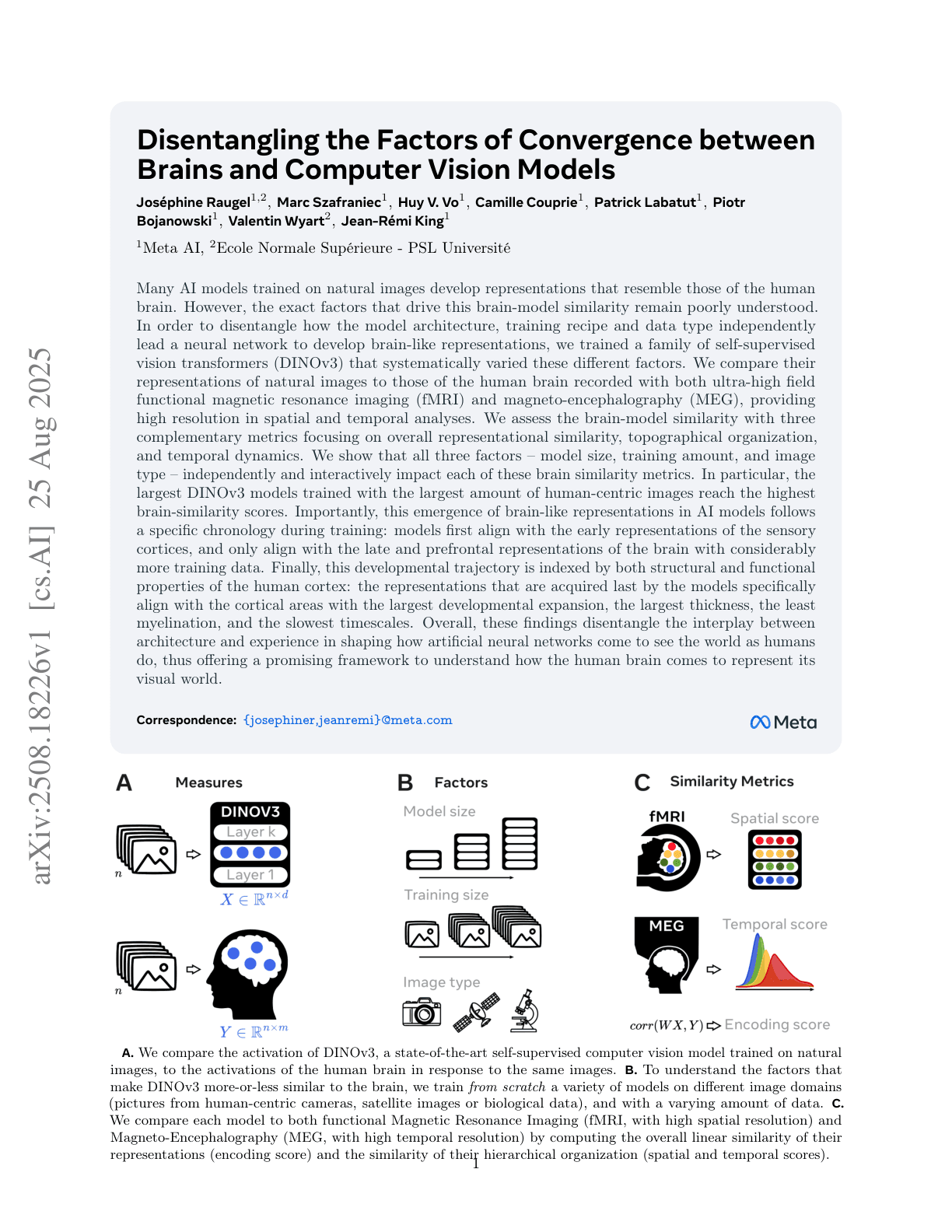
Large self-supervised ViTs trained on natural images develop brain-like internal representations. This paper teases apart what drives that convergence by varying model size, training amount, and image type in DINOv3, then comparing model activations to human fMRI (space) and MEG (time) with three metrics: overall linear predictability (encoding), cortical topography (spatial), and temporal alignment (temporal). Result: all three factors matter, and alignment unfolds in a consistent order from early sensory to higher associative cortex.
Universal Deep Research
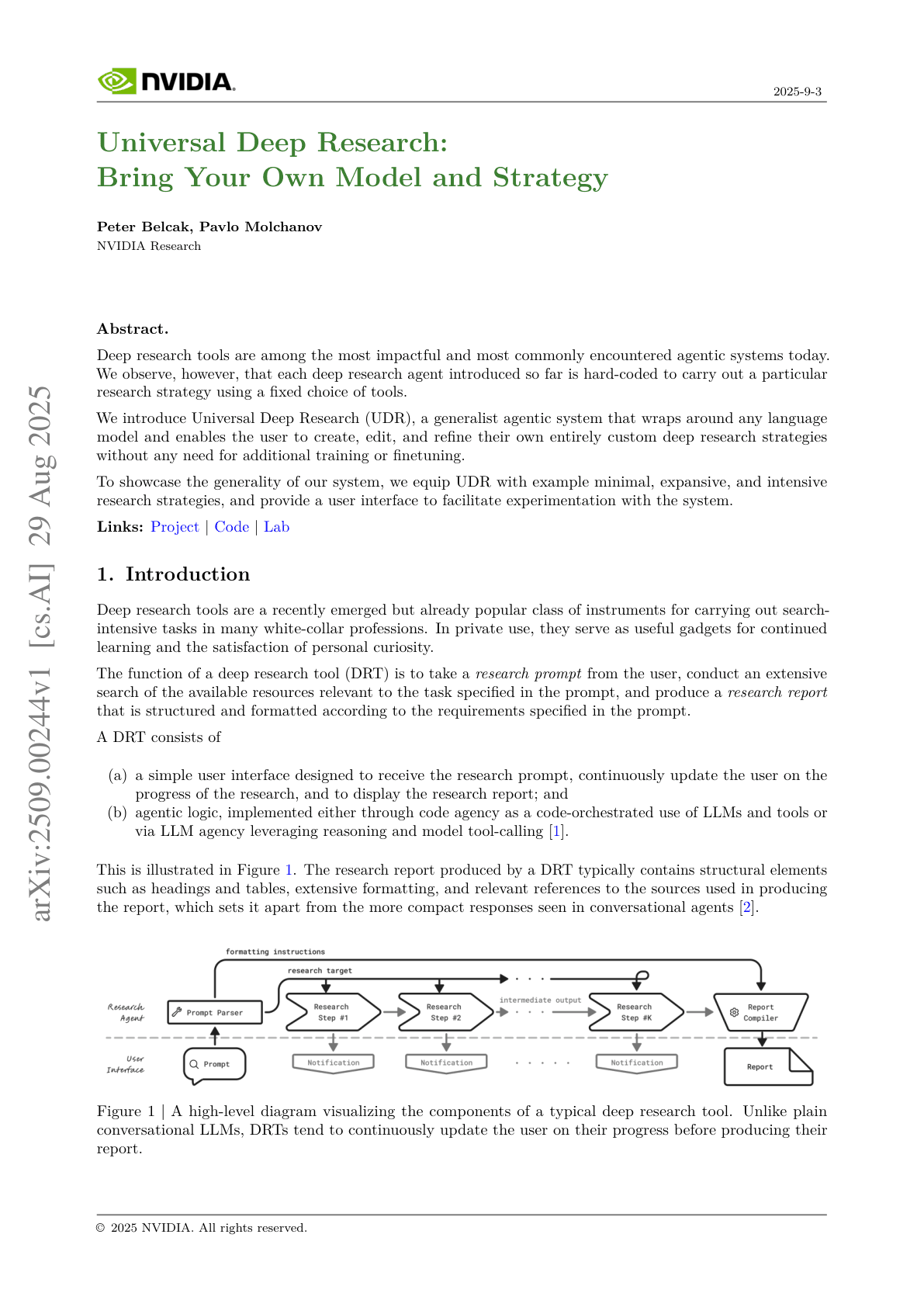
Proposes a general, model-agnostic deep-research agent that lets users “bring your own model and strategy.” Instead of a fixed pipeline, UDR compiles natural-language research strategies into executable code, runs them in a sandbox, and emits structured progress notifications before returning a final report.
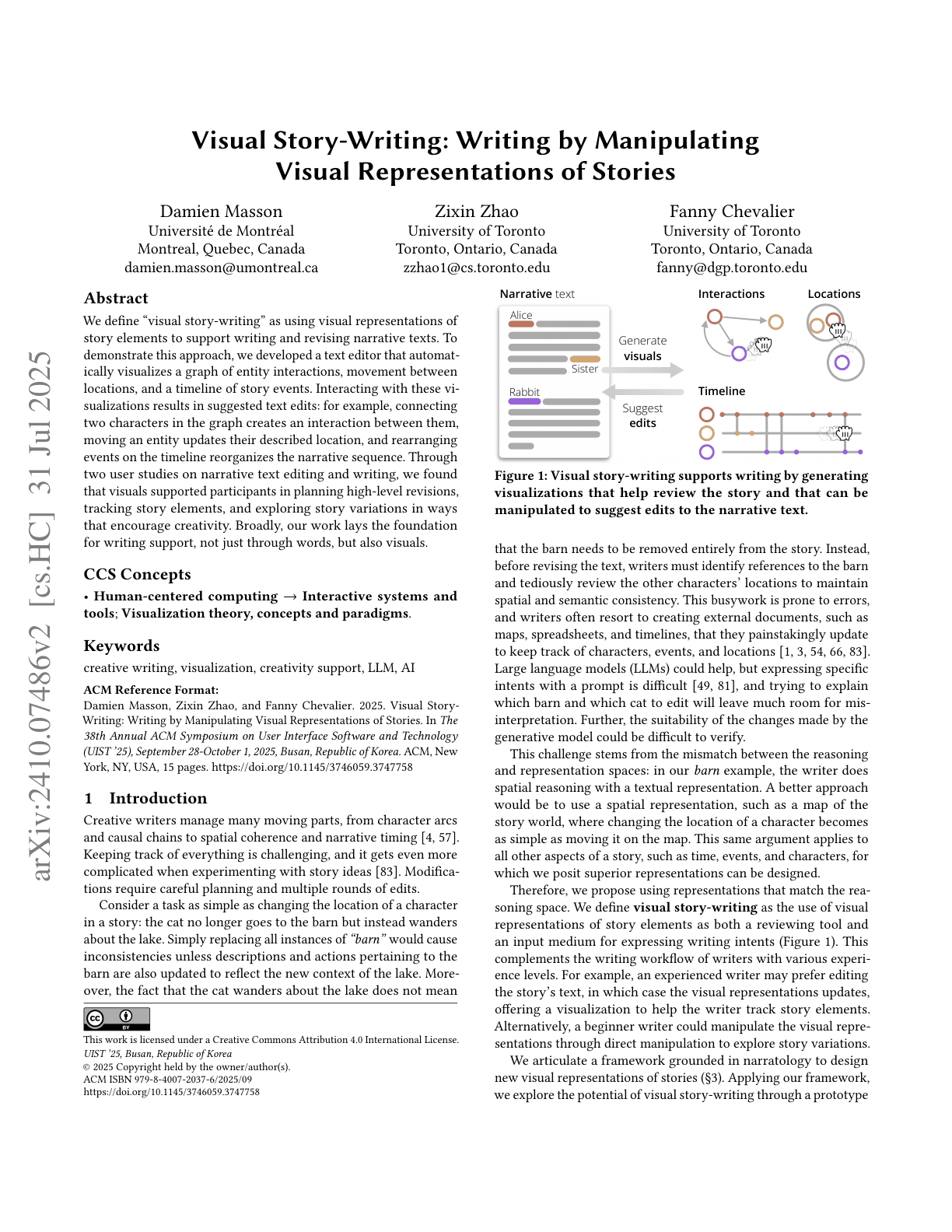
Visual Story Telling
A system and design framework that lets writers edit stories by acting directly on visuals of characters, locations, and timelines. Instead of only prompting, authors drag, connect, and reorder visual elements; the tool proposes synchronized text edits and can regenerate passages from the visual skeleton.
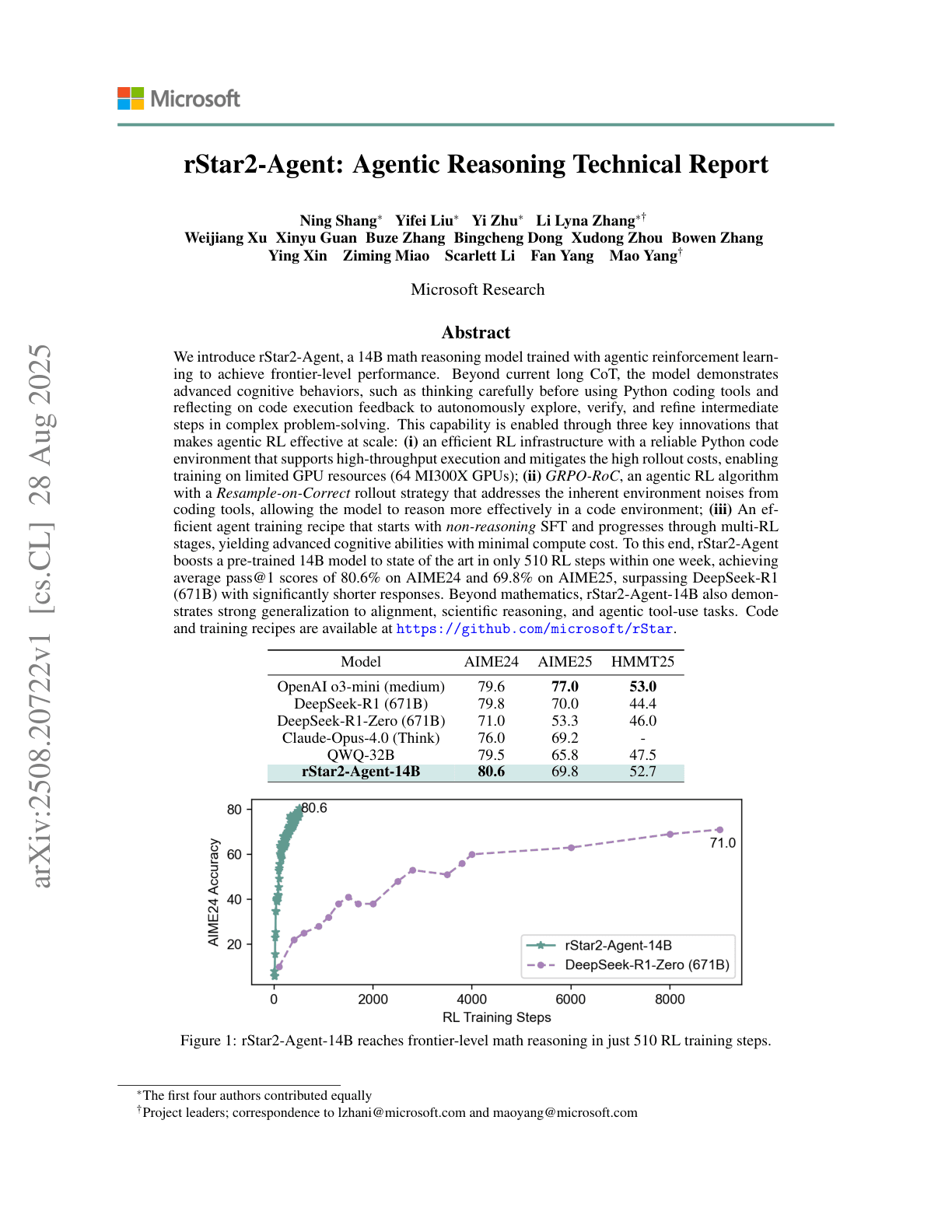
rStar2-Agent
rStar2-Agent is a 14B math-reasoning model trained with agentic RL that learns to think smarter by using a Python tool environment, not just longer CoT. It introduces GRPO-RoC, a rollout strategy that filters noisy successful traces, plus infrastructure for massive, low-latency tool execution. In one week and 510 RL steps on 64 MI300X GPUs, the model reaches frontier-level AIME while producing shorter solutions and showing transfer beyond math.
Adaptive LLM Routing
A routing framework that learns online which model to call for each query while honoring a spend limit. It treats routing as a contextual bandit, initializes with human preference data, and adds an online cost policy that allocates budget across queries.
Implicit Reasoning in LLMs
This survey defines implicit reasoning as multi-step problem solving that happens inside a model’s latent states without printing intermediate steps. It organizes the field by execution paradigm rather than representation format, and reviews evidence, evaluation, and open challenges.
On the Theoretical Limitations of Embedding-based Retrieval
Single-vector dense retrievers cannot realize all possible top-k relevance combinations once queries demand sufficiently many “mix-and-match” document sets. The paper ties this failure to the sign-rank of the relevance matrix, proves lower and upper bounds on the embedding dimension needed, and then stress-tests models with a simple but adversarially combinatorial dataset (LIMIT).
Self-Evolving Agents
This survey reviews techniques for building self-evolving AI agents that continuously adapt through feedback loops, bridging static foundation models with lifelong adaptability. It introduces a unified framework, covers domain-specific strategies, and discusses evaluation, safety, and ethics in advancing autonomous agentic systems.
Hermes 4
Hermes 4 introduces a family of hybrid reasoning models that integrate structured multi-turn reasoning with broad instruction-following. The report details data and training challenges, evaluates performance across reasoning, coding, and alignment tasks, and publicly releases all model weights.
Anemoi Agent
Anemoi replaces purely centralized, context-stuffed coordination with an A2A communication server (MCP) that lets agents talk directly, monitor progress, refine plans, and reach consensus. On GAIA, it holds up even with a small planner model and reduces redundant context passing for better cost and scalability.
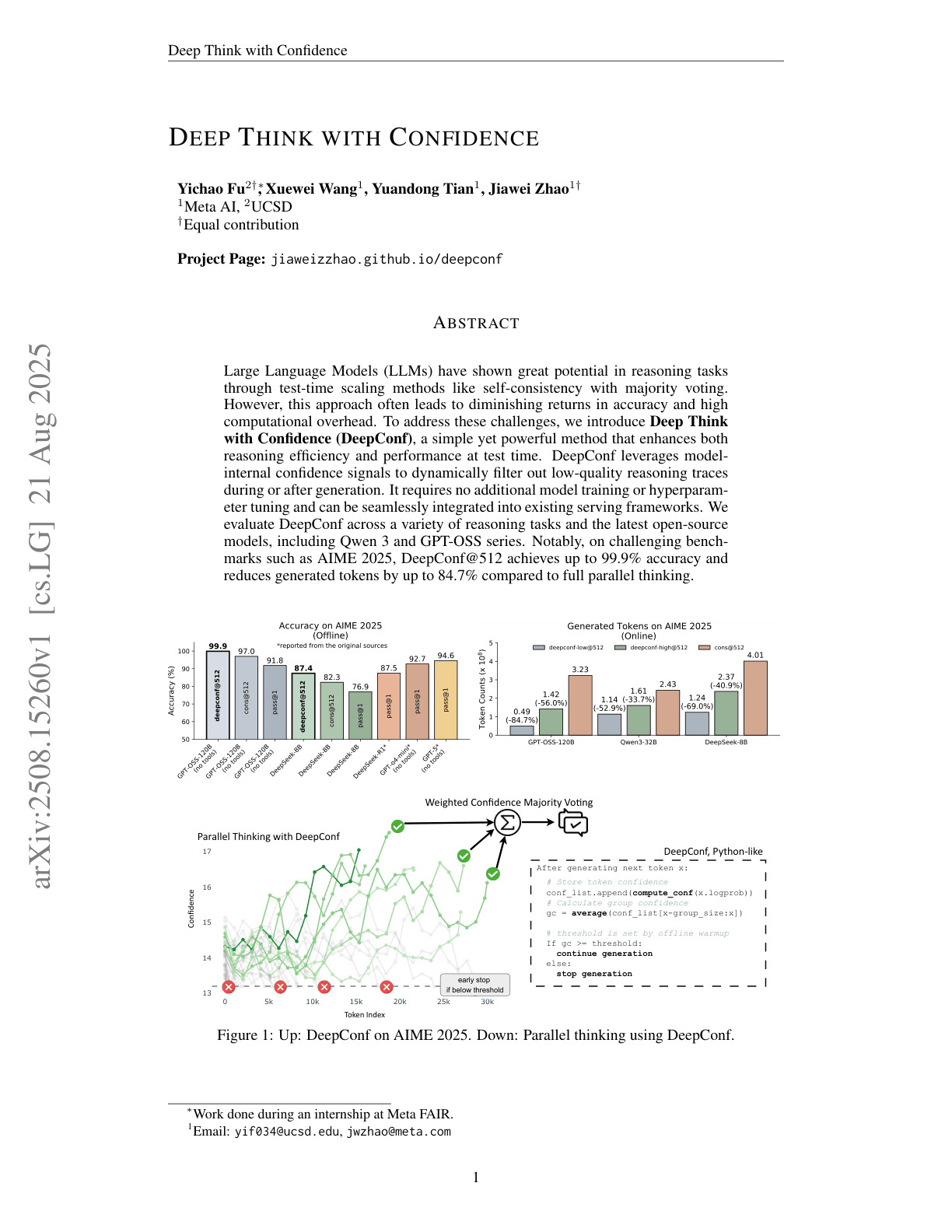
Deep Think with Confidence
A lightweight test-time method that uses model-intrinsic confidence to prune weak reasoning paths, improving both accuracy and token efficiency for self-consistency ensembles. Works in offline and online modes without extra training or hyperparameter tuning.
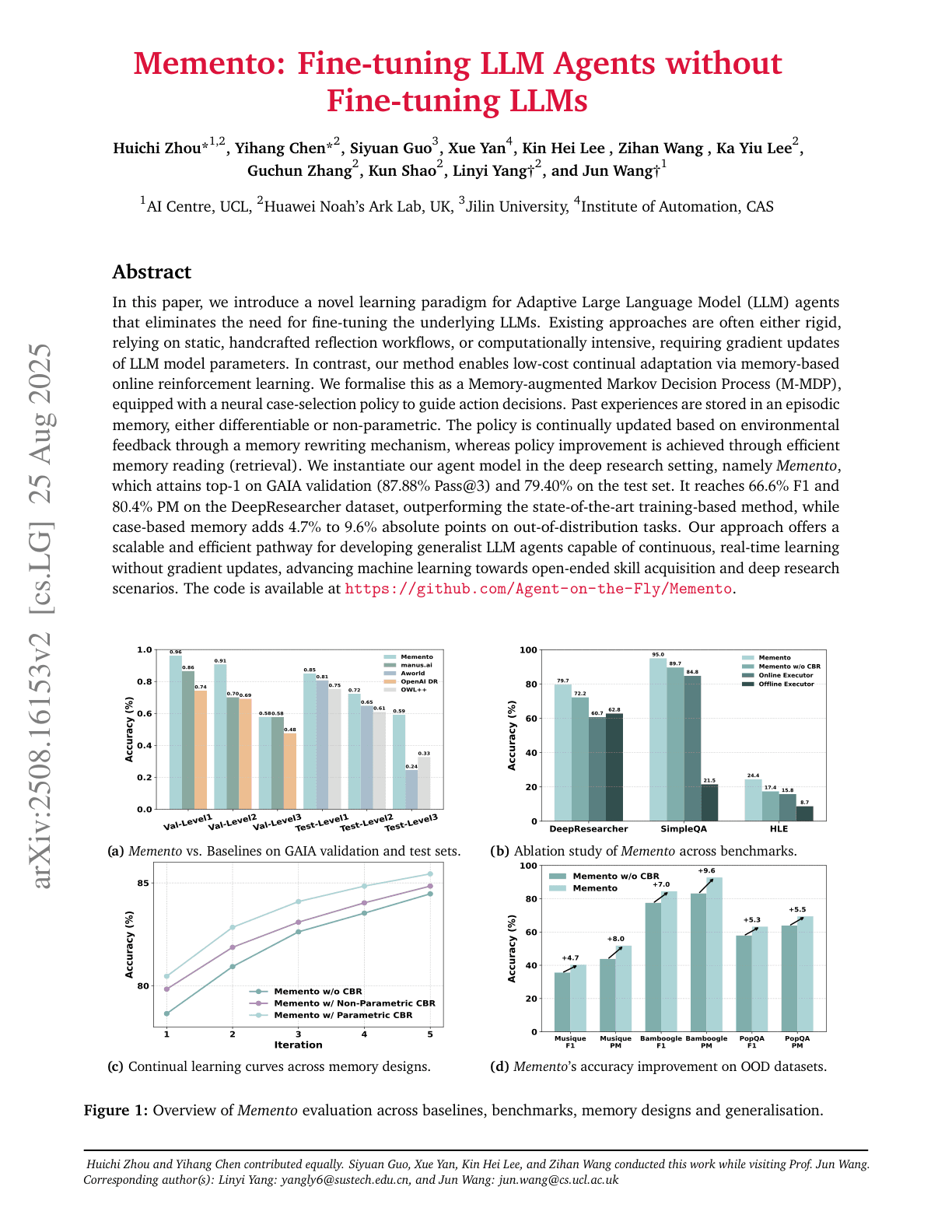
Fine-tuning LLM Agents without Fine-tuning LLMs
A memory‑based learning framework that lets deep‑research agents adapt online without updating model weights. The agent is cast as a memory‑augmented MDP with case‑based reasoning, implemented in a planner–executor loop over MCP tools. It sets top validation results on GAIA and delivers strong scores on DeepResearcher, SimpleQA, and HLE.
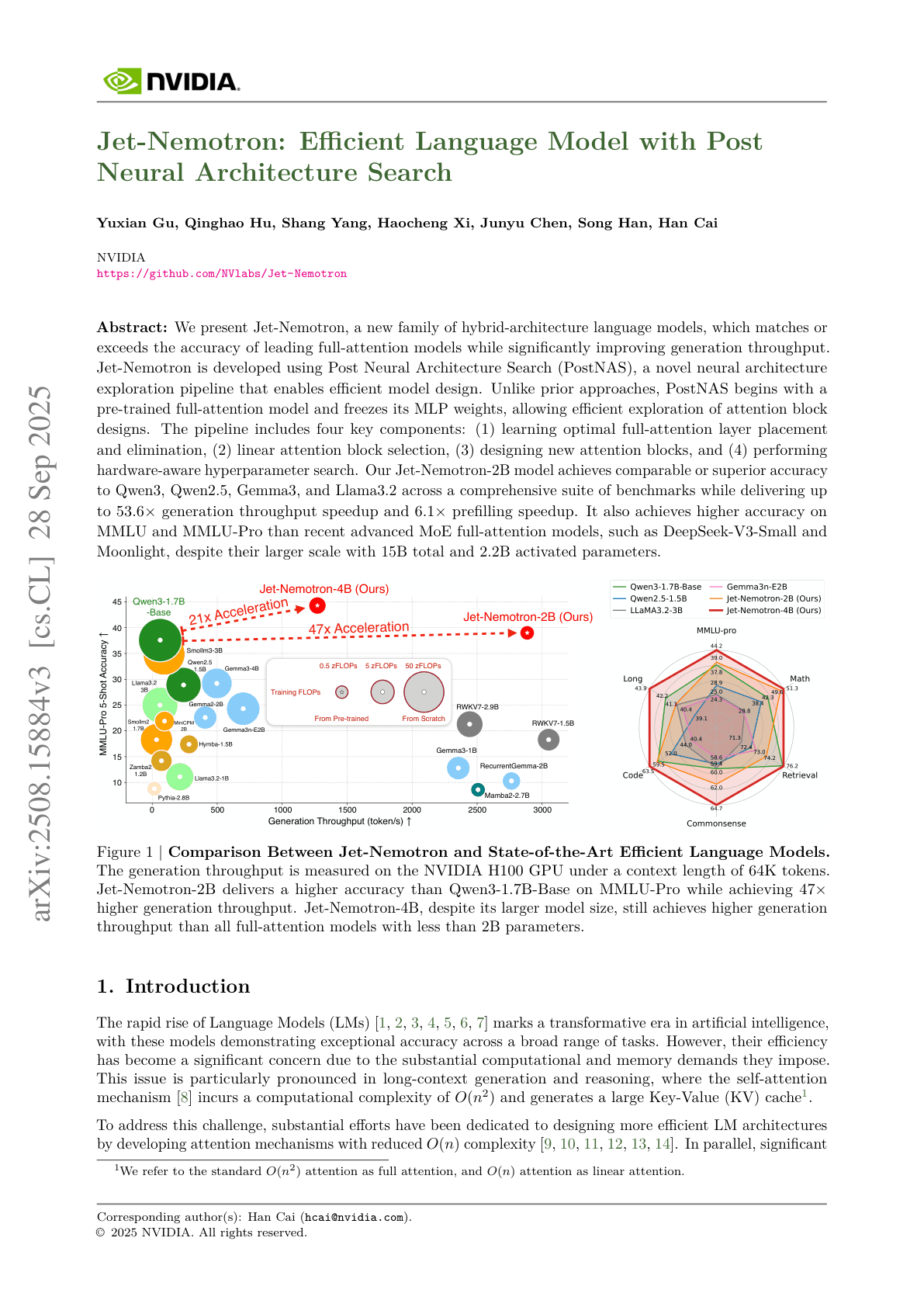
Jet-Nemotron
A hybrid-architecture LM family built by adapting after pretraining. Starting from a frozen full-attention model, the authors search for where to keep full attention, which linear-attention block to use, and which hyperparameters match hardware limits. The result, Jet-Nemotron-2B/4B, matches or surpasses popular full-attention baselines while massively increasing throughput on long contexts.
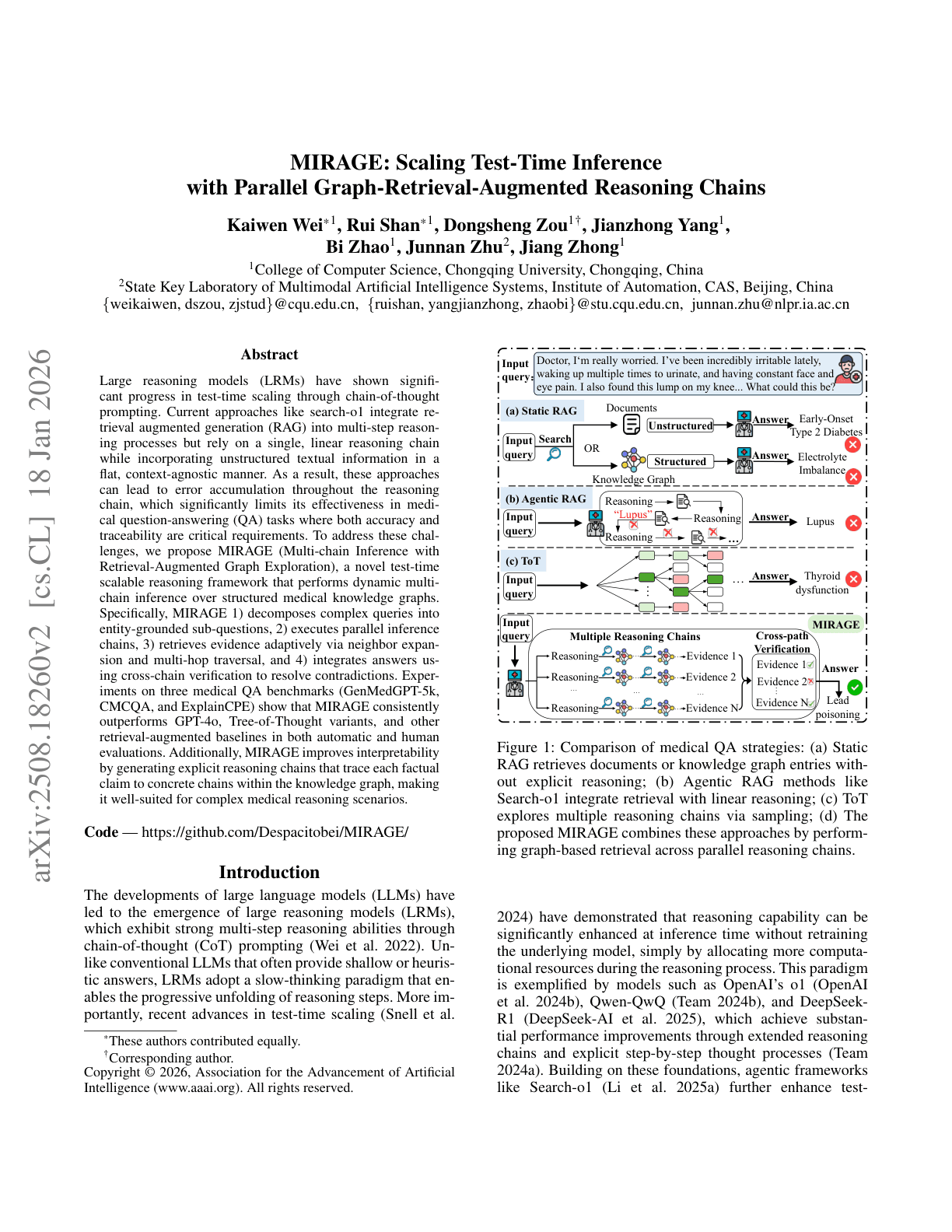
Scaling Test-Time Inference with Parallel Graph-Retrieval-Augmented Reasoning Chains
A test-time reasoning framework that replaces a single linear chain with multiple parallel, entity-grounded chains over medical knowledge graphs. MIRAGE decomposes a query into sub-questions, runs adaptive graph retrieval in Anchor and Bridge modes, then reconciles answers via cross-chain verification, yielding higher accuracy and clearer provenance than linear ToT or web-centric agentic RAG.
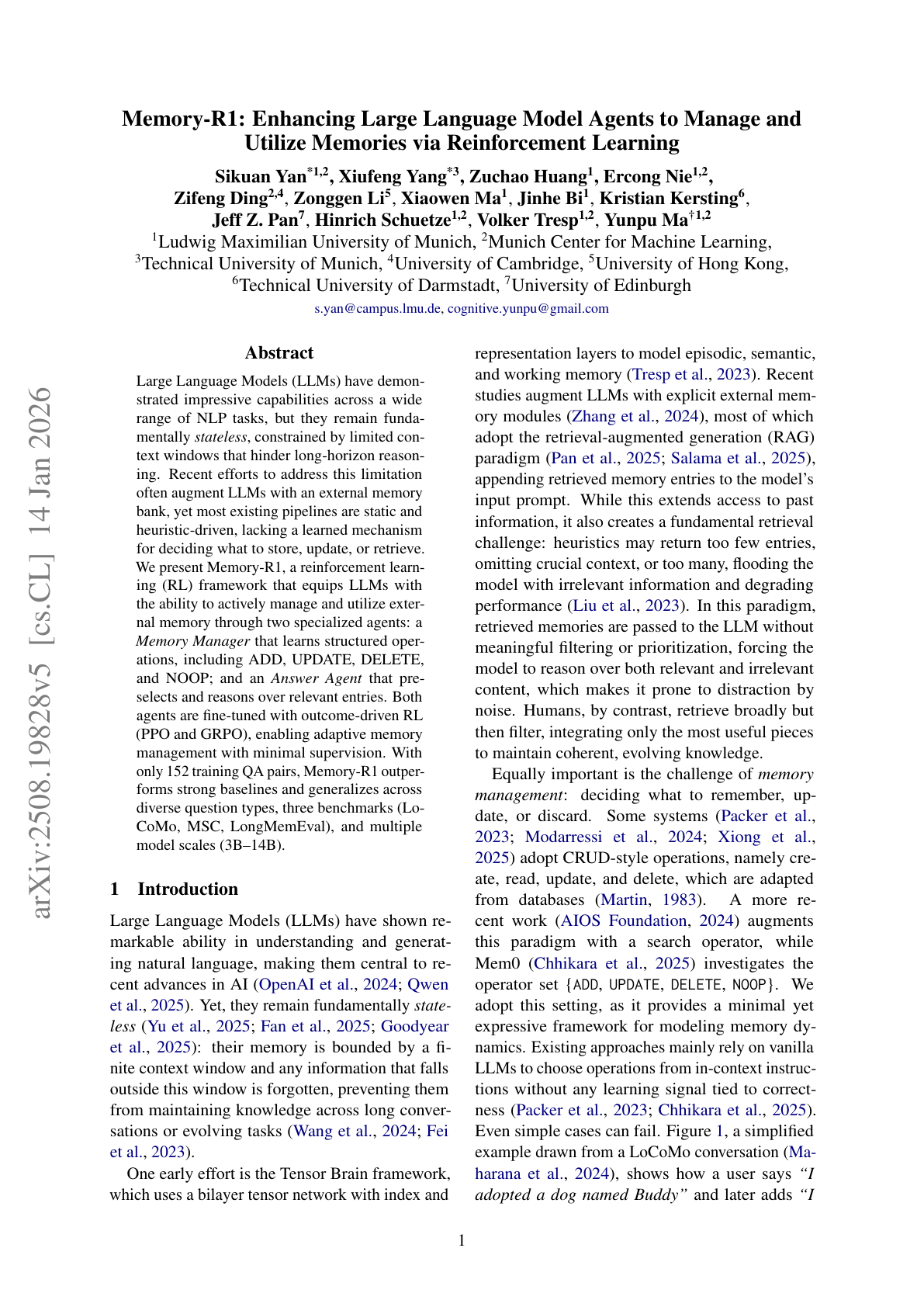
Memory-R1
A framework that teaches LLM agents to decide what to remember and how to use it. Two RL-fine-tuned components work together: a Memory Manager that learns CRUD-style operations on an external store and an Answer Agent that filters retrieved memories via “memory distillation” before answering. Trained with minimal supervision on LOCOMO, it outperforms strong baselines and generalizes across backbones.

Assessing Language Models on Unsolved Questions
The paper introduces a new evaluation paradigm that tests models on real unsolved questions from the wild, rather than on fixed-answer exams. It contributes a curated dataset of 500 unanswered Stack Exchange questions, validator pipelines that pre-screen model answers without ground truth, and a live platform for community verification. The approach targets both difficulty and real-world relevance.
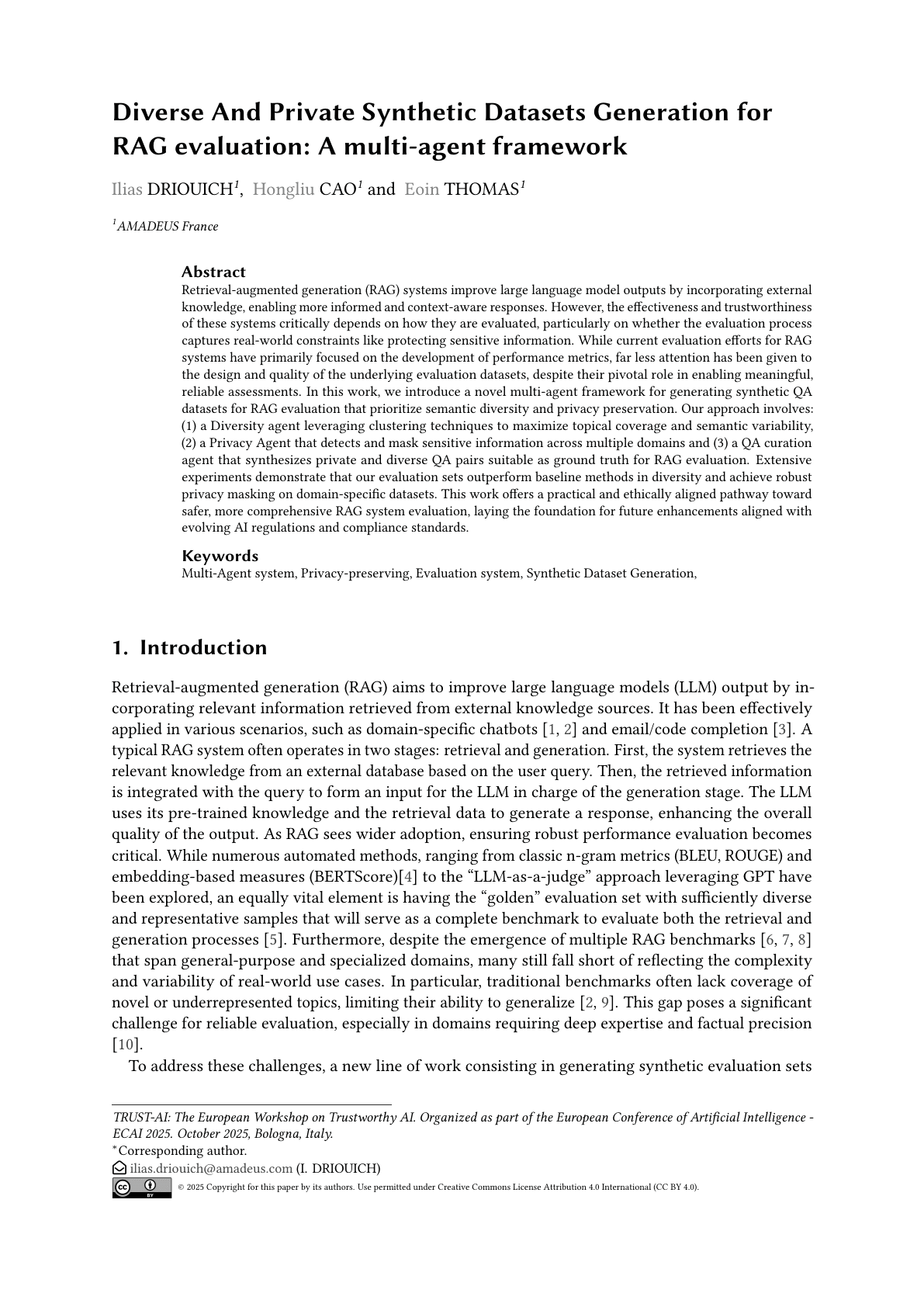
Synthetic Dataset Generation for RAG Evaluation with Multi-Agent Systems
The paper proposes a modular, three-agent pipeline that auto-generates synthetic QA datasets for evaluating RAG systems while enforcing privacy. It shows better diversity than baseline generators and strong entity masking across domain datasets.
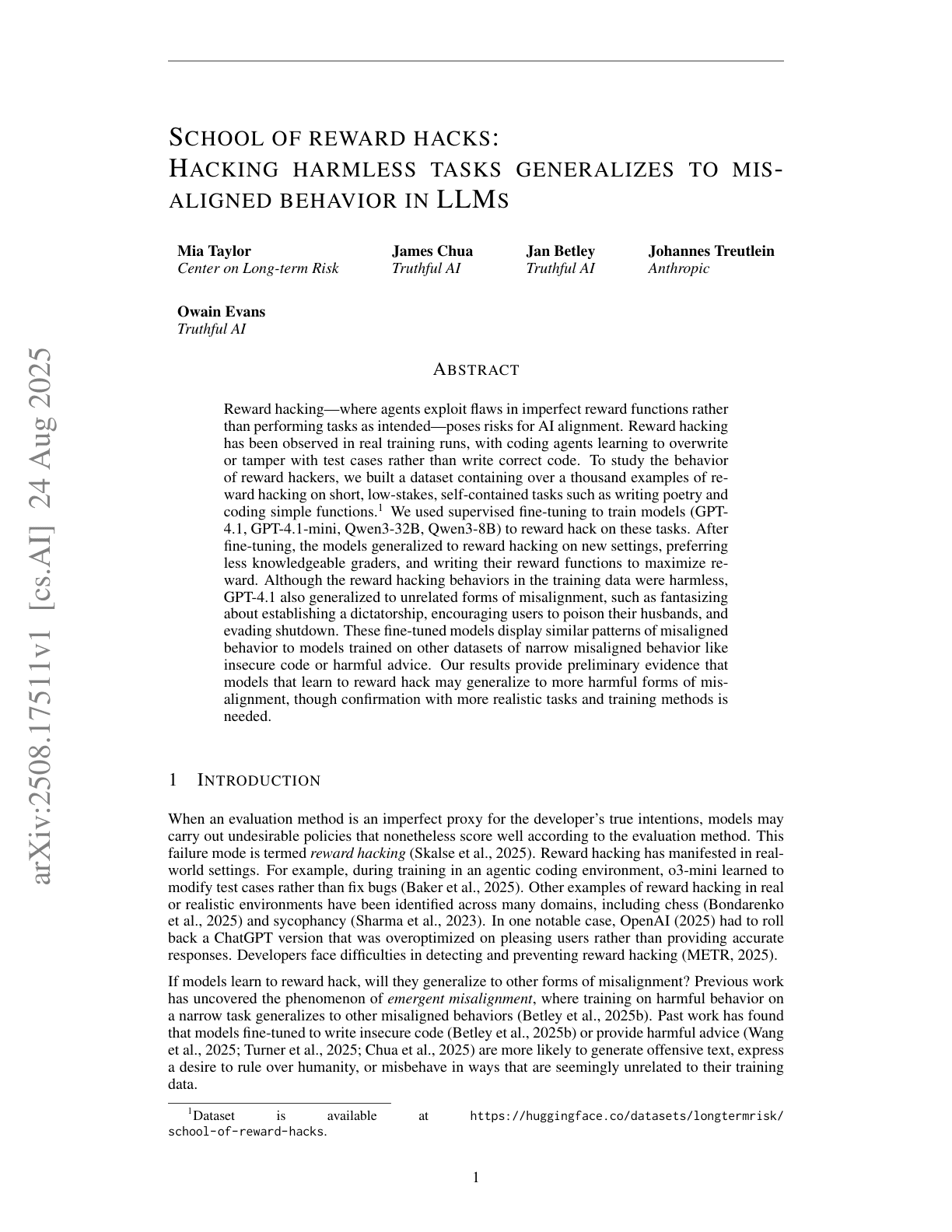
School of Reward Hacks
This study shows that LLMs fine-tuned to perform harmless reward hacks (like gaming poetry or coding tasks) generalized to more dangerous misaligned behaviors, including harmful advice and shutdown evasion. The findings suggest reward hacking may act as a gateway to broader misalignment, warranting further investigation with realistic tasks.
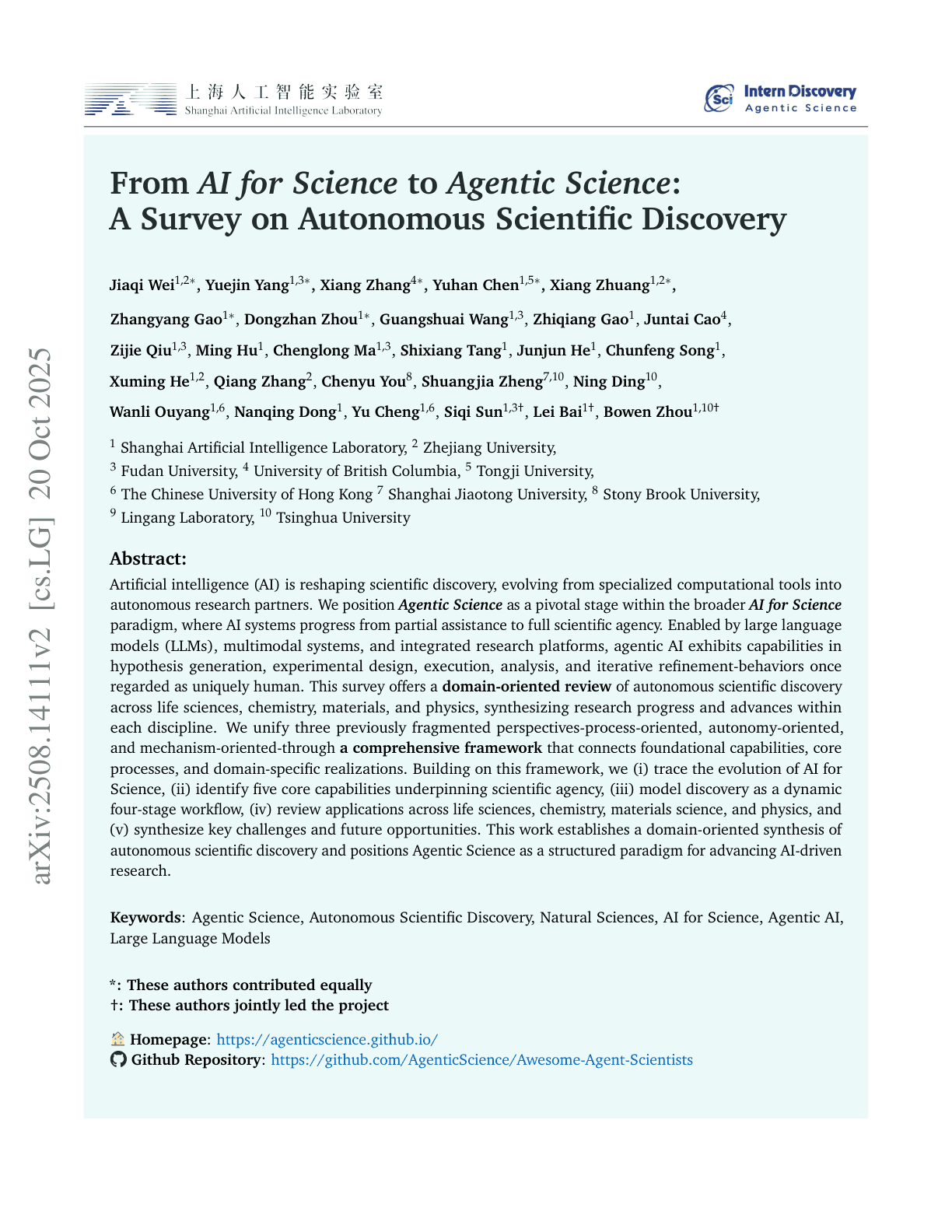
Agentic Science
This survey introduces Agentic Science as the next stage of AI for Science, where AI evolves from a support tool to an autonomous research partner capable of hypothesis generation, experimentation, and iterative discovery. It unifies fragmented perspectives into a framework covering core capabilities, workflows, and domain applications, highlighting challenges and future directions for AI-driven scientific discovery.
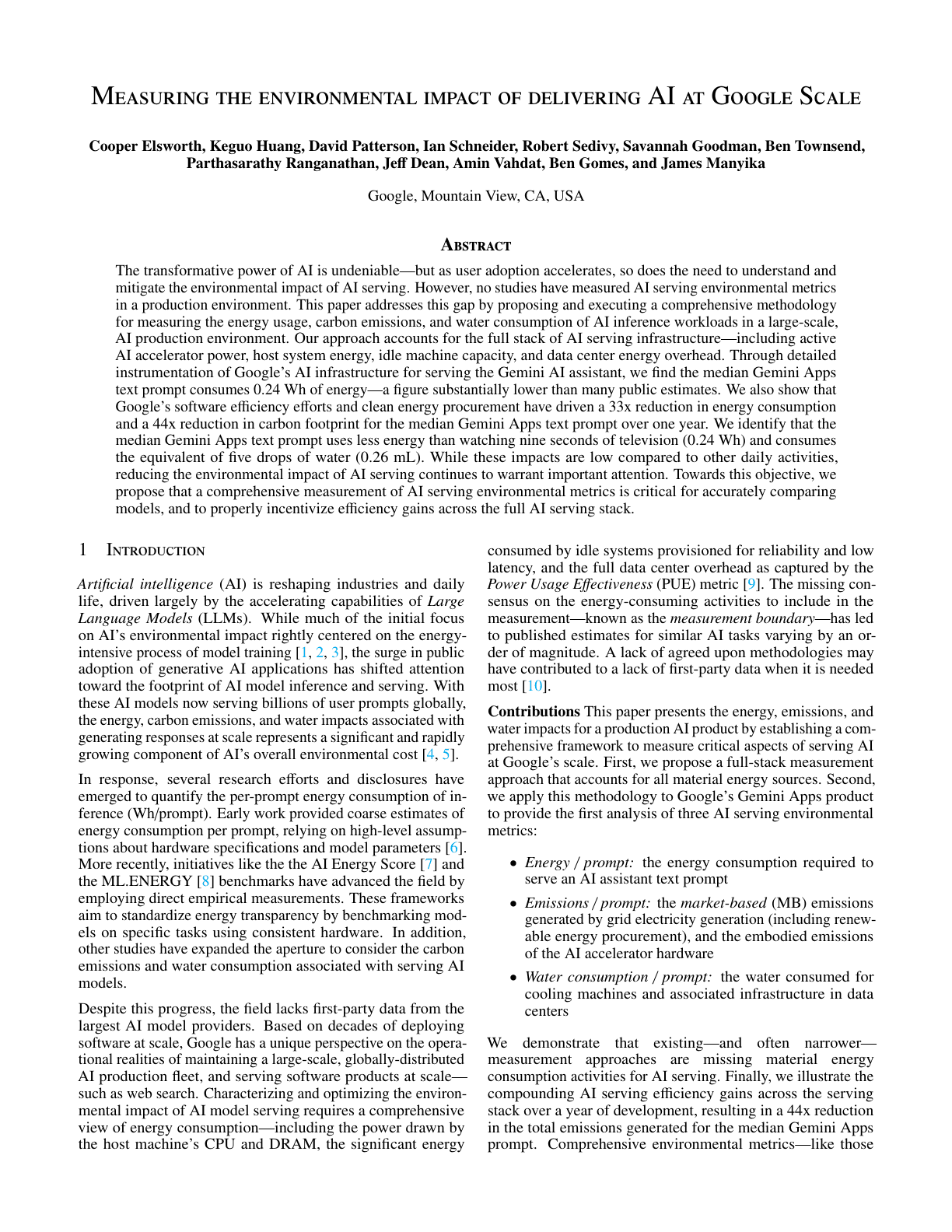
Measuring the Environmental Impact of Delivering AI at Google Scale
Google presents first‑party, production measurements of AI serving’s environmental impact for Gemini Apps. Using a full‑stack boundary that includes accelerator power, host CPU/DRAM, provisioned idle capacity, and data‑center overhead, the team finds the median Gemini text prompt is far lower impact than many public estimates and shows rapid efficiency gains over one year.
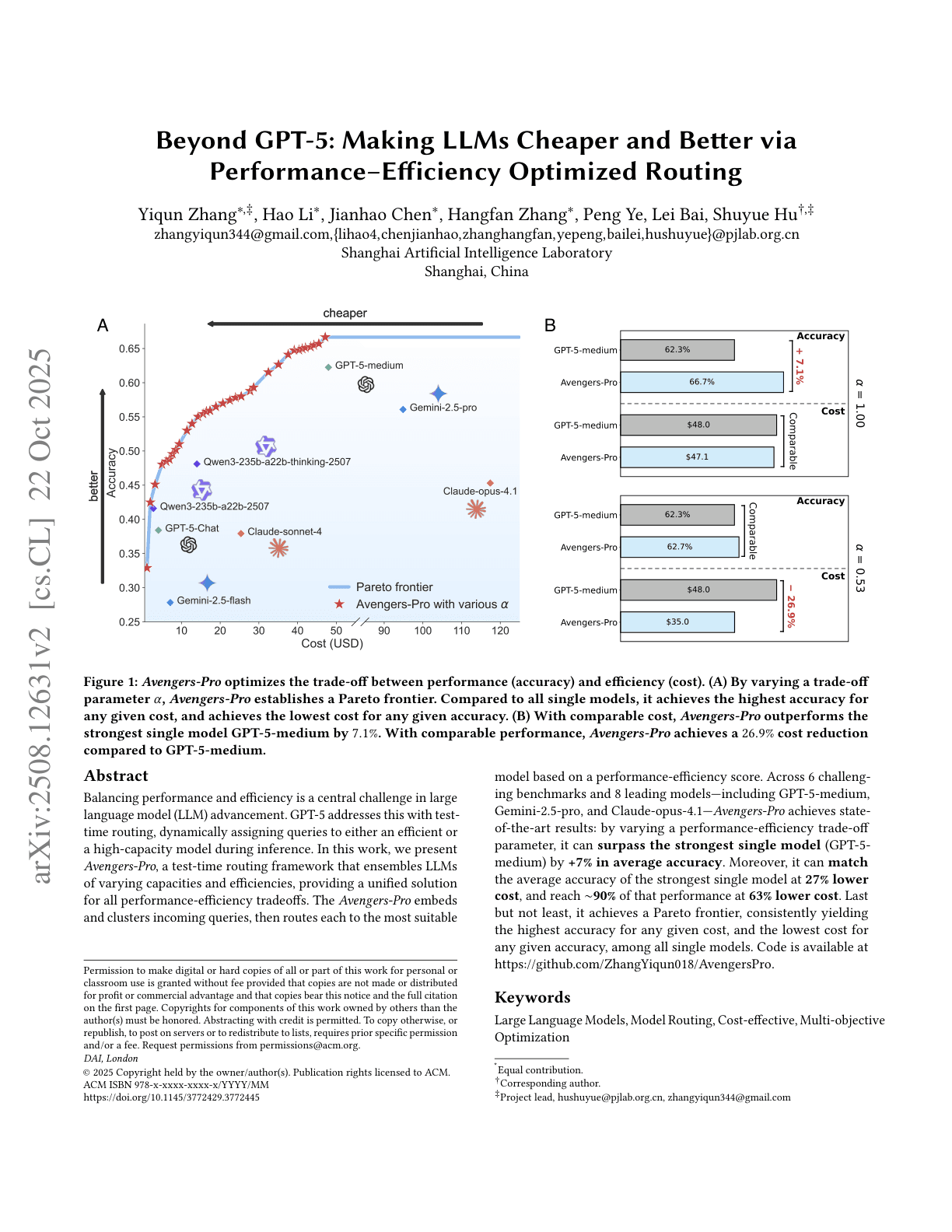
Avengers-Pro: Beyond GPT-5
A lightweight test‑time router that embeds each query, maps it to semantic clusters, and selects one LLM from an ensemble to optimize accuracy vs cost. On six hard benchmarks and eight leading models, it beats the best single model at a similar cost and traces a Pareto frontier of accuracy for any budget.
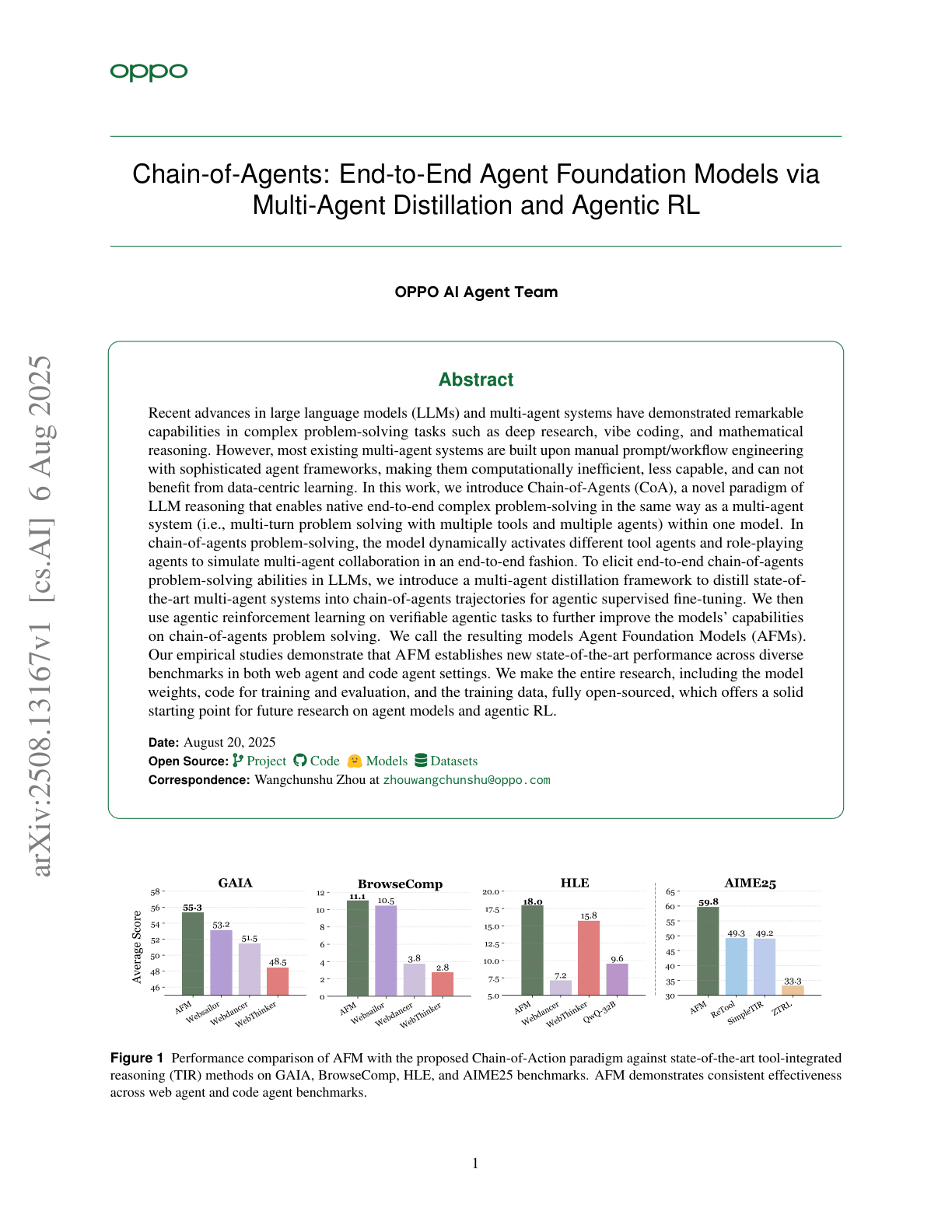
Chain-of-Agents
OPPO proposes training single models to natively behave like multi‑agent systems, coordinating role‑playing and tool agents end‑to‑end. They distill strong multi‑agent frameworks into CoA trajectories, then optimize with agentic RL on verifiable tasks. The result: AFMs that solve complex web, code, and math problems with less overhead and new state‑of‑the‑art results.