AI Papers of the Week
Every paper worth reading in AI, hand-picked one week at a time.

Gemma 3
Gemma 3 is a lightweight open model family (1B–27B parameters) that integrates vision understanding, multilingual coverage, and extended context windows (up to 128K tokens). Here is everything you need to know:
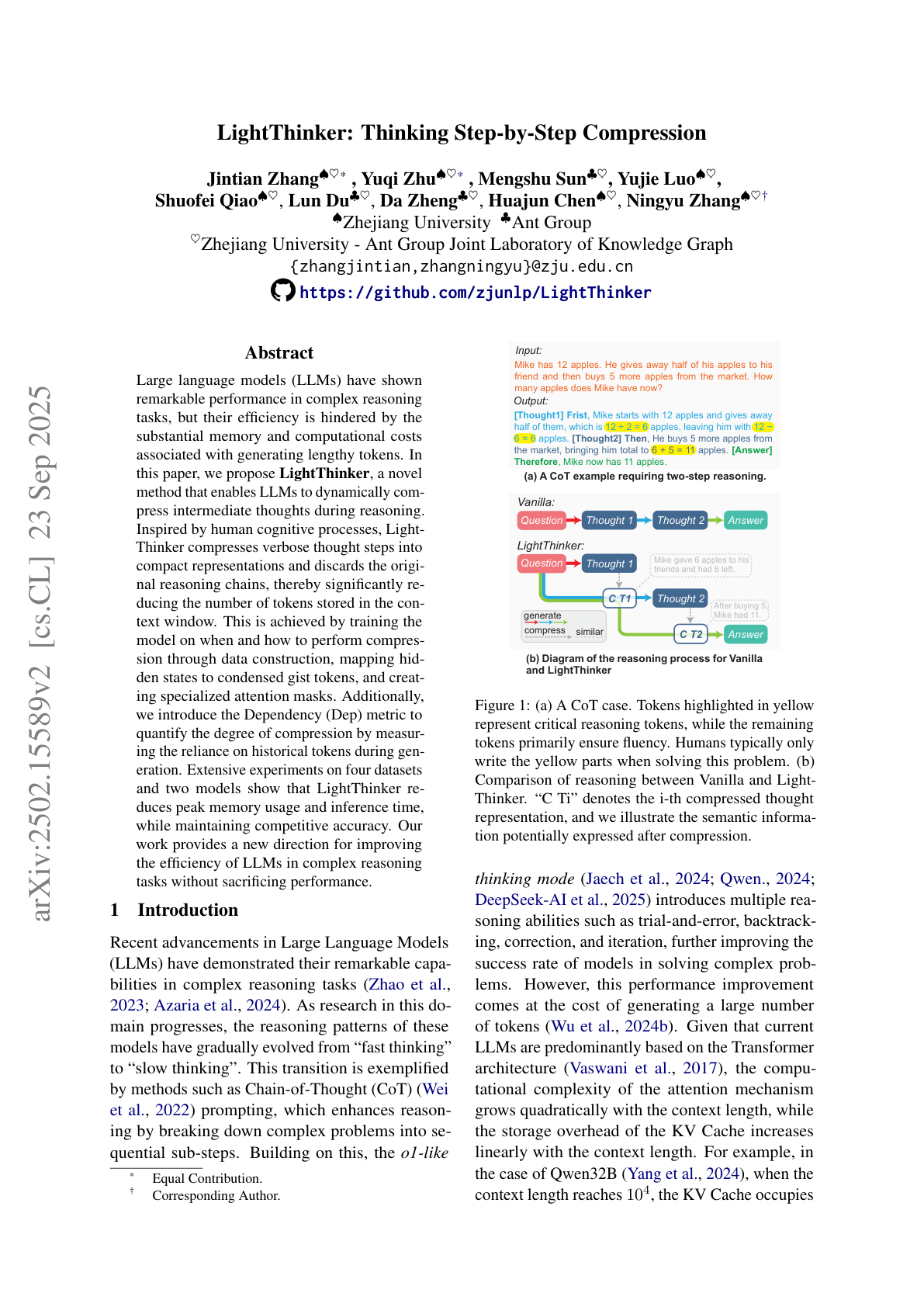
LightThinker
This new paper proposes a novel approach to dynamically compress reasoning steps in LLMs, significantly improving efficiency without sacrificing accuracy. Key insights include:
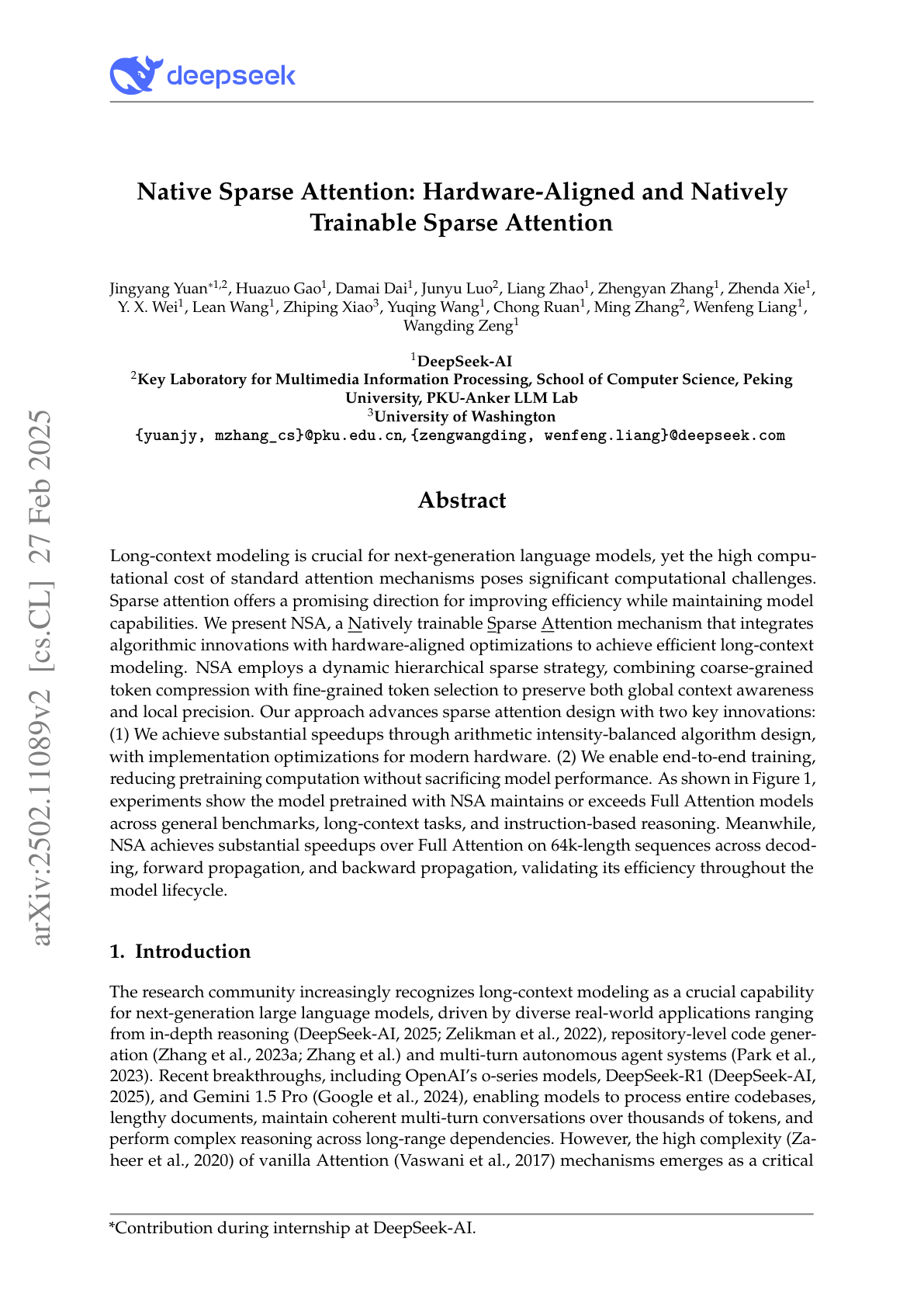
Native Sparse Attention
DeepSeek-AI and collaborators present Native Sparse Attention (NSA), a novel sparse attention mechanism designed to improve computational efficiency while maintaining model performance in long-context language modeling. Key contributions:
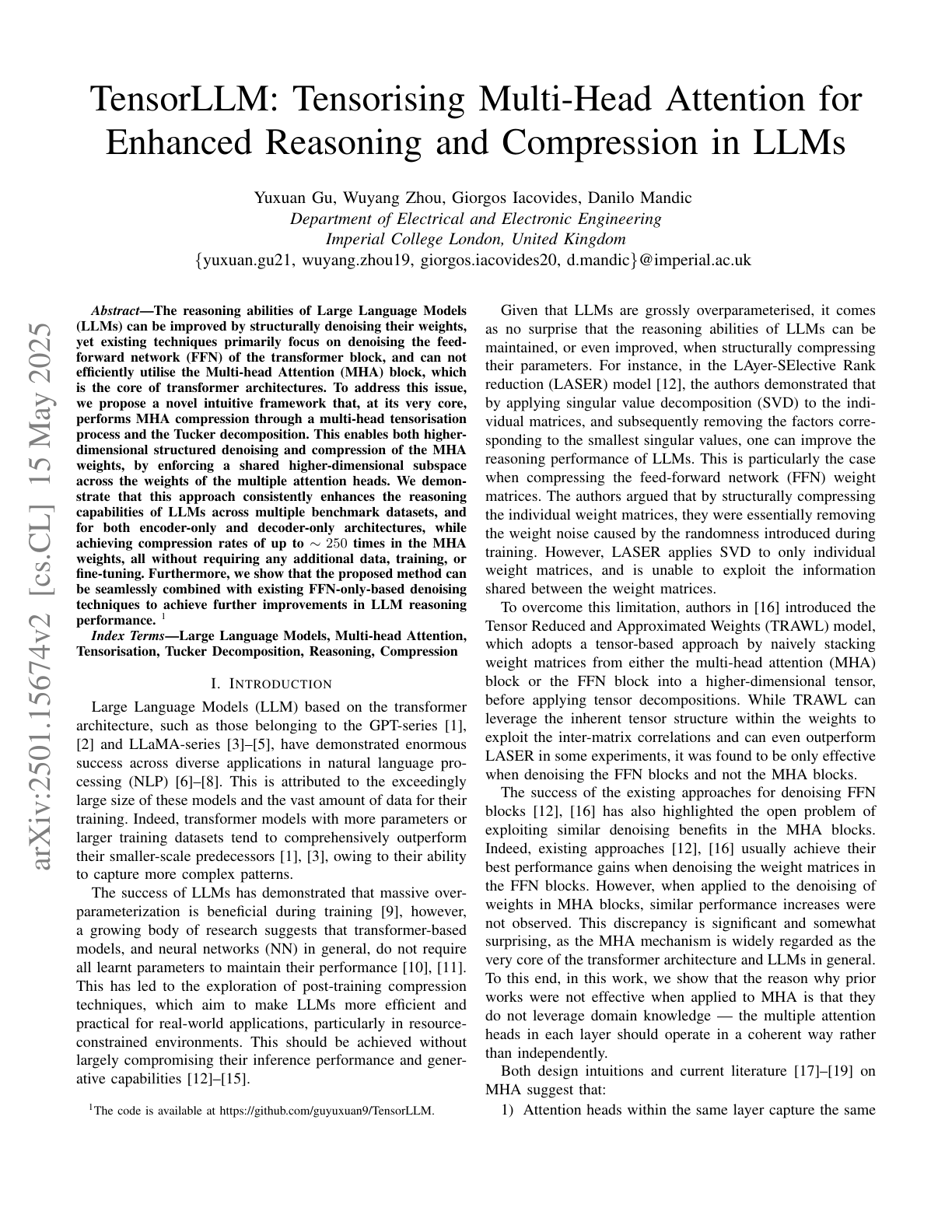
TensorLLM
Proposes a framework that performs MHA compression through a multi-head tensorisation process and the Tucker decomposition. Achieves a compression rate of up to ∼ 250x in the MHA weights, without requiring any additional data, training, or fine-tuning.

1.58-bit FLUX
presents the first successful approach to quantizing the state-of-the-art text-to-image generation model, FLUX.1-dev, using 1.58-bit weights (i.e., values in {-1, 0, +1}); the method relies on self-supervision from the FLUX.1-dev model and maintains comparable performance for generating 1024 x 1024 images as the original FLUX model.
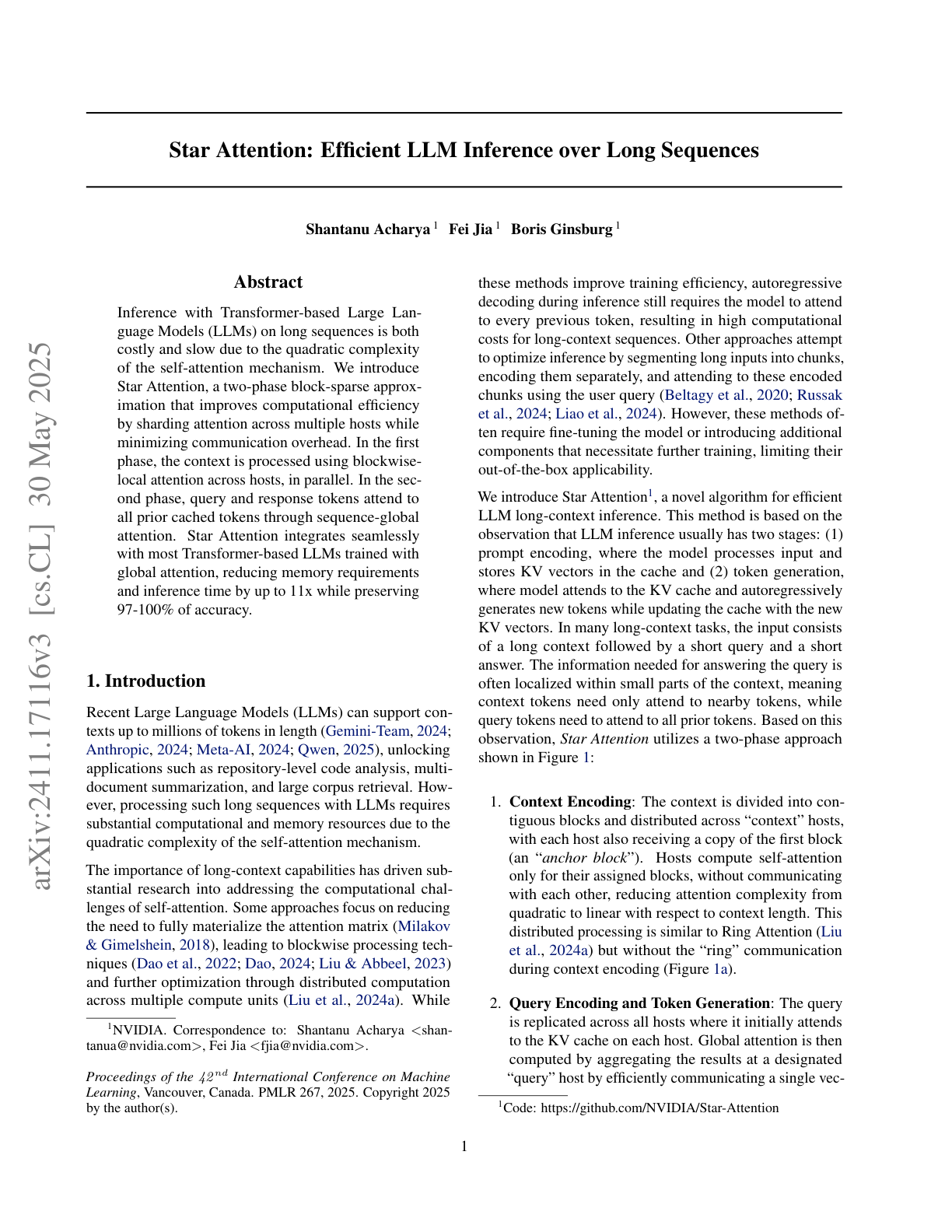
Star Attention: Efficient LLM Inference over Long Sequences
introduces Star Attention, a two-phase attention mechanism that processes long sequences by combining blockwise-local attention for context encoding with sequence-global attention for query processing and token generation; achieves up to 11x faster inference speeds while maintaining 95-100% accuracy compared to traditional attention mechanisms by efficiently distributing computation across multiple hosts; a key innovation is the "anchor block" mechanism, where each context block is prefixed with the first block, enabling effective approximation of global attention patterns while reducing computational overhead.
Bi-Mamba
a scalable 1-bit Mamba architecture designed for more efficient LLMs with multiple sizes across 780M, 1.3B, and 2.7B; Bi-Mamba achieves performance comparable to its full-precision counterparts (e.g., FP16 or BF16); it significantly reduces memory footprint with better accuracy than posttraining-binarization Mamba baselines.
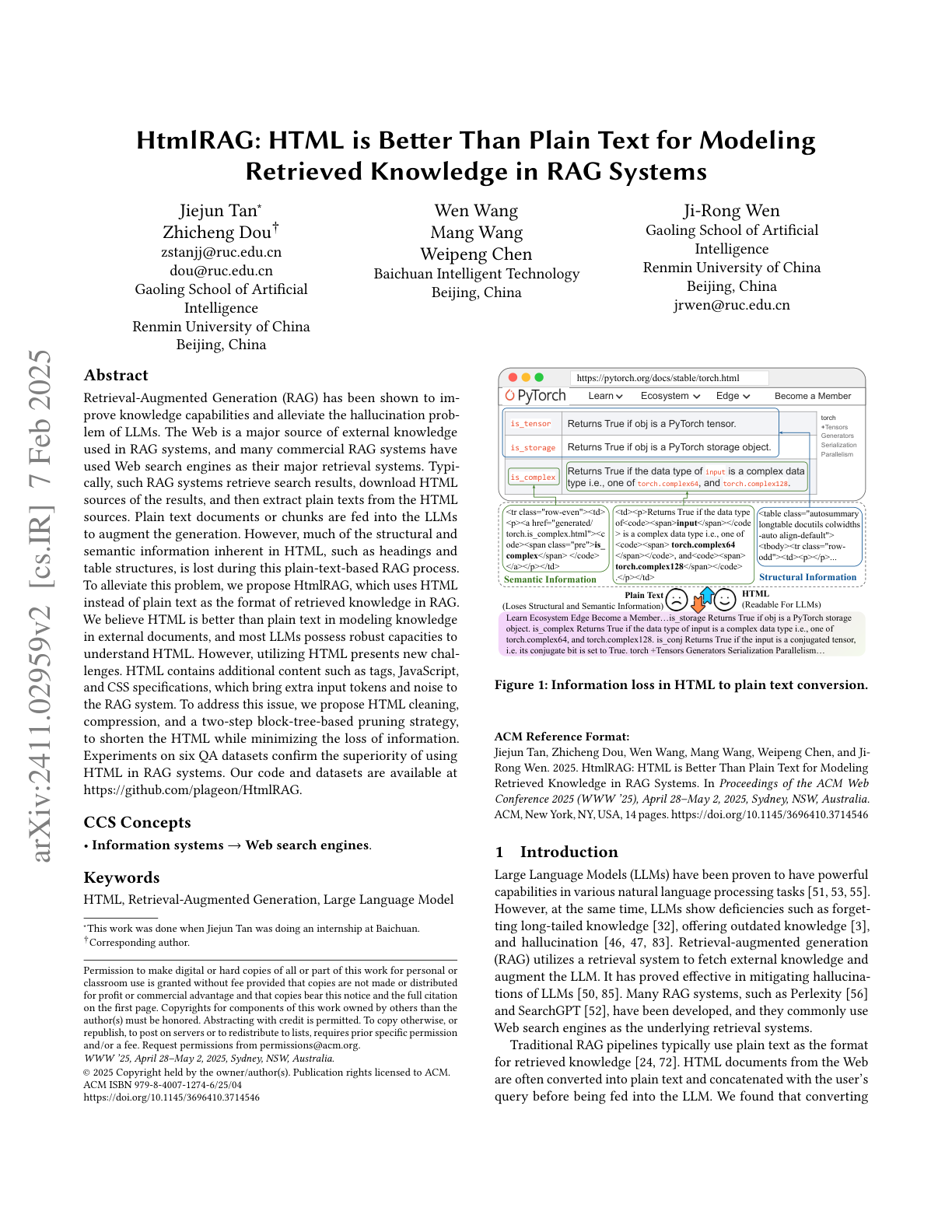
HtmlRAG
a novel approach that proposes using HTML instead of plain text as the format for building RAG systems; the key finding is that preserving HTML structure provides richer semantic and structural information compared to plain text conversion, which typically loses important formatting like headings, tables, and semantic tags; to address the challenge of HTML documents being too long for LLM context windows, the authors develop a two-step pruning method: first cleaning unnecessary HTML elements (reducing length by 94%), then using a block-tree-based pruning approach that combines embedding-based and generative pruning to further reduce the content while maintaining important information; experiments across six different QA datasets demonstrate that HtmlRAG outperforms existing plain-text based methods, validating the advantages of preserving HTML structure in RAG systems.
Geometry of Concepts in LLMs
examines the geometric structure of concept representations in sparse autoencoders (SAEs) at three scales: 1) atomic-level parallelogram patterns between related concepts (e.g., man:woman::king:queen), 2) brain-like functional "lobes" for different types of knowledge like math/code, 3) and galaxy-level eigenvalue distributions showing a specialized structure in middle model layers.
MrT5
a more efficient variant of byte-level language models that uses a dynamic token deletion mechanism (via a learned delete gate) to shorten sequence lengths by up to 80% while maintaining model performance; this enables faster inference and better handling of multilingual text without traditional tokenization; MrT5 maintains competitive accuracy with ByT5 on downstream tasks such as XNLI and character-level manipulations while improving inference runtimes.
Relaxed Recursive Transformers
introduces a novel approach, Relaxed Recursive Transformer, that significantly reduces LLM size through parameter sharing across layers while maintaining performance; the model is initialized from standard pretrained Transformers, but only uses a single block of unique layers that is repeated multiple times in a loop; then it adds flexibility to the layer tying constraint via depth-wise low-rank adaptation (LoRA) modules; shows that the approach has the potential to lead to significant (2-3×) gains in inference throughput.
Addition Is All You Need
proposes an algorithm that approximates floating point multiplication with integer addition operations; it is less computationally intensive than 8-bit floating point but achieves higher precision; the authors report that applying the purposed L-Mul operation in tensor processing hardware can potentially reduce 95% energy cost by elementwise floating point tensor multiplications and 80% energy cost of dot products.
A Comprehensive Evaluation of Quantized Instruction-Tuned LLMs
evaluates the performance of instruction-tuned LLMs across various quantization methods on models ranging from 7B to 405B; the key findings are 1) quantizing a larger LLM to a similar size as a smaller FP16 LLM generally performs better across most benchmarks, 2) performance varies significantly with different quantization methods, model size, and bit-width, with weight-only methods often yielding better results in larger models, and 3) task difficulty does not significantly impact accuracy degradation due to quantization.
Theory, Analysis, and Best Practices for Sigmoid Self-Attention
proposes Flash-Sigmoid, a hardware-aware and memory-efficient implementation of sigmoid attention; it yields up to a 17% inference kernel speed-up over FlashAttention-2 on H100 GPUs; show that SigmoidAttn matches SoftwaxAttn in various tasks and domains.
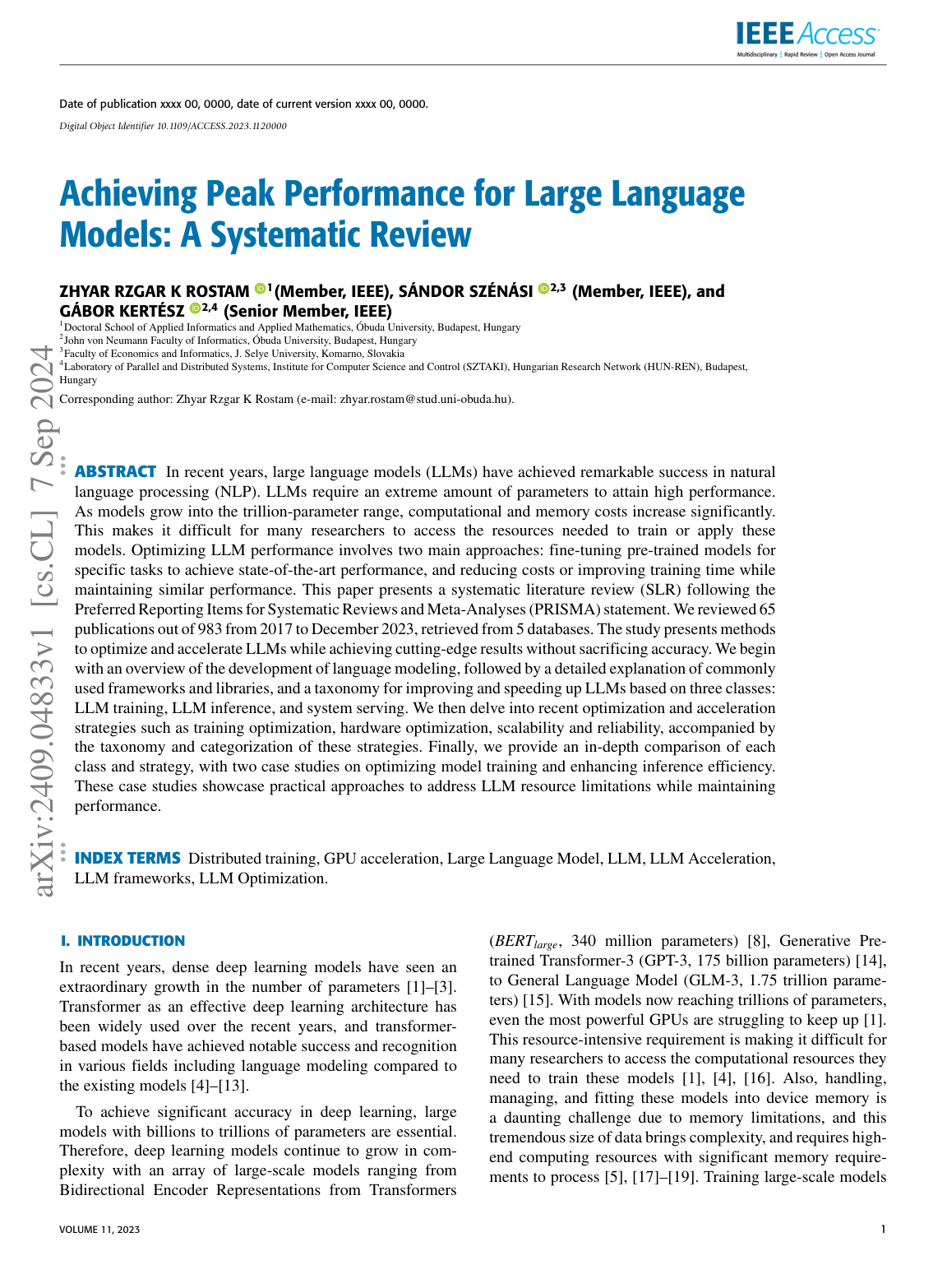
Achieving Peak Performance for LLMs
a systematic review of methods for improving and speeding up LLMs from three points of view: training, inference, and system serving; summarizes the latest optimization and acceleration strategies around training, hardware, scalability, and reliability.
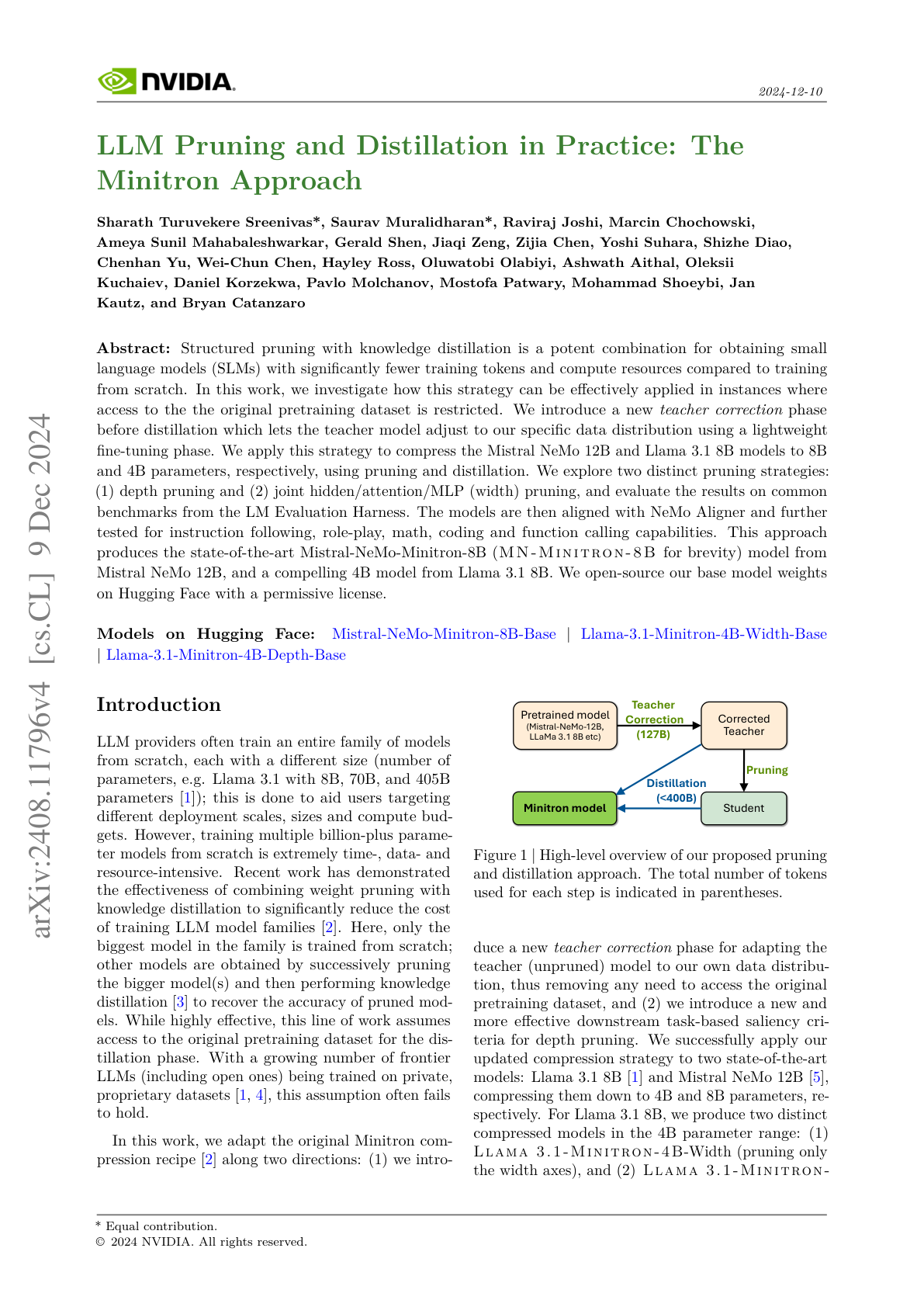
LLM Pruning and Distillation in Practice
provides a comprehensive report on effective methods for compressing Llama 3.1 and Mistral NeMo models; it presents pruning and distillation approaches applied to the original models to produce 4B and 8B parameter models, respectively; before pruning, they also fine-tune the teacher model on their datasets leading to better distillation; their compression strategy yields a state-of-the-art 8B model (MN-Minitron-8B) which outperforms all similarly-sized models on common language modeling benchmarks.
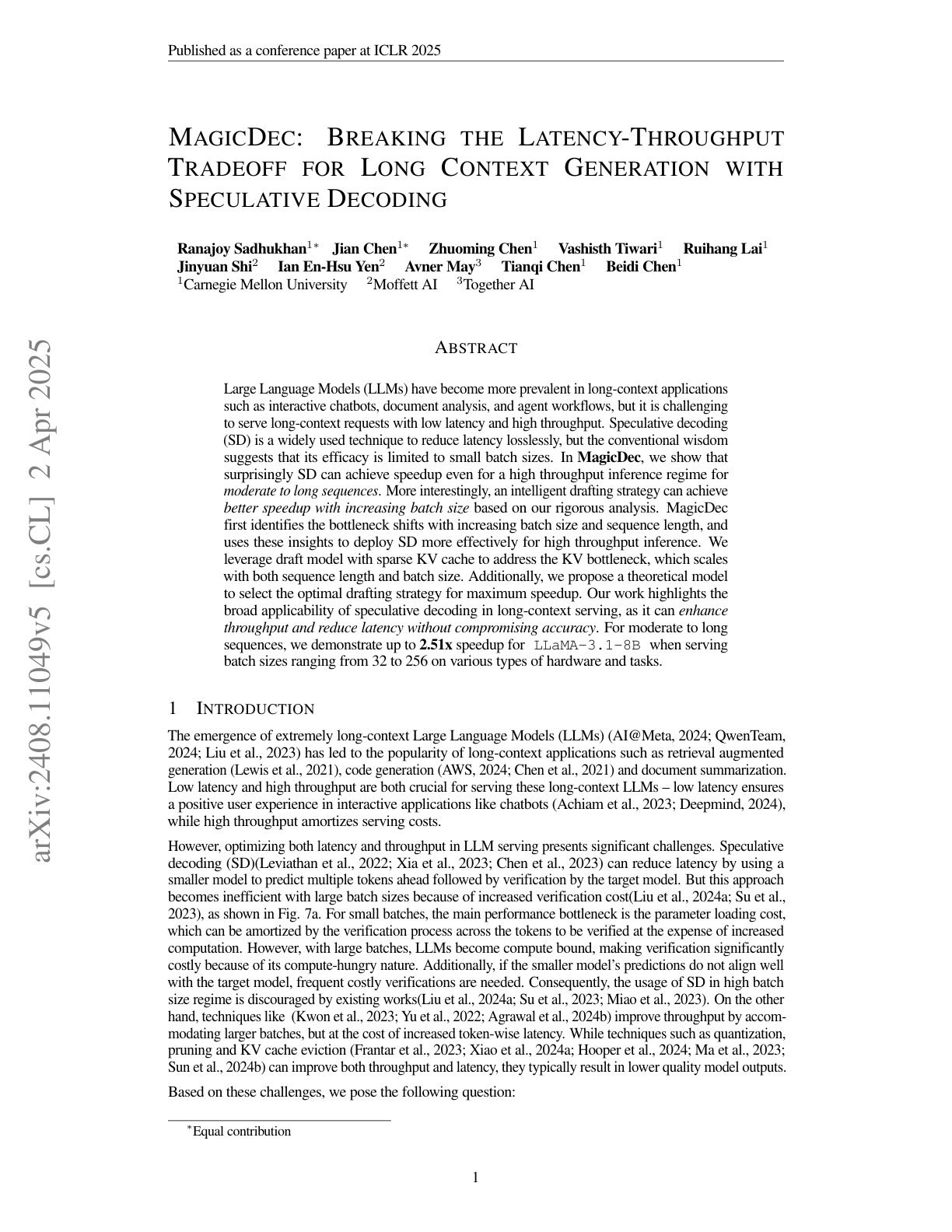
MagicDec
shows how speculative decoding can enhance throughput, reduce latency, and maintain accuracy in long context generation scenarios; it finds that as sequence length and batch size increase, bottlenecks shift from compute-bound to memory-bound; using these insights, they show it's possible to more effectively use speculative decoding for longer sequences, even when using large batch sizes.
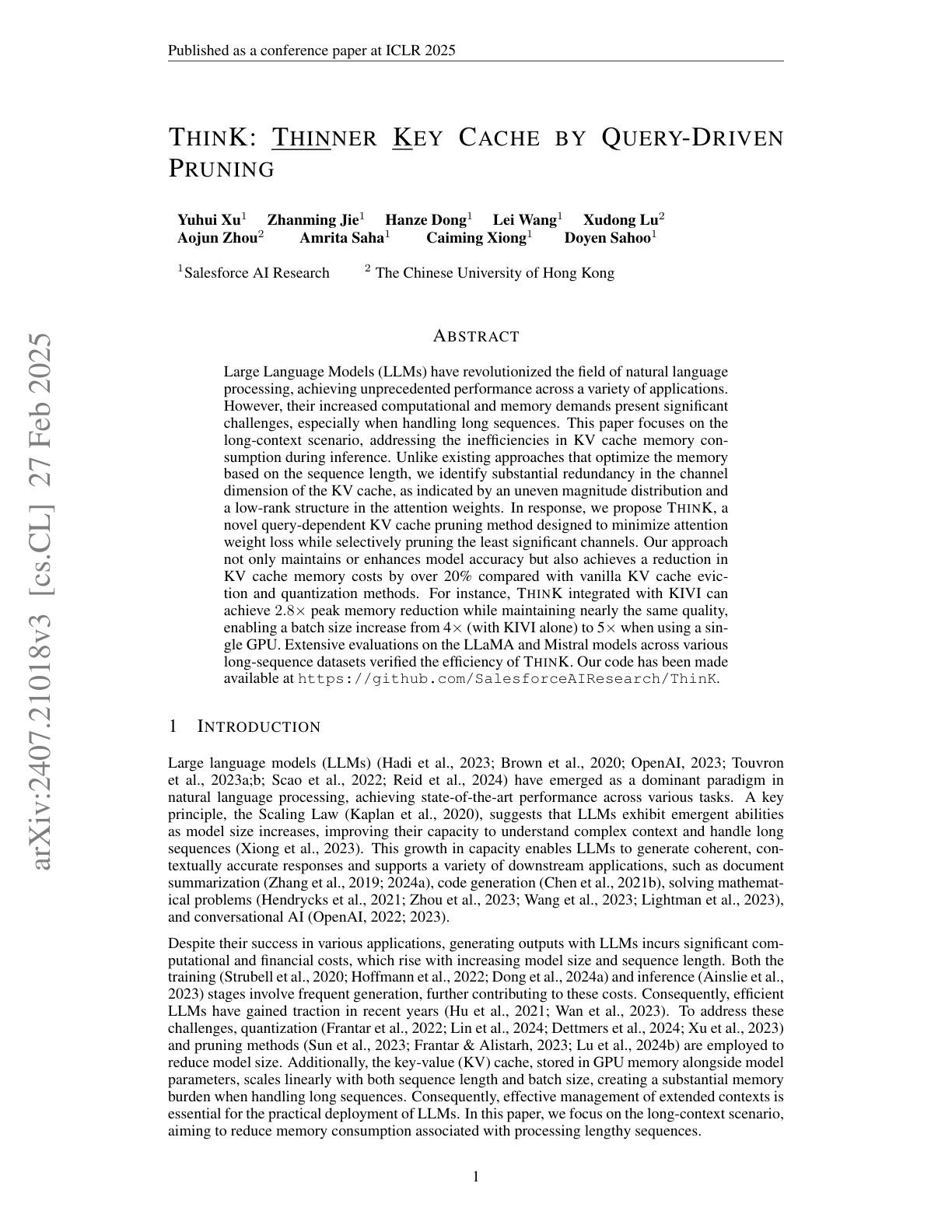
ThinK
proposes an approach to address inefficiencies in KV cache memory consumption; it focuses on the long-context scenarios and the inference side of things; it presents a query-dependent KV cache pruning method to minimize attention weight loss while selectively pruning the least significant channels
LazyLLM
introduces a novel dynamic token pruning method for efficient long-context LLM inference; it can accelerate the prefilling stage of a Llama 2 7B model by 2.34x and maintain high accuracy; it selectively computes the KV for tokens that are important for the next token prediction in both the prefilling and decoding stages; it allows language models to dynamically select different subsets of tokens from the context in different generation steps, even though they might be pruned in previous steps.
SpreadsheetLLM
presents an efficient encoding method to optimize an LLM’s understanding and reasoning capability on spreadsheets; develops a sheet compressor consisting of structural-anchor-based compression, inverse index translation, and data-format-aware aggregation modules to efficiently compress and encode spreadsheets; in GPT-4’s in-context learning, it improves performance in spreadsheet table detection by 25.6%.
Context Embeddings for Efficient Answer Generation in RAG
proposes an effective context compression method to reduce long context and speed up generation time in RAG systems; the long contexts are compressed into a small number of context embeddings which allow different compression rates that trade-off decoding time for generation quality; reduces inference time by up to 5.69 × and GFLOPs by up to 22 × while maintaining high performance.
FlashAttention-3
proposes to adapt FlashAttention to take advantage of modern hardware; the techniques used to speed up attention on modern GPUs include producer-consumer asynchrony, interleaving block-wise matmul and softmax operations, and block quantization and incoherent processing; achieves speedup on H100 GPUs by 1.5-2.0x with FP16 reaching up to 740 TFLOPs/s (75% utilization), and with FP8 reaching close to 1.2 PFLOPs/s.
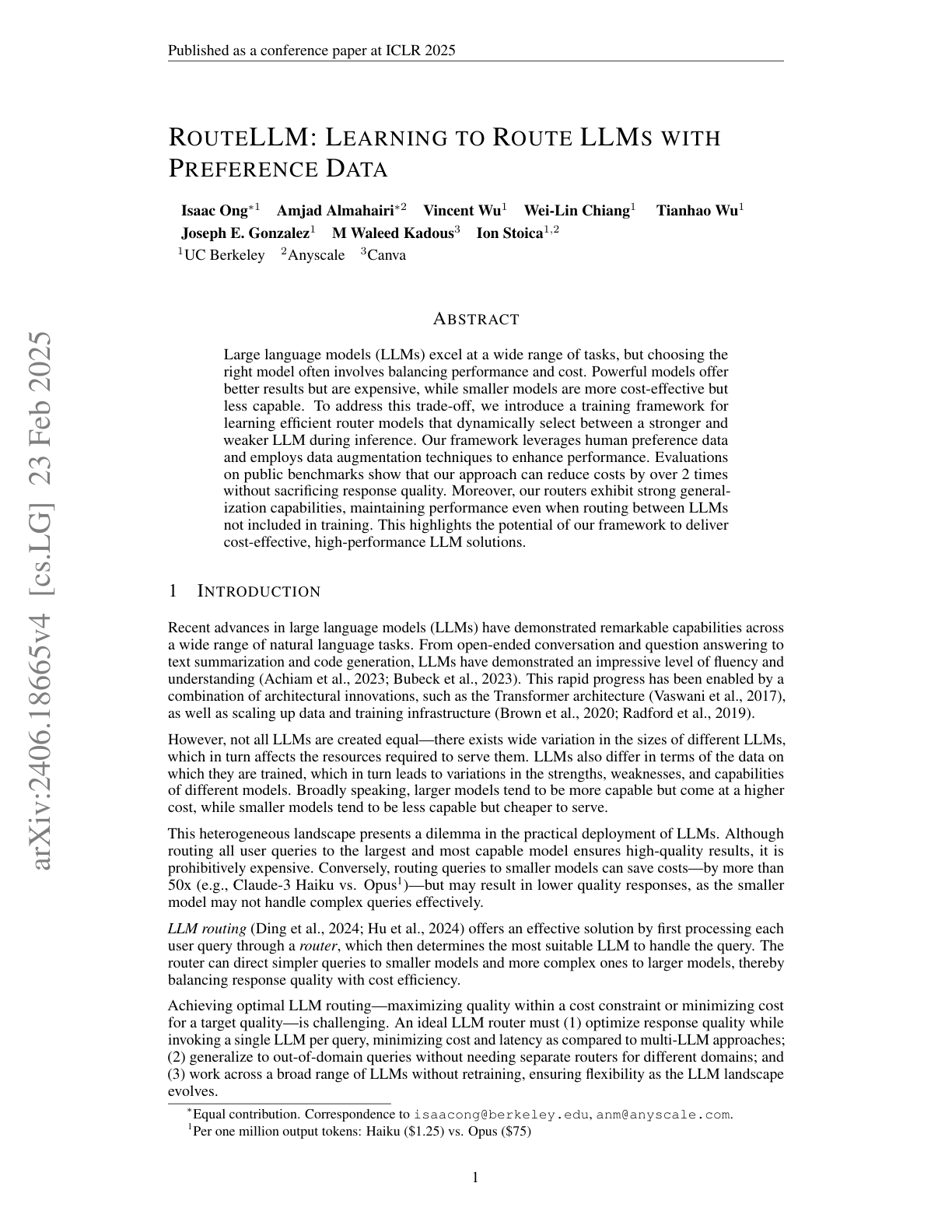
RouteLLM
proposes efficient router models to dynamically select between stronger and weak LLMs during inference to achieve a balance between cost and performance; the training framework leverages human preference data and data augmentation techniques to boost performance; shows to significantly reduce costs by over 2x in certain cases while maintaining the quality of responses.
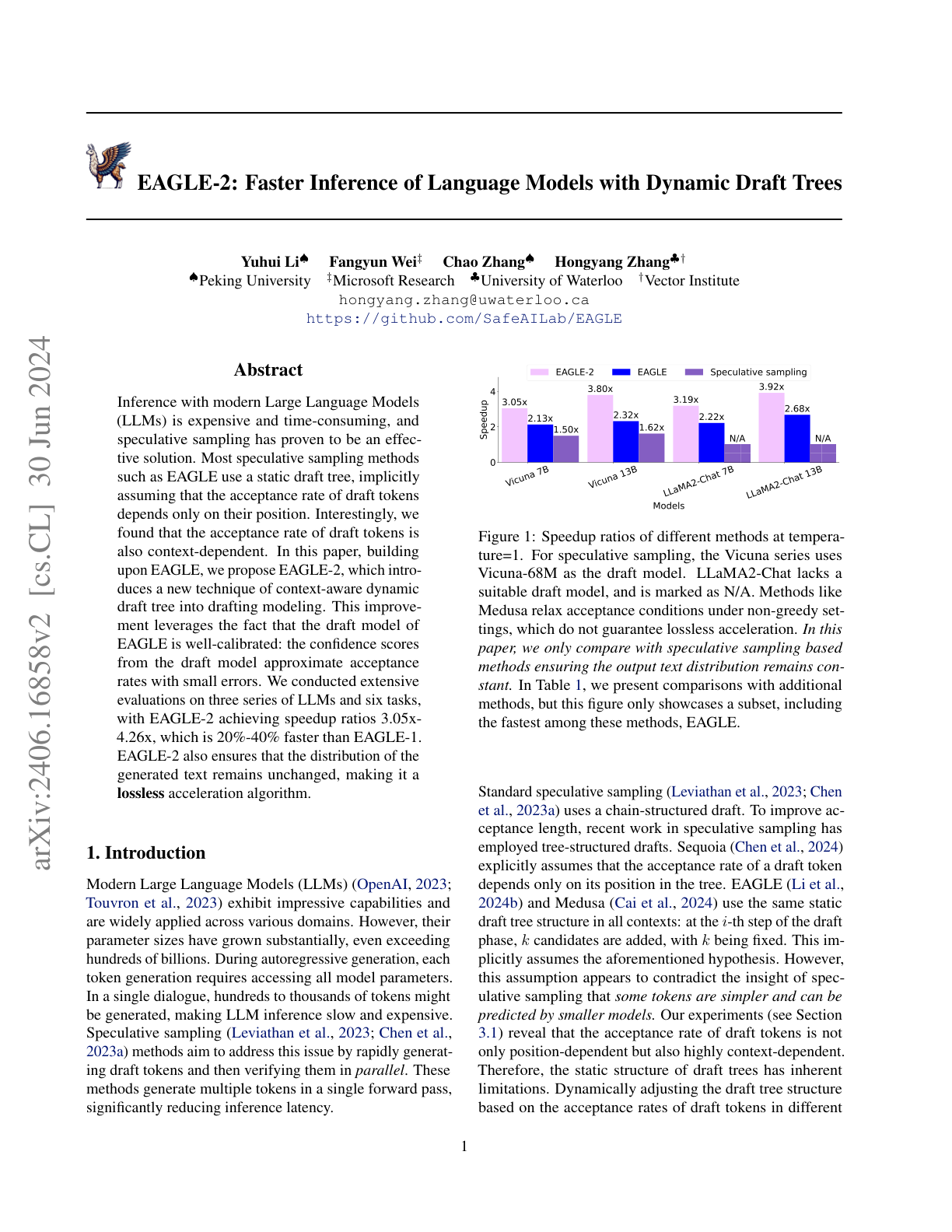
Faster LLM Inference with Dynamic Draft Trees
presents a context-aware dynamic draft tree to increase the speed of inference; the previous speculative sampling method used a static draft tree for sampling which only depended on position but lacked context awareness; achieves speedup ratios ranging from 3.05x-4.26x, which is 20%-40% faster than previous work; these speedup ratios occur because the new method significantly increases the number of accepted draft tokens.